How to get a talent agent

When you move to Los Angeles, as an actor, one of the first things on your mind is getting that top notch agent or manager. But for most, unless you have been referred over, you’ve got to bring something to the table to convince them you are worthy of being represented. So how do we do that? How do we get to The Abrams Artists Agency, CAA or the UTA’S of the world and make them realize that we have what it takes. In writing this article, I want to share with you some of the most significant things you can do for yourself to be taken on by a top, credible agency.

One of the best quotes I’ve ever heard was from my friend, the late great stuntman, John Bernecker. In 2007, we were just about to walk the runway for a huge show and he reached over and told me this:

“ Star quality is not about how many people know you, it’s about the energy and confidence you feel in yourself that creates star quality. Show these people that you are a star.”

I’ve never forgotten these words and I’ve carried them with me everywhere I’ve gone, especially as an actor. I know without a shadow of a doubt, that if a producer, director or casting director is going to hire me, I’ve got to exude that star power in myself and in my performances. If an agent is going to rep me, they’ve got to know that my energy is going to jump off of my reel, headshots and body of work. Not only that, they have to envision me as someone whose going to bring in money and lots of it. The reality of it all is that acting is just as much a business as it is an artistic form of creative expression.  Embrace this truth now, if you haven’t already. So what that being said, your first step in getting an agent on your side is market value.

1. MARKET VALUE. The moment an agent sees your headshots, your reel, your resume or anything that has to do with your career, the wheels begin to turn. The process accelerates once you meet them. The question is, what kind of market value does this performer have? Do they have what it takes? Do they have that star quality? Any agent that doesn’t think like this is likely not that successful. The more, as an actor, that you can think like an agent, the sooner your acting business will expand. Raise your market value by finding your authenticity. Once you’ve got it, make sure you’re doing everything you can for people to see it, especially the agent you want to rep you.

2. YOU’RE A GREAT LISTENER.  You might be surprised at the number of actors who trip themselves up by not being a great listener. You’ll have your chance to talk, but you want to listen and listen intently. Once again, this is about putting yourself in the agent’s mind. So once you’re there, ask yourself, am I able to listen and act upon anything that this individual tells me that’s going to advance my career? You can take it further by giving them an example as to why you’re such a great listener. I once auditioned for FOX’s Jane the Virgin and I was asked by casting director Alyson Silverberg to do my sides seven times, with an adjustment each time. When I was finally done, she said something to me that I share with every actor.

“You are a great listener and took direction each time very well. An important part of being a great actor is being a great listener.”

The same goes when it comes to your agent. Understand that their time is precious and if they ask you to do something, they expect you to get it done. With that being said, let that top rep know that you know how to listen well and take action. And don’t forget to give a prime example.

3. HAVE THE INTANGIBLES.  Think long and hard about this concept. Intangibles are the things as an actor, and as a person that you possess that make you stand out. It’s your character, your confidence, once again your authenticity and how it affects other people in the best way. The best way to do this is to just be yourself. Tell a story about yourself during your meeting that exemplifies your character. Yes, acting is important but agents are people too and they want to work with the people they like.  Allow your energy to radiate that you are a person who has star quality on the inside, who can be counted on and whose going to do whatever it takes to listen, work hard and succeed.  If you can do that, you will put yourself in a great position to get ripped by a top tier agent.

I want to leave you with something, in addition to these three steps, that can prove to be a game changer for most of you.  You have to reach out or go into the meeting with the idea that AGENTS, TOP AGENTS WANT YOU TO COME INTO THEIR OFFICES AND WOW THEM! They’re rooting for you to succeed, because if you succeed they succeed. Refuse to sleep on your gifts and talents. Don’t sell yourself short, but go after the very best there is out there and get that top agent whose the best fit for you. Here’s another quote from casting director and former agent, Anthony Barnao:

“With every actor that’s looking to be hired or represented, they should always know that as an agent, we are happily anticipating that you will be the one who is going to do well. You will be the one whose going to stand out and be a success.”

With that being said, the odds are more in your favor as opposed to not being in your favor. Use it to your advantage and convince that top tier agent you are worthy of being represented.


Fi-core

Every actor is aware of the union or non union dynamic that is always at the forefront of every performer’s career. But one option that flies under the radar most of the time is the Financial Core Status, or also known as Fi-Core.

In a previous article, Union Or Non-Union – we weighed the options in choosing union or non union status for your acting career and got down to the most important aspects of that decision. But today in this article, I’m going to give you an in depth look into a third option that you have when figuring out if SAG-AFTRA is the right fit for you. Like union status, Fi-Core is definitely a choice for those who are monetarily ready to make the investment. But it also offers actors the pleasure of basically working both union and non union projects. This opens up your opportunities to act to a very high degree, but it’s important to be completely educated on what you’re getting yourself into.

Over the years I’ve spoke with actors, who are Fi-Core, and they absolutely love it. One in particular, Ian Roberts, an actor/stuntman most notably known for his work in Superman Returns, once told me on the set of our indie film, “Fi-Core offers me the choice to not pass up a great creative opportunity that may have non-union status. When it comes to working as an actor, I want my options to be unlimited.”

Actor, master improviser and host, Ben Hauck is another who preaches the benefits of the financial core status.  Ben has been highly successful in this industry and is just as knowledgable as he is successful. As stand-in for John Oliver in HBO’s “Last Week Tonight,” he was honored in 2016 by the Television Academy for his contributions to the variety talk series. Ben holds a BFA in Acting from Otterbein and won the 2013 Emerging Artist Award for his trademark “improvised sermons” at the Unscripted New York Improvised Theatre & Film Festival. Author of the book “Long-Form Improv”(Allworth Press), Ben is internationally known as a teacher of long-form improvisation, having taught and directed long-form improv in New York City, Toronto, and London. He is also the host of “The Acting Income Podcast” on iTunes. This podcast covers topics related to earning an income as an actor as well as multiple episodes on the topic of Fi-Core. The awesome thing about Ben is that he has made it his passion in some ways to advocate actors  when it comes to joining Fi-Core.  After speaking with him recently, I’m excited to share the wisdom he relayed on the subject.

“Financial core status is a right guaranteed by the United States Supreme Court to pay a labor union only for collective bargaining and related activities. The financial core worker is able to work on union jobs while paying to the union an “agency fee,” which is essentially dues payment that is smaller than what full members pay.

the-fi-core-workbook-cover-791x1024The financial core worker also does not have to obey union member rules, insofar as they keep up with their agency fees with the union.  One rule SAG-AFTRA has is Global Rule 1, which is the requirement that members have to work only for signatories.  When you are financial core, you do not have to obey that rule, which translates to the ability to work both for union signatories as well as for non-union productions. I’ve put together a workbook on financial core status that you may be interested in reading, which is available here: http://ficorecentral.com/workbook.”

This is definitely a viable option to at least learn about, at this point, if you’re not ready to make a commitment.  Some people will have different opinions as to what’s the best route for you, but you owe it to yourself to always look into things thoroughly. Ultimately, our objective as performers is to make the move that gives us three things: 1) We’re continuously challenged as an actor and can experience consistent growth in our craft and the business side of things. 2) We’re provided with unlimited creative income opportunities that not only support our careers, but our lives.  3) We’re provided with several choices that readily enable us to enjoy what we love to do, act. By factoring in all three of these components, the choice becomes easier in discovering which option is the best for you.

All in all, you owe it to yourself to look into the Fi-Core status.

Union or Non Union

One of the most important decisions you will ever make as an actor is whether or not to join the SAG-AFTRA Union. Now at first glance, this seems like the most viable option for any actor with experience and credits. But, and that’s a huge but, it’s not always that black and white. The number of articles we read on this matter is staggering. What’s even more mind blowing is the amount of wrong advice being given to so many actors and actresses. I’m here to tell you, that buck stops here. I’m going to share with you some advice that you can use for the rest of your career. I’ve even consulted one of my good friends whose had longevity and success in this business about knowing which path is right for you.

For those of you who live in Los Angeles or New York, there’s often pressure to join the union. I’ve heard from a number of people when I first began that directors and producers won’t take you seriously if you’re not union. This couldn’t be any further from the truth. If I was casting a film today and you were THE BEST actor for the job, you would be the one who is getting the role. Being non-union has nothing to do with being unprofessional, it’s all a matter of circumstances.  We all are on different paths in the entertainment industry, so we have to take a closer look at the most important factor in one of the biggest decisions of your acting career.

That factor is your FINANCIAL STANDING! Your financial situation is the main thing that would affect whether or not you are ready to join the union. The only time it does not matter is if you’re in a right to work state like Georgia, Louisiana or Texas. These states will allow you to work union jobs and not be obligated to be a member. This however is not the case in California or New York.

I once read that 5% of the entire SAG-AFTRA union make 90% of the money.  So let’s say you are absolutely killing it as a non-union performer making $50,000/year, and you think that it’s time to make the move to the next level. You could potentially be giving up that salary if you’re not locked in to work on union projects. The problem comes in because an actor whose broke or struggling financially, is an actor who gets pulled out of their creative place and pushed into desperation. And that energy of desperation follows you everywhere even into the audition room. So in order for us to not even be a victim to that, we’ve got to make sense of our finances.

Here’s three important things you want to think about before taking action.

1.   HOW MUCH INCOME COULD YOU POTENTIALLY LOSE? As stated before, if you’re livelihood is in jeopardy this puts your energy at risk. If your energy is at risk, your chances of booking anything decrease drastically. Desperation never books any jobs, so make sure that if you are going the union route, the drop off in your income is minimal.

2.    CAN YOU STILL COVER YOUR UNION SIGN UP FEE AND DUES AND NOT GO BROKE? I coached an actor one time who had to leave Los Angeles and return home because they decided to impulsively join the union without securing enough financial backing to support themselves. I begged and pleaded, knowing that it wasn’t the right time. It was a sad story because this person had so much talent and potential, but everything fell apart. Refuse to allow this to happen to you. Depending on what happens year to year, you are looking at $2200-$3500 upfront or through payment plans (Interest included). This is a huge step for any actor, but always know that eventually your time will come and it will all work out in your benefit. But do not go broke! You can’t act if you can’t live in a way that promotes you in being your best on and off camera.

3.  ARE YOU IN A HURRY OR IS IT THE RIGHT MOVE? This brings up an important question to mind. A question you should ask yourself every six months. Am I ready to join the union or am I feeling the pressure of outside influences? I once had an agent who tried to push me into joining because all they could think about was the potential money they could make. I had to cut ties because this was an easy way to get distorted and think this was the right move for me. But always feel free to take time away and listen to your intuition about when it’s right to make such a big move. This is your life, your career and your journey. Ultimately, when it’s time, it will feel right within.

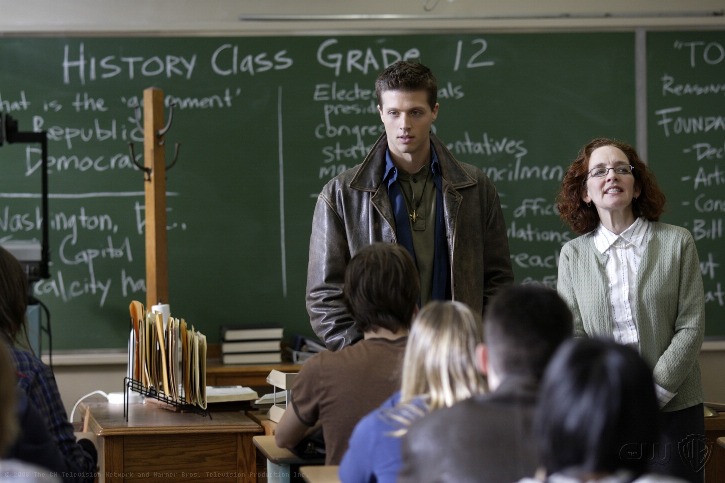
Brock KellyThis topic intrigued me so much that I reached out to one of the wisest, most successful actors I know, Brock Kelly. Brock has been in the industry since he was 19, moving to Los Angeles right after high school. Brock experienced success on numerous levels from commercials to soap operas. He’s experienced as well as sharp on screen and understands that acting is a business that always indicates that you’re only as great as your next decision. You may recognize Brock, most notably, from his role as young Dean Winchester on CW’s hit show Supernatural. He’s continued to gain acclaim for that role years after his performance. Here’s what he had to say about joining the union:

“Each person’s journey is different. Sometimes you’ll find that SAG-AFTRA will try and force you into the union because of the amount of work you’ve done. What I would recommend is basically just sticking to what works for you. If you’re killing it on a non-union level and it’s paying the bills, keep that momentum going and allow it to work out for you. Los Angeles is an expensive place to live, so you need to be on point when it comes to not only taking care of your career, but also taking care of your bills. Set yourself up for success by making the move to the union when it makes the most sense financially. This will alleviate a lot of stress.”

I don’t think too many people will disagree with this insight. No acting is not all about money, but the business side of it is. And when we want to succeed in business, we need the capital to do so. Wherever you are today, set yourself up for financial success in your acting career. Make smart decisions and trust your instincts on when it’s time to take a risk. The risk should be calculated and it should pay exponential dividends. If you can’t see the dividends from joining the union just yet, then maybe it’s a cue to keep succeeding on a non union level. As mentioned before, your time will come.

Acting Business

Ask any actor who has attended an open audition lately: the acting business is crowded. Every day more and more starry-eyed dreamers leave behind their small town successes and head for Hollywood or New York, seeking to parley their star turns in local theater into gold.

So if a crowded field growing ever-more crowded is the bad news, the good news is that the opportunities for booking paying jobs have never been greater. From the explosion of cable channels to the evolution and maturing of the web as a platform for launching original series and films, there has never been a time with more options for finding work for actors, writers and others in the creative industries.

But that’s not to say that it won’t be hard work getting those jobs. Often the part of the work that many actors fail to really develop is the business side of the acting game. To that end here are a few tips for making sure that the “biz” aspect of your show-biz efforts is up to snuff.

1. Work it

In order to get work as an actor, you have to put in the hard work of developing your craft. This may sound rudimentary but it’s surprising how many young actors graduate from a theater program and think they are finished with learning about acting. Nothing could be further from the truth. In fact you could say that attending film or theater school is the kindergarten of learning how to act: it gives you the foundation you need in order to learn, but little more. Once you have graduated from school, you now possess the language needed to learn the craft of acting, and that’s a great start. But this is where the real learning begins. Remember that crowded audition waiting room? Can you honestly say you are better than everyone else in that room? Because when you audition for a role, you are asking the casting director and producers to put their trust in your talents and skills to the point where they make a significant investment in you. You have to be in a position to assure them that such an investment would be wise on their part. What this means in practical terms is that you can and must get better, and you can and must take steps to improve your craft every day. Take classes, learn new monologues on your own, set up an actor’s group to work scenes and monologues, read the trades, read plays and screenplays, see shows and films, and write your own scenes and short films. Again, with so many people competing for the same roles, you have to make absolutely certain that your skill set is in the top tier.

2. Off to market

As important as training is, it’s not the only consideration actors need to keep in mind. It’s possible that marketing yourself may be just as important. In a crowded field you have to do whatever it takes to get noticed. That means upping your social media game for one thing. Make your presence on social media known through not only promoting your projects and posting about your accomplishments, but also by making yourself a valuable ally to your network of actor friends and others in the business. Being a part of a network in your town or city is a great stepping stone to getting noticed by agents and producers. Also, make sure you invest in your marketing tools. Those five-year-old headshots your amateur photographer sister-in-law took for you when she got her new camera for Christmas? Yeah, they’re not going to cut it. Granted, it takes a hefty bite out of a struggling actor’s pay to get professional headshots done, but it’s worth it. Again, this is an investment, not a frivolous purchase. As you’re mailing out headshots to agencies and producers, you’re going to end up instantly in the circular file if you’re sending out amateurish materials. Also spend some time really thinking about and developing your reel. Just because you were in something doesn’t necessarily mean you need to include it in your reel. Every student film or YouTube series performance isn’t necessarily gold. Choose judiciously how to present your best side.

3. Go ahead, sell out

First of all the term “selling out” is one of those tricky phrases that means something different to everyone. Are George Clooney and Jack Black sell-outs because they did those Nespresso commercials for international television? Is Matthew McConaghey a sell-out for doing that weird Lincoln commercial on the tail end of his turn as Rust Coehle on “True Detective?” (Sidebar: would you really want to associate your product or service with a character that is a nihilistic, alcoholic, emotionally broken, obsessive misanthrope who is basically waiting to die? If so, why?) Again, these are questions that everyone has to answer for themselves. But one thing is certain, they are all working actors, and being a working actor is what you want, right? At any rate, by one definition, we’re all sell-outs no matter what kind of work we do. No matter if you work in a restaurant, or as a social worker, or as a corporate executive vice-president in the tallest office building in town, you are literally selling your time for money. What difference does it make if you sell your time for money as an actor in a Coke commercial or in an art-house film? Again, that’s a questions we all have to answer for ourselves. But I can assure you it makes no difference to your landlord which type of project paid you the money you’re using to pay the rent. For up-and-coming actors looking to make a living in this business, you frequently don’t have a choice but to take what you can get, if it pays the bills. Yes, we all want projects that are artistically fulfilling, and you should of course pursue those types of projects every chance you get. But your belly needs filling too–there’s no shame in doing legit acting work that pays the bills.

4. Confidence is key

The term “con-man” has a basis in the word “confidence.” A confidence man, then, has the ability to sell people on placing their confidence–or trust–in him. What’s more, confidence is a vital part of how you present yourself as an actor to world. This isn’t to say you need to trick anyone like the con man of old. But you do need to present yourself as confident, and you need to convince casting directors and producers that you are worthy of their confidence. Even on the most well-funded film projects, there are people counting every penny. Be someone worth investing in, and investors will come to you!

shutterstock_603985991

As actors we all have our personal strengths. Like a baseball power hitter, we all have our wheelhouse–in other words our favorite type of role to play: that sweet spot where we’re confident we can hit it out of the park.

For some of us it may be working in serious drama; for some it’s playing the seductive romantic lead; for some it’s comedy. Some of us really love the wordy, intellectual roles, some favor the physical.

But no matter which of these or which combination of these is your type, there is one thing for certain: every one of these character types is rooted in the classics. That’s why there’s no escaping the fact that every modern actor should take some time to study classical plays. Even if you have no intention of ever performing a line of Shakespeare on stage, your craft and your instrument can benefit tremendously from studying his work and other playwrights that came after him. Here are a few reasons why.

1. Words, words, words

For lots of people unfamiliar with the language of the classics, especially Shakespeare, the first time they sit down and read him or watch a play can be not only intimidating, but downright bewildering. And if you ask an actor who has never touched the Bard to stand up and read something aloud, you’re setting him or her up for failure. The English language was not only a very different beast back then, iambic pentameter is, shall we say, a challenge. And there is a layering upon layers upon layers to the language that is difficult to sift through and divine the meaning from at first. However the good news is that with study, the richness, depth and beauty of the language starts to come out, and it is unparalleled in the Western canon. Mastering the nuances of iambic pentameter and understanding Shakespeare’s words means an actor can find depth and richness in any line you give him. You’ve heard some variation of the joke, “I’d pay money to hear Patrick Stewart read the phone book aloud.” As silly as that appears on its face, the reasoning behind it is sound: the man knows how to turn a phrase. Classical training can help you master not only physical qualities like diction and breath control, but also the ability to deliver meaning within and between the words you say in any piece of dialogue you are given.

2. Comic timing

Most of the shows we think of as purely modern comedies are actually very, very old. From Moliere and the Restoration comedies’ classic characters of the charming but rakish ladies man (think Charlie Sheen on “Two and a Half Men” or Neil Patrick Harris’ Barney Stinson on “How I Met Your Mother”) to the buffoonish, boastful fat man (think any modern sitcom ever) based on Shakespeare’s Falstaff, there is hardly a modern character in comedy that isn’t based on a very old model. If you want to learn how to perform comedy, the classics are the place to begin and end your studies. From the rhythms of the language of comedy, to how to play the energy and action of a comedic scene, to physical comedy, to the use of sharp-witted barbs, the classics have it all. To be able to take that energy and training into an audition for a modern comedy is to give yourself a tremendous advantage.

3. Let’s get physical

One often overlooked aspect of performing the classics is the use the actors must make of their entire instrument. The physical discipline required is so often overlooked because good classical actors make it look easy. But without the training it’s anything but. Consider for a moment the work a Shakespearean actor from his time would be asked to perform: there was no CGI, not much in the way of costuming, not even very developed sets beyond the merest suggestion of time and place. Thus if you were playing a king, how would you manage to portray it? What about a servant? Through posture, bearing, physicality and voice. Classical actors are trained in movement as well as language, and it shows, in films and television from the X-Men series to Star Trek to “Hannibal” and beyond. And an added bonus is that the physical training you get when studying the classics with someone who knows what they’re doing often translates to giving your presence a tremendous boost. There’s a stillness and economy of motion that classically trained actors employ that tells a story all on its own. When they do move, they move with purpose and deliberately, and it lends a whole new layer to their characterization. That applies whether they’re performing in a classical play or a modern crime drama.

4. Let’s talk about investing

For some up-and-coming actors, the question of studying the classics is met with something like, “Oh I just don’t have the time for that. I’m too busy auditioning.” Here’s the thing about studying the classics: the actors who have that kind of training on their resume get hired. And not because casting directors see some Restoration comedy on the list of their previous shows and hires them based on that alone. No, they get hired because they’re often the best actors in the room. Your development of any character in anything you do following some classical training will flower and blossom in ways you can’t even imagine. Classically trained actors have the training and technique to inject a depth and subtlety and nuance into any role, and this gives them a great advantage when it comes to reading for a part–especially when it comes to reading for a part, simply because you only have that minute and a half or whatever to make an impression. So to think about doing some training in the classics as taking away your time from more valuable or lucrative activities is exactly backwards: it will help you book roles.

5. Classically confident

They say if you can play Shakespeare, you can play anything. And that may be trite, but it’s true. Take actors who have been classically trained and plunk them in any audition for any type of role and it’s likely that they will have the wherewithal to adapt and find an action to play, simply based on their training and experience. If you want to make yourself not only a better actor but a more confident one, you could do worse than taking a class or two studying the classics!

Interesting auditions

Acting is all about…

As you go through your life as an actor, there are so many things you come to find out acting is “all about.” Every instructor, coach, director, agent, manager, and even advice columnist will at some point take time out of their valuable day to drop one of these pearls of wisdom.

And in fairness, acting is many things. It’s a deceptive craft in that it appears to be so simple; to a layperson all we do is memorize someone else’s words and say them. Walk around for a while imagining yourself in someone else’s shoes, say some stuff, and boom: Oscar time, right? It’s these kinds of insights that makes your cousin Chad who works at the Dairy Queen believe he could be the next Vin Diesel.

Oh Chad. That’s why they’ll never move you off the fry station.

Among the many things that acting instructors will say acting is all about is choice. We are of course given parameters within which to work–a time and a place, a character’s age and background, the playwright’s words, the arc of the character, the arc of the scene, and the arc of the overall story being just a few.

But within these outlines we have so many options to carve our own path and determine our own interpretation of the character and the way they’re going to pursue what they want in the scene. That’s why it’s so important to show casting directors and producers that you’re capable of making interesting, strong choices right off the bat in the audition room. Here are a few tips to help you get to where you’re the one setting the bar for everyone else at the audition and making the interesting choice every time.

1. Get out of their heads

The first thing to remember once you’ve gotten your sides and you’re getting prepared to go in for a read is that you are not a mind-reader. It’s far too easy for less experienced actors to get caught up in a terrible trap from which there is no escape: thinking “What do they want?” It’s far too easy to get all tangled up in wondering what the people on the other side of the table might be thinking, and let it influence your choices. And if you’re thinking about what they might want, how can you possibly be thinking about what your character wants? Or even really explore what tactics they might adopt in order to get what they want in the situation you’ve been given? In other words, you lose sight completely of doing your actual job. And anyway we can never know another person’s thoughts, not really. So to spend any amount of time and energy pondering them is a waste. This goes double when it comes to auditions. You have a job to do, so do it. In a weird way, the people behind the table don’t even matter: you’re here to act, so act. Focus on your objectives and tactics as your character and stay out of the casting team’s heads and let your choices be your own.

2. Imagine no limits

Another common mistake less experienced actors make when it comes to auditioning is they make the choices that present themselves most readily and apparently on the page. If the script seems to indicate an angry confrontation, they yell and scream for all they’re worth. If the script sides appear to indicate a sad moment, they conjure up the old quivering chin and leaky eyes and possibly even a keening wail–no doubt to the chagrin of the casting team. In other words, they make the safe choice, the obvious choice that is most clearly delineated in the script. Now let’s take a moment to break rule number one above and think for just a second what that looks like to the casting director and his or her team. Say it’s around 4:30 in the afternoon and they’ve been at this all day, and they see the 73rd actor come in and read the scene the exact same way it was read by number 72, and number 71, and number 70… This is a road map to blending in and disappearing. This is how you play it safe, and that’s the opposite of what you want to do. Auditions are risky. They cause us to get nervous and feel threatened, and our monkey instinct is to protect ourselves when we feel threatened. So what happens is we instinctively choose safe when it comes to auditions. But safe isn’t what got you here. Safe also isn’t what books roles. So the fix is to forget the safe choice. Toss out any and all pre-conceived notions of how the piece “should” be played and allow your mind to wander into new territory. Think about quirky actors like Parker Posey, or Aubrey Plaza, or the great John Malkovich: these are actors who clearly did not limit themselves to the first or most obvious choice for reading the various characters for which they are known. In order to get your foot in the door you’ve got to grab their attention with something that stands out from the other 72 actors there that day. And here’s a great technique for doing so…

3. A little from column A, a little from column B–and don’t forget column Z

A great and useful exercise for freeing yourself from the rote or well-trodden take on a particular piece to change up your script analysis. Take a piece of paper and make two columns on it. Title the first column A and the second one B. Now using your usual script analysis technique, list three choices under column A using what your first instincts tell you about how to play the scene. Now in column B you’re going to work a little harder. You’re going to list three different choices–choices that still work given the parameters of the script, the character, the arc of the scene, and the story’s arc, but three choices that are different nonetheless. Once you’ve done this, go back to column A and play the scene using these first choices you wrote down. These are what we’re going to call the “safe” choices. These are very likely the same or similar choices to what most of the other actors at an audition would make. Now look at column B. Play the scene again using these choices. Notice how different it feels this time around! This is you stepping outside of the box of safety and comfort, and really playing. Now one more step: Add a column C–or better yet, call this one column Z. List three MORE different choices you could make, and run the scene again using them. Even more interesting, eh? As long as you remember to make an honest script analysis and stay true to the story and the objectives of your character in the scene, your choices, while not limitless, are certainly much more wide open than you thought of them before. Pushing your imagination to make the unconventional yet still truthful choice will render your read a much more electric, vital and real event, both for you and the casting team. Take that energy and imagination into the audition with you every time, and you are well on your way to booking more roles!

actors on social media

These days, social media is everywhere you look. From the president’s multiple daily tweets to your grandma’s endless Instagram photos of her favorite cat, it seems like everyone is constantly on social networks these days.

With all the time we spend liking, retweeting and snapping, sometimes it’s hard to imagine how any work gets done!

But for actors, developing a strong social media presence is a part of the work, a vital and important part. Indeed, these days building a brand as an actor is such an important aspect of the job that it’s surprising how many people view it as a chore or a nuisance, something to attend to while sitting on the toilet or riding the subway.

This is surprising because it’s no secret that casting directors and producers grab their phones and look up actors first thing when they’re considering casting them. Just as you and I routinely try to connect via social media when we meet a new friend, set up a date, or apply for a job with an unfamiliar company, casting directors also look to the web for instant research on you.

So maybe a better way to think about developing your online presence is to think of yourself as a curator: the person responsible for presenting how you appear to the world. Here are a few rules to keep in mind while you’re curating the work of art that is you!

1. The internet is forever

It’s also surprising how many people think they can tweet or post something in the heat of the moment and then, when cooler heads prevail, take it down and issue an apology, thinking that everything will go back to the way it was before. They’re dead wrong. The same lightning speed we enjoy that allows us to post instant hot takes on the news of the day or commentary on a friend’s post means that whatever you say is instantly transmittable to the entire world. And that post or tweet is never going away kids, not really. So the first and most important rule to remember when you’re in the process of building your brand as an actor is that social media is your introduction to the world. This is your calling card; people do and will judge a book by its cover in this case. One ill-advised post can become a label, and you will likely never have an opportunity to change the opinions that it generates, even if they are unfair. This applies not only to individual posts, but also to the overall tone of your social media feeds. Yes, we all have frustrations in this modern world. And yes, it’s instantly gratifying to vent by tweeting or posting something about crappy service in a restaurant, or a bad airline experience (are there any good ones?) But if everything you post is a complaint, that creates an overall impression. If you come across as a person who is always bitching about something online, you may never have a chance to meet in person and show them the cheerful, easygoing, talented, good-looking, charming and humble actor that you actually are, one who is a delight to work with. So keep this in mind: to the world, you are what you tweet. So let this be your guiding principle: Do you really want potential casting agents or producers who might hire you to read that thought that’s burning in your head right now?

2. Acting (and tweeting) is listening 

Much as we as actors are trained to listen to our scene partners, building a successful online brand hinges on first listening to what is being said. Far too many people in general rush to post a comment or tweet on something without fully understanding or even knowing what was said in the thread previously. Think about how many heavily commented-on Facebook posts you see in which subsequent commenters say the same damn thing that has previously been said a million times, or who wildly misunderstand the conversation and say something off-point or offensive in their rush to post their thoughts. This is just one example of not listening. Another is that far too many performers and other creatives on social media treat it as a one-way avenue of communication, as if their posts about their projects are not only the most important thing going on, but the only thing going on. You have to step back and realize that everyone else has projects too, and our own projects are what are at the forefront for us. So be sure you pay attention to the network part of social networking: comment on friends’ posts about their auditions and shows. Like and comment on YouTube videos friends and colleagues post of their work. Pay attention to what other people are doing and treat their work with the respect and enthusiasm you hope will be forthcoming for your own projects. By doing this you will not only cement friendships, you will present an image of an engaged, enthusiastic person who an instrumental component at the hub of the greater network of artists in your community. In other words, you are someone who could add value to the networks of the casting directors and producers you meet!

3. Don’t be like Kim

As much as we all want to build a following of Kardashian-like proportions, the only way to work your social media is to put in the work–honestly. Buying followers is not only shifty and deceitful, it is easily exposed through sites like TwitterAudit. And while the ego-stroke of suddenly seeing yourself with 10,000 additional followers might momentarily be nice, it is ultimately hollow if those followers are bots. And once it comes out that you buy followers–and it will; everything always comes out–the portrait it paints is of an insecure, ego-driven person obsessed with image over substance. (A Kardashian, in other words.) You are an actor, not a shallow, vapid media vampire grubbing for attention. Do the work and the rewards will follow.

4. Stay gold, Ponyboy

The Golden Rule is vital to building a successful online social media presence. Treat others the way you want to be treated: with respect, enthusiasm and celebration of the good work they are doing. One secret that is apparently little known these days is that you don’t always have to comment on everything. If someone is excessively negative, starting a pissing contest with them is probably your worst option, no matter how mad you get. Mute them, unfriend them, do whatever it takes to remove the negativity from your feeds and your life and you’ll be better off for it, both personally and in terms of your social media brand. Positivity begets positivity, and positive actors book jobs!

Actors at audition

If you’ve been acting long enough, I’m sure you’ve heard the expression: “ There is no acting without auditioning.”

The goal for all of us is to get to a place where we don’t have to audition but can be given roles off of our body of work. I truly do believe that every actor and actress has this potential, yet until this happens we have to dominate every audition we are fortunate to have.

Although dominate is a strong choice of words, your ability to walk away from every audition feeling your absolute best about your performance will determine the type of career you will have starting out. This starts more importantly as an inside job.  When I say inside job, I definitely mean having the confidence and creativity to be your best, but it also comes down to knowing what the people who are hiring you are looking for when you walk into the room. I’ve consulted some of my closest friends and industry executives to give you an inside glance of what they need from you to offer you a role in their production. Before I get into these nuggets of wisdom, I want to share everything you can do to help yourself before the audition happens.

MEDITATION. If you’re an actor, there’s no question that you should be meditating. Reason being is that meditation has the unique ability to widen your playing field of creativity. It opens you up to unorthodox ideas and techniques that most won’t even think about. To show you how valuable these ideas can be, check out this story from two of the greatest performers to ever walk the planet.

Michael Jackson once said that when he received creative inspiration, he knew he had to act on it or Prince surely would when given the chance.

Both were fearless when it came to acting on the hunches they received through meditation. It’s no different for you as an actor. Find time to meditate at least 15 minutes in the morning and at night. When you’re going into the audition room, you may get the intuitive urge to read your script differently than planned. This could be the choice that lands you the role. As an actor, you can ill afford to not meditate. Being in the right place at the right time could possibly be the difference.

FEARLESSNESS. One of my favorite actors of all time is Denzel Washington. Aside from his talent, charisma and leadership, his fearlessness stands out the most. On the acting side of things and on the business side of things, he goes all in!

I was working as a stuntman in Louisiana on a movie set around the same time Denzel was shooting a film. One of my good friends was working production on his movie and raved about his kindness and professionalism. Just then I received a call later that day about how Denzel scolded a production assistant who was acting out of place. Come to find out, this P.A. was the son of a big executive producer. It didn’t matter. Denzel’s fearlessness allowed him to trust in himself and to know that he was doing the right thing, regardless of his status. You’ve seen this same level of fortitude from him in his interviews, business and relationships, even in his younger years before being a huge star. He didn’t think twice and there was never a peep out of that production assistant from that point on.

So how can this help you conquer the audition room?

It helps because when you are fearless you trust in yourself and your choices. When you are fearless you’re willing to ask to do your scene again, but in a different way even when you know they want you to be on a time limit. When you’re fearless, you exude courage in the face of being afraid, as it relates to the business of your acting career.  When you walk into the audition room fearlessly, everyone can feel it and that can only benefit you.  In a previous article, Yahya Abdul Mateen, discussed the importance of not succumbing to the pressure we all face to book the job. Pressure can go one of two ways: it can make you a superstar or it can kill your career. Choose to use it in your favor, because as a great man once said, “On the other side of fear lies the greatest experiences of our lives.” Let that quote be a catalyst that not only leads you to being a fearless actor, but a more confident one.

Meditation and fearlessness are two irreplaceable components for every actor, but once we’ve done all that we can do for ourselves, we need to find other ways to give ourselves an advantage while auditioning.

Enter two of the brightest producers and directors I’ve had the pleasure of being around.  Jack Piatt is a respected producer and director in the Greater Los Angeles Area. He is also head of content for Jammcard Productions. Jack has been in the industry a number of years and has produced and directed hundreds of films and music videos. He had some great insight on what he feels are staples that the majority of casting directors, directors and producers look for when hiring an actor. Here’s what he had to say about his process:

1.) Look/Fit (do they pass the eye test? Does this person feel like they fit the role you have envisioned?) The Cohen Bros are well known for meeting each and every background actor that works on one of their movies. The right look matters. If they don’t fit the role visually, why go to the next step?

2.) Chops (can they act? Do they have range? This one is par for the course with any serious filmmaker)

3.) Authenticity/Uniqueness (do they come across as deeply authentic? Do they have that special something that jumps off the screen and sets them aside from the rest of the cast?)

What I find amazing about these three tips is that we can get better at each of them everyday. When you put in the time, you better believe it will pay off one way or another in the long run.

This next guy is one of my favorites. He’s a big reason of how I decided to become my own agent at one point in my career. Best part is, with his style of teaching there’s never a dull moment. Ryan Basham is a producer, director, screenwriter and CEO of The Basham Company in Los Angeles. Ryan is a veteran in the film industry, he’s worn the hat of producer numerous times and is also a former successful talent manager.  He is well known for his honest, direct, yet supportive advice to actors. When asked about what he looks for the most in hiring an actor, here’s what he had to say:

It’s tough to pick just one thing, but I’ll put it this way: The one thing that is a deal breaker, more than fitness for the role, preparedness, or anything else, is, do I believe they are reliable and won’t suck to be around for however long we’ll need them. You’re a great actor, great! So are fifty million other people. But are you a good person. One of the things overlooked a lot in Hollywood, that isn’t really taught in acting school is that people want to work with actors they like. Everything runs so much more smoothly when we can have a great time on set while we’re working hard.

At first glance, you might think that you already know this, but it’s so easy to fall into the trap of becoming self centered. In a world of acting when the majority of time it’s all about you, we have to be careful that we are giving as much as we’re trying to receive.

It all starts with not only being a great actor but being a great person.

If you’re going to conquer the audition room every time, you have to be prepared. It’s an inside job in the sense of being confident, fearless and bold enough to trust your intuitive nudges that you receive from meditating.

Inside job also means putting yourself in the shoes of the director or producer and asking yourself, what are they looking for?

Ultimately it’s about being the best person you can be around everyone you meet in this industry. People will applaud your good acting, but they will cherish and never forget the fact that you’re a great person.

Theatre Audience

As actors we are lucky in so many ways. We get to play for a living, we get be creative, and we get to hang out with fun, vivacious people. And of course, we get to revel in the adrenaline rush of performing, something mere mortals either don’t enjoy or rarely have the opportunity to participate in.

One other way we’re lucky is that the history of our chosen field is written down. It’s easy to forget in this digital age that live performances of plays and musicals make up the vast majority of the history of our craft. Of the 2600 or so years through which we can trace the history of acting, filmed performances have only been around about 120 years, since the 1890s. For those of you counting at home, that’s almost 2500 years in which every single acting performance that was ever done was live in front of an audience.

So just based on history alone, we as actors can surely benefit from studying live performance; after all, that’s where it all came from. And here are a few other ways we can learn from watching live shows–and why every actor should try to see plays as often as possible.

1. Know thyself

Every film actor, even if they’ve never performed in a play, benefits from techniques that have been developed in the theater over thousands of years. And truth be told, the vast majority of our best film actors came from a theater background. When you see a live play you get to experience a small piece of this immense history first-hand and connect with how this has been done for millennia.

2. Background and depth

What’s more, when you see plays, especially ones that are a bit older, you have a great opportunity to read the material beforehand. Obviously, when a film or television show first comes out, it’s likely to be impossible to get your hands on a script if you don’t know somebody who knows somebody. But by reading a play before you see it, you can add tremendous depth to your understanding of what’s happening in the story. Play scripts are often readily available to read online, or you can order cheap used copies via Amazon or new ones via Samuel French, or check them out at the library.

3. Comparing your interpretation

This is where the pleasure of seeing a play melds with the homework aspect of it. As actors, we’re usually people who thoroughly get lost in and enjoy film and theater. But at the same time, we often can’t help but offer a critical eye, in the best sense of the word. We can’t help but view shows and movies on a different level. And being familiar with a piece on the page before seeing it performed gives you a great opportunity to go even deeper and really delve into characters and their objectives. You can analyze scenes and think about what tactics you might use if you were to perform in the roles therein. And then when you do go out to see the play, you can compare and contrast how the actors approach the same scenes. You might be surprised–at both the similarities and the differences between the actors’ choices and your own!

4. Imagination

When we see a film, unless there is a director’s cut or some other alternate version, we are seeing a single, finished product. It is the interpretation of a writer’s words as viewed by a director, cinematographer, actors and other creative minds that worked on it. And when you think about it, as great as some films are, it’s almost a shame to have them immortalized thusly. That’s where plays come in: there are almost unlimited ways directors and actors can interpret the written words of playwrights–and they do. If you’ve ever been to see a Shakespeare play, you may have seen “Macbeth” as a Chicago mobster, or “Hamlet” as a stockbroker–or “Julius Caesar” as a modern reality show star turned “politician.” I saw a production of “Taming of the Shrew” that made Petruchio’s family a bunch of slack-jawed Texas yokels–complete with banjo and overalls. Kate’s family naturally was from New Jersey and they all spoke with exaggerated Sopranos Joisey dialects–right down the “fuggedaboutits.” Fairly certain those weren’t in the First Folio… At any rate, you get the idea. By seeing where the imaginative minds of artistic directors, directors and actors take their interpretations of plays, we as actors can activate our own imaginations. Seeing different takes on theatrical productions can inform and expand your own palette and inspire new creative choices in your own performances. And this isn’t strictly limited to The Bard. You could see five different productions of “Who’s Afraid of Virginia Woolf,” with actors saying the same words and performing the same scenes, but you will take away something different from each one.

5. Celebrating difference

Which brings us to another wonderful aspect of live theater: not only is every production of every play different from every other one, every single performance is a different beast from the one that went up the night before. When we see a live show, we are watching actors who of necessity must think on their feet and be engaged, actively listening, and reactive to what their scene partners do. This offers tremendous lessons for actors who are concentrating more on film and television work in how to really stay focused and in the moment–nobody is going to yell “Cut” if something goes awry. If someone flubs a line, jumps a page ahead, trips and falls, or forgets a prop, so be it. Barring a heart attack or a fire in the lobby, the show must go on. The actors on stage just have to go with whatever happens and work with what they’ve got. Live, scripted theater is one of the best places to witness improv work, much of which flies over the heads of the uninitiated.

6. Connection

In the work we do on-camera, of course we must connect with our scene partners in order to give a valid, genuine performance. However, there is something vital and raw that you get from watching and performing in stage productions that isn’t always present on camera. The fact of one’s always being on the stage with the other actors, engaged and face to face, and the fact of the audience there sharing the story from only a few feet away creates a visceral experience that is generally unmatchable on screen. There is a rare and beautiful moment in theater sometimes in which everyone in the house and on the stage come together as one for a moment and share something–and then it’s gone. This is what the Greeks passed down to us from 2600 years ago.

Okay, you’ve got your homework assignment–now go see a show!

Talent Agents

When coming to LA to be an actor, the first thing you need to do is get an agent. The trouble most new talent run into is that most agents want experience, and getting experience without an agent very difficult. It’s just like that old adage, “what came first, the chicken or the egg?” Agents want actors who can book. So how do you get experience then?

The up and coming batch of new actors are making their own projects under the heading of New Media. This gives the actor a chance to be creative and show their acting chops in projects that show the actor in roles where they shine. This is great footage for your acting reel.

In the meantime, get some good headshots, paste your acting resume on the back, and send them out introducing yourself to the talent agents. A big mistake most actors make is going after the big name talent agents, like the ones below, before they have enough experience. Even if you luck out one of these agents agrees to represent you … you’re now a little fish in a big pond. Most likely they have one or more of actors similar to you on their roster, and those actors are already booking. In this case, you will get shelved. That means, they just took you off the market from another agent so you won’t compete with their booking talent. Instead, go for a smaller agency where you will be the big fish. You will land more auditions and subsequently, more roles.

Once you get an agent, make sure you are responsive to audition notices, and that you show up to the auditions on time and prepared. There is no better way to get dropped by an agency than to flake out on auditions. Take acting classes, go to workshops, an always be honing your craft.

Not SAG yet? Well, that could be a good thing. This means you can work on both non-union and union jobs, but if you’re already in the union, you cannot accept any non-union work. This is great for new actors because it allows you to work more, but once you’ve got some good roles under your belt, you’ll want to be SAG. The rates are better and there is a plethora of benefits to you as a SAG actor. The joining fee and dues can be pricey, so make sure you can afford.

Here are the best of the best talent agencies. When you are repped by one of them, you have truly made it …

Top Talent Agencies In Los Angeles

Agency Celebrities They Represent

William Morris Endeavor – Clint Eastwood, John Travolta

Creative Artists Agency – George Clooney, Robert Downey Jr.

International Creative Management – Jerry Seinfeld, Al Pacino

United Talent Agency – Angelina Jolie, Johnny Depp

Paradigm Talent Agency – Laurence Fishburne, Antonio Banderas

The Gersh Agency – Patricia Arquette, Kristen STewart

Innovative Artists – Amanda Seyfried, Jennifer Westfeldt

Abrams Artists Agency – Paris Smith, Ryan Potter

LA sunset

Fall season premieres are anxiously awaited by television viewers, and make the ending of summer just a little bit easier. Those cliff hangers from May season finales always leave everyone wanting more, but did you know that filming has already begun on most shows so that the are ready for the viewing population come mid to end of September.

That means there are lots of roles for actors wanting a piece of the action. With new shows added to the major network rosters, and streaming sites like NetFlix always introducing new mini-series, the number of roles available is robust, but the competition is fierce for getting into a room with a casting director.

If you have an agent, you are already one step ahead of everyone else. Breakdowns for most roles only go to talent agents, so without one, you will never even have the chance to submit for an audition. Once you do land an audition, it is important to wow the casting director. Even if you don’t get picked for that particular role, they will remember you, and might call you in for a role in another episode or for another character. Such as the case for Jensen Eckles who auditioned for the role of Sam in the hit series Supernatural. He lost out to Jared Padelecki, but was then cast in the role of Dean.

Knowing which casting directors cast which shows can be a helpful way to network and get yourself seen.

One of the most popular shows on tv right now is HBO’s Game of Thrones, who’s casting director is Hollywood veteran, Nina Gold who also casts FX’s gritty show, Taboo. She’s also responsible for casting hit movies such as Allied with Brad Pitt and Star Wars Episode 8.

An actor can land a supporting, featured, day role, or even an under 5, which puts them  in front of top casting directors in the industry, as well as putting them in front of directors and producers on set. Those who land those coveted guest star roles can get steady work on various television shows.

Casting directors expect you to show up on time for your audition and to show up prepared. Those who go the extra mile, such as dressing character, memorizing their lines, and adding a special touch to the character, are usually the actors who impress the casting directors the most. If you’re going for the role of a lawyer, showing up in a suit, freshly shaved, and with trimmed hair will go a long way versus someone who shows up in ripped jeans, a flannel shirt, and long, unkempt hair. Help the casting directors envision you in the role and not have to imagine it just from your read.

Memorizing your part also separates you from those who are holding their sides throughout the audition. Maybe even bring a prop to help you get into character. Going out for the role of a golfer? Bring your favorite putter with you. It’s the little things that can mean a lot when you get into that audition room. The casting directors have most likely seen at least 20 of you before you even walk in the door. Stand out from the rest!

Below are some of LA’s top casting directors and the shows they are casting …

Nina Gold – Game of thrones (HBO)

Liz Dean – Emerald City (NBC)

Laura Rosenthal – The Young Pope (HBO)

Ken Miller – The Big Bang Theory (CBS)

Robert Ulrich – American Horror Story Cult

Nick Gereffi – Gotham (FOX)

Barnard Telsey – This Is Us (NBC)

Carla Hool – Narcos (Netflix)

John Papsidera – Casual (Hulu)

Jeff Greenberg – Modern Family (ABC)

Cody Beke – Master of None (NetFlix)

Woman taking selfie

WeRehearse Co-Founder and CEO Darren Darnborough on the Future of Auditioning

With the abundance of rehearsal apps available to assist actors with learning lines these days, it’s almost quaint to imagine thespians from a bygone era memorizing by simply sitting and reading over their scripts.

werehearselogoOf course, reading and repeating lines from the pages of a script is now and will forever be a big part of the work. However the options available nowadays to aid actors–and in the process make the experience more aural, visual and thus more tactile and immersive–are as widely available as they are varied.

One great addition to the field is WeRehearse, a videochat-based platform that allows users to run lines with other actors, seek advice, self-tape, and upload scripts to share for rehearsals and auditions.

Co-founder and CEO Darren Darnborough took the time to chat via the WeRehearse platform and offer a little background on the company and demonstrate how it works.

“Basically the idea was to provide a platform where, in one place, actors could meet, rehearse, and where they could upload a script and read it alongside the video,” Darnborough said.

By adding yourself to the site’s stable of actors (free for now, but will soon be moving to a $10 per month subscription model), you can seek out other actors to serve as readers for your audition piece, request advice, or make yourself available to read with others. There are options for selecting a reader who is available at that very moment, or you can put out a call for a reader with a specific skill set–dialects, gender, type, experience level, etc.–and arrange a time when both of you are available.

“I used it the other night when I was reading for a show, and I had to have a Texan accent,” said Darnborough, whose natural London dialect is anything but Longhorn State. “So I went on WeRehearse and found a Texan. And I mean, I work with an accent coach, and I still went to him to refine it, because I needed that extra help. But [the actor] I found on WeRehearse got me to a place where I was already well on my way.”

The platform launched in 2015, and to Darnborough, it’s not about the company controlling the interactions between various actors, but rather to simply provide a portal where actors can find each other. To that end actors who seek out the help of others are encouraged to offer their own time and talent in return.

But with a couple of clever innovations, WeRehearse also functions as a way for cash-strapped actors to make a few bucks on the side.

“Some of our readers charge a fee, but you’ll see that come up before you initiate the session,” Darnborough said. “So the way it works is, if the reader doesn’t charge a fee, you can tip them at the end of the session. Most of our actors are doing it for tips only, because the whole idea is that if I’m reading for you, you’ll read for me. We’re still both getting a workout. And there’s always two sides to a script. If you’re an actor, you should always be acting anyway.”

wereherese screenFor instance, for the lucky actor from Texas who read with Darnborough , the extra ten bucks he got as a tip for his 30 minutes of dialect help was probably a nice bonus.



Another great innovation that WeRehearse offers is the option to self-tape your audition material. Sounds pretty standard, but what Darnborough and his partner Richard Cambridge have come up with is a seamlessly integrated native video recorder that cleverly produces a single file with the voices of both actor and reader, but with just the actor’s video.

“Like if we were doing a scene, and you were the reader and I’m the actor, I can hit self-tape.” Darnborough explained. “So that records my picture and my voice, and just your voice. It puts the file together nicely so it looks exactly like it would if you were in the room.”

And with good quality compression that can render a one-minute piece into a highly watchable file of about 10Mb, the self-tape option is ideal not only for actors who live far away or are traveling, but also for those who don’t have another actor close at hand they can call on to read.

“The idea is to help actors do things they otherwise couldn’t do without another actor in the room, if they aren’t in the right place, or they don’t have the right contacts, “ Darnborough said.

And it’s not only actors who frequently travel or who live outside the big audition hubs who have taken notice of WeRehearse. Lately it’s been serving more and more as a gateway for casting directors and producers to use for initial auditions, eliminating the need for the cattle call.

“It’s good for the casting directors because it means they don’t have to have a space big enough to hold that many people,” he said. “Obviously we don’t think this is going to replace in-person casting. It’s not designed to do that. It’s designed to get to that place quicker and easier without hordes of people coming in for the first read. And for the actors it means their time is respected as well.”

Not only that, by theoretically taking a lot of actors’ cars off the road–especially in a place as spread out as L.A.–WeRehearse could make a respectable environmental impact as well.

“[It’s for] really anybody that’s encouraging diversity in casting, anybody that’s encouraging the use of technology to save people time, to make everything more ecologically friendly–you’ve got people driving across town all day to auditions just to see if the actor looks like what they say they look like, which could be done on a video chat.”

To be sure, some will react by saying “Well, I can just use Skype or FaceTime. What’s the difference?” but Darnborough is confident users will be quick to appreciate what WeRehearse brings to the table.

“First, with Skype you have to know the person you’re trying to call,” he said. “You’re still limited to your network. Then you each have to have the app, you both have to log in, you have to have each other’s Skype name, have them as a friend, wait for them to log in and make their connection. And then if you want to send them a script, you have to email it separately and the have to open it separately in another window. You can’t self-tape without using a separate screen recorder, and if you did, then you’ve got the problem of it recording the computer sounds as well.’

In other words, there’s really no contest.

Currently WeRehearse is only compatible with the Chrome browser and not as a stand-alone app on either Android or iPhone. But Darnborough is quick to point out that changes are on the horizon.

“We did actually develop an iPhone app,” he said, “and we launched it. But Apple updates so constantly that it was a struggle to keep up. But the good news is that Apple is launching a new version of Safari in November, and it will be supported then. So people will be able to use it on their phone browser.”

werehearsefoundersAnd with a network of professional actors, producers and casting directors that is already growing every day, Darnborough sees the only limitation to WeRehearse being the size of the niche he’s marketing to–although to him, that’s a feature, not a bug.

“We started with a very strong core group of professional actors,” he said. “We haven’t done any like, Facebook advertising or anything like that because we just don’t want it to reach the wrong people. And that’s not to say that in order to use it you have to have a long list of credits.

“But if people discover it through the work,” he added, “and they want to put the work in, then they’re the right kind of people.”

The bottom line is that WeRehearse is an app created by actors for actors, and serving their needs has been the company’s focus from day one.

Or as Darnborough says, “If I wasn’t also an actor I wouldn’t have started this business.”

Memorizing lines

If you’ve been around the acting business for any length of time, you probably have that one friend who can memorize lines seemingly without any effort at all. Hand them a Shakespeare script on Tuesday, they’re off-book by Friday–and they have all the other characters’ lines memorized too.

Just for the record, we all hate you.

Kidding! It’s surely jealousy more than anything malicious. Surely.

Ahem.

At any rate, for those of us who struggle a bit more with learning lines, here are a few different ways to approach the task at hand, methods that can really give you a boost in not only your productivity, but in your attitude towards it as well.

1. Stop calling it memorization

Often the names we give things give them power over us. One way to change this is to stop thinking of what we’re talking about here as “memorizing” and start thinking of it as “understanding” the lines. Memorization evokes images of poring over page after page, line after line, hour after hour, and reciting them back bloodlessly. Sort of like Bart Simpson having to write something 100 times on the chalkboard, it evokes an image of punishment. I don’t know about you, but this is nothing like how I think about acting. Performing is one of the greatest joys in our lives, and it should be treated as such. And anyway, is that what you’re doing, once you know your lines? Spitting them back out by rote? I hope not. No, what we need to learn is the meaning of the words we’re saying. And once you know the meaning of the words, you’re well on your way to finding your action and objectives as a character. The exact words themselves will come–and they must, make no mistake, this is NOT an endorsement of paraphrasing! But the point is you have to understand the words before they will carry any weight other than that of a schoolchild’s punishment.

2. But what are you trying to say?

Along with the above, keep in mind that it’s vital that you literally know what you’re talking about. We commonly think of not fully getting the words when it comes to classical pieces, but the truth is, even in contemporary pieces as we “memorize” in the old-fashioned sense of the word, it’s very easy to gloss over what’s really being said. So in the very early stages of learning your lines, slow down. Take some time. If there is any word on which you are not totally, 100 percent, crystal-clear on the meaning, look it up right then, on the spot, and jot down the definition. Go over the whole piece a scene at a time rather than going line by line trying to hammer in each syllable in rote fashion. Pause a bit after each of your character’s sentences. Really reflect on what you might be trying to say. What are some different things you might be trying to accomplish as this character, in this moment? If you take the time to do this early on, and step out of the usual half-panicked mental state of “Oh God I have SO MANY LINES to memorize!” what you’ll find down the road is that much of the deeper work of finding your objectives and choosing your actions has largely already taken care of itself–as have the words.

3. Image is everything

One great way to sort of short-circuit your brain and really inject the words deeply is to use imagery to visualize what you’re talking about with each line. Thinking in pictures sometimes clicks into our minds more quickly than thinking in words. The Sherlock Holmes “memory palace” technique is the extreme, glamorous high end of this idea–i.e. having a concrete image of a house with various rooms in which you store various memories–but anyone can use imagery at a simpler level. As actors we are charged with using our imaginations to play these characters, so making mental pictures to go with the words we say is kind of our job. This can also go beyond merely imagining the literal images from the text. As you go over your text, rather than focusing solely on word for word memorization, let your mind cut loose and play with what it sees. You may be surprised at what connections it makes–and how the images can help you to retain your lines.

4. Use technology

Start with using a recording app on your phone. I have one actor friend who likes to record his own lines and then play them back. But most actors would probably say that recording the other characters’ lines and leaving yourself space to say your lines in between (hint: whisper your lines to yourself as you record; the timing will NOT be what you think it is!) is a better method. Once you’ve taken this step, you are free to do anything but memorize–which in turn helps lock the words down more solidly. By that I mean you can take your trusty headphones and work on learning your lines while you go for a run, work out, clean the house, walk the dog–doing virtually anything other than sitting still in a room and poring over the text will help activate your brain by activating your body. Also, with so many apps and computer-based programs out there for rehearsing, you should be taking advantage of them. WeRehearse lets you partner up via video chat with other actors around the world who are available to run lines with you. Rehearsal Pro lets you enter a script which you can then set to scroll by as you work lines, or set it to “blackout mode” to test yourself. And Tableread also lets you enter a script and converts it to audio and lets you use up to fifty different actors’ voices for the other characters’ lines to give you a real sense of saying the lines with other people.

5. Listen and connect

In keeping with the previous tip, we need to remember the old adage that acting is listening. Far too often we see less experienced actors falling into the trap of disconnecting and going blank when their scene partner is speaking, and simply waiting for their turn to make sounds come out of their word hole. The actor may know every single word down to the punctuation and capital letters, so technically, they have memorized their lines. But it isn’t really acting, is it? So back to changing our perspective: perhaps in order to better understand our own lines, we need to really listen and take care with understanding our scene partners’ lines too. We need to really hear them and let their words take us to the place where we are then compelled to not only say our lines, but to take certain actions in order to obtain certain objectives in response to what’s been said to us. And that’s really where we all want to be on opening night or when the cameras roll anyway, isn’t it?

Hearing the call of the catwalk? You gotta work – do your homework!

Hi, I’m Trudi Tapscott and I’d love to explain to you some of the biggest mistakes models make in the beginning, when you’re first learning your job. I think it’s probably good things for parents to know too, because when you’re 14, 15 years-old, the person that’s looking out for you, your protector, is your parent, so anything you want to do or pursue, they’re going to be there with you. I really think that when you’re in your hometown, the biggest mistake you make is that someone is going to come and discover you, and rescue you, and you’re going to be a top model, and you’re going to make a million dollars tomorrow, that is never going to happen. It is a job, it’s a career, it’s a business….

From Howcast
Published on Aug 21, 2013

From Film4  – Various famous actors and actresses tell us what inspires and drives them when taking on new roles.

Actors:
Keira Knightley
Tom Hanks
Anne Hathaway
Ben Stiller
Judi Dench
Michael Fassbender
Natalie Portman
Leonardo DiCaprio
Saoirse Ronan
Andrew Garfield
Olivia Colman
Jason Flemyng
Olga Kurylenko
Tom Hiddleston
Jesse Eisenberg
Brie Larson
Zoe Saldana
Kristin Scott Thomas
Tom Cruise

“The theatre is an operation with the scalpel, I think movie acting is an operation with the laser.”

Michael Caine teaches in this documentary the art of movie acting to five young actors, who perform scenes from “Alfie”, “Deathtrap” and “Educating Rita”. He talks about how to perform in close-ups and extreme close-ups. He warns about the continuity dangers of smoking cigarettes or fiddling with props. He talks about screen tests, special effects, men who are cavalier about your safety and speaking to someone who is off camera. The movie camera is your best friend and most attentive lover, he says, even though you invariably ignore her

(BBC 1987)
Published by: FilmKunst
Published on Nov 5, 2013

Acting Books

Probably for as long as acting has existed, there has been a common trope regarding how dumb actors are. The dizzy blond, the vacuous pretty boy–there are jokes about these stereotypes dating back to Shakespeare’s time and likely beyond.

And while it’s probably true that we all have one actor friend who is blessed with talent and good looks but um…a room temperature IQ, so to speak, there are also plenty of examples out there demonstrating that some of our best actors are also the brightest.

So the next time your non-actor friends make some oh-so-subtle remark about the dimwittedness of actors, you can sweetly point out that Ken Jeong is a medical doctor, or that Rashida Jones went to Harvard.

You can also point them to your bookshelf, where you should definitely have at least these five titles, well-worn, with plenty of highlighted passages, and free of dust!

1. Audition – Michael Shurtleff  

This book is the granddaddy of audition advice books, and a must-have for either the beginning actor or veteran. Shurtleff was the casting director for original Broadway productions like Beckett and Chicago, as well as for films like The Graduate and Jesus Christ Superstar, so he has a pretty good idea of what casting directors look for at auditions. The book, distilled from his years as a top casting director in the 1960s and 1970s may be somewhat dated in terms of its language and references–it was first published in 1978, after all–however as a hands-on, how-to guide to auditioning it is unbeatable. If for no other reason, read it for Shurtleff’s “12 Guideposts” to a successful audition, a set of principles that no actor should audition without.

2. An Actor Prepares – Constantin Stanislavsky

While heavy, older tomes penned by authors with multi-syllabic Russian names are not generally known as sources of humor, Stanislavsky’s book is written in a manner that is actually quite funny and often fun to read. This is doubly surprising considering that he is the father of what is now called “method acting,” an approach Stanislavsky developed himself that is often associated with a grim, deadly seriousness. It incorporates the actors’ actual experiences and converts them into playable actions, and these days is rather controversial for the demands it places on the actors’ very real and personal psyche. While method acting has largely fallen out of favor, An Actor Prepares nonetheless remains a valuable resource for helping the actor to access his or her imagination and creativity, and includes tons of advice for helping actors to fully incorporate themselves into their characters.

3. Meisner on Acting – Sanford Meisner

Sanford Meisner came out of the famous Group Theater that was formed in New York in the 1930s, which brought Stanislavsky’s method to American shores. Along with other luminaries like Stella Adler and Lee Strasberg, Meisner was a major influence on not only the theater of that era, but of all subsequent theater and film training, study and performance for decades to come. His influence is still felt today–and with good reason. Meisner took the Stanislavsky Method and pivoted off of it, abandoning the controversial and troubling “affective memory”-based techniques and focusing more on what he called “the reality of doing.” A giant of the theater, theatrical training, and acting theory, no actor today should be unfamiliar with Meisner’s teachings.

4. Respect for Acting – Uta Hagen

Speaking of actors who are anything but dumb, Uta Hagen’s bona fides are undeniable: not only did she author several books on acting, including her seminal Respect for Acting, she originated the role of Martha in Edward Albee’s Who’s Afraid of Virginia Woolf,  and before that played Blanche DuBois opposite four different Stanley Kowalskis on Broadway and in touring productions, including Marlon Brando and Anthony Quinn. She went on to win a Lifetime achievement Tony Award, and taught actors like Matthew Broderick, Al Pacino, Jack Lemmon and Sigourney Weaver among many others. Lucky for us, she shared her knowledge in books like Respect for Acting, which is an energizing instruction book that has the actor strip away the masks we hide behind and delve into basic, truthful questions about our characters: Who am I? What do I want? What is my relationship with the other characters? Hagen’s no-nonsense yet supportive approach makes this book one that actors will find themselves referring to again and again.

5. A Practical Handbook for the Actor – Melissa Bruder, Lee Michael Cohn, et al

This slim volume only measures a seemingly lightweight 94 pages, especially compared with the voluminous tomes listed above. But much like the title says, it truly is a practical resource for actors. It contains a structured and clear-cut set of steps developed out of the authors’ work with David Mamet and William Macy, and more than perhaps any other book out there goes a long way to demystifying the actor’s process. By laying out a series of nuts-and-bolts steps and procedures for steering the actor away from the murky waters of what they as the character may or may not feel on a given night–which is of course highly changeable and unpredictable–and instead towards choosing solid actions to perform. Of course, any actor with any amount of experience is familiar with the old saw “acting is action.” This isn’t news. However the Practical Handbook breaks down how to really sink your teeth into figuring out an appropriate action–giving you a checklist of nine requirements for a good action–and explores ways to be creative in choosing one. Each chapter builds on the last, with clear and straightforward help on things like text analysis, avoiding what they call “The Emotional Trap,” and finally how to create playable actions. They offer examples which will give you the tools to work with virtually any character in any scene, and there is even a troubleshooting section in case you run into a brick wall. A must-have for any actor’s toolkit.

6. bonus book: Actions: The Actor’s Thesaurus – Marina Calderone

An excellent companion piece to the Practical Handbook, this easy-to-use volume contains thousands of action words listed in alphabetical order and by category to help you get out of the same old rut when it comes to selecting your actions. Really helps to bring the general notion of playing actions down to highly-refined specifics. Which will in turn help you take your acting to the next level!

Choose an Acting Agent

I can remember when I first moved to Los Angeles about seven years ago and all I could think about was getting an agent. Let’s just say the excitement trumped the actual result.  Amidst all of the joy behind signing with an LA agent, I forgot one of the most important things that anyone should do before signing with an agent or manager. I like to call it “MY AGENT’S CHECKLIST.”

Before I dive into details about the checklist, I want to share with you my mistake and why it was so significant to the development of my career and success.   This particular agent only saw me as a dollar sign. I was never contacted for any worthwhile auditions and I even went three months without hearing anything. By the end of the annual contract, I had booked more jobs for myself than they had. I knew something had to change, and it did. After the mistake that I initially made, I wanted to make sure that it would never happen again to myself or anyone I coached.

Enter the agent’s checklist. This was five different concepts that needed to be present in order for me to hire an agent to work for me. And yes, you heard right! They work for you. This is one of the most career transforming realizations that you will ever encounter as an actor. Reason being is, if you don’t like what you’re seeing, change it up. I’m ready to show you how to guarantee that your agent will grow with your career.

1.   AN AGENT HAS TO BELIEVE IN YOU, SOMETIMES MORE THAN YOU BELIEVE IN YOURSELF.  People that believe in you and believe in your ability are the people you want to align yourself with. An agent that believes in you wants you to succeed as much as they do themselves. When you first meet them, you want to gauge their interest on how far they’re willing to go for you. You have to show them why they have to put in the time to support you on your journey as an actor. You want them to be so excited that they’re jumping out of bed to pitch you, submit you and tell the world about how awesome you are.  The naysayers are going to tell you that this type of agent doesn’t exist. Maybe for them, but not for you. If you’re willing to do the work and find the right fit, number one on the checklist will benefit you exponentially.

2.   AN AGENT MUST SHARE YOUR GOALS.  One of the greatest agents I ever had a few years back would sit down with me every three months to collaborate on our goals. Every one of my goals matched hers, and when we differed we found a common ground to work towards that was ultimately going to help me become a greater actor, and her, a greater agent. I made a promise to her that I would do everything that put me in a position to help us both win. It was a sacrifice no doubt, but it was worth it. We cultivated a fruitful relationship that produced a lot of success. Sometimes you may encounter an agent who claims to be too busy, but you have to be adamant and persistent when it comes to your career.  A fifteen minute coffee meeting will do wonders. At the end of the day, communication is key because it helps everyone to be on the same page. When goals are the same, the success will be also.

3. AN AGENT MUST KNOW YOU AS WELL AS YOU KNOW YOURSELF.   Here’s something to truly think about. How can someone pitch you if they don’t know who you truly are as a person? Remember that coffee meeting we mentioned? It’s of great importance to your ability to be pitched. There’s a saying that I tell my students that will always allow you to know where you stand in your actor/agent/manager relationship. “ AN ACTOR WHOSE OUT OF SIGHT IS AN ACTOR WHO DOESN’T GET PITCHED.” It’s the raw truth that determines if you’re going to get that co-starring audition for the big network television show, or just another face on the website. It’s all up to you. When the experts say that acting is a business, it truly is a business and at every moment you’re selling yourself in the best possible light. So when choosing an agent, make them aware that you want them to know the best parts of you.

4. AN AGENT MUST LIKE WHO YOU ARE AS A PERSON. The great King Solomon garnered massive amounts of success because he only worked with people under two conditions: A) They were happy people. B) He liked them. I’ve adopted this same approach to my career and you should also. You ever notice how all producers and directors continue to work with the actors that they like as people? It’s a trend that is well known not only throughout Hollywood, but in every business. People will tend to work harder for you if they like you. So when you’re taking this meeting with an agent or manager, ask yourself does this person like me? Do I like them? Could we eventually get along and cultivate a relationship together? If the answer is yes, then you’ve got representation that’s going to go to bat with you every time.

5. AN AGENT MUST KNOW THAT YOU’RE WILLING TO DO THE WORK. Success as an actor is extremely simple. It’s not easy, but it’s very simple. Set goals, develop a strategy, make adjustments as you need to, follow your instincts but more importantly, do the work. If I as an agent know that you’re going to do the work, once again, I will stop at nothing to help you to succeed. Your job as an actor is to submit new headshots before I ask of them, update your reel as needed, share your ideas about how I can get you in front of the right people, etc. You see, when we take the initiative to do the work before asked, we can be assured that the agent will do their part. When they can agree that they’re willing to work for you as hard as you are going to work for yourself, you’ve found a great match that will allow you to do some amazing things in the entertainment industry.

In this line of work, the only thing that perpetuates longevity is the ability to grow. You need that from the people who are going to represent you also. Even if the search becomes frustrating or takes longer than you expect, refuse to settle. Remember this is your career and your life that you only get one shot at it. Use this checklist to your advantage, because sadly these are concepts that aren’t taught enough to the acting community. Stack your deck and go after your dreams with all you got. Do you want to potentially experience more success than you could have ever imagined as an actor? Do yourself a huge favor, and choose an agent that will grow with your career. When you do, I look forward to watching you blossom on a stage, television or big screen in front of me. It’s only a matter of time.

Acting Clichés

As actors we have a relatively fun job. We get to dress up, play pretend, use our imaginations, and generally speaking, we get to hang out with fun, engaging, outgoing and artistic people. That’s the good part of the challenge.

Then there’s the part that most laypeople don’t see: we not only have to memorize daunting swaths of text, we have to deliver those words in a genuine manner is if we are saying them for the first time, then we must react to our scene partners’ lines as if we are hearing them for the first time, all while walking and talking either on a stage or in front of a camera as if we were not being looked at by an audience or a filmmaking team.

So actors can be forgiven if a few things slip under our radar and we succumb to some of these common clichés when on set or on stage. But in order to take your acting game to the next level, you should avoid these common mistakes, ones you might not always be aware of. Here’s how.

1. Super strength

Remember those massive Styrofoam boulders Captain Kirk would toss around on the original Star Trek? Don’t be that guy. It’s always kind of hilarious and yet cringe-worthy at the same time when you see an actor slinging around a huge suitcase or a big box as if it were empty–because it is. But as silly as it sounds, something so simple can really take your audience out of the moment and ruin the suspension of disbelief. The easy fix is to ask props to please put at least a few pairs of pants and some shirts in your suitcase–better yet, fill it up–or to load your “moving boxes” with a few non-noise-producing items that will give it at least a little weight. As actors we are of course subject to the decisions of the director, but we also have to take responsibility for our own scenes and characters. It’s not too much to politely request help from the rest of the crew to make the scene more believable, even if you’re the only person to think of this detail. If you’re in a scene where you’re complaining about having to move huge boxes and they have enough weight to them so they don’t appear to be Star Trek boulders, your scene will be that much more believable, and thus help with the believability of the piece as a whole.

2. Sipping air

This is a staple of cop shows: the hard-bitten detective growling about the difficulty of the case and how he hasn’t slept in 36 hours. Someone hands him a piping-hot, fresh cup of joe from the filthy precinct coffee maker, and he grimly takes a sip–of nothing. The cup clearly has no weight to it–and importantly, also no heat. You drink hot coffee in a different way than you drink cold water–or air, for that matter–even if you are a tough-guy cop. The fix for this is remarkably easy too: ask props to give you half a cup of coffee or hot tea, little enough so it won’t spill, but enough to give the beverage some substance. If they demur due to safety concerns on set, at least ask for warm water. Hopefully it will be warm enough to create a little steam too.

3. Ignoring what’s happening around you

In real life if a person were walking along a busy street or in a crowded corridor having an intimate conversation with a friend about how they just got the test results back and they have an STD, they probably wouldn’t speak at the top of their lungs, right? So why do actors continue to do this sort of thing in television and movies? “Oh, I’m pregnant and I don’t think my husband’s the father.” Who says that out loud in a crowded coffee shop? When you’re shooting a scene, don’t pretend the extras aren’t there. Don’t pretend you’re isolated in your conversation with your scene partner if you aren’t isolated on set or on stage. We behave differently depending on if we’re in public, or we’re in private, or we’re in our own environment, or we’re in a strange place. As actors it’s part of our job to convey the reality of these various imaginary environments and put ourselves in these moments and let them take us–and therefore the audience–to whatever behavior they induce in us. Along these lines, if something goes awry on stage or on camera, be open to react to it. If you hear a plate crash to the floor off-camera or backstage, so does the microphone or the audience. Use your improv skills and your awareness and being in the moment to react somehow–you know, like a real person would. It’s great to keep your focus and remain in character and all that, and of course it’s important to do so. But reality has to dictate how we portray the unreality of the scenes we’re in, or else we lose the audience. Think about Dustin Hoffman’s famous improv moment in Midnight Cowboy when he was shooting a scene crossing a busy New York street, and a cabbie pulled into the crosswalk, nearly hitting him. If Hoffman had just looked to the director to cut rather than reacting in the moment and in character–when he smacked the hood of the cab and shouted, “I’m walking here!”–we would have been deprived of one of the classic lines of cinema, all totally improvised due to an accidental occurrence on location.

4. Difficulty with not so difficult objects

Have you seen those terrible low-budget commercials where the actor has a horrible time trying to cover a dish of leftovers with plastic wrap, or scrub a dirty pot? Unfortunately, these silly takes on how difficult everyday tasks are sometimes bleed over into television and film, as well as stage shows. What is it about Christmas lights being tangled that makes everyone freak out and behave like angry monkeys loaded up on espresso? If a task really isn’t that difficult in real life, please don’t try to make it look that way. If you’re doing something on camera or on stage that is just “a piece of business,” that’s exactly what it’s going to look like: nonsense to keep your hands busy.

5. Aimless pacing

While of course directors must and will create certain pictures in order to better tell a story, there’s nothing more infuriatingly amateur-looking than having actors drift around from mark to mark for no good reason, Telenovela-style. If you’re moving just to move, it reads to the audience. If you’ve been given a bit of blocking that doesn’t make a lot of sense to you, find or create yourself a reason why you cross to that place at that moment. Or ask! Creating film, television and stage shows is a collaborative process. Your input is vital to keeping it real. If it feels false to you, it will read as false to the audience. Help your director create a better piece, and you will be a better actor because of it.

We love this great compilation video of some of the best Acting Scenes ever captured! You might as well learn from the best! Take notes and enjoy the show. This video was created by: sitiosanguinem and is the first of several amazing compilations videos of great Actors Scenes.

Films in chronological order:
Apocalypse Now
Network
Sexy Beast
The Deer Hunter
Aguirre – Wrath of God
The Wrestler
The Great Dictator
Blue is the Warmest Colour
The Dark Knight
Into the Wild
Seven
True Detective
The Passion of Joan of Arc
Magnolia
Half Nelson
Léon: The Professional
Blood Diamond
Training Day
The Last King of Scotland
The Godfather Part III
Raging Bull
Breaking Bad
There Will Be Blood
Mystic River
Moon
Good Will Hunting
JCVD
Airplane
Heat
Lost in Translation
Biutiful
Oldboy
Downfall
Capote
Taxi Driver
The Silence of the Lambs
Revolutionary Road
Bronson
Take Shelter
The Assassination of Jesse James by the Coward Robert Ford
Lawrence of Arabia
The Master
Goodfellas
The Untouchables
Sophie’s Choice
Barney’s Version
Glengarry Glen Ross
It’s a Wonderful Life
Shining
A Single Man
Shame
My Left Foot
I Stand Alone
Man on the Moon
The Godfather Part II

sitiosanguinem: A compilation of some of the best acting scenes and/or performances of all time. I know there are many missing. It is just a glimpse. Also, it is a subjective list, I don’t claim it to be objectively correct, if there’s such a thing.

Get on the list by getting your next role now – Submit to these Casting Notices!