

As an aspiring actor, finding your “type” is a crucial step in the journey to success. Your type is the category of characters you are most suited to play based on your physical appearance, personality, and acting style. It is an essential tool for actors and casting directors alike, helping to make the audition process more efficient and increasing your chances of landing roles. Here are five easy steps to help you identify and embrace your acting type.
- Analyze Your Physical Attributes
The first step in determining your acting type is to take a good look at your physical appearance. This includes your height, weight, body shape, hair color, and other distinguishing features. Be honest with yourself and consider what kinds of characters you could naturally portray based on these characteristics. For instance, if you’re tall and muscular, you might be well-suited for athletic or action roles, whereas if you’re shorter and slender, you might be a good fit for quirky or comedic characters.
- Assess Your Personality and Emotional Range
Your personality and emotional range play a significant role in defining your acting type. Consider your natural demeanor, energy levels, and how you express emotions. Are you outgoing and charismatic or introverted and contemplative? Are you more comfortable portraying intense, dramatic emotions or do you excel at lighthearted, comedic performances? By understanding your personality and emotional strengths, you can better identify the types of roles that will showcase your talents.
- Research Successful Actors With Similar Traits
One effective way to find your type is to study successful actors who share similar attributes and acting styles. Watch their performances, paying close attention to the roles they typically play and how they bring their unique qualities to each character. By observing and learning from these actors, you can gain a better understanding of your own strengths and weaknesses and the types of roles that might be a good fit for you.
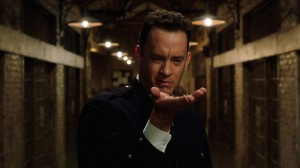 In the world of Hollywood, many actors have become synonymous with certain character stereotypes due to their unique attributes and acting styles. For example, Tom Hanks has built a career around playing the endearing everyman with a heart of gold, while Meryl Streep is known for her incredible range and ability to portray a vast array of strong, complex female characters. On the other hand, action heroes like Dwayne “The Rock” Johnson and Jason Statham have made a name for themselves by bringing a physical intensity and toughness to their roles. Meanwhile, comedic actors such as Melissa McCarthy have gained recognition for their impeccable timing, wit, and ability to create memorable, larger-than-life characters. These five celebrity actors demonstrate how embracing their type and capitalizing on their strengths has allowed them to carve out successful careers in the entertainment industry.
- Consult With Industry Professionals
Getting feedback from industry professionals, such as acting coaches, agents, and casting directors, can be invaluable in determining your acting type. These individuals have extensive experience and can provide valuable insight into the types of roles you are most likely to excel in. Attend workshops, classes, or networking events where you can connect with these professionals and ask for their opinions. Remember to approach their feedback with an open mind and use it to refine your understanding of your acting type.
- Embrace Your Type and Market Yourself Accordingly
Once you’ve identified your acting type, embrace it wholeheartedly and use it to your advantage. Update your headshots, resume, and online profiles to showcase your type and the roles you’re most suited for. Be proactive in seeking out auditions for characters that fit your type and work on building a diverse repertoire of monologues that showcase your strengths.
Discovering your acting type is an essential step in building a successful acting career. It allows you to target the roles you’re most suited for, increase your chances of booking gigs, and focus your energy on honing your skills within your type. By following these five simple steps, you can gain a clearer understanding of your unique acting type and use it to propel your career forward.
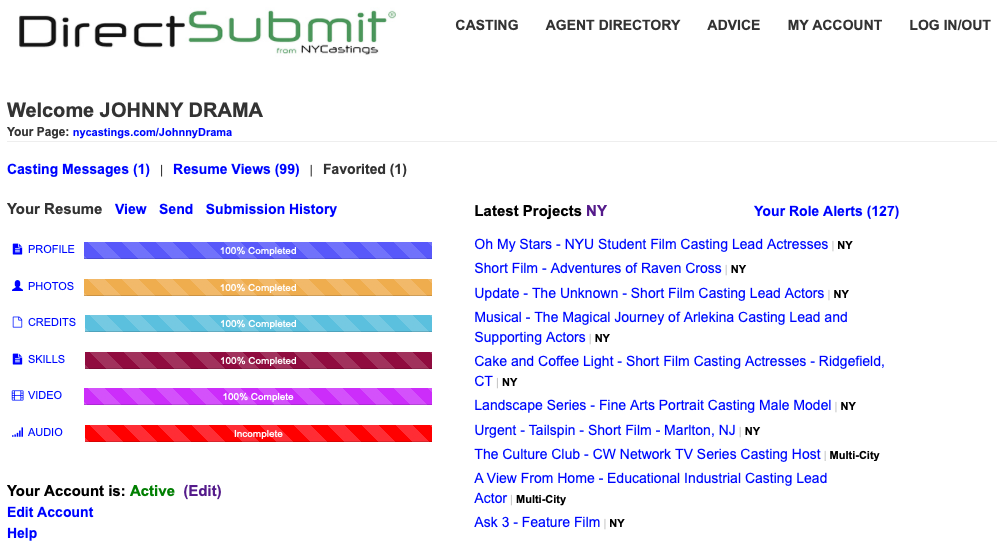
Here is a quick explanation of the elements of your Talent Dashboard. You can also use the My Account link in the header of the website to access these same pages.
1. Your Page: nycastings.com/JohnnyDrama – This shows your vanity link that you can choose on your profile page. You can use this link anywhere you like to reference your resume page.
2. Casting Messages – This is your inbox for messages from the Casting Directors of projects that you have submitted to, and also from messages sent to you from your resume directly.
3. Resume Views – This is a metric on how many times your headshot & resume has been viewed.
4. Favorited – This is a metric for how many times casting director have ‘favorited’ you from their casting dashboards. This saves your resume on a page of favorite talent that they have quick access to.
5. Your Resume – View – Click this link to view your resume. Always check it over when you have added new content.
6. Your Resume – Send – Send lets you email your resume to anyone.
7. Your Resume – Submission History – Submission history shows you a list of all projects that you have previously submitted yourself to. This pages also lets you edit your cover notes to those projects.
8. Latest Projects (By State) – This shows you the lattes projects in your area. The State is pulled from your profile page. This is to give you quick inside on what’s casting in your local area.
9. Your Role Alerts – Shows you the roles alerts that you have set up that match your criteria.
10. Profile, Photos, Credits, Skills (Special Skills, Training, & Bio), Video & Audio – These pages edit the content of your resume.
11. Your Account is Active / Inactive – Shows you the status of your account.
12. Edit Account – Lets you edit the billing preferences of your account. You can change billing info, plans, and cancel the account.
13. Help – This page points you to the right pages for common questions you may have.
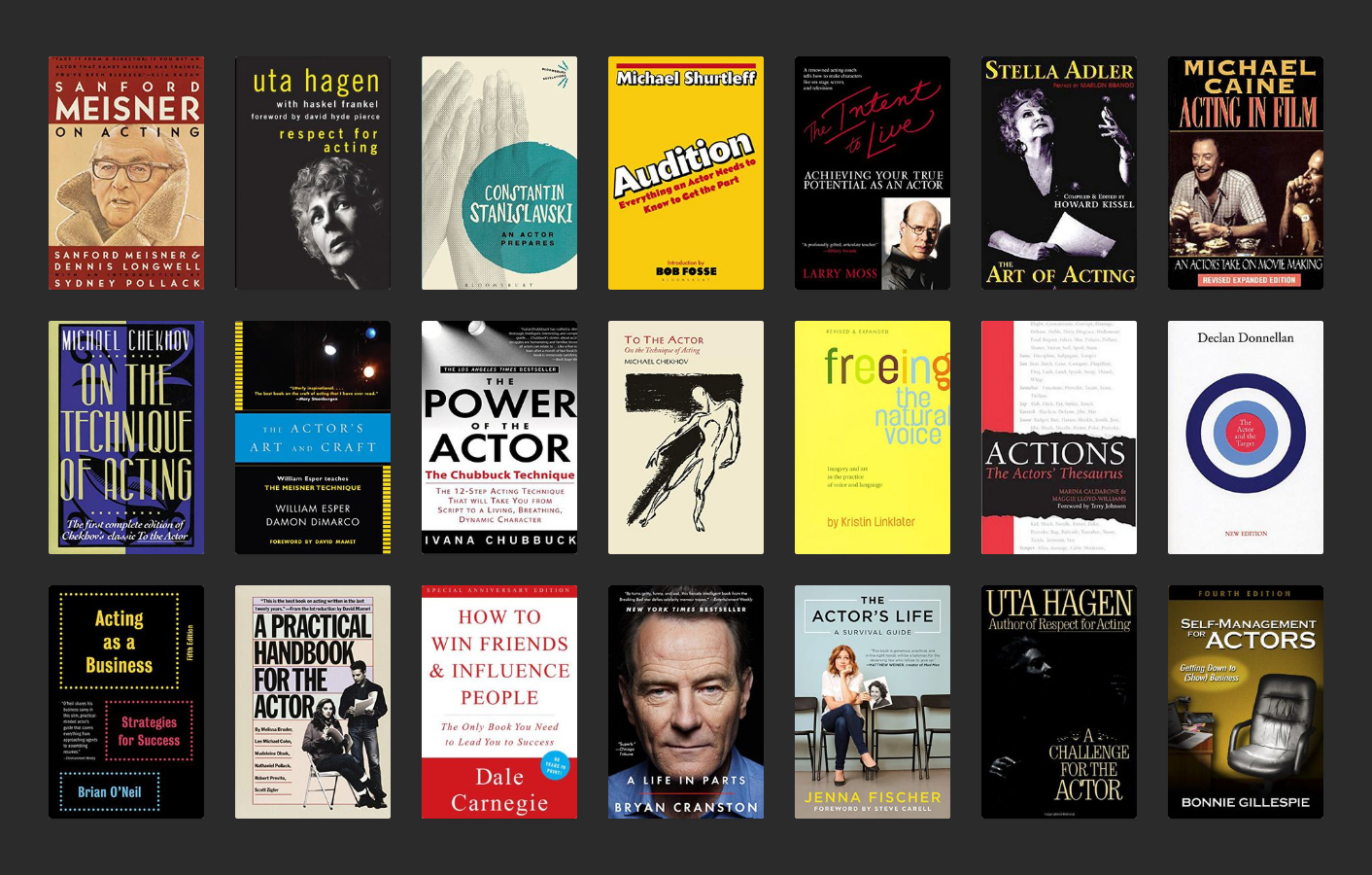
Embarking on a journey in the acting world is a unique adventure that requires not just raw talent but also a deep understanding of the craft. Books on acting serve as invaluable resources, offering guidance, techniques, and insights from seasoned professionals. For those who tread the boards or illuminate the screen, absorbing wisdom from these texts can be transformative.
In the realm of acting, continuous learning is key to personal and professional growth. Books on acting provide a foundation of knowledge, from theoretical frameworks to practical exercises, aiding actors in honing their skills and deepening their emotional expressiveness. Whether you’re interpreting Shakespeare or starring in a contemporary film, these books offer a spectrum of perspectives that enrich an actor’s repertoire.
This curated selection of books on acting is designed to inspire and educate actors at all levels. From classic methodologies to modern interpretations, each book offers a unique lens through which the art of acting can be explored and mastered. These texts are not merely instructional; they are a source of inspiration, a means to challenge oneself, and a guide for artistic exploration. As you delve into these pages, allow the collective wisdom of these authors to guide your path in the dynamic world of acting.
1. “An Actor Prepares” by Constantin Stanislavski
- Overview: This seminal work by Constantin Stanislavski is a must-read for any actor. It introduces the Stanislavski method, a system of acting techniques that has shaped modern acting.
- Key Takeaways: The book delves into the ‘system’ of acting, exploring concepts such as emotional memory, the magic if, and the art of experiencing over mere representation.
- Why It’s Important: It lays the foundation for method acting and provides actors with a structured approach to their craft.
2. “The Actor’s Art and Craft” by William Esper and Damon DiMarco
- Overview: This book offers a detailed look into the Meisner technique, guided by one of the most respected acting teachers, William Esper.
- Key Takeaways: The text demystifies the Meisner approach, emphasizing honesty, spontaneity, and living truthfully under imaginary circumstances.
- Why It’s Important: It provides practical exercises and insights, helping actors develop a reliable and effective acting technique.
3. “Respect for Acting” by Uta Hagen
- Overview: Uta Hagen, a revered actress and teacher, presents her approach to acting in this influential book.
- Key Takeaways: Hagen discusses the concept of substitution, the importance of sensory awareness, and how to achieve authenticity on stage.
- Why It’s Important: The book offers a straightforward, no-nonsense approach to acting that emphasizes the actor’s responsibility to their role and audience.
4. “Audition” by Michael Shurtleff
- Overview: A practical guide for actors, “Audition” provides invaluable advice on how to navigate auditions successfully.
- Key Takeaways: Shurtleff offers 12 guideposts for actors, covering aspects like relationship, conflict, and immediacy, to help them deliver compelling auditions.
- Why It’s Important: It’s a comprehensive resource that tackles the often daunting process of auditions, offering strategies to stand out and perform under pressure.
5. “Acting: The First Six Lessons” by Richard Boleslavsky
- Overview: This classic text presents the fundamental principles of acting in an accessible and engaging manner.
- Key Takeaways: Boleslavsky’s lessons cover the essentials of acting, from concentration and memory to dramatic action and characterization.
- Why It’s Important: The book’s format as a series of dialogues makes it an enjoyable read while imparting crucial insights into the actor’s craft.
6. “The Intent to Live” by Larry Moss
- Overview: Larry Moss, a renowned acting coach, shares his insights on the craft of acting, drawing from his extensive experience in the industry.
- Key Takeaways: The book emphasizes the importance of intention, character analysis, and the actor’s emotional life, offering practical techniques to enhance performance.
- Why It’s Important: Moss provides a comprehensive guide to inhabiting a character fully, making it an essential read for actors seeking to deepen their understanding and execution of their roles.
7. “The Power of the Actor” by Ivana Chubbuck
- Overview: In this influential book, Ivana Chubbuck presents a 12-step acting technique that combines the power of psychology with traditional acting methods.
- Key Takeaways: Actors learn to use their personal experiences to fuel their performances, creating more authentic and powerful portrayals.
- Why It’s Important: Chubbuck’s approach has been embraced by many successful actors, making this book a staple for those looking to deepen their emotional connection to their roles.
8. “Meisner on Acting” by Sanford Meisner
- Overview: This book offers a comprehensive look at the Meisner technique, straight from its legendary founder, Sanford Meisner.
- Key Takeaways: The book emphasizes living truthfully under imaginary circumstances and the importance of repetition exercises in developing an actor’s instinct.
- Why It’s Important: It provides a detailed exploration of one of the most influential acting methods, offering practical exercises and insights that are crucial for actors seeking to develop a natural, responsive approach to their craft.
9. “A Challenge for the Actor” by Uta Hagen
- Overview: Uta Hagen expands upon her earlier work in “Respect for Acting,” offering more advanced techniques and concepts for the seasoned actor.
- Key Takeaways: The book delves into the challenges of character creation and the physical embodiment of roles, providing exercises that help actors make authentic and imaginative choices.
- Why It’s Important: It’s a deeper dive into acting that builds on Hagen’s foundational principles, ideal for actors looking to refine and challenge their craft.
10. “A Life in Parts” by Bryan Cranston
- Overview: In this captivating memoir, Bryan Cranston, renowned for his roles in television, film, and theater, shares the story of his life and career, offering a raw and intimate glimpse into his journey as an actor.
- Key Takeaways: Cranston provides readers with an honest look at the highs and lows of his acting career, from his early days of commercial gigs to his iconic role in “Breaking Bad.” The book is filled with personal anecdotes, lessons learned, and the strategies he employed to create some of his most memorable performances.
- Why It’s Important: “A Life in Parts” serves as a source of inspiration and practical advice for actors, demonstrating the persistence, creativity, and dedication required to succeed in the industry. Cranston’s reflections on his diverse roles and experiences offer valuable insights into the art and craft of acting, making this book a must-read for those looking to deepen their understanding of what it means to live a life in parts.
These books, each with its unique approach and insights, provide valuable resources for actors seeking to explore different facets of their craft, from psychological depth to practical technique. Whether you’re new to acting or a seasoned professional, integrating the wisdom from these texts can enhance your performances and deepen your understanding of what it means to be an actor.