richardschiffcopy

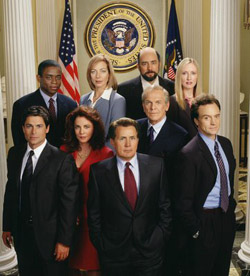
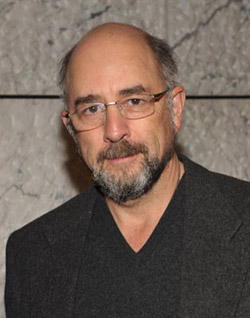
Way before The West Wing, Emmy Award winning actor Richard Schiff actually “did odd jobs in New York City.”

He shared his story with NYCastings at The Creative Coalition event at Sundance…

“I drove a cab in New York and that was threatening to my life,” shares Richard Schiff. ” I was headed in the wrong direction. That’s why finding the theatre, finding a manner in which to express what was happening in my life was my biggest break.”

“Acting saved my life,” shares Richard Schiff who is known for playing a White House Communications

Director though in real life, he does not always stick with a firm agenda. In fact, he often makes up his mind – in the moment, which may explain why his acting is so real and dynamic.

“People often ask me why I pursued this career,” says Richard “and I say, ‘for me it was following my curiosity.'”

“I was always very curious as to why I would see a movie that Robert Redford, Pacino or De Niro were in and that would change my state. I would be very moved by it. But I would see another movie and it didn’t work. I was fascinated as to why that was and so I went on a trail trying to figure that out.”

Getting his start in theatre, Richard studied acting at City College of New York.

“I started directing and producing theatre and then I started acting as a curiosity because it was a mountain of fear for me,” says Richard. “I wanted to climb that mountain and see what would happen, so I started acting on stage. Then, I just found myself in LA because I had gotten divorced from my first wife, who I still love, and decided on a whim to go to LA. I started getting jobs and doing plays. I didn’t have a picture or resume or agent but someone said to come audition for a play and that is where my career went. Then I started to do a lot of good movies and some good television.”

When West Wing came along Richard “knew right away it was going to be a big deal because the script was so well written.”

But Richard didn’t sign on to West Wing, right away.

“I had a big debate as to whether I should do it,” reveals Richard. “There was a movie that I was up for and I was told that if Steve Buscemi drops out then the part was mine. That conflicted with the pilot of West Wing and my agent asked ‘which do you want to do?’ and I said ‘the movie, it is not even close.'”

In addition to having a film lined up, Richard Schiff didn’t say YES to the West Wing audition because he thought they already hated him!

“The year before West Wing, I was doing very well with auditions and moving up in my career and everyone wanted to see me at that point,” says Richard. ” I had four different pilots I was working on but when I would go to the producers and network to agree on money for the next seven years – I would go through panic attacks.”

“At one point, I got a deal and I was driving around the NBC building but I could not go into the garage. I kept going around the block. I would see the garage again and go around the block, again. Then I got a call from my agent asking where I was and I said ‘around the block’ and he said ‘so you are going in soon?’ and I said ‘I don’t know.’ I drove around three more times and then I realized I didn’t want to go in.”

Richard didn’t want to sign onto this particular show because, “the sitcom was a bunch of kids and I was playing a super in New York.”

“I realized that I would have to go on stage for the next seven years with a bunch of kids throwing pencils at me,” shares Richard.

And that was not the only time that Richard turned down an offer.

“This happened three more times. And my price kept going up because I realized I did not want to do television. So NBC hated me,” says Richard.

“But then, the movie fell through and I was depressed so I went through the West Wing process.”

“I was on the second round of auditions and Aaron Sorkin and Tommy Schlamme took me out afterwards,” recalls Richard. “They said that they were going to bring my in again and hoped they would see me in the morning. I told them I may not show up and they said, ‘yeah, we’ve heard that.'”

“I also said that I might be really bad, because I am really bad at these tests, and they said ‘we heard that too.’ And then Tommy put his hand on my shoulder and said ‘I really want you there.'”

Still – Richard Schiff had not made up his mind about The West Wing. But then, “I turned the corner to leave and saw Allison Janney sitting there and I thought to myself – ‘ If they cast this woman, they really know what they are doing,'” says Richard. “That gave me more excitement about it and I did go in.”

Given Richard Schiff’s tendency to make decisions up after prolonged consideration, it figures that he still has questions about being an actor.

When asked, ‘When did you decide to become an actor?’ – Richard simply says – “I haven’t yet decided. It is a serious debate.”

Yet there is no question over which people have meant the most to him.

“Tommy Schlammey is my mentor right now,” says Richard. “And my ex-wife. She is a writer and fantastic. She is the smartest human being I have ever met. She could quote Chaucer or sit down with a micro brain surgeon and have a conversation. She taught poetry and would come home dripping sweat because of everything she gave. So simply, she was able to get twelve year olds to write what they saw and were thinking. She got the images out of kids and gave hem parameters no one ever gave to them. Today, she still gets thank you letters from students. “

“That is a real mentor,” shares Richard. “She changes people’s lives.”

In Richard’s life, his future plans include a Broadway play in the fall called Talley’s Folly.

I am also developing a film, which is the first time I have done that,” says Richard Schiff. “It is one of the reasons I came to Sundance. I already have the funding and am looking for a writer and director. I am very excited about it.”

Very exciting indeed!

From his deep curiosities to his brilliant performances and belief in changing lives – Richard Schiff continues to share a truly unique voice and style.

speachstorycopy

As we head full force into award season, celebrities are whittling down their waist lines AND their short list of who to thank during acceptance speeches – because every moment and word counts when actors present themselves.

If an actor says the wrong thing, it can make them seem green or unprofessional, so NYCastings sought after some award worthy speaking advice from celebrity speech writer, Blair Fell.

Q & A with Blair Fell

Q: How did you get started as a celebrity speech writer?

A fan of my play version of Burning Habits recommended me to someone who was putting together the GLAAD awards. Because I am a funny writer, they wanted someone funny. They brought me on to write the GLAAD awards and immediately I was writing celebrity speeches. For my first award show I wrote for Joan Collins, Kathleen Turner – all these big people right away. They kept hiring me for a number of years, then I moved on to writing for other award shows and celebrities would contact me to write their speeches.

Q: How should an actor greet an audience?

It depends on the venue. I am also a director and do a lot of casting. When it comes to introducing yourself to a casting director, agent or director, the important thing is to remember that they want you to be as good as you can be. We are on your side. Keep your integrity, look like you are not an insane person and present yourself professionally. You do not need to force your personality. We will get who you are.

Q: Can actors speak too much when they meet a CD/agent etc?

The tendency when you are nervous is to over talk. Actors feel they need to show their entire personality. Rather than coming in and saying, Hi my name is Kathy Black, I am here to audition for the part of Olivia and I am doing such and such speech, they go on and on about a personal story and it seems forced. Keep it professional. We just want you to be good and have fun with the work. It is a performance opportunity.

Q: You use a lot of humor in your celebrity speeches. Should actors use humor when writing a cover letter?

No, please don’t use humor. When you are writing a cover letter just say your name and what is relevant to the work. When I am casting, I want you to clearly indicate in your cover letter and email where I can see your reel – so make sure your link is there. Most of the time, casting directors are going through hundreds of cover letters at a time, so make sure you have down what is important and that it is as easy as possible to get to.

Q: Actors often get asked Tell me about yourself. How should they best answer this?

If they say “tell me about yourself, they do not want to know about your childhood. We only want to know stuff that has to do with the project we are working on.

Talk about what relates to the piece you are going in for. If you are going into an audition for a comedy, talk about what comedies you’ve done. If you are going in for a drama, don’t talk about comedies. If you are going in for something like Oklahoma and you were born in Oklahoma City, talk about that. Geer what you have to say toward the piece you are auditioning for.

I do research for a speech for an award show and actors should try to research as much as possible about the piece. I research the person and the nature of the event. The same thing goes for an audition. If you are going in for a drama set in the south, research it and see if there is anything in the play you can have a skill for already – then mention it.

In burning habits, I was thinking of using puppets and an actress mentioned that she studied puppetry. She got the main part and her mentioning it was huge in guaranteeing her the part.

Q: What should an actor say when asked, Do you have any questions for me?

When I ask that question, it depends. One… I may be really interested in that person and want them to basically guarantee that they will be available. So, clarify that you know when rehearsals start and that you are free. The other reason I may be asking… is to wrap up the conversation.

Q: How can actors read a room / read their audience for the best results?

You can gather the energy of a room when you first walk in. How the casting people greet you will show you if you can be more casual. If they are stone faced, and giving you nothing, then get to why you are there – which is to show what you can do. All we want is for you to be amazing. Doing any other extraneous stuff is not needed. The whole focus is on the performance.

Come in, be really succinct, say your name and get to the material. If you are not right for the part and still knock my socks off, I save your resume and call you in for other parts.

Q: Are there any physical signs that read poorly to an audience of CDs, agents, etc?

I don’t want to see on your face that you are going to be devastated if you don’t get the part. There is only one part and 50+ people auditioning, so just be great. I want to know that a person is not going to waste my time, is not going to get their feelings hurt and loves acting.

Q: When it comes to thanking casting directors, agents etc for their time – what do you recommend actors say?

Just say, It was great meeting you. If there is something relevant to the part, like you can jump through hoops of fire and the scene has hoops of fire and you didn’t already mention it – mention that. Otherwise be succinct and sweet.

Q: You write speeches and also your own plays, webisodes, etc. Should actors write their own work?

Definitely. The problem with being an actor is a lack of ability to take action themselves. I definitely recommend actors write their own work, their own plays and one man shows. The only difference between a writer and a non writer is that the writer is doing it. People think they can’t do it, but they can. I started writing for television by producing my own plays in a bar in the east village and everything came out of that.

Q: Anything coming up for you that you want actors to know about?

My web series, Burning Habits, is coming out this spring. Hopefully it will be something going for years with a lot of opportunities for actors.

A big THANKS to Blair Fell for giving NYCastings some choice words about how to best present themselves. For more info on Blair Fell please visit: http://www.blairfell.com/ & www.burninghabits.tv.

susanbatsonstorycopy

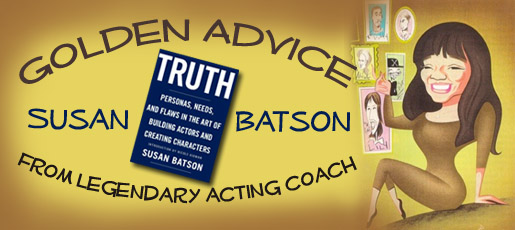
Shining with energy, passion and an empowering purpose – legendary acting coach, actress and writer Susan Batson knows how to turn any actor into a golden character.

It’s an eclectic process. It’s like a science, shares Susan Batson. Basically and essentially, you help the actor get to the purest truth in themselves.

Within the acting community, Susan Batson works with all levels from A-list celebrities, such as Nicole Kidman, to the fresh crop of today’s 20-somethings, by using a mixture of methods she learned from her own renowned mentors.

I worked with the great Harold Clurman and Lee Strasberg. Those are the primary mentors in terms of acting, shares Susan Batson. And, on a human level, my sense of purpose and drive is from my mother. It’s a very interesting combination. She was a very strong civil rights activist, very powerful. In fact, Harvard gives an award every year in her name. And she was always was on purpose.’ That became a very important part of my life.

From this mixture of influencers, Susan Batson realized that in acting, one is responsible for creating a human life and, therefore, must make sure that people understand the human being no matter who the human being is.

This is a very important job, says Susan. I understood how important the material was within myself; all my fears, judgment of myself of how imperfect I am. I understood that could all be used. It was all art. I wanted to commit myself to it. To teach the inspiration – that we are responsible to creating walking talking human beings.

To help students create walking, talking human beings, Susan Batson has a wonderful exercise called the ritual where the actor begins to really look at all the judgment, all the blocking and really attempt a process to get to the other side.

We take a lot of time on that ritual and constantly remind the actor that everything is of value, you can be really creative and work with it, shares Susan. I guide them to understanding the mechanism inside that informs. If you listen to that, which is intuitive, you will hear some level of truth.

On some level, your character may be a liar and that’s fine. I am sure you have told a lie, says Susan. So, the minute you can say I have also told a lie,’ you can then say – I know the truth of lying,’

Not every actor has killed, but they have killed a cockroach or a fly or have said in their head I could really kill you.’ They know the sensation. Once the actor is willing to confess that they know, they can blend the truth that they understand, weave it into the imagination and hand it over to the character.

It takes a lot of awareness and a lot of work, shares Susan. Until you arrive at that fluidity, at finding the creative stuff for you to use, then you can’t work. You can’t work on the level that, which you are possibly capable of.

Getting to the highest level of your potential is a journey of constant knowing, being aware, managing and forgiving self.

We have an exercise where we get that judgment out of here, shares Susan. We will walk it to the elevator, push the button and send the critic down.

One must believe in order to act. One must have faith; not only the basic faith in self – one must have faith in the unseen. You create from the unseen. You have to have that openness and that willingness. When you don’t, there is a battle.

Today’s young actors face many unique battles and that’s why Susan Batson makes it her purpose to give them hope.

It’s very important for me to come back to new talent and understand new talent now as opposed to 15 years ago, when I started with Nicole, shares Susan, It is a very special generation that has a struggle with everything from terrorism to divorce. There is so much out there now. It seems like they are overwhelmed with their lives.

In guiding today’s young people, I spend an enormous amount of time getting them to believe that there will be a tomorrow, shares Susan. That there is a tomorrow; a reason that they should invest in themselves and commit to their passions. Once that happens it’s incredible.

Once you let them know that every aspect can be used, that it is all creative fodder, they can see it as material, shares Susan. They don’t care how ugly it is, how bad it is or how imperfect. It is human and therefore you can make a walking talking human being out of it.

If a student says, I hate my mother,’ I would say, that is good, I think we can use that,’ explains Susan. By the time we do the exploration, once it becomes fluid and you don’t let it block you, you can use it. You will discover that on the other side of hate is that you love and need your mother, too.

It comes full circle and gives it truth. You have the hatred and the need and the love – all of it. If you can turn it into something fluid, then you can create with it.

When it comes to breaking down walls, even A-listers have to keep working at it.

Once you are gold, you need to keep yourself golden, shares Susan Batson. Even the best of it needs to be cleaned and re-exposed and put into the world again.

It’s what I call gold dust, explains Susan. It’s a master class where we are constantly digging, digging, digging for the gold.

Juliette Binoche will come in to polish up and give it a good cleaning. She will drop down into some space I never knew with her. She will get into the crevices and dig up more.

With Nicole and Rabbit Hole, she was waiting to make it. But then I said go do it’ and she did. She produced from a place of empowerment and I find that when she does that she always gets a nod.

When Nicole heard about the Golden Globe nomination she said it doesn’t matter if I win. I did it. I was able to get myself together and do it.

She keeps growing and I love her for that, beams Susan. And Nicole says to tell the Susan Batson students, you can do it. That is something we have to keep sharing with each other. You can find a way.

Even for me, says Susan Batson, I wrote the book (Truth: Personas, Needs, and Flaws in The Art of Building Actors and Creating Characters) and have the process, but I really feel that in order to stay alive you have to have this enormous curiosity about what things are, what is going on and if there is more to explore. That gives you joy, particularly if you have a love of your craft, to keep exploring it.

One of the great joys of the book is I was able to get it as simple as I possibly could because I really wanted not just actors to understand it, but everyone to understand it,

I hope that we can all serve the world and help the world, shares Susan Batson.

Because, at the end of the day we are all representations of truth – we are all walking talking human beings… with a golden purpose.

What beautiful, solid, shining advice!

Many thanks to Susan Batson for sharing her wisdom with NYCastings. For more information on her book (TRUTH) and acting studio please visit www.susanbatsonstudio.com


top booker ad robert

and the award goes to…

2010 = A ton of work booked by NYCastings members!!

An outstanding number of NYC actors got the chance to submit for reputable work through NYCastings in 2010 and to celebrate the many successes – NYCastings is awarding two of our top bookers with fame, praise and some added pocket change.

Coming in at the top of their NYCastings class… Robert Keiley and Lauren Francesca, who brought in the highest amount of dough and gigs, respectively. Both Top Bookers will receive $200 in green thank you notes, from the team at NYCastings.

Robert Keiley (actor, father & firefighter extraordinaire) – worked as a Principle Game Player for EA Sports, a Firemen for a Superblox Commercial and as a husband for Verizon Fios; while raking in a ton of residuals for the 2009 job he booked through NYCastings, as a Stunt Driver for Dodge Trucks.

“I couldn’t get an agent, but through NYCastings I booked high end paying work, all reputable work” shares Robert. “There has been so much legit work available this year.”

Over the past year, Robert banked 60k through the gigs he got on NYCastings. CONGRATULATIONS and three cheers for Robert Keiley!

And please keep the applause going for NYCasting’s leading lady – Lauren Francesca.

While Robert pulled in the highest amount of dollar signs, Top Booker Lauren Francesca shook up so much work we needed a Richter Scale to measure her star power magnitude!

In the past year alone, Lauren worked on over 53 projects including: A Romance is Boring, Weekend Pre Game, Chris Banno Montel Mixer, On the Verge – FX Pilot, SVA reshoot – Out of the Ordinary, Lights Out as Featured Ring Girl, Spike TV, The Tyra Show, MTV Promos, Bartending Promos, a Rap Star Commercial, Promo Video Game for White Collar, a Nike Commercial, College Humor, Thriller Beach, an IPhone App, Blue Bloods and so much more.

Lauren’s impressive list of work makes her a top booker of 2010 – an accolade she also earned in 2009.

To chronicle the 2010 successes of Robert and Lauren, NYCastings is putting their highlights into a yearbook-style perspective. ..

2010 in review with Robert Keiley

1. In 2010… As an actor, I would have been voted most likely to?

Do another Commercial.

2. For my 2010 success… I would have to thank?

Obviously, I would have to thank my family and friends for their support. I would also have to thank some of my buddies who are no longer with us, as in the end I know it is those guys who are making things happen for me. I also would like to thank my new daughter Taylor. Although she is only 7 months old, she is the motivation to keep positive and to keep moving forward when rejection takes its toll.

3. Smartest moment?

Re-subscribing to NY Castings, doing the interview with Kelly and taking advice from the site.

4. Most embarrassing/class clownmoment that I actually learned from?

When auditioning for a well known casting director, I had a terrible audition. I just couldn’t get the lines down and it stuck with me for weeks. Finally, I shook it off. I read for the same casting director and got a call back.

5. In 2011… I’m most likely to_____for the first time ever?

This year it is my goal to keep booking commercials and I need to book a role for a TV or Film Project… I have done some small film work, but this has to be the year where I make it happen.

2010 in Review with Lauren Francesca

1. In 2010… As an actor, I would have been voted most likely to?

In 2010, as an actor, I have been most likely to create my own destiny. I have been fortunate enough to have the opportunity to work and collaborate with a lot of talented and hard working people.

This year, I have been in over 15 commercials, I acted in one of the most popular web series online, “The Key of Awesome”, Entertainment Weekly deemed me to have the best web parody online, I worked on an FX pilot created by the team that developed Rescue Me and landed a principle role in a feature for theatrical release titled, Cut, with many notable names attached. I also worked on Comedy Central, Spike TV, CBS and MTV. Most of these jobs I have booked on my own without an agent or a manager.

In addition to booking jobs, I have also been producing my own projects and projects for other production companies. I worked as a production coordinator for “Johnny B Homeless” starring Al Thompson and Kenan Thompson, which won a People’s Choice Award. I have gotten involved in casting, wardrobe and other areas of production. I believe working in front and behind the camera has really helped me become a better actor.

2. For my 2010 success… I would have to thank?

Well first and foremost I would like to thank NYCastings. Without their site I would not be working with most of the managers, agents, and casting directors I have booked many other jobs because of them as well. Because of people like Aaron, Art, Alvin and Mig; I do not have to take a day or night job and am able to call myself a working actor.

On a personal side – As an actor, it is very easy to get stressed out and I have learned that in order to have a vivid life on camera you need a good support team. I am very fortunate to be a native New Yorker and that my parents, grandmother and sister are located in NY. I have few close friends, one being my dog Curious George, that I would not feel sane without. It is important to do things besides acting and have relationships that aren’t just focusing on the work. I am very lucky to have friends, in the business and out of the business, that I can rely on to cheer me up and have a good time with when I’m not acting.

On a business side – One person who has been an eye opener for me is my good friend, boss and mentor Al Thompson. Without his guidance I would not be where I am at today with my acting or producing career. He has been advising and connecting me to people, showing me the road and what it takes to be a working actor. He is one of the hardest working people I know and someone I truly look up to. Every year he has about 4 or 5 of his own projects circulating, winning awards in festivals.

Another person I have to thank is my acting coach Herman Chavez, without him I would not be booking the jobs I am going out for.

Patrick Cooley has gotten me jobs in front and behind the camera, has helped to motivate me to do big things for 2011 and has introduced me to many people that have made my life better in many ways.

Over all I’d like to thank all of my actor and producer friends that I have collaborated with and worked with this past year and will continue to work with in the future.

I feel this business has a lot of give and take and I am just grateful for the amount of support and impact my friends have had on my life. I look forward to being there for them as much as they have been there for me.

3. Smartest moment?

Winning NYCASTINGS top booker for a second year in a row!

Also, taking my good friend Al Thompson’s advice, It’s very hard to have a one woman army. I have learned this the hard way. Before 2011, I signed with a manager to help me organize my goals and plan my future. I have also teamed up with other actors and producers who have similar goals.

4. Most embarrassing/class clown moment that I actually learned from?

Practice, practice, practice… And double stick tape sometimes stops sticking.

5. In 2011… I’m most likely to ____ for the first time ever?

2011 is a big year! I have a lot on my plate. I started it out with a bang. I started studying with the world famous Susan Batson, who to me is my Oprah. I am starting a production company with one of my co- workers. Within the first week of the year, for the first time ever, I was flown out to Michigan to Madonna’s birth town to star in a sci-fi film, The Solder and the Demon. I met so many amazing people and fell in love with the script, cast and crew. And for the first time ever, I had my own personal body guard – John (aka: papa bear). I hope to go back to Michigan. With the tax incentives, I might think of shooting a bunch of my own projects there.

This year, the company I am working with, The Key of Awesome, is launching my own channel. I am producing, acting and creating a lot of really funny sketches and characters. One of my writers and co producers, Jeffrey Gurian is helping me launch this at New York’s famous Comic Strip.

I am looking forward to working and creating shows and channels with Derek Deangelis, Louie Torrellas and Walter Masterson.

My manager Josselyn Herman has a lot of amazing things lined up for me and I am excited to be working with someone who believes in me.

And finally, the project I am most looking forward to for 2011 is my pilot, Black Ballerina. It has been about a year of preproduction, and MMA training for me. Of what I thought would just be a web series to something much bigger. I am so excited to shoot edit and make my dream and passion for this project and character come to life.

CONGRATS AGAIN – to Robert Keiley and Lauren Francesca!

And thank you to all who submitted to the Top Booker contest.


If you have a recent success story – please share it. You may be the next person
we celebrate at NYCastings.

newyearsrescopy

2011 is the… Year of Perseverance! says agent Craig Holzberg, founder of Avalon Artists Group.

Everyday is a new opportunity and it is about seizing the moment – not worrying about what happened in the past or being freaked out as to what can happen in the future, but being focused on what is happening right now.

Right now… every actor can help themselves achieve even greater results in 2011 with these 10 resolutions offered by Craig Holzberg – who started out as an actor/model, has over 25 years of industry experience and still, whole heartedly, believes in the actor’s dream – as a reality.

In my heart, shares Craig Holzberg, I believe that if you stick with this long enough, and are committed to it, sooner or later you are going to be successful. However, success is not defined by winning awards, it means being able to do what you love for your entire career and make a living at it.

To make the most out of life, as an actor, this year… here are Craig Holzberg’s 10 resolutions that you can put into action, pronto…

1. When meeting agents/casting directors:

Be yourself at all times.

When you take a meeting for the first time, whether you are meeting a casting director or an agent, the most important thing is that actors need to be themselves, says Craig Holzberg. A lot of actors think they know, or can guess, what we are looking for and try to be that person. However, because they can’t possibly know exactly what we are looking for at the time, by coming in as someone other than they truly are, they run the risk of being passed over.

2. Regarding monologue / scene / song choices:

Use material from roles (from TV, plays or movies) that you could believably portray.

I see actors come in and audition with material that isn’t appropriate for their type and age range, shares Craig Holzberg. It is really important that an actor knows who they are, what roles they could be believable in and make their choices accordingly.

As agents, we have obviously seen the more popular audition scenes, monologues or songs because many actors are of the same type and age range – but if the material suits the actor and showcases the actor in the best light, there is nothing wrong with choosing something we may have seen several times before.

3. About Training:

Exercise your muscles every day!

Training is paramount for any performer, says Craig. Acting, singing, and dancing are all like muscles. Just as you go to the gym to keep your body in good shape, you have to work out your performance muscles every day. School is a great foundation, but an actor has to continually train their muscles to keep them strong and to keep building them throughout their career.

4. On your hunt for an agent:

Focus on finding the RIGHT fit.

A lot of actors are concerned with the fact that if they don’t have an agent they can’t get work on their own – this is clearly not the case. There are so many outlets today for actors to get work on their own until they find the right agent.

It is like dating, says Craig. It is important to shop around and meet as many people as possible in the industry. If you have more than one agent who is interested in meeting you, take all the meetings. It is all about finding the right culture and personalities in an agency that meshes with your personality. Make sure to find the right agent who is passionate about you, passionate about your career, and passionate about championing your career to get you where you want to be.

5. About following up:

Don’t drop the ball.

Follow-up is the most important thing. If you have had the privilege to meet with a casting director or an agent, first and foremost an actor should follow up with a hand-written thank you note. Then, keep in touch with what is going on in your career, shares Craig Holzberg. After meeting an agent/casting director let them know if you book something, star in a project or something exciting is happening in your career. That is the time to follow up, because things change daily and it may then be the right time for us to re-evaluate if you are someone who might fit into our agency.

6. When it comes to self marketing:

Create the perfect reel!

Any tools that you can use to self market, whether you are represented or not, are key, says Craig. As agents, we use reels all the time when submitting actors to casting directors. Any material that we can provide to casting to showcase an actor’s work, can increase the actor’s chances of being seen because the casting director can actually see what the actor looks like on camera.

7. Regarding helping your agent(s) best represent you:

Be ready for when that door opens.

It all comes down to hard work and dedication, shares Craig Holzberg. As agents, we work very hard to open doors for our actors and it is really important that an actor has all the materials they need and that they continually train. When an opportunity presents itself and the door is opened, the actor must be ready to go in there and knock it out of the ballpark.

8. About making forward momentum career choices:

Define your goals and take action to pursue them.

If an actor wants to be on Broadway and is a great singer and actor but not a great dancer, they have to get their dance skills up to the same level. If an actor wants to do film and television and they primarily have a background in theatre, then they need to get their Film and TV skills up to the same level.  This can be achieved by getting into a great on-camera class. There are different mediums that require exercising muscles in different ways. It is about honing the craft, or honing the skills, that are specific to the area of the business that you want to succeed in.

9. When it comes to making the most out of every audition:

Book the room.

I tell my actors that booking the job is the icing on the cake, shares Craig Holzberg. Of course you want to book the job and your agent wants you to book the job as well, but at the end of the day, only one actor can book each role. The true victory is when an actor books the room. Every time an actor walks into a room, they want to leave having left a lasting impression and have the people sitting behind the table say, they are fantastically talented. We want to give that actor a job.’ An actor isn’t always going to be a perfect fit for every role they audition for, but if the actor books the room; casting will bring them back for other projects they are working on.

10. Regarding believing in yourself:

Focus on the marathon, not the sprint.

You can never stop believing in yourself, you can’t give up, shares Craig Holzberg. You have to focus on the big picture and be committed for the long haul. The average career, I have seen over the course of my career, takes anywhere from 3-5 years to get off the ground. And, by getting off the ground I mean, getting to the point in your career where casting directors are very familiar with you and your work.

So much is out of the actor’s control. It is very important to stay focused on the prize – which is working in the business for as long as you enjoy it and being able to earn a living at it. You have to stick with it because… in a business that is based on rejection, where an actor hears no’ more times than yes’, it’s that one yes’ – that can be the catalyst to your career taking off.

It is about being patient and staying positive while waiting for that yes’ to come.

YES… indeed these are solid resolutions for 2001 – the Year of Perseverance.  Thank you to Craig Holzberg for these productive inspirations.

At Avalon Artists Group, Craig Holzberg prides himself in being directly involved in all aspects of his clients’ careers. I wake up every morning excited about what I do, shares Craig. I love working hard on behalf of my actors because nothing is more rewarding than seeing all that hard work pay off.

Avalon Artists Group is a full service talent agency representing actors of all ages, shapes and sizes for FILM, TV, THEATER, COMMERCIALS, VOICE-OVER, and PRINT.
For more information please visit… www.avalonartists.com

thatsaplus-pt2

Embrace your curves, and have fun with it shares Lindsey and Kate E. who work with Anthony Higgins at MSA Models.

NYCastings spoke with Anthony Higgins, Director of MSA Models, in Part One of this story. To get the full scoop on the plus sized experience, we also spoke with two of MSA’s plus sized models.

Here is what Lindsey and Kate E. have to say about having curves and learning to love them…

From Lindsey’s inspirational perspective:

Height: 5’10 – Bust 38D – Waist 36 – Hips 44 – Dress 14/16

The average sized woman is a size 14 or 16, says Lindsey, and it’s so nice to go out there and show these women that we are beautiful and we love our curves. That it’s not just about Victoria Secret models anymore.

Lindsey grew up as a thick girl and people would always comment, but she learned to appreciate everything about herself.

I think when people have to make fun of other people’s personal appearances, they have issues with themselves, shares Lindsey. But, it was hard growing up being heavy. I have been on a diet my entire life. It has always been a struggle.

Getting older, and working with Anthony and the other MSA models, helped Lindsey embrace her body.

When you can be around other beautiful, thick girls who are proud of their body you can be like whoa, I’ve got the same thing going on,’ shares Lindsey.

We should be proud of our bodies.

One moment that helped Lindsey become proud of her body was when someone asked her to model for them.

I was a senior in high school and started to become more fashionable and being asked to model gave me that push to be like, you know what I am pretty,’ says Lindsey. I do have beautiful curves and men like me.

That was the hardest thing. I used to think that men wouldn’t like me even though men love curvy women. It took me a long time to realize that.

Often, people will tell Lindsey that she has such a pretty face. People say that to me everyday, shares Lindsey, and sometimes, if I am in a feisty mood, I will say, Thanks. And I have such a curvy body too.’

Embracing her curves, Lindsey applied to me a model when she graduated from college.

To become a plus sized model, the best thing to do is to send out your pictures, shares Lindsey. Don’t send professional ones because that is a waste of your money. Take some Polaroid’s with light make up, a tank top and jeans. Do full length, quarter and close up. Send them to agencies. Call agencies and see if they have open castings. I know MSA Models has open calls. I love this agency, they are amazing.

Even without a modeling career, Lindsey feels that all women can feel picture perfect.

It’s all about confidence, says Lindsey. If you walk into a room, regardless if you are a secretary or a model, as long as you have confidence people are going to notice that. If you think you are gorgeous and have beautiful curves, other people will think that too.

Kate E. also believes that beauty comes from within…

I am proud of being a plus sized model, says Kate E.

Height: 5’10 – Bust 36C – Waist 32 – Hips 42 – Dress 10/12

I eat well and work out and this body got me a swimming scholarship to Penn State. This body has done so many great things for me and has been healthy and so I embrace it.

When it comes to making the most of her curves, I use it as a plus, says Kate E. Plus is plus.

For me, I look at it as – what other choice do I have? What I am going to do, be negative about my body? Even of I starved myself for a month I would never be a 2 or 4.

Accepting your size comes with, knowing your body type, says Kate E. My father is a 6’6 basketball player and I am built like my father. I have an athletic body and I was given this body because swimming was my life for 20 years. I feel blessed that I am tall. I feel strong and confident. If someone doesn’t like it, male or female, that has something to do with them not feeling comfortable in their size or body and has nothing to do with me.

Kate E. got started in the plus sized business by doing a lot of research.

I re-invented myself when I moved to New York, says Kate E. I am a very creative person, not a sit at the desk 9-5 kinda gal, and you hear about plus sized models in the media. For the fist time ever, there was an all plus sized model show at Fashion Week. I feel like my type of body is embraced now. And I feel like I have good teeth and skin and hair and know how to work the camera. So I figured I would try it. I went to a few open calls and specifically researched Model Service Agency and liked the people.

I said, what do I have to lose’ and put it out there. This is an exciting new adventure for me, shares Kate E. I feel like sky is the limit.

Many people think that, Modeling is waif, size zeros. But there is definitely a place for people like me in the modeling industry and I a happy to take that place.

I see myself as a beautiful, voluptuous woman who has curves and eats and doesn’t feel the need to look like a twelve year old. I feel very womanly and I am proud of my body. I can go to the gym and lift and do great things. I would rather have my body everyday over someone who is skinny but out of shape or someone who doesn’t like their body. As long as I am healthy and go to the doctor and all my tests come out ok, I feel great.

To help other zaftig women embrace their curves, Kate E recommends that women adjust their mindset.

When you look in the mirror, start with one thing you like about your body, says Kate E. For me, I feel blessed to have full lips. I love my hair, really curvy thighs and hips.

Look at Marilyn Monroe, to this day she is still considered the sexiest woman ever and she was a size 14. People love that.

It’s not every day you are going to feel beautiful or think, my body looks hot,’ shares Kate E. I look in the mirror and sometimes know I have to lose weight, but I will think my calves look great.’ Always find something about your body to feel great about because if you love it, those guys or those girls out there will love it too.

Start with one thing you like about yourself or go for a walk, or to the gym, and come home and feel stronger. Appreciate your body. Every day your body gets you out of bed. Your body takes you to work or to school or to your friend’s house. You have to respect it and take care of it.

Just like a car, you have to put gas in it. For your body, it’s not just about eating well or working out – it is looking in the mirror and being thankful that you have all your limbs and are alive. For your body, you have to love it.

Certainly, NYCastings loved speaking with the inspirational team at MSA Models. Hopefully the words of wisdom will help all curvy women appreciate their hour glass figures!!

For more information on MSA Models visit http://www.msamodels.com/

thatsapluscopy

Hour Glass… Curvaceous… Zaftig women can make over $200,000 in the plus sized modeling business. That’s a whole lot of dough – so to get started, here’s what you need to know…

A plus size model, in the past, was a size 10-12 – up to a size 18 for fashion. Now, they are calling a size 8 – plus sized, shares Anthony Higgins – Director at MSA Models.

Anthony Higgins has over 15 years of experience representing curvy women and really enjoys his role in shaping careers.

If there was an Anthony magazine or clothing line, I would hire all types because I see beauty in everybody, says Anthony Higgins. I would love to see things be more fluid and have Mario Testino or Steven Klien take pictures of all different types and have Vogue be seamless… here’s a size 6, here’s an 18, here’s a 2, here’s a 4.

Yet, in reality, we are looking at the general standard of what America thinks is attractive, says Anthony. The people who run the magazines, and pick the clothes that go in the magazines, dictate what is plus sized. And, Hollywood dictates a lot of it too. Brook Shields has taken to being called a plus sized model. Some people are even calling Drew Barrymore a plus size, because she is a 6.

For catalog work, specifically, they will use a size 8 because they think size 14 and 16 will relate to that person and size 4 and size 6 will relate to that person. They do not use size 18 as much as they should for print – though… size 18 makes the most money, says Anthony, because the typical sample sizes are 18. There is less print work, but there is more print and showroom work for them.

The demand for plus sized models may be dwindling in size requirements, but there will always be a demand for plus sized models because there are plus sized people, says Anthony. More than 50% of American women are size 14 and up.

To make it as a plus sized model, the requirements go far beyond the number on a clothing tag.

There are still the same standards when someone wants to be a model.

For print and for runway, you have to be a minimum of 5’7 – 5’8 up to 6 foot. Though, there are exceptions to every rule, shares Anthony. I have Mia Amber who has done films, acting and print who is 6′ tall and a size 20 – and she’s a star, she works all the time. And, I have Tricia who is 5’6 who works all the time.

In general, modeling is about being proportioned, says Anthony. Even though you can be a size 18, you have to be tight, in terms of your skin tone, have clear skin, beautiful hair and teeth.

You have to know your shape before you show it. There are women who are inverted triangles, pears and all sizes. But the ones who work the most are proportioned hourglass.

And, toned is good, shares Anthony. I represented a woman for years who was a size 18-20 and a yoga instructor. People don’t think that a size 18-20 can be healthy, but this woman was extremely healthy. Some women are just big.

I tell the girls that just because you are bigger boned, or have some meat on your bones, it is not an excuse to be fat or sloppy.

To be a working model, you want to utilize everything – including personality!

Personality is paramount, shares Anthony. The model is helping their client sell their clothing, their toothpaste – whatever it is. The good models understand that.

I am not the model’s boss or therapist, I am there to help guide and direct their careers so all of us can make money, say Anthony. I market them and help them market themselves. The more I can market people, in more facets, the better career they will have.

To make the most out of a modeling career, especially when it comes to plus sized modeling, the talent needs to be able to do print as well as fit and showroom.

Print modeling is tough unless you reach the higher end of it, says Anthony. Yet, fit and showroom models, in the garment industry here, can make $200-$300, 000.

I have several models that make that much because they are multifaceted. They are beautiful, so they can do those print jobs that come up once in a while, but the daily grind is going showroom to showroom and designer to designer.

In the plus sized world there is a lot of competition, but there is a lot less competition than super fashion models, shares Anthony as another upside to working in plus sized.

There are 4 major agencies, who are prominent, that work with plus sized models and two of those do not even have girls who are size 16 or 18 – we get a lot of the lion’s share of that. I have a model that is a size 26 and she works because there are a lot of people that size.

To make sure that Anthony sees as many potential models as possible, he holds open calls in NYC.

I have this philosophy that was given to me by my mom – that everyone’s worth meeting at least once because you will learn something from them, even if it is the simple fact that you will learn whether you like them or not.

I bring some people in and just know I can work with them, I see something in them. That is why I have open calls and attend modeling shows on the weekend.

For the open calls, pictures don’t really matter, says Anthony. I just need digital snapshots of you that your husband, boyfriend, sister or Mom can take. Bring in about 5 or 6 pictures – a head on face shot, some profile shots and then a body shot, preferably something in a bathing suit. For plus sized women it can be one piece, but we need to see what your body looks like.

And, come in with no product in the hair, no product on the face. We call it clean, clean. We want to see what you look like raw.

One of the reasons why you should not go into an open call with a portfolio is because not everyone knows how to shoot curvy women, says Anthony. You don’t put a size 18 woman in a white jumper and then have her sit Indian style because you want to get the curve.

If the girl twists a little and keeps the shoulders back, it makes a better line and gives a curve. There are certain things, especially when you get into the bigger sizes, that the girl needs to know about how to make her body look best.

To look your best, don’t put it in the front window if it’s not going to look good, says Anthony. You can be curvy, you can be any size, but dress so you accentuate the positive things.

Positively… there are so many beautiful aspects of plus sized women. And, as an interesting experiment, MSA Models worked with Marie Claire in doing a man on the street segment where they took one of the MSA models and a camera crew to ask men, What aspects do you like about her?

The men said hair, eyes, booty, smile, says Anthony. And, the next question was What size is she?’ but not one man, out of a hundred, knew. They don’t see things that way. When they asked women the same question, the women were more critical about what parts needed help, while the men just said what they thought was attractive.

So how do you feel and look as attractive as a model, even if you are not one?

Click here for Part 2
of this article where NYCastings gathers insight from two MSA superstars…

For more information on MSA Models visit http://www.msamodels.com/.

Thank you to Anthony Higgins!!!

daramarksarc

Like magic, successful writers pull off a third act in their stories that creates a lasting impression on their audience. So how do you get to that level of writing greatness?

You weave in a very organic, period of Grace.

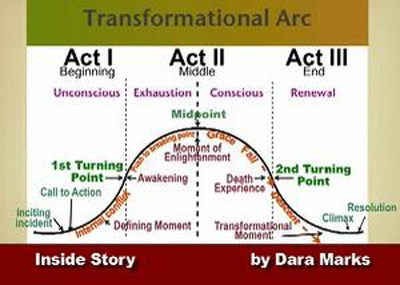
This to me is the value of looking at the Transformational Arc, says Dara Marks who helped NYCastings writers understand the importance of transforming characters through her signature tool, the Transformational Arc, in Part One and Part Two of this article.

Dara Marks explained the benefit of making conscious choices and having the character’s old consciousness giving way to new consciousness – in Part One and Part Two of this feature article. Yet she believes that part of the arc is pretty standard.

Nothing I’ve said so far will completely shock someone – that a story is more powerful when there is an internal movement of character, shares Dara. The question becomes how to move the character internally because a lot of people will intuit the necessity of putting this into the story but when it gets down to it, all they really do is create a character with a psychological problem in the beginning and somehow, in the end, that psychological problem has changed.

For example, let’s say something as simplistic as sobriety – they are drunk in the beginning and somehow magically, by the end, they give up the bottle. What the arc says is – NO – that there are organic, natural steps in this process and the arc spells out exactly what these organic movements are. But that only comes after a shift of consciousness, says Dara, in that the first half of the story is an inability to get to this state of consciousness.

A problem is a problem because we don’t know how to solve it. So when you are putting an internal conflict into a story you can’t just put it in and then magically solve it within the first thirty pages because then you have no more story to tell, says Dara. In our natural human existence, we don’t grow and change until what we are doing wears out its ineffectiveness. I refer to it as a fatal flaw, a survival system that has outlived its usefulness.

In our culture we tend to believe that the greatest way to act is to go out and face our problems and to relentlessly do it,’ says Dara. I think, that if you examine periods of growth in your life you will see that we don’t just do it.’ It isn’t until the systems have broken down and have crashed around us, when we are in fact at our most vulnerable point where the new thing has the ability to break into consciousness.

When moving a character internally, there is a big struggle in the first half of the story to get up to the peak of the arc to where this new level of consciousness can break through, says Dara. It is a very exhausting process and therefore, what happens after the breakthrough is a period of re-energization.

You are reenergized, and that is what causes the new period of grace. The new energy causes the protagonist to see things more clearly, to feel better then they have ever felt, to take actions that they haven’t had the courage to take before, to open their heart and love in a way they haven’t before – whatever it is in the story. Suddenly, you get a burst of that in the midpoint of the story and it has a powerful affect on the story because it shows us the potential of can happen if the protagonist can really get to the goal, that this way of being in the world can really be achieved.

This moment of the arc also shows that the moment of enlightenment, where the new idea breaks through, is not transformation. It is merely the doorway through which the transformation begins, says Dara. And then, we go through the second half of the story and have the biggest fight ever for the protagonist around the second turning point.

The climax, in the end, represents the struggle – that transformational change is not simply new consciousness, it is new conscious backed by conscious action. That is where you get the transformational moment,’ where the protagonist makes a commitment to act in this new way. That is where you see change really occur.

Using this Transformational Arc is powerful for writers, because instead of coming into the second act feeling like Oh my God, I have seventy pages of an arid desert to cross’ – instead, you understand what needs to be achieved in that second act, internally. There is so much power in that.

To me, shares Dara Marks, if everything is working – get out of the way. But when you are lost in an idea, or lost in a story, it doesn’t mean that you don’t have a good story to tell – it just means it’s a little harder to tap into.

In some cases, tapping into a hard to figure out original concept can lead to something greater.

Sometimes, it may mean that you are getting into something even greater and you don’t want to discount it, says Dara. If you don’t have methodology for asking yourself the right creative questions, you are floundering in this vast creative world where you are not really focusing on what is going on. So when you understand the arc, and what is happening at each segment of the script, it’s not a fill in the blanks process.

The Transformational Arc is just asking you to focus on creatively asking yourself the right questions and those questions may lead to a tough decision for a writer because the arc often reflects, a sacrifice.

We have a hard time with this within our culture, shares Dara. We want to believe that we get everything for nothing and we don’t. There are sacrifices that have to be made. When you deal with a strong coming of age story, for example, there is a lot of sense of loss but without that loss there is no gain.

If you look at a movie as powerful as Dead Poets Society, these boys lost their innocence. But without that loss of innocence, they couldn’t move forward to become men.

We have a culture that worships innocence and yet innocence is really non transformational, says Dara. Anyone who remains at the level of complete innocence becomes prey; they become a potential victim for those who would take advantage. So, when there is a loss of innocence, there is also a gaining of wisdom and a gaining of the ability to be present in the world, to care for oneself in the world and to be able to fully care for others.

Staying stuck at a level of innocence is a trap. If you look at fairytales even, something as simple as Little Red Riding Hood, in her innocent state she was easily a victim of the Big Bad Wolf because she couldn’t tell the difference between a Big Bad Wolf and anything else.

Having your protagonist face the toughest moments and make a lasting change sounds a lot like psychology for your character, or life coaching – and in a way it is.

I am sure that is where a lot of this comes from, for me, shares Dara. In order for me to have a belief in something that I teach, or use in my work, it has to pass a truthful test for me. Is this what I experience? Is this what my friends experience? Is this what I see around me? If it is simply that on page 25 there is a turning point, I don’t see evidence of that in my life. I have to find a way to feel it, and understand it, in terms of what I really know to be true.

In the Transformational Arc, Dara refers to this stage of loss / major change as a death experience.

It is a good place for a death to occur because it is symbolic, says Dara, but what it is really calling attention to is that transformational change has to give death to the old way old being and birth to the new way of being.

If you tell a story from the moment of enlightenment forward, where the protagonist totally gets it and everything is done, then it also undermines what we know as true. Life isn’t as simple as that.

Going back to something as easy as the alcoholic, says Dara, they may be able to stay sober when everything is working out for them. But how do they stay sober when things become hard or difficult?

Until someone has gone through a trial of something difficult and maintained their sobriety, there is no other real evidence that they are sober. You can put up a shingle and say you are sober – but until it is tested, you don’t know what you are really made of.

And this is true for love and everything else. It is one thing to fall in love and to give yourself to somebody when things are wonderful and happy. But when things get tough, do you really have the ability to love unconditionally? To go to the dark places with the other or is your love only at the level of – as long as all is good, I will be here.

To me, that is the power of the transformational moment. As opposed to heading into a climax and fighting for the sake of fighting, they are fighting for commitment to something. Heading into that feels as if they have reached what they are struggling for in the story.

When you create this second turning point, this moment that pays off for the protagonist and audience, someone will read it and say, there is something about this movie that really rung my bell, that really made me feel something.’ So, I don’t believe it’s about hitting a level of perfection. I believe its about hitting a level of truth, a commitment to that truth, and I think everyone is capable of doing it.

Dara Marks believes that every writer can create a really good story and part of that creative process includes getting your story in front of others.

Artists, throughout the history of the world, have just wanted to do our art and be left alone, says Dara. But part of the process is getting it out in the world.

That was step three (from Part One of this article) – expressing it out into the world.

As a writer and an artist, you need get your work seen, and not limit yourself, says Dara Marks.

Just as your protagonist must truthfully face their flaws and push through them, you have got to go out and fight, for what you’ve worked on and believe in.

Hopefully this three part article has provided both insight and motivation for NYCastings writers.

Click here to read Part 1 & 2

For more guidance from the legendary Dara Marks, check out INSIDE STORY: The Power of the Transformational Arc. www.daramarks.com/inside.php

transformyourstory-pt2

Every Great American Story needs a Great American Hero who the world will cheer for. So what does it take for your story to launch from an idea into a riveting tale that audiences will relate to? 

It simply has to be honest, says script consultant Dara Marks who helped NYCastings learn about the Transformational Arc in Part One of this article.

In Part One, Dara Marks expressed the importance of taking a conscious look at your writing, as the author, so that you don’t make random choices. Now we take that point to a deeper level… how to get your protagonist to take a closer look at their own life – face their flaws and push through them.

When it comes to honesty, This is the most important step in the creative process, says Dara Marks. The one thing I really stress, when I work with writers, is to throw the idea of being right’ out the window. When you try and gage the material, it never has to be some high toned sophisticated philosophy. It simply has to be honest.

Let’s say that a writer is going through a terrible love affair that went wrong – that is truth. That is true to the writer and that is the avenue that needs to be explored. Even if it lacks a certain level of unsafistication, it will have a profound ability to connect with the audience at a level of truth. If you are saying, this is how I feel and until I reckon with this, I feel sour’ – a lot of people with identify with that.

By forcing the protagonist to face his or her flaws, what can also potentially happen in the creative process, and for me is the bottom line of what the creative process is for, shares Dara Marks, is that two things are possible. The writer may end up staying very stuck in that belief, and writing something that simply confirms it, because that is as far as they can go with that idea at this time. Or, processing the material honestly may lead them to a higher value in terms of the love experience – that they suddenly see their part in it. And then suddenly, the whole value system in the story opens up in a splendid way.

When this level of truth occurs, something exciting is happening on the page and hopefully to the writer themselves, says Dara. I believe that is what creativity is for. The writer is the first person that the creative process speaks to and through. This is where, to me, the complexity of writing occurs.

There is a fine line between not processing and processing but not getting to a greater truth. As long as you are in the fight, you do no have to go very far. You can just go as far as your psyche is willing to go at the moment. There is no measure by which you are now in a realm of profound. There are films that in affect only take a baby step toward some kind of enlightenment but the baby step is enough. It is the absence of it all together that causes storytelling to be rendered not just useless, but that it carries negative value.

If the material is not processed at all, often characters and situations are idealized instead of made real, says Dara Marks.

For example, this happens often in the action adventure realm (although it happens in every single genre) where you have an idealized hero who comes in and faces catastrophic events fully equipped to face the event so that by the end of the story he or she has only done what they were fully capable of doing in the beginning. The underlying information in the story then – which goes out into the world – is that heroes are born and not made.

You either have hero capabilities or you are toast, you are done. And to me that belies the very nature of story telling, shares Dara.

Story telling for me, is to express how we become human. And by human I mean that we fulfill our highest potential, that we become whole. And the wholeness comes in facing the things that we do not know how to face.

For example – In a strong film, like Lethal Weapon, it was only through the connectiveness of those two characters that they were able to solve the plot, to stop the bad guys. What they came into the story with was not enough. It was the unification of them as partners that made the goal obtainable as opposed to just being able to do in the end what they could already do in the beginning. To me, that’s not just a thin story it’s a false story.

This is true in all genres, says Dara Marks. We have way too many love stories that tell us absolutely nothing about the experience of love. They boil down to the cutest guy gets the cutest gal. They chase each other around for an hour and a half and then they get each other. What does that tell the rest of us, that if you are not the most attractive or have the funniest personality that you are not capable of making this connection to love? That’s where a writer’s failure lies. It’s fine in the first draft if everything is idealized but then you have to stand back and look at it.

This is one of the simplest questions that all writers can ask themselves – What does my protagonist achieve at the end that he or she was not fully capable of achieving in the beginning? If the answer is nothing, or not so much, then you haven’t really told much of a story.

So how do you get the protagonist to a point of enlightenment, to be able to face something they didn’t know how to before?

Let’s say for example that the story needed someone to act heroically and our protagonist is a bit of a coward in the beginning, then the ability to act heroically in the end is a big leap of internal growth for that character, Dara says. And let’s say, conversely, the character already is heroic – what else is necessary to achieve that goal besides for just they are the toughest guy on the block?’ That’s where you get more of the view of something like Lethal Weapon where something greater within them had to occur for this to be achieved. Otherwise, it’s simply just another day in the office. Even if they are stopping a nuclear bomb, they are already doing what they are capable of doing.

It’s the old consciousness giving way to new consciousness.

Dara Marks believes that it is very important for writers, if they are going to work with a process like this, to try and personalize it, to look at their own life experience as the best teacher they have.

All of us, every human being, has been through very difficult episodes’ in their lives, says Dara. So the question you look at is…Did I have a moment or a period of time where I began to see things differently?

Let’s say the alcoholic comes to realize that what everyone has been saying to them is true, that they have a drinking problem and have been in denial of it. Suddenly they see that this is not the life they wanted to live. This is a breakthrough of consciousness.

It happens in love affairs. You got together with someone and they were absolutely wonderful and for the past three years everything has gone south and you stay in the relationship thinking… If I just do this enough or that enough the person will go back to being loving me the way they did.’ And then you suddenly come to the realization – they are not capable of it. You have a real breakthrough of understanding and ask yourself, Is this the way I want to live my life?’ And most of us will change after that.

In movie time, this happens in an hour in thirty minutes. But in real life, this major transformational change can be a seven to ten year process. These are not necessarily huge mountains like sobriety; they are natural mountains like moving from childhood into adulthood.

It all goes back to being truthful about internal flaws and forcing your protagonist to face what needs changing in a very honest way, in a way that mirrors what happens in real life, to you personally.

Of course, the ultimate leap from having a story with a real hero to a real hero who truly tests the strength of their new found metal… comes with a moment of Grace – followed by a second turning point which leads us to the Great American End.

How do you successfully pull off that final third act of the story? Click here for Part Three of this article where Dara Marks helps writers move their protagonist from enlightened to fully transformed, heart moving heroes.

————————————————————————-

As a leading international script consultant, Dara Marks specializes in the analysis of the modern screenplay. In addition to having over 20 years of script consulting experience, Dara Marks authored an exciting new book on screenwriting – INSIDE STORY: The Power of the Transformational Arc. www.daramarks.com/inside.php

transformyourstorycopy

Writers grab a pen and take note…

A focused emotional journey is vital for your story whether you are writing a script, a play or the next Great American Novel’ – and you CAN achieve this forward momentum through The Transformational Arc, developed by script consultant Dara Marks.

As a leading international script consultant, Dara Marks specializes in the analysis of the modern screenplay. Dara has over twenty years of experience and Creative Screenwriting Magazine consistently rates her as one of the top script consultants in the film industry with clients ranging from beginning and apprentice screenwriters to top studio writers and executives.

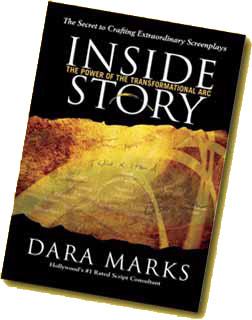
In addition to script consulting, Dara Marks authored an exciting new book on screenwriting – INSIDE STORY: The Power of the Transformational Arc. www.daramarks.com/inside.php

To give NYCastings members a sneak peek into this innovative process, we spoke with Dara Marks about developing a powerful story…

According to Dara Marks… A strong transformational arc is the single most important element that makes the difference between a good screenplay and a great one.

When I became a script consultant a gazillion years ago, the state of the craft was basically looking at the Aristotle model of a beginning, middle and end, the three act structure, and that is an adequate way of looking at it because it is problem solving, Dara says. There is a problem, the problem gets exhausted and you find a resolution whether it is what you thought it was going to be or not. But I always look at things from an organic point of view – Is this what we as humans know to be true?

The problem for writers, I find, is that while the information about three act structures can be true and a literary goal that wants to be met to some degree, writers have the problem of – Where do you go to find this stuff? If that is not explored, it can feel like it is artificially imposed on the script; that at a certain point in the script, it needs a turning point. That is one of the biggest issues a writer faces. It is not that structure is not helpful and effective to use, the problem is that without a deep understanding it can feel uncreative. It can feel as if, you have to meet a certain goal, Dara shares.

The Transformational Arc is not the Dara Marks template to writing, it has to do with the organic arc that all human beings go through in order to process life.

All of us in life face conflict, disappointment, loss, and suffering. To me, at its basic core, I always refer to a story as the human instruction manual and I believe it is the truest power, Dara says

Scientists have said that the sexual process is enjoyable so human beings will procreate. I believe that stories are enjoyable so that human beings will psychologically procreate. We learn how to be human through our stories.

Imagine a world without story. Each of us would have to emotionally re-invent what it means to be human. We would have no model to follow. Embedded, or encoded, within a strong story that contains an emotional arc at its deepest level, is that we can process our problems in life, grow from it and become greater.

As a teacher, Dara Marks focuses on the idea, that there is no condition stasis in nature.

Every living thing is either growing or evolving or has begun to decay and die, Dara says. That is part of what is encoded in the story. You are either going to face these problems and become greater for the experience or the problem itself will destroy you.

I don’t mean from a heroic context that you have to defeat every villain. Failure to me is to stop trying. It is not encountering disappointments and things that diminish our efforts. It’s quitting.

Quitting is the failure of The Transformational Arc. It is not continuing to be present in life. That is the basis of where this work comes from.

Very often, a writer sits down to write but the story does not come out the way we intend. Dara Marks believes this is because creativity needs to be a three step process.

The first step begins intuitively; it is the only place the creativity springs from, Dara says. You are tapping into something that has never existed before in this world, in this form before, and that has to be the beginning of the process.

Step three is where this idea is expressed out to the world.

And to me, one of the reasons for failure is that we miss step two, which is where what we have intuited and brought in somewhat unconsciously, is never processed.

The reason why some writers do not achieve a strong emotional journey is because they need focus. The writer is, basically throwing unconscious matter out into the world.

A lot of times a writer will get a really good idea but nothing is ever substantially developed around that idea, Dara shares. It is one joke, or one concept, but no one ever investigates it. So, for me, step two is where the real work of writing is done. You write a first draft as quickly, as randomly as – What is hitting me? You want to follow any creative impulse you have and throw that down on that page, you don’t want to bypass that step. But then, you have to step back and look at it and try and understand what this is saying to you and through you.

I have to clarify here, Dara Marks says, that I do not mean that you psychoanalyze your material. You simply engage it. You explore what value is trying to express itself in the story.

Until the writer connects with that value the story will forever remain at the unconscious level, Dara shares.

I always say that as long as you continue to make unconscious choices you’re only going to continue to get random results.

So… How can YOU turn your unique idea into a solid story that will forever remain at the highest level of literary achievement?

Check Part Two of this article where Dara Marks helps writers face flaws and push through them.

filmmakersconnection

Friendly – Helpful – Inspirational

For actors looking for a place to connect with key industry people, The Filmmaker’s Connection is so much more than your typical networking event. It helps actors, producers and directors form teams, produce films and create long lasting friendships.

Hosted by Casting Director Donna McKenna, the monthly Filmmaker’s Connection began as a way, to connect actors and filmmakers, so they can see each other in person.

Each month a guest comes in and talks about their project. Actors can get jobs, drop off their headshots and network, Donna says. There are so many ups and downs and struggles, so I wanted to form a group that inspires people.

Inspiration and opportunity are priceless gifts for actors, so NYCastings met up with Donna McKenna to find out more about this Long Island Filmmaker’s Connection.

Starting with…

Benefits of The Filmmakers Connection:

It’s all networking and everyone is there as friends. It’s a very relaxed atmosphere. You can ask questions and we also have a show and tell. I give the first five people to sign up the opportunity to show their work, either a short film, promo or to tell something exciting.

Also, there is a big festival, The Long Island International Film and Video Expo. Members can submit short films, feature films, and are also eligible to submit for finishing funds.

Who attends these networking events?

Everyone attends, even crew members. At the event there is a lot of card exchanging and the same people come month after month from Queens and Jersey, not just Long Island. Everyone is friendly and talks to each other.

How does The Filmmakers Connection differ from meeting a director at a 1:1 event?

It’s not an audition, its social networking set at Five Towns College in Dix Hills, NY. It takes place in a classroom and I begin the meeting by giving announcements about what is going on in the industry from Long Island to New York City. I let them know about NYCastings, because I am there to inform and help them get jobs in the industry. I will have literature on locations of where films will shoot for both actors and crew. And, I go over the SAG No list, that tells of certain films to stay away from or managers who take too much commission.

Also, because we have both seasoned and new actors, I will explain that they should watch out for Craig’s List ads, never go on an audition at 10pm, never pay for an audition or an extra part. I have kids in my meetings as well, so we guide them too.

After my announcement everyone introduces themselves so everyone connects. The meeting goes from 7-9 and afterwards we go to the cafeteria and have coffee and pastries and network.

Why do you mention NYCastings at the events?

A lot of our members have gotten jobs through NYCastings. One of our members got a really big episodic, recurring role on the show Kings because of a post on NYCastings.

How can NYCastings members learn about the guests?

We put out a newsletter once a month and it says who the guest will be. It may be a filmmaker, entertainment lawyer, agent, manager or crew member. And I host the meetings, and I am a casting director, so they already know they will see me.

I had a meeting last October where a new guy walked in and I ended up casting him for a print project that a lot of NYCastings members were also cast in.

Who is speaking at your November 15th event?

This month I have Elias Plagianos, who has a film out called, The Crimson Mask, that has won awards all over the place. He’ll come in and speak with the actors and crew and tell his story of how he made a film on a shoestring budget and was able to become a great success. That is what these meetings are about, to inspire people.

Do you announce new members?

I do welcome new members, so the older members can bring them into their knit. There are no groups. I have seen a SAG actress take a brand new actor, who she just met, and help her make a resume.

Sounds like a unique group!

I am fortunate that I got this group of people coming together and playing nice. Last year there were seven or eight of them who made movies together. We have DPs, screenwriters, gaffers, sound people – and they all collaborate. You can’ wait for the phone to ring. That’s another reason I promote NYCastings, because you have to get out there.

How do NYCastings members get involved in The Filmmakers Connection?

The membership for an actor, producer or industry professional is only $30 and that also gives them access to many industry events throughout the year like festivals and comedy shows. If you don’t want a full membership, it is $5 to attend the meeting. And if you join the next month, it’s only $25 still as a thank you. There is no limit to the amount of people and it keeps getting bigger and bigger.

Should an actor follow up with you after an event?

I love getting notes and I save all of my thank you letters. I also answer all my emails personally. I don’t have my assistant answer my emails, which is why it takes me a long time.

Do you take headshots?

Whenever I meet an actor, I ask for them to email me their headshot, resume and reel. A lot of times I can even cast someone without meeting them

For the last photo job I just cast, which I posted on NYCastings, I got 4000 submissions. I sent 100 actors to my client and he whittled it down to the best 40 and then told me to pick the best 20 out of 40. I went with my gut and they loved everyone I got for them.

Do you believe that persistence pays off?

Absolutely! I like to see that an actor is hungry, the more passion in their eyes, the better.

What keeps you passionate about the industry?

I get excited if someone I know is in a film that I had nothing to do with. I’ve gotten people involved in films that I wasn’t working on, because it’s a passion. I love it and like to help people. I have even pulled in people who have never acted before and put them in movies. If I think they are right and can take direction, I will give them that chance and fight with the director for them. I like to mix it up and not use the same people all the time. There are so many actors out there. I like to give everyone a chance. And I like taking actors out of the type casting’. If you are a good actor, you can do it all.

How involved do you get with the projects you cast?

If I’m casting and producing, I am there the whole time. And, if I am producing and I want you to have the role, you will get it. I have changed guy roles to female roles and female roles to male roles, White roles to African American roles and African American roles to White roles.

Sounds like you really stand behind actors?

I do. I usually don’t even have callbacks because I know how nerve racking auditions can be and I feel for you guys.

I make it a point to know an actor before they come in. I don’t audition a lot of actors for one role. I do a lot of pre-screening, because I hate telling people when they don’t get the job.

When someone gets seen in my room, they are hand picked from thousands and they are meant to be there. So if they do not get the role, it’s not because they aren’t talented. It could be your height or hair. A lot of roles are lost by just that.

I also try to get my actors the entire script, because an actor needs the best tools to do their best.

What projects do you typically cast for?

I cast principle roles, infomercials, cable commercials, SAG films, and just started with photo shoots. I just want to get people jobs and help them make a couple of bucks.

Any advice for NYCastings members…

Don’t give up. Don’t ever listen to anyone else.

About 27 years ago I was told, You will never make a movie. Raise your baby, be a suburban house wife. I could have stopped and now it’s 29 movies later, a million commercials and shorts.

People will try and derail you, especially people outside the industry. Do not give up no matter how tough it seems. We all wonder where our next job is but do not give up. When people say you can’t do it, do it just to show them you can.

And, treat everyone equally. I don’t care if it is the PA – treat them with courtesy and respect. And, as an insiders tip, that PA will be your director one day. So be kind.

I just had an actor send me a reel for their friend, trying to help their friend work and that touched me. He saw the breakdown, didn’t think anything was right for him and was more concerned for his friend. I’m going to make sure he gets a part too, even if the director has to write something in, because it’s so important to help people.

About Donna McKenna…

As a casting director, independent film producer and Board Member of the Nassau County Film and Television Foundation, Donna McKenna has worked with many award winning actors from film, television and Broadway. Ms. McKenna believes in discovering unique new talent as well as recognizing the seasoned professional who has the desire to take risks and play against type.

For more information on The Filmmaker’s Connection visit www.Longislandfilm.com

Thank you Donna McKenna!!!

laurenstop10-3

Good things come in 3’s – and so here’s some radiant news – for the last Top Ten Tips from NYCastings Top Booker of 2009… Lauren Francesca reveals her tips for nailing auditions.

HER BIG SECRET WEAPON (drum roll please)…

“I go to an audition coach who I highly recommend,” Lauren says. “I was a reader at an audition where they needed a girl to be topless and beautiful. They had a girl from Scores who was interested and there were celebrities in this web series. Then, in comes a girl who was pretty but not as glammed up as the girl from Scores and she was not willing to do nudity. But she gave such an amazing audition that the entire group was willing to re-write the script and let her do the scene in her underwear.”

“After that audition, I called her audition couch, Herman Chavez.”

“Herman has saved me for auditions. I used to get really nervous, especially when it is a life changing audition and he is awesome, supportive and breaks down an audition so you feel confident and don’t think about the choices. His work is called The Mental Game of Auditioning (http://thementalgameofauditioning.com/)

Based on Lauren Francesca’s success and her recent work with Herman Chavez, here are her…

Top Ten Tips & Tricks for Nailing Auditions

  1. Tip on how to walk into the audition room:

You have to walk right in with confidence. You have to walk right in and to your spot. Casting Directors aren’t thinking about you, they are thinking about the hundreds of other people coming in. So be polite and just get right to the work.

  1. Tricks for reading the mood of the room:

I booked the AT&T commercial because I knew who the casting directors where and did something relating to the demographic of the casting directors. The audition was improv and I picked something to speak about based on what I thought they would be interested in. But, mostly I don’t like to read the room. If the audition is for a sitcom or a film, I just focus on my work so I do not get stuck in my head.

  1. Tip on what NOT to say at an audition:

I wouldn’t hit on the assistants. I have helped out casting directors before and guys have hit on me and the casting directors will get angry. Also, I saw a guy hug a casting director and they deleted his name afterwards.

  1. Trick for using improv in auditions:

I studied improv at Upright Citizens Brigade and that really helped me. I also took Angela Mickey’s commercial class and that helped me realize the points you need to hit and what you come across.

  1. Tip on how to make a unique impression without going too far:

Honestly, I really feel that is something I can’t give advice to because sometimes you can go too far in an audition and really wow people. I’d say be smart about taking chances. Don’t do things that would come across as green, but make strong choices. As an actor, you have to forget about the audition after it happens because you can drive yourself crazy. Just put yourself in the casting director’s shoes and imagine if you were calling people in all day and what you would want to see. Be smart about your choices and what choices can make you stand out.

  1. Trick for seeming calmer then you are:

Focus on the work and be calm. Don’t look at it as an audition, but as a meeting. Think of it as a fun time. A lot of times people hear the word audition and panic but then they will not have a good audition. Go early and make sure you are totally calm. Get into the place of the character and be in the place of that person before you walk into the room so you are calm cool and collected. Because if you are a mess it will show. Which is easier said than done.

  1. Tip on where to look (ie: left or right of cam, back wall):

This is another thing Herman taught me. It is good to ask where to look. Of course, if there is a reader, look at the reader. But if you are not sure, just ask, because if you do it wrong it can mess you up. But generally, I look to the right of the camera and if there is a second person in the scene, I pick a point in between the reader and the camera.

  1. Tip on the 2nd take:

Unless they give you feedback and tell you to change it, I would say to give them another version or do it the same. If they ask you to do it another time, they will generally tell you a way because they want to see if you can follow direction. Knowing how to take direction and put yourself into the new direction, is what they are looking for.

  1. Trick for how to work the room and make them want to work with you:

Just be yourself. There is no way to make people want to work with you, but if you be yourself and smile and be present – that will make them want to work with you.

  1. Tip on how to leave the room – gracious yet professionally:

A lot of people straggle and stay in the room too long, that’s not a good sign. If your audition is over thank them and leave.

Thank you Lauren Francesca for this three part – Top Ten Tips – series. Now that I’ve thanked you… I’m leaving :)

For more information on recent bookers, visit http://www.nycastings.com/Public_s/getrecentbookingspage.asp?pgNo=1

Read Part 1 here >

deliciouscopy

An apple a day may keep the doctor away, but what does it take to be that image of health, happiness and a life well lived – that you see in the pages of a magazine?

Deliciousness!

“Warm, friendly, approachable” people who appeal to the senses of American people – are exactly the type that end up in commercial print campaigns, according to the Rick Miller Agency.

Rick Miller developed a keen sixth sense for what the print biz calls ‘marketability’ over his 15 years of print agency experience. He knows what it takes to get started, make the right impression and keep a bright, shiny mental disposition.

Best of all – Rick enjoys helping actors learn more about the commercial print world!

“I like to arm people with information and pride myself on being a straight shooter,” Rick Miller shares with NYCastings. “Whenever I go to a seminar, my goal is to be human, to share the human side of the business as well as what people need to know in order to book jobs.”

At the Rick Miller Agency, “I represent almost 500 people,” Rick Shares. ” I know it sounds like a lot but commercial print is a freelance business and I represent ages 20 through seniors, broken down into Caucasian, Spanish, African American, Indian, ethnically ambiguous” (etc).

When it comes to getting a shot at the D-life (delicious life, of course!) – Rick Miller offered to help NYCastings members get a kick start…

Q&A with Rick Miller of the Rick Miller Agency:

Q: How to Get Started!!!

First of all, have a great headshot.

When an actor is looking at their headshot, in terms of commercial print, it is about people who are warm, friendly, approachable, and photograph well. They are what I call delicious looking people. You want them at your Thanksgiving table, in your living room with you. When submitting to agencies, for the most part, they want a picture where you smile with teeth showing. And the quality of the shot needs to be very clear. There are certain photographers who know how to shoot people for commercial print. You do not want anything too serious, like legit shots. Nothing too intense.

Also, I like pictures where there is a connection. Commercial look is specific and it is so important that I see something in the eyes, not just a blank stare or a deer caught in the headlights. The eyes should be looking back, as if to say… I am an asset to your company.

There are some people who just happen to have a very marketable look, who are warm, friendly, and approachable with substance. They look right into the picture with a confidence, are relatable and have features that photograph well. From years of experience, I can determine in 5 seconds when I look at a picture who is marketable, who books the jobs consistently.

Q: How to know if you are marketable…

If you have the opportunity to meet someone who is an agent in this area, ask them about your marketability. They may tell you what type they see you as. For example, they might say, “I see you as a young, contemporary mom, kind of hip, living the good life.”

But, to begin with, the best thing to do to is to try and find those good commercial photographers because you will get a great quality picture in clothing that is not too funky or too outrageous with wild patterns. They are on the pulse of what commercial print casting directors are looking for. It is so important to not skimp on your pictures in this business. Your picture is your calling card. If you have a nice warm smile and look comfortable and confident in your skin, then you have a good shot at being called in by someone.

Q: What happens when you meet a print agent?

In the three minutes that I get to spend with someone, a lot of things are going through my mind at the same time. The interview is very light because I want to keep people relaxed, not make them feel as if they are meeting some big agent. I will ask questions about the resume, listen to them talk as themselves and get an impression of what kind of person they are. Do they seem like a positive person? Is their resume laid out well? Do they have a good picture? I am soaking it all in during this very short period time. And it is a huge advantage to meet someone in person because I may get your picture and think I have too many of your type already. If I meet you in person, we can click and that can be the turning point. I may call someone in from that.

Q: WAIT! – What if I have no print experience?

I call in just as many people these days that have a great 8×0 headshot as those who have full comp cards.

Right off the bat, before people come in to meet me, I say during the Q & A that there is no reason to be nervous or to apologize for your pictures. 90% of the people who come in may say, “I know my pictures are terrible, oh commercial print guru.” Of course, I don’t mind someone acknowledging that they are getting new pictures or asking what I think of the picture.

I like to be very positive with people. I don’t want people to walk out devastated that they may not work in print. Instead, in my last seminar, I went over each person’s picture with them and gently shared what could be better, what to be aware of next time the person takes pictures and what type I may see them as.

I like to put people in focus who may have no idea what this industry is looking for and put them on the right track versus some vague mystical, “what are they looking for?”

Q: What happens after you meet a print agent?

Usually, after I meet people at a seminar I go back to the office with all the pictures and go through them. If I think you are a good, marketable type and I can use you at the agency, I will call you. If I call someone into the office, it means you are extremely marketable in my eyes. I may see you as the perfect business woman or a doctor, etc.

If I say, at the seminar, that you have good pictures and then do not call you – that still means you have good pictures and someone else may be interested in calling you.

Q: Is there a certain type that is most marketable or does everyone have a money shot?

Both. There are people who have an incredible marketability where they get put on hold a lot and book many jobs. They are that perfect young dad or mom. They look like real people who just happen to be appealing and photograph well. And then there are people who I take on who are not going to work all the time – I call them my ringers. They are edgier, or different, and they will work sporadically because it all depends on what is going on in the advertising world. There is still a place for them on my roster even if they only book one or two jobs a year.

Q: When you get sent out for a print audition, should actors dress the part?

Absolutely 100% – you have to go dressed the part because commercial print is all about the look. It is also about being able to act the part. Unlike fashion print where you are a canvas, commercial print is a slice of life caught in a photo image. It is a still image of a television commercial. It is the look that will get you a job.

So, if I send you in for IBM and they want to see business executives, it means a suite, shirt, and tie – head to toe. A good agent will tell their talent what the look is. The Casting Director will say “Nice Casual” or “Business Casual.”

Q: YES! Let’s talk more about that. What is your definition of “Nice Casual” or “Business Casual?”

Nice Casual for men – is a button down shirt and khaki pants. No wild patterns or funky logos. Stick with basic colors. For women – it is a simple blouse and a nice pair of pants.

Weekend Casual – could mean polo shirts and khaki shorts.

Hip Casual – is not so middle America looking. You will hear ‘JCrew’ a lot because it is kind of hip where the clothing is tailored nicely. It’s not just a stuffy shirt.

Business Casual for men – will be a buttoned up shirt and a loosened tie. For women – it would be a nice blouse and light weight wool skirt or pants.

Business attire – would be a full suit for men and women. Head to toe. Shoes and everything.

Sometimes, the casting director will be very specific, even about colors. I, in turn, convey all of that information to my talent so they show up looking they way they should and book the job. And you can always ask me to elaborate on what the casting director may be looking for.

Also, they do not want to see people for commercial print who look like they just rolled out of bed. Show up with your clothing, hair and makeup looking nice. You can still look funky, edgy or hip, but do not look like you just rolled out of bed because the pride you have in showing up well-dressed also helps give you a leg up in booking the job.

Q: Are jeans ever appropriate?

If the word “Hip” is used, they can be appropriate. It also depends on the age range. Jeans are definitely ok for people in their twenties because for people in their 20s the words “hip” and “cool” are often used. But if you are in your 30s, then casting directors are often looking for people dressed in a more appropriate way.

Q: At the audition, are there sides or notes available at the sign in area?

At the sign in, they just ask for your name, agency, sizes and sometimes they will ask for your pharmaceutical history.

Your agent may tell you what they are looking for ahead of time. They may say you are part of a football crowd and you are cheering. But for the most part, for print, you do not know until you are in the room and standing on your mark, or sitting on the stool, what the client is looking for.

Most good casting directors will tell you what to do before they snap the picture. If you don’t get any information, I always tell people to simply say, “would you like a smile?” That opens the door for the casting director to tell you what they want. If the job is for a pharmaceutical, they might want you to look sick at first and then feel better with a smile.

And, I always tell newcomers to take a moment and loosen up. If you get nervous or feel stiff, just say to the person casting you, “please let me know when you are going to shoot because I would like to loosen up.” Then, shake it out so you can turn to the camera and smile like you are looking at someone you love. We are all human. There is nothing wrong with saying you want to shake it out first and get comfortable.

Q: Is there an actual camera taking pictures or a video camera?

Most of the time it is just a camera. But, sometimes they will have a video camera because they want to catch how fluid you are, how well you act. They want people who can move, who are real. They want people who have a great look but not someone who is just posing. They want to catch someone who is relaxed and comfortable in that one perfect moment that is so right on, that it all comes together.

Q: Do you get feedback and a second take?

A few years ago they used to pop a couple of Polaroids. These days, for the most part, they pop a couple of digitals. They take anywhere from one to maybe 8.

Q: Are there non-competes in the print world?

Generally when people go in for regular castings they do not ask about conflicts unless it’s for pharmaceutical or financial institutions.

Q: How much work is there in NYC for print?

I still say that New York City is the Mecca of commercial print. It happens all over the country, but so many of the magazines and ad agencies are here.

Although, it is important to say that the economy has not been good and there may be actors who take it personally, that they are not being called in more often. People are working but advertising budgets are, in my belief, one of the first to be cut. Sometimes it is slow, sometimes very busy. It may be quiet. They may not be looking for your type. I say this so that actors are not wondering why their agent isn’t sending them out more.

Of course, I do believe what goes down must go up. But for now, people should see it as supplemental income, enjoy the process of auditioning, how nice it is to go out and book jobs and to make a nice penny for a day’s work.

Q: Are there main casting agencies who book the lion’s share of print jobs?

I have seen major changes in this business from when I first opened. It used to be the photography studio who did the casting and that happens very rarely now.

Now, there is a core of eight to ten people with an even smaller core of maybe three or four casting directors who seem to be holding the reins of the majority of print jobs in the city. And, within that core, there is one in particular who has been responsible for over 50% of my income over the past two and half years. There was a time when there were thirty to fifty buyers, but it is a small world right now.

Q: Should someone send their headshot to a print casting director, directly?

It certainly doesn’t hurt, but casting directors do not have a lot of time to go through a file of talent on their own. When they get a job, they are going to call Rick Miller or Cunningham-Escott-Slevin-Doherty. Then, when they have time to breathe, they may call someone in on their own.

As a general tool, it does not harm anyone for a casting director to have you on file. Just don’t invest too much emotionally thinking they will call you directly. For the most part, in commercial print, you need to be with a good commercial print agency.

Q: How many people typically get called in for a print job?

Because it has gotten so competitive, most casting directors will call many agents. If they are hiring one person, they might call and ask for 5 of the agent’s best. For castings where they are hiring three, four, five and up, they may be calling in hundreds of people for the auditions. It is big.

I tell my clients to not worry if they do not book every job. I know it is a numbers game and how competitive it is out there.

Q: Is print Union or Non-Union?

Neither. There are no unions in print, no union jurisdiction and probably 90% of my talent base is SAG.

Now, if someone books a print job and they want to use the video on the internet, then that changes the rules. If someone is union, it goes under a SAG contract for that portion. The majority of jobs do not have a camera option to it, 90% are just print. But if they do want to use the video, or an actor for an industrial as well as for print, I come up with a rate for the print and then any kind of on-camera use falls under the guidelines of the Screen Actors Guild.

Q: On a personal note, why do you love being a print agent?

I’ve never lost the enthusiasm that I had when I first started as an agent. I have been in the industry over fifteen years, opened up my own agency in September of 2001 and am going into my tenth year at Rick Miller Agency. To me, I love what I do.

I used to be a print model and will never forget how excited I got when I booked a job and knew that my friends and family would see me. It was incredibly validating to be here in New York City for musical theatre, going out on print auditions and booking jobs for major household companies. I derived so much joy as a commercial print model, many years ago, and I believe I carried that joy with me when I started answering phones at the first talent agency or calling people when I became an assistant. To be able to dispense that kind of joy for people is huge for me. I believe in what I do, I have huge respect for the talent I represent and I treat people the way I want to be treated.

I believe I am doing a service for people, helping them with their careers. To be in that position, is a wonderful thing. It is a business, and it is intense, but I enjoy getting people jobs and doing it well. I am very pleased that I have not changed in my enthusiasm and appreciation for what I do.

And NYCastings is pleased to have learned so many details about the print biz – Thank you Rick Miller! These details are delicious :)

For more information please visit: www.rickmilleragencyinc.com

 

laurenstop10-2

For part two of our Top Ten Tips from NYCastings Top Booker – Lauren Francesca – we delve into the importance of marketing and networking.

When it comes to marketing yourself, Lauren believes it comes down to common sense.

“One tip of advice I got was to promote yourself as much as possible and I constantly do that,” Lauren shares. “I market myself through Facebook and mailings to casting directors to let them know I’ve booked a job. I keep people up to speed and that’s important.”

“I try to network myself out as much as possible and I will get weird texts for places that will charge ridiculous amounts of money – but NYCastings is real and it pays for itself.”
To network yourself, “as much as possible” here are Lauren Francesca’s….

Top Ten Tips & Tricks for networking

  1. Tip for keeping momentum going:

Don’t focus on the next job, what will happen next, but on what you can do to make that next job happen. People worry about the result versus the work they have to put into it. Focus on the work that you have to do to get to that goal. If you are a model, what do you have to do to get yourself out there? If you are an actor, what classes do you have to take to get yourself into that show?

  1. Tip for following up with Casting Directors:

I like to send thank you notes. I wouldn’t call after an audition, because casting directors are trying to do their own work. But thank them for bringing you in by postcard or email and keep in touch regarding future things.

  1. Tip on how to best notify CDs, agents, etc about bookings/success:

It all depends on how you like to work and how personable you are. You can email one agent and they might think you are annoying. You have to look at the person you are emailing, as a person, and figure out the best way to keep in touch with them.

  1. Tip on how to use humor when meeting a CD, agent, etc:

Honestly, I don’t think of anything as humor. I just try to be myself and be natural. If I say, “use humor” it can offend people or annoy people because they are so busy during an audition. They have to please the client and have twenty more people in the waiting room. You have to really look at the situation and react how you would with anyone.
  1. Tip on – what question should actors be ready to answer?

A lot of directors will ask about your training and the various acting method styles. There are 50% of actors who have training and 50% who don’t and it is important to know about Strasberg and Meisner. You may get into a room with a director who starts talking about these people and you don’t want to not know them. Knowing things about acting is important.

Also don’t lie on your resume. When you don’t have any work it is hard to get work, but at the same time don’t say you were in a movie if you weren’t in a movie. Be smart about what you do and how you respond to people.

  1. Trick for keeping track of who you meet:

I am actually bad at organizing myself, so whenever I go to an audition I write it down in my planner and I save the email from agents in a specific inbox. But I have a really good friend who organizes everything in excel spreadsheets and keeps track of when she emails them and sends postcards. I’d like to get more like that. I’m not perfect.

  1. Tip on using Social Media (Facebook, Twitter, etc):

I use my Facebook page for work. I do not have pictures of me going out with friends, because I have a lot of people contacting me for work through Facebook. I don’t let anyone know who I’m dating or where I’m going. If you are in this industry, people will Google you. They want to know who they are working with. So if you have pictures on your site that make you look like Lindsay Lohan at a club – that is not good. You have to make sure the pictures represent you the way you want to be shown.

  1. Tip for what to say when responding to a NYCastings post for a job/place/agent you may know:

If it is someone I worked with in the past, like Paladino Casting, I will say, “hey guys I just booked a job through you and am interested in this one.” Or if it is Liz Lewis, I will remind them that I booked a job through them last year. The better people they bring in, the better they will look. So if you booked something through them, it is one step up.
  1. Tip on a place to meet industry people:

Go to any networking events, film festivals and get yourself out there. There are a lot of playwright bars in the Theatre District and it is good to network with actors. I love the drama bookstore. I have met more actors in Staples, stapling my resume together, because New York is so filled with actors. It is good to be friendly and friends with other actors. My friends help me put myself on tape and prep for an audition.

  1. Tip for seeming Not Green while marketing yourself:

Have good pictures, make your resume as tight as it can be, and know the right and wrong things to put on ‘special skills.’ Also, if you are going to a networking party show up dressed to kill. Present yourself the way you want to be represented.

— Whoo Hoo! that’s a lot of good advice from NYCastings Top Booker of 2009 Lauren Francesca. For our last Top Ten list with the golden lady, we speak about nailing auditions. You MUST read the next article —

To check out Lauren Francesca’s list of work visit: http://www.nycastings.com/dmxreadyv2/blogmanager/blogmanager.asp?post=top-booker-2009

Read Part 3 here >


pointofnoreturncopy

You THINK you’ve heard this story…

Page 5: A writer decides to create a screenplay about “what she knows.”

Page 15: A friend offers up inspiring advice that gets this writer going.

Page 30: The point of no return – Woman vows to finish the script, no matter what!

Page 90: Violins signal tough times ahead.

Indeed – this formula exists in nearly every new screenwriter’s life… yet, for screenwriter Dianne St. George, the above rings true and so much more.

Dianne St. George took some really bold steps to help move her story forward. So NYCastings asked for the highlights of her journey…

Q&A with Screenplay Writer Dianne St. George

Q: How did you decide on the ‘type’ of story you wanted to tell?

As I researched and read about screenwriting, I repeatedly came across the suggestion that people should write about what they know or have experience with, so that was the most important thing to me as I attempted to write my first screenplay.

Q: What inciting incident prompted you to actually start writing?

At first I was hesitant to write about this topic because it is one of the most controversial political issues of our time, but a friend convinced me. He said, “You have to think about this as being bigger than yourself. Put aside what people are going to think and just write because you can clearly write about it from personal experience and it is such a relevant topic right now.” He felt that I would be able to bring the political and the social aspects of the topic together.

Q: What was your point of no return?

Once I could see the arc of the story from beginning to end. Writing a screenplay, especially for the first time, is such a massive undertaking, to try and harness all of the information into a clear and strong story and have it all come together in a cohesive way. You need certain things to happen in the story but it also has to make sense. You have to be true to the story and the characters. Once I saw that I could get from point A to point Z and hit all the necessary points along the way while still being true to the story and the characters, I knew I would be able to successfully finish the project .

Q: Every story has a series of high/low points. What are some major moments that moved your journey forward?

I began to research script doctors which is yet another part of the learning curve. There are a lot of them out there that writers can find for only a few hundred dollars. I initially went to one in that price range, but was not happy with what I got. It wasn’t as much about whether or not they liked the story, but rather how they addressed the issues, and I felt that it wasn’t a very helpful experience in that regard.

At that point, I decided to speak to an entertainment attorney and get some information. I had heard and read that since many producers will not accept cold submissions of a script, but require that they come from an entertainment attorney or an agent, there is a chance the attorney can pass the script onto them. An entertainment attorney can easily cost a couple of thousand dollars to retain, but I was willing to spend the money because this was something I really wanted to do.

Q: Major turning point?

Even though I had retained an attorney, I still did not feel as though I was giving her the best possible version of my script and knew I still had to find a good script doctor. During my research, I came across a magazine called Creative Screenwriting, featuring an article about an experiment they did to test out script doctors. They took $10,000 and a handful of script doctors and gave out a script that they purposely filled with flaws. Then, in the article, they wrote in great detail about their findings, showing what you get for your money with each of the script doctors in the experiment. The bulk of the script doctors cost anywhere from $125-$700. Some got good reviews and some got bad reviews. But then there was the clear winner whose cost was double or triple the cost of the other script doctors, but whose services were far above the rest – and her name is Dara Marks. The review said, “At least once in your life, take a suite at the Ritz Carlton, buy an Armani suit or a pair of Manolo Blahnik shoes, and have a script analyzed by Dara Marks. It’s expensive but there is nothing else like it.”

And, it turned out to be true. But I didn’t just run right out and call her. I read her book Inside Story first before investing that kind of money. After only a few chapters into the book, I knew she was the best script doctor I could find and well worth spending the money on. The feedback I received from her about my script, when compared to the first script doctor I went to, was incomparable. Dara spent four hours on the phone with me and gave me mp3 files of the entire session, as well as a written analysis. But even more important than the quantity of the service was the quality of the service as she helped me address all of the major and minor issues in my story. Dara knows right where to go to find the flaws and the best way to address them.

After we were done, I asked her if I could come back again. She did not need to solicit my return business like other script doctors. I wanted to come back to her because I knew that I now had what I needed to develop the arc of the story and wanted to address other issues next time including the length of the script, the dialogue and transitioning from one scene to another. When I did go back to Dara for the second time, her feedback was awesome yet again. She went through the script page by page both during the phone session and mailed me a hard copy of the script with all of her notes on it as well.

It was beneficial to go to her twice because it is important to have a clear concept throughout the story and to get the arc of the story exactly right before fine tuning it. As writers, the one thing that we can control is the quality of the script that we put out there, and finally having a great script doctor like Dara Marks behind me was a major turning point.

Q: What is the lowest point of this screenplay mission?

I have to wonder, “How many years have I put in already and what will it all be for?”

I’m at a good point in the sense that the hard work is done and I have a finished script that I believe is very well done. But I am now in what may be the most difficult part of this process which is confronting the question, “How do I get my script made into a movie?”

It’s scary to face the possibility that after all of the time and effort I have put into this script, it may never get made as a film. It’s one thing to get a chance to have your script made into a film and have it be judged as being a good movie or bad movie. But not to be given a chance at all…there is nothing worse than that.

Screenwriters, along with other artists, are not like those in any other traditional professions whose paths are very mapped out- you go to college (if required for your field), get a degree, go for job interviews, get a job and work your way up the ladder of success within the company. For screenwriters, there is no formula. You may be fortunate enough to have sufficient finances to make your own film, you may know someone who may know someone in the film making industry, you may have success in a screenwriting competition…I have even contemplated making a trailer. But no matter what path or paths you take, you have to keep persisting and find a way, and accept the fact that it can take a long time before connecting with the right person who likes your story and is willing and able to help you get it off the ground.

Q: If you could imagine your own resolution, how would your screenplay writing journey end?

I would get my story made into a film, it would be made by an amazing team of people and it would be a successful, inspiring story that is well received, positively affects moviegoers and allows me the opportunity to do another, and another, and another…that is the dream!


spotlightonadamfakier

Check out this frighteningly helpful interview below where host Kelly Calabrese interviews actor Adam Fakier about his NYCastings submission, audition and resume tips – as well as his recent bookings including: a supporting role in the feature film “Off Season” (a horror movie), Gotham (a pilot) and “Crumble” opposite Stephen Bauer from “Scarface.”


Filming & editing compliments of Angelita Ali @ Reel Services >

You can also check out over 1000 other
Success Stories here >

And send us your Success Story Here >


thementalgame3

Declaring war on anxiety…

Herman Chavez launched a tactic called “The Mental Game of Auditioning” – aimed at empowering actors and relieving that self-destructive fear of auditioning.

Through a strategy that targets an actor’s psyche, the sides and the business of entertainment, Herman Chavez builds up an actor’s mental arsenal so they “win” at every audition, by performing at the top of their game, in every environment or circumstance.

Testimonials abound about Herman Chavez’s Mental Game of Auditioning, yet NYCastings took an interest because our own Top Booker of 2009, Lauren Francesca, cited this source as her secret weapon.

From the creator of this artful approach, Herman Chavez, here are 13 ways in which The Mental Game of Auditioning can help you take your acting career up a level…

Insights from Herman Chavez

I. LAYING PLANS – How “The Mental Game of Auditioning” idea started:

No one wants to get up in the morning and give a crappy audition. And one day it dawned on me that when I was younger I used to box and was never afraid to step into a ring against someone ready to chop my head off. So, why am I afraid of someone who looks like a librarian? There was something there that I wasn’t hooking into. It wasn’t the scene. It was something else. So, I started applying all this sports psychology to the auditions and came to the conclusion that, just like a fighter, the most important part of the audition process is the walk from the locker to the ring. If their mindset isn’t where it is supposed to be, then the three months of training went out the window.

Then, a casting director came into my life, named Margaret Burns, and taught me how to tackle the scene. And, my biggest hero is Bruce Lee and I drew a lot from him too. From this combination, I came to the conclusion that auditions are a street fight and scene study is sports boxing. In class, you have a referee, there are rules, it’s a sport. But the auditions are visceral and alive. It’s now. That’s why you need something that is systematic, pragmatic, simple and right to the point.

In my opinion, auditioning is 90% mental and 10% technical. There are so many talented actors out there and the mental gets in their way.

II. WAGING WAR – Identifying the Enemy:

The biggest cause of fear is the desperation of wanting to book the job.

Basically actors need to clarify that acting is what they do, not who they are. Many actors link their identity to the success and that is a big NO, NO.

III. THE PLAN OF ATTACK – What to shoot for:

Unfortunately, a lot of acting teachers say, “Don’t think about it. Just go in there and knock them dead.” That is misinformation. When it comes down to it, what an actor really needs to do is not self-abandon themselves. To be true to their interpretation.

I tell my actors to say, “Always be relaxed, both physically and mentally, totally engaged with my reader, listening to everything he or she says to me, executing my interpretation fully and freely.” That’s what it always comes down to. The first take is always your interpretation, so it’s not about knocking them dead.

IV. TACTICAL POSITIONING – How to always look good:

At the end of the day, it comes down to two main things for a casting director: #1 is that the main buyer continues to circulate business into the office so the casting director can continue to get work.
#2 is that everyone who comes in makes the casting director look good by giving a fully committed interpretation of the scene. If 8 actors come in, and the producers says, “where did you get all these actors from? They are all wonderful,” then the casting director looks good and is happy.

Of course, when they pick #8, the other 7 think they sucked because they didn’t get cast but they actually won because now the casting director keeps them in their circle of trust.

It’s about going in there, consistently, and putting the casting director at ease. That’s where actors need to focus their thoughts, not on worrying if their agent is going to be mad if they don’t book or any other pressures. You have to approach it like an athlete and have that tunnel vision. A pro is basically someone who doesn’t buy into labels or mystique. The go in, see it for what it is and don’t believe the hype. They do not worry if it is Warner Brothers that they are going into.

V. ENERGY – Building a positive foundation:

When I work with actors, there are three columns I address. The main column is what I call your mental makeup, the individual mental luggage. A lot of that has to do with childhood and parents. The second column is scene work and the third is the business (agents, casting directors, etc). But everything starts with the first column because you are never going to approach an agent if your mindset isn’t right. You are never going to have a confident audition or even make an appointment if your mindset is not right.

VI. ILLUSION AND REALITY – Why actors need a reality check:

Acting is the only business where you do not get an instant response of how bad an auditioner you are. If you are a comedian on stage in New York City, in a minute and a half you are going to know if you suck or not. If you are a boxer, you will step into the ring and know within 40 seconds if you have what it takes to make it. But this business can be very deceptive. You can get delusional, the years start piling up and its easy for you to say, It’s not me. It’s the casting director.

VII. ENGAGING THE FORCE – It takes an effort:

There is a book called Outliers: The Story of Success, by Malcolm Gladwell, that talks about how many hours it takes to master a skill. I have been with my casting director for ten years. When I am in class and show actors how to tackle a scene, they want to be able to it that quickly too. But they have to put in the time. Many actors do not have an ambition to be good. They have an ambition to be famous, to make money, to have a lot of people know who they are. But they do not have an ambition to be good and you have to take huge responsibility for your product.

VIII. VARIATION IN TACTICS – How Herman works with each actor:

Every actor has a folder and what we discuss stays in that room. I approach each actor the way I approach myself. I went to a therapist, who was an actor, and would speak about my blocks and my mental stuff with my auditions. I take from all my years and experiences. There are questions I ask the actor. I pinpoint where the weak muscles are and prescribe things that have helped me whether it is books, documentaries, shows, etc.

Actors have sports psychologists, a strength coach, conditioners, etc. All an actor has is a teacher that works with them on scene work. It’s like going into war with a slingshot. I honestly feel that is the one two combination I have of sports psychology and how to tackle the scene, works.

IX. MOVING THE FORCE – Getting into top condition:

I recommend that each actor works with me for eight months and eight months isn’t even a long time. When you go to the gym and hire a personal trainer, the first month your body is saying, Excuse me? We are going to what? The second month your body is saying, Ok, so this is a new norm for us. And by the third month your body knows that this is the way it is going to be from now on. So, eight months is nothing. And, normally when we get to the sixth month we test it to make sure it is working. Depending on the actor’s type we target a casting director at one of those meet and greets. They get the scene the night before, we prep it and then test it. You’ve got to step in and fight.

X. TERRAIN – Understanding how the environment affects you:

When someone goes into a room and gets stiff, or one-dimensional, it could be something as simple as being overwhelmed by the people in the room, of not trusting them, or anticipatory anxiety, fear of success, fear of failure. It is endless. Which is why I prefer to work with actors one on one and address the individual pinpoint of what is really causing the problem.

XII. THE ATTACK BY FIRE – Why Herman’s approach spreads like wildfire:

I am very fortunate that the actors spread news about me by word of mouth. I am a bicoastal actor. I have a recurring role on Made in America, I’m about to shoot a pilot in two weeks called Legal Mind, I’ve worked on Law and Orders, 24, and Without A Trace (etc). Actors have no control over how often they get booked. So, I want actors to have fun. I want actors to enjoy auditioning the way I do, because that is all we have.

XIII. THE USE OF SPIES – Learning from active players:

I’m auditioning and am fortunate enough to get work, so I can let people know what it’s like to go into Warner Brothers or the top casting places in the city. A lot of acting teachers are well intended, but they might not be out there now. Actors are at a disadvantage to not get that current information.

I also show my students clips of Russell Crowe’s audition, Tom Hanks and Robert Downey Junior because in boxing I watched Muhammad Ali and wanted to know how he trained. I don’t care how they are training in the gym. I want to know how those professionals, those heroes of mine, are training, so that my audition can be that good or even better.

Thank you Herman Chavez for divulging details about “The Mental Game of Auditioning” with NYCastings. For more information visit www.thementalgameofauditioning.com


sendtherightmessage

Across all mediums – Film, TV, Print, Online, Green Screen – artists strive to create an unforgettable experience that audiences will relate to. For that to happen… you’ve got to honestly convey the story’s message.

“The message is most important and everything else must grow from there,” says artist Geoff Ryan, creator of Spork Productions – a company that focuses on inspiring and engaging audiences through an innovative approach to media and a personal touch.

Over the past 15 years, Geoff’s career blossomed from a young artist featured in the Portland Art Museum’s “Emerging Artists” exhibit to running the international ad campaign for the NYFA, building a new branding image for Nautica with the “Navigate Life” campaign concept and directing the feature length motion picture “Fray.”

By working on a variety of mediums, Geoff Ryan learned how to take any message and deliver it in the most memorable and impactful form for the audience.

Here’s what he has to say about defining a message and keeping it strong across all mediums…

Q&A with Geoff Ryan – filmmaker, artist, musician and owner of Spork Productions.

Q: What does it means to create a strong artistic message?

For me, it really stems from early on, when I was still in high school. I did my first film based on an experience I had, based on youthful anger, and unknown to me I dealt with it a fairly mature way. It ended up going to festivals and I got letters from people saying it enlightened them as to ways to look at censoring and social responsibility. This early experience cemented the way I feel about an artistic message and that is… any issue that I feel passionate about is a potential subject for a film but also I need to have awareness of its impact when I put it out there.

My goal is to inspire. Whether it is a positive message or a negative message, I want to create something that allows people to understand a side of humanity they would not normally be exposed to. I like to show the beauty of the life that we have even if it is through the struggles people go through, by showing the fragile beauty of that struggle.

Q: How can artists strengthen and develop a message?

That’s a fun question. I put myself into an isolation of sorts. When I am writing, I totally immerse myself in my work. If you are having conversations with me during a process, it is probably redundant because I only talk about one thing.

I live in the world I am creating, whether it is fictional or based on reality.

Like for the film I am currently working on, Fray. It is about homeless veterans and I ended up spending a lot of time with them, listening to their stories. There was no way I could know what they went through in combat but I could learn what their experience was back here at home.

I guess I am a method version of a writer.

I want to make sure that I do the story justice. I want it to be authentic. If there is not a level of believability, you will lose your audience.

Q: While doing justice to a story’s message, how can an artist maintain their own style?

I’ve been told for a long time that I am very different from other artists out there, in that I do not have a discernable style. There are very few projects of mine that you can look at and say, “this is definitely a Geoff Ryan piece.”

For me, it is all about finding the message and letting the message determine the style whether it is a movie about veterans, a hard core metal song or a commercial about preppy clothing. All three are different messages and require a different esthetic. It’s not about my style or my personal image, it’s about the message of the story. In that way, I enjoy being a chameleon of sorts. I enjoy doing one project where I bring in old lenses and another that is clean and polished or on green screen. I love to have that flexibility. I focus on the message and submersing myself in it and then let that define how I accomplish it.

Part of this is my experience as an editor, to be able to say, “I love this scene, it is a great scene, but the film is better without it.”

For any artist or actor, they may be in love with a certain dynamic of their character. But at the same time it may take away from who the character is. So it’s not about getting caught up in what you enjoy about it, but what is right for that piece.

Q: How do you get your message/story to the right audience?

When I’m working in the low budget independent film world it is about trying to get the project to completion and then trying to find an audience for it. This is probably not the best advice because everything you read says you have to have a plan. But I got advice a while back from a mentor who said, “If you really want to be successful, the best way is to do what you love, do it the best way you can and then hope to hell that somebody likes it.”

With this industry, there are so many roads to achieving your goals that you can feel like you are on the wrong road – but you may not actually know.

I have known actors who do everything right and are still struggling, And, I know people who have gotten one lucky break and are set. It goes back to what my mentor said… do what you love and hope that someone likes it. If you are in it just for the success, you are not in it for the right reason. It is a brutal industry in that regard.

I met an actor for one of my earlier films, Cult of Eden, through NYCastings, who has done some amazing things. And I worked with him on two other films since then, including Fray. But he constantly gets the same response from agents – that he is an amazing talent yet hasn’t done anything big enough for them to sign him. Now, he has done it all and people ask him how. He did because he had to. It wasn’t about doing a project that was good for his career. It was about working on a project he wanted to be a part of.

I feel the same way. When I work on a film, I want everyone in my projects to be excited about it and that does sort of help with the promotion. Anyone who is a part of my film, talks about it. My films get a lot of word of mouth because people are inspired by them.

Q: How does an artist keep communicate a strong message across different mediums?

The thing I love about all mediums, is that there are many ways to communicate to an audience. Whether it is a movie, a song or a social media site, the medium is the message.

When you do a film, you are working with sounds, images, a narrative, arcs of story and subtext. There is so much to work with. If you have silence, you are creating emotion through that sound and the visuals are the grandeur of it. There is no element that is lesser than another. You can have the greatest performance in the world, but if the sound is off it can be for nothing. That, for me, is an important part of creating any project – there is no lesser object than any other.

Q: How important is it to be adaptable to different mediums?

I think it is essential in today’s industry. It gives actors more control over their career. There are so many actors now that have their own production companies, even if it is just doing viral videos. Five or ten years ago, the thought of A-list actors doing small videos would have be ridiculous. But now it’s huge. It’s important to keep your options open in that regard.

The market is changing so much and, for this next generation, entertainment is online. It is what’s on their computer. So it’s important to keep our options open and not look down on any kind of medium.

Even Reality TV. I had a great conversation with people I work with about Reality TV and they mentioned it is an atrocity. But how is it any different, in concept, then what we did in our feature film? For a lot of the roles we used real people. If we shot at a lumber mill or gas station, we used people who actually worked there. To acquire those types of people would have required a huge budget and their performance gave it a level of reality that would have been hard to achieve with actors. Instead of an actor trying to create a story, you go out and find that person and put them on TV. It is another way to tell a story. Instead of fictionalizing it, you find the real deal. Just because the majority of Reality TV is being used in the most exploitive way possible, doesn’t mean the concept isn’t a good idea.

Q: You work a lot with green screen, does that make it harder to get a strong message across?

I find it almost comical that actors are intimidated by green screen because I don’t know any trained actor who hasn’t done black box theatre. You are in a room with no props and have to make it come to life.

The difficulty in green screen really comes in the planning for it, just as it does in theater. In film, you can do it improvisationally. You can show up on set and figure it out. In green screen, you have to figure it all out beforehand and that takes acting back to its roots where you have to make something out of nothing. In a theatre, you have to pretend you are not looking at an audience and for green screen you have to pretend that you are looking at something that isn’t there. It gets back to the essence of what their craft is about.

The biggest problem with green screen comes with production. Photographers, and the people on set, think of themselves as having the final say. But for green screen it is out of their hands as to how it will look in the end. That is where it gets interesting, where post production becomes more pivotal.

Q: How does social media affect how an artist gets their story out there?

I love the idea that social messaging is all about bringing an online version of your offline audience.

Thanks to things like Facebook, you can actually have a bigger online audience than an offline audience. The difficulty is in being able to get that online audience to become a palatable force in a project. It’s easy to FAN something on Facebook and forget about it. How do you keep them engaged and have them be something more than an number? How do you get them to turn out for an event? Or, in the commercial world, to buy products? That is the most difficult part versus racking up as many fans as possible.

It has opened up a new world because the internet is becoming entertainment. Whether it is viral videos or rethinking ways people distribute films.

If you create a film with its final destination point being online, you have to think about how that affects the way you tell the story and shoot it. Do you do it in 5 or 10 minute segments? The beauty, and the difficulty of it, is that you can do it cheaper but there are very few ways to make your money back unless you have commercials and sponsors.

In a way, social messaging gets back to the old, old days of storytelling where you throw something out there and it is open to anyone. Back then, artists didn’t make millions of dollars. In fact, they were pretty broke. We are going back to that time where there are limitless possibilities but it is harder to make a living off of it.

People talk about filmmaking and that Hollywood doesn’t put out anything good. But the good stuff isn’t profitable anymore. You’ve have blockbusters or indie films. There are very few directors who have the luxury of doing those middle level films. You are either skating by with as little as you can live on or you are ridiculously rich with blockbusters.

Things have changed and the online world is where a lot of it is going. Part of the reason why I jumped in is because I want to be part of the content creation instead of trying to catch up in five years. And I enjoy it. It is a creative medium to create an online destination for people. To figure out how to bring in an audience and keep them engaged. It is similar to storytelling, without the narrative.

Q: It seems as if you have a lot of internal strength and power. Any advice to share with other artists/actors?

That is a tough one. Even sometimes I fail at it.

It is hard to trust your instincts because, in the end, it will come down to what the audience thinks. I guess it comes down to testing yourself.

Speaking in example, I did an experiment a number of years back where I chose a genre that I detest and decided to write a script for it. That script was great because I didn’t care. I went totally over the top, did not censor or limit myself and it ended up being the best script I had written up to that point. I realized that I needed to trust myself more, to not over think, to literally allow myself the freedom to make choices.

In the end, it is not life or death if you do a bad film. But if you are afraid to be wrong, you will never have an original idea.

I think that is the best way to sum it up – to not be afraid to be wrong.

Thank you, Geoff Ryan, for sharing the importance of doing justice to a story’s message without too much self-judgment or over thinking it!

For more info and insight from Geoff Ryan, visit www.sporkproductions.com

laurenstop10 copy

Breaking news in 2009… Lauren Francesca won the NYCastings Top Booker of 2009 contest, with a grand total of $11,395 in earnings and more than 32 roles acquired through NYCastings in the year.

Seriously – a fantastic accomplishment! And, no doubt, many actors would like to secure this kind of return on their NYCastings investment. So, we chatted with Lauren Francesca about her background, style, insights and tips for her fellow NYCastings members.

Quick history for you – Lauren started with NYCastings because her best friend from high school told her about it.

“Before I was really acting, it was the first thing I got into,” Lauren shares. “I had studied acting when I was younger for 6-7 years. My parents are actors and I went to the High School of Performing Arts in New York City, got accepted for acting and dance and went for dance. And I had a manager and agent when I was fourteen but looked twenty so it was hard and I stopped auditioning.”
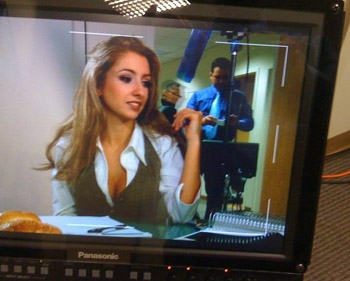
Lauren stopped auditioning but she always kept her eyes open for opportunities.

“I hate sitting around, not getting stuff done, which is why I gave NYCastings a shot and within a week the membership to the site already paid for itself. $80 for a year is nothing compared to what I booked,” Lauren says.


And Lauren does book a lot, evident by her Top Booker of 2009 status.But she also remains modest and focused on the future.


“It’s really cool,” Lauren says. But, “I am sure there are people out there that booked a lot of work and just don’t want to say it. “I just feel very fortunate that I found the site and got on as fast as I did because I got so much work from it.”


Having booked a ton of gigs, Lauren enjoys sharing her success tips.


“I know a lot of actors focus on their talent and that is very important, that is one of my main focuses, but I there are three main parts to the business,” Lauren says… “Being a good actor, grooming yourself / knowing your type and then the whole business aspect. A lot of actors aren’t very good business wise and they may not audition that much because they are not thinking about how to promote themselves and submit themselves correctly.”
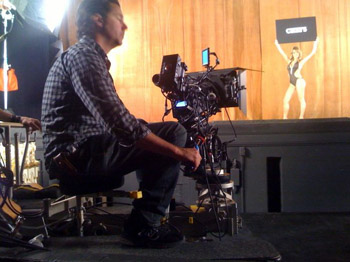
To help NYCastings members submit themselves in the best way possible, here are Lauren Francesca’s…

Top TEN Tips For Making The Most Out of NYCastings


  1. Tip on what opening word to use in a cover letter:

It depends on who I am writing to. If I feel like I know the casting director, I will write a “hey” or “hello.” If not, I will get straight to the point.

  1. Trick for making you seem like the PERFECT fit:

When I submit myself, I make sure I am right for the part and that I find the picture for the role.

  1. Tip on choosing the right image:

Choosing the right picture is about knowing your type. I went to T. Schreiber Studio and they had us sit in a circle and list 5 adjectives for each person. If you know what type you can play, and how people look at you, it builds more confidence and that is the most important thing.

  1. Tip on standing out from the pack:

Have really good pictures that make people stop and want to know who you are.

  1. Tip on how to end a cover letter:

I use… Sincerely, Best, Warm Regards – depending on my mood for the day. You are writing someone a letter and so you want to have a nice button on it.

  1. Tip on what to NOT say on a cover letter:

 Don’t write anything negative in a cover letter. If you know you have a conflict, don’t submit. And don’t apologize for not having a lot of experience because casting directors don’t want to hear that you haven’t worked – they want the best people for the role. You want to make yourself look as experienced and professional as possible.

  1. Tip on when less is more in a cover letter:

Don’t tell a casting director your life story. A lot of actors are very open and, especially with casting directors, I feel less is more. Keep it short, sweet and simple

  1. Tip of when to send links to other work in your cover letter:

I will put my website if I feel it is necessary. I try to tailor my submissions. I do not make it the same for everyone.

  1. Trick for using the unlimited pictures option on NYCastings to your advantage:

 It’s all about what you want to market yourself as and what kind of work you want to get. If you want to get ‘hot sexy girl in a bikini,’ then put up a bikini shot. But if you want to get serious roles, then you need to have a variety of pictures so people can see you as different things. As long as the pictures are decent quality and not offending anyone. I have seen people with bad pictures and great pictures, it’s all about showing who you are.

  1. Tip for using humor in the wording of your cover letters:

 It is hard to tell if someone will like your jokes and casting directors are rushed when they are finding a job, so I like to get straight to the point.


— Many Thanks to Lauren Francesca for Sharing her Top Ten NYCastings submission tips! Stay tuned her Top Ten Tips for Marketing and Networking —

kevinklinesetsstage

All the world’s a stage…

And “actors used to be called players,” shares Academy Award winner and Tony Award winner, Kevin Kline, who still feels a part of that classic era.

Kevin Kline trained at New York’s Juilliard and knows how to play a scene with the same artful mastery as one plays an instrument. So, NYCastings leapt at the chance to sit down with the actor and learn from his fine tuned wisdom about creating award worthy characters…

To start, Kevin Kline looks for scripts that relate to him. He looks for, “some quality that he finds intriguing, that he knows how to do.”

“I look at the script and know that guy, know I have enough of that guy in me to empathize to such a degree that I can succeed and bring something to it,” Kevin shares.

“At other times, it may be a good story, not a flashy character, but a story I want to help tell. It is about something important that I want to be in on. And… at other times, the script is just funny.”

“It starts with the script, then the director, then the location and then the catering,” shares Kevin Kline with his usual subtle humor.

In one of his latest films, The Extra Man, filmed in New York and distributed by Magnolia Pictures, Kevin brings his theatrical mastery and dead on humor to a unique role… a character named Henry Harrison who once knew riches and now richly lives as a penniless yet wildly eccentric escort.

Kevin Kline felt attracted to this character because “he is beyond eccentric, not just a type. He takes the eccentric character another step further. The character’s words we so contradictory. And there was something self delusional about him.”

This character, “created a bubble around his existence that I find heroic,” Kevin says. “Because he is a guy that came from money and now has nothing. He has this symbiotic relationship with these rich people, in a world that he knows and now plays the parasitic role of an extra man. And he is witty and can carry this off while living in squalor.”

The character also hits home to Kevin Kline because “the character (a playwright) complains about having a play stolen by someone and he does not move past that.” Kevin sees this type of “inability to move on as very human”, and sometimes the exact mental roadblock that actors can face.

“Why don’t artists just go back to square one and start over?” he says. There is something very human about the way artists face success.

Despite the outrageous nature of Henry Harrison, Kevin Kline got the audience to love this character because he loved it.

“I love characters who are unappealing at times but speak their mind,” Kevin shares. “And that’s one of the joys of acting is that you are given license to be as cruel and as honest and as destructive as you want… with impunity.  I think, ‘My God what an awful thing to say, but how funny,’ and the audience loves him because he does not care if you like him, he is not trying to be nice. He is like Cyrano De Bergerac who is this poet man with no money who gives all of his month’s pay to an actor just because the idea of a gesture has panache. It is that artistic side of Henry… He knows he is cut down so many pegs and he is not where he should be, that he is the struggling artist, but he lives on his own terms. ”

When it comes to finding the many complicated layers of characters…

“That’s just part of who I am, a genius.” Kevin Kline says with such panache he makes everyone laugh.

“The layering, in retrospect,” he says with more seriousness, “is that you get a good script and you do each scene, give each scene it’s due and trust your instincts. Trust that your judging, one hopes, is finding the right tone for each scene and when it’s all put together you won’t be one note.”
Over the years, Kevin Kline says, “It’s little things that you learn. You learn economy. You learn not to use muscles that you don’t need.”

“If anyone has tried skiing, the first day someone tried to teach me to ski I could not walk the next day because I was using way more muscles then I needed to.  It’s the same with any activity, you learn. You learn that its more pure, if you don’t give it too much.”
“You do justice to a line or a scene or a character. You just try to judge it and trust your instinct. It is about getting better at it, the more you do it.”

And, with practice, you learn to role with the time crunches.

In Extra Man, “we were rushed so much. In one scene, where I was painting my ankles black, we had to stop at 9 o’clock because the man from the bond company was there saying we had to stop at 9 and it was 8:40 and I literally ran to my dressing room, without rehearsal, and we started filming from the top of the ankle and then down so we didn’t have to wipe it,” Kevin says. “And in a way, that’s good because this guerilla filmmaking style does not give you time to over think  things.”
“If it is raining, well ok – lets use the rain. If we can’t use the windshield wipers because there is a lighting instrument attached to it and it’s now raining, then ok – get a squeegee. And it’s perfect for the character.  The scene now starts with me and the squeegee and its fun.”

When asked about his secrets to success, Kevin laughs…  “You’ll get nothing out of me.”

Though Kevin Kline does give us a glimpse into his award winning formula. As an actor, “he brings what he thinks is appropriate of himself and subtracts from himself or adds to himself as the recipe calls for it.”

His classic style of acting is not the norm in today’s heavily improvised world.

“When I do a film, I know I am not going to work with a lot of actors who do Shakespeare.  You work with a lot of actors who have never done theatre, period, and have no  desire to,” Kevin says. “I worked with a director once who said, ‘I worry that theatre is going to be like vaudeville. We are going to see it die.’ Because for years it seemed as if Broadway was dying.  But it will not die in our lifetime. In fact, it may flourish. The more people stay in their homes, uploading films on their computers, the need to go out and see live theatre may increase. But I do feel like I am from another era. I am from another era.”

Even though Kevin Kline feels from another era of training, he knows how to improvise brilliantly in the moment…

“Even on huge budget films there is still someone there saying, ‘we have another scene scheduled we have to do this,'” Kevin says. “But you have padding on either side to try an alternate. I remember working with on DAVE and after several takes we would get to ‘try anything’ and it ended up being something so different that the director saw something in it.”

“That’s how Bob Altman worked all the time too. In Prairie Home Companion, he had us improvise the scene, as long as we got the plot points. To be afforded the opportunity to play, just like how actors used to be called players, and play rather extravagantly… is fun.”

Whether a player is in the foreground or the background, Kevin Kline still stresses the importance of bringing in sound judgment.

“I am so distracted by bad extras,” Kevin shares. ” You can tell bad extras when you are doing a restaurant scene and supposed to be miming speaking but two people are talking at the same time and no one is listening. You have to act well, you have to be good and you have to judge your part in the same way that the actors in the foreground are bringing sound judgment to their part. You see people at the table behind a love scene and they are doing King Lear back there.”

“And, like Henry Harrison, you take whatever hand life has dealt you and make something of it. But don’t make a meal of it, even if it might me a restaurant scene. You have to sit there with the same piece of meat they put on the table at 7am and pretend to eat it and have a conversation,” Kevin says. “But you have do justice to it, that’s my advice.”

Next up on Kevin Kline’s play list…  No Strings in which he portrays a Hollywood actor (Ashton Kutcher’s father) -and – The Conspirator… which plays at the upcoming Toronto Film Festival.