NYCastings-GettingDirectorstoNoticeYou

“A star does not compete with other stars around it; it just shines.”  – author Matshona Dhliwayo

Anyone who has been in the acting game for more than five minutes realizes that it’s a crowded industry. Who among us hasn’t waited far too long in a hot, crowded room, absorbing the nervous, stressed-out energy of all the other actors waiting for a chance to prove in 30 to 120 seconds that they’re the right choice for the part? So we’re all acutely aware of the fact that there is a lot of competition for a limited number of roles. That means it is a legitimate and useful question to ask yourself: am I doing all that I can do to make myself stand out from the crowd? Here are a few ideas for how you can take the leap and really put yourself on the radar of directors and casting directors, and book more roles!

1. Get Good

This may seem like something that goes without saying, but far too often it doesn’t. The fact of the matter is, as actors we’re improving or we’re dying. Younger actors just out of school or new to the bigger markets may have significant performing experience, classes, and other training under their belts, and that’s great. But honestly it’s more a great start than anything else. The thing is, you just don’t know what you don’t know – and directors do know. That’s not meant to intimidate you; just keep in mind that when you do get a chance to meet a director or work on a project – and this applies to veteran actors too – it’s best to take a humble, open-minded attitude toward everything and be ready to learn. Directors are impressed by actors willing to engage fully and go for it fearlessly when they’re given a shot. Just understand that the skills you have learned so far are just the barest glimmer of the fantastically honed talent you will become. Attack each new class or project you work on with the hungry zeal of a convert who wants to know and learn and do EVERYTHING. Be a sponge. Always Be Learning, and always be aware that you can be better, and you will find ways to improve your craft. Along the way, you will catch the eye of directors and CDs and you will book more!     

2. Create Unique Projects

Embedded in that attitude of always learning is that we should always be DOING. The dedicated actor is always working their craft. Even if that work doesn’t pay off in immediate financial gain, the investment in your skill set is a long-term one and it will bear fruit. So during your down time between projects, you should always be working on new monologues, new characters, new takes on old characters and creating your own material.

One of the biggest crimes we commit against ourselves as actors is being passive. That’s not entirely our fault; this is a business that creates a passive mindset for actors. We actors are implicitly placed on the lowest rung of the decision-making ladder. There is a huge swath of decisions made before we ever get involved, decisions made by the writer, the producers, the director, the cinematographer, the DP, the AD, the casting director, the agent and many, many more people before it finally gets to a place where we actors have some say in the matter. We wait for the casting notice to come our way, we wait for our turn to read for the role, we wait for the CD to contact our agent and call us back, we wait for the director to make the final casting choices, we wait to be called to set for our scenes – we wait. And we wait some more.

No wonder people feel powerless.

So STOP WAITING! It’s a huge mistake to allow that passive mindset to inform either the way you approach the business or the way you approach your craft. For one thing, as mentioned above, you don’t have to wait around to get cast in something to be working – and actors who are working are the ones who get themselves on the radar of directors and casting directors. In this day and age of so many on-demand subscription channels, not to mention YouTube and other web-based shows that are constantly starving for content, it’s a crime for any actor not to at least dip his or her toe in the waters of creating material. Get together with friends and hammer out some characters, or even a scene or two. Make a fun night of it! Play around with some quirky, silly, weird, funny, outside-the-box choices and get some rough draft ideas down of what you’re after on video. Then, (when you sober up) have a look at what you’ve made, hone it, tighten it up, ruthlessly cut the superfluous stuff, and rehearse it. Then get yourself in front of a camera – sober this time – and record a scene or a monologue.

I think a big thing that prevents a lot of actors from writing their own material is the weight we put on that one word: “Oh, I’m not a writer! I could never…” Well, here’s some news: you don’t have to start out with a 5-hour, 220-page, epic director’s cut script a la Peter Jackson or Stanley Kubrick. Start with a sketch, or a concept, or even just a character. How about one page? How about half a page? Think in terms of the baby steps we all walked as we learned acting, and apply that to your creative writing: I’m betting your first role in a production wasn’t Lady Macbeth or Hamlet, so there’s no reason to pressure yourself to write up a masterpiece on your first go-round. Don’t think in terms of finished product, think in terms of process, and for goodness sake, have fun! Record that stuff and post it.

3. Put Yourself in the Director’s Shoes

If you find the idea of even this user-friendly level of creating material intimidating, don’t worry. There’s another answer for you to get your unique self in front of the eyes of directors and casting directors, and that is by taking established material and putting your own unique stamp on it. Another way we actors sell ourselves short is we aren’t constantly learning new monologues and committing them to video and getting them out there where people can see them. So that’s first: learn some new stuff, tape it, and upload it, starting with your reel right here on NYCastings.

But you can really make an impact on how directors and CDs see you if you try to think like them for a minute. Let’s use that actor’s empathy to imagine a typical casting: what must it be like to watch a series of 200 actors who have the same basic, general appearance read the same five lines. Over and over. Again and again. Can you imagine trying to stay awake and aware through all that? Now think about how terrified most actors are of failure – that is to say, we tend to put more emphasis on not doing it “wrong” than on doing it right. So what you’ll find is actor after actor taking the safest, most pedestrian route laid out by the text and the breakdown, and thus reading in a very boring way.

So here’s your exercise for the week: learn one or two new monologues and take a different approach. Imagine some quirk in the character, or some odd backstory piece of their personal puzzle that isn’t apparent in the text and play with it. Get weird with it! Have fun! Do ANYTHING but be bland. The important thing is catching the eye of someone who has decision-making pull, and you ain’t gonna do that if you read the safe, established way. If you get too weird or too far out of the box on set, directors will pull you back. But what they love, love, love to see before they cast someone is an actor with the bravery and the skills to play outside the norm, and who can think and create on their own without needing someone to hold their hand or, worse yet, drag them along and coax something mildly interesting out of them. It’s much better to be weird than timid. The worst that can happen is you don’t get the call, or you give someone a giggle when they see your tape. But Hollywood  history abounds with stories of people recording outrageously silly, weird, off-beat and hilarious monologues or scenes, and the right person seeing them and changing their careers forever.

So get yourself out there! Start today by recording some new material and uploading your reel at NYCastings. Also sign up for email alerts for castings in your area, and self-submit to some of the hundreds of projects that are posted here every day!

shutterstock_1022548774

“If something isn’t special, then it’s ordinary.”  –Nora Roberts

“It’s not usual to be unusual.”  –Syed Sharukh

If you’re an actor, you are special, and you already know it. Don’t let anyone ever tell you different. Actors and other types of performers share a unique weirdness that compels us to behave in ways that are the opposite of what most people are comfortable with.

Whereas most people would prefer to blend in to the background and not stand out, say on the subway or waiting in a line, the actor will blithely talk with a stranger at top volume and a million miles an hour about a doctor’s visit to see about a rash in an embarrassing place. We’re weird, and often wonderful, even if we go all TMI sometimes.

So, yes, you are special. But remember this: there are a whole lot of other special actors out there too – and they’re all trying to book the same jobs as you.

So what’s the key? How to stand out from the crowd?

I met actor John Carroll Lynch (“Fargo,” “American Horror Story”) in Denver a few years ago, and he said that, for him one of the weirdest things about his years in L.A. trying to catch a break was sitting in an audition waiting room surrounded by a couple dozen other balding, heavyset guys who could all be his doppleganger.

One great place to start distinguishing yourself from all the other actors who fit your description is to update and focus on filling out your special skills section on your resume.

And in this day and age of electronic cross-referencing made easy thanks to computers and the internet, your specials skills can be the make-or-break factor in getting you into that room.

Right here on NYCastings, for instance, a recent update to the search system makes it a breeze for casting agents, directors and producers to find actors with specific skills they need for their projects. So here are few ways to make sure you get noticed for being the special, unique creature you are!

We talk a lot about specificity in our work as actors, but that’s also a concept you can apply to your resume, and especially the special skills section. If you just put something like “Singer – baritone,” that doesn’t really give them much to go on. However, if you list certain standout roles you’ve performed, say if you performed as Cassie in “A Chorus Line,” the character of Roger from “Rent,” the titular role in “Sweeney Todd” – or ANYTHING by Sondheim for that matter –  you should not only give yourself a pat on the back, you should make sure that it stands out. Of course you will already have that role listed in the section of plays you’ve performed in, but often casting directors eyes glaze over as they scan through hundreds of those lists. In cases like the above roles, you want to make sure they notice, so list it separately in your special skills.

__________________
An example of Special Skills on you Resume might like tike:
Teleprompter Experience, Singing: Musical Theatre – Alto to first Soprano, Pop & Rock (17 yrs), Fluent Languages: English, French & Italian, Accents: French, Italian, Southern US, Excellent Comedic Timing, Sketch and Stand-Up Comedy (5yrs), Dance: Ballet (17 yrs) Hip-Hop, Modern, Salsa, Skilled Breakdancer, Play Guitar (Beginner), Excellent Typist (100wpm), High-speed Driving, NY Drivers license, Certified Scuba Diver. have Tuxedos, Suits, Formal & Casual Wear, Have NYPD Uniform, Karate (Black Belt)
__________________

Another area where specificity can pay off is dance. If your special skills section just has a generic list like “Singer, dancer, stage combat” you sound like literally every other actor in the world. What kinds of dance can you do – and not just the kind that takes place in musicals. Do you do swing dancing on weekends? Did you take a tango class on your summer abroad in Argentina? How about ethnic folk dancing native to yours or your family’s country of origin? Again, a million people have been in the chorus of “Oklahoma.” Science tells us that sometime soon we will reach a tipping point where literally everyone in the world will have been in the chorus of “Oklahoma.” But not everyone knows how to baila la salsa like an Argentine.

Same goes for stage combat. Short sword, dagger, broadsword – these are all very different beasts. If you have special training in any one of them – or all of them – list it specifically. And list separate classes you’ve taken on them. Did you play a specific role or perform in a specific production that calls for a lot stage combat? If you were in say, the Scottish play or one of Shakespeare’s histories, you should mention specifically what kind of combat you did. Also list specifically the various types of hand-to-hand combat you’re familiar with: do you know any kind of martial arts? Do you take Tai Chi or have you taken a Krav Maga class? These are interesting, unusual, and make you stand out. Even if the production doesn’t specifically call for an expert in Israeli martial arts, the important thing is it is a unique skill that very few people have, and it may get someone’s attention.

Be honest, though. While padding a resume in the 9 to 5 working world is common, to do so when it comes to acting is a big no-no. There’s nothing more cringe-worthy than watching an actor try to do something they really have no idea how to do. If the commercial you’re auditioning for calls for someone who is “expert in horsemanship,” guess what, they need someone who is ACTUALLY an expert, not the guy who once went for a trail ride on Snuffles the obese pony while on his family vacation in 2003. The thing about special skills is they really are actual skills, not things that are vaguely interesting to you, something you read about, or something you tried one time. You do not want to get a reputation for being the guy or girl who shows up and has no idea what they’re doing, because you will not get called in again by that casting director.

Also, while you should absolutely list anything and everything you are good at, make sure the skills you’re listing are actually somewhat relevant. There are some acting advice columnists who recommend putting down things like “cooks a mean casserole,” or “good with kids.” And yes, while the goal here is to stand out and at least get your foot in the door by any means necessary – even if that means just having a conversation starter – you really aren’t likely to be called on to whip up your famous beef stroganoff on set, unless you’re applying to work with craft services. Also, vague yet comforting phrases like “works well with others,” or “imaginative” are pretty useless to casting directors. If your imagination has led you to taking improv classes and honing those skills, list them, again, with specificity. How many classes, do you regularly perform with an improv group, etc. Another contentious item to list or not list is things like “Licensed driver,” or “US Passport holder.” These may or may not be important to getting a very few, very particular roles, its true. But when you think about it, having a passport isn’t really a skill, now is it? Also, when a role is going to require an actor to actually drive, they always, always are going to list that specifically on the audition notice anyway, so listing it in your special skills section is a bit silly. And anyway, the goal here is to draw attention to your SPECIAL skills, right? Being a licensed driver is hardly uncommon.

So make sure you get on the DirectSubmit resume upload page and update your special skills so casting directors can find you – and to highlight the special magic that makes you you!

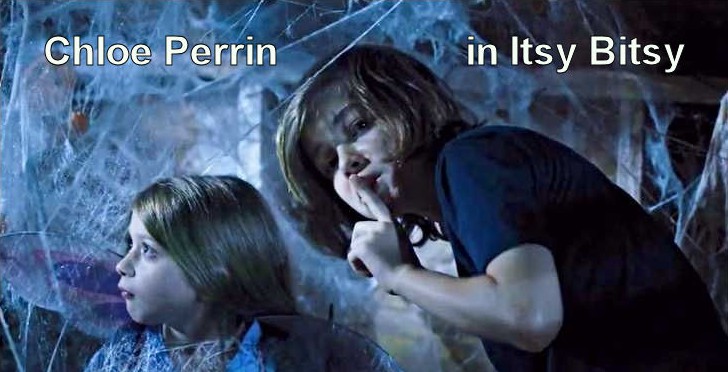
Chloe Perrin in Itsy Bitsy

Some of the creepiest, scariest movies have child actors in them. i.e. Poltergeist (Heather O’Rourke, Oliver Robins), The Exorcist (Linda Blair), Pet Sematary ( Blaze Berdahl / Jeté Laurence) … and oh, we can’t forget Danny Lloyd, Lisa & Louise Burns as the Grady sisters in The Shining!

Which brings us to year 2019 and 12 year-old child actor Chloe Perrin.

Chloe has two horror films being released this year. Mary, which is about “A family sailing in isolated waters discovers the ship they bought holds terrifying secrets” and Itsy Bitsy in which “An ancient mysterious relic unleashes a giant prehistoric spider that terrorizes a single mother and her two children in their new house.”

Just how does a child actor so young handle show business, let alone horror films? Let’s find out.

You’re 12 years old and already have an arm’s length worth of acting credits. How did you get into the entertainment business?

My Mom and my Dad recognized my talent at an early age. By the time I was three years old, I was invited to audition for the role of Ella in an industrial with The American Heart Association in Dallas, TX. My father was an acting coach, and prepped me for the role. I booked it, and it all took off from there. The whole experience of auditioning and working on set was so much fun, I wanted to do it again. So, my parents continued to take me to auditions and I continued to book. By the age of five I had garnered my first starring role in a movie out of Los Angeles playing Haley, the daughter of Ali Larter in The Diabolical. My whole family flew to Los Angeles for the shoot. We had a wonderful time together as a family during the filming.

You’re from Texas but a majority of your jobs are in Los Angeles or on location. Who accompanies you on your shoots? Who pays for your guardian’s airline tickets, hotel, food, etc?

My mom always goes with me! My sister comes too, sometimes. If we shoot outside of the Los Angeles area, the production company provides our transportation. For Mary, a driver picked us up from our apartment and drove us to the airport. We flew to Alabama and production was there to greet us. Then they took us to our hotel. We ate on the set, plus we were given a per diem to spend on food. We were also provided a rental car so that we could drive to and from the set. We had the opportunity to visit Alligator Alley. We observed baby alligators to full grown, huge adult alligators in their natural environment. I even got to hold one of the baby alligators!

Chloe Perrin


Chloe Perrin.

 Photo by Jerilyn Perrin.

 Who helps you negotiate your contracts? Tell us about your team and how you chose them.

My team involves my mom and sister, my agents, my publicist, and my acting coaches. Together, we all make choices for my career. I am represented by Abrams Artists Agency…it was actually love at first site when I first met Pamela and Domina. They loved me, and I loved them! Abrams has an entire team of dedicated agents and assistants that help to consistently bring me wonderful opportunities. I am so blessed to be represented by a top Los Angeles agency! When I’m offered a role, my agents negotiate the contracts. Pamela and Domina, introduced me to my publicist, Anthony Turk. We have so much fun working with him.

Tell us about your best audition and your worst audition.

My best audition was for my very first starring role in the horror/thriller movie, The Diabolical! It was a big step in my career, and I was so young. Many of my memories are of the stories I’ve heard from my family since then because I was so young, but I do remember my dad very clearly…these are some of the most cherished memories I have of him. When he put me on tape for the audition of The Diabolical, he told me I was perfect for the role. When I booked, my dad was as excited about it as I was! He took my sister, mom and me for ice cream to celebrate! I ate two scoops of cotton candy ice cream on a sugar cone! As for my worst audition? Hmmmmmm….I don’t remember one, but that doesn’t mean I didn’t have a bad one. I just try to forget negative things and focus on positive ones.

You have two back to back films: Mary, starring Oscar Winner Gary Oldman, and Itsy Bitsy, starring Bruce Davison. They’re being released within two weeks of each other. Does that mean you shot them both at the same time?

I actually did not shoot them at the same time. I began shooting Itsy Bitsy in 2016, and I shot the movie Mary in 2017. I am so excited that both movies are being released at the same time — this Halloween season 2019! …my birthday is October 12th so I have a lot to celebrate this year!

Exclusive photo to NYCastings. Chloe Perrin

Chloe Perrin. 

As a child actor, you have restrictions on how long you can work. Who arranges your schedule?

There is a school teacher who oversees everything I do on set. The teacher looks out for me to be sure I get my school work done and to be sure that I work only the hours allowed during a day on set. Production puts together my call sheet with my schedule for school and other regulations in mind.

Both Mary and Itsy Bitsy are horror films. As you may know, the horror genre has a huge following and the fans love to hear behind the scenes stories, so here are some questions:

a) When you were filming Mary and Itsy Bitsy, were you actually scared (as if you were an audience member watching) or were the scary parts put in later?

I wasn’t scared at all! I know it’s all just REALLY COOL special effects and makeup. It doesn’t scare me because I know it’s all make-believe. There were special effects added later in Itsy Bitsy, including sound. The editing also adds to how scary the movie turned out to be. As far as Mary, we will all have to see…I haven’t seen the movie yet either!

b) Did anyone pull you aside to discuss with you that these are horror films and what you should expect? What did they say?

Growing up in entertainment, I’ve always understood how movies are made. When I book a role, whether horror or not, I read the entire script (if I haven’t already) and discuss in detail with my mom before the first day of the shoot, so I know exactly what to expect. I’ve had a lot of fun learning about what goes into making a horror movie. In Itsy Bitsy, the giant spider was actually a puppet, so I got to learn about puppetry. I named the spider ‘Tickles’. There are so many cool people who work on projects like this, and it’s really fun meeting them and learning from them. I got to meet the puppeteer on set and learn how ‘Tickles’ moved.

c) What’s the wackiest story you have from working on horror films?

The wackiest story I have from working on horror films is all the fun I have with my sister behind the scenes. We laugh and giggle all the time when we’re together, and I love it when she comes with us on set. I made up the best joke ever after a shoot one day while on set of Itsy Bitsy…“Photographers are violent people… They frame you, they shoot you, and they hang you on a wall!” We laughed so hard our tummies hurt!

Chloe Perrin in Mary 

 In Mary, you worked opposite Oscar Winner Gary Oldman. When was   the first time you met him?

 Gary Oldman is one of the best actors I’ve ever worked with. I was     absolutely STAR-STRUCK when I learned I would be in a movie with Gary   Oldman! I met him the first day on set, and was impressed with his i   incredible acting ability and the way he interacted with the rest of us on   the set of Mary. He joked with people and made us all feel at ease. He   even played fun games with me between shooting scenes – just don’t   mess with his hair, lol…he is so much fun to work with!

In Itsy Bitsy, you worked for several weeks with Oscar Nominee Bruce Davison. What type of advice did he give you?

The best advice Bruce Davison ever could have given me was the way he conducted himself on set. His example of professionalism – he knew his lines and was always prepared…I could tell he practiced, practiced, practiced. He also followed direction, was on time, and had a great attitude with everyone on set, including me!

What do your non-actor friends think about your career?

My non-actor friends think my career as an actress is crazy – in a good way. I’ve even helped some friends get involved with acting!

What type of school do you attend? When you’re on set, what’s the protocol for school?

I attend homeschool! My homeschool is very flexible, and allows me to go on location to film. My mom says the protocol for school is straight A’s, so I always do my best on AND off the set. I have always made straight A’s, plus I’m two years ahead in school. I plan to start college early, just like my sister did.

What advice do you have for young performers?

If I were to give advice to other young performers, I’d tell them to stay positive, and practice, practice, practice. I would tell them to try not to overwork themselves practicing on a script, but to practice steadily — three to four times a day every day up until the audition / shoot, and then again on your way to the audition or set, run your lines a couple more times. Most importantly, have fun!

Anything else you want to say?

I would love to connect on social media with you all! Follow me on Instagram! I post about my roles in movies and on TV. I also post about all the things I love, like spiders and turtles. I would like to see what you post too!

Bruce Davison in Itsy Bitsy.

More about Chloe Perrin: When not working in Los Angeles or on location, Perrin resides in Dallas with her mother, a photographer and acting coach and her older sister, also an actress. This talented little gal loves art, reading, science, playing chess and snuggling with her dog.

Bruce Davison in Itsy Bitsy.

Photography by: 
Demarest Photography 
@demarest_photography 

Makeup by: 
Christine Hazelhurst 
@Christine_Pro_Makeup

People recognize Disney’s child actor Ava Kolker from shows such as Girl Meets World and most recently Sydney To The Max. You may remember her from Scary Movie 5 and Insidious: The Last Key as well as lots of other big and small screen shows. Now, Ava is transitioning into pop music and fashion designing.

We got a little one-on-one with Ava in which she discusses a bunch of things that child actors may find of interest.

You started in show business at such a young age — four years old. Did you understand, at that time, that you were “working” and earning money?

Yes, I started working at age four and just remembered that I loved it. On American Horror Story, I only had one line and it was really early in the morning, outside, and I had the sun in my eyes and we did many takes even though I was sleepy and uncomfortable; I didn’t want to leave at the end of the day. I asked if I could come back and couldn’t wait till the next time I could be on a set. I definitely didn’t understand that it was “work” or that I was “making money”. To me, it was just my favorite activity.

How did you meet your talent agents and manager? What does your agent and manager do for you?

I met my first talent manager through an introduction as he was going to manage my two older sisters and he asked me, “Do you want to do this, too?” I said YES for sure, and so he signed all four of us [Ava also has a younger sister].

Then I met my talent agents when I was five years old after I filmed The Trials of Cate McCall. The director Karen Moncrieff said I was a great actor and she was going to make calls to help get me the best agent possible who would watch over me not only as an actor but as a human being. I then signed on with Meredith Fine and the team at Coast to Coast Talent and have been with them ever since.

My agents help to get me auditions and get me into the best rooms possible to have a shot at great roles. They help pitch me as the right person for the role. My manager, Margot Menzel, takes on a broader role and helps manage my career, with building the best team around me, finding me opportunities, helping me with introductions — even for my music — and thinks outside the box beyond auditions. She’s amazing.

What was your audition like for Sydney to the Max?

I first auditioned with the casting directors Sally Stein and Barbie Block on a first call along with hundreds of girls, I hear. I thought I was too short for the part to play a 7th grader when I was the shortest person in my 5th grade class. I wasn’t nervous — I just went in and had fun with them.

Barbie and Sally had also cast me in Girl Meets World so I was happy to see them again, and I even asked them to think of me for the next role. LOL. But then, they called me in to meet producers on the 21st floor of the Disney building. I was excited but was still trying not to get my hopes up. But when I went to producers, I remember Mark Reisman laughing so hard he was putting his head back and I just really felt like I nailed it. I was trying to contain my excitement walking back through the building, but when I got to the car, I screamed! I said, “Mom, I really feel this one, I’m Olive. I really think I’m getting this one!”

The next morning, I heard that I was “pinned” for the role. I was so beyond excited and hopeful. The next step was to “test” with the producers and Disney Executives so I went in and tested with Ruth Righi who had already been cast and other potential “Olives”. After the test, I still felt amazing because Ruthie and I had an immediate connection and had so much fun doing our scenes together. They told me it would take 10 business days to find out which felt like an eternity. But I got the great news on day four and they told me the decision was unanimous, I got the job, I was going to be Olive. I remember immediately bursting into tears and felt so grateful and so full of joy. I will never forget that moment.

Do you take acting and singing lessons?

I have actually never taken acting lessons. I did musical theatre at Class Act Theatre when I was little and that made me love the stage. I study by watching and mimicking other actors I admire and seeing how they deliver the truth in their performances. I do take singing lessons. I work with Ameet Kanon who really helps me find the inner artist. We practice on a stage so that I can learn about performing live as well as singing. We do a lot of improv and she helps me to do song writing as well. which I love. So I feel like she helps me as much to find my voice as well as improve my vocal.

You’ve just released your first music single “The Good Ones”. Was it your idea to dabble in music?

I’ve always been interested in music. When I was doing musical theatre, I would sing around the house all day, every day and couldn’t get enough. I love how music and singing makes the environment so much happier and joyful. I am grateful that I finally met two incredible songwriters, Peter Zizzo and Francis Galluccio, who were willing to work with me and bring my vision of “The Good Ones” to life. They helped me realize I love doing my own music even more than I could have imagined.

How did you choose “The Good Ones” as your first single?

I wrote it with Francis and Peter. I came up with the title, and the concept and knew I wanted to write a song about the good ones in my life and the people who always have my back. I feel like they are my biggest gift and I felt that there would be no better way to start my singing career than to write a song for them and about them.

What are the steps you took to make “The Good Ones?”

I met with Francis and Peter in Peter’s Studio and we discussed my idea of writing a song about “the good ones”. They loved the idea and we wrote down a bunch of lyrics about how I felt about the people in my life. Then Francis came up with a beat and an idea of the music on his guitar. Peter added to it, and came up with other brilliant ideas. Then, the three of us spent a few hours in the studio a couple times fine tuning the music and the lyrics and trying different things until we all loved the final version we all agreed to. Once we came up with the final, Peter and Francis produced it and Miklos Malek mixed it. When I heard the final mixed version, I was so excited and couldn’t wait to share it with the world.

What is your favorite music genre? With “The Good Ones” being pop, do you have plans to release more pop songs / make an album or are you also interested in making different types of music?

I love pop, so I think for now, I will probably stick to pop, and would love to do an album. I just recorded a second song I am hoping to release by the end of the year, so hopefully that will be a great start. I would love for my third song to be a ballad but I am open to whatever comes to mind that feels right in the moment.

We heard you released a new fashion line. Can you tell us the name of your collection and where we can find it? Where is it being sold?

Yes, my new line is called Ava by Pol Atteu in partnership with the incredible designer to the stars Pol Atteu and Patrick Simpson. I have created a new Instagram account @avabypolatteu where all of the details and places it will be sold will be announced. We are in discussions with many stores and will be announcing pre-orders online soon as well. I am starting with luxury 3-D T-shirts and designer jeans and I hope you all love it.

AvaKolkerLexy Kolker_Small

Ava Kolker and her sister, Lexy Kolker.

What made you decide to dabble in designing t-shirts?

Well, I feel like everyone wears T-shirts and there aren’t a lot of affordable glamorous T-shirts you can be comfortable in but also make a statement of style and luxury. They also have great positive messages for girls, which is always a good thing.

Will you he releasing more items? If so, what?

Yes, we are going to be releasing designer jeans, and after that, the sky’s the limit. We have discussed other clothing items, accessories, purses, shoes, sunglasses, cosmetics etc. But we want to do one thing right before we move in to the next, so taking our time perfecting our T-Shirt and jeans line first.

Tell us about school, especially when you’re on set.

I attend a public home school program that is phenomenal for actors. My school teacher comes on set once a week to follow my progress and I have a full time set teacher on set who only works with Ruthie and me so it’s like getting a private tutor. I feel very grateful for the great education we are getting on set. Education is a very high priority for me and for Disney so most of the time I am ahead, and that’s how I like to keep it.

Have you ever had to travel outside of the California area for work?

Yes, I filmed in Ohio and Miami and both times my dad took me. We stayed in nice hotels and I absolutely loved the adventure. I hope to travel more in the future but most of my projects so far have been in LA so that’s been convenient, too.

What’s your favorite and least favorite things about being in the entertainment field?

Well, the entertainment field happens to be my passion and what I love to do the most so my favorite thing is that I get to do what I love and call it “work”, which it never feels like it is. Someone once told me to do what I love and I won’t ever work a day in my life, so I feel blessed to have found what I love to do early in life. What I like least is the rejection, and the judgement and the unstable nature of it. I feel like you can be on a hit show, and get great reviews and have a lot of fans, and it can still take months or years to get your next job. That can definitely be discouraging if you let yourself be affected by the rejection. So my biggest focus is to always stay grounded and stay busy so that I can be less affected between jobs.

Do you have any advice for young performers?

Yes, I would let them know to work on their skill sets all the time, learn what you’re good at, and become excellent at it. What makes you different and unique? What’s your talent? Embrace your differences, work hard, make contacts, take every opportunity to learn and perform and most of all, stay enthusiastic and positive no matter how many “no’s” you get.

Anything else you’d like to say?

I just want to thank all of my fans and all of the people who support me and have been so good and loyal to me. I appreciate and love every one of you.

Where can we find you on social media?

You can find me on Instagram at @avakolker and on twitter at @realavakolker. I also have a YouTube Channel Ava Kolker for my music videos.

Cartoon5

My head is exploding from speaking with Larry Silverberg, one of the leading authorities on the Meisner acting technique. What makes Larry an authority? Well, Mr. Sanford Meisner was Larry’s acting coach. ‘Nuff said!

Larry, who has been teaching acting for 30 years, has put together the Actors Success Suite & Online Acting Training videos

The Actors Success Suite, which has a lot of leading industry professionals on board (you’ll see who! <wink wink>), is a powerful online venue for training, resources and discounts for actors who want to have an acting career.

Yes, you heard me. Career.

Below is a quick bit about the Actors Success Suite and then we’ll dig right into the interview with Larry Silverberg.

Book1
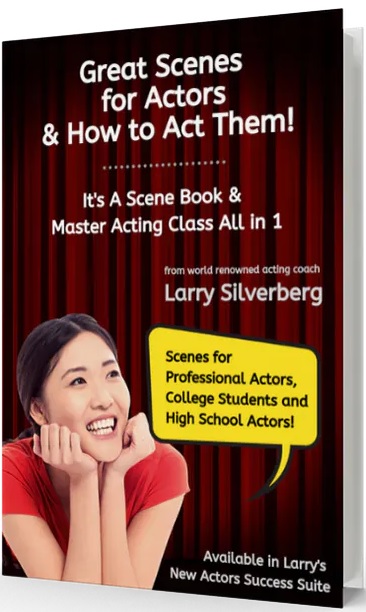
The Actors Success Suite is for ALL AGES. Inside this online-only program, you’ll receive training, seminars, resources, 11 books including Great Scenes for Actors & How to Act Them! by Larry Silverberg, as well as others by Smith and Kraus Publishers. One of the seminars is from Denise Simon who is a top notch acting coach for child performers in NYC. “We want the young actors to start in a healthy way,” says Larry. You’ll also receive bonuses, including a discount to NYCastings!
I’m excited to share Larry Silverberg’s acting wisdom with you. Here we go!
How did you become involved in acting?
I was setting out to be a filmmaker but a friend of mine talked me into trying acting with her and I fell in love with it. I loved the deep humanity of the art; it’s a beautiful, awesome art form. Now I’m devoted to helping actors become the best they can be.
What kind of industry shifts have you seen in the teaching business?
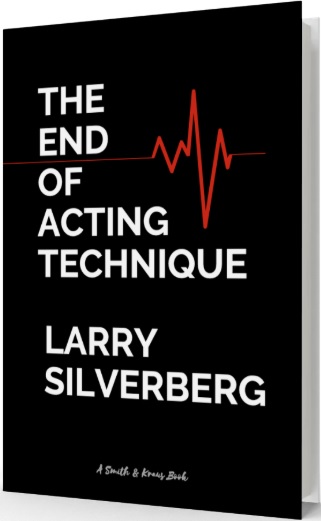
I have a new book coming out called The End of Acting Technique which is a reaction to what I’ve seen. The majority of teachers have made acting very complicated.
I’d like to un-complicate acting and make it very simple. When I start to show students how easy acting is, they breathe a sigh of relief and think, “I can really do this.” It mustn’t be complex. All of these exercises that make the students watch themselves even more makes them self conscious. If you’re self conscious, you cannot function as an actor. So when I help them, they can breathe again. It’s very encouraging.
I want actors to be encouraged. I think a lot of young actors are worried “Can I do this?” My answer is “Yes, you can! At the highest level.” 95% of acting is very bad. When I say bad, I mean artificial, without life, pretended, fake. That’s why I have a workshop called the Top 5% Acting. When actors start to understand the human values of acting, it can raise them to the top 5% very quickly.
What’s the difference between acting on stage vs. screen?
Most actors want to learn to act. There’s a big misunderstanding with acting. The differences between stage acting and film acting is technical. You learn the acting and then apply it to the medium.
You have to get your spot when you’re working in front of the camera. But great acting is great acting.
Can the Actors Success Suite also help seasoned actors?
Yes. The artist never arrives. You’re always growing and evolving. We’re never satisfied. The modern dance pioneer, Martha Graham, used the term “divine dissatisfaction.” We’re always trying to be better.
I love working with any actor who is ready to work hard. I tell actors you can take the whole idea of talent and throw it in the garbage because it doesn’t matter. You don’t have to worry about talent. The only way you can take it forward is by working hard. We have no say in talent.
[Martha Graham’s full quote is: There is a vitality, a life force, an energy, a quickening that is translated through you into action, and because there is only one of you in all of time, this expression is unique. And if you block it, it will never exist through any other medium and it will be lost. The world will not have it. It is not your business to determine how good it is nor how valuable nor how it compares with other expressions. It is your business to keep it yours clearly and directly, to keep the channel open. You do not even have to believe in yourself or your work. You have to keep yourself open and aware to the urges that motivate you. Keep the channel open. … No artist is pleased. [There is] no satisfaction whatever at any time. There is only a queer divine dissatisfaction, a blessed unrest that keeps us marching and makes us more alive than the others.]
If we have no say in talent, then why do some teachers constantly talk about talented actors?
There are a lot of acting teachers who say, “I only want to work with talented students.” What I say is, “There’s nothing wrong in that student, there’s something wrong in that teacher.”
If you’re a real teacher, you can help anybody act. I don’t care about talent, I just want someone to work hard. Acting is a human event. It’s human. We already do it every day. Our life is theatrical. Think about it. We get up in the morning, we put on our costume and make-up, we go onto the set and we live out this intense life with relationships. Things are very important to us and we’re trying to accomplish something every day. Now, if I can show that to a student, once they see they’re already doing it, they can start to bring that to their work.

Larry Silverberg
What makes a great actor?
We all play a character, no matter how honest or authentic you are, you’re still playing a character, because you’ve chosen to be the person you’ve become. When you start to understand the human part of acting, you realize that acting is not distant from you. You already have everything you need to be a great actor. I call it Top 5% Acting. In the Actors Success Suite, you will find a workshop for that.
The difference is, when we read a script, it’s not ANY day in the life of the character, it’s the most important day. That’s what the script is about — the BIGGEST day in the character’s life. We forget the stakes are high. In theater, the stakes are always high.
Is the Actors Success Suite in place of a live acting course?
This doesn’t take the place of an in-person acting program. This helps support actors and you will also receive discounts and that you can’t find elsewhere.
If an actor wants to be coached by you in person, is that possible?
Absolutely. I’m known internationally on the Meisner approach. Actors can come to my location. I studied at the Neighborhood Playhouse School of Theatre.
You have books of scenes and monologues available for men, women and teens, which can be found on your website True Acting Institute.
Actors need scenes, for class, demo reels, to work with other actors.
I’ve been writing scenes for years and my students kept asking me to put the scenes in a book. In addition to the scenes, I give coaching to help the actors bring meaning and authenticity to the scenes.
I also want to give people tremendous resources and training so I have three new books coming out. I just wrote a really fantastic book of original scenes. I also give professional acting coaching after each scene.
How long did it take to put the Actors Success Suite together?
The Actors Success Suite has been evolving for the last few years and it’s finally come together. It’s been a long process but it was very important to me that I bring on the best people in the industry to help the students. It’s really about advancing the actor’s career. We want to help them become successful and help them to book jobs.
How does the Actors Success Suite help actors?
Auditions are a great performance and what happens after that is out of your control. When you go into the audition room, you have to be ready, so this program helps you become ready. It’ll help get the Casting Director to stop falling asleep. It’ll get them breathing because they’re so impressed with what you’re doing. It’ll help you bring authentic life into the room — that’s what everyone is begging to see. The whole point of this is to help actors work on the script and the material in ways they can accomplish that. The actors will get new skills, tools and resources.
You mentioned there are discounts available.
I’m thrilled to partner with NYCastings because in my opinion they’re the most important place actors can find auditions. Other discounts are also available.
For a short time during our launch period, you can purchase the Actors Success Suite at a discount.
Also, be sure to visit True Acting Institute where you can take an Online Master Class and order other training materials.
Larry Silverberg's created the Actors Success Suite.
Larry Silverberg created the Actors Success Suite.
One of the world’s foremost authorities on the Sanford Meisner technique of acting, Larry is the author of the acclaimed 4 volume series, The Sanford Meisner Approach and his books, Loving To AuditionThe 7 Simple Truths of Acting for the Teen Actor, Meisner For TeensTrue Acting Tips and Winning Your Acting Auditions.
 An award winning actor/director, Larry is a graduate of the Neighborhood Playhouse School of Theatre where he studied with legendary acting teacher, Sanford Meisner. Since then, Larry has worked professionally as an actor and director across the United States and in Canada. Larry won the Seattle Critic’s Association “Stellar Acting Award” for his portrayal of “Teach” in the Belltown Theatre Center production of “American Buffalo.” and his recent production of The Normal Heart won two “Best Play of the Year” Awards.

Bringing Your A-Game to the Cold Read- NYCastings

As actors we spend a lot of time obsessing about auditions – with good reason, of course. We are in the only profession that I know of that requires workers to go to job interview after job interview for much of their career. No sooner do you get hired for one job before you’re off to your next “job interview” to try to land your next booking. Your Uncle Kevin who works in accounting never had to do that!

The good news is with all that practice, we get pretty good at it after a while. There are some great tricks and methods you eventually learn to settle your nerves and just go out there and have fun, despite the pressure. And of course everyone should work on audition technique, practicing monologues and scenes in actor’s groups, and most importantly getting involved in some on-camera audition classes to hone and perfect the finer points.

But once you’ve gotten that audition slot and are heading to your appointment, you’re pretty much on your own. And let’s say you’re a diligent actor (I know you are!) who does his or her homework, learns the sides, researches the role, and does the scene work to get familiar with who the character is and what’s happening in the scene – then lo and behold you get thrown a different scene altogether. Or you get handed an additional scene after you nail it on the one you learned previously.

ARRGGH! The dreaded cold read!

I can’t tell you how many actors I’ve heard talk about how much they hate cold readings. Granted, it’s a challenge, but cold reads are very much part of the process. More importantly, they’re not going anywhere. It’s essential to booking roles to work out a step-by-step process for dealing with cold reads. You need a road map you can follow so you won’t feel like you’re flailing every time one comes along. Here are some things to keep in mind, and a plan for being the killer you are and killing it at the cold read.

1. Everybody Knows

The first step toward changing the outcome of the cold read is changing the way we approach it mentally. The fear and panic many people experience about cold readings – just look at the crumpled, quivering sides clutched in sweaty little hands at your next cold read! – must be replaced by something more positive. The first step toward changing your mindset is to remember a simple truth: everyone in the room knows what’s going on when you get handed sides you’ve never seen before. We’re all on the same page, so to speak, heh heh… (Sorry.)

So instead of approaching the cold read with a mental outlook like, “Oh god, what if I stumble over the words, what if I lose my place, what if…what if…what if…,” instead, just remember that the people on the other side of the table in the audition room realize exactly what they’ve just asked you to do. No one’s worried that you don’t appear to know the material because of course you don’t know the material! They’re not expecting a polished final product ready to submit to the Academy for consideration. Relax, and look at this like a fun opportunity to work on your improv skills and do some acting instead. There is no possibility of failure here. Whatever you bring will be your fresh, new look at the material; the key is to make sure you are relaxed and open enough with your instrument and your technique to be brave and make some interesting choices – and have some fun for goodness sake. The fantastic Bob Odenkirk of “Better Call Saul” and “Breaking Bad” fame says he actually looks forward to auditions because an audition means he “gets a chance to act that day.” A big part of the cold read that flies under the radar of many actors is that it is as much about seeing how you react and adapt to being given unfamiliar material, working with your reader or other actors, and taking adjustments you’re given. So right off the bat, a relaxed, engaged, and excited attitude is the way to impress. Go a little meta and imagine yourself showing them the creative actor they would be bringing to the set on day one and be the professional they would like to have on set to contribute his or her unique take to the project.

2. The Material

So, we’ve cleared our minds of negativity. Now it’s time to fill up on the new material. Most professional productions are going to give you 10 to 20 minutes to familiarize yourself with new sides you’re given, or they should. The one thing you DON’T want to try to do no matter how much time you have is memorize. This isn’t a test of your memorization skills, and trying to do so under these kinds of circumstances is worse than a fool’s errand, it’s detrimental to bringing your best acting because it steals your focus away from what you should be working on. You should be given some broad guideposts by the casting director, but mainly you should rely on your analytical skills to figure out the who the character is, what they want in the scene, where and when they are, where they just came from, and their emotional relationship with other characters in the scene. Start with the bare bones of it, and build from there.

3. The Space

A good place to start constructing the scene, especially given the time constraints, is the physicality of it. As you read over the sides, ask yourself where, literally are you, and where are the other characters? Say you’re in a scene in 1940s Kansas where your character has gone back home for a funeral and you’re speaking with your brother. Would you be standing? Seated at a rickety kitchen table on a hot summer day? What about your brother? Place him in the room somewhere. Breathe in that space, and the sensation of sharing the room with this other person. Picture details of the scene: is something cooking? What color are the curtains? Are they new? Old? Does your character remember them from childhood? Take some time during your preparation period to really dig into these kinds of imagery questions and visualizing the space your character is occupying. It’s already assumed that you’ll be referring to the sides during the read, so this exercise has the added benefit of putting you in a place where you’re more likely to be able to feel your way through the conversation with the other characters involved rather than freaking out about finding your place on the page.

4. Back to the Words and More

Now focus on the text again. You should by now have a sense of where the scene is going and what your character wants from the other character. But now is the time to take another pass at the words and try to divine what’s not being said but still being delivered in the words. What’s behind the words, in other words. This is a great opportunity to highlight pivotal moments that may not have anything to do with actual words – a pause, a moment for the penny to drop on some new information, an emotional beat shift, a place where your character’s tactics shift. Be aware of these spots in the text and think about how you might approach them. Another fun exercise is to take a moment as you scan the sides is to imagine what each character is leaving out. What we choose to keep hidden is often as or more important than what we say out loud. Think about how the things your character is keeping secret inform the way they are going after their objective.

5. The Essence

Okay, so, you have a familiarity with the sides and a solid picture of where you are in time and space. You’ve also got a grip on the emotional relationships you have with the other characters in the scene, and what your objective is. Now the important thing is to enter the scene with a solid sense of the emotional truth of the moment for your character. This will give you the freedom to make eye contact with your scene partner – when they’re speaking you should be focused on them, always – and to listen and react honestly. Treat it like a rehearsal where you have the freedom to try out different approaches. Even if every word isn’t perfect, even if you stumble here and there, as long as you’ve done your homework and you stick to the emotional essence of the scene, this step-by-step approach will ensure you can give the best cold read possible!

Find those Auditions now

NYCastings Success - Siobhan Smith

I’m so thankful for NYCastings!  One day, I saw a posting for an open call the following day with ABC’s $100,000 Pyramid.  So, I went.  Flash forward 2 months and I was on set with Michael Strahan, Pete Holmes, and Jeff Ross!  And the best part is that I actually won a trip and a grand prize (50K)!!

Then, I took an awesome commercial class with Barry Shapiro offered by NYCastings and Tina (strongly) encouraged me to participate in a Manager’s Showcase at the end.  I was reluctant, but she was very supportive throughout the whole process and I am now working with a great Manager!

I look forward to taking advantage of many more learning opportunities and bookings!

Thanks again NYCastings, Siobhan

www.siobhansmith.info

NYCastings - How to Get Seen at Equity Auditions

How to Get Seen at Equity Auditions… It’s a tale as old as time – or at least as old as our modern definition of work: you get out of school, your fresh little brain just jam-packed with new knowledge that you’re eager to parley into work in your field to earn some sweet, sweet cash just like a real live grown-up. So you go to apply for a job, and lo and behold, you run up against something like: “Five Years of Experience Required.” (One fascinating modern twist on this phenomenon is so-called “entry-level” jobs looking for people with five or more years of experience, but that’s a column for another day and another publication…)

Actors looking to break into Equity roles face a similar conundrum: the most straightforward way to become eligible to join the union is to get hired under an Equity contract. However, auditions for Equity shows will only allow union members to sign up through their online appointment scheduling app.

So…what the huh? How is a poor, but talented and experienced non-Equity performer supposed to take the next step in his or her career and land that coveted Equity contract and begin the process of becoming a member?

First a little background…

Just to define our terms, Equity is the shorthand name for the Actor’s Equity Association or AEA, the union representing around 50,000 live performance actors in the U.S. Much like acquiring a Screen Actor’s Guild card (SAG-AFTRA) for television and film actors, joining Equity is a milestone achievement in a stage actor’s career and signals to casting directors and producers that the actor has (or theoretically should have) a certain level of experience, skill and professionalism when it comes to performing.

Perhaps more importantly, that Equity card unlocks a number of career-enhancing advantages. For one thing, at EPA (Equity Principal Audition) or ECC (Equity Chorus Call) auditions, union members are given first preference and allowed to sign up for time slots in advance. Non-Equity actors must wait in line and sign up on a list that morning to be seen after all the Equity actors have auditioned. Worse still, there’s no guarantee that non-Equity actors will even get a chance to read, even after waiting.

For most actors, the most stressful and difficult part of auditioning isn’t the actual audition itself – that’s the fun bit. No, it’s waking up early and dragging your carcass down the the studio, getting your name on the list and waiting. And then waiting some more.

And of course there’s the money and the benefits: belonging to a powerful union like Equity or SAG guarantees the performer a level of pay and certain standards of working conditions, rules that non-Equity shows can skirt and sometimes exploit to take advantage of performers and crew. (That’s not to say all non-Equity houses are bad or exploitative, not in the least. It’s simply to point out that Equity makes it a lot harder for those things to happen.)

So given these constraints, how are you gonna get your foot in the door and get even a shot at auditioning for an Equity role? Here are a few tips:

Show Up

This may seem like a no-brainer, but the thing is it’s pretty easy to talk ourselves out of going to an audition even under the best of circumstances. I hate to admit it but there have been days when I woke up to face a cold, grim, chilly morning and getting out of that warm bed to go to an audition was the last thing in the world I wanted to do. And if it’s for an Equity audition where you know in advance you will be waiting with no appointment time and no guarantee you’ll even be seen, sure. Of course the temptation to talk yourself out of it is understandable.

However, the first rule of…well, of everything that’s worth doing is that you have to show up. You’re not likely to encounter some friendly door-to-door Equity contract person coming by your house to offer you a lead role in the next “Hamilton.” The defining characteristic of the careers of 99 percent of actors is struggle, and you’ve got to fight to get where you want to be. The streets of New York and L.A. are scattered with the corpses of the dreams of millions of would-be actors who found that it was just too hard.

But that’s not you: you want this. And you have the passion for performance and for creating the work, so you will do what you have to do to mentally prepare yourself for the audition process and get out of bed and go. Get to sleep early the night before, charge your phone, prepare some healthy snacks to take, bring a script you’re reading or a good book, and walk in the door with the mindset that you might be there a while, but that’s okay.

Get There Early

This might be another seeming no-brainer for this type of situation, but surprisingly many actors fail to arrive early enough. The list that the Equity monitor puts out for non-Equity actors to sign up on takes names in order of arrival. So if the audition is for a show that really interests you, get there early and get a spot in the line. It’s always amusing to see how distraught and puzzled some late-arriving actors can be when they roll in and see how many people are already waiting ahead of them, as if they were the only actor in the city who wanted a role in that show.

Do Some Recon

Actors are by nature and necessity social creatures. Get involved, meet people, go out of your way to say hello to familiar faces you’ve seen at other auditions, and you’re sure to hear the latest scuttlebutt on what else is going on in the world of auditions. If you’re hearing about a big upcoming audition for a prestigious show that has everyone in your circle of non-Equity actors interested, remember that the Equity people will also be showing up in force. That means, unfortunately, that the slots for non-Equity actors to read will be pretty limited or even non-existent due to time constraints. Since you’re having to spend so much time just waiting for the chance to read in order to get that foot in the door on an Equity contract, it’s wise to strategize a little bit. The “throw it against the wall and see what sticks” method of going to every single audition is likely not the optimal strategy in this case. Pick and choose a little more carefully, maybe even deliberately aiming for shows that are a little bit under the radar and you may give yourself a better shot at booking a role.

However…Go Back!

One semi-secret that a lot of actors don’t know about is that Equity rules require that every production has more than one EPA/ECC audition. If you get turned away on Day 1, ask about Day 2 or even Day 3. Yes, it’s a hassle to go back repeatedly to the same audition, but circle back to tip #1 on this list for motivation!

Take Care of Ya Business

Don’t forget to pack headshots and resumes and have your links to your reel and other information up to date. In this digital age, it’s easy to forget about the importance of hard copy, but there are still tons of casting directors out there who use headshots in this way. Even if you don’t get a chance to read, you may be asked to pass along your headshot for them to consider later on, and you never know what might come of it!

Stay on top of all the big auditions at NYCastings and upload your resume and headshot today!


NYCastings-UKActing

We’re all different, we actors. Especially when it comes to the creative industries, everybody carves out their own path. No two roads are exactly the same when it comes to becoming a working actor – some of us start out acting literally just out of the cradle, others come to the business later in life. Some of us land a big role right out of the gate that launches our career, others have to grind for a while before we find our niche.

But one big touchstone for measuring a person’s ascension along the path to becoming a real-life, professional working actor is joining a union. Here in the States, of course the two biggies are SAG-AFTRA and AEA (Equity). But what if you’re considering launching your career overseas and taking your chances on landing some work in the U.K.? Despite the current turmoil over Brexit – and in fact, in part because of it – there are a number of attractive reasons why a move to the U.K. right now could be a major leg up in the career of an up-and-coming actor. The unions and other resources available to even newbies in the U.K. are a big reason.

But first, it’s important to remember the reason why actor’s unions are so important. Prior to the formation of SAG in 1933, actors were basically cattle. They were treated like they were more or less the property of the studio, bound to multi-year, exclusive contracts that forbade them from choosing their own projects and sometimes even forcing them into and out of personal relationships. It took a 1948 Supreme Court decision to finally break the studio’s monopoly power, but even so the struggle continued over the subsequent decades as actors won hard-fought battles over payments like residuals and securing a percentage of box office grosses. 

These days the battles continue, but if you’ve worked on a project where you’ve enjoyed a leisurely lunch break or collected overtime pay for a long shoot day, you can thank SAG-AFTRA – whether or not you’re a member. 

But what about jumping the pond and trying your luck in the U.K.? Here’s a breakdown on what the union scene is like for U.K. actors, and a listing of some of the other resources available to actors over there.

Equity

Equity in the U.K. is the primary actor’s union and it’s the one that you’ll be most likely to want to join. It’s been around since 1930 and is home to some 45,000 performers and creatives working across the U.K. in film, television and on stage. A quick and dirty comparison could say that what SAG-AFTRA and AEA do for actors in the U.S. what Equity does in the U.K., but there is actually much more to it than that. 

While all three are unions representing film and television actors – and in the case of SAG-AFTRA voice artists and other performers covered by AFTRA contracts – Equity in the U.K. also welcomes performers and back-of-the-house creatives like dancers, designers, pupeteers, comedians, and variety performers. In fact, Equity U.K.’s website boasts that the union has just landed its first agreement outlining a Code of Conduct for professional wrestlers. And while SAG-AFTRA is mostly concerned with securing performers’ fair treatment and pay from film and television studios – and rightly so, given the creative accounting practices and ever-more esoteric means studios still use to avoid paying talent –  Equity in the U.K. has its fingers in all kinds of pies. One recent initiative the union undertook was circulating a petition on behalf of performers at the Edinburgh Fringe Festival, the largest fringe in the world and the oldest one as well. The complaint alleges that over the course of a few short years, performers and other creatives traveling to the Scottish capital to perform have seen housing costs skyrocket, nearly doubling in some cases just since 2015. The union is helping to fight that on behalf of Fringe performers. 

Another difference between the U.S. actors’ unions and Equity is ease of joining. If you are a performer in the U.K., you are almost automatically eligible to join. Indeed, if you enroll in a drama school or even take an acting class in university you can immediately become a Student Member with an annual fee of just £18.25 ($22). Apart from that, the performance credits requirements are much less stringent than those of either AEA  or SAG-AFTRA. Membership dues are on a sliding scale based on the money you made in the previous year, starting at a mere £125 ($152). If you become one of the lucky and no doubt talented actors who makes over £250,000 in a year, your dues will shoot up to £2,500, but hey, what’s a couple grand between friends when you’re making that kind of scratch, right? According to reports, the openness of the rules and membership of Equity in the U.K. means that there are a lot more opportunities for actors – both those who are in the union and newly arrived ex-pat actors who haven’t yet joined. The strictness of the rules that can limit work possibilities for newer actors in SAG-AFTRA just doesn’t exist in the U.K.

Here are a few other great resources that may be well worth the membership dues for actors relocating to Shakespeare’s Sceptred Isle.

The Actor’s Guild of Great Britain

The Actor’s Guild or TAG was set up as a means for giving actors a leg up with training in an affordable, convivial way. Membership benefits include access to low-cost classes and workshops on a wide variety of skills a professional actor might need, from more pedestrian training like vocal technique all the way to more esoteric skills like horseback riding. At just £10 – £24 per year, the guild is a valuable community and resource for actors trying to make it in the U.K.

The Actor’s Center

This venerable group has been around since 1978 and boasts past connections with such luminaries as Sir Alec Guinness, Sir Ian McKellan and Sir Laurence Olivier. The group has an egalitarian membership structure in which a premier membership is available for more experienced actors, but even those just starting out can join as standard members. Membership at the Actor’s Center comes with access to acting workshops, discounted rates on rehearsal or recording spaces, and even the chance to set up your own custom training regime. Cost: £75 per year.

Women in Film and Television

This is an outstanding group offering tremendous resources and support for any women working in the industry on-camera or behind the scenes in the U.K. WFTV plays host to workshops, networking nights, and other events, including talks by well-known, successful women in the business. One unique program they offer sets up a mentoring program for a woman on her way up in the industry. Cost: £120 per year.

Shooting People

Don’t worry, it’s not what you think. The scrappy Shooting People is a fabulous resource for creatives in the U.K., providing instant access to a community of independents looking to cast short films, as well as for performers, crew, and other creatives. Membership dues are just £39 per year and give you access to daily bulletins as well as posts from filmmakers, actors, CDs and competitions looking to connect with others in the biz. Their chat board is a lot of fun too, and a great place to start learning about life in the U.K. for the actor. Cost: £39.95 per year.

While there’s no place like Hollywood or Broadway, if you’ve got itchy feet, a trip across the pond could prove to be a career booster. While you’re here though, don’t forget to join at NYCastings and get the latest and most in-depth casting notices!


NYCastingsexpressions

“The close-up, according to D.W. Griffith, allows subtle changes of facial expression – the raising of an eyebrow or the flicker of a smile – to become part of the action.”  – Chuck Jones

“Few realize how loud their expressions really are. Be kind with what you wordlessly say.”  – author Richelle E. Goodrich 

I’ve had the privilege of performing in not just one, but two different productions of the iconic comedy about life on the stage – and backstage –  “Noises Off” by the brilliant Michael Frayn. The first time, I was the dimwitted but sweet actor Frederick Fellowes, and the second I played the philandering, frustrated director Lloyd Dallas. Of course, as an exercise in how to do comedy, both the physical, wacky, farcical sort as well as engaging in crisp, clever wordplay, there is no better teacher than Frayn’s modern classic.

I mention this because in researching an article on acting, emotions and facial expressions, I remembered a critical moment during the rehearsal process the second time I was in the show, when I played the director Lloyd. We were in early rehearsals, working a scene when Lloyd’s frustration with his less-than-cooperative cast is about to boil over. The director pulled me aside and told me, “Kurt, you just look too…mean.” 

I was confused because the text and the other characters have clearly driven Lloyd to an organic moment of anger; he was about to yell at his young ingenue and lover and cause her to burst into tears. So it’s not that I was playing the scene wrong, it was simply that, as the director explained, my “angry” face in the moment was more akin to “murderous rage” than “frustration.” With my size and physical appearance – I like to think of myself as an incredibly, INCREDIBLY good-looking, shaved-head linebacker type, lol – it was reading as too much. 

“You’re going to scare the audience!” he said. I had no idea!

So although I was playing the truth of the scene and the truth of Lloyd’s and the play’s story arc, I would need to make an adjustment, a physical adjustment in order to soften my facial expression.

Which brings us around to the topic, what is your face telling the audience? And especially what is your face telling the camera?  

With on-camera acting of course, your face delivers so much more than the lines themselves, and even slight twitches and muscle movements can alter the message tremendously. A good director or acting coach would never tell an actor he or she needs to “feel more” of this or that emotion, of course. And while it’s a fool’s errand to try to “act angry” or “act sad” or whatever, what we can do in order to up our game as actors is to make ourselves more acutely aware of what we APPEAR to be feeling at certain moments, even when we may not know it. Here are some tips that will hopefully help.

1. RBF

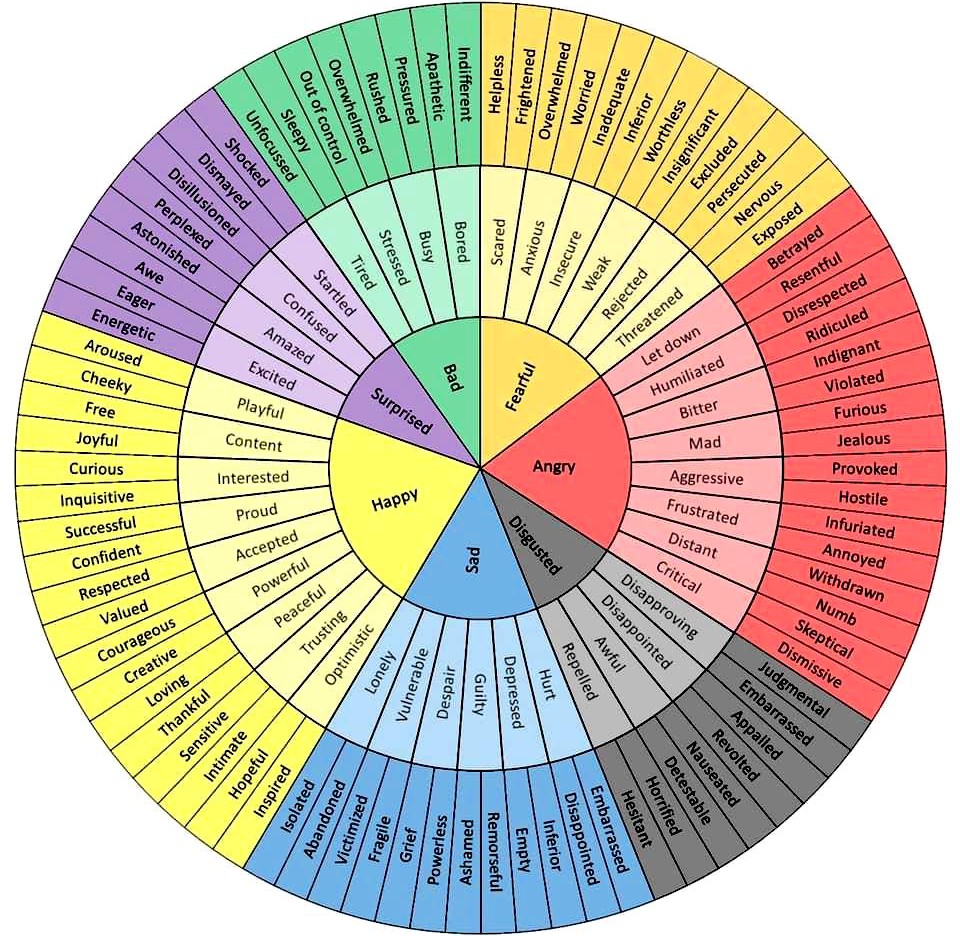
The crux of this first step is to realize that in this hard, modern world we all wear masks in order to protect ourselves. The most common mask is some variation of the famed “resting bitch face,” the hard-faced mask that city-dwellers around the world employ to warn off potential threats and anyone looking to take advantage of us. This mask hides our emotions – perhaps of necessity in modern times – but it can also serve to cut us off from our emotional life, or at least the expression of it. A great first step exercise is to simply sit down in front of the mirror and play with different emotions and the faces you make to communicate them. Granted, facing yourself in the mirror like this is easier said than done for all but the most seriously narcissistic! But force yourself to gaze upon the beauty that is you and try out different expressions. Start with the broad strokes – anger, sadness, fear, happiness, etc. – and note how your face changes when you try each of them out. Once you have a pretty good idea of what you’re conveying, of what your face is doing when you are actively trying to display one or another of these basic emotions, a more advanced step is to use a mood wheel to try to get at some of the more subtle variations. What’s the difference for you between “bitter” and “humiliated?” How about “happy,” “playful,” and “trusting?” These are just some examples, and again this is NOT to suggest that you or anyone can “play happy” or any other emotion, outside of reacting in the moment to another actor, the text, and the given circumstances of a piece. What we can do is simply be more aware of our total instrument – which includes our bodies as well as our faces – and what we are communicating with them. We can develop the subtleties of the language of facial expression to better “speak” to our audiences.

2. Assessment

So now it’s time to sort through what you’ve seen: which emotions that you were attempting to express through your face alone worked, and which ones didn’t? If you have any that looked radically different from what you were trying to convey, make a note of it, and be aware of it next time you’re on camera. Also, this is a good place to note which of your expressions were more believable, more genuine-looking. Although there is of course an artificiality to these exercises, there’s also by its very nature an artificiality to acting. We’re attempting “behave truthfully under imaginary circumstances,” so the more falsehood or at least the more false-appearing aspects of the work that we can eliminate, the better the work will be. A great, advanced addition to any actor’s toolkit is a solid lock on what we are saying with our faces at any given moment, and being able to produce those expressions as needed. 

3. I’ll Be Your Mirror

Another useful step is to take a text you’re working on or one you’re already familiar with and run some lines in the mirror. Note how your face changes at critical beats in the text. Are you conveying what you think you’re conveying? Are your words matching up to your facial expressions? Better yet, try it with a partner as an acting exercise in your next actor’s group. Work a scene and use your actor/partner as a mirror to tell you what exactly they’re reading off of your expressions. Another great exercise of this type is to not say a word: simply do what we actors all know is the most important part of the work: listen. Work with a partner who will read text to you in character, starting out with the mirror in front of you, and see how well your face is reflecting the subtleties of what you’re feeling as the character. Are you feeling joy/disgust/disillusionment as your character? If so, is it reading? 

4. “Your Face Says it All.”

Finally, to paraphrase something Timothy Olyphant said on a recent “WTF with Marc Maron,” “your face says it all,” as an actor. When you’re feeling something, it’s there, and the camera sees it. Now, it may be more subtle than you like, or it may be tremendously obvious. And we can hone these looks, we can play with them, but the main task for the actor is be in the moment and allow the emotions of the text and circumstances wash over him or her. To be open and honest and free enough to allow ourselves to feel as our characters is our job and our joy. Just make sure your face is telling the same story you’re hearing in your head!

NYCastings-ActingTechniques

The following is a partial list of major acting techniques explained.

  • Classical acting is an umbrella term for a philosophy of acting that integrates the expression of the body, voice, imagination, personalizing, improvisation, external stimuli, and script analysis. It is based on the theories and systems of select classical actors and directors including Konstantin Stanislavski and Michel Saint-Denis.
  • Stanislavski’s system, also known as Stanislavski’s method, actors draw upon their own feelings and experiences to convey the “truth” of the character they are portraying. The actor puts himself or herself in the mindset of the character finding things in common in order to give a more genuine portrayal of the character.
  • Method acting is a range of techniques used to assist acting persons in understanding, relating to and the portrayal of their character(s), as formulated by Lee Strasberg. Strasberg’s method is based upon the idea that in order to develop an emotional and cognitive understanding of their roles, actors should use their own experiences to identify personally with their characters. It is based on aspects of Stanislavski’s system. Other acting techniques are also based on Stanislavski’s ideas, such as those of Stella Adler and Sanford Meisner, but these are not considered “method acting”.
  • Michael Chekhov developed an acting technique, a ‘psycho-physical approach’, in which transformation, working with impulse, imagination and inner and outer gesture are central. It offers clear and practical tools in working with imagination, feelings and atmosphere. This Creative Individuality allows the artist actor to use parts of themselves that are not just the smaller meaner more banal elements that make up their daily life, but rather parts of their unconscious, where dwell more universal and archetypal images. His acting technique has been used by actors such as Jack Nicholson, Clint Eastwood, Marilyn Monroe, and Yul Brynner.
  • Meisner technique requires the actor to focus totally on the other actor as though he or she is real and they only exist in that moment. This is a method that makes the actors in the scene seem more authentic to the audience. It is based on the principle that acting finds its expression in people’s response to other people and circumstances. It is based on Stanislavski’s system.
  • Practical Aesthetics is an acting technique originally conceived by David Mamet and William H. Macy, based on the teachings of Stanislavski, Sanford Meisner, and the Stoic philosopher Epctetus. Some key features of the method include a particular method of script analysis, adaptability, and repetition exercises similar to those in Meisner technique.[3]
  • The Brechtian Method, Bertolt Brecht developed an “epic drama” style that relies on the audience’s reflective detachment rather than emotional involvement.

Get more advice on Acting in the Advice Section

NYCastings - 5 Casting Director Tips

They say it isn’t what you know, but who you know in this business of show. Although that is an old and overused sentiment, it continues to be true. And it only makes sense that show business would be a people-oriented business: after all, acting is a people-oriented vocation. We connect emotionally with other actors on stage and in front of the camera in order to convey the emotional truth of the human condition. And those emotional connections don’t simply stop when the AD yells “cut.”

And while the relationships between the characters are what shine through and resonate with audiences and actors alike, the truth is that everything, every single creative project you have ever seen on screen or on stage only came about because of the relationships forged behind the scenes long before the they set up the first shot. Developing trust, bonding in the face of shared difficulties, simply compiling a track record of having put in time with another person – all of these contribute to creating the connections necessary to even get the opportunities you need to forge a solid career. You may be the best actor in the world, and you’ll probably get some shots just based on that, but you will almost certainly get MORE shots if you have a solid network of business connections in your corner who know you, like you, and trust in your abilities – and perhaps most importantly, trust you to the point where they feel comfortable putting their own reputation on the line in recommending you to others.

Think about some of the great Hollywood collaborations: Wes Anderson and the Wilson brothers, Woody Allen and Diane Keaton, Pedro Almodovar and Antonio Banderas, the weird goth thruple of Tim Burton, Helena Bonham Carter, and Johnny Depp – the list goes on and on. And if you pay attention, you’ll notice that many less well-known but nonetheless compelling creatives tend to go back to same well over and over again too. That’s because through the work, these people have formed not only a bond, but a shared language and a level of trust that would present a steep to impossible learning curve to someone new coming on board.

So you say, gimme that! I want in! But where to begin? For an up-and-coming actor who has decided on a region or city in which to base themselves, how does one get started forging the kinds of bonds needed to allow the opportunity to create the best work you’re capable of? How do you ensure you get the best shot at the best jobs? You could try cold-calling production companies, directors and agents – if you can manage to hunt them down – and trying to convince them that you are indeed a good guy or gal and ready to work. But that might be a hard sell – and a little weird.

So why not start with the gatekeepers? The vast majority of actors are asked to audition before they get to sign on the dotted line, meaning the casting director is your first stop on the train to not only getting a job, but also building a network. Here are a few ways you can build a relationship with a CD that can help propel you to the next level in your career.

1. Be Nice

There’s nothing that causes more stress in younger actors than stepping into the audition room. You’ve got a 30 second “job interview” to show off what you’ve spent a lifetime learning, and you’ve got the added pressure of the other 100 people in the waiting room who are vying for the same job. No pressure! That’s why the converse is also true: it’s a great feeling walking into an audition for a CD you’ve worked with before. As you get up and running in this business, you’ll find that this truly is a small world, no matter where you’re based. You’ll read for the same CDs over and over again, and you’ll greet the same assistants as you enter the building, just as you’ll see the same actors. So engage with them! Be nice and make yourself available for a little banter here and there when appropriate, drop a joke or just pass the time of day. Being comfortable and relaxed is a huge part of doing your best work, and you can set yourself up for that by taking the first step. One of the best pieces of auditioning advice I ever got was from an older actor who said he doesn’t see it as the job of the CD to relax him when he walks in the room; rather, the actor makes it HIS job to get the CD and the creative team to relax. These are empathetic people; watching someone tense up and flail away at an audition is cringe-inducing for them and tenses them up too. You can start to form bonds of trust with CDs and their teams by simply showing them that you are a professional who doesn’t crack under pressure and always has a ready smile. If you show them that you are easy-going and on point, and know what you’re doing, that will count toward whether they will put their reputation on the line in recommending you for projects.

2. Say Thanks

Didn’t your mother teach you anything? If you book a job through a certain CD, drop them a note or an email saying thanks for the opportunity. It’s a cheap and easy way to keep yourself on their radar, for one thing. Not only that, CDs are constantly in touch with directors and production teams on projects they’ve cast and looking out for the possibility of future projects to be cast. When you check in with the CD after you’ve landed a gig, you never know if that tiny action on your part will prompt them to ask after you with the director or producer, and who knows where that might lead? Same goes when you’re on set or in the theater: drop a thank you note to the production team after a successful gig. Directors and production teams remember actors who are divas just as much as they remember the good people who were easy-going and cheerfully did that 13th take late into the night – and they let the CDs who sent them those actors know about it too. I’ve booked gigs in South America without auditioning multiple times because directors I’ve worked with before reached out to a CD or my agency asking after me when they returned. Be grateful!

3. Update Them

Casting directors plow through veritable seas of resumes, headshots and reels every day. It would make your head spin to try to follow along even for an afternoon, I promise. So one great way to keep yourself uppermost in the mind of a certain CD you’ve begun to connect with is to send them updated materials as you go along. They’re busy people, sure, but there’s nothing wrong with sending an email with your new headshot attached. Same with your reel and resume. Again the psychology of simply reminding them that you exist in that ocean of talent in which they swim can prove invaluable. Another nice way to keep in touch without seeming too needy or demanding is to update them on new gigs you’ve got going on. If you land a role in an experimental play or you have a stand-up gig or an improv performance, don’t be afraid to send them a ticket or an email saying you’ll put them on the list if they’re interested. CDs and their teams are voracious consumers of all things that talent produces, so you never know who might show up – and what new level of bond you might come away with as a result.

4. Help Out

You’ve surely noticed already that CDs are among the busiest, most harried people in the business. Often they need help that they don’t even know they need, or that they haven’t yet realized they need. As you form bonds with a particular CD and the staff in their office, offer to make yourself useful. Ask if you can help out as a reader, keep them informed about directors and producers you’ve heard of who are soon to be casting, whatever. Just putting the offer on the table can have a big impact even if they don’t say yes.

5. Be Your Own CD!

Don’t forget that while you’re updating your CD contacts, keep your resume, headshot and reel fresh right here on NYCastings and get yourself seen by thousands of production teams and directors every day. Sign up for email alerts for auditions in your area too!

NYCastings-AllAboutTheBenjamins

There’s a well-worn cliché you’ve probably heard before about writing, usually uttered by a clueless coffee shop Shakespeare who spends more time on social media than Microsoft Word:

“Writers write,” they’ll say smugly with a knowing smile, before they return to surfing Reddit or Face-Timing with mom to ask for an advance on next month’s trust fund check. 

But perhaps we actors could benefit from a similar trite little phrase: “Actors act.” 

That is to say, if you’re not practicing your craft, you’re not improving on it, and if you’re not improving on it, you’re stagnating at best, and perhaps even moving backward. Which brings up the familiar conflict we’ve all faced: should I take just any old acting “job” during a dry spell, even unpaid ones? Or should I hold out for paid gigs? What about working on projects that maybe just aren’t that good, or at least not artistically challenging?

These are all obviously very personal questions that can’t be answered with a blanket statement or a simple yes or no. But perhaps we can create something of a framework around which we can approach them. Here are a few things to think about.

1. What’s in it for me?

The very first thing you have to think about is what exactly your benefit will be should you decide to work on a given project. This may seem obvious, but for actors, the cold, hard calculus of taking care of our own needs often gets sidelined when we consider work. Actors are empathetic creatures, and it’s very easy for us to slip into thinking about other people first in many situations, for instance if a friend asks you to work on their indie film for free, or if you felt a bond with someone on the production team for a low-budget piece that you maybe aren’t convinced is all that amazing to begin with. Actors don’t like to let people down. And I don’t know about you, but that improv training to always respond with a “Yes, and”  often spills over into real life in my case. So the first thing to do when considering a gig is to ask what tangible benefits you’re going to get out of it. If you’re in the early stages of your career, this is usually a no-brainer: you need credits and you need experience – nine times out of ten, you take the gig. But even when you’re just starting out, there are a few caveats to consider:

    • How will this experience help my career and what can I learn from it? This is a question that offers an underlying way of thinking about acting work that can open a lot of doors for you, if you look at it the right way. For instance, if you’re considering an unpaid no-budget indie film, do you admire the director or their other work? Did you have a good meeting with the writer/creative team? Is there another actor involved you look up to? What kinds of networking connections or industry bonds might come out of this? When you put these sort of questions up against being a paid background actor in commercial for erectile dysfunction medication, it almost looks like taking the indie gig might be the better choice, no?
    • How does the proposed piece fit in with my long-term goals? Related to the above. Obviously we all gotta eat, and unless you’re like that lucky coffee shop writer with the trust fund I mentioned above, you’ve got to find a way to earn your daily bread. So of course you’re going to have to choose paid gigs from time to time that are not, shall we say, likely to win any awards. But you can run a little assessment when you’re considering a project and ask yourself how the work fits in with what you see yourself doing in the business down the road. If your goal is to work in quirky, off-beat indie films, then you want to develop a network of writers, directors, and actors who are also into that, so you have to put your thumb on the scale toward those kinds of projects. If you’re after a career in musical theater, you’ve got to consider prioritizing jobs that involve treading the boards over other types of work, no matter what the pay is. It’s hard for newer actors to remember this, but keep in mind that this career of yours is a long, long haul, if you play your cards right. Remember that any given gig is a mere blip on your career timeline. No single “yes” or “ no” decision on your part is going to make or break you, so take on what is most appealing to you. 
    • Does it feel right? Instinct is a vital part of acting as we all know. But maybe you shouldn’t stop listening to that inner voice altogether after the curtain falls or the AD yells “cut.” If something feels off about a project, if something seems uncomfortable to you or fills you with doubt, don’t dismiss that sensation altogether. At least hear yourself out and face those feelings rather than tossing them aside as being silly or baseless. Conversely, if a project just feels right, you might find yourself in for a life-changing event. There’s a lot to be said for having those types of feelings going in helping to creating a self-fulfilling prophecy, whichever direction they fall. This is not to say that those inner voices are always right, but perhaps we know more than we think we know when it comes to the subconscious. 

2. Choices

Another consideration when deciding what projects to take and which ones to pass on is to remember that, as in acting itself, each choice we make by definition negates a different choice we could have made. Look closely at the time commitment you’re signing up for before you join any given project, of course. But remember too that whatever you’re working on will not only take your time, it will also take your energy away from any other projects. In other words, is this project right enough that you’d be willing to say “no” to anything else that might come along during the time you’re committed to working on it? Making money off of an unchallenging and uninteresting but lucrative project is all well and good, but just remember that it could preclude you from taking a job that might have been artistically fulfilling and beneficial to your craft and career. Be ready for that sacrifice and add it to your calculus.

3. Dry spells

Going back to our little “actors act” truism for a moment. The thing is, even if you’re well along the way in your career and you only go to auditions that are for substantial projects helmed by top industry creatives, if you’re not working, you’re dying as an actor. You’ve got to keep it lively and keep it fresh. The idea that some actors consider themselves “above” taking on certain types of projects or roles is kind of odious, isn’t it? That they’d rather sit at home waiting for that big-money phone call to come in instead of jumping in with both feet to something weird and new and unexpected is kind of sad, really. There’s nothing wrong with helping out a student production or working on an experimental play or other fringe project if there are interesting challenges or new aspects of your acting you can open up through the process. Consider too that, especially for younger actors, working on free projects can often get you into meatier roles you won’t be considered for on professional projects, at least not yet.

4. You just never know

Taking on new, unexpected projects can not only open acting opportunities, it can lead to new networking, new friends, and new directions for your career to go in. “Yes, and” can be a useful tool in life as much as it is in improv, leading you in delightfully unexpected directions, if you apply it thoughtfully.  As we said, actors act, so what are you waiting for? Don’t forget to check out all the hundreds of opportunities available right here on NYCastings, and be sure to join and upload your reel and headshot so the hundreds of producers and directors who view these pages every day can find you!


NYCastings-BodyMovment

“Fie, fie upon her!

There’s language in her eye, her cheek, her lip, 

Nay, her foot speaks; her wanton spirits look out 

At every joint and motive of her body.” — William Shakespeare

There is of course no one who could put the facts about body language more artfully than the Bard. But one thing we do know that wasn’t known in his time is the scientific proof that what we say without words is actually, literally a much greater part of human communication than what we say aloud. 

As one famous UCLA study claimed, up to a whopping 93 percent of human communication comes via non-verbal language. And while subsequent studies have challenged that figure, the truth remains that what we say with our faces and our bodies is a huge part of human communication.

As actors, of course, we are all well aware of what kind of messages we communicate with our physicality and facial expressions without uttering a word. And there’s no place better to observe this truth than in the audition room – and in the audition waiting room. Nervous Newbie? Seen it. Blustery Blowhard? Check. How about Quietly Confident? That’s the one to aim for, of course.

This isn’t to say that you shouldn’t have any kind of nerves before a big audition, of course. Nervousness and adrenaline are an essential component in the complicated jet fuel mixture that drives acting. 

No, this is merely to remind ourselves that what we DON’T say in an audition is just as important as what we say. Here are some things to think about:

1. You’re already speaking long before you even enter the room

Body language and our reading of it in other people is something that occurs largely subconsciously and without our knowing it’s even happening much of the time. So remember that your audition begins the moment you walk into the building and behave accordingly. Treat the other actors waiting and the person taking names the same way you plan to treat the people behind the table in the audition room: a confident smile, a handshake if offered, and a relaxed, friendly demeanor go a long way. Projecting the air of a professional who knows what he or she is doing and is good to roll with whatever comes next is a huge plus. And of course you may be nervous on the inside. But one way to transmit this kind of language to your own body is to literally stop and take a deep breath and pull your shoulders back and open up your chest and heart. Try it now: you can feel tension slip away almost immediately. That physicality alone, of someone with an open posture, who is breathing easily, smiling and relaxed will often get you a second look from a production team regardless of how the read actually goes. Contrast that with the physicality of a nervous, jittery, quick-walking person who comes in all hunched over and tight but who is word perfect on their lines – if you were a casting director, who would you rather see again?

2. Time is on your side

One trap many actors fall into at auditions is feeling rushed. It’s understandable because we are empathetic creatures and the tension in audition rooms is often palpable, not only from the other actors but from the production team as well. Don’t let the harried nature of the PA taking names or bringing you into the audition room rub off on you. They have their thing – and all respect to what they do, because it’s not easy – but your thing right now is to…well, do your thing. Enter the room at an easy, relaxed pace, smile, give everyone good, solid eye contact, say your hellos and respond accordingly to whatever is offered (i.e. handshake, chat, etc.) but not to excess. Then get yourself ready: plant yourself on your mark, take a deep breath and relax into the mindset of what you’re about to do before launching half-cocked. Remember, this is YOUR time. They may be on a schedule here, and they may be behind, but part of their schedule is to see you act. You do not only yourself but the entire production team a disservice if you allow yourself to be rushed into giving less than 100 percent. Plus taking the time to set yourself conveys confidence and a sense of professionalism. 

3. The space

While it’s important to enter the room with an air of confidence and physical openness, it’s also important to understand and apply other spatial norms before, during and after your read. There are far too may actors who uncomfortably invade the space of the production team in a vain effort to be chummy, and there are too may who shy away like whipped puppies as well. Use your acting skills to read the room pre-audition and behave accordingly with the auditors. Understanding space during your read is key as well. Is the scene intimate, calling for close physical proximity with your scene partner? Or more formal or distant? Be sure to prepare for these types of details before you go in. Another great body language trick for auditions and acting in general is “the lean.” We all know about eye contact and how important it is to communicating with our scene partner. But you can really amp up the message you’re trying to get across if you work on leaning in at key points in what you’re saying. Imagine using your entire body as a hand gesture to add an extra point of emphasis at appropriate moments while gazing into the eyes of your scene partner and watch the energy skyrocket! 

4. The aftermath

If you’ve spent any time attending auditions as an observer, you know that the number of actors who crumble the minute they’ve got no lines left to say is pretty staggering. Even those actors who seem to have somewhat mastered at least the appearance of confidence before reading can seem completely flummoxed if the CD gives them an adjustment – or, God forbid, if the director tries to engage them with some chat in order to get a feel for who they are as a person. Make sure you let your body language continue to express that air of confidence and relaxed, engaged openness after your lines are done. Don’t hang around forever after your read, but on the other hand don’t make a mad dash for the door either like you’re a kid at the end of math class heading out to recess. And prepare yourself mentally for some post-read banter for God’s sake! Far too many actors just freak right out and descend into muttering, flummoxed babbling if a director asks a simple question like “So what do you do for fun?” Or “Tell us a little about yourself.” Be ready for something like this, and engage your improv muscles in advance as needed in order to do so. Being physically engaged and open is a great start.

5. Translate to video   

As well all know, more and more auditions these days start out with a video submission. Make sure you apply all of the above to your self-tapes! You should appear confident and friendly, open and ready to work. Let them see who you really are: confident and competent. And self-submit today right here on NYCastings. With hundreds of auditions posted every day, and thousands of industry professionals perusing the site, you need look no further for your launching pad to the career trajectory you desire! 


NYCastings-LondonActing

From time to time, we all get the travel bug. And sometimes it’s not only the travel bug, but a sense that it’s simply time to try something – or someplace – different. Whether the drive stems from events in our personal lives, career doldrums, boredom, or simply that famous actor’s sense of adventure, we’ve all contemplated a Big Move at one time or another. Who among us hasn’t yearned for a new town where you could try on a new skin, surrounded by unfamiliar, yet exciting people and places? (Sounds almost like preparing a new role when you put it like that, huh?)

As actors we especially are prone to feeling as though one place or another is played out, or simply isn’t working for us when it comes to…well, when it comes to working. All of these factors sometimes coalesce and drive us to think about changing cities – and sometimes even countries.

London especially has an appeal to a certain type of American actor. For those of us who cut our teeth on the stage rather than in front of the camera, the allure of the West End is right up there with the draw of Broadway, only with a sexier accent and Shakespeare cred practically flowing from the tap next to the Guinness in the area’s pubs.

But if you’re thinking of making the leap across the pond and having a go at cracking into the London acting world, there are some things you should know. Let’s start with a couple of general basics about London:

1. It’s Pricey, Mate. 

Even beyond what you’re going to think is reasonable, most likely. Even with the looming, Waiting for Godot-esque threat of Brexit continuing to sabotage the U.K. economy, even with the dollar gaining on the pound, it’s still expensive to do just about anything in the U.K. Especially in London, which is where you want to be. If you’re entertaining romantic notions of finding yourself a hipster flat amid the hustle and bustle of the inner city, sort of a British Friends but with a much cooler accent and more cutting sarcasm, you’ll need to throw some cold water on that idea. Unless you’re a retired investment banker or a trust-funded actor, to even approach affordable in the context of the way most working actors think of that term you’ll need to set your sights on places that will put you far away from the action in the West End and the more trendy neighborhoods. Shared flats, shared houses, long-term rentals – all of these are possible and all can be affordable if you are willing and financially able to take the time to do some due diligence and look around before committing to the first attractive place that comes along. And keep in mind that even if it looks like it’s alarmingly further afield on the map than you would like, you might very well still be okay. That’s because one great thing about London is…

2. Transportation is Awesome (Mostly)

You’ve heard of the Tube? Well, it’s your friend, my wee Yankee actor in King Arthur’s court! The London Underground train system is the lifeblood of the place, and it will save your ass when it comes to getting yourself to jobs and auditions – as well as getting back to your flat after a night out with your new London actor buddies. It’s got 250 miles of tracks and 11 lines that will take you virtually anywhere in the Greater London Area in a reasonable amount of time. And where the Tube won’t take you, buses will. Get yourself an Oyster card and you’re on your way. One caveat relating to point number one above, the individual rides are rather pricey, especially the further out you are. The city is divided into zones and the more distant ones can cost you up to £6 (about $7.50) for a trip. (Keep in mind that even traveling between the closer-in Zones 1 through 3 costs almost £5.) Still, as the only game in town and considering the alternative, the Tube really is your friend.

So let’s talk actual acting. What’s different, what’s the same, what do you need to know?

– You’re going to be the new guy or girl

Be prepared because all those lovely credits you have built up over the years, especially in stage shows, are going to mean a whole lot of nothing when you’re in a new place, especially a highly-competitive market like London. The tale is somewhat different if you have a solid reel showing more prestigious work with known entities, but for the most part, any relocation for lesser-known actors no matter where it is means more or less starting over. But before you get discouraged, that concern is only in terms of your CV and reputation walking in the door. If you know what you’re doing and are able to conduct yourself as a professional and do the work, you’ll quickly build a new rep in your new locale. But in the meantime, it’s a good idea to do the same kind of leg work once you get settled as you would do anywhere if you were just starting out: create your own work, whether it be video or live, develop a network of like-minded actor friends, and don’t be above working for free on indie and low-budget projects at first in order to accomplish those things, make connections and figure out how the game is played there.  

– Casting can be wildly different.

Especially for actors just starting out on the lower rungs of the ladder, you’re going to find that London casting is often open for interpretation of the various directors and CDs involved. Whereas there’s a pretty standardized procedure in New York and L.A., in London you’ll often encounter street casting and other creative castings being implemented, even for more prominent roles, as opposed to seeking actors through more traditional avenues like agents and so forth. And casting notices often must be sought out across a hodgepodge of social media sites and various internet sites. Right away you’ll want to suss out the top casting directors and follow them on social media in order to have early access to the juiciest auditions they’re casting – keeping in mind that anything goes in the casting room in terms of how the audition may be run. The best advice is to bone up on your improv skills before you land at Heathrow and be ready for anything!

– Start working on that stiff upper lip

Like any other highly competitive gig in the premier city for people seeking those jobs, acting in London can be emotionally draining. Add to that mixture the fact that, even with all the similarities and cultural touchstones we share with the Brits, we are still, beneath it all, two very different cultures. Now on top of that think about the last time some new hotshot actor rolled into one of your “home turf” shows, classes or auditions: how did you and your clan feel about him or her? Expect a good deal of “the new guy” syndrome, but don’t despair! We are at heart all the same: we’re actors in love with presenting characters and performing. You will make friends, and you will develop your own circle no matter where you go! 

Keep in mind too that even before you buy your plane ticket you can start researching the London market right here on NYCastings.com by perusing the casting notices, as European and London-specific auditions often make their way onto these pages. Even beyond that, remember that CDs, producers and directors from around the world visit the NYCastings to ferret out the perfect performer for their next project. So get your reel, resume and headshot in prime shape, get them posted and keep them updated, and start doing your research on making the leap to the West End!  


Stand-Up Comedy Can Fuel Your Acting Career

So an actor walks into a comedy club…

That’s it, there’s no joke here, just a thought: when was the last time you deliberately took yourself out of your comfort zone as a performer? Like, REALLY out there? 

Most of us talk about pushing ourselves and stretching our internal boundaries as actors, but the truth is, after you’ve been doing this for a while it can be tough to actually come across a project that places real demands on you, that offers real challenges. 

As artists we constantly need new stimulus and new avenues of creativity to keep it fresh, even if those avenues are tangential to our main focus. Enter stand-up comedy. It can be a great way to recharge your acting and inform your craft in ways you can’t even imagine. Here’s how!

1. It’s your very own improv class

Stand-up comedy is a time-honored art form that many attempt but few really master. But one thing you’ll notice all the best comics have in common is the ability to improvise. These guys and gals are often the most lightning-fast, sharp-witted improvisers you’ll ever see. Why? Because every night they go up they’re creating a whole new show. That’s not to say they’re writing all new jokes every day. Of course they’re using the same jokes and same material they’ve previously created. But each night’s audience in a comedy club by its very nature creates its own atmosphere and therefore results in a unique performance. People laugh at different bits, one audience may groan or be horrified by something another audience found hilarious – you never know. And that keeps you on your toes! While this is true to a degree for stage performance of any kind, stand-up comedy is so intimate and so naturally interactive that performers by necessity must be ready to engage with their audience. And audiences at stand-up shows have come to expect (or dread) being singled out by a comic, so every performance is a chance to improvise something new based on what you’re given by your audience. What better way to sharpen your improv chops than having an audience you’re actually interacting with? 

2. Meet and greet

If you’re an actor in a new market or just getting your feet under you as a performer, stand-up open mic nights are a fantastic way to keep your performance edge even if you’re in a casting dry spell. It’s amazing what getting up for even just a five or ten minutes set can do in terms of honing your focus and keeping your performer’s muscles active. Not only that, stand-up open mic nights are a great way to meet other performers, many of whom might also be actors in their own right. There’s a lot of natural spillover between comics and actors, as even a cursory glance at network television’s nightly line-up will tell you. Becoming part of the stand-up community in your town or in a new city can really get you close to the right kind of creative people very quickly. This is especially true with comedy, something that only people who have had the courage to stand up there with nothing but a microphone and their wits to protect them really understand. There’s a camaraderie that’s created among people who navigate that tightrope, and you can form lasting bonds among a stand-up open mic crowd. 

One other point along these lines: you never know who is in the audience, or who might perform at any given stand-up show, whether it be open mic or not. Casting directors, producers, directors and more established performers go to these shows, just like anyone else. And as we all know, getting your pretty little face out there as a performer is vital to creating a lasting career. Doing stand-up in particular is a great way to show off the real you, to give them a little taste of your personality and what you might bring to the table if you were working on a project. 

3. Creativity 

You often hear actors complain that we don’t get the right roles, or that we aren’t being offered challenging material that really allows us to stretch our creative wings. Well, stand-up is here to save the day! In creating a tight five or ten for a stand-up open mic, you are the writer, director and producer of your own little mini-show – and you have absolutely nothing constraining you except the bounds of good taste (and we all know those boundaries are very, very loose when it comes to stand-up!) This is your chance to let your imagination run wild and engage your creative side and simply allow yourself to PLAY! Creating stand-up allows you a freedom as a performer and a creative artist in a way that you usually can’t approach when you’re on set or on stage working with someone else’s material. Try out new accents you’re playing with, put on various characters you’ve thought about but haven’t had a chance to explore, make fun of your mom or your roommate or your boss in a way you’ve never been able to do out loud before – have fun, and the audience will have fun with you!

4. Acting through comedy 

One other thing to keep in mind as you’re contemplating taking the leap onto the open mic comedy stage: what often stops people, actors and non-actors alike from trying their hand at comedy is the vulnerability of doing stand-up. After all, you’re up there with nothing but a mic, your mind, and a smile – you might as well be naked. As actors, we’re accustomed to playing a character, to exploring what that other person might be going through, and imagining ourselves in their shoes. In doing stand-up, it’s all you, baby, and that can be disconcerting. But here’s the funny thing: underneath it all, doing stand-up is actually learning how to subtly put on another character – it just happens to be one that looks a lot like you. As actors we’re familiar with the concept of “being on,” i.e. being in performance mode. But if you talk to stand-up veterans about being “on” in this sense, you’ll quickly learn that for most of them, the person who is out there performing isn’t really them. That’s not who they are. They’re playing a character when they’re on stage – even if that character happens to be named Patton Oswalt or Mike Birbiglia or David Cross for example, it’s still a character. This can be an incredibly freeing notion for actors who are considering doing stand-up: you get to straddle your comfort zone and step out of it at the same time by embracing the danger and razor’s-edge nature of stand-up comedy while still understanding that you’re playing a role, as you’ve been trained to do. In some ways, doing stand-up is the best acting class you could ever have!

5. Tough as nails 

If you spend any time hanging out with comedians, you’ll quickly learn that these are some of the toughest people in the world, and almost certainly the toughest performers there are. That’s because they deal with rejection on a nightly basis in an intimate and personal way that most of us never have to face. Sure, we all know about the rejection-to-success ratio of the auditioning actor. But let’s be honest: while that kind of rejection sucks, it’s of a very gentle nature. So you get a phone call saying “We decided to go another direction.” Ouch! Contrast that with doing a joke you thought was funny and having no one laugh and just stare back at you stone-faced. That is a visceral kind of immediate rejection that is unmatched anywhere in the art world that I know about. 

HOWEVER! Think of what an incredible gift that is! Think about what that means in terms of setting yourself free from fear as a performer! So nobody laughed tonight, so what? Move on to the next joke. Tweak the material and move on to the next open mic. Developing a thicker skin as a performer and realizing you’re not going to DIE if someone doesn’t immediately fall in love with what you do is an invaluable lesson, and one that will serve you well, not only at stand-up open mics, but also in auditions and throughout your life as a performer. Have fun – do comedy!  


gay pride

Since the Arts & The LGBTQ Community go hand in hand, we want to say that NYCastings and it’s staff
Love Free Love, and we love supporting everyone in all that you do!

Get out this weekend and celebrate!!

See a calendar of events in NYC and around the country this weekend:

https://2019-worldpride-stonewall50.nycpride.org

https://www.gaypridecalendar.com

https://www.visittheusa.com/experience/5-gay-pride-celebrations-around-us-you-shouldnt-miss

https://www.rainbowmemoriestreasures.com

Why You Should Reconsider If You're Thinking About Quitting Acting

Actors can be a sensitive lot, as we all know. It just makes sense; in order to to do this job and do it well, you have to be closely in touch with the entire spectrum of human emotions, and you need the empathy it takes to imagine yourself undergoing a variety of circumstances and to play out what your reactions to them would be. That’s a tall order and not everyone is cut out for it.

The flip-side of all that empathy and emotional fluency is sometimes we take things hard. We all probably go through periods where we are easily bruised on an emotional level. 

Then consider the fact that auditions, or our “job interviews” – which, by the way, we endure far more frequently than people in any other occupation – are by their very nature going to involve far more rejections than acceptances. 

So to recap: you’ve got people who are extra-attuned to emotions and perhaps even more sensitive than the majority of people, who are putting themselves on the line to be judged several times per week if they’re lucky, a process which is likely to ring up a minimum of a good 20 “No” answers for every “Yes” we encounter. 

No wonder actors sometimes get discouraged and think about quitting. 

But if you’ve ever gone through this phase or are going through it right now, here are a few things you might want to think about before you get a cover-up for that comedy and tragedy mask tattoo you got when you graduated theater school.

1. You aren’t alone

Two things to think about under this category, actually. One is to consider who you confide in, who are your acting confidants and to a lesser degree your close friends and family who aren’t in the business and how much do you talk with them about your doubts. One of the all-time greatest things you can do for yourself as an actor, especially if you are fairly green or in a new city, is to start or join an actor’s group. Not only will you have like-minded souls who can help with scene study, monologues, and etc., you’ll also have people who understand the tribulations of the actor’s life. They can not only offer a shoulder to cry on when you don’t book that coveted role, they’ll also be there to celebrate with you and help you run your lines when you do land the gig. 

The second thing to think about when you’re going through a period of self-doubt is how many of the famous, successful actors we all know and love have been right where you’re standing today. John Krasinski is an example that leaps to mind. Today he’s a lauded director and highly sought-after A-list action star for big-budget Hollywood films. But before he landed the iconic role of Jim Halpert on “The Office,” he was a phone call away from packing it all in. In a 2018 interview with Stephen Colbert, Krasinski said his time in New York waiting tables and struggling to get work put him at the end of his rope. He had made a deal with his mom when he left to move to the city to pursue acting, that if he still hadn’t found some degree of success after two or three years, he would move back home. Kraskinski said he was actually on the phone with his mom asking for her to come and pick him up, when she suggested he “wait it out” until the end of the year.

Three weeks later, he booked the role of Jim Halpert. 

But Krasinski isn’t alone. Another famous almost-quitter is Uzo Aduba, better known as “Crazy Eyes” on “Orange is the New Black.” She has said that just before she booked her breakout role as a quirky, endearing, hilariously unstable convict on the show, she had already given up on acting. She tells the story of struggling as a theater actor in New York then spending a summer auditioning for television and film roles for the first time. She said after reading for Crazy Eyes, on top of a whole lot of other recent auditions, the thought occurred to her that, “Maybe I’m not supposed to be this,’ you know? And then I got home, and about an hour after that I found out I got this job,” she said.

And don’t forget Naomi Watts. The near-legendarily talented star of “Birdman,” “Eastern Promises” and “21 Grams” had knocked around for nearly a decade before she finally landed a spot in a little pilot by the name of “Mulholland Drive.” The David Lynch series was never picked up, but the iconic director called Watts back in to shoot more coverage to turn the pilot into a typically oddball but compelling feature, one that was nominated for Oscars, Golden Globes and which premiered at Cannes. Watts had told the story of growing disillusioned with auditioning, and thinking about quitting before meeting with Lynch.

“It was like for the first time, somebody was interested in ‘seeing’ me,” she said about reading for the “Twin Peaks” director. “In the early days I didn’t get to pick and choose at all…[but after reading for Lynch,] I never had to audition again!” 

2. Success and your definition of it

But let’s be honest: rattling off a bunch of top-tier celebrity actors who almost dropped out of the business before they hit the big time doesn’t mean that a breakout role that’ll buy your first Malibu mansion is right around the corner. Indeed, more so than fame and money, what you might need to reconsider as an actor suffering some pangs of self-doubt is what exactly is “success” to you? There’s a great scene in the twisted Bill Hader comedy series “Barry” that follows the ups and downs of a hitman turned journeyman actor (just watch it; as an actor I promise you will love it – and you’ll see yourself and your friends in its wacky characters). The acting teacher played by Henry Winkler is aghast at a student (Sarah Goldberg) whining about only booking films and series roles that are unchallenging to her as an actor. He says, (I paraphrase:) “You’re booking work, and you’re COMPLAINING??”

So what does it mean to be a success as an actor to you? Paying the bills, and steadily working is pretty great stuff, in the eyes of someone who doesn’t have that. Something else to consider is the sheer unadulterated joy and happiness most of us derive from acting. “Passion for the work” is not something you near about very often from office drones and bankers. 

3. Maybe you’re not failing, you’re improving

Something else to think about that ties in with the examples of actors who nearly left just before they got their big break is that maybe you need to redefine what is actually going on during this time where you aren’t booking as much work as you’d like. The simple fact of the matter is that if you are taking classes, working as an actor on any project you can get hold of, and auditioning, you are in the process of improving your craft. Maybe you’re just developing the skills you’re going to need when that big opportunity does come along. It’d be a shame to bail on your education process just as it’s getting rolling!

4. There are so many outlets out there – get seen!

Finally, if you find yourself getting discouraged, perhaps it’s time to widen the shot: remember that there are more outlets than ever before looking for content, and content producers need actors. You are in the middle of a unique moment in history in which actors are in major demand on the web, on streaming services and in more traditional venues, so self-submit! Get your face in front of as many producers and CDs and directors as you can, and something is bound to hit! 


Five Ways To Be Your Own Talent Agent

As dedicated actors, we all know just how hard we work. But the truth is that, when it comes to the actual acting, it really isn’t like “work-work” in a way, is it? The joy and emotional high we get from performing makes even the long days and endless auditions fun, truth be told. If you’re doing it right, the desire to perform and the drive you have to be an actor supersedes all else once you you’re on that stage or in front of the camera.

But where a lot of up and coming actors fail in the hard work department is in the off-camera, backstage work, the kind of work a talent agent does for his or her clients. This is the kind of work you’ll need to do for yourself at first. 

And let’s be clear: it takes a ton of work to get any acting career rolling, and to maintain that momentum once it’s gotten started. Far too many actors think they just need to land that one special role or somehow finagle their way into getting a talent agent and then suddenly the world will be at their feet and the offers will come pouring in.

Truth of the matter is, as an actor you need to do as much or perhaps more work not actually acting as you do on camera if you really want to succeed. For newer actors who don’t have a ton of credits, an incredible pedigree, or a unique look, getting a talent agent isn’t likely to happen right away so you’re going to have to do the job yourself. Here are a few ways you can really help yourself and be your own talent agent while you build your credits and hone your skills.

1. Get Yourself On Their Radar

We sometimes think of industry gatekeepers – directors, producers, casting directors, talent agents and so forth – as somehow living in a bubble apart from the rest of us. As if all these heavy-hitters reside in a cloud city somewhere that is completely separate from the rest of planet Earth. Fact of the matter is, if you go to an industry party, you’re going to see Very Important People pulling out their phones and looking at YouTube videos, and scrolling through Twitter, Snapchat and Instagram just like you might see at, say, a coffee shop where mere mortals like you and I go. The point is that you have a unique opportunity to make yourself visible to all the right people in this day and age in a way that has never been possible before in all of the history of acting. We’re all connected, and it only takes one powerful person to take an interest in you to launch a career. 

Remember the story of Trey Parker and Matt Stone? The twisted, Colorado sick-boy geniuses who created “South Park” and “Book of Mormon” started out living in their car in L.A. and passing around VHS tapes of a homemade demo they created of the now-beloved “South Park” characters. Lo and behold, one of the tapes wound up in George Clooney’s hands, and he laughed his extremely wealthy, extremely connected ass off. And then he made some phone calls on their behalf and the rest is history. Luckily for you, we’ve moved beyond the era of video tape, and you have the means to get yourself seen right in your hands without leaving the comfort of your living room. Create something that highlights your skill set and look as well as your creativity, and get it out there! 

2. Bring Something To The Table  

As an actor, you are above all else an artist. And you should hone those artistic skills and those natural-born talents through classes and acting groups and through the work itself. But the thing about being your own talent agent is you’ve also got to remember that you’re a business as well. While working as your own talent agent, you’ve got to be able to switch your thinking to that of a business person and focus solely on that aspect of your career. So to that end, think about this for a second: what is business? A fair definition might be “an exchange of goods and/or services for something of value.” So why then do so many actors, when it comes to furthering their career through the industry contacts they make, think that the business runs only one way? Far too many actors meet an agent or CD or producer or director and immediately have their metaphorical hand out with some form of the question, “What can you do for me?” They ask a director if he or she has any roles for them, or a CD if there are any good auditions coming up they could get in on, etc.  

Sorry, but this “strategy,” if you can even call it that, is doomed to fail. That’s because it forgets the first rule of business: exchange. Flip this conversation on its head and think in terms of what that person might need, of what you can do for them, not what they can do for you. To that end…

3. Put Aside Your Ego 

If you’re thinking like a business person and a talent agent for yourself there’s just no time or space for the actor’s ego to get in the way. You have to separate your two selves, actor and talent agent and make a hard border between them. At this point, getting yourself in the door is the most important part of building your career. If your new director friend is shooting a low-budget or no-budget indie film and someone dropped out last minute, there are worse things you could do with a half day than be on set doing background work gratis, or whatever else is needed. Being present and just being in the mix can be invaluable to building a career and getting you in the right rooms with the right people. Do background on a low-budget film or show, volunteer to be a reader at an audition, if you’re a musician volunteer to play for a benefit or as an opening act at an improv or short scene performance, help out as a boom operator – whatever it takes to be in the room. The key is finding out what the other person needs and helping them out rather than simply sticking out your hand and saying “gimme.”

4. Make Industry Connections

While we’re on the subject, finding creative ways to make your own connections in the industry as your own talent agent can be a huge boon to an up and coming career. Have your reel ready to go and linked online, yes. And also try to have some links to original work you’ve created as well that shows off your skill set. But once you’ve got that set up, there’s no reason to just sit around and wait for George Clooney to come across your YouTube channel and call you. Casting directors, producers, directors and agents have offices. There’s nothing wrong with calling a CD’s office and requesting a general interview where you can go in and sell yourself. Production companies these days work more and more with packages of directors, talent and writers – make an appointment to sell them on the value you have to offer should they hire you. Cold-calling takes courage, but hey, you’re an actor, right? Play the role of Talent Agent #1 and get on the phone and out to these offices a couple afternoons a week. You never know what kind of relationships you might start this way, or where those relationships might lead. If a CD or director is in a bind and needs an actor right away, they’re not going to call you if they don’t know you. 

5. Self-submit 

Another thing you should be doing relentlessly as your own talent agent is self-submitting! There are hundreds of productions posted daily right here on NYCastings that are looking actors of every stripe. Get your information up on the site along with your reel and headshot, and then reach out! The work is out there waiting for you; it’s up to you to do the work it takes as your own talent agent to grab hold of it! 


Improv Class

As dedicated actors, we all know the importance of constantly challenging ourselves. We try new things, delve into art forms we haven’t previously explored, and of course we’re always on the lookout for new classes to take. And while no one would challenge the value of taking a scene study class, or a technique class, or an on-camera audition class, the fact is there’s one particular class that may be the most important one you’ll take in your entire career: an improvisation class.

Lots of actors look down their noses at improv, and I have to admit that at one point, I was one of them. If you’ve ever suffered through a bad, and I mean a really TERRIBLE improv performance – we’re talking so bad that they don’t even realize how bad they are, then you might understand. (Sorry, I still seem to be a bit traumatized by the experience…)

But since then, I’ve started the long road to improv recovery. I’ve really come around to seeing the value that improv has in not only our acting careers, but in our lives off-camera as well. Watching a truly gifted improv performer is a thing of magic. And here are a few ways taking a class can incorporate some of that improv magic into your life, on camera and off.

1. Listening

When I was just a fresh young sprout of an actor, I took an improv class at a local community theater. It was taught by a lovely actor who had her MFA in theater and was a gifted improviser in her own right, and I learned a lot from her. Unfortunately, the main memory I take away from that class was that there was this one older gentleman who was in class because he was trying to improve his public speaking skills – which is great. But the problem is that he was a member of the Toastmasters organization, a non-profit group that promotes better public speaking skills. And in every single improv game or routine we got into as a class, this guy would insist on shoehorning in something about the group:

Actor 1: Oh man, I’m not feeling well today! I think those clams we had last night were bad.

Actor 2: Well, you know, at least we had a great time at our Toastmasters meeting before dinner. Did you know that Toastmasters…

It was maddening. 

But the point is that what he was doing was the opposite of listening, which, as we all know, is a big problem when it comes to acting. Not listening is perhaps even more of a no-no in improv – no matter how deeply connected you are as an actor to the concept of listening to your fellow actors and responding to what you are given at any moment, I promise that taking an improv class will help to sharpen your ability to really focus on the other person. Improv also helps your responses to come out more clean and more quickly, as practicing anything helps you to get better at it. 

And these skills can come in handy in a variety of situations actors find themselves in apart from performing. How many auditions have you been to where the CD or director asks you tell them something about yourself? I have a CD friend who is constantly on about how many actors she reads who are perfect for the part, who deliver their lines flawlessly and really bring solid choices to the read, but the minute they put down their sides and have to speak as themselves, they fall apart. Any director would rather have an actor on set who can think on his or her feet over someone who looks the part but has no ability to innovate.

2. Getting comfortable with being uncomfortable

Acting is of course playing people we’re not, and therefore it quite literally takes us out of our comfort zone. And so naturally there are roles and situations we play throughout the course of our careers that are easier to lock into than others. But the fact is that developing your improv skills can really open up your acting to entirely new levels of discovery. That’s because if you think about it, going out on stage as an improviser you are deliberately putting yourself in the most uncomfortable spot imaginable. You’re saying, “I have little or no idea what’s about to happen, but I’m ready to roll with it.” Our instinct is to turn away and hide ourselves from situations that make us uncomfortable; we don’t like to be hurt. What improv teaches us is to open ourselves to these feelings of awkwardness and discomfort and to embrace them instead. It teaches us to take that awkward moment and to play around in it, to see where it leads rather than hiding from it. What’s more, improv teaches us that failure, however you want to define that, isn’t the end of the world. It teaches us that we’re not going to die if a joke doesn’t work or we stumble through a half-formed thought. It teaches us that it’s all going to be okay in the end. Not only that, the fearlessness you’ve learned in your improv class will also give you the freedom to explore and delve into more uncomfortable characters and scenes on a deeper, more honest and more profound level than ever before. 

The practical, off-camera acting world application of this notion is that you can embrace that natural discomfort you feel walking in to an audition or into a meeting with an important industry professional like an agent, or someone else who has the ability to boost your career. The easier it is to allow yourself to feel uncomfortable, and to realize it’s not the end of the world, the better you’re going to be able to really let your true self shine through in these moments when it’s most important that you show people who you really are rather than hiding in a shell of fear.

3. Confidence  

Which leads us to the big daddy of the actor’s toolkit, confidence. It may be a vital component of being a successful actor, but confidence isn’t really something you can teach – at least not on a nuts and bolts level like learning a dance step or a dialect. But the difference between a confident actor walking into an audition or on set versus an under-confident one is absolutely a key to success. You can be the best actor in the world, but if you give off an air of under-confidence, you send up a red flag for CDs and directors. A lack of confidence doesn’t necessarily imply a lack of ability, but what it does signal is someone who is in their head, and thus might not be reliable on set or on stage if something unexpected comes along, or if an innovation or new way of thinking about the scene is required. Confidence doesn’t mean a certainty you’ll be perfect at what you do – quite the opposite. It is a certainty that you can cope with whatever comes your way, even if you screw it up the first time. 

Learning improv skills can really cement your confidence in yourself as not only an improviser and and actor, but also in those in between moments like agent meetings, networking, and the before and after audition banter. “Hey, I’ve stood on a stage and heard crickets with a roomful of people watching me perform in an improv class. What can you as an agent or CD possibly do or say to make me nervous after something like that?”

Getting involved in improv will not only help in the aforementioned ways, it will also open up your mind to creativity in your acting, and even creating your own material. Sky’s the limit once you feel comfortable with getting out of your comfort zone, improv-style! Get in a class today!

Also, join NYCastings today to get all the latest audition notices and to self-submit to hundreds of productions. Post your resume and headshot where it will be seen by thousands of top industry professionals looking for an actor just like you!