Golden globes 2018

The 75th Golden Globe Awards were held Sunday.
Winners are indicated by an asterisk and the word WINNER.

Movies

Best Motion Picture – Drama
“Call Me by Your Name”
“Dunkirk”
“The Post”
“The Shape of Water”
“Three Billboards Outside Ebbing, Missouri” *WINNER

Best Motion Picture – Musical or Comedy
“The Disaster Artist”
“Get Out”
“The Greatest Showman”
“I, Tonya”
“Lady Bird” *WINNER

Best Performance by an Actress in a Motion Picture – Drama
Jessica Chastain, “Molly’s Game”
Sally Hawkins, “The Shape of Water”
Frances McDormand, “Three Billboards Outside Ebbing, Missouri” *WINNER
Meryl Streep, “The Post”
Michelle Williams, “All the Money in the World”

Best Performance by an Actor in a Motion Picture – Drama
Timothée Chalamet, “Call Me by Your Name”
Daniel Day-Lewis, “Phantom Thread”
Tom Hanks, “The Post”
Gary Oldman, “Darkest Hour” *WINNER
Denzel Washington, “Roman J. Israel, Esq.”

Best Actress in a Motion Picture – Musical or Comedy
Judi Dench, “Victoria & Abdul”
Margot Robbie, “I, Tonya”
Saoirse Ronan, “Lady Bird” *WINNER
Emma Stone, “Battle of the Sexes”
Helen Mirren, “The Leisure Seeker”

Best Director

Guillermo del Toro, “The Shape of Water” *WINNER
Martin McDonagh, “Three Billboards Outside Ebbing, Missouri”
Christopher Nolan, “Dunkirk”
Ridley Scott, “All The Money in the World”
Steven Spielberg, “The Post”

Best Performance by an Actor in a Motion Picture – Musical or Comedy
Steve Carell, “Battle of the Sexes”
Ansel Elgort, “Baby Driver”
James Franco, “The Disaster Artist” *WINNER
Hugh Jackman, “The Greatest Showman”
Daniel Kaluuya, “Get Out”

Best Supporting Actress in a Motion Picture
Mary J. Blige, “Mudbound”
Hong Chau, “Downsizing”
Allison Janney, “I, Tonya” *WINNER
Laurie Metcalf, “Lady Bird”
Octavia Spencer, “The Shape of Water”

Best Supporting Actor in a Motion Picture
Willem Dafoe, “The Florida Project”
Armie Hammer, “Call Me by Your Name”
Richard Jenkins, “The Shape of Water”
Christopher Plummer, “All the Money in the World”
Sam Rockwell, “Three Billboards Outside Ebbing, Missouri” *WINNER

Best Original Score in a Motion Picture
“Three Billboards Outside Ebbing, Missouri”
“The Shape of Water” *WINNER
“Phantom Thread”
“The Post”
“Dunkirk”

Best Original Song in a Motion Picture
“Home,” “Ferdinand”
“Mighty River,” “Mudbound”
“Remember Me,” “Coco”
“The Star,” “The Star”
“This Is Me,” “The Greatest Showman” *WINNER

Best Screenplay in a Motion Picture
“The Shape of Water”
“Lady Bird”
“The Post”
“Three Billboards Outside Ebbing, Missouri” *WINNER
“Molly’s Game”

Best Motion Picture – Foreign Language
“A Fantastic Woman”
“First They Killed My Father”
“In the Fade” *WINNER
“Loveless”
“The Square”

Best Animated Film
“The Boss Baby”
“The Breadwinner”
“Ferdinand”
“Coco” *WINNER
“Loving Vincent”

TV

Best TV series – Drama
“The Crown”
“Game of Thrones”
“The Handmaid’s Tale” *WINNER
“Stranger Things”
“This Is Us”

Best performance by Actress in a TV series – Drama
Caitriona Balfe, “Outlander”
Claire Foy, “The Crown”
Maggie Gyllenhaal, “The Deuce”
Katherine Langford, “13 Reasons Why”
Elisabeth Moss, “The Handmaid’s Tale” *WINNER

Best performance by an Actor in a TV Series – Drama

Sterling K. Brown, “This is Us” *WINNER
Freddie Highmore, “The Good Doctor”
Bob Odenkirk, “Better Call Saul”
Liev Schreiber, “Ray Donovan”
Jason Bateman, “Ozark”

Best TV series – Musical or Comedy
“Black-ish”
“Marvelous Mrs. Maisel” *WINNER
“Master of None”
“SMILF”
“Will & Grace”

Best performance by an Actor in a TV series – Musical or Comedy
Anthony Anderson, “Black-ish”
Aziz Ansari “Master of None” *WINNER
Kevin Bacon, “I Love Dick”
William H. Macy, “Shameless”
Eric McCormack, “Will and Grace”

Best performance by an Actress in a TV series – Musical or Comedy
Pamela Adlon, “Better Things”
Alison Brie, “Glow”
Issa Rae, “Insecure”
Rachel Brosnahan, “The Marvelous Mrs. Maisel” *WINNER
Frankie Shaw, “SMILF”

Limited Series or Motion Picture Made for Television

“Big Little Lies” *WINNER
“Fargo”
“Feud: Bette and Joan”
“The Sinner”
“Top of the Lake: China Girl”

Best Performance by an Actor in a Limited Series or Motion Picture Made for Television
Robert De Niro, “The Wizard of Lies”
Jude Law, “The Young Pope”
Kyle MacLachlan, “Twin Peaks”
Ewan McGregor, “Fargo” *WINNER
Geoffrey Rush, “Genius”

Best Performance by an Actress in a Limited Series or Motion Picture Made for Television
Jessica Biel, “The Sinner”
Nicole Kidman, “Big Little Lies” *WINNER
Jessica Lange, “Feud: Bette and Joan”
Susan Sarandon, “Feud: Bette and Joan”
Reese Witherspoon, “Big Little Lies”

Best Performance by an Actor in a Supporting Role in a Series, Limited Series or Motion Picture Made for Television
Alfred Molina, “Feud”
Alexander Skarsgard, “Big Little Lies” *WINNER
David Thewlis, “Fargo”
David Harbour, “Stranger Things”
Christian Slater, “Mr. Robot”

Best Performance by an Actress in a Supporting Role in a Series, Limited Series or Motion Picture Made for Television

Laura Dern, “Big Little Lies” *WINNER
Ann Dowd, “The Handmaid’s Tale”
Chrissy Metz, “This is Us”
Michelle Pfeiffer, “The Wizard of Lies”
Shailene Woodley, “Big Little Lies”
 ————–
The Cecil B. deMille Award goes to Oprah Winfrey 

Audition worries

It’s sometimes hard to believe, but in acting, as in life, we are often our own worst enemy.

But how could that be possible? Why on earth would we not want ourselves to succeed? It’s our success after all…

The truth of the matter is that inside these big, beautiful brains, the same brains that give us our love for music and art and acting, there lives a legion of voices that often tell us things that are simply not in our best interest.

We sit on the couch and eat ice cream even though we planned to go running; we stay out late the night before a big presentation at work; we fight with people we love even when we can see that it’s over something completely stupid.

As actors we love the voices in our heads. Heck, we NEED the voices in our heads! However, we also have to know how to tame them. Especially in the hotbox of the audition room, where we feel the most pressure and are often at our least secure. Here then are a few tips for avoiding self-sabotage when auditioning, and giving yourself–and all your lovely voices–the best chance to succeed.

1. Get Your Head In The Game

Acting, as we all know, is a matter of focus and intent, a matter of objectives and ways to go about getting them. So when you go into the audition room wondering “What do they want?” Or thinking “What if my look isn’t exactly right for this part?” Or “Why isn’t that guy looking at me? Does he hate me?” Or, god forbid, thinking about all the lovely, lovely money you will be paid if you land this part, you aren’t focused on what you need to be doing, which is your job. The audition puts you in an awkward position: you have to relinquish control over certain things. You can’t do anything about the temperature of the room, or about what might be going through the minds of the casting team, or about the terrible reader you’re stuck with any more than you can do something about your height or weight or hair color at that moment. You CAN do one thing and one thing only: focus on your damn job. It’s always going to come down to what you do with the material you were given at that moment, and when your head is all over the place thinking about things you can’t control, you aren’t using your skills and training to the best of your ability.

2. The Actor Prepares–No, Really

You think you’ve prepared enough but have you really? If you aren’t the actor in that waiting room who has done the most preparation for the audition you are selling yourself short. Yes, we’ve all been given sides at 9:30 on the night before a 10 a.m. read. And of course any reasonable casting team doesn’t expect you to be off-book in such circumstances. That doesn’t mean you can’t have your character and his or her objectives, relationships, desires, and beats solidly locked down. Not only that, we are all walking around with our eyes glued to the tiny computers in our hands 24/7. Do some research on the project, know what you’re reading for and know who you’re reading for. The actor who walks into the room and asks what the character is or what the scene is about might as well have stayed home.

3. Listen To Eleanor Roosevelt

She said “No one can make you feel inferior without your consent,” and that is a phrase actors should tattoo on the inside of their eyelids. Look, it’s intimidating to walk into the audition room; it’s a tough thing to bare your soul for 90 seconds, out of context, for a roomful of strangers who are after all there specifically to judge you. However, these people are human beings just like you. When you give away your confidence and meekly scuttle into the room as if you are about to offer yourself up as a sacrifice to the gods behind the table, you are destroying your chances of being your true self–which is all casting directors want to see in the first place. As Cathy Reinking, CSA (Frasier, Arrested Development) says: “I look for charisma: an actor being their authentic self, and not trying to be someone else, or trying to second guess what you think we might be looking for. We just want your authentic self in that role. And never be intimidated by casting people. We’re just normal.”

4. Keep It Simple, Stupid

This may seem like a contradiction to the mandate to prepare in number 2 above, but nevertheless, it is possible to over-prepare. That is, sometimes we try to do too much with the material. Sometimes we can fall into a trap of overthinking every possible angle and insinuation and undercurrent a scene has to offer and it muddles the audition. And understand, generally it’s a good thing to be super analytical and detailed when it comes to your character–but only once the rehearsal process has begun. If you are chasing possible demons your character may or may not have encountered in childhood and reading symbolism in stage directions and trying to imbue your lines with seven layers of meaning, you’re going to look a mess for the casting team. Do explore various ideas and potentially different angles as you prepare, of course. But then it’s vital that you land on a solid grounding for what you want to try to do once you’re in the room. You just don’t have time to create a multi-faceted one-man show in the time allotted. Focus on the main objectives and the main beats of the piece and the ways you’ve chosen to go for what your character wants, and make sure you don’t lose the primary point of the scene by darting around between too many often contradictory secondary objectives.

5. Don’t Beat Yourself Up

It is of course impossible to have a perfect audition every time. Just as its impossible to have a perfect show or a perfect take–or for that matter a perfect football game or a perfect night out or a perfect drive to work–every time. But when it comes to actors we have a tendency to club ourselves over the head when we make mistakes. This is a mistake, haha. Find a way to absorb what you’ve done, assimilate what you learned that day, and then let it go. Truly, if you talk to casting directors at any length you’ll find that the main thing they’re after is seeing actors who are relaxed, having fun, and genuine. So find a way to have a good time and not put so much pressure on yourself, and your auditions will benefit.

Headshots

It’s a new year, a time when we sweep out the old and invite in the new, creating fresh changes for our lives. It’s time for resolutions ranging from dusting off that old gym membership, to signing up for new classes, to simply being more present in ourselves and kinder to others. (And don’t forget self-submitting and giving yourself every opportunity to get cast!)

But one thing we could all probably use is a new set of headshots. Let’s face it: most actors keep using the same old tired headshots for far too long, the result of a deadly combination of inertia and avoiding shelling out the funds necessary for a good headshot photographer.

Of course, we have to remember that headshots are an investment, the exact opposite of lost money; they are the calling card we use in order to get auditions, and therefore book roles and therefore MAKE money! So skimping on headshots is a mistake that can lead to a self-fulfilling prophecy: if you have no money to spend on new headshots maybe it’s because you haven’t spent any money on new headshots so you can look your best and book roles–and get paid!

At any rate, if you’re going to make that kind of investment, you want to get the most out of it possible. Do make sure you thoroughly research the photographer you’re thinking about hiring, making sure they are experienced in headshots specifically. But also, here are some tips for how you can help yourself to look your most relaxed and let your genuine self come out in your next headshot session!

1. This Is Only An Exercise

One great approach an acting coach gave me years ago was to treat a headshot session as an acting exercise rather than a photo session. Get out of the mental state of the result being a series of distinct static photos, and think of the afternoon as a period of time in which to stretch your acting wings. This lends it a bit of fluidity, as well as a different kind of energy altogether. Warm up as you would before a class or a show, stretch, do vocal warm-ups–the whole nine yards. If you’re the type of actor who warms up to a playlist, get out your headphones and get your groove on ahead of the shoot. Just as occurs with performing on film or on stage, you WILL warm up; whether you do so before you’re performing or during the actual performance itself is up to you.

2. Objectives

So go into the shoot with some objectives, and perhaps some different basic characters in mind. Treat the camera as another character: do you want to get him or her to back down from a fight? Do you want to seduce him or her? Do you want to convince him or her that you are trustworthy? Any and all of these–and many more–can be useful looks to bring out your best in a headshot. In this sense we bring a genuine acting flow to a headshot session rather than trying on Derek Zoolander’s Blue Steel for a static–and awkward–moment in time.

3. Engage Engines

So if we’re treating this as an acting exercise, it’s important to engage with the camera as though it were a person, right? And what do we do with other people, more than anything else in the world? No, not that. We talk to them! So, as weird as it sounds–and please prepare your photographer for this in advance–you might try engaging with the camera as if it were a person. That is to say, talk a bit every now and then, say something in character that you would want to put across to the other imagined character. “I trust you.” “I want what’s best for you.” “You’re not going to beat me.” Whatever fits the objective you’re currently playing. Putting those thoughts and feeling into words really helps to create a feedback loop between mind and body that will lend an additional layer of truth to your performance. Not only that, also look at the camera the way you look at people. Staring down the barrel of the lens just ends up looking like you’re a creepy stalker, or as if you’re terrified. In a normal conversation, we engage with our eyes and then look away; we smile, we shift our gaze from eye to eye. A huge mistake with headshots is treating the camera like it’s going to cease to function correctly if you ever dare to avert your eyes. So it’s also important that you…

4. Don’t Wait For The Click

Cameras these days and the skilled photographers who operate them can capture micro-moments of infinitesimal time. This isn’t one of those silver-oxide photos from the Old West where people had to sit stock-still for ten minutes in order to capture the image. You can move around, you can shift your weight, you can turn your head, you can smile, or don’t smile–whatever strikes your fancy. In other words, it’s okay to behave like a human. Your photographer will probably give you prompts if he or she sees something that looks like an intriguing path to follow, but for the most part plan on just being you. And so…

5. Please Don’t Hold Your Breath

Of course you’re going to be motionless from time to time, but in so doing don’t make the mistake of holding your breath. It makes you look stiff, terrified and wholly unnatural. Imagine you’re with a friend having a coffee and a conversation; you may sit still for a time, but you’re still relaxed and you’re still going to be breathing–one hopes. Certainly your friend and the barista hope so.

The more you prepare for a session as if you were getting ready for a performance, the more the real you is going to come across. The most important factor in taking genuine, warm, relatable headshots that really capture you’re true self is that you have fun while doing it!

Online Actors Tools

When you stop for a second and think about how much time people spend online, it’s hard to believe that the internet has really only been in widespread commercial use for a  little over 20 years. Imagine if you were transported back to the 1980s and you were suddenly not able to access your Facebook or Instagram accounts, or use Google Maps to find your way around, or message your friends instantly using Whatsapp or Messenger.

We are very lucky to have access to all the world’s information in the palm of our hands–so why are so many actors not taking full advantage of it?

You have the ability to put your face in front of thousands or even potentially tens of thousands of industry professionals–and the best opportunities for self-submitting are to be found right here at NYCastings, by the way–and connect with people all over the world. So use that power to maximize your footprint and promote your unique brand! Here’s a few ways to upgrade your internet impact.

1. Did You Get That Thing I Sent You?

Let’s start with a basic ingredient to creating a viable and powerful online presence, one that is so basic it’s often overlooked: email. If you aren’t spending a good chunk of time every day connecting with other people in the industry, going over the daily email list of auditions you can sign up for from NYCastings, and maintaining your network, then you aren’t working your game up to its full potential. Develop a professional “form letter” –one that doesn’t sound too form-y–and hit up casting directors, agencies, producers, directors, everyone you know in the industry. Don’t harass people, but there’s no harm in sending a short note inquiring as to whether an agent or casting director does general interviews or if you can send them a headshot and resume. You might be surprised at the responses you get!

2. Just Google It (Yourself, That Is)

With the crazy interconnectedness we all enjoy (and suffer under?) it’s vital that you know what comes up when someone Googles you. Take a moment to read a primer on SEO or search engine optimization, or watch a tutorial on it, and then think about how you can ensure that the best photos, videos, news articles, reviews and blog posts by you and about you are the first thing people see when they check you out online. Because newsflash: they are checking you out! If your name comes up on a casting director’s short list for a role, you can bet that your name is going into a search engine. It’s on you to control the message. And that idea leads to…

3. Create Yourself

No matter what stage of your career you’re in, if you don’t have your own website you’re not doing yourself any favors. Lots of people get nervous about the idea of creating a site for themselves, but these days the tools are so user-friendly that they are downright idiot-proof. Another misconception that holds back a lot of people when it comes to making themselves a stand-alone website is that they think of it as a static page they can never alter. But a website is a fully malleable piece of art and artistry that you can mold and tweak to your heart’s content over time. Don’t feel like what you put up there is what you’re going to be stuck with the rest of your life. Everyone has a Facebook account and Instagram. But with a personal website you can really make yourself stand out from the herd.

4. Industry Profiles

Until you get to the stage where you have a manager who can help guide you with things like this, you’re going to have to take charge of your profile on professional sites too, sites like IMDb. They have a great and informative section on how to take control of your profile. It’s good to make sure you’re on top of it too, adding links to your personal website–which is chock-full of awesome video and photos of your smiling face by now–and your social media. When those industry professionals go to look you up, make sure they’re seeing a professional profile and that they have easy access to your best material available. And on that note…

5. Pro Materials

When you’re posting video on your site and social media, make sure you’re using the best, cleanest, and most professional material you can get hold of. The splash page of your website should probably not start with a goofy video short you made with your little brother when you were 12, not if you want to present a professional image that will make people want to work with you. Get yourself a reel that is as close to studio quality as you can make it, using professional equipment and shot by a professional team. You wouldn’t roll in to an audition and plunk down a blown-up selfie on the casting director’s table, and neither should you present your public face as one seen on a shaky-cam shot with your buddy’s cell phone over Spring Break.

6. Get Social 

Finally, pay some attention to your social media–not as a user connecting with friends, but as an industry professional. Take a look at what comes up on your profiles and ask yourself if those pictures, shares, memes, posts and videos are something you would want to see posted by an actor if you were a casting agent looking to hire someone. This isn’t to say you need to censor yourself, or turn your profiles into antiseptic, boring places. However you should at least give some thought to what professional industry people who don’t know you are going to see when you friend them.

There are always more ways to connect with people on the internet, and we are very lucky to live in an age where self-promotion for the actor is so easy to do! You can start today by taking advantage of NYCasting’s Holiday Special and save 44 percent!

Acting Business

“I’ll always be there because I’m a skilled professional actor. Whether or not I’ve any talent is beside the point.”  –Michael Caine

Many people fall into the trap of thinking of our favorite actors as almost super-human: we revere them as god-like and uniquely talented individuals. We mere mortals can only gaze at them from afar and envy their natural-born gifts.

And yes, of course talent is an important component of anyone’s career in any field, despite the fantastic Mr. Caine’s quote above. If you have no talent for math, you’re not likely to be a very successful mathematician, no matter how passionate you are about it.

However, for actors it’s important to note that you can have all the talent in the world, but if you routinely break any one of the following rules, you are not likely to get very far. Keep taking your classes, keep working on your improv, keep developing new dialects and physical talents like combat and dance skills. But also keep these ironclad rules in mind.

1. Don’t Be Late. Just Don’t.

This is just so basic that it’s almost laughable that it’s something that has to be reiterated. Or it would be laughable if so very many actors didn’t violate this most basic of rules–a rule not only for acting, but for life. If you roll in to your auditions and rehearsals and, god forbid, shooting day call times all sweaty, out of breath and late, you are creating an impression of yourself as someone who is unprepared, uncommitted, and inconsiderate. I had a director who used to put it this way: “If you’re late, you’re stealing time from your colleagues. You are sending a message that your time is more valuable than ours.” Yes, stuff happens. We’ve all had days where the alarm didn’t go off or the traffic was crazy. But seriously now, there are people that these sorts of things seem to happen to every other day–you know who you are! If you want to be taken seriously as a professional actor, you have to start with being professional, and that means being on time.

2. Work On Your Work Ethic

How many of you have non-actor friends or relatives who think that what we do is a lazy, cushy job that consists mostly of sitting around in luxurious trailers while being fed peeled grapes by charming Pas while playing Xbox? Yeah, sorry Uncle Mike, that’s not how it works for the vast majority of us. And even when actors reach the level where the job does include a nice trailer and so forth, top actors are regularly putting in 12-hour-plus days. And don’t forget, they’re required to be on point throughout, bringing their A-game every day of the shoot, and every time they step in front of the camera, whether it’s at 7am or 10pm. Let’s see Uncle Mike do that at his job, right? You don’t get to hide out in your cubicle on bad days when you’re an actor. Your dedication to the work and your willingness to step up and bring it every moment you’re on set, on stage or in rehearsals is something that shows. You will cement a reputation that will stick with you long after that project is completed–for good or for ill.

3. Adjust That Attitude

Your approach to the work is almost as important as the actual doing of the work itself. That is, the attitude you adopt when you get asked to try something different or do yet another take is something that reads. It registers with the people you’re working with–and the people you’re working for. Keep in mind too something we all know as actors: communication runs far deeper than the words we say. Try to be aware that a bitchy attitude is apparent even without opening your mouth. Some studies have demonstrated that up to 90 percent of human communication is non-verbal. Make sure you’re saying positive, nice things with your entire instrument.

4. An Open Book

Being open to suggestions and change is something that ties in closely with the above-mentioned items, but it still deserves its own space. The actor who is willing to innovate and take unexpected direction and adapt an attitude of play toward the work of acting is always going to be more sought-after than someone who is rigid and stuck in one mode of thinking. Acting is always, always a collaborative process. Even a one-man show has a director. So make sure you’re open to not only direction but also to whatever your fellow actors bring to the table. Even in auditions this a valuable skill that has very little to do with the talent you have: the ability to go with the flow and see what happens.

5. Do Your Homework

This may also seem like another no-brainer, but it’s again alarming how many actors go to auditions without having read up on what they’re reading for, and, perhaps even more shocking, come to set without having learned their lines. Being the guy or gal who shows up calm, confident and fully in control of themselves and their character makes you the actor who makes the rest of the cast look their best–along with the director, producer and casting director! These are the actors people want to work with again! Talent be damned–if you show up flustered, hung over and not knowing your lines or having a solid handle on the part and the piece you’re auditioning for, you’re shooting yourself in the foot.

Remember too that a big part of becoming a successful actor is being in the right place at the right time. So make sure you signup for NYCastings free casting alerts in your area, as well as self-submitting to the NYCastings Casting Notices page to give yourself a chance to be seen or your next gig!

Focus on Film and TV Auditions

As challenging as it can sometimes be to make a living by acting, you have to admit this is a great time to be in the business.

There are more channels, more web-based television and film production, more online opportunities, and more independent films being produced these days than ever before. The explosion of niche channels and the success of original content on Hulu, Netflix, and similar streaming services–not to mention good old YouTube–means that the working actor has nearly unlimited opportunities to get work. And you’ve already found the best place to find auditions and self-submit!

However, even with all these opportunities, that still doesn’t mean you can just walk in to an audition and they’re going to scream “YOU’RE HIRED!” before you even open your mouth. More opportunities also means more competition. In order to give yourself the best chance possible of booking that dream job, there are a few proactive steps you can take to give yourself an iron lock on making the best impression possible.

1. Do Your Homework

Nothing infuriates casting directors more than actors who have no idea what they’re reading for. This is so basic as to be beyond simple, but a surprising number of actors roll up to auditions without having even looked at their sides, much less having given any serious thought to the role they’re reading for. Don’t be that guy or girl. Certainly it’s possible to give a good read and get cast when you are completely unprepared, but it’s not a way to give yourself the best shot at it. You need to do your homework not only in terms of reading up on the role and developing a solid approach to the character that’s in keeping with the overall arc of the piece, but also by researching the director’s other work. You should also look up the CD, both their professional work and their personal interests. As L.A. casting director Billy DaMota says, “The problem I think most actors have is they put industry people [like] agents and managers and casting directors on a pedestal instead of humanizing them. Do a little research on the people you’re going to meet. You may not ever even use it. but just to know, ‘Wow, he’s from Milwaukee just like I am,’ or ‘She likes horses,’ or ‘She plays electric guitar.’ Those kinds of things connect you to the people you’re going to be approaching.” Walking into the room with this kind of knowledge will also help to alleviate any nerves and allow you to fully…

2. Be Present

While you’re humanizing the people you are hoping to work with, a nice side effect is that it naturally allows you to be more present. Consider two different approaches to auditioning: a mindset of groveling before some god-like figure in order to beg for a job, or that of a professional meeting with other professionals to discuss the possibility of working together to create a project. One is based in fear, and practically begs for nervousness, while the other at least sets the table for a relaxed conversation among equals. Another important factor to being present is to be relaxed and comfortable with yourself. In a way, you aren’t here to act, you’re here to show them what the real you is like, the unique personality and sensibility you might bring to the role. Putting pressure on yourself to ACT PERFECTLY or to remember every word of sides you just got last night or to try to make yourself appear to be someone you’re not have the opposite effect. These kinds of things put you in your head and take you out of your body. You can help yourself to a relaxed, comfortable, genuine audition by keeping this in mind: you’re just a person in a roomful of other people who all love acting and creating. Have some fun and be yourself and you will be more present and genuine, and thus more castable.

3. Find A Hook

Imagine for a moment that you’re a casting director putting together as cast for a television show. Not only do you have a professional reputation to protect, there is also a lot riding on this; a television show is not only a massive investment of time and money; a single show can make or break careers. So as the CD responsible for the cast, you are of course meticulously reading dozens if not hundreds of actors for each role. This means you have seen actors reading the same lines over and over all day, probably for several days. What could possibly make one actor’s read stand out from the rest when you’ve heard these same words a million times? A hook. We’re being asked to read flat words printed on a page, but it is up to us as actors to inject them with life and heart and spirit. You can do this by finding some unique take on the piece. It doesn’t have to be some huge thing either, just a way to get the attention of the casting director. It could be a slightly different delivery, it could be a shading of backstory you’ve added, it could be a slightly weird pronunciation of a particular word, it could be a counterintuitive emotional display–for instance, taking an angry moment way down instead of being loud and demonstrative. It doesn’t matter what it is so long as it doesn’t contradict the spirit of the character and the overall piece, and so long as it isn’t too obtrusive. Anyone can read words on a page; it’s up to you to make them your own.

4. Get Cast Before You Even Begin The Read

You can really help yourself by making sure that your presence reads from the moment you walk into the room. Most CDs won’t admit this, but they do a great deal of their casting before the actor even begins to read. The energy you bring, the unique inner light that you carry with you is just as important if not more so than the actual mechanics of saying the words in the script. Anyone can memorize lines; no one can be you. So show them who you are from the first smile, the first eye contact, the first words you speak! Be yourself; after all who else could you possibly be?

Theater Program

We’re deep into the snowy depths of the holiday season, so graduation is a long way off for most theater students. But for those who are planning to walk up to that stage and receive their degree in 2018, keep in mind that Spring is not all that far off. Thinking now about what the next stage in your budding career is going to be can help you get yourself positioned for jumping on the fast track to building a resume outside of university theatrical productions and student films.

But where to begin? It’s a big, beautiful world out there, but it can also look a little intimidating from the safety and comfort of the university nest. You’ve spent the past four or five years becoming a citizen of a little mini-universe where you live and work the majority of your time; of course the thought of stepping outside that bubble is a little worrying.

However there are some solid, logical steps you can and should take in order to ease your rebirth into the wider world after university. Here are a few things to think about to get you started!

1. Preparing to Relocate

If you’re seriously considering making the jump to a different city right after you graduate, now is definitely the time to get started on it. Moving as an adult to an unfamiliar place is a whole lot more challenging than having your parents help you move into your dorm freshman year. And if you’re moving in order to pursue your acting career, your first steps should be to research the market for acting in whatever place you are considering moving to–and you can start and end that process right here on the NYCastings auditions page! But wherever you’re planning to go, it’s important to not only have a solid idea about the market for acting auditions in general; you also need to research what kinds of things are being cast. Are you a song and dance man or woman? Well, if you’re moving to some small town in Alabama or Montana, you might find yourself pining for the musical theater scene somewhere else. Be sure to have a realistic idea of what kind of work you might be able to audition for wherever you’re going. Your research of course doesn’t end there: the economy, non-acting job opportunities–hey, you have to start somewhere–and rental costs are all vital pieces of the puzzle to have prior to relocating. Luckily we live in an age where all that information is very easy to come by! Job boards and rental sharing websites abound on the web. You can even start…

2. Preparing Your Network–Now!

At first glance this might seem like an impossible task before you’re physically in the place you intend to move to, but there are a couple of preparatory steps you can take to ease your way in a little less abruptly. For starters, you may be in college somewhere far away from where you want to go, but remember, you’ve already begun building a network of acting and filmmaking and writing colleagues among your fellow students! Is anyone you’ve been in a show with from New York or L.A.? Might be a good time to rekindle that friendship and pick their brain over a coffee or a beer, no? And don’t forget, good ol’ Facebook has tons of pages and groups that are location specific that you can join from the comfort of your bedroom. Get yourself in contact with people who already live there! This is a way to not only get a general feel for the place you want to go, but also to start building acquaintances that can blossom into working relationships or even lifelong friendships once you’ve actually made the jump to your new chosen new home.

3. Preparing Your Craft

So, no doubt you’ve learned a ton about acting over your time in university. No doubt you are a much better actor than you were as an 18-year-old auditioning for your first college-level production. But here’s the thing, and it’s something you might not want to hear: you’re just getting started–again. Yes, no young person wants to hear from a cranky old about how little they know. But in this case, I’m sorry, but it’s kind of true: the learning you’ve already done and the knowledge you’ve already accumulated at this point is really little more than the primer coat that had to be laid down before the real learning could even begin. You can give yourself a head start on the long road of lifelong learning you’re going to do in terms of the craft of acting by first adopting this attitude. Pledge yourself to an outlook of openness and willingness to learn from whatever situations you find yourself in, and from whatever you find yourself working on, whether it’s a big budget studio film or a community theater play. Every commercial, every student film–even every audition–these are all great opportunities to learn more about yourself as a person and about yourself as an actor. What’s more, start now in developing the habit of seeking out outside classes and actor’s groups with which you can work on your monologues, your original writing, and your improv skills. These are habits that every good actor carries on throughout their lives; ask any veteran actor and they will say they still have things to learn no matter how long they’ve been doing this.

4. Prepare Your Piggy Bank

Even if you aren’t relocating after you graduate, you can do yourself a favor by taking advantage of work opportunities now and putting some money aside. After graduation things get thrown into turmoil, and you may find yourself on a ticking timer as far as having to move, get a full-time job, or other factors the real world throws at us once the university dream has ended. And especially if you want to move, that biz gets expensive! Take advantage of the fact that you have a stable living situation right now and you’re not having to put down a deposit on a new place just yet, and save some pennies for when you will have to do that.

5. Prepare Some Fun!

If you’re on the road to graduation, it’s possible that you have some exams and other hurdles to overcome between now and next May, but the truth is, this is also a time to enjoy what you’ve accomplished. Have some fun with the people you’re working with in plays and student films! Not only just to enjoy this time in your life for the sheer hell of it, but also because you never know where these relationships you forge in college may lead down the road. How many famous filmmakers and actors and playwrights have friends from college they end up working with later in life? Cement those relationships for the long term. But also, don’t be afraid to have a good time and revel in the glory of the huge milestone you’re about to overcome–even while you soberly assess your next move. There’s time for both right now, and there might not always be!

Self-Taped Audition

We live in a digital age, there’s no getting around it. Virtually everything is available on demand at the touch of a button, and that includes castings and auditions.

This is great news for the busy actor–how much easier it is to send in a video audition rather than schlep across town and wait for hours in an over-crowded lobby with a roomful of nervous actors! Better yet, finding the perfect role for you without leaving the comfort of your home and posting your resume and headshot where hundreds of CDs and producers look for actors has never been easier.

But when it comes to self-taping your auditions, there are certain things that will help sell you as a professional who knows what he or she is doing, and others that can make you stand out like a sore thumb–in a bad way.

1. The Actor Prepares

Yes, the on-demand nature of life these days is the driving force behind the rise of self-taped auditions. Casting directors and producers have a lot on their plates but one thing they never have enough of is time. So getting a fairly quick turnaround on an initial audition without the hassle of finding a space and bringing actors in is the point. However, just because they want it fast doesn’t mean you can skimp on your prep work. The self-tape audition may be different in some ways, but it’s still an audition after all. Learn the lines or at least be so familiar with them that you will only need to glance down occasionally. Also find a way to run the scene or monologue for a peer or an acting coach before you tape. It’s amazing what other people see sometimes that we ourselves can miss.

2. The Technical Aspects

While it’s okay to use a cell phone camera for your self-tape audition, it’s a good idea to invest in a tripod to ensure that the shot is steady and that you are kept in frame. They’re cheap and for your purposes here even a small desktop model is sufficient. Work the lighting in the room where you’re going to shoot also. You want to avoid a single light source as that can create stark shadows and make you look like a skeleton or a ghoul. Try to shoot using not only electric lights but natural light from a window as well to soften the image. Adding a “fill” or secondary light source to soften the edges and shadows and help illuminate you is a good idea too. The background needs to be simple and plain, a sheet or blank wall. Nothing is worse than a busy, cluttered background; you don’t want the casting team to be wondering what that thing behind you is while you’re trying to wow them with your read.

3. Wardrobe and Makeup

Same goes for your wardrobe: simple, plain colors without a lot of busy patterns are essential. Avoid wearing white as it often reflects harshly, and also avoid black as it can make you look like a disembodied head depending on the background. As with most auditions, it’s a good idea to dress in such a way that at least suggests the character you’re reading for. If you’re hoping to get cast as a senator or businessperson, cut-offs and a tank top probably aren’t the best choice. You don’t need a ton of makeup but make sure you apply at least a little powder if you’ve got a shine to your nose or forehead. That can often read as flop sweat and you don’t want to project an air of nervousness.

4. The Read

If you’re doing a scene, make sure your reader is someone who can act, and that they  understand the piece and the characters. Obviously the audition is about you, however an awkward scene partner can not only be a distraction, they can prevent you from bringing out your best. Place your reader slightly off to one side so that your eyeline when you’re reading isn’t looking directly into the camera. Do look at the camera to slate–as your awesome, cheerful, open and inviting self–and then take a moment to shift gears and take a breath, and start the scene with your eyeline adjusted slightly away from the camera.

5. Try, Try Again

Yes, time is of the essence when it comes to self-taped auditions. But don’t get so caught up in the time aspect of it that you whip off your first go at it and end up sending in a video that doesn’t show you at your absolute best. Be patient, carefully review the video you shoot, talk it over with your reader pal, make adjustments and go again. And again, if necessary. Unlike an in-person audition, this is your one shot at making a first impression. The CD can’t ask you to make an adjustment or try something different if you’re on video, so you need to be patient, as well as brutally honest and self-critical as you evaluate your performance.

Now for the Don’ts!

1. Don’t Shoot Vertically

This should be a rule in life as well as in self-taping auditions. Dear God, turn the bloody phone sideways! Posting vertically-shot videos should be a prosecutable offense.

2. Don’t Freeze Up

It’s easy to get caught in a trap shooting video by thinking that you must bring everything way, way down. True, acting on film requires a stillness and micro-expressions that are very different from stage work. However, CDs and directors don’t want to watch someone who is stiff and seems terrified. Be natural and relaxed and don’t be afraid to move a bit, as long as you stay in frame.

3. Stop Yelling At Me!

Conversely, as with any audition, YELLING BAD! There are a million ways to express human emotion and yelling is only one of them. Avoid especially in a self-tape audition.

4. Don’t Shoot From Too Far Away

The purpose of these self-tape auditions is to show all of your skills, and that means they need to see your face. Get yourself in a medium close-up distance–not so close your face fill the entire screen but close enough that we can see your expressions. Even if they ask for a full-body shot we don’t need to see you from head to toe for the entire scene.

5. Button It Up

Don’t let your scene drift off into the ether. Come to the conclusion of the scene with purpose and intention. There’s nothing worse than a scene that feels like a balloon deflating at the end–as that is the feeling you leave with your viewers. Leave them wanting more instead!

Actor-Monologue

The audition, and specifically the monologue audition is probably the most discussed–and stressed-about–aspect of being an actor. And with good reason. No matter how long you’ve been in the game the monologue audition remains a challenge.

But here’s the good news: it does get easier! Over time and with experience, you learn ways to relax yourself–and even to have fun on occasion.

Practice makes perfect as they say, so get out there and audition, but also, create a group of like-minded actor friends with whom you can work on your audition skills in a safe, constructive space on a regular basis.

Here are some ways to maximize your potential when planning your next monologue audition. Learn these lessons here so you won’t have to learn them the hard way–in the audition room!

1. Get Shorty 

Here’s the thing about casting directors: while they are generally lovely people who want the same things you want–that is, to create the best piece of work possible–they are also some of some of the most overworked people in the business. So do them–and yourself–a favor: keep that monologue short. Even if it’s from a piece you love, even if you’ve been given 2 minutes, or God forbid, more time than that, keep it closer to a minute or a minute and a half tops. Find monologues that have an arc and show a bit of range in that time frame and you will be much more likely to hold their attention. There’s nothing worse than that creeping feeling that the casting team has already checked out when you’re not even halfway done with your monologue.

2. Get (Con)textual

Look, you have to know what you’re saying. That should be obvious not only in acting but in life. However, there are a shocking number of actors who fail this very basic test when it comes to monologues. They’ll grab something out of a monologue book and just go for it without any sense of the before or after for the character, and it reads. You need to know in your bones not just the actual lines, but the context of them in terms of the scene, as well as in the overall story of the piece. If you really want to put yourself at the front of the class, also take the time to understand not only your character’s relationships with the other characters in the piece, but also read the entire piece with an eye out for what the other characters say ABOUT your character when he or she isn’t in the scene. You can learn a whole lot as a fly on the wall.

3. Act Your Age

We get it, you have range. You can play anyone from 18 to 80. However, let’s be honest:  there are roles that are more age-appropriate for you than others. That one community theater director who “somehow” gets cast as the ingénue in every show despite having grandkids isn’t doing anybody any favors, least of all herself. It’s true, in university productions sophomores play septuagenarians. But in the real world if you’re a shiny-faced recent graduate who barely needs to shave and you start going on about “Blow winds and crack your cheeks,” you might hear a few chortles from behind the table, no matter how they try to contain themselves. Also, less extreme examples should be avoided too. A slim-hipped recent grad who looks like she just stepped out of a fitness infomercial ranting about how tough life is raising three kids and working in the coffee shop is likely to raise some eyebrows. Which leads us to:

4. Find Your Wheelhouse

Range is a beautiful thing for an actor to have, and you will get roles where you have the opportunity to stretch. But that’s for after you get the callback. First you have to show them your best in the monologue in order to get the opportunity to get a little crazy and try some off-kilter choices and read some characters that are an unlikely match for you. So that means you need to pick something for your monologue that you are utterly confident in playing, the kind of character and scene that you can smash out of the park. What’s your type? How do you usually get cast? What roles do you feel most confident in playing? Confidence is often the X-factor in casting decisions, and you want to walk into that room fully engaged and invested in your character, not struggling to play against type just for sake of being different. You’ll get your chance for that later on, don’t worry!

The bottom line is if you’re doing a monologue audition you are likely reading for people who haven’t seen you before. You’ve got one chance to wow ’em–make it count!

Join NYCastings today and start submitting!

social-media-strategy-for-actors

Let’s face it, the world we live in is hyper-connected through social media.

And barring disaster, that’s unlikely to change anytime soon. There’s no avoiding it: from politics to social justice movements to finding lost children to selling your stuff to finding an apartment to simply promoting the latest films and television shows, social media has become firmly cemented at the eye of the ongoing information hurricane that is modern life. Everyone including your grandma is on social media.

But not only your grandma. Think about it, if everyone is on social media, that means casting directors, directors, agents and producers are as well. So the smart actor has to know how to approach using social media to his or her best advantage–and you have to be smart about it.

1. Think Before You Tweet

We’ve all witnessed how an ill-considered tweet or Facebook share can cause no end of trouble for politicians and celebrities, even to the point of ending careers–or raising the specter of nuclear war. Now, let’s be honest: if you tweet something snarky about a colleague or tell a grumpy story about an audition gone wrong, it’s unlikely to cause intercontinental ballistic missiles to come raining down on your hometown. However, turn that argument on its head: who does it help, really? For a moment, lashing out feels good, yes. We’re all human, we all get frustrated, and venting is necessary. But that good feeling you get from bitching about something is fleeting. And unlike telling a close friend about your awful day over a beer or two, when you fling that kind of negativity out into a digital world that is so very interconnected, the odds that it will come back to haunt you are multiplied exponentially. When you are looking to promote your brand as an actor, everything you say has the potential to come under scrutiny. This isn’t to say that you have to closely censor yourself, or hide behind a mask the whole time you’re online. But it is wise to apply to your online presence the same attitude you take into the audition room: directors and producers want to work with positive, happy people, so you show your best, most agreeable side when you audition. If a casting director is considering you for a role and the first thing that comes up on your Twitter feed is a slew of nasty tweets about some perceived slight by another actor, are they more likely to hire you, or less? Is it really worth it? Like it or not, as an actor promoting your brand, you have to think of your social media as one big audition–an informal audition, no doubt, and not one that you have to be overly stressed about. But a little online prudence goes a long way. Take an extra second to think before you hit “send” and your future self will thank you.

2. Be Informed

What do you use your time for when you’re online? Sure, mindlessly scrolling through the endless worlds of Instagram, Facebook and Twitter are guilty pleasures for all of us. But as a professional actor who is actively trying to promote your brand, you’ve also got to do some work here. Reading the trades is vital to understanding the business as well as trends in film and television and stage work, as well as just being informed about what professionals in the business are talking about these days. Castings and self-submissions are everywhere these days. Perhaps even more importantly, know what you’re reading for. There’s nothing more frustrating for casting directors and directors to read an actor who has no idea what they’re reading, what scene they’re in, or what the overall tone of the piece is. Not only that, you’ve got to know who you’re reading with, and who you’re reading for. Especially if you get a callback, part of your preparation must be to not only research the piece you’re reading for and your character and the story, but also all the other players involved. What else has the director done? What else has the author written? What else has the CD worked on? Taking a moment to do a social media search on them can provide you with some useful tidbit of information you can talk about, or at the very least help you see the people you’re auditioning for as fellow humans, not intimidating gods perched behind that table to cast judgment on you. As L.A. casting director Billy DaMota says, “Do a little research on the people you’re going to meet. You may not ever even use it, but just to know, ‘Wow, he’s from Milwaukee just like I am,’ or ‘She likes horses,’ or ‘She plays electric guitar,’ those kinds of things connect you to the people you’re going to be approaching.”

3. It’s Not All About You

Remember that social media is a circle. It’s really easy to fall into the trap of thinking that social media is merely a soapbox for you to stand on and digitally yell about yourself and nothing more. Many actors treat social media this way, and they do so to their detriment. It’s understandable, given the competitive nature of the business and how busy we all are that you might limit your time online to promoting your shows and projects. But it’s also vital to remember that the happy, agreeable, supportive team player you are presenting in castings must also the same person we see on social media. Connect with your fellow actors and congratulate them on their projects. Offer support and volunteer to help out where you can. There will come a time–probably sooner than later–when you will be on the lookout for people to help you in a similar fashion. But not only that, the “social” part of social media is a great way to create and expand your network as an actor and performer. You don’t win friends and supporters by relentlessly trumpeting your own accomplishments and ignoring those of your peers.

4. Follow People Who Pull You Up

You can tell a lot about a person by who they’re friends with on Facebook and who they follow on Twitter. Hell, Mark Zuckerberg made himself a billionaire many times over based on that very knowledge. So seek out people who inspire you, and who make you want to work harder, and with whom you could imagine creating something special. It also couldn’t hurt to take a moment to go through your contacts and weed out people who aren’t helpful. We all have that one Facebook friend whose posts make us sigh and roll our eyes, yet we tolerate seeing them in our feed. Take a moment to mute or unfollow people who bring you down–it’s possible to do this without the drama of unfriending them, plus it will make your feed a happier place! Also, take advantage of the fact that social media is such an amazing way to connect with people we just met, those we have lost touch with, and people who might be thousands of miles away. Reach out and touch someone, as they used to say back when we all rode dinosaurs to school.

The bottom line is the power of social media is unprecedented–use it to your advantage, but do so with some common sense!

rebellion

Some people strive to be different. We all had that one friend in school: they make a great effort to buck current trends, they go out of their way to dress aggressively weird, they pretend not to know anything about current music, popular films or television shows.

Most of all, they like to announce loudly and constantly how they don’t care what anyone thinks.

These people are what we call posers.

Then there are people who just ARE different. They don’t have to put any effort into it; they’re just born that way. That’s the feeling you get about casting director Billy DaMota: he ACTUALLY doesn’t care what anyone thinks.

Even seeing DaMota’s photo accompanying his IMDb profile you get that sense: far from the typical glossy, vaselined-lens look of most CD headshots, his looks like a candid snapshot taken in his garage. Plus he’s wearing a t-shirt that reads “Dispelling Myths #7: Not all casting directors want your money.”

So it’s no surprise when the first thing he wants to talk about is the controversy surrounding the recent charges the L.A. city attorney’s office has filed against 18 casting directors for allegedly violating California labor law by charging actors for auditions.

“There were casting directors who made more money doing these workshops than they did actually casting,” he says via Skype. “I quit the CSA in the midst of all these prosecutions because I can’t stand the fact that they’ve turned a deaf ear to all these criticisms.

“Upton Sinclair said it best,” he added: “‘It’s difficult to get a man to understand something when his salary depends on him not understanding it.’”

So after 25 years with the Casting Society of America, and even serving on the board for a time, DaMota just couldn’t take any more of what he saw as a blatant rip-off that was baked in to the Hollywood system: the notorious “workshop,” which amounts to a general interview in which actors would get five minutes or so in front of a casting director in exchange for a fee. Even the city attorney has decided these constitute a “pay-to-play” audition or job interview, which is illegal under California statutes.

“I’ve been a casting director for 33 years,” DaMota says. “And I’ve been an advocate for actors for almost every single one of those years because I realized that this industry is ripe for abuse and exploitation. Because actors want it so bad, actors dream of that one job that will launch their career into some kind of working career or even stardom, and so they’re easily exploited.”

The charges leveled by the city–and subsequent admissions of guilt from several of the casting directors involved–have largely shut down the more notorious “workshop factories.” But as DaMota is quick to point out, the existence of workshops run by a handful of unscrupulous casting directors doesn’t mean that every class or workshop is equally underhanded.

“There are casting directors who really teach,” he says. “And I’ve never had a problem with casting directors who teach ongoing classes or even a one-night class with a curriculum and a lesson plan in a classroom setting.”

In fact, signing up for classes is high on the list of DaMota’s advice for aspiring actors who are thinking of making the move to Los Angeles, so when you do land that big audition you’ll have a better idea what you’re doing.

“We always tell people: get in to a good class,” DaMota says. “And there are really good classes in Los Angeles. So many great teachers who are not expensive. Make sure you audit as many classes as you can so you can actually sit in the classroom and watch the work the teacher does with the students. Every good teacher should allow you to audit their class for free.”

And although he has worked in the Hollywood dream factory for over three decades, DaMota says it’s important for actors to be realistic.

“You have to recognize your skill level,” he says. “You have to understand what your abilities are. If you’re just a beginner you don’t want an agent that’s going to be sending you out for stars and guest stars on TV shows or leads and co-leads on films. The last thing you want to do is go in front of a casting director or a producer if you’re not ready.”

DaMota is also a big believer in the principles of the Mastermind, a peer-to-peer mentoring concept created in the 1920s by author Napoleon Hill, and still in vogue in business circles today.

“I think the first thing actors should do when they get out here is develop a Mastermind group to connect with other actors that have the same goals and aspirations that you do,” he says. “Look for people who are like-minded artists. You can do a weekly group where you get up there and you perform and you critique and you do it in a safe space. If you’re all working for the same goal it can help you all get there.”

Indeed, diving into the caldron of the L.A. acting scene can be intimidating and baffling for new arrivals, according to DaMota. To him, networking is key.

“You come out here and you’re lost,” he says. “It can take actors years to even figure out what the situation is. [But] what happens if you connect with other people, not only do you find out…who the best acting teacher is, where the jobs are, who the best photographer is, but you also have a shoulder to cry on–and you have somebody to celebrate with when things are going well. That’s all part of how you assimilate to the crazy culture that is Hollywood.”

Another key tip DaMota likes to impart to actors trying to book roles in L.A. is one that resonates with the advice we all get in the classroom: be specific about your choices.

“If there’s one word in this town it’s ‘focus,’” he says. “Focus on what you want. You can do the scattershot approach, you can send out a thousand headshots to a thousand different casting directors, but that’s not really effective. Target the places you want to be and the people you want to work with, and then focus on their projects.”

One thing’s certain, actors could do a lot worse than finding themselves in an audition in front of DaMota.

“The problem I think most actors have is they put industry people agents and managers and casting directors on a pedestal instead of humanizing them,” he says. “Every director, every casting director in this town wants the same thing actors want and that’s to make good projects. To make money by creating great, compelling work. So we’re all after the same goal.”

People are people, after all, even if they are a bit different from the rest.

Sometimes different is a good thing.

Acting Auditions in Atlanta

If anyone knows about the various markets in the U.S. for actors and casting, it would have to be Cathy Reinking. A veteran of television casting in L.A. from way back, including work on shows like “Frasier,” “Arrested Development,” and “According to Jim,” she spent 12 years in the belly of the beast before moving with her daughter to Colorado in the early 2000s.

REINKINGheadshotsmilingShe worked there for a number of years, including revising and updating her book before returning to California in 2009. But her latest move has put her at Ground Zero when it comes to production: Atlanta is the latest boomtown for television and film, and it’s the place Reinking calls home.

“It’s a perfect city for me,” she says via Skype. “There’s culture, it’s diverse, I can live in the city and it’s affordable, people are nice, it’s clean–it’s like a perfect city. People here complain about the traffic, but it’s NOTHING compared to L.A.”

But aside from the relative ease with which Georgians get around their burgeoning capital, the draw for people working in television and film is undeniable.

“Production is booming so much it’s kind of crazy,” Reinking says via Skype. “Big TV shows are coming here, like ‘McGyver,’ and ‘Stranger Things’ shoots here, all the Marvel movies are shooting here. ‘Bad Moms Christmas,’ ‘Baby Driver’ was shot here, they’ve got a big Robert DeNiro movie coming here, just huge movies. The list goes on and on.”

And Reinking says the Atlanta talent pool is among the deepest in the U.S., no small compliment from someone who graduated from UCLA’s theater program and then cut her teeth in the shark tank of Los Angeles casting.

“The acting pool is better than in Albuquerque or New Orleans where they also have some incentive programs,” she says. “I think part of that is that [Atlanta] is just a more liveable city than Albuquerque. I hate Albuquerque. It’s just not a vibrant city, and Atlanta is.”

So actors considering a move to the Southeast, take heart: there is plenty of work in them there hills. But also come with your best foot forward, as the competition is likely to be comparable to that of New York or L.A. Also, brush up on your self-tape game.

“There’s a lot of opportunities for actors here,” Reinking says. “And they do self-tape more than they do live auditions, so you have to get good at self-taping which is its own art form.”

But for Reinking, the key to booking roles isn’t in what method you use to audition; it’s actually deceptively simple: be genuine.

“I look for charisma,” she says. “And what charisma is, is an actor being their authentic self, and not trying to be someone else, or trying to second guess what we might be looking for. We just want your authentic self in that role. So don’t overthink it or try to be something you’re not, because it just doesn’t fit.

“[That] feels like acting,” she continued. “And the trick with auditioning for TV and film is it’s gotta feel like it’s not acting.”

Reinking has her own particular analogy to help guide auditioning actors along the right path: imagine the best first date you’ve ever been on, and emulate that person who seemed so attractive to you.

“We’re attracted to somebody who doesn’t talk about themselves that much, someone who’s genuinely interested in the other person, who is humble,” she says. “On a date you [want to] be a person who is fully present, who is comfortable in their own skin, all that. That’s what presence is. Being present as yourself.”

Btu Reinking is quick to point out that that sense of being present and comfortable in your own skin by definition implies that the genuineness cuts through all aspects of being human–it doesn’t mean hiding behind a false happy face.

“That’s both dark and light,” she says. “If someone is too light we’re going to get bored with them. And if they’re all dark we’re going to be repelled. So it’s a balance of your dark and light qualities.”

And in keeping with the dating analogy, Reinking says one big no-no for her when it comes to auditioning actors is looking desperate.

“Don’t apologize for your audition,” she says emphatically. “Don’t make excuses, like ‘I just got the material,’ or ask ‘Do you want to see it another way?’ Just [avoid] feeling too desperate. Don’t question it to much. Just do it. There has to be an ease to how you deal with the material.”

One piece of advice Reinking has that cuts against the grain is that actors should toss out the old adage of treating auditions like a job interview.

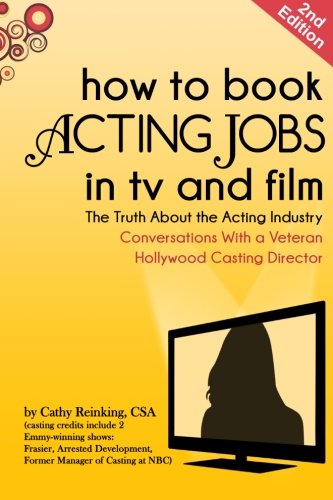
How to book acting jobs book“I think it’s the opposite of a job interview,” she says. “In a job interview you’re going to put up your public persona. I think it’s more the private person that we’re looking for. You’re actually creating a family if you’re going to work on a project.”

The bottom line is that with casting directors like Cathy Reinking working in a city as lively and liveable as Atlanta, there are certainly worse places an actor could hang his or her hat. Ultimately, just remember to be yourself, and also that casting directors are people too.

“Never be intimidated by casting people,” Reinking says, laughing. “We’re just normal.”

Reinking’s book “How to Book Acting Jobs in TV and Film” (2nd edition) is available on Amazon in both Kindle and paperback editions.

Casting Directors in studio

Over the course of a couple of decades in casting in L.A., Dea Vise has seen a lot of things–including some things that would curl your hair, as the saying goes.

But Vise says if she had to distill one tip for auditioning actors from all her years of casting shows and films like “America’s Most Wanted,” “God Is Not Dead” and “I, Robot,” it would be this:

“Wear underwear,” she says.

“Just make sure appropriate things are covered,” she adds, with a shudder that is somehow audible via telephone.

That hot tip comes on the tail end of a hilarious story in which a casting session attended by Vise and her business partner Billy DaMota saw them being subjected to, shall we say, more than they bargained for.

“This guy comes in and he was in a fur loincloth, and that’s all he was wearing,” she says. “So already it’s like…but anyway, we let him read, because we’re not dicks. So he comes in and does the scene. And at the end of the scene he was supposed to do a little martial arts move. So he goes to the camera and he decides to kick really high right above Billy’s and my head–aaaand he’s not wearing underwear. Billy screamed, ‘NOOOO!’ I was laughing so hard I almost peed myself. It was horrifying.”

So actors, take note: if you ever decide to attend an audition wearing only a loincloth–and don’t–but if you do, please avail yourself of modern undergarments.

But although the absurdity of being a casting director in L.A. creates the opportunity for plenty of laughs, there’s a well-known darker side to the business as well, one that Vise has battled for years.

She’s been neck-deep in the fight against the controversial practice of casting directors holding “workshops” for actors that amount to little more than five-minute general interviews–interviews that can cost the actor up to a couple hundred dollars. Recently, these workshops have come under heavy scrutiny by the L.A. City Attorney’s office.

“[This finally happened] after twenty years of me saying ‘this is probably illegal’ and the Casting Society of America (CSA) saying ‘we can’t police our members,’” Vise says. “And I said, ‘if you don’t police your members, the police are going to police your members.’ And 25 people were charged in April.”

The “pay-for-play” workshops have long been a thorn in the side of not only Vise but many other honest people who work in the industry–and they’re feeling some long-awaited vindication now that the legal system is getting involved.

“Everybody knows,” Vise says. “They claimed it was teaching. Sorry, but saying ‘Thank you’ and ‘Next’ is not teaching. They would make jokes. There was a group of casting directors that would call [workshop actors] ‘turnips.’ As in they just fell off the turnip truck. They take their money and they throw out their headshots as they walk out the door. It was just so dirty on so many levels.”

Indeed, that’s certainly the way the city attorney saw it–as did the eight individuals who have thus far pled guilty to the charges under California’s Krekorian Talent Scam Prevention Act.

However, Vise is quick to add that there are actual, legitimate classes taught by casting directors out there.

“There are some casting directors that teach real classes and we never had a problem with them, ever. Risa Bramon Garcia teaches a real class, and that’s totally different from these one and a half hour pay-to-play things.”

At any rate, the CSA kicked Vise out. But the good news is, even without those three letters after her name, Vise is still getting plenty of work. The CSA is just what it says in the name, a society, or “a private club so they can give each other awards every year” as Vise puts it. It isn’t a union and the group has no legal standing to bar anyone from getting hired to cast anything.

“It’s funny because I’m like the actors’ hero,” Vise says. “The actors all love me and the casting directors all hate me. [The CSA] said in a letter that I can reapply in a year, and I decided not to play nice. I’m just going to keep talking about them.”

At any rate, actors can be assured that at least one casting director in L.A. is on their side.

“I was an actor,” Vise says. “I love actors. I love working with actors. They are the most important person in the room. I’m not–I’m a gatekeeper, that’s all.”

And when it comes to advice for actors–above and beyond making sure all your bits are covered–Vise says you’ve got to grab the bull by the horns.

“The advice I always give actors is the same: make a list of your ten favorite movies that are recent,” she says. “Then look at who cast them. You’ll often find some overlap in the casting directors. You’ll often be attracted to people who are attracted to you. So find a way to reach out to that casting director–get your agent or manager to do it, or just send them a postcard or call their office and say ‘What’s your policy on general interviews?’”

That last one is another source of friction between Vise and the CSA–she posted an unflattering story on Facebook alleging that the office of Carmen Cuba (“Stranger Things,” “The Martian”) hung up on an actor when they did just that.

“Hey, all I did was post what happened,” Vise says. “And you’re mad at me? I’m not the one that hung up on an actor. [Casting directors] are not superior to the actors. I said it before and I’ll say it again: without actors we don’t have a job.”

And Vise is quick to point out that if you do cold-call a casting director, the worst-case is really not so terrible.

“One of two things will happen: they’ll either hang up on you, or they’ll say they’re not doing them now, but ask you to bring in a headshot.”

The bottom line for Vise is that actors are a vital piece in the puzzle, not “turnips” to be fleeced for profit, nor lowly creatures who aren’t even worthy of a perfunctory telephone conversation with an assistant to an assistant.

What’s more, she readily acknowledges that actors have one of the toughest rows to hoe when it comes to breaking into the business.

“One thing I do want to say to all actors is don’t give up,” she says emphatically. “It’s a really tough business but there are people out there who do care about you. And who realize that we don’t have a job without you.

“And break a leg!” she adds.

A second compilation of some of the best acting scenes and/or performances of all time compiled by: sitiosanguinem.

List of actors/actresses:

Michael Fassbender – Hunger
Eric Bana – Chopper
Tommy Lee Jones – JFK
Rutger Hauer -Blade Runner
Dustin Hoffman – Midnight Cowboy
J.K. Simmons – Whiplash
Leonardo DiCaprio – The Wolf of Wall Street
Jake Gyllenhaal – Nightcrawler
Lesley Manville – Another Year
Toni Servillo – La Grande Bellezza
Jane Fonda – Klute
Takashi Shimura – Ikiru
Kevin Kline – A Fish Called Wanda
Malcolm McDowell – A Clockwork Orange
Michelle Williams – Blue Valentine
Michael K. Williams & Viggo Mortensen – The Road
Peter Sellers – Dr. Strangelove
Marlon Brando – The Godfather
Vincent Gallo – Buffalo ’66
Jim Carrey & Kate Winslet – Eternal Sunshine of the Spotless Mind
Ian McKellen – Gods and Monsters
Harvey Keitel – Bad Lieutenant
Michael Shannon – Revolutionary Road
Ulrich Mühe – The Lives of Others
Naomi Watts – Mulholland Drive
David Thewlis – Naked
Vincent Cassel – La Haine
Edward Norton – Birdman
Sean Penn – Carlito’s Way
Heath Ledger – Brokeback Mountain
Michael Caine – The Quiet American
Marlon Brando – On the Waterfront
Jon Voight – Coming Home
Tom Hanks – Captain Phillips

Music: Moby – A Season in Hell
Mark Kozelek / Jimmy Lavalle – Ceiling Gazing
Moby – My Weakness

Acting Auditions

As a single mom of an 8-month-old girl, independent casting director Neely Gurman has just a quick moment to chat via phone from her Woodland Hills home as her daughter takes a rare nap.

“She’s hyper,” Gurman said. “She works more than I do right now. She’s a little movie star. Maybe she’ll end up supporting me.”

Actually the truth is that no matter how big her budding acting career gets, little Harlee Rose’s eternally busy mom will likely continue to bring home the bacon just fine. As a prime go-to CD for MarVista Entertainment, Gurman has no shortage of work, with credits like “Meet My Valentine” with Scott Wolf, and “Love Always, Santa” to her name.

“Those films end up on Hallmark or Lifetime or Netflix,” Gurman said. “I mean I do other indy films too, but with MarVista it’s been really fun because their films actually end up being seen somewhere.

“And I’m not really a horror casting director but I worked on an indy horror film, Dead Awake, written by Jeffrey Reddick,” she added. “He’s the guy who wrote Final Destination.”

In her years in the business, Gurman has seen it all, but when it comes to giving actors advice, her tips always seem to spiral around one particular point: preparation.

Neely Gurman“I think it’s really important to be prepared when you go into an audition,” she said. “Bring a headshot. Even though everything’s electronic always bring a headshot because some of my directors–we’re old school. We still like to look at pictures while we’re in session. And also bring your sides to the audition. Don’t rely on the casting directors to have sides. One time an actor told me their sides literally fell out of their Jeep. It’s like ‘The dog ate my homework.’”

In a tight market for actors like Los Angeles, it’s vital to do everything humanly possible to stand out from the pack–in the right way. For Gurman that means actors coming into the audition room  armed with all the tools they might need to do the job.

“It’s so competitive,” she said. “If people are planning on relocating [to L.A.] they already need to have some kind of preparation, whether it’s an acting class, or some knowledge of the business. They should definitely work on building a network right away. Get involved in acting classes, and casting director workshops. Those are kind of frowned on now, but there are some that are legitimate.”

But she also has some words of encouragement that may surprise some actors.

“We want them to do well!” she says. “It’s just heartbreaking when they come in and they’re not prepared, and they stumble on their words. I feel terrible for them.”

And as far as Gurman is concerned, there’s an easy fix for that. It goes back to her Rule Number One of being prepared: bring your sides with you.

“I never make them memorize unless we’re doing like a mix and match or something,” she says. “I think when actors try so hard to memorize their lines they just stumble and everything gets messed up. it’s like, ‘Pick up your paper. It’s fine.’ I’d rather have them focus on their acting and on their characters.”

But if there’s one mistake that really irks her, it would have to be one of the most rudimentary errors, one that you would think would only be committed by the rawest of rookies. Yet, somehow, Gurman says she still sees examples of it every week.

“Actors, you cannot take your own headshots!” she says, slowing down for emphasis from her usual rapid-fire chatter. “Get good headshots. If we don’t know who they are, we call them in based on their headshots. And if they’re not professional, they’re not serious about the business. Since we’re looking at their headshots online, they’ve got to look their best. Especially if they don’t have any credits.”

Gurman also emphasizes the increasing importance of having a good reel in this ever-tightening market. But make sure you use only your best work, and remember that CDs are not likely to stick around for a feature-length.

“You don’t want it to be five minutes long,” she says. “We get bored. A good reel is about 60 seconds long.”

Gurman also wants actors to know that, as the person who sent you your sides, she is quite aware of how long you’ve had them.

“Sometimes in TV we will give an audition at 9:00 at night to have a pilot audition the next day,” she says. “So we know you just got the sides. Just do the best you can. Sometimes a person who just got the material is going to do better than a person who got the material five days ago anyway.”

Overall Gurman comes across as an energetic, fun, but dedicated CD, one who isn’t going to let you slide into a role unless she’s 100 percent certain you’re right for it. But it is equally apparent that her love for actors and the craft of acting knows no bounds.

So if you ever audition for Gurman, just for God’s sake, don’t forget to bring your sides.

And don’t you dare take a selfie for your headshot.

SanDiego

Talent Agent Caroline Raedeker-Freitas Runs the Top Agency in San Diego, and She Has Some Advice for Budding Actors: Turn Left at L.A. if You Want to Book More Work

When actors think about moving to Southern California to pursue their dreams, their thoughts naturally turn to visions of the iconic Hollywood sign, glamorous red-carpeted awards shows, and the Walk of Fame. What’s not often on their radar is a burgeoning market just down the road from L.A.

Carol and CarolineThere, you can find a city close enough to be easily drivable for L.A. auditions, but also distinct enough that it’s considered a separate entity in its own right for non-union commercial, industrial, and print work, as well as theater: San Diego.

Most importantly for up-and-coming actors, San Diego is far less saturated with talent looking for their big break than its larger neighbor to the north.

That’s where Caroline Raedeker-Freitas comes in. Along with partner Carol Shamon she runs the successful and well-respected San Diego talent agency Shamon-Freitas, offering a leg up for actors seeking representation there. According to seemingly everyone you ask, including a Yelp account bubbling with praise and enthusiasm, the pair seem to have created something much bigger than a mere talent agency.

“It was our actors and models who started calling us the ‘Shamon-Freitas family,’” Raedeker-Freitas said via email. “We’ve been booking talent in San Diego for thirty years and [we’re] the city’s premiere talent agency. We have repped certain talent for 20-plus years.”

Indeed, in a business with a reputation for unscrupulousness and deceit, the Shamon-Freitas motif is a refreshing one. Since Shamon founded the agency 30 years ago and even since she brought on Raedeker-Freitas more recently, the company’s reputation has continued on an upward trajectory.

“I’d like to say the biggest misconception about agents is that they prey on the dreams of starry-eyed hopefuls, but frankly, there are agents who work like that,” she said. “Thankfully, though, this seems to be changing, and it’s certainly not how we operate.”

Caroline and FernThe stereotypical image of a grumpy Hollywood talent agent/power-broker chewing on a cigar while barking at his terrified talent in his cramped office is one that decidedly doesn’t fit in with Shamon-Freitas. Their office in the trendy North Park area of San Diego is a comfy converted house, a place where talent often stops by to say hi or just to “…cuddle with the office terrier rescue, Fern,” according to Raedeker-Freitas.

For her, the bottom line is that being a jerk is not a prerequisite for being a good agent. The success of current and former talent they’ve repped like Adam Lambert, Navid Negahban of “Homeland” fame and even Eva Longoria would seem to affirm the validity of that approach.

“One thing that I’d impress upon actors and other talent looking for representation is this: just because an agent is intimidating, bossy, or condescending doesn’t necessarily mean they’ll get you more work. Like so many kinds of professional relationships, there can be a power imbalance between talent and talent agent. People should reasonably expect that the relationship they have with their agent is based upon mutual trust, honesty, and respect. Your agent should have your best interests in mind.”

As unconventional as the Shamon-Freitas approach to repping its actors may sound, Raedeker-Freitas’ personal trajectory to where she is today is perhaps equally outside the box.

“My path to becoming a talent agent was circuitous. I was a theater kid growing up, and my earliest professional fantasy was to be a casting director,” she said. “But my early adult life took a number of detours–retail management, non-profit work, grad school, and teaching–before I became a full-time agent at Shamon-Freitas. Now I feel I’m where I’m supposed to be.”

Her actors feel that way too. What she’s doing there is nurturing talent and getting her performers in front of the right casting directors to audition for the right roles. Plus, with all those years of experience, she has some key advice for actors.

“All the basic advice applies–get there early, bring a headshot and resume (yes, really–even if they don’t need it; it looks professional),” Raedeker-Freitas said. “Look like your headshot, nail the audition, leave, and forget about it.

“But,” she added, “the most common mistake we see is when an actor seems more invested in demonstrating their acting skills than occupying a role. Most often this is manifested in acting that’s too big. To inhabit a part rather than perform it [is key]–easier said than done, I know.”

And do keep in mind that building that sense of mutual respect and trust between agent and talent is a two-way street. Among the rudimentary mistakes Raedeker-Freitas sees actors making is violating the basic rules of social norms. Don’t be like this guy:

The Office“One time an actor came in for an interview with my colleague, Frank,” she said. “Frank asked him to remove his chewing gum before performing a monologue. The guy obliged by taking it out with his fingers and sticking it on the corner of Frank’s desk.

“We didn’t sign him,” she added.

Another seemingly obvious no-no is venting on social media and calling out the people who are in a position to give you a job–and may be in that position again in the future.

“‘Oh God, you did NOT just do that’ was my internal and external monologue when I saw that one of my actors had written disparagingly about a client on Instagram. That’s one way to sabotage your career in a hurry!”

But assuming you aren’t into self-immolation and that you’re someone who understands how gum works, Raedeker-Freitas says the hardest hurdles for most actors to overcome are the ones in your own head.

“I’ve found that it’s better to presume you didn’t get a callback or book the job until you do,” she suggests. “And don’t beat yourself up if you don’t. Casting decisions are a strange alchemy unknowable to people who aren’t in the room making them.”

www.shamonfreitas.com


Finding Your Motivation

“When an actor comes to me and wants to discuss his character, I say, ‘It’s in the script.’ If he says, ‘But what’s my motivation?, ‘ I say, ‘Your salary.’”

–Alfred Hitchcock

There are lots of old jokes about stupid actors.

Much like blond jokes, these jokes are usually kind of stupid themselves.

But one of the oldest and most repeated in various forms features an overwrought performer fretting over a simple scene in which he or she is selling detergent or something, and begging the director in an angsty, petulant voice: “But what’s my motivation??”

Unlike the snappy Hitchcock quote above, there is often a more complicated answer than merely “We’re paying you, so shut up and act.”

Especially when diving into a character that isn’t established–say, a character in a new film or television show, or one in a recently penned play–it can seem like you’re facing a vast, empty wilderness when you’re developing your character and their motivations. Where to begin?

That’s why it helps to have a clear road map or a checklist to consult as you go through the process. Here are a few markers you can use to help you along the way!

1. Start With The Concrete

For any character–for any human being, actually–who we are at any given moment changes depending on circumstances past and present. That’s why we must first ask simple things like who, where, and when am I right now, as well as where did I come from. These are of course simple character-building questions that we’re all familiar with, but out of character comes motivation. And Hitchcock is of course correct: your answers can all be gleaned from the text. Some answers are more easily found than others, but they’re all in there. And the truth is, the ones that are less obvious are actually the ones that are more fun to answer! As long as you keep to honest answers that fit the era, the truth of the character, and the overall arc of the text, this is not a chore–it’s your opportunity to play and use your imagination! Where did your character grow up and under what circumstances: rich or poor? Well-loved or lonely? Educated or not? What did his or her childhood bedroom look like? What were the holidays like? How was their first kiss? What did they fight about with their parents and siblings? How did they get in trouble? This massive tapestry is the groundwork that dictates or at least colors the motivations we have for all our future actions, as ourselves and as a character. Get a notebook and start writing as you study and learn your text, and create a “character bible” for yourself. (Remember, much like the actual Bible, the truths you find in there are open to interpretation and subject to change.) The next layer to apply is the physical reality your character is facing at the moment, and how that reality relates to the background work you’ve already done. Are you with a date in a café on the Left Bank on a lovely spring afternoon? Or alone in a food bank line in New York on a cold winter evening? And what psychological buttons do those circumstances push in your character, given his or her particular past? This is the fount from which all motivation springs.

2. Trigger Effects

Next up, we have to look at the beats and shifts in each scene and in the overall piece, and ask what came just before. Every action is triggered by a previous one, so there can be no logic to moving forward into the next beat and understanding your motivation there without first understanding the previous one. Each line a character speaks prompts a response from another character, whether it is spoken or silent. And the better you understand what you’re hearing from the other characters, and how those words and actions sit with you as your character–made up as he or she is of all the background information you’ve amassed–the clearer your motivation for your next words and actions will be. Bonus: when you’re focused on listening and paying attention to the motivational triggers within your character that the other characters’ lines set off, the less you will find yourself worrying about remembering your lines. They will become just words–important words, no doubt–but ultimately they will be vessels for you to fill with the vast, rich, deep reality of your character’s life in his or her responses. The lines will become natural, in other words, not something to struggle against.

3. Let Me Hear Your Body Talk

Humans come from the animal kingdom, and our language developed out of the non-verbal communication like you see in our closest relatives, the great apes. That didn’t suddenly disappear once we developed words, either. In fact, some scientists suggest that as much as 90 percent of human communication takes place on a non-verbal level. (Think about that figure, and then think about every awkward telephone call you’ve ever had…) So, as we strive to develop genuine characters driven by genuine motivations, we have to take into account non-verbal communication as well as verbal. A touch, a look, the coolness of the night air, the heat of the sun, the choking dust of the prairie, the smell of Christmas cookies–all of these factors are also triggers that motivate us to take actions. How many times have you been touched by someone who repulsed you? How many times have you longed for a touch from a particular someone? Even just the proximity of another’s body can be a motivation–is it someone you long to be with, or a rival trying to intimidate you? Remember too that every entrance is also an exit from some other place–make sure you physicalize wherever you’ve just come from. Using all of this non-verbal information as motivation is vital if you want to portray a genuine person on stage or on camera.

4. Desire Ain’t Just a Streetcar

Lastly, we finally get to the driving force behind all human action and thus behind all acting: desire. What do you want, and what will happen if you don’t get it now? Creating immediacy in this way helps raise the stakes for you and your character and will guide your motivation naturally. Also look at why your character want what he or she wants in the first place: where does this desire spring from in terms of the character bible you’ve written?

It’s a lot to take in, but if you can start with a notebook and clearly answer some of these questions, you will find motivation comes as naturally to your character as it does to you!

Acting in Los Angeles

New York, or L.A.?

It’s the perennial question asked by up-and-coming performers of all stripes, as well as people working in the myriad of other jobs associated with the entertainment business.

Do you prefer sunshine and glamour, and don’t mind driving? Or do you favor the fantastically mad 24-hour bustle of New York?

For a smart, artistically-inclined woman from the East Coast who is just out of school, New York might seem like a perfect place to begin a career.

And for theatrical agent Hayley Littman, it was–at least for a time. But despite being a self-professed “Jersey girl,” her road to making a mark in the entertainment industry was not destined to be a straightforward one.

After landing a job in production on a television show in Manhattan–and not incidentally falling in love with the work–Littman’s career took a bit of a detour.

A 20-year detour, to be exact.

“I got married and had kids and we moved to Jersey,” Littman says, laughing. “And I thought, there’s no way I can juggle this anymore. So I hung my hat up for a while on entertainment. For about 20 years I was a mom, I took care of the kids, and we moved from New Jersey to D.C.”

But when you’ve been bitten by the entertainment bug, these things have a way of working themselves out.

“Then my husband’s company asked if we would relocate to L.A.,” she added. “This was about eight years ago.”

Fast forward to today, and Littman may still be a mom–the youngest of her brood is nearly finished with high school–but she is also head of a powerful agency that has made an impact on the business not only in L.A.; she also recently opened an office in Atlanta.

What’s more, Littman is eyeing the New York market for a third branch.

“Our forte is TV and film for adults,” she said. “We have a kids department and we have a small commercial division, and then we just opened our Atlanta office which is really exciting. But TV and films for adults and kids is the focus. And eventually theater. I do want to open in New York, and then I know that my theater background [will be relevant.] But I do love New York, and I want to go back.”

But no matter where she hangs her hat, Littman brings a personalized style to her representation. She is also very hands-on when it comes to nurturing and developing her actors.

“It’s care and consideration is what I always say. I ask that my actors give that to me, and don’t bombard me with, ‘I would be perfect for this role,’ or pitch me, because they trust me.”

And that trust is a vital two-way street for someone like Littman. She works hard to help her actors understand how they fit in to the big picture.

“I think a big thing is knowing how casting sees you,” she said. “Sometimes you don’t know until you try all kinds of different roles. But it’s important to know what your wheelhouse is, and to play that wheelhouse over and over again so that your name ends up on their tongue and you’re the person they think of.

“Eventually,” she added, “you can spread out and try different roles. But you have to make a mark in casting’s memory. Stand out in the roles you play.”

And if there’s one thing Littman knows about it’s standing out from the crowd. It only took a mere three years in L.A. before she opened her own shop–three tough years, no doubt, where she worked in a variety of roles, starting as an intern and absorbing knowledge of the business from a wide array of old pros.

But that’s not to say that her journey on the Left Coast was any more of a direct rocket ride to the top than her time in Manhattan.

“So [at first] I thought casting would be my niche,” she says. “And I didn’t really do any research, I just picked names that I thought sounded pretty, like Sheila Jaffe, and Laray Mayfield. I was like, ‘Aw, those are pretty names!’ And I just sent out my little resume that had nothing on it other than the production I worked on in Manhattan.

“And I did not hear anything back from them, surprisingly.”

But even facing setbacks in her patented “pretty name” approach to securing work in the business, Littman was far from ready to throw in the towel.

And while one can only imagine the sharks in the tank of L.A. smelling blood in the water when faced with a New Jersey mom with one credit to her name coming off a 20-year hiatus, Littman’s approach was refreshingly clear-eyed.

“My mantra was that as soon as someone was promising me something that I didn’t believe or something didn’t feel right, then I would go to another agency,” she says. “Time was ticking, and all I had was my reputation. So I went from one management company because they promised me basically the company after like three days–I’m like, ‘Sure, honey.’ From there I went to a commercial agency where this woman was…once she was in her prime, and now she was kind of a drug addict. I have so many stories.”

One story she has total confidence in telling is what an actor must do to take his or her craft to the next level, and be seen by the right casting team. As with most types of highly specialized labor, acting to Littman comes down to having the right materials to work with–especially when it comes to one particular aspect of the actor’s toolkit.

“You just need to have a reel,” she says. “There’s just so much competition right now that not having a reel is really hurtful to your chances. Having the right tools is so important. Having the right headshot, and having the right resume and having the right reel.”

But beyond the actor’s nuts and bolts calling cards needed to get a foot in the door, Littman’s own groundedness and security with who she is reflects what she considers to be the secret ingredient that makes for a successful actor.

“I want them to know who they are,” she says. “Both personally and professionally. I think in order to be a successful actor you have to be comfortable with yourself so that you can leave yourself and go to a character and put everything you have into that character. If you’re unsure of who you are, or you have some insecurities, then it’s that much harder to let go and to become engrossed in this new character.”

But Littman also points out that the learning curve for actors looking to work in television in L.A. can be a bit daunting, not only in terms of the high level of competition and the need to constantly improve your craft, but also in managing expectations.

“You have to not only train, you have to understand that the way television works is it’s much more political because they’re on such a short time frame,” she says. “They have an episode to film and they don’t have time to take a chance on somebody. They have to know you. It’s very networky. They not only have to know me as Littman, they have to know you as an actor.”

But despite her success in L.A. and the recent inauguration of the company’s Atlanta office, there’s something about New York that still calls to the heart of the Jersey girl in Littman.

“I’m kind of just looking forward to getting New York open,” she added. “Or even getting some New York actors who could be based there but could be L.A. local hires. Same for my Atlanta people.”

But of course, in Littman’s business, in the end it all comes down to the performers. Aside from building confidence and being comfortable in your own skin, she has another piece of advice for actors, although it turns out it’s a bit harder to achieve than it once was.

“I think getting yourself in front of a casting director is key,” she says “And it’s a shame that workshops are kind of on the low right now. But it’s your job once you do get in front of that casting director to be off-book and professional, obviously. And it’s a fine line: you don’t want to be too kiss-ass. Just give them what you think they want and leave it in the room and move on.

“The more you let go and just let yourself be, that’s what casting wants to see,” she added.

Social Media for Actors

Social media in just a few short years has become so ubiquitous that it’s simply an accepted reality of our day-to-day lives. For some of us, it’s more like our minute-to-minute lives.

Think about this for a second: Facebook has only been open to the public since 2006. Twitter also has only existed since then.

Yet in those 11 short years, these platforms and others like Instagram and Snapchat have come to dominate not only the online world, but also to have massive cultural impact in the real world as well. Whether we like it or not, we live in a world in which the President of the United States can create chaos by threatening nuclear war in 140 characters or less.

But we also live in a world where an actress like Rose McGowan among others can change the history of Hollywood and alter the course of the entire film industry and improve the lives of thousands if not millions of women.

Now, all this may seem a little heavy for an acting advice column, but it’s merely to illustrate a point: social media has gone way beyond cutesy little kitty cat pictures and forwarded conspiracy theories from your weird uncle.

With all that in mind, here are a few myths we can dispose of when it comes to handling your online media presence.

Myth Number 1: You’re too busy 

As entrepreneurs out there hustling, pitching their wares every day, actors are of course busy people. Typically, and in stark contradiction to what your weird uncle thinks, maintaining the life of an artist is not for lazy people. It’s significantly harder and requires far more hours of work to not only feed yourself and pay the rent, but also (and hopefully conjointly) make money and practice your art. You’ve got to constantly audition, take classes, attend plays and films, read plays and screenplays, and study acting books. If you’re lucky, you’re also learning lines in the midst of all that because you’ve got some gigs lined up. Oh for the easy life of simply schlubbing your way into a dreary 9-to-5 “serious” job, Uncle Weirdo! But no matter how little time you seem to have, actors who think they’re too busy to create and maintain a serious social media presence are selling themselves short in the long run. Again, back to the ubiquity of social media: you know how you get an itch to check your email and social media feeds every thirty seconds or so? (See, you’re thinking about what you’re missing right now.) Well guess what, everybody else gets that nagging little itch too, and that includes directors, casting directors, agents, and producers. Establishing yourself with a solid media presence just isn’t an optional thing anymore; it’s vital. And even if you are somehow in the unlikely position of starting from scratch with social media, once you build your profiles across various platforms and get them up and running, they’re not hard to maintain. You don’t need to post every hour or even every day, but do get yourself up there, with your best photos and your best video and give yourself a fighting chance to be seen. What’s more, take advantage of sites like NYCastings that are specifically designed to put actors in front of the eyeballs of CDs and agents–get that headshot and resume posted!

Myth Number 2: It’s Stupid Easy 

The corollary to the above is that some people think that once they have a profile up, their work on social media is over. Yes, it is rather simple to maintain your presence once your profiles are posted. But on the other hand there’s more to it than just putting up a pretty picture or two and then kicking back and waiting for the offers to roll in. Facebook isn’t the modern day equivalent of the young ingénue being discovered sitting at the drug store counter in Nowhereville when a producer happens to stop by for a soda. You’ve got to make sure you keep posting relevant material that you create and amplifying good material that others in your circle have created. Also remember that the goal here isn’t to simply grab yourself a bullhorn so you can shout at the world. The idea is to create and expand a social network of like-minded artists such as yourself. So keep in mind the word “social:” it’s not a one-way street. Contrary to what many people seem to think, the internet doesn’t exist solely so you can grab the spotlight. It’s a crazy-quilt assemblage of friends, friends of friends, businesses, non-profits, theater companies, production companies–everybody even tangentially associated with your friends in the biz. Get yourself hooked in with like-minded people who are doing interesting things. Like and retweet their show notices and hey, better yet, attend their shows! Meet their cast mates and their directors. The one essential takeaway from social media life these days is to remember first and foremost to be an amplifier of other people’s art. It’s perhaps a little counterintuitive, especially in this insanely narcissistic age, but the artists who get the most recognition and followers online are the ones who are the most generous.

Myth Number 3: Followers are the goal

Here’s another counterintuitive point that many people seem to miss: you’re not here to harvest followers. The endgame isn’t to amass a certain number of followers or likes or whatever the digital dopamine fix of approval happens to be for a given platform. What you are here to do is to build a network which can potentially put you in contact with other artists from whom you can learn, and to help you further your career goals. Yes, acquiring followers is nice; as performers, let’s be honest, we all love attention, and the more we get the better. However if you are locked in solely to the notion of getting more people to follow you, you have lost sight of the whole point of having built your profiles in the first place: to showcase your talent and connect with others. And anyway, doesn’t the world already have enough internet-famous semi- “celebrities”? Yes, you are trying to market yourself beyond your geographic area, but take a moment to remember what Kim Kardashian actually had to do in order to launch her alleged “career.” Sure, she’s rich and married to Kanye and has several million followers, but I mean…damn. I don’t think you can 100 percent count on that result, do you? If you find yourself recording a home self-tattoo session, or eating cinnamon or banging yourself in the head with a hammer or whatever in order to grab more followers or likes, you may well have lost sight of what it means to be an actor. Create good work that you can be proud of, link up with other artists and people in the business, and make yourself a central part of the community of artists in your area. Do that and the likes and followers will come, as will the recognition from afar. And remember, the more eyes that see you the better! Post your resume today!

Great Headshots

In an unseasonably warm Autumn in New York, one can only imagine fashionistas peering shrewishly up at the beaming sun, still wearing last summer’s shorts and t-shirts, frustrated in their desires to switch to that smart new fall sweater that’s gathering moths in the closet. At least they can take solace in slurping down Pumpkin Spice Everything despite the heat.

However, for actors there’s one thing that’s always on the agenda for a fresh change, no matter the weather, and that’s your headshot.

As the calling card for your brand it’s vital that your headshot be up to date, lively, and that it reflects what you really look like. There’s nothing worse than having your hopes dashed (and dashing the hopes of the casting team) when you turn up to an audition having shaved your head since your last headshot was taken, or otherwise radically changing your look. And honestly, when they call you in based on a headshot that was taken in a different decade–even if you simply ADORE the way you look in that shot–your chances of booking the job are next to nil.

That’s the basics of course, things we all should know and put into to practice when it comes time to update the headshot. But here are a few advanced tricks and tips to really make your headshot pop and get you to the top of the pile when it comes to auditions.

1. Rehearse

But…how do you rehearse for a headshot session? All that’s going to happen is the photographer is going to take pictures of you–it’s not like you’re going to be performing, right? Incorrect! While it’s true that a good headshot should reflect what you really look like in terms of hair, age, skin tone and etc., a good headshot is so much more than a static, flat representation of you. If that were the case you could just use your mugshot that was taken after The Unpleasantness that occurred at your last after-party. No, a headshot is a chance to show off your acting skills and how they come into play in the unique vessel that is you, even without words or movement. One thing to rehearse is your smile. No matter how silly it sounds, we often don’t really know exactly what we’re showing the world when we smile. And we smile in a variety of different ways, any one of which could make for the perfect headshot, depending on your type. Even if you feel ridiculous, close your bedroom door, and take out your phone or use a mirror, and practice a full smile, a three-quarter smile, and a smile with your mouth closed. You might be surprised at how much or how little you’re giving! Practice hitting each one at exactly the intensity you want to deliver. Some will seem more natural than others–those are the ones to hang onto and get your muscle memory fixed upon.

2. Actor, act!

Something else to practice is communicating silently with your eyes and facial expressions. As performers we usually have a script, complete with words and a fully built-up character to rely on for the parameters of our characterization. To prepare for your headshot session, your assignment is to get various emotions and messages across using only your eyes and facial expressions. Again practicing in the mirror, use your acting skills to convey a variety of emotions and messages by creating actions for yourself: what is your look when you are trying to seduce? Intimidate? Amuse? Confront? Comfort? It’s great practice not only for your upcoming headshot session, but also for your acting in general to take the time to develop beats between these types of actions–even wordlessly–and getting familiar with how it feels when you switch from one to another.

3. Chill out, man

Even for the most seasoned actor, stepping in front of the camera causes changes, in demeanor, attitude, and even physiology. You might not say that this or that actor “gets nervous” per se, but the reality is we know when we’re performing, and we know when  people are watching, and it comes out in our bodies. Thus it is vital that we find ways to mitigate any trace of unnaturalness or stiffness that the unnatural nature of performing can give us. One great way to make sure you’re relaxed and fully natural right off the bat when you start your shoot is to do some light exercise beforehand. Doing some stretching or yoga along with some deep breathing exercises is a great way to loosen yourself up. Even a quick set of push-ups or a few seconds of jogging in place can do the trick. The main thing is to get rid of any residual tension you’re carrying in your diaphragm and gut so the real you can come out from the first time the shutter snaps.

4. Straighten up and fly right

No, this isn’t another admonition about your behavior at that legendary after-party. This time we’re talking about another aspect of physicality that is vital to bringing out your best in a headshot session, and that is posture. Although the trend these days is for actors to be seen in headshots with their body slightly tilted forward, as it brings out your face and is slimming in terms of your body, it’s important that you keep your back straight as you do so. You don’t want to round your shoulders or slump forward as it creates an impression of fear and lack of confidence. Shoulders back, back straight is the posture to create an impression of an actor who knows what he or she is doing.

5. Body talk

One huge mistake many actors make in their eagerness to adore and be adored by the camera is to face it full-on. These shots usually end up looking weird and not super-flattering. Even tiny adjustments in posture to tilt you slightly away from the camera can have a great effect. Another thing to be aware of is your chin: there’s a reason most selfies are taken from above, and that’s because no one wants to look like they have a double chin–even if they actually do! So assuming the camera will usually be at eye level, practice lowering your chin slightly while still maintaining eye contact with the camera. Imagine holding an apple under your chin. The difference even a subtle tilt like this makes can be tremendous.

Most of all, have fun at your shoot! And make sure you get your headshots posted on NYCastings for the widest variety of agents and casting directors to see!