It’s easy to be a great actor, right? You take a few classes and wa-lah! You land an agent and get a great gig as the lead in a high grossing movie like Top Gun: Maverick or Doctor Strange in the Multiverse of Madness.
Yeah…..uh, no.
The below Five Secret Tips will help you go from ordinary actor to great actor.
CHARISMA
An actor needs to have charisma. Point blank. People come in all shapes and sizes, so no matter what you physically look like, you can still be appealing, charming and delightful. When you’re in a room, you want to appear to have a sense of purpose… and you want the other people in the room to notice that you’re there for a reason. A great actor commands the room with their charisma.
Examples of charismatic actors are Denzel Washington, Meryl Streep, Jack Nicholson, Samuel L. Jackson, Viola Davis, Jackie Chan and Susan Sarandon. These actors are memorable for a reason.
HARD WORK
Some people who are not in show business really have no idea what goes into an actor’s portrayal of a character. We study movements, history, accents, and emotions, just to name a few. It’s not easy. We don’t just memorize lines and hop onto set knowing everything. In some instances, vigorous workouts and stunt coordination are required. Months of training, watching our intake of certain foods and learning about our character is often done before shooting even begins. A great actor pushes their limits.
IMAGINATION
Imagination helps separate a good actor from a great actor. Yes, actors listen to the Directors and go with their vision, but a great actor can read between the lines of what the Director is trying to get across. If a Director sees that you have an imagination, he/she/they may even let you take the reins and make suggestions on how you want to play the part. By having an imagination, you can bring your character, and the story, to the next level.
INTELLIGENCE
Quite often, actors are not seen as intelligent by the outside world. “What do you know? You’re just an actor!” Well, the jokes on them, right? Actors are constantly in learning mode. Actors take classes, study, and would you believe, even get involved in politics and real world events. How many times have you seen an actor stand up for their rights, or the rights of others and make a very intelligent speech from the heart? A lot. Intelligence plays a big role in an actor’s success.
UNDERSTANDING HUMAN BEHAVIOR
The whole idea of portraying a character is to make the audience believe in the character. We’ve seen bad acting, good acting and great acting. The great actors prey upon the viewers’ emotions and twist their minds. Actors want the audience to be completely immersed in the story, not go in-and-out of consciousness. And, actors want people to talk about their performance long after they’ve finished watching. Can you think of theater or movies or television shows that have made a long lasting impact on you? I’m sure you can. By understanding human behavior, a great actor can completely convince the audience that they ARE the person they’re portraying.
Take the above five secret tips seriously. If you want to up your game as an actor, you need to refine your business. Most of all, however, have fun!
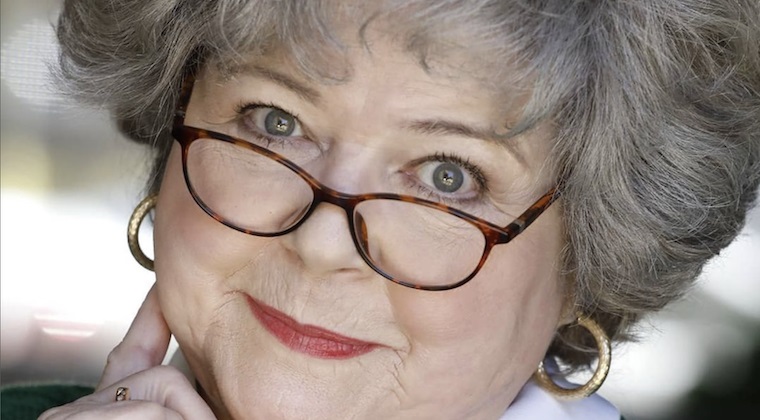
Patrika Darbo, a senior and veteran film and television actress, has gone full circle when it comes to obtaining health insurance. Rules change, union rules morph and once again, actors are scrambling to get affordable health care. With SAG-AFTRA, actors need to meet a minimum earnings requirement and continue to pay their premium, to keep their benefits.
What if an actor retires? What about their spouse and children? You can check out the SAG-AFTRA Health Plan for more information. You may not think this pertains to you now, but it may in the near future, so you probably want to pay close attention and learn how the union operates with regard to health insurance.
Patrika Darbo is not afraid to share her story with the health insurance struggle that a lot of senior actors go through.
You’re a veteran film and television actress, having appeared in productions to the nth degree. What was the turning point for you when you decided to go into acting as a fulltime career?
I was working as a credit manager in corporate America and my superiors said that “acting didn’t fit the cooperate image”. Furthermore, when I questioned something very legitimate that needed to be addressed, my boss who was new to the company told me I was “a woman no more than a goat and to never contradict him again”. I promptly gave them 20 minutes or two weeks notice and told the president of the company he was lucky I didn’t sue them. The company went bankrupt shortly thereafter and I started working full time as an actor.
You studied theater at Georgia Southern University in Statesboro, Georgia and later attended the Atlanta School of Drama. Did you have to audition to get into those schools?
No, I did not have to audition for any of these two programs.They were both open to whomever wanted to study. After college I also started taking classes at Theater Atlanta.
Having majored in theater, was there any type of shock value when you got your first job in television and film? What types of things did you have to adjust to when transitioning from theater to television and film?
When I was in school, they didn’t teach us about television and film call sheets and how to read them and they really didn’t teach us about who was in power. For example the director, the AD, the 2ndAD, the producers, etc. I started working and learning all of this by being a background player, day player, costar and then eventually a guest star, etc.I had a lot of theater training so you could always hear me on set which was to my advantage when they were picking background to do special on-set business in a scene. My advice is no matter what medium you’re working in, speak up! Make sure who you’re working with can hear you. Nothing is worse than sitting or standing a foot away from someone, and you can’t hear them, so you miss your cue. You can act away, but if you can’t be heard you’re wasting your time and talent. I learned all of this early on and use it to this day.
You’ve been married to Rolf Darbo since 1973. How did you two meet? Tell us about your wedding.
A-Rolf worked for Disney in the True Life Depart and he did work as a producer on a number of films at Epcot Center. We met at the Burbank Little Theater and were married on stage at the Golden Mall Playhouse in Burbank. When we met, Rolf was the stage manager and I was in the chorus. We did a lot of community theater together. I can build sets, sew costumes, and act. I tease my husband that he married me because I know how to work all power tools and pound a nail.
Since both you and your husband are in show business, how does health insurance work?
Since we both had jobs, we didn’t have insurance problems. When I first started working I was not fortunate to qualify for insurance, but I had Rolf’s as his spouse, SAG and AFTRA were separate at the time and eventually I qualified for both. Now that I am of retirement age and a senior receiving a pension from SAG-AFTRA, I am uninsured by my union. They decided to no longer allow a senior’s residuals to count towards their insurance. So, unfortunately although I made a great deal of money that would have qualified both Rolf and me to have insurance, the new rules have changed all of that. DON’T GET OLD. I did get great insurance to cover us both, but it’s a bitter topic for most seniors.
On May 20, 2022, you took part in a benefit dedicated to the late All My Children star, John Callahan, who passed away in 2020. Lip Sync for a Cure is a show benefiting the American Cancer Society Desert Spirit. What exactly did you do at the benefit? How were you approached to be included?
I was fortunate to have been asked to participate. I have done this benefit in the past and it is a great fundraiser and a lot of fun. I was lip-syncing to a song from a Broadway musical that was turned into a movie. It was a lip-sync challenge and all the participants are celebrities who pick a song to perform. We were performing in a large venue and generous people purchased tickets to be there. Then there is a VIP party afterwards for those that were fortunate enough to purchase a higher priced ticket. I understand we were sold out which is great for the fight against cancer.
Back in the day, being on a daytime soap was more of a stepping-stone to get into nighttime television. That seems to have shifted meaning the stigma is no longer valid. Why did the stepping-stone to nighttime disappear and is that a good or bad thing?
I think in the past , that because daytime shoots a movie script per day and it moves so fast and performers had to memorize so much dialogue, that the performer was thought to not be a great actor, but more like a machine. Remember there are more that 10 ways to say “Hi. How are you” and when you only have a couple of days to memorize 20-30 pages of dialogue you might not have to time to find those ways. A movie shoots five to maybe 20 pages a day. Daytime shoots 80 pages. It is the hardest work I’ve ever done but thank God I work with wonderfully talented performers. I think there are still those who look down on daytime actors, but how many of them can say their shows have been on TV for over 50 years?!!!!!!
Time today goes by so fast. Are there things in your life that you wanted to do but never had a chance, and at this point probably never will? What? Why won’t you do them at this point?
Time does go fast, that’s for sure. I want to do Broadway and I will one day. I am not a woulda, coulda, shoulda kind of person. Don’t let anyone tell you that you can’t have your dreams. You just have to go after it and prove the world wrong!
A lot of people NOT in show business think it’s all fun, games and glory. While being on the red carpet may be exciting, what type of hard work and dedication is there in order to be an actor? What things did you find out you have to do for work that are not actually acting related?
If you have to be on the set at 5:00am, trust me, your social life is cut short and with all the dialogue you may have, you need to be learning your lines and then get to bed early. It’s nice to have someone do your hair and makeup and buy you great outfits, but you find yourself turning down events you’d love to go to because you need to study. Oh and don’t forget you should be taking classes and there is always a script to learn for class and unless you’re Brad Pitt, Tom Cruise or Angelina Jolie, you’re not making a million bucks. INVEST in your future. Don’t blow your money on cars and frivolous things. Marion Ross of Happy Days once told me not to spend like crazy until your show has been on the air for at least three years and you are one of the stars. Be smart and remember it’s show “business”. Learn the business part for your own security.
You recently reprised your role as Nancy Wesley, a role you originated from 1998-2005 on the NBC’s daytime soap, Days of Our Lives. How did that conversation go?
When I originally got hired, the casting director for Days at the time was Fran Bascom. She loved going to live theater and she had seen me in a number of Equity waiver shows and we became friends. We were at a friend’s party and she asked me if I would do a Soap. I said yes, of course. Work is work and always moves you forward. Fran contacted my agent, they did negotiations and I was soon working on Days. When I did The Bold & The Beautiful, I already had a huge daytime following and I was asked by the producer to join that show too. I’ve worked hard and I am grateful for the recognition that they gave me.
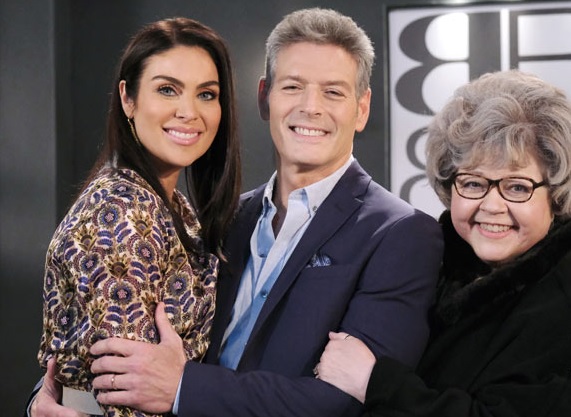
Nadia Bjorlin, Kevin Spirtas, Patrika Darbo
There are lots of new people on Days of Our Lives. What was it like meeting the newbies? Did you yourself feel like a newbie?
I really haven’t worked with a lot of the newbies. I am working with Kevin Spirtas, Nadia Bjorlin, Judi Evans and Eric Martsoff. I’ve worked with them in the past. Greg Rikkart and James Read were new to me. Trying to keep everyone’s stage name and real name separate is the hardest, especially when we all don’t work on the same day and time because of Covid. We do wear our masks all the time except if we’re on set or in makeup.
Anything else you want to say?
I work with a number of charities that everyone should check out and offer help if you can. The Talians at UCLA help out Operation Mend and organizations assisting with mental health. The George Lopez Foundation helps kids with kidney health and transplant issues as well as veterans and others in underserved communities. I also love The Rescue Train which helps rescue at risk animals. You can always keep up with me by following me on Instagram @darbopatrika.
Patrika Darbo’s Bio
Veteran film and television actress, PatrikaDarbohas reprised her role as Nancy Wesley, a role she originated from 1998-2005 on the popular NBC daytime drama, Days of Our Lives. Darbo, who won a Primetime Emmy in 2016 for Outstanding Actress in a Short Form Comedy or Drama Series for Acting Dead, was nominated for a Daytime Emmy for the role of Nancy Wesley in 2000. After leaving Days of Our Lives, she last returned to the show for a limited appearance in 2017. Her new storyline began airing on January 14th, 2022.
Darbo, who is currently a Performer’s Peer Group Co-Governor at the Television Academy, also played the role of Shirley Spectra on CBS’s The Bold & The Beautiful from 2017-2018 before reprising the same role on CBS’s The Young & The Restless in 2021. Before making a name in daytime, the veteran actress was a series regular on the sitcom Step By Step and had guest starring and recurring roles on such shows as The Middle, Desperate Housewives, Devious Maids, Dexter, Big Bang Theory, Seinfeld, Roseanne and she had memorable roles in dozens of films including Midnight in the Garden of Good & Evil, In The Line of Fire, Speed 2, Daddy’s Dying Who’s Got The Will, Leaving Normal and more.
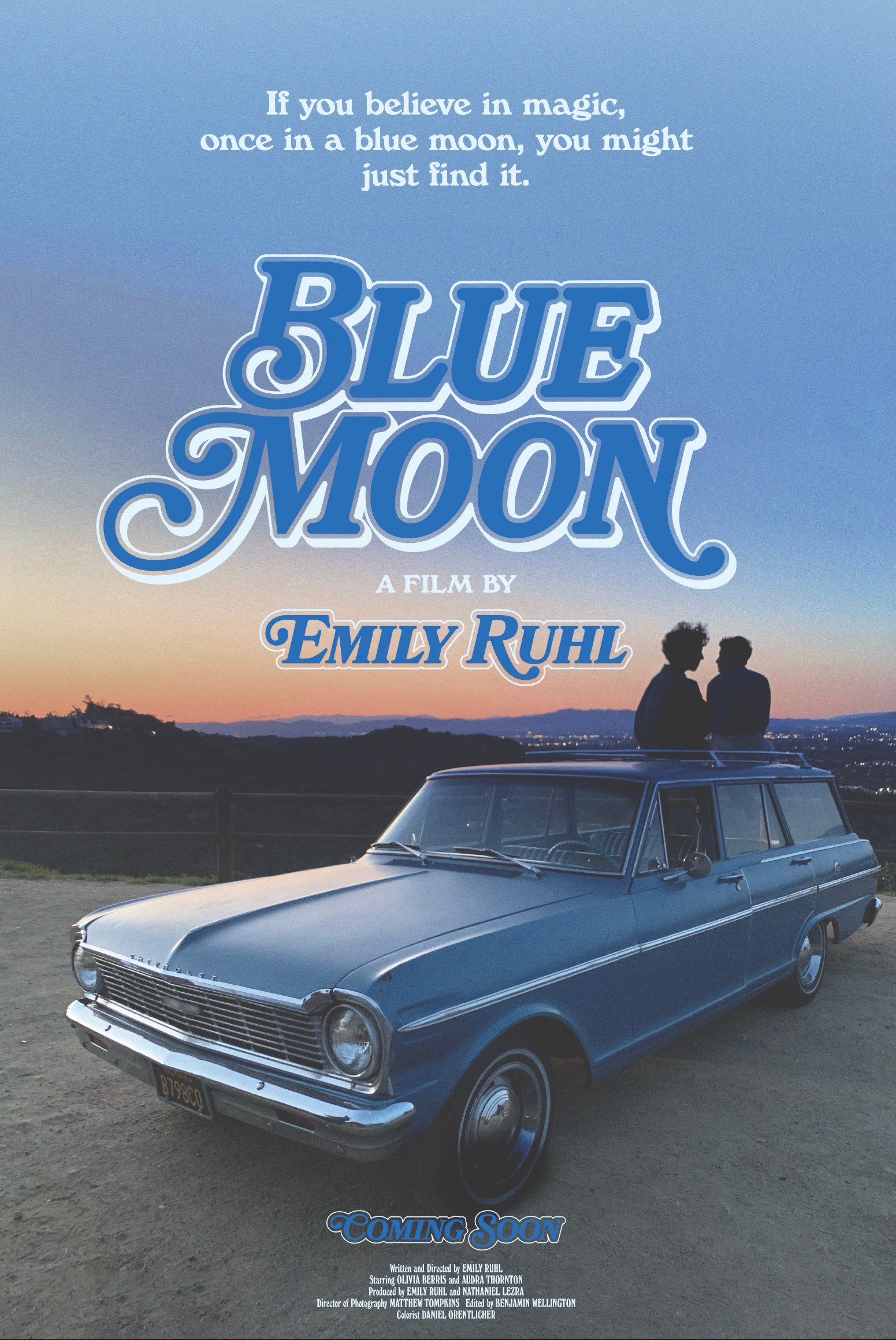
Emily Ruhl, the model turned actress turned Writer and Executive Producer, has a very unique story of grabbing life and running full steam ahead. She used her college money to fund her passion project film Blue Moon (available for viewing) without knowing exactly how to go about producing a short.
On top of that, Emily Ruhl struggled with addiction, so she delves into that and gives us how she deals with it on a daily basis.
Blue Moon is a vibrant vignette of a love story that takes place in a single night. It follows two young women through Los Angeles as they explore the depths of themselves and one another. A beautiful portrait of how nurturing mutual vulnerability can turn into pure magic.
You wrote, directed and produced the short film Blue Moon. It’s loosely based on the experience of one of your friends who started dating women. When you decided to use your college fund money to make a movie, what did your parents say?
My mom was super supportive when I decided to use my college for money to make a movie. She always wanted me to find my purpose and when I found it, she was incredibly supportive and cried. When I ended up showing her the final product of Blue Moon, we watched it twice and she cried both times.
How did you find everyone to work with, such as the script supervisor, gaffer and the rest of the behind the scenes crew? How did you know what to pay them?
The first person I spoke with when I decided I wanted to make something was an ex-boyfriend, who is a writer and a director. He gave me a list of all of the jobs I needed to fill. Then I reached out to a friend of a friend who recommended a producer who then recommended me to someone else who recommended me to somebody else… So there were a few degrees of separation. My producers filled out the rest of the crew from the script supervisor to the gaffer, to everybody else.
I did not know what to pay them. I just had a budget and tried to use it accordingly. The first project was a huge learning curve. I had no idea what was normal or anything like that.
Olivia Berris, Audra Rae Thornton
Let’s talk about the casting of Olivia Berris and Audra Rae Thornton as the leads in Blue Moon. Since they are friends, was it weird for them to do the sex scene? Did you direct the scene or did you just let the actors do whatever they wanted? What type of talks did you have involving this scene?
I wouldn’t say that the sex scene was necessarily weird. It was very thought out and very planned. We had many conversations and a little bit of rehearsal beforehand. We also looked at some videos as reference.
Our talks were about what are we not going to show? What were we trying to accomplish? We did that scene twice. It was a closed set, so it was only the cinematographer in the room. My wonderful acting coach, Lena Georgas, who is with Nancy Banks Studios, and I were just looking in.
Lena did a few different bonding exercises with Olivia and Audra before we got started. But I don’t think it was weird. I think it was just new territory for everyone and nobody was ever fully nude. We did maintain quite a lot of level of privacy on set.
Your next project that you’re funding is called 13th Stepping which is a dark comedy-drama about addiction and redemption. Tell us the story about your own challenges with addiction and what you did to become sober. What do you do to keep yourself sober?
I feel like this is a topic that I’m still trying to decide how I want to speak about publicly. But I think for me, I’ve just learned a lot of different tools that I didn’t have when I was younger to help me emotionally regulate. And that’s been what’s helped me. I have much more of a community now than I did when I was younger.
I truly believe the opposite of addiction is connection. I try to find connection as much as I can in my life.
Emily Ruhl and her dog
Awwwww!
You’ve been acting for about four years. At what point in time did you decide to go to acting class? What made you decide where to go for class? What life lessons have you learned during your acting journey?
I think acting class was something that was always encouraged from the start. My acting coach now is Lena, who I spoke about earlier. She’s incredible. She’s so much more than an acting coach for me because she holds so much of my vulnerability and she knows so much about me. I think she’s had to help me with emotional triggers. So she knows quite a bit. My manager had sent me a long list of different acting coaches and being in Los Angeles, I’ve gone to a few different studios.
During COVID I decided to create my own acting curriculum and started working with Lena. We have built a bond over the last couple of years, and now she’s on set with me wherever I go. Life lessons — I mean, you learn so much about yourself in acting, but I think just being as present as possible is the best lesson I’ve learned.
As a model, you were scouted when you were 13 years old during your attendance at the New York Fashion Week shows. Did you come into New York just for Fashion Week or were you in NY for something else and it just happened to be Fashion Week? Who went with you?
I did come to New York just for Fashion Week. My father took me there as a birthday present, so that was a pivotal moment in my life. Funny enough, it was a Canadian designer who approached me and said that I should model and gave me her card. She was friends with Mother Agent.
I remember I was backstage or maybe I was at one of the little parties. This was in a park, so it was all under tents. It’s a bit different than it is now. I emailed my mom to email my Mother Agent. Then I went back to Texas and sent her photos which lead me to winning her modeling search soI flew back to New York to do my first photo shoot.
Pretty soon after that I had a contract in Tokyo. It all happened extremely, extremely quickly.
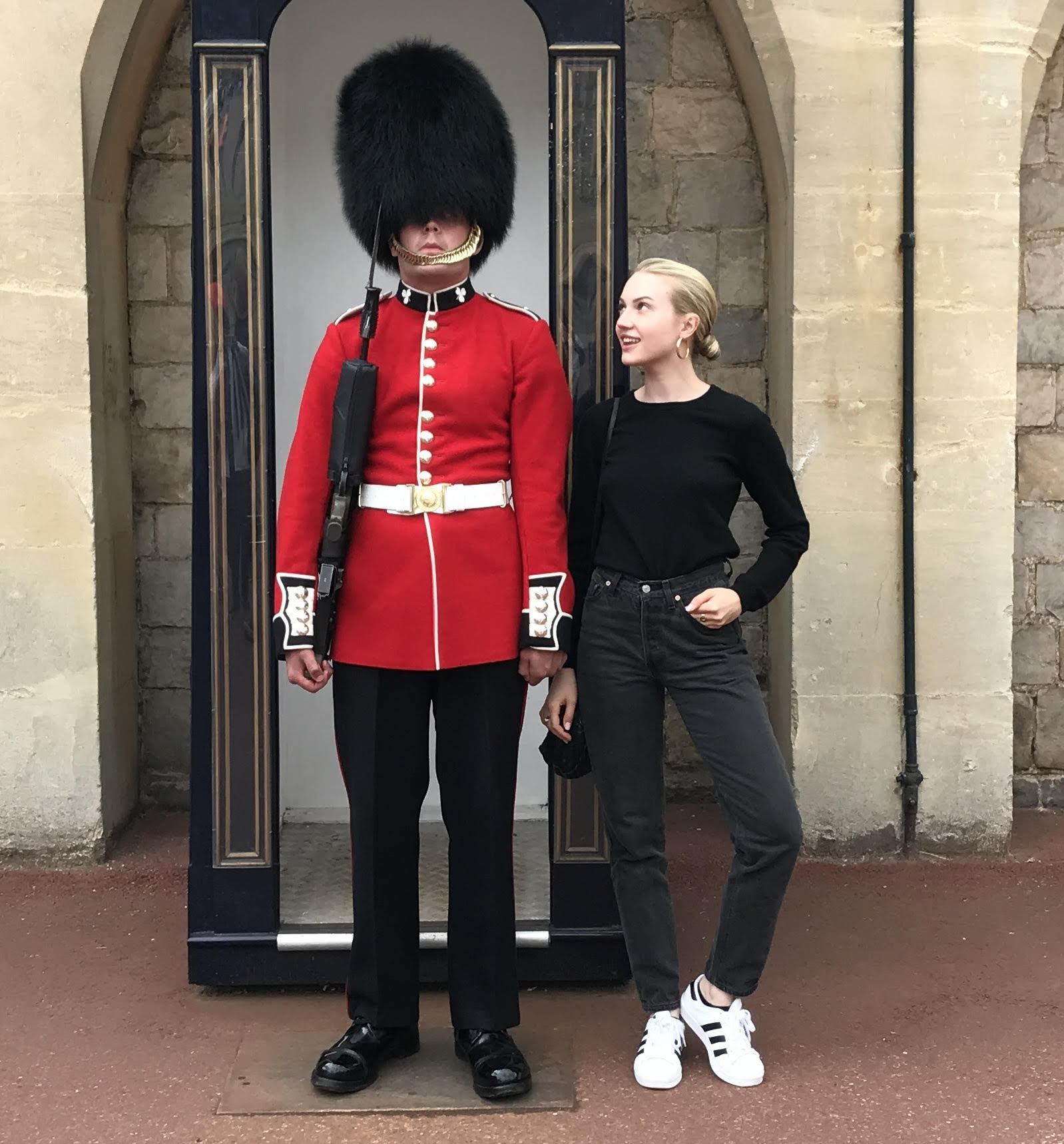
Emily and the Changing of the Guard
Do you still like Nirvana as much as you did when you were a teen? What is the appeal of Nirvana to young people? How important (or not important) is music in today’s world? You put together the play list for Blue Moon. Did you choose the music after the script was written or did you know in advance those songs are the ones you wanted to incorporate into the film?
I do like Nirvana. I think Nirvana, for young people, is timeless. I think that there are certain themes in life that are timeless and can appeal to people of all ages at different points and in time. Music is incredibly important. I think it’s the best medicine really, and it’s such an incredible medium to be able to express yourself.
I did put together a playlist for Blue Moon which was separate from the one that ended up being in the film, but to me, it was just the most epic kind of “falling in love” playlist. The music that actually ended up in the film is a little bitty, pretty song by Bobby Day. I wrote the first scene to that song.
Sometimes I do that when I have a song in mind and it sets a tempo or a pace for a scene. The second song was supposed to be a little different, but we ended up using it too late to turn back. I had just watched BlacKkKlansman from Spike Lee — he’s one of my all time favorites — and that song is used in that film. I heard it and thought, “Oh, this could be amazing.”
It was actually in post production that we switched out the songs and used that one. The third song I actually wrote and produced with Olivia Barris who plays Maya in the film. So we did that one together and that was a pretty cool experience. I’d never done anything like that before.
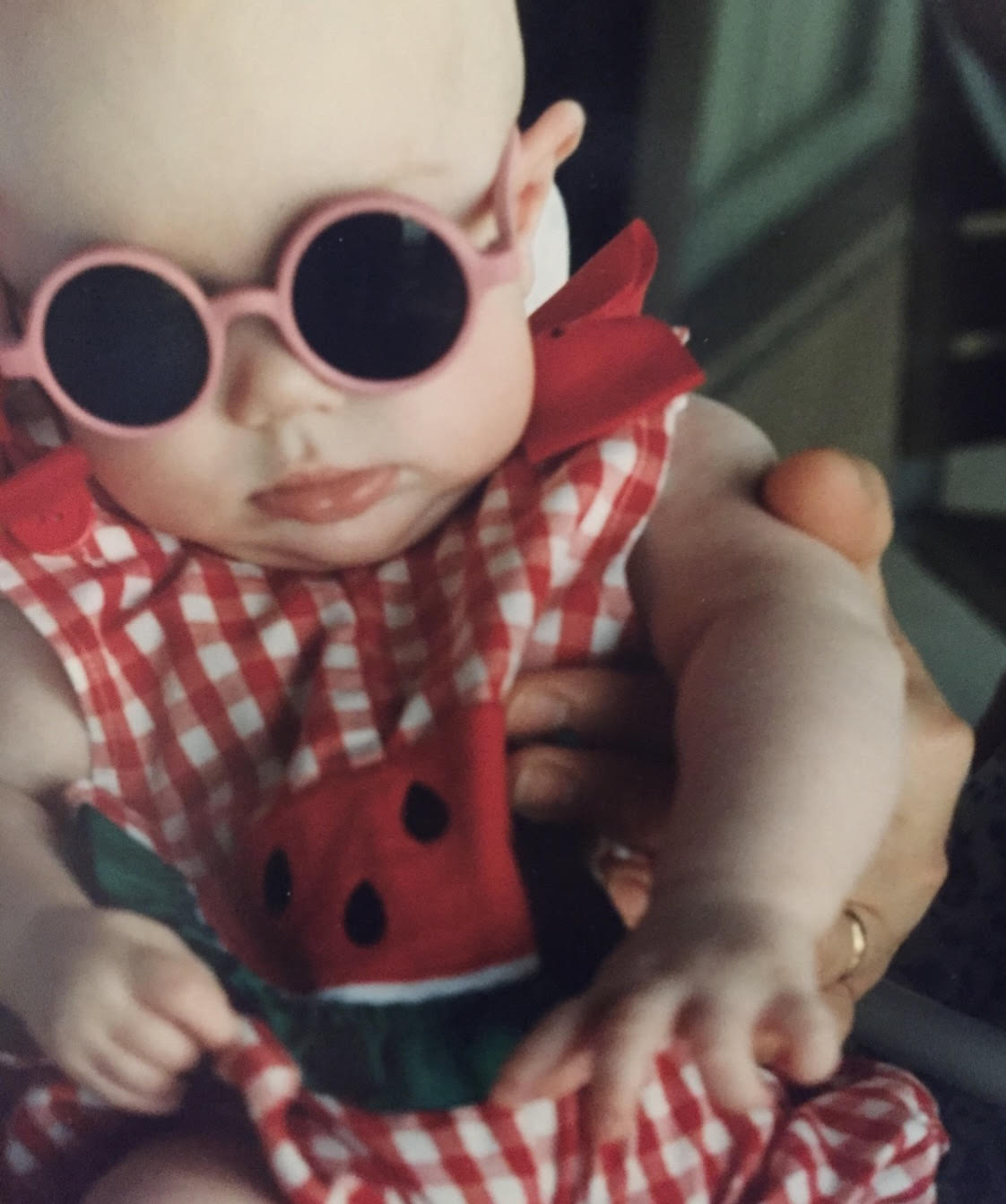
Emily was into fashion and modeling even as a baby!
Are you a member of the LGBTQ+ community?
I am not a member of the LGBTQ+ community, but very many of my chosen family are. It’s a very, very important community to me. I think that representation is important and I think that this world is very colorful and diverse. It’s important that community is represented in entertainment because entertainment projects, to the rest of the world, represents the rest of the world. So I think that it’s important that the two are correlated.
Anything else you’d like to say?
I think that the message I want to leave with everybody is just that if you want do something, do it and learn by doing it. Just because you don’t know how to do something yet shouldn’t be a deterrent of you doing it. Just ask questions and believe in yourself and you can make things happen.
I think that’s the greatest lesson that I’ve learned from this process. Thank you so much.
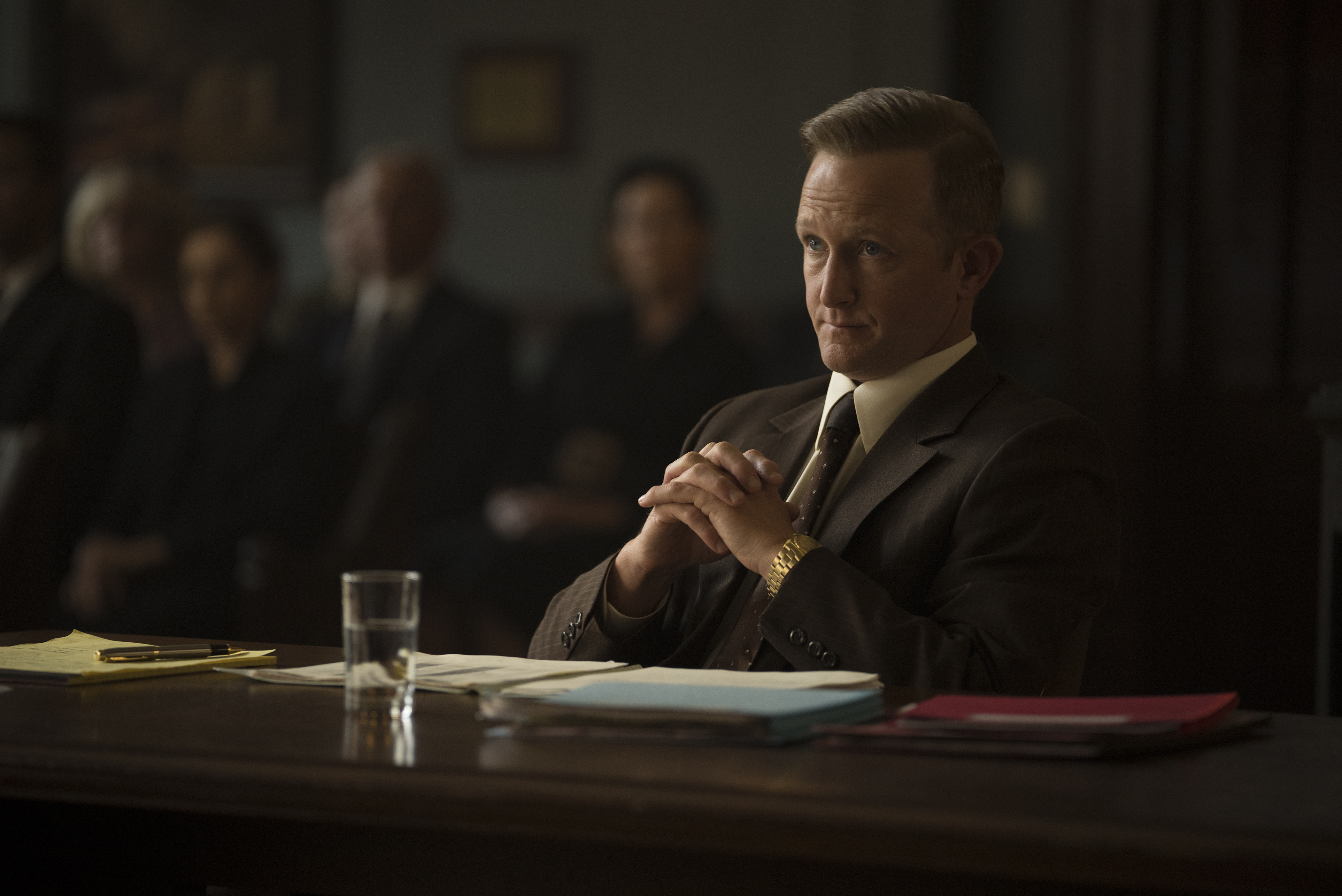
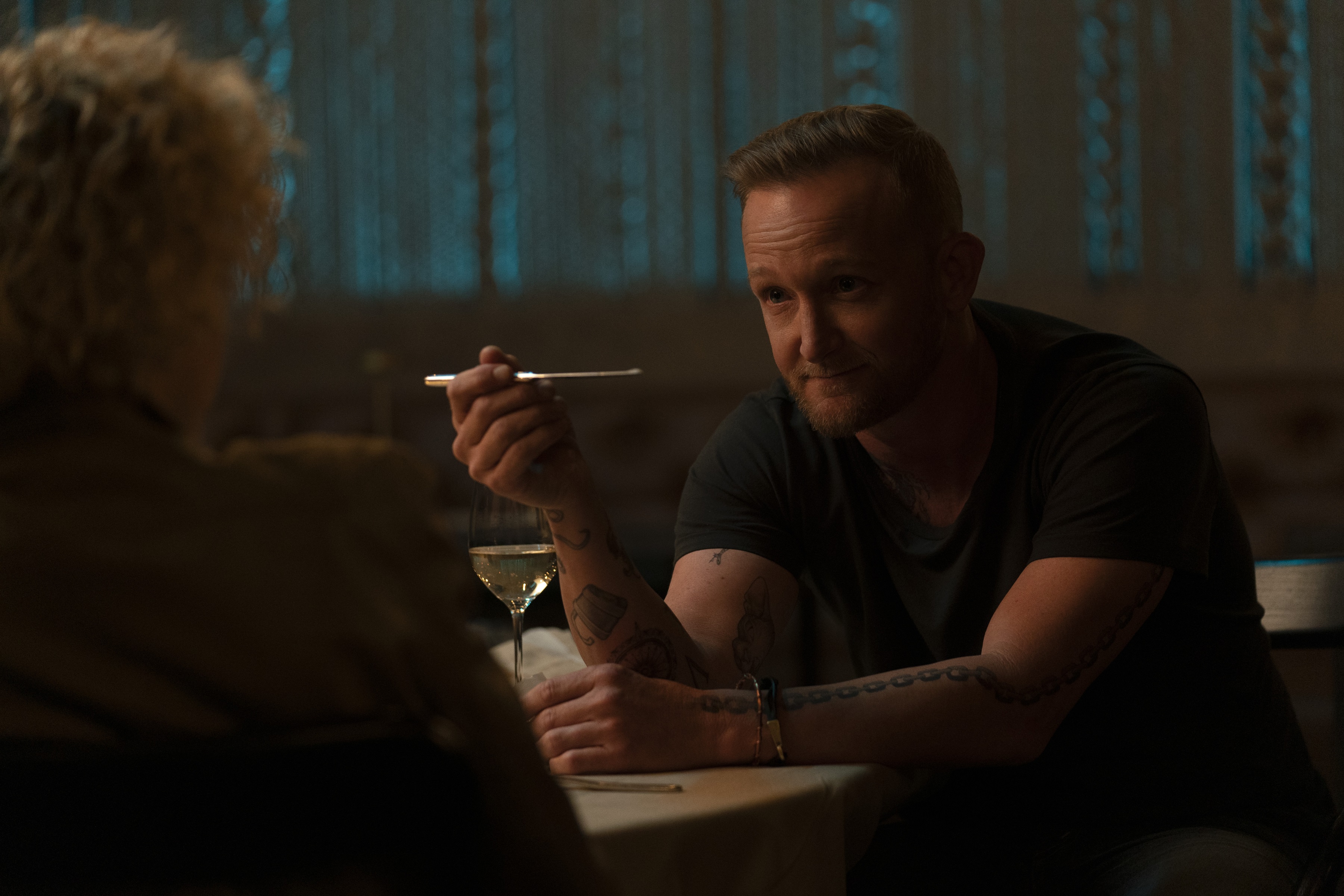
Eric Chastain (Eric Ladin) in Columbia Pictures' WHERE THE CRAWDADS SING.
Actor Eric Ladin is a face you’ve seen before… Ozark, video games such as Street Fighter and Call of Duty: Infinite Warfare, just to name a few. Be sure to check out his new film Where the Crawdads Sing which comes out July 15, 2022. You can watch the official trailer here.
Ericalso discussed religion, school, his audition for Where the Crawdads Sing and if politics should play a role in the entertainment world.
You play Eric Chastain in your latest film Where the Crawdads Sing, due out July 15, 2022. What was your audition like? When and how did you find you were chosen for the role? Who was the first person you told?
Like the majority of auditions these days, it was a self-taped audition. While the script was not included in the material, I had read the book, so I was familiar with the story. My reps told me I had the offer for the film as I was boarding a plane headed to Atlanta, as I was working on “Ozark” at the time. I immediately called my wife, Katy; she is always my first call!
You studied theatre at The University of Southern California where you earned your BA. Why did you choose this University? What was the most valuable lesson you learned from school?
Once I visited the USC campus, the choice was quite simple. In addition to all the wonderful things USC has to offer, I loved the professors I met with and had a wonderful audition experience. So my decision was made once I got the word that I had been accepted to the program. Theatre school was incredible; I wish I could go back and do it again. To spend so much time working on my craft, learning technique and creating art in a safe environment is a luxury.
You have an extensive film and television resume. What are your likes and dislikes regarding working on film vs. television?
I love everything about it, to be honest. As I get older, I recognize more than ever the beauty in doing what you love for a living. While the travel and hours may be difficult, they are outweighed by the experiences I have had and relationships I have made along the way.
Julia Garner and Eric Ladin in Ozark. Photo by Steve Dietl Courtesy of Netflix
Tell us some stories about your time on Ozark!
Unfortunately, there is nothing juicy to dish. I can say, that it was as well run of a production as I’ve been a part of and that’s saying a lot due to the fact that we were shooting during a pandemic. The majority of my work was with Julia Garner and she is a fantastic scene partner who made the job seem easy.
Behind the scenes of Where the Crawdads Sing has mainly women running the show, having been produced by Reese Witherspoon, Aislinn Dunster, Elizabeth Gabler, Lauren Levy Neustadter and Erin Siminoff, written by Lucy Alibar and Delia Owens and Directed by Olivia Newman. What differences, if any, did you notice on a women-produced and directed film vs. other film and television you’ve worked on that were run by men?
It is and that’s fitting as the story is a coming of age love story about a woman. And don’t forget Polly Morgan, who was the film’s DP. As for differences, I saw none.
You’re of Jewish faith. To what capacity do you consider yourself Jewish? Tell us about your Jewish upbringing.
I absolutely consider myself Jewish and I am proud to be Jewish. I was raised reform and attended Sunday school. I had a Bar Mitzvah and visited Israel with my synagogue when I was in high school. I enjoy going to services, especially on the High Holy Days and always look forward to Passover, my favorite of the Jewish Holidays. My wife is not Jewish, but attends temple with me and loves learning about the Jewish Faith and looks forward to celebrating our son’s Bar Mitzvah when the time is right.
Your wife, Katy, is a fashion designer and stylist. How did you two meet? Does Katy have a steady job or is she a freelancer like you?
Katy is actually a psychologist. She was in the fashion industry for some time, but after we had kids she decided to switch career tracks and follow her passion. She does have a steadier schedule than I do at the moment, but let’s be honest, everything is steadier than being an artist!
You’ve voiced characters in popular video games such as Call of Duty: Infinite Warfare, Left 4 Dead and Infamous 2. Are you allowed to read your lines off of a board or do you have to memorize them? Is there someone directing you?
It depends whether or not you are performing in a voice over booth or on a motion capture stage. While in the booth, you have your script in front of you whereas on the mo-cap stage, you are performing as you would in TV and film, so best to be memorized. And yes, of course, there is always a director.
Eric Ladin. Photo by Riker Bros.
You’ve been an actor longer than you’ve been a dad. How did you explain to your kids that you’re an actor who works long hours, sometimes has to go on location for days at a time, etc? What were their reactions?
I have two boys who are 7 and 9 years old. Fortunately, I have been able to do a few projects that are appropriate for them to watch, so that makes explaining things a lot easier. As for time away from home, it is certainly one of the most difficult aspects of the job. That said, when I am home, I get to be fully engaged as I don’t have that standard 9-5 job. So I get to eat breakfast with them, take them to school, pick them up, etc. When I am home I choose to be a very active Dad.
It seems that entertainers who have a fan following feel pressured into talking about politics — fans think it’s the actor’s duty to voice their opinion. Originally being from Houston, Texas, have you ever been asked your opinion about birth control and/or Roe v. Wade and felt that you *had* to answer?
I don’t feel pressured to voice my opinion about anything. I also don’t believe that because I have a fan following that my opinion is any more weighted than that of someone who doesn’t. Social Media has become a platform where entertainers can certainly reach their fans and discuss topics that they are passionate about, and that’s wonderful. I choose to use Social Media as a platform to promote my work and communicate with fans, but tend to stay clear of politics and polarizing subjects because I don’t believe those platforms are conducive to reasonable and thoughtful discourse.
What an informative interview with Brant Rotnem on his award-winning LGBTQ+ micro-series HIDDEN CANYONS!
What exactly is a micro-series? Well, I watched two full episodes while brushing my teeth. The show is the latest in the entertainment world’s move toward shorter content production.
The 1-minute soap opera follows strangers’ lives in steamy and fast episodes which end onwild cliffhangers. The show has found a way to revolutionize the way people consume narrative content, while supporting the voices of the LGBTQ+ community. The series is written, produced, and directed by Brant Rotnem, and co-directed by Fawzia Mirza.
Hidden Canyon’s, now with two seasons under its belt, has its home on TikTok. Check it out and leave comments on which characters you love and hate.
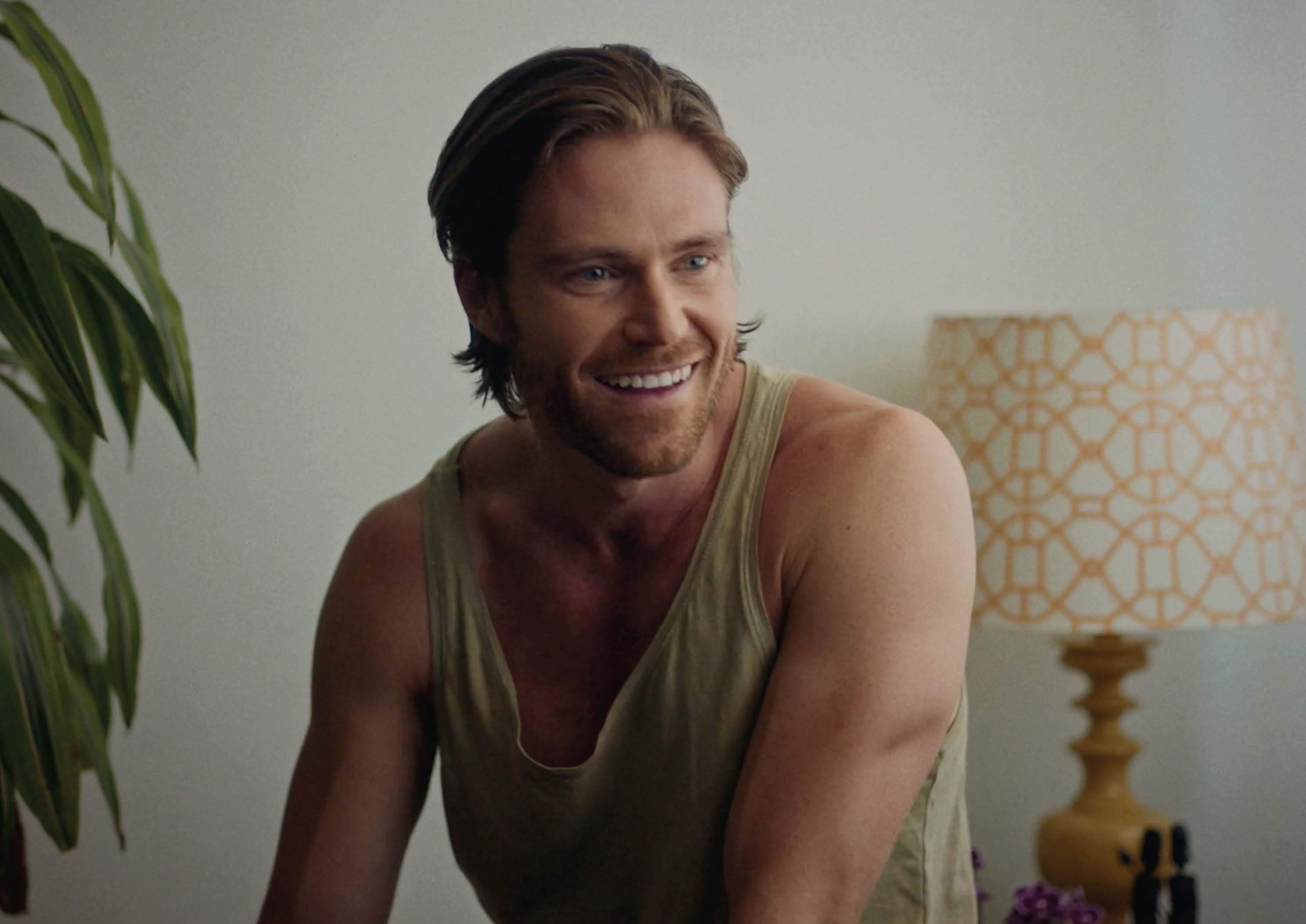
Colby, played by Tonatiuh.
I seriously hate the character Colby. Why did you do that to me Brant? Why did you make me hate Colby within 10 seconds?
Ha, you’re not alone! Colby was our most polarizing character in Season 1. People felt very triggered by what he represents. When we workshopped the scripts, the actor Tonatiuh shared some of his own experiences being “Colby’d” by someone else. In performance, I think it can be so fun to play the flip side of scenarios you’ve lived yourself. A lot of our discussions were around finding ways not to judge his character.
I think Colby sparks strong reactions because there’s a lot him out there, particularly in the queer community. So many of us have been Colby’d! But I don’t think anyone is ever pure good or bad. People also had strong reactions to the character of Harrison. In Season 2, we thought it would be interesting to put them together to see what would happen. Tonatiuh and Jeremy Glazer, who plays Harrison, brought a lot of perspective and personal experience to the conversations that led to their storyline. We asked, what’s behind attachment issues? Why do people gaslight? What have these characters been through? It was really interesting to see how their storyline was received – some people were very entrenched in their hatred and didn’t want any redemption. But others came along for the ride. One of my favorite comments on TikTok was, “Great, now you owe us new characters to hate…!”
Is there a double meaning to the title Hidden Canyons? How’d you come up with that name?
We knew from the start that we wanted the series to be a soap so we could have these wild twists and cliffhangers in each minute episode. Since soaps tend to take place in fictitious towns with fun names like Pine Valley and Cabot Cove, we wanted something that fit the SoCal beach setting. We had multiple producer meetings that were essentially us going, “What about Sunset Shores? Misty Palms? Ocean’s Bluff?!” Hidden Canyons felt right for the show’s intrigue. As to whether there’s a double entendre… what do you mean?
Being that the series can be viewed on TikTok also means that people can comment immediately. Did you change any of the scripts that hadn’t been released yet due to viewer comments? I’m going to ASSUME (ack!!! hiding under a bedsheet now!) that your answer is yes, that you changed up some of the content maybe later on in S1 or S2.
*Whispers in general direction of the bedsheet* HOW DID YOU KNOW?
No, you’ve totally nailed it! Another reason we chose this format is that anything can happen in a soap at any time. We had loose ideas for the direction of the storylines, but also wanted to stay very open to viewer reactions. Some of the episodes have hundreds of comments – when else in Hollywood do you get that much direct feedback?? Most series or films get reviews and some online chatter, but we had tons of input and analysis for every single minute of content. On TikTok people essentially up-vote comments so we knew which ones people agreed with, and which were more fringe. TikTok audiences aren’t shy about letting us know what they like and don’t like, and they keep us honest if there’s anything we’re omitting or misrepresenting. We take it all into account when we write new episodes. It’s very special, almost like a creative collaboration with the audience.
Many writers and directors will never change the story no matter what the viewer comments are. They feel that their vision is their vision and that the audience should base their feelings off that vision. What was going through your mind when shaping up Season 2 for production?
I’m not going to say that we give the viewers exactly what they want… that would be no fun! We often change tack to keep everyone on their feet. But I also think it can be really satisfying when you crave a certain outcome on a show and actually get it. We try to keep that balance between subverting expectation and giving audiences what they hope to see. I think that allows them to feel that their input is meaningful. Which it is!
Some of the feedback that was really useful for Season 2 was that there have already been a lot of series and films that deal with cheating gays and nesting lesbians that just want babies. So we tried to flip the script a bit in the second season. Denise deliberately rebels against the stereotype, and none of the gays cheat (directly). There were also a lot of calls for poly representation. Even though it’s a soap, we fought the urge to lean into the potential for drama; it felt important to portray healthy polyamory. A big lesson was that TikTok viewers wanted to engage with the messy questions the show raised rather than just the romantic drama. This encouraged us to tackle live issues like trans girls in sports, and thornier topics like the historical tension between cis white gays and the rest of the community.
Quick break during filming.
You have lots of stereotypes in the series that people may consider LGBTQ+ stereotypes (cheating, non-monogomy, etc.), but honestly, aren’t those same stereotypes in the straight world, too? What’s different in the LGBTQ+ community vs. the straight community?
A lot of these scenarios are have universal elements to them, and it’s been great to hear from a lot of non-queer viewers that they identify with the characters and what they’re going through. But there are also situations that are just different in the LGBTQ+ world. In the straight world, it’s rare that someone’s current partner and ex would connect in a way that throws the relationship into jeopardy, as it does with Colby, Trent, and JB (This came from my real life, by the way…) Communication around parental roles can get muddled when queer couples decide to start a family with the help of an outsider (also from my life!) Most of our plots come from the lived experiences of our creators and cast. We really tried to craft stories that show characters facing relatable struggles with career, identity, relationships, and life-planning, while filtering them through a uniquely LGBTQ+ lens.
You were a dual-graduate of UC Berkeley’s Theater and Performance Studies and International Environmental Politics. What the blip is International Environmental Politics? Which side of the brain does International Environmental Politics fit into?How do you incorporate both of your majors into the work that you do today?
I knew in school that I wanted to act, but at the time, it didn’t feel important enough. I felt that the world was coming to an end unless everyone started really working to stop the apocalypse. So my first few years out of school, I worked as an environmental consultant, and tried to launch a big project focused on energy efficiency. It ultimately failed, and I was miserable the entire time. I started to wonder, what was the point of making myself so unhappy if it wasn’t actually doing good for the world? Acting was this bug I could never shake. I had started as a kid and trained my whole life. I was happier on literally any acting job than I ever was in the environmental world, even when things were at their best. I would do tiny non-Union plays in my free time, or sit in a hot tent all day for one line in an industrial — I didn’t care. That was home.
Now I believe that we have enough science, and enough people working on the technology. The biggest problem is too many people still aren’t on board with climate science, which gets in the way of the policy and investment shifts we need. I think that when facts aren’t getting through, emotion has a critical role to play in shifting perspective. We need more climate in narrative media, not just documentaries. Even though Hidden Canyons is a light soap opera, climate anxiety creeps into Season 2 a bit, and my future projects will be focused on it as well.
Location scouting.
With Hidden Canyons being low budget, what types of hoops and obstacles did you have to jump through to make everything legal with SAG-AFTRA?
We operated under a SAG Micro-Budget agreement, which enabled us to use union talent at indie rates. The biggest challenge was meeting the Union’s COVID requirements for Season 2, which added 20% to our budget. But it was important that everyone on set felt safe, and we took it very seriously. No one ended up getting sick!
What’s your opinion on straight actors playing gay characters? I remember some gay actors playing straight, but not even enough for me to remember in what — so there were more straight actors playing gay.
Neil Patrick Harris in How I Met Your Mother! That’s the first one that comes to my mind… of course there are others, but you’re right that there are a lot more straight (or non-out) actors playing queer roles.
I think of acting as transformation, and I don’t think there’s anything about being gay that a good actor can’t “get”, regardless of their sexuality. In an ideal world, the role should go to whoever is best for the part. But we don’t live in an ideal world, and roles often don’t go to the best actor. Openly gay actors are passed up for straight roles because of fears that their personal lives will hurt the project’s chances in certain markets. Straight actors are cast in gay roles because they are considered more “bankable”. But why don’t we have more “bankable” LGBTQ+ actors? The long-standing stigma against open sexuality has hurt a lot of people’s careers and kept them from reaching the same level as their cis-straight counterparts. So I do think the playing field needs some leveling, and some of that involves casting queer and trans actors whenever and wherever possible. One way to do that is to favor the community in opportunities to play itself.
Let’s dig deep down into your childhood and try to help some youngsters who may be reading this. At what point in your life did you realize you were part of the LGBTQ+ community? Did you “experiment” or you knew right away? Share your coming out story. What advice do you have for people who are struggling with their identity?
Oh man, we could do a whole interview on this one! I realized I had “queer leanings” (I guess you could say!) before I was a teenager. But there was a disconnect between what I was attracted to and how I saw the LGBTQ+ community. It wasn’t a part of my life growing up, so I only knew what being gay was from depictions in media. Gay men were often shown as caddy, vapid, and obsessed with fashion and Madonna. This just didn’t gel with how I saw myself or what I wanted to be. I wanted to go hiking and to Arcade Fire concerts. I had no idea the community was a big, broad, and diverse as it is, and that there was plenty of space for me exactly as I was. In addition, I was surrounded by homophobia at school and even at home. It was terrifying to think that there was a part of me I didn’t choose, and if people found out about it they might all suddenly hate me. How does that make any kind of sense??
To anyone struggling, I would say there’s no wrong version of the journey. Coming out is never easy, and some people have it much harder than others. There’s no right or wrong time other than when it’s right for you. And no one can tell you how you should act or identify. To anyone that doesn’t already have this community in their lives – I want to say it’s one of the most special communities on Earth. And it’s here for you. I feel so privileged that I’m a part of it.
Work hard, play hard.
As well as being a writer, producer and editor, you’re also an actor and have a role in Hidden Canyons. What’s it like being on both sides of the camera? Do you enjoy behind the scenes or in front of the camera better? Since you’re wearing many hats in Hidden Canyons, how do you know which hat to wear when? Do you have certain days where you’re ONLY directing and certain days where you’re ONLY acting, or do the hat wearing days get combined as needed? Sounds exhausting! I don’t even know if my question makes sense…but I’m sure you can decipher it because you majored in International Environmental Politics!
Ha! Yes, in my major we spent all our time dissecting multi-pronged questions!! (…No really though…)
First off – I don’t direct myself. There are three directors, including me and the unstoppable Fawzia Mirza and Nava Mau, my heroes. So I at least get to take one very big hat off when I’m on camera. Our trust is deep enough that I get to fully be in performance-mode on my acting days. We shoot one storyline at a time so there aren’t any days when I’m jumping back and forth. My incredible co-producers Jeremy Glazer, Cherie Rice, Lysa Nevarrez, and Chris Hanada pick up the slack when I can’t focus as much on production. And my Director of Photography Stephen Tringali is so much more than a DP; I often feel that he’s making the whole picture just happen.
To be honest, I never really thought of myself as more than an actor before Hidden Canyons. This project was my attempt to get my on-screen work out there, while boosting visibility and employment for my community. But I’ve totally fallen for writing, directing, and editing. We’re in this segmented industry where there’s pressure to choose a lane, but a lot of multi-hyphenates are breaking that mold and showing that one person can work in multiple arenas. To me, creating is creating. I want to make impactful work and I’m in love with multiple elements of the process. Making film and TV is magic and it’s a joy to be part of it all.
When it comes to mixing real life with Hollywood, producer Sevier Crespo knows his stuff. With multiple projects in the works, I found it intriguing what Sevier thinks about politics in show business.
Puerto Rican-born Sevier Crespohas worked with such Hollywood heavyweights as Michael Mann and Jerry Bruckheimer. He studied production at UCLA and learned the ropes under the tutelage of Robert Townsend and director Sam Bayer at Ridley Scott’s RSA USA, Inc. Sevier has since gone on to work with such global brands as Adidas, Coca-Cola, Nike, Marlboro, Mitsubishi, NBC, and Netflix – to name a few.
Let’s dig right in because Sevier Crespo has an interesting story and opinions on politics, Elon Musk and NFTs that will spark conversation.
You’re a producer and actor. Currently, you’re working on two films, Subversion and Waterboyz. On a day to day basis, what does your job entail?
I’m not actually working on Waterboyz. Unfortunately had to pass because of my schedule. “Subversion” is now called “Secondary Effect.” It’s scheduled for production at the end of this year or beginning of next. My day-to-day is essentially to make sure that all the department heads and teams are in a good position to do our day, and that the creatives — director, talent, etc. — are doing what they need to do. I also manage the creative against the budget. I oversee safety protocols. I make sure people know what they have to do and address any questions, thoughts, concerns they may have. And I’m there to pep them up, like a coach. I have to be their number-one fan and help them solve any issues that may arise.
Last year you produced a film called Karen starring Taryn Manning from Netflix’s Orange is the New Black. As a producer, how do you secure funding? What special permits are needed to film and where do you obtain them? Where can we watch the movie?
Karen had a limited theatrical release and then aired on BET. We’re still negotiating international distribution for it, but I believe it’s on iTunes and Amazon. As far as raising money, it can be done in all kinds of ways. You can get cash or get a portion of the budget through tax incentives from different states and other countries that offer it. Someone can also give you a letter of intent to distribute or sell. You can raise money that way based if the letter is from a reputable company, like a bank or investor. This is just a few A to B ways. But it can certainly be more complicated as you travel down the rabbit hole of film funding.
You were born in Puerto Rico. Tell us about your family history. What’s the status of the script based on the true story of when you went to Puerto Rico to rescue you dad after Hurricane Maria?
That script for that is still in the works. I’m looking for writers. My family is very military based for the most part. They’ve always been humble, working-class people from the island. My dad was in the Vietnam War. My cousins and other family members were also in the military and have served overseas. My grandfather was in the Korean War, and he just passed a couple of weeks ago. We held a military burial in Puerto Rico for him. As far as my family history, it has almost become folklore at this point. As the story goes, my great-grandmother was from Spain and the family came from royalty. She grew up in Venezuela when it was Caracas, Venezuela and ended up getting pregnant and moving to Puerto Rico. She was apparently given a piece of paper written in gold that stated some land belonged to us. Back then there were no banks or safety deposit boxes, so she kept a letter in this tin cookie box. The family hired some lawyers to get more information in order to claim it, but they were told they better leave this alone — they were actually threatened. It’s one of those things that has become a rumor with the family.
Please give us some insight as to what it’s like being LatinX / Hispanic and working in show business. Do you constantly feel you have to work harder than Caucasians?
Yes, people of all races have had to work harder than Caucasians, but thankfully it’s getting better.
You learned English by listening to comedy albums by Eddie Murphy and Richard Pryor. Those must have been some English lessons! What made you choose Eddie and Richard, or comedy in general, to learn English? Did you have an opportunity to see them live on stage?
My dad loved listening to them. I was always intrigued because I didn’t know why the people were laughing. But I could quote verbatim Eddie Murphy’s “Raw” in its entirety. I remember being able to mimic it. It was something about the voice and the rhythm and the laughter that I just enjoyed. It was kind of like a lullaby. The inflections in his voice and the characters he would play, how he would deliver the lines. I didn’t even understand it so I’d have to ask my parents what it meant. And my mom would be so pissed off. She would say, “I can’t tell him everything on this thing!” So, they tried to find ways to communicate what I was hearing. Comedy is one of my favorite things. There’s something about how comedians can pinpoint the irony of life. People laugh because what they’re saying is true.
Show business is a grueling, non-stop job. How do you keep a healthy mind and body?
Know yourself, put boundaries there, listen to your body, and make time for yourself. I have a pre-existing condition that can be pretty severe if not managed. There was a period when I was reckless with myself and it took a toll on me. I’ve changed that. I now have a regimen. If I have grueling hours, I make sure that I eat accordingly. If I don’t, it can run me into the ground.
What are your thoughts on NFTs (Non-fungible tokens) in the entertainment and art worlds?
It’s very tricky because it’s all new. It’s like the Wild, Wild West — just like what the internet and social media were back when people were still trying to figure out how all of that was going to work. But it’s definitely the future. It’s going to be a way of funding and creating projects for the metaverse. NFTs are becoming a new kind of status and a new form of entertainment that’s going to generate income, but there’s a long way to go and still a lot to hammer out. I’m curious to see if it creates something positive.
People are fascinated by Elon Musk. What do you feel is his most important work and how does that directly affect you?
The fascination is that he’s relaying information, thinking outside the box, talking about what’s really going on and what’s happening for the future. He’s talking about the possibilities. He’s breaking all these things that we’ve accepted as truth. Why can’t we have more cars that are electric, or solar powered houses, or some of these other things that are just a little more ground-breaking? He’s shaking up the system and that old way of thinking.
There has been lots of talk over the years that there’s no place for politics in show business. What do you think?
All through history you can find examples of painters, photographers, filmmakers, actors, models, Vaudeville performers using their voice — and I don’t think that is a bad thing. For example, I believe, Elia Kazan in his book A Life describes doing “Waiting for Lefty” on stage. “Waiting for Lefty” was a play that caused a lot of uproar because of the push back on the political climate of the times and how workers were being treated and wages. That was a very political thing. We wouldn’t be where we are today without that. You have to stand up for what you believe in so that you can help make a difference. An artist can say, “Hey, that’s not okay,” by painting the picture for you on why it’s not okay, whether it’s through a book, through a film, or whatever. Things that are tolerated by politicians would never be tolerated by your neighbor. You would never put up with certain things from your teachers or business owners or anyone like that. So why are politicians excused? When you start putting these ideas into movies and music, it changes things.
Anything else you want to say?
I recently read a sign outside a store that said, “The world is short on staff in many areas. So be kind to those that showed up,” and I’ve been trying to keep that in mind and think with that in all areas these days. In terms of organizations that I support, I’m a fan of an organization called Citizens Commission on Human Rights(CCHR and all that they are constantly are doing to help people.
In this episode of Surviving Show business we talk to acting teacher, Michelle Danner about how to train for an acting career, popular acting techniques, how to find acting jobs, how to find and agent and how to get started in LA.
Michelle Danner is a world renowned acting coach, film and stage director, author, and teacher.
Michelle has taught acting for the last 29 years and has worked with many A-List Actors privately and on set including: Chris Rock, Gerard Butler, Seth MacFarlane, Melanie Brown, Jamie Lynn Sigler, Penelope Cruz, Verne Troyer, Grant Bowler, Kate Del Castillo, Michael Pena, Isla Fisher, Common, Salma Hayek, Chris Martin, Brian McKnight, James Franco, Marcia Cross, Christian Slater, Catherine Bell, Zooey Deschanel, Gabrielle Union, Justin Chatwin, Jennifer Coolidge, Justine Wadell, Rob Estes, Rick Fox, Henry Cavill and Michelle Rodriguez and many others.
Seven year old actress Jophielle Love is having the time of her life while learning what it’s like to work with adults on the long running ABC soap opera General Hospital.
Unfortunately, being in show business is not all fun and games. Jophielle had to leave her first agent and it was a painful move for everyone involved. Now she and her brothers have three agents: Zuri, Bold Talent and Paradigm. They all get along and collaborate well with their manager KD Talent.
Jophielle Love gives us the lowdown on being a kid on the set of General Hospital (and other jobs, too!)
Jophielle Love with Enslee Moore and Autumn Chasson.
You play Violet Finn on the ABC soap opera General Hospital. How old were you when you first started on GH? How’d you hear about the role? Tell us about your audition.
I was five years old when I auditioned for General Hospital. I first read for Mark Teshner, their Casting Director. That part was really easy. I only had a couple of lines. Then I went to the callback in front of the Executive Producer, Frank Valentini, and the other producers of the show. There were three other girls going in at the same time. Two of them are friends I run into a lot for auditions. I had gone through my lines with my parents until I knew them perfectly. It was quite a long scene…about having a tea party. I felt pretty comfortable and I connected with Frank right away. He told my mom later on that I entered the audition like a little lady. I sat on the chair very straight, crossing my legs and nailed my lines. Sincerely, I wasn’t really aware of how important that audition was. I was more excited about stopping by the stages of Grey’s Anatomy next door to bring a big pile of crêpes we had made for them to thank them for the fun week I just had with them while working on an episode. So we did that for a few minutes and made our way back to our car, and that’s when we got the call from my agent. We thought we just had forgotten something at the audition or something. Turned out, they had already made their decision and booked me right away. It was really exciting!
Jophielle, Rebecca Budig, Michael Easton
Your character Violet is the daughter of Hayden Barnes (Rebecca Budig) and Hamilton Finn (Michael Easton). Finola Hughes, who plays Anna Devane, is also thrown in the mix as stepmom. Violet is brought to General Hospital with a high fever that Finn is going to treat. Was it hard acting like you were sick? What direction were you given about how to act in the sick scenes and other scenes?
I had just worked for a week on Grey’s Anatomy, playing a young girl with a rare head disease, so I had to be on a hospital bed the whole length of the shoot. I thought it was funny I just went from one hospital bed to another! Plus the two hospital shows shoot on the same lot.
I had an instant connection with Michael Easton and Rebecca Budig. We felt like a family instantly. Rebecca has a daughter my age too.
I was always happy to give them big hugs all the time. Before each take, I would make sure that Michael’s hair was perfect. It was my little thing with him. They didn’t give me a lot of acting advice until I started having longer scenes, but they sure made me feel at home right away. I miss Rebecca on set. She left the show shortly after as the storyline made Hayden abandon her daughter, leaving her behind with her dad. It was a sad day for all of us. At least she didn’t die, so I have big hope that she will come back for Violet someday. Of course it will have to be in a very dramatic fashion. The middle of a wedding or something like they do!
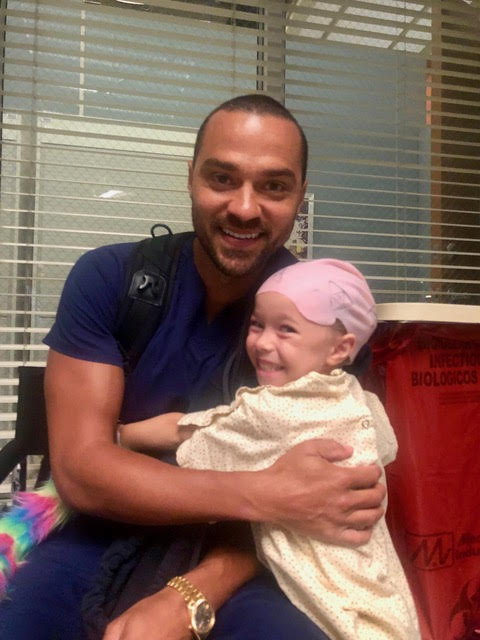
Jophielle and Jesse Williams
On Grey’s Anatomy, I fell in love with Jesse Williams…who wouldn’t!
The actors who play your parents have all been on soap operas for a very long time. What type of advice did they offer you?
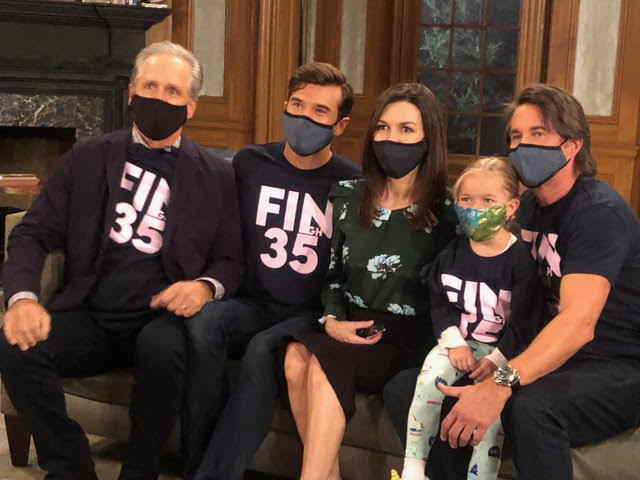
Finola Hughes is a great stepmom. I like her. We celebrated her 35 years on the show! Can you believe that? All of them spoil me way too much. It does feel like a real family there. It is also the perfect way to start your acting career when you are a five year old little girl: short days on set, the studios are near me, the scenes are short and easy and the genre is not one that will traumatize me. We rarely do more than three takes when we shoot (most of the time it is just one, so you have to nail it right away), and when I work a lot, it is no more than two or three days a week, but not every week. So it is perfect to learn the ropes of being an actress.
Finola Hughes’ 35th year
Your real life parents, Karine Mauffrey who is a stunt woman, and Jade Kindar-Martin, a high-wire walker, travel with you between America and France. Being that you were born in France, are you an American citizen?
My parents met 20 years ago while working with Cirque du Soleil. They got married in France on a high-wire!
Jophielle’s parents
Dad is American and mom is French. It’s only when they had my older brother Raphael that they decided to move to the South of France where they bought a 400 year old stone farmhouse. They turned it into an art retreat named Mas Pinet. They wanted to have their kids grow up in a more grounded environment, and be close to nature. They had three kids and a great time hosting people in yurts, tipis (teepees) and gypsy caravans. We had fun adventures all over the world too during that time while following my dad to his big high-wire shows. My mom would fly back and forth to Los Angeles for stunt work when she was capable of working between babies. Life was good. We have been raised to live life with passion and to not be afraid to go into the unknown. Sometimes others would say that we live a bit “dangerously” but we call it living the “High-Life”. We perform in front of people with my parents, doing circus tricks or stunts here and there. I have a fun hand balancing act with my dad. All three of us kids have hand balanced since we were babies.
When my older brother turned nine years old, he asked to get into acting, and so just like that, when I was two years old, my parents took us to Vermont where my grandparents are and bought an old bus converted into a house, and we drove it cross country for a year, all the way to Los Angeles, where we settled down to get back to “work”. Never a dull moment. So we all got into acting, modeling, stunts… whatever fun we could find, and haven’t stopped since! We just make sure we get back to Mas Pinet every year for a few months to get back to nature, get grounded again and recharge our batteries! There we take care of our animals, sheep, bees, cats, dog, chickens … we paint, do circus, walk on the high-wire, enjoy nature, hike, build forts … We are outside pretty much all day long. It’s a completely different life.
And yes, we all have dual citizenship.
Behind the scenes on GH
You have two older brothers, Raphael Luce and Gabriel Sky, who are also actors. What’s it like being in a family where everyone is in the entertainment field?
Now that we all work in the business, we give it all we have. The hard part is not so much the work, but the logistics. We juggle jobs between Los Angeles, New Orleans and Atlanta mostly.
When we are in New Orleans, we live on a boat.
In L.A, we have our cozy bus “Cozy Rosie”. We like fun tiny houses type of living! When my parents both work away from us, either as circus or as stunt performers, we call my Nana to take care of us.
We always find a way to get by. We make it work, one day at a time! We have a lot of auditions on tape and outside activities. It’s not easy keeping up with the schedule and the technicality of our every day.
At least now with Covid, the auditions are on tape and we kind of like that! We do have less activities though, and we miss some of them a lot, like dance or gymnastics. We manage to Zoom some of them like music, singing. You just have to make the most of it.
With Kathleen and Brian Deter, managers at KD Talent
You’re with Paradigm Talent Agency and your manager, KD Talent. How did you meet your agent and manager? What do they do for you?
Our managers are Kathleen and Brian at KD Talent. Our friend and professional photographer Jeff Xander introduced us to our manager. He thought we would make a good team and he was right!
We did not have a manager before but my mom had a hard time keeping up with all she needed to do to advance our careers.
She thought that what we needed at this point, was not to save money but to invest it all in activities that would further our experience, and a manager that would guide us towards the right places.
So we jumped in and have been very happy with them.
We have a good relationship with them, but most importantly we can feel that they are excited to work with us and that’s what you want from your manager.
KD introduced us to Paradigm. It has been quite an important change for me, and a bit emotional, as I had to leave my former agency which wasn’t as easy as I had thought.
There is a whole complicated side in this business that is not fun to deal with and that you should just leave up to your manager… so that you just focus on your acting.
My relationship with Paradigm still feels pretty new as it started just before Covid. We still have to prove to each other that we are a good match. I am excited and ready for this adventure. I know we are going to accomplish great things together.
Photo by Jeff Xander
You’ve also done commercial work. Are you a part of SAG-AFTRA?
I remember joining SAG-AFTRA right before I started working at General Hospital. You get to work on three gigs that are UNION before you have to join… it gives you a little time to figure out if you really want to invest in this career.
My first SAG-AFTRA job was a big commercial for Citibank that we had booked as a family. Such a fun one. You may remember it because it aired nationally for over a year!
My brother and I had to hang on my dad’s legs, laughing, while he would walk around the house pretending to be a dinosaur! A whole day of that! My dad could barely walk or talk the next day!
We will never forget that one. We ended up on the front page of the New York Times. My dad thought that was very cool!
Let’s talk about school. What grade are you in? Do you homeschool, go to public / private school? Because of Covid-19, are you learning virtually or doing hybrid learning? Have you ever done school on set? What’s that like?
Since we travel so much, it is honestly impossible to be in one school, so homeschooling is what it has to be. It’s not always easy for my parents because there are three of us and sometimes, when we come across a fun school we can join for a little while and learn something new, we do, and we love it. We have been in a Waldorf School in Vermont for a few months, and that was great, connected to nature and people. My brothers went to a Catholic school with our cousins in Atlanta for a few months and that was very different, and also very cool! And when we were home in France, this year, I got to join our small village school with 15 other kids, and learn to speak some French! My brothers are bilingual but it’s been a little harder for me since I have been in America most of my life. My school hasn’t been too hard so far since I am just in elementary school.
In L.A we follow a program on our iPad, and take some classes on Zoom, and pack the rest of our time with artistic activities that will help us be better actors all around.
My parents also want to make sure we keep connected to the world around us in a helpful way, so we become good people in the future, so the three of us now have an Instagram page together called Follow the Halos, on which we will work on projects that will bring people together to make the world a better place by 2030. We are following the 17 Global Goals that the United Nations has set to guide everyone that wants to participate in the effort. Please follow us there. We hope ro be more active on it soon.
How do you receive your scripts for GH? Do you have any tricks for memorizing your lines?
I receive the script about a week before I shoot, and run my lines with my parents. I just have to memorize them because I don’t read very well yet.
Then, when I get to set, I usually run them again with Michael when there are a lot of them. It is usually pretty easy compared to what the grown ups have to remember!
I am always so impressed with how much they have to remember. I don’t know when I’ll be able to remember as much as they do.
Do you have your own dressing room or trailer?
I don’t have my own dressing room because I am not there very often yet, so I get to enjoy everyone’s dressing room, which is kind of fun because I get to know them better through their dressing room. Sometimes I leave them little hints that I have been through!
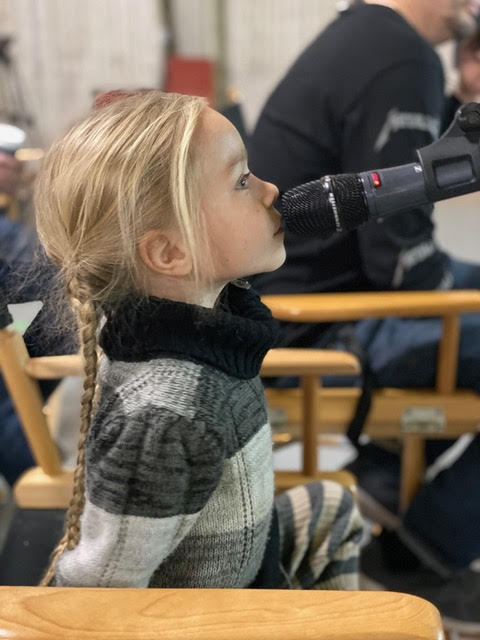
My favorite thing to do when I get to work is to say hi in the microphone that everyone can hear in the dressing rooms, make-up and offices.
It’s my little signature. I always say something different, It makes people smile and makes me laugh.
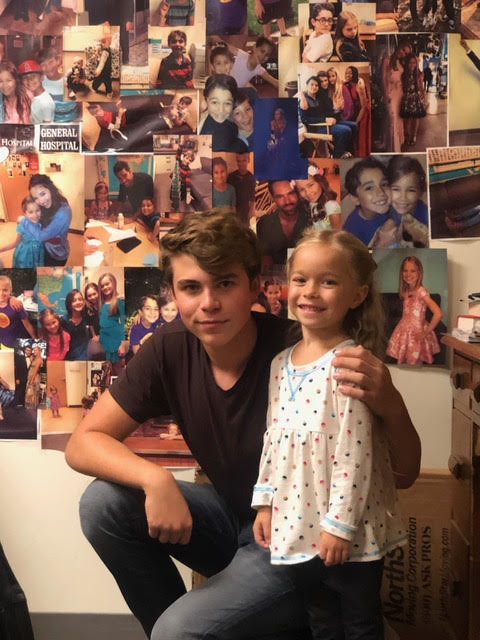
The rest of the time I spend in the classroom there with my teacher. We play games and decorate the wall that has pictures of all the kids that passed through the show.
My brother Gabriel Sky is even on there since he worked with me on a big Christmas episode.
You have several social media accounts. Who manages them for you?
My mom manages the whole family as far as social media goes. She keeps us informed of what goes on there. She makes sure we get the important messages people send us, and she organizes our projects for us. It’s like we have our own little production. It’s fun for us and it keeps us on our toes, but it’s a lot of work for her.
She doesn’t mind though because she likes writing… a lot, almost as much as she likes taking pictures and editing videos.
While we were in France for seven months during the Covid lockdown, we made some fun little videos and IGTV about our life at Mas Pinet, taking care of the animals, playing on the land, cooking, making songs or even playing poker!!! LOL. It was great and it kept us working on our acting. You can check them out on our Instagram pages. I actually miss doing those, so we will try to get back to it.
Behind the Scenes on GH
What advice do you have for young actors?
Have fun with the process… with the learning phase… the actual job is the cherry on top of the cake, but the fun has to be the journey first!
Don’t be too hard on yourself. Treat each audition as if it’s your job. Do the best you can, and then, consider it over! You will do hundreds of taped auditions before you get a job sometimes, so you can’t worry about the result, or the phone ringing, or you will spend too much time waiting by the phone rather than spending it learning new things. Plus you will be endlessly disappointed and wondering why you didn’t get the job. When you are a kid, your job is to learn, learn, learn AND have fun!
Actor Kevin Mambo, who can currently be seen on the Netflixdrama, Hit & Runand upcoming film Rustin, started from scratch…twice.
As much as it pains me to say this, back in the day, when an actor started their career on a soap opera, it was considered the low end of the totem pole. Actors would hope to land a primetime show or movie while learning their acting chops on the soaps.
For Kevin Mambo, this was exactly the case. Even as a Daytime Emmy Award winner for Younger Actor on the soap Guiding Light, he had to struggle to prove his worth as an actor.
Now, an accomplished Broadway, TV and film actor, Kevin Mambo shares his story to help other actors press on to continue doing what they love doing.
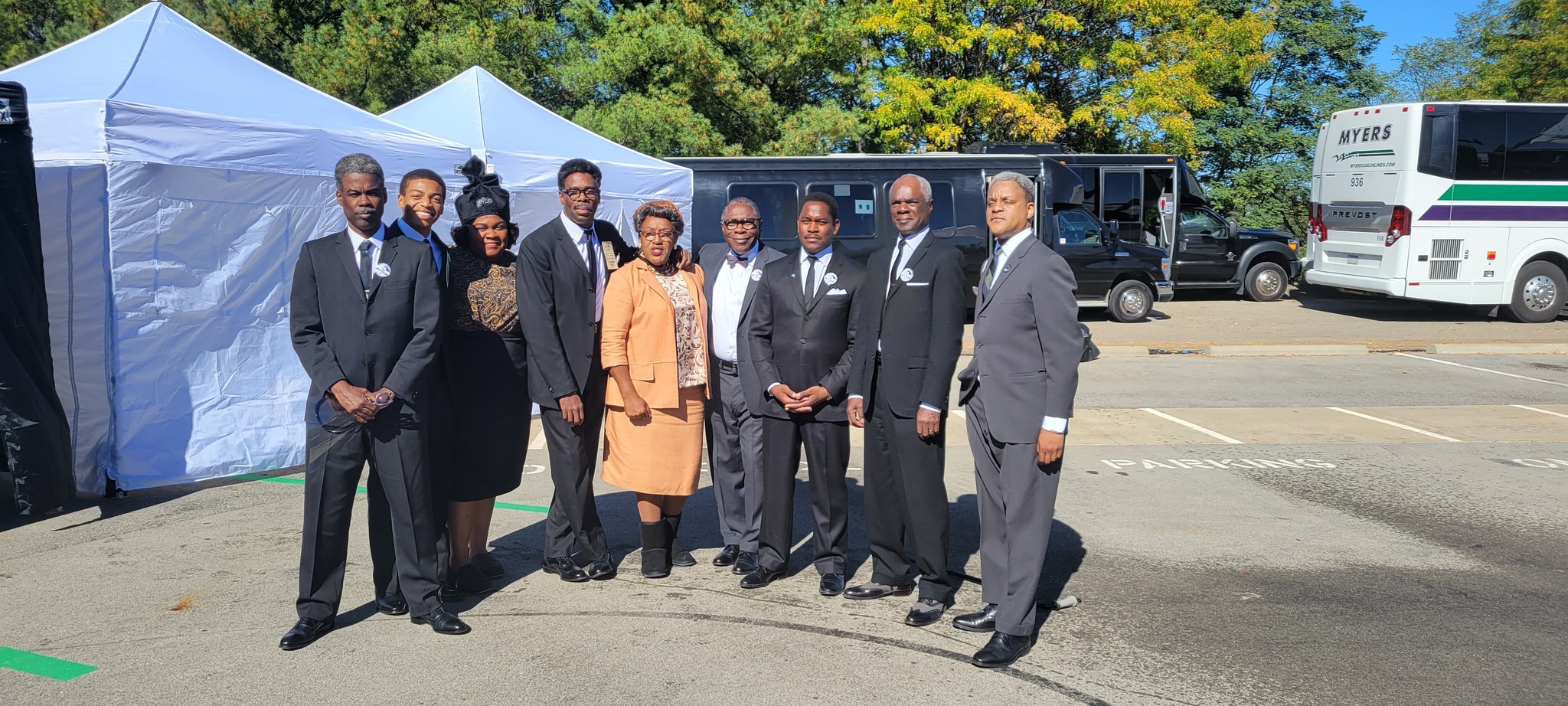
The cast of Rustin
Psst… watch for Kevin Mambo in the new film Rustin whichtells the story of Bayard Rustin, the late civil rights activist who helped organize the 1963 March on Washington for Jobs and Freedom, where Dr. Martin Luther King made his famous “I Have a Dream” speech.
You’re in the Netflix drama, Hit & Run playing an NYPD detective named Newkirk who has a wry sense of humor and who has seen it all. Tell us about your audition.
The audition came through my representation. I met with the casting director, producers, writers, and even the star of the show. It was great to audition. It was also nice to be able to relax, talk, and add what I thought was important about my life (both of my parents being in medicine, my father being a coroner) that could add yet another texture to an already layered show. The auditions were in person, which I prefer — I also book work self-taping as well. I got some sides — I really encourage actors to try to yield as much you can with how little you are given. With intellectual property being the name of the game and NDAs being flung left and right, it becomes difficult to decode what is being asked of you and what you can glean, therefore you need to add your own energy. I try to be as close to off-book as I can be, but focusing on only that takes away from the task at hand: letting people get to know you, not see if you can memorize a laundry list. I never do chemistry tests — maybe I’m missing something? [laughs]
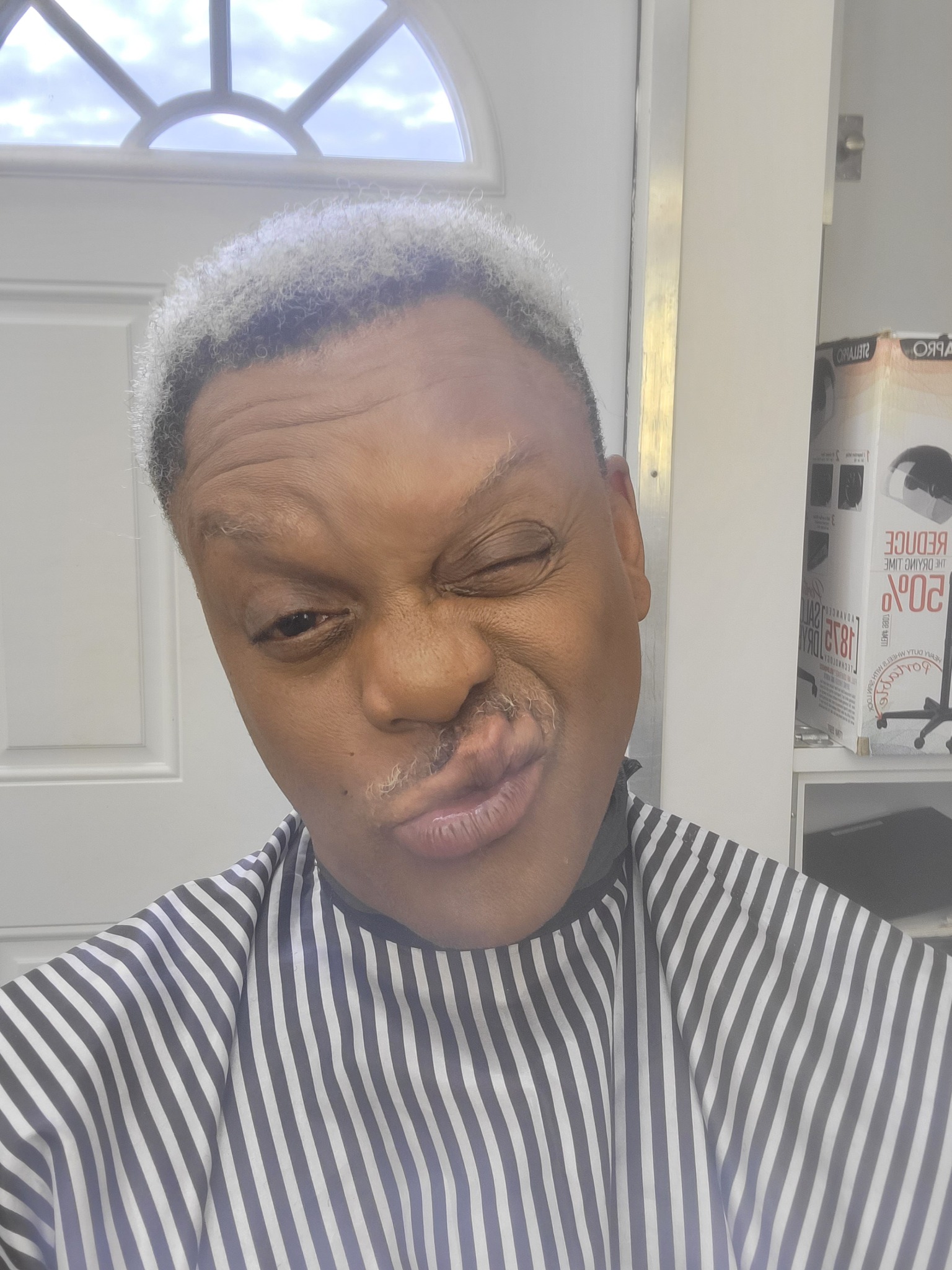
Kevin Mambo gives us a silly selfie for NYCastings
Did you have to go through any training to portray a Detective? What other training in general have you had to enhance your acting career?
Yes, I did a little work. A lot of documentary research: how to enter a crime scene, interview techniques, apprehending suspects, etc. I even took the time to go on a ride along. That part had to be natural because the main thrust of Newkirk’s personality is solving puzzles — this one stumps him. That provides fuel. I found out the hard way that getting your own badge and pistol is cool, but standing under a bridge near the water from midnight until dawn in the cold is just not so glamorous. Even working on my BFA, I knew that each job would require its own methodology, something unique to me. I haven’t had time to be back in training, so I watch and watch and watch everything I can get my hands on. The good AND the bad. They both hold important lessons.
You’ve been on network television as well as streaming. What differences are there regarding filming network vs. streaming?
I really try to see each thing as its own thing. Maybe if I were on a series for ten years, my perspective would be different. Be it a reading, a play, a musical, a guest or lead role, finding your center and place of relaxation is crucial. With onscreen there are more technical or organization issues as shooting is always out of order. I get fed well and try not to pig out or you get sluggish after lunch and are there all night!
Let’s talk about soap operas! You portrayed Marcus Williams on Guiding Light, for which you received two Daytime Emmy Awards, and you were also on One Life to Live as Dr. Jordan Kingsley. A lot of actors see soap operas as a stepping stone to films and higher end productions. What are your thoughts on this way of thinking? Was this true for you?
Everyone will have a different experience. I came on, managed to find a groove right away, and used the time to learn the craft: I got the job before grad school, so off to NYC. At the time, it was a double-edged sword: win Emmys, but now you’re not an “actor”? I had to start over, on the boards, off Broadway in NYC. I’m glad that that sort of silly backlash is over, but being a Black kid in my mid-20s coming off of that experience, there was not a home to go to after that. Things have changed for the better. It was a tough time for a lot of people. I knew that I had a strong foundation and would be fine, but when people make up their minds… it takes time to change it.
You played Mafala Hatimbi, the Ugandan village chief, in The Book of Mormon national tour. Share your experience about being on tour. What’s it like being on tour away from family and friends?
Touring is not for the faint of heart. That said, I want to shout out our tour swings — what hard and uncelebrated work! I like to be home, but being in Los Angeles for three months, San Francisco for a month, and a month-long launch in Denver was very welcome. See the cities, see friends, and I even managed to book a film and a guest TV spot to shoot around work. The week-long stays, especially in winter, are just too brutal. We were in Denver, L.A., San Francisco, Portland, Seattle, Rochester, Buffalo, Des Moines, Minneapolis, Detroit, Boston, St. Louis, Toronto. . . makes the head spin. Some places are nice, some not so nice. With a show like Mormon, it becomes clear where you are: when the Ugandans are onstage you are either laughing with us, or at us. Pretty genius litmus.
Today there are so many factors that go into being an actor. Sometimes being talented isn’t #1 on the list. Instead, having lots of social media followers plays a huge part in some casting decisions. How do you feel about this?
I do love technology and have since I was young. I’m not sure why I need to be an influencer with a new nail polish line to book a movie. Concentrate on your work and hire someone to do that stuff. It’s more time-consuming than one would like to admit. And my Instagram account doesn’t learn my blocking or come with me to tech [rehearsals]. Smoke and mirrors can work for a bit, but without working on the goods.
You were in a church choir as a child and, as a young man, started playing piano, saxophone and guitar. How did you get interested in music?
Music was always in our house. I was drawn in around age seven and I’m still here. My music process is what helped be develop a small tool box when I first started acting as a teen.
What kind of student were you in school?
I was always different, so school was a place to explore who I was going to be. I had strict immigrant parents, so I was a good student with good grades: I love to learn, and I finally started to feel free when I learned how to teach myself. No dependency on anyone else, and only my imagination was my limitation. We all get in trouble, but — in my defense — when I was skipping class, I was going to classes at other schools! [laughs] Wow, that’s a little geeky!
You were born in Harare, Zimbabwe and raised in Saskatoon, Saskatchewan, Canada. Tell us the history of your family name and why your family moved to Canada. How did you end up in New York?
My name means King. My parents left Apartheid in Zimbabwe to reach full potential for themselves and their kids. I try to keep that baton in the air. I got to New York just after graduation and my heart has never left — for better or for worse.
Kevin Mambo Closing Night of Broadway’s Fela
What advice do you have for people who want to have a career in show business?
You have to be yourself. Silence the doubters, you have enough doubt. Chase happiness, but chase foundation to empower yourself. If you are your hardest critic, proceed. Fall down — a lot. Just learn what happened so getting back up becomes easier and easier. Without learning and dreaming, we are alive, but no longer living. Be gentle with yourself, you’re the only you’ve got. XO
Kevin Mambo with Dir. George Wolfe – RustinKevin Mambo with Carra Patterson – RustinKevin Mambo with Colman Domingo – RustinKevin Mambo with CCH Pounder – Rustin
If you like action and fight sequences, chances are you’ve seen stuntman Matt “Matty” Berberi’s work. Let’s see… The Matrix Resurrections, Westworld, Star Trek: Picard, Space Jam: A New Legacy, just to name a few.
Planning, coordinating and rehearsing are just some of the steps I thought of, but Matty really drills down to the very core of what goes into a scene that requires stunts.
As part of the fight team on The Matrix Resurrections (aka The Matrix 4), Matt Berberi helped train the cast. Click HERE to see Matty in action behind the scenes withactress Ellen Hollman rehearsing a fight scene.
So actors, here’s what you’re in store for if you get a job requiring stunts!
Matt Berberi – Working out camera angles
You’ve been designing fights and action sequences for well over a decade. How did you get started in the stunt business?
I started training Chinese Kung Fu and Wushu when I was a kid. As I got more into it, I started watching a lot of Hong Kong action films. Jackie Chan, Jet Li, anything and everything… I used to go to Chinatown on the weekends and buy videos of whatever new Hong Kong action film had come out recently. I always thought I was going to be a martial arts instructor when I got older, but when I learned that being a stuntman was an actual job I pretty much set my mind on that. The irony is that now, as a fight coordinator, one of the largest parts of my job is teaching martial arts.
After high school I moved down to LA to pursue stunt work. My first major stunt job was actually on a film in Vietnam, called The Rebel. I was training at a Wushu school in Orange County at the time and a senior classmate of mine, Johnny Nguyen, was an actor in Vietnam. He and his brother had written a screenplay that he would star in and his brother, Charlie, would direct.
I was going to Vietnam that winter to compete in the Wushu World Games and one day after training Johnny asked me if I wanted to stick around after the competition was finished and work as a stunt man on his film. I spent the next three and a half months in Vietnam and we shot all around the country. Johnny and the Vietnamese stunt team gave me a crash course in stunts and fighting on camera. It was such an incredible experience that I’ll always cherish.
What’s the difference between a “Stunt Coordinator”, “Fight Coordinator” and a “Fight Choreographer”?
A stunt coordinator is the head of the stunt department on a film and is responsible for overseeing and setting up all the stunts. That encompasses everything, including but not limited to fight scenes.
Fight coordinators are little more of a specialized position. We get hired to focus on the fight sequences in particular. Not all films have a fight coordinator but you tend to see it on a lot of fight heavy movies. It’s the fight coordinator’s job to take the sequence that’s written on the page and help to deliver it as a final product. You start out with choreographing a sequence with your team and usually then shoot a previz (the process in pre-production of visually mapping out scenes in a movie)for the director and higher ups to sign off on. At the same time we are bringing cast in to train basic movement and choreography.
Later, once sequences are signed off on, we teach them the specific choreography that pertains to that sequence. On set I’m usually behind monitors paying attention to the performance. That entails giving notes, answering questions, and helping to fix any issues that arise while shooting.
A fight choreographer is a little more of an ambiguous job. Sometimes the fight coordinator is the choreographer, sometimes you have one or more choreographers on a larger project. A lot of times your fight choreographers might also be the stunt doubles or your core stunt team, especially on a fight-heavy film. At the end of the day it’s a very collaborative process. So while you may have one specific person that is in charge of choreographing something, everyone will weigh in and have thoughts and ideas that may help elevate the fight scene.
You worked on The Matrix Resurrections. Give us a blow by blow of what your job was on a daily basis. Also, share a story!
I was part of the fight team on The Matrix Resurrections. I think there were about 8 or 10 of us on the fight team under our stunt / fight coordinator. Our usual day of work consisted of helping to create, rehearse, or revise sequences and previz-ing them, and training cast. Each day we’d have around five or more cast members come in and we would help run them through drills and choreography that our fight coordinator had planned out.
Gosh, there’s so many crazy stories from that film but I think the thing I remember the most was when we were working nights on a rooftop in San Francisco. There was a scene where there were two helicopters flying around and they were supposed to shoot guns at one of the characters. The pilots were flying the helicopters in between skyscrapers in the middle of San Francisco in the financial district and hovering right at our eye level. They must have been less than 20 feet from the buildings. There was all this noise from the helicopters and gunfire and a whole fight scene going on closer to camera and I just remember thinking, “Holy crap, we’re filming The Matrix”. It was a surreal moment.
On set with action directors Bob Brown and Peng Zhang
How do you come up with different fight sequences for different films without repeating the same moves?
It does get hard not to repeat the same moves in sequences and it’s something that probably everyone that choreographs fights struggles with. When I choreograph a sequence, my primary focus is on character and story. I start with creating a style of movement for the character. Usually the director will have a vision, and the actor will bring a lot of insight into the character as well. I like to listen to everyone’s input and absorb it, and then formulate a style off that, and let the actor or performers have fun with it.
On top of that, I try to watch where trends are going and stay ahead of the curve. You have to constantly train new styles of martial arts and always seek out new and unusual things to keep expanding your lexicon of movement.
How does a production determine if they want a stunt double or if the actor themselves will do the stunts? Is there a rating scale of not-difficult to extremely-difficult that they use? Do you have meetings (that are NOT on set) to review stunts?
There are a lot of discussions with insurance and studio safety that happen before we shoot a sequence to determine what is safe for an actor and what would require a double. There is a ton of planning that goes into stunt and fight sequences.
If it’s scripted as a stunt we will always bring in a stunt double. Sometimes they’ll just test and line things up for the actor before we shoot, but we always have them there. I try to use the cast as much as safely possible when we film a fight scene. The more prep time you have with cast the more comfortable they’ll be performing a big fight sequence themselves. I use my prep period before a sequence to not only train the cast, but also get to know them both in personality and physical abilities. That helps me gauge if or when we might need a double. Some actors are more comfortable or experienced with action, or we have them for months of prep so we can get them really dialed in. Others might have some limitations or reservations about doing certain things or movements.
There’s several scenarios where we may use a double. The main one is if there is a safety issue. Sometimes there’s a hard hit like crashing through a window, or something that is very specialized like a big wire move or a high fall that we’d have to use a stunt double for. Sometimes there’s just a physical limitation or a reservation an actor might have and so that would be another instance we may need to use the double for. But usually these things are brought up and planned out before we get to filming a sequence, so that everyone is on the same page.
For the additional photography for Infinite there was an added scene at the end of the film where we discover a young boy is the reincarnation of the main character, Treadway. SAG-AFTRA has very specific rules about how long you can work actors under the age of 18, and on the shoot day we were quickly running out of time. So we had to economize the shot-list to get all of the coverage of the fight using our actor, Gilbert Aguirre, who was a teenager, and then later on that day we picked up some wide or top shots with a stunt double. If we had more time we could have used Gilbert for the entire fight, but we didn’t so we had to come up with a new plan.
Do you, the production or any company you work for, have to have a special type of insurance in order for you to work on the show?
The production and cast all are insured under the production’s insurance policy. Part of the job of a stunt coordinator and a fight coordinator is making everything safe so that there is minimal risk filming these action sequences while still making them exciting and appearing out of control on screen. Like I mentioned earlier, there are a lot of discussions with insurance and safety about how you plan to set up a stunt or a fight sequence and make it safe before it’s signed off on and filmed.
Was there anything in your childhood that reflected that you would go into the entertainment / stunt field as an adult? What did your family say to you when you told them you were going into the stunts business?
I was a really active kid growing up and played a lot of sports. Soccer, swim team, ice hockey, football. Once I got into martial arts though it really took over and became my main focus. Chinese Wushu is a performance based martial art. You do a routine and are judged and given a score based on your performance. I think that lent itself very well to me transitioning into stunts and wanting to perform on camera.
Neither of my parents were in the business and I think they were very surprised and a bit concerned when I told them what I wanted to do. I think it came from a place of protection. They wanted me to go in a field of work they could give me advice on and they had no understanding of the film business. But they supported my decision and always told me as long as I was happy with what I was doing that their support would continue.
Were there any times on the job as a stunt / fight worker that you anticipated problems and if yes, what were they and how did you prevent them?
As a fight coordinator, every single day on set is a day that you have to anticipate and solve problems. There’s so much pressure to get the shots the director needs and make their day, and even the most well oiled machine breaks down when it gets a wrench in the gears. Most days, my drive to work is spent thinking about what can go wrong and what my backup plan is for that day. And sometimes you get hit with a tropical storm and half the cast gets food poisoning and B Camera falls in the pool. On those days you just have to laugh, take a deep breath, and come up with a plan C, quick.
Matt Berberi
What makes you unique?
Hmm, something unique about me? People are usually pretty surprised to hear that I went to college in Japan and speak near-fluent Japanese. But I guess that’s a whole other interview isn’t it?
Anything else you want to say?
I just wrapped up fight coordinating Season 4 of HBO’s Westworld right before the winter hiatus, so I’ve just been enjoying the down time from that. I’ve been using it to prep a short film that I’m directing at the end of January. It’s a heartfelt dramatic piece so I’m really excited to try something new and different!
It’s tragic. The pain and longing a viewer goes through hoping almost-relationship characters get together can be unbearable. Yet it makes a great, timeless story.
For example, Casablanca’sRick and Ilsa. Their deep love for each other is insufferable. Rick (Humphrey Bogart) is really never able to move on and Ilsa (Ingrid Bergman), who is married to Victor (Paul Henreid), realizes she will never have a love as great as she had with Rick.
Portraying an almost-couple is no easy feat. There are several factors that actors need to be aware of and control.
Here are three tips you should conquer in order to play an almost-relationship:
The Vampire Diaries
FEELINGS vs. LOYALTY
The Tip: Learn how to distinctly divide emotion from devotion.
Sometimes it’s hard to distinguish the difference between feelings vs. loyalty. Why should you? The answer seems simple – because not distinguishing the difference between feelings and loyalty will literally rip you (and the others involved!) in two. But that kind of is the point, isn’t it?
However, the answer isn’tsimple. As an actor in an almost-relationship, you need to be able to portray emotions / feelings and loyalty as separate entities. By having an awareness and being able to separate feelings from loyalty, you create a “pull” that just sucks the audience in… and they won’t be able to escape.
Example: In The Vampire Diaries, Elena unknowingly teases vampire brothers Damon and Stefan with different parts of herself. She has strong feelings for Damon, yet feels a sense of loyalty to Stefan. By Elena being pulled in two different directions, it makes it super hard for her to choose who she wants to be with. It also drives the brothers, and the audience, crazy!
Legend of the Seeker
FRUSTRATION AT AN OBJECT BLOCKING THE RELATIONSHIP
The Tip: Learn how to portray frustration.
Another reason an almost-relationship sizzles is when two or more characters are destined to be together but something blocks it from happening. Sometimes even forever. It’s not enough to be frustrated for a small time being, but to find out your character will never, ever be with that person would pretty much send anyone to an early grave.
Example: Legend of the Seeker character Kahlan Amnell is a Mother Confessor, meaning she has a speial power to put people under her control. Because of this power, she could never be with someone she loves since their fate would be sealed by her touch. When Kahlan sets off on a quest to defeat evil with a young man named Richard, they are drawn together in such a way that leaves the audience wanting more of something that they know they could never have.
In the Legend of the Seeker case, the object blocking the full relationship is Kahlan’s power.
The X-Files
TENSION:
The Tip: Become an expert in showing tension.
Tension is a common theme in almost-relationships, yet it still makes the audience yearn for more. With tension comes stress, emotional or mental strain, imbalance… you get the drift.
Example: The X-Files. Fox Mulder and his FBI partner, Dana Scully have spent countless television seasons in dingy motel rooms while working on cases. As a result, they grow closer as colleagues but also as an almost-couple. It becomes clear that they both love each other. As time goes by, the audience can feel the sexual tension building up, episode after episode. But as platonic co-workers, each with their own insecurities, deep down they know they could never be a couple (until Season 7).
The tension in The X-Files is romantic, sexual and everything in between.
Once you’ve mastered the above tips, you’re sure to sweep the audience off their feet!
Readers – did Casablanca’s Ilsa love Rick or Victor more? What are your thoughts about the almost-relationships in The Vampire Diaries, Legend of the Seeker and The X-Files?
Let’s review a typical day in the life of an actor…
I’m going to make and eat my own healthy breakfast, workout, take a shower, feed the dog, mow the lawn and then I’m going to climb the Empire State Building while memorizing the lines for my audition tomorrow. And then I’m going to…<screen slowly fades to black>
I agree, that sounds a bit much. But when you’re competing against hundreds, if not thousands of other actors for the same role, you can’t whine about how much work you have to do to win the role.
Here Are 5 Ways to Overcome Laziness
Seriously? Do you know anyone who smiles when doing the dishes?
1. It has to get done anyway, so might as well do it now.
Look, there are some things that just have to be done, right? Like the dishes. Since you know it has to be done, just get it done. By finishing mundane tasks, it frees up your mind and time to do more meaningful projects without the burden of knowing you still have to “clean the dishes”.
*Pro-tip: Listen to podcasts, an educational class or music while you’re doing the mundane tasks. The Monster Boomerang Neckband Bluetooth Speakersits comfortably around your neck and has an adjustable volume control. It’s also stereo! First song I tested on it was Michael Jackson’s Billie Jean.
2. Wake up a tad earlier to check emails and read the news, or watch a few minutes of that show everyone is talking about.
You’ll breathe a sigh of relief when your alarm clock goes off and you’ve already completed a bunch of items on your daily list. Because, you know, if you wait to do them after your alarm sounds, everything else will get in the way.
*Pro-tip: It’s wonderful having some peace and quiet, even if it’s just for the 10 minutes until your snooze alarm reminds you to start your day. I found my waking up “a tad earlier” has turned into 30 minutes earlier. It’s amazing how much one can do in 30 minutes when no one knows you’re awake!
3. Take a small break, but only if you want to.
Working, working, working is not a healthy mindset, unless you love to work. Granted, there are some people, like Gary Vaynerchuk, who only rest when they are working.
Don’t let taking a break consume you. It literally is a “break”, not a three hour sleepy nap time.
*Pro-tip: Working on your craft until your mind explodes may not be suitable for everyone. Please be sure to get the proper rest that your body requires. There are charts out therethat can give you a recommendation on how many hours of sleep you should have.
4. Asking for help is motivational.
You may need assistance with some things on your to-do list. Example: You want to run lines with a fellow actor to get a different perspective on how you should portray the character.
Having someone else help you actually motivates you. You run off of each other’s energy.
*Pro-tip: A partner will hold you accountable. Sometimes you need that nudge, or in my case, a drill sergeant, to keep you up to speed. Think of Goldie Hawn in the 1980 movie Private Benjamin. Goldie’s character, Judy Benjamin, is the perfect example of a lazy, whiny person.
5. Don’t get distracted…too much.
Ha! Want me to tell you how many times I got distracted writing this article? The full jar of M&M’s I bought from Costco has gone down significantly.
But I would have been more distracted if I had my video game console within plain sight. Or the new book I want to read that was finally released.
*Pro-tip: Distractions, unfortunately, are inevitable, but you can limit them. If there are others in your household, let them know that at a specific time, you cannot be interrupted (unless it’s a “real” emergency). Put your phone on the charger so it’s not near you. Set aside a goal for yourself regarding time. It should be reasonable. Don’t expect to build an empire in a 60 minute timeframe.
BONUS TIP:
Create new habits.
o0o0. This is a tough one because it’s so hard to change. Yet no one says you have to change… it may be as simple as creating new habits.
Identifying current lazy habits is the first thing to work on. Whether it’s checking social media, streaming shows non-stop, or over studying, it’s time to put lazy habits on the shelf and let them collect dust.
Next, breaking bad habits is super hard to do. You really need will power. Think about how incredible it would be if you were the actor chosen to be Spider-man or Captain Marvel. Do you think you could be a superhero if you’re lazy? I’m defining “lazy” as a bad habit.
Lastly, create new, positive habits. Review your goals on a daily basis. Exercise to get your heart pumping. Think about the short-term and long-term effects that positive habits will produce.
Once you put aside your lazy, whiny self, you’ll see that you’re getting more goals accomplished. You’ll feel fresh and invigorating. You’ll be ready to go out there and grab the roles that belong to you!
What tips and tricks are you interested in learning about? Tell us at @DirectSubmitNYCastings!
Covid-19 has once again taken over Broadway, in such a big way, you’d think Covid would get its own Equity card.
With Jagged Little Pill, Thoughts of a Colored Man and Waitress shutting down for good, and an unprecedented number of shows canceled due to the Coronavirus, what’s an actor to do when the show abruptly ends?
Here are three tips to keep your acting chops sharp and your boredom at bay in between jobs:
NEVER STOP TRAINING
Working 12-16 hours a day can take a toll on you. That doesn’t mean that just because you suddenly have off from work that you can take a million year break. While you may not have to get up at the crack of dawn, or go to bed at the crack of dawn, you still need to train.
Staying on top of your game is how you will benefit when it’s time for your next round of auditions.
You’ve heard the phrase “use it or lose it”…
Work on monologues. DirectSubmit from NYCastings has adatabase of monologuesto choose from. Fit for all ages, now’s your time to take advantage of these FREE single character speeches!
BE A GUEST ON A PODCAST or START YOUR OWN PODCAST
Now is your opportunity to be in the spotlight and bring attention to yourself and any causes or words of wisdom you may want to share with the world.
You need to be proactive and put yourself out there. Look for a video or audio podcast run by someone who is known for interviewing people in show business.
The hosts aren’t going to come to you… you need to go after them.
Be a Guest on a Podcast
To give you a start, below are a few podcasts to set your sights on. Listen to them while you workout, clean, are in the subway or car. Learn from them, and then contact the hosts to see if you can be a guest. You may not get a “yes”, so think of it as an audition!
If you’re brave enough to start your own podcast, head over to the Smart Passive Income Podcast by Pat Flynn, who claims to be the #1 Back to the Future Fan, to learn about equipment, lighting and business in general. There’s enough information to make your head spin double the amount of times that Linda Blair’s head spins!
WRITE YOUR OWN SCRIPT
You’ve been playing characters that everyone else has written. How about playing your own character? No one can write a better character for you than yourself. It’s about knowing who you are inside and out; how you’ll react to certain situations; how you’ll behave during happy and dark times.
Wikipedia says that Shonda Lynn Rhimes is an American television producer, screenwriter, and author. She is best known as the showrunner—creator, head writer, and executive producer—of the television medical drama Grey’s Anatomy, its spin-off Private Practice, and the political thriller series Scandal.
There are bunches of other online resources to learn how to write a script. You can Google a simple search and wah-la!
The above three tips on what to do when the show ends should keep you very busy until you land your next job.
Morgan Dudley as Frankie and Adi Roy as Phoenix in Jagged Little Pill. Photo by Matthew Murphy.
Broadway’s Jagged Little Pill Actress Morgan Dudley plays the rebellious, bisexual teenage lead, Frankie Healy, who is determined to find her own voice in suburban Connecticut.
It took a lot of determination and courage to take over the role, which was originated by Celia Rose Gooding. When Broadway returned after the pandemic shutdown, Morgan was full steam ahead, ready to show the world her take on the character.
Being fearless is why Morgan Lynee Dudley was able to undertake the role of Frankie, an angry, outspoken teenager with a do-or-die attitude.
Tell us about your audition for the role of Frankie Healy.
So I heard about the audition for Frankie through my manager and was immediately so excited and ready to send my tape in! They provided me with two scenes from the script as well the cuts of two songs from the show, and I also was asked to sing a song of my choice. The scenes that they gave me were pretty stark in mood, the first one being Frankie & Jo’s first and pretty lighthearted scene, and the second one being when Frankie decides that she’s running away from home. About a week or so after I sent in my tapes, I was called back on a Zoom meeting with the associate music director and some other members of the creative team where they gave me notes from my previous audition. After the Zoom callback, I got the email that I was invited to an in-person callback in New York where I’d ultimately book the role!
In the beginning when you joined Jagged Little Pill, you were playing opposite Heidi Blickenstaff, who plays your mother. Heidi took over for Tony nominee Elizabeth Stanley, who was on maternity leave. Now, Heidi and Elizabeth will be sharing the role throughout the winter. Is there a different feel when you play opposite two different actors for the same character?
First of all, the both of them are absolutely INCREDIBLE at what they do! I was so excited to see the differences in how they play MJ, and getting to perform alongside them has been both an honor and a really cool acting exercise. Tonally, they are very different, and it forces me to really be present in each scene in order for my reactions to make sense throughout the show!
Heidi Blickenstaff as Mary Jane and Morgan Dudley as Frankie in Jagged Little Pill. Photo by Matthew Murphy.
You portray a school aged teenager. At one point during the show, there’s a dinner scene and while it looks like you’re sitting on the chair, you’re actually crouched, with your feet on the chair. Was the way you sit something that you came up with or were you directed to sit that way?
Haha! So I decided to sit that way for both the character and also to prepare for the song “All I Really Want”, where in the beginning of the song, I stand up on the chair to get to the table. But it ABSOLUTELY felt like an instinct. I used to sit that way in high school, lol, it must be the angst.
Did you ever take dance and/or singing lessons? If yes, at what age did you start being coached? What type of dancing? Were you coached on how to sing on Broadway? Was the singing coach provided by the Jagged Little Pill production?
Prior to the show I had never taken dancing or singing lessons! I did however gain experience in both areas through school choir, school and community musicals, and I was privileged enough to gain more, specifically dance, experience when filming for The Prom movie! Upon beginning the rehearsal process, however, I was provided with the legendary Joan Lader’s vocal expertise in singing healthily and sustainably by the Jagged team and Bryan Perri. Those handful of lessons alone have really improved my vocal quality and technique.
Previous to Jagged Little Pill, you were a dancer in the film The Prom, directed by Ryan Murphy and starring Meryl Streep, James Corden, Nicole Kidman, Kerry Washington, Keegan Michael-Key and Andrew Rannells. What was it like working on set? How many days a week were rehearsals to learn the choreography? Did you have an opportunity to meet any of the stars, or were you told not to make eye contact?
Yes! Working on set for the Prom was SUCH a crazy experience. It’s been so long so I can’t remember the exact amount of rehearsals we had, but I do remember that each dance took about a day or so to learn, sometimes less sometimes more depending on the placement of dancers, cameras, etc. Once we learned the dances, we had about two to three months without any rehearsal before jumping right into filming, haha! I remember everyone gathering and making sure we all remembered the dances correctly. I did get to see all of the principles in person which was so cool, and they all had such great energy! I remember the highlight of my life happened when I got to talk to Kevin Chamberlain about musical theatre and his role in Jessie. Definitely a “what is my life” moment.
My kids recognize you from Nickelodeon’s hit series Henry Danger. What was your experience like working on that show?
I had a really fun time on Henry Danger! I had a quick little cameo as a renaissance princess, and from figuring out how we were going to costume it, to getting to say hello to everyone for my short time there, it was a lot of fun! It was a very warm environment with lots of candy, so I didn’t shy away from that.
Morgan Dudley in Jagged Little Pill. Photo by Matthew Murphy.
As a young Black person with a solid career, what advice do you have for Black youth looking for guidance?
It sounds very cheesy, but believe in yourself and surround yourself with people who believe in you and encourage you. Be confident in your artistry and live in your authenticity. Remember that you are special. All of the positive affirmations.
What future goals do you have in life and in your career?
I want to release my own music ultimately! Right now I have other goals that I want to achieve first, and I’m blessed with time and opportunity to reach those goals, but eventually I will become a recording artist.
What tips can you offer to people who want to start working in the show business field?
The biggest advice I would give is to put yourself out there, but to of course, be ready for the no’s. Be fearless. It’s a tough business because there’s just so much talent and artistry out there which is AMAZING, but like I previously stated, that’s why it is so so important to truly live in YOUR authenticity. Everyone of us is special because every one of us have unique experiences to shape us into the people we are and artists we are. Don’t be afraid to let that show.
You weren’t born yet when Alanis Morissette released her album Jagged Little Pill. Previous to you booking the Broadway show, did you ever hear of Alanis or listened to any of her music?
Of COURSE I knew of Jagged Little Pill! My mom was a huge fan of hers and actually used to sing songs from the album at a karaoke bar that she worked at while she was pregnant with me! It really came full circle.
Lauren Patten and Morgan Dudley. Photo by Matthew Murphy.
Anything else you want to say?
There are so many important topics addressed in the show that empathizes with a multitude of human experiences.
Actress Karen Obilom, who you’ll recognize from Games People Play and Doom Patrol, has a message for Black people who want to have a career in the entertainment field: Don’t give up!
While Hollywood is playing catch-up in the diversity game, people like Karen are standing strong and supporting the Black show business community.
You’re in New Line Cinema’s House Party reboot, produced by the SpringHill Company for HBO Max. The original film was the 1990 hit comedy which starred Christopher “Kid” Reid and Christopher “Play” Martin of the hip-hop group Kid’ n Play. You weren’t even born yet when the movie was released. Have you seen the film? Tell us about your audition.
You are correct! I wasn’t even a thought in my parents’ heads when this came out… (seeing as I was a mistake, haha. It’s okay; I’ve since healed from that revelation.) But my friends forced me to watch it because they’re absolute sticklers about watching every Black movie. Like, come on y’all, when was I supposed to watch the new Jack City?? When I was 11 months old?? Everyone relax. My audition process was pretty unique. I auditioned and did the call back before the pandemic, and I didn’t hear anything back. But then, a whole year later, my agents contacted me, saying I’m pinned for it! Then the director, Calmatic, got in contact with me, saying he really wanted me for the role; I just had to show everyone what I could do in the chemistry read that was coming up. So you already know, I did! And the rest is history.
BET – House Party (1990) – In 1990, this classic of Black cinema became one of the first hip hop buddy comedies and a seminal film for Generation X. The coming-of-age film, which debuted at the Sundance Film Festival, starred Kid ‘n Play rappers Christopher “Kid” Reid and Chris “Play” Martin as two high school friends trying to pull off the ultimate house party. On the film’s 25th anniversary, we revisit our favorite characters and see where they are now. (Photo: Michael Ochs Archives/Getty Images)
What’s it like being part of a reboot?
Honestly, people can be really brutal when it comes to reboots and remakes these days. It’s like when you get water on a Mogwai; when you tell people about a reboot, they get quite mean, lol. The things I’ve read are crazy. I’m like, damn, it’s like that? I think what we’re doing is great because we’re still making art and giving jobs to Black people. I kind of like it because I can’t wait to see the looks on their faces when they find they actually love what we did with the movie! It’s so much fun!! I get people are trying to protect the movies they grew up with, but the originals will ALWAYS be there for you to watch anytime. This doesn’t change that in any way. We made a movie and had an absolute blast doing it. Don’t be afraid to give it a chance
Tell us about your family history. And why you decided to pursue acting.
I’m a first-generation Nigerian American. My parents immigrated here, attended college, and had all of their kids in Austin, Texas. I decided to pursue acting solely because it looked like so much fun. It looked regal to me like the actors I was watching were the crème of the crop. They looked like they won in life. I was first inspired by a high school play my sister was in, but to my young mind, that was the peak of life. I didn’t know I was going to do it professionally. I didn’t even think that was a real option for me until I got into a Fine Arts college.
How does your ethnic appearance play in you receiving auditions and roles? You have an amazing, unique look!
Well, thank you for that! I wish everyone viewed Black women who look like me that way. I like to think of myself as an advocate against colorism. Because it’s the thing that people love to ignore. They ignore their obsession with proximity to whiteness. Hollywood is being made to hire diversely, but there’s a catch. We will hire people of color, but they can’t be TOO colorful; otherwise, that will make the audience uncomfortable. And I’m like, which audience?? All my people get so excited when they see dark skinned women of ANY nationality. Colorism is prevalent all over the globe. Bollywood has that issue; there’s a bleaching problem in Nigeria; people hardly acknowledge Afro-Latina women. I can go on and on. Long story short, it really sucks. It feels like a slap in the face. The trends in Hollywood are enough to make me think I’m not seen as desirable. Imagine what little girls feel. School is hard enough. That’s why I get so happy when I see someone who looks like me on my screen. The little girl in me smiles so big. I’ve noticed it’s mostly Black women hiring Black women because we know we have to do everything ourselves, lol. I’m so very grateful for those women and men who understand what I’m saying. I see you, and I appreciate you. We’re changing Hollywood one casting, one job, one meeting at a time.
DC Universe’s live-action Doom Patrol series has cast you in a recurring role. You portray Roni Evers, described as “a military veteran with a mysterious past who Vic Stone/Cyborg (Jovian Wade) meets while attending a PTSD support group. That’s an awful lot of background info! For this role, were you given the backstory, or did you create one on your own, or none at all?
They did give me a pretty good backstory! I knew pretty much all of that, and I appreciate that they let me know beforehand because it can really help in an audition. But I’ve noticed too much info can be hindering also. It can almost put you in a box. I really hate trying to make things perfect because there is no such thing in acting, and people stress themselves out trying to reach that. “There’s an exclamation point, so I must be yelling!” Or what if you were quiet but still gave it the same intensity. “Well, she’s an orphan, so she’s melancholy.” Or what if she’s found peace with her sad past? Show them there’s another way. Make YOUR choices as well and do it confidently. If they don’t agree, that’s okay too. They’ll appreciate your effort.
Karen Obilom. Photo by Alex Harper.
What was the feeling you had when you were able to join the SAG-AFTRA union?
I was rejoicing! That made me feel like a “REAL actor,” like my friend Alicia says every time I book something cool, lol. All of the blood, sweat, and tears doing background in the cold, terrible sets, rude people, disrespect all boiled down to this little yellow card. I was so excited. I still am every time they send a new one!
You’ve done lots of theater. What are the differences between doing live theater vs. screen?
Theater is an adrenaline rush that can’t be explained until you do it. Whether it’s a small or big stage, that rush is still the same. The screen takes more time, and there’s more room for mistakes. There’s a rhythm you have to get in order to have fun with it. It can feel more like a job but still so fulfilling. You have to rewind and be in the same moment multiple times for every take, and that takes practice.
You’re a fierce advocate for #BlackLivesMatter and #BlackGirlMagic. What do you do to help bring awareness?
The most important thing I do is be my full authentic self, unapologetically. I show little girls what it means to tap into the magic the world tries so hard to suppress. I support my Black men with everything they do. I support my sisters till the death of me. I support and shout out Black-owned businesses. Everyone should. We need to recycle the Black dollars in our community so we can continue to build great things for ourselves. We deserve it. When I have my Black babies, I will instill in them that they are Kings and Queens, and they are put on this earth to make it a better place. They will show up unapologetically like their mom and take on this world without fear in their hearts.
What advice do you have for Black people who are trying to break into show business?
We need you. Don’t give up. We need to see your beautiful faces and hear your unique point of view. We make everything better; we add seasoning to everything we’re a part of! There is room for us all. Don’t be intimated by anyone because I promise nobody is better than you at being you. That is the most important thing: you can’t achieve anything if you don’t try.
Muretta Moss. Photo by Stacey Bode Photographer. Hair and Makeup: Jennifer Nieman
Muretta Moss stars as the family matriarch Rita Loud in the upcoming original live-action holiday movie, A Loud House Christmaswhich is based on the Emmy Award-winning animated series by Nickelodeon.
While it may appear that Muretta has everything (or maybe not!) under control in the Loud household, real life tends to be a little more mismanaged.
Muretta Moss. Photo by Polina Williams Photography
Tell us about your audition for A Loud House Christmas.
I received this audition through my agent and it came with a clip from casting of Rita Loud. I watched the clip while I was prepping and researched the show. It’s double-sided auditioning for an animated character. For one I have the benefit of a very distinct blueprint and background on who Rita is, but on the other side, what is the balance between being a cartoon character and a real person?
It was a self-tape audition and while I was walking out the door to go record at a taping facility in Atlanta, the taping service called me and said a tree fell and the power was out. Well, I had my pink cardigan on and I was ready to go so I called my best friend for help, went over to her place, and taped with her. I really liked the audition tape I sent in to casting, but I honestly didn’t think about it again. I was very surprised to find out I booked it. Honestly, being a Nickelodeon mom is pretty dreamy—I get to be quirky and you know it’s going to be funny.
A Loud House Christmas is on Nickelodeon and Paramount+. What was it like being on set?
Being on set is always a dream. My first day on set, we were shooting one of the last scenes of the film: the snowball fight outside our home. This scene, like a lot of others, was filmed on location. I remember getting off the van and arriving at the house and it was truly movie magic. There were holiday decorations and snow falling in the middle of May, and the scene included the entire family. What a great start to the next month of filming!
I live in Atlanta and we never shot more than 30 minutes from where I live, so I self-reported to set and had a lovely trailer. All the COVID protocols were in place, so I spent a lot of time in my trailer or in these pop-up bubble tents. It took around a month to shoot the project and when you are an adult on a children’s show, you can expect to be the first call and the last cast out because we are always working around school and child labor laws. Crafty was good, but there were always treats on set that producers or crew or cast brought as appreciation. Honestly, it was a perfect set experience even with all the q-tips up my nose.
Charlotte Ann Tucker, Ella Allan and Mia Allan
Did you have any interaction with the young performers in the film? If yes, give us some insight as to what it’s like working with kids.
The kids are so professional and talented. Charlotte Ann Tucker who played Lily and was one of the youngest really kept me on my game. She was always ready to go, a dream scene partner, and it’s not just because it came with cuddles. One of my favorite moments was on my first day of filming during the big snowball fight. When you play a mom on set, you automatically take on some motherly duties like protecting the young ones at all cost from vicious snowballs! Well, Charlotte did not need any protection. She wanted to be put down and get in on the action. She had one of the best snowball-throwing arms out there.
It’s fun working with kids, you have to abide by the child labor laws, and I’ve been told Georgia has some of the strictest. We all worked as a team and worked it out when a character was in class or cut for the day. The hardest part of this production was calling the kids their actual names and not character names when we weren’t filming—and keeping Ella Allan and Mia Allan [the twins] straight!
Muretta Moss standing in front of Covid-19 pods at work
Besides being an actress, you’re also a writer and recently wrapped production on the show Intersection, a passion project you co-created, wrote, and starred in. How did you put your team together? What setbacks did you have in making Intersection?
Intersection is a passion project and a dark comedy about gentrification and the people living through it. The spark came from my friend, fellow actor and producer, Meg Messmer. I have my real estate license and I had sold her a home in an “up-and-coming” area. Meg shared her idea for the show with another friend, the talented actress and writer Jennica Hill. When Jennica got involved, I jumped off the sidelines and we started writing. We were writing about gentrification and our roles in it, and invited a few other writers to join and share their perspective. Jacinte Blankenship and Karen Ceesay came in full-force and we had an all female writer’s room. It was fantastic and difficult.
One major setback was the pandemic; we were scheduled to shoot right when lockdown happened in 2020. In a way, it was a blessing in disguise because we took the next year to delve deeper and rewrote the project and shot in spring of 2021.
The directors fell into place. Our showrunner, Meg, took two episodes and our DP, Charlie Fisk, directed two. The extremely talented comedian and director Alycia Cooper directed the episode centered around my character, Mary Margaret. Avery O. Williams did some script advising so it was a very natural fit for him to direct an episode.
There were some things that went wrong—we parked a truck in a parking lot we didn’t have permission to use and that created quite an uproar in the neighborhood. Indie filmmaking is not easy, especially tackling a hot button issue, but overall we had an incredibly talented cast and crew and I’m proud of the finished product.
Intersection is a dark comedy that explores the intersecting effects of gentrification and the lives of people living through it. You play Mary Margaret, a real estate agent desperate to make a reputation for herself through flipping houses in a “new” up-and-coming neighborhood. You yourself have your real estate license and actively sell homes. How did your real life experience help you with the making of Intersection and building your character?
As a real estate agent, I always knock on a neighbor’s door if my client is very interested in a home to talk about the neighborhood and see if they know any details about the house. It’s one of my favorite parts of the real estate process, getting to know the neighborhood. I will never forget when I knocked on a door and asked the owner why she moved to the area. She said “Because I wanted to move to a historically Black neighborhood.” That was the moment when I — a very white lady — was like Ohhh…okay…I see what I’m doing and it’s not good. I understand everyone needs a place to call home, but I also understand the impact people can have when flipping homes and moving to historically Black communities. It’s complicated because, for the most part, people like bike lanes, but that type of development creates displacement. You can’t seem to have both and that is a huge problem. That is why we wrote this show.
My character Mary Margaret is the quintessential agent that will do anything to close a deal. It was fun writing a character based on my own experiences; Mary Margaret is definitely a heightened version of myself.
You love, love, LOVE improv! What is it about improvisation that makes you a whole person? Are there certain levels of improv? What’s the difference between someone who is a beginner in improv vs. someone who has been doing improv for many years?
I do love, love, LOVE improv. I love the listening and responding and working off of impulses. You are always part of an ensemble and creating something on stage as an improviser. I thrive off of the connection. The basis of improv is “yes, and” where you are always “yes, and”-ing your partner to build the scene. That is such a beautiful tool for life. Find the positive and contribute more to it. I recommend everyone take a beginner improv class no matter what you do. It is not just “make ‘em ups” (though it kind of is), there are rules to improv and the more you study, the more you learn. You don’t have to want to be an improviser or be on stage to benefit from this school of thought. I studied extensively in LA Second City, iO West, and UCB. In order to fine tune my skills, I wanted to perform as much as possible and soak in all of the training and watch the experts perform. Everyone has different styles and you can truly be your unique, magical self on stage. I now perform weekly at the Village Theatre in Atlanta.
You will be launching a podcast called Counter Parenting which is about co-parenting from a step-parent’s perspective. Are you a step-parent? What makes you an expert in the field?
Yes! I am not an expert on co-parenting or being a stepmom, which is why I created this podcast. I’m launching in January 2022 and I talk to experts like divorce lawyers and family therapists to discuss all aspects of divorce, children, and the roles of a step-parent. The step-parent is a complicated role to step into and not always supported. There are podcasts for the divorced parents and children of divorce, but not many for the step-parent — that’s why this podcast is needed. I’m excited to launch because I know there are a lot of “steps” in my shoes and it will ultimately only benefit the children we are step-parents to.
Someone told me you’re funny, like a comedian, but I just don’t see it. Prove me wrong.
Well, I’ve thrown myself on the couch groaning in dislike. Funny is subjective. I think I have great timing. (Still sprawled out on the couch) I know I’m weird but I also think weird is great. (Slowly sitting up) So, ultimately I don’t have to prove anything to anyone because it really doesn’t matter. (Stands up) People pay me to be funny, so you know, you can prove me wrong. (Superwoman power stance howling at the moon)
Muretta Moss. Photo by Stacey Bode Photographer
You have a master’s degree in Public Administration, an undergrad in Public Policy and a concentration in finance. At the time, what field of work did you think you were going to go into with those degrees? At what point did you decide to go into acting?
You know too much about me! I originally wanted to reform the child welfare system. I was so young, so naive. You can’t reform a broken system. If you want change, you need to start equally funding our public schools. When I realized this probably wasn’t the right career path for me, I was already so comfortable in the higher education environment — it’s safe, positive, and I enjoy learning. After sitting in an office one summer as an intern, I knew there was no way I could survive in a 9-5 job. I was studying acting and working regionally in the Southeast commercial market at the time and the itch to make it a career kept getting bigger. After a brief stint as a TV reporter, I took the big leap and moved to LA to be a working actress.
What advice do you have for people who want to be in control of their own destiny?
*Stunned silence* I don’t know how to control anything — I was a big life coach person for a while and it was all about controlling your thoughts, but even that doesn’t make sense to me. Be free, be wild, be authentic! If you live truthfully, your destiny will unfold and you don’t need to control anything!
Memorize those three words because they should be in your Script of Life.
Living in today’s world is hard; it just is. You’re either in it for the count or you’re a lump on the casting couch.
There is no easy way to be a part of the entertainment field. Following these three simple steps will help you navigate the rough business known as show business.
Execute
EXECUTE– carry out or put into effect (a plan, order, or course of action)
Have you ever procrastinated? You know you have… so get that sly grin off your face.
Let’s take the word “procrastinate” out of your vocabulary and replace it with “execute”. Strike “procrastinate” right out of the ballpark because if you procrastinate in show business, you may be ousted.
Focus on executing from the moment you receive the message that you have an audition. You should immediately begin working on your character, memorizing your lines and putting together a list of questions to ask the production. Because if you don’t, the next person in line will. And guess who the producers and directors would prefer to work with? You got it! Someone who executes.
Achieve
ACHIEVE – successfully bring about or reach (a desired objective, level, or result) by effort, skill, or courage
Once you’ve shifted gears and learned how to execute like it’s second nature, you’ll be happily on your way to achieving your goals.
The goals you want to achieve can go way beyond the obvious objectives (such as performing better now that you’ve learned your lines,) Items you may want to achieve as an actor are things such as taking more acting classes; working on your voice, body and imagination; having confidence.
Achieving your goals will bring you great accomplishment.
Mission Accomplished
ACCOMPLISH – achieve or complete successfully
Ah! You’ve perfected your role and the job is done. Not so fast, buster.
The end of a production is not really the end because you’re really just getting started. In order to go above and beyond, you want to accomplish other things such as making genuine connections; marketing the product and yourself; having an attitude of gratitude.
By constantly pushing through the boundaries, you open yourself up to more accomplishments.
Join us on Twitterto list CHARACTERS that use the three steps: Execute. Achieve. Accomplish.
We’ll start the list…
Ellen Ripley – Alien film series, played by Sigourney Weaver Han Solo – Star Wars, played by Harrison Ford
Miranda Priestly – The Devil Wears Prada, played by Meryl Streep
Iron Man / Tony Stark – Marvel Comics, played by Robert Downey Jr. Sarah Connor – Terminator franchise, played by Linda Hamilton
Fox Mulder – The X-Files, played by David Duchovny Elle Woods – Legally Blonde, played by Reese Witherspoon John McClane – Die Hard series, played by Bruce Willis
Boost your image and your personal website’s SEO ranking by adding your DirectSubmit Resume Link!
Everyone with a resume in our database has a custom URL based off your name.
Post this link on social media or list it on your personal website as a direct link to your resume and boost your google search ranking.
This is the most efficient way to allow possible clients to see your reels, credits, and important information all in one place, making it easier for them to book you!
This will also give you higher search ranking on Google searches.
Albert Einstein had a point when he said, “If I had an hour to solve a problem I’d spend 55 minutes thinking about the problem and five minutes thinking about solutions.” The point being that being aware of the problem will help you solve it.
When you decided to become an actor, did you realize you would run into several problems? Hmm, let’s see: memorizing lines, taking direction without resisting the Director, working with actors who show up late and who are in a daze… I’m sure you can exhaust yourself thinking about different problems you’ve run into on and off set.
The Three Critical Steps to Problem Solving
Preparation – The state of being ready to act when the need arises
There are many preparations needed to fulfill your job as an actor. Notably, you should prepare yourself emotionally, physically and mentally. Acting is a very demanding career so being ready to do your job is key.
Waking up at 3am to be in hair and make-up by 5am. Or on the flip side, working through the night. Getting rest and eating the proper nutritional food will help you prepare for your long hours.
Memorizing your lines to the point where you can recite them forward, backwards and in your sleep is a difficult task. What could be worse, in that moment, than playing against someone who doesn’t know their lines?
Actually Being on Set or Stage – Doing the act itself
Since you’re fully prepared, you’re ready to shine. You’re doing what you dreamed of doing. What could possibly go wrong? So many things, right? But because you’re prepared, you’re able to assess and solve the problem before it becomes a monster.
Your scene partner is late. No problem, because you know your lines and their lines! It’s quite likely that someone will step in during rehearsal and read from the script. You, having memorized the lines, will be able to properly do your job as a professional because you won’t be thrown off from someone else reading.
You’re doing your stunts, you’re moving to the proper X’s for the best angles, you’re taking direction. All of this, plus more, without having to worry about your lines, since you prepared earlier.
Recapping Your Return – Gathering your thoughts
This is one of the most forgotten steps when solving a problem. Very often we’re so happy that we overcame the problem and taped a great show, we forget to reflect on what we had to do to get to this stage. Also, you can learn from the problem at hand to help with future issues. You can also share your insight with others when the same problem arises again. Your wisdom can go a long way.
Recognition
Once you’ve mastered the above three steps for solving problems, you’ll be able to smoothly overcome obstacles at a faster pace, therefore making your day more productive and less stressful. You can also use these steps to help you through challenges that pertain to every day life. You’ll grow as a person.
ACTORS — What are some of the problems you’ve encountered while working and how did you solve them? Leave a comment for us on Twitter!
In the acting world, there’s always a lot going on. Auditions, call backs, network and chemistry tests and then you hope you get pinned! (“Pinned” is where the casting director and production team really liked your audition and believe you are right for the role, so they want you to hold the shooting dates.)
But what’s it like to be tapped to play a role without even having an audition?! Maryam Basir gives us insight into her character and how she got the lead role!
You were chosen to play the lead, Lacey McCullough, a prolific Los Angeles lawyer who constantly blurs the lines between good and bad as she fights to get the best possible outcome for her clients. It must’ve been quite a shock not to have to audition. What was the conversation between the producers and your manager?
The creators / producers of the show, Katrina Nelson and Michelle Ebony Hardy called my manager on his cell phone on a Friday. It was a nor’easter storm and they told him to pull over immediately, because they wanted to book his client, me, as Lacey McCullough. He called to tell me they knew I was their Lace and were ready to lock it down. My manager sent me the script, I read it over the weekend and instantly fell in love. That Monday, I had a Zoom meeting with the ladies and we discussed the role. I was so excited. They negotiated the terms and I was elated to sign on the dotted line.
Maryam Basir in Lace
There’s been a ton of shows with the same type of character as Lacey. How do you make Lacey stand out from all the other same-type characters?
Lacey McCullough is a new age attorney with whom millennials and Gen Z’s can relate. She is strong and powerful in the workforce, yet vulnerable, which exposes her humanness. She understands what is needed to succeed and is willing to do anything to ensure the victory of her high-end clientele. She is good and bad, depending on how you look at it. My take is that she’s a woman who does what she has to do to get to her ideal outcome. Plus she’s not stuffy just because she’s a lawyer. She wears short skirts. I’d say there’s no one else like her on TV.
Maryam Basir in Lace
After university you relocated to New York City to hopefully start your own business, and then you caught the acting bug. What happened that made you change your entire plan and become an actress?
I changed my plan because I felt like acting was the path of least resistance. As soon as I started, I knew it was my calling. It was the thing I could do without it feeling like work – and I was good at it. I get so much pleasure from acting. After I got the acting bug in my system, I couldn’t stop.
What steps did you take to find an agency?
I went on the site for the agency where they listed their open calls. I went to one, and they signed me.
Tell us about your first red carpet experience.
I’ve always loved the red-carpet experience. It’s a regal way to celebrate an exciting new film or TV show. My first red carpet was so exciting, the flashing lights and cameras and paparazzi calling me to look toward them. Nothing like it.
I had friends who were wardrobe stylists and they helped by lending me a dress. I happened to have a magazine shoot the day of my first official red carpet, so my makeup was already done – woohoo. They didn’t send a car that time, so I arrived on my own
What is your take on actors doing their own social media as opposed to hiring a media company to do it for them?
Social media is definitely a must in this business. As far as doing your own vs hiring someone, I think people should do what makes them comfortable. I do my own Instagram and social media. I make that part of my routine because it’s 100% necessary. Even for bookings, a lot of times the client goes straight to your IG to get a sense if (not only your physical appearance), but your aura, your vibe and your personality, before they book you. That’s why it’s important for me to do my own posts and engagement, because it reflects my genuine perspective, no one else’s. I’m not against having others run your social media, as long as that person or company understands and can portray your brand and personality. It can also help you have consistent content and free up your time during a busy schedule. Overall I’m a do-it-yourself-er, but hey, that may change one day. Whatever works for you, I say do that.
How often do you get new headshots? What’s involved?
I think every six months to one year, get new headshots. Unless you have a drastic hair change, for example, then do it before. As long as you have a headshot that looks like you, on a really good day, that’s the goal. I usually collect pictures of headshots that I like from Google, to get inspiration. I’ve had both studio and outdoor; my current headshot is in studio. I pick out my own clothes. I try to wear something simple, yet flattering. Not too distracting. It should be about your face and personality, not the outfit.
Ever tell a little lie? Do tell!
Who me? I never lie
You have amazing skin and hair. Please tell us your beauty regimen.
Aw, thank you for the compliment. I keep my routine fairly simple. Face wash, toner, moisturizer. Weekly exfoliation, and an occasional hydrating mask. With winter coming, I am actually looking forward to upgrading my beauty regimen to add way more moisture. The cold weather can be so harsh on skin and even hair. My hair changes as much as my mood does! Hair is so much fun to play with: colors, styles, lengths. My hair is natural, and curly, and requires a special kind of love and TLC. Sometimes I wear it curly and sometimes I do protective styles – I wash and deep condition about twice a week and braid it to keep it healthy and growing.
Maryam Basir
What career advice do you have for women looking to get into acting?
Go for it! If acting is really what you want, do it. Know that if you keep going, and don’t give up, you will make it to your destination. Also, this life isn’t for everyone – it takes an incredible amount of grit and confidence to stay in the game and make it to the top.
Lastly, treat every audition like you’re on set working.


 HARD WORK
 UNDERSTANDING HUMAN BEHAVIOR