“It is one of the most endearing and touching stories of our generation.” From the play, “The Man Who Came to Dinner.” by George Kaufman and Moss Heart. Sheridan Whiteside recounts a famous story he knows about Elias P. Crockfield in the only way he knows how, endearingly with just the right amount of dry humor. Ideal for Adult males 45-65, 2-3 minutes.


WHITESIDE:

It is one of the most endearing and touching stories of our generation. One misty St. Valentine’s Eve—the year was 1901—a little old lady who had given her name to an era, Victoria, lay dying in Windsor castle. Maude Adams had not yet caused every young heart to swell as she tripped across the stage as Peter Pan; Irving Berlin had not yet written the first note of a ragtime rigadoon that was to set the nation’s feet a-tapping, and Elias P. Crockfield was just emerging from the State penitentiary.

Destitute, embittered, cruel of heart, he wandered on this St. Valentine’s eve, into a little church. But there was no godliness in his heart that night, no prayer upon his lips. In the faltering twilight, Elias P. Crockfield made his way toward the poor-box. With callous fingers he ripped open this poignant testimony of a simple people’s faith. Greedily he clutched at the few pitiful coins within. And then a child’s wavering treble broke the twilight stillness.

“Please Mr. Man,” said a little girl’s voice, “won’t you be my Valentine?” Elias P. Crockfield turned. There stood before him a bewitching little creature of five, her yellow curls cascading over her shoulders like a golden Niagara, in her tiny outstretched hand, a humble valentine. In that one crystal moment a sealed door opened in the heart of Elias P. Crockfield, and in his mind was born an idea. Twenty-five years later, three thousand rudd cheeked convicts were gamboling on the broad lawns of Crockfield Home, frolicking in the cool depths of its swimming pool, broadcasting with their own symphony orchestra from their own radio station.

Elias P. Crockfield has long since gone to his Maker, but the little girl of the golden curls, now grown to lovely womanhood, is known as the Angel of Crockfield, for she is the wife of the warden. And in the main hall of Crockfield, between a Rembrandt and Eli Greco, there hangs, in a imple little frame, a humble valentine. And in the men’s washroom, every Christmas Eve, the ghost of Elias P. Crockfield appears in one of the booths… Will you sign this please!

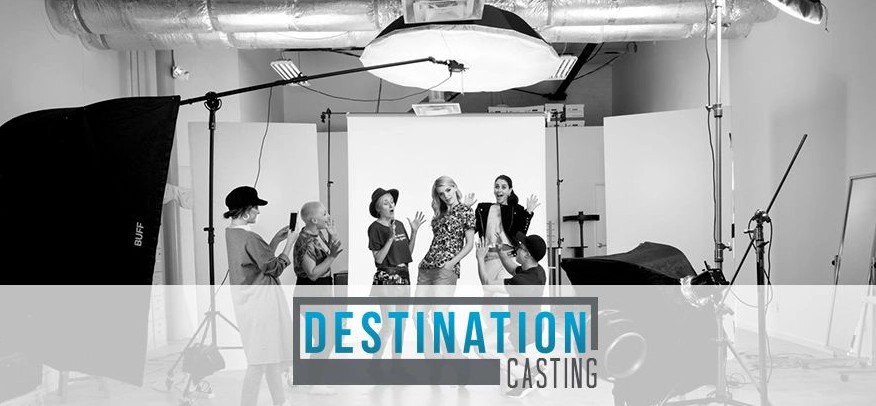
DestinationCasting on DirectSubmit

From background actor to extras casting director, January Curry is the Atlanta powerhouse behind her own company, Destination Casting. Her first dip into the casting world was as a casting assistant for George Pierre where she quickly found her footing in principal and background casting for major network shows and theatrical releases. However, that same entrepreneurial spirit that propelled her into the entertainment industry, self-described as “a bug that never goes away,” then compelled her to start Destination Casting, now approaching its five year anniversary. Casting for networks like SYFY, BET, and Lifetime, January and her team specialize in background talent but don’t be intimidated by those big network names. Destination Casting is as resolute in delivering quality talent to any size production as it is determined to remain boutique and personable.

JanuaryCurry on DirectSubmitI spoke to January Curry to understand why you should “fire-start” your career in Atlanta and how having the right conversations with the right people can be a significant step towards becoming a successful working actor. 

Tell us a little bit about yourself and your journey in the industry?

My very first film I did, I was an extra and I take pride in that. It was a film called “Milk Money.” I think I was probably ten or eleven. It was a pivotal point for me knowing that I wanted to be in the business. Every child that is artistic believes they’re going to be an actor or believes they’re going to be a singer. They think they’re going to be Beyoncé. So coming into casting, it was almost one of those destined things— those things that you didn’t know you wanted to do but end up doing. 

I started doing extra work and I met George Pierre, the casting director, and he cast me as an extra on something and one day I just said, “you know what? I’m going to be your assistant.” We laughed about it and a couple weeks later, I was his assistant. I started doing principal casting first and a few years later, I decided I wanted to branch off and start my own company and he was super super supportive. When I branched off, we were blessed to already have extras [and] casting jobs lined up. We just kinda took the ball and ran with it with Destination Casting immediately.

Can you explain the process of casting from start to finish? It’s helpful for actors to see and understand exactly what you guys go through when you’re booking someone. 

We’re kind of the filtering system. We come in to make the decision along with the director and producers. So we’re hired by the production and we get the project, [then] they let us know what talent they need, or they’ll just send us a script and the character breakdown. So our job is to go ahead and break it down. We release the roles, whether we’re releasing it on directsubmit.com or other platforms, to the public and to agents. At that point is where we take and narrow down [through] audition or just a picture, who we want to send over to the director and the producers. With background castings, we look at all these pictures and we’ll send over the best pictures for [a] particular background role. We’ll have a conversation with the producer and the director [and ask], “okay, who do we think is the best fit for this job?” And then, once that’s done, we go back and we make the offer [to the talent].

For us, the process is not as glamorous as people think— we have to think in terms of what does the scene need? What does the director want? What does the producer want? What does the network want? So we work with a lot of different entities at the same time. 

How do you think an actor can cut through the competition to get the attention of you or directors? 

For me, it’s about following directions first. That’s our first introduction to you. Are you sending all of the exact information that we’re asking for? No more and no less. Casting directors will ask for something specific, even when it comes to like self taping and I’ll say, do this [or] this is what your slate should say, this is how it should look. Any more, any less— that’s kind of a red flag that you don’t follow directions. For me, it’s doing exactly what you’re asked, submitting exactly as instructed, and making sure those photos are on point. 

Do you find that if you see a bad headshot it affects whether or not you will book that person for a job? 

It definitely depends on the level [of the actor’s experience] and what role we’re casting. If you’re absolutely brand new, you may have some leniency there. If it’s a background role, we don’t expect you to have a professional headshot. However, you have to be mindful of the photo itself; if we can’t see your face or you have too much makeup on or it’s clearly a modeling shot. Those are the things that you have to be conscious of.

Do you have any tips on delivering the best self-tape?

I have to go back to following directions and then the biggest thing— turning your tape in on time. Send it in early. Don’t wait until the last minute to send anything. If it’s due on Tuesday, try to get it in on Monday. The reason why [is that] we do look through the tapes before the due date. Right? Of course we do. We’ll look at the tapes that come in first and then that becomes your subconscious standard. We are setting the bar from the first tape we see. 

I know you mentioned that you have acting experience, especially as a kid. How has being an actor informed your career as a casting director? 

It has made me want to educate more. It’s not always about someone getting the part or getting booked. It’s more helping them understand how to navigate this industry. We don’t have a lot of time as casting directors to give feedback or to say why you didn’t get booked on something. But [my acting experience] does allow me to have a little bit more understanding in their process, understanding the hustle— especially someone that wants to become a working actor. If I have an extra that I’ve worked with [or] booked on a number of projects and I know they want to become a working actor, I’ll look out for things for them to put them in a place where they could get bumped up on set. So it makes me want to take the time to educate more because somebody took the time to educate me and answer my questions. 

We get a lot of stand-ins that are brand new and they’ll say, “January, how do I become a stand-in? How do I get experience?” [I’ll say] Okay, you’ve never stood in before; this is my phone number, any question you have even if you think it’s the dumbest thing, like, what does this mean on the call sheet? Ask me. You have an open door to ask me because people are not going to take the time to answer your questions. Not because they don’t want to, they just don’t have the time. 

What do you find is the biggest and most common obstacle between your clients and finding continuous success as a working actor?

I think that the common mistake actors make is not understanding the role of the casting director versus their agent versus any other position in production. What would help them is understanding who does what in regards to their career because then they can navigate the industry in the appropriate fashion. You want to make sure you’re having the right conversations with the right people.

When should an actor join SAG-AFTRA to make the most of it? 

Talent asks me this question all the time. I would say it’s totally up to you when you think is best and when you can afford it. Meaning, you’re booking consistently to pay your dues. Some people may not be ready, not because you don’t have the talent, but because you’re not in a place where you’re consistently booking.

What is unique with a production shooting in Atlanta? How does it compare to New York or LA? 

We have a lot more indie projects here. That doesn’t mean small budget because the size of the budget doesn’t matter, [but] there are a lot more independent companies [making films here]. There’s production companies and studios being built here. Productions are happening. We also have a lot more non-union projects in Atlanta and in the southeast in general. Atlanta is already in its own light because the studios are popping up and the projects are being shot. 

With that said, do you think Atlanta is a decent place for younger actors or people getting started in the industry to consider moving to? 

I think that it’s the best place to get you started because you can get booked on a major network show [because] a lot of the major networks are shooting here. You can fire-start your career here. And that’s what most actors do these days— they start here and then they move to LA. And on another spectrum, the cost of living is cheaper [and] there’s plenty of work [so you can] take the time to audition.

Through your time in the business, what have you seen as your biggest challenges or achievements?

After I got a little bit older and changed my direction, I started a family. So we start thinking, okay, stability. But when you’re creative and you have those particular gifts, they never go away.  And I say this to actors all the time— If you have that bug, it’s not going anywhere. [But] of course, you have to pay bills and of course, you have to be stable. With myself and having children, it was more of just making sure that I had a foundation for myself and my family so [I] kind of changed directions for a while. But [I] always did a few little things here and there on the side, whether it was in music or in film. And one day, [I] just kind of broke free and decided, you know what? Corporate America isn’t for me, I need to follow my passion. 

When I talk to actors sometimes, I say you have to do some soul searching and figure out what it is that makes you happy. We have to pay bills, we have to eat, you have to keep a roof over your head. But I knew I wanted to be in this industry, not necessarily as an actor. When I took that leap of faith to leave my corporate job and come back into the industry, it was definitely a struggle. 

Your company’s mission statement mentions setting a new standard within the casting industry. In what ways is destination casting raising the standard? 

For us, it’s striving to continue to be great at what we do and bringing great talent to the production. We want to continue to keep that hands-on feel no matter how big of a project we take on. I still like to have that feel of being a boutique company that you can reach out and touch us. Especially when it comes to background talent, they may not understand how important they are to that set. I don’t want talent to feel that they’re just a number on a set of skins. To me, we are a door of opportunity for the actor. We are creating an opportunity for you to be in a space that can propel your career. I don’t take that position lightly at all. 

So Destination Casting is coming up on its five year anniversary. Where do you see Destination Casting in the next five years? 

We’re definitely going to continue to grow. We’re not in competition with any other company. We’re grateful to have the projects that we do. We [treat] every one of them the same. For us… it’s just longevity; continue to get great projects, continue to make great product[s] for the productions, and bring in great talent for them. 

Is there anything else you’d like to say about you, Destination Casting, or to actors? 

To actors— don’t stop. Never stop. Never quit. Nope. Don’t ever give up on that fire because even if you never become the biggest, at least you’ll be fulfilled in doing something that you love. 

Right. Like you said, that bug never goes away…

It doesn’t. I have children and I say the same thing I’ve told you— if it’s something you love, it’s not going to go away. So just do it. You’re going to fall, yes, you are. But you can always come home. 


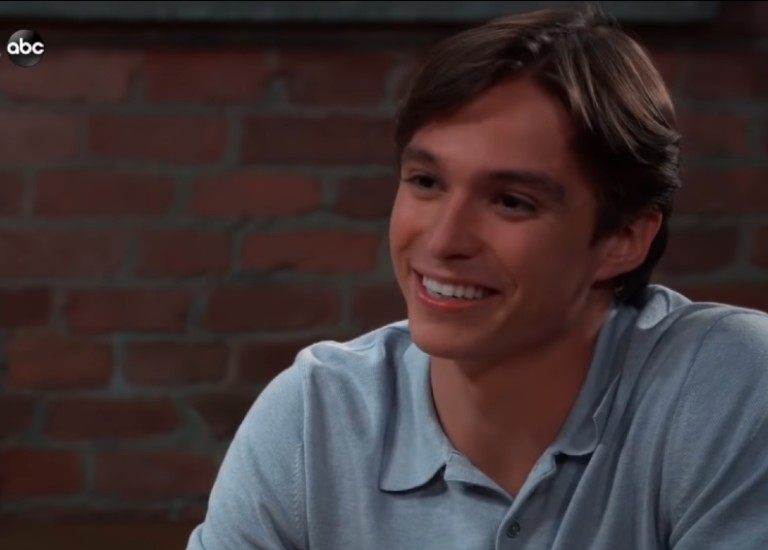
Nicholas Alexander Chavez. Photo Courtesy of ABC

General Hospital actor Nicholas Alexander Chavez has been cast as the troubled teenager Spencer Cassadine.

22 years old and new to daytime, a fun fact is that Nicholas has been acting since high school, so he’s had more than half a decade to really dig deep into making characters real. He has a really interesting approach, which you’ll read about below.

The way Nicholas Alexander Chavez delved into Spencer’s life is what landed him the job. He didn’t have to prove that he could handle the role; he proved that he is, indeed, Spencer Cassadine.

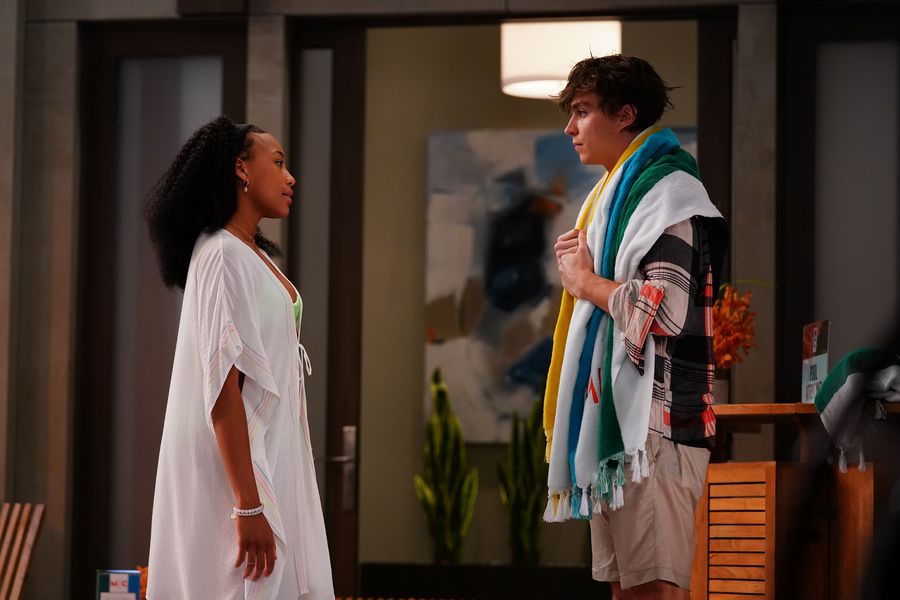
Check out this Clip of Spencer helping Trina (played by Sydney Mikayla) process what she just overheard.

SYDNEY MIKAYLA_NICHOLAS CHAVEZ Photo By Troy Harvey, Courtesy ABC

Sydney Mikayla & Nicholas Chavez. Photo By Troy Harvey, Courtesy ABC.

You play Spencer Cassadine on ABC’s long running soap opera, General Hospital. Tell us about your audition.

It started with my manager sending me a self tape request. I spent a couple days on the material before I sent it off. We heard back pretty quickly that they wanted me to come screen test for the show. I tested with Maura West but didn’t get to chem test with Sydney Mikayla. I was given sides about a week in advance to prepare. I worked with a couple different coaches, acting mentors and colleagues that I’ve been acquainted with since I started acting about six years ago. I pulled my favorite notes from each of them and ultimately made choices that set me up to have an in-the-moment experience with Maura.

I was wearing some nice plain clothes that I had picked out from Target and I brought a couple other options for the costume team to choose from. All of my options were simple. I had a couple conversations with the wardrobe department’s Shawn Reeves in the week leading up to the screen test and he essentially told me ‘the simpler the better’.

Nicholas Alexander Chavez Photo by Lauren Allen 3

Nicholas Alexander Chavez Photo by Lauren Allen.

Everyone got the chance to rehearse the scene once, privately with Maura and the Executive Producer, Frank Valentini, before we recorded it on stage. He gave me a little direction and I really took it to heart. I went back to my dressing room and loosened up and really tried to invest in the circumstances of the scene I was given and forget about the fact that this was an audition. I saw this audition as another way to get better, rather than me trying to prove myself to someone, which can be a dangerous place for an actor to be. “Proving yourself” comes as a byproduct of committing to the scene.

The audition was very fast, but very fun. I was maybe on the sound stage for all of three minutes. I did my best to implement the notes the Frank had given me in rehearsal while still remembering freshly learned blocking. In retrospect, it was a great test given the pacing of the show. Maura West really made it easy on me by being such a terrific scene partner. Everyone I met that day was supportive and friendly.

The next day they called me and told me I got the role. I’ve never been so ecstatic!

You stepped into a role that’s been portrayed by other actors in the past. Granted, the other actors were the younger versions of your character. Did you have any reservations about playing such a well known character?

This is the best opportunity I’ve ever been given — so no reservations whatsoever, I jumped at this. That said, I knew that it was a beloved character and I wanted to be sure to do the character justice. To be clear though, I never took that to mean “Behave with the same quirks and mannerisms that the old Spencer did.” To me, doing a character justice means looking at the facts of a character’s life. What’s happened to them? How does that shape them? How do they treat other people? How do other people talk about them?

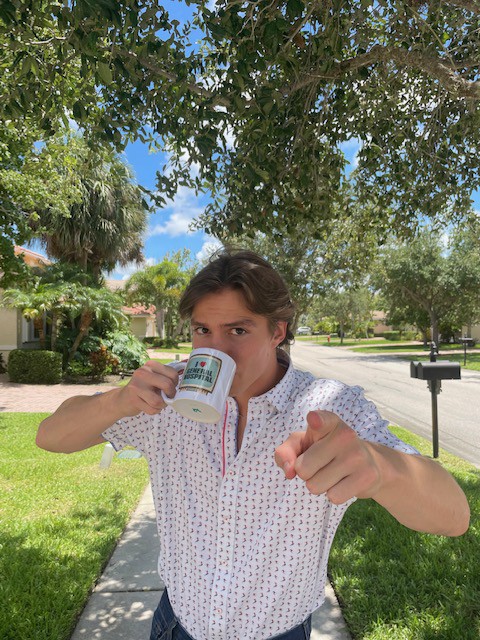
NicholasAlexanderChavez_GHMugSpencer had also been away at boarding school for three years, which got my mind racing with all the ways that can change a person. Especially if, for all of that time, he’d been estranged from and lied to by the only parent that he had left – Nikolas.

Spencer does some things that we might consider “bad”, but in his mind he’s 100% justified in doing the things that he does. I needed to access a character that thought like that. The new material and storyline demanded different behavior than what was done before.

Spencer is an entitled, troubled Prince with lots of pain. What acting tricks do you use to get that across?

I use my imagination. I have to treat every aspect of the process as a reality. It’s a very high stakes game of pretend. I don’t pull on my own life, or think about something traumatic that happened to me. I stay present as Spencer Cassadine. I try to hear and see the world through his lens, and then let my behavior come from that.

Who told you and how long did it take for you to learn you won the role of Spencer? Did you have to sign an NDA (Non-Disclosure Agreement)? When you sign an NDA, does it specifically state that you just can’t publicize it / do interviews until it’s announced, or does it specify that you can’t even tell your friends and family?

My manager, Jenevieve, called me the day after my screen test. ABC told me to not post about it on social media. They added that anyone in my family whom I shared the news with also couldn’t post about it. My grandparents aren’t great at keeping secrets but they were champs about this one! Haha!

NicholasAlexanderChavez_WithCast

Buddies on screen and off. Nicholas Alexander Chavez with the General Hospital Cast.

You majored in acting at Mason Gross School of the Arts Acting Conservatory in New Brunswick, NJ. You also studied commercial acting at Killian’s Workshop in Los Angeles and acting at Visionbox Studio Theatre in Denver, CO. Being from Pittsburgh, PA, how did you choose where you wanted to study? What was the best acting lesson you’ve ever learned from school?

I was born in Houston, TX and raised in Denver, CO. Not sure where the Pittsburgh thing came from, I’ve seen a couple articles that say that. The only time I’ve been to Pittsburgh is when I bought my C5!

When I was in high school I looked up a BuzzFeed article for the 10 best drama schools and then I auditioned for those. I ended up going to the conservatory that, at the time, I felt had the best program with small, focused class sizes.

The most important lesson I’ve learned is that: every time you act, it is an improvisation. You are constantly responding to, for, and off of your scene partner. If they do even the slightest thing differently, it’ll change the moment. It’ll give it a slightly different color. It will land on you differently. It’s important to pay attention and remain sensitive. Any actor can respond to a bat over the head. My goal is to be able to, one day, respond to a shift in the wind.

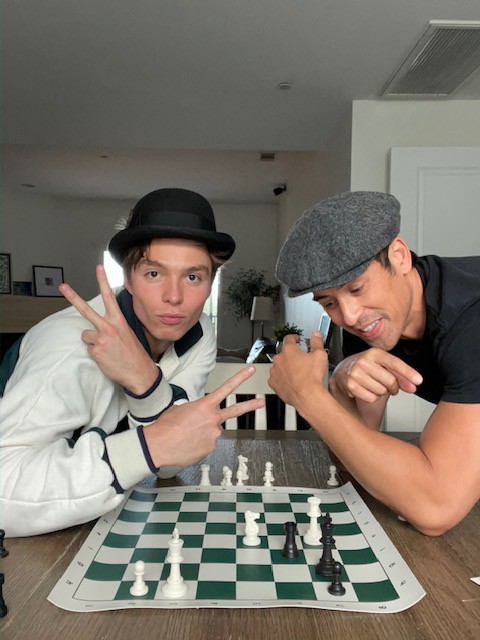
NicholasAlexanderChavez_MarcusChess

Behind the scenes game of Chess with Marcus.

You’ll be doing appearances, including the virtual Fantasy Event with your co-star, Sydney Mikayla. Are online and in-person events built into your contract or is that something totally separate that goes through your publicity team? For the online events, do you do your portion from home or are you brought into another location?

Totally separate thing, and I’m not sure because I haven’t done one yet, but I imagine I’ll be able to do it from home.

Being cast on a show that has fans from all over the globe, did you feel overwhelmed at any point in dealing with the press or fans? Did anyone give you a heads up that you will be caught up in a whirlwind of media and people asking for photos and autographs?

At first it can be overwhelming, but like anything else you learn to accept it as part of the job, and incorporate it into your life in a healthy way. I think that looks different for everyone.

Nicholas Alexander Chavez CorvetteSo you like Corvettes?

Wow. To me, Corvette is the best brand in the car business. They’re such an incredible value and continue to be performance monsters, beauty queens, and they’re not too demanding from a maintenance perspective. I love taking care of mine. I’m saving up to get the calipers painted red to match the interior. I think I’ll paint the hubs black too. A couple subtle details that will really dial it in and make it pop.

The “Dream Garage” list on my phone is ridiculously long but a few my favorites are:

  • 2004 Lotus Esprit in Orange over Magnolia

  • 1999 Ferrari 355 GTS in California Blue

  • 2005-2006 Ford GT in Blue with White Stripes

Getting a job in California means you had to relocate. Once you accepted the General Hospital offer, who helped you make arrangements to move? Did production pay for your move? Did you get your own apartment or are you staying with friends?

I used what I had in savings to make it happen. I also had some friends and colleagues who were gracious enough to help me out by giving me a place to sleep for a couple weeks while I looked for an apartment. It was a bit of an awkward few weeks but we made it happen, and I’m thankful to those who extended a hand t help me!

NicholasAlexanderChavez_PizzaWhat advice do you have for actors who are just starting out?

Take care of the work and the work will take care of you. Invest in your training before anything else. Really love what you do and always try to get better. Oh, and be gracious and kind to everyone that you meet.

Thanks so much for the thoughtful interview questions!

Casual,Student,Boy,Teenager,,Confident,Face,Expression,,Holding,Hand,To

Returning to our Advice from the Experts series, we were fortunate to sit down with talent manager, Darren Staten, owner of Worldwide Talent Management, based out of Vancouver, BC, Canada. Darren has honed a special kind of management philosophy that has clients from all over the world joining him to cocreate a pathway that can lead them to further success and a more fulfilling career.

Darren Staten, of WORLDWIDE TALENT MANAGEMENTDarren has clients worldwide, from Croatia to Australia, Germany, the UK and all over the United States. His method encourages his clients to step out of their limiting boundaries and insecurities and focus on the business of acting and growth of their craft. Darren highlights inspiration and accountability which brings a sense of ownership to the actor’s potential and helps the actor develop a skillset that propels them ahead of complacent actors. 

We asked Darren what advice he has for actors that are wanting to take a step into the direction of a professional acting career. Darren, as usual, sparks the actor’s drive and dedication. Here are insightful tips from the talent manager, Darren Staten: 

1. What is 1 golden piece of advice you have for an actor starting today?

I was watching Viola Davis in an interview. She said less than 1% of actors make over $50,000 a year. I found that to be profound and my takeaway for actors is this. If you want to be in the top 1% of earnings and make $50,000 a year plus, you can’t take ALL your cues and follow the social norms of 99% of actors.

Doing what all almost all actors do, acting, is probably not enough. So, just taking classes and focusing on getting better as an actor is important, however other less focused on activities, like marketing and becoming outstanding at auditioning, are even more important. This is a business, and a business that creates challenges for actors to earn revenue.

My suggestion for actors is be way more aggressive and focused on building a business, by putting more emphasis on being outstanding at auditioning and marketing, to go along with developing your talent.

Be more aggressive seeking opportunities. However, do it keeping in mind what I call the Four P’s:

1. Be professional

2. Be polite

3. Be proactive

4. Be persistent

2. How can an actor best create a “Unique Character”?

I don’t profess to be an acting coach or expert on that. However, it seems to me that bringing an aspect of you to any character can help the performance to seem more authentic and unique. “Be you as the character.”

If you are a new actor, you might be asking yourself what the main differences are between a talent Manager and a talent Agent. The most significant thing that differentiates the two, is that a talent Agent is licensed by the state, thereby allowing them to solicit their clients work. Agents can negotiate contracts and complete legal paperwork on behalf of an actor. The Agent helps the actor submit to, and potentially book, auditions. The talent Manager/Management Team is not required to be licensed or employed by a management company. Their main focus is to advise and help the actor develop their own brand. Managers assist in helping actors improve their skill set, sharpen their resumes, and guide the actor in the business of acting. While the lines between an Agent and Manager can occasionally get blurred, a Manager is focused on growing you, the actor, to be the best business and creative savvy actor as possible. We asked Darren what it is he looks for in a potential client for collaboration.

3. What are the most important elements on an actors resume to you?

The most important elements I’m looking for on a resume are a few things. First and foremost, does the actor have any Film/Television network/studio credits as a Co-Star etc. If not, I like to see their special skills…do they speak other languages, can they do multiple accents, sing, ride horses. I’ll also see, if they have any on camera coaching or acting classes or classes on camera that teach actors how to breakdown scripts. Lastly, I will see if they are willing and able to audition and perform on stage as well as on camera.

4. What is your pick of the best actors working today?

Lately, I’m loving the work of Jonathan Majors, Pedro Pascal, Olivia Colman and Francis McDormand.

5. What is your list of self-taping essential practices?

The tips below from Casting Directors Susan Bluestein and Jason Kennedy, will help actors become a booking machine! 

Tips:

1. Use a tripod or something similar to secure the camera.

2. Always record videos horizontally, not vertically.

3. Be sure you have good light and can be seen clearly, but not so bright that you are blown out. Natural, indirect sunlight, facing a window often works well. Experiment with what you have.

4. Test the sound and video. Can you be heard clearly? Does your shirt clash with the background? Adjust and test again.

5. Be sure to be off-book so you can focus on performing

6. Keep your wardrobe simple. Appropriate, everyday clothes are perfectly fine unless otherwise specified. You may dress towards a character, but you should avoid costumes.

7. Paraphrasing may or may not be a good idea, depending on the casting office. Changing lines is generally not advised, but if you HAVE to phrase a line slightly differently to get through it, we’ll try not to hold it against you.

8. Avoid ad-libbing. The only exception is the occasional, minor ad-libbed button at the end of a scene.

9. The reader must not be louder than the actor. The actor can use a microphone, or the reader should distance themselves from the camera.

10. Your framing should be in the center with the bottom of the frame at about the middle of your chest and the top of the frame just above the top of your head.

11. Depending on what the scene calls for, make a choice to sit or stand and stick with it. Movement should be kept to a minimum unless there is a specific reason for it.

12. Avoid props. Phones and bags are probably the most commonly used and acceptable props when used as phones and bags, otherwise, anything you bring into a scene can be distracting to the viewer.

13. Minimize distractions. Unexpected sounds, on-camera visuals, props, loud clothes, etc.

Darren and Worldwide Talent Management can be found on Instagram and Facebook (both at @worldwidetalentmgmt), and their website: www.worldwidetalentmgmt.com. The process of interviewing with Darren is divided into several steps in order to assure chemistry and potential for collaboration. Thank you to Darren for sharing your wisdom and time with DirectSubmit.com. 

Film Set terms - DirectSubmit

Film Set Terms to Know

Film sets are a magical place to work, but they can also be very confusing if you’re new on set. Film sets seem to have their own language, and if you suddenly find yourself on set without knowledge of the terms, you’re going to be very confused. Even just doing a once-over of this list prior to working on a film or TV set should help you out, but if you’ll be there for the full run of the show, you should probably take some time and learn these. You’ll hear most of them multiple times a day!

10/1

I’m going to the restroom. This often confuses newbies on set as to why someone wouldn’t just say “I’m going to the restroom”, but apparently it’s more polite and film etiquette to use code

Abby Singer

Being the second-to-last shot of the day, it is named after an A.D. who, as one story goes, toward the end of the day would get the crew to move faster by promising them that the next shot would be the last for the day, only to have another shot to capture and be the new “last shot” of the day.

Above the Line

Above the line ****is the costs of making a movie associated with the major creative talent, including the director, actors, writers, and producers. Films with special effects will also have a greater number of above the line costs than films without special effects.

ADR (Additional Dialogue Recording)

The process of re-recording lines after shooting to replace poor-quality sound or slightly alter line delivery. Often used to eliminate naughty swear words to gain that audience-friendly PG-13. Occasionally used to re-dub one actor’s voice with another: see, for example, Darth Vader, where James Earl Jones replaced David Prowse. Otherwise known as “looping”.

Alan Smithee

A notorious pseudonym used by directors unwilling to have their own name slapped on a film when they weren’t happy with the final cut. After the ironic calamity that was Burn Hollywood Burn, a film about the practice that was itself eventually credited to one Alan Smithee, it’s been retired.

Apple Box

A wooden box closed on all six sides, with finger grips cut into two opposing sides for carrying. It is ubiquitous on set and used for sitting, standing, temporary platforms, and more. It was most likely developed from using open-top crates used by apple pickers, and the name has stuck. Apple boxes come in a variety of standardized sizes, including full, half, quarter, and pancake. They are used for many different applications.

Back projection

An age-old technique where pre-recorded footage appears behind the actors being filmed, often used for driving scenes (think Airplane! or any classic 1950s movie). Nowadays, it’s largely been replaced with greenscreen, but is occasionally used for nostalgia’s sake in films like Kill Bill.

Back-to-One

This refers to doing another take and having everyone (actors, camera, crew, etc.) go back to their starting positions for the shot. Usually called by the AD.

Banana

This is not the director calling for a snack or delivering the punchline to a joke. It is a direction given to an actor. It means that when moving toward or away from the lens, the actor needs to walk in an arc in order to accomplish a cinematic goal such as revealing something in frame at the proper moment, or for making the movement itself look natural on camera.

Basecamp

This is where the makeup, costume, and cast trailers are located, as well as crew parking and catering. It’s the largest base and first point of call when arriving for work.

Best Boy

A Best Boy is the assistant, or technical assistant for the key grip or gaffer. The best boy is responsible for coiling and routing all of the power cables needed to run the lights. The best boy may also schedule what people and equipment are needed on a given day of a shoot.

Blacklist

Once a source of shame for the movie industry, this originally referred to actors and directors shunned by Hollywood during the heights of McCarthyism in the 1950s for alleged ties to Communism. Now, however, it refers to the annual “blacklist”, an insider survey that compiles the year’s (allegedly) best unproduced screenplays. It’s resulted in The King’s Speech, Argo, and… Cop Out.

Blocking

The process of running through a scene prior to filming to decide where the actors will move and where lighting and cameras should be placed.

Boom

The large fuzzy microphone on the end of a pole that looks a bit like an old dog. It floats above the actors, close enough to pick up dialogue but, ideally, far enough up or down that it doesn’t appear in the shot.

Call sheet

A list, usually created by the first assistant director, of actors who will be required on set for each day’s shooting, what scenes are scheduled and which locations will be used.

Champagne Roll

Usually at 100 film rolls, or sometimes 100 hard-drive downloads on a digital shoot, into a shoot, the cast and crew get a celebratory glass of champagne.

Change pages

If a script is altered while filming is underway, any changes are handed out onset in the form of “change pages”. These are normally a different color to the original script. A script with a lot of changes during filming can look like a beautiful rainbow.

Check the Gate

A term called by the A.D. before a change in camera position. At this time, the camera assistant will examine the aperture plate/gate of the film camera for any built-up debris that intrudes onto the image area. Although technically only applicable to shoots using film, check the gate can also signify the checking of the last few seconds of the last shot in digital to see that both the picture and sound have been recorded.

Choker/Choker C.U.

A shot that uses the bottom of the frame line to “choke” the actor by cutting him or her off just below the chin.

Clapper

A board displaying key information about the scene being filmed (scene number, take number, film name), filmed by the camera before each take. On top (or bottom) is a piece of wood on a hinge (traditionally painted in black and white stripes), which claps down to the board, allowing for audio-visual synchronization. Also known as “clapboard”.

Clean speech

A take in which there were no errors with dialogue recording.

Continuity

The kind of logic implied in the association of ideas between edited shots. “Cutting to continuity” emphasizes smooth transitions between shots, in which space and time are unobtrusively condensed. “Classical cutting” emphasizes dramatic or emotional logic between shots rather than one based strictly on considerations of time and space. In “thematic montage” the continuity is based entirely on ideas, irrespective of literal time and space. In some instances, “continuity” refers to the space-time continuum of reality before it is photographed.

Continuity report

A list specifying everything that happened when a scene was filmed, including weather conditions and camera settings. This is meant to prevent continuity errors creeping in between takes or during reshoots. Also known as the “continuity script”.

Cookie

Shorthand for Cucoloris, similar to a flag or cutter, but usually a solid material with an abstract pattern that passes light, creating patterns on backgrounds or subjects. It is used to break up light, giving it a more natural feel.

Cowboy

A shot that is framed just above the knees of the subject.

Craft service/Crafty

The catering unit. Typically serves apple crumble and chips with everything. A film with “clean” catering, like many Zack Snyder efforts, generally ditches the chocolate bars and has lots of dried fruit and nuts on offer instead.

Crane shot

A shot taken from a special device called a crane, which resembles a huge mechanical arm. The crane carries the camera and cameraman, and can move in virtually any direction.

Crew Call

The time of day shooting is scheduled to begin for the day. Your call time may vary.

Crossing

This is said by someone crossing in front of the camera, before doing so, in order to warn the operator that the viewfinder is going to go black as they obliterate the frame momentarily. Crossing close to the camera is generally bad form, and it should be avoided as much as possible. However, when it is unavoidable, calling out “crossing” is a standard on-set courtesy.

Cutter

Also known as a flag, it is used to “cut” the light and define the area lit. You can use a cutter to create a hard or soft edge, depending how close to the light it is placed. Please note the terms “cutter” and “flag” are used interchangeably; however, strictly speaking, when you are controlling spill light from striking something out of the shot (such as the camera lens or a crew person), you are flagging that light. When you are setting a precise shape for the light that is in the shot (for example, a set light), you are using a cutter. Some grips will use special names depending on the size or shape of the flag, but there is no penalty for switching the terms “cutter” and “flag.”

Dailies

The prints of footage shot the previous day, often viewed by the director and producers at the end of each day to monitor progress. Also known as “rushes”. Can cause side-effects ranging from nervous breakdowns to over-confidence back at the studio.

Dolly

A small platform for the camera, designed to roll along special tracks. Although Steadicams have reduced their use, dollies have certain unique strengths. In particular, they’re still used for the so-called Vertigo shot, where the camera zooms in while the dolly moves backwards, severely altering the perspective.

Dope sheet

A list of scenes that have already been filmed, usually compiled by the assistant cameraman.

Establishing shot

Usually an extreme long or long shot offered at the beginning of a scene or sequence providing the viewer with the context of the subsequent closer shots.

Floppy

It is a large rigid flag, usually four feet on each side, with an extra flap that is held in place with hook-and-loop fabric. When you want to block light, you set up the floppy and then release the extra fabric.

Flying in

It means that the necessary item or person is on its/their way to set.

Foley

Named after Jack Foley, this is the art of simulating certain noises in post-production to enhance particular moments. Foley artists might smack a piece of leather to get a good punching sound, or snap a carrot when a bone is broken. For scenes of disembowelment, the squelching of pasta is a favorite.

Gate

When shooting on film, you’ll often hear the assistant director shout, “Cut! Check the gate!” This is to ensure that the camera and film is free of any impurities or blockages (a hair in the way, for instance) that would render what’s been filmed unusable or call for another take. The phrase is sometimes still heard on a digital set, but only for auld lang syne since there’s no film gate.

Greek

To modify the name of a product so that the package looks the same but the brand name on it is not readable. This is important to do when you use a trademarked product, such as Coke™, in your shot but don’t have permission. The term probably developed as words were obscured by adding bits of tape to the letters. This resulted in a subtle change that often resembled Greek lettering. It is a very effective way of dealing with concerns over trademark use and can be used on product names and logos.

Greenscreen

A technique where actors perform in front of a stark, monochromatic background, usually bright green or blue. This is then replaced with a background image, often with CGI. Also known as “bluescreen” or “chromakeying”.

Hollywood

To “Hollywood” something is to handhold it and not set up a stand for it. Crew will often Hollywood reflectors, bounce cards, or small light fixtures such as china balls. This allows for fast adjustments and also to move with the actors.

Honeywagon

Bathroom. Usually a trailer with male and female restrooms.

Hot Brick

A fully charged walkie-talkie battery. When starting out you need to supply these to your superiors throughout the day.

Hot points/Points

Grips will call out this term to indicate they are carrying something such as a light stand with the tips pointing forward. Look out if you hear this.

Hot Set

A set that is currently in use for filming or needs to be left as is because filming will return there in the near future. Don’t touch or move the props or set dressing, or else prepare to feel the wrath of the art department.

Insert

A close-up, often filmed by the second unit, usually of an object.

Magic hour

The short time just before sunset when light levels change dramatically and very quickly, enabling golden shots that will look “very Terrence Malick”. See the opening shot of Hot Fuzz or virtually any Michael Bay movie. 

Martini

This is the last shot of the day. Why? Go ask someone who drinks. Usually called by the A.D.

Matte shot

A shooting technique where painted artwork (ordinarily on glass) is combined in-shot with live action, to create the illusion of a grand backdrop. It’s old-fashioned, but still used by Peter Jackson and others for those invaluable epic visuals.

Meal Penalty

Free money Union members are given because they didn’t feed you on time.

Mickey/Mighty

These terms refer to open-face light fixtures made by Mole-Richardson. Similar to the Redhead and Blonde, the Mickey is a 1,000-watt light, while the Mighty is a 2,000-watt light fixture.

MOS

There are many myths and lore behind this term, which means that the camera is recording, but audio is not being recorded. It is often used when shooting insert shots. The reason a shot is slated “MOS” is so that the editorial department doesn’t waste time trying to find the audio for the shot or wonder why people are talking during the take. The most likely explanation for MOS is that it means “Motor Out of Sync,” and it was written on a slate so that the editor would de-couple the sound head on the Moviola upright editing machine for that shot so that only the picture was rolling and not the sound.

MOW (Make Own Way)

An actor or crew member will transport themselves to set for their call time as opposed to being picked up and driven by the transport department. Don’t muck this one up or you’ll be waiting for the public bus and late to work.

Negative Fill

This is when you use a flag or the black side of a show card to prevent light from reflecting on a subject. It is used much the same way you would use a bounce card to provide fill.

New Deal

Moving on to a new camera setup for that scene. The Director and all involved are happy with the takes and “new deal” will be called out by the ADs.

Obie light

A light mounted on top of the camera that puts a reflective glow into the eyes of the on-camera talent. It was reportedly created for Merle Oberon by her husband and cinematographer, Lucien Ballard. 

OTS (Oh – Tee – Es)

This means “over-the-shoulder shot,” where two characters are having a dialog and the camera is positioned over the shoulder of one actor to capture the other actor. OTS shots can be either “clean” as in a clean single, where it is a close-up of your subject without anyone else intruding in the frame, or “dirty,” usually a close-up of an actor with a part of another actor in the frame. This is used when not having a small part of that other actor in the close-up would be jarring.

Overcranking

The act of speeding up the frame rate on a film camera, so that more frames are captured. Enables the footage to be played in slow motion. Undercranking has the opposite effect. Dates back to when cameras were hand-cranked.

Pickup

Doing another take of a shot, but only part of it, starting part-way through the beginning. For example, the first half was good, so you are only going to retake the second half. Usually this refers to a shot which only has part of the dialog or action.

Picture’s Up

They are about to roll and shoot an actual take.

Pre-Call

When a department or individual has a call time earlier than the crew call. Be sure to check your actual call time rather than the crew call, as it may be different. It’s always embarrassing to receive a call from your boss while you are still in bed.

Print

Along with “Check the gate!”; “Print it!” is a fun but antiquated catchphrase on film sets. It means that the latest take of a scene was good, that everyone’s happy they have the shot needed and that it should be developed.

Rack focusing, selective focusing

The blurring of focal planes in sequence, forcing the viewer’s eye to “travel” with those areas of an image that remain in sharp focus.

Redhead/Blonde

These refer to 1,000-watt and 2,000-watt (respectively) open-face tungsten halogen light units. The name derives from lightweight light fixtures made by Ianero back in the day. The 1,000-watt fixture was red/orange in color and the 2,000-watt fixture was yellow, hence the redhead and blonde references.

Re-shoots

Footage filmed after shooting wraps, re-doing scenes from the film rather than adding additional scenes or minor reaction shots etc. The existence of re-shoots is often seen as evidence that a film is in trouble, so filmmakers will go out of their way to describe re-shoots as pick-ups.

Rhubarb

Background conversation by extras. So-called because extras were often asked to mutter the word “rhubarb” to produce the effect of genuine conversation, with their mouths moving convincingly. Also known as “walla”.

Roll sound/camera

The A.D. calls for audio and camera to start.

Room tone

Similar to wild sound, since there is no picture being recorded, but different because you are recording the sound of the environment with no dialog. This is done so you can use the recording to replace any audio that has unwanted noise without hearing the background noise of the room disappear. If your camera is also your audio-recording device, it is customary to shoot a slate that says “Room Tone” and to specify what scene it is for.

Rotoscoping

Little used nowadays, this was once an invaluable technique for producing high quality animation and was a favorite method in Soviet cartoons. It refers to the time-consuming process of shooting scenes with actors in live-action, and then tracing over those images to produce an animation. Used in a wide range of films, from Ralph Bakshi’s Lord Of The Rings to Richard Linklater’s A Scanner Darkly.

Runner

Runners are the most junior positions on a film. Managed by the office, runners transport stuff between the production office and set, and also pick up anything else needed for the crew. They are not here to pick up your dry cleaning (unless you are the Producer) but they can be great in organizing any pickups and deliveries your department may have. Get friendly with the runners and they’ll be able to help you out in so many ways.

Shot list

A planned list of the scenes and angles to be shot that day, including details such as location, and which actors and departments are involved.

Shutter speed

The length of time a frame of film is left exposed in the camera, or that the shutter is open on a digital camera. Varying this means that you vary the amount of light that enters the camera. If the speed is slower, this allows more light but also more motion blur.

Single, double, triple, homerun

Nets and scrims/wires. Nets are similar to flags, but they are used to reduce the amount of light that is striking your subject or set, while scrims/wires go into your light—usually with barndoors. A single scrim/net has the effect of darkening the light transmission by half a stop, and a double darkens it by a full stop (roughly). When calling for scrims or nets, specify a single or a double. If you want more, you can specify the strength by saying triple (a single and a double) or homerun (usually two doubles).

Squib

A small explosive device that simulates a bullet hit or very small explosion. Used to memorably excessive effect to kill Sonny Corleone in The Godfather (above).

Steadicam

A specially designed harness attached to the camera operator, which stabilises the camera as they move it. Invented by Garrett Brown, the Steadicam eliminates the need for dolly tracks, and was used most famously to film The Shining.

Stills photographer

An official photographer who will snap on-set pics while scenes are being rehearsed or shot, for use in promoting the film.

Turning Around

Major change of camera setup, where they begin shooting in the opposite direction. This takes substantially longer than a minor camera setup change when shooting in the same direction because everything that’s currently behind the camera has to be moved out of the way of the new shot. The important implication is that you have a lot more downtime to take a break if not needed during this change.

Unit publicist

The poor soul who sets up press visits to a film set and handles all press matters relating to the film during shooting. It will be their job to, say, squelch reports of a developing affair between Richard Burton and Elizabeth Taylor on Cleopatra, and hide it from the press, as well as getting out positive buzz about the film.

Video village

The place where the video playback technician hosts the client and ad agency people, often as far away from the camera and set as possible

Whip-pan

When the camera pans particularly quickly, resulting in motion blur. This is often used to sneak in a hidden cut, as in the lengthy opening shot of Serenity.

Wild Sound

Audio recorded without the corresponding picture (the complement to MOS), great for getting clean sound to match visual effects such as a coin dropping or the sound of wind through the trees

Wrap

End something, usually the end of the day of filming but can be used as a wrap on a scene, actor, or item. It’s always nice to hear these words called out at the end of a day, or even better at the end of a job.

Check out: Acting Terminology 101 & Acting Stage terms

Rosie Day - Photo by Faye Thomas

Rosie Day is a name you can put to the face. You’ll recognize her as series regular Mary Hawkins from the hit show Outlander.

Rosie Day
Rosie Day

With two more projects in the works plus the October 14th launch of her book Instructions for a Teenage Armageddon, it might seem that everything is peachy keen and that the world is made out of rainbows and butterflies.

Not so. Rosie Day auditions just like the rest of us. She does not book every job and she most certainly isn’t riding easy street. Rosie is a hard working woman who has gone through the ringer, having the pain and heartbreaks we all have when not booking the perfect role. Her persistence has paid off after years and years of working in the entertainment field.

Rosie Day is an inspiration to teen girls, actors and writers everywhere.

You can be seen in the upcoming comedy-drama Real Love as well as the award-winning Call the Midwife. Having had a successful career in show business since the age of four, are you at the point where you’re able to choose which projects you want to work on, or do you still audition and cross your fingers that you win the role?

Oh gosh, I audition most weeks for something! I’m lucky enough to sometimes get straight offers for things, but most of the time it’s auditioning – but I really enjoy the actual auditions and recalls – the waiting by the phone not so much! It’s a career based on hope, isn’t it? I think you have to think of the auditions as the work, and then if you book the job – that’s the fun part! I’m learning that it’s just as important what you say ‘no’ to, and to not jump at everything just because you want to work, but I know that’s a privilege to be in that position. I remember watching an old interview with James McAvoy saying he still auditioned occasionally; I think that process always exists sometimes no matter how successful you are.

You’re also an author! Your book Instructions for a Teenage Armageddon, about surviving your teenage years, is coming out Oct. 14, 2021. How exciting! What prompted you to write a book? How’d you choose the topic? How’d you get WMEBooks to represent you? How’d you get @wrenandrookbook and @HachetteUK to publish it? Walk us through the adventure you took from start to finish in getting your book written and into production.

It was all by chance really like most things in my life are! A brilliant theatre director, Hannah Price, set me the challenge of writing a one girl play, and whilst I was abroad filming, I wrote it on weekends. I wanted to depict what it is to be a teenage girl and their experiences realistically on stage, as so often teen roles in theatre are supporting roles and it’s not their story. We did a preview run last year, with the actual run due this winter in London. It was by word of mouth I ended up with a meeting with WME who proposed writing a book, and I loved the idea of creating a guide to help girls survive and thrive in their adolescence. My amazing literary agent, Anna, pitched it to publishers and Hachette made us an offer that I beyond delighted about and somehow a year later it’s about to exist in the real world!

Rosie Day - Outlander - Photo by Jason Bell Starz Entertainment LLC

Rosie Day in Outlander. Photo by Jason Bell Starz Entertainment LLC.

Let’s talk about your portrayal of Mary Hawkins in the Golden Globe nominated Starz and Sony Pictures TV series Outlander. Another drama-driven role with trauma and violence leading up to the rape of your character. For scenes like this, do you need personal time to get “into the zone” before filming, or can you just be on set and immediately jump into the scene without much preparation? What’s your process for doing scenes of this emotional, terrifying nature?

I’m definitely an actor that just sort of does it, and I’m not really sure how. It’s like they say ‘action‘ and it’s this magic word and it just sort of happens. I’m not someone who has a process or a method, it’s all just imagination for me. But the scripts and sets were so brilliant on Outlander – it was very easy to lose yourself in that world.

Since you were a child actress following in the footsteps of your big sister, did you at any point ever feel like you were missing out on being a “normal” child?

Sometimes I did for sure. But I never minded missing out on things like birthday parties or sleepovers as I loved being on set and working so much, which is a weird thing for a little girl to have in her life. I much preferred the company of adults on set than my peers in a classroom. I’d experienced this huge world outside school, so I always felt quite trapped by being in a classroom. I was a creative kid, and the school system doesn’t cater to that particularly well if you go to ordinary school here in the UK.

I also didn’t grow up in London – I grew up in places and schools where I was the only child working in the entertainment industry, which definitely caused problems at school. But I think that’s the same for most child actors. You go away filming and come back and you’ve missed out on everything that’s happened at school. It was very hard from about ages 10-13, but once I got to year 9, I found an amazing group of girlfriends that were so supportive, but also never spoke to me that much about my work which was lovely. I sometimes think, what would I be doing if I hadn’t accidentally found acting, but I guess I’ll never know the answer to that one!

Rosie Day - Photo by Helen McArdle

Rosie Day. Photo by Helen McArdle.

You’ve been in numerous stage plays. As an actor, what’s the difference between playing a role in theatre vs. on screen? Do you have a preference?

I will always love filming, but theatre has a hugely special place in my heart. Each play is such a unique experience and I really thrive on working with a team to create an end result that you get to live start to finish every night. You go on a journey throughout each run which means you have time to play and change things up each night. Your performance is yours, there’s no edits, no cuts, it’s just whatever happens that night and you and your cast mates have to get through it together, and I love it when things go a bit wrong, and you have to think on your feet. Maybe I’m an adrenaline junkie but I don’t think there’s anything that can rival the first few nights of a play; it’s exhilarating. 

You’ve delved into directing. What do you like about directing? How did you learn? What have you directed? Any upcoming gigs?

It started off as writing – I write stories constantly, and then directing those stories was sort of a natural progression. As a young woman when you suddenly realize you have a voice and stories that you want to tell, it feels really empowering to get to bring them to life. I sat quiet for many years but then found I had a lot to say. I think from growing up on a set and working and watching directors I had absorbed so much. I had a lot of directors who were kind enough to answer my questions when I’d be acting and then suddenly want to know all the things about the shot we were doing!

We’re currently filming a film version of Teenage Armageddon at the moment, which is really fun. I’ve only directed shorts before, so this is a bit of a step up but it’s going great so far!

Rosie Day - CatAre you a Taylor Swift fan?

The Biggest. Seriously. Full Swiftie. And so proud to be! I met her at a party in LA once and she was the kindest person to me, and afterwards I just broke down and cried. Her music has been the soundtrack to my life since I was 12. I don’t think there’s a single musician that can sum up a very specific emotion or moment in a single line like her.

You’re an ambassador for the teenage mental health charity stem4. How did you become involved with stem4? What duties do you have as an ambassador?

I started working with them about six years ago and the work they do is unparalleled when it comes to teenage mental health. They are the first charity to have apps to help teenagers deal with their anxiety, depression and urge to self-harm. My role as an ambassador is speaking at schools, parents and GP conferences to help them raise awareness around teenage mental health and how it can affect families and I help fundraise when I can. Some of the profits from the Teenage Armageddon book are going to stem4 as without their amazing work, and the time I’ve spent with them, I don’t think I would have created it.

Rosie Day HairWhat advice do you have for the under 25 crowd looking to start a career in the entertainment field?

It’s a career that can cause a lot of pain and heartbreak and is very unstable, so it’s something you have to be very committed to and you just have to keep plugging away at it. Some people get lucky and get a big break quickly but for most that’s not the case, so perseverance is key. Politely networking is great – getting people to know your face and your work when you’re young is really important and taking as many opportunities to learn as you can. But also, it can’t be the only thing in your life; it’s a great thing to have but work can’t be it all, and your self-worth is not connected to whether you booked a job or not, you have to fill your life with lots of other wonderful, colorful things, that will inadvertently help inform your work, but also means you get to live your life.

Ewan Horrocks
Ewan Horrocks
Ewan Horrocks

Teenage actor Ewan Horrocks is making a name for himself, having just finished filming the British television series The Last Kingdom. You can catch up on the previous seasons on Netflix.

Show business is a whirlwind and juggling time is something every actor should master. One day you’re at home relaxing and the next day, you could be on a plane flying across the world!

As a newcomer to the professional world of acting, Ewan Horrocks discusses his life, acting and what it was like seeing himself on screen for the first time.

You were recently in Budapest, Hungary filming Netflix’s final season of The Last Kingdom where you play Aelfweard in a recurring role. Tell us about your audition.

I auditioned for Aelfweard in October 2020. It was a pretty straight forward self-tape audition; I got sent the sides in advance, prepared for the scene, filmed it and sent it on. After a couple of weeks I met the director, casting and the producers on a Zoom call and performed the scene – then a week later I found out I was flying to Budapest! We’ve just wrapped on The Last Kingdom and it’s an experience I will treasure forever.

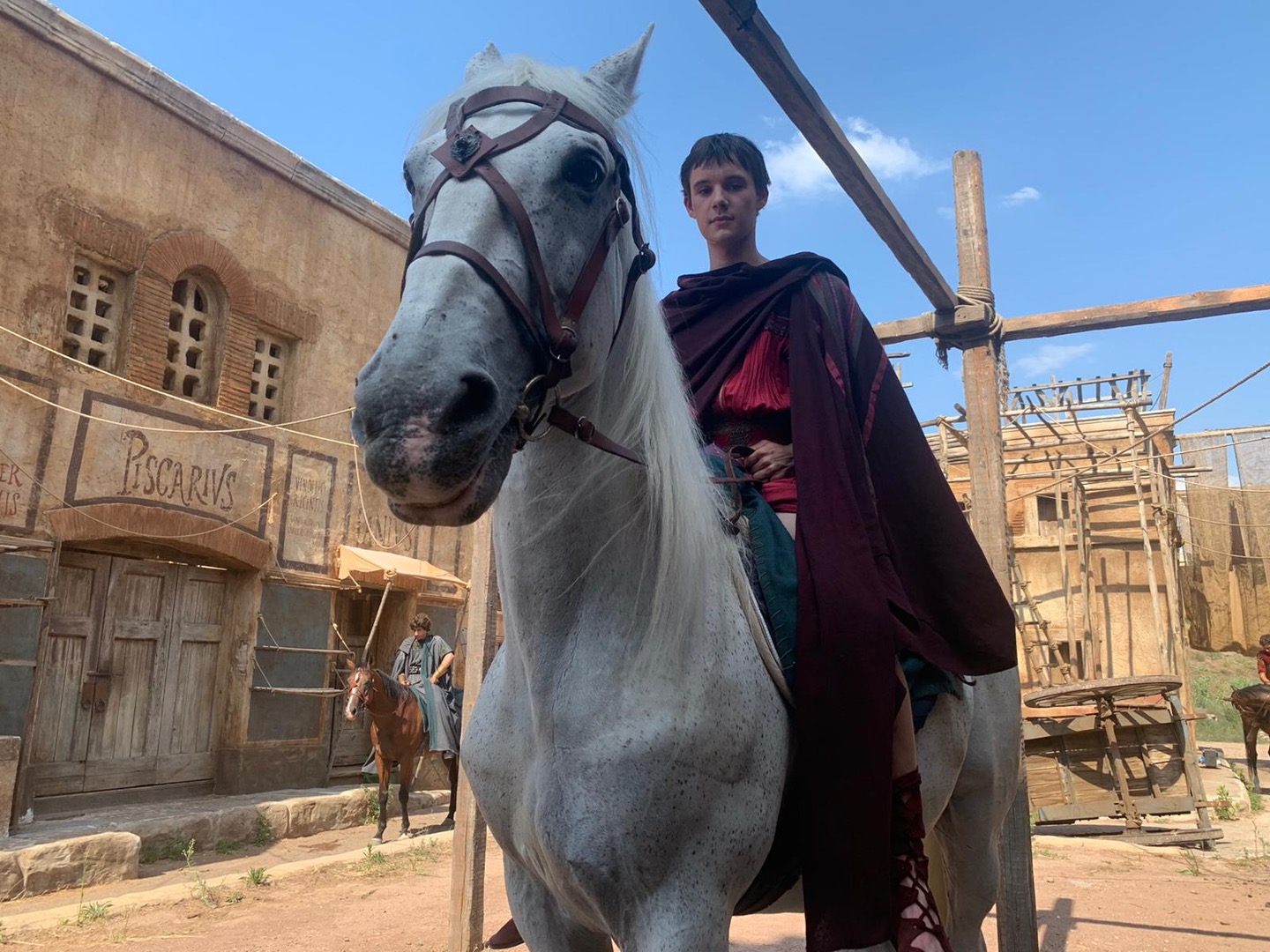
You’re fairly new to the acting world and had a breakout role as Young Drusus in Sky’s Ancient Rome series Domina . Now that the show has begun airing, what’s it like watching yourself on TV?

It’s a pretty surreal feeling – seeing yourself on screen. I mean, for me, when I watched it back, I had to distance myself from it and just imagine that it’s a character and not me. I feel like that’s the healthiest way for me to look at it. But it was great watching Domina when it aired, especially seeing everyone else’s work and what it looked like as a finished show.

Did the Covid-19 pandemic interrupt your filming of Domina or The Last Kingdom? Did you have to get tested for Covid-19 just to be on set? If yes, how often? Was the test done by production or was it your own responsibility to get it and show the results?

Covid-19 definitely had an impact on filming, as it did everyone. With Domina, we shut down when the pandemic first started and then when the cases started to ease near the summer, we were fortunate enough to be one of the only international projects to continue working. For both projects, production would schedule two weekly Covid-19 tests to keep on top of the safety of cast and crew.

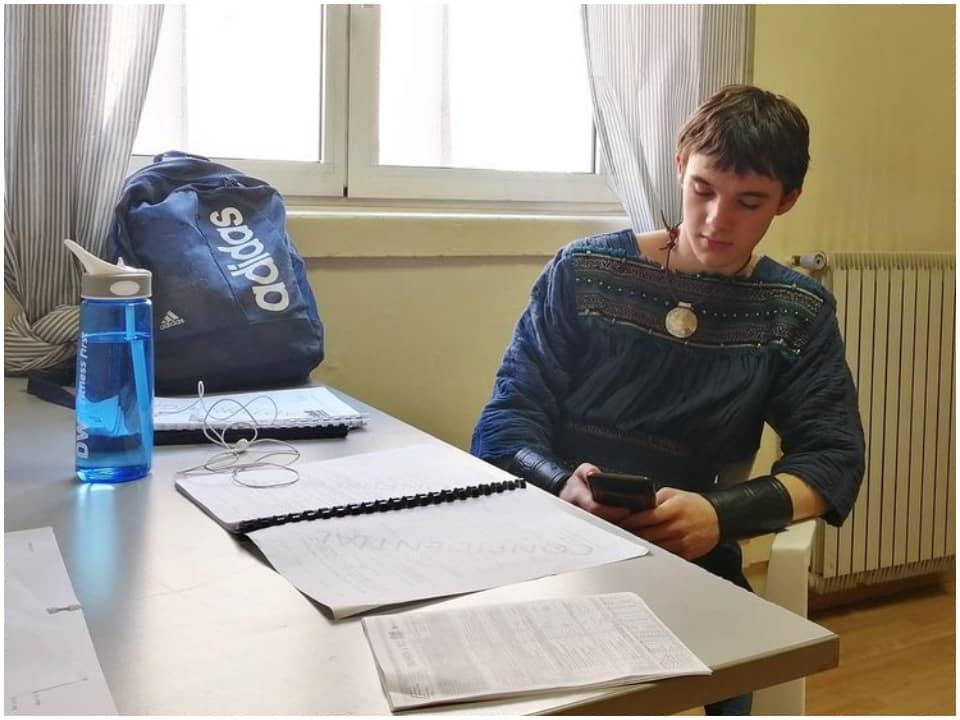
Ewan Horrocks on set during break

Did you graduate school? Do you have plans for university?

I graduated Sixth Form last year, studying English Literature, Photography and Media Studies. But, for me, my dream since I was young was to work as an actor, so my plan is to keep auditioning and working in this industry.

As a young, professional actor, who do you look up to for guidance?

Well, I always have and always will look up to my parents. They may not be actors, but they are the most hard working and loving people I know, and they have supported me all the way. Not all parents are supportive when their child says they want to be an actor, so for that I am very fortunate and grateful. In terms of actors I’ve looked up to, the list could be endless. But, as a kid, I was inspired by the likes of Johnny Depp, Harrison Ford and Tom Hanks. As I have grown older, I appreciated the works of many others like Leonardo DiCaprio, Brad Pitt, Marlon Brando etc. But honestly, the list is endless.

You have a great name, Ewan Horrocks! Please share the history of your name.

Thank you! Well, my parents named me Ewan because my dad is half Scottish and it’s a Gaelic name. Horrocks is a northern name, but sadly no relation to Jane Horrocks!

Ewan Horrocks during filming

Are you taking acting / coaching lessons?

I’ve been having acting lessons since I was sixteen and continue to now. When I’m working, I struggle to attend classes but, in my downtime, I will do my best to attend. I feel like it’s a safe space for me to make mistakes and continue to grow as an actor.

Acting on a series takes up a lot of time. What do you do on your downtime?

I guess downtime has been incredible for me so far; mainly because I’ve only worked outside the UK, giving me the opportunity to explore different cultures and cities. So, for me it’s mainly spending time with the cast and getting to know our surroundings. Having said that, I do try to keep myself occupied by learning guitar and working out.

Always find time to laugh!

What advice do you have for teenagers looking to get into show business?

I’m really not at the stage to be advising others on their careers as I’ve only just started mine, but the best thing I could say would be: if you really want it, you’ve got to work hard and stick with it!… That’s what I’ve been doing and so far, it’s paid off!

makemoremoney copy

10 ways YOU can make more Money in Acting

I think I can, I think I can, I think I can…

For certain – you can!

You can keep chugging up this mountain called YOUR ACTING DREAM… no matter how high it seems. Of course, it helps to get insight from those who have already faced the same formidable journey – and have succeeded at performing as an actual living.

So, to keep your engine going, go ahead and fuel up with this advice on how to make more money and keep your career in motion…

Julie Alexandria

Currently A TVHost/Personality and Sports reporter for Big Ten Network & MLG. Julie has hosted for MTV’s The Seven, Mets Weekly, Spike TV, and has recorded a ton of voiceovers!

1. To get more work… One of the things I did when I was starting out was to be a promotional model/booth host at trade shows. The experience is twofold: you get to learn about a product, and “sell” the idea to buyers (as Actors that comes quite naturally to us!), and, you never know whom you will meet!

Because most trade shows/conventions take place over the weekend, the time commitment is minimal, and usually won’t cut into precious auditioning time. In one instance I was a promotional model for an accessories company where I forged a good relationship with the owner. Every time she had a trade show in LA/NYC, I was her go to model for the booth. After a few shows, she asked me to be the cover model for her seasonal catalogue. Since then, I have appeared in every Spring/Fall catalogue, as well as her website.

You never know when a company is looking for a spokesperson, a “face” for their brand, or a host for their demonstrations. I’ve ended up travelling all over the country and internationally with some companies; (from Medical device sales to handbags!) as they more often like to cast someone who is familiar with their brand, and someone who can sell their concept, as well as the item itself.

My tip: familiarize yourself with the brand/company before you work your first day on the convention floor. They always like to know you did your research. Find out who attends these expos; what kind of people will you be meeting? talking to? or selling to? Conventions/Trade shows are all about networking, so there really is no better place to do so!

Follow Julie Alexandria:
FB: http://www.facebook.com/julie.alexandria
Twitter: @JulieAlexandria

Lauren Francesca

Recently cast in the movie Catskill Park and just completed acting in the movie, Bad Parents. Also working with Mark Mangold – an award winning music producer who is helping her produce her first Album.

2. To get more work… One interesting thing I did to get into more acting work was shooting my own projects. I started working as a production coordinator. Two webseries that I worked on were picked up, one to Atom.com and the other to BET. I then went on to produce content for YouTube, and a short film that was accepted in to Cannes last May.

Follow Lauren Francesca:
FB: http://www.facebook.com/Laurenisfunny
Twitter: @laurenfrancesca
www.youtube.com/lauren

Christina Calph

Currently appearing in the movie Tower Heist playing a snoody Victoria Secret’s saleswoman. Recently appeared in Arthur, alongside Russell Brand. Next up, Christina is working on new videos for her web series, “XXX : A Bad Girl’s Ball,” while dancing with her hip hop group, “Truckstop Dancers” and doing industrials for Intel.

3. To get more work… I stopped looking for approval and started playing by my own rules. Instructors, other actors, and teachers sometimes offer insight that causes the entertainment industry seem like it’s untouchable. The “Golden Enterprise” so to speak. I started treating it like I did my survival jobs…not on such a high pedestal. Started taking chances and making bold choices. I also found the nuances in the text and in the audition room really made my interpretation of the scene come to life. They want to see actors that can hold their own and don’t need to be spoon-fed with directions. With that said, I’ve learned it is important to ALWAYS work on your craft. I tend to book work most when I am in class fine-tuning my work. I also started researching past work. Going to see plays/musicals when I can and watching anything and everything I can get my hands on. I live at the Lincoln Center Library. You must do your homework.

Follow Christina Calph:
http://www.youtube.com/user/XXXBadGirlsBall


Summer Crockett Moore

Currently starring in Reading Under the Influence, traveling the festival circuit with award-winning short film A Younger Man, and awaiting the world Premiere of her movie Junction .

4. To get more work… I became a producer! I work pretty steadily as an actress, but found that I was craving more creative input, so decided to become a producer as well, so that I could have more control over some of the jobs that I was acting in. What it did was widen the playing field for me, and allowed me to showcase myself in a way that I think would have been harder to break into, as some of the roles I have played in projects that I have produced, at first glance, appear to possibly be outside my wheelhouse, but are things that I knew I could do. As a producer, I have done many projects, but as a producer / actor, I have done 4 Off-Off Broadway world premieres, 2 Off-Broadway World Premiere plays, 2 Regional Plays, and recently two films. This not only was great fun for me, as I got to work from the ground up on great projects with great producing partners, but it also helped my agency and casting directors see me in a new light as well.

Follow Summer Crockett Moore:
FB: http://www.facebook.com/pages/Choice-Films-Inc-Choice-Theatricals/264232936771
Junction the Movie:
http://www.facebook.com/pages/Junction/265823313448835
Reading Under the Influence:
http://www.readingundertheinfluencetheplay.com/

Annie Edgerton

Currently appearing in “Mamma Mia!” on Broadway through the end of January – in the ensemble and covering the roles of Donna, Tanya and Rosie. After that, Annie will be playing Paulette in “Legally Blonde” in Indianapolis through April.

5. To get more work… The biggest piece of advice I have is that you have to revel in who you are and keep doing the work to pursue what you love – because of that I booked my next gig without even auditioning for it: As part of “doing the work,” I routinely look over the photo/resume request section of the AEA website, and a few months ago I submitted myself for a show in Indianapolis for which I was called in to audition. The role was a little bit outside of what I typically aim for, but I went in prepared for it and was 100% me. The Artistic Director told me I wasn’t really right for the role… BUT he thought I was perfect for something else he was doing later this season and he’d call me in for that when they were auditioning that show! (Fantastic ‘rejection’, right?) Well, a few months later, my agent called me with an OFFER for the role – when I said I hadn’t auditioned for it yet, she said, “I know – he’s coming into town for auditions next week and hopes you accept the offer so he doesn’t have to audition anyone else for it.” Makes a gal feel pretty darn great, and I love that story because things can – and do – really happen that way!!

6. To get more work… In the same vein, I am now in a Broadway show because I went to a run-of-the-mill required chorus call years ago – at the time I had no agent, no major credits, and was in a dry spell, but I was what they were looking for and one thing led to another. You have to be an ARTIST, not just an actor, singer, dancer… you have to take classes, and create your own projects and collaborate with other artists CONSTANTLY. For all of these great stories that people are sharing, there are hundreds of thousands of stories of NOT booking a job, so you really need a foundation – not just to get you through the tough times but to put your whole career in perspective. (Because if you don’t want a CAREER, then go find something else you’re passionate about and go do that.) But if you’re willing to commit to this above all else, then do it – and it will become a joyous experience, not just simply a series of auditions.

Follow Annie’s Journey!

Annie is working on a project to sing the national anthem for every Major League Baseball team and hope to surpass the halfway point next season.

http://www.facebook.com/#!/pages/Annie-Edgerton-Anthem-Quest/398786458091


Herman Chavez

Recently appeared on Pan Am, Suits, The Good Wife and in the short film Una calle sin salida, which premiered at Cannes. He also coaches on The Mental Game of Auditioning.

7. To get more work… One interesting thing I did to get more acting work, was first to be specific as to what genre of acting I wanted to work in. Once I knew it was film and TV, I figured let me go to the source. So, I started taking class with a casting director, and submerged myself working practicing, just like an audition [because the practice needs to parallel as closely as possible how you’re going to execute it in the real world], exclusively on scenes from T V episodics, Feature films, and sitcoms. I knew I needed to not only own my product but know it and my customer, inside and out, because I know casting directors who get annoyed when an actor comes into their office and wants to impose their theatre theory, or scenes from plays theory and are unaware that there is a different pacing rhythm, subtleties to film and TV, actors spend so much time working on scenes from plays, when most of them want to work in film and TV. It’s like being trained in classical music and walking into Russell Simmons’ or Jay Z’s office to impose your theory on them… and then getting pissed because you’re not getting work as a hip hop artist. To me, all actors are salesmen/ or women. We sell acting performances (auditions) to the customers (casting directors and directors). Either they buy it or they don’t. And if you can’t find a casting director you feel comfortable with, try to learn from someone who is a working actor, someone who will give you that inside information because success leaves clues. At the end of the day, you can do all the networking that you want. It is going to come down to the actors read at his or her audition.

For more insight from Herman Chavez:
Sign up for coaching classes, starting soon: www.thementalgameofauditioning.com


Keisha Omilana

A Supermodel and super woman – Keisha just booked a deal with AVON! She also walked for Pamela Dennis and Monique Lhuillier during Fashion and Beauty week NYC. And recently shot a cover for Vogue!

8. To get more work.. I have been told for years “Your nail beds are so long and beautiful. You have nice hands!” So, I said, “you know what… If I have a ‘nice/beautiful’ face and can get paid for it why not see if I can make money with my so called ‘nice hands!'” I called and submitted to the Parts modeling agencies in NYC and two called me in. I did not work immediately, but I put myself out there, built my Parts book, and within 6 months I booked Maybelline, Veet, editorials, and a Band aid commercial! The extra money quickly stared rolling in from that point on!

Keep up with Keisha Omilana’s modeling and philanthropy work here:
Twitter: @komilana
Facebook: http://www.facebook.com/KeishaOmilana#!/profile.php?id=620829759


Sarah Lowe

From NYC… Sarah is currently appearing in Jersey Boys Las Vegas, while working as a backup singer for Penn Jillette’s (Of Penn & Teller fame) NoGod Band, and performing with The Apple Sisters.

9. To get more work.. Honestly, the one thing I did to get more acting work was take improv classes. It gave me the opportunity to have more confidence and connect with commercial casting people. Also it allowed me to perform on a regular basis. I didn’t get paid, but I didn’t have to pay – and, in the long run, I was able to invite casting directors to my show, or at the very least always had an interesting talking point when I got in a room!

Check out Sarah Lowe’s Performances:

www.applesisters.com
Facebook: http://www.facebook.com/#!/profile.php?id=673697882
http://www.jerseyboysinfo.com/vegas/cast.html


Elizabeth Merendino

Originally from New York, Liz is currently traveling, performing theatre in London, Tokyo and Hong Kong. Her one-woman show “Seasons of Liz” just played at the Edinburgh Fringe Festival. And, Liz runs her own music education consultancy firm, Overture Limited.

10. To get more work.. I market myself! I made a Facebook page and asked all my friends to Like it – this way their friends see your upcoming performances as well, and they might keep you in mind for future gigs. I also twitter about performances I am doing. I attended parties where I knew there would be people I could give my card to. I sing for charities to get my face and name out there. I developed a one-woman show. And I keep up my acting website, so people can learn more about me and hire me!

For more on Elizabeth Merendino:
http://lizmerendino.com/
Facebook: http://www.facebook.com/pages/Liz-Merendino/227665703937664
Twitter: @LZMerendino

Acting Technique - Clay Banks Studio

As we continue our “Advice from the Experts” series, we are joined with special guest, Clay Banks, owner of Clay Banks Studio, Intl. (CBSI) and Clay Banks Productions. Coach Banks, the title his peers and actors refer to him by, began his path as a Fortune 500 business and life empowerment coach and successfully navigated a fifteen-plus year career as an actor.

He then founded Clay Banks Productions and Clay Banks Studio International where he found his passion for coaching actors, not only to strengthen their skills, but also to learn how to manage the business of acting. Coach Banks is a recurring Master Coach at the SAG/AFTRA Headquarters and with the American Academy of Dramatic Arts, Hollywood. He is also a regular contributor to the Backstage publication.

Acting Technique 2 - Clay Banks StudioWe asked Coach Banks our Series questions and were met with a humorous and playful but serious tone. He coaches actors as athletes, expecting his performers to show up ready to learn, grow and achieve their own set milestones.
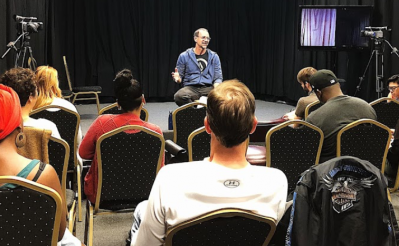
Here is the insightful conversation we had with Coach Banks:

Coach Banks, what is one golden piece of advice you have for an actor starting out today?

Learn how to act. [laughing] Learn how to act. Hard stop. Next question. No really, learn how to act. The biggest insult to the profession is not knowing how to act.

How can an Actor best create a “unique character”?

They have to discover the character within themselves first. Then observe people as objectively as possible. Lots of people, all different types of people, and understand the basic archetype of character.

What are the most important elements on an actors’ resume to you?

The most important elements are that the resume is structured according to industry standards, so the actor doesn’t look like so oddball or green. And also, the category is ‘Special’ Skills, that is, if the skills are listed, it means you can crush it. And nobody cares about badminton and whether or not you have a driver’s license.

While we might be devastated that badminton would not necessarily be considered a “Special Skill”, this point is so important. Special Skills are a set of skills that are uniquely you. What sets you apart from the thousands of other actors working today? Do you have a solid grasp of multiple languages, are you a licensed sky diver, are you an accomplished celloist? These are the items to list in your Special Skills set. Another hint for you: if you notice that your list of Special Skills is lacking, do not stress. Consider it an excuse for you to learn how to play and perfect some of those ‘wish list’ ideas!

Coach Banks, as you know, there are so many wonderful actors out there working today. Who are some of your favorite performers?

There are so many great performers. I think some of the top performers today are Tilden Swinton, Ralph Fiennes, Cate Blanchette, Gary Oldman, Margot Robbie… yeah, a lot of great work out there.

What are some of the essential Self-Taping practices you work on with your actors?

Acting Technique - Clay Banks Studio 3First and foremost, it’s not a self-tape, it’s a performance. Don’t look at it as a self-tape. It’s a performance, and all the elements of effective performances needs to be in place. Most articles I see are about lighting [and] audio. You can get that all right, but If your acting sucks, it sucks. You’ve got to get the performance right, because that is key! If your acting is great, it will be great for self-taping – it should all come together.

Another important key element that Coach Banks talks about it is the action of taking each audition as a chance to give a memorable performance, regardless of the size of the role. As a part of his coaching in his on-camera acting classes, Coach Banks hones on the concept that your job as an actor is to make fans, not just book the role. Making fans of the Casting Directors is part of the work. And the way to improve your likeability is to give a great performance.

Can you elaborate on the importance of getting the audition locked in?

I get actors that come to me when they get serious projects, which is great, but why are you not [coming] here for the under 5 and co-stars? I have a guy who comes to me for one-liners and his booking rate is excellent. I’m going to work with you so that you get a performance on that self-tape. I’m going to help make you better. Every self tape I handle like a microcosm of a film. Coaching, performance, speed of memorization . . . that is what makes the difference.

Coach Banks can be found at Coach Banks Studio International (CBSI), located in Toluca Lake, Los Angeles, CA. Go to his website for more information: www.claybanksstudio.com. Banks offers ongoing classes throughout the week, private coaching sessions and even a complimentary sample session if you are interested in seeing if his coaching style fits for you.

DirectSubmit Advice From The Experts

‘Advice from the Experts’ Series – MJB Talent Agency’s owner, Myreon Arslan

The business of acting can be overwhelming and intimidating. It usually begins with a desire and a passion to perform as a storyteller but can quickly turn into an unforgiving abyss of bad advice and talent over-saturation. How do you navigate the constantly shifting world of acting while standing out amongst your colleagues?

We chatted with Los Angeles Talent Agent veteran, Myreon Arslan, owner of MJB Talent Agency, to reveal some of his best advice for new talent entering into the industry, as well as for those actors who are looking to improve their resumes and relationships with casting directors.

MB talent agencyMyreon, what is one golden piece of advice that you would give to an actor starting out today?

“Actors better have unique aspects to their training. They need to be technically ready to showcase their talent [and] they need to know how to put dominate self-tapes uploaded to Casting [websites] to have a chance these days.”

We know that self-tapes have become the new normal for casting websites, especially in this current Covid-cautious world, but what makes a self-tape stand out? According to Myreon, it’s about carefully reading the directions and understanding the tech side of self-taping.

What are the essential practices you can do to help your performance shine?

“Follow the Directions to a Tee! [Have] excellent tech SOUND and PICTURE [and] make sure that you speak your dialogue clearly.”

There are many self-taping businesses in Los Angeles that can help you create a professional looking self-tape, but they can be expensive. However, there are several ways to create your own in-house studio. Remember that you are investing in yourself as your own career commodity. It is often optimal to purchase a backdrop and lighting for filming your auditions. If these costs are currently too high to purchase on your own, opt to gather a few actor friends to share in the costs. This way you can help each other with your self-tapes, as well as practice with free material to improve the outcome of your performances.

When it comes to the audition itself, crafting a memorable performance starts with building a unique character. Separating your work from the whole is how Casting takes notice and may keep you in mind for future projects as well. According to Myreon, the process starts when the actor learns how to develop character by going within.

Myreon Arslan of MJB Talent AgencyWhat advice would you give new actors on how to create a unique character?

“Actors need to create unique characters from the inside out, which means, as well as the emotional aspect of the characters, they need to bring physicality, posture, and vocals, unique from their own selves, that create that unique nature,” says Myreon.

Looking at working actors today, there are many to learn from who showcase this type of education and experience. Actors that leave an impact on casting directors are those who are able to craft a performance that is authentic and true to the material.

Who are some of your favorite actors working today?

“Oh Man! Very many depending on style and programming, but some of my favorites are [for men]: Eugene Levy, Sasha Baron Cohen, Joaquin Phoenix, Ben Kingsley, Robert Downey Jr. and Jason Bateman. And [for women]: Reese Witherspoon, Margot Robbie, Gal Gadot, Hailee Steinfeld, Kiera Knightley and Julia Garner.”

As you improve your self-taping skills, you should continue to improve the appeal of your resume as well. The most obvious is to make sure your contact is current and your spelling is correct. You would be surprised how important this simple step is. Developing a stand-out resume, according to Myreon, begins with quality education and recognizable credits.

Beyond the esthetics, what are some invaluable elements of your resume?

“Keywords for your resume are: Unique [and] Extraordinary special skills; like languages and performances skills that not many others bring to the table.”

While you hone your resume and self-taping skills, make sure to use the vast amount of resources available to you to educate yourself on these skills. These actor resources can be found on actor websites like Direct Submit, imdbpro.com, and similar services that help actors develop their CV. Always keep your resume up to date and practice your craft!


Role Alerts from DirectSubmit

The Secret to getting more Auditions is submitting as soon as a job is posted, so you’re in the first batch to be looked at. The later you are with submitting the more you’re mixed in with a flood of others which lessens your chances of being looked at in depth. Also the client may have already found the talent they needed.

The best way to do this is to have your Role Alerts set up. That way you get notified by email or text when a role is added that may be right for your type.

See what’s casting now.

Gabrielle, Joxer & Xena of Xena: Warrior Princess

Some actors tend to believe that if they are charismatic, they will win the audition room over and get the part. While that may be somewhat eensy teensy true, the real test is to see if you can bring charisma to your character. Why’s that? Because you want to win the audience over.

According to Merriam-Webster, the definition of charisma is “a special magnetic charm or appeal”.

Whether you’re nervous, shy, socially awkward, anxious or just want to be respected doesn’t matter. You’re an actor! You’re going to transform the words on the page and play out a part that you hope continues forever. The way to do that is to make sure the audience demands you stay. So just how do you make the audience fall in love with your character?

Below are five tips to help you command charisma for your character:

Gru of Despicable Me

USE A DRAMATIC PAUSE

One line, two lines, ten lines — no matter. There’s no rule that says you can’t pause during a sentence or in between sentences. This brings anticipation. It makes the audience lean in a little closer to their screen as if you’re going to tell them a secret.

Example without the pause:

“Hey! You over there! C’mere! I’ve got something I want to share with you.”

Example with the pause:

“Hey! (nodding head up, pause) You over there! C’mere! I’ve got something I want to (pause, slow words down, dun-dun-daaah!) share… with… you.”

Video example: Fast forward to minute 1:32 – See how Gru creates anticipation.
Despicable Me – Gru Wants To Steal The Moon Scene

A Fish Called Wanda
A Fish Called Wanda

PUT A SMILE IN YOUR VOICE

Putting a smile in your voice doesn’t mean you have to be physically smiling. It means you should be emotionally expressive. You can use hand gestures and full body motions to get this across. This works well for serious and comedic characters.

Example without the smile:

“Are you kidding me? What do you mean all the money in the safe is gone?!”

Example with the smile:

(big eyes) Are you kidding me? What do you mean (hand gesture as if you’re carrying a huge pile of money) all the money in the safe is gone?! (neurotic look)

Video example: Both actors use their faces to emotional expressions.
A Fish Called Wanda – Kevin Kline and Michael Palin

Jack Tripper - Three's Company
Jack Tripper – Three’s Company

OWN THE SPACE AROUND YOU

Anyone ever get too close for comfort? Or too far if you’re in an intimate scene? Your character needs to own their personal space. Let’s say you’re in a two-person scene and something super funny happens. It’s a natural response that you’ll both have a hearty laugh, maybe slap each other on the knee or hit the table because it’s so darn funny. While you’re sharing space with the other actor, you need to keep a halo effect around you where there can be no unwanted invasion of space. This allows you to control what happens in your character’s personal space.

Example: You and your scene partner are laughing it up. Instead of letting your partner slap you on the knee, you can do a full on belly laugh where you arch your back backwards and spread out your arms, creating an area that’s just for you. This gesture will keep the audience’s eyes on you throughout the scene.

Video example: Watch how John Ritter creates a space around him with no space available.
Three’s Company – Jack in Jail (John Ritter)

Crazy Eyes from Orange is the New Black

MAKE YOUR EYES SPARKLE

Creating a charismatic character is not easy. No matter what type of character you’re portraying, there is a way to make your eyes sparkle, or twinkle. By doing so, you will pull the viewer into your character and if you do it just right, the viewer will stay with you throughout your run.

For headshots, photographers sometimes tell their subjects to put their head down and look at the ground. Then the photographer will count to three and on three, you lift your head, smile and make “sparkly eyes” into the camera.

Example: You have a closeup. The scene is you walking into a hotel and seeing a long lost friend. That moment of happiness, seeing your friend, will make your eyes sparkle. Take that sparkle and apply to all scenes, even if they are sad, crying scenes. Your eyes will draw people in and have them talking about you non-stop.

Video example: Uzo Aduba uses her eyes to command every scene
Crazy Eyes from Orange is the New Black

Gabrielle, Xena, Joxer

BRING AUTHENTICITY TO YOUR CHARACTER

Nothing makes an audience cringe more than bad acting. The viewers want to feel what you’re feeling and want to be on the journey with your character.

Bringing authenticity to your character is the most charismatic thing you can do. It will attract the viewer to your character without them knowing why they’re attracted. All they know is that they want more.

Example: Your character is a doctor, plumber, fisherman, mom… someone who wouldn’t necessarily know how to sing and dance, yet the script calls for your character to do just that (like enter a talent show even though your character has no talent.) Even though YOU the actor may be great at singing and dancing, you want to portray your character as not having those skills, so put your ego in check and sing and dance how your character would — which could be awful!

Video example: So deliciously “bad” you want to watch it over and over again. :)
Xena, Gabrielle & Joxer Are Dancing in the Moonlight

And there you have it! By using these five tips on how to bring charisma to your character, you will be able to command both the audition room and the audience!


Pyper Braun. Photos by Brandin Shaeffer.

Being a kid in show business is not an easy task. Just ask seven year old Pyper Braun, who stars on the Netflix series Country Comfort, which came to a close after one season.

Whether a series lasts one year or ten years, the experience gained on set in a working environment is a tireless effort. The child actor is expected to interact with adults on a professional level. Learning from scratch on how to prepare for a role, how to behave on set, even to adjusting your schedule to wake up at 4am, is no easy task.

Straight from the mouth of a seven year old, let’s learn about Pyper Braun’s behind the scenes life as an actor!

You recently played Chloe on Netflix’s series Country Comfort, which stars Katharine McPhee. Tell us about your audition.

The audition process was really fun. My auditions were in person. I had to memorize pages of lines and prepare a song to sing. I was brave and sang in front of the show’s creator Caryn Lucas. I walked out of the audition feeling amazing. At the callback they asked for more lines to be memorized and I had to speak in a southern accent. My mom helped me learn the accent in one day while we were shopping. The last audition was a mix and match at Netflix where I got to meet Jamie Martin Mann who plays Brody on the show. A few weeks later my manager Facetimed me and told me I booked the job. I screamed and was jumping around because I was so excited.

Country Comfort Cast

Pyper Braun, Jamie Martin Mann, Griffin McIntyre, Shiloh Verrico, Ricardo Hurtado

In Country Comfort, you’re one of five siblings, all ranging in different ages. What do you and your fellow “siblings” do when you’re filming but there’s a big break in between scenes?

It was really nice to have other kids on set to play with. Each of us had our own dressing room in one long hallway. Several times a day I would run up and down the hallway to get some exercise and make sure everyone was awake! During rehearsal and filming we didn’t have a lot of time for breaks, but when we did we were all allowed to play together. Sometimes we danced before filming. Ricardo Hurtado would put a puppet on his hand from the set and make me laugh. Griffin McIntyre had all the cool toys and would share with us. Shiloh Verrico and I liked going to crafty to get candy! The hair and makeup rooms were at the end of the hallway and they were always happy to play with me and listen to my jokes. Some of the crew would also sing and dance with us! When we came back to finish filming after Covid we couldn’t play together anymore. Table reads, school, breaks and lunch were all done in our dressing rooms. I brought toys to set and played music in my dressing room. My mom and I would color, play cards and games. It was still fun to be at set and see everyone.

You’ve been in show business since you were four years old, before you even started school. Once you became school age, did you attend in-person school or are you home schooled? How does school work when you are on set?

I go to a year round public school. When I’m on set I have a teacher who does school with me every day. Before Covid we had a school trailer with our own desks that we decorated. My set teacher works with my regular school teacher to make sure I’m learning everything and getting all my homework done. Set teachers are the best! They always make it fun, even when the work gets tough. When I’m done filming I go back to public school.

Pyper Braun. Photo by Danielle Braun.

What happened when you lost a baby tooth and your new tooth didn’t grow in yet. Did you have to alert your manager and agent and have to send them a new picture? Does losing baby teeth prevent you from getting auditions and jobs? What about if you need braces in the future?

When we were home during the pandemic I lost my two bottom front baby teeth. My mom told my manager and Caryn Lucas, the show’s creator. It didn’t stop me from getting a job because we weren’t working during the pandemic, but it can. Some jobs require that you have all your teeth. Caryn didn’t mind that I lost some teeth when filming started again. I still looked like myself! The writers wrote in a joke about me losing my teeth but then took it out later in rehearsal. I grew two inches while filming too. I wonder if anyone noticed when they were watching the show!

You’ve done modeling and were even on toy boxes! What’s it like during a typical modeling shoot?

The modeling shoots that I have done are really fun. I usually bring my own clothes and they tell me what to bring. My mom and I pack the night before so we are ready. All jobs are different, but when you get to the shoot they can have hair and makeup people to help you look your best. Sometimes they have snacks but it depends on how long the shoot will last. When I did toy modeling I spent the day playing with toys! It’s awesome! One time I even got to play with toys in a pool! Sometimes they play music to make it more fun and let you take home a toy. There is a photographer that tells you how to pose so that it best shows off the toy. I have to remember that when I’m playing with toys on a shoot it’s still work time and I have to be ready to work at all times.

You are a competitive dancer. How did you get involved in dance? What do you like most and what do you not like about sports? Are you still involved?

I used to be a competitive dancer. I started dancing when I was three years old just for fun. I really liked it and wanted to get on stage in front of an audience. At competitions you get to wear cool costumes and put on makeup which I love! Dancing in front of people is exciting and I don’t get nervous one tiny bit. I stopped dancing to focus on acting. When you are a competitive dancer you have a strict schedule and can’t miss much. I danced five days a week for several hours. I couldn’t dance and do the type of acting I really wanted. When I started filming at Netflix we worked five days week, eight hours a day. Not really much time for dance. Now that we are done filming I am going to go back to dance but not to compete. I love dance and music and making friends. Now I can act and dance!

Which American Girl dolls do you have? What was it like going to the American Girl doll store for the very first time? Did you get dolls that look like you? Which store did you go to?

I love American Girl dolls. I got my first doll for my birthday when I was five years old. Her name is Kit and she looked like me. I loved her so much that when I work hard and save up my mom takes me to the American Girl Doll Store in Los Angeles and lets me spend my own money to buy a doll or accessories. Work is usually on a set in LA that is close to the store. I spend a lot of time looking for the exact doll that I want because they are so special to me. The store is really big and you can spend a lot of time shopping. There is also a café that you can take your doll to and eat! My favorite doll is gorgeous and her name is Nanea. She’s from Hawaii. She has really pretty eyes and fun accessories. My newest doll is a retired doll named Logan. He looks just like my brother Logan! You can tell I really like American Girl and I think everyone should have a doll!

Pyper Braun. ClapboardFor Country Comfort, did you attend a wrap party or any red carpet events? Share the stories!

We wrapped Country Comfort at the end of October during the pandemic. There were still a lot of rules in place. We were getting Covid tested three times a week, wearing masks, shields and social distancing. We couldn’t have a wrap party because of the strict rules. It made the end kind of sad but we all clapped for each other when they wrapped each of us on the filming of the last episode. When the show was released we had a small family party at my house. My mom catered food, decorated the house and my best friend had special cookies made. We all watched a few episodes of the show and laughed a lot! A few weeks later I was really lucky and was invited to attend an event called a gifting suite. You go to the event and take pictures holding certain items like a toy or a skateboard. You meet vendors and they give you gifts to take home. It’s fun to dress up and be invited to events and meet new people.

You’re a member of the SAG-AFTRA union. Does the union send a representative to the set to make sure all is well? What does being a union member mean for you?

I don’t really know these kinds of questions. I’m only seven years old and my mom handles those kinds of things. Maybe she can answer this one.

(MOM’S RESPONSE)

Pyper became a member of the SAG-AFTRA union in 2019. She was eligible due to her work on previous union jobs. A union rep did come to set at Netflix on Country Comfort. They spent a few minutes chatting and making sure to answer any questions we might have. They always make sure you are comfortable and the kids are being taken care of. We are very grateful for the union and all that it does for its members.

Pyper Braun. Photo by Brandin Shaeffer.

Photo by Brandin Shaeffer.

What advice do you have for kids who want to start a career in show business?

My best advice is to remember to not give up. You get a lot more no’s than yes’s. Be prepared to work and work hard. It takes a lot of time to memorize lines and go to auditions. Work on new things like accents and funny faces. It’s very competitive, but always root for each other and build each other up. And don’t forget to have fun. It’s a tough business!!

Pyper Braun’s Socials:

Instagram

Twitter

Facebook

Connie Giordano. Photo by Ken Volpe.

Actress Connie Giordano, who can be currently seen in Mare of Easttown with Kate Winslet and Jean Smart, was super enthused to learn she’d be working side-by-side with actors she’s adored from afar.

However, Connie soon realized that she had to stow away her fangirl excitement and be a professional.

On set, there is no room for amateur behavior. Schedules are tight, anxiety could be high and things could go wrong. Your purpose is to do your top notch job and not let anything else stand in the way.

Read on to see what great advice Connie Giordano has to share with actors!

Connie Giordano in Mare of Easttown

You play Patty DelRasso, a nurse and restaurant owner, in HBO Max’s Mare of Easttown. Tell us about your audition.

I auditioned and didn’t hear back for weeks. I never got a callback, so I didn’t think I got it. My audition was in 2019, in person, and I had just a day and a half ahead to prepare two scenes. I was with my Casting Director in Philadelphia, Jason Loftus, at Heery Loftus casting, a great CD and a nice guy! I wore something neutral because I knew my character was a nurse.

What types of discussions did you have about your character prior to and during filming?

On my first day on set, we sat around the table. Kate Winslet was there, the director, and the actors who played my family members. We talked about the story, got to know each other a little, blocked one of the more challenging scenes, and rehearsed. It was thrilling!

What feeling did you get when you had your very first scenes with Kate Winslet and Jean Smart?

I was just thrilled to meet them! I met Kate first, Jean on a later shoot date. It was just an honor to work with actresses I have admired for years. I had a moment on the first day when I thought, “I’m sitting next to ‘Rose’ from Titanic,” haha! But no, I was there to work. I didn’t feel nervous; I felt exhilarated!

Did you have to sign an NDA (non-disclosure agreement) for Mare of Easttown? What exactly does it say in an NDA?

Yes, I did. I needed to agree that I wouldn’t reveal plot lines or location sites. That was fair. I didn’t want to spoil the end!!

Connie GiordanoYou’re a resident of Pennsylvania, where Mare of Easttown was primarily filmed. Did production put you up in a hotel or did you commute from home?

I did both. I had to quarantine during 2020 in a hotel before being on set. But I also came from home before Covid. I lived in NY for ten years and still go back frequently for auditions. It’s not that far for me, it’s an easy commute for auditions, and I stay over whenever I need to. I have more space in Philly!

You’ve been in numerous stage productions throughout the years. What attracts you to stage vs. television/film? Do you find it difficult to go from projecting your voice to talking at a “normal” volume? Is it true that every stage actor’s dream is to be on Broadway?

The stage is where my acting roots are. I think it’s where you learn the skills. Then you adapt to performing in front of a camera. It’s my dream to be on Broadway. I’ve been close and have worked Off-Broadway quite a bit. In general, Off-Broadway productions tend to be more “artisitic,” perhaps because there’s pressure for big-box-office dollars, but there are always exceptions to that rule. I’ve seen outstanding work on Broadway too!

How did you get your SAG-AFTRA and AEA cards?

I got my Equity (AEA) card being cast in a play at The Montgomery Theater in Souderton, PA. I earned points, then joined SAG by doing extra work at first. AEA was very exciting because I had been trying to get in that union for ever. I even gave up a trip to Israel to be an understudy to get the card!

What type of training have you had? Why is it important for people in the entertainment field to be coached?

I went to NY after college, took classes, but then ended up going for an MFA from Brooklyn College at CUNY. I wanted to complete the training I didn’t feel I had received in undergrad. Acting is a skill like anything; you need education and training. A doctor wouldn’t perform surgery on their first day of med school. The same thing, education, and experience are key.

You’re a representative of Snow Joe/Sun Joe products on HSN. How did you get involved with this company? As a representative, what are your responsibilities?

I started representing brands on QVC back in 2003. I was at a trade show and met a talent agent, Jean Murray. She groomed me to represent all different kinds of products. HSN was purchased by QVC (now Qrate), and I was presented to sell this brand in 2020. I work primarily in the winter with Snow Joe because it’s too warm to sell outdoor snow products in Florida, where HSN is located. Lucky me! I am now in the Home and Garden outdoors categories. My job is to learn the products, and become the expert on-air, make it fun and exciting for viewers to buy. I love the products, it’s an excellent brand, and it’s thrilling to do the work!

Connie Giordano loves birds!

You love birds. What is it about birds that interest you?

Ha! Guess you got that from my Instagram page. I love cooking and baking too! I put those pics up as well. I have a feeder in one of my trees that draws many birds, and I get hummingbirds on my deck. I take snapshots when I want to have fun. I love the outdoors, and I’m an animal lover. :)

Anything else you’d like to say?

Advice to actors, don’t ever give up! My favorite charity is Genesis Pregnancy Crisis Center. It helps women and young couples struggling with unplanned children, everything they need, and job counseling. My sister volunteers and I support them. It’s a wonderful place.

Photographer: Ken Volpe: www.transposure.com
Hair and Make Up: Brittany DeCheine, D Cheine Beauty

Jesse Kove. Photo Credit Jake Isham
Behind the Fight Scene

Jesse Kove plays the varsity Captain bully, David, in Netflix’s Cobra Kai, who bullies the younger version of John Kreese (the adult character John Kreese was introduced in the 1984 film The Karate Kid as the unhinged Vietnam War veteran and sensei of the dojo, Cobra Kai.)

Watch the fight scene HERE.

Fight scenes are an integral part of Cobra Kai, which was originally launched on YouTube Red before moving to Netflix, where the momentum picked up. As exciting as fight scenes are to the viewer, the rehearsals, getting in shape and memorizing the moves can be exhausting.

Jesse Kove gives us a behind the scenes look at his grueling fight scene with Barrett Carnahan in Cobra Kai.

Did you have an audition or were you gifted the role?

I absolutely had to audition for this role. I worked on it for about a week and did not talk to anyone. I wasn’t given too much information about the role. In fact, my team originally thought the role was for the young version of my father, John Kreese. And then I found out in the audition room that it was actually for the bully. I got a few notes in the room. One was that they wanted me to be even more of a jerk. I asked them, “How much of a jerk do you want this guy to be?” And they said, “Crank it all the way up.” I got a call a few weeks later that they wanted to bring me down to Atlanta where my dad was already filming season 3. So it all came together beautifully. I was honored to step into the Cobra Kai, Karate Kid universe.

Jessy Kove in Cobra Kai

In Cobra Kai, you and a buddy, Ken Barefield, are in a long fight scene with young Kreese, played by Barrett Carnahan. Was there a fight scene coordinator? Did you do your own stunts for this scene?

I had flown into Atlanta the week before we started shooting so I could work with Hiro Koda, who was the stunt coordinator at the time. We did rehearsals in the “stunt” Cobra Kai dojo to work out all the kinks. They had an entire video that was edited to show me what they wanted the fight sequence to look like. I was very intimidated at first, but then once we actually did it in person, we caught on pretty quickly. Barrett Carnahan (young Kreese), unfortunately — because of the scheduling — didn’t get as much time as I did, and we were rehearsing the fight sequence on the day of filming during “lunch” [laughs]. But he jumped right in as if it was second nature. And we had a “brawl,” pun intended [laughs].

Did you have rehearsals, table reads or run lines with fellow actors? What exactly goes on at a table read?

They did not do a table read for this sequence. Usually, they’ll do a table read of the first episode when starting a new season to get everybody excited about the show and also to show the producers and the studios what it’s going to be like. Since Cobra Kai was going into its third season, they already knew where the trajectory of the show was going, and everybody was comfortable as those characters. I did have some creative talks with the writers and producers — Jon Hurwitz, Hayden Schlossberg, Josh Heald — about my character. They were so excited about this character because it was someone that they had created that they were bringing into not only the Cobra Kai universe, but also the Karate Kid universe. Crossing those two worlds was incredible.

Jesse Kove
Jesse Kove

Some of your other work was the Lifetime film Christmas on the Menu and a war movie called D-Day: Battle of Omaha Beach. How is working on a series different from working on a movie?

On a series, things move a lot faster as, I believe, since you’re under the gun a little bit more. With a movie, you get a little more time to sit with the characters, to elaborate some of the sequences. But it all depends on the project.

What type of training do you have and what are some important values you learned in the training?

I have training in horseback riding, theater, as well as off-Broadway. Acting coaches. Weapons training with Taran Tactical. And of course various different martial arts training over the years. I am always looking to broaden my skills and be the best that I can I hold myself to a very high standard. One of the best things I’ve learned is the responsibility of learning these new skills and the focus that they provide.

How important is it for an actor to have a healthy mindset?

Having a healthy mindset keeps you going in positive ways. Sometimes the work can drain you physically and emotionally. When I was shooting D-Day, that film was incredibly physical and emotional. I just kept reminding myself that the soldiers we were portraying actually had to go through this in real life, and that I could not complain because they couldn’t. That’s what motivated me to get through that. It was probably the most difficult movie I’ve done physically.

Martin Kove and Jesse Kove

Your dad, Martin Kove, will forever be associated as the tough, bad guy John Kreese. In general, what do you think about actors being pigeonholed into the same types of roles they are known for?

My dad is definitely an artist, and playing bad guys is so much fun because the playing field is so big. You get to really expand on your character choices as a villain. And I think my dad really loves having a huge canvas to paint on.

What is 5.11 Tactical and what’s your affiliation with them?

The name “5.11” comes from the highest rock-climbing difficulty level that was listed in the Yosemite Decimal System. 5.11 is a great company that I love working with as they supply clothing and gear to military, law enforcement, and also general public as overall outdoor wear. I’m someone who is always on the move, as well as on various movie sets and television shows around the world, and I love what they stand for. I wear their clothing daily. We also recently did in commercial with them where my dad even has a funny cameo as “maybe” John Kreese (wink wink).

Inquiring minds want to know if you currently have a significant other! What do you look for in a person?

Yes, I am in a relationship. One of the first things that I loved about my girlfriend was that she had this great big pit bull, whose name is Brody. And I thought to myself, well, if she’s willing to carry him around and deal with everything that comes along with the big dog, she’s gotta be one incredible woman. I love kindness. And I also appreciate when I can fully be myself — which is a pretty wild guy — and have that freedom with my significant other, which I have now.

Anything else you want to say?

I love the fans of Cobra Kai so much. They are the greatest fans in the world. And this goes for my father and myself. We couldn’t do it without their support, and the show wouldn’t exist without their support. We hope to continue to entertain you and bring you more Cobra Kai joy.

Casting Models - DirectSubmit

Find Modeling Agency Open Call Dates and Times

Casting notices for models of all types. Fashion, Commercial, Real People, Showroom Modeling, Parts Modeling, Plus Size Models, Child Models, Teen Models, Alternative Models, Influencers and Babies.

Talent: See what’s listed now

Agencies: Add your open calls and call for Direct Submissions on this page


From Disaster to Master of your Acting Career

An acting career is like any other career in terms of skill level and how well you can market you skills. The one thing that totally separates an acting career from everything else is that what you look like, and what you sound like are probably the most important things.

Here are some things I see every day when looking through talent resumes and some quick fixes to get the disasters to master level in no time:

Disaster Scenario:

An actor DirectSubmits their resume to a casting director for consideration for a role in a film or commercial.

Problems I see often:

– Talent did not send the casting director a complete resume! Maybe they didn’t have their Stats, Contact Info, Size Cards, Special Skills, Training or Credits listed. Maybe their Main Photo is not a good quality or it’s turned sideways. Maybe it was a bad Actors Reel or lack of a Reel.

Any of this is easily fixed by looking at yours now and simply adding or editing what you see. You can get to all of this from your Talent Dashboard now. Since the dashboard tells you what parts of your resume are missing, this should be a snap! 

Now, any given part might matter a lot to the casting director, so as they look over resumes they are seeing either your great show business prowess or complete laziness. So just having everything in it’s correct place and looking the best it can is an easy fix to give you a better chance of getting the audition.

If you’re not sure how how this stuff should look or be written, we have examples on our resume pages. You can also do things like research: Actor’s Headshots, What makes a great Actors Reel, How are Actor Resumes formatted. If you want to specifically see how working actors look, do a search for Talent Agencies and have a look at their rosters of talent. That will give you a good indication of the quality you should be presenting.

For Headshots and Reels: 

If you don’t have a great Professional Headshot yet, the fix is to get one ASAP. These days people often think their selfies will do the job… maybe it will be depending on the jobs you’re submitting to, but will nearly always make you look like an amateur and therefore get clicked on less resulting in getting waaaay less to no auditions.

For Reels, an Actors Reel is usually made up of the video from past roles they had, if you have this material, keep it continuously updated as better work comes in. Of course it’s free to add these to your resume whenever you have them and the same would go for Audio Reels for Voice-Over and Singing. Actors often make different reels for different kind of work they booked. You will often see they have their Legit Reel (meaning Film, TV or Theater work) and Commercial Reel. They may also have a Dramatic Reel and a Comedic Reel. This all depends on the performer and what types of work they are after. 

If you’re newer and don’t have video from past roles yet, you can at least start by adding Self-Taped Monologues and Scenes that you choose for yourself. It’s not the same as an Actor’s Reel, but it’s video that people can see and head your acting skills. These videos give the casting directors a much clear picture of who you are as a performer over just photos and words alone. In fact there are millions of examples of these tapes changing careers overnight!

In conclusion, just doing all of the above better, like a professional would do, is an easy way to turn disasters into masters and will bring more Auditions your way as well as bookings, then money!

Bonafide & Emerging Artists

While this past year has turned the entertainment industry on its head, some people have navigated the changes with poise and an eye on opportunity. Traci Luthy, the founder and owner of what was previously Bonafide Artists, found a way to thrive – by harnessing her strengths and partnering up, because she knew that two heads are simply better than one. Traci and her longtime friend Albert, who previously headed Emerging Talent Agency, are now co-founders of what has become Bonafide & Emerging Artists, a boutique talent agency with a family feel, and a great deal of hands-on guidance.

Bonafide & Emerging Artists
Bonafide & Emerging Artists – Tracy Luthy & Albert Bramante

Traci has been in the industry for over 20 years, and brings a wealth of experience as well as a bright spirit to her clients. After working for several talent agencies in both New Orleans and New York, she decided to start her own company, and Bonafide Artists took its place among the under-represented #BlackFemaleOwned Businesses. She was ready to represent the talent that she wanted to represent, and create a different experience for talent. She brings all of this to the new agency, as well, noting that, 

“I think there’s so much overlap between agents and managers and I just wanted to take that and run with it. So yes, I’m an agent. We are licensed and we are an employment agency and I find talent work, but we’re managers too, in that we really guide our talent on all the behind the scenes stuff… who they should be networking with, their training, of course their marketing materials, which is an ever evolving thing. And just the marketing and branding and the story that they’re telling, and their goals and the roles that they’re right for, and all those things.”

While she was already making a name for herself in the commercial space at Bonafide, she really wanted to be full service and have someone beside her who was handling TV, theater, and film. She did not have to think too hard before calling up Albert, who had been in business with Emerging Artists for 12 years before the merger. Why Albert?

“He was one of the first calls I made, again because I’d just known him for so long and I know he’s so good at what he does. And I knew that we would work well together, you know? Neither of us is your typical agency owner, if I may. Whatever that means, but you know, I’m a minority and he’s just always been different than everyone else. I thought, he’s just… Not that everyone else isn’t nice and sweet and kind, and patient and all those things, but Albert’s the epitome of that. And I just liked the way that he ran his business and repped his talent. And I was like, I want to partner with someone like that and be able to offer that to my talent. So that’s why he was my first and only call in terms of finding a partner.”

Albert was convinced, and after working informally together from 2018-2020, sending each other talent for their respective speciality, a new business was born and it has been working out beautifully. 

“I think we compliment each other, but we both have very different styles. I always like to say I’m the gas, he’s the brakes. Which we both need, someone’s got to be the aggressor, which I think is probably me, but he’s there to balance me and to keep things running smoothly. And so it works really well actually.” 

The pair have kept up with all of the worldly changes happening around us, continuing to meet talent at acting schools, seminars, panels, and classes such as those from Actors Launchpad. They have seen a record number of submissions, and rest assured that they go through each one of them with the utmost consideration – but there is no replacement for the potential dialogue that can occur when meeting talent in person for the first time. Additionally, throughout their scouting efforts, Traci has noticed a shift on the casting side of the business, in the calls for more diverse talent, telling me how Casting Directors are almost begging for more options. 

“It’s great. It’s about time. It’s nice to know they’re open to that… There’s so many beautiful humans in this industry… I want to rep everyone who’s talented, but because of the history of our country and even our industry, you have to push for those who haven’t been pushed before and we’re here to do that.”

Bonafide & Emerging Artists is led by two powerhouse agents, who truly go to work for their clients every day. If you are a prospective BEA client, here’s the last of what Traci has to tell you:

“I just want to point out, what I think is different about us is that hands-on boutique style. We like to think of ourselves as a small exclusive club and while we would love to say yes to everybody…  from a business standpoint, that doesn’t happen. So we hope that when you’re in, you’re in. And you love it and you get this family experience, and it really helps your career. And that you’re a much more successful actor when you’re repped by us than before you were. That’s just kind of who we are in the industry. We’re small, but we’re mighty, and we’re family and we’re very inclusive. And yes, we actually strive to make that happen, but it also just happens naturally because of who we are as humans and owners of the company… The most important thing is that you love it here.”

If you want more information, as well as a look at their recent bookings, check out Bonafide & Emerging Artists (#BEArtists) on Facebook and Instagram. Their website, www.BEArtists.com is coming soon, so stay tuned! In the meantime, feel free to send submissions to contact@beartists.com.


ActorsReelsonDirectSubmit

Greetings actors, it’s time to get real with your reel! If you’re submitting to projects for any kind of lead or supporting role, the casting director, director and/or producers are going to want to see your work. Also, agents and managers will want to see video on you. DirectSubmit makes it’s really easy to show them of course, all you have to do is add your YouTube links in your resume! It’s Easy and free to add as many as you need.

Now, the fact is that most actors do not have any type of video on their resume… This is like shooting yourself in the foot!

DirectSubmitRESUMES-SMALLThe casting directors need to see you act in some capacity so they know what you sound like and how you move. Unfortunately, the acting business is not one that relies on school degrees or resume credits, it is a ‘show-me’ type of business. Keep in mind when you have a speaking role in a production the stakes are very high. In fact, the cast, crew and the money are depending on you to deliver the goods when your character is in action. So naturally, the production team is going to want to vet you as much as possible before hiring you, and your reel will give them the first indication of what you’re about as talent.

Over the years I’ve heard lots of reasons why a person didn’t have video on their resume:

I don’t have any footage!

If you’re new and don’t have actual video footage, you can simply record yourself doing a monologue, this is not an ‘actor’s reel’ but it shows you performing a script, and if you gave a good performance, that’s good proof of your skills. It’s easy, and you can do it right on your phone. In fact, I think you should record yourself doing monologues often for practice. Read more no how to do this in my past articles – Self-taped monologues & Becoming a better actor

Oh, I meant to do that, but I keep forgetting…

Bad, bad, bad! Don’t waste precious time. It’s such an easy thing to do and you will get more auditions because of it. Casting directors love watching videos so give them what they want. Don’t make anyone ask for it, just get it in front of them right off the bat.

I can’t get footage from the last director… 

This is a tougher problem, but basically you have to politely keep on top of them. Often in lower budget productions the casting notice will say a copy of the production is included as part of the compensation. If it’s not listed, try to get an agreement with the director that you will get a copy of the footage for your use before you sign on to do a project.

Getting your reels and/or videos on your resume will defiantly be a boost in your career, so add more of it and watch the magic happen.

Additional reading: https://www.nycastings.com/from-disaster-to-master-of-your-acting-career-directsubmitting/


Email from NYCastings

If you have questions about getting emails from DirectSubmit / NYCastings. Here are all the details.

You can get emails from us in a couple of ways:

1. You can join our general email list. You can join our list(s) to get all jobs or pick an individual area. It’s free to join this list to stay in the loop of what’s casting. We send what we call ‘The Daily Sheet‘ at 6PM PT every week day. We will also send out Rush Calls and other info to these lists. These email are not tailored to talent specifically, so just know it’s everything that’s come in. There is an unsubscribe link at the bottom of any email we send as well.

2. If you have created a resume on this site, you can also sign up for ROLE ALERTS. This will send you more specific emails tailored to your location, age range, ethnicity, union status and other specifics that you choose. If you have not set these up yet, log in and you can click to this page to set them up or edit.

3. Emails from Clients through your Resume or from a Submission that you made. Just respond back as needed! All of these emails can be found on your talent dashboard.