tabrettbethell

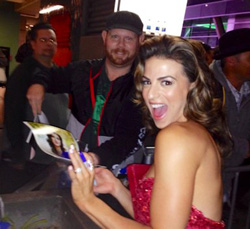
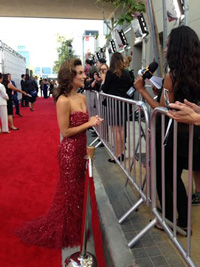
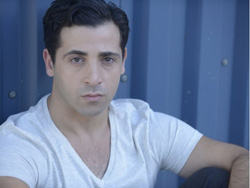
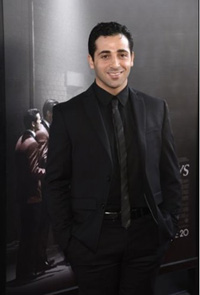
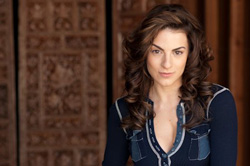
Tabrett Bethell is best known for her role as Cara on the TV series Legend of the Seeker. She started out as a sidekick and quickly became a fan favorite which resulted in her being upgraded to a series regular. To most actors, this is a dream come true, but it comes with a lot of life altering decisions.

Interviewing Tabrett was effortless. She is so honest and truly appreciates everyone and everything around her. Completely different from character Cara!

Tabrett gives us an inside look at how things progressed with her career and how she overcame her fears.
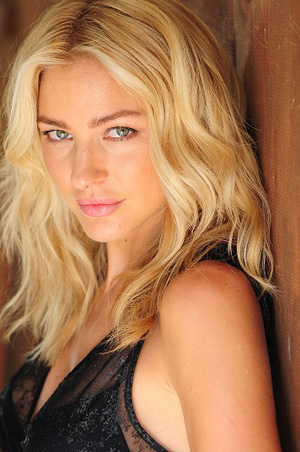
Tabrett Bethell was most recently seen on ABC’s Mistresses as Kate, the Australian sister to one of the main characters played by Brett Tucker. How fun to hear Tabrett’s Australian accent!

Photo by Russell Baer Photography.

As an Australian actress working overseas, do you have actor unions such as SAG-AFTRA? How do you protect yourself with non-union status?

Yes, there are unions to join here. When I worked on the series LEGEND OF THE SEEKER it was supported by AFTRA. So during that time you are supported with that union. A lot of actors are with SAG here in the States. SAG is great to be a part of here as if you do a SAG project you know you will be looked after and protected very well and the rates are excellent. If you join SAG you are covered for medical and many other various things here in LA. I know I am SAG eligible and joining SAG is something that is on my to do list. I frequent back to AUSTRALIA a lot so I haven’t gotten around to joining but if you can it’s definitely worthwhile. In terms of protecting myself I am guided by my management and always refer to them if I have any questions in protecting myself with such things. Most of my actor friends are with SAG. As far as I know you have to be SAG eligible to join. There was a merge with AFTRA and SAG but to be honest I don’t know enough about it.

You recently did your first Bollywood film, Dhoom: 3. Tell us about your filming location and what differences you’ve seen in shooting for Bollywood vs. your other projects. Did you have a trailer? Were there differences in craft services? Who paid for travel and expenses?

The filming locations for Dhoom 3 were incredible. We first started in Chicago. I had never been to Chicago so I was excited to explore the city in my downtime, I loved it. The second location was Switzerland. A few days in Zurich and then we caught a flight to Lake Lugano which, I won’t lie, was a delicious experience. The hotel was on a mountain overlooking snow covered mountains on the other side and a lake that looked like glass; breath taking. And then finally the last stop was Mumbai, India. I adore India and travelling so this was very exciting for me. To be honest there wasn’t much difference from Western film sets to Eastern film sets except of course for the language barrier. But to be frank, each film set always has its own unique attributes and from my experience no film set has ever been the same as the one before. The cast were very jovial so this made shooting fun and relaxed. I had a lot of scenes with Uday Chopra and he is a real hoot to work with. Craft services [food] was always a mix of Indian food and Western food and a stack of Chai tea – and there is no Chai tea like properly made authentic Chai tea – it’s delicious. All costs were paid by the production and I was lucky that most of the time I had my own trailer. That’s always a plus!!! Initially I was booked for Dhoom 3 for a certain amount of time and then the time frame was extended by six months. I didn’t see a full script until towards the end of filming as they wanted to keep the plots top secret – so that was something I had never experienced before. It was a little daunting. I’d get my scenes and sometimes my scenes had a lot of Hindi in it so I’d be unsure of what the scene was exactly about and often this wouldn’t be explained until right before shooting so I just had to show up with a strong character that I’d created and trust that the director had my back.

You’re best known for your role as Cara in Legend of the Seeker (LoTS). What was your audition like? Who made you aware of the role? Were you given sides in advance? What were you told about the character before you went to the audition? Who was at the audition with you? Did you get the job from the first audition or did you have more auditions, chemistry tests, etc? What did you wear?

My audition for LoTS was very interesting. I thought I flopped it and l left the audition and drove to the beach and sat in my car and cried for three hours, called all my friends, told them I’d made a mistake wanting to be an actor, and I felt humiliated and wanted to go crawl under a rock. I maybe even went and bought a stack of chocolate just to really feel bad. Then three days later I found out casting called and wanted me to go back in as they had some notes and wanted to see me do it a couple of different ways. I was shocked. My agent RGM had sent me the audition and I remember reading the material and not wanting to go in. I was very unfamiliar with this genre and was still very new to professional acting. I was given the sides [piece of script] in advance and saw two acting coaches. It was very fortunate that the character came from a series of books written by Terry Goodkind so there was a lot of information on the net but I still had so much fear about being able to portray her. At the time I was like, How to a play a bad ass lunatic assassin in a foreign world talking about the midlands and magic and fight with magic agile sticks. How do I do this and be believable? I didn’t have any process as an artist back then, only passion. The audition was with a lovely Australian casting director called Faith Martin. It was taped and sent to the show executives and network. At the time I didn’t realize how lucky this was. I wasn’t auditioning in a room full of writers, producers and casting directors who were watching my every move. There were no chemistry reads; it was as simple as turning up with Faith and putting a tape down.That’s it. By the recall I walked in with the knowledge of the notes they suggested, an idea of what casting liked and marrying the lot and then ultimately making it my own and doing the best I could. I wore my hair in a half braid, shiny black satin pants and a black tight singlet.. I may have even taken my salad bowl mixer as a prop (my weapon). The rest is history.

Cara was brought into the end of the first season as a side character who was then upgraded to a sidekick to the main character for season two. What did your original contract call for in terms of work?

When I went for the audition originally, from memory, it was only for a recurring two episodes. Then when they saw my tape they came back and said it’s possible she will become a series regular and asked if I was interested in doing this. I couldn’t do the recurring spots unless I was open to doing this. If I sign on I’m signing a seven year contract. That’s how it works in the United States. They are seven year contracts. It’s always a gamble but in actual fact if a show goes that long you have hit the jack pot. I had two contracts: one for the recurring two episodes and one for the series regular 24 episode season two. At the time I had only had the luck of doing a few indie films; I had never experienced or had to think about these sort of commitments. It was overwhelming for me at the time. I was questioning am I ready to possibly move to another country for seven years and is this a project I want to do for seven years. It was very scary. I was in my second year of professional acting so this was ultimately very scary for me. Little did I know of the amazing journey ahead.
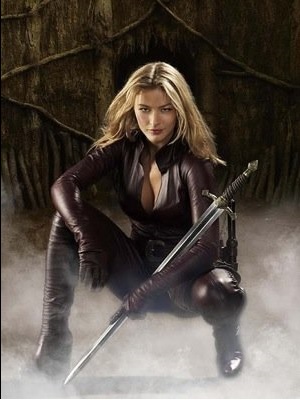
Picture courtesy of IMDB.

You had lots of physical fight scenes in Legend of the Seeker. Did you have prior training in any sort of martial arts or did the production train you? Tell us a story about this.

Cara had so many fight scenes in the series – almost every day we had a fight scene. I was lucky that as a teenager I had explored kick boxing and prior to getting the role on LoTS I was part of a set of TVC’S that were shot for a company called RABO BANK where I had to learn a set of fight sequences and fight training. I enjoy martial arts, I love learning choreography and fighting. I enjoy stylized martial arts and have a dance background so it was really amazing. Unfortunately because I came on at the end of the show everything was already established and there just wasn’t much time to have proper fight training. TV land is so fast so I would just learn the choreography and hope for the best. I was lucky that I became friends with one of the stuntie’s, Craig Dunn, on set and we would catch up once a week after shooting and he would show me things and train me so I became a better fighter. He became my confidant. I became a better fighter because of him. My endless gratitude goes to him. At the beginning, my outfit, before it was modified, was very difficult to walk in let alone fight in so I was always trying to not look like a praying mantas trying to fight or trying not to slip over in cow poo when we were out in the forest. I wore these boots and they were a nine inch wedge and walking or fighting in mud is not an easy feat in the shoes – my heart would always race before a fight sequence from excitement and absolute fear. I remember doing a fight sequence and I got punched in the face twice and I thought, “Wow, I’m actually in a fight here. Awesome!!! No one better mess with me cause I definitely feel I’m a trained fighter now. I remember doing a fight sequence with the cast in the rain for about six hours one day. It was freezing and brutal – boot camp. At the time I thought I was going to die. I thought, “If I have to do another spin kick I’m going to vomit. I would go home and sit in the bath and often not be able to reach my arms over my head because I was just so sore but looking back now it was really an experience of a life time.

As a sidekick, did you ever think your character of Cara would become as popular as she did?

I kind of knew after I shot the last episode of season one that my character would come back for season two. The show wanted a new character and Cara, who I was portraying, seemed to fit what they wanted. I honestly felt like I had no idea what I was doing playing Cara. I was sure they would fire me after a month or two after starting season two. My confusion of not knowing how to play her started to come off and read as funny. And then Cara became funny but that was really Tabrett just trying to mask – what the hell do I do with this line? I guess you just never know how things will turn out and that was an excellent obstacle. My confusion became a part of the character; it made her funny. An accidental discovery. It was wonderful that I had so much support from one of our producers MARK BEASLEY who was stationed in New Zealand where LoTS was shot. He would come into my trailer all the time trying to ease my fears about the character. I desperately wanted to do a great job and he would say things like, “Tabrett, it’s you, be you, you are doing a great job. I must have driven him crazy! I had no idea Cara would get so popular as I was quite naive throughout the whole process. It wasn’t until after the show finished that I realized what impact Cara and the other characters had on the fans. It’s only really now with the support still from LoTS fans that I truly understand just how special that show was. I’m still shocked it didn’t go for another season. It would be great if someone came along and wanted to do a LoTS movie. That would be fun! (Author’s Note: To join the campaign to bring back Legend of the Seeker, go here: http://www.saveourseeker.com/ )

What are your thoughts on all of the fans and fanfiction written about LoTS and Cara? Share a fan story. (You can read LoTS fanfiction at https://www.fanfiction.net/tv/Legend-of-the-Seeker/ )

Ok, what is fanfiction? Do I need to start Googling?

I adore the fans. They are so loyal and supportive. I remember receiving a beautiful gift box at the end of season two. It was this huge handmade leather bound book with fan letters, songs, poems and photos of fans from all around the world giving support for Cara and myself. I remember sitting in my agency at RGM and opening this tremendous gift. I was so overwhelmed. I went through a massive personal journey during that show and to receive such a heartfelt gift from people all around the world was so incredible. I didn’t know that kind of stuff actually happened and I was so humbled that my character had touched so many hearts. It overwhelms me to do this day. But I honestly I couldn’t have done it without the amazing writing that I was gifted with for my character.
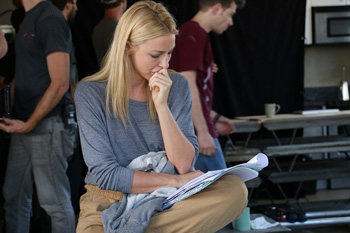
Studying the script on set of the movie Oren.

The fans are truly remarkable. They actually helped me finance a short film that I put through Kickstarter called Oren written and directed by Tahyna Tozzi. They got right behind the film, came up with creative ways to generate money and we ended up overshooting the financial target with their help. I truly love them and feel so blessed to have like minded people behind me supporting the arts.

We learned that Cara has no male/female boundaries when it comes to love. Was this something that was discussed when you were brought in for season one or did this progress as the show moved forward? Were there any talks about kissing scenes with males and females?

To be honest I didn’t ever think twice about this. Being intimate with male / females was part of the character and it didn’t ever feel like an unsafe environment to express this creatively through my character. I’m sure I was probably spoken to about this and had support if needed but the memory doesn’t register as I just didn’t ever feel I had a problem with this. The juicier and darker my character got the more excited I got. BRING IT ON! And when I started to feel like I had a better understanding of Cara this process became rather thrilling. That’s what I love about being an actor – it gives you permission to do things you wouldn’t normally do. And how exciting to play a character that gets to enjoy the best of both worlds, both sexes, how fun! My mother became a mad fan of the show. She would call me in tears when watching Cara being tortured and I’d be like “Mum, chill, it’s a TV show, it’s not real. I’m still here, unharmed.

You started out as a model and cheerleader. What made you decide to give acting a go? Why did you choose Screenwise as your acting school? What was the most valuable lesson you learned while studying?

Well, I was always passionate about the arts. I actually started in theatre when I was a young teenager but I had a stutter and was painfully shy and just felt petrified that I would stutter on stage and people would laugh at me. So I left it for awhile. Modelling was a career I fell into and I guess I got stuck in it for many years because the money was just so good. But as the years went on, my burning desire kept growing and growing to go back to acting. It got to a point where I just couldn’t take it anymore and I made the transition. I remember I really wanted to go to NIDA in Sydney, Australia and study but that was a three year course and I was 26 years old at the time and just didn’t feel I had three years. Also, it was a full time course and I was used to supporting myself from modelling and just thought, How am I ever going to be able to support myself? So I started Googling and found Screenwise. It was a part time year course. I had a meeting with the Director there, Denise. I was very green but she saw something in me, maybe my burning passion and Denise was at the beginning of the early stages of my career. I booked my first feature film before graduating the course and then it all happened very quickly. I’m not sure what the most valuable lesson I learnt was while studying as I’m still studying now. My process is ever evolving and I’m constantly learning how to go deeper, closer to my truth. Acting is almost a spiritual process for me. I guess what I learnt is that there is no one way. It’s an amalgamation of lots of different tools and techniques, and what works for one scene or one character is not going to work for another. I love to paint the canvas with the tools I have learnt then trust that it’s all there and then let my intuition take over; keep cooking the character and then let the magic of the scene take over. Art is such a mystery.

You were cast in the ABC Pilot POE about Edgar Allen Poe, which ABC did NOT pick up. What was going through your mind at the time while waiting to hear if the show was going to series? Where was the pilot shot? Who informed you it was not picked up?

POE was shot in Toronto, Canada. I was very excited about this project from the moment I read it. Normally when I get a surging rush through my body while reading a project I know I have a good chance of getting the project or getting positive feedback. I was very disappointed when it wasn’t going any further and shocked as we all couldn’t believe that POE didn’t get picked up. There was so much heat around the pilot and we all thought it would go. There were even talks about it getting greenlit before waiting until the upfronts in May. The date to know what pilots get picked up always falls on my birthday in May…May 13th.. So we were all waiting for the news.
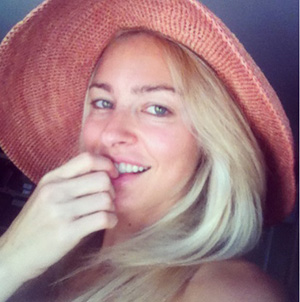
Tabrett chilling at home in Los Angeles.

I’m not sure what was going through my head while waiting. Excitement and anticipation, as you know, that if your pilot gets picked up your life is about to radically change. From my experience while shooting LoTS there isn’t much time for life except on weekends if you’re not sleeping. It’s very intense working on a show depending on its structure. Lots of early morning calls and late nights, but you know it’s not forever as the down time in between projects can often be long, something I was yet to learn. So there is definitely a mix of that going on. After shooting POE in Canada I had returned to Australia to celebrate my 30th birthday. I found out the news POE wasn’t picked up through various sources, my friends who were trailing Deadline (a website that tracks pilots that get picked up), my reps, the other actors in POE and of course the writers, director and producer. I was looped in all the emails and everyone was pretty disappointed. I remember I turned 30 on that day I found out and I thought, Well, this is my queue to move to LA. So that’s exactly what I did and hit the ground running. Of course you are sad when a project that you are so invested in doesn’t go ahead but this is such a fast game that all you can really do is look forward and be grateful for the experience.

Anything else you’d like to say?

I’d like to say a huge thanks to all the LoTS fans for all the support throughout the show and the continual support for my upcoming projects. Especially for the support with the very special Oren Movie that the LoTS fans help fund through Kickstarter. Written and directed by Tahyna Tozzi. It’s a very special project. I play the character EMILE, about a woman that works her way through a tragic loss and in the process discovers an accidental oracle. The film was shot in May and the edits look amazing. We are excited to enter it in all the upcoming festivals this year. Also a huge thanks to my reps EL ERDMANE at RGM and KIM CALLAHAN at INDUSTRY for all the support throughout the years and to all the teachers that I have met throughout my journey so far for sharing their wisdom with me. The arts is a hard, tough, gruelling industry. It will test your soul in so many ways but it truly is so rewarding. How wonderful to be part of an industry that gifts audiences the way it does. Never give up on your dreams, believe in your artist and keep going because you will eventually get there!
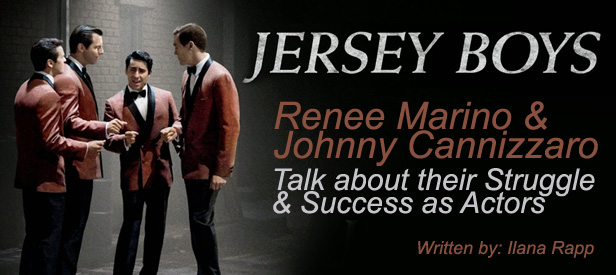
jerseyboys
The film Jersey Boys has been a big stepping stone for these two New Jersey actors,  Renée Marino who plays Frankie Valli’s wife, Mary Delgado, and Johnny Cannizzaro who plays Nick DeVito.

The journey Renée and Johnny have taken to get to this point is an amazing one. It teaches us a lesson that stardom usually just doesn’t happen overnight. Hard work, dedication and a strong willingness to learn and never give up is what catapulted Renée and Johnny to this spot.

So, fellow actors, beware! You too can do this if you have your heart and mind in the right place!

Let’s see what Renée and Johnny have to tell us.

Renée Marino is very well known in New York for her stints in numerous plays, including Broadway’s Cats. She just recently moved from New Jersey to LA to broaden her career horizons.Photo by Jill Stokesberry.

You’ve been very successful in New York with Broadway shows. How is filming a movie different from working on stage?

Filming a movie is completely different than working onstage.  When your onstage the “show must go on”, because you’re in front of a live audience so no matter what you have to make it work.  In film, if you mess up a line or a costume may rip and it’s okay because you can do one more take, or several.  When  performing on stage, the actor is usually responsible for doing their own makeup (unless you have very specific character makeup) and you share a dressing room with others, (unless you are a principal role).  I remember getting to the Warner Brothers lot my first day filming and screaming with excitement because I had my own trailer and I couldn’t believe I had a TV, refrigerator and couch just for me!  One of my personal favorites about being on set, as opposed to the stage, is the FOOD!  I am quite a “foodie” and having an amazing caterer right there on the lot everyday was incredible, and something I am not used to but appreciated immensely!  As far as the actual process as a stage actor vs. a film actor, not having the instant gratification of the live energy and reactions from the audience was something I quickly had to adjust to.  There is a lot of waiting on set, while on stage, you are constantly “active”.  Even during tech, you are prepared to be on your feet for 10-12 hrs, even if its just to stand there for the lighting crew, but when you are filming, you get to take a load off, while your stand-in goes into your spot as the crew is making adjustments such as changing the camera angle. Therefore, the idea of a stand-in was very foreign to me when I first got on set!

In Jersey Boys, you’re an over the top scene stealer. How did you perfect the “too much drama” that actually worked for your character?

Thank you SO very much for saying that, That means a lot to me!  I believe I was able to pull off that “too much drama” from being brought up in an Italian-American family where immense love and passion were extremely prevalent.  In turn everything, such as the stories we expressed and the compassion we all shared was bigger in our house as opposed to many other families, and the volume in our voices matched that! Therefore, I brought forth those qualities when playing Ms. Mary Delgado.

Since you’re from New Jersey, did you have to fake your New Jersey accent for Jersey Boys or did you use your regular speaking accent?

As far as my New Jersey accent in the film, I simply allowed the accent that I’ve listened to my entire life take the reigns.  I spent time training in college to let go of that “regional dialect” so it felt good to just let it fly for the film!

You’ve done lots of touring for shows, sometimes on very short notice. How did this affect your family life? Did you always have a bag packed and ready to go?

I spent three and a half years of my life touring, beginning with “Cats”, then “Disney’s High School Musical” and then “Jersey Boys”.  This was one of the most exciting times of my life because I was getting paid to do what I love while seeing the world!  I felt like I was on a paid vacation all the time! Touring is definitely hard when you have to miss important events like family birthdays, and holidays, but there are always sacrifices that have to be made when you are working towards your dreams. Thankfully, my family and friends have always been my biggest supporters so they understood!

You had a “swing” role in the tour of Cats as well as numerous other productions. What exactly is a swing role? How does the payscale work for a swing role?

I have been a swing for various shows, the first one being “Cats”.  A swing is when you understudy several roles, and have to be ready to go on at any point.  I have been a swing for up to nine roles, and had various index cards and notes for each role.  After I completed the 25th Anniversary Tour of “Cats” as a swing, I felt like I could do anything, because that is one of the most physically demanding shows that I have ever been a part of, and with that tour we would be on the bus sometimes for twelve hours at a time, and then have a show at night.  As a swing, you have to have a great amount of self-motivation because you are not on stage every night, and it’s up to you to be build that stamina needed for the show.  You have to be completely prepared for anytime that you may have to go on that stage, even with a moment’s notice.  There are many times you will go on in the middle of a show, and it’s up to you to know exactly where you need to be, and what you need to be doing.  Usually, swings get paid a bit higher than those who are in the ensemble, because they have to know more than just one role.

Renée, why do you have the accent mark over the ‘e’ in your name? Who named you?

I have the accent mark in my name because that is the classic way Renée is spelled in French speaking countries.  As stated in Wikipedia:  Renée (often spelled without the accent in non-French speaking countries) is a French feminine first name.  Renée is the female form of René, with the extra –e making it feminine according to French grammar.[1]. My grandfather named me because he loved the name, and the accent mark is on my birth certificate as well!

You’ve always been a risk taker when it comes to your career. Talk about the risk you just took moving from the East Coast to Los Angeles and how you’re pulling it off financially. Did your fiancé move with you?

I have always been a risk taker when it comes to my career, because for me it’s always been about taking the next step, and following my heart in regards to my goals, as opposed to letting money be my guide.  There were several times that I was making the best money that I ever had while touring, and I decided to leave early, because I felt that I needed to move onto a new venture in New York City, and pursue Broadway.  I have recently moved to LA from NY with my fiancé and our dog, because I have always wanted to pursue a career in TV/film in addition to my theatre career, and I feel that now is my time to do it!  My fiancé is extremely supportive and did not think twice about moving, because luckily he owns his own business and he can work from anywhere.  He is also a great partner when I need someone to read scenes with! Hehe.

You’re with a well known bi-coastal agency but are using the CA office as your main contact. Did you seek out bi-coastal agencies on purpose so you could switch back and forth between CA and NY? How did you come to find your agency and agent? How long have you been with your current agent?

When meeting with new agencies I knew that I wanted a great agency that had a strong TV/film department and that was bi-coastal as well.  I had a meeting with Gersh while I was filming the movie and then I came to New York to meet with the East Coast Office, and then we began working together in January.  I clicked with my agent right away, and loved not only when he explained how the agency works, but I loved his personality, which is VERY important to me.  I have to work with good people, who have good energy.  It truly makes all the difference.  The same is true for my manager of Valeo Entertainment who I signed with right after the film was finished shooting.  I chose to work with both a manager and agent, because I really wanted a great team behind me.  Also, a manager is more personal, and helps you not only with getting you appointments for jobs, but when you need some career guidance and emotional support! Hehe.

At what point in your career did you decide it was time to hire a manager and a publicist? Were they referred to you or did they seek you out?

As soon as I realized that I was cast as Mary Delgado in Clint Eastwood’s directed “Jersey Boys”, I knew that I would be needing both a manager and publicist besides my agent, because this was my first introduction into Hollywood.  Therefore, I wanted a wonderful and complete team of people who were behind me, helping me to focus in the exact direction that I needed to be.  I feel so grateful, because they really have been by my side, and anytime I have a question or concern, they are right there to help me out!

At the LA premiere of Jersey Boys. Fans asked Renée to sign autographs.

What was it like going to the premiere of Jersey Boys?

Going to the premiere of “Jersey Boys” was an absolute dream!  I was so full of gratitude and excitement leading up to that night and I made sure to take in every moment.  I had an INCREDIBLE stylist named Amanda Reno who took such good care of me by finding me a gorgeous gown from Basler, jewels from the incredible Neil Lane, and hair and makeup stylists Randi Petersen and Marina Gravani!  We had a blast getting ready, and then stepping onto the red carpet was SURREAL!  All of the photographers and interviews were amazing, and I loved answering all of their questions.  At one point, right before I walked in to see the movie, I saw many fans standing past the ropes with pictures for me to sign, and I was so happy to go over and show them some love!  I felt so very lucky to be there, and experiencing something so magical as my very first movie premiere!

What’s the most important advice someone told you early in your career about acting, and / or life in general, that’s stuck with you forever?

I have received some invaluable advice over the years and the foundation of who I am comes from the advice and love that I received from my beautiful family.  They have instilled within me key values that may sound very simple, but are ones that many overlook in their search for fame, fortune and success.  These values include having respect, honesty, responsibility  and one of the most influential pieces of advice came from my father Frank Marino, who said to me, “Always stay true to yourself and don’t let anyone change you”.  This advice serves me each and every day in not just my career, but every situation that I encounter. In this business, it is extremely important to train and continually hone the craft, but if you do not have a strong core as a human being first and foremost, all the training in the world will not allow people to truly connect with who you are, and not just what you do.

Do you submit for work on your own on top of what your agent sends you?

I think that if you are working with an agent, allow them to do their job with submitting you for work. With that said, YOU are the one who will always be working the hardest for YOU, so remember to keep open to what auditions and projects are happening.  I always keep an eye and ear out to what is coming up, and if there is something that I think is right for me, I will let my manager know, because sometimes it could be a project that he/she didn’t think I would be interested in or right for!

Are you a member of Actors Equity Association? What benefits do they provide you?

I am a proud member of Actors Equity and have been since 2005.  I feel really taken care of being a part of this union that provides us with insurance, various contract benefits including monitoring safe working conditions, programs such as tax assistance through VITA, access to incredible service organizations like The Actor’s Fund. http://www.actorsfund.org 

Do you have an acting coach? Do you take acting lessons?

When I got out to LA in January I went right to work with starting acting classes at The John Rosenfeld Studios.  In addition, I also began working with an amazing acting coach named Meredith Scott Lynn for when I had auditions.  I believe immensely in keeping up with class, and with coachings.
As performers, our bodies are our instruments and we need to keep them tuned up just like those who work with a computer everyday have to keep that updated and fresh.

Renée on the red carpet answering reporters’ questions at the premiere of Jersey Boys.

What advice do you have for aspiring actors?

I love helping out young aspiring actors, because there is nothing like getting advice from those who have gone down the same path.  I would advise those pursuing a performing career whether it be acting, singing, dancing or all three, to immerse yourself in the arts through taking part in your local theaters, watching others perform, and continually train.  Even though this is such a competitive field, its all about Love, because that is why we chose this career path, for the love of it.  Therefore, spread that love and be happy for one anthers successes, because at the end of the day, when we can all be happy for each other, we are happy for ourselves too, and that makes the journey so much sweeter.  In closing, as my father explained to me, “Always stay true to yourself”!

Anything else you’d like to say?

Thank you so much, and I feel so much joy to be a part of NYCastings! Shout outs to all of those reading this, The Actors Fund, and NYCastings for this great interview! My Twitter is @ReneeMarino and my website is www.reneemarino.com

Johnny Cannizzaro moved to New Jersey at a young age. When the time was right, he decided to give it a shot in LA – and look what happened!Photo by Daniel Lam.

What were you doing at the time you received the call that you got the part of Nick DeVito in the Jersey Boys film? What was your reaction? Who was the first person you told?

I believe I was at work in the middle of a very hectic day. My reaction was pure shock and excitement, It certainly helped to ease the stress of the day. The first person I told was my mother because she has been my biggest fan from the day I first stepped foot on stage so she was beyond words when I told her.

How did you land your first agent / manager?

We all have knocking on doors stories and early on I remember doing exactly that but I was fortunate enough to land my very first manager by doing a play. They happened to be in the audience and approached me afterward. It was a new experience for me having someone guide my career in the direction they saw it going which was hard to get used to because it didn’t always necessarily match up with the way I saw it going. My first real agent was based on a referral from a friend who I worked with on another play. We connected and they had worked diligently for me for several years.

What was it like getting the part of Nick DeVito before knowing which actors would be playing Frankie Valli, Tommy DeVito and Nick Massi? Or were you given that information while the rest of the world had no clue? Did you have a chemistry test with any of them?

I was elated just to be involved in the film. No chemistry test for me in this case, but when you have such dynamic performers playing the leads, that’s where the focus of the chemistry was directed. I think we all found out around the same time about booking the film. Once I heard, John Lloyd Young, Erich Bergen and Vincent Piazza were already attached. I had been a fan of all of their work on stage and television then having Michael Lomenda thrown into the mix was the perfect final ingredient to make that iconic Four Seasons sound. It was incredible to work with and amongst all of them!

When you left New Jersey for LA in 2005 with no money and no plan, how did you manage? Were you scared?

I’ve always been a fly by night kind of person and when I moved out to L.A, I didn’t really have a plan other than knowing I was crashing on a friend’s sofa. Thinking back now, the thought of being scared never crossed my mind…at least not at the time. It seems crazy to me now that I would have taken such a life changing risk. Managing day by day wasn’t easy but the struggle is a part of the journey and I was always just willing to sacrifice stability to do what I loved.

At the LA premiere of Jersey Boys.

What other roles did you audition for in Jersey Boys before being offered the role of Nick DeVito?

They had originally brought me in for the role of Tommy DeVito twice and then the role of Donnie.

What do you find so interesting about Charlie Chaplin, and how has he been an influence on your acting career? Did you see the Broadway play? What’s your favorite Chaplin film?

I think hobo clowns are fascinating…maybe I was one in a past life. Chaplin influences everything that I do. Communicating with no words is the most powerful form of communication in my opinion and he was a master of that skill. I never had the chance to see the Broadway show because I was working in L.A at the time but I believe one of my cast mates, Renee Marino was in it. I hope to catch the tour next year!

What’s the difference between working on a film such as Jersey Boys vs. the TNT series Mob City?

They are two completely different mediums. Time is always a concern because of the the budgets involved in feature films so the less takes they take to get the shot the better. I think there is a little more leniency with film but Mr. Eastwood tends to get what he wants in one take…maybe two at most, but the great thing about Jersey Boys was that Mr. Eastwood uses the same crew on all of his projects from craft services to post production so they’ve got it down to a science which makes for a very easy going and efficient shoot.

Do you still study with acting coach Max Decker? Who introduced you to Max? What’s the most important lesson you’ve learned so far? Do you study with other coaches or take any other types of lessons?

I do. I met Max through a film producer I was personal assisting for several years ago. He has proven to be my saving grace in this industry and is still heavily involved in my career progress. He has an amazing gift for getting to the root of an actor’s insecurities and access their vulnerabilities which as any actor knows is the hardest thing to do. The lesson he’s helped drill into my head is to keep my performances grounded which helps make for a more captivating, real performance.

I have studied with several coaches in the past but like anything, it’s a matter of finding one that matches you. Luckily, after many years of searching, I’ve found that and I am in class four to five times a week exercising and trying to improve my craft.

What was it like working with Christopher Walken?

The first time I met Mr. Walken was while staging the Finale number in Jersey Boys. I was placed right next to him and got to watch his genius at work. He’s such an interesting person who you could listen to and talk to for days. In the final scene, I have to open the car door for him and got to sit in the back of a 1957 Cadillac with him for close to an hour in between set ups. Definitively an experience I will not forget!

What was the most uncomfortable scene you ever had to do?

I can’t think of a situation that stands out particularly but I’m still early in my career. I’m always up for a new, interesting or slightly uncomfortable experience if it will help me grow as an artist so I look forward to them!
When you moved to LA, why did you choose to do a two year program at the American Academy of Dramatic Arts?

I learned a lot of great things at the American Academy. Working with the same group of people for two years is a valuable experience because you get to know one another on a personal level and figure out what each others triggers are. It helps prep you for life as an actor.

When did you join AEA and SAG-AFTRA? What benefits do you utilize from these unions?

I joined SAG-AFTRA and AEA around the same time. Both unions are essential to work in the entertainment business on a professional level. Not to downplay the many wonderful non-union projects out there, but it’s definitely a necessity to join at some point. The mistake a lot of actors make is being in a rush to get their union cards when it doesn’t come into play until you already are working professionally or at least semi-professionally.

You were in the soaps General Hospital and The Young and the Restless. What was the difference between working on these two soaps?

Soaps, for the most part, are the same. They move very fast and a lot of time they are shooting 60+ minutes of footage per day and just need to keep moving. I had a great time on both.

You also play guitar and write. Did you ever take formal guitar and writing lessons? What type of music do you create? What are you currently writing?

I took formal lessons when I was young but only as a hobby. I like to think I carry some of those skills with me still. I create whatever happens to inspire me at the time. I am constantly writing. I think it’s a part of being an artist to constantly work on new material. It’s nice to be able to write for yourself because then you don’t have to leave your career in the hands of a casting director. Cast yourself.

Johnny has had success with several photographers but the chemistry is best with photographer Daniel Lam.

Who is your professional headshot photographer? How’d you choose him/her? How often do you get your headshots updated?

I’ve used many photographers throughout the years…it’s similar to finding a manager. It has to be a match, someone who understands your type and what you’re looking for. I’ve been through four or five over the past several years, but have been using the same one consistently lately. His name is is Daniel Lam.

Do you have a significant other?

I prefer not to discuss the details specifically, but I always look for a woman who is easy to talk to, secure in who they are, independent and giving.

What technology do you use for acting?

Call me old fashioned but I like to do it the old way…with a script or sides and a pencil.

Please give advice to aspiring actors.

The best advice I could give would be to keep chasing the dream because you will catch up to it. This business is not only talent…it’s luck, it’s perseverance, it’s passion and it’s truth. Be honest with who you are first and the rest will follow.

Anything else you’d like to say?

It was a pleasure speaking with you. If your readers would like to follow me, I am on Twitter @JPCannizzaro and Instagram @JohnnyCannizzaro. They can also visit my website at johnnycannizzaro.com for future updates and upcoming projects. Thank you and I hope we can do it again soon!

survivingadisastrousproduction

Unless you’re putting on Titanic, the production you’re a part of should not feel like a fast sinking ship. Unfortunately, more often than not, at some point in every actor’s career there exists a project that you just wish the curtain would close on already. Whether you’re doing your friend a favor, or somehow got stuck in a horribly sloppy show, you might find yourself sitting in a rehearsal wondering:why are we still blocking when the show opens in a less than a week? or why was I called here if the director doesn’t need me?

Never fear! There are actions you can take (as an actor), to find some peace among the chaos and better yourself from the experience without having your soul crushed:

1.) Captain’s Orders

Sitting at the helm of a production, the director is naturally the “go to” person with any questions or concerns. If you’re feeling uncomfortable about things, calmly approach your director and see if you can work together to develop some kind of solution. Never attack or put them down, just attempt to get them on the same page as you. In cases where the director is the issue, all you can do is trust in their vision and perform.

2.) Keep your eyes on the shore

No matter what happens, remember your role in the show. You’re there to tell a specific story, so despite the insanity that may be occurring around you, tell that story to the best of your ability. Make sure you’re fully prepared for opening night, so no matter how terrible a production may be, the audience will leave raving about your stellar performance. Reputations are extremely important in this industry, so don’t hinder yours by giving up.

3.) Grab a lifesaver!

Chances are if you’re feeling an excruciating sense of uneasiness, your cast mates are as well. Try and make the best of the situation, as a team. Whenever you’re not on stage, use each other to go over lines, blocking, songs or whatever else necessary to ensure that you’re not wasting the precious time you do have in rehearsals! Stage Managers, are also excellent lifelines. They are an extremely capable and wonderful breed, and usually don’t mind running through things with actors when possible.

4.) Find the “Silver Lining”

There’s always something to be thankful for in every experience, so find that something. Maybe you’ve discovered a new monologue or song, or maybe you’ve met some great friends. Whatever the circumstance, just try and spin all the negatives into positives. Every production is a learning experience for you to grow as an actor, so look at it that way. At the very least, through all the craziness, perhaps, you’ve uncovered some anger or frustration that you didn’t know you had. You can draw from this for future roles that require such intense feelings.

Overall, just have fun! Performing is what you love to do, so try to ignore the blunders and smile.

LAURA-PREPON

Laura Prepon is most remembered for her role as the spunky Donna Pinciotti in all eight seasons of the FOX sitcom That ’70s Show. The chance to star on such a successful series is seemingly a once in a lifetime opportunity for any actor, but Prepon has done it yet again. Nowadays, the versatile actress is sure to be recognized for her performance on what has instantly become a summer favorite series, Orange Is The New Black. You can catch Prepon as Alex Vause, a lesbian, and ex drug-smuggling inmate – clearly a very different role from her previous credits.

Prepon was kind enough to take a break from filming the highly anticipated Season 3 of OITNB to speak with us on the acting technique she utilizes to tackle such a demanding role.

Robert Peterpaul: As an actress, what do you believe is the most valuable piece of advice you’ve ever received?

Laura Prepon: To know who you are and what you are capable of. Our industry, as amazing as it is, can shake your confidence in yourself. You always have to be true to yourself and not doubt that.

RP: Is this the same advice you’d give people trying to make it in the industry?

LP: It is. People ask me all the time for advice and it’s one of the first things I say. People love saying NO. So, you have to keep pushing through until you start getting YES. It’s one of the toughest industries to work in, but when you get on a job you love…all of the stuff to get there becomes worth it.

RP: Do you have a specific acting method or technique you use when approaching a project?

LP: I do. I always breakdown my work with my acting coach, Robert F. Lyons. He’s the most amazing coach I’ve ever worked with and we break down the scene in a way that all of these other colors and moments come out that were not on the page.

RP: What do you feel was your biggest struggle in pursuing an acting career?

LP: I think for me, when I was younger I never fit into any kind of mold. So, I wouldn’t get those “e;I Know What You Did Last summer” type movies the girls my age were getting. I was tall, deep voice, red hair—I didn’t look like your typical teenager. I kept trying to fit into a certain mold until I realized how great it was that I wasn’t your typical girl. Those things that made me different ultimately helped me land my favorite roles. I also had to grow into myself, which a lot of teenagers I think have to deal with.

RP: Speaking of struggles. Have you ever had a director who had a difference of opinion about the character you were going to play? It must be tough to try and stick with your gut instinct about a role, but also honor the director’s wishes.

LP: I have had this happen, not often, but it’s happened. I feel that the director should always be open to the actors instincts—that is to say if the actors instincts are good, because let’s be real, those can be off as well. If we’re talking about a good actor who has good instincts— if a director is resisting those and still trying to get the actor to fit into what he had in mind, I feel that the director doesn’t really know what he is doing. Also, when it comes to being on set and blocking a scene this could happen a lot. Even if he/she has a very complicated shot in their mind and the blocking is very important or how it’s played is very important—if the director is good, they can make the actor agree and see their side and why it would benefit the scene to be played like that. If that isn’t happening and the director just won’t budge, I feel like I’m working with someone who doesn’t have a lot of experience as a director, or someone who is just trying to “e;make their day” and changing the blocking could add time. In this case, I use the uncomfortability of the blocking and incorporate that into the scene. Who knows? You might get a good moment out of that new color.

RP: Now, of course, I have to bring up Orange is the New Black or my girlfriend will kill me. How would you describe your character Alex in three words?

LP: Bold. Daring. A survivor.

RP: After receiving a new script, how much work do you do before you come on the set?

LP: I do a lot of work. I break it down, look up any words I may not know so I can fully understand what the writer is going for (you’d be shocked how many actors are saying dialogue they don’t have an understanding of), and figure out how I will play my moments. Always leaving room for the X-factor of working with another actor and what they will bring to the scene. That’s where a lot of the fun comes in; when you get with another person and see what magic happens.

RP: What’s it like acting with such a talented group of ladies?

LP: It’s the best thing ever. I go home feeling so creatively satisfied after working with these incredible actors.

RP: Orange is the New Black (and Netflix for that matter) has revamped the way viewers can watch a series. They get to control how many episodes they see in one sitting. Is there a show you binge watch?

LP: I’m currently binge watching Orphan Black. And I just finished watching Homeland. Both female fronted shows with an incredible actress at the helm. Very inspiring.

RP: As an aspiring actor, I always find being on a set to be the most exhilarating place in the world. Do you still get an overwhelming sense of excitement when you step onto a set, or is it just like another day at the office?

LP: I’m always excited to go to set. Every day is different and special. You never know what will happen in a scene, and it’s new every time. I love Mondays because I get to go to work. I know most people are not too fond of Mondays.

RP: Any upcoming projects you’d like to share with us?

LP: Right now I’m shooting Orange season three so that’s my priority. I’m always working on my side projects though. I’m currently on a third draft of a feature I will direct, and I’m pitching two shows I co-created; one that we already sold to a studio. I’m usually working on a few things at once. I’ve always been like that. And all these projects make me a better actor.

The first two seasons of Orange Is The New Black are now streaming on Netflix.


5waystoboostyourcareer2

Everyone can use a little change. Especially when it’s for the better! So go ahead and get ready to make a difference in the way you approach auditions, with these 5 deep insights from Anthony Pichette – a casting director who knows a lot about the power of mixing things up.

Just recently, Anthony Pichette made a move from Kipperman Casting to Sound Lounge where he is heading up a NEW On-Camera division called Sidecar Casting. Under Anthony’s guidance Sidecar casts commercials, webisodes, webseries, industrials, network promos, comedy, high-end model work, and more.

Anyone who has auditioned with Anthony knows that he has a talent for making actors feel comfortable. Anthony pulls from his directorial foundation (theater major!) to help get the best performance out of actors and to give his clients even more than expected.

Anthony’s audition changing insights can absolutely help you boost your bookings.

#5 – Harness the POWER of POSITIVE THINKING

It begins with – Smiling!

Having a positive attitude helps. So don’t let your bad day get you down, because that reflects in your performance. Directors and advertising people want to see the best side of you. Don’t rush to be somewhere else, or make it seem as if the audition is just the one of the many things you have to do. Be focused on what the casting director is saying, and show interest!

Easier said than done?

Try this…

Put yourself out there as already being the person who booked the spot. It will relax you! Think good thoughts. Think why you should get this role, why they should use you. Or try pretending that you are a representative of that company. Be excited about the project. After all, it’s not just a commercial – It is a way of life for all those who work on it. It supports families! So choosing the right actor is a big decision for all involved. Make the decision easy by having a good attitude that will help sell their product.

#4 – Revamp your Resume

Casting directors want a professional resume and a headshot that shows your personality so they can get a sense of you. If your picture has an overly cheesy smile, or a hand to a chin, it might harm your chances of getting called in.

How can I create the best headshot / resume possible?

Look like you!

Everyone has a personality, some unique feature about them. You want to celebrate your individuality. There is no perfect headshot – as long as it is a high-quality photo, with good lighting, and doesn’t look like some random person took it in a park. The person has to have the ability to capture you in that picture. Capturing a personality means – capturing you on a good day. If you are not overly outgoing and energetic, that’s fine. But casting directors need to look at the picture, and want to call you in.

Think about how you come across

If you don’t look like yourself in the picture, you aren’t selling yourself right. And that means you won’t get auditions for the right kinds of projects.

If you are a woman in her young 20’s with an edge, don’t have a headshot that’s all perky and excitable. This happens a lot in musical theater where the headshot comes across as totally holy happy. If you are not showing your real self, you won’t come across as authentic as you need to for commercials.

On the guy side – guys can end up looking more homogenized in a photo by doing things like wearing a suit when they do have an edgy side to them. Or, they may have a funky haircut and a T-shirt that shows off their arms, but are really more straight laced in person.

Be who you are on a normal day! Don’t try and sell yourself as something you’re not.

Commercials are always looking for someone real. You’re not supposed to be acting. Viewers aren’t supposed to be able to tell if it is a commercial or a part of real life. If you have that kind of overly happy headshot, casting directors might think that you cant pull off being real.

Share your special skills

If you have a unique ability, casting directors want to see it! Things that can give you a leg up are abilities such as speaking Spanish. If you do speak a second language, place that on your resume and state how well you speak – fluently vs. conversational, etc. Dancing, singing, and sports are also great skills that can boost your chances of getting a gig.

Be professional

Spell things right on your resume, use consistent fonts, and align it.

And, don’t embellish the obvious – like saying you took a class with a casting director when you really met them for five minutes.

Keep it clean and honest. That’s the best policy!

#3 – Take an improv class

Why is everyone always saying that?

Improv helps you collaborate!

Nowadays, many directors want you to be collaborative and bring more to a spot. In improv, you have nothing and have to come up with something. Improvisers have no filter. It is a much more fluid process compared to simply being given lines.

Filming a commercial is an ever changing process and the director, and whoever is casting, wants to have someone who can be a big contributor to that collaborative effort. They want to see what interesting ideas you can bring that maybe they didn’t think of right away.

P.S. – If you took improv classes, you don’t need to put 101, 201. Just put, for example, Improv at UCB. Own it. You’re not lying. You’re simply not limiting yourself. And then answer honestly about how many classes you’ve taken when asked.

#2 – Ask questions

Listening is important. Yet, there are times when you MUST speak up in order to do your best job. Don’t be intimidated. People are scared to ask questions and they shouldn’t be because this is your career. It is your moment to shine. Own it!

When should you ask questions at auditions?

When you don’t understand the direction

If you don’t understand what a casting director wants – speak up. Casting directors do care. They want to know what your questions are. You don’t have to come into the audition room knowing everything already. Definitely come in with ideas and understand where things are going and contribute to the process, but auditions are collaborative. The more information you can get without seeming unprepared is going to help – everybody!

When you need to better understand the character

If it’s not obvious who you are in the spot – ask! Find out how they see this character. Having your own idea is good, yet it might be different from what they intended. The more you can understand who you are supposed to be in the spot, the easier it will be to give the client what they want.

You are always playing a character. You are a version of yourself, yet it is still acting. You can be yourself on a day when it is sunny and you’re feeling good – or you could be yourself when you just had a breakup. There are so many variations.

When it pertains to what’s at hand

Keep your questions related to what is going on in the room. Don’t be too personal or ask something that your agent* could have answered. That could make you look unprepared. Once you are in the room, there’s no need to ask if you are right for the project. That could make you look insecure. And if you notice that everyone else has on suits, don’t say I don’t have a suit on. – They can tell you are not wearing a suit. Once you are in the room, don’t worry about those things. You are there – own it.

*Ask your agent questions beforehand.

Get information on the attire beforehand, and know if there are any lines. An agent isn’t going to not represent you because you ask a question. Just ask in the right way. If they say nice casual, you can ask what you are playing to get more detail.

#1 – Think like a director!

Make choices!

Know what you are auditioning for, and then try and imagine how you would cast or direct this segment. If you didn’t get copy beforehand, get there earlier. A lot of actors are creative people. You can get a sense of what the spots would look like, and what you would do with it. If something doesn’t work, change it up based on what the casting director says.

Be in that moment and then try something. Be some form of you, but make a choice. Narrow it down to… When you walk in, are you chilling on the couch? What is going on in the spot? Have some sense of what is going on.

But what if I do something wrong?

Don’t worry about nailing it.

There’s no need to be worried about getting it right, or nailing it, or doing a perfect job – because really what is that?

You can’t know what someone else is thinking. How could you? So just do your thing.

Someone asked Bryan Cranston for acting advice and he said that he eventually learned to be himself and do the best he could do – and not worry about getting the job. It is an easy thing to say in theory, but it is true. You can’t worry about booking the job because you don’t have control over that.

Casting directors can tell if you are trying to do everything right. They can tell if you finish and look up at them like a puppy dog waiting to see how they judged the performance.

End your spot and simply be in the moment of the character without worrying about what anyone else is doing or thinking. You have to be in the moment, in that character, and then let the chips fall where they may.

Once you get to that phase where you know what you are doing, can listen to advice, and are comfortable with how you perform – it will come across!

Believe in yourself!

For more career boosting insights from Anthony Pichette follow him @tpichette@SoundLoungeNY

And – Congrats to Anthony on the new job at Sound Lounge NY!

3waystobringacharactertolife

As an actor, I’ve found creating a character to be an incredibly vital and, on occasion, challenging process. There is always that overwhelming desire to make your performance both believable and dynamic, while remaining true to the story. This seems to be some sort of universal aspiration among us actors.

A few months ago I began this process when I was cast as Melchior in Spring Awakening. Getting the news of this was both extremely exhilarating and terrifying (not just because I knew I’d probably have to show my rear end). Melchior is a rebellious and complex role, demanding an extreme emotional range.

Immediately I dove into the script. Of course it is always essential to read and then reread the text, as that is where our character lives. So I started there. Heck, I even looked into the original play it was based on. I attempted to shine a light through the pages and illuminate what my role is in the piece. Ultimately, although I grew more comfortable in Melchior’s skin, I sometimes left rehearsals wondering, most primarily, “Who am I really?” and “What do I want?” as the character.

I’ve studied most of the praised acting techniques, read all the recommended books, and yet still felt like I needed my own way of doing things. That’s when I discovered one easy tool to help flesh out a performance lies right beneath all of our fingertips. In fact, it’s something you can use from your comfy couch! The Internet.

Here are three inspiring and enjoyable ways to use the Internet to bring a character to life:

1. Youtube is your friend. Begin by watching previous productions of the material. You will not only gain insight into the work, but also think about the work an audience member. Don’t steal or copy things you character does, but get an idea of your overall intent. Before rehearsals began, I found myself watching prior performances of Melchior (such as Jonathan Groff’s genius origination of the role) to gain a bigger picture of the character. However, once the rehearsals officially began, I decided not to allow myself to anymore. It’s important to interpret roles on your own, not just from an artistic standpoint, but because you have to find yourself in the character. Instead, I then watched clips of regarded actors who played characters that have a similar nature to Melchior. For instance, I scanned through videos of Marlon Brando to see his confident physicality and observed rock stars like Bon Jovi to get a sense of how I should break out and move during some of the bigger numbers. These viewings can inspire you and give you a sense of how to emulate that specific presence.

2. Make a Pinterest. Now, I’ll admit, I originally went to this website to gawk at all the delicious food posts, but I ended up finding some unexpected inspiration. Making a board on Pinterest serves as a simple way to map out a role. You can pin things that embody your character – their look, environment, personality etc. It really allows you to see their personality more clearly. In researching Melchior and Spring Awakening I found so many images, quotes and articles that inspired me. Pinterest is an amazing nook on the Internet where you can keep and access all of these findings.

3. Status Updates. One interesting exercise is to generate posts your character would create. More specifically, you could go through the script and make a fake Twitter or Facebook post that describes a scene or even offstage moments. This can help you identify the essence of what your character is thinking. It helps you get in their mindset and even beefs up your inner monologue. Think of this as a modern day “e;scene score” or beat identification. Try using “e;key words” or “e;phrases” that describe and inform your character. No matter what the time period of the show is, this is a fun way to merge your world with the characters’.

Of course, I’m not Lee Strasberg or Stella Adler, but I discovered these three methods worked for me. They weren’t the only things I did during my rehearsal time, but they assisted me in identifying with the plot and all of the characters within it. I feel as though it is important to think like your character on a daily basis, in order to build the foundation for an organic and meaningful performance. Always remember to enjoy the process and find what works for you as an actor! #thanksforreading

blockbuster young performers give amazing advice

Being a young performer in blockbuster mega-movie or hit television series can be very challenging. There are so many things to think about — family, friends, school, after school activities, pets  the list goes on and on. It takes a lot of juggling, patience and understanding in order to survive such a wonderful treat!

One of the main things you always want to remember is to keep your kid grounded. Do not let such an event give your child an ego and most certainly do whatever you can to keep your schedule as normal as possible. Sounds impossible, and sometimes it is!

Jorge Vega made the cut for the recently released The Amazing Spider-Man 2 and did voice-overs for Dora and Friends. Joey King was in The Conjuring and did voice-overs in Oz the Great and Powerful. Michael Grant can be seen in television’s Brooklyn Nine-Nine and the upcoming film Fair Haven.

9 year-old Jorge Vega is also known for his roles in Team Umizoomi, Wallykazam and voice-over work on Dora and Friends.

When you went up for the role in The Amazing Spider-Man 2 did you KNOW it was for the Spider-Man movie or was the casting call very vague?

The casting call was vague, but when I worked with the Casting Director, I knew it was for Spider-Man! We knew they were filming in New York, so we were pretty sure.

Describe your audition for Spider-Man.

My manager called with the appointment and the sides [piece of script] read Skinny Kid. I practiced in a few hours and went to the audition. Then I got the callback and then my manager called and told me I landed the role!

How does your schooling work?

I am in 4th grade and go to a Catholic school; auditions are mostly after 3pm, so we have managed. I had an on set tutor for the movie and while we were on tour with the Radio City Rockettes. As my mom explains to me, New York State has rules in place for young performers so the school follows mandates from the state. Every day I miss school I still need to complete my homework or school work and study for tests accordingly. My mom takes care of coordinating that with the teacher and then gives the work to the tutor to work with me. When I was on set with the Rockettes, I would be tutored for a minimum of four hours per day – not my favorite thing, but you have to do it.

How and when did you get started in show business?

My first job was when I was seven years old. It was a radio advertisement for the Ad Council and that same month I did a Radio Shack commercial in Spanish. I started when my manager saw me interact on an acting workshop for kids. She called me for a formal interview with my mom and I have been going to auditions ever since!

Besides acting, what activities do you enjoy?

I love building Legos. I can spend hours building the sets and then making sets or figures I create. I love Minecraft and can’t wait for tennis to start again in May.

When did you join SAG-AFTRA?

I joined in 2012.

Were you FITTED for the Spider-Man costume? How come you wear red sneakers instead of Spider-Man costume shoes?

Yes! They fitted me in a regular Spider-Man kid costume and I was scratching my head and a little sad because I thought I would be a regular fan and my face would not show. But then, they explained to me I would get my own Spidey suit because I was going against the biggest bully of all. I guess I wear red sneakers because I am a fan, not the real Spider-Man – I think it looks awesome!

Check out another Spider-Man interview w Jorge Vega HERE!
http://www.huffingtonpost.com/ilana-rapp/jorge-vega_b_5240590.html

Did you have your own trailer?

I had a small trailer with a couch/bed. No TV yet for me, but coming soon!

For your Spider-Man shots, were there many different locations or did you stay in the same general area the whole time?

We shot on 5th Avenue, Brooklyn, China Town and in a studio.

At what point in your career did you hire a manager?

I started acting once I hired a manager.

Did you have to sign a non-disclosure form for Spider-Man?

My mom signed it.

You’ve done voice-over work for the Nick Jr ® animation series Wallykazam! and Nickelodeon’s animated series Team Umizoomi and Dora and Friends.” How do voice overs work?

Luckily, I don’t have to memorize lines. They want kids to be kids and to not be prepared. I am familiar with the story, but your lines are at the studio. Most of the time, we don’t see the lines until we arrive at the studio.

Who runs your lines with you?

For commercials and non-voice over auditions, my mom runs the lines with me and explains the character or the setting to me if I don’t understand it.

Did you do the work in a Nick studio or at a rented studio somewhere?

Nick tells us where to go, mostly rented studios.

For the Nick voice-overs, how did you audition?

Several auditions and then a voice demo. It also depends on the show. Sometimes you call in an audition and sometimes you go to the studio.

Did you self-tape and send it in or did you actually audition in front of the Casting Director?

Usually, we record at our agent’s office and they send the tapes.

Are your friends supportive of your decision to be an actor?

Yes! I keep my acting activities separate, but sometimes they see me on commercials and they are like, Jorge, I saw you on this commercial! and congratulate me.

You’re an honorary youth volunteer for the NYC Chapter of the American Diabetes Association. What exactly does an honorary youth volunteer do? Why did you choose ADA?

My mom works very closely with them and takes me to meetings and volunteer activities. I have learned diabetes can affect all your organs if you don’t take care of it. It also affects kids and I help her out at all the events. The ADA in the NY office has adopted me and love that I come by to help!

Any advice for actors your age?

To follow what you love and make sure you have fun! You and your parents need to have an excellent relationship with your manager and/or agent – that is one of the keys to a successful career! Make sure you follow up with school work and always be on time!

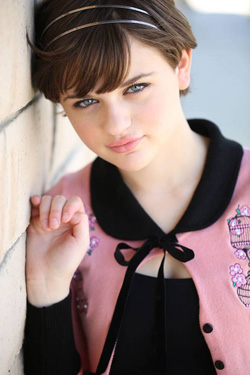
14 year-old Joey King is known for her starring role as Ramona Quimby in Ramona and Beezus. Follow her on Twitter: @JoeyKingActress.

You’ve been involved in very powerful films such as The Conjuring, Oz the Great and Powerful and The Dark Knight Rises. What’s the best behind the scenes on set memory you have from each of these movies?

Oz The Great and Powerful – Sam Raimi kept wanting me to meet his daughter. He said that we are very much alike and would make great friends. Unfortunately I did not get to meet his daughter until months after filming completed, during an ADR session [automated dialogue replacement – the process of re-recording dialogue by the original actor after the filming process to improve audio quality or reflect dialogue changes, also known as “looping”]. Sam was right, we hit it off right away and have been close friends ever since. Sam’s daughter, Emma, is fun and silly and a very genuine person and I love her like a sister now.

The Dark Knight Rises was an incredible experience. I got to travel to London and India. I think India is the most memorable place I have ever gone. We stayed in a Palace and there were peacocks running free and they played beautiful music at meal time. The streets were full of people and they were so warm and friendly and cows roamed the streets all the time.

During filming The Conjuring I came down with ITP [a bleeding disorder in which the immune system destroys platelets] I would wake up with bruises all over my body and it freaked me and everyone else out because that’s what happened to my mom in the movie. Eventually I was diagnosed with ITP and the doctor said it was my body reacting to getting the flu. ITP goes away, but it takes months for your platelet count to go back to normal. We had to be careful in some of the scenes I shot, like when my mom tries to choke me, because I would bruise almost instantly.

Describe your audition for The Conjuring.

I didn’t get to meet the director James until after I got the part. I remember meeting with the casting agent but I never got to go back in for a call back because I was working on a TV show called BENT at the time.

How does your schooling work?

I am Home Schooled and have been doing that since the 5th grade. I did go to public school until 3rd grade then I switched to private school. I travel for work so much, that being Home Schooled just made sense. I’m in 10th grade and I almost never miss a day of school. I can school on the weekends if I need to catch up and I always have a set teacher when I am working on a movie or TV show.

How old are you now and when did you get started in show business?

I am 14 right now; my birthday is July 30th. I was four years-old when I did my first commercial for Life cereal. I was so excited because I love Life cereal and still eat cinnamon Life cereal today! I did plays starting when I was three. My big sisters were in this theater group and they were kind enough to let me take classes with the big kids. I fell in love with making the audience laugh (even though I wasn’t sure what they were laughing at) even at three. I guess I was born a ham. But when I was almost six, I did a short movie and really fell in love with the process of making movies. I am still very close with the director from that film.

Besides acting, what activities do you enjoy?

I started playing keyboard and I love it. One of my best friends, Arianna, and I like to write songs and play them. We wrote a song for my mom and her mom and sang it to them on Mother’s Day, while I played piano and Ari played guitar. We made both our moms cry!! I hope to get that song professionally recorded because it is very special to me and I think a lot of people can relate to it!

When did you join SAG-AFTRA?

My mom said I joined SAG-AFTRA as soon as I was eligible. I have actually seen union reps on set sometimes and they are always nice and ready to answer any questions you have.

You did the voice-over work in Ice Age: Dawn of the Dinosaurs, Horton Hears a Who! and The Boxcar Children. How do voice overs work?

Each voice-over job is different. With Boxcar Children, we started off all being in the same room together and that was really fun. Most of the time it is just you, (no other actors) and the producers and director. I memorize lines fast, so I like to look at my lines like three times to get a feel for whats going on and then I go with what’s in my heart and make adjustments whenever the director instructs me to. For all the above, I was in California, but I have done ADR for movies and TV all over. A movie I just finished might need a line redone, but I’m in New Mexico, so I have to go to a sound studio that is close to where I am working at that time.

Did you have your own trailer for any of your projects?

I have never had my own trailer. The truth is, I always have to have a classroom as well, so I request that half a trailer for personal and half for school. Sometimes it works out that way and sometimes not. I honestly don’t spend a lot of time in my trailer, so it never has been that important to me. But some trailers are way cooler than others. I think my favorite trailers were on Crazy, Stupid, Love and the Lifetime movie I just finished. Those trailers had sectional couches and you could really spread out.

Joey can also be seen in White House Down with Channing Tatum, Jamie Foxx and Maggie Gyllenhaal.
What were you doing in New York recently? Share a fan story.

I was in New York recently doing some press for Wish I Was Here. I am so excited for people to see this movie. Zach Braff is an amazing director and this film will really make you laugh and cry, it is one of my all time favorite parts. I got to stay a few extra days in New York to just be a tourist and have fun. I got to see THREE of my OZ costars in plays on Broadway and it was an incredible experience. I truly loved all three plays and enjoyed the remarkable performances of Zach, James and Michelle!! A fan story to share is when I was at Battery Park looking out at the Hudson River, a few girls were asking if someone would take a photo of them, and I volunteered. After I took their picture they recognized me and were so excited. Of course there were lots more selfies after that, and they even tweeted me the photos.

Now that the world knows who you are, do you have any fear about being safe?

Well it’s pretty easy to find out where someone lives now with the internet and all. My mom is almost always with me and she is a bad ass (am I allowed to say that?), so I feel very safe when she is around.

At what point in your career did you hire a manager, agent, publicist and lawyer? How’d you decide who to work with?

My agent Meredith has always guided us on what to do next. If we needed a manager or lawyer or PR [public relations] person. My mom relied on Meredith telling us what to do and when to do it. Now I have a manager, a lawyer and a publicist, so they all kind of make decisions together. But ultimately the jobs I do are up to me and my mom. Meredith says you have to love at least one of three things about a job to take it.

1) The story, 2) The people you are going to work with or 3) The money

Because I am 14, and don’t have the responsibility of a family to take care of, number 1 and 2 are the most important thing to me. They probably always will be!

Did you have to sign a non-disclosure form for any of the productions?

Not that I can remember.

Who negotiates your contracts for you? Do you get to ask for things, like special food, a car?

My lawyer does all the negotiations. I’m really chill, so I don’t really ask for anything special. I like certain teachers, so I do ask for them.

Do you ever get overwhelmed with everything you do related to show business?

I never get overwhelmed because it is all very exciting to me. I love to travel and go new places and meet new people. I love interviews, even when I mess up (like falling on Jay Leno) because I get to talk about a project that I did and am excited for people to see it. I love meeting fans, they are so fun to talk to and I love when they tweet me photos that we took together! It’s weird to say, but sometimes I feel like I was born to do this because nothing ever fazes me or stresses me out when it comes to this business. I could look like poop and still be excited to walk a red carpet for a movie I did. I even love talking to clubs and groups and if I mess up, well, that’s just me, no one can be perfect, so why stress out about it.

Are your friends supportive of your decision to be an actor? Any adults ask you about wanting to lead a “normal life” instead of the life you’re currently leading?

All my friends are supportive, and most of them are actors or are in the arts or have parents that are in the business. They understand I travel a lot, but we try and make lots of time for each other when I am home. I have wonderful friends, I really do. I love them so much! We have a great time together and sometimes my sisters hang out with us as well. I have the best sisters and all my friends love them! As far as adults asking me if I want a normal life, I can answer by saying this, I have traveled to many places and what may seem very odd or very different to me, is just everyday normal to them, so my every day normal may seem odd to you, but it is very normal to me.

Do you travel a lot for work? Where is your home base? Who goes with you on location? Who pays for the airfare?

I travel all the time and I love it. I would be a liar if I said I didn’t miss my family, friends and animals, but thank goodness for Facetime! It has been a huge education getting to see the places I have seen and meeting the people that I have met. I would not trade or change one thing at all. My home base is California, but I love so many of the places that I have traveled to, that I hope someday to have a small home or apartment in many of these places as well. My mom goes with me most of the time and sometimes my dad will come when he can get time off of work. My older sister has even traveled with me. Kelli is a great travel companion; she’s very smart and fun and a bad ass like my mom. As far as money goes, production will fly me and one guardian to a job. If anyone comes to visit set, then we have to pay for that trip.

Any advice for actors your age?

If you love it, then stick with it!! Don’t be afraid to be yourself, and always have fun! Rejection is just a learning tool, but remember that you can’t be perfect for every role, so be realistic and don’t be to hard on yourself.

18 year-old Michael Grant may look familiar. He was on Pretty Little Liars! Follow him on Twitter: @MichaelGrant15 and visit his website at http://michaelgrant-music.com.
You have a film coming out called Fair Haven starring Tom Wopat. Tell us about your character. Did you create a backstory in your head or were you given any direction as to your character’s past?

In Fair Haven I play James Grant, a young gay classical pianist who recently endured the tragedy of his mother’s death. The script and story are a wonderful exploration of James’s journey to come to terms with who he is and pursue his dreams. The director, Kerstin Karlhuber, has been absolutely fantastic, and we spoke at great length about the emotional backstory of the character.

Describe your audition for Brooklyn Nine-Nine.

The audition process for Brooklyn Nine-Nine was actually very simple. I went in to read with casting on tape. Everything went well in the room, and we read through the scenes a few times. Fortunately, a few days later my representation called to tell me that I had gotten the job!

What made you decide to move from Tennessee to Los Angeles to embark on your acting career?

The move from Tennessee to Los Angeles was a very natural one for both me and my family. My sister and I were both fortunate enough to get an agent before actually fully committing to making the move, which made the process much easier.

How old are you now? What was your very first job?

I am 18 years-old, and moved with my family to Los Angeles when I was 14. One of my first jobs was a promo for the Toy Story 3 video game.

Besides acting, what activities do you enjoy?

I am a big sports fan. I also love to read and watch movies! Having grown up in Tennessee, I am a huge Tennessee Titans fan!

What was it like getting mixed up in the “Pretty Little Liars” series? Did you watch this show on your own before you had the audition / booked the job?

“Pretty Little Liars” was a fantastic set to work on! The cast and crew were a lot of fun and extremely professional, and I had a really wonderful experience! After getting the job, I went back and watched some episodes of the show, just to get an idea of the story lines and where my character fit into the arcs on the show.

What’s the most challenging acting job you’ve had to date? Why?

The role I am shooting now for “Fair Haven” is probably the most challenging job I’ve had to date. The emotional complexity and depth of the relationships for the character were very daunting at first, but the challenge has proved to be a wonderful learning experience and a lot of fun!

Do you have a workout routine? Do you have a diet you stick to?

For me, being physically fit is very important to acting. I try to eat really clean foods. Lots of good proteins, fruits and vegetables. As far as a workout routine, I like to work out around once a week in order to keep active.

What differences do you see on location shots vs. local studio shots?

When shooting something in a studio, convenience and resources are very abundant. Everything from the trailers, to the office equipment are stationary, which makes things easier to get to and use. On location, the crew is basically picking up everything (trailers, computers, camera equipment, etc.) and moving it, which can present an obstacle. With that being said, location shoots are generally a lot of fun in that they provide a different environment and give a different atmosphere from studio shoots.

Michael was also in The Secret Life of the American Teenager and Criminal Minds.


Now that the world knows who you are, do you have any fear about being safe?

No, not at all. Anyone I’ve ever met who has recognized me from my work has been very nice and generous!

At what point in your career did you hire a manager and agent? Do all of your people communicate with each other?

As I mentioned before, I had an agent from very early on. Everyone (manager, agent, lawyer, publicist) all work very closely together and are in constant communication.

Did you have to sign a non-disclosure form for any of the projects you worked on? Who goes over paperwork with you?

I have not had to sign a non-disclosure agreement for any projects to this point. However, when I do have contractual questions, I reach out to my attorney.

Who negotiates your contracts for you? Do you GET to negotiate or you accept whatever is given to you?

My representation is involved in negotiating the contracts for jobs. I am not involved at all in the negotiation process, and trust them to get what they feel is the right deal.

What made you decide to hire a publicist?

The decision to hire a publicist felt like a natural one. We both mutually felt that, at this point, it could add value to my career. It was also a wonderful fit, and we all hit it off in addition to working well together professionally.

Are your friends supportive of your decision to be an actor?

I have been very fortunate to have a wonderful group of people close to me who are very supportive of my journey in the entertainment industry.

Do you travel a lot for work? Who goes with you on location? Who pays for the airfare, hotel and food?

I actually haven’t traveled that much overall for jobs, as most of my work has filmed in L.A., but my last two projects have coincidentally filmed in other parts of the country. On both projects, I have traveled by myself, and production has covered airfare and hotel costs.

Any advice for actors your age?

My biggest advice would be to work hard and stay focused. In any field, there will always be distractions, but managing those and staying grounded in the truth of oneself is vital.

3Kids

Pharrell Williams has everyone singing about being HAPPY – yet that’s not always the case when you take an honest look at the heart of young actors. It’s tough out there! And you face a ton of rejection! That’s why Kate Mueth made it her mission to help young people learn how to deal with the emotional rollercoaster ride known as the entertainment business.

Kate Mueth is an actor, director, casting director, choreographer, and founder of The Neo-Political Cowgirls. The inspiration for Neo-Political Cowgirls began with Kate’s desire to branch out and create work for women. She wanted to reach young girls and give them workshops based on a formula that is so mind-blowingly transformative that girls come in one way and leave another.

There is something transformative that happens when we are given permission to tell our story – to be seen, and to be heard. shares Kate. That is where the power of these workshops came from.

Having a sense of power at auditions can make a huge difference, whether you are a young female actor, young male, or in the middle of your career!

To help give NYCastings members a power boost in the area of self-esteem, Kate Mueth shared 5 of her workshop secrets with us…

1. Think of auditions as PLAY time!

I don’t want people to come through the door and lose all organic connection to who they are. They try to be what they think someone else wants them to be. So I transform auditions into let’s meet. Let’s play. Then I give them text to toss around and get the actor on their feet to see what they can do physically. The idea of how we feel about ourselves when we walk through that door is why we see so many unhappy people in this industry, even at the highest level, because there is this continual expectation to be something that we are not. We need to express ourselves more connectedly. Many times it is expected for us to be everything but who we are, and that is at the core of unhappiness.

2. Journal.

At Kate’s workshops…

We begin with writing, with journaling. We do a physical relaxation exercise and journal for twenty minutes straight where they can’t put the pencil down. If they are too young to write, or don’t feel confident enough, they can draw or scribble. It is a way to get beyond all the things that are in your mind so they flow out of your mind and on to paper. Then we read through the writing three times as if it wasn’t theirs. Then they pull out the active words, the powerful words, and put it on a piece of paper so they don’t have to share everything personal but can get out words from their individual voice. They aren’t in competition with each other; we aren’t interested in the end result but the process. And to be in that process, they get rooted in their own experience and what they have to offer. To know that what they have to say matters, is important, and is welcome in this place.

3. Embrace your individuality!

In Kate’s classes, in the ages of 8-14, there are girls who come in and are bold and expressive and there are girls who come in with their arms crossed. They are scared ultimately. So Kate works on letting it all be OK in the room.

If you are going out for a film, know that you bring only what you bring into a room. You can’t be in competition with anyone else because you are only you. What you bring to the table is valuable, valid, and worthy. In our workshops, there is this one great exercise called the spectrogram. There is a big piece of tape on the floor. One side means no or never and the other means yes or all the time and the middle means maybe. It starts out silly with a question like – I like Pizza. And, gradually, the comments become more thought provoking like – I am kind, or have many friends, or have talent. We take a look at physically where we are. We notice each other, but don’t judge. We try to practice the rule of no judgment. Not that you have no opinion, just that you aren’t judging whether you are as good as another person. It helps you become interested in differences, versus judging them.

4. Be honest with yourself.

It can’t be about whether you get the role, because that is outside of your control. Ask – Why do I do this? Why do I audition? Is it for a paycheck? Approval? To be famous? What do you want to spend your time on, and how do you get artistic value? It is about creating art, and we all have to figure out what that is. It might be about a paycheck, and that is fine. It might be about getting approval, and that is fine but too. To be happy, whether you are a child or an adult, you have to find connectiveness into why you are doing it can be honest about that.

Meditating helps with this. I give my class a rule that they have to be honest in answering questions. And if they are not going to be honest because they are nervous or don’t want to expose themselves, I tell that that is OK but to note in their head that they are being dishonest. So, in your head, you are not fooling yourself into living a truth that is not really ours. You see that a lot. Even a lot of celebrities, they are unhappy – people at the top of their game who most would be thrilled to have a fraction of their career. You wonder why would someone act that what when there is so much to be gracious for, and that happens when your feet get off the ground, when you are not honest with yourself about why you are acting anymore. Because obviously it is not making you happy.

When you are working on your craft, there isn’t room for dishonesty. It is very much about being in your skin.

5. Create your own work.

I’m a huge proponent of making one’s own work- really at any age. Kids are so intrepid these days I find they are always inspired and should be encouraged to really put their voices out there artistically- writing, making their own stories/plays, choreographing, making films, etc. And this advice is imperative, I feel, for teens, young actors and older women finding there are fewer and fewer roles for them out there. Making your own work is very confidence building.

I go to this quote all the time by Ben Okri Stories help to combat fear, ya know. They make the heart bigger.’ And that is what I find. In telling stories your heart can become bigger, you become more honest, and your career becomes fulfilling. The purity of the joy from making the art makes me stronger, I feel better about myself. I am my own voice. Being my own voice, I am unshakable.

Thanks Kate for helping to make our NYCastings members unshakable!

For more information on Kate Mueth and Neo-Politcal Cowgirls visit:http://www.npcowgirls.org/

lois robbins

As an actor living in NYC, times can get pretty tough. You’ve made it to the city of your dreams, and, still, no matter how many auditions you get or roles you book, you are susceptible to feeling like your aspirations of being an accomplished actor are far from being fulfilled. It happens to the best of us. However, always remember that persistence is a key part of making it in the industry. It can take some time to get there, but you’ve got to hang on with all your might.

Lois Robbins understands this notion first hand. As a native New Yorker and successful actress, Robbins has starred in productions of all entertainment mediums. She is mostly recognized for her television work on One Life to Live, Loving, Ryan’s Hope and All My Children. She is currently in production on the independent film Juvie, alongside Eric Roberts, and is set to start working on Playtone’s (Tom Hanks’ production company) star studded movie, Ithaca. She will play opposite Sam Shepherd, Melanie Griffith and Meg Ryan (who is also directing the feature).

It is currently “e;the calm before the storm” for her, we’ll say. With such prestigious projects just around the corner, Lois’ talents are sure to get some well-deserved praise shortly. I’m lucky to have had the opportunity to speak with her and gain some insight on what it takes to make it in NYC.

RP: What was your biggest struggle as an aspiring actress in NYC?

LR: Paying the rent! Thank god my parents were born before me!

RP: Have you ever had a day where you just wish you could settle into a normal 9-5 job?

LR: I have never aspired to a 9-5 job. For me, that would have been settling.

RP: In your opinion, who is the most brilliant actor you have ever worked with?

LR: I had an opportunity to work with Diane Keaton in Town and Country- well, let’s say I was “on set” with her.

RP: That must have been incredible.

LR: She is a consummate pro. An actors actor. Watching her work made me want to be better. She lifted everyone around her.

RP: Can you share with us the best acting advice you were ever given?

LR: Do something every single day to further the motion. Be your own CEO of your career.

RP: That’s great advice. In the same vein, what do you say to young actors trying to make it in the business?

LR: Only do this if there is absolutely nothing else in the world you want to do. Then- go at it with a vengeance!!

RP: Have you ever used websites like NYCastings or Backstage to find work? What is the best source for you?

LR: I have used everything. NYCastings, Backstage, One on One. All are great. Finding auditions to take yourself to or self submit is empowering. You have to be a team with your agent if you have one. If you don’t, those sources are invaluable.

RP: Do you prefer performing in Theatre, TV or Film projects?

LR: At different times in my career I preferred different mediums. Mostly, I love to work and it’s the role that draws me. There is nothing as thrilling as live theater but 8 shows a week can be hard on my family. I am loving where I am right now. Making movies is a luxury.

RP: Congratulations are in order. You have two big movies currently in development (Juvie & Ithaca). Would you mind sharing a little about each? What have you done in preparation for your roles and what’s it like working with such amazing talent?

LR: Juvie is about a young boy discovering that his parent’s marriage is in trouble and his dad is having an affair. I play “the other woman”. My character, Maria, is a Wallstreet analyst. To prepare, I spent time with a woman at a Hedge Fund who helped me understand what Maria’s day to day life was like. It was fascinating. I enjoyed working with Jared Gillman who plays the son, Booker. Eric Roberts was truly a riot. We had a great time working together.

I always find it challenging-in a good way- to glean new ways of collaborating on set. After all, it is always a collaboration. Important to remember that. You can’t act in a vacuum! I think it’s always best to keep the “collaboration” on set, or in the rehearsal room.

Ithaca, with Meg Ryan doesn’t start shooting until July. Having just wrapped Juvie I am taking a breath and will dive into that script in a few weeks! I am over the moon about working with Meg and the extraordinary cast she has put together.

Preparation for that role is just starting to ruminate in my brain!!

We all look forward to seeing both.

5 hot ways to spark on-screen chemistry

Looking to heat up your acting career? You can! By learning how to spark on-screen acting chemistry in every scene, you’ll help ensure that all eyes stay on you from your very first audition to your movie’s premier. And when I speak about packing heat, it doesn’t just pertain to romance. Great actors can ignite a chemical reaction in any situation – from a first encounter, to friends who feud, to quiet moments depicting brotherly love.

To help you learn how to spark on-screen chemistry…. Here are 5 tips from actors who make every movie moment sizzle:

Kerry KnuppeHOME, JAMES

Jonathan Rossetti HOME, JAMES

Manny PerezLOVE IS STRANGESupper Suite by STK hosted with Fiji Water and Dobel Tequila

Tommy WirkolaDEAD SNOW; RED VS. DEADSundance 2014

Joseph Julian SoriaCAMP X-RAYSundance 2014


1. USE YOUR SENSES!

Actor Kerry Knuppe ofHOME, JAMES shares…

One of the things that worked well for me in creating chemistry is to use the physical aspects of other actors. Especially when you need to have some history, or where you need to fall in love, I look for something about the actor that reminds me about someone who I really do care about or love. It could be a boyfriend, or dad, or sister. A lot of times for me, it is eye color. In HOME, JAMES – Jonathan has similar eyes as an ex that I am still very close to. When the actor has similar eye color, you can use that as a way to make the moment truthful to you. You are looking at that eye color and it reminds you of true feelings.

Hands are also a big one for me. There is something about people’s hands, and men’s hands can often look similar. I also look for the way they talk, or a familiar gesture.


About Kerry Knuppe

Kerry Knuppe studied acting in Denver, Colorado under renowned acting coachBill Howeyfor several years which led her to star in several short films in Denver, paving the way to the lead role of “Lucy”in the successful Indie comedy “Skills Like This.”She can also be seen in other indies including “The Sensei,”directed by Diana Lee Inosanto,”A Perfect Ending”co-starring John Heard and Morgan Fairchild as well as “Taking Capella” with Rudolf Martin.Kerry recently snagged the role of Marlene on CBS’s new pilot “Vegas” as well as a co-starring role on ABC’S “Revenge.”

UP NEXT: You can catch Kerry in the upcoming film LIKE A COUNTRY SONG. Check out more of her work at: http://kerryknuppe.com/


2. Connect withthe HUMAN, BEING.

To help build a fiery connection, actor / director of HOME, JAMESJonathan Rossetti tells us

It takes a lot of rehearsing and hanging out – for me that is the easiest way for us to be able to see each other as people. You are playing a character, and sometimes filming these intimate scenes, and so it was important to know Kerry as a human being. Kerry and I rehearsed twice a week for two months leading up to the shoot. We are both LA based, so that worked out well. Rehearsing was really important in terms on getting to know each other as people, and as the characters. And that is not something you often get in a film setting. You want to get along with your co-workers. That doesn’t mean you have to become best friends with the person you are shooting with. Kerry and I did happen to get along great. But it helps to understand where each other are coming from.

I studied acting at the Atlantic Theater Company in New York and they preach practical aesthetics as a technique. The basics boil down to living truthfully in the moment. It is not based on a method type of acting, or recalling memories. It is very much a forward thinking process, and that helps to create chemistry with your fellow actors. The technique is What would happen in the situation, if I were in it? – compared to remembering a past event. It is living truthfully in each moment.

ABOUT Jonathan Rossetti

Co-writer, director of HOME, JAMES – Jonathan is a graduate of the Conservatory Program at the Atlantic Acting School in New York City and the Advanced Program in Los Angeles, where he was taught by David Mamet, William H. Macy, Felicity Huffman and others. He has appeared in many films and shorts including The Fall of 1980, Spartan, Redbelt, Smoke, Mirrors and on television in The Unit. On stage Jonathan has appeared off-Broadway in Keep Your Pantheon (Atlantic Theater), 10×20 (Atlantic Theater), the World Premier of Keep Your Pantheon in Los Angeles (Center Theater Group), and many performances of LIVEworks with Acorn Pictures, among others.

FOLLOW @homejamestulsa


3. TRUST EACH OTHER

Manny Perez from LOVE IS STRANGE shares that actors must

Trust each other. To develop chemistry, get to know the person you are with and learn to trust them. We did bonding on the set of LOVE IS STRANGE. The guy who plays my partner and I didn’t know each other beforehand. We got together before the film and developed a friendship, a brotherly friendship, and that showed in our relationship in the film. We spoke beforehand, and hung out. We played it on the set too. The set became a place for us to show the brotherly love that we developed.

About Manny Perez

Manny Perez is becoming one of the most recognized Latino Actors in Hollywood. He has embarked into the most pivotal steps in his career. In the past few years he has been cast from leads to co-starring roles in over a dozen films; in major and independent releases.


4. PUT EVERYTHING OUT THERE!

Director Tommy Wirkola from DEAD SNOW; RED VS. DEAD believes that when it comes to sparking chemistry…

It’s about putting everything out there. In general, in an audition, you can feel who is holding back and who is putting everything out there. It’s not about making sure you look good. I try to give actors as much help as I can, but it is a strange process. It’s about feeling your energy. It’s about trusting the director and believing that they know what the scene needs. It’s also about sharing the same humor. It is something you feel right away. When two of my actors met for the first time, they smiled at each other and had a connection right away. I knew they would be great together. It is about their personalities and their point of views.


About Tommy Wirkola

Tommy Wirkola was born on December 6, 1979 in Alta, Norway. He is a director and writer, known forHansel & Gretel: Witch Hunters (2013),Dead Snow(2009) andKill Buljo: The Movie


5. THINK AS A TEAM

Actor Joseph Julian Soria of Camp X-Ray shares…

For me specifically, when it comes to building chemistry, I just try to bring the same mentality I had when I played sports. It’s a team game, and we all need each other to produce a win. For CAMP X-RAY, we hung out a few times to get to know each other. Communication is key before you even step in front of the camera. We would play catch, hit golf balls, tell stories, and basically just become friends. Real chemistry makes the best on-screen chemistry.

About Joseph Julian Soria

Joseph is proving that he possesses the talent, energy and experience to bring memorable characters to life on the small and silver screen. Most recently, Soria was bumped up as a series regular on Lifetime’s top rated series, “Army Wives,” so this year, he continues his role as Private First Class “Hector Cruz.” Although often cast as the bad boy, Soria has proven to have the chops to conquer many other roles, including comedic characters. His latest film Camp X-Ray, premiered at the 2014 Sundance Film Festival.

THANKS ALL – FOR YOUR SMOKING ADVICE!

o-WOMEN-AT-WORK-facebook

New York City is the perfect location for aspiring actors. It’s the Mecca of theatre, has lots of TV and Film productions, and countless expert acting instructors. Unfortunately, it also comes complete with a multitude of expenses. This is why, as most actors know, it is essential to have a temporary day job to pay the bills. 

Unless for some cosmic reason you’ve already landed a reoccurring role in a TV series or the next lead on Broadway, usually a “e;day job” is necessary.  It’s always helpful to have one that relates to the industry, so you can network.  In a world filled with actors waiting tables, it can be tough to find a job that corresponds with your desired career and still keeps you in that studio apartment.  So, why not consider being a tour guide?


As a current NYC tour guide (For the TMZ Tour NYC – come aboard!), I can tell you I have seen a dramatic change in my acting career and even reaped financial benefits (tips yo). It’s definitely one of the best jobs an aspiring actor can land, and here’s 4 reasons why:

  1. YOU’RE THE STAR: All eyes are on you – It’s any performers dream! The group you’re leading is relying on your expertise to teach them something in an entertaining way. Take on a character. Are you a celebrity gossip tour guide? Pretend you’re an obsessive pop culture nut. Does your tour focus on pizza (yes, there is a NYC pizza tour)? Then grab a slice and embrace your inner Italian. Look at learning your tour script, like any other show. Except unlike any other show, this allows you to actually interact and get to know your crowd, which brings me to this…

  1. EXPOSURE: You never know whom you’ll meet. As a tour guide you’re hosting tourists and showing them something they’re interested in learning more about. I can’t even tell you how many times someone in the industry has taken one of my tours. Producers, Casting Directors, Agents… these are among the industry professionals who scout talent on tours. Being a tour guide can be like a live version of LinkedIn!

  1. FLEXIBILITY: There’s leeway in your schedule to audition for things! Depending on your tour guide job, usually no more than 3 hours of your day are taken. It’s a part-time gig, so you can easily fit other work into your schedule if need be! Tours usually run 7 days a week, allowing you to rearrange your schedule based on upcoming auditions.

  1. IMPROV TRAINING: I truly feel like I get paid to improv. It’s a nice exchange for expensive acting classes, when I get to creatively improvise in front of a crowd for my job. You get so many diverse dynamics on your tour shifts – there’s really never a dull moment. As a guide you are always on your toes and looking for ways to connect to the crowd and make each tour a memorable and unique experience. It’s fun!

If the above reasons aren’t enough for you, here are testimonials from two successful professionals in the industry:

JAMES VALLETTI: Theatrical Director, Producer (Matilda, & Velocity of Autumn) & TV Editor (Real Housewives)
www.jamesvalletti.com

I think being a tour guide affords people in the entertainment industry a flexible opportunity to hone their skills in a way that other “day jobs” doesn’t.  Not only is the schedule flexible, but the tasks requires a solid interaction with an group of people and commanding their attention – it’s the ultimate bottom line of what performing is about – engaging an audience.   It’s a huge exercise in improv, as well, because every situation you encounter on a daily tour is different than the others: timing changes, your “supporting cast” changes, there’s problems – it’s all got to come together as a cohesive whole, and it all falls in your lap as a tour guide.  It’s truly training for what one may face on stage.”


RICKY DUNLOP: Actor, Tour Guide, & Writer
Twitter: @slikrik2003

Being a tour guide is a great job for an actor (and other types of performers) for many reasons.  First, it is flexible and I never feel like I am unable to make time for auditions, performances or shoots.  Also, tours really keep you creatively sharp.  Since every tour is completely different – with varying passenger personalities, weather, traffic and general happenings – you really have to stay on your toes by doing lots of unscheduled improvisation.  You never know whom you’re going to meet when you’re a tour guide.  People from all over the world and all walks of life find themselves on the same bus.  Although usually very brief, you get to form a relationship with these people that is different than performing on a stage.  These things have made being a tour guide invaluable for me.”

kristin chenoweth

It would be hard not to love Kristin Chenoweth. Whether you know the Emmy and Tony Award winning actress/ singer from her critically acclaimed Broadway performances or her numerous television and movie roles, her charming presence is a rare and distinguished force to be reckoned with.

With her highly anticipated return to Carnegie Hall just around the corner, Chenoweth was gracious enough to take some time out of her hectic schedule to chat.

Needless to say I was pretty excited.

RP: First of all, congratulations on your upcoming Carnegie Hall concert! What inspired you to create the Evolution of a Soprano?

KC: It’s really about the evolution of me as a person and as a woman and as an artist. There have been many journeys and roads I’ve traveled and that include music, different types of music. It shows sort of how it all started for me which includes me visiting music I haven’t sung since I was a little child into music no one would expect me to sing. So it’s really truly an evolution.

RP: You’ve worked very hard on this. It must be amazing to be able to develop your own projects. Have you ever considered writing a musical?

KC: I have considered writing a musical, a very loosely based story on my life; however, I think I might be the only person that would find it interesting.

RP: We would all love that! What would you call it?

KC: “Short and sweet”

RP: What’s the best vocal advice you ever received?

KC: Rest, don’t talk, rest.

RP: Well, it’s perfectly clear that you an incredible singer, but, what really gets me is how you’re an equally talented and unique actress. What type of roles are you typically drawn to?

KC: I’m always drawn to more of a character role, which is why The Apple Tree was so perfect for me because it was four roles but all very different vocally. I look for roles that are not on the nose for me. If you go back and look at the role of Sally in Charlie Brown, she was acerbic and the challenge was to not make her a brat, but also make her watchable. With Glinda in Wicked, it was the same. I look at roles that have opportunity for growth, just for me as an artist to get better and to build a really great character arc. I was excited to do Promises Promises for that reason, especially when no one expected me to do that. It was a very different role for me but probably closer to home than anything I’ve played. I continue to look of roles that will challenge me and make me a better actress. A lot of people can sing, and sing really well, but I really am all about the role and becoming the character.

RP: Are there any musicals that you are dying to be in?

KC: I like My Fair Lady, but I think my time has passed. I had always wanted to do that one. Of course there’s Hello Dolly and I look at the greats like Mame and Gypsy.

RP: You’d be great in all of those. Of course on the other end of the spectrum, we all have our lows. Could you share with us your most terrible audition or stage moment? That is if there is one.

KC: There’s so many I don’t even know where to start, but I’ll give you an audition story. I was new to New York. I auditioned for Smokey Joe’s Café for Jerry Zaks. We had to sing a Lieber and Stoller song. I chose “e;Great Balls of Fire.” I still question this decision. I got nervous and it flipped into an opera sound so I sang “e;Great Balls of Fire” with an opera take. Jerry Zaks was a good sport. What can I say? It just wasn’t my show.

RP: I don’t think I can picture a show that you wouldn’t be fantastic in. Are there any future projects you would like to tease us with?

KC: I think Tammy Faye Bakker are three words that I find very interesting.

We find that very interesting as well. Surely she is hinting at the new musical Rise based on the life of the late Tammy Faye Bakker. She participated in a reading of the show back in 2011, and it is now supposedly bound for Broadway. I guess we’ll have to hang tight and see what happens.

Kristin’s 3 nuggets of advice for aspiring actors: save your money, get a temp job where you have the flexibility to audition for things, and audition for anything and everything (even if you don’t think you fit the description).

Kristin’s program, ‘The Evolution of a Soprano’ debuts on May 3rd at Carnegie Hall’s Stern Auditorium/ Perelman Stage.

6waystoboostyourcareer

In a way, the long process of sifting through talent can be viewed as a luxury the America’s Got Talent team holds. From mind-blowing performances to some acts that leave you in a whirlwind of confusion, the number one TV show of the summer aims to find the nation’s next $1 million performer.

I have been fortunate enough to work as a social media coordinator for the upcoming season of the reality hit. The exhilarating moments I have spent working on set, have not only provided some of the most memorable experiences of my career, but also taught me a great deal.

After dealing with countless contestants who are vying for the celebrity judge’s approval – and ultimately America’s – one thing became clear. People were not utilizing the easiest marketing tool available. Social Media. Not only is it free, but it has the ability to instantly connect you to millions of people who have the potential to be your next biggest fan. (FUN FACT: Twitter currently has over 645 million users).

Building a fan base is an important part of blooming in the entertainment industry. If you want to grow as a performer, you need a support system.

To my mind, the “big 3″ in the social media world are: Twitter, Facebook (Fan Page) and Instagram. Here’s 6 ways to utilize all they offer and boost your career right from your couch (or the nearest Starbucks if you’re fancy and like to work from there). For starters create professional accounts on all three.

  1. BRAND YOURSELF. As a performer you are a product. I know, it’s weird to define yourself as such, but it’s true. People will invest in and follow a “brand” they like. With that said, you should use the name you want to be known as. Don’t have your twitter handle be – @nutellalover612 (I apologize to whoever’s name this is – we all love nutella). Instead, make sure that you have one consistent name across all social media platforms that embodies the essence of you. This will make it easier for people to find you. If your name isn’t available a good thing to do is make it “The (insertname)” or “Official (insertname).
  1. BE ACTIVE. We all know those people who upload their every thought into cyberspace. I’m sorry but we really don’t care that you got “e;Snow White” in the “e;Which Disney Character Are You?” quiz. Being active on social media simply means you should generate interesting content to post and then post frequently, but not too much. Check out social media pages similar to yours for an idea of this balance. As a professional, you want to be sure to post things that your demographic (or fan base) can relate to.
  1. BE CAUTIOUS. I think it goes without saying that you should never post anything that can be taken the wrong way. People are getting fired more frequently because of social media mishaps. Your accounts are a direct representation of you. On AGT we have to make sure that people are not posting information that could spoil the upcoming episodes. If they do, that is potential grounds for elimination.
  1. LISTEN UP. Social media is social. It’s about interacting. Therefore, you should be in correspondence with other professionals in your industry. If you’re an actor, follow other actors and people in the entertainment industry, and then talk to them! Some film and TV projects are now even using social media to announce and cast auditions. On Twitter, it’s great to “e;Favorite” and “Retweet” others as it not only gets you on the radar, but beefs up your own page.
  1. #HASHTAGS ARE YOUR FRIEND. A lot of people don’t realize that hashtags are not just fun little anecdotes to end your post, but the gateway to followers. Use hashtags that are trending to join popular conversations and power words in your field to link fellow professionals to your page. Twitter, Facebook and Instagram all thrive on hashtags.
  1. A PHOTO SPEAKS A THOUSAND WORDS. In a world infested with social media posts, it’s imperative that you stick out. Photos can allow you to do this. Post shots that your fan base will find interesting. A red carpet moment? A Backstage laugh? Whatever is going to make you pop. For Instagram, clearly it’s all about the photos, but make sure to link them to your Twitter and Facebook!

Post away!

3reasonsforbeingareader3

A reader is essentially an assistant. Someone who solely exists to aid the Casting Director in whatever they need throughout an audition process. You bring in the talent, you setup their mic (if the audition is being taped) and, obviously, you read with them. Usually this is an unpaid gig that makes for a fairly long day. Now, as an actor you’re probably thinking this doesn’t sound too ideal, right? You most likely would rather be the one auditioning. Well I’m here to tell you just how valuable being a reader actually is for your career.

I recently had the opportunity to be a reader for two incredibly established Casting Directors during pilot season. One of them was Marci Phillips, the Executive Director of ABC Casting and author of The Present Actor: A Practical and Spiritual Guideline to Help You Enjoy the Ride. Working with Marci was one of the most incredible experiences I’ve had as an actor thus far. When I spoke with Marci she explained that, among other things, “e;being a reader allows an actor to see the audition process from a safe vantage point.”

This brings me to the first reason why every actor should be a reader:

1. NO PRESSURE. Think about it – there’s absolutely nothing to be nervous about. You’re able to go to a professional audition and act, without the fears and insecurities that usually attack your mind. People would PAY for such an opportunity. It’s like therapy. You can sit back, relax and observe. Eyes are not on you. In fact, for once you’re one of the eyes watching. And usually it’s a pretty well known actor. “e;It’s (being a reader) also a fun opportunity to act with actors that you may admire”, says Marci. Who knows, maybe you and your favorite actor could even become friends during your reader stint. Which brings me to…

2. NEW FRIENDS IN HIGH PLACES. Talk to everyone you can! Being a reader gives you access to a whole network of connections. Don’t be jealous of the actor you’re seeing perform a 2 minute scene. Instead, try to ease their nerves before bringing them in and maybe even get to know them! Besides, there’s no reason to be jealous, because you’re the one who gets to hang out with the casting director ALL day. Be sure to chat with them too. This way they’re not only able to hear you read countless times, but can see your personality. Ultimately, no matter what, you’re going to be on their radar. Making a connection with a CD is pretty invaluable as an actor. “e;We always strive to get the best actors possible as Readers — I’ve had at least a few who were later cast in Series that I taped them for!” says Marci. Even if you don’t get a job out of it, I can guarantee being a reader will change your outlook on the Casting Director population as a whole and therefore make auditions look a hell of a lot less scary.

3. THE OTHER SIDE. Perhaps one of the coolest elements of all is that you’re on the opposite end of an audition. You get to watch all different actors come in and out of the room. You’re able to see a variety of acting styles, looks and a ton of nerves. After a while you start to realize that you’ve probably looked like some of these guys at an audition or three. The actor who fumbles words, the one who dresses the part, the person who clearly didn’t prepare enough, but instead thought they’d wing it! (props to the people who can do that successfully). My point is you may see yourself in one of the actors auditioning and learn what you like or don’t.

Marci explains that, “Watching the same scene done all day by multiple actors can illustrate what works in the room and what doesn’t. Everything from the way one handles themselves personally to how important it is to give a unique take – these are all invaluable lessons.” 

It also puts you at ease to see that even the most attractive or insanely talented actor/ actress can have a performance overshadowed by nerves. In addition, you sometimes have the privilege of hearing the CD’s inner thoughts. They’re known to produce occasional nuggets of wisdom – comments that you really can’t find in any book or article. I know that I gained so much insight. It was a pleasure to work with Marci, who clearly wanted everyone’s audition to go well. It seemed like she was really rooting for everyone that came in.
Overall, just know that Casting Directors, and anyone who may sit in on an audition for that matter, are your cheerleaders. They tend to love actors (or why would they be in the business right?) and desire to find the best person for every role they can. No one wants you to fail. Being a reader taught me that a major reason for an actor having a bad audition is by his or her own hand. So, get out of your head and simply act. After all, it’s what you love doing.

armandoriesco_pic1a_photobyninaduncan (1)

Why do some actors choose to be versatile as opposed to specializing in one specific form, such as comedy?

There could be several different responses to the above question, however, in today’s world, there are so many tempting acting opportunities that one might think being a specialist is limiting. You always hear about the “fear” of being typecast.

Let’s jump to one of the decade’s most versatile Latino actors, Armando Riesco.

Armando can be seen as Emma Roberts’ sassy transsexual roommate, Rubia, in the recently released feature film “Adult World”, which opened to rave reviews at the 2013 Tribeca Film Festival and stars John Cusack.

Armando will go through great lengths to portray his characters. He has a determination to diversify which leaves the audience with a feeling of accomplishment.

After you graduated Northwestern University, why did you choose to come to New York City to begin your professional acting career?

I actually didn’t. I stayed in Chicago for a couple of years, which I think was a great decision because I got to work on several plays and pay 400 bucks a month for a studio apartment right on Lake Michigan! I came to NY when I was asked to reprise a role (Dexter in Chris Shinn’s “Four”) in a play. Once I got to NY, I was hooked.

You will be reprising your role as troubled Iraq war veteran and American hero, Elliot Ortiz, in The Happiest Songs Play Last opening March 3rd, 2014 at the Second Stage in New York City. You’re used to playing serious, difficult characters. How do you compare such a “heavy” character to some of your other work’s “light” characters? Which do you prefer?

Right now I can’t lie, I am looking forward to some more comedic or light hearted roles. I think as actors we can’t help but take on some of the traits of the characters we are inhabiting, consciously or not. I have been playing Elliot for about eight years now on and off and while it has been an absolute gift that I would not change for anything, my psyche could use a little break!!

Armando is no stranger to the big screen with memorable roles in “Garden State” (Natalie Portman, Zach Braff,) “National Treasure” (Nicolas Cage,) “Fever Pitch” (Drew Barrymore, Jimmy Fallon,) CHE Parts 1 & 2, (Benicio del Toro,) and many more. Some of his television credits include “Blue Bloods”, “Elementary”, “A Gifted Man”, “Royal Pains” and “Law & Order.”

Tell us about your role as Emma Roberts’ sassy transsexual roommate, Rubia, in the highly anticipated feature “Adult World” which just hit theaters. How did you connect with this character? How come production didn’t hire a real transgender person to play the role? What type of research did you do?

All great questions. This role was exactly what I needed in my life when I got it. Rubia is sassy, sure, but she also has a generous heart and a funny, positive view of the world. She is (mostly) selfless and is a great friend to everyone she meets in the movie. I did do a ton of research for it, meeting several transgender people in the process, watching documentaries like crazy (“Paris is Burning” was probably my #1 source of research), and just finding the physicality, the voice, and all those fun things we get to do when we get cast. As far as hiring a real transgender person, you would have to ask the people who made the decisions.

Do you / have you ever signed with an agent or do all of your auditions come through your manager? How’d you meet your manager, Brian Liebman? How long have you been with him?

I have been with Brian since around 2007 and have not worked with a legit agent in that time. Brian’s office [staff] work their butts off to get me in the right rooms and I am incredibly thankful to be with them.

What role does your manager play in your career?

He plays an essential role. He gets me auditions, which is obviously priority number one, but we discuss pretty much every important decision that gets made involving my career. Although ultimately every decision ends up in my hands, I listen to him very carefully and his opinion is very important to me and always considered.

You’ve done voice-over work for video games such as the Grand Theft Auto series and the TV series “Dora the Explorer.” During the recording session, were you in the recording studio by yourself or were you interacting with other actors at the same time?

Voice-over has been a lifesaver for me since I arrived in NY in 2001. All of my jobs have come through auditions, which mostly happen in offices or right in my agents office (CESD). For the video games, there is absolutely no interaction other than a director guiding you. You do what you do and then it gets mixed by the powers that be later on.

You and your actress wife, Shirley Rumierk, have a start-up production company called Rumando Pando? Tell us about the company.

Rumando Pando is actually four people, Frank Pando and Ed Trucco are the other two participants. We basically try to make short videos and films without having to get any approval from anyone. It’s tremendously empowering to be able to create your own work and not depend on anyone. You also quickly learn how hard it is to actually do something that is worthwhile!

You were raised in Puerto Rico by Cuban parents. What did your parents say when you told them you wanted to act as a career?

They have always been 100% supportive of me. I feel very lucky to have them as my parents.

How’d you choose Northwestern University? What did you LEARN at Northwestern that has stuck with you?

Northwestern is a phenomenal school and I chose it because at the time (and probably still) it had one of the top theater departments in the country. David Downs was my primary acting teacher and pretty much every single thing he taught has stuck with me in one way or another. If I had to choose one nugget of acting wisdom from him it would be to find the character’s hands. Attention to detail is paramount when creating a person.

“The nicely restrained Riesco is consistently amusing as the self-possessed Rubia” ~Hollywood Reporter

“Riesco turns what might have been a cliched disaster into a believable study of awkward elegance amid tackiness.” ~Variety

Photo by Nina Duncan

A lot of people know you as your character, Jesse, from the film “Garden State.” What’s it like being “known” for a role you played 10 years ago?

Yeah, I still sporadically will get a “Garden State” recognition on the street. It’s totally flattering and amazing to have been in a movie that had some kind of impact on people.

What’s with the scruffy beard look?

The photos were taken before I started the play, and I knew I was going to have to return to the buzz cut and clean shave soon enough. Hence the scruff.

Do you have any children or plan to have kids in the future? With you and Shirley both in the business, have you thought about juggling the responsibilities of a child?

We are expecting a baby girl in June. I would be lying if I told you that I know how this is going to affect us exactly, but I do know both our lives are going to be flipped upside down – and I can’t wait!! I actually think actors have a great schedule for raising kids most of the time, and we will do our best to raise her right and be with her as much as we can.

What was your reaction when you were mentioned in Playbill and Variety for the first time?

Joy!


What TV shows do you watch on a regular basis and why?

I hate to admit it, but I don’t watch much TV honestly. I think there are plenty of phenomenal shows out there, and I enjoy them when I do watch them every once in a blue moon (“Homeland,” “Scandal,” “New Girl”). I prefer watching sports though; I am a big boxing and basketball fan.

Which is more intense: Working on a play, film or TV series?

They all demand different muscles, and they can be exhausting in different ways. Plays can be physically demanding and one has to take good care of one’s self to get through the eight show weeks. I am amazed and shocked to hear about actors who go on binges after their performances; I would last three days if I went that route. TV series in my experience are more of a mental challenge because there is so much waiting and not acting involved.

How often do you get your headshots done?

Every few years, maybe every four years or so? I try different photographers generally. The last session I had, which was something between a headshot shoot and a fashion shoot, was with Nina Duncan, who is unbelievable!!

Do you / did you have any fears that as an actor, that you wouldn’t be able to pay your bills?

Does the pope shit in the woods? : ) OF COURSE!!! We have been very lucky so far, but that is a constant fear, especially with a child on the way. However, we are both smart, able people who will make ends meet somehow if acting dries up.

Do you have health insurance?

We do have health insurance under the union, and there is a certain amount one has to make a year to be covered under the plan. I think it’s 28K, but you can see the exact amount on the website.

“There are some bright spots, including a great pop score and a stellar supporting performance from Puerto Rican actor Armando Riesco, who plays a transwoman named Rubia who inexplicably befriends Amy. Where other actors might have played Rubia for laughs, as a “man in a dress,” Riesco manages to find humor in the character that doesn’t rely either on gendered or racial stereotypes, creating a character that, despite too-few lines, feels more fully realized than anyone else on screen.” ~Slant Magazine

Photo by Nina Duncan

Do you belong to SAG-AFTRA, EQUITY?

Yes. I got in many moons ago working in Chicago, it was always a priority for me. I think I got my AFTRA card doing a McDonald’s industrial where I played an employee who is accused of giving out free fries to his friends.

What are you addicted to?

Love me some coffee. Soy lattes to be exact.

What are your workout and food routines?

I work out at least four times a week, and I have done so since I was 15 years old. I feel like poop when I don’t get a chance to work out.

Do you have an understudy for The Happiest Songs Play Last?

I do not have an understudy. Last year, doing Water by the Spoonful, I got the stomach flu for a whole weekend of shows — buckets in the wings type stuff. I somehow got through the performances, and I lost about 12 pounds in the meantime. If you absolutely can’t perform, they are forced to cancel the show.

Tell us some crazy acting story that has happened to you.

I knocked myself out doing a Mary Zimmerman play in Chicago. I would hide in a small, pitch black room to wait for my cue. Once I heard it, I would run out of the room and sprint up these stairs to make out with a girl while the main character gave a monologue (his girlfriend was cheating on him). I had to do this six times a night and one time I got sloppy and could not find the door handle in the dark. The cue came and went and when I finally found the door handle, I swung the heavy steel door open right into my face! I was out cold.

Anything else you’d like to say?!

Thank you for the interview!

ILANA RAPP. Please follow me on Twitter: @LizardLadyNJ and also remember to follow @NYCastings for the latest New York casting notices, contests and blogs! Please email me at ilanarapp@gmail.com with any questions or ideas you’d like to see in future articles. Thanks for sharing!


Ready to make 2014 a game changing year for your acting career?

Well then check out this truth packed advice from the cast and director of COLD IN JULY, which premiered at Sundance 2014.

COLD IN JULY tells the story of two fathers pitted against each other who must band together to uncover a darker truth. And when it comes to uncovering truths, you can be certain that the actors and director had to band together and dig deep to bring out such rivetingly honest performances.

To help you create more honest work, here are game changing acting tips from Michael C. Hall, Wyatt Russell and the director of COLD IN JULY – Jim Mickle.

teenperformersadvice

It’s not easy being a teenager, but imagine being a teenager who works in show business? How do these young performers handle school and friends while working on sets of popular TV shows and films?

The following six actors have somehow managed to keep a keen sense of reality while being thrust into the starlight:

– Madison Lintz from AMC’s The Walking Dead
– Tyler Alvarez from Nickelodeon’s Every Witch Way
– Morgan Taylor Campbell from The Hub’s Spooksville
– Isaac Hempstead Wright from HBO’s Game of Thrones
– Jade Pettyjohn from ABC’s Revolution
– MacKenzie Lintz from CBS’s Under the Dome

Madison Lintz is 14 years old and is known for her role as Sophia Peletier in The Walking Dead.

What was your first professional job at age six? Whose idea was it for you to enter the business and why?

It was a commercial and I saw my mom audition and asked if I could do that too.

Are you in any actor unions such as SAG-AFTRA?

Not yet but I expect to be soon.

You played Sophie Peletier on “The Walking Dead”. Were you under contract NOT to talk about plotlines, like your fate?

Yes, I was told, as were my parents, we could not release any info about the show until the episodes air. The Producers told us this but so did our agents.

Your actress mom has worked with “The Walking Dead” Creator Frank Darabont in the past. How did mom find out that they were looking for your character?

Yes my mom was cast in The Mist by Frank D and while my mom knew him my audition went through the normal channels until it reached Frank D. Darabont tells the story that as soon as he saw my audition he said That must be Kelly Lintz’s daughter.

What did you do for two hours during make-up?

The makeup is an intense process so I was enduring it more or less. I was only 12 years old so Greg [Nicotero] (special effects make-up) allowed me to pick the music in the makeup trailer while they worked on me.

You had to do some night shoots. What are the rules and regulations for child actors regarding working hours?

As a minor, a legal guardian has to be with you at all times. Child actors are only allowed to work so many hours and not past a certain time (not sure about the details). The union is very good about making sure those rules are followed. By the way, night shoots were really fun on The Walking Dead.

Madison Lintz comes from an acting family. Her mom, sister and brother are also in the business.

Tell us about your love for animals. Do you still have hamsters?

I love all sorts of animals and have two cats. I also love Pandas and when I was younger really wanted to get one but as I got older I realized this was not really possible. My cat Ollie is a tuxedo cat with a white mustache and paws and black all over. My hamsters are no longer alive and with the traveling I do I think we’re going to stick with just the cats for now.

What is your favorite thing to do when NOT working?

Reading.

Were interview obligations in your contract for “The Walking Dead” or any other production?

No.

Tell us about your school situation and friends, on and off set.

I attend same private school as all my siblings and they work well with us when we travel to accomplish our studies

For “The Walking Dead” did you have a trailer? Craft services?

I had a nice trailer and I love crafty. (food services)

Anything else you’d like to say?

I really love the band One Direction and its my dream to meet them one day.

Tyler Alvarez plays Diego Rueda in Nickelodeon’s new show Every Witch Way.

Photo by Tony Gale.

How old are you now and at what was your first professional job? Whose idea was it for you to enter the business and why?

I’m 16 years old and my first professional job was a Tostino’s pizza rolls commercial. Since I loved to entertain, my mom thought it would be a good idea to take acting classes and now, the rest is history.

Where’d you get your gorgeous looks?

Thank you! Haha! I got most of my looks from my mom. Apparently I am the male version of my mom – according to her.

Are you in any actor unions such as SAG-AFTRA?

As of now I am a ‘must join,’ and I was about to join, but I booked Every Witch Way, which is non-union.

What was your audition like for Nickelodeon’s “Every Witch Way”?

Well, first my manager got me the first audition at the Nickelodeon HQ in NYC. I was sent the sides [piece of script] a day before the audition. I felt good about my audition. Then the following Tuesday I got a call for a producer session. I was a bit nervous before going in, but I knew that this was a great opportunity so I put those nerves aside and went in and did my best. I later found out that they wanted me to test for the show in LA. This was my first test and I couldn’t have been more excited! I didn’t stress too much about the LA test, as I was happy that I had gotten that far. The day after I returned from LA, I got a call from my manager saying that I booked it. On 12/20/12 (the day the world was ‘supposed’ to end,) is when my dreams came true.

What’s the difference between working on a TV series vs. modeling?

Working on a TV series is a lot of work but it’s 10,000 times more fun. On a TV set you are always doing something and there is little down time as opposed to a photo shoot where you have a lot of down time and can hit up craft services (food) a lot, haha.

Tell us about your Latino upbringing.

I am second generation Cuban on my dad’s side. This has exposed me to the Hispanic culture. I spent summers in Cuba with my grandmother when I was a child. If it weren’t for my grandmother I wouldn’t be the Latino I am today.

What are you most passionate about?

Family is the most important thing to me. My parents are divorced and I am fortunate to have a large extended family. My mom remarried and my step dad had three kids. Then they had one child together. Our dinner table has eight chairs. My dad remarried and had two kids. I love all my siblings and my step parents. I look forward to spending time with them.

Tyler Alvarez on the set of Nick’s Every Witch Way. Follow Tyler on Twitter: @TylerAlvarez

What do you think about Social Networking? Is it a MUST in today’s world for people your age?

I personally think it is a must because you can talk to friends/family, make plans to hangout with people, and I like seeing all the funny videos people share.

Where is “Every Witch Way” is shot and where do you normally live?

Every Witch Way is shot In Miami Florida, and I currently live in NY.

Tell us about your school situation and friends, on and off set.

I am a sophomore at Jericho Senior High School. I have eight really close bros that I chill with a lot. We like going to concerts and having fun. They are all really supportive and think it’s cool to have a friend on TV. When on set, I receive private tutoring and I love it because it’s only three hours a day.

What tech do you use?

I am a huge Apple fan. I have an iPhone 5 and just got an iPad mini for my birthday.

Anything else you’d like to say?

The biggest advice I can give to actors is once you prep your audition you have to just go in and be in the moment and listen. To me, listening is the biggest thing in acting.

Morgan Taylor Campbell played Ann Templeton in the TV series Spooksville. She is currently working on No Men Beyond This Point.

Photo by Jamie Mann Photography.

How old are you now and at what age was your first professional job? Whose idea was it for you to enter the business and why?

I’m nineteen at the moment and I started in the business, of my own accord, when I was seventeen. I told my parents I wanted to act and Mum up and moved to Vancouver right along with me, just a few months before I graduated. It was probably the most sure decision I’ve ever made. To be an actor. For the longest time I was never sure about what I was supposed to be. My plan would switch from hairdresser to neurosurgeon to singer and then once it started turning into professions like Witch or Vampire, I thought, Oh. I should act. And then from there it was about four months later that I booked my first professional job, which was a commercial for NIKE. I got to ride a bike.

Are you in any actor unions such as SAG-AFTRA?

I joined UBCP (the Union of British Columbia Performers) while filming Spooksville. Without being a member I had to keep paying permit fees, so at that point it was a way to save money to join the union. And a few of my most recent permits went against the initial fee to join so it was cheaper for me to join at that time. It’s nice too, now I have Dental.

You played Ann Templeton on the HUB Network’s “Spooksville” for several episodes and you’ve also been on shows such as “The Killing” for one episode. What’s the difference between creating a character for one episode vs. several episodes?

With a series regular role, I feel you definitely get a longer period of time to discover the character. For me though, I still feel I have a lot more things to figure out about Ann even though I spent five months with her over the summer. That may also be experience level too, because I am pretty new and I’m not always sure which choices work for myself and the character and which ones not so much, but then again I think there is always more room to learn about another person’s life. I don’t really judge it based on one episode or several, I find it has to do with how well I understand the person I’m playing. For me, The Killing was more difficult to grasp, because Lacey’s lifestyle is very different from my own and I had such a short period of time to work with her. With Ann, I kept having new opportunities and circumstances to learn about her, so after some time you develop a level of comfort with this individual you’re spending so much time with.

Morgan Taylor Campbell, while working as a professional actor, still has time for fun. Here she is having fun with her Furby, Tiger.

How come sometimes you’re billed as Morgan Taylor instead of Morgan Taylor Campbell?

I remember before I ever moved, reading how many actors had stage names, I dunno maybe because they sound better or so they could keep their true identity secret (Batman). I think I thought that as an actor you were supposed to be this entity of mystery where no one really knew who you were and a new name could help me be that; help me hide parts of myself that I wouldn’t want people to see and in turn I could be anyone. So, I wrote lists of different potential names and couldn’t commit to the idea of having to get used to a whole other name, so I settled for half of me. Over time, after being in classes and reading plays and discovering what acting really meant to me and discovering more of who I am, I realized that if people are going to know me then they should just know me. We need more honesty in this world. And like Bob Dylan says, My name, it ain’t nothin’, my age it means less.

As an actor, you’re really telling someone else’s story. What’s it like to portray a story through the words of someone else as opposed to telling a story that you make up on your own?

I believe it requires a lot of selflessness and empathy and those are qualities I’d like to better possess as a human, so having the opportunity to see the world from someone else’s perspective is often times eye opening and inspiring. More often than not, we are given the freedom to make up the majority of a character’s backstory, but I try not to just throw in what I think is the coolest choice, but to instead find out, based on given circumstances, what this person’s life has been. It’s sometimes difficult to not pick the easiest out for your character. I just watched Don Jon, and the people reminded me of some I had around growing up, and I felt that they were characters who I’ve so easily stereotyped in real life and it made me sad and happy to remember that everyone is complex and has stories to tell and shouldn’t be undervalued.

Where’d you get your cleft chin from?

Hahaha! This is awesome! I definitely got it from Dad, right along with my Irish nose, which came from his mom, whose surname before she married was Andrews, which I suppose was originally English. It’s really cool looking back at old pictures of great grandparents and seeing similar features on them as well. I find genealogy really interesting and plan to one day research much deeper into my family’s history.

What was it like working on the indie mockumentary called “No Men Beyond This Point”? Did you have an audition?

I did an audition tape, so it was just me, my coach and the camera. I was in the middle of packing to move to shoot Spooksville actually, so I had to borrow some clothes from friends and I ended up wearing some fancy cardigan with a collared blouse even though the attire was supposed to be more minimalist. I was going for a school uniform type thing, but that was what I could get my hands on, which, hey, still worked out great. I just loved the concept of the film. The story and the mockumentary style itself, which I hadn’t done before. Oh, I was supposed to have this rigged prosthetic breast so that I could be breast feeding my baby and you could see the milk and everything, but it ended up just being hilarious. It didn’t feel quite real and there was makeup all over it to make it look natural, but that turned the baby off completely, so we couldn’t end up using it. And, as for the festival circuit, I’m sure we will be there, I just can’t be sure of which ones. When it comes to those things, I would imagine I’d be taking myself. Perhaps make a fun road trip out of it.

Who turned you onto Edgar Allen Poe?

High School English class. His themes of violence and loneliness struck a chord in me. Reading his work fascinated me because I came to understand that the world I was living in was so much smaller than it seemed at the time, and that the possibilities for what this world is capable of are limitless and to do with it what you will.

Who is your best friend?

My best friend is my blankey. Her name is Bubius (pronounced Bubish) and I’ve had her for nineteen years. I like that she stays consistent even as I grow up, besides a bit of wear and tear. So many things come and go, but I can always look to her when I need comfort.

Morgan Taylor Campbell shows us one of her many looks that make her more marketable.

Follow Morgan on Twitter: @MorganTCampbell and visit her website at
morgantaylorcampbell.tumblr.com/ 

Photo by Jamie Mann Photography.

Are you attending or planning to attend university? Did you ever get your High School diploma?

I didn’t like high school, so I left as soon as I could and then I finished, my one last course I needed to graduate, from home for the last few months and just mailed it all in. I was registered for university for the fall that I moved out to Vancouver, but on the last day to sign up for your courses I dropped out. I didn’t want to go. I didn’t want a backup plan. I just wanted to be an actor.

What is Celiac? When were you diagnosed? How has this dampened or heightened your awareness of food intake?

Very basically, it’s an intolerance to gluten. Gluten free has become so hip these days, but it’s important for people, especially who want to eat gluten free, to know exactly what not to eat. It’s a protein found in wheat, rye, barley and is often cross-contaminated with oats, but there are so many fancily worded ingredients that one would often have no idea contain gluten. I found out when I was ten, on my way to camp, that I would not be able to eat the hot dogs, or the smores. I lived on Rice Krispie squares for that week, only to get home and find out that they aren’t gluten free anyway! For the first six or so years I hated it. I was embarrassed that I had to eat weird food and I couldn’t eat the cake at birthdays or ever go out to restaurants. I didn’t eat at a restaurant for about six years, because at the time, a gluten free menu was very hard to come by, and still, cross-contamination is a big worry. Now, I’m completely comfortable with it and I’m thankful that if I have to be diagnosed with something, I got the thing that is just going to make me eat healthier.

Anything else you’d like to say?

I just want to say thank you. Thank you.

Isaac Hempstead Wright plays Bran Stark on HBO’s Game of Thrones. Photo by Curtis Gibson.

How old are you now and at what age was your first professional job? Whose idea was it for you to enter the business and why?

I’m 14 and I had my first professional job when I was 10 – it was an ident for a documentary series. I was in it for less than a second. I joined a local drama group when I was nine. I joined for fun, not because I wanted to be an actor, but the other children in the group went up for occasional auditions and I was interested by that and asked if I could try too. My mum said I could do six auditions only. All the auditions were for adverts, except Nanny McPhee and Game of Thrones – which was the sixth and final one!

Are you in any actor unions such as SAG-AFTRA?

I had to join SAG-AFTRA for The Boxtrolls.

You play Bran Stark on the HBO series “Game of Thrones.” Tell us some behind the scenes details. What was your average call time? Do you read the scripts in paper format or electronic?

The average call time is probably about 7:30am for me, but much earlier for the adult actors. My mum is my chaperone so she keeps an eye on my times. We get the scripts electronically and a paper copy too if there’s a read-through. And we get sides [parts of a script] when we are filming, so I learn my lines then as I never have too much to say and you don’t want to be over-rehearsed because the Director will guide you if necessary. It doesn’t take me long at all so the rest of the time I hang out with the cast and crew. I take lots of games on set with me because there is always a lot of waiting. Depending on our location, I might have some time with my tutor, but I prefer to study in the hotel away from the distraction of the set. We have 3-way trailers, and I’m usually next door to Kristian who plays Hodor or Ellie (Meera) or Thomas (Jojen) and we all get on really well. There is always a good catering service, although I probably eat way too many biscuits and sweets things.

What was going through your mind when being fitted for the “Game of Thrones” costumes?

My first costume fitting was so exciting, and it felt like I was transported to another time and place. Far from getting sweaty, the challenge often was to stay warm as we filmed in some remote places.

What was your reaction when you found out you were nominated for a Screen Actors Guild Award for Outstanding Performance by an Ensemble in a Drama Series?

Well it’s not something I had heard about before, but I am really excited to be going to the ceremony.

Where is “Game of Thrones” shot? What are the rules and regulations for child actors regarding working hours?

Game of Thrones is filmed in Northern Ireland. My local authority sets down the regulations for my employment and my mum makes sure they are followed on set. My mum is with me at all times because a film set is a busy working environment and it’s good to have available the support of someone who knows you well.

You just finished working on an animated film called “Boxtrolls”. What’s the difference between working in front of the camera vs. behind the camera? Did you do motion capture for this or just the voice? Tell us more.

There was no motion capture for Boxtrolls, but they always film the recording sessions for reference. The lines are put down first and then the animation is produced later. I was lucky to share a couple of my recording sessions with some of the other cast, so I met Sir Ben Kingsley, Simon Pegg and Elle Fanning, which was very cool. But usually I was in a studio in London on my own or with a reader, and with the Director on the line from Oregon. It’s a very different experience because you have to imagine the whole scene and the context far more than when you are on a set in costume. The Directors were excellent and they really conjured up the scenes for me and explained what all the characters were feeling and why. Making a stop frame animation is a long and detailed process and the animators require super human patience and dedication! I’ve visited the Laika studios and it’s an extraordinary world of incredibly talented people. I’m looking forward to seeing the result!

Isaac Hempstead Wright just wrapped the animated film The Boxtrolls. Photo by Curtis Gibson.

What were your auditions like for “Game of Thrones” and “Boxtrolls”?

The first Game of Thrones audition was in a church somewhere. I had no idea what it was about, but the casting assistants explained what you had to do; it was pretty relaxed and informal. For Boxtrolls I just taped a voice recording at home and sent it to my agent. At the second Game of Thrones audition I met the producers and read from some scenes. I remember it was a hot day and the tube trains were on strike so we walked past Buckingham Palace and through Green Park which was lovely. There were some other children there for the auditions and their parents were already reading the books – we bought a copy after that!

What is your favorite thing to do when NOT working? What technology do you use?

I love music and I really enjoy playing the piano. I also play a lot of Minecraft with my friends. But I have a lot on at school this year, so that takes up most of my time.

Were interview obligations in your contract for “Game of Thrones”?

I’m not sure. HBO invites me to various promotional events, but I don’t think it would be a problem if it clashed with a school event. Otherwise, things get passed on to me via my agent, if she thinks it’s a good idea.

Tell us about your school situation and friends, on and off set.

I go to the local grammar school. For me, school is my priority. I have a fantastic time acting, but I really want to do well at school and go to a good university. So far, my acting commitments haven’t caused me to miss too much school and I have always managed to catch up. My school is really supportive and my teachers make sure my set tutors have all the relevant work for me. My friends don’t make any fuss about my acting work. Bizarrely the teachers are more impressed!

What are the differences between working on a television series such as “Game of Thrones” vs. working on commercials vs. working on a film such as “The Awakening”?

I don’t really have any experience of commercials other than my first job, and shooting Game of Thrones has a cinematic feel to it – we still do loads of takes and you have to be patient with the process. It’s not like regular TV apparently where speed is of the essence. The craft services (food) are always good; I love it when lunch is called or the cake tray comes around!

Anything else you’d like to say?

My advice to young people who want to act is to have a fall-back plan. It seems to me that acting is a hazardous profession; so much is down to luck. I’ve been incredibly lucky! So, if you get lucky and land a role, don’t take it too seriously, make sure you have fun!

Jade Pettyjohn has been on several network TV shows and travels for work.

Photo by Jessica Pettyjohn.

How old are you now and at what was your first professional job? Whose idea was it for you to enter the business and why?

I am 13. When I was seven years old I booked my first commercial for a talking monkey toy. I think it only aired in Europe. But, about a month later I booked a co-star role on The Mentalist. I think that was my first real job.

It was my idea to start acting. Ever since I could talk I loved making up different characters and I realized that’s what actors did. So I started asking my Mom if I could act. My mom was really nervous about it because I was really shy back then. She thought she would be throwing me to the sharks or something. But when I started growing out of my shyness, I convinced her to let me do it. I love it, I am passionate about it and have fun doing it.

What are your favorite foods?

I LOVE LOVE LOVE sushi. But also, in Los Angeles, there are a lot of fruit stands. So I love getting a big bag of tropical fruit with chili powder in the summer. That is my favorite summer treat.

Are you in any actor unions such as SAG-AFTRA?

I am in the SAG-AFTRA union. I became eligible with my role on The Mentalist and I had to join when I booked a small recurring role on United States of Tara.

What were your auditions like for ABC’s “Revolution” and “Dakota’s Summer?” How’d you hear about the auditions? Were you sent sides? Did you have a callback?

OK. I will start with how I hear about auditions. My manager emails my mom the sides [part of the script] and audition time and location. She prints them and gives them to me. With Revolution the sides were the scene when I say goodbye to “Mom”. They taped that audition and sent it to production. I was cast off the tape sent in. So there was no callback for that particular job. For Dakota’s Summer I did have a call back. I auditioned with a few scenes from that, but since that film is not released yet, I am not sure that I can say anything about it. With the American Girl: McKenna Shoots for the Stars movie, I auditioned the opening scene with my character’s best friend and a scene on friendship with my tutor. That one there was a call back and then there was what is called a mix and match. That is when they take the top picks for lead characters and have them read with each other to get an idea of how people work together. Each audition is different.

What’s the difference between working on a TV series like “Revolution” and “United States of Tara” where you were are several episodes vs. working on a TV series for just one episode such as “The Mentalist” and “Grimm?”

With recurring and guest star TV there is not a big difference with those types of TV jobs. Maybe if I was a series regular on something and had a more solid 40 hour work week over a long period of time it would be a little different. But, TV has a schedule. And with what I have done you get the script for the episode that you’re gonna be in, and you have table reads and you rehearse on set with the Director. But it moves fast. And the longer the show has been around the smoother and faster it seems to move.

Why did you choose to learn piano and guitar over other instruments?

Well piano, was more my parents wanting me to have a few basics. I like piano, but I LOVE guitar. It is one of my favorite things to do. It’s rare for me to go a day without playing at least a little. I am a rock and roll fan and the guitar speaks to me more I guess.

Tell us about “The Last Ship”.

So, I don’t want Michael Bay firing me so I cannot say a whole lot about it. What I can say is that it is a TV show, sort of a post-apocalyptic action TV series based off of a book. It stars Eric Dane, who was ‘Mr. McSteamy’ in “Grey’s Anatomy” (not my words by the way… that was the show name). And he is so warm and friendly and fun to be on set with. It’s such a welcoming and friendly cast and crew. I also find that it is really amazing that we are working on actual battle ships. They are so cool.

When did you become interested in gymnastics? What’s your favorite part?

So, honestly, before American Girl I only did cartwheels in my front yard. When I booked American Girl I learned so much. I stepped into a new world and trained with the junior Olympic team in Canada. I fell in love with the balance beam because that was my character’s main event in the film, and I trained more with that than anything else.

Follow Jade on Twitter: @JadePettyjohn, on Instagram @JadePettyjohn_Official and her website at http://www.JadePettyjohn.com.

Photo by Jessica Pettyjohn.

Where do you currently live? Have you ever had to travel for work?

I live in Los Angeles. I was born here. But I have traveled for Revolution, American Girl, Grimm, Dakota’s Summer and will be traveling a little bit for the Last Ship. My mom always comes with me. Production pays for the tickets, which is awesome because usually it’s first class. I totally geek out on that! They also pay for hotels as well, which are pretty nice. I keep the key cards and pictures of me jumping on each hotel bed for my memory box. :)

Tell us about your school situation and friends, on and off set.

I go to a private school. It’s smaller and kind of perfect at this school. I work hard on my schoolwork there so that I am always ahead. That way I do not fall behind when I have a mass amount of auditions in a week. They really help me with that. But, it’s the auditions that throw you behind schedule, not being on set. On set there is always a set teacher. When you are on set during a school day you have to put in three hours of schoolwork a day. So basically, I do homework on set, then actually work. I really do want to go to college. I want to major in business. I really like the idea of going to Stanford. But, I am only 13, so I have a bit of time to decide where to go for sure.

My friends are supportive of what I do, and I am just as supportive of the things that they do. With my friends I love going to the movies or amusement parks like Universal Studios and Six Flags and Disneyland. We laugh, we go to malls, we have sleepovers.

What tech do you use?

I am definitely an iPhone lover. I have an iPhone and an iPad, an iMac plus I have an obsession with Temple Run and Instagram. Out of all of the social media that is the one I am on most and love. My account is @jadepettyjohn_official

Anything else you’d like to say?

It’s so important to understand the script. My advice to kids who want to start acting is so simple that people look at me funny when I say it. But, you should look up the words you don’t know in a dictionary. If you don’t know the words in a script you can’t communicate them. It’s so so so basic…

MacKenzie Lintz plays Norrie Calvert-Hill in TV’s Under the Dome and was also a District 8 Tribute Girl in The Hunger Games.

How old are you now and at what was your first professional job? Whose idea was it for you to enter the business and why?

I am 17 and my first job was I booked an episode on a TV show called Drop Dead Diva. I was an athlete growing up and played softball and volleyball and it wasn’t until I was 13 that I got involved in acting. My mother has been in the biz for over 20 years and at the time two of my siblings were involved so I thought I’d give it a try.

What’s it like being the oldest of four children in an acting family?

Being the oldest has its advantages for sure. I do sometimes help my younger siblings with auditions but usually my mom handles that.

Are you in any actor unions such as SAG-AFTRA?

Not yet but I expect to be soon.

What was your audition like for “Under the Dome”? How’d you hear about the audition? Who helped you prepare for the audition?

It was a while ago so I don’t completely remember but I auditioned more than a few times and my mom helped me prepare. The audition came out on the normal breakdowns in LA and the southeast. I don’t remember the scenes but there were more than a few scenes.

What’s the difference between working on a film like “The Hunger Games” vs. a TV series such as “Under the Dome” and Lifetime’s “Drop Dead Diva?”

Not much difference. On both there’s plenty of time to hang out with other actors and have fun.

What’s the difference between working on ONE episode (Drop Dead Diva) vs. working on multiple episodes (Under the Dome)? Is working on one episode more intense for your character vs. having a storyline and an arc on several episodes?

Yeah, it’s obviously rewarding and fun to take a character like Norrie over a season and develop her but guest starring is fun as well.

What are you most passionate about?

I get a little crazy about shoes and college football. I guess most could understand the shoes thing but my dad introduced me to college football and I love it!!!!

What do you think about Social Networking for work vs. personal?

I participate in many forms of social networking and enjoy it.

Who reviewed your contract with you for “Under the Dome”? Was there anything you had added in?

I have a management team in LA and Atlanta who help us with that aspect of the biz.

MacKenzie Lintz on set. Be sure to check her out on CBS’s Under the Dome.

Tell us about your school situation and friends, on and off set.

I attend a private school in North Atlanta and when I’m on set the teachers there work with the onset tutor to complete my studies. I have a great group of friends at my school and they treat me like any other kid at school as they should. In fact a few of them have come to North Carolina last season to visit me on set which was fun.

What was it like going to the MCM London Comic Con in October 2013? Tell a FAN story — did anyone come up to you that you totally remember and what did they say/do to make you take notice?

I really enjoyed going to London and attending MCM Expo. I am still a minor so my mom went to this with me. This was not a required event by Under the Dome. All of the arrangements were handled by MCM. One fan made a 20-page book with a lot of pictures and articles about our family; they had a section for each actor in our family. It was a kind gesture.

Anything else you’d like to say?

The upcoming season of Under the Dome will be crazy. Be sure to tune in CBS June 2014!

**** Special thanks to Jessy Coisnon **** See Jessy’s video on the Exposition ” Delacroix en héritage at http://www.youtube.com/watch?v=TtcuuvDcYZo !

topbooker-2013-kimberlymagness

Whoot! NYCastings!!!

It’s time to celebrate doubly loud because our Top Booker of 2012 has once again snagged the coveted title with a total of 168 booked days of work and earnings of $20,305 through NYCastings jobs only.

Yes indeed, I am officially announcing, that the TOP BOOKER of 2013 for NYCastings goes (once again) to…

Kimberly Magness

Congratulations Kimberly. What an amazing accomplishment!

By self-submitting every day through NYCastings, Kimberly landed major roles in film, TV, print, and voice-over.

Some highlights include:
Television – THE GOOD WIFE, THE TODAY SHOW,DEADLY AFFAIRS,THE KATIE COURIC SHOW,MONSTERS INSIDE ME, THE DAILY SHOW, NY LIVE & GOOD DAY NY

Commercial work – GUESS, ABSOLUT VODKA, LEE JEANS, CAPITOL ONE, DISNEY, GLAMOUR MAGAZINE, CAROL’S DAUGHTER, TOYS R’ US, DOS EQUIS, CRUNCH GYM, AMSTEL LIGHT, NY SPORTS CLUB, NEW YORKER BAGELS, SEPHORA, HEINKEIN, CHEVY, GARNIER, E-CIG &LEND-A-HAND-INDIA

And best of all – Kimberly agreed to spill all of her booking secrets in this Spotlight on Actors interview.

So press play and find out – 5 ways that YOU can become our next Top Booker!

Thank you Kimberly. You are inspiring, as always.

To see last years ‘Top Booker’ Click Here


from the bronx to the box office in 7 steps

Hey young actors! If you’ve had a hard upbringing, tough times, or any kind of daily grind – don’t think that makes you just another Lifetime Channel story line. In fact, your rough road may be exactly the path that helps you succeed as you enter the hard, tough, daily grind of the acting world.

As just one example, actor Kresh Novakovic was born in a tough Bronx neighborhood and today he is an actor and producer known for Analyze ThisMeet the Parents, and The Fix.

Kresh’s early success stemmed from the fact that he believed, If they can do it, I can do it.

He did make it. And you can too!

To kick off your journey – Here are 7 steps that can help move you forward toward acting success – shared by Kresh Novakovic.


#1 – PUT IN THE WORK

Learning and growing is important. Everything you gain from studying will show up on set. The more you do, the better the result.

I was fortunate in that at twenty years old I got to meet Harvey Keitel. I had very little experience, but an attitude coming from the Bronx and the energy of being young. I decided that I would love to act, and Keitel suggested that I study acting. I am so thankful for that.

I did sense memory work, and plays, and method acting. On my first major audition I met Ellen Chenoweth, and I got cast in ANALYZE THIS. And then I got into MEET THE PARENTS. These were small roles but they built my confidence. And, it was all about the work.

Also, your nerves depend on the amount of work that you do. If you have only two lines, and you have done all your work, then you will be able to just say your lines because you won’t be as nervous. You’ll be able to just be there in the moment, be present, and deliver your lines.

#2 – BREAK DOWN YOUR WALLS

Growing up in the Bronx, will forever be in my heart, and soul, and passion, and in my work. But when I started acting, I remember being so closed up.

I was from a tougher neighborhood in the Bronx, and I knew the people who were doing bad things. They were my closest friends. That molded me. I was fending for myself all the time. So when I first sat with acting instructors after class and they would ask what I thought the scene meant, I wasn’t used to being asked what I thought by others. I had to realize that the instructors meant well. And, I had to learn how to open up.

Getting into the arts was such a cultural opening of worlds to me. Art is important because it opens the mind. That is a big part of growing.

And, I believe that toughness builds honesty. My acting coach Greta Seacat used to say, The tougher the shell, the more that’s there.

It took forever for her to crack me, per say. It was hard for me to be vulnerable in front of twenty students. The first time I ever emotionally broke down, it was like a faucet. And that was nothing. That was just the beginning. I felt free, and safe, and she encouraged me. Of course that is just one part. First you learn to express yourself, and then you have to build technique. You have to work on character building.

#3 – EMBRACE EVERY CONNECTION

I was a personal trainer at the Regency Hotel when I met Armand Assante. Armand was another huge mentor. I had a discussion with him asking if he could help me. He saw that I was trying, and he broke it down to the basics – understanding script, reading script, and going over it again and again.

It’s important to respect everyone you meet. Especially the casting agents. Casting people work so hard to pick you, so respect it. The fact that they chose you is an honor, so embrace it

I also like to support young directors. There are directors that are younger than I am, and they don’t have a lot of experience yet but they are super passionate. It’s important to work with young directors now, because they will make it bigger. So if they have an openness and a passion, you should work with them.

#4 – APPRECIATE THE MATERIAL GIVEN TO YOU

Acting is all about lending yourself to what’s given to you. Honor what is in front of you. Honor the writing, the story telling, because great story tellers make great actors.

And then, you need to add value to the material. Give what is needed for the role. Study the script over and over because you will always find something new to work with. The opportunity for progression is always there. You can always find new challenges and ways to express the words given to you.

#5 – DON’T FOCUS ON THE MONEY

Sometimes people don’t take jobs because there is no pay. They feel disrespected that they’re not being paid, but people shouldn’t be like that. Take the job because it’s going to allow you to play and share.

I believe that its money last, work first – and everything else will come.

When I first started out, I decided that I could either make money or be really happy doing my work. I believed that I wasn’t going to starve, and I chose to be happy as hell.

Working in front of the camera is so important and everyone has to start somewhere. Be adventurous. If you want to grow, don’t worry about the pay. Worry about how much you can play with other people, and earn people’s trust. Give yourself the opportunity to work with other people, to get in front of the camera, and learn on the screen how to prepare and keep up with the speed of filming.

I believe it’s important to be in a mode of always say yes.

If someone says, I really want you in this but don’t have the money to pay you – do it. Choose to say yes, if this is your passion. It’s about putting yourself out there. Every job is so valuable in this industry.

#6 -BUILD A FILM FAMILY

If you are going into the film world, never feel like you don’t have an option. There are always great people to work with.

As I said before, I had met Armand Assante and I asked him if he would work with me on a film. He agreed to do it, and my brother directed it. My brother, Ante Novakovic, is a fantastic director. We teamed up with Ethan Anderson, an amazing producer, and found a great DP, John Schmidt. Donna McKenna also got involved with the film family, and we did a short called TAMMY that went to a ton of festivals and won me a best actor award.

When you respect your own work and other peoples work, you see how things can be built. It’s about growing the film family. It’s about combining talents that makes it. We help each other along.

We have a big team now and are going out to Texas with another film, LEAVES OF THE TREE.

#7 – BELIEVE YOU CAN DO IT

I used to watch other actors and think, If they can do it, I can do it.

Why not!

Why not enter myself. Why not take the chance. What’s the worst thing that could happen? These are all thoughts that will keep you positive. They aren’t going to lock you up for being broke. But it has to be your passion. You have to stay with it, trust yourself, and have a full let-go.

The first few times I auditioned, I failed. At first they wanted me for a bigger part in ANALYZE THIS. At the time I was 21 with little experience, and I panicked. That’s OK. I wasn’t ready for it. But I still showed up, and that’s the will of an actor. You have to have intense will.

This business is tough, but I love it. And, I am in a good place now with it. I do my best to continue to grow, and build forward progression of work. That’s what I’d recommend for all who are passionate about becoming actors.

—- Thank you to Kresh Novakovic for sharing!

9factsaboutcreatingyourownwork

No doubt! Creating your own work can catapult an acting career because it gives you a chance to express your voice and take control of how your talent is presented to the world. And now, it is easier than ever to get started on a project because you can quickly find talent, crew, and money raising tools online. Plus you can even film your project with your iPhone camera!

To help prepare NYCastings members for starting their own projects, here are 9 MUST KNOW FACTS from filmmakers who have already dreamed, succeeded, and are on their way to the 2014 Slamdance Film Festival!

Drum roll please….

Lending their insight today is the team behind THE SUBLIME AND BEAUTIFUL and WHO TOOK JOHNNY.

THESUBLIMEAND BEAUTIFUL, by Blake Robbins, is the story of a life-altering tragedy set against the backdrop of Midwestern beauty. David Conrad seems to be living the American dream – nice house, good job, loving family. But something’s not quite right. Then one night, when a stranger’s actions sideswipe his life, David’s growing obsession with that stranger sends him into a hellish spiral, threatening him with the loss of everything he had – but never truly valued.

WHO TOOK JOHNNY, a Rumur film directed by David Beilinson, Suki Hawley and Michael Galinsky, is an examination into the infamous thirty-year-old cold case of Iowa paperboy Johnny Gosch, the first missing child to appear on a milk carton. The film focuses on Johnny’s mother, Noreen Gosch, and her relentless quest to find the truth about what happened to her son. Along the way there have been mysterious sightings, bizarre revelations, and a confrontation with a man who claims to have helped abduct Johnny. WHO TOOK JOHNNY captures the endless intrigue surrounding the most spellbinding missing person’s case in U.S. history.

9 MUST KNOW FACTS ABOUT CREATING YOUR OWN WORK

Advice from BLAKE ROBBINS

Writer/Director/Producer/Actor – THE SUBLIME AND BEAUTIFUL…


#1 – WORK BEGETS WORK!

I am an actor first and foremost, and this film (THE SUBLIME AND BEAUTIFUL) exists because as an actor I made the choice to create more acting work for myself.


As actors, there are two ways to get a role. One is for someone to give it to you and the other is to create it yourself. I highly recommend that you give yourself work as you are waiting for other people to give it to you. The physical reality of creating your own webisodes, film, or a one man show, is very feasible now. I wish I had come to it earlier in my acting career. The economic realities of making a movie are very different than they were five years ago.

Plus, casting yourself works. We know how to best utilize our own talent. And, when we create our own work, we take advantage of that. I am definitely hoping that this movie opens up doors for me as a filmmaker, but also as an actor so that I can go get more roles.

Quality work gets you more work, so if you create something that shows what you are capable of there is a better chance of someone hiring you.

I also feel that when my creative juices are engaged, the world gives me more work. With this movie, I came back from filming, slept for a few days, and then booked a TV role for the next week. I absolutely believe that being engaged creatively draws more creativity to you.

# 2 – ALWAYS LEARN

I was an actor for about twenty years, and that has been my film school.

I highly recommend to young actors that if they even have an inkling of an idea that they might want to make films, that they should be aware when on a set. Observe, and put yourself in the mindset of… What would I do in this scene? Why are they doing that? Why are they setting up the shot this way? That was my film school. Then, when I went to make my movie, I had a strong point of view on how I wanted to do it. And, I didn’t let any rules get in my way. I did it the way I wanted to.

I encourage people to think more creatively. Just because other people do movies in a certain way, doesn’t mean you have to.

# 3 – TYPECAST

For me, I wrote my role for a young David Morse because I feel like I could play young David Morse roles. And, I am a fan of his work. That was the creative voice that was speaking to me as I wrote the part. It wasn’t that I was just letting me play this role.

# 4 – MAKE USE OF YOUR REAL LIFE

The old adage of write what you know, does work.

There are a lot of truths and real world scenarios in this film. My aunt did get hit by a drunk driver. I did go to the hospital and discover that the drunk driver was in the same recovery room. These things are born out of facts and family experiences. I had my own kids in the script. We played off each other and improvised.

Also, if funds are limited, you want to use what you have access to. I had access to this community in Kansas where I knew everything was in a two mile radius. I believed that most people would let me have those locations for free because they would want to be a part of this, and that turned out to mostly be true. If anyone gave off a vibe that it wasn’t a slam dunk, then it was not the perfect location for us. We are a small film, and you just can’t deal with any resistance when the margin for error is so short. We were filming 95 pages, in 12 days, moving from location to location – so everyone had to be all-in.

Use the things you have so that you can spend the least amount of money and get the most production value.

In my movie, for the party where the wife has a blow up, the university threw the party for us and we were just there. They set up the buffet and bar and they didn’t charge us anything. The party would have cost us half our budget, if we had to pay for it. They did it simply to help me out, to be a part of something creative, and to be a part of a movie. When you film in a small town in the Midwest, they are not looking for much more than that. To me, that is beautiful and glorious. You couldn’t get away with that in LA. In small towns, it’s not like every day someone is coming in and saying, Can you throw a party for a movie?

Same thing with the sheriff’s office. We went into the sheriff’s office and said that we think this movie can persuade people to not drink and drive. In the film, I was trying to show how everyone was damaged and hurt by it. We shared with the sheriff station that we thought it would have a strong anti-drinking and driving element, and they gave us cars to use in the movies, uniforms, and the sheriff station to use after hours.

It is about asking with a clear intent and giving people room to say no, while telling them that you will be as unobtrusive as humanely possible. We shot very minimally and didn’t bring in truckloads of equipment. We had a handful of people in a van, and that made it easy for people to say, OK you can shoot with us for a few hours.

# 5 – CREATE FOR A HIGHER PURPOSE

Write not only to change your career, but for a higher purpose.

I was intentionally writing to change my acting career, but you can’t write for just that. I had to find a higher purpose. When young actors want to get into acting to become rich and famous, most of them will get shaken out of the business. In the same way, if I say that I am just writing to change my acting career – it will not shake out for me. I had very strong opinions on grief, and dealt with them in the movie. I focused on that higher purpose of the story. I could have quit many times along the way, but I had something big and something personal at stake that made me keep going back to it.

Advice from SUKI HAWLEY

Producer/Director – WHO TOOK JOHNNY….


#6 – STORY STORY STORY


Storytelling is as important as topic and theme. Make sure once you’re done shooting that you always keep the end – where your story is going to end up – clearly in mind. Then the path of your story reveals itself to you.

While making WHO TOOK JOHNNY, we knew we needed a powerful yet simple structure to convey such explosive material. That structure is very familiar to most – the build of a story, one piece on top of another, starting a crescendo about 4/5 of the way through the film, then the denouement. This structure was necessary to convey the sometimes dark and intense material we had. The story is also very complex, and if we didn’t guide the viewer with a strong hand, they could easily lose faith in us as filmmakers and then not trust the information presented. So making a compact yet bold story out of the elements of this film was paramount.

Advice from DAVID BEILINSON

Producer/Director – WHO TOOK JOHNNY….


#7 – PERSERVERE!

Don’t start a film if you don’t have perseverance.

Nothing comes quick, easy or anything close to what you expect. A filmmaker that is following a story, and capturing events over time, must be wholeheartedly prepared for a mountain of obstacles to consistently get in the way of making the film he or she wants. These obstacles are inexorably linked to the production, and effectively navigating them is what ultimately impacts the final cut.

Through the making of WHO TOOK JOHNNY, as well as our previous films, we’ve been faced with every possible obstacle that a documentary filmmaker can comes across. From lack of funds, to unexpected deaths, to lawsuits, and everything in between. If you’re staying true to following a story and finishing a film, then the goal is always to overcome adversity and keep shooting and editing. Who Took Johnny has been the most difficult film to fund because the subject matter is dark and genuinely scary.Over 10 years of working on the film, we’ve had to shoot and edit as time and circumstances permitted. At the same time, taking that much time to make the film has informed our understanding of a well-known story in a way that nobody else in the world (outside of Johnny’s mother) knows.

#8 – MARKETING SKILLS MATTER

Whether it’s a $20 pre-sale or a $20,000 investment, being able to tell your story in a succinct and compelling way is the key to convincing someone to donate.

If you can’t make your story compelling to people who would fund the making of the film then your film doesn’t belong in the marketplace. The most important thing you can discover when raising money is how best to market your film. Since distribution is essentially free, and significant feature documentary budgets are being raised through online campaigns, marketing is the only thing that matters.

Advice from MICHAEL GALINSKY

Director / Cinematographer – WHO TOOK JOHNNY….


#9 – BE FLEXIBLE

Have a plan but don’t be stuck to it.

You can’t control the story, but you can follow it, and thinking about the best way to do that is important. WHO TOOK JOHNNY is the fourth feature doc that we have completed as a team, and we have 3 or 4 others in various states of production. Each doc has taken us longer than the one before it because we have learned over time to let the story unfold. The longer you sit with it, and the less you force it, the more a story will open up. With our first doc, “Horns and Halos” we chose to make a film about an election cycle biography. We figured that we would have a pretty tight time frame to work with. However, things didn’t work out the way we’d hoped, and our story didn’t resolve. That’s when we met David. We were struggling with how to wrap things up and we didn’t want to shoot any more. However, the publisher decided to re-launch the book and David convinced us to go to Chicago to film at the launch event. It ended up being just what we needed to make the film work. The next doc we started ended up taking 8 years to complete. We started Who Took Johnny at the same time, in 2003. So patience is important.

About the filmmakers

Blake Robbins -Director, Producer, Writer and Actor

THE SUBLIME AND BEAUTIFUL

After nearly twenty years in show business The Sublime and Beautiful marks Robbins’ feature film directorial, and writing debut. Robbins was Rob Morrow’s on-set assistant while Morrow wrote, directed, produced and acted in the filmMazewith Laura Linney. He’s been a personal acting and audition coach in LA for several years, helping his actors secure lead roles in studio films and network television shows. He co-authored Acting Qs: Conversations with Working Actors with Bonnie Gillespie. Currently, Robbins is developing another feature film, Fade to White, and a television series called Salvation.


Follow THE SUBLIME AND BEAUTIFUL – https://www.facebook.com/TheSublimeandBeautiful + @SublimeBeaut


David Beilinson, Director/Producer

WHO TOOK JOHNNY

David has produced a collection of groundbreaking documentary films, including Battle for Brooklyn, Code 33,and Horns and Halos. His work has appeared on HBO, A&E, MSNBC, PBS, and DIRECTV. Prior to joining Rumur, he was a producer for the Emmy-winning PBS series In the Mix. At 19, he got his start as an associate working at Miramax Films, where he helped implement their first online rights management catalog. Born and raised in Miami Beach, David graduated from the Gallatin School at New York University.

Suki Hawley, Director/Editor

WHO TOOK JOHNNY

A director and editor, Suki has collaborated with husband Michael Galinsky for over 20 years. She has directed and edited a series of critically acclaimed documentary and narrative features including Battle for Brooklyn, Code 33, Horns and Halos, Half-Cocked and Radiation, which have screened to audiences around the world. She has also served as editor on high profile documentaries and TV series. A native of Dallas, she studied film at Wesleyan University and after graduation worked at the Sundance Institute and in the cutting room of Roger Corman’s legendary studio.

Michael Galinsky, Director/Photographer

WHO TOOK JOHNNY

Michael is a filmmaker, photographer, and musician, and along with wife Suki Hawley, he’s directed and produced six award-winning feature films and dozens of shorts, including Battle for Brooklyn, Code 33, Horns and Halos, and Half-Cocked. Michael is a Guggenheim Fellow, and his latest book of photos Malls Across America was recently published by world-renowned publisher Steidl. He is a contributing editor for Documentary Magazine, writing articles about filmmaking and distribution. Raised in Chapel Hill, Michael graduated Phi Beta Kappa in Religious Studies from New York University. He previously played bass for the rock band Sleepyhead.

Follow WHO TOOK JOHNNY – Facebook.com/rumur + @Rumur