One of the primary stepping stones that most actors have from a very young age, and what often drives us to pursue a career in acting is imagination. We were the kids who loved to play dress up, who created elaborate games of make-believe, who tormented our younger siblings (as tyrannical directors) to play bit parts against our starring roles. One of the first things you learn how to do even before you get into proper acting is how to imagine yourself as someone else.
So fast-forward to every young actor’s career just getting off the ground. You’re at that stage where you’re booking work on the regular, you’re getting lots of callbacks, you’re making something of a name for yourself as someone casting directors and directors can rely on.
But – and here comes the monster of dissatisfaction rearing its stupid, stupid head – maybe you find yourself getting called out for the same types of roles again and again, and something just feels…off.
Unsatisfying. For the imaginative kid who still lives inside you, the one who made a cape out of his or her bath towel every night and ran around the house saving humanity, maybe feeling like you’re playing the same role over and over just doesn’t sit right.
There’s an age-old conflict inside every actor: the drive to book work versus the drive to expand your range. For a lot of us that translates to a fear of being stereotyped or typecast as an actor, of falling into a trap of always playing the same types of roles over and over until the end of time.
On the other hand, finding your niche, your wheelhouse, your comfort zone where you know you can nail the role every time is really nice too. So how to navigate this tightrope, how to maximize your opportunities to spread your wings and expand your range versus costing yourself bookings by fighting against the very roles that fit you so well?
The Pros and Cons of Getting Typecast as an Actor
First of all, let’s get real: if you’re even in a position where you’re bitching about getting too much work– work of a particular kind, granted, but still – then you’re in a great place already. That’s what we call a nice problem to have.
So maybe the first thing to do is to take a step back and start thinking of how you can embrace and take advantage of your good fortune while still keeping an eye on how to expand your opportunities to show off your range. Sure, there are actors who reflect what is probably the worst aspect of typecasting for actors – love him or hate him, every time you see Jack Black in a movie, you see him playing Jack Black, essentially.
And take that to a different extreme: as talented as he is, every time you see John Malkovich play a role you’re gonna get Malkoviched. His distinct ways and personality will always shine through if not supersede the character. Seeing Amy Sedaris in “The Mandalorian,” even as much as I adore her work, I couldn’t help but see Jerri Blank from “Strangers With Candy” holding baby Yoda. Same goes for dozens of other highly successful Hollywood actors.
Be Your Own Tilda
But on the other hand, think about actors like Joan Cusack or Tilda Swinton or Joaquin Phoenix: these actors are not exactly what you’d call chameleons; they don’t transform into a wildly different personas each time out. But neither do they feel like they’re delivering a stock “Tilda Swinton character” or anything like that.
The point is that even within the parameters of repeatedly playing similar types of roles, there is a lot of room for innovation, imagination and nuance. There is a lot of room to spread your wings and expand your range even within a typecast role – in fact, it could be argued that this is a BIGGER challenge, simply because it would be so easy just to phone in your standard “tough working guy” or “nervous office drone” or whatever.
Playing Against Type Within The Type
We all of course know the sadly departed James Gandolfini for his iconic portrayal of Joisey tough guy mob boss Tony Soprano. His glowering intimidation and soft-spoken menace punctuated with violent outbursts of rage spawned a thousand imitators.
But if you think back to his pre-“Sopranos” days, in the 1995 film “Get Shorty” starring John Travolta, Gandolfini had a supporting role as Bear, a sad sack former stuntman working as a heavy for a shady film producer. Now, while we can detect the half-lidded, looming presence of a nascent Tony Soprano inside Bear, Gandolfini also manages to portray this tough guy as anything but. He continuously gets beaten up by Travolta’s character, his eyes dart away nervously during confrontations, and he projects a man out of his depth.
Of course some of this is in the writing. Nevertheless, especially with an actor of Gandolfini’s spectacular talent, you have to assume he had a great deal to do with finding a way to play this guy not just as a two-dimensional tough guy who happens to be bad at his job, but with much more nuance.
So if you’re finding yourself in the (enviable) position of getting called in on lots of roles all of the same type, here are some fun exercises to help you stretch within those parameters.
Figure out your SPECIFIC type. Take a good hard look in the mirror and dig into what your wheelhouse REALLY is as an actor, not just the general headline but the story beneath. It’s too easy to say, “the ditzy blond neighbor” or “the sassy gay friend” or “the blue-collar working guy.” What books does your blue collar guy read? What makes you sad? What makes your hilarity as “the gay friend” poignant? Are you more sensitive than that blue-collar type guy usually is? What’s going on behind your eyes that lends extra depth to these rote characters? THAT is what you want to really focus on and push toward next time you read for one of these type of roles: the contrast between what is expected and what you can deliver.
Make a list of three actors of your general type. Then watch their work and come up with five unique and different approaches you might try in certain scenes. What’s an “out-of-character” tactic you could use instead of the one they chose to get what they wanted in a scene? Where that actor’s “tough guy” got all yelling and histrionic, what might you have tried instead?
Embrace it, get better, and find opportunities to play. First of all, take the bookings if they’re being offered, say thank you very much as you cash the paychecks, and remember that all the while, you’re improving your craft. Second, remember that as you get better and gain more control over your career, you will find yourself with more and more opportunities to play roles that aren’t immediately apparent for your physical, emotional and personality type. Also remember that you can do work outside of your primary milieu: write yourself a character that’s outside of your acting box and make a video! Get involved in student films or off-off-wherever theater projects. There are always place to work on your chops even as you continue to succeed with what has been proven to work!
“The only true wisdom is knowing you know nothing.” – Socrates
“You know nothing, Jon Snow.” – Ygritte, Game of Thrones
“I know.” – Jon Snow, Game of Thrones
Did you ever have one of those friends, or a co-worker, or a cousin, who always claims to know all about whatever topic comes up no matter how random? This was especially true for a certain kind of self-aggrandizing kid, perhaps one who was kind of insecure and sought to build himself up in the eyes of his peers.
But even looking back as an adult and understanding why they might have behaved this way doesn’t make them any less annoying, even in retrospect. (I’m looking at you, Jason.)
Anyway, the point is that we limit ourselves as actors when we decide that we already know everything we need to succeed. While it may be true that success in acting or virtually any field is possible without taking classes, there is a fair and legitimate argument to be made that success is much more likely, and likely to come to you easier if you continue to get educated in your field.
This is especially true of acting, where every experience you get as a human informs and changes they way you practice the craft. If you’re flirting with the idea of saying you’re just all done with acting classes for whatever reason, here are a few reasons why you should reconsider, at least if you plan to continue working as a successful actor.
1. You Don’t Know What You Don’t Know
This is probably the biggest reason why you should really plan on continuing to take acting classes all the way through your career. I’ve noticed the “But I’ve finished my acting education” effect most profoundly when I work with younger actors who are just out of university. Look, of course you have accomplished a great deal, and you are no doubt a better actor than you were when you entered school. But that just makes my point for me: you’re already so much better after four years of university classes – why wouldn’t you want to continue that upward climb? Finishing university or 100 or even 1000 acting classes simply doesn’t mean you’ve learned all there is to know about acting. And the temptation to pat yourself on the back and adopt a mindset that you don’t need any additional information is especially dangerous for actors, simply because you don’t know what you don’t know.
If you don’t believe me, go back and look at some video of your earlier work. Work from years ago. Make yourself watch it. The whole way through. You may need Clockwork Orange-style clips to force your eyes open to make it through. So when you did that work you were – at the time – doing your very best, top-notch, A-number 1 acting that you were capable of, right? You had no concept that there were levels and layers and nuances far deeper than what you were able to deliver. This is the essence of the acting learning curve: it may get easier, you may get better, but there is no ceiling, there’s no limit, there’s no, “Okay, I’ve learned it all now” moment. You can and should be learning from every job, every audition, every self-tape – and every class – you are involved in. Together, these things can and will make you a better actor.
2. No Consequences
While we actors thrive on pressure, there is a different energy involved when you’re on set or in the audition room hoping to land a big job, more so than if you are working on a project with your friends or doing a scene in class. If it’s the former, you’re either on the clock getting paid to do a job correctly and efficiently, or you’re in a “job interview” looking to get hired to do a job, so there’s a pressure to shine and bring your absolute best. In class, on the other hand, you’ve got a freedom to really dig and get weird with it as the spirit moves you. There are no cameras rolling, there is no bored crew impatiently waiting for you to wrap a scene so they can move on to the next one – and there’s no paycheck or reputation hanging in the balance. There’s only freedom.
3. Working With Others
I think we can all agree that more experience equals more better, right? At whatever we do. And what you’ll find as you take more and more classes is that you’ll learn how to work better and more productively with a wider variety of people – in a non-judgmental, no-pressure environment. As you and your classmates have to work out scenes, and as you go over each other’s monologues, and – hopefully – as you develop original work, you’ll find your vocabulary for defining and hammering out whatever conflicts might arise improve over time. These skills for how to navigate different styles of director or different types of actors of varying levels of skill and patience and whatever other quirks they bring to the table all translate to helping you work with your colleagues on the next job, and the next, and the next.
4. Exploring Different Characters
Another reason you should stay in classes pretty much all the rest of your career is that you get opportunities to play roles and explore characters you might otherwise never get a shot at. Sure, it’s a nice feeling when you start carving out a niche for yourself where CDs get to know you and you get called in for the same certain types of roles over and over. You can make a real nice living that way. But even when you’re getting paid good money to play, for instance, “vaguely Bruce Willis-looking, burly, working-class, grumpy-looking dude” on the regular, it can still get pretty old. By taking classes you can really find opportunities to spread your wings and develop the skills necessary to play more challenging roles that most CDs and directors would think of as outside of your wheelhouse.
5. Get More Comfortable
Again, practice makes perfect. And although you can get a bunch of practice just getting hired to do jobs, the fact of the matter is that the the skills actors need to succeed at the top of their potential are often not easily digested and perfected when you’re staring down the barrel of the camera with an impatient AD looming over you. In classes you can learn how to allow yourself to be more vulnerable in a variety of ways, and those skills – and you walking onto set full of confidence about allowing yourself to be vulnerable – can really pay off. You can not only grapple with difficult scenes and emotions in an environment that allows you to take your time and really explore them, you can also learn how to use your physical presence and fully understand your physical instrument better. Learning a dance during rehearsals on set while a shot is being set up versus learning how to dance in a no-pressure class over the course of several weeks? It’s a no-brainer as to which will be more rewarding.
6. It’s Fun
Taking classes is a blast! You get to develop new contacts and expand your network, you get to play with all kinds of wild ideas and approaches. And with any luck you get to learn from someone who has not only been around the business and knows what they’re doing, but is also fun themselves. It’s hard to imagine anything cooler than say, taking a master class with Samuel Jackson, right? And if price is an object, don’t forget that NYCastingsoffers online acting training sessions form great instructors for a really affordable price right here. Get started today!
Battlestar Galactica actor Tricia Helfer played the unforgettable incarnations of character Number Six.
Currently, Tricia is in two back-to-back shows which premiered at the same time: Shudder Network’s Creepshow and Syfy’s Van Helsing.
Just like Number Six, Tricia follows, and leads, with great authority. Like many high school students, Tricia was a typical teenager with a life of sports and hanging with friends, when an opportunity for modeling came along. She wasn’t sure, but after some prodding, she decided to take the plunge and meet with a modeling agency.
Tricia Helfer. Photo By Manfred Baumann.
That was Tricia’s welcome to the world of entertainment, where she’s made a name for herself in all genres, including video games. Let’s take a look at how Tricia Helfer got to where she is today and what advice she has for us.
Tell us about your auditions for Creepshow and Syfy’s Van Helsing and how your auditions were the same or different.
Both of these shows were the lovely experience of being direct offers. Van Helsing was Syfy and Netflix, which I’ve both worked with before, and a producer that we had been wanting to work together for a long time. Creepshow was a producer that I’ve worked with before and suggested me.
You were discovered at the age of 17 while waiting in line at the movie theater. How’d that conversation go? Were you a little apprehensive like, “Who is this guy/gal approaching me? This can’t be real.” Who were you in line with?
Yes, I was 17 in a small town movie theatre, and I was in line with my high school boyfriend. It was actually a girl that went to school with my older sister, who I knew, that was now away at college and doing some local modeling for an agent, Kelly Streit of Mode Models. I initially said no, but she gave him my parent’s number anyway and he called. My volleyball teammates convinced me to go in to see him the next time I was in the city. A week later I was in New York. Kelly had my parents get in touch with some other parents of girls he’d worked with and the whole experience in the beginning was just to be an experience. And then I started working right away and realized I could make a career out of it.
You started out as a model and then turned to acting. Why did you decide to transition into acting?
Modeling, especially at that time, had an age limit. Acting does to some degree as well, but not completely. The jobs get fewer, but they are still needed. I wanted to use my mind more, to be more involved and I decided to get into acting classes for an experience and I fell in love with it. Within a year and a half of continuing to model and taking acting classes at night, I had quit modeling and moved to LA to pursue acting.
Tell us about your moves for modeling and when you changed your focus to acting. Were you scared? Did you dine out or eat at home?
I moved at 17 years old from Canada to Paris (for a year) and then to New York, where I lived and traveled as a model for 10 to 11 years. It was then that I quit modeling and started acting, and moved to LA the beginning of 2002. Aside from a month or two initially in Paris where I rented a room in someone’s apartment, I rented my own furnished apartment. A year later when I moved my base to New York I rented an apartment for a year with a good friend, Shiraz Tal. We were both traveling and working a ton so we barely were there together. After that I’ve also rented or owned my own place. Albeit for a few years in New York with a boyfriend and some years in LA with my ex-husband. I’m not really the roommate kind, I need my own space.
As for saving money and eating out, I’ve always been one to be concerned about saving for a rainy day and building up a nest egg. And while I like to dine out sometimes, of course, I eat mostly at home.
You have dual citizenship in Canada and the US. Explain how the actors’ unions work in Canada vs. the US. Is there a Canadian union like there’s SAG-AFTRA in the States?
I started acting in the US so my union is SAG-AFTRA, and that’s the only one I know anything about. I didn’t “grow up in the business” in Canada so I really don’t know anything about how it works up there. I have done a few jobs under ACTRA (the Canadian union), but I prefer not to because they aren’t as strong of a union.
Have you ever felt overwhelmed with modeling, acting or life in general?
I’m happy to be doing a job I love. The business side of the job gets stressful more often than not, but you keep putting one foot in front of the other and getting on with it. Of course life, work, lack of work, relationships, etc can be overwhelming at times, but you deal with it. Find outlets that help calm you down: work out, see friends, volunteer, read, meditate, drink a martini, or do whatever. Every career has its ups and downs and stresses and perks. It’s about finding a balance that works for you as an individual.
Did you ever have an acting job where the Director gave you free reign to do whatever you wanted, so much so that it felt like you were directing yourself?
Acting is a collaboration with the director and the entire team. You bring what you want and then you work alongside what everyone else wants. The best experiences to me are when you are all communicating and trying different things. I love discussing with the writers and director prior and then just getting one on tape. Taking notes and trying again, or wanting to tweak something and trying it again. The best is when you all feel you have it and the director says okay we got that so let’s just do one more for fun. The pressure if off and you’re often the most free.
You’ve done several voice overs for video games. How does that work? Are you in a sound booth by yourself or do you record with the other actors in the scene? Do you have to memorize the lines or is there a board? Do you get all dolled up or show up in sweats?
You can generally show up in whatever you want to show up in. Sometimes they’ll have a b-roll camera there to record for publicity so you tend to put a little makeup on for those times, but most of the time you are in the sound booth by yourself. Very rarely do you record with other actors. It’s usually you in a sound booth, getting direction from the voice director in the other room. It depends on the job. If it’s a cartoon, you usually have the script. If it’s a video game, you usually are just working off lines you’ve been given on a piece of paper in the room when you arrive. You do not need to memorize, no. Although if it’s a lot of dialogue, it is still good to be comfortable with it so that you can play more instead of just staring at the page. For the mic to get good sound though, you have to be basically stationary in front of the mic, so it’s not hard to read while you’re recording. My one quirk is I generally like to be in bare feet when I do voice recordings. My shoes get kicked off to the side. I prefer to stand too, but sometimes sitting is fine — depends on the material.
What are your thoughts about body image in show business?
Body image is a very personal thing and it doesn’t just correlate to show business. Yes, we may be picked apart more due to the business, but it’s not like every other woman/girl around the country isn’t also feeling societal pressure to look a certain way or be a certain age. It’s a society problem, not just a show business problem.
Do you have an acting coach?
I studied with Penny Templeton studios in New York the last year and a half I was modeling. When I moved to LA, I joined Larry Moss classes for about a month but then quit, too many people in the class. I studied with Margie Habor for cold reading and audition classes for awhile. I loved both Penny and Margie. I got Battlestar Galactica after a year of being in LA and was working steady so never went back to class. Not that I certainly couldn’t benefit from going, of course, I just have never gone back. I coached with Crystal Carson for quite some time on auditions, and she’s great. And I work with Rusty Schwimmer on script breakdowns now. Rusty lives in Chicago so we talk on the phone, have a laugh, and break down the script and character. Rusty is insanely talented and I love working with her.
In Battlestar Galactica, one of the Number Six character incarnations was possibly bisexual. Were you given this information from Day 1 or was that added later? Who talked to you about that, or were you just surprised when you read it in the script? What about the LGBT aspect?
I assume you’re talking about my Gina character. When we filmed the Gina episodes in season two there was no talk or mention of her being bisexual. It wasn’t until we filmed the MOW ‘Razor’ where we delved a little further into the Pegasus episode timeframe that both Michelle Forbes and I discovered that our characters had been lovers when we read that MOW script. I think we both would have preferred to have known at the time of the earlier episodes but I don’t think the writers even knew then. It was just something they came up with later. I don’t really have anything to say about the LGBT aspect of Gina. She was just Gina to me.
Since there were several Number Six characters, all with different traits and personalities, how did you build each character? Did you work with someone on mannerisms or did that all by yourself?
I initially worked with the director, Michael Rymer, on the Six in the mini series because we were starting the show and working through everything. As the other characters came along, I’m sure I discussed with the writer or director of the episodes but it was basically me deciding on each one. I saw them all as different people. Their slight differences would be due to their level of interaction with humans and what that interaction had been like. Also what job they did within the cylon world. For instance, I wanted Shelley Godfrey (season one) to be less seductive and more librarian-like since she was coming in to accuse Baltar of treason. She had to convince the Commander that she was someone who could be trusted. Gina had been tortured and raped by humans so she was more damaged and on edge. Caprica was in love with a human so was more empathetic and sometimes confused, but also focused. Natalie wanted to broker peace with the humans so she was more of a direct, strong figure. They each had their own thoughts and feelings, and those would slightly alter how they carried themselves.
Were you ever compared to actress Tatiana Maslany from the series Orphan Black? She played multiple clone characters in 2013+.
I’ve never seen Orphan Black, although I hear it was fantastic and Tatiana did an amazing job. I’ve heard that tons of times and it was usually in the form of some sort of compliment like “you did it first” and “you should have gotten the props” etc. I’m just happy to have played a part in the BSG world. Maybe we’ll get to play together sometime.
You co-founded the charity “Acting Outlaws” with Katee Sackhoff and support several other charities including animal rescues. Do you think your celebrity status has helped make an impact on these charities?
Everyone can get involved and help make an impact. Does a certain level of notoriety help? Sure, it can help spread the word and reach about a cause or an organization to people that maybe wouldn’t have otherwise found out about it and it’s something they believe in and get involved themselves. That can certainly be a rewarding feeling, to help bring people together in a joint effort of helping others. Most of my focus is on animal charities.
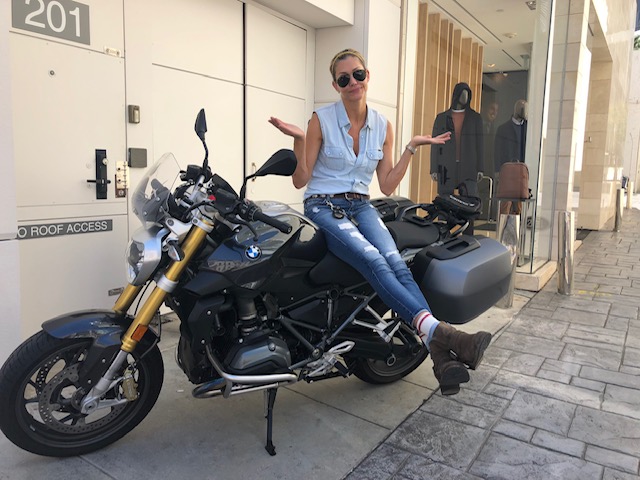
What’s with you, Katee Sackhoff and motorcycles?
We both just like to ride. We have a great group of friends that also enjoy getting out in the fresh air and exploring. I think one of the draws is that in a business where you are constantly surrounded by groups and it’s busy and loud, to be out on the road with nothing but the air and the machine, it’s a freeing, calming feeling. Riding with a group as well is fun because it’s a group experience while also being an individual experience.
You’ve done tons of sci-fi conventions. When you signed onto Battlestar Galactica, was doing conventions in your contract? Did you enjoy / dislike conventions? Please share a memorable convention story.
Conventions were not part of your contract. I don’t think they are still, except of course, you are expected to go to ones like San Diego or New York comic cons. Those are basically just big press junkets though, and you are expected and contracted to do certain amounts of press and publicity. But the standard scifi / comic / fantasy / horror / videogame, etc. conventions that are all over the world, are outside of your show contract. You have convention agents that handle those. While the travel can be tiring, of course, it is lovely to be able to get out and meet fans and get at least some one-on-one interaction. I’ve had some amazing experiences listening to stories of people that have told me how watching Gina in BSG, for instance, helped them get over their own PTSD from a traumatic event. Or listening to someone tell me how watching Lucifer and enjoying the show helped them move on from the loss of a loved one. Or just hearing how someone looks up to the strong female characters I often play and it gives them strength. Or that I made someone laugh and that too is just a wonderful feeling.
Anything else you’d like to say?
Be focused, be in it because you love it, be ready, be prepared, and have fun. Don’t lose sight of yourself. Stay true to who you are. You’re going to have good days and bad days, but if you can be kind to yourself and to others, you’re going to be alright.
Tricia Helfer is a Canadian cover girl model-turned-actress who has developed her resume beyond the catwalk to include many diverse roles highlighting her versatile and natural screen presence. Best known as the face of the series, and for her Leo award-winning lead performance as the humanoid, Cylon ‘Number Six’ in the critically acclaimed Syfy series, “Battlestar Galactica,” Helfer has since gone on to book leading roles on a wide variety of networks. She can currently be seen in “Creepshow” from Shudder Network, Syfy’s “Van Helsing,” and FOX’s “Lucifer.”
Prior to “Lucifer,” Tricia was recurring in season two of the Playstation & Sony Picture TV series, “Powers.” Just before that, Helfer also played the lead of the Syfy channel’s original miniseries “Ascension” co-starring Brian Van Holt. In early 2014, Helfer starred as the lead of the ABC series, “Killer Women.” The Sofia Vergara-produced series followed beautiful badass Molly Parker (Helfer), in the notorious Texas Rangers frontier patrol, as she pursued justice despite being embroiled in a continuous fight for her peers’ respect.
Born in Donalda, Alberta, Canada, Helfer launched her modeling career at age 17, and erupted into an international superstar after winning the Ford Models’ Supermodel of the World Contest in 1992. Her modeling credits include appearances in high-end ad campaigns for Giorgio Armani, Ralph Lauren, Versace, Givenchy, and Dolce & Gabbana as well as covers for national publications such as ELLE, Cosmopolitan, Marie Claire, Flare and Vogue.
In 2002, Helfer turned her focus to acting, moving to Los Angeles and quickly earning a guest star spot on the second season finale of “C.S.I.: Crime Scene Investigation.” The following year she earned her break with “Battlestar Galactica,” achieving a remarkably fast and successful transition into acting. During her hiatus from “Battlestar Galactica,” Helfer portrayed the legendary Farrah Fawcett in NBC’s film, “Behind the Camera: The Unauthorized Story of Charlie’s Angels.” She further expanded her portfolio by starring as ‘Stephanie Jacobs’ opposite Dennis Hopper and Billy Zane in the independent feature “Memory,” and later starred alongside LeeLee Sobieski in another independent, “Walk All Over Me,” which premiered at the Toronto International Film Festival.
Helfer returned to the small-screen in 2008, joining the cast of the USA Network’s hit series, “Burn Notice” for a multi-episode arc. The next year she filmed recurring guest spots on the award-winning CBS comedy, “Two and a Half Men,” while appearing on FOX’s crime shows “Chuck,” and “Lie to Me.” In 2010, Helfer booked a series regular role on the ten-episode arc of Jerry Bruckheimer’s “Dark Blue,” starring opposite Dylan McDermott and went on to do a variety of terrific roles on series such as “Suits,” on USA Network, “Key and Peale,” “The Librarians,” “Community,” “Chuck,” “Jeremiah” and “Franklin & Bash,” among others.
In addition to her vast array of television roles, Tricia starred in the film, “A Beginner’s Guide to Endings,” with Harvey Keitel, Scott Caan, and JK Simmons and later, went on to star in “Authors Anonymous” with Kaley Cuoco. Next up, is another lead role in thriller, “Isolation” co-starring Luke Mably, a film that portrayed the true events of a couple vacationing in the Bahamas. The getaway quickly spirals out of control, forcing the couple into survival mode.
Adding to her impressive resume, Helfer has done prolific voiceover work in mega-hit video game franchises including, playing the roles of Commander Veronica Dare in Halo: ODST, EDI in Mass Effect 2 and 3, Sarah Kerrigan in Blizzard Entertainment’s StarCraft II: Wings of Liberty, for which she won the 2010 VGA for Best Performance by a Human Female, as well as in StarCraft II: Heart of the Swarm. She also showcased her voice talent in animated productions, “Green Lantern: First Flight,” a Cartoon Network TV movie, on Disney XD’s “The Spectacular Spiderman,” and on Disney XD’s “TRON: Uprising.”
In addition to acting, Helfer continues to support as many causes as she can, as she strongly believes in giving back. Tricia supports the Humane Society of United States, Best Friends Animal Society, AmFAR, PETA, Kitten Rescue and Richmond Animal Protection Society.
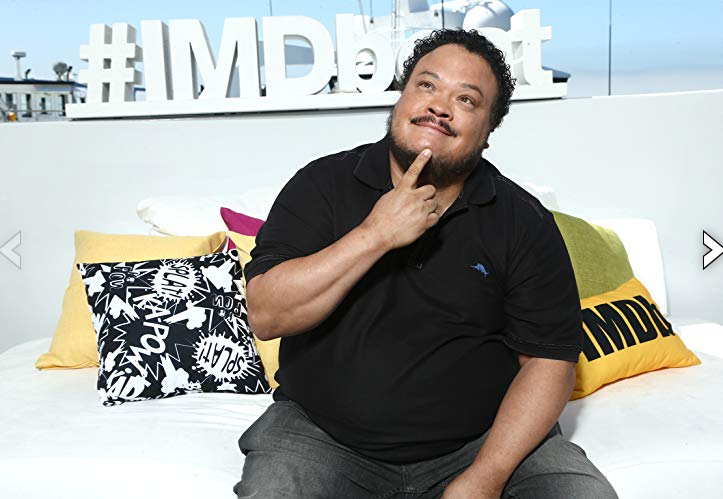
Adrian Martinez. Photo By Tommaso Boddi. Getty Images for IMDb. 2019.
ABC actor, Stumptown’s Adrian Martinez, has muddled blurred lines in more ways than one.
First, he has tested the boundaries of being an actor by becoming an actor who also produces and directs.
Second, he has erased the category of being an ethnic actor without annihilating his heritage.
Adrian has an important message – Don’t limit yourself.
All of this in what seems to be one swoop of a fulfilling career. Let’s get some more information from Adrian Martinez about how he operates in this frenziedworld we call show business.
You’re currently in ABC’s new crime drama series Stumptown alongside Cobie Smulders, Jake Johnson, and Michael Ealy. Your character, Tookie, runs a taco food truck and delves into making the truck stand out by inventing different recipes. Tell us about your audition and how your character has evolved since you first got the part. @StumptownABC
My audition for “Stumptown” was short and sweet; my agent told me about it, I did a self-tape for it in New York and was hired off of that. The producers were already fans from my work in movies like “Focus,” with Will Smith and “I Feel Pretty” with Amy Schumer, so when they saw the self-tape, they were like, “Oh, yeah, THAT guy.” LOL. There were casting sessions already planned in other cities, but they called after my tape submission which made my agent happy. LOL.
What can we see in the near future for Tookie?
Tookie is making his way through Stumptown beyond the food truck, as his relationships with Dex, Cosgrove and Ansel evolve and grow. I’ve been allowed to pitch dialogue and plot suggestions to the creators of the show – a very big deal that represents their faith in me.
You wrote, directed and starred in a movie called iGilbert and play lead role opposite Dascha Polanco of Orange is the New Black and Raul Castillo of El Chicano. What’s it like directing a film that you’re also in?
“iGilbert” almost killed me to be honest. I wrote, produced, starred and directed it. The stress was exhausting. I sold my property to finance it entirely, so the stakes remain high. Transitioning between actor and director was not a problem; it came naturally to me but producing “iGilbert” was a great pain. Having to sign payroll checks moments before an emotional scene that I was acting in, is something I would not recommend. Plus, since it was a low budget, some cast and crew would leave production for greener pastures, leaving the rest of us stressed out and scrambling for ways to keep the ship afloat. In the end, it’s a terrific movie, reminding me of that famous quote, “pain is temporary, but film lasts forever.”
iGilbert started like this:
I was sitting on the NYC subway; I practically live on the trains, I’m on them so much – when I saw a guy walk up to a woman, a stranger to him – and start taking photos of her right in her face. Feeling objectified, she said, “What the fuck are you doing?!” The man said nothing, checked the photos he had just taken from her, and calmly walked off the train. And I thought, “Wow. Who is that guy? Why does he think he has the right to do that? When did the pretty woman opposite him on the train stop being human, and start being an object he could photograph and manipulate? Where does that come from, and where is it going? And I keep seeing it. I saw it today– men taking photos of women or of other men, without emotion, without conscience, without fear of consequence, without subtlety, or with it– SNAP, SNAP, SNAP. And I couldn’t stop thinking about it. I have a young daughter. She is beautiful and she will always be beautiful by any definition. Who is going to be taking her photo on the train? Will we have reached a point as a society that the photo is just the beginning? Will she be safe? WHAT-IS-HAPPENING, and where are we going with all this? In New York state, it is legal to take a photo of someone without their permission. So, what if the guy taking the photos, was me? I had reached a point in my life where I felt alienated from the rest of the world. What, I thought, is my place in the world?
I decided that the smart phones of today, despite all its bells and whistles, can for some people be a metaphor for alienation and loneliness. Technology can also save and expand lives. But where are the safety zones to keep us from going nuts one way or the other? What was designed to get us more connected as a society– smart phones, tablets– seems to also be quickly separating us from who we really are as a species. And in the case of Gilbert, my protagonist, technology is a dance on the fringes of salvation and destruction. The viewer is left to decide for himself, where he wants to dance in the long run, and at what price.
You have your own production company called Paloma Pictures. At what point in your career did you start the company? How’d you come up with the name? What will we see next from Paloma Pictures?
Paloma Pictures is named after my daughter; whose optimism and talent inspires me every day. I started the company in 2016, and I’m developing film and TV projects with studios; there will be a big announcement in 2020.
You also star as ‘Elliot’ the dog catcher in the CGI and live-action re-imagining of Disney’s Lady and the Tramp which was released on Disney+. @disneyplus
a) What was it like working for a platform that hadn’t yet made a debut?
b) Describe your work on Lady and the Tramp. Tell us everything in the making of your role.
“Lady and the Tramp” is a very special project. Being a Disney villain in a timeless classic is wonderful. They had me at “Disney” and there was no doubt in my mind that Disney+ would do well, and it has. Exciting stuff. The shoot was in the summer and November last year in Savannah, Georgia. It was HOT! Chasing Lady and Tramp, played wonderfully by Rose and Monte, was no joke. Especially in a corduroy suit from 1910, then having to spring after CGI dogs for some shots. All the credit belongs to their trainers Mark and Matilde who have more patience than anyone I’ve ever met ever. And of course, our peerless director, Charlie Bean. We blocked and rehearsed the scenes with the dogs so they would get accustomed to me as a person, and not as just some villain chasing them on the shoot day. The dogs are rescues and were picked from over 300 dogs! The trainers were there the whole time, instructing the dogs on where to move, when to move, how to react to me, etc. It takes great patience on everyone’s part, but the end result is amazing.
In a world where show business is working on being more diverse, it still appears that there’s a long road ahead. What are your thoughts on this? What’s it like being a Hispanic actor?
I honestly don’t see myself as a “Hispanic actor;” that’s too limiting. I’m an actor. Period. You don’t see white actors going around saying, “I’m a white actor.” They call themselves ‘actors’ and no one questions it. It’s ACTING, and I can play any role from any place just like anyone else. My approach, my mindset, has always been, “I belong here,” and my reps and the casting community understand that and to their credit, get me in the room so I can prove it. My last three roles in movies have been Farhad in “Focus,” Mason in “I Feel Pretty,” and Elliot in “Lady and the Tramp.” Not exactly Hispanic, lol, but yes, I’m proud of my heritage and I’m bringing it to “Stumptown” on ABC as ‘Tookie’.
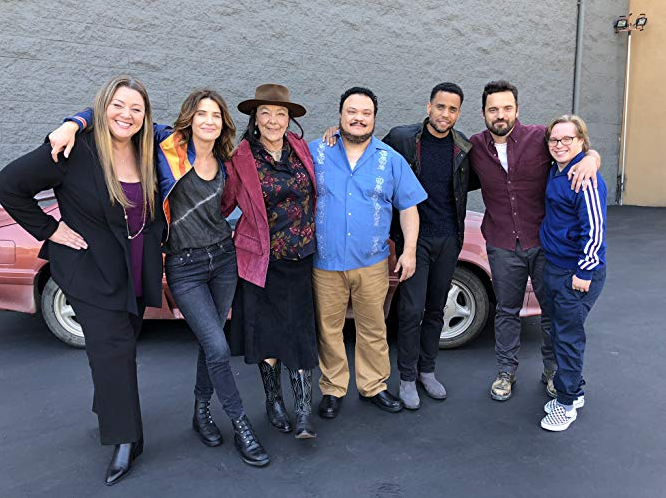
Adrian Martinez. Photo by Diana Ragland.
You are a true New Yorker. What if you get a job outside of your home base? Who pays for air, hotel, etc.?
I’m based in New York. I don’t go anywhere unless someone else pays for it, but that’s a perk I’ve earned over years of consistently good work. If you’re starting out and have the means, I would fly to an audition if it guarantees me a face-to-face with the director. Remember, you cannot do adjustments in a self-tape, and sometimes the directors don’t even see them. I was invited to do a self-tape for “Casa de Mi Padre” starring Will Ferrell. I asked my agent if the director was having a casting session in LA. When I heard he was, I flew myself out there, crushed the audition and booked it; I flew back to New York with a smile on my face. Another time, I did the same thing and did not book it, but I have no regrets. I’m going to bet on my talent every time.
What’s it like doing appearances for the productions you’ve been in?
Doing press is a privilege and an obligation I take seriously. The actor is being asked to help get the word out on their project, in a very competitive industry filled with hundreds of shows and movies. I do whatever I need to do to help. For studios and TV, yes, they treat you right, but all of it is negotiated with your reps. You should have a lawyer to check the fine print. But I’ve always been treated well— first class flights, car service, per diem, five-star hotels, green rooms equipped with WHATEVER you want, red carpets with media. And depending on the job, I can sometimes bring along a plus one.
Do you have any hobbies that do not include anything to do with the entertainment field?
I’m drawn to nature and the arts. You can learn a lot about acting on the fifth floor of MoMa staring at the classics by Picasso, Matisse, Cézanne, Siqueiros, etc. I love the botanical gardens in the Bronx and Brooklyn, and the ocean in L.A.
What advice can you give to actors who are just breaking into the field today?
Acting professionally is a privilege; never forget that. No one owes you anything. Persevere. Show up prepared and on time; there are no excuses. If things aren’t going right or not going on your timeline, remember— no one gives a shit. WORK HARDER. Take in life besides acting. Get off the phone and smell a rose. Develop your own projects and shoot them. You don’t need anyone’s permission to actualize your dreams.
Adrian Martinez has over 100 film and television credits, including several standout sidekick roles, such as “Focus,” opposite Will Smith and Margot Robbie; “The Secret Life of Walter Mitty,” opposite Ben Stiller; “Casa de mi Padre,” opposite Will Ferrell; and “I Feel Pretty,” as Amy Schumer‘s office buddy Mason.
Martinez can be seen in the role of the dog-catching villain Elliot in the live-action/CG hybrid update of the animated classic “Lady and the Tramp,” streaming on Disney+. He’ll make his directorial debut with the premiere of “iGilbert,” a drama feature he wrote starring himself, Dascha Polanco (“Orange Is the New Black”) and Raul Castillo (“Looking”).
Martinez is also known for series-regular roles on television shows such as the CBS All Access comedy “No Activity,” produced by Will Ferrell and Funny or Die, as well as the computer hacker Dumont in the NBC spinoff “The Blacklist: Redemption,” opposite Famke Janssen and Ryan Eggold.
Martinez is fluent in both English and Spanish and resides in New York City.
Well, we’re fully immersed in the doldrums season around the holidays where most everybody is in recovery from the overindulgence of Thanksgiving and already gearing up for the next big holiday. It’s really easy right about now to just rest on your laurels and halfheartedly hit whatever auditions happen to be around while your mind is occupied with visions of sugar plum fairies – or new Nintendo Switch games.
But the coming new year is a great opportunity to renew your dedication to the craft of acting as well as for taking your career doing what you love to the next level. While New Years’ resolutions are often kind of a cheesy, pie-in-the-sky concept, more a whimsical daydream than something you actually resolve to do, the sense of turning over a new leaf along with the calendar page is a strong one that resonates with our most primal, tribal memories.
And for actors, it’s a great time to refocus your energies and rededicate yourself to achieving your career goals. Here are a few ways you can use the holiday season to re-energize your career as an actor!
Define Your Goals
Defining what your goals actually are might seem like a really obvious first step toward achieving those goals, but its really easy to sort of drift along with vague ideas about “success” or “becoming a better actor” without really knowing what they are or how you’re going to get there. And if you don’t know where you’re going, laying out the necessary nuts and bolts steps needed to achieve those goals is impossible. How will you work toward success today? What steps are you taking to become a better actor?
So much of what we do as actors is reactive – on camera and off – and while this serves us well in the actual practice of the craft, it can be a hindrance when it comes to getting your career going in the direction you want. Rather than sitting around waiting for breakdowns that maybe kind of sort of fit your type, sit down and make a list of the roles you’d love to play. And while those specific roles may or may not come up simply because you visualized them, getting your head in that space and imagining yourself taking on those roles can be a good exercise in seeing what you want, and helping you to stay focused on it. Sure, we all gotta eat, but if your heart’s desire is to be a musical theater leading man, then auditioning for roles in Restoration comedies isn’t really helping you, and may be more distraction than aid.
Another important thought on goals: it’s important to note what’s underneath our goals when we say we want to be “a successful actor” or something along those lines. What is successful to you? When the audience gives a standing ovation? When a short film you were in wins accolades in the press and the industry? When your peers admire your work? This feeling, this sense of accomplishment and satisfaction over having genuinely connected with a role and an audience is perhaps what we’re really after when we talk about “success.” It’s worthwhile to spend some time specifically thinking about how best to achieve that rather than simply saying “I want to be a top musical theater actor on Broadway.”
Get Organized
One of the best tips I ever got was from an old friend and agent when we were talking about how naturally disorganized most actors are (me included.) Hey, we’re creative people! Who has time for organization?
Well, the thing is, you can really help get your career to the next level just by creating a simple spreadsheet or diary noting all your meetings, auditions, and industry contacts. Make entries for each audition where you can note what material or type of material you were working, some short notes on how you felt it went, the names of the CD, director, staff and other actors you met, and anything of import you might have chatted about. Not only can this help you better evaluate your progress, it can help you better create your network and build relationships in the business, as well as give you an easy-to-digest-snapshot of just how hard you’re out there grinding – or if you’ve been slacking off.
It’s also wise to add a calendar feature to your organization that looks forward, not just backward. For instance, you should be working to get new headshots a couple times a year. Set a date, and make it happen. Another great way to keep yourself in tip-top acting shape is to schedule yourself to learn a new monologue every month. There’s no such thing as down time!
Up Your Self-Tape Game
The industry has evolved a great deal in recent years, and one aspect of this is that an awesome self-tape game IS the name of the game. It’s really nice for us actors too, not to have to fight traffic and sit in a waiting room forever for a first audition.
But if you’re just slapping together a shoddy self-tape, then it’s not doing you any good anyway. Take some time to really learn what works and what doesn’t, and PRACTICE – perhaps using some of those monologues you’re going to learn! Sure, we’re actors and we know how to do the work under a variety of circumstances – on stage, on camera, green screen, etc. But maybe think of the self-tape as its own specific category that needs to be worked separately. It’s a weird one, and it takes some getting used to. Make sure the next time a last-minute self-tape audition notice comes your way that you’re ready to rock, and you aren’t fumbling around with either the technical aspects of it or bringing sup-par work to the table.
Create!
Look, we are creative people, that’s a given. What you bring to a role is a unique slice of who you are and your own quirky way of looking at the world, and no one else can replicate it. But it’s a common trap for many actors that we think of what we do only in reactive terms: we wait for audition notices, we wait our turn to read for the role, we wait by the phone for the callback, we wait on set to be called to do our scene.
All of these things are a legit part of the game, but you know what else is? Not waiting around and instead creating your own stuff. Write a monologue about something funny that happened to you, create a short video about last year’s summer trip, write a comedy sketch with a friend, whatever. Hell, have some fun with actor buddies of yours and record a conversation about what it’s like to be an actor, and you’re on your way to having a podcast! There are so many outlets out there and so many people hungry for content that it’s criminal we don’t have more well-known actor/creators out there.
Whatever comes of these various projects is kind of beside the point – which is to keep your creative juices flowing and to constantly be pushing yourself to new heights of creativity. Creativity is not a zero-sum game: what you create in one genre or field translates into your creative abilities in your next endeavor.
Believe in Yourself
It’s easy to get let seasonal depression or the stress of the end of the year translate into self-recrimination. And while this is a great time of year to honestly evaluate where we are and where we’ve been, we actors also have to remember to offer ourselves some positive affirmation. Take the time to look back over the work you’ve done in the past year and give yourself a pat on the back!
What you’re doing is hard. But it’s also really, really great. You’re pursuing your dream, and you are acting because it is not only what you love to do, you are COMPELLED to do it. Remember to love yourself throughout: a bad audition doesn’t mean you should kick yourself, just that you should assess what went wrong and how to do better next time. Tell the voice in your head that says you’re no good to take a hike, and shift to listening to the voice that looks to the future with a positive mindset.
The CW’s Riverdale Actor Marcus Zane balances life between his hometown of Vancouver, Canada and Los Angeles, CA.
It’s not easy just picking up, sometimes at a moment’s notice, to move to a different country. Yet for actors, this is part of the business.
Oftentimes the actor will crash on a friend’s sofa, and other times, the production will put them in a hotel. If the series is picked up for several seasons, actors have been known to rent or purchase homes close to work. No matter where you end up, it’s imperative that you do not let the move affect your performance.
Keep an eye out for Marcus Zane in 2020 for his supporting lead role opposite Adam Brody in the feature film, THE KID DETECTIVE! He plays the role of a gothic teenager named “Jace”.
Let’s see what stage of relocating Marcus Zane is at and how he feels about moving away from family.
You’re currently 19 years old and have been in show business for a good few years now. What inspired you to become an actor? What did your family say when you told them about your career choice?
Movies were a big deal in my house. My family has always watched movies together. I would dream of being able to be in a movie from a young age. My mom got me into acting classes when I was younger and she has always been supportive of my dream. When I told my mom that this is what I wanted to do she would say, “You have the rest of your life to go to school or pursue a different career but go after your dream now while you are young and see what happens”. If things don’t work out, I will go to university for sure.
You used to be billed under your full name, Marcus Zane Carvalho but you dropped the Carvalho. Why?
I was billed under Carvalho at the beginning but dropped it. I like the way Marcus Zane (my middle name) sounds instead. I was born in Portugal but my mom and I left when I was five months old. My dad’s last name is Carvalho.
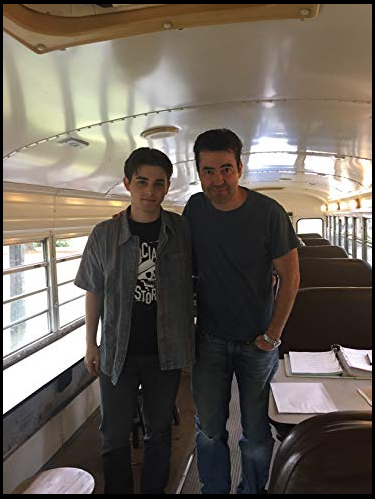
Marcus Zane and Ron Livingston behind the scenes in Loudermilk.
Tell us about your vocal coach. Do you have any other coaches?
I do train with a singing coach to be able to carry a tune when required. Depending on the audition, I will work with specific coaches to try to learn as much as I can about a role. I really enjoy learning new things. That is the only coach I have right now.
You have a recurring role on Riverdale and a film coming out in 2020 with Adam Brody (of The O.C. fame). Tell us about your auditions for both of these roles.
“Louie” is my reoccurring role on Riverdale. When I auditioned for it, I was cast very fast. About two weeks passed after the audition and I thought I didn’t get it and then my agent called and gave me the good news. I did not have any call backs with this one. For Kid Detective I did a tape that went to Toronto and heard nothing for a couple months. I had two call backs and then luckily landed the role. It was very exciting.
You’re from Canada and have been travelling to the USA for work. Who pays for your travel fare and hotel for these jobs?
Yes, I am from Canada and do travel to L.A. for work. It depends on who you are auditioning for regarding who pays for the travel and hotel. Sometimes myself, other times the person requesting my audition.
Oftentimes we see actors from Canada “making the move” to LA or NY. Have you considered relocating? If yes, to where? Is it scary knowing you’ll be away from family? Who will pay your bills?
It is my dream to move to L.A. and I think everyone has their own apprehensions about a big move. The flight between Vancouver and L.A. is not very long so that is a good thing too. My family and I are close so distance will never be a problem. I intend on supporting myself.
Do you have a skin care, food diet and/or workout routine?
I always go to my aunt’s skin care clinic “Lift Skin Health” in Maple Ridge, Canada for treatments. I think a skin care routine is important and should be maintained through your entire life. I go to the gym and do different work outs and try to train as often as possible. I do weights and I box.
Marcus Zane and his sense of humor when we asked for a goofy pic! Exclusive to NYCastings.
Have you been recognized walking down the street?
I have been recognized in Maple Ridge, Canada where I am from and I am very flattered and really appreciate it when people recognize and approach me. It’s very flattering. It does not happen a lot but when it does, it feels good.
Do you have a significant other? Everyone wants to know!
I do not have a girlfriend now because this is a crucial time for me to really be working on my career.
Having been born into a world where the Internet was already a thing, how important do you think social media is to the acting world today? Why?
Social media is very important for actors. You can influence people in very negative or positive ways. You have a responsibility to always keep this in mind before posting anything. I’m not the type of person who will post a picture several times a day but think it’s important to open yourself up to a degree. Regarding casting… the number of followers you have can land the role for you as well.
What are your pet peeves?
My pet peeves? I don’t like people who interrupt people when others are talking. Let them finish their thoughts before voicing your own.
What type of acting roles would you like to perform in the future?
I am open to any roles right now as long as they are right for me and I am the best person for the role. Give me something well written and I am ready to take it on!
Marcus Zane. Photo by Russell Baer.
How do you memorize your lines?
I do not use any apps to memorize my lines. I go through the script by myself first to understand the character in depth, then I run it through with my coaches to get feedback. I personally use the Meisner Acting Technique.
What advice do you have for young performers who are starting out in the business?
My advice to young performers is to keep working hard. Get out there and take classes and audition seriously and give it all you can.
Here we will describe the many types of modeling you will find in the modeling industry. Some models only fit into one category, while another model may fit into multiple.
With that in mind, here are the modeling categories at a glance: FASHION MODEL: This category is the most exclusive and most difficult of all categories for a model to get into, much less succeed in. As a whole, a fashion model MUST be tall, young, and thin. In addition, there are fashion model “size requirements”, and hardly any exceptions made in terms of that. While there is no universally-agreed upon, OFFICIAL “fashion-industry size-standard”, the size requirements in fashion modeling are TYPICALLY as follows:
Female Fashion Models:
Model Height Requirement: 5’9” to 6”.
Model Measurement Requirement: 34-24-34. (There are exceptions within one inch, and MAYBE two, of this standard. Anything beyond that is extremely unlikely to be considered.)
Model Age Requirement: 16-21 years old.
Model Size Requirement: 0-4.
Model Weight Requirement: 105-130 lbs, directly proportional to height
Male Fashion Models
Model Height Requirement: 5’11” to 6’2”.
Model Weight Requirement: 140-165 lbs, directly proportional to height.
Model Measurement Requirement: Waist between 29” and 32”. Shirt size between 15-15 ½ neck, sleeve size between 32 and 34. Jacket size between 40 and 42.
Model Age Requirement: 18-25 years old.
EDITORIAL FASHION MODEL: These models are the ones you find in the editorial spreads of pages like Elle, Vogue, Glamour, etc. You MUST fit the modeling requirements for a “Fashion Model” (listed above) in order to be considered for this category. Almost all editorial fashion agencies in the US are based in New York, but agencies/jobs can be found in other major cities (LA, Chicago) and overseas.
FASHION CATALOG MODEL: Slightly less restrictive than fashion modeling in terms of requirements, but catalog modeling still has rigid standards nonetheless, and is also difficult to get into. Catalog models are the ones you see in the clothing catalogs, posing in a variety of outfits. Typically, only female models between 5’8” and 6’1” will find work here. Male models should be between 5’10” and 6’2”.
RUNWAY MODEL: Models that walk the catwalk or runway; a “live model.” Runway models are hired to use their bodies as a mechanism to display the fashion garments of a specific clothing designer. They MUST be tall (5’9” and up for females, 5’11” and up for males), slender, have measurements that fit the standard clothing size, and know how to walk the runway.
COMMERCIAL MODEL: Most agency models work in this category. Commercial models work MANY different jobs, including: print advertisements, catalogs, campaigns, television shows, magazines, trade shows, and much more. There are no height or size requirements to be a commercial model. So even if you are DYING to be a fashion model, but simply do not fit the size requirements for mainstream “fashion modeling”, you can still find work and book great jobs as a “COMMERCIAL fashion model”, doing fashion print and things of that nature. Not interested in being a commercial fashion model? No problem. This category of modeling accommodates MANY types of looks: from the girl-next-door, to middle-aged men, to those with very “unique/interesting” faces.
PRINT MODEL: Print models are used for many different types of publications, such as: magazines, print advertisements, billboards, posters, calendars, campaigns, booklets, flyers, banners. Print models must have an attractive face, good skin, a nice body, and a pretty smile. Print models can find modeling work in one of two ways: through a modeling agency, or by freelance modeling.
GLAMOUR MODEL: Glamour modeling focuses much more on the model’s appeal, beauty, and body than it does anything else. Models in this category are considered very pretty; able to book work simply by being attractive, a nice body, and having a sort of “sex appeal”. While there are no height or size requirements, glamour models DO have to be at least 18 years old.
Glamour models are typically hired to appear in swimsuit, bikini, lingerie, and form-fitting attire. Often times they will find work in magazines, music videos, calendars, etc. They can find work as a freelance model, and they can also find other work through modeling agencies as a print model, commercial model, or promo model.
PROMO MODEL / PROMOTIONAL MODEL: A promotional model, also known as a promo model, is a model that is hired to represent a brand, product, or service. This category of modeling does not have a height or weight requirement; thus making it much easier to get into promo modeling than it is to get into many other types of modeling. While there are no height/weight requirements, there are other general requirements for booking paid promo work: a great attitude, outgoing nature, a nice smile, and the ability to easily adapt/learn.
SPOKESMODEL: A spokesmodel is a more lucrative form of promo modeling. These models tend to have signed contracts with a specific company; acting as the face of the brand, being paid to attend events and make special appearances, appearing in advertisements, and traveling the country.
TRADE SHOW MODEL, OR CONVENTION MODEL: Tradeshow or convention modeling is another form of promo modeling. These models are hired by a company to represent their brand, product, or service specifically at a trade show or convention. There are no height/size requirements, but these models need to be outgoing, reliable, work well with others, and take direction well. They also will be expected to work long hours, readily engage with other people, to quickly learn/accurately relay the company’s mission (or products or talking points) to consumers.
CATALOG MODEL: A catalog model has the same job description as a “fashion catalog model”, yet none of the same size requirements. General catalog models are needed in all shapes and sizes. There are tons of clothing designers in the world offering a variety of options, many of which cater to petite, plus-size, or alternative buyers. These designers need models of the same variety to pose for their catalogs. Almost any category of model can be used as a (general) “catalog model.”
PETITE MODEL: These are models that are on the shorter side- typically 5’4” and under. While they will not be able to find work as a fashion model, petite models can still find work in other categories, such as a print, commercial, glamour, or promotional modeling. Petite models can be sought after for their small hands/feet for print work as well.
FREELANCE MODEL: A freelance model is one that is self-represented: they are not signed exclusively to any one modeling agency, they do not have an agent or a manager, and they are responsible for finding their own work. In addition, they are responsible for their own marketing, promoting, networking, and branding. This might all sound overwhelming, but in this day and age, freelance models have many avenues to get a career started. The internet is their main weapon/source; if properly harnessed, freelance models can still make a name for themselves without an agency.
FITNESS MODEL: Fitness models are toned, in-shape, healthy, and have good muscle tone. There are no size/height requirements, but you MUST be in shape! There are modeling agencies with “fitness modeling” departments. Fitness models seeking representation should focus on these first, but fitness models can also be self-represented.
PARTS MODEL: These models typically model their “parts”, such as their hands, legs, feet, stomach, etc. There are modeling agencies that represent parts models, and the best way to get started in this modeling category is by finding an agent rather than attempting to freelance.
PLUS-SIZE MODEL: These models, also known as “Full figured models”, are models that do not fit the size requirements for mainstream modeling. They weigh more, have fuller figures, and have pretty faces. They can be hired as catalog models for plus-sized clothing brands, among many other job opportunities. Plus-sized models are able to achieve representation with modeling agencies that have a “Plus-Size” division.
ART MODEL: Art models work with visual artists. The model is the subject of the intended art piece, usually being required to pose while the artist interprets and creates a piece of art. They are able to use the model as a real-life visual aid. There are many mediums an art model can be asked to participate in. Some of the more common include paintings, illustrations, sculpture, and photography.
PINUP MODEL: Pin-up models first gained notoriety in the 1940’s and 50’s, with the term “pin-up” referring to a physical photo of an attractive model, which could be “pinned up” on the wall. In the past, pinup models were more risqué than their current era. Today, modern pinup models (posing in the same manner and outfits of the 40’s and 50’s), seem to be less risqué than their current era, as times have changed and so have social standards. To explain: modern pinup models can be seen wearing classic 1-piece swimsuits, while modern glamour models can be seen wearing barely-there string bikinis.
ALT MODEL, or ALTERNATIVE MODEL: This genre of modeling does not conform to “typical” modeling standards. The models used in this genre are not the mainstream, cookie-cutter models. Many of them have tattoos, piercings, unusual hairstyles, etc. They can work in this industry with the help of internet websites, networking, and niche magazines.
If you’ve been a working actor for any length of time, you’ve surely experienced the surreal moment of walking into an audition waiting room and seeing a dozen or more people who look a whole lot like you. I had the privilege of meeting the incredible John Carroll Lynch (Fargo, American Horror Story) after a show I did some years ago. As he hung out with the cast, he shared a story of working in Hollywood in his early days, even after the success of Fargo, and walking into audition after audition that was like that.
“It looked like every overweight, balding white guy in Los Angeles was there,” he said.
So, it’s great to have a clear type, for sure. And of course it’s great to be called in to read. But when you find yourself in a place like that, surrounded by a million carbon copies of yourself, a bunch of other actors who share your same basic hair color, body type, age and etc., what can you do to make sure you’re the particular one they remember?
Unfortunately, far too many actors don’t put a lot of thought into this vital question. The end result for them is, even though they may bring the goods when it comes to auditioning and performing the material, and even though they have the right look, for some reason the CD and production team remember someone else better – and gives them the role.
And it’s not just about the audition itself either. As we all know – and as the hoary old cliché goes – it’s not what you know, it’s who you know. It’s an old saying but it’s true: so very much of finding success in this business has to do not with what you do once you’re in the audition room, but rather how you network and leverage yourself in order to get into that room in the first place. Here then are a few ideas for making sure you will be remembered!
Marketing Materials
What we’re talking about here with regard to networking and getting yourself on the radar of the people who make the decisions is marketing. Yes, we actors are artists, and many of us like to think solely of the purity of the craft and focus only on that. But the simple truth is, you can be the best actor in the world, but if you just sit at home by the phone waiting for it to ring without doing some leg work, you’re likely to be waiting a long time. Part of your job is selling the product that is you. That means you’ve got to take some lessons from the minds of marketing.
If you can take a moment to think of yourself as the product you’re selling, you can start to better wrap your head around the idea of marketing: what are your marketing materials like? Is your headshot up to date? How about your website? Nobody wants to buy a product whose dusty packaging and label looks like it was designed in late 1979, or order something from a Geocities-era website.
Also on the topic of headshots, make sure when you update them that you work with a HEADSHOT photographer, one who knows how to leverage the latest styles in headshots to give you something that nonetheless is attention-grabbing, and looks a bit different from all the rest. You don’t want your headshot in the pile to be the two-dimensional equivalent of that audition waiting room, just another actor who looks exactly like all the rest.
Product Name
There’s a great old Monty Python sketch called “Crunchy Frog,” in which a health inspector warns a chocolatier that he must change the name of his product to reflect what it really is: “Crunchy, Raw, Unboned, Real, Dead Frog” if he doesn’t want to be fined.
“But our sales will plummet!” wails the candy-maker.
I relate this very ancient bit of very silly humor to illustrate the notion that a catchy product name is vital to selling a product, and actors are no different. If you have a difficult to say or extremely generic name, think seriously about punching it up to a stage name with a bit more pizzazz. In order to succeed in a highly competitive business like acting, you’ve got to use every weapon at your disposal, and a punchy, memorable name is a great start. Think about how much more fun it is to say the names these stars went with instead of the original:
Allison Brie – born Allison Brie Schermerhorn
(Could you even fit that on an Emmy? Would you want to??)
Katy Perry – born Katheryn Elizabeth Hudson
(“No, I’m NOT THAT KATE HUDSON! GOD!!”)
Criss Angel – born Christopher Nicholas Sarantakos
(Watch me make ten syllables disappear…)
Andrew Lincoln – born Andrew James Clutterbuck
(Who do you think you are, buddy? Benedict Cumberbatch?)
Mahershala Ali – born Mahershalalhashbaz Gilmore
(Nope. Not touching that one.)
Say My Name
And, once you have your super cool new name, make sure you update everything with it – including grabbing the website and changing your email to match it. Don’t make the rookie mistake of forcing CDs to try to correctly write some obscure email address like elmp7611423@hotmail.com for instance. Give them yet another opportunity to remember your name by grabbing your website, say MaxPowersActor.com, then use your email from there: Max@MaxPowersActor.com. Same goes for starting social media pages with that name as well and directing all your marketing materials to them.
One other thing: list your phone number! And ANSWER it!! Guess what, CDs are busy. If they want to get in touch with you, they’re going to pick up the phone. Far too many actors miss their opportunity because out of habit we don’t answer calls and delay on calling people back. Don’t be another casualty of communication! Get in the habit of answering calls even from unknown numbers if you’re out there reading a lot.
Wow ‘Em!
Finally, once you’ve got all your marketing materials locked down, you can get back to the part we all really love, and that’s the acting! Make sure when you go out to an audition that you’re bringing that rock star energy into the room with you from the get-go. You want them to associate your cool new name and your awesome acting talents with a bright, energetic, fun person in real life.
Remember what a mentor of mine taught me long ago about auditioning: it’s not up to them to make you feel comfortable when you walk in the room – it’s up to YOU to make THEM feel comfortable. They’ve been dealing with tense, nervous actors all day reading the same lines over and over again – it’s exhausting being on the other side of the table too!
So if you can roll in with a relaxed smile, a funny quip, or a word about how you enjoyed a previous project the director worked on, you’re giving yourself a great leg up toward being remembered – and booking the role!
It’s hard to imagine in this social media-saturated world that there was a time before Facebook, before Twitter, even before MySpace.
But that’s the ancient past of course. These days if you want to make a splash and grab some online eyeballs, you’re looking to Instagram, especially if you’re a performer. While platforms like Twitter and Facebook do have the capability for you to post your videos and photos, Instagram is practically tailor-made for actors, dancers, and singers to show off their stuff.
Not only that, Instagram has a proven track record when it comes to launching the careers of actors.
And while we’re all at least vaguely aware of celebrities of dubious ‘talents’ who are Instagram-famous or who clawed their way to larger fame via judicious and relentless use of Twitter and Facebook, let’s take a closer look at one gifted actor whose Instagram profile was directly responsible for her fame.
If you’re not familiar with writer-director Sean Baker’s 2017 film “The Florida Project,” well, shame on you, first of all. It’s a touching, funny, honest, gorgeously-shot depiction of the hardscrabble existence of the denizens of a run-down residential motel in Orlando. The film has been rightly praised for depicting the hard reality faced by more and more Americans in this era, told through the lenses of a mother and her 7-year-old daughter living on the margins, where a few short miles to the Magic Kingdom might as well be a trip to Jupiter.
But what a lot of people don’t know about the film is that breakout star Bria Vinaite would never have landed her lead role without Instagram.
Vinaite was a clothing designer based in New York when Baker, coming off the success of his film “Tangerine” began the search for someone to play the mother, Halley.
Baker has said he started off looking at all the big names among 20 to 24-year-old Hollywood actresses, but eventually decided to go against the usual route of booking a marquee name.
“I was concerned that the audience was going to be taken out of it every time they saw a recognizable face in this role, because of her struggles,” he said in a Wired interview.
His search took him to social media, where he came across some of Vinaite’s Instagram videos, fearlessly singing a capella cover songs, jumping around in her backyard (“… which made me laugh, ” said Baker) and smoking weed while addressing the camera directly.
Baker said it was Vinaite’s lack of a filter and blunt honesty that led to him set up a meeting, and eventually landed her the role.
Now, while Vinaite didn’t have much history as an actor prior to her critically-acclaimed work in “The Florida Project,” we actors who are out there grinding every day can can still learn a great deal from her example about how to leverage Instagram into something much bigger than we ever dreamed.
1. You Can’t Win if You Don’t Play
The first takeaway Vinaite’s success is that you have to put yourself out there in order to get noticed. Along with the fact that recording high-quality videos or taking good photos had never been easier, the simple truth is that it’s also never been easier to put that material in front of the public. That’s why it’s always so disconcerting to see actors whose Instagram, Facebook and Twitter feeds are graveyards stocked with nothing but the Ghosts of Performances Past. You can practically hear the tumbleweeds blowing through. That’s not to say that you have to spend all day recording and uploading video after video to Insta, but look, the time commitment to record and trim a short video sharing a thought, a song or showing a piece of your latest work-in-progress is negligible. (If you’re on set or in rehearsals make SURE you run this by someone in authority. Often recording little off-camera or backstage clips or photos is fine, but don’t run the risk of violating your contract by sharing something if you aren’t certain.) This is a habit of numerous celebrities, and it really serves to keep your fans or potential fans connected. Check out Megan Mullally and Nick Offerman’s Instagram for a great example.
2. Show Them Who You Are
As practiced, trained performers it’s often easy for actors to get caught up in perfectionism when it comes to social media. Do you have any actor friends whose every post shows them in full, perfect make-up, dressed to the nines, and reciting obviously over-rehearsed lines? It just reeks of trying too hard. Take a page from Bria Vinaite’s playbook and don’t be afraid to show the world your silly, off-the-cuff side. We talk constantly about how personality, quirkiness, and a unique take on the material almost always trumps letter-perfect, rigid recitals in the casting room. And while of course there are some areas that you should consider off-limits – emulating Vinaite’s blatant weed-smoking is probably not the best marketing strategy for everyone – Instagram is an incredible opportunity to show directors, CDs, and producers the unique spin on life that you bring to the table as an actor. Have fun! And don’t be afraid to look a little ridiculous.
3. Tell Them Who You Are Too
Don’t forget to get the basics out there on your profile. Use your latest headshot or a high-quality photo as your profile picture. Much as with hard-copy headshots, you have about a second to grab someone’s attention and imagination with your Instagram profile pic. A profile photo of a group selfie from your trip to Cancun with your and your friends where you’re all sticking out your tongues isn’t going to do you any favors. And make sure you take a moment to fill out your bio as well. It shouldn’t read like your resume, and of course space is limited. But don’t succumb to the fear of perfection. Take the time to craft a thoughtful little something that illuminates not only your background, but also who you are and your personality, what moves you, what gets you out of bed in the morning.
4. Filter and Curate
While you should definitely work toward fearlessness in letting your true self out on your Instagram feed, this doesn’t mean that every single photo or video you’ve ever taken belongs there. You can easily run into the opposite problem from tumbleweeds blowing through your online presence: overkill. Be somewhat judicious when posting. Make sure you’re showing your audience something that will be interesting to the general public, not just a rehashing of you and your friends’ inside jokes and so forth. Think in terms of giving your audience a series of gifts over time, little nuggets of your life as an actor and as a person, interesting backstage or off-camera moments, funny thoughts – or like Bria Vinaite, video of you letting your weird side out and jumping around like a maniac in your backyard!
The great thing about social media and especially Instagram is that as long as your profile is public, you never know who might see it! Make sure that if and when someone with the power to give your career a boost crosses your online path you have material up there that will grab their attention. Show ’em what you got!
If you’re dedicated to the life of the working actor, then you know as well as I do how much fun we get to have doing the best job in the world. (The secret is we get to play!) And unlike mentally checked-out 9-to-5ers, we get the privilege of being fully engaged with doing what we love to do while we’re doing it. We actors may spend a lot of time zipping from audition to class to rehearsal to set to actor’s group, etc., but once you hit your mark, you’re all in.
That’s why it’s so easy to let certain things slide – when you’re trying to run lines while thinking about being on time for your next appointment or gig, it’s tough to consider things like what kind of look are you presenting to the world. But it’s important to take a step back every now and then and do just that.
Why? Isn’t the way I appear already just “my look?”
Well, yes and no. Of course, barring surgery or massive weight loss or gain or a radical haircut or something similar, your basic appearance is pretty static. But what we’re talking about here is Your Look, not just what you look like. And your look is very important to getting cast, creating a brand, and your overall marketing.
Imagine being on the other side of the table in the audition room or an agent’s office. We all know that agents and CDs are super busy, harried people. They – and producers, and directors, and commercial clients – need some kind of handle on you to get a grip on the actor they’re evaluating, and they need it fast. If you don’t grab them in the first second or two of them looking at your headshot, you’re probably not going to be called in.
So if you present yourself as a sort of a generic guy for instance, an everyman in a polo shirt and jeans just like every other everyman, you’re not really communicating anything. This kind of neutrality might work for commercial auditions where what’s often needed is the person who can be the most interesting while still being inoffensive. But for booking more challenging, in-depth work you’re going to need to show who you really are in order to give them something to go on. Here’s a few ways to get started!
1. Your Personality Is Going To Come Out Anyway – Let It.
A person’s look isn’t just the shape of their nose and the color of their hair and so forth. It’s the unique essence of you that can’t help but bubble to the surface when you perform. A CD can go through a hundred headshots of “hard-ass cop” -looking guys, but there has to be something particularly arresting (rimshot!) about the looks of the actors he or she decides to bring in, something genuine, something honest, something true. We as actors looking for work focus so much on trying to make ourselves right for a role that we sometimes forget the secret truth: you already ARE right for it. It’s just a matter of showing the casting team how you, in your particular, unique way are the right choice for them. So, even if you’re a big teddy bear type, or a wiry joker type or a whatever type, showing that off and letting it come out instead of trying to obscure it can often help land you the role. Even if the writer and the casting team originally pictured a burly grizzled cop with a hundred-mile stare, if you show them something that connects to your genuine self in your headshot or your first read, you can often change their minds. When thinking about this aspect of leveraging your look, remember the lesson of Aubrey Plaza in her stunning, revelatory role as Lenny in Legion. The character was written as a middle-aged man, which Plaza clearly is not. Not only that, she convinced showrunner Noah Hawley not to change the dialogue due to her gender. Many critics have hailed her performance as some of the best work the Parks and Recreation actors has ever done.
2. Going Against Type Is Interesting
A former acting coach of mine used to say “There can be no tension without pretension,” a nice way of summing up the truth that every interesting character has something going on inside themselves or with another person that they’re pushing against, something that doesn’t quite fit the imaginary tale they tell themselves and the world about who they are. Another application of this is the idea of going against type. A lot of people worry that if they play too hard toward their type, that that will be the only kind of work they’ll ever book. Who wants to play a meathead cop/truck driver/soldier etc their whole life? Who wants to be “quirky nerd girl with glasses” in every damn role? Nobody. But the thing about being honest with your type and how it fits your look is that if you trust yourself to be yourself, and you make a strong statement with your personality and the look you offer up in such a way that CDs can clearly see You in there, the real You, then the door will open up to other possibilities. Contradictions are intriguing, in life and in the art of acting. Who doesn’t love seeing something like an unremarkable high school science teacher delve into the dark world of crystal meth manufacture and dealing? Who doesn’t love a burly, scary cop who volunteers at the animal shelter? Who isn’t interested in learning more about a battle-scarred soldier who prefers to quietly read philosophy while his mates are horsing around? Just because you have personality quirks that inform your look and are in contradiction to a particular role doesn’t mean you should suppress them. In fact, that quirk might be the one factor that gets you the callback, simply because you’re showing something different from the other 200 people who read for the role. Another point to keep in mind is that CDs and directors love to see flashes of versatility in auditions. By coming in with a headshot and real-life face that is bubbly and vibrant and funny, and then slipping on the mask of the grizzled cop when it’s time to read – or better yet, reading him or her as funny or at least sardonic, you can separate yourself from the pack as well. Your personality is going to come out one way or another; might as well capitalize on it.
3. Put It All Together
Going back to how hectic life is for most working actors, it can be tempting to simply book a headshot photographer, slip on a nice-ish outfit, and just go for it. This is also a mistake, and could end up costing you potential work and leave you with a useless headshot that informs no one of anything. Once you’ve decided on what’s your best, most honest look, the one that fits most closely to your true personality and type, take some time to think about things like the best clothes, facial expressions and physicality you might want to employ in order to convey the message of who you are. Do this before you schedule your photographer. One great exercise is to do a dry-run photo session, for which you don’t need anything more elaborate than a friend and an iPhone. If you want to take this to the next level, you might query your actor’s group or your Facebook friends as to what are some key words they think of when they consider your personality and who you really are. You might be surprised at the picture you present to the world without even knowing you’re doing it!
Just remember, in order to stand out in an ever-more crowded field the key isn’t to cram yourself into someone else’s box. The key is to be your true, weird, quirky self honestly and unapologetically. Let your truth be on display for the world to see!
And once you have your look and your type locked down don’t forget to self-submit and check out the NYCastings audition page every day!
There’s an old truism regarding computers and data: garbage in, garbage out. If your data is flawed, you’re going to end up with flawed results.
That should seem obvious, right? But what should also seem obvious but often isn’t discovered until it’s far too late to do anything about it is that if you lay bad groundwork in your pre-production, you may well be dooming your project to mediocrity at best, total disaster at worst.
It’s amazing, too, when you think about how many productions skimp on time, budget, thoughtfulness and detail work in their eagerness to get themselves out there on set and shooting. Especially for productions that are a labor of love, this is truly tragic: if you’re going to pour your heart and soul – not to mention precious resources and the goodwill of your producers, director, writer, crew and actors – into a project, you’d think you would at least want to ensure that you gave it every opportunity to succeed.
Unfortunately, many productions cut corners that hamper or doom their final product before they ever even get off the ground. Here are a few common mistakes to keep in mind and avoid if you’re working on an indie project and ramping up toward production.
Actors Pay Rates – Pay Your Talent
I worked with a stage manager once who made a speech to the running crew on day one of tech. The talk was designed to buoy them up and remind them that everyone working on a show is important, including them. But what she said was “Actors are a dime a dozen. Good crew is harder to find.”
Ouch. Thanks a lot.
But, so, there’s a kernel of truth in there: there are a million actors out there looking for work. You can probably find someone to work for less money on your project.
But you have to be honest with yourself: if you’re really, truly hoping to create the best product possible, is that less-costly person REALLY going to be able to deliver the goods when shooting begins?
Look, we get it. Times are tight. And if you’re part of a creative team that’s ramping up toward production on an indie project, that usually means you’ve got an indie budget too. Its excruciating to make the hard choices about cutting already thin funds from this column on your books and adding them to another column. But the sad truth is, in this world is you get what you pay for.
And remember this: if you’re advertising a project that is no pay, you’re asking actors to take a loss on the deal. They have to pay to get to your audition, to the shoot, and give up their time for nothing – why should they do that for you? At the very least, make your budgetary constraints crystal clear, and at least offer to cover travel costs, provide a decent lunch, and maybe throw them $100 or something – anything to make the actors feel like you appreciate them and consider them a vital part of your team, even if you’re on a shoestring.
SAG-AFTRA New Media contract
One avenue open for low-budget projects to lock down better talent is to use a SAG-AFTRA New Media contract. You’ll need to get to work on the process of becoming a SAG-AFTRA Signatory Producer at least 3 – 6 weeks in advance, with your budget and script ready for them to review. But in the long run, it will be worth it not only to get better talent, but also by forcing you to get the details of your production organized well in advance.
Vet Your Actors
So, we’ve established that you don’t want to sink a project by skimping on pay for talent. Fair enough; it’s ugly, and it’s not 100 percent true, but most of the time, the better someone is at something, the more they can charge for it.
But another place where productions screw themselves is by skimping on time. Again, of course everyone understands that as part of the creative team on an indie project, you’re wearing half a dozen hats and trying to put out just as many fires at any given moment. But one place you need to devote considerable time and focus to is your casting process. Shorting the time you spend on casting can lead to massive headaches down the road and limit the potential for the quality of your final product. You can’t edit around a lead character!
And for the record, live casting calls are fine as far as they go, but far too often a person that appears for those few seconds or minutes to be the perfect catch just doesn’t have the chops once you dig a little deeper. You’ll get the guy or girl with the perfect look, face and energy on set and find out they can’t remember their lines, have no second or third gear, and no ability to make any kind of adjustments. You don’t want that.
Allow yourself time for at least a couple of reads with a prospective actor. Have some fun with some improv. Speaking as an actor, I can tell you we LOVE hearing this at an audition: “How about you guys put down your sides and let’s try something…”
You can learn a whole lot about your actor’s potential to be a productive, intelligent, and contributing member of your team by throwing a couple of low-key, no-pressure improv moments at him or her in the audition.
Self-Tapes
If you have no choice but to rely on self-tape auditions, make sure to set aside time for at least two from each actor. There’s just so much that can be glossed over in a one-minute piece when you’re not in the room – and when the actor can do multiple takes. Another good idea is to use the longest piece of dialogue you reasonably can for the character, just to see how the actor handles it. You don’t want to get them on set and find out that they only work in 15-second snippets of dialogue and no more.
Another great alternative or addendum to the self-tape audition is to get the actor on Skype. This way you can get the closest possible approximation of a live reading as is possible remotely. Plus, you can mimic some of the more enlightening stuff that comes out of in-person auditions, like asking them to improv a bit, and just chatting to get a feel for what kind of person they are and what kind of energy they’ll bring to set.
Create A Team Before You Ever Start Shooting
Finally, another important point to remember is that you’re asking actors to hop on board your particular train of madness and fully embrace the vision you and your production team are attempting to conjure – so make them feel that! Make them WANT to be a part of your team! As you go through the audition process and even from the very outset, lay out who you are, why this project is important to you, what you want in an actor, and what they are going to get out of it if they come aboard. Tell them the story you want to relate on film, tell them about the character in depth and give them something to sink their teeth in to before they ever walk in the door to audition.
Far too many productions make one of two mistakes with casting notices that have the same result: they either play their cards so close to the vest out of fear someone will steal their killer idea that they tell the actor nothing, or they treat the casting notice and character descriptions as a throwaway task that doesn’t really matter – and they tell the actor nothing. If you want to get the best actors doing their best acting from day one of auditions, clue them in as to what the overall vision is, and who they are meant to portray.
You may have a small budget, but if you’ve got the passion and the drive, you can make magic. Just make sure you have a long-term vision as well, and don’t cut corners when it comes to the people who are going to be the face of your project once its completed!
Joker Actor Brett Cullen has what we, as actors, strive for: a long, distinguished acting career which consists of actual acting.
Brett Cullen, who played Batman’s father Thomas Wayne in the Joker film, shares the knowledge and lessons he learned from several people over the years – people he refers to as geniuses, which is something you’ll agree on after reading this interview.
What’s the difference between acting and telling a story?
I’m not sure if there is such a great difference between the two since every character has a story arc and generally, a beginning, middle and end. As we do in life. So as actors we are telling ‘our’ story within the play or script. A director is blending every character’s stories to tell his story. So I’m not sure there is a big difference. Everyone of us have as a purpose. As an actor, mine is to bring to life a three dimensional believable character that lives and breaths. And the director’s job and a producer’s job is to tell the story of all these characters interacting with his or her point of view. To visualize it, think of a story as a skeleton, and the whole story is the entire spine and limbs. The actors have their own “spine” that connects to the skeleton and is one part of the whole. I hope that makes sense. Haha!
You graduated from the University of Houston in 1979 where you met your acting mentor and professor, Cecil Pickett.
a) What was the best piece of advice he gave you?
Mr. Pickett told me once that when I was in my 40’s I wouldn’t have to act so much. I asked him why? I will be so successful? He said no, you will have life experience. You will hopefully be married, have children or the loss of siblings, parents or friends. You emotional life will soooo much easier to access. And he was right. 1000%.
b) What was so special about Cecil Pickett that he made such an impression on you?
Mr Pickett was one of two geniuses I was fortunate enough to have been trained by. He taught us our craft. We studied Stanislavsky and also used Uta Hagen’s book. He gave me a craft that I use to this day. He also said study with everyone. And I’ve tried. He said you will learn things that are helpful and things that don’t work for you. Use what works. Whatever makes you a better actor and helps you learn every day is paramount. The craft. Your craft will be what you can fall back on when you’ve shot for 18 hours and you’ve delivered that take that was perfect but the camera operator or focus puller missed it. You have to do it again… it’s frustrating and upsetting but you have to do it again and be in the moment and be truthful. It’s your craft that will be the thing you fall back on. And it’s the same in the theater. I once played Treplev in The Seagull when I was a young man and I was sick as a dog. I went onstage with a fever and was very sick. My castmates said you were so good tonight. I could hardly remember it but what I believe happened is my craft took over, and I lived what all my preparation and hard work had given me and was just in the moment. Sometimes things happen but you have go forward. It’s your job and your craft will hold you up. It’s all about your craft. And Mr Pickett taught me all of this. He also demanded when you walked into the theater for class or rehearsal you leave all your BS at the door. It was time to work and also expected you to be there 15 minutes early so you will be ready when 7pm rolled around. That was his time and you’d better be ready to work. I was once three minutes late for a rehearsal to Mack and Mabel… I couldn’t find parking and apologized profusely. He wouldn’t accept it. I said, “Mr. Pickett, I was only three minutes late.” He said, “No. There are 25 cast members here plus me and the crew. You wasted three minutes of all of our time.” I was NEVER late again. Ever.
Elizabeth Mitchell and Brett Cullen in TV’s Lost
During our phone conversation, you mentioned Kim Stanley, the actress who attended the Actors Studio in New York City. You said she “changed my perspective about being in the moment”. How and where did you meet Kim? How did she change your perspective about being in the moment? What exactly does that mean?
I met Kim Stanley in Los Angeles through two friends of mine who studied with her. She changed my perspective on how to approach my work. In her class you worked on your work and your ‘need’ in a scene and on the character. But she also wouldn’t let you go to the text until she felt you understood your character’s “need”. I once asked her why we can’t say the words and her response was, “Are you a playwright?” I’m not. And she said then just try to act then. Her belief was that by the age of 18 you feel every emotion every day in whatever minute form. She wanted you to be in the moment and have the ability to access your emotions in real time. She didn’t want you thinking about when your grandfather died or when you dog was hit by a car to access those emotions. She wanted you to be in the here and now. She taught me how to emotionally attach yourself to the character. So that what you are doing in actions and words are real to you. At least that’s what I learned from working with her. It changed my approach to my craft. She was the second genius I had the honor to study with. Mr Pickett and Kim Stanley… amazing teachers. And I’m thankful I was able to study with them both.
You teach master classes and run a program at the University of Houston. What’s the name of the program? How was it started and who is eligible to attend? Do you bring guests to talk at the program?
I teach privately out of my home to a small group of students but because of my schedule I have a rough time keeping a consistent schedule. But I love sharing with young actors what I’ve learned and what I’m still learning. The great quote that I heard recently(and I apply this to theater and film) was “You know what’s great about being an actor? You get to try and be better tomorrow.” So I teach when I’m on location sometimes. I do a master class or teach at my alma mater the University of Houston. I deeply believe that I was given a career at that school and I think the most important thing to do is to give back. Share your knowledge and try to learn something every day. So with the help and generosity of Renu Khatour and Paula Short, the President of U of H and the Provost, they helped me create a guest artist program at the school for the Theater department. We started the program this year. I took Tom Irwin, one of the founding members of The Steppenwolf Theater company in Chicago, as the first guest artist this year. In the coming weeks I’m taking Lisa London, a well known casting director, to teach an on camera audition class and self taping class which I think will be extremely helpful. Who inspired me to do this was Sydney Berger, the chairman at U of H when I attended, who was a genius. He brought in Jack O’Brien, Vinnette Carroll, Frank Corsaro, Bobby Lewis, Adrian Hall, John Houseman’s The Acting Company, the Royal Shakespeare Company, and Peter Brook’s French acting company who all taught and inspired us. It was the greatest learning experience because the opened our eyes to what is expected in the real world and this inspired me to try and do the same.
What is your affiliation with Sally Mayes, the Broadway actress and Tony nominee, who also attended U of H? What makes you two click?
Sally and I attended the University of Houston together and did musicals together. Now she can SING and act, I could act and sing a little hahahaha… but we graduated and went to different coasts. But we stayed in touch. She was doing Broadway and I was working primarily in TV and film. But we maintained our friendship over these past decades thankfully.
When Sally Mayes asked you to produce a play she was working on, you told her you should direct. What made you say that? Was directing something you’ve always been interested in or was it said on a whim to see where things would lead?
I did a fundraiser for the undergraduate theater scholarship program we set up years ago in Cecil Pickett’s name. So I got a bunch of people to come and perform who were graduates of U of H… Brent Spiner, Robert Wuhl and Sally, Billy Stritch and Sharon Montgomery who had this amazing trio years ago. So they reunited and I think Sally saw how I produced that and she told me about this idea she had been working on. She asked if I would be interested in it and I said let me read it. And over a four year period she took her idea with my notes and a few close friends in NYC and fashioned a brilliant play. Once I saw where it was going I agreed to produce it but that I also wanted to direct it. She said why do you want to direct it? The play is about her mother passing from Dementia and her going home to box up her mother’s home. The memories and the fear her character may have this dreaded disease. My mother passed away from the same disease and I felt I had something to add as a director. The piece is a very private and personal story. And I know Sally really well and told her that I want to make her really find the pain and rawness of having dealt with that in her life. And I said I was going to be tough on her and not let her phone anything in. And I didn’t and most of all the credit goes to her. She was so committed and truthful. Every night we’d both be crying as I would direct her in a particular moment and we’d both laugh because there we were in rehearsal but still raw from the loss of both our moms, bawling our head’s off. That was a workshop production which, by the way, is a musical with 10 songs. I believe we will be taking it back to Houston to remount it in an Equity theater there in hopes of bringing it to off-Broadway. Fingers crossed.
Your interest in show business is very diverse, with acting, producing, directing and teaching. Do all four of these titles come together full circle for you, or are each their own entity?
I love to act, it’s my passion. I’ve produced a few things and discovered I’m actually pretty good at it and I have found I enjoy directing. As for teaching, I’m not in the league of such geniuses as Mr. Pickett or Kim Stanley, but I want to give back and my knowledge and my pursuit of my own growth I think is invaluable to young artists preparing to go out into the real world. I love doing them all but acting is my passion and I will always do that. But producing, directing is a different challenge that is very exciting and I enjoy it immensely. And teaching is amazing because I learn working with young actors and hopefully they learn from me. So I can jump back and forth from one to the other and not feel like I’m missing out on anything. I try to learn from my work, the students and life. The day I stop learning put me six feet under.
We often hear that actors should use personal experiences to help them build a character. Is this something you agree with and use?
Well that’s complicated but I ask students to do two things before starting to develop a character. One, read the play or screenplay without your character in it. Then you will see the whole that’s left in the piece that your character needs to fill. Secondly, I tell them to get a notebook and write down these three things: what the playwright says about your character, what the other characters say about your character and finally what your character says about himself. Once you’ve done that then start to have a more complete idea who you are creating. Then you start to fill in the envelope that slowly becomes the character you develop. I feel then an actor has to bring his emotional life as well as physical characteristics to bear on the role. I can’t imagine not bringing your life, your personal experiences into building a character but that is driven by the playwright / screenwriters words and your director. And as I stated Kim Stanley taught me to access my emotional life in the moment, Mr. Pickett taught me how to build a character and how to truly study a play and have a firm grasp of his character’s spine and with a director’s help the spine of the play. Basically building a physical presence and filling it with true real emotion so the audience feels like they are experiencing this characters’ struggles over the obstacles they have to overcome or not overcome.
Brett Cullen as Thomas Wayne in Joker.
You’ve been in some very high profile films such as The Dark Knight Rises and most recently Joker with Joaquin Phoenix. Was there a non disclosure agreement (NDA) you needed to sign?
Yes, some projects require you to sign a non disclosure agreement… and the social media conundrum with the young artists today feeling the need to announce to the world what they are doing. I’d suggest you let the work speak for itself and once it’s out you then can post whatever you want. Also to never talk about a project you are shooting other than to say I’m shooting Joker for instance. I just said that and people would start asking me questions and truthfully not being able to say anything or posting anything makes it more mysterious and interesting in my mind. But if a production wants you to post about it and generate interest then by all means do it. I just prefer to do my work then go hang with my family and friends.
You can recently be seen on NBC’s The Blacklist with James Spader. Did you audition for the role? Who broke the news to you that you had the part?
I’m excited to be on The Blacklist. It was an offer so I was fortunate enough not to have to read for it. It’s been a great experience and hope to work with them again. Great cast, great crew and the directors have been wonderful. The producers have been very accommodating with my schedule and very kind to me. Love working with James. He’s such a smart talented artist.
Early on in your career, you were in a television show with Bill Bixby called The Incredible Hulk, which was developed by Kenneth Johnson. Later you were in another Ken Johnson series called “V”. Was that coincidence or were you asked to be in “V” because Ken Johnson remembered you from The Incredible Hulk? Is it common for Directors to cast actors they’ve previously worked with? Tell us about working on those two shows.
The Incredible Hulk was a great experience because Bill Bixby gave me some great advice. He told me to always expect when success hits, your feet won’t touch the ground for a few months. But then you come back to earth and you realize the garbage still has to be taken out. I love that idea. Being famous or being successful has nothing to do with what kind of man or woman you are. Or how you are as a good father or husband or wife or partner. You can’t let the machinations of the industry shape you. You family does that, your friends do that, and it keeps you grounded. V was fun to work on because I was a big fan of a Marc Singer. So that was a thrill for me. But I don’t think being on one show was the reason I was cast in the other. But it probably didn’t hurt that I’d worked with Mr Johnson before. But I can’t say that’s the reason. Who knows… just happy I got a job.
Where and when did you meet your wife, Michelle Little? How did you know you’d be able to support a family on an acting career?
Michelle is an extremely talented actress in her own right. We met at a barbecue at a friend’s house. She was shooting her first movie and I was doing an Australian play by David Williamson at the Santa Monica Playhouse. We had the same agent and that’s how I found her after that day. We both were in Apollo 13 and had the extreme pleasure of working with an amazing cast and Ron Howard. Michelle got pregnant on that film and made the decision to raise our daughter. Sometimes I think she wished she’d kept working but when she brought it up I said I will support her in anything she decides. I was already working fairly steadily and knew I could support us on my salary alone. So that’s what happened. Late last year while I was shooting True Detective for HBO, I got a call from my friend who was a producer. He asked me if I could do their film. I said well we need to see if HBO will cut me loose for a few weeks. Then they called up and asked if Michelle still acted because they couldn’t find an actress in Oklahoma they were happy with… so they asked if she would be able to play my wife and would she read. I said, “Yes she can play my wife and no she’s not reading.” I suggested we do a Skype call with director. We did and even when they weren’t sure if I could do the film, offered her the role. We had soooo much fun working together and she was simply amazing.
How is New York different from California for actors who are just starting out? How does one know which coast to choose to begin their career?
The difference between NYC and LA… I think being an actor in NYC you are treated with a bit more respect because it tends to be more theater centric. In LA everyone is an actor but not a lot of paying gigs in the theater. There are wonderful actors on both coasts and I don’t have an opinion on which is better or worse. Just study and keep studying and learn everyday. The craft is the key.
How one gets an agent or finds work is based on so many elements. It’s hard to advise on that but one thing I tell actors I have trained is to keep your eyes open. Don’t put blinders on and think I’m only doing films or I’m only doing theater. Sometimes doors open. A commercial or a student film. Something. Try it out. It’s a learning experience. You can always go back on the path you were on. But keep an open mind and explore whatever opportunities that come your way.
What makes a great reel?
Your reel should highlight you. When I was younger I would want the whole scene to finish and maybe because I felt it was disrespectful to cut away from the other actor. But I learned that it’s the same as an audition. You go in to show them who you are and how you’d like to play a role with about five different options in your back pocket in case the director wants you to try it a different way. Preparation is key. Same thing with a reel. It’s to highlight you and only you. So cut it that way.
Generation Z has such a different outlook on today’s world than your generation, especially when it comes to social media. What goes through your mind when you see actors being cast because of their social media numbers rather than their acting skills?
I think that’s foolish and not worth commenting on. I would never ever cast someone who had a lot of followers just for that reason. You need actors who know how to act. Ugh. Hate to even answer that question.
Your given name is Peter Brett Cullen. At what point did you decide to use Brett Cullen as your professional name?
I’ve always been called Brett Cullen since I was born. My mother picked out Peter because she was Catholic and to honor St. Peter… the only time my full name was used was when I knew I was in deep trouble because my mom would use my full name and say PETER BRETT CULLEN! Tthen I knew I was in deep trouble. Hah!
You use an iPad for work. How has technology changed the way actors prepare for their scenes? Do you read your scripts on the iPad or paper?
I prefer have the script in hand. But I’ve used my iPad when that isn’t available.
Your mother died of dementia and your brother also has dementia. When you started seeing dementia in your family, what did you do?
My mother was diagnosed years ago. She always knew me and lived with us for two years until she needed to be in a memory care unit. It was 10 minutes from my house. She passed away a little over two years ago. I miss her dearly. It’s not hereditary so I’m not concerned. My brother I’m worried about. But eventually I hope to bring him closer to me so I can help him in anyway I can.
You recently saw a show with Billy Stritch, Liza Minnelli’s musical director, in NYC. Where was this? How do you know each other?
Well, I saw Billy at the Carlyle Hotel at Bemelmans Bar with Jim Caruso [Broadway actor]. Then the next night at Birdland on 44th Street. It’s called Cast Party and it’s an open mic night. Great fun and some amazing talent gets up and performs with Billy and the band. I knew Billy in Houston at University of Houston. Been friends for a long time. Don’t get to see each other that often and that’s why when I’m in NYC I try my best to see him and Jim. Great shows.
Brett Cullen in The Blacklist Ep 705 with Gregory Konow. Photo by Will Hart NBC 2019 NBC Universal Media LLC.
What’s next for you in terms of your career?
I’m waiting to find out if a pilot I did get picked up by HBO with John C. Reilly and Jason Clark. Adam McKay directed and produced with Scott Stevens. I’m also going to New Orleans to shoot a film in December and January.
What advice do you have for actors of all ages just starting out?
Train train train and keep your eyes open and be ready to try anything you get an opportunity to do.
Anything else you want to say?
First always be nice. No one likes working with an asshole. Arrogance and cockiness are very unattractive. Be humble and gracious and thank everyone you work with. And I mean everyone. Make up, hair, crew, production assistants, etc.
I tell this story but it’s a true story and it is an important thing to remember. I will leave names out just to be respectful. My wife did a movie years and years ago in Hollywood. It was before Hollywood got cleaned up and the trailers were outside the studio lot. So there was a PA outside every trailer to make sure nothing was stolen. The PA who was watching her trailer was this nice young man from Texas. Said he graduated with his degree in law. Said he really wanted to be a writer so he left the law firm he had been hired by and came to Hollywood. They were shooting nights so I’d go and hang out with her and when she was shooting I’d stay outside with this young PA. I’d smoke and talk and I kept telling him to remember tenacity is the most important thing to hold onto out here in LA. Don’t take no for an answer keep writing…you will catch a break eventually. Well the movie ended and years later my best friend I grew up with was playing the lead in this baseball movie. I was so mad but jokingly because he never played baseball and I had. So he went to have dinner with the producer and the director/writer. The first words out of his mouth were going to be about me… saying I should be in the film. They sit… before he can say anything, the director/writer said you know who I want in this film… and my friend said no, who?
He said Brett Cullen. My friend called me later and said do you remember this guy? He was the PA on my wife’s film. And he remembered me. I was cast in the film but had to drop out eventually because of scheduling issues. We are still friendly and hopefully one day we will do something together. So… always remember. Be nice. To everyone. You never know that the student director could be the next Spielberg, Scorsese or Chris Nolan. Or the PA could be running a studio one day. And it doesn’t take much to ask people how they are or how their day is going… And keep learning no matter how successful you are.
Rebecca Metz as Tressa in Better Things. Photo by Jessica Brooks / FX.
Actor Rebecca Metz took a controversial role which, unbeknownst to her at the time, was the key to catapulting her career to the next level.
The risk Rebecca accepted in an episode of FX’s Nip/Tuck, where she played againstthe stereotypical self-destructive playboy “Christian Troy”, worked in her favor. The same thing happened with Sharon Stone when she accepted the role of “Catherine Tramell” in the film Basic Instinct.
What we didn’t know about hot-button characters, until now (keep reading below!) is what the production team goes through to balance those types of characters with regard to how the viewers will feel.
Currently, Rebecca Metz is on two shows, so let’s read on to find out what makes Rebecca a successful working actor.
Rebecca Metz. Photo Credit: Ron Derhacopian.
You have a major recurring role on the critically acclaimed FX series BETTER THINGS and are a series regular on the uber-popular Disney Channel series COOP & CAMI ASK THE WORLD. Did you audition? If yes, tell us about your auditions for these shows.
I did audition for both roles.
Coop and Cami was a really simple, straightforward process. My agent emailed asking if I was interested in reading for the role while casting was in pre-reads. Kids’ multi-cam wasn’t really the trajectory I was on and I’d been bumping up against the series regular glass ceiling for years, so I figured this would be one more to chalk up to experience. I went in at the callback stage and quickly got invited to test. The actress I was testing with was a totally different type and looked so much more like the wholesome, midwestern image I (probably unfairly) had in my head of a Disney Channel mom than I do. I figured it was in everyone’s best interest for me to just do it the way it made sense to me, which was much wrier and messier than I assumed they were looking for — because that way they’d see what I bring to the table and I wouldn’t get stuck trying to pretend to be something I’m not — and a couple of days later I got the call that I booked it. It was probably no more than a week start to finish. It’s so interesting… You spend years trying to reach this professional milestone and feeling like you’re cursed and it’s never going to happen, and then the right project shows up and it feels as easy as walking through an open door.
For Better Things, casting director (and now producer) Felicia Fasano called me in. I’d known her for years, I booked Californication through her, and the show had been on my radar since FX announced it. That audition was unusual in that there were no sides to prep ahead of time. The instructions were to show up 15 minutes early to look at the material. And it wasn’t a room full of women who looked like me, there were all colors, shapes, and sizes there, all reading the same material, which I liked. It was just about Pam getting a feel for everyone. I read a few different characters with Felicia and that was it… I don’t remember a callback. A week or so later, my agent called and said, “They don’t know who you’re going to play but you’re in the show.” After another couple of weeks, I booked one episode playing Tressa, Sam’s manager— the episode where Sam’s up for a pilot that I know is too good to be true.
The Sunday after I shot it, Felicia texted me and asked if I was free the following day. I said yes (which probably wasn’t true but when casting asks if you’re free you say yes) and got written into a scene in the kitchen with Pam, Diedrich Bader, and Celia Imrie. After that, Tressa was part of Sam’s inner circle.
Both of the above shows are on cable television. You’ve also been on network television, in shows such as Grey’s Anatomy. What differences are there regarding working on a cable show vs. network show?
I don’t really feel a difference on set between network and cable. A lot of cable channels — including FX and Disney Channel — are owned and run by big studios, so you’re working for and with the same people no matter where the show airs.
There are, however, big differences between being on a newer show versus one that has been around for a while and found its groove, like Grey’s or Shameless. Guesting on a show like that, you’re sort of jumping onto a moving train — your job is to figure out how to fit into how they work, kill it, and get out. On a new show, you get to help shape the world of the show, which is exciting in a different way.
The one big difference between network and cable in my experience is what happens after it airs. With cable shows, even really popular ones, life doesn’t change that much after a big episode. But when I did This Is Us, it felt like every single person I’d ever met contacted me to say they’d seen it, everyone I passed on the street recognized me. Those shows have a reach unlike anything else.
You became interested in acting at a young age because you liked The Muppets, particularly all the shenanigans and chaos that went on “backstage”. Tell us one of YOUR crazy behind the scenes stories.
Oh! When I first moved to LA, I joined a theater company in Hollywood. One night, we were doing a four-person show, and all of a sudden, in the middle of a scene — there was a dog on stage. It was so out of place that for a few seconds, we all just kind of stopped and stared at her… And she stared at us… And then the audience started laughing and murmuring and someone reached out to try to grab her, so of course she took off running… And for about ten minutes, the whole theater turned into a chase scene with everyone trying to catch this poor, sweet pup (who belonged to a company member who was backstage and took his eyes off her for just a second.) Eventually, we got her back on her leash and calmed down and we started the play again. Thank god it was a comedy. Though I don’t know that anything we did on stage for the rest of the night was as compelling as a bunch of theater people trying to catch a dog.
You’re a character actress. What exactly does that mean?
It’s funny, I kind of have no idea. I just know that a few very pretty people are romantic leads and everyone else is a character actor.
Depending on who you ask, character actors are the ones who play characters rather than playing themselves, are able to transform themselves into characters who are very different than they are, who populate the world of the story with interesting people who act upon the lead character(s), or who have a broad set of skills and wide range of acting abilities.
I guess I’ve never bothered to think about it very much because I’ve always known that’s the category I fall into, so no matter how someone chooses to define it, that’s what I am.
You’re from the East Coast. At what point did you move to the West Coast and what caused you to make that decision?
I grew up in New Jersey and for college, studied acting at Carnegie Mellon University in Pittsburgh. As graduation approached, I knew I didn’t want to move to New York. It was so close to home, I wasn’t excited by what was happening in theater at that time, and didn’t want to get stuck in small chorus and ensemble roles, which is what I saw in my future in New York. I thought maybe I’d go to Chicago, I really didn’t know.
Carnegie is one of the schools that always did a showcase for agents, managers, casting, etc. in New York, and my class decided we wanted to do the same thing in LA. It was through that process that I decided to move west. It was right around the time of The Sopranos when television was entering the golden age it’s in now. The idea of trying something new — and frankly of moving someplace sunny and warm and all new to me — was exciting. I figured if it didn’t work I could always go back home. But it’s been over 20 years at this point, so I think it was the right move.
You were in an episode of Nip/Tuck where your character, Abby Mays, was degraded by Christian Troy (played by Julian McMahon) and asked to wear a paper bag over your head during sex. Even more disturbing was the fact that Abby accepted this treatment.
a) Were there any talks in advance with the cast and/or crew about this scene and how it would affect you or women in general?
As I understand it, there were conversations among the writing staff and production team about the character and making sure that they walked the fine line between Christian demeaning Abby, which is key to the story, and the show demeaning her, which some people were concerned about. A lot of people expressed relief to me that they’d cast an average-sized, funny, relatively confident actor as Abby so that she wouldn’t be a sad-sack character and the story of her relationship with Christian would be less about her physical appearance and much more about what happens when two people with so much psychological damage and self-loathing cross paths.
b) This role was pivotal for your career in that it really put you on the map with the television industry, casting, producers, directors, etc. What doors did this part open for you?
When I booked that part, the wonderful Nip/Tuck casting director Liz Dean told me, “This is going to change your career.” And she was right. I did start going out for more substantial roles after playing Abby. But the biggest change was really in my experience of auditions. I’d gotten very comfortable being a dark horse, someone people didn’t know well or necessarily expect a lot from — and then, when I did work that grabbed their attention, it was like, “Oh! This Rebecca person knows what she’s doing!”
After Nip/Tuck, I would walk into auditions and casting would introduce me to the producers and directors by saying, “This is Rebecca. Did you hear about her on Nip/Tuck? She’s AMAZING.” And I’d think, “Ummm, I am not about to be amazing because there’s nothing amazing about this scene.” Suddenly there were all these expectations to live up to, it was a very different kind of pressure. It took me a few months to adjust to it, like breaking in a fancy new pair of shoes. But once I found my footing again, I was able to work with people on a new level because it wasn’t about proving myself anymore. It became about just doing the best work we could do together.
Besides being a member of SAG-AFTRA, you’re also a member of AEA. Tell us how you got your Equity card.
I moved to LA right after graduation and started doing background work to get into SAG. Once I booked a couple of on-camera jobs, I bought into Equity because I was starting to audition for Equity theater. Of course, as soon as I joined Equity, I lost a great LORT job because they decided to go non-union with the role I was up for. Isn’t that always the way?
You seem to do more television than film. Do you actually have a preference and tend to accept more TV or it just worked out that way?
I’d love to say I steered my career to where it is today — but as actors understand, so much of it is chance. I happened to move to LA just as television was beginning its renaissance. My background is in theater, but it’s hard to make a steady living on stage in LA, so I worked full-time office jobs to keep myself afloat while building up giest roles on television and did TONS of small LA theater to keep my creative batteries charged and my skills sharp. In terms of volume, especially within the last 10 years, there’s just SO much more work in television than in film and theater, and as we all know, work tends to beget more of the same kind of work. So I’ve ended up mostly having done television, which I love, also some film when the opportunity arises and always keeping one foot in theater.
You’ve had roles on TV where it was for one episode, and you’ve had roles for multiple episodes. For the jobs with one episode, is it difficult to create a character in such a short amount of time? How do you do it?
It takes a lot of trust. You have to remind yourself that they cast you because of what you brought into the room — the choices you made and parts of yourself you brought forward to fill out the character. When you’re in one episode, you’re probably not being called upon to deliver a transformative, chameleon-like performance. The story probably isn’t about you. You’re there to serve the story, add some color and layers to the world, and to impact the lead characters’ journeys in interesting ways. So for roles like that, I tend to keep it simple and trust that between what’s in the script and what I bring to the table, the character will emerge.
Are you a “backstory geek”?
I’m not a crazy backstory person. I’m a big believer in always returning to the text. I do a good amount of text work in my prep, so if it’s a good script and the answer isn’t in the text, I figure I probably don’t need it. If I’m prepping and I find myself with an important question the text doesn’t answer, I’ll ask the writer (if that’s an option) or make a choice that feels right and does what I need it to do. But I only do that when it’s absolutely necessary. I’m already a pretty cerebral actor, so I’m always working to get out of my head — and thinking too much about backstory puts me right back there.
Plus, especially in television, our characters are revealed to us over time. On Shameless, I found out several episodes in that my character, Melinda, was a mom. On Better Things, I didn’t find out Tressa was a lesbian until season two. If I’d made a bunch of arbitrary decisions early in the process, those revelations could have been really jarring. But because I only worry about what I need to tell the story in front of me, I’m able to learn about my characters as I play them and it’s relatively easy to incorporate new information.
Rebecca Metz. Exclusive Photo to NYCastings.
The industry has changed a lot since you first started. Tell us some of the changes you’ve noticed.
Well, when I was starting out, I had black-and-white headshots on film (with a big “REDHEAD” stamp so casting wouldn’t be shocked,) took them to a retoucher who painted on them with a brush and then paid through the nose for hundreds of film reproductions. Those days are thankfully long gone. Now it’s color photos all edited and submitted digitally. Reels are so much easier, auditions and sides and scripts come through email, and I can keep up with casting on social media rather than sending hundreds of postcards like I used to do.
Of course it’s also so much easier for new actors to create and distribute their own content. I feel like I’m one of the last generations to be trained thinking we could just be actors — now everyone produces their own web series! On the one hand, that means the market is flooded with people who have a million followers but no training or acting chops. But on the other, it means you don’t have to wait for someone to give you a chance to show what you can do. That’s where the same old wisdom comes into play — the cream eventually rises to the top.
You established above that you’re a graduate of the Carnegie Mellon School of Drama. Do you still take classes?
I’ve taken lots of skill-specific classes — improv, voiceover, cold reading, vocal coaching, etc. I like to do things that are scary and new every so often to throw myself off-balance. But I haven’t taken a straight-up acting class since graduating from CMU. That was such intensive training, I felt like I couldn’t even begin to process what I’d learned there until I was out and working in the real world. And that’s still basically how I feel. They gave me a massive arsenal of technique and history and reference material — my work now is to keep going back to that foundation and learn what happens when I apply all of those things to the work in front of me as I grow and change as a performer and a human being.
When you’re not working, what do you like to do?
My husband and I are big wine enthusiasts and foodies. I love cooking and baking, especially with all the fresh ingredients we get in southern California. We road trip to wine regions all over the state (and sometimes beyond.) There are so many parallels between acting and food, I think. It’s all about being creative within a given structure. You have to pay attention and react to everything around you or it all falls apart. You’re never done learning, you can always be better. And you can only get better by trying and failing again and again.
Are you ever afraid you won’t be able to pay the bills?
Oh, I don’t think that will ever go away. After spending so many years trying to reach the point at which I could support myself just from acting, I don’t take it for granted for a moment. But I’ve learned to see the uncertainty as something exciting, and the unknown that looms at the end of every job as a sea of possibility. I don’t know what will come next, but I’ve made it this far, so I trust there’s something in the distance that I just can’t see yet. I’m not a religious person, but I guess that’s my version of faith.
What advice do you have for actors who are just starting out?
Take your training seriously. Don’t rush through it. It’s so important to take the time to fail again and again and again when you’re starting out because that’s how you build the muscles you need to get back up again — and you’ll be doing that for the rest of your career. That’s how you learn who you are as an actor and what you do that’s different from everyone else. Training is what allows you to walk into a room full of strangers and know you have something worth showing them. It might not book you that job, but it will slowly but surely help you build a name for yourself.
“Take all the time you need, and just go ahead and start whenever you’re ready.”
As actors we’ve all heard some version of this sentence as we’re getting ready to read audition sides, rehearse something, or perform in a scene. There isn’t an acting coach or director out there who is going to rush you when you’re acting! (Unless it’s David Mamet, and that only has to do with the pace with which the actor actually SAYS the lines. 😉
So for an actor to hear the news that, “Hey buddy, you’ve got to pick up the pace, here!” might be a little disconcerting for some. But that’s exactly what needs to happen – not in terms of your actual performing, but in a number of situations relating to actually booking the role. So let’s look at a few ways actors can unwittingly put themselves at the back of the line – or even take themselves out of consideration for a role altogether. Plus, we’ll talk about concrete steps you can take to get yourself in front of the casting director or production team before everyone else who’s vying for that role, and give yourself the best shot at booking it!
Submit On the Day
Look, we get it. Casting directors get it, directors get it, producers and everyone else in the business gets it: You’re busy. We all are. I don’t know of anyone in the business who isn’t.
But even with so many commitments, you’ve got to find a way to submit ON THE SAME DAY that a casting notice is put up. Far too many newbie actors make the mistake of thinking that just because the casting notice says something like “Submissions Open Until November 30” that submissions are REALLY open until November 30.
Technically, that may be the case, sure. But let’s refer back to Point One here: that CD is busy. And if 50 people submit themselves for the same role you’re going after on Day One, and you take your time and only bother to submit on the final day before the deadline, it’s likely that the role has already more or less been cast, or at least the short list has been created. Even the very best-case scenario is you get on the list, but you’re at the very bottom, below all those other people who responded right away and sent in their info the soonest.
Every CD is trying to cast the very best actor for the role, and that may include person number 99 out of 100 submissions from time to time. But do yourself a favor: get yourself to the front of the line! So check casting notices daily, multiple times a day. Also, have your alternative network channels open, keep your ear to the ground, and be ready to respond if you hear of an audition through the grapevine, or through a friend, or at another audition.
Call Them Back, For Chrissakes
Look, if a CD calls you and asks you to call back, or says they want to see you read, or even if they just want to check in with you and ask you about skills or availability or if you might be interested in a different role, CALL THEM BACK! Like RIGHT NOW!
Dude, what are you even doing? This is so insanely infuriating to hear about, but you’d be amazed at how many CDs mention this aspect of their job causing frustration: waiting for the actor to return a call. I mean, this is exactly the single precise thing you’ve been waiting, fighting, working, and struggling toward!
Just. Freaking. Call.
Take two minutes on your break at your day job, or if you’re at another audition tell the PA you’re stepping into the hall real quick, or annoy the other people in the waiting room at the STD clinic – whatever it takes, but call back right away if a CD calls you. Remember, they’re busy, and they’re under the gun from production to get this thing cast, whatever it is. They’re not going to wait around for actors who aren’t enthusiastic or who seem unavailable. You know you’ve got your phone with you, you know they called; just call them back!
Be Ready for the Call
Another self-destructive trait a lot of actors display when it comes to these kinds of situations is they hesitate to submit simply because they just aren’t prepared to do so when the call does come along. This is another huge self-own that can instantaneously prevent you from landing the dream role you’ve been fighting to get all your life! Do yourself a favor and take the time to prepare all your marketing materials and have them ready to go at a moment’s notice. This includes headshots and resumes of course – and for the love of God bring some of each along with you wherever you go, but especially to EVERY audition, as you never know who’s going to be there and who might want one.
But in this day and age you also need to be ready to rock a video submission for a self-tape audition.
How can you do that, you ask, given that you don’t know what the piece will be that you’ll be asked to read? Well, you can make sure you’re up to speed – literally – on how to produce a slick, clean, and tight video audition tape when the call does come in. I have gotten so many last-minute calls from actors desperately asking for help in how to record a video submission, how to edit it, what it needs to look like, etc. What each of those calls mean that that actor is running late when it comes to getting their materials in to the people who make the decisions, and that means they’re stressed, and nervous, and that means their submission even when it’s finally ready won’t be their best work.
Save yourself this headache. Take an afternoon to work with your computer or phone and record yourself doing some monologues. Get a set-up prepared – tripod, backdrop, proper sound levels, proper camera distance – and note exactly what works so you don’t have to screw around figuring it out at the last minute when time is of the essence. And lock down an actor friend to be your reader when needed – one that you will commit to helping in the same way – and just go through the process of recording and editing a scene or monologue several times until it becomes second nature. Also, don’t forget that if you join NYCastings, you can DirectSubmit on your own as well as post self-tapes, swapping them out with new ones as you improve.
Practice Makes Perfect
It can’t be stressed enough that all the preparations mentioned above don’t really mean anything if you don’t have the chops – or the confidence to deliver when you do get that call. Make sure you’re working your craft every day, reading scripts, running monologues, hitting stand-up open mics, working with an improv group, taking classes and of course auditioning.
There’s nothing worse than getting called in to read for a CD and not being ready with the nuts and bolts of being an actor. So make sure you’ve got your A-game locked and loaded when the call comes in so you can book that dream role and take your career to the next level!
Here is a great list of acting terms and Entertainment industry terms which you will hear often on film sets, in theatre productions and in recording studios.
Above the Line – A budgetary term for movies and TV. The line refers to money budgeted for creative talent, such as actors, writers, directors, and producers.
Academic Theatre – Theatre connected with school and having educational, rather than commercial, goals. The physical plant may be anything from a classroom or outdoor platform to a full-size proscenium arch theatre. The actors are usually drawn from theatre classes, although there may be guest performances from community members or by a professional artist-in-residence. The works produced may be well-known standards of the commercial theatre or student-written works-in-progress.
Acoustics – The science of sound as applied to theaters, relating to how sound travels and reverberates.
Acting Bug – A term used to indicate that someone of any age has been infected with a great desire to be an actor.
Acting Resume – Focuses exclusively on acting and establishes your credibility as an actor by listing your acting experience and training as well as promote you as an actor to agents and casting directors.
Action – A director’s cue to begin filming.
Actor Proof – A play or sketch that is almost impervious to bad acting. Francis Swan’s Out of the Frying Pan, a hit on Broadway in the 1940s and a staple of community and academic theatre ever since, has such ingratiating characters, such a tightly constructed plot, and so much fun and goodwill built into it that it can survive the most amateurish production.
A.D. – An assistant director, and usually part of a hierarchy, whose duties will include helping to set up shots, coordinating and writing call sheets, and directing and corralling extras.
ADR – Automatic digital recording, or additional dialogue recording.
Administration – The supervision of all financial, copyright and contractual aspects of either an entire catalog or a particular song.
Advance – Money paid before the recording or release of a song, to be deducted against future royalties of that song.
AF of M – Abbreviation of American Federation of Musicians.
Afterpiece – In eighteenth-century London theatres, a short comedy performed after a five-act tragedy, providing comic relief for the audience.
Agon – A debate. In the Prologue of Greek Old Comedy, a “happy idea” was put forth, then the merits of the idea were argued in the agon. In Aristophanes’ Lysistrata, for example, the women decide to end war by going on a sex strike. In the agon, Lysistrata and the Magistrate debate the issue. She prevails in the argument and he retreats.
Casting Directors: Get Self-Taped Auditions sent to you from our Talent
Air – The Vamp, the Verse, if there is one, and the Chorus (composed of “8s”), ending with the Rideout, constitute the component parts of the printed sheet-music copy. But there is music that exists between the sung lines (“fills”) that can be described as the “Air” in the song. If “Air” is recognized as “music without words,” the Vamp and Rideout, too, must be listed as “Air” pockets.
Airbrushing – A photographic process whereby certain flaws in a picture are gently blown off of a master print.
Air Checks – A recording made of a televised show on 3/4″ tape to be used for demo reels.
American College Theatre Festival – An annual competition of college and university productions that begins in local areas and advances to state, regional, and national festivals. Sponsored by the American Theatre Association, the festival names the best production of the year and gives awards for acting, writing, and designing.
Amphitheatre – Originally the Colosseum in Rome, now any large, oval-shaped building with no roof and tiers of spectator seats. The Colosseum was used for gladiator contests, not plays, but subsequent buildings of such shape have been designed and used as theatres with arena staging.
Anachronism – In the course of a stage production, a person or thing that is out of place chronologically.
Angel – The financial backer of a play.
Annc – An abbreviation for announcer. Often used by copy writers.
Anti-timing – A failing of some actors who seem to be too slow or too fast in responding to action or dialogue onstage.
Apple Boxes – Wooden crates that elevate either an actor, a cameo or furniture on a set.
A&R Director – Artists and repertoire; record company staffer or liaison in charge of selecting new artists, songs and masters.
Aristotle’s Six Elements of Drama – Also called the Six Elements of Tragedy. In his Poetico, Aristotle defines and discusses the six elements that make up the tragedy. Many critics have extended his definition to describe all types of plays.
Arrangement – The adaptation of a composition for performance by other instruments and voices than originally intended.
Arranger – One who adapts a musical work to particular instruments or voices.
Artist – As regards the music industry, an individual or group under recording contract.
Artists’ Colonies/Residencies – These habitats offer the originating artist (composer, writer, painter, etc.) space, time and solitude for the pursuit of creative work. In the theater field, playwrights, librettists or lyricists are the artists most often benefitting from these situations.
Assignment – The transfer of rights to a song or catalog from one copy-right proprietor to another.
Atmosphere – Another term for “extras” or “background artists”.
Audition – A formally arranged session (usually by appointment through an agent) for an actor to display his or her talents when seeking a role in an upcoming production of a play, film or television project, usually to a casting director, director or producers.
Avail – A courtesy extended by a performer or agent to a producer indicating availability to work a certain job. Avails have no legal or contractual status.
Background – Another term for extras or atmosphere.
Back-to-One – Direction given by the Assistant Director after a take. It means to go back to the position which you were in at the beginning of the scene.
Balls – A deep and resonant vocal tone.
Beat (theater) – A pause.
Bed – The soundtrack that goes under your voice-over. It may be a bed of music or sound effects or a combination of both.
Best Boy – They are either part of the grip or electrical department. They are the right hand persons of the Key Grip or Gaffer.
Big – A term used for actors giving too much of a performance in the interpretation of their scene. It refers to expression, voice levels, and body movement.
Billboard – To emphasize or set apart a copy point is to “billboard” it.
Billing – The size of an actor’s role such as starring or guest starring. Also, where the actor’s name will be placed in the credits and if the name will be shown on the screen alone or with others.
Biography – A concise account of an artist or group’s industry related experience or background.
Bit Part – A small part, usually consisting of a few lines.
Blocking – In rehearsals, actors practice the required movements, in a pattern or along a path, for a given scene that allows them to avoid any awkward positions, such as one actor walking in front of another actor or standing with his or her back to the camera.
Blocking Stage – Rehearsing as if you were on a stage but these early rehearsals are typically held in warehouses, parking lots or someone’s living space, naturally without actual props or sets.
Blue Screen – Also sometimes called Green Screen, it is a blank screen which acts as the backdrop to live action. Any background can be laid into the background and give the impression that the live action was really happening in the context of the blue screen.
Body-Shot Picture – Subject is seen in an outfit (body suit, work-out clothes, dance attire, bathing suit) or performing a special skill/stunt (martial arts, surf boarding, skiing, dancing) that accentuates their body in some way.
Booker – An agency employee who sets appointments for talent/models.
Booking – A confirmed session indicating you have a job.
Booking Agent – One who finds employment for artists from buyers of talent.
Book Out – A call to all of your agents to let them know you are working, traveling or are unavailable for auditions or a job.
Borderless – A photograph that takes up the full space of the paper with no white edges.
Boom – The Overhead microphone used to record actors’ voices.
Boom Mic – A microphone on the end of a pole, held above actor’s heads to record dialogue.
Boot Legging – The unauthorized recording and selling of a performance of the song.
Breaking Character – Stepping out of the scene which you are doing.
Breakdown Services – A fee-based service provided to agents that offers a daily breakdown of roles for each production submitted by participating casting directors.
Breaking-up – Out-of-place laughter by an actor on stage.
Broad – An exaggerated performance.
Broadway – A major thoroughfare in New York City’s midtown Manhattan Times Square area on which many large theaters are located.
Bullet – Designation of a record listed on the charts, referring to increased record sales.
Bump Up – An upgrade in pay and billing when an Extra says a few words or other special activity in a scene.
Bus-and-Truck Tour – A low-budget tour of a play or musical, usually presented in smaller cities for a very short run.
Business Owner/Manager – A fundamental management function of an independent producer is making deals, but in doing this there are a myriad of rules, regulations and forms to navigate through.
Buskin – The thick-soled, laced, leather boot worn by actors in Greek tragedy to give them added height, and, thereby dignity; also called cothurnus.
Buyout – A one-time payment for shooting and airing a commercial.
Callback – A second audition where an actor is either presented to the producer and director or, in the case of commercials, is filmed on tape again for final consideration.
Call Sheet – The daily sheet for a production that lists all the scenes to be shot that day as well as actor and crew arrival times.
Call Time – The time you are supposed to report to the set.
Calling Service – As pertains to extras, a company that helps to book them on extra jobs.
Camera Right – When looking into the camera, your left.
Camera Left – When looking into the camera, your right.
Cans – Slang term meaning headphones.
Carnival Mass (play) – A type of work originally designed to be performed on Shrove Tuesday, the last day before Lent begins. The play uses elements of Catholic liturgy, social morality, music from the Catholic Mass, masks, puppets, and characters such as the wise-fool. Dating from the 15th century and found in many Christian cultures, the type has been newly realized in the Julie Taymor – Elliott Goldenthal creation Juan Darien.
Cast – As a noun, generally refers to the group of actors performing in a particular production. As a verb, refers to the final status of an actor that has won a role or part in a production over other competing performers.
Casting – When a casting director puts out the news that he needs to fill a certain role that requires an approximate age range and appearance such as a certain ethnicity, height, build or look. See what’s Casting Now.
Catalog – All the songs owned by a music publisher considered as one collection.
Catalog modeling – Modeling for photographs which will be used in catalogs produced by a manufacturer or distributor to sell clothing or other items.
Catharsis (Katharsis) – The feeling of release at the end of a tragedy experienced by audience members who have undergone feelings of fear and pity, shared in the troubles of the play’s protagonist, and now are set free from the emotional grip of the action. Aristotle called this cleansing the pleasure of tragedy.
Character model – A model who, while not necessarily a classic beauty, has strong or interesting facial features and selling attributes for specific products.
Character Role – A supporting role with pronounced or eccentric characteristics.
Charts – Lists published in the trade magazines of the best-selling records. These are separate charts for pop, soul, country western, etc.; musical arrangements.
Chord – Three or more notes sounded simultaneously that imply a harmonic function.
Choregus – Title given to a wealthy citizen in ancient Greece who was selected to pay for the training and costumes of the chorus in dramas.
Chorus (musical) – The Chorus is the song. A section of the song that repeats itself at certain intervals. At the turn of the century, and continuing into the sixties, Choruses were compared and shaped within thirty-two bars of music.
Chorus (theatre) – In Greek drama, the group of performers who sang and danced between the episodes of the play. The chorus also narrated the offstage action, commented on events, even moralized on them, as in Sophocles’ Antigone when the chorus first rejoices in the defeat of the Argive army, then comments that Polynices was a traitor deserving of his fate. The term “chorus” is now commonly used to designate a group of performers who sing, dance, or recite together in a production.
Chronicle Play – A play with a historical basis, told as a series of episodes rather than as a complete story with a structured plot. Shakespeare’s Richard II, based on Raphael Holinshed’s Chronicles is an example.
Circle Takes – A director’s favorite or most usable filming of a particular scene. Used to expedite the editing process.
Class A Network Spot – Commercial airing at prime time on a major network. Residuals are highest for this type of spot.
Classic Drama – Formally, the drama of ancient Greece and Rome. Popularly, any play written before the present century that has stood the test of time. Actors auditioning are often asked to prepare two monologues, one classical and one modern.
Clearance – The right of a radio station to play a song.
Clearance Agency – Same function of a performance rights organization, such as ASCAP, BMI, SESAC.
Click Track – A perforated sound track that produces click sounds that enables one to hear a predetermined beat in synchronization with the movie.
Cold Reading – Delivering a speech or acting a scene at an audition without having read it beforehand.
Collaborator – One of two or more partners in the writing of songs.
Colored Pages – Pages onto which script rewrites are copied.
Commercial – Regarding the music industry, the potential to sell, or that which has mass appeal.
Commercial Head or 3/4 Shot – Used to seek a commercial agent, and on commercial auditions. The shot usually depicts the subject as perky and upbeat with bright energetic eyes.
Commission – Percentage of income paid by actors to their representative. If it is an agent, the amount cannot be over 10% for a union contract; if it is a manager, the percentage is unregulated, but is traditionally 15-20%.
Comm. – Abbreviation for “commercial.”
Common-Law Copyright – Natural protection of a song based on common laws of the various states. Was superseded by a single national system effective January 1, 1978.
Community Theater – A local theater group in a city or town.
Composer – One who writes the music to a song.
Composite – A type of head shot popular in the commercial industry which positions several different images of the subject together on one 8″ x 10″ spread giving casting directors a quick way to determine how the subject will look in different settings.
Composite card – Also known as a “comp card,” it is a grouping of 3-5 photos of a model on one sheet which includes the model’s statistics and sometimes biographical information. Used for promotional purposes, the photos should include at least one head shot and show poses which highlight the model’s best features.
Composition – A musical work; the art of writing music.
Compulsory License (Phonorecords) – Statutory mandate given to a copyright owner to permit third parties to make sound recordings of the copyright owner’s song after it once has been recorded.
Concept Meeting – A gathering of the producer, director and casting director to reach an agreement about the look and quality of each character in a script.
Conflicts – Being under contract for two conflicting products. This is prohibited for union commercials. An advertiser would never want one person on the air advertising both the company’s product and a competitor’s.
Console – The audio board or control panel that allows the engineer to direct the audio signal to the recorders, and to combine the various audio components into the final mix.
Consultation Meeting – The interview with a photographer which you have selected as a final choice which gives you a chance to ask questions regarding clothes, make up, what types of look you want to capture, etc.
Consumer Publication – Entertainment oriented periodicals written and published for a general public readership, i.e., Rolling Stone, Spin.
Continuity – Matching action in each take of a scene with the same props, dialogue, extras, wardrobe, make up, etc.
Control Booth – A glass-enclosed area full of equipment where an engineer and director sit during looping and dubbing sessions.
Coogan Laws – Guidelines created by SAG and named after child-actor, Jackie Coogan, for the work and pay schedules of children.
Co-Publishing – The joint publication of one copy righted work by two publishers.
Copy – A slang term for “dialogue” or “script.”
Copy Points – The items in a script that require particular attention, and therefore particular interpretation by the voice actor.
Copyright – As a noun, means the exclusive rights granted to authors and composers for protection of their works; a song or musical composition; as a verb, to secure protection for a song by filling the proper registration forms with the Copyright Office.
Copyright Infringement – Stealing or using somebody else’s copyrighted song.
Copyright Notice – Notice comprised of three elements:
1. The symbol of copyright, the word “copyright,” or the abbreviation “Copr.”
2. The year the song has been registered for copyright or the year of first production of the work.
3. The copyright owner’s name.
Copyright Office – Federal government department, one of whose main purposes is to file and supply information regarding copyrights.
Copyright Royalty Tribunal – A committee created by Public Law 94-553 to determine adjustments starting January 1, 1978, of royalty rates with respect to compulsory licenses for educational television, cable television, jukeboxes, and sound recordings.
Cover Record – Another artist’s version of a song already recorded.
Cover Set – Set which is always ready for shooting on a moment’s notice. If a film crew is scheduled to shoot outside, and it rains, they move to the cover set.
Co-Writing – Joint authorship of one work by two or more writers.
Craft Service – The food table on a set, or refers to the person(s) who handle the food.
Crew – Everyone on the set who is contributing to the production, in addition to the cast.
Cross Collateralization – Means of recouping the money spent on one song or recording against the earnings of another song or recording.
Crossover – A song which receives airplay in more than one market.
CU – A close-up shot.
Cue (theatrical) – A line of dialogue, actions or sound, onstage or off, that tells an actor it is time to enter, exit, move across stage, begin speaking, etc.
Cue (musical) – Another term for the talk back system in a recording studio usually conducted through headphones. It can also mean an audible or visual sign that tells you when to begin reading.
Cue Cards – The large flash cards that have an actor’s script printed on them and that are read when auditioning for a role in a TV commercial.
Curriculum vitae – Short account of one’s career or qualifications.
Curtain Up – The start of a performance, whether or not an actual curtain exists in front of the stage.
Cut (Film) – The director’s cue to stop filming.
Cut (Musical)- To record; a recorded selection.
Cuts – Lines, speeches, songs, or any other element in a printed script left out of a particular production.
Dark Night – An evening on which a theater is not scheduled to have a public performance.
DAT – Digital Audio Tape.
Date – A recording session or live engagement.
Day-out-of-Days – Schedule made by the Assistant Director (AD) assigning time slots for when certain people or things will work on set.
Day-Player – Someone who is hired at SAG scale (minimum) for the day.
Day Shot – A specific scene in the script to be filmed or taped while the sun is out.
Delivery/Distribution Manager (film) – Once you have a distribution deal in place, “Delivery”, a technical term, is next. It consists of supplying the physical elements such as the interpositive, internegative, soundtracks, video masters, stills and slides and the legal elements such as copyright registration, rights documents insurance, copyright and title searches and talent agreements.
Demo – Short for “demonstration,” a demo can be a sample tape of a talent’s voice used to show his or her abilities.
Demo Firm – An organization specializing in the production of demo tapes.
Demo Tape – An audiocassette, audio CD or DVD recording of an actor’s voice demonstrating voice acting abilities.
Deus Ex Machina – Means “the god from the machine.” In Greek classical drama, an actual machine (a crane perhaps) lowered the actor playing the god into the center of the action so that he or she could unravel the plot complications and direct the denouement. Now the term more often denotes a play that uses a trick ending to extricate the actors from impossible situations.
Deuteragonist – The second character added to Greek classical drama. Previous to that, there were only chorus and protagonist.
Dialogue-less Commercials – Used to emphasize a visual image with the spoken words of an announcer as the only recorded sound.
Diaphragm – The lower part of the lungs, filling the abdominal space, that supports the voice when actors and singers breathe correctly on stage.
Diction – Clear, sharp pronunciation of words, especially of consonants.
Dionysian – The opposite principle to Apollonian, or, the creative, the imaginative, the spontaneous in art. Named for Dionysus, the Greek god of wine and fertility, whose festival, celebrated with drunkenness and licentiousness, is considered by many to be the birth of drama.
Director – Charged with staging a play or musical, who coordinates all onstage aspects of the production, including the performances of the actor. In television and film production, this person influences the actions of actors and action sequences during filming, and supervises editing afterward.
Director’s Cut – Film that is slightly or drastically different from the final cut that the studio ultimately releases.
Distributor (music) – Company that exclusively handles the sales of a record company’s product to jobbers and retail outlets for a certain territory.
Distributor/Distribution Arranger (film) – Independent producers are not usually involved in the distribution of films. Distribution is still the domain of the Hollywood-based major studios that generate more than 90% of U.S. box office, but there are also smaller distributors and independent sales agents who handle independent productions. There are also non-profit organizations that can lend a hand in various ways.
Donut – A type of spot that has prerecorded material at the beginning and at the end with a “hole” in the middle for the voice part. The parts can be reversed as well, with the voice being the donut and the pre-recorded material in the hole.
D.O.R. – Dance-Oriented Rock; a categorization of popular music utilized by radio stations.
Double-take – An exaggerated facial response to another actor’s words or actions, usually used for comic effect.
Downstage – The area of the stage closest to the audience.
D.P. – Director of photography, in charge of designing and lighting the shot.
Dramatis Personnae – From the Latin, meaning the characters in a play; also, the list of them.
Dramaturg – One who studies a play to interpret it for a company of actors, answering questions about the text, the language, the period, the manners and mores of the characters, the clothing, and the customs. He or she may share in selecting plays, their revisions, or adaptations; choosing translations; writing program notes; and advising technicians.
Dramaturgy – The study and interpretation of plays with special attention to the difficulties plays from another period present for the acting company of today. Sometimes a component of playwriting MFA programs, the University of Michigan, among others, offers a doctoral program in dramaturgy.
Drive To – Monies paid to an actor by a production company for driving to location other than a studio lot.
Drop/Pick-up – Term used when an actor is dropped from, then picked-up by payroll; this can only be done when there are ten working days between the drop and pick-up work dates and can only be done one time per actor per project.
Dub – An audio or video copy. Also called a “dupe” (short for duplicate).
Earprompter – A small tape recorder system which the entire script is recorded and is transmitted to an earpiece through a loop around the neck. It is activated by a foot or hand control. Known in the industry as “the ear.”
ECU – Extreme close-up.
Editorial print – Editorial print work involves photographs used to compliment the story line of an article in a magazine.
Educational Theatre – Theatre conducted in or as an adjunct to schools. Also, theatre with a didactic purpose.
8 x 10 – The primary calling card to the people who will be calling you in for interviews and auditions, and casting you in their productions.
Employee For Hire – Contractual basis whereby a motion picture producer or company employs a composer or lyricist to create music or songs for a movie with copyright ownership to be retained by the producer or company.
Engineer – Individual who operates studio equipment during the recording of a song.
Exclusive Songwriting Contract – A contract which prohibits the songwriter from writing for more than one publisher.
EXT – Seen at the beginning of a new scene description in a script, refers to Exterior.
Exterior Shot – A scene filmed or taped out of doors.
Fabula Palliata – A play translated into Latin from Greek New Comedy.
Fabula Praetexta – An original play in Latin based on Roman legend or a historical event.
Fabula Togata – A Roman comedy, popular from about 150 to 50 B.C., having nationalistic themes and a realistic presentation.
False Start – Term used to describe a take in which the talent makes an error within the first couple of lines. The take is usually stopped, and a new take is slated.
Fashion modeling – The modeling of clothes where the clothing is the central focus of the photos, not the model. Fashion models must meet size nd height requirements to properly display clothing in runway shows and fashion layouts.
Favored Nations – An agreement which means that all terms are equal among all actors.
Featured Role – A co-starring role where you may have played a large role but weren’t necessarily the main character.
FIDOF – The International Federation of Festival Organizations.
Figure modeling – This is a form of nude modeling normally used for art rather than glamour.
Finding Your Light – An actor’s ability to sense when he or she is properly placed in respect to stage lighting.
Fire in the Hole – An explosion or gunshot is ready to occur.
First Refusal – A request to hold an actor for a given day. It is not binding for either the producer or you. It is more of a sign of interest than an availability request, and it is not as good as a booking.
First Team – The actual cast members who are being used in a given scene.
Fit models – Clothing manufacturers use fit models to test the sizing of sample garments. Fit models must match the company’s predetermined sample size exactly.
Flap – In animation, movement of the mouth. If the talking stops and the character’s mouth keeps moving, an actor will be called in to add either internally, at the beginning, or at the end of the line so that the mouth flaps match the rhythm of the speech.
Flashing – What is said when taking a flash picture.
Folio – A collection of songs offered for sale to the public.
Forced Call – Making an actor or crew member come to work without the required turn-around time.
Generation – The process whereby each time you copy a piece of film or tape it losses some clarity.
Glamour modeling – A broad term for modeling where the model’s appearance, rather than the attire or product, is the central focus.
Gold Album – Certification by the Recording Industry of America that a album has sold half a million units.
Gold Single – Certification by the Recording Industry of America that a single has sold half a million units.
Golden Time – Refers to overtime paid after working sixteen hours straight, equal to one’s daily rate every hour.
Go-see – The action of a model visiting a client to investigate what a particular assignment entails.
Green Lit – The process that follows after a script has been developed and moves into production. Production involves building sets, designing costumes, measuring and fitting actors for costumes, and rehearsals.
Green Lighted – When a studio commits to starting a project.
Grip – Someone who handles, carries, moves, and stores lighting, electrical, and other equipment on the set.
Groove – Rhythm or tempo that helps create the “feel” of the song.
Guards – These are the positions taken by the fighters at the beginning of the fight, from which they subsequently either attack or defend. Guards will be described according to which of the fighter’s arms and feet are forward and which behind, together with the position, angulation and direction of their weapon.
Ham – An actor who gives a very broad or exaggerated performance.
Harmony – The combination of musical notes to form chords that serve to enhance the melody line; the art of combining notes into chords.
“Head” Arrangements – An arrangement devised spontaneously. No chords are prepared for instrumentalists and vocalists. Instead, they read off lead sheets and an arrangement is made from various experimental styling devised at the studio.
Headsheet or Headbook – The sheet, poster or book of models’ headshots an agent sends to a prospective client interested in using one of their models.
Head Shot. An 8″ x 10″ photograph that acts as your calling card for securing television, film and theatrical work, showing your face as it actually appears. The head shot should capture your best and most unique physical features, while still remaining true to your actual image.
Heads Out – Manner in which a reel-to-reel tape is stored, with the loose end at the beginning of the tape, enabling the tape to be played immediately.
Hiatus – Time of year when the cast and crew of a television series is on vacation.
High Note – The highest note sung in a particular song which varies according to the musical key of the song.
High-Speed Dub – A tape copy that is made at several times normal speed. Often used in reference to tape duplication. High speed dubs are often less costly and have a quicker turn-around time than real time or at speed dubs. They can be susceptible to problems, so always check your dubs before releasing them to prospective clients.
History Play – A play dealing with a historical subject, such as Shakespeare’s Henry IV and Richard II, and Don Taylor’s The Roses of Eyem, the true story of the village of Eyem in Derbyshire, England. The village fell victim to the plague of 1665 and elected to seal itself off from the world to stop the spread of the disease. The play begins with the cast of over fifty villagers and ends with the handful who survived.
Hitting Your Marks – The ability to physically stop on a preset mark or put down the product in an exact spot.
Hold – When an actor is being paid, but is not working.
Hold Over – When a director decides to use an actor for an extra day not originally scheduled.
Holding Area – A place where extras are kept on a set or location.
Honey Wagon – A bank of dressing and mini-bathroom rooms attached together and pulled by a tractor trailer to a shooting location.
Hook – A phrase or melody line that repeats itself in a song; the catchy part to a song.
Hot Mike – A microphone that is turned on.
House Tape – A voice demo tape that includes short samples of all talent that includes short samples of all talent represented by a certain agent.
Hypokrites – The Greek word meaning “actor.”
Image – The casting type or quality you wish to convey and portray to the theatrical community.
Impresario – An entertainment entrepreneur.
Ink – To sign a contract.
Insert – A form of pick-up where a short segment of the script is reread from one point to another.
INT. – Seen at the beginning of a new scene description in a script, refers to Interior.
Interior Shot – A scenic shot inside a sound stage or inside a set on location.
Internship/Apprenticeship – Situations in which aspiring artists receive training and perform designated tasks in creative, administrative and technical areas. They are offered by most nonprofit theaters and by mostly all summer stock theaters.
In The Can – A phrase borrowed from the film business and used in voice-overs. When a good take is achieved, it is considered ready for processing or “in the can.” It generally means that the director has the take he wants.
In-The-Round – A theater in which the audience is seated on all four sides of a central stage.
Jingle – A short phrase of music usually accompanied by lyrics used to convey a commercial message.
Junior model – Models with a young look or who wear junior sizes; the typical measurements for a junior model is usually junior size 7 and about 105 pounds.
Label – A record company.
Larynx – The human voice box containing the vocal chords.
Laugh Track – The laughter of a live audience of a situation comedy or other television show that actors are performing in front of, that is recorded to be played back when the show is aired.
Laundry List – A long series of copy points in a script. The object for the talent is to read the points with varying emphasis so they don’t sound like a list.
Lead Role – Considered a starring role in a production.
Leader – Conductor or person in charge of the band.
Lead Sheet – A musical notation of a song’s melody along with the chord symbols, words and other pertinent information.
Leader Tape – Reel-to-Reel tape which contains songs separated by white tape for easy access.
License – As a noun, it means a legal permit; as a verb, it is to authorize by legal permit.
Lick – A brief, improvised musical interpolation.
Line Producer – Concerned with the day-to-day details of finishing a project or just keeping the project moving forward smoothly and on schedule.
Lithography – A printing process as opposed to a photographic process used to inexpensively reproduce a large quantity of headshots.
Local – A commercial airing in only one city, generally close to where it is cast.
Long-form TV – Movies of the Week (MOW) or miniseries.
Looping – The art of matching lip movements and vitality of action in a scene. Dialogue that is added in post-production on a sound stage. Groups of people who work together to provide additional dialogue for a scene.
LP – Short name for a long-playing record spinning at 33 1/3 revolutions per minute (rpm).
Lyrics – The words to a song.
Lyric Sheet – A (typed) copy of the lyrics to a song.
Lyricist – The writer of the words to a song.
Magic Hour – The time of day when the sun casts a light which DPs have referred to as magic; a choice, for a brief period of time, during which filmmakers have to shoot.
Manager – One who guides an artist in the development of his/her career. Same as artist or personal manager.
Mannerisms – Gestures, facial expressions, and vocal tricks that a particular actor uses again and again in different roles.
Mark – Exact locations of an actor’s feet on the floor during sequences of a shot.
Market – Selling place; medium where only one type of record is played (i.e., pop, R&B, E&W, Rap, etc.)
Master – The original recording. The tape from which dubs are made. Also, a finished recording of the song from which records are pressed and distributed to radio stations and record stores.
Meal Penalty – Additional monies paid if a working cast or crew member has not been fed after the six hours allotted by union contracts.
Melpomeme – The muse of tragedy, one of the nine muses of Mount Parnassus, believed by the Greeks to inspire those working in the arts or sciences.
Method Acting – An internalized form of acting that uses experiences from an actor’s personal life to help produce onstage emotion.
Mechanical Rights Organization – Collection agency for copyright owners of money earned from the mechanical reproduction of their songs.
Mechanical Royalties – Moneys earned for use of a copyright in mechanical reproductions, most notably records and tapes.
Mic – Attaching a wireless transmitter to an actor’s body or clothes to record dialogue.
Mimesis – The Greek word meaning, “imitation,” the term is used in criticism when discussing Aristotle’s theory of imitation, or the creative process. Put another way it is not merely copying behavior but representing the truth about life.
Mimicry – An actor’s ability to sound and/or look like someone else, usually a famous person.
Miming – Acting out.
Mix – The final audio product combining all the elements into one composite soundtrack. “Mix” also applies to the act of creating the mix. This is sometimes referred to as the “mixdown.”
Model release – A contract the model signs which gives the client permission to use their photograph.
Model Zed Card – A series of photographs, usually in color, printed on a two- or four-sided card used for securing modeling work.
Modulate – To change from one key to another in a song.
Monologue – A speech used by an actor to demonstrate his or her ability at an audition.
MOR – “Middle of the Road”; songs that may be classified as easy listening.
MOS – Without sound, attributed to a German director who pronounced it, “Mit out sound.”
Motif – The shortest significant melody of a song or theme.
Mouth Noise – Also known as “clicks and pops.” A dry mouth produces much more mouth noise than a damp one. Cigarette smoking also contributes to a dry mouth. The less mouth noise you have, the less editing has to be done later.
Moviola – A projection machine that reduces film to a small viewing screen.
Music Publisher – The individual or company who:
1. Screen songs and gets them commercially recorded.
2. Exploits the copyrights.
3. Protects the copyrights.
4. Collects income from performance, mechanical synchronization and printing rights both in the United States and in foreign countries.
Must Join – A situation in which an actor has used up the 30-day grace period to join a union and upon hiring for the next job must join that union as mandated by the Taft-Hartley law.
National – A commercial airing everywhere in the United States.
Neutral Demo – A demo that doesn’t sound like it’s for one particular artist, but best represents the song whereby it can be recorded by anybody.
Neoclassicism – Drama imitative of Greek and Roman classical models.
Night Shot – A scene specified in the script to be filmed when it is dark out.
Non-Linear Editing – Putting scenes together on a computer using film editing software capable of moving them around, and/or out of order, for ease in building a demo tape, or a scene in a movie or commercial.
Notes – Instructions, usually regarding changes in an actor’s blocking or performance, given after a rehearsal by the director, musical director, choreographer or stage manager.
Off-book – When an actor knows his or her lines and no longer needs to carry the script.
Off-Camera – A part for which you supply your voice to a TV spot or video presentation.
Off-Card – A union actor working on a non-union project is known to be working ‘off-card.’
Offstage – The area immediately behind or to the sides of the stage area; also used more generally to talk about an actor’s everyday life.
Omnies – In unison, sounds or exclamations extras make as a group.
On-Camera – A part in a TV spot or video production where you actually appear on screen. It pays more than off-camera voice-over, but often requires more work, as well as applying make-up.
One-Stop – Wholesale record dealer that sells the records of several manufacturers to juke box operators and record sores.
On Hold – A situation that occurs when an actor is contracted to be available for the next day’s shoot but will not have to report to the set until called.
On Location – Place other than a studio lot where filming is done.
On-or-About – A date which implies three different days, giving production twenty-four hours before and after the on-or-about date to start an actor.
Open Audition – Audition open to the public.
Open Casting Calls – Auditions open to anyone.
Option – Acquiring the rights to a story, such as a current events, true-life story, that guarantees that no one else can work with the party who sold the story. Options typically last for a year or less.
Out Takes – Parts of an original filming or taping that will not be used in editing the finished product.
Overdub – The addition of instruments or voices to pre-existing tracks.
P.A. – A production assistant who usually gophers and manages the extras.
Pace – The speed at which a scene is played.
Packager – One who selects and combines talent for shows.
Pan – A very bad review from a critic.
Pantomime – Being silent, yet appearing to talk.
Parent Union – The first professional union you join; subsequent unions are sister unions.
Parts model – Parts models are used for shoots which require photographs of a specific body part, not photographs of the whole person. An example is a model whose hands are photographed for a jewelry advertisement featuring rings.
Pausing For Effect – A deliberate pause within or between lines, used by an actor to call special attention to a moment.
Pay-per-airing – Monies paid to an actor each time a television commercial is shown.
Pen – To compose or write.
Per Diem – Money given to actors and crew when on location to cover the expense of food and other personal incidentals.
Performing Right – Rights granted by U.S. copyright law which states that one may not publicly perform a copyrighted musical work without the owner’s permission.
Performing Rights Organization – Society whose purpose is to collect monies earned from public performances of songs by users of music and to distribute these to the writers and publishers of these songs in a proportion that reflects as accurately as possible the amount of performances of each particular song.
Performance Royalties – Monies earned from use of one’s song on radio, television and other users of music.
Period – Project not set in current time period.
Period Piece – A play from an earlier time, played in the style, costumes, and sets representing the period it depicts.
Phone Patch – A session where the talent and the director are in separate locations. The session must be “patched” over telephone lines so everyone can hear everyone else.
Phonorecord – Any device which transmits sound other than that which accompanies a motion picture or other audio-visual work.
Photo Double – An actor, usually an extra, used in place of a principal actor who is either unavailable or only seen partially, and never has any speaking lines.
Photo-Offset Reproduction – Reproduction of musical manuscript by printing press.
Physical Film Producer – Once you have a script, director, cast and financing, you can then proceed to make a movie. Details and procedural steps will include: setting up a production company (if one isn’t already in place); hiring employees or engaging independent contractors; setting up accounting and payroll services, becoming signatory with the talent and craft guilds, finding location; clearing the script and title of any obstacles; while shooting, getting the best performances from cast, crew and director; while watching budgets and time; in post-production, helping to edit shot footage into the story line.
Pick – A song that has been reviewed by the trades and projected to have success.
Pick-Up – To start reading the script from a place other than the beginning. A “pick-up” is usually when the top part of the script has been successfully completed and only the end needs to be worked on. Narration scripts are usually done in a series of pick-ups. Pick-up can also be a request to read faster.
Pick-up Shot – Small parts of a scene that are re-shot, usually because all angles were not captured satisfactorily during the first shooting.
Picture Car – A car being filmed.
Pilot Presentation – A one-day shoot to give a network an idea of the look and feel of a proposed program available to be produced into a new series.
Pipeline – A listing or schedule of movie projects in some stage of production.
Pirating – The unauthorized reproduction and selling of sound recordings (i.e., records, tapes, CDs).
Pitch – To audition or sell; the position of a tone in a musical scale.
Pitching – The action a producer takes in trying to convince a studio to invest money in a project based on a concept or a script.
Platinum Album – Certification by the Recording Industry Association of America that an album has sold a minimum of one million units.
Platinum Single – Certification by the Recording Industry Association of America that a single has sold a minimum of one million units.
Playbill – A theatrical program in which an actors’ biography appears.
Playwright – The writer of the work up for production, who in theater, may wield as much power as the director, getting involved in casting and rehearsals.
Plot – Storyline.
Plough – Plow Monday. The Monday after Epiphany, or Twelfth Night (January 6). In sixteenth-century England, plays performed on Plough Monday rivaled the mummers’ plays of Christmas in popularity. In the plough plays the characters were not heroes like St. George or Robin Hood, but farm hands, and the chief incident was a death by accident, not in battle. Like the mummers’ play, the plough play was probably a survivor of primitive folk festivals.
Plug – Broadcast of a song; to push for a song’s performance.
Plugola – Secret payment to broadcasters for free mention of products on the air.
Plus Ten – The 10% commission negotiated by an agent, specifically referring to the 10% added to the base pay negotiated for the actor. (If the job pays only scale, the agent can not take a percentage unless he has negotiated the contract to be on a plus-ten basis).
Points – A percentage of money producers and artists earn on the retail list price of 90 percent of all records sold.
Post – A short form of “post production.” This is the term applied to all the work that goes into a production after the talent leaves. This includes such processes as editing, multi-tracking, music selection, adding special effects and mixing.
P.O.V. – The point of view that is filmed, usually referring to that of one of the actors.
Pre-reads – An advance reading by a casting director who is unfamiliar with an actor’s work prior to taking the actor to meet a producer or director.
Presence – An actor’s ability to command attention onstage, even when surrounded by other actors.
Press – The manufacture of a large quantity of records duplicated from a master for commercial sale.
Press Kit – A presentation including newspaper clippings, review of movie, television, musical and theater productions, a biography, headshot and resume given to the media and interested industry professionals. Also called a press package.
Principal Player – An actor with lines, paid at least SAG scale.
Print – Director’s cue that the shot was good enough to “print” or use.
Printed Edition – A song published in the form of sheet music.
Producer – The individual who oversees the making of a single or long playing record, radio, television or stage show from inception to completion.
Production – The technical aspects of the music industry, including sound systems and lighting requirements as well as video and recording process.
Professional Manager – The person in charge of screening new material for music publishers and of obtaining commercial recordings of songs in his company’s catalog.
Program Director – Radio station employee who determines which songs shall be broadcast.
Project Developer – The function in this role is to write or supervise the writing of a screenplay that can attract a director, cast and financing. If the screenplay is to be based on material owned by someone else, or is co-authored with others, the rights for it must be optioned or acquired.
Projection – An actor’s ability to use his or her voice so that it can be clearly heard in the back rows of a theater; also used in reference to the emotions an actor wishes to convey.
Project Financier – Upon securing a director and principal actor, production financing is next. Sources of independent financing are family and friends, equity investors, distributors in the form of domestic studios and foreign sales agents, banks, foreign subsidies and tax incentives. A lawyer is absolutely needed during this phase.
Project Packager – When a screenplay is finalized the film must be packaged and financing secured. The film package consists of the script, director, producer, and cast, as well as the budget and production schedule. The budget and schedule are flexible and usually can be changed and adapted as time goes by. However, it is a good idea to have a budget range in mind during the development process. But overall, the fundamental issues of this process are when and how to get talent.
Prologue – In Greek tragedy, the action before the entrance of the chorus.
Promoter – One who secures talent from an agent for the production and presentation of a performance; the primary risk taker in the event.
Proof Sheet – After a roll of film is shot and developed, it is printed onto sheets of 8 1/2 x 11 or 11 x 14 inch paper, holding up to 36 exposures. Use a photographer’s loop to check the lighting and focus.
Props – Any moveable object, from a letter to a sword, used by an actor during a performance.
Proscenium Stage – The classic theater arrangement, with a curtained stage facing an audience on one side.
Prosody – The marriage of words and music.
Protection – You may be asked to “do another take for protection.” This means that you have given the director a take she likes but she wants you to do it again to make sure it was the best. Also referred to as “insurance.”
Publication – The printing and distribution of copies of a work to a public by sole or other transfer of ownership, or by rental, lease or lending.
Public Domain – Unprotected by copyright due to an expired copyright or caused by an invalid copyright notice.
Publicist – A person hired to create awareness of a person or project.
Queued Up – Previewing a tape and having it set to start playing at the beginning of a scene.
R&B – Rhythm and blues; “soul” music.
R&R – Rock and Roll.
Rack Jobber – Dealer that supplies records of many manufacturers to certain retail outlets such as drugstores, variety stores, and supermarkets.
Raked Stage – A tilted performing area, usually specially constructed, with its upstage space raised higher than the downstage space.
Range – The vocal extent of a singer’s voice, from its lowest note to its highest.
Rave – An extremely good review from a critic.
Reader – Another actor who is paid, or volunteers, to help the casting office by playing all the other characters during an audition so the casting director can concentrate on the actor being screened.
Read-through – When the director and the actors sit around a table and read through the entire script to get familiar with the story, their roles, and their fellow actors.
Recall – When at the end of a work day, a production company decides to use your services for an additional day.
Recurring Role – Typically found on television shows where your character pops up from time to time in a few episodes of a regular show.
Reel Or Tape – A video tape compilation of an actor’s best work.
Regional – A commercial airing in a part of the United States.
Release (marketing) – The issuing of a record by the record company, or a film by a studio.
Release (legal) – Legal document releasing producer from liability, usually refers to talent allowing the producer to use his or her likeness on film and soundtrack.
Residuals – Also known as royalties, these are additional monies to actors (but not extras) for film, TV or commercial work airing on local television or international television stations.
Retouching – A photographic process whereby certain flaws in a picture are covered up or removed.
The Rideout – The Rideout is the music that begins on the downbeat of the last word of the song. Just as all songs have a Vamp, every Chorus comes packaged with a Rideout.
Rider (to Contract) – An addition to a performer’s union contract that outlives a special circumstance for pay, and airing privileges given to the production company by a union.
Right-to-Work – Ability to accept employment without joining a labor union, usually referring to states whose labor codes insure that right.
Right-to-Work state – In a right-to-work state, actors who have not joined a union may do both union and nonunion work. Companies cannot refuse to hire an actor because they do not belong to a union or do not want to join a union. This does not mean that a union actor in one of these states my do both union and nonunion work; union actors must still abide by union rules. The right-to-work states are: Alabama, Arizona, Arkansas, Florida, Georgia, Indiana, Iowa, Kansas, Louisiana, Mississippi, Nebraska, Nevada, North Carolina, North Dakota, South Carolina, Tennessee, Texas, Utah, Virginia and Wyoming.
Ritual – A prescribed form or ceremony. Drama began in religious ritual and now, because ritual provides structure, much present-day drama attempts to develop new rituals or revise old ones.
Road Manager – Traveling supervisor hired by artist to coordinate details of concert tours on behalf of the artist.
Rolling – Camera have been turned on and film is rolling.
Roomtone – The sound a room makes without anyone in it. Everyone has a different sound, so recording in the same room is sometimes critical when trying to match voice parts from one session to another.
Royalty – Money earned from use of the record or song.
Run Throughs – Rehearsals before the actual filming of a scene.
Runway modeling – Live modeling on a stage or walkway where clothing is the central focus of the show.
Rush Calls – A last minute call by an agency to an actor for an audition or a job.
SAG-eligible – A non-union actor who is eligible to join SAG by being cast in a principal role, being a member of an affiliated union and having had a principal role under that union’s jurisdiction, or performing three days of union extra work. Also known as a “must join.”
SAG-franchised – Status of an agent or agency that has signed papers with SAG and agrees to operate within SAG guidelines.
SASE – Means “self-addressed, stamped envelope.”
Scale – Minimum SAG daily wage for principal actors.
Scansion – The analysis of verse to show its meter.
Scene Study and Analysis – A pre-audition practice of studying a few pages of a script ahead of time.
Score – The compilation of pages of sheet music that contains all the music for a show.
Scoring – Music added to help fill scenes or dialogue cut by a director during post-production.
Screen Test – A type of audition during which an actor will be filmed performing a particular role, often not on the set or in proper wardrobe or makeup.
Second Meal – The meal served six hours after the end of lunch.
Second Take – Being taped or filmed an additional time in a scene or audition allowing an actor to change his or her performance.
Second Team – A group of stand-ins who take the primary actors’ places allowing them to rest during lighting changes and camera rehearsals.
Self-Contained Artist – An artist who writes and performs his or her own material. Also refers to artists who require no production or personnel assistance from promoters.
Session – Meeting during which time musicians and vocalists make a recording.
Session Fee – The money you are paid for the initial day’s work on a commercial. It is usually a sale amount.
Set – As a noun, the physical design of the stage area within which the actors perform; as a verb, to make permanent the way in which a scene is being played.
Set Call Time – The moment the actor is expected to be in front of the camera in full make up and wardrobe, ready to begin working.
Set Dressing – Items placed in the scene to complement the story.
SFX – Abbreviation for sound effects. Sometimes also written as EFX. or FX.
Sheet Music – The pages containing the music and lyrics to a single song, as opposed to a score containing all the music for a show.
Shoot Around You – Shooting other scenes in a script until a particular actor is available.
Showcase (theatrical) – An evening of scenes either prepared and rehearsed ahead of time or done as a cold reading for industry professionals who may cast the actors in roles.
Showcase (musical) – A presentation of new songs and/or talent.
Sibilance – A drawn out or excessive “S” sound during speech. In extreme cases, the “S” sound is accompanied by a whistle. Sibilance is annoying and a hindrance to some voice actors. “S” is a popular letter with copywriters and is found in most lines except the last one.
Sides – Designated scenes pulled out of an entire script to be used for auditions.
Signator(y) – A company which has signed an agreement with a union, agreeing to adhere to all the rules of that union, whether it be SAG-AFTRA, DGA, etc.
Signature Song – A song that is primarily associated with a single famous singer, as “Singing In the Rain” was with Gene Kelly.
Sign-in Sheet – Exhibit E SAG/AFTRA Audition Report which an actor fills out and initials upon arrival at a casting office.
Signing Out – The act of entering the time you exit an audition on the Exhibit E Sign-in Sheet.
Silent Bit – When an actor or extra performs a noticeable or required action in a scene, but with no lines.
Singing voice – Refers to the person who performs an actor’s vocal parts. This is done in the dubbing process in post-production.
Slate – An audible announcement of the take number recorded ahead of your read. The slate aids the engineer in finding the favorite takes for editing.
Small – A very subtle performance by an actor.
Single – A small record played at 45 rpms containing two selections, one on each side; record released because of the expectation by the record company that “A” side would achieve success.
Sister Union – One or more additional unions you join after the first one. The first union you join is your parent union.
Size Card – A form filled out at commercial casting sessions to inform wardrobe people of your clothing sizes.
Slate – The act of stating your name and agency on a commercial audition while being videotaped.
Slice-of-Life Commercial – A miniature play that quickly identifies a problem and just as quickly offers a solution.
Sloppy Border – A type of border surrounding a photograph that looks as though it were painted on with a paint brush and has an uneven quality.
Song Plugger – One who auditions songs for performers.
Song Shark – One who profits from dealing with songwriters by deceptive methods.
Spec – Short for speculative. It usually means volunteering your services and postponing payment until a project sells.
Spec Script – Several writers may work together to put words to an idea, and in the process create a script in hopes that someone will buy and produce the script concept. Also, a production company may hire writers to create a script from a story idea that they already own.
Speculation – The recording of a song with payment to be made to the recording studio, musicians and vocalists when a deal is consummated.
Speed – Exclamation that indicates the film and the audiotape are running simultaneously at the correct speed.
Split Publishing – When the publishing rights to a song are divided among two or more publishers.
Spokesperson Commercial – Uses an authority figure (usually very recognizable or with professional credentials) to lend credibility to a product right away.
Spot – A commercial for radio or television.
Squibs – Radio-controlled explosive pockets of fake blood attached to an actor’s body.
Stable – The roster of models an agent represents.
Stage Left – The side of the stage that is to the actor’s left as he or she faces the audience.
Stage Right – The side of the stage that is to the actor’s right as he or she faces the audience.
Standard – A song that continues to be popular for several years.
Stand-in – After a scene has been set for the next sequence of filming — moving props, checking the sound, adjusting the lighting, and arranging different camera angels — a crew of actors other than the principal ones are used to go through the actions that the principal ones will follow, such as walking through a door, sitting in a chair, picking up a object, etc.; an actor who has a similar height, build and look of the principal actor, is used (instead of using the time of the principal) where the principal is going to stand while the crew makes sure that lighting and camera angles are okay.
State-of-the-Art – Contemporary or current.
Station 12 – Report which a casting director must obtain from SAG before employing one of its actors.
Statutory Copyright – Status acquired by a composition when it is registered with the Copyright Office or is published with the proper copyright notice.
Storyboard – A frame-by-frame artist’s drawing of key scenes with the dialogue printed underneath serving as a rough plan for the way the commercial or film should appear and what camera angles the director should use.
Strike – To remove something from a set, or tear it down.
Studio (film) – Monolithic “Hollywood” entity that oversees the approval of concepts leading to the creation and production of major motion pictures.
Studio (sound) – An audio isolation room where the talent performs, with an adjoining control room.
Studio Hire – Union term for actors who work in the same area in which they are hired or reside.
Studios/Studio School – Acting schools usually founded by and built around a single master teacher and his or her vision or theory of the acting craft. They generally offer a variety of classes that can be taken in eight- or ten-week segments, or longer terms.
Stunt – A dangerous scene; alternately, a publicity event designed to call attention to a project or a particular actor.
Subpublisher – The company that publishes a song or catalog in a territory other than that under the domain of the original publisher.
Subpublishing – When the original publisher contracts his song or catalog to be handled by a foreign publisher for that territory.
Subtext – The subtleties between the lines of a scene.
Supporting Role – Usually a small role where you had some acting and speaking parts.
Stunt Pay – Additional hazard money paid to a actor or stuntperson to perform dangerous scenes.
Sweeten – The addition of new parts to existing rhythms and vocal tracks and horns.
Synchronization – The placing of music in timed-relation to film.
Synchronization Right – The right to use a musical composition in (timed-relation to) a film or video tape.
Syndication – A popular television show is sold to be broadcast in a local or regional market.
Taft-Hartley Law – A law that allows non-union actors to work under a union contract for their first role. After that, they must join the union.
Tag – A short portion of a spot, usually placed at the end. A tag may say something such as, “Available at all OfficeMax outlets through Sunday.” Tags are often delivered by a voice talent different from those in the main body of the ad.
Tails Out – Recording tape wound on a reel so that the end of the soundtrack is on the outside. A tape wound “tails out” is usually marked with blue adhesive tape, while one wound “heads out” is usually marked with red adhesive tape.
Take – The attempted shooting of a scene. The “attempted” refers to the usual circumstance in which it usually takes several takes to get the scene right from the actor, director, camera person and sound mixers standpoint.
Talent Scout – Hired by studios and casting agencies to search for fresh star talent.
Talkback – The system that allows people in the control room to talk with the talent in the studio.
Tear Sheets – An actual copy of a print ad torn out of a newspaper or magazine and put in a model’s portfolio.
Telegraphing – Broad charade-type actions used by inexperienced actors to get a point across.
Teleprompter – A machine placed in front of the lens of a camera on which an actor’s dialogue is projected. The dialogue scrolls by and is read when at eye level.
Test Audience – Special screenings used to gauge the reaction of the group, and help determine certain scenes to be dropped and new ones added.
Test Commercial – A commercial that will be aired in a small area and monitored for its effectiveness. You must be told that the commercial will be a test commercial before the audition.
Test Photographers – Photographers willing to barter their services at a reduced rate to help themselves and a new model build their respective portfolios.
Theatrical Head or 3/4 Shot – A shot that captures a view of you from your head to your knees. The shot generally does not portray the subject with a full smile, but rather an intense look, or showing attitude.
Thespis – A Greek poet (550 – 500 B.C.) usually considered the founder of drama because he was the first one to use an actor in addition to the chorus in his plays. Some theatre historians believe that Thespis was that first actor. Although none of his plays remain, some titles are known: Phorbus, The Priests, The Youths, and Pentheus.
Thrust Stage – A stage that projects outward, with the audience seated on three sides.
Time Reversion Clause – Contractual agreement in which a publisher agrees to secure recording and release for songwriter’s material within a certain period of time. Failure to secure recording and release triggers reversion of the song rights to the writer.
Top Forty – Radio station format where records played are only those contained in lists of the best-selling records.
Top One Hundred – Lists published in the trades of the topselling singles for a particular market.
Track – One of the several components of special recording tape that contains recorded sounds, which is mixed with the other tracks for a finished recording of the song; the recording of all the instruments or voice of a particular music section; music and/or voices previously recorded.
Trades – Industry newspapers and magazines read by all professionals to keep up with trends and news in the entertainment business.
Trailer – A mobile dressing room for an actor sometimes in a camper. Also known as Honey Wagon.
Transparencies – The slide form of a photograph.
Treatment – A shortened version to a full script which includes a short description of the story and the characters involved, and typically ranges from one to six pages in length.
Turnaround – Cast and crew rest time, from wrap until next day’s call time.
Two-Shot – Camera shot with two people in frame.
Type Casting – Assigning a role to an actor on the basis of his or her surface appearance or personality.
Typed-out – The elimination of an actor during auditions because of such obvious features as height, weight or age.
Under-Five (U/5) – An acting role designation calling for five lines or less on AFTRA shows. This category has a specific pay rate, which is less than a day-player.
Understudy – An actor, often playing a small role, who learns another role, so as to be able to perform it if the regular actor is ill.
Union Scale – Minimum wage scale earned in employment by members of AFTRA, AF of M, SAG, etc.
Upgrade – A pay-rate increase, usually from “extra” status to “principal” status.
UPM – Unit Production Manager.
Upstage – The rear area of the stage farthest from the audience; also used to describe an actor’s attempt to distract audience attention from what another actor is doing.
Usage Fee – The practice of assigning each city in the U.S. points based on population. An actors residuals on television commercials are calculated based on the accumulation of these points in 13-week cycles.
Vamp – All printed copies of songs begin with a few bars of music called the Vamp or Intro. It is recognizable as the first musical statement at the top of the copy and it is further identified by the absence of a logic.
Verse – The selection of a song that precedes the chorus or is the A section in AABA pattern songs. The Verse follows the Vamp and is the first vocalizing of the text of the song. The Verse seldom contains heavyweight musical material. Since it is so scored in order to give preeminence to the information contained in the lyric, most often Verses can be ad libded without effort.
Video Toaster – A popular computer editing system for actor’s demo tapes.
Voice Over – The act of providing one’s voice to a media project. Called voice-over because the voice is usually mixed over the top of music and sound effects.
Walk Through – To perform a role at less-than-usual intensity, such as during a technical rehearsal; also used critically, as in “he walked it,” for a lazy performance at a matinee.
Walking Meal – Usually second meal; company doesn’t actually stop filming, but food is provided.
Walla – The sound of many voices talking at once, such as at a party or in a restaurant. Also known as “walla walla,” this old sound effects term is derived from the idea that if a group of people got together and just kept saying “walla” over and over, it would create a good sound ambiance for a crowded scene.
Wardrobe List – The important list of clothes to wear for different styles of pictures.
Weather Day – If the weather is not right for the shoot and it does not take place, it will be postponed until the weather day. When this happens, you will receive a half day’s pay for each canceled day.
Weekly Player – Actor being paid on a weekly contract.
Wet – A voice or sound with reverb sound effect added to it.
Wild Line – A single line from the script that is reread several times in succession until the perfect read is achieved. Wild lines are often done in a series. The slate may say something such as, “This is wild line pick-up take twelve A, B & C.” This means you will read the line three times on this slate without interruption by the director. It is considered “wild” because it is done separately from the entire script. In video or film work, they are lines that occur when the camera is on something other than you. They are “wild” because it is not necessary for them to be in sync with your mouth.
Wild Spot – A commercial that runs on a non-network station, or a spot that runs on a network sation but airs between scheduled programming.
Will-Notify – A call given to actors when call time is uncertain, indicates an actor will work, but no specific call time has been determined.
Windscreen – A foam cover or fabric guard placed over a microphone to help prevent popped “P’s” and other plosive sounds. Sometimes called a “windsock” or “pop filter.”
Woodshed – To rehearse or practice reading copy out loud. This term is said to come from old theater days when actors would have to rehearse out in the woodshed before going into the theater to perform.
Workshop – A place for putting together and polishing a production. Also, a place where one can receive instruction and practice in directing, acting, and stagecraft.
Work Vouchers – A paper given to an Extra at the time of check-in. It must be filled out and turned in at the end of the day of shooting to receive wages.
BLESS THIS MESS - Ed Begley Jr. Courtesy of ABC / Brian Bowen Smith
Actor Ed Begley Jr. proves the struggle is worth it.
Ed currently plays Rudy in ABC’s Bless This Mess which is described as “Newlyweds Rio and Mike make the decision to change the course of their life together and move from the relentless pace of big city New York to what they think will be a more relaxed existence in rural Nebraska.”
Ha ha ha, right? It’s actually FUN watching characters Rio and Mike struggle! What’s NOT fun is the real life struggle that actors go through, even when successful.
Ed Begley Jr. takes us through his journey from the beginning of his acting career to now, where he lives in an environmentally friendly home with his wife, Rachelle Carson.
New and seasoned actors can learn a lot from you. The acting world today is so different from back in the day. What changes are most noticeable to you?
It’s all changed. The equipment is smaller and cheaper. People are making movies and TV shows on an iPhone. That gives us many more opportunities for work but it also creates many challenges. Just because everybody can make a film, doesn’t mean they should.
One thing that remains the same is that actors always seem to be struggling. When you were a struggling actor, what made you keep going?
I had no idea if I would make it or not. Even being the son of an Academy Award winning actor, provided no guaranty of work. So I developed another career very early on as an assistant cameraman. That provided my vast majority of work and income from 1968 until 1973.
At what age did you decide you wanted to be an actor, and what was the first thing you did it about after you made that decision?
I’m told I was three years old when I started to announce my intentions to be an actor or a comedian. I think I just wanted to do what my father did. I think if he had been a plumber, I would be fitting pipe right now. I took no valuable action after I made that decision because I had the entirely wrong attitude. If I had to sum up my attitude towards my craft for the first 16 years of my life, it was “wake me when I’m famous”. I did no meaningful work to improve my craft. I took no classes. I just thought I was charming and should be an actor. By no small coincidence, within a few months of taking my first acting classes, I got my first job.
How did you get your agent? Is it the same one from when you started?
This is another example of being born on “second base” as Ed Begley’s son. I miraculously had an agent one day, though I don’t know precisely how that happened. My father obviously had something to do with it. I’ve had six or seven agents in my lifetime and the truth is that they have all been wonderful.
What is it about acting that you love and hate the most? Why?
What I love about acting is that it’s an important form of artistic expression that requires no external tools. You can perform in a town square naked if you were of the mind to. Though I won’t use the word “hate”, the one biggest challenge for any actor, certainly at my age is learning lines. It can be drudgery but you must do it.
What point in your life did you feel that you “made it” as an actor?
The first time I thought I made it was after I appeared on Mary Hartman, Mary Hartman. I was suddenly being stopped in airports and in grocery stores by fans and well wishers. But there were other opportunities that I could only dream of, specifically a show called St. Elsewhere in 1982. And then I got to appear in a film with Meryl Streep in 1989 and I knew I could then die happy.
Do you think that actors today have lost touch with acting as a CRAFT?
Though there is certainly some work out there of a lesser quality, probably owing to the volume of content that is available in one form or another, there is also so much incredible work being done by Christian Bale and Joaquin Phoenix and Elizabeth Moss and Meryl Streep. We are also enjoying the “golden age of fine acting”.
Does social media play a huge part in casting a person today?
Sad but true. Socially media often guides decision makers when choosing actors, writers and directors for a project. I don’t know that it’s always the best criteria to foster real creativity.
Do you have any tips and tricks on how to memorize your lines? Do you use any apps to help?
I don’t use any apps for memorization but I have a few tricks. I create anagrams often to remember a particular line. Let’s say I’m having trouble remembering the exact phrase verbatim of something like “I must do better”. I keep getting the line wrong and don’t say it the way the writer intended. I paraphrase it but that’s not what they want. They want it verbatim. So I remember it by using IMDB, literally…I Must Do Better. Then another device is visuals. If I have to remember a character’s name and can’t get it right…let’s say the character’s name is “Katzenbach” and I can’t get it right, I keep saying Katzenberger, and then I use a visual of a cat on the man’s back. And there it is, Katzenbach.
As an actor, what’s the difference between working on film vs. television?
It’s a bit of a generalization but for the most part it is true that the page count is lower for a day’s work on a feature than it is for a TV show. There are certainly movies that shoot seven and eight pages a day like a television show does, but for the most part feature films shoot far less in a day. So you actually have the luxury of time on most movies and of more rehearsal and really getting it right than you usually do on TV.
Ed Begley Jr. / Photo Credit Russell Baer
How does health insurance work?
I have been working as an actor consistently since 1967 so I’ve had health insurance through SAG for 52 years. Not everyone is so lucky. You have to meet a certain threshold of annual earnings to quality for SAG insurance and most actors do not. I am one of the lucky ones that’s for sure.
Please share a story from your early days of acting about something that happened to you that you never thought of could happen.
The first big shock that I had as an actor came in 1979. I had done a commercial for a product called Country Time Lemonade. They had decided to do another round of advertising and my agent contacted me, not to offer me the part I had already done but to tell me they were actually looking for an “Ed Begley type” and he suggested I go in and audition. I foolishly did. I went in the room to audition to play myself and didn’t get the part.
You’ve been in the business a long time. What are some of your career highlights?
Some of my career highlights are being in The In-Laws with Peter Falk and Allen Arkin and in working with Meryl Streep. Being in St. Elsewhere for six wonderful years and any one of the Christopher Guest movies I’ve been in were also highlights. You pick.
Do you find it easier to get jobs now that you’re an established actor? Do you still audition?
I rarely have to audition but I am happy to when it’s requested. Why? I get to play the part in the room for the casting people and often the director and producer. If they want me to do it again in front of a camera for pay, that’s gravy and that’ entirely up to them. But I got to play the part in the room already.
Are you ever scared that some day you won’t be able to pay your bills? Were you ever scared you wouldn’t be able to pay your bills when you were first starting out?
I had a fear of financial insecurity nearly my whole career. It’s only gone away in the past decade.
How do voiceovers work?
I’ve worked on quite a few voiceovers, cartoons and things of that nature over the years and it has changed fairly recently. You used to go in to record a Hanna Barbera cartoon or an episode of The Simpson’s with the whole cast. I can’t remember the last time I did a voice over with another actor in the room. You work solo these days and they piece it together later. It’s probably the best job as an actor because you can wear shorts and flip flops and you don’t have to learn your lines. You simply read from the page.
You’ve been an environmental activist, helping preserve the Earth since 1970. How did you feel when scripts were printed on paper? What about scripts today? How do you receive them?
That is one of the many improvements we’ve made to make film and television productions more sustainable. It’s rare that you receive a paper copy of a script anymore. They used to be printed on non-recyclable paper and delivered to your door by a teamster in a low mile per gallon vehicle. Now you get it as a PDF file that you don’t have to print it at all as you can simply read it off your device. But if print you must, you can print up a 3-4 page scene on 100% recycled paper and learn it in that way.
Your current home is LEED platinum certified, the highest environmental rating from the U.S. Green Building Council. This saves you, and whoever may live in your house in the future, money in the long run. But how much was your startup cost to implement all of the items you had installed?
The actual dollar figure depends on the scope of your project, the square footage of your house and many other factors. But a good rule of thumb is that it will add 20% to your construction budget in most cases. But here’s what you get for that 20% increase in construction. When most people talk about the cost of a home, they simply look at labor and materials, omitting the long term costs…the cost of running that house over many years. That’s like only looking at the part of the iceberg that is above the water line. The vast majority of the iceberg is below the water line. That is the cost of running your house or commercial space.
[See Ed and Rachelle’s WEBSITE for tips on a sustainable lifestyle.]
Tell us about your garden and what it’s like being vegan.
My garden is thriving even though it is Fall in LA but that’s the beauty of Southern California. You can grow fruits and vegetables year round here. Being a vegan has been a good lifestyle choice for me. It’s also very good for my health and it’s certainly better for the cows and pigs and chickens. It’s also better for the environment. It simply takes less space and water and energy to grow a pound of plant based food than it does to grow a pound of beef. Being a vegan is one of the best green choices you can make.
What advice can you give people today who are starting and/or changing their career to the acting field?
Do plays, lots of them. Get involved with a local theater group and start to work. Painters paint. Musicians play their instruments and actors act. Get out there and do it anywhere. Just do it!
As creative professionals, it’s one of the great joys in any actor’s life to get thrown into an unexpectedly extra-creative situation while on stage or on set. Who doesn’t love it when a director or AD says something like, “Hey, why don’t you just try something and see what happens?”
If you’re a newbie director and you want to see an actor’s eyes light up like Christmas got here early, simply say something like, “Just go for it, play around a bit.”
And then get the hell out of the way.
But when it comes to a lot of real-life situations that come up for actors on the business side of things rather than the creative, far too many of us are underprepared for certain eventualities. And the messed-up thing is that these are situations you’re going to encounter in the life of the professional actor, all the time, not occasionally but very often.
Nonetheless, we hear tale after tale from agents and CDs about flustered actors who show up late for vital meetings and auditions – or worse, blow them off altogether – simply because they weren’t prepared. And we’re not talking learning lines or being off-book – we’re talking about some very simple nuts and bolts kinds of things that should be automatic. So without further ado, here is a list of very simple fixes to make sure you’re ready to show off your acting chops next time you get that call instead of worrying about stupid, petty concerns.
1. Be Prepared to Audition
Look, this one should be super obvious but amazingly it isn’t always so. We get it, sometimes things come up at the last minute, and that is inconvenient as hell. But if you want to work in this business, you’ve simply got to be ready to drop everything and come running when you get the call. Here are some simple steps you can take to be set up for success next time a last-minute audition comes along.
Don’t worry about the sides – That is to say, yes, work on the material and find an approach as best you can. But you need to already have the mental groundwork laid so you won’t freak out about not really knowing the lines, much less being off-book. These people just sent you the sides at 10 pm the night before; they know what you’re dealing with. It’s not a memorization contest. Get a sense of the scene and the character and where it’s coming from and where it’s going, and just relax into it. Don’t waste your mental energy thinking about it or apologizing – again, they know. Just prepare as best you can and have fun.
Wardrobe – You should always have one or two neutral, simple audition outfits that you’re comfortable wearing racked up and ready to go so you don’t have to spend a lot of time worrying about what you’re going to wear. Also, men you should have a suit ready to go just in case. If you’re like me and not a “suit guy,” just get one suit that fits you well, get it dry cleaned and leave it in the bag in the back of the closet and forget about it until you need it.
Go-Bag – If you’re going to need to leave work, change clothes, or skip lunch to make the audition or meeting, have everything you need prepared and ready to go the night before, along with a clean copy of your sides. Also you should perpetually keep copies of your resume and headshot in your bag, just in case!
Directions – There’s no worse feeling than rushing out the door for a big audition and just as you get on the train you realize you don’t remember the address or how to get there. And “Oh sh*t, I don’t have wifi or data right now…” Take a screenshot of the directions the night before so you don’t have to think about it in the morning and you can concentrate on your sides instead. And make sure you allow enough time to be EARLY, not just on time, so you can have a moment to breathe, relax and get into the right headspace once you’re there.
2. Be Prepared to Perform
Next up on the late night phone call list: “Hey, buddy, we’ve moved around the shooting schedule a bit and you’re up tomorrow. You gonna be ready?”
Umm…yes?
No, of course you’ll be ready. But there are some ways to make it easier on yourself. One is to never leave learning your sides until the last minute. This drives me crazy when doing stage performances: the scene partner who says, “Oh, no I’m not off-book yet, but we have until x date…” Yes, that’s true, but don’t you think the sooner the script’s out of your hand, the sooner you can really delve into the character and we can rock these scenes with more depth and nuance?? So get ready as quickly as you can. You should also have some version of the go-bag mentioned above if you’re going to be shooting unexpectedly, as well as having laid the groundwork for moving around other parts of your life’s schedule – friends to dog-sit, co-workers to cover your day job, etc. so that your last-minute call isn’t coming out of the blue.
3. Be Make-Up Ready
Sometimes you’ll be asked to arrive make-up ready on set. First and foremost is to arrive on time of course. Second is knowing what kind of work you’re doing that day. Now, ladies you may have guessed that I am no make-up expert, as oftentimes on set all they’ll do to me on set is a light shellacking to cover the crow’s feet and a bit of powder to make sure my scalp doesn’t cause a lens flare. But this seemed like a pretty good guide for y’all.
4. Be Prepared for Self-Taped Auditions
So much of modern auditioning comes out of self-taped auditions. They can make or break your chances, and the timeliness with which you send in your self tapes can do the same. So it’s absolutely vital that every actor be adept enough with the set-up and minimal editing required to put together a decent self-tape on short notice. This is actually something you can and should practice in fact, so you already know what you’re using as a backdrop, and how the software works on your camera and computer for editing. And have a short list of actor friends you can rely on to come be your reader on short notice. Make these preparations in advance so you can concentrate on giving the best read possible without getting stressed or frustrated with the technicalities. (Great practice can be had right here at NYCastings when you submit your self-taped auditions along with your resume! Update your self-tapes as you improve, too!)
5. Parents, be Prepared with Legal and Banking Info
Much in the same vein as everything above, when you do get that call saying “We want YOU to come in” (Cue chorus of angels singing!), parents you don’t want to be scrambling to figure out work permits,banking information and so forth for your young actors. These are the kinds of technicalities you need to have already locked and loaded. So if you don’t already know what you have to do to have your kid ready to work when that big break comes along, get with someone who does now, not at the last minute. Search Google for ‘Child Performer Work Permits’ for your state.
We as actors spend far too much time preparing our craft and getting ready to pour our guts out on the stage or on set to have our progress derailed by stupid pedestrian distractions like these. Take the time to make a few simple preparations in advance, and next time you get a last-minute call, you’ll be cool as a cucumber and ready to stroll in and kill it!
Acting Terms to know for Aspiring Actors. Knowing the terminology used by professional actors will help you understand what being a professional actor is all about.
ARTICULATION: The clarity with which you speak. To speak with proper articulation is to speak clearly, pronouncing letters and words properly so the audience can understand you.
BLOCKING: An actor’s movement and stage positions during a performance.
CHARACTER: A person, creature, or entity in a story or play with specific and distinguishing attributes.
CHARACTERIZATION: The process of creating a believable character by exploring the character’s physical, social, and psychological aspects of the role.
CHEAT OUT: When an actor turns his body to face downstage in order to be more open to the audience, even if it wouldn’t be natural for him to do so in another context.
CROSS: An actor’s movement from one part of the stage to another.
CUE: For actors, the part of a script or show immediately before an actor’s line or action that signals the actor to proceed (i.e. entering, saying a line, answering a phone, etc.) CURTAIN CALL: The cast bow at the end of a show.
DICTION: The quality or style of speaking an actor uses to demonstrate his character. It includes elements such as accent, enunciation, and inflection.
EMOTIONAL MEMORY/RECALL: An acting technique in which the actor calls upon his own past experiences to use the emotion felt in those times and transfer them to his character.
IMPROVISATION: Acting done spontaneously and without a script; everything is made up on the spot. Often used in rehearsals to strengthen understanding of character.
MOTIVATION: What drives a character (and the actor portraying him) to act. One stereotype of actors has them asking “But what’s my motivation?”
OBJECTIVE: A character’s goal. The reason a character does and says what he does and says. PACING: The rate at which a scene is played.
PANTOMIME: Telling a story or creating a character using movement, gestures, and facial expressions without talking.
POSTURE: The way an actor stands, sits, and generally holds himself. Posture can do a lot to physically create a character.
PROJECTION: The volume at which you speak. If a director tells an actor to project, that actor is not being loud enough vocally to fill the space.
AUDITION AND REHEARSAL TERMS
AUDITION: A competitive try-out for a role in a play. A chance for actors to show directors their capabilities in hope of being cast.
CALL: The time one is expected to be present and ready for a rehearsal or performance.
CALLBACK: A second audition; directors will bring back certain individuals from a first audition to consider them further.
COLD READING: A reading of the script done without looking at or studying that script in advance. Sometimes used at auditions.
CRITIQUE: Feedback given over what was done well and and what was done wrong in a performance or rehearsal.
DRESS REHEARSALS: The final rehearsals done for a show; these rehearsals are done in full costume and make-up.
OFF BOOK: Another word for memorized. A rehearsal off book will be one in which the actors do not use scripts.
PLACES: The positions for all actors and crew at the beginning of a play.
REHEARSAL: A practice for a play.
RUN-THROUGH: A type of rehearsal that goes through the entire play, or a full act, as opposed to specific moments or characterizations.
SCRIPT TERMS
ANTAGONIST: A character who acts in opposition to the main character, or protagonist. Often the ‘bad guy’ of the play.
COMEDY: A humorous play. Traditionally, comedies ended in marriage, which implied birth and new life, as opposed to a tragedy, which ended in death.
CONFLICT: A situation that arises when the objectives of two or more characters or forces are at odds. Good plays and stories are built on conflict.
DIALOGUE: Written conversation between two or more characters.
DRAMATIC STRUCTURE: The structure of a play. This form was established based on classic Greek and Roman theatre; not all modern stories fit into this structure.
EXPOSITION: This establishes the setting and characters of the play.
INITIAL/INCITING INCIDENT: The moment that introduces the primary conflict of the story.
RISING ACTION: The build in the action between the inciting incident and the climax. Most modern plays are made primarily of rising action.
CLIMAX: The moment of highest tension in a play. The moment in a play when the protagonist makes a decision that makes the end of the story inevitable.
FALLING ACTION: The part of the play which follows the climax. In modern stories, the falling action is frequently quite brief.
DENOUMENT: The end of the play, when conflicts are resolved and the ultimate fates of characters are revealed. Generally, comedies leave their protagonists in better situations than the ones they started in, while protagonists in tragedies are usually worse off.
FARCE: A type of comedy that seeks to entertain its audiences through a series of extravagant and improbable situations.
GENRE: The style of the play. Genre can be as broad as ‘comedy’ or ‘tragedy’ or as narrow and specific as ‘courtroom drama’ or ‘burlesque’.
MELODRAMA: A style of theatre primarily popular in the 18th and 19th centuries. Characterized by exaggerated plotting and characters, ‘melodramatic’ has come to mean an over-the-top style.
MONOLOGUE: A speech given by one character to other characters. Monologues are frequently used as audition pieces.
MUSICAL: A play using musical accompaniment and sung music to tell its story.
PLOT: The events of a play, from its beginning to end.
PROTAGONIST: The primary character in a play. Often considered the “good guy.”
SATIRE: A story or play which uses humor to make strong statements about individuals, policies, or society as a whole.
SCRIPT: A printed copy of the dialogue and instructions of a play.
SOLILOQUY: A speech given by a single character to himself to express his thoughts for the benefit of the
audience, as opposed to a monologue given for the benefit of other characters.
SUBTEXT: The underlying emotion, thoughts, and meanings underneath what is said by the characters in a play. TEXT: The words said aloud by characters during a play.
THEME: A unifying concept in a play.
TRAGEDY: An unhappy, emotional play. Traditionally, tragedies ended in the death of the protagonist, as opposed to a tragedy, which ended in marriage and implied birth and new life.
TECHNICAL THEATRE TERMS
COSTUME: The clothing worn by characters on stage.
CUE: In technical terms, the trigger (be it a line or an event) for an action to be carried out at a specific time. Lighting and sound cues are called for by the stage manager, following along in the script with the events of the show.
DESIGN: The plan or convention for the construction or creation of an element of a play. Sets, lighting, sound, costume, plots, and make-up all require designs.
LIGHTING: The deliberate use of light to illuminate the stage or convey a location or emotion, and sometimes all three.
MAKE-UP: The use of cosmetics to create the appearance of the character during the play. MASKS: A face covering used in theatre to create character or disguise identity.
PLOT: In technical terms, the plot refers to the design of the lights. The lighting plot maps out the color, location, brightness, and shift between lighting cues.
PROPS/PROPERTIES: The objects actors interact with onstage. Items such as books, plates, and swords are props.
PUPPETRY: A form of theatre using puppets in its storytelling. Some shows are done entirely with puppets, while other shows use puppets to enhance its story, interacting directly or indirectly with actors.
STRIKE: At the end of the run of a show, when the set and all other technical aspects are taken apart, clearing the stage for the next show.
THEATRE PEOPLE TERMS
ACTOR: The person who portrays a character in a play.
CAST: The group of actors who play all the characters in a show.
DESIGNER: The person or persons responsible for devising and creating one technical aspect of the show, be it the lighting, sound, costume, make-up, props, or some other aspect.
DIRECTOR: The individual who oversees the mounting of a stage play. He or she is in charge of all designers, bringing everything together to a cohesive whole. He or she also oversees the actors and all action onstage.
DRAMATURG: This person deals mainly with research and development for plays and operas. He or she primarily deals with the historical and cultural aspects of the play.
PLAYWRIGHT: The person who writes the plays.
STAGE CREW: The people behind the scenes who keep the play running. They can change scenery, control the elements that fly on and off the stage, help prepare actors with quick changes, and generally make the play happen.
STAGE MANAGER: This person has the overall responsibility of making a show run smoothly. He or she is in charge of all of the stage crew and technicians once the show begins, calling cues and overseeing scenery changes, etc. During rehearsals, the stage manager often acts as a prompter, keeping track of the script for the director and actors.
STAGE DIRECTION TERMS
CENTER / CENTER STAGE: The center position of the stage. Generally considered the most ‘powerful’ position on the stage.
DOWNSTAGE: The section of stage nearest to the audience.
UPSTAGE: The section of stage furthest from the audience.
STAGE RIGHT: The section of stage to the actor’s right as he faces the audience. STAGE LEFT: (E) The section of stage to the left of an actor as he faces the audience. UP RIGHT: (F) The back right section of the stage, when facing the audience.
UP LEFT: The back left section of the stage, when facing the audience. Generally considered the ‘weakest’ position on stage as it is the last place the audience is likely to look.
DOWN RIGHT: The front right of the stage, when facing the audience. After center stage, this is generally considered the second-most powerful section of the stage as it’s the first place audiences trained to read from left-to-right usually look.
DOWN LEFT: The front left of the stage, when facing the audience
So you just got cast in your first professional production. Congratulations!
Beyond the excitement and anticipation, for many first-time professional actors, stepping onto set can be a little intimidating. They don’t quite know where to go, or what to expect, and that nervousness can cause them to need more time to get fully into the groove and prevents them from really letting their acting talents shine.
What’s more, there’s a ton of terminology being thrown around on set that can get downright puzzling sometimes. Here then is a quickie guide for newbies – and old hands as well – because hey, it’s possible to spend quite a bit of time on set and never really know what certain terms mean!
Call Time
This is the first thing you’ll need to know and almost certainly one of the most important. Your call time is the start of your work day, which you will be assigned at least the day before shooting. It indicates when you are to report to set and be ready to go to work. If you want to be a successful actor on any level, reporting to set promptly for your call time is absolutely vital!
MOW
Another important term to know the day before the shoot, because this stands for “make own way” to set. They will usually mention arrangements for the transportation crew to pick you up if that’s going to be the case, but be sure to clarify if you’re being driven or MOW as you don’t want to be late!
AD (1st AD, 2nd AD…)
This is the abbreviation for the assistant director,who will likely be the person who is working most closely with you and the director on set in terms of your performance. You’ll often find that the director will say hi when you come to shoot a scene, and occasionally he or she will have a note for you, but the bulk of your direction will come via the AD. A good name to remember when you meet him or her!
PA
Production assistant. Oftentimes it is a production assistant (or sometimes a 2nd or 3rd AD on smaller productions) who will be your liaison on set and the person in charge of wrangling the actors. This will usually be the person who you report to at your call time, and who will guide you to where you are needed at various times during the shooting day.
Second Team
The second team is the people who take the place of the principal actors while camera angles, lighting and other technical issues needed in a shot are being sorted out. They are stand-ins, body doubles, stunt doubles, etc. who go through the motions of the scene in rehearsals to hammer out exactly what needs to happen when the principals are called to set.
Back to One
What’s with all these numbers? Are we actors or mathematicians?? No, this is a term you’ll often hear right after you hear the word “Cut!” That’s because it refers to telling the actors and crew that there’s going to be another take, and that they should return to their first position in the scene and prepare to run it again. It’s important for the professional actor to take responsibility for getting him or herself positioned exactly where they were at the top of the scene, and being ready to make any needed adjustments for the next take.
Background
These are the actors who were once called “extras.” If you are hired to be part of a crowd scene or in some other non-speaking role, you are working as a background actor.
Bump
No, it’s not a fist bump you get from the director or a principal actor after a particularly good take, although those are nice too. Rather, it refers to the bump in pay you get if you get asked to do a speaking part after having been hired as a background actor. Be sure to talk with the AD about this right away if you’re asked to say lines and you were only hired as background.
Blocking
Don’t worry, you aren’t being told you’re in the way of the camera if someone refers to “blocking.” If you’ve done theater you’ll likely know this one, as it refers to the choreography of the scene, who stands where, and where they go during the scene. You’ll usually be given your blocking immediately before shooting a scene, while the camera set up is taking place.
Cross
Another familiar theater term referring to moving from one place to another during the shot. You’ll be asked to “cross” from point A to point B at a certain moment in the dialogue or action.
Tafted
To be Tafted or Taft-Hartleyed refers to the Taft-Hartley Act of 1947 that regulates union activity for actors. It means an actor has qualified to join the Screen Actors Guild by either getting a bump to a speaking role, or by getting three SAG background vouchers. Here’s more info on SAG-AFTRA.
Basecamp
This is the home base area of the shoot, where you’ll usually find hair and makeup, the actor holding area, crew hang out spot, check-in, equipment, and more.
Video Village
Video village refers to the area where you’ll see a variety of monitors and other equipment set up and it’s where you’ll usually find the director watching the shoot and communicating with the AD via walkie talkie. If you’re on a commercial shoot, the ad agency and client often have a separate video village set up from which they monitor the shoot’s progress.
Craft Services
No, this isn’t a place where you get to do pottery and make macaroni art between takes. But craft services is nonetheless a favorite hangout for cast and crew alike, as it refers to the catering and other food and drink provided on set. With time to kill it’s a great place to not only grab a bite, but also to meet your fellow actors!
Wrap
Not a sandwich, but almost as good: “wrap” is an indication that something is completed shooting, whether it be the scene, the day, the entire production shoot, or just an individual actor’s day. Make sure you check in with your PA or 2nd AD to be certain you’re wrapped before you take off for the day!
BONUS Term! – Action! – Camera starts rolling and the scene begins!
If you see a new message in your dashboard saying: (3) Casting Messages make sure you respond quickly, and are able to send materials back as soon as asked.
If a Casting Director asks you to make a:
– Self-Taped Audition – All you have to do it record it on your phone and attach to your chat with them. Easy! No converting to links or anything else. Works great on your phone. – Photos – Just take a selfie snapshot, or upload a photo from your computer or phone and send it back in the chat. – Contract – If a contract needs to be signed, just download to your phone or computer, get it signed, and send back. You can often now do the signing on your phones or through various signature programs. If scanning is needed, just convert to a PDF or photo, then send back through the chat.
Note on Speed: When you get these requests, make sure you can get back to the Casting Directors immediately to avoid them moving on to other possibilities.
You’ll get an email notification when a Casting Message is sent to you as well. If so, Log In and continue the conversation with the casting director through the Messaging system.