
actressesonlgbtq-616
A character’s sexual development has become more and more complicated over the years. Back in the day it was easy to define a character’s sexuality as gay, lesbian, bisexual, transgendered or straight. In today’s world, there are multiple levels of the spectrum.

We talked to six actresses who have same-sex scenes whether emotional and/or physical to see how they understood and developed their characters. Charlotte Sullivan of ABC’s Rookie Blue, Jes Macallan of ABC’s Mistresses, Ali Liebert of Showcase’s & SyFy’s Lost Girl, Lauren Collins of Nick’s Degrassi, Shiri Appleby of NBC’s Chicago Fire and Elizabeth McLaughlin of ABC’s Betrayal give us their perspectives on the development of their LGBTQ characters.

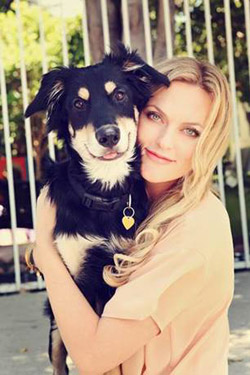
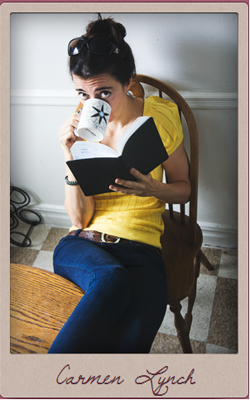
Charlotte Sullivan plays rookie cop Gail Peck on ABC’s Rookie Blue. Gail meets Holly on the job and Holly stirs up feelings that Gail never experienced. It’ll be interesting to see where this leads next season!You’ve been acting since you were a kid. Did you, and do you now, have an acting coach?

I just started training at Ivana Chubbuck’s studio. My manager is dear friends of hers and arranged a meeting. Her method is substitution based whereby you take what’s unresolved in your current life experience and inject it into your art. It’s still very new to me but it’s important to train and keep yourself busy in between jobs. For years I would sign up for classes and just never go because I was afraid of not being good enough. I didn’t realize this until now but class is where you’re supposed to eat shit and fail.

Is it true that you wanted to act because you liked David Bowie in “Labyrinth” and Johnny Depp in “Edward Scissorhands?” Why’d you get into acting?

This question has left me flummoxed. Heffalumps & weasels!?!? Why do I act? I saved this one for last because I don’t know how to answer it. The reason I started acting in the beginning was because I loved fantasy and transformation. I think prosthetics and make-up are beautiful. There is a real artistry to molding ones face into a completely different entity. Bowie & Depp both inspire me to be more experimental in my expression. They’re just the cat’s whiskers. The hard part about acting is what you do with yourself when your not working. It’s important for me to get offline and limit my internet usage and instead read more books, enroll in courses that ignite my creativity, look at the stars, take more Polaroids, volunteer in my community, seek adventure and be more reckless and irresponsible or else I would have to slit my wrists from restlessness and boredom.

Your “Rookie Blue” character, Gail, is super snarky. Was this a feature of the character from day one or did the snarkiness evolve as you felt more comfortable in the role? Did the writers just make Gail snarky or did they choose to do that after seeing your early performances and knew you could pull it off?

From day one Gail was supposed to be a snotball. Her last name Peck was chosen because she pecks at people. When you’ve been playing a character for so long your own eccentricities are bound to barf out of you every now and then. Our writers are like covert spies so you have to be careful what you say or it will end up in the show.

Gail’s sexuality was never really revealed in earlier seasons. In your character’s mind, did Gail think that everyone at the wedding would think she was gay because her +1 was Holly?

I don’t think at that point Gail had started thinking about Holly in that way. You have to remember that Ms. Peck doesn’t have many friends. I think she was just grateful her date wasn’t a dingleberry.
A lot of people can’t separate emotional and physical feelings. In Gail’s case, it appears she’s straight but develops emotional feelings for Holly, which make her want to physically be with Holly. In your mind at the end of Season 4, what is Gail’s sexual preference? 
I’m not sure I’m ready to define it or if one really needs to. I think if Gail had been born deaf, dumb and with no eyeballs she still would have been drawn to Holly. It’s not about gender in this case. It’s about when your heart splits open and it’s guts are splatter all over the walls. It’s about falling in love.

 In Season 1 of “Rookie Blue”, why did you suspect Gail might have lesbian tendencies? Do you do table reads on Rookie Blue?

 I’ve always questioned Gail’s sexuality and I casually mentioned it four years ago to our show runner Tassie Cameron. She thought it was a beautiful idea and I’m honored she made it part of my character arc. Certainly not everything I suggest will make it into the show. I may or may not have asked if I could wear a green wig and pretend I was a near sighted robot. Whoopsie daisies!! Table reads are indeed a very important part of the creative process. It allows for you to stitch the show together with imaginative knitting needles.

What happened behind the scenes prior to actress Aliyah O’Brien (who plays Holly) briefly kissing you and you passionately kissing Aliyah in the precinct? Was there any “kiss” preparation? Did you and Aliyah pretend to giggle or something to make light of it? Did you discuss anything at all amongst yourselves?

If my foggy/senile memory serves me correct I can remember eating lots of chocolate mini eggs beforehand. Doing intimate scenes of any kind are usually inelegant and uncomfortable but in a strange way I think being two women made it easier. Both Aliyah and myself agreed to pretend like we weren’t nervous. That would be our secret. It really helps having a scene partner who’s as warm and delightful as Ms. O’Brien but unfortunately it doesn’t always work out that way. I was the lucky toad in that scene.
Charlotte’s Twitter: I’m not on twitter. You can reach me by air balloon telegram. Charlotte’s website: http://www.charlottesullivan.net. What’s not to love about Charlotte?!
How’d you meet your husband, Peter Stebbings, and how do you maintain a positive relationship with him since you’re both in the business of crazy hours and different locations?

I met my husband years ago in a graveyard. Our schedules don’t often align so at times it can be frustrating but when the cat’s away the mice do play. Dolly Parton who’s been married for 47 years says the secret to a happy and successful marriage is to “stay gone”. What a wise butterfly she is.

Have you ever had a crush on a girl in real life?

Women are the sweet nectar of this earth. I’m quite mesmerized and infatuated by many, particularly Evan Rachel Wood. I love watching her performances. What a talented bean. It certainly helps playing my character when I love and adore women so much.

What excites you the most about your “Rookie Blue” character Gail? What do you dislike the most about her?

I’m over the moon by my storyline this year and I’m so excited to get back to work with Aliyah. The response from LGBT people has been gobsmacking. I’m so bloody honored that I get to represent them on television and I would do anything to defend and protect the gay community. They mean everything to me. I gypsy wish (hand on crystal ball) for marriage equality. P.S. I dislike Gail’s wonky nose and noodle arms.

Anything else you’d like to say?

This advice is particularly geared towards young girls who are first starting out in this business. If you’re ever in a situation where a producer or director wants you to wear something or do something that you don’t feel is apropos and I’m talking about when things are being sprung on you the last moment that you didn’t agree to beforehand – if you ever feel uncomfortable say so and know that you don’t have to. I once lied and said I was a bible thumping Christian to get out of doing a nude scene. When I finally confessed my sins to the director after filming had wrapped she applauded me and said she would have done the same thing. Know your rights and lie if you have to. You’re never to be repeated again in the history of human kind so don’t go against your true authentic self. I stand by you.
I’m madly in love with UNICEF. They have saved more children’s lives than any other humanitarian organization. They provide children with healthcare, immunizations, nutrition, clean water, education and emergency relief. There determination to reach children in need, regardless of religion, race or politics is exceptional. Please visit unicef.ca and give survival gifts this Christmas. Spread the love.
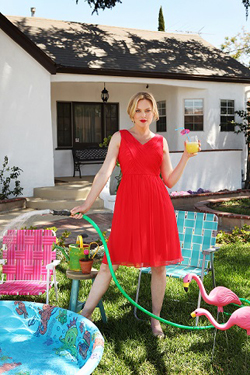
Jes Macallan took the world by storm when she won the role of real estate agent Josslyn Carver on ABC’s Mistresses. Joss is a male-loving no commitment sexual being who befriends a female client, Alex, who makes Joss feel special. Joss decides to give a physical and mental relationship a try. Talk about torture.Photo by Deidhra Fahey deidhrafahey.com
You play Josslyn Carver in the ABC drama series “Mistresses” which was just picked up for a second season. When does production for Season Two start and how many seasons are you contracted for? Who helped you negotiate your contract?

We should be back in to production at the top of next year. I am contracted for as many years as they want me, hahah! Kidding, but I absolutely love being a part of this show, from the cast, to the producers, to the crew, EVERYONE is just so lovely to work with. I look forward to going back. Contracts are a different part of the biz… that’s why you have great representation! My manager/agents/lawyer are all rockstars.

Before Season One aired, your character was being advertised as a bisexual. But it turns out Joss just wanted to keep her one and only female friend Alex, who is a lesbian, and the only way Josslyn could do that was to engage Alex in a romantic and sexual relationship. In your opinion, what is Josslyn’s sexual orientation and why?

I don’t know if she was being “advertised” as bisexual… but she was definitely the commitment-phobe, try-anything-once, free spirit! I absolutely loved discovering the feelings between Joss and Alex and watching them grow the way they did. Above all things, I think Joss has a HUGE heart and is a lover of love. I think she is fearful to the point of self-sabotage of the idea of being in love… but she loves love. Does that make sense? Everyone keeps trying to put a gay or straight or bi or whatever stamp on what she is/was, but ultimately, yes, I think she was in love with Alex. I know she was. I think it was the first person that ever made her feel that way; it was a super special relationship. I don’t think Joss is now looking for the new “girl of her dreams” but I think she understands what it feels like to love someone and be loved back. She also got a fast track lesson into being in a “relationship” which was such a foreign concept to her.

You went on a lot of callbacks for Josslyn. How was the first audition different from the callbacks? Was there any point you felt you got the job even before you got the job?

I auditioned like six times!!! It felt like 106 so I think I always exaggerate the number. Sometimes it’s six, sometimes its 46! Haha! I had a few scenes to work with. Both scenes changed drastically once we finally shot the pilot but they had the same tone. I remember just feeling like I really wanted to go for it. I was all over the room: bent myself over a chair (as in a sexual position) while doing the first scene… haha! Now that I recall it all they must have thought I was bananas! But I think Joss is a bit bananas! I went in every time with something fresh, something new, a different “layer” to the character. I think that is why finally I had to go in all dolled up in a sassy dress and full hair and make-up. They wanted to see the “finished” product! I never ever think “Oh I got the job”. I just think I know all of the factors that go into actually “getting the job”. So as long as I walk out with my head held high and I don’t think I just crapped all over the room I am a happy girl.

You are very active on Twitter and your followers increased substantially when and since “Mistresses” has aired. Do you feel this job helped you become more visible in the public eye?

I don’t think it was a possibility that this job WOULDN’T make me more visible in the public eye. That is the magic of network television or any television for that matter. So many lovely little films, and shorts and internet webisodes, etc get made every minute and no one ever sees them. Television is all about the ratings so you know a certain number of people are going to tune in and notice you or you get cancelled. I am actually really bad/inconsistent with Twitter, but I really really enjoy chatting with the fans. We have some very loyal ones and I truly believe that the live chats helped our show to keep growing and ultimately to be renewed for a second season. That is the power of the fans and to them I bestow all of my gratitude.

What is it with you and horses?

Ummmmmmmm… I am obsessed with them. I think horses are one of the best forms of therapy. In this crazy business you go from working 14 hour days to not at all and I think that if you don’t have something (or many things) to put your energy into, it becomes really hard. I have four dogs, a cat, a horse, a house and a husband and I love every second with them. They keep me busy which keeps me sane.

In the role of Josslyn, how were you pushed as an actor? Were you given any backstory that wasn’t shown in Season One? Moving away from the character’s sexuality, how else were you pushed as an actor with Josslyn? Were there any moments where you felt you did a particularly good job? When? Why?

Josslyn pushed me in ways I could never imagine. Like I said before it was a learning process week to week, episode to episode. I never watched the BBC version because I wanted to be surprised by things and be able to make my own choices on Joss and who she was. I worried that the BBC version would have subconsciously affected my performance. I made up a lot of my own backstory as you do when you try to justify certain things that your character does. Of all things, I just didn’t want her to be the “hated whore”. I really wanted her to be loved for being crazy, and spontaneous, and impulsive and promiscuous. So, I went into every naughty or sideways situation she was put into and I just tried to find some sort of internal justification as to why she would do what she was doing. I think there was a pivotal “ah hah” that happened for me in episode… I believe 105… where I had my first big fight with [screen sister] Savi. I remember reading that script and being truly crushed that Joss would be the LAST to know that her sister was pregnant and had an affair!! That was very telling of that relationship and how important family loyalty was to Joss. It happened again in episode 109 when our mom showed up. I think that episode painted a pretty clear picture of the childhood these girls had and the roles they took on as sisters. As far as the bisexual question, I have many LGBT friends and I don’t know if it would be fair to categorize Joss as a bisexual. I think ultimately she prefers men. That still doesn’t change the fact that she was absolutely in love with Alex.

Jes’ Twitter: @jesmacallan . Jes’ Fansite: http://jesmacallan.net. Jes is currently filming a movie in Utah so it will be fun to see her in something new while waiting for Mistresses Season 2 to start production!

Were you uncomfortable during any part of the filming?

Believe it or not, no. I mean, sex scenes are as uncomfortable as they come. In editing they add some music and the director lights and frames the shots just so, but on the day it’s a lot of giggling and “oops, ouch, oh, sorry, you ok?” hahaha! Our directors, our producers and writers and cast and crew – everyone was all amazing so it left little room for discomfort of any kind.

Let’s talk about the infamous shower scene with you and Shannyn Sossamon, who plays Alex, the woman Josslyn is involved with. Tell us about the direction you received and camera placements. Who was the Director and DURING FILMING, what did he/she direct you to do? Was that a real shower or built on set?

Hahahhahaha! Is that scene infamous?!?!? That’s awesome!!! I’m actually pridefully giggling over here. I mean, first of all, Shannyn Sossamon is magical. Not only the romantic scenes, but EVERY scene was an absolute joy with her. She is so intense and present and organic… I can’t imagine anyone else playing Alex. The director on the day was a woman (Cherie Nowlan, she actually directed the pilot) and she is just wonderful, stellar really. She was very careful, and had a clear vision of making it tasteful and romantic and not gratuitous and sloppy. The shower was built on a stage and to be honest, I can’t even remember where the cameras were! We just sort of started at it and off it went. There are all of these technical things that you don’t really think about like, well, once Shannyn’s hair was wet we had to keep going. It didn’t make sense to keep taking time to re-dry hair! So once we were in we were in and I am very pleased with the way it turned out. When everything comes together, especially when music is added, I think you can really create a moving moment.

Have you ever kissed a woman in any of your other acting jobs? Have you ever romantically kissed a woman in real life? Did you receive any backlash from the gay community when it was revealed that the only reason Josslyn had a relationship with a woman is because she wanted to remain friends with her?

I played a lesbian character in a play I did once and I had to kiss a girl. It’s interesting you know because I know that the concept seems like such a big deal to people. Or maybe it is a big deal to straight people, I dunno. But I am straight and I didn’t have a smidgen of discomfort or worry. I didn’t have to do any crazy preparation or anything. I think I actually had more anxiety about making out with the super young guy that had just moved here from Kentucky who was really worried about his “mom” seeing it! That was awkward! I think that yes, we got some backlash, as expected, from the gay community saying that Joss wasn’t “really” gay which is valid and true. What I was most proud of is that we accomplished this feeling of a blurred line. Many of my Twitter peeps were upset that Alex and I didn’t last, but they were so grateful for the love we found in each other. People really loved seeing us together. I don’t think that one person watching that relationship unfold episode to episode could say anything negative like “Joss was fake” or “They were just using each other”. The love was there. I know I felt it on the day so I know people felt it at home. I mean, if Joss doesn’t ever find love with anyone else (male or female) the way she had love with Alex – what does that make her? Celibate-sexual ?!?! Haha!

Why did you start your entertainment career in modeling? Why did you move into acting?

I actually started in dance. I was a dancer since I was three years old. I grew up competing and training and dancing in companies until I had to apply for college. I was given a few scholarships to schools to dance but my knee was fried and ultimately it isn’t a long lived career. My father (the business minded doctor he is) wanted me to get a degree in something business related and just put arts on the back burner, so I did. I am so grateful to him for that even though I wasn’t at the time. I think a lot of this is creative and artistic but SO much of it is a business as well. It’s unavoidable. So I am happy that I can change gears in my brain between a scene and a conversation with my agents – it’s a great tool to have. As far as the modeling goes, it was a free trip abroad and I jumped at the adventure. I remember my family called thinking I was in Florida to see if I would be home for the holidays and I was like “Oh, yeah, I forgot to tell you… I moved to Milan to model for a bit”. Hahaha! They were like “What?! Well OK. See you when you get back, be safe”. That was never a career path I wanted to commit to but I sure had a fun go at it!!

Your husband, Canadian actor Jason Gray-Stanford, seems to be very supportive of your new found fame. Since you’re both in the same business which entails crazy hours, how do you find time to be together? What activities do you enjoy TOGETHER that you wouldn’t necessarily do if the other wasn’t involved?

We are such saps! We really just LOVE cuddling on the couch with a movie, making dinner at home, hiking with the puppies and fixing up our house. He is at the gym quite a bit and I am at the barn but everything else we do, we pretty much want to do together. We try to keep a rule not to be apart for more than two weeks at any given time which is hard enough!

Anything else you’d like to say?

My advice to actors playing LGBT characters is to take the gender part out of it and just look at the person. Find why you love that PERSON, why you want to spend every second with that person, why that person gives you butterflies when they walk in the room – and everything else just falls into place.

I believe I am leaving in a week or so to shoot a film in Utah which I am excited about. The character and tone are very different from Joss and Mistresses so I am going to have to prep a lot, but I really wanted to fit something in before we go back for season two so hopefully things all pan out.
Ali Liebert is a one-of-a-kind gal who doesn’t understand the word relax. Not only does she own part of Sociable Films http://sociablefilms.com which has the movie Afterparty premiering December 5th at the Whistler Film Festivalhttp://www.whistlerfilmfestival.com, but now she’s on the popular Showcase and SyFy series Lost Girl as Crystal, a waitress who has her eye on a lesbian named Doctor Lauren. Photo by Kyle Cassie.

Your acting career takes you between Canada (home), LA and sometimes NY. What are the differences between working in these three places? Is the craft services better/worse in LA/NY vs. Canada? Do you get bigger/smaller trailers/dressing rooms? Do you work over and over again with the same people?

These days, I call Vancouver and Los Angeles home but I have spent the majority of the last few years working in Toronto (Bomb Girls shooting location). When I’m away from home, I tend to live in a bubble of the show which is both isolating and stimulating. The distance from friends and family allows me to be even more obsessive about my work in a way that is sometimes difficult when you are balancing normal life in your hometown.

After a decade in the business, I do find that I am working with people for the second or third times (both crews, directors and producers) and it’s a very comforting feeling. Knowing the crew when you walk on set is awesome, as you feel like you have allies all around you. Craft service and catering is, hands down, the best in Vancouver.

Trailers…well that all depends on what your agent can negotiate and what the budget of the movie is. I find that every set is slightly different mostly because of the tone set by the director and lead actors.

You played the character of Betty in “Bomb Girls.” Betty felt an attraction toward her co-worker, Kate. Explain this attraction for those who haven’t seen the show.
What was discussed with the production team regarding Betty’s sexual identity? Did you know this information during your audition? Why was the audition process so long?


Betty first lays eyes on Kate Andrews in the hallway of the rooming house. Kate is just moving in and now the girls will not only work together at VicMu (Bomb factory) but they will live across the hall from each other. Like any first (true) love, Betty’s feelings towards Kate are all consuming, intense and also very confusing. Their relationship was described on the breakdown as a fondness that grows into romantic feelings, so I knew that Betty was definitely into Kate from the beginning. The audition process was long because the producers/creators were searching for some of the other characters and wanted to make sure they assembled the perfect team. Casting a show set in the 40’s is a little different than a contemporary show as you obviously need to find performers who capture the the look and feel of the period.

Now that your “Lost Girl” episodes started airing, spill the beans about your character’s sexuality and your character in general.
I play the role of Crystal who is a waitress/singer. Crystal has had a rough go at life and is doing her best to accept her present circumstances (as she calls it back luck) and start dreaming more realistic dreams. She is a genuine sweetheart who has an unfortunate knack of getting swept up with the wrong people. Crystal’s feelings for Lauren are quite deep and she feels a closeness to Lauren she hasn’t felt for anyone in a long time. Their connection surprises her. I appreciate that Lost Girl doesn’t feel the need to label their characters sexual identities or preferences. rystal ‘s sexuality doesn’t need to be defined but it’s safe to say she’s into women – especially the fine Doctor. Episode 3 is going to be very steamy!

Have you ever been attracted to women in real life? Did you do any research for Betty?

When I’m attracted to someone, I’m attracted to them and yes, I’ve definitely been attracted to women in real life. Doing research is one of my favorite parts of the job as an actor and luckily there are so many resources to draw from – books, the internet, real people. Talking to lesbians who lived through the war, or have lived in homes or places that were homophobic was especially helpful as I was creating and understanding Betty’s point of view of the world.
I was also in constant communication with the show’s creators Michael MacLennan and Adrienne Mitchell about Betty’s backstory and her experience with women.

You are 1/3 owner in a production company called Sociable Films (
http://sociablefilms.com/). What made you want to start this venture?

Sociable Films started to take shape after the three of us, myself, Nicholas Carella and Michelle Ouellet talked about making one specific film together. After developing this film for a few months, we realized we clicked as a group, as a cohesive unit and started dreaming a bigger dream than just the one film. Our motto at Sociable Films is to make movies sociably and for the past two years we have been doing just that. Last summer, together with the incredible talent of our friends and colleagues, we shot our company’s flagship film, Afterparty. My partner Nicholas says it best, the art comes first and we make the numbers work after that.

Ali Liebert & Carlyn Burchell in Bomb Girls at the BG Studio inToronto, Canada. Ali’s Twitter: @AliLiebert and @sociablefilms . Ali’s website: http://www.aliliebert.com


Sociable Films has a premiere at the Whistler Film Festival on Dec 5, 2013. What’s it like being an actress AND a producer at the same time? What were your day-to-day activities?

Balancing my acting career and my producing career is pretty tricky. They are both essentially full time jobs and are both very important to me so it all comes down to time management and unbridled commitment and geeky Saturday nights in – working and playing catch up. Right now I’m shooting Bomb Girls, The Movie in Toronto but doing my best to contribute to Sociable Films and all of our upcoming festival duties while I’m away. Thank goodness, I have two amazing business partners.

5am wake up for set
5:30am-7pm’ish shoot
During the day, try to answer as many emails regarding Afterparty as possible! Caffeine is key.

In your career, you’ve played several lesbians or characters struggling with their sexuality. Which lesbian character left the biggest impression on you and why?

Betty McRae, of course. I admire her journey, her brave struggle to authenticity and her frank, unapologetic attitude. Lately she has inspired me to speak my mind when people wrong me. My pleasantries have gone out the window.

Do you have a significant other?

No comment.

What do you do to make your characters believable?
Do you do backstory?

Yes, getting the character’s backstory clear with your head writer is very important, but for auditions, often we are not provided with this information so I use my imagination and fill in my character’s life with as many details as possible. My acting process is always evolving but my base place of evaluation comes from the training I received and continue to receive from renowned Vancouver acting teacher/director, Andrew McIlroy. Andrew helped me create Betty and many other roles. We work together to create authentic and interesting choices that are as dynamic as possible. We spend hours researching tiny moments of each scene. No word of dialogue or physical offer goes unexplored. We do phone coaching too, when I’m out of town. At this point, he knows Betty almost as well as I do.
For me, it’s always about what I connect to the most with my characters. What feelings do we share? How can I get inside of her head, heart, skin? I usually start from a physical place. How does she walk? Sit? Eat? Talk? Then once you find the spine of the character, you don’t worry about how you say a line, you think about what angle the character is working to get what they want. Just like us, characters are always going after what they truly desire in life.

Anything else you’d like to say?

Charities I support are
GLAAD and Dogs Without Borders.
I will continue to stand up for equality for our LGBT citizens because it hits close to my heart as I have two gay uncles and I have a very strong circle of LGBT friends. I love that GLAAD promotes understanding, increases acceptance and advances equality through the media. Dogs Without Borders is the terrific organization where I rescued my little puppy Joplin in Los Angeles. I encourage everyone who is thinking about buying a dog from the pet store (NO!) or a breeder – to stop, breathe it out and really think about it. Why on earth would you buy a brand new animal when you could save a life and rescue a little buddy instead?
To close, I don’t think there even needs to be an article about same-sex acting. In itself, it is suggesting that it is more difficult or unique to play a lesbian character than a regular straight character. If you are an actor portraying a gay character, why would you approach it any differently than any other role? Do your research if you don’t know what it feels like. Love is love. Woman/Woman, Man/Man, Man/Woman. Who cares? When you are in love, you are in love. End of story. Thanks a bunch!
Lauren Collins has more acting experience than one can imagine. She played Paige in Degrassi who went from being a boy-crazy teen to falling for a girl named Alex.
You’ve been in show business since you were a kid. What made you want to become an actor for a living? Have you modified your physical appearance for WORK or just for fun on your own?

Even though I started at a very young age, I can honestly say I just sort of fell into this career path and haven’t looked back since. I was a shy, creative kid so when one of my teachers recommended I try out for an afterschool theatre program I gave it a shot and fell in love. Hard to imagine myself doing anything else at this point, which has its pros and cons.

Probably the biggest modification I’ve made to my appearance is the most identifiable thing about Paige. I’m a natural brunette but when I was 12 I booked a show that required me to match my hair to the rest of the light-haired family. When Degrassi came around, the blonde hair “fit”. Can’t really picture Paige without it. Also, I definitely used the “my character would TOTALLY have a belly button piercing” excuse on my parents to convince them to let me get that done in season 2 of Degrassi. My job does restrict how much I can change my look. Having a quirky hairstyle or piercing limits the roles you are right for. The flip side is working with very gifted hair and makeup teams who can totally transform you into a new character.

Your character, Paige Michalchuk, on the “Degrassi: The Next Generation” TV series fell for a girl named Alex because there was something that “clicked” — not because of a physical attraction. There really is no label that defines Paige’s sexuality, even though she does fit the label of a popular fashion-loving teen. What was it like for your character to break her normal mold of having a label (popular) to NOT having a label when it comes to relationships?

When the writers informed me that Paige was going to begin a relationship with Alex I was thrilled for the challenge and knew how much it would mean to many of our viewers. Lesbian relationships were not nearly as common on television at that time. Yes, Paige had always been queen bee at the high school and caught up in her image, but I never found her to be a stock “mean girl” character. She was far more dimensional than that. So I just looked at this as another side of a complex girl. I struggled a bit with the fact that Paige had seemed somewhat boy-crazy up to this point, but I put my full trust in the amazing writing team. When I received the scripts for “Lexicon of Love” I thought they had done a beautiful job of making this side of Paige feel organic and natural. I began to understand how conflicted and vulnerable Alex made her feel. In the end (and in true Paige fashion) she owned this relationship much like she owned her queen bee crown.

Was your character Paige the first time you ever kissed a girl? What were your immediate thoughts?

Kissing scenes on Degrassi were not uncommon and often resulted in playful teasing from various crew and cast members. They are awkward, especially when you are actually a teenager and dealing with all those raging pubescent hormones, which we all were. But there was something different about this scene. The crew was extremely respectful of the nervousness that both Deanna (the actress who played Alex) and I were experiencing and so we had a “closed set” (limited crew) to ensure we were as comfortable as possible. It was a first for both of us and such an important moment for these two characters. The director, Phil Earnshaw, and I had grown very close and that resulted in a sort of shorthand. He didn’t need to say much for me to know what he meant. That helped a ton. He put a lot of trust in us and didn’t “over-direct”.

You’re straight, correct? Did you get any fan letters from the LGBT community saying how you helped them come out to their family or how watching your storyline with Alex has given them courage? Was there any particular fan letters that REALLY stood out to you that you still remember today?

Yes, I am.

The fan response from these episodes was overwhelming. When we’re on set in our little bubble of filming you aren’t constantly thinking about the end result, who will see the episodes and how much of an impact it could have on them. We were fortunate enough to do lots of ‘meet and greet’ events across Canada and the U.S. for our show. That was when everything would sink in. Countless fans would open up to us face to face (which is so incredibly brave!) and thank us for portraying our characters’ stories. There is one encounter that sticks out in particular. When we were in LA filming “Degrassi Goes Hollywood”, Adamo (Marco) and I had a scene off and were hanging out at an outdoor cafe on Abbot Kinney. A girl, probably in her early twenties, came right up to us, took my hand and with tears in her eyes just simply said “thank you”. It was such an emotional and powerful moment for me and one I’ll never forget.

Also in “Degrassi,” Paige was raped. This must’ve been a difficult subject to portray when you were so young. Tell us something about that storyline that you’ve never mentioned before in any public interview. Did you discuss with your parents?

I was recently discussing this episode with a friend of mine who couldn’t get over the fact that I was only 14 or 15 when it was shot. I’m not sure I realized at the time what a big deal that was, even if everyone around me did. The challenge for me shooting that night was that we had a handful of fun party scenes scheduled before the big bedroom scene. All of my friends from the cast were there and we so rarely got to shoot at night which was exciting in our 15-year-old minds. I’ll never forget when one of our crew members, the children’s coordinator, came up to me and said that I should separate from the group and take some time to myself. I remember feeling upset by this; I didn’t want to miss all the fun that the guys were having. Looking back, never have I been more thankful to anyone on set for setting me straight. Had I not taken his advice I know I wouldn’t have been happy with the result. Every precaution imaginable was put in place when we shot the rape scene. My dad was told he needed to be around but I insisted that he not be right on set, which everyone was cool with. The crew was very small and I’ll never forget how emotional some of them became while we were shooting. Our 1st assistant director told me after that he couldn’t even watch the scene. One of the reasons I’m so thankful for my time on Degrassi is that we were trusted with such important stories at a very young age. Most of the material available for actors that age is squeaky clean and “Disney”.

What differences have you noticed working in Canada vs. working in the USA?

I love that in LA everyone drives themselves to work. That’s how things were on Degrassi but generally speaking on Canadian productions there are transport drivers who take you to and from set. Some of the closest bonds I’ve formed on set have been with my various drivers, but it is nice to have that time completely alone at the beginning and end of the day to decompress. Also, when I was shooting Kroll Show earlier this year I was SO thankful to the director, Jon Krisel, for subtly giving me the 411 on the lunch truck. I’d never seen that before and it threw me for a loop! Beyond that, I was really surprised by how few differences there are between shooting in the US and here at home; being on set has a very universal feel.
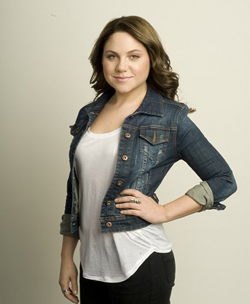
Lauren is currently filming the fifth season of 1 Girl 5 Gays. Twitter: @Lauren_Collins and Instagram: @LaurenFCollins. Photo by Mercedes Grundy http://www.mercedesgrundy.com

At what point in your career did you decide to get a manager and agent, and how’d you go about doing so? Did you look into several managers/agents who wouldn’t take you?

I have had the same agent in Toronto since the day I started acting, Shari Quallenberg. She is like family to me and knows me SO well. Finding representation in the US was a different story. I tested out a few managers before finding an amazing fit with my current rep. What I love about Steve is his no bullshit approach. So many managers I met with had a real “LA” vibe to them and some didn’t want to represent me because they weren’t sure where I “fit” in the industry, meaning what roles I would be suited for based on my looks. This was never an issue with Steve or with Shari. They trust that talent prevails and that has given me the confidence to keep trucking ahead in a business that can be really tough at times.

Do you currently have a significant other?

I’m single at the moment. I often say “I’ll never date an actor” so I suppose I understand why that is in fact the case. :)

What’s the most uncomfortable scene you’ve ever had to play?

This is a REALLY hard question. There have been many scenes over the years where physically you are so uncomfortable it can be hard to focus on the work… whether it be shooting in the dead of winter through the night or perhaps in a pair of vintage jeans that are so tight you can’t eat, breathe or move!

But I think the most uncomfortable scene I’ve ever had to shoot was the rape scene.

What do you think about at night right before you fall asleep?

EVERYTHING. That’s when you’re supposed to be able to shut off your brain and drift off to sleep, but for me it’s when things go into overdrive and I do a lot of self-reflection and analysis. Probably why I’m always tired!

Anything else you’d like to say?

I think my advice to actors doing same-sex scenes would be to give it the same thought and sensitivity as any other sex scene. Psyching yourself up and putting too much pressure is the kiss of death for an actor — you can’t be in your head.

Currently I’m shooting the fifth season of 1 Girl 5 Gays which has been an absolutely incredible experience. It was a very natural next step in my career and I’m thrilled the fans of the show have embraced me the way they have. Paige’s storyline started a very strong relationship between me and the voice of the LGBTQ community and I’m so thankful for that.

Shiri Appleby has a special gift when it comes to playing roles. She’s able to tap into human conditions which makes her characters multi-dimensional on all levels. Shiri played Clarice on NBC’s Chicago Fire in which she was in love with female EMT Leslie Shay but married to a man. Twitter: @ShiriAppleby

You began your acting career at the age of four. What were the circumstances that you started at this age? What is your earliest childhood memory of doing a job?

My parents started me in the business as a tool to pull me out of my shell. I was a quiet kid and they felt like acting would be a great exercise to help me learn how to express myself and they were right.

My first memory of being on set was sitting at the head of a big table while shooting a commercial. I remember feeling like I was surrounded by magic when I looked up and saw two huge lights blaring down on me. I have been fascinated ever since.

What’s the difference between being a guest star, such as on “SVU” and “Chicago Fire”, vs. being a series regular such as your breakout role on “Roswell?”

The difference between guesting on a show and being a regular member of an ensemble cast is the same difference as running a sprint and pacing a marathon. There is pressure attached to both experiences. When you are coming on to guest all eyes are on you to match the level of performance already established. When you’re carrying a show, not only are you focused with acting but with publicity, politics and pacing yourself for a five-nine month run. It’s a very demanding job for many intimate months, which is why the reward is so great.

In “Chicago Fire” you play Clarice, the on-again / off-again girlfriend of female firefighter Leslie Shay. What happened at your audition? (Who contacted you about the role — your agent? What exactly were you told prior to your audition? Wait — DID you audition or was the role just given to you? When did you find out that Clarice was going to be romantically involved with a woman?)

I am good friends with Derek Haas [writer/producer] and he emailed me about the role which he described as Lauren German’s ex-girlfriend who is now pregnant with her husband’s baby. I was shooting Girls at the time so I put myself on tape with their casting director in LA and was lucky enough to get cast.

What were your immediate thoughts the very first time you had a scene with actress Lauren German who plays Shay?

Lauren and I were in the same sorority in college and have been friends for years. I never did a table read since I live in LA and they shoot in Chicago.

How have you seen yourself grow as an actor since age four to now in your 30’s? Have you changed your acting methods? Do you get into character like an hour before filming or you just walk right on set and bam, you’re in character?

One of the things I like best about being an actor is that the job and my technique are constantly changing. The more I get to know myself, the more I can understand the human condition and that can all translate into the job. How I prepare or do the work on set depends on the job and the scene. For very emotional scenes I tend not to hold onto the emotion as I have easy access to it and don’t want to burn it out. I always take into consideration how the other actor I’m working with works best and give them the respect and space for their process since we are in it together.

Why do you think you end up with really emotional roles?

I think you end up with the roles that are meant for you. I have a strong ability to access emotions and it doesn’t come from a personal place that I’m abusing so I actually enjoy the roles even though they can be draining.

What’s your perception of your Chicago Fire character’s sexuality? She truly seemed to be in love with Shay, yet she married a man.

My perception of Clarice is that she loves people regardless of their gender. I agree that she genuinely was in love with Shay, possibly even more than her husband.

What type of discussions did you have with the production team about your character?

There really wasn’t much discussion about sexuality. We did discuss Clarice and Shay’s backstory and how they were together for three years and were planning on starting a family together and then Clarice backed out at the last minute. Why Clarice left was never set in stone as it may have been for plenty of reasons – fear of not being able to have a child possibly as one of them.

Congratulations on your baby girl, Natalie, who was born March 23, 2013. You recently went back to work with a job on “Law and Order SVU” – what’s the difference with work now that you have a child?

The greatest thing about working now that I have a family of my own is that work truly is work. I’m not looking for my job to fulfill any part of me other than being able to perform and contribute to my family. My goal is to do the best job I possibly can in the quickest way possible.

Anything else you’d like to say?

I think that doing any kind of love scene regardless of who you’re playing it with can be very revealing so you want to make sure you are 100% comfortable. If you’re not, you and the work will suffer.

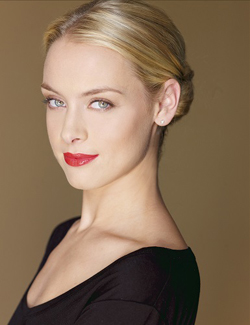
Elizabeth McLaughlin is having loads of fun playing lesbian character Val in ABC’s new series Betrayal. Val was written as already knowing she likes girls so we don’t see the sexuality struggle, but instead, the show focuses on Val’s budding first relationship with lesbian character Jules.

You started acting when you were eight years old in Tampa, Florida. What made you want to make the leap to television/film? How did you get your agent / manager? Who came first?

I’ve always had that performance bug inside me. I have always jumped at any opportunity to express myself in front of an audience, whether it be acting, singing, dancing, anything. As I got older, my infatuation and discovery with film grew, and I knew that acting was the thing for me. I just always knew. After years of begging my parents, they finally let me take meetings with commercial agencies in Florida. The agent I ultimately signed with brought me out to Los Angeles, where I was introduced to the manager who helped start my career. She then referred me to my agents that I’m still with today.

A lot of people remember you from a video called “The Clique.” What was so special about this video and your character that still has people talking years later?

The Clique was such a special opportunity for me. It being based on an extremely successful book series by the same name written by Lisi Harrison, even myself being a fan of the series, there was a strong fan base built in. Those books were so connected to what pre-teen girls are actually like, but set in this fun, fantastical world of supreme wealth. The character I played, Massie Block, was so iconic for the girls who were fans of the books. She epitomized every mean girl in middle school, and everyone had a Massie Block sometime in school. The character was written so richly, I just had to follow the writing and connect to my personal experience with ‘mean girls’, and play.

In ABC’s “Betrayal” you play Valerie McAllister who meets a lesbian named Jules and something just clicks — sort of. Jules is already comfortable being out and has no problem flirting with Valerie right away. What were your initial discussions with the writers, director and actress Sofia Black-D’Elia who plays Jules?

When the writers of Betrayalcame to me with the character development of Valerie being a lesbian, I was initially excited to see a new dimension and depth to my character. The creators and I had extensive conversations about making sure that it was fleshed out, and not simply a device for the sake of having a gay character. We didn’t want to explore the idea of Val of discovering her sexuality, or having issues stem from that fact. It’s been done before. What thrilled me so much about Val being a lesbian was the modern, fresh viewpoint from which the writers were writing her. It was never a big deal, it was not painted as taboo in any way. There was no drama stemming from the fact that Val was a lesbian. Any issues with my relationship with Jules came from the fact that she was older, working for my father etc., not because I was dating a girl. I didn’t want to make a big deal out of it, because it’s not. I was lucky to have Sofia Black-D’Elia cast as my girlfriend. Not only is she awesome as a person, but she’s played a similar character before, and we were able to talk about it together before shooting. It’s not about playing ‘gay’ or ‘straight’, it’s about playing being hit by a strong attraction for another human being, and about falling in love with someone. I used the same acting tricks with Sofia, that I use on any other love interest in other films.

Sometimes in television episodes, time moves really fast. Things seem to be going slow with your character, Valerie, and your love interest’s character, Jules. What are your thoughts on this?

I think with such an exciting show like Betrayal, they couldn’t always focus on my character’s new budding relationship, but it’s always there. In fact, Valerie and Jules just might be the most stable, and healthy relationship on Betrayal! I think Val learns a lot from her relationship with Jules, and Jules herself. She starts standing up for what she believes in more. But of course, the stable relationship between them gets tested in an upcoming episode, and Val has to decide where she stands in it all. In many ways, I think it’s her relationship with Jules that helps keep herself afloat with all the drama going on around her in her family. As far as dating other people, who knows. This is Val’s first relationship, and she may want to explore beyond her in future seasons, but she’s happy now. She fell in love with Jules as a person first and foremost, and that’s what matters most.

What technology do you use? What type of phone do you have? Do you read your scripts on paper or on a tablet?

I have an iPhone, and read most of my scripts on my Mac laptop. I do keep an updated notebook of the hardcopies of the final drafts of every episode of Betrayal. But that’s mostly a keepsake :)

You’ve been live tweeting during episodes of “Betrayal”. Is that something you do on your own or was that type of promotion written into your contract?

Of course I live tweet for Betrayal! The publicity team for Betrayal asked us to do so for the premiere and the cast and I love it, so we continued. Why wouldn’t we? It’s a wonderful way to get a first hand look at what the audience is thinking of our show! It’s quite enjoyable seeing fans react to all the twists!

Have you ever had a crush on a girl in real life? Did you do any type of research into this character, such as talking to people who are struggling with their sexuality?

I haven’t had a crush on a girl, myself. There are women that I look up to for who they are and their talent, like Jessica Chastain, Emma Stone and other artists. There are qualities about them that I respect and hope to emulate. That’s about as close as I’ve gotten to a crush on a girl in my life. I do have a bunch of close friends who have struggled with their sexuality and just knowing them helped my approach to Val. But the thing I love about my character so much is that she is who she is. She doesn’t try to hide anything about herself, including her sexuality. She’s proud of who she is, and is lucky to have a family who supports that. Val’s sexuality was never made out to be a scandalous big deal in anyway on the show. I think that’s the appropriate way to handle it.

Elizabeth McLauglin on the set of Betrayal. Twitter: @BzMcLaughlin. Website: http://www.ElizabethMcLaughlin.com (currently down for re-design, visit back soon!)

You’re not new to television series, having been in “Ugly Betty”, “Dexter” and more. What differences have you seen in your guest roles vs. a more frequent role like in “Betrayal?” Do you have a trailer / half trailer / dressing room? Are you treated differently on set than you were on the guest role productions?

I have been fortunate enough to work on really wonderful productions with wonderful people, so I can’t say there has been a huge difference between my time on Betrayal and some of my guest-spot roles. Sure, maybe my trailer is bigger. The best difference is the relationship I have with the cast and crew. It’s delightful to be so close to my fellow cast, as it helps with my performance. Braeden Lemasters, who plays my brother Vic on the show, is like my brother in real life now. We recently had to shoot a fight scene for the show, and our real life relationship really helped with the performance. It added a natural rhythm and a deeper sadness to it. I can’t speak highly enough of having a strong relationship to everyone on the crew, behind the camera as well. These guys and girls work so incredibly hard to make actors look good, while giving them room to perform their best work. Becoming close with the crew creates a huge support system that I am always so grateful to have. I got lucky with my cast and crew for Betrayal. We’re a big family now.

Tell us about your typical day on the set of “Betrayal.” Do you go to the craft services table? What’s your average normal call time? When do you have time to memorize your lines?

I typically only work a few days an episode, so I have plenty of time to memorize lines and focus on the deeper character work prior to coming to set. My set times are always different, with typical early morning calls of 6am, and even the occasional night shoot call time. (My call time was once 12am for Hair and Make-up, and I didn’t get off work until 6am) Whenever I’m finished with Hair, Make-up and Wardrobe and have downtime, I am always on set. I love watching the other amazing actors, or hanging out with the crew. When I’m not working while on set, you can always find me at the crafty table or behind video village asking the crew questions, trying to learn every aspect to this magical thing we do as filmmakers. The AD’s on Betrayal have learned to tell me when lunch is at the beginning of the day, because I was constantly asking. (We have amazing caterers on Betrayal)!

Is there anything regarding “Betrayal” and Val’s realization that she likes a girl that you’re nervous about doing? Will this sort of scene make your heart race or breathe differently?

The biggest thing I was worried about when approaching Val’s sexuality was making sure that it came off as genuine, just as I would with a male love interest. There’s a lot of things about yourself as a human being that the actor in you can’t turn off, and I didn’t want any internal awkwardness I had about kissing another girl to ever come out. Of course I was nervous when shooting a particular scene with Jules in an upcoming episode. The nervousness came from the fear of appearing in-genuine in any way. I didn’t want to be inhibited as an actor because I as Elizabeth was nervous about kissing a girl. Luckily, Sofia and her sense of humor broke any tension quickly, and we were able to just do our work as actors.

Anything else you’d like to say?

All I would say is to relax and keep a clear perspective. I don’t think it’s important to focus on playing any specific characteristic that is commonly thought of as “gay” or “lesbian”, unless it’s called for in the script. Approach the character by his/her other human characteristics, traits, and experiences. Approach the scenes as being in love, being in your first serious relationship, falling for a specific person. We can all identify, relate, and tap into those experiences and emotions. I always think being comfortable with your scene partner is highly beneficial, especially in any romantic or sexual scenes. It helps being comfortable with the person you’re working with, just as your characters would be comfortable with each other. Anything physical you may have to do in the scenes is just blocking. Focus on the other actor and the character work you’ve done, and play. Do your best to block out any internal uncomfortableness you may experience, and relax.
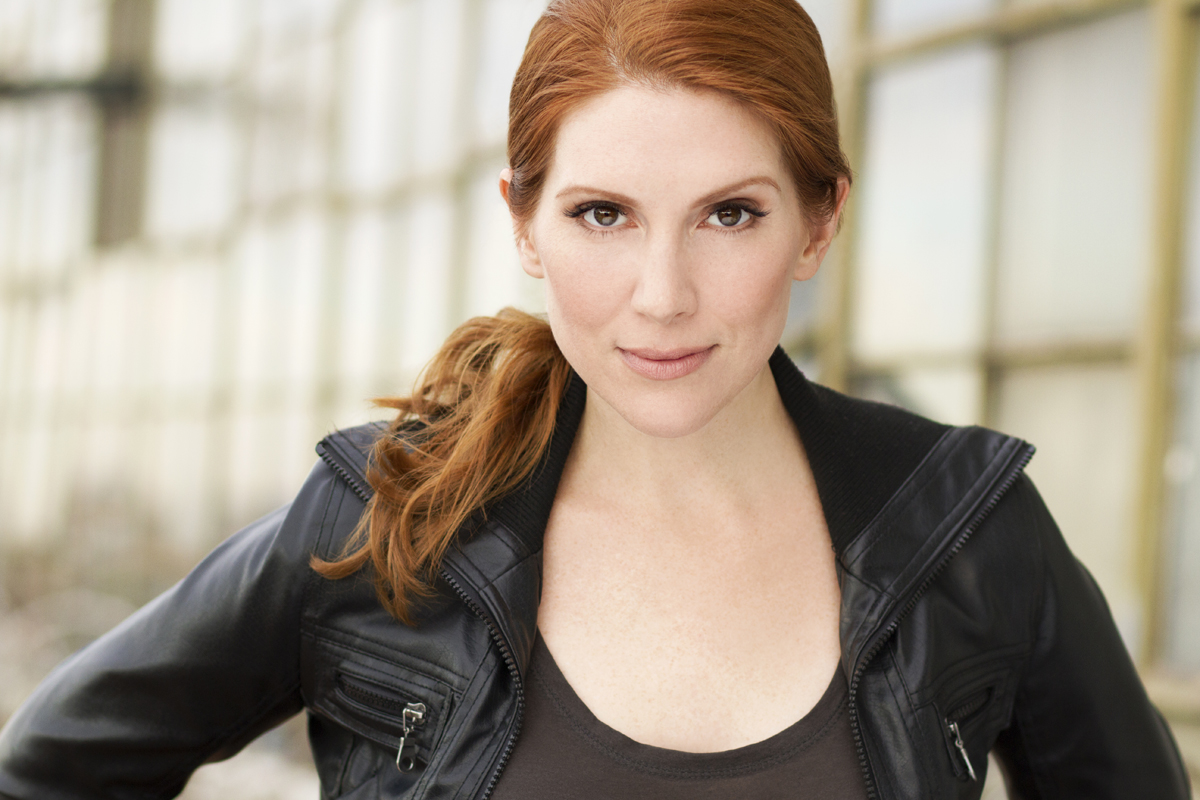
SummerCrockettMoore-headshot-legit (1)

Ready to explode on the indie film scene? To strut down some film festival red carpets? And finally get those locked doors to burst open?

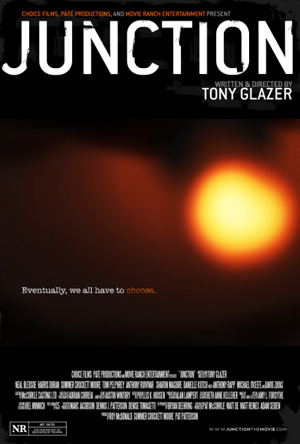
Well get your inner dreamer ready for intense inspiration because actress/producer Summer Crockett Moore recently scored indie success with her film JUNCTION, and she’s dishing about all of the sweet opportunities that success brings with it.

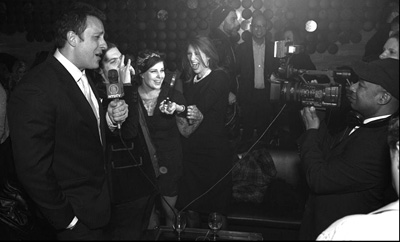
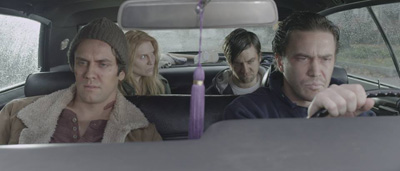
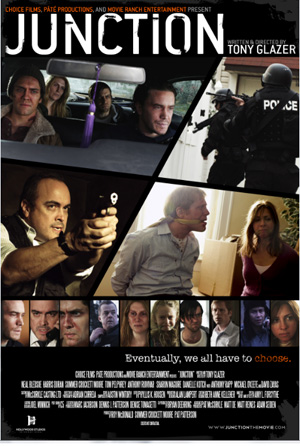
Summer Crockett Moore is an award-winning actress, voice-over artist, and producer living in New York City. She starred in, and was a producer of, the edge-of-your-seat genre thriller JUNCTION. Directed by Tony Glazer, JUNCTION follows four strung-out meth-addicts who discover a dark secret about a homeowner during a burglary, pitting them not only against the police but against each other.

JUNCTION begins a multi-city tour starting at the famous QUAD CINEMA in New York City on November 15, 2013. You can check out the trailer HERE.

Exciting!

So, tell us Summer – How does it feel for JUNCTION to have such acclaimed indie film success?

I’m blown away. Tony and I will sit and recap what we need to work on next and we just realized this is so full circle – from the little idea that began 4 ½ years ago to now, it feels like we had a meth baby that is really hungry all the time. It’s amazing to look back and see the progress. Every step was a little different than we expected, but it is that ‘never give up’ mentality that keeps you going even when things change focus.

Has JUCTION’s success brought on more projects?

Yes! It’s launched so many other projects. That’s the domino effect you want – for your work to get more work. Now, Tony is directing 11 Episodes of REDRUM on Investigation Discovery. And, I’ve been hired to produce two more films, and to act in three others.

What surprised you the most about these new opportunities?

I found that while my acting career has really kicked up a notch (I am now getting offers for projects I don’t audition for), the producing career has really launched as well. And this is so exciting for me because it engages a different part of my creative brain.

Do the BIG agents come knocking?

Absolutely! As a matter of fact, the very first thing my manager and I talked about when I won my first acting award was, how can we leverage this? How can we go from here – to your next step?

How are you taking that next step?

I put together an electronic press kit, which is how they pitch people nowadays. And I moved agencies for hosting, voiceover, and commercial to a bigger agency that is bi-costal. So I went from having one office to represent me to having many agents representing me. That was a big change.

Very cool!

Yes! And, Tony got a directing agent on top of his literary and film / theatre agent. It made a lot of sense for people who had their eye on us for a while to stand up and pay attention.

Who else comes knocking, besides for agents?

There has been a lot of surprising press coverage. Tony and I have both had people reach out for magazine interviews. An Australian blogger wrote a whole piece on me. I don’t even know how they learned about me. I think at a festival.

We also got a lot of emails from people who want to brand with us, for example Voxer. We have a champagne sponsor who is branding at one of our release parties. We’ve also gotten an introduction to people in the industry who are helping us package our next film. And that is everyone from mangers, to agencies, to people who want to know what we are working on next because they’d like to help us raise the money.

This must be such a thrill for you!

It feels like someone handed us a magic wand to open doors, and it is like that because there were so many doors that we couldn’t get through before.

How do you figure out which doors to go through next?

Right now we have to look at what we want our next steps to be. What is our brand? And we have to pick our partners carefully because we learned from working on JUNCTION, which was a great experience where everyone was #filmfamily, that choosing to partner with a team means committing to them for over three years. It is basically living with them day in and out. After JUNCTION, there were some really great projects that came to us right away. But even though we loved the projects, we had to meet the whole team first. In the old days, I just wanted to work and have fun on projects, but now it’s like dating where you have to think about who you are planning to marry.

So, the producer’s hat brings about a different level of decision making than acting?

As an actor, if I like the project, I will work with anyone in any city. That’s because as an actor I get to walk away at the end. But as a co-producer those questions become much more layered. Finding out what your role is has been exciting. We are thrilled to have a couple of cool projects coming up next that are very much our brand, but also different than JUNCTION.

What is coming up next for you?

The next project that we are team lead on is AMERICAN STARE. We partnered with Producers Circle, famous for big Broadway shows. Tony has adapted his critically acclaimed play AMERICAN STARE into a screen play, and through Producers Circle’s partnership with Choice Films we are producing a play and a movie at the same time.

What? And Wow!

I know! We’re packaging it right now. Judy Bowman is our casting director, and Tony will be directing. And it’s really crazy because everyone who signs on for this project is signing up for an Off-Broadway play, a feature film, and a commercial Broadway transfer – all at the same time!

We are also in the final stages of development for a film called SELF STORAGE. Donna McKenna is casting it right now. It will shoot in Tennessee in early 2014. And that came about with JUNCTION during the festival circuit. We won the Jury prize, and at the party this writer came up to me in the bathroom and said she has a fabulous project and is looking for the right producers. She was so smart and fabulous that I said, Let’s set up a drinks meeting. We flew to LA for another festival for JUNCTION where we met her Executive Producer Todd Berger, who is a big guy in LA. The four of us clicked so much that we signed on. Katie White wrote the film and is directing, and Todd is Executive Producer. They raised all of the funds on their own and came to us to take care of the nuts and bolts on the ground. It’s like kismet. We never would have met them if we didn’t do the extended festival circuit for JUNCTION. And it was perfect timing that the bathroom was empty because then maybe she wouldn’t have approached me.

How do you keep up with all of this new work?

Someone asked if I was a robot because I never sleep. But it’s great to be this busy and have the machine moving this fast. I wouldn’t have it any other way. On the really hard days, when I don’t leave my computer or shower, I’m like Oh right, I asked for this! And I feel like I’m learning and growing every day, and that is rewarding.

Sounds like you need extra help!

That just came up! I am in the process of interviewing three assistants who are fabulous. I am thrilled. We’ve been so busy focusing on the project itself that I realized I need an assistant to help take care of me, because I am taking care of everything else. I have to learn how to delegate – This is time to work on the film, this is time to work on me, and this is time to unplug. Though, to unplug is kind of hard to do during all of this because if you unplug at the wrong time, you can miss something. And, if you don’t unplug your head can explode. The new challenge is finding how and when to have a rest so I can fully charge forward again.

What would your assistant do to help?

They would literally help me organize what I call deliverables. For example, Tony and I are speaking at NYU, Circle in the Square, and Brooklyn College. Every one of those schools has a packet that matches what they are teaching. An assistant can coordinate those packets, order the champagne, and coordinate with the marketing team. All the things that I set in line to make happen, I would hand over to an assistant to follow through with. It’ll be great. And, I am a really good boss. My former assistant and I hang out and have cocktails.

What is the biggest reward of getting your indie film in theatres?

I have to say, right now what I feel to be the biggest reward is that we took a big risk making JUNCTION because it is such edgy material – and the biggest reward I’ve had is standing in a packed theater hearing the audience’s reactions. We’ve probably seen between 40-50 sold out shows, and to watch the same shock, and sadness, and laughter in the audience as they experience, feels great. Watching the audience as they go through the ride, makes me know that all the hardships we went through were worth it.

It feels great to stand there, see the final product, and say, I wouldn’t change a thing.


How does your inner dreamer celebrate?

My inner dreamer celebrates in two ways, and it depends on how tired I am which side gets to play more. She either celebrates with a complete clean slate, playing the game – If I could do anything at all what would that be? And from there that could be anything from doing a documentary in Africa about lions, to having a big action adventure, shoot it up movie which would be fun to produce.

The other side of me, which I tend to live more in, says, Great! Everything worked out. I’m really excited. Now how can I take a direct step from here to where I want to go? That dreamer is more strategic and she gets more tired because there are a lot of ladder rungs to climb up to get where she is going. But that’s ok because she’s a scrapper.

Does the hard work ever get to you?

You know, we made this film happen in a way that felt tangible and good, and the hard work was never the problem. So it is just trying to caliber what is next for us without losing sight of the reason we did it in the first place – which is to tell a bigger story, reach people, and have fun while doing it!

THANKS SUMMER!

Follow Summer @summerlymoore + JUNCTION @Junction_film

And snag your tickets to see JUNCTION – HERE!


team_cheering_at_sohoff

Ready to explode on the indie film scene? To strut down some film festival red carpets? And finally get those locked doors to burst open?

Well get your inner dreamer ready for intense inspiration because actress/producer Summer Crockett Moore recently scored indie success with her film JUNCTION, and she’s dishing about all of the sweet opportunities that success brings with it.

Summer Crockett Moore is an award-winning actress, voice-over artist, and producer living in New York City. She starred in, and was a producer of, the edge-of-your-seat genre thriller JUNCTION. Directed by Tony Glazer, JUNCTION follows four strung-out meth-addicts who discover a dark secret about a homeowner during a burglary, pitting them not only against the police but against each other.

JUNCTION begins a multi-city tour starting at the famous QUAD CINEMA in New York City on November 15, 2013. You can check out the trailer HERE.

Exciting!

So, tell us Summer – How does it feel for JUNCTION to have such acclaimed indie film success?

I’m blown away. Tony and I will sit and recap what we need to work on next and we just realized this is so full circle – from the little idea that began 4 ½ years ago to now, it feels like we had a meth baby that is really hungry all the time. It’s amazing to look back and see the progress. Every step was a little different than we expected, but it is that never give up’ mentality that keeps you going even when things change focus.

Has JUCTION’s success brought on more projects?

Yes! It’s launched so many other projects. That’s the domino effect you want – for your work to get more work. Now, Tony is directing 11 Episodes of REDRUM on Investigation Discovery. And, I’ve been hired to produce two more films, and to act in three others.

What surprised you the most about these new opportunities?

I found that while my acting career has really kicked up a notch (I am now getting offers for projects I don’t audition for), the producing career has really launched as well. And this is so exciting for me because it engages a different part of my creative brain.


Do the BIG agents come knocking?

Absolutely! As a matter of fact, the very first thing my manager and I talked about when I won my first acting award was, how can we leverage this? How can we go from here – to your next step?


How are you taking that next step?

I put together an electronic press kit, which is how they pitch people nowadays. And I moved agencies for hosting, voiceover, and commercial to a bigger agency that is bi-costal. So I went from having one office to represent me to having many agents representing me. That was a big change.


Very cool!

Yes! And, Tony got a directing agent on top of his literary and film / theatre agent. It made a lot of sense for people who had their eye on us for a while to stand up and pay attention.

Who else comes knocking, besides for agents?

There has been a lot of surprising press coverage. Tony and I have both had people reach out for magazine interviews. An Australian blogger wrote a whole piece on me. I don’t even know how they learned about me. I think at a festival.

We also got a lot of emails from people who want to brand with us, for example Voxer. We have a champagne sponsor who is branding at one of our release parties. We’ve also gotten an introduction to people in the industry who are helping us package our next film. And that is everyone from mangers, to agencies, to people who want to know what we are working on next because they’d like to help us raise the money.


This must be such a thrill for you!

It feels like someone handed us a magic wand to open doors, and it is like that because there were so many doors that we couldn’t get through before.

How do you figure out which doors to go through next?

Right now we have to look at what we want our next steps to be. What is our brand? And we have to pick our partners carefully because we learned from working on JUNCTION, which was a great experience where everyone was #filmfamily, that choosing to partner with a team means committing to them for over three years. It is basically living with them day in and out. After JUNCTION, there were some really great projects that came to us right away. But even though we loved the projects, we had to meet the whole team first. In the old days, I just wanted to work and have fun on projects, but now it’s like dating where you have to think about who you are planning to marry.

So, the producer’s hat brings about a different level of decision making than acting?

As an actor, if I like the project, I will work with anyone in any city. That’s because as an actor I get to walk away at the end. But as a co-producer those questions become much more layered. Finding out what your role is has been exciting. We are thrilled to have a couple of cool projects coming up next that are very much our brand, but also different than JUNCTION.

What is coming up next for you?

The next project that we are team lead on is AMERICAN STARE. We partnered with Producers Circle, famous for big Broadway shows. Tony has adapted his critically acclaimed play AMERICAN STARE into a screen play, and through Producers Circle’s partnership with Choice Films we are producing a play and a movie at the same time.

What? And Wow!

I know! We’re packaging it right now. Judy Bowman is our casting director, and Tony will be directing. And it’s really crazy because everyone who signs on for this project is signing up for an Off-Broadway play, a feature film, and a commercial Broadway transfer – all at the same time!

We are also in the final stages of development for a film called SELF STORAGE. Donna McKenna is casting it right now. It will shoot in Tennessee in early 2014. And that came about with JUNCTION during the festival circuit. We won the Jury prize, and at the party this writer came up to me in the bathroom and said she has a fabulous project and is looking for the right producers. She was so smart and fabulous that I said, Let’s set up a drinks meeting. We flew to LA for another festival for JUNCTION where we met her Executive Producer Todd Berger, who is a big guy in LA. The four of us clicked so much that we signed on. Katie White wrote the film and is directing, and Todd is Executive Producer. They raised all of the funds on their own and came to us to take care of the nuts and bolts on the ground. It’s like kismet. We never would have met them if we didn’t do the extended festival circuit for JUNCTION. And it was perfect timing that the bathroom was empty because then maybe she wouldn’t have approached me.


How do you keep up with all of this new work?

Someone asked if I was a robot because I never sleep. But it’s great to be this busy and have the machine moving this fast. I wouldn’t have it any other way. On the really hard days, when I don’t leave my computer or shower, I’m like Oh right, I asked for this! And I feel like I’m learning and growing every day, and that is rewarding.

Sounds like you need extra help!

That just came up! I am in the process of interviewing three assistants who are fabulous. I am thrilled. We’ve been so busy focusing on the project itself that I realized I need an assistant to help take care of me, because I am taking care of everything else. I have to learn how to delegate – This is time to work on the film, this is time to work on me, and this is time to unplug. Though, to unplug is kind of hard to do during all of this because if you unplug at the wrong time, you can miss something. And, if you don’t unplug your head can explode. The new challenge is finding how and when to have a rest so I can fully charge forward again.


What would your assistant do to help?

They would literally help me organize what I call deliverables. For example, Tony and I are speaking at NYU, Circle in the Square, and Brooklyn College. Every one of those schools has a packet that matches what they are teaching. An assistant can coordinate those packets, order the champagne, and coordinate with the marketing team. All the things that I set in line to make happen, I would hand over to an assistant to follow through with. It’ll be great. And, I am a really good boss. My former assistant and I hang out and have cocktails.

What is the biggest reward of getting your indie film in theatres?

I have to say, right now what I feel to be the biggest reward is that we took a big risk making JUNCTION because it is such edgy material – and the biggest reward I’ve had is standing in a packed theater hearing the audience’s reactions. We’ve probably seen between 40-50 sold out shows, and to watch the same shock, and sadness, and laughter in the audience as they experience, feels great. Watching the audience as they go through the ride, makes me know that all the hardships we went through were worth it.

It feels great to stand there, see the final product, and say, I wouldn’t change a thing.


How does your inner dreamer celebrate?

My inner dreamer celebrates in two ways, and it depends on how tired I am which side gets to play more. She either celebrates with a complete clean slate, playing the game – If I could do anything at all what would that be? And from there that could be anything from doing a documentary in Africa about lions, to having a big action adventure, shoot it up movie which would be fun to produce.

The other side of me, which I tend to live more in, says, Great! Everything worked out. I’m really excited. Now how can I take a direct step from here to where I want to go? That dreamer is more strategic and she gets more tired because there are a lot of ladder rungs to climb up to get where she is going. But that’s ok because she’s a scrapper.

Does the hard work ever get to you?

You know, we made this film happen in a way that felt tangible and good, and the hard work was never the problem. So it is just trying to caliber what is next for us without losing sight of the reason we did it in the first place – which is to tell a bigger story, reach people, and have fun while doing it!

THANKS SUMMER!

Follow Summer @summerlymoore + JUNCTION @Junction_film

And snag your tickets to see JUNCTION – HERE!


agentdoanddont

So you’re meeting an agent… Palms are sweating. Hopes are high. You want to make the best impression! Take a deep breath, sit back, and read this advice from agent Heather Finn of Frontier Booking International.

Heather handles on-camera commercials, voice-overs and print. Her clients have booked commercials and voiceovers for Chemistry.com, Dominos, Las Vegas Tourism, Discovery Health, Norelco, Olive Garden, Verizon Wireless and many more.

Here are Heather’s 10 – DO THIS, NOT THAT – insights on how to make the best first impression when meeting an agent.

When meeting an agent

Don’t…

Be late or arrive an hour early. People come in and say, I wanted to make sure I found they place. Good idea! Find it. Then go find a cup of coffee. For us, we have a very open office. It makes it very uncomfortable to have people sitting and listening to us for an hour.  For offices with waiting rooms it’s better, but still not ideal…

Do…

Make sure you are on time, few minutes early is great.

When choosing your clothes for the meeting

Don’t…

Dress for a wedding. You are simply coming into meet someone. You don’t need to wear a suit, or a ton of makeup.

DO…

Look like yourself, as if you would while hanging out with a friend. Unless, that means braless and unwashed hair – maybe then it’s not a good idea.

When you first sit down

Don’t…

Pull the seat too close to the agent. Actors want to connect with an agent, and we can connect just fine with a little distance. You don’t have to sit across the room, but people pull their chairs right up to our desk so basically we’re breathing as one.

Do…

Remember that there is such a thing as personal space and we all like it. If you’re on a first date with someone, you wouldn’t sit right in their grill. You would give them a little space. This is like your best first date. You want to make the best impression, without anyone seeing the crazy.

While chatting with an agent

Don’t…

Think that meeting an agent is the be-all and end-all. People tend to put so much pressure on the whole idea that they are wound up before they even walk in the door. People come in and start talking before you even ask a question. Or, you ask one question and they go on for ten minutes as if they were practicing what they were going to say before they came in. And, we have your resume in front of us so you don’t have to explain it all. The things we want to know about, we’ll ask. We promise.

Do…

Remember that it is a conversation, and has to be a give and take. Just be you. Realize that you are just meeting someone. Relax. Go in, and be cool.

About asking questions

Don’t…

Come in accusatory asking who do you work with? And what do you work on? Not that it’s a bad question. It is only a bad question when the tone is more “prove yourself to me.”  And don’t ask me things that are readily available on our site, or on Google. We started out representing Courtney Cox. That was 20 years ago. I don’t know Courtney now. Though I wish I did!

Do…

Know who you are going in to see. Do your research before coming in to see an agent. I’ve had people who thought I was a legit agent, and you would know that I’m not with the most basic research.

And, remember that you are interviewing us as well. Ask: How we work with clients? When is it appropriate to email us? And how we will get in touch with you?  All are good things to ask- just without sounding like you’re testing us. I promise, we’re not testing you either

If you do begin freelancing with an agent!

Don’t…

Send emails every day or at 2 am after a couple beers when you remembered there is something you have to tell me. Ours is a phone and email business – I’m constantly fielding calls and emails from casting directors, producers, etc.  Unfortunately I don’t have time to respond to everyone’s emails, especially if it’s Hey it’s Tuesday, how are you doing?

Do…

Send an email if you haven’t heard from me in a while. Email during business hours. And Relax. Realize that if I said I was interested, I will call you when I have something you’re right for. If you think I won’t remember who you are, it might not be the best relationship. You have to give us a chance to get back to you.

To keep the actor/agent relationship strong

Don’t…

Go on auditions for dates you’re not available. Some people just want to go on auditions, so they go even if they aren’t available for the shoot. They just want to get their foot in the door, but the casting director is going to be upset. Rightfully so. I’ll be upset as well.  Not only that, but you are taking away another person’s audition for the role, and that isn’t fair.

Do…

Tell me when you are going out of town. If you are not available for the shoot dates, tell us. There will be another audition. And let me know if you change your hair, or something about you appearance, or book another job.

While out on auditions

Don’t…

Show up for an audition late or say you would be happy to do something and then get to the audition and say you won’t.

Do…

Be prepared. If there is stuff I tell you – like how to dress, do that. You are representing yourself in the room, and also me. We need you to be open and honest.

If you’re querying about a child actor

Don’t…

Send in odd pictures. We get a lot of weird pictures in the mail. I had a person who sent me a picture of a child sitting naked in a pan. It was…. Different.  We also get calls like one person who said, I am going to have a baby in December. What do we need for representation? – How about for the baby to be born first?

Do…

Make sure this is your child’s dream, and not yours. Also, make sure that is something the whole family is willing to work toward. Because, you could be away and not able to take your other children to the places they need to go to.

About payments

Don’t…

Call a week after the job and ask where the payment is. As much as we wish you would get paid that soon- it really never happens.  Some jobs can take as much as 90 days to get paid.

Do…

Know that our job is to get you paid. So be aware that we are on your side when it comes to that. Give us the benefit of the doubt. And remember, that when you ask about things, it is all in the tone.

Thanks Heather for that fun insight!


secrets of a casting director

We all wish we could get inside the head of a Casting Director. Perhaps there’s some magical little spell that will give us the guidance to win an audition with the Director / Producer. Casting Directors are on OUR side, so if they ask you to do the scene a different way, it’s because they want to see if we can take direction.

We, as actors, must remember that CD’s sometimes conduct hundreds of auditions per day and like us, they’re human and get tired. It’s up to US to be prepared and make the CD remember us. There are plenty of tales where an actor went up for a role but booked a different role instead! What exactly do Casting Directors look for?

Check out the chats below with the following Casting Directors: Kimberly Graham of Judy Henderson & Associates Casting (Homeland), Caitlin Jones of Liz Lewis Casting Partners (commercials aired during Superbowl and Grammy’s), Christina Cotronis of One Girl Productions (casting for beauty, cosmetics and apparel such as Maybelline), Lauren and Jordan Bass of bass/casting (Spartacus: Blood and Sand) and Duncan Stewart of Duncan Stewart and Company (Tony Award winning Broadway revival of Pippin).

Kimberly Graham of Judy Henderson & Associates Casting works on the Showtime original Homeland currently in its third season. Kimberly is also known for her casting on the film Avatar and video games such as Grand Theft Auto.

What’s the difference between a casting director and a casting associate?

The casting director and the casting associate do essentially the same duties, selecting talent, running sessions, making deals, etc. Casting Directors may do more on the side of contractual agreements, deals, and of course have the final say on selecting talent to move forward to creatives.

In what capacity do you cast for Showtime’s “Homeland?”

Homeland’s pilot was cast by another casting director and when it was picked up to go to series, Judy and I were hired to cast Guest Stars and recurring roles as well as any new series regulars. We work with another casting company in North Carolina that does all the local casting (mostly co-stars) and there is another company that does the extras. As you can see “it takes a village”.

What’s the difference between casting a theater musical vs. television / film?

Each project is different in terms of what specifically are you looking for. Obviously for musicals, you need folks that have musical theater training and can sing. As far as TV/film, you are going for good training also. I would always take someone with theater training over someone who doesn’t when it comes to TV/film. The craft to me is essential. It comes down to scale size of performance. Theater is about the words and projection of behavior. TV/Film are visual mediums. We come into your world, you don’t go out to ours, so to speak.

“Homeland” is shot in North Carolina. What’s it like casting for an out of state show?

Shooting out of town shows is becoming more common than ever. Our show is unique in that our creatives are based in LA, we are based in NYC and the production shoots in North Carolina. Part of the decision to use NY Casting Directors was purely about money. It’s cheaper to fly an actor from NY to NC than from L.A. Having said that, we cover everywhere from NY, LA , Canada and Europe if we need to.

You cast actors who have or who can do accents. If you put out a call for an accent, how do you verify that the actor is properly doing the accent?

Good question. I will say by the end of this series I will have learned the basics of Farsi. I can’t specifically tell you if what they are saying is correct, but we have a nice pool of actors that do speak these languages, so I would know pretty quickly if I heard one person say it different that they were probably doing another language such as Arabic. We also have writers that have consultants as well. In fact, one actor who learned Farsi for a line was no longer being considered because our show creator couldn’t get past the Indian accent. So there you go…

What’s it like casting video games / motion capture actors?

We were really at the beginnings of casting voices for video games with The Grand Theft Auto series. Gamers started to demand a more cinematic experience and as these games became more interactive, the voices had to feel authentic. Often we were not privy to what games we were casting for so we often had a working title. Scripts/Sides were often written on the fly for the audition and in some cases, old movie scripts were used if it lent itself to what particular type of character they were looking for. In the beginning we would cast the voice and motion capture separately, and then the producers wanted the same actor to do both, but that had its problems as you couldn’t always match both the voice and the physicality of the character.

Kimberly’s website is http://www.kimberlygraham.net and
Twitter: @iocanto1

How do you deal with actors who are not prepared for their audition?

I’m pretty patient in the room when I’m taping actors’ auditions, but if someone clearly is not prepared, I will kindly dismiss them and make a note for myself for future reference. Each actor is my resume, so it’s important we are all prepared as best we can. If they aren’t prepared I won’t even present them. Plain and simple.

What was your initial reaction when you and Judy Henderson won Emmy and Artios Awards for Outstanding Casting for the Drama Series Homeland?

I really can’t remember when/where I was when we found out we were nominated but obviously it was exciting! I do remember though, electing not to attend the Emmy’s (Judy went) because I really felt we weren’t going to win since we had such stiff competition and I felt an ensemble show like Game of Thrones or Downton Abby would have a better shot. And frankly I didn’t want to spend all that money going there, getting a dress and coming back with nothing. Having said that, the night of the creative Emmy’s (which is a week before the ones that are aired) I was coming back from a Broadway show with my boyfriend, hopped on Facebook on my phone to find folks congratulating us on winning. I turned to my boyfriend and said “Um, I think we just won the Emmy”. It was surreal.

Who makes the final choice as to who is cast? How do you get them to take a chance on a fresh face vs. someone who is already known for their great acting ability?

Our showrunner and creator, Alex Gansa, decides which actor will be presented to our producers and network, after conferring with his writers and director. We have been very blessed to have Alex’s trust in our taste, so if there is someone he is not familiar with and we feel strongly about that actor, he really listens to us. When we cast Marin Ireland in season one, no one outside of the theater world knew who she was, and we felt so strongly about her that Alex went with her. It paid off big time and he liked her so much, he finished her story line in season two.

How do “chemistry reads” work?

Funny, we don’t really do chemistry reads for our show. I know some do, and I think it depends on the creators whether or not to do one. I think sometimes we worry we will “waste” an actor on a role that doesn’t come back and then in a future episode we say “Hey! Wouldn’t so and so have been great in THIS role?” But, you can’t know what is coming next so it’s really a crap shoot.

Caitlin Jones of Liz Lewis Casting Partners http://www.lizlewis.com has cast numerous commercials including America’s Got Talent and T-Mobile.

Why did you get into casting and how did you feel during your job interview for Liz Lewis Casting Partners?

My relationship with LLCP started while I was in college. The Musical Theatre degree program at Nazareth College required an internship to graduate. Instead of painting sets and collecting ticket stubs at a regional theatre like most of my classmates, I wanted to learn about my future career from the ground floor. Following this logic, it made perfect sense to learn everything I possibly could about auditioning by working at a casting office. I was right! I did have an internship interview that I flew down from Rochester for (because Skype wasn’t invented yet) and I was the only intern to be hired on the spot. So, I guess you could say, I felt confident! My enthusiasm was quickly noticed, even as an intern at 19 years old. As soon as I graduated, LLCP called me frequently to freelance as a casting assistant and after two years of being on speed dial for them and a couple of other CD’s, LLCP offered me a full-time position. It was actually kind of a shock, because I was on set filming something when I got the call – but like most major life decisions, I went with my gut and said yes on the spot. We actually pride ourselves in promoting within quite a bit. It’s something I keep my eye open for as an internship coordinator.

How do you get the best performances out of actors? When they’re auditioning for you, do you do several takes? Are you made aware in advance from the production on how the character is to be played so you can coach the actor toward that direction?

Coming full circle, I’m currently the internship coordinator at LLCP. I like to explain the process of casting (I focus primarily on commercials and independent film) to the interns like ordering a pizza. Someone at either an advertising agency or production company contacts a casting director. They then order a large pie, hold the cheese, extra sauce, the works, well-done, non union… and they want it in 30 minutes or less! More specifically, they give us what we refer to as “specs” or specifications of everything down to what they want this character to wear (and even sometimes go as far as to say what color– HELLO, “BEST BUY BLUE SHIRTS”. So yes, when directing actors, I usually suggest scenarios (may not even be the one that’s in the particular commercial) that will evoke a reaction that will make the best pizza aka get them booked! I typically do two takes in commercials but will do more if I see that the person is capable of “getting there” but just needed a more tailored direction, or if I’m familiar with a particular actor’s work and know they can really nail it (if they haven’t yet).

My BIGGEST pet peeve in the world is when actors don’t take direction; the only reason I give direction is so that the actor can give the performance that will get them the job and

when they don’t follow that, it’s frustrating. I am only as good as the actors I call in, so I want you to do well.

How have you grown as a CD over the years?

Something that you can only learn through experience is that there never is a shortage of places to find new, untapped, talent — no matter how off the beaten path the breakdown may be. Thinking outside the box and going beyond just contacting agents and putting out a breakdown is something that not everyone does right away. From taking improv classes myself, going to that off-off Broadway show downtown or teaching classes on technique are ways to find someone who’s perfect for a role I’m casting.

What was the most difficult role you ever had to cast?

The hardest role ever was a “Voodoo Magic type man” who matched a picture sent by the client of a specific ethnicity, and could literally BREATHE FIRE up to 9 ft. and sustain that for 60 second intervals for production to get the shots they needed. It was also non-union. This was a very specific skill set and since most people who are able to do this become union very quickly, the choices were extremely slim locally. It ended up taking about a month to find someone (usually promos and commercial castings take about a week) and we ended up finding the performer because I started scouring pyrotechnic and circus act Facebook groups.

What’s it like working with kids?

I LOVE working with kids and have jokingly referred to myself as “the child whisperer” on occasions. Patience is a given in casting, period. Whether you’re casting adults or children alike because you’re repeating the same initial scene description information about 100 times in one day. I really enjoy working with kids because unlike working with adults, they are not afraid to trust their instincts in the room — in some cases (like casting two to three year-olds) they have nothing else to go off of anyway. What separates kids in the single digits usually is natural ability. Sometimes training too much, too young can come off a little canned and contrived in the room but kids who have that “it” factor whereas the infectious personalities, the flair for copy, natural comedic timing, the early readers, will leave an impression that will force me to put that headshot on the “wall of fame” above my desk as soon as I get back to the office. That being said, everyone needs to remember these are kids, and sometimes being an actor is not number one on their list of priorities. Parents need to accept that and not try to force something the child is not comfortable with and not apply pressure for something that is still an “extra curricular” at this point.

With adult actors, have you ever suggested someone who normally would NOT be right for the role but for some reason, you saw something in them that could work?

Absolutely! I always like to have a 3-5% “Wild Card” quota on everything I cast. Which usually consists of actors whose work I know intimately enough that despite the fact that may not be 110% right for what my client ordered, I am confident their interpretation of the role would work. This happens a lot when I bring in actors direct (without being submitted by an agent) and they’re some of my favorite bookings to call out. I once cast a fast food promo and five out of the seven actors booked were ones that fell into this category.

What’s the best way for an actor to get your attention?

Submit on a project I’m currently casting and use the “submission notes” section — I’m always curious to hear about what actors are working on, ESPECIALLY if they’re “making their own work”. I love to hear about improvisors who started their own team or created a webseries. Filmed a short recently that went to festival? I want to hear all about it! Those little note sections are perfect for this because it’s in context of something you’re applying for OR if not submitting for a project, a postcard update with your exciting news is always appreciated!

Caitlin’s website is http://www.caitlindjones.com and
Twitter: @caitlindjones

Have you seen different “trends” in headshots over the years?

Black and white to color was a huge one that was in the middle of happening when I first got started. I always feel like borders are a must but now they’re much simpler (all white or all black as opposed to patterns). Name on the front vs. no name. Outdoor shots in NY are super hot right now whereas a lot of the LA shots are indoors. Personally, whatever catches the actor being most “themselves” is what I think is most important and can make a shot that’s timeless enough to last as long as it can (granting their overall “look/age/type” hasn’t changed).

What process do you go through when holding auditions? For one role, how many actors do you see? Do you only work with specific agents and managers? Is there a protocol you use or it’s different every time regarding number of actors called in?

How many actors I see for a role really depends on the budget production has for casting, so it varies every time. Typically in a day I can see as many as 30-70 actors for a commercial (depending on the amount of sides/copy). The number per role is dictated by the client budget and number of characters.

As far as agents and managers go, I work first with who submits on the breakdowns and then will email the breakdown to some of the larger agencies who do not submit via websites. As a personal policy I don’t have a set number of appointments that I give to each agency — I give the appointments to the talent who I feel are best suited for the role. If that means I give seven appointments to one agency and two to another, then so be it. With the variety of projects I work on, it all evens out in the long run — one agent may only get a few appointments for one project, and a lot for the next.

What advice would you give to actors who are asked to come in for a callback? Should they wear cologne/perfume?

Best advice for called back actors: do as much as what you did at your initial audition as possible (unless told otherwise). This goes for reading, if you did go loose on the script the first time — stick with that, what you wore, and how much you “looked like the part”. If we need something more specific than what you did originally, we’ll let you know before you get in the room. Also, ALWAYS TAKE DIRECTION IN A CALLBACK EVEN IF IT IS TOTALLY DIFFERENT THAN WHAT YOU ORIGINALLY DID OR WHAT IS ON THE PAGE. Usually direction in a callback is given from the ACTUAL DIRECTOR of the project and a lot of times they’re giving you direction for the sheer sake of seeing what you’re like to work with and if you’d be easy to direct on set. Saying things like “that’s not what I did in the initial audition” is not informing anyone of information they don’t already know and only makes you look resistant. Taking direction well is a lot of times the decision making factor of what actor the director will get behind and “push” to the creatives and higher ups that ultimately have to all weigh in on the final booking.

As far as smelly stuff goes, I’d veer away from cologne and perfume. More and more people are allergic to it these days. It doesn’t bother me personally but with an upwards of 7-10 folks in addition to me in the room for a callback, it would be silly to take a chance like that… especially since casting studio cameras can’t record smell! More important than how you smell is knowing how to “read the room” since you’re making an introduction with a lot of people who could prospectively employ you. Some are overly friendly when things are tense, but some don’t accept friendly overtures because they are nervous, too. I think a lot of good actors get in their own way with this.

Christina Cotronis of One Girl Productions http://www.onegirlproductions.com casts models for beauty products such as Garnier Fructis and L’Oreal.

What made you want to go into casting? Why’d you make the switch from television agent to beauty casting?

In 2000 I was working as a TV agent at an agency and there was a SAG strike so my contract was suspended. My sister had twin girls and she needed help so I wanted to help her until the SAG strike ended. Unfortunately, the strike lasted longer than I anticipated. I knew at some point I was going to need get back into our industry but I did not want to go back to being an agent. I did not want to sell the talent; I wanted to buy the talent and I knew that casting would be a perfect transition to the other side – and that is how it all started.

How did you build, and continue to build, your clientele?

I was an agent so I knew I had to maximize on who and what I knew. I made a list of all the projects I worked on and contacted the ad agencies and fellow colleagues and told them I was starting my own production company specializing in beauty. One of my former clients knew I had all the knowledge with model rates and knowing the talent and decided to give me a shot and it all started from there. My business continues to grow with promotional material and doing GREAT work for clients.

When a client with a product approaches you to find a model, what steps do you take to find that model?

I contact agencies by phoning and emailing the agents all of the information. It depends on how many models they need and we work with a budget in order to find the client exactly what they need. There is always a time period that is considered in the budget as well.

Have you ever had to have a model replaced?

Yes, I have needed to replace a model with a back-up model.

How do you choose the selection of models for a particular product? Does the production give you specifics like height, age, hair color?

Yes, the client always provides me with specs and a story board in order to fulfill their search. I then proceed to contact the agencies who I feel will have the talent I am looking for.

Visit One Girl Productions at http://www.onegirlproductions.com to see more information on where to send your headshots.

What’s involved when negotiating a talent contract?

Every contract is different because every project is different, i.e., product, number of shoot days, usage, territories.

Do you accept fresh faces? How are people made aware of you?

Yes, always love fresh new faces! People have found me on models.com or they Google the project which can lead them to my website. I always work with agents and if I find a new fresh face I will introduce them to an agency as well.

Are there different steps / precautions taken when working with child vs. adult models?

Yes, when you work with children or babies you always need back-ups because they can only work for a certain amount of hours and you never know how the day is going to unfold. Every child / baby is different.

What advice do you have for people who want to become models?

The best advice I can give anyone who would like to be in this business is treat it like a business and be prepared to sell yourself. Always be professional, take care of your mind, health and body, find BALANCE! You must believe in yourself and persevere. Remember things do not happen overnight; be patient and it will happen. More importantly, you must love this business and it needs to make you happy.

Brother/Sister team Lauren & Jordan Bass formed the bi-coastal casting company bass/casting in 2006. They’ve worked on projects for horror creator Eli Roth as well as the U.S. casting for James Cameron’s Sanctum.

What inspired you both to team up as brother/sister and create bass/casting?

Since we were kids, we always talked about wanting to work together – though neither of us necessarily understood what that entailed – but the idea was always in the back of our heads.

JB: I was still performing and Lauren was working out in LA in casting working for Mali Finn. When Mali retired, Lauren decided to branch out on her own. I had just moved to LA and she asked if I could ‘help’ out in the office. I immediately said ‘No!’. Not that I didn’t want to help, but I didn’t know anything about casting and wasn’t sure that is what I wanted to be doing. I still wanted to dance.

LB: I told him that it wasn’t a permanent career choice, but just temporary. I needed an extra pair of hands to help out. He was free to leave whenever something else came up.

JB: Well….that was eight years ago 😉

Why is there a / in your business name?

The only reason there is a ‘/’ in our company name is from a design perspective. ‘bass/casting’ was more aesthetically pleasing than ‘bass casting’. It’s also the reason our company name contains no capital letters.

How do you operate a bi-coastal business?

We are both bi-coastal. We go where we are needed. Primarily we are based in LA, as that is where most of our business is. But we are from NY. So no matter where we live, we will both always maintain roots and a sense of ‘home’ on the East Coast. We have done casting in NY, LA, New Orleans, Dallas, Orlando, Chicago, Atlanta and many other cities – the process doesn’t really change. We have one job: for each role, we are tasked to find the best actor to complete the puzzle that is the ensemble. When you travel, it’s just the locale that changes…not the work.

What’s the difference between casting for an animated film vs. a film where the actors are actually IN the movie?

We’ve never actually cast for an animated film. That is often done by casting directors who specialize in ‘voice casting.’ We have, however, worked on projects – features like Avatar (with Mali Finn), and video games like Devil May Cry and Splinter Cell – that were performance capture where state of the art technology is used to capture an actor’s physical movement, facial expressions and speech and then that captured performance is overlayed with animation. But the process for us still remains exactly the same as casting a film.

Visit the bass/casting website at http://www.basscasting.com

What’s it like working on an overseas production such as “Spartacus: Blood and Sand” (“War of the Damned”)? Did you go to New Zealand? How do you work when there is such a time difference?

We so wish we could have gone to New Zealand! But, you know, budget and all. So, we did everything from LA. Technology and video submissions helped a lot. But we also worked closely with the awesome casting team in New Zealand/Australia. For Spartacus, we were only allowed to fly certain roles from the US and the remainder of the cast were locals.

As for the time difference – yeah, anytime either of us is working outside of where the other is based (or in the case of Spartacus, where other team members were based), it’s always an adjustment. Lately as much of our work has had one of us in NY and the other in LA, we find ourselves working at all hours of the night due to the time difference between the coasts. Working on an overseas project like Spartacus or Eloise in Paris simply meant longer hours or middle of the night (for us) conference calls. But ultimately, it comes down to the needs of each project. And we adjust accordingly.

Define “new media” and how you came to work in that direction?

Technically speaking, new media is considered anything that falls outside of the jurisdiction of traditional TV or Film. These days it also seems to be synonymous with web series or content produced for internet-only distribution. Our first new media venture was working with our fabulous producers from Boogeyman 2 on a new project they had going with Ghost House and FearNet called 30 Days of Night. It was the web series companion to the graphic novels and the feature film. We wound up working with those guys on several more new media projects, including Suit Up for DirecTV.

From a casting perspective, new media is no different than traditional media. It’s our job to find the best actors to complete the ensemble – whether that ensemble is for a four minute webisode or for a tentpole motion picture – our job doesn’t change.

Describe your most memorable GOOD and BAD casting experiences throughout your career?

The beauty of what we do is that each project offers a new experience. That is what also keeps it fresh.

One super fun project was doing the nation-wide search to find the new boy band members for what would eventually be Nickelodeon’s Big Time Rush. We got to travel all across the country holding open auditions looking for awesome triple-threats (boys who could sing/dance/act). Getting to see so much talent across the country was amazing. It was like our own personal American Idol meets So You Think You Can Dance!

Another project that was fascinating was working on The Last Exorcism. The conceit of the film (for those who haven’t seen it) was that it was a cinema-verite esque documentary. Daniel Stamm (the director) wanted everything to be as real as possible. Also because of the ‘secret’ nature of genre films, we weren’t allowed to release a script – just a two sentence logline. Rather than have actors come in and ‘audition’ with traditional sides, we instead held interviews. It was amazing to see how actors responded to this type of non-traditional audition experience.

We can’t say that we’ve ever had a bad casting experience. The reason we love what we do is that each project presents a new set of challenges – new problems, new solutions, and mostly an opportunity to discover new actors. We are lucky!

bass/casting Twitter: @basscasting

Do you see a trend with more actors self-taping auditions rather than coming in person? If an actor is not local, who pays for the transportation and lodging of these chosen actors?

As technology has advanced, casting has adapted to those changes. It used to be that if you weren’t able to physically attend an audition, then you missed an opportunity. But these days, many auditions take place on camera anyhow, and in some cases roles are even cast directly from tape (without the director or producer having ever been in a room with the actor). So whether the actor is physically in the room or is able to self-tape, it works both ways. It is certainly helpful to have the actor be able to be in the room, but self-taping allows us to be able to consider actors who might currently be on location working or simply out of town – actors who are available for the project, but just not available for the audition. In fact recently we had a situation where the actors were in Los Angeles, but the director was on location in a different state. So we had the actors come to us, and had the director on Skype on the iPad watching and giving direction. Kinda cool.

As far as traveling actors who are non-locals, that is determined on a per project basis depending on the budget level and the needs of the film.

Have you ever auditioned an actor that just didn’t care?

Everyone has a bad day. Life throws you obstacles and sometimes an audition falls smack in the middle of said obstacle. If we discounted every actor that had a ‘bad day’ during an audition, we wouldn’t have many actors left 😉 That said, we can usually tell the difference between a ‘bad day’ and an ill-prepared actor. But the bottom line is that sometimes even the most prepared actor just isn’t right for the role. And other times an actor just walks right in and IS the role – no preparation needed. Welcome to our business – ha!

How do actors stay fresh in your memory?

There are certainly famous urban tales about actors who have ‘been memorable’ in a room – Barbra Streisand placing gum under the chair, etc. We don’t usually advocate actors doing something simply to ‘be remembered’ or ‘to make an impression’. Because while that may work 1% of the time, chances are stunts like that backfire more. We are much bigger fans of actors coming in and giving the best they can 100% of the time. If you are prepared and do well in the room – even if you don’t book the job – we’ll remember you. Good work does not go unrecognized.

Anything else you’d like to say?

Being a part of the entertainment industry – in any capacity, but especially as an actor – is tough. Sometimes painful, sometimes exhilarating, sometimes enthralling, hateful, amazing, awful, incredible, disastrous or even life-changing. It can have the highest highs and the lowest lows. But above all else, remember it is something you chose. For all of those reasons. And that’s why we all do what we do – we cannot imagine any other business in which we’d like to play a part.

Duncan Stewart and Company casts for Broadway, Off-Broadway as well as TV/film. They’ve put numerous stars into theatrical productions including Michelle Williams, Scott Bakula and Mary Louise Parker.

What made you want to start your own casting company? At what point did you hire Benton Whitley? Did you have any fear about not being able to make a living? What do you love about being a CD?

Over the years I had worked for other people and organizations – and spent nearly six years working as an in-house Casting Director for a large Broadway producing company (National Artists Management Company/NAMCO). While I loved my time at these organizations (and really appreciated the first-hand knowledge/skill-set you acquire when working directly for producers) I was itching to make the move to opening my own office. I wanted my own four walls and quite frankly, wanted to run ‘my’ business ‘my’ way. I came to the realization that I didn’t leave Canada, spend thousands of dollars on a green card and go through the duress/stress of living daily in the tough (but wonderful) world of NYC to work for someone else. Thus, Duncan Stewart and Company was realized.

I had hired Benton Whitley as an Associate at NAMCO to help me on LA CAGE, which was on Broadway at that point in time. As I’ve said before, it was a match made in heaven, and when I started to get notions of leaving to open up my own shingle, Benton was the only person I could imagine being the other half of Duncan Stewart and Company. We share ownership. We are opposite types in so many ways, and yet our differences are what make us such a strong business team. As Benton says quite a bit, we both start at A and get to Z, but how we get there are two very different paths. I like to add that our philosophies, goals and most importantly, our principles are aligned. We see and act very eye-to-eye and are passionate about our profession and our company.

I have never ever feared that I was not going to be able to make a living. Over the course of my life, this has never (thank god) been my cross to bare. I worry about other things of course, but not about making a living. I’m very resourceful and completely unafraid of hard work/determination. For me, success is a systematic process of putting one’s goals/dreams into action. It’s all about action. When I act, things happen. I’m very thankful for this.

There are many things I love about being a CD, but to choose one example here, I’d have to say that creating a room (the audition room) that enables success for the actor, is pretty damn high on my list. I respect the art of acting. I respect actors. I respect the fact that they come into the room on a daily basis, lay down their ‘creative’ life on the line (as it were) and share their thoughts/souls/craft to us. As such, I do everything in my power to make sure that the audition room environment is conducive to the blossoming of creativity.

Why do you choose to cast in New York over CA or other locations?

I’m Canadian and originally from Victoria, British Columbia. I’ve always wanted to work on Broadway (thought it was going to be as an actor, but ‘life’ had other plans for me) and of course, Broadway is in the heart of NYC. So for me, NYC has always been the goal and even now, (after almost 10 years here) it’s still not lost it’s lustre. I grew up going to the theater and loved seeing both plays and musicals. More so than TV/Film, live theater has always had a strong influence over me.

Describe what it was like casting the Broadway play Pippin knowing that the show was a success 40 years ago.

My approach to the casting of PIPPIN was akin to starting off on a long hike up a big mountain. You cannot worry about then climb or how arduous the journey may be. You cannot psyche yourself out with thoughts of cliffs, or how others in the past may have made the ascent. All you can do is put one foot in front of the other and walk. Step by step. The casting of PIPPIN (thanks to working alongside the consummate visionary, Diane Paulus and team), was very organic – built step by step. The pieces of the casting puzzle were carefully fit together, so that upon completion, it just felt like an organic whole. This may sound flaky, but it’s true. I think for anyone that sees our production of PIPPIN, you can get a sense that we still honor the tradition of the show, but at the same time, we tell things (about the story, about the characters) in our own creative way. The casting reflects this as well. It is very specific and very much different that how the show was originally assembled.

In terms of how makes the final decision on casting – well it’s most definitely the Director. The Director and the Producers.

How and when did you obtain your CSA title (The Casting Society of America)? What does the CSA offer you that you feel it’s worth maintaining your membership?

I am proud to be a member of CSA. Casting Directors are incredibly generous folk and the job we do for shows (TV/FILM/THEATER) is both imperative and important. CSA gives us both a community to belong to and a strong backbone/foundation to all of us who are members.

Have you noticed an influx of British actors coming over to the American market?

The UK has great actors. Always have and always will. Plus – I think we here in America find their accents are ‘cool’. 😉

Do you read resumes? What helps you decide on which actors to see?

I read resumes and see head shots on a daily basis. Most of this is now done via online viewing in the form of agent/manager submissions, but of course we look through a lot of open submissions as well. Aside from ‘the look’ of an actor (and whether I consider whether he/she is the right type for the specific role), I put a high emphasis on good training.

How exactly do you put out a casting call?

For every show we cast, we put out a breakdown (with descriptions on all roles) on Breakdown Services. This gets posted online for agents/managers to read and then submit their actors. This is the standard process. In some other instances (i.e. the acrobats in PIPPIN, say) we have to find new approaches as acrobats are not usually represented. In the case of our acrobats we relied heavily on Facebook to research and track these top-tier men and women down. A bit unconventional, but it’s working!

Visit Duncan Stewart and Company’s website at http://www.dstewartco.com and
Twitter: @DuncanStewart1. They are also on Facebook.

For a Broadway show, is it easier to cast an actor who is already a member of AEA rather than a non-union actor?

For a Broadway show it’s all about casting the right actor. Most of these actors will be a member of AEA and some will not – but of course, upon hiring, these actors must then join AEA. The important thing here to keep in mind is that, producing a Broadway show is extremely expensive. Broadway producers don’t want to take too much of a gamble on ‘untried’ talent – especially for principal/supporting roles. If they are going to put their money into a show, they understandably want to feel comfortable in the fact that the cast can deliver a consistent product eight times a week. Actors who have proven themselves (being in other Broadway productions or of similar pedigree) are generally those who have been within the ranks of AEA. Professionals belong in a professional union. This does not mean that there are amazingly talented actors out there who are not part of the union, because there definitely are.

What mistakes have you seen actors make in the audition room?

The biggest mistake I see in the room, time and time again, are actors who come in and play it safe – with little in the way of interesting choices. I’ve always said, be right or be wrong – but don’t give me vanilla. Adjustments can be given to an actor who may come in with odd/different choices, but if there are no choices presented, (and therefore the panel is not engaged in any deep way) then quite often all you get in the way of a response is a polite “thank you” upon your exit.

At what point do you know an actor is right for the part?

It’s different for every show. Sometime a role takes months to cast and sometimes an actor walks into the room, ‘nails it’ and the role is his/hers. Whenever possible, it’s best to have first/second and even third choices, because actors do pull out or become unavailable for a variety of reasons.

Have you ever cast minors in a play or TV/Film? What’s that like vs. casting adults?

We cast children in PIPPIN (role of Theo) and also for Radio City Musical Hall. It’s very similar to casting adults (although the hallways outside the audition room are a little more unruly!) but we always try to be super-sensitive when speaking to or letting young actors enter/exit the room. Considering their young age, we want to make sure that no feelings are hurt and that all (even those who don’t get the job) are treated with respect and care.

5thingsagentslookat

No need to wonder if an agent looks closely at your resume. They do! Of course they do. Because beyond seeing you perform, agents rely on your resume to tell a story about your passions, experience, and professionalism – past and present.

To help actors learn more about resumes, we asked superagent Bernadette McBrinn of Avalon Artists Group to tell us what she takes note of.

As an agent, Bernadette has been working with Avalon Artists Group for 3 years and counting! Avalon is a full service bi-costal agency & Bernadette works on legit (film,TV and theater) for the New York office! Recent Avalon TV credits include: ORANGE IS THE NEW BLACK, ALPHA HOUSE, MICHAEL J. FOX SHOW & THE FOLLOWING. Avalon also has many clients on the Broadway Stage in shows like MOTOWN, BOOK OF MORMON & BIG FISH, as well as many other performers across the country in National Tours and Regional Theater!

Here are 5 things that Bernadette McBrinn looks at on an actor’s resume:

1. The top line!

When handed a resume, Bernadette notices the top credit first.

It tells me this is the most recent thing they’ve done, Bernadette shares. And the type of role it was could give a good indication of the talent level.

So keep those resumes updated. You never know when taking a pass on updating your resume, could mean that an agent might take a pass on working with you.

2. The order of your resume.

Resumes tell a story. And, agents read your story from top to bottom – the same way they would scan a news article for the most pertinent details.

If Theater is first, Bernadette shares, it tells me that Theater is the actor’s main focus, or strongest area of performance. And the same goes for Film/TV, if it is first. Having all Theater experience and no Film just tells me either they are not interested in On Camera work, or just haven’t had the opportunity yet.

To make sure you build the right kind of buzz, organize your resume in a way that makes your true goals and skills stand out first.

3. The special skills section

An actor’s resume includes a special skills section for a reason, because it helps to share what is interesting about you. Beyond a list of credits, what makes you – special?

So, say something interesting! shares Bernadette. Being fluent in other languages is always a plus! Proficiency in instruments or dance. Being able to ride a bike is good to know, but everyone can do that (I hope!) but a unicycle? Or fire breathing? Now that is something interesting that would catch the eye!

Don’t have a true, special skill. Well, it’s nearly New Years. Make a resolution to start an exciting, new hobby.

4. Formatting.

Yes, your resume has to line up and be pleasing to the eye.

Something like not being spaced properly, or being in a bad format, or not cut to 8×10 – That drives me crazy! Bernadette shares. Cut your resumes to 8×10 actors!

Enlarged headshots or misaligned credits can make you look lazy or sloppy. Give agents a clear visual landscape so they can navigate your resume in the best light possible.

5. The professional quality of your headshot.

When just starting out, way too many actors rely on snapshots taken by their friends or family – instead of a professional headshot.

If the headshot is not professional, Bernadette will still turn the picture around and take a look at your resume. But if you don’t have professional headshots, it’s likely you don’t have professional experience, Bernadette shares. If you’re serious about being an actor, you should invest in professional material.

When you’re new, you have to begin somewhere. Agents will understand if you don’t have a long list of credits. Plus, if you’re talented, you’re talented, Bernadette shares. If she sees someone talented, training doesn’t matter.

But when it comes to the professional quality of headshots, It’s your first impression to everyone! Bernadette says. It’s important.

Thanks Bernadette!

P.S. – Bernadette also shared these two key pieces of advice for actors…

Bernadette’s BONUS Advice #1: I believe even the most talented actors should always be training, there is always something new to learn & it’s great practice!

Bernadette’s BONUS Advice #2: I can’t even count how many phone calls I get a week saying Hi, I want to be an actor, how do I do that?’Don’t do that!If this is an industry you really want to be a part of you need to educate yourself. The internet is a beautiful thing, do research! Take classes, meet people & get as much experience as possible!

motion capture

As actors, we learn that we must overcome any uncomfortable situations. As a matter of fact, sometimes feeling uncomfortable makes us do our job better. So what’s it like being a Motion Capture actor and putting on a skin tight bodysuit and having markers placed all over your body?

Motion capture (aka MoCap) records the motion of the actor and translates the movements into a digital character. This is very popular in video games and films such as Avatar, Tron: Legacy and The Hobbit.

We talked to Joseph Gatt (Star Trek Into Darkness, God of War games), Lawrence Kern (Comanche, Mortal Kombat games), Elaine Hendrix (The Parent Trap, Two and a Half Men), Sorin Brouwers (Frames, Injustice: Gods Among Us game) and Brenda Barrie (Freudian Slip and Injustice: Gods Among Us game).

Let’s see what these talented actors, who also do MoCap, have to say!

Joseph Gatt is most recently recognized from Star Trek Into Darkness which was just released on DVD. However, he’s no stranger to acting OR motion capture. Joseph has 13+ video games under his belt! Photo by Diana Ragland.

What’s it like to be added into J.J. Abrams’ “Star Trek Into Darkness” after the fact?

It’s always a little strange when you enter a project as the “new kid. But J.J. and the established cast made us all feel very welcome right away. The first day on set was a kind of “getting to know you” situation. In addition to Chris, John, Zoe, Anton, Zach, Karl, & Simon, etc., there were only two new principals including myself, but a large number of background extras completing the Enterprise bridge ensemble. We all got into wardrobe and took our places on the bridge, and J.J. asked everyone including the main crew to stand up, one at a time, and to introduce themselves to the rest of the cast and crew. It was a little nerve-wracking, but a lovely way of saying “you are all part of this process and are all responsible for making this movie fly. J.J. also made a huge effort to speak to everyone and treat all with equal important and respect. My most important memory though was the feeling of butterflies I got when I first walked onto the bridge. This wasn’t my first rodeo, but a little voice inside my head was saying, “Dude, you are on the bridge of the USS fracking Enterprise!”

What was your audition like for “Star Trek Into Darkness?”

So, this is how this story goes… I get called in by Webster/Weisberg casting. Everything is very secretive and lots of NDAs (non-disclosure agreements) are signed. I arrive at the casting office at Bad Robot and while waiting, April Webster comes out & we start talking. She tells me that she was at a pre-production meeting and mentioned me to the team saying that she knew the perfect actor for this movie and started describing me to everyone. At the same meeting was Neville Page, Creature designer extraordinaire, who jumped in and started saying that he knew this actor who’d also be perfect. I had modeled for him for a character design class at a school he taught at, and he proceeded to describe me to casting and the producers. April asked him what my name was. He couldn’t remember my name but had a scan of me from a drawing he’d done. He showed it to April and she responded, “That’s Joe Gatt! That’s who I was talking about!” LOL! So I ended up reading about three times I think, with different sides (or audition materials) each time. After about two months of back and forth they made an offer to my manager, and I was in.

I guess my favorite audition story was for the TV show “Banshee. I live in L.A., and the casting directors were based on the east coast in NY. I was asked to put a role down on tape. It was the MMA fighter role from a different episode. I put together a great tape, even cut in bits of me working out with a bag in the gym. They loved it but said that they were going in a different direction with that particular role and they ended up casting an African-American actor. But the producers and casting director wanted to have me put “The Albino” on tape, which was a bigger recurring guest star role, which was great! So my girlfriend Mercy Malick and I set up the camera, and we started working on the audition. I was having a lot of trouble with the copy, as it was very disturbing and edgy stuff! We were going around in circles, and I just couldn’t get my head into it. Finally, Mercy grabbed hold of me and said, “Right now you get to make a decision as to what kind of actor you’re going to be. Are you going to be the kind who always plays the same kind of characters, guys who are just like you, so it’s easy? Or are you going to be the kind who challenges himself and delves into difficult material that’s uncomfortable and requires a lot of thought and work? Either one is okay, but you have to choose right now.” So I did… and ended up booking the most rewarding role (so far) of my career! I still get fans tweeting and Facebooking me telling me that I was the best bad guy of the season and that they wish that I’d come back for Season 2! It’s been incredibly rewarding. Thank you Mercy and thank you Banshee!

Why did you decide to move to Los Angeles from London?

I moved to L.A. about eight years ago. I always knew, as an actor with my very particular “look, that I was never going to have a career in London, and that the kind of roles I was an appropriate casting for were being cast in American TV and movies. When was the last time you turned on British television or watched a British movie and saw someone with a physique like mine or someone who has alopecia? It just doesn’t happen. Although, saying that, now a huge amount of American productions are being shot in Britain and Europe and cast locally. To get back to the question, one day an opportunity for me to get a work VISA in the U.S. became available, and I grabbed the chance. I worked my last show in the U.K., packed essentials into two large suitcases, put important possessions (like my huge Star Wars toy collection) into storage, and sold everything else. I was not intending on coming back. This was it, and I’ve never looked back! There are a lot of things I miss about London, but the grey isn’t one of them, although, on a beautiful, sunny, spring day, London is still one of the most beautiful cities in the world. The problem is that those days are so damned rare! Without a doubt, the weather in L.A. is a huge bonus.

You’re also known as a motion capture performer, especially as ‘Kratos’ in the video game “God of War.” Have you done any mocap since you moved to the USA?

I have been doing motion capture for many years, but all of the GOW stuff has been since moving to the States. I started many years ago in England, working on a game called “Driver 2,” playing “Tanner,” the lead character. I then continued to work on many other games over the next few years. I also worked as one of the lead mocap actors for the animated “Captain Scarlet” TV show. That was a huge amount of fun with tons of stunts and action as well as regular acting scenes. After moving to L.A. one of my first auditions was for SCEA (Sony Computer Entertainment America) for GOW. At the time I felt pretty confident because I fit the character description and had years of mocap experience, and I ended up booking it. I spent two weeks in San Diego at SCEA’s mocap facility down there in Miramar and shared the Kratos role with another actor. Then Sony just kept calling me back to specifically just play “Kratos” for all the subsequent games. It’s been an amazing ride! Mocap has changed so much since I first did it. When I started there were a handful of Mocap actors who’d be booking all the work, because it was a very technical job to do, and things moved much faster and were less costly with actors who had lots of specific mocap experience. Then voice actors would do the voices, and separate body models would be photographed for the artwork and the look of the character. Now, because the technology has moved forward so fast, mocap gigs are auditioned and booked just like regular acting jobs, where the actors will do full performance capture, performing the mocap for body & face, and doing the voice. So most mocap now is done by the “name actors or stunt people. It generally takes two people and about 20 minutes to put on the mocap suit and attach the 47 markers. There are no specific wardrobe people as such. The super talented tech / computer people do it all.

Would you recommend actors to pursue a career in motion capture?

No. There isn’t a career, as such, anymore to pursue. I used to know actors back in the day who made a living from just doing mocap. Hell, I made a pretty good living at it for a while back in the U.K. But now it doesn’t exist. It’s just another branch off of the acting career line, just like doing voice over work, but unlike V.O. work, you can’t sustain a living from just doing motion capture.

You have quite a look. What is your workout routine and food intake?

Thanks. I don’t really have a specific diet or training regime as such. I have more of a lifestyle. Working out to me is like eating and breathing. It’s something I do as part of my life, not as something I feel the need to do to get work or look good in front of the mirror. Saying that, because it’s more of a lifestyle thing, both my diet and workouts change regularly to accommodate my life, and sometimes visa versa. I generally do resistance (weights) about six times a week, and each workout is between one and two hours long. I favor always working super heavy, but using very strict, safe form. I believe in always going to 11 or staying at home. And this doesn’t mean always lifting more and more weight. It means lifting your “11” for that workout. I used to keep a workout diary, but that drove me insane, so now I just make sure I’m pushing 110% of what I’m capable of at that time. I hope that makes sense. I then mix in to all of that stretching, a little cardio, hiking and martial arts from time to time. If I’m working on a show that’s more action-heavy, I’ll add fight training into the mix. As I said, it’s all pretty organic and fluid. My diet is a similar deal. I try to eat generally in a very healthy way by avoiding fat, dairy and wheat as much as possible. I’ll have a protein shake about every two or three hours and have at least one real food meal a day. I do cheat. Mercy and I love to relax to “Grimm” and Organic Ice Cream, or “Elementary” and a donut or two. Life’s too short not to eat the foods you love. It’s just all about moderation and body awareness. Don’t get caught up in workout and diet trends, simply because most of them don’t work and / or could actually be dangerous. Do it right and do it healthy, and you’ll stay that way.

Follow Joe on Twitter: @MeetJoeGatt and on Facebook: http://www.facebook.com/actorjosephgatt
Photo by Diana Ragland.

Do little kids stare or start to cry when they see you walking down the street?

It has happened, but I always win them over in the end =) No, seriously, I kind of get that anyway. Women cross the street to stay away from me. A big, muscular, white dude is scary by anyone’s perspective, unless you’re an even bigger white dude! It’s a judgment people have of someone with my look. It’s a human thing. But I’m used to it. Sometimes the reactions are so exaggerated I even find myself laughing out loud. Mercy tells me I don’t smile enough and that the bigger you are, the more you need to smile to compensate so you don’t scare people. So I’m becoming a good smiler, even when I’m not happy, or she smiles for me! I remember this one time when I was signing at a convention in Houston last year. A couple came to my table with their kids. I think they had five kids, each of them dressed as a different Avenger. Ironically, the eldest, a girl, about 10 years old, who was dressed as Thor, was visibly scared of me and wouldn’t say hello. So I was playing tag with the younger kids and talking to the parents for a while, they were such a cute family, and eventually she joined in the fun and started having a good time. In fact, she made them come back and say hi the next day! I love winning people over like that and surprising them. My favorite fan comment is, “You played such a mean, nasty character, but you’re such a nice guy!

How long were you in the British Royal Marines and why did you leave?

I was a British Royal Marine reserve for four years and left to go to drama school. My passion for acting was more powerful than my pull to join the Marines full time. My experience with the BRM has been invaluable in my career. In a practical way, having the firearms and soldiering skills has helped me with many roles. It never ceases to amaze me how few actors know how to hold a firearm properly. But also, in an emotional and spiritual way, it’s really helped me in life in general. It really developed my patience, determination, tolerance and organizational skills, which really prepared me well for my acting career.

You’re in a recurring arc on Cinemax’s “Banshee.” Tell us about that.

I had three episodes on Banshee. It was always written that way. The problem arose after my arc aired. There was a bit of a fan outcry asking for my character to return, which, if you know the show, would be a little complicated! I was very touched and surprised with the reactions to “The Albino. He isn’t a very nice person and behaves in a pretty reprehensible way, well, actually quite disgusting! But I’ve been getting fan messages and tweets saying really kind things like, “You’re the best guest star / bad guy from Season One,” “You scared the hell out of me, but you’re so hot, etc. My favorites are comments from people who know me and are totally surprised at how such a big teddy bear can play such an evil person. I really miss the Banshee team! It was an amazing experience.

What’s the difference between filming a TV show and a film?

There can be a huge difference between shooting TV and film. The general difference is that film moves way slower. Principal photography on a two hour feature can be anywhere from six weeks to six months. This is just the time it takes to actually “photograph” the movie. It doesn’t include pre and post production, which can double or triple that time span. Most hour-long TV shows or episodics will shoot a whole episode from start to finish in a week to 10 days, or two weeks at most. So, as you might think, this really changes the way we work on set. A lot of TV shows don’t even have time for real rehearsals before running the camera, and then you get one or two takes. Some of the more expensive shows move a little slower and do allow time for the actors to work the lines and run the scenes through a few times for blocking and feel while the DP (director of photography / cameraman) sees what he’s going to be shooting. Setups between scenes are much faster, as a lot of the camera work is handheld and much of the lighting on sets is fixed and pre-set, while on a movie, scene changes can sometimes take a whole day. A simple camera turnaround can have you sitting in your trailer for hours. On Thor, there were days when we’d spend six hours getting into make-up and costume, sit around for the day and then be wrapped without even getting onto the set. It’s crazy. Or we’ll spend hours doing 35 takes of an actor turning to camera and saying one line. Some actors have their preferences, but I find happiness in both equally!

Whenever you’re shooting away from the studio or on location, you always have trailers for the artists. Sometimes you get a trailer on big studio lots, because it takes so long to get actors all the way back to the dressing rooms, which may be miles away as some lots are so huge!

Anything else you’d like to add?

I’ll be appearing at various comic cons and conventions across the country throughout the year. If you go to my Facebook page you’ll find all my schedule details there: www.facebook.com/actorjosephgatt 

The best advice I can give to actors just starting out is be honest with yourself, work very hard, do your research and enjoy the adventure. If you’re in this for a quick road to fame and fortune, get out. If you’re prepared to weather the tough times and celebrate the successes, and you’re in it for the passion and love of the art… make it so!

Lawrence Kern is currently working on F-Men (https://www.facebook.com/FMenSeries) which is an action comedy about superheroes. You know him from the video games Mortal Kombat and Injustice: Gods Among Us! This is a pic of Lawrence goofing around in the weapons closet during some downtime at the Injustice shoot.

How did you become involved as a motion capture performer in video games?

I found a Craigslist ad from Midway Games looking for actors to do motion capture for their games. I was fresh out of grad school and I thought it sounded like a cool opportunity. Lord of the Rings had put motion capture acting on the map, and no one else I knew was doing this kind of work yet, so I hoped if I got my foot in the door early I could build a decent career. When they hired me, Midway was just starting to include movie-length story content in their games, and I think they wanted people who could bring the most out of the characters they were writing. Before this time, they would just have the video programmers and whomever they could grab put on the suits and act out the scenes. If I remember correctly the first games they wanted me for were This is Vegas and Vin Diesel’s Wheel Man. I’ve worked with Midway, which has become NetherRealm Studios, for every game they’ve done since, and have also worked for a few smaller companies as well.

Has stage combat helped you in your motion capture video games?

Stage combat has definitely helped. I’ve had training in different forms of combat and stage combat since middle school. When I was in 7th grade, I started taking classes in fencing and rapier at Austin Community College in Texas. I wasn’t technically old enough to register, but my sister was enrolled there and she was taking fencing, so she put in a good word for me. The teacher was a great guy and let me sign up under my dad’s name. I pursued that off and on throughout my high school career.

As an undergrad at Southwestern University, I trained in armed (mostly broadsword and rapier) and unarmed stage combat. And then I enrolled in the Master’s program at Roosevelt University/CCPA where I studied under Chuck Coyl, who was president of the Society of American Fight Directors. Someone else I worked with at Roosevelt who was a huge help in my motion capture work is Adrian Danzig, the Artistic Producing Director for 500 Clown. He taught me a lot about clowning, mask work and physical comedy which is all extremely helpful in being a motion capture performer. With motion capture the audience is never going to see your face so your movement and body is all you have to create a recognizable character.

I always loved the idea of stage combat. It appeals to that little kid side that likes to play pretend and get stabbed and die in the coolest way possible. I have no qualms with being the guy in the fight who loses. That’s the best part. I also have a sick love of being thrown around. Once they got the crash pads out at Midway and had me jump off a pillar into one I was pretty much hooked.

For your motion capture jobs, did you wear a suit with the markers or were the markers placed directly on your skin?

We wear very comfortable, skin-tight suits with the markers placed directly on them. The first time in the suits, there’s no way to not be self-conscious; when you wear something that tight, you worry everyone can see every line and every detail of your ENTIRE body. After a while, however, you really forget you are wearing the outfits until you walk down the hall for coffee and someone does a double take.

The markers are drawn to the material of the suits so them falling off isn’t the problem. The problem is when you are in physical contact with another actor, even something as simple as brushing past them when you walk, the markers sometimes jump from you to them. Your entire body is Velcro for these markers and they go wherever they want. Sometimes you don’t notice that you are missing one until the artists behind the computers ask, Why is your arm broken? or Why don’t you have a pelvis? If the markers aren’t where they are supposed to be, the computer fills in the gaps, which can make for a weird looking body. Everybody then has to do a marker check and make sure they aren’t stuck with an extra marker.

How does it feel to have reached your goal on Indiegogo for your project called “The F-Men?”

It feels exhilarating but also very humbling to not only have reached, but also exceeded our fundraising goal for F-Men’s Indiegogo Campaign. It’s a weird thing, asking people to fund an idea that has no guarantee of going anywhere. Most of my friends are artists, so it’s not like we have tons of money to throw around. If people couldn’t donate, all we asked was they spread the word. And they did! I got so many emails from people telling me how cool the idea was and how excited they were to see the finished project. Our fanpage has been steadily growing as well and word of mouth has really been helping it along. It’s wonderful knowing other people believe in us enough to support and encourage this story, but I also feel a huge responsibility to make this as good as I possibly can and not to screw up with other people’s cash!

My partners on F-Men are Sean Okerberg and Chris Bashen. Sean is one of my best friends from grad school. When I started doing motion capture he loved the idea, so I passed his resume on to the studio. We met Chris while shooting Mortal Kombat Vs. DC Universe. During MK-9, we decided to start working on other projects together and have filmed a few sketches and pod-casts, and now F-Men.

I came up with the initial idea of F-Men, but we all had a hand in writing. F-Men takes place in a future world where mutant powers are starting to develop, but there was no giant leap forward in evolution like in The X-Men, so these mutants have less-than-impressive powers. For instance, my character is named 64 and he can lift, with his mind, anything up to, but not exceeding 64 ounces. Sean plays Mensa, the smartest man in the world but he has crippling test anxiety, and Chris is Synesthesia whose psychic powers only work if he licks the person or thing he wants to read. These hapless guys are thrown together to be the world’s first superhero team, and they have to deal with their insecurities in a world that expects them to be amazing.

We’ll start shooting at the end of this month (September). We have a lot of stunts to work out and some special effects we want to pull off within the budget we have from our Indiegogo success. Luckily we’re working with some really talented and generous friends. We are filming it as a short film, so we can enter the finished product into festivals and shop it around. If all goes well, we have enough material to flesh it out into a full series.

In your mocap videos, are you filmed by yourself or do you interact with other actors at the same time?

Most of the time, we act across from another actor. However, we usually all play multiple characters in one game, so there are times where you are acting in a scene with yourself. For instance, in Injustice I played Green Lantern, Yellow Lantern, Lex Luthor and Nightwing. There were a few scenes that included both Green Lantern and Yellow Lantern. If one of those characters had a small part, I’d play the bigger role and one of the other actors would stand in for the other character. However, if it was a big scene for both characters, we’d film the scene multiple times with me playing Green Lantern, and then again with me playing Yellow Lantern. The graphic artists take the best take of each character and overlay the two scenes so I’m acting with myself.


The most extreme example of this was in Vin Diesel’s Wheel Man. In one scene I played a character named Paulo Lial, who had to torture a guy for information. It was a big scene with about six characters and not enough actors. So I not only played Paulo, but I also played the man being tortured, and one of the thugs holding that man down. So in the finished video game there’s a scene where I torture myself while another me is holding one of my arms down. It can get pretty confusing.

In regards to fight scenes, when it comes to the cinematic fight scenes all of the actors have a broad enough knowledge of stage combat and our director knows us well enough, that he lets us choreograph our own fights. There are some fights that are blocked ahead of time and we’ll get to watch those fights and step in for the actual recording. Some of the more technically martial arts work is done by some truly gifted fighters that step in when the fights are above our abilities or too dangerous.

Lawrence’s Twitter: @LawKern. Also, don’t forget to check out one of Lawrence’s other projects, Comanche. http://www.comanchetheseries.com

What does your girlfriend think about your job?

My girlfriend, Kathryn (Katie) Yohe, has a BFA in Drama and pursued an acting career for a while, so she knows all the crazy stuff that goes with it and is very supportive.

Katie is a certified Pilates and Gyrotonic Instructor, which is lucky for me. When our schedules match up, she’ll work out with me, and give me advice about cross training and stretches to keep my body safe and in shape. During Injustice, she taught a Pilates workshop for myself and a few of the other mo-cap actors, to help us develop a good warm up routine and some exercises we could do between takes to keep our bodies warm and make sure we didn’t hurt ourselves.

She also founded and directs the Teen Drama Program for GiGi’s Playhouse Chicago, for individuals with Down Syndrome. While they were rehearsing their first show Romeo & Juliet in early 2011, she asked me to come to class to teach the kids some basic sword-fighting skills. It was supposed to be just one class, but I couldn’t leave, and have been volunteering with them ever since. We get to work together with that group, and I’m grateful for that time with her doing something we both love.

There’s only one time she’s ever told me Your job is ridiculous. One of Katie’s college friends recently married a Marine. At the rehearsal dinner, we got into the usual what do you do? small talk around the table, and it came up that I worked on Mortal Kombat. Grown men tend to turn into little boys when they hear I work on video games; they get really excited and have a ton of questions. Katie’s heard my spiel a hundred times – this happens a lot when we go to social events. But these guys were extra excited. Most of the wedding guests were staying in the same hotel. People I didn’t know were calling me Liu Kang all weekend. By the time we got to the wedding, I had a group of Marines, wearing full formal dress uniforms with swords, coming up to me. It was so bizarre, these are brave men who’d been Afghanistan and Iraq telling me I’m cool because I hit people with nerf swords. Katie just shook her head.

I can’t speak for her but I like to think she enjoys when I’m working in motion capture or any other acting gig because that means a steady paycheck and time off from my day job, so I’m a lot happier and easier to be around. Like any actor I’ll stress out about getting work. Although, when I’m not involved in a project, I do a lot of cooking and cleaning to offset the stress, so she likes that too.

Anything else you’d like to add?

I just recently filmed an episode of the new ABC show Betrayal that will air October 13. I can’t reveal too much because of plot points but I am excited to actually see my real face on TV.

I’d like to bring up GiGi’s Teen Drama Troupe again. GiGi’s Playhouse is a nonprofit organization with locations around the country all aimed to raise positive awareness for individuals with Down Syndrome. Katie started the Drama program with another theatre friend three years ago. They offer weekly classes and put on two public performances a year with this team of teens with Down Syndrome. For all the things I’m proud of, volunteering with them is at the top of the list. In this industry, it’s easy to get caught up in yourself, but working with this group has given me a chance to use what I know for something bigger than myself. Encouraging these individuals, forming friendships with them, and helping bring to life their amazing performances, keeps me grounded and grateful. I’m also so proud of Katie for all the work she has put in to develop and grow this program. She works her butt off because she loves those kids so much and it shows in the final performances and in the kids themselves. You can see some clips and pictures of past performances by joining our group at www.facebook.com/groups/gigisdrama. Our next show will be December 21 at Victory Gardens Biograph Theater.

For those who might be interested in pursuing a motion capture career, the best advice I can give is to focus on movement work. Any and all different kinds you can – stage combat, dance, gymnastics, clowning, pantomime, mask – you name it. You have to bring to life monsters and animals as well as regular people and motion capture is all about the way you move. The better you are at moving and knowing where your body is in space and how to make different shapes, the better you will be.

Elaine Hendrix. Animal lover, actor and now a motion capture participant! Elaine recently starred in the Off-Broadway NYC Stage production of It’s Just Sex. You’ll recognize her from Disney’s The Parent Trap and the cult classic Romy and Michelle’s High School Reunion!

You’re working on a video game due out November 2014. How did you become involved?

I got this gig through my agent, and I am thrilled about it. It’s something I’ve been wanting to do. Of course, it’s one of those top-secret, hush-hush type projects, so I can’t wait to talk about it…to see it…for it to come out! The creators are in Japan and there’s a good deal of back and forth via video, computers and such. Obviously, I’m only involved in one portion of its full creation.

When you first heard about the project, what excited you the most?

This is my first time doing motion capture and I’m amazed at how much detail goes into it. The company creating it is out of Japan and their whole team flew over just for the costume fittings (it shoots in Los Angeles.) They examined me closer than just about any of my doctors ever have. They are so sweet and a lot of fun though – GREAT senses of humor! But they take their videos games seriously.

I think what excites me the most about doing a motion capture video game is that the entire character is me – it’s not simply my voice. I had no expectations about it and still don’t have many. I can’t believe that I’ve never done motion capture before, and I also can’t believe that despite being in the business as extensively as I have been, I had no idea how involved the process is. I am constantly astounded. In a good way, of course.

Are you involved as an actor or taking on other roles?

This is a project I’m only involved in as an actor. And that’s enough. This thing is so detailed – I’m not sure I’d want that kind of pressure on me. For example, I spent an eleven hour day of scanning – with only one stop for lunch. Still photos, computer imaging and then the motion capture itself. The markers are a trip – hundreds of them all over my whole body and face. The face is the creepiest part because they’re going directly on me. The rest is like stepping into a Christmas Tree suit. I’m having a blast.

Why is this video game project so secretive?

I have no idea why this game is so secretive?! Doesn’t it seem like they are all these days?! My guess would be because probably like movies, companies are trying to protect their product branding as much as possible, leaving SOME element of surprise to the audience. Competition with other games may factor in, I’m not really sure. I actually like that it’s so secretive though. It’s fun…sexy…I feel like a spy. =^.^=

Did you do any research when you decided to take on the motion capture job?

There was no research called for with this project and I didn’t feel the need to do any on my own. I want to learn as I go. The opportunity came up and I jumped on it. The only thing that I did confirm was that there would be no harming of animals in the game (and I think that’s safe enough for me to say.) As an ardent animal advocate there’s no way I could get onboard with a game that had any violence towards animals.

Visit Elaine’s website at http://www.elainehendrix.com. Her passion for helping animals is incredible – read more about it at http://www.ThePetMatchmaker.com. Elaine’s FB, T, IG, YT: elaine4animals

When you first became an actor, did you ever think that you’d be doing video games / motion capture?

Doing videos games didn’t come into my orbit until recently. I’ve done A LOT of special effects in films and TV, and I’ve been fortunate enough to be a part of numerous pop culture projects as an actor. Doing videos games as a viable avenue for actors is relatively new. I definitely want to do more of them. I’m also looking forward to attending events like Comic Con. I’ve been at a few of those types of conventions and I LOVE meeting the fans. They’re off the hook!

Anything else you’d like to add!

At the end of the day, it all boils down to a few things – being happy, enjoying what I do and saving animals. For me ALL my screen work – whether it’s big, small, silver or touch – points back to my work with animals. I love acting, and I’m beyond grateful for the resources and exposure it gives me for my philanthropic passions like The Pet Matchmaker (www.ThePetMatchmaker.com) If people knew helping animals was as easy as turning on their X-Box, this world would be a better place. Hopefully, they’re just waiting for me to show them.

Sorin Brouwers is currently working on a short film called Frames. Check out his website at http://sorinbrouwers.com. You know him from the hot video games Mortal Kombat and Injustice: Gods Among Us!

You’ve acted in both motion capture projects and non-motion capture screen projects. Which excites you more and why?

They both excite me for similar and different reasons. Getting the chance to act is always exciting, but MoCap and on camera are two different animals that tend to borrow heavily from one another. The real excitement is being a part of a story and getting to work your craft. Movement and blocking skills developed through theater and on camera studies are critical to a successful motion capture performance, while the specificity of motion capture lends itself to on camera work. In an on camera role, you’ve got some kind of a costume while motion capture has you outfitted in a spandex suit with little reflective balls – clothes and the character’s body are keyed in later. Often in MoCap we create entire universes in our heads, play to animation or dialogue sequences or carry out specific isolated movement beats. Film work can have similar demands, but often less extreme – and you’ve got wardrobe and dialogue. On camera work can be more about you as a character, while in motion capture, imagination may be the only limitation to creating a character. Overall though, I love being a part of a great story, MoCap suit or not, and the real excitement lies in getting the chance to bring a great story to life.

How did you become involved as a motion capture performer in video games?

Mortal Kombat Vs. DC Universe was my first MoCap job and I’m indebted to Dominic Cianciolo for that first opportunity and most after it. The audition was initially like any other – I was given sides (part of a script) and an audition time. The motion capture category for actors wasn’t fully established at that time, so I’m not sure if we even knew the job was motion capture or even for a video game. I do know the sides were a bit ‘out there’ (references of other worlds, universes in peril) and we were told to dress for movement. I didn’t really know what to expect so I prepared as I would have for an on camera audition. For the first call, we went through the sides as if I were a few different characters, or character types. Movement was emphasized and the director asked for some adjustments. I might have improvised a bit for the callback. There was a fair amount of play, movement and conversation. The auditions were really fun, actually.

In the video games, you play more than one character. Did you move differently for each character?

For any of the main characters, it’s important to try to physically set them apart. For example, a thuggish character will inherently move differently than, say, a super hero. And we’re fortunate that, in video games, we can exploit certain physical traits. Some characters may require a good bit of homework as I might be working with a codified character with an established attitude and specific set of skills. For one character in particular, I worked pretty hard to become comfortable with his weapon of choice, so when it came time to shoot, the weapon was a natural appendage and we could spend time really honing the stunts. Also, attitude is key. A character’s attitude will manifest in his movements.

Sorin’s Twitter: @SorinBro. Sorin’s done commercials, voice overs, film/TV and theater and is an adept musician.

You also have an interest in making furniture. Tell us a bit about that.

I do a number of things apart from acting, though they all seem related to me. I spent many years touring and recording with bands and now I score films and theater. And I do also make furniture. I got involved with that a couple of years ago as a sort of meditation. I love the process and I think I’m getter better. Like writing music, it can be a cerebral departure from the more athletic, or visceral, aspects of acting. Also, there’s something about working with your hands that helps to put things into perspective. It’s in the creative process – it’s all a type of story telling.

What’s the difference between the stage work and video work?

They do complement one another. The skills come from the same well, but they’re honed and appropriated. Stage training helps you define your character in a three dimensional space, which is very helpful for MoCap. Understanding blocking and ensemble work helps too. And MoCap can tend to be a bit ‘larger’ overall. But the specificity, or smallness, of screen work informs MoCap in its efficiency or economy of movement. Like on camera, you’ll definitely have to ‘hit your mark’ in MoCap. Both mediums have the same overall goal, but it helps to know when to employ tricks from either discipline.

For your different motion capture jobs, have you noticed any differences in technology as the years went on?

We’ve all seen the quality of animation and graphics improve greatly over the years. The realism and depth of character achieved now is staggering, allowing for more complex and detailed story-telling. I feel like the evolution has been quick. The quality of the studios themselves has also improved, with the capacity to offer facial capture and great three dimensional detail. We’ve upgraded studios over the years, mainly allowing us to capture more action at once with a larger playing space. Most of the advancement, though, seems to come from the programmers and animators.

Anything else you’d like to add!


Not many people knew what MoCap was when I started. I was fortunate to have landed a MoCap job when I least expected it and it’s a testament to the fact that you should always keep your options open as a performer. You never know what amazing gig awaits.

Brenda Barrie is currently working on a show and started a new film. She’s known in the gaming world as Wonder Woman/Cat Woman in Injustice: Gods Among Us and Kitana in Mortal Kombat.

You’ve done a ton of stage. Has theater helped you with any techniques that you used in your motion capture video games?

My first introduction to the world of acting was on the stage. Whether in a large venue or small intimate space, your body is your instrument and your vehicle for communicating what you are fighting for. How you move through space says a lot about your character, and as an actor I really love to explore the physical side of my character while I’m also digging through the emotional side of things. So when it comes to motion capture and I’m given a black suit head to toe with a bunch of reflective balls all over, and red light is shining on me for the camera to pick up the dot coordinates, my work is still the same.

How did you get the parts in the video games?

The first time I saw our motion capture studio I nearly lost my cool. Picture a large dark room with cameras attached to the wall all around you at different heights and angles, each with soft red lights focusing in on you. I am honored to say that I performed the motion capture in the video games Mortal Kombat, Mortal Kombat vs DC Universe and Injustice: Gods Among Us.

My first game was MK vs DC Universe and you can only imagine how over the moon

I was to play Wonder Woman and Cat Woman. Beyond what we know about these iconic characters, these women are confident, graceful, powerful and very focused on the matter at hand. When you start to think about their agenda and how they get what they need or who they trust or mistrust, movement starts to become clear. How fun to express all that with my body! Yes, I understood that Cat Woman is typically sexy. But you can’t just play that, because that’s not really an action. She toys with people, pretends to be coy while lining them up right where she wants them before she pounces.

Are you still married?

My husband is a social worker and works with people with severe mental illness. We love sharing our day to day stories with one another because at the core, we are both interested in understanding people and adding a touch of humanity in this sometimes crazy, busy world. He loves learning of my new projects and often is pulled along for the ride. For instance, research for my current role included sailing on one of the Tall Ships at Navy Pier – my husband had no complaints being my date. And I’m training to ride my bike 247 miles through Africa, so we had to ride our bikes to Navy Pier. He was game for it all. :)

Did you have any training to do motion capture?

If you’re performing more than the story mode of motion capture, a slew of training will help and make you a better candidate for the job – stage combat, stunt work, martial arts, archery, sword combat, the more skills the better.

In the video games you played great, strong characters such as Wonder Woman and Cat Woman. In real life, are you just like them or totally different?

Oh goodness, maybe in some of my better moments or for Cat Woman my more sassy moments. But truth be told, I’m a dork. I play, goof and tell jokes that crack myself up most. We have a lot of fun between takes; high energy and good morale on set enhances everyone’s performance (at least that’s my justification). :)

Find out more about Brenda on her website at http://www.brendabarrie.net

Anything else you’d like to say!

I recently became a Company Member with The House Theatre of Chicago where

I am currently performing in The Crownless King and soon The Nutcracker. I also have a piece called Veterans’ Voices that I helped devise with Erasing the Distance being performed in November on and around Veteran’s Day. I’m also grateful to say I dedicated time to train and fundraise for my upcoming challenge “Cycle Kenya to Tanzania 2013″ on behalf of the International Childcare Trust in October.

I’ve been performing since I was 16. I saw a production of Our Town by Thorton Wilder in my hometown community theatre and though I didn’t have the vocabulary or understanding that I do now, I knew in that moment that I was witnessing magic and I wanted to be a part of it. Chicago has been a wonderful place to grow as an artist. Before moving to Chicago, I only understood my options to be theatre or film (and even then, I thought I had to choose one over the other). I’ve been in the city nine years and in the time my career has taken me to all sorts of interesting places and what I’ve learned is that no two careers are alike. For instance, I’ve opened alongside some eclectic theatre artists for Paul Simon at private party, performed stage readings overlooking the Magnificent Mile, shot a commercial in front of the weather forecast green screen at CBS studios, shot print ads looking sleek on office furniture or looking droopy without breakfast from Jimmy Deans, performed voice over for radio, served as a Fly Jack at Blue Man Group, interviewed people whose lives have been affected by mental illness and transcribed their story into a performance piece, performed the motion capture for my childhood heroes and how remarkable that I can keep going with random opportunities that will multiply if you put yourself out there, make friends, say yes, uphold your integrity and work ethic and be willing to learn!

I love being a part of projects outside of performing as well. An abundant life allows you to more richly give in your work. I’m currently training to cycle 247 miles from Kenya to Tanzania in October on behalf of the International Childcare Trust. With the help of somany incredible people, I’ve worked to raised over $5500. I’m looking forward to all thatI will learn and do.

As an actor, we are asked to dream, step outside our comfort zone, find love and forgiveness and essentially understand the human condition. The more we can do that in our day to day, the more successful we will be in our work.

travelingforwork

Hit the road actors! And don’t you worry about a thing, a thing, a thing, a thing. Because these 10 tips will help you prepare for all types of on-location gigs.

First up…

INSIGHT FROM ACTOR SUSAN SLOTOROFF – WHO IS CURRENTLY PLAYING ROZ IN MOON OVER BUFFALO IN FLORIDA.


Tip # 1 – Welcome the unknown

Q: What was your biggest fear about traveling for work?

My biggest fear on my first (and consequent) out of town jobs is, for lack of a better term, the unknown. Unless you’ve worked at the location before, you are basically going in blind. Every away gig I’ve worked I went with little to no idea what to expect with housing, the company car, the rehearsal process, the area, and the cast/crew. I always worry about meeting new people, especially out of town because you are most likely living with the people you’re working with, so it’s a lot of together time. On the flip side, these are all reasons I like working out of town: the adventure, exploring a new place, meeting new people. Some of my best friends I’ve made on out of town contracts.

Tip # 2 – Get ready for paperwork

Q: Is the audition process any different when you’re trying for a traveling role?

The audition process is basically the same for an out of town show as it is for a local production. If anything is different it would be the paperwork at the audition or callback. They may want to know if you have a valid drivers license, a passport, etc. Scheduling is usually discussed as well. It’s more difficult to work around conflicts during the contract dates when you are on location.

Tip # 3 – Pack wisely

Q: Top items to take with you when acting on location?

Definitely bring Character Shoes if its theatre. Whether it’s a play or a musical, character shoes are important. You will want them for rehearsal and as an option for the costumer. On this job I brought both my tan and black LaDucas for rehearsal, and ended up wearing them in the show. (With the costumers consent of course.) I personally much prefer to wear my own shoes that are comfortable and broken in, especially for a long run. (And if you are thinking of investing in LaDucas… DO IT. Best purchase I ever made)

A laptop is definitely important to have on location. I also usually bring a little box with desk supplies… pens, pencils, post its, thank you cards, stamps, tape, scissors, stapler, some envelopes and a notebook. Also, some extra headshots and resumes and mailing envelopes.

For the ladies, I always bring show underwear: a nude convertible strap bra and some nude underwear to have for costuming. Oftentimes they will provide that, but it’s great to have something you know fits, will keep you covered, and won’t show through, as a backup if nothing else.

If you have any specific makeup you like to use, or if you have any skin sensitivities, definitely bring that with you too. You don’t want to spend your limited free time during tech week trying to find that special product.

Last, but definitely not least, bring your favorite tee shirt, sweatpants, pictures, and mementos from home. After a long day of rehearsals, nothing is going to make you feel better than snuggling into those favorite PJ’s. I have a few favorite quoteables cards and pictures that I bring for my dressing room station. It’s silly and small, but makes a big difference!

Tip # 4 – Keep submitting for jobs & networking

Q: Can you still submit for new work easily, while working in another location?

Absolutely! Especially with so much online, submitting is easy! It’s also great to research what projects and opportunities are around in the location you are in. I’m currently freelancing with an agent in Miami during my 3 months here. Now that the show is open, I’m available for auditions during the day, and if I can book a commercial or an industrial, it’s great for both of us! There are also local EPA’s that many cast members are travelling to together. If you bring headshots and resumes with you, you can always do mailings while you’re on location.

Tip # 5 – Enjoy the moment!

Q: What did you learn most, as an actor, by working on location?

I find working on location often re-energizes me as an actor. Even though I have a steady acting job while in the city, it’s easy to be pulled in a million different directions… auditioning, seeing shows, working, preparing, rehearsing… it never ends. Working on location offers the rare opportunity to focus only on the project at hand. All you have to worry about is doing the best job you can in the production. In a lot of ways it’s a paid vacation where you get to do what you love. In fact, my friends and I have dubbed working an out of town gig a showcation.

About Susan

Susan Slotoroff is a New York City-based actress. Recent credits include Roz in Moon Over Buffalo, Catherine inThe Memory of Water, Maggie in Lend me a Tenor, and Eraine in the world premiere ofSeparation Rapid. She plays Abby on the second season of In Between Men, an official selection of the Raindance Film Festival in London, and the NYTVF. She played Kali in the independent feature Straight on till Morning, which was recently featured at the Rhode Island International Film Festival. www.Susan-Slotoroff.com

…AND….

HERE ARE 5 MORE TIPS FROM CHRISTOPHER SCOTT GRIMALDIA TELEVISION HOST, ACTOR, FILMMAKER, AND WRITER WHO IS ALWAYS READY FOR A TRAVEL ADVENTURE.

Tip # 6 – Get out of your comfort zone

Q: What is the most rewarding part of traveling for work?

The most rewarding part of working away from home for me – especially being a travel show host and therefore the guide to a place for an audience – is to get outside my normal comfort zone, engage with new people, and in many ways reconnect with my own performance voice in that environment. (And there is performance involved in hosting; you have to become your most cheerful energetic self, even through jet lag and sleeplessness.) This reconnecting to the self is of course true with any kind of travel, which is what makes it so appealing to people, but in doing it with such creative intensity and with the express goal of presenting that enthusiasm to others is very rewarding. As an adventure host, I particularly love new challenges – for instance, conquering a fear of heights by bungy (correct spelling in New Zealand) jumping off a bridge or rock climbing hundreds of feet over the Columbia River. That’s pretty rewarding, too.

Tip # 7 – Ask questions

Q: What do you wish you asked beforehand?

Because I have done a lot of traveling that wasn’t work-related in my lifetime, I had a pretty good sense of what to expect in a travel experience. Of course, when working for a producer (no matter where), you always want to get as many details as possible, so you can make appropriate plans, bring what you think you’ll need, etc. I always feel it’s important for the production team to keep the talent in the loop, but it’s especially important when travel is involved. As an actor, you don’t want to worry about anything but your performance, which isn’t just an internal thing. On top of the confidence that security in your schedule provides, you need to be prepared with proper wardrobe for the conditions (if it’s not provided) and makeup if there isn’t an artist on hand (which can happen on ultra-low budget productions). In some places you’ll be able to purchase any items you need, but in other, more remote places, like the Australian Outback, you’re just not going to be able to get anything you didn’t bring beforehand. In the end, the more you know about the conditions of the shoot, the better prepared you are, and therefore the smoother your experience will always be.

Tip # 8 – Stress may be higher than usual

Q: What don’t actors realize about acting on location?

While it depends on the level of the production, the thing I think actors (including myself – particularly before having more experience) don’t realize about acting in a strange location, is that very often there’s a different level of stress on the crew. Working in a new place, especially outside the country, creates a multitude of unexpected issues. Beyond the basic stress of being away from loved ones, it may be something as simple as not having the proper power adaptor to run lights to not knowing what the weather conditions will be. Of course, the best producers research and plan for such contingencies, but no one can prepare for everything and the further away one is from civilization, the more likely problems will arrive. So as an actor you should be able to adapt to these conditions and not create any more problems for the production. If you are the kind of talent that needs to be pampered, you are not the person a producer wants to work with in extreme and uncertain conditions.

Tip # 9 – Bring some extra cash

Q: Are there any expenses that you didn’t count on?

Because the production usually takes care of all basic travel costs, the biggest personal expense will be either alcohol (should you enjoy your cocktails with a meal or without … responsibly, of course) or, in my case, money spent on touristy things such as excursions and souvenirs. For instance, in Australia, I decided to spend a day off by diving the Great Barrier Reef. Not an inexpensive trip, but worth every penny. And of course, you can’t return home from any great trip without souvenirs for loved ones. (However, if you’re shooting an indie film in a place like, say, West Virginia, as I’ve done, no one really expects you to bring back a didgeridoo … or even a lump of coal.) In addition, for international locations an actor needs to consider what cell phone plan he has and whether the location is covered or they have to pay an additional fee. And finally, he may have to pay for wifi in the hotel if he wants to email or keep everyone abreast of what he’s doing via social media. (Although, frankly, being completely off the grid can be great for nurturing creativity!)

Tip # 10 – Be ready to emotionally support yourself!

Q: Biggest difference between acting in a project at home versus on location?

For some people the biggest difference between acting at home and on location is always going to be the separation from loved ones. And while, as I mentioned, very often being away can nurture creativity, for some the absence of the emotional stability a loved one’s support provides can have a profound effect on their efforts to go into new emotional ground as an actor. I suppose it all depends on the person and their process … as well as the project itself. For me, the price is usually worth the personal and creative growth travel affords, so I try to be ready to travel at the drop of a hat!

About Christopher:

Christopher Scott Grimaldi can currently be seen as host of the nationally syndicated Awesome Adventures and his coming-of-age novel Adult World from Pelorus Press is available in print and ebook formats. www.christopherscottgrimaldi.com

pathtopilots

Have a burning desire to act in a pilot? To write a web series? Or create your own new form of new media?

Steven Becker of Blue Carioca Entertainment knows what it takes to be successful, and has shared the many challenging and rewarding aspects of developing a project with NYCastings.

As an experienced writer, director, and producer, Steven has worked in New York as well as Los Angeles, Brazil, and various European countries. His background in finance and venture capital coupled with his diverse production work experience gives him balanced insight into both the creative and monetary aspects of the film making process. In addition, Steve has attended film festivals and their associated sales market functions all over the world which has given him invaluable exposure to the challenges of distribution in the ever evolving world of new media opportunities. His recent projects include Tompkins Square Triangles, Lower East Asides, and Parker & Maggie.

Most importantly, Steven believes in talented people.

His advice about pilots includes many of the bumps, turns, and slippery slopes because it’s what actors need to know – so they can be prepared, and place their focus on doing their best work.

Q&A with Steven Becker of Blue Carioca Entertainment.

How did you get started in TV?

I was always a writer, but never wanted to do it as a profession because it was a passion and I didn’t want to sully it with money. My first job out of college was for CBS Sports, and on weekends I worked on live events. Then I went back to what I was trained in, which was finance. After doing that for a few years, I did well enough to take off and travel the world. I moved to Brazil, and while I was there I did a lot more writing. I had scripts I had already written. I had taken classes at NYU and The New School. I was always very passionate about film. I decided it was time to switch careers. It’s not smart to not work in a field that you’re not passionate about.

I moved to LA and made my first movie there, and worked as a producer. Because of my finance background, numbers come easy to me. While there, I was also very involved in casting and locations. When I moved back to NY, I kept my finance projects going as well as my film and TV ones.

What was your first experience with pilots?

I worked on a couple of pilots in LA that never went anywhere. And, I learned what not to do. I lived there from 2003 – 2006, and that is where TV was. It has become more equal in New York now, but back then you had to go to LA. There were a lot of spec pilots because everyone thought networks would love them. Back in New York, I worked on a few web series. After my first movie, I was offered to turn it into a TV show, so I wrote that six years ago and it looked like it was going to happen. But then the market collapsed in 2008. I decided to go independent, and will be shooting that pilot in the middle of August. It will be a three day shoot. I’m very confident with casting. We have people who are interested, and they want to see the first 15 minutes of the one hour dramedy.

Have any of your pilots been picked up?

A web series I worked on is in development. It is called Parker & Maggie. My last pilot has some interest too.

What does it take to get a pilot picked up?

I tell the people who work on my shoots… Last year, the four major networks ordered about 132 pilots that they paid for – meaning they heard the pitch that was brought in by a show producer and read the scripts. Of those 132 that have already gone through the process, which was weeded out of thousands, they picked up 16. That doesn’t count the thousands of others. If you go to smaller networks – AMC or HBO – how many shows do you see year? Two or three?

Breaking Bad was rejected by every network. AMC picked it up. There is a show on Sundance called The Writers Room that talks to writers of hit shows and they said Every network we pitched it to said they loved the show, but they’d be fired the day they pick up that show.

A show could be great and they still won’t do it because of subject matter. Or they have something similar to it.

With Mad Men they said, It’s kitschy, but who wants to watch a show about advertising.

No one knows what will happen. You are at the network’s mercy. Also, if you look at those shows, they had no name actors. They had talent. Even Mad Men, the most well-known actor was Elizabeth Moss who used to be on West Wing.

The same thing with Arrested Development. It was a critical success, but it had low ratings and they canceled it. But then they brought it back. So there is no sure formula.

Does an LA pilot have a better chance of success?

In acting and writing and directing – it is widely assumed that all the best actors and directors and producers are in Hollywood. So, for a studio that has the best Oscar winning writers and actors, how come the majority of their films are not very good? It’s because this is not a formula. It is a recipe. And until you mix it all together, you’re not going to know what it tastes like. You see it together, and you’re like I don’t believe those two are in love.

Theoretically, Hollywood should always make great TV and films because they have the best of the best. In independent film, you don’t have that option. That’s why as a filmmaker or TV show writer and producer, you are trying to capture lightning in a bottle. That magic.

What is the process of pitching the script?

There are 2 ways.

1. Sometimes people come to you because they heard about your script or a project you worked on before, and they want to know if you have anything new. They ask you to shoot it, and that doesn’t cost them anything. It’s like in dating when someone says that maybe we should do something sometime, and that sparks the project.

If you show them the script, they will ask, Who do you see as the actors? Whoever the actor is changes the role completely, so casting becomes very important. If someone does pick up your project, they want to see your vision of it, not just read it. We work in a visual medium. The pitches will only get you so far. There are people who make their living just pitching shows in LA, but those are people with established track records.

In the indie world, you shouldn’t have to explain the project. You show the project. It’s like when you go to an art show and someone tries to explain the painting. A person can’t tell you what it means. It means what it means to you.

2. You are sent by an agent, or manager or connection you know. You go in cold and have to say, I have this great idea.

Can an actor get their BIG break by doing a pilot?

I always get nervous when actors think this is going to be their big break, because that means their mind is in the wrong place. Their thoughts should be like this: This is what I want to do. This is what I went to school for, to be an actor. I will be a better actor because of it.

And, even if the show is not picked up, someone might see it and think, Hey, I like your work and I have this pilot or play that I am working on.

There is no substitute to being out there, and working. I never understood the mindset of, This is what is going to make me rich and famous. If that’s your goal, you should do reality shows.

The ones who I have found to be the best actors are the ones who generally enjoy it. They love acting and it is apparent.

So the joy of acting stands out to a director?

When you have a group of actors together on a set, you see it. Some people have it, and some don’t. And out of those who have it, there are only one or two who have something about them that just pops. It is in their soul.

From a director’s point of view, do you want actors whose passion is over the top – those who do this because they have to – or because they want to become rich and famous?

As an actor you may work on a project for a couple of days. But the director, who is often also the writer and editor, has worked on this for months beforehand and will work on it for months afterwards. From an ego point of view, it is great to hear that this will make people rich and famous. But realistically, there is a long way to go to make it even presentable. It will never go as fast as you want, and the thought of it making you rich is not going to drive you to be as good as you can be.

How long should a pilot be?

I’m looking at it from a producer’s point of view, and the network doesn’t want to see a full episode because they are never going to use it. And, the fact that they have to watch hundreds means that they want to see something like a three minute sizzle, or only a 10-15 minute clip.

Do web series have more success than pilots?

A web series can be shown. It can be placed on YouTube.

You can shoot a low budget web series with actor friends of yours, or you can partner up with people and everyone has an idea and you all work on it together.

To be picked up, that is something special.

How does a web series differ from a pilot?

With a web series, what usually happens is it is shot in five to six minute episodes. Six minutes is the limit. And then, from there, they try and put it together to make a pilot. So it is not exclusive. It is like cooking. You make achateaubriand today and tomorrow you are going to reformat it into a hamburger and fries, and then a soup. It shouldn’t have just one use. Good footage is good footage.

And from those six minutes, you also have to make a two minute sizzle teaser. And the more you know up front, the more you know to shoot a couple extra shots.

How long should you work on a project before moving on?

There is a fine line between constantly throwing spaghetti up against a wall, and having a game plan. You have to decide what new things to work on as you continue to work on others. You keep building. There is no deadline.

I am a very deadline oriented person, and it took me a long time to realize that it is done when it is done. You only get one chance as an actor, producer, or writer to make a good impression. They are either going to like it or not. And, the worst would be if you didn’t give it your best shot. If it isn’t something you are proud of, why show it?


What do people NOT know about pilots?

That there is a 99% chance that it will never be on television. It may be on YouTube, or you will have it for your reel. But it may never get on TV. We know this from the production side. That’s why when everything is not done perfectly, it is so frustrating. We are only shooting three days. Let’s try and get lightning in a bottle. Magic.

What is your advice for actors looking to get a role in pilots?

I tell actors, Just be you in the auditions. Enjoy it.

As a director or producer, you are going to see so many people. Who are you going to remember? The people who did something different. Who had genuine energy and a genuine smile. Those people might get through the door to a second round.

You have so many people giving you advice, and classes, and seminars. The best way to impress a director is to do plays and improv. You never know who will be in the audience. Just keep working.

What should actors avoid when they are trying to get considered for pilots?

I’ve been dragged to a couple of the networking parties and actors would come up to me and pitch me. They give me their cards. I would never hire an actor that way. I don’t hire an actor because I thought they were cool at a party, or because they send me emails. I hire them because I’ve seen them do something. The best promotion for yourself, is your own work. If you want to send me an email, send one to tell me that you are doing a run in a play. Fine, I get to see you in action. Christina Calph recently did that. (Christina is a NYCastings member, who was featured on Spotlight and also co-starred in one of Steven Becker’s recent projects). She sent me an email about the play she was in. But I am not going to hire you because I got your card at a luncheon.

What surprises you the most about actors, from the production side?

My concept of self-destruction. I cannot understand when an actor does all the work, they’ve gotten through the audition process, and then they get to the set with problems. They show up late and say, Oh my boyfriend or girlfriend this. I have never understood that. I have had so much of that lately, and it sucks your energy out. You are counting on this person to deliver a role, and in the last second they come in with the whole diva concept – whether male or female. It is self-destructive behavior. It is a complete waste of time.

Those are people who don’t work again because it is a very small community in New York.

What is important when developing a pilot, beyond a good script?

People may say they love the script. But I’ve learned that how the words sound in your head, are not how it will sound in the audition or the final product.

How many times have I heard, Your script I so good, we are definitely going to Sundance with it.

My background is improv. And as good as the script is, if half of the script ends up in the final version I will be happy because it is written in my head, not as the actor would say it.

Are there trends in pilots?

As a writer, it is banged into our heads from the beginning – What is your point? What are you trying to say? It’s the same with networks. You aren’t going to pitch a violent drama with nudity to NBC because they can’t show it.

If you are trying to fit your idea into a trend, you are doing the wrong thing because you are trying to fit what the audience wants instead of the best that the project needs.

Write what you are interested in, and bring your twist to it.

Do something good, and one day something really good is going to happen for you.

How much does change from the spec pilot to the first episode?

It is sad to say from an actor’s point of view, but they will always change something. Even if it was perfect, they will re-shoot it. They might want to change the actor, or get a better apartment. Even if they like everything about it, they might make little changes for the sake of making changes.

Is improv important for actors who want to be cast in pilots?

My background is improv and sketch comedy. I’ve learned that you can do 20 minutes of improv, and that can turn into hours of good material. Improv actors are good at certain things, but they aren’t good at repeating a scene or creating a character. They are good at being a character. Improv actors usually give great auditions because they are comfortable thinking on their feet and adding their own thing.

To create a structured TV series, it has to be repeated. People should always have improv background, because it helps you think fast. It removes fears and helps with auditions, which is unfortunately a key part of your lively hood. But then, if you also do a lot of plays, learn lines, and work on pacing yourself within that realm and repeating that performance – if you have a combinations of both improv and theatrical and some film where you know you have to make yourself smaller because the camera can see every crinkle in your eye – if you get those three disciplines together – you are dealing with a powerful, multi-layered performer.

Why should an actor work on a pilot, despite the challenges?

Remember, as an actor you may only be there for three days of shooting, but the director, producer, writer, and editor will see your face over and over again. If there are parts that are bad, then they can’t fix the scene and they will remember that. But on the good side, they can think I love this girl or this guy is great. It may seem like five minutes of your time on screen, but it is forever to me.

As an actor, you should remind yourself that you went to years of acting school, and at an audition is when you should be your best and happiest. We can see it. When someone is generally enthused, you can see that their endorphins are pumping. You can see it, and you can feel it. If someone is coming in rushed and they’re 15 minutes late and frazzled, they have already shot themselves in the foot. Maybe they can still do a good job, but in your own mind you have to remind yourself that this is your dream. This is your passion to be able to perform for someone. Enjoy it. You do that, and good things are going to happen.

In acting, as in everything in life, you have to put yourself in a position where good things can happen. And, preparation makes success.

In the end, talent shines through.

I believe in talented people.


kidontvseries

What’s it like when your child lands a starring or recurring role on a TV series? Lives change.

The decision to just pick up and move across the country or even out of the country is not a decision that should be made lightly. If your child is a young performer, you may want to have the relocation talk way before it ever happens – if it ever happens.

Auditions and bookings sometimes come so fast that you will have a hard time keeping a clear head. By having the discussion in advance with your family, you’re able to make a snap decision when your agent and/or manager calls and tells you to be at an audition in an hour.

The below young performers have earned their way into fantastic roles on TV series and movies. We take a look at how this has affected their family life, friends, school and privacy.

One thing you’ll note is that they all continue to train with a coach or at an acting studio.

Stage Stars Studios recently relocated to Somerville in Central New Jersey. This is a great opportunity for tri-state area residents to train. We talk to Jamie Hannigan, the Owner and Director, later in this article, about what’s offered at Stage Stars Studios and why her passion continues to fuel actors and dancers of all ages.

Now, let’s see what these down to earth kids have to say about their acting careers! Julian Feder of Wiener Dog Nationals, Julia Sarah Stone of AMC’s The Killing, Jackson Brundage of See Dad Run, Cameron Ocasio of Nickelodeon’s Sam & Cat, Laine MacNeil of Diary of a Wimpy Kid and J.J. Totah of Disney Channel’s Jessie.

JULIAN FEDER is known for his role of Danny in the recently released Wiener Dog Nationals.

Do you currently live in the United States or overseas?

I live in Singapore most of the year. I do work in Singapore, for instance, that is where I filmed the TV series “Serangoon Road” which comes out this fall. However, most work is in the States so I also go there a lot. It is great as I get to work in both places. As far as travel those things are negotiated by agents in contracts and it differs all the time.

What was your audition like for Wiener Dog Nationals?

I taped the audition for Wiener Dog Nationals. The director contacted us and I went to Los Angeles to meet him, then I got the part. I was sent the sides [parts of a script] a couple of day before I taped it. I always memorize the sides before an audition.

It was lots of fun working with dogs. There were a number of dogs that played the same role. It was great being on set with them. The dogs were adorable, but sometimes heavy to hold. I loved it!

Modeling or Acting?

I like both, but I really like acting because I get to play somebody else. I love figuring out who the character is. Also, I love being on set and learning what everyone does.

Do you get bored or is there always something going on?

In film there is always something going on. I’ve never gotten bored. Sometimes you have to wait, but you can watch what other people are doing in their jobs and that is lots of fun. Also, I love to watch how other actors play their scenes; you can learn a lot from them. I also like to draw so I bring a sketchpad and pencils to work.

Are your parents allowed on set with you or do they just hang back?

Usually, it’s just my mother and I that are on set. She’s always with me, but when I am filming she stays behind the crew and I work.

How do you get an education while working on set?

I am home schooled using K12’s program. It’s lots of fun especially history. My mother teaches me when I’m not working. I also have another teacher, Mrs. Wikoff, from K12 who I meet with online every two weeks and she is so nice. If I am working there is a set teacher there and she will help me do my school work that I am supposed to do. If it is a holiday or summer time and I work, there is still a set teacher there to make sure I am okay, but I don’t have to do school work. Sometimes they will bring games to play.

Do kids and adults who know you’re an actor treat you differently than others?

No, they don’t. They just treat me like who I am, Julian.

Julian is also set to star in Serangoon Road produced by HBO Asia. Julian plays the lead role of ‘Sam’ when he is a child told in a series of flashbacks.


Tell us about your role in the new TV series you’re working on “Serangoon Road” produced by HBO Asia.

Serangoon Road is a drama/detective series set in Singapore in the 1960s. The lead character is Sam Callaghan (Don Hany). He spent most of his childhood in POW camps during World War II. I play Sam in flashback scenes during the war. My character helps to explain why Sam is so sad and troubled.

Did your agent get you an audition for this?

Actually, a casting director from Singapore contacted us about it. I was in Los Angeles at the time, but when we got back to Singapore I auditioned for it.

Where is it shot?

Most of it was shot in Batam, Indonesia. There is an amazing studio there with a sound stages and a great backlot. They recreated Singapore in the 1960s. Most of my scenes were shot in a village in Batam where they created a POW camp. The people from the village were so nice it was a great to be there. I also shot a scene at a black and white house in Singapore and met the kid that actually lives in the house. His name is Raphael and we are great friends now.

Trailer/dressing room?

The studio in Batam is not so far from the village so there is a very nice room to hang out in there or to dress in. On location in the village, which is very small, everything is provided for us, but it is a location and there is a house to change in, but not trailers.

How do you learn your lines?

I read a paper script. My mother runs lines with me, then I read them to myself. Once I am comfortable with them my mother runs lines with me again. Once I know them I work with my acting coach, Marnie Cooper.

How did you choose your acting coach, Marnie Cooper?

My agents suggested Marnie as soon as I met them.

When I am in Los Angeles I go to Marnie’s acting class once a week. I also coach with her before auditions. When I am in Singapaore and I have to tape an audition I work with Marnie on FaceTime or Skype.

I’ve learned lots of things from Marnie. She taught me how to be in character, to put feelings in my character and how to make it natural. Marnie also taught me about “substitution”. That is if it is the happiest moment of my character’s life, say his 10th birthday…I think of something happy from my own life and substitute it for the character’s life.

How did you receive your representation?

I auditioned for a movie and the casting director from that movie called Paradigm and said they should meet me. So that is how I met my agents.

Anything else you’d like to add?

You’ve got to really want to act. If you love acting you should do it but it takes a lot of work, effort and energy. If you don’t love it you shouldn’t do it.

JULIA SARAH STONE plays teen prostitute ‘Lyric’ in AMC’s The Killing.

Photo by Kyla Hemmelgarn


Having been interested in show business from a young age, did anyone ever come up to you or your family and say, “Why don’t you let Julia have a normal childhood?”

I didn’t start acting until I was eleven, and even then I began slowly with acting classes. So far, we haven’t had anybody approach us with negative assumptions. Our friends know that it was all my choice to go into acting, and that it’s my passion. They also know that it has helped me grow as a person, to really come out of my shell. I genuinely love what I do, and I put my heart into my work. I’m a major introvert, though, and that might lead people to think that I’m not that interested in what I’m doing. In reality, I’m just concentrating – in my introverted kind of way!


How is school handled when working on a show?

The days that I wasn’t on set, I did go to regular school. On average, I missed around two or three days of school per week. Fortunately, my teachers this year were all very supportive, and they knew that school was really important to me. They helped me to catch up on the work I missed while I was on set. If I missed three or more days of school in a row, there would be a tutor on set to help me with the schoolwork I would be missing, and there would be a certain amount of hours set aside for school on those three days. I kept up with school thanks to the support of the tutors and my teachers! It was another great school year finished off with provincial exams, which I did at the same time as the rest of my grade.

What was the worst audition you ever had?

My worst audition was probably my first; I had two lines, Mom and Dad, and I couldn’t manage to get either of them out! After the first audition, though, they started to go a lot more smoothly as I got more practice. There was another audition, though, that was probably a close second. I was so nervous that I dropped my script several times. Eventually, the casting director actually took it away from me!

Every audition is a learning experience, but what I learned from that one is that I prefer not to bring my script into the audition with me. Every actor is different, but I personally find that I have more freedom to express the character when I’m not holding paper in my hand.

When character Kallie in “The Killing” is smoking next to you — is that real or fake cigarettes? What’s it like to be around that type of smoke?

Actually, all of us street kids had to learn how to smoke! We were given herbal cigarettes. I practiced in the alley behind my house so that it would look natural when I got on set. Practicing outside, exposed, in sometimes bad weather helped because I was able to experience what Lyric would be feeling. My neighbors actually seemed upset and concerned that I had started smoking, but my mom explained it to them!

Your character, Lyric, in “The Killing,” took a turn where you kissed another girl, Bex Taylor-Klaus, who plays Bullet. Were you aware, when you got the part, that a same-sex kiss / relationship might develop?

Yes, I was aware that the relationship would develop because it was one of the first audition scenes. Production was always great with asking whether I was okay with scenes that involved any kind of physical intimacy. I also reviewed and talked about the scripts with my parents, who only wanted to know whether I was comfortable with the material.

From the very first audition, I was okay with Lyric and Bullet’s relationship. I support relationships based on love and connection – as an actor, the most important thing to me is whether the intimacy fits with the characters and the story, and is conveyed truthfully. I believe that the events of that scene are true to the characters and where they are emotionally. The writing is fantastic!

Bex and I didn’t talk much about the scene beforehand, mainly because we wanted to preserve the innocence and surprise of the kiss. We wanted it to be organic.

I was scared only because Lyric was scared! In that scene, she had been abandoned and was craving some kind of connection.

Julia’s Twitter: @JuliaSarahStone. Julia likes snow skiing, surfing and martial arts.

Photo by Kyla Hemmelgarn

Do you have your own trailer or dressing room?

I had a 1/3 trailer and I loved it! It was big enough for me to do my schoolwork and for my mom to do her work. I could plug in my music and relax on the comfy couch. They always had it warmed up on cold days, and cool on hot days. It felt a lot like a second home to me.

Do you have a significant other?

Honestly, I don’t really have time for a significant other right now! My primary interests right now are school, acting and karate. At the moment I’m not interested in starting that kind of relationship with anyone. I think that when the time comes, and the right person comes along, it will just happen. The right person will probably have a primary interest which excites them, and they’ll have to love movies and food!

Do you have an acting coach?

I study with a few different coaches; I take classes at Shoreline Actors Academy with Kirsten Clarkson and at Leap Studios with Andrew McIlroy. I pay for the classes with the money I make from acting!

The Killing taught me a lot, but I think the biggest thing I learned was deepening my access to emotional availability and vulnerability, which I want to continue to develop. In class, I’m also working on going into more depth in script and character analysis.

Do adult actors ever give you advice because you’re a “kid?

I absolutely LOVE getting advice from others, no matter whether they’re older, younger, more experienced or less experienced than I am! I think that we all have something to learn from each other and advice usually comes from a place of support for the other actor and respect for the craft. I even value advice given by people who aren’t actors – because acting is about human nature and the essence of human connection.

Is there a different director on set of The Killing each time?

Yes, we had a different director for each episode. Personally, I found that each director had something unique and different to offer, which was a really neat experience for me. Each one taught me something valuable, and gave me more tools to work with in the future.

The most memorable director I’ve worked with so far with respect to getting into a character’s head and learning how to build them from a psychological point of view is Tara Johns, who directed The Year Dolly Parton Was My Mom (my first feature film). This is because before filming, we worked closely on the character Elizabeth and on the individual scenes for several months. She gave me lots of strategies and helped me start to build a process for exploring characters. One of these included writing as Elizabeth by making a journal of her daily thoughts, feelings, and experiences. She also suggested that I make a purse of special items to help me access the character’s mindset by using physical objects that would mean something to her. This was extremely helpful, and I’ve used these strategies with more my characters since then!

Do you have advice for young performers or young people who want to get into show business?

The best advice I can give to young actors is simply to never stop doing what you love as long as it’s helping you grow as a person as well. It’s a lot of work, and it takes time and dedication, and there are going to be moments when you don’t think you can do it, but don’t give up. Remember that at such a young age, booking a job isn’t the most important thing; it’s a means of expression, and it’s about exploring who you are and other characters’ points of view. Keep learning about the craft and about human nature. Observe people. Live a full, real, diverse life outside of acting – interact people, read books, and participate in life.

JACKSON BRUNDAGE plays ‘Joe Hobbs’ on See Dad Run and is also known for his character ‘James Lucas Scott’ on One Tree Hill.
Photo by Ross Ferguson

How did you get involved in an acting career?

I began acting at the age of five years old in an indie film that I got to do through a friend’s mom. I had to memorize about 15 lines and I did it and it was great. I kept asking my mom when I would see myself on TV, but she never really thought much of that. Until one day a friend of my mom’s whose son is in entertainment gave my photo to his manager and basically the rest is history. I booked an agent within a week of meeting my now manager. I guess my first official paying job would have been an episode of Las Vegas, and then shortly thereafter I booked One Tree Hill where I spent the next nearly 4 ½ years.

Do you have an acting coach?

I do utilize acting coaches when I am preparing for a BIG audition. Like when I was

preparing for See Dad Run. I spent time with that coach discussing the best approach to the character and working out the specifics within the scenes. The biggest lesson I have learned is that you need to let your own personality shine through the character you are portraying. You can still pretend to be a different person, but there is always a little personal style in each character we all play.

What’s it like being on set with other kids?

I don’t attend a regular school, but my new home school program is through the public school district I live in. So I am able to be a part of the school district and attend school functions, but my educational programming is not the same. On See Dad Run I share a teacher with my co-star Ryan Newman and we all get along VERY WELL!!! Being on set with other kids is great and tons of fun. But let’s face it, on One Tree Hill I was pretty much the only kid, but that gave all the adults a good reason to act like kids, which was awesome.

When did you decide to hire a publicist and how’d you make your choice?

Finding a publicist was a collaboration between my manager and agents and who my mom thought would have my best interest at the forefront. I think I began utilizing a publicist primarily during the hiatus periods of One Tree Hill because it was a way to keep me in front of the public and to also prepare for the upcoming season. It gave me a chance to attend events, mingle with fans and promote the next year of the show.

Jackson’s friends treat him as they would any other kid.

Photo by Ross Ferguson

Do your friends treat you differently because you’re on TV?

NOT AT ALL!! My friends watch See Dad Run and some watched parts of One Tree Hill but they don’t look at me as an actor first. We are just buddies and enjoy hanging out like all kids do. NEVER any special treatment!!!

You have siblings. Are they in show business?

Yes, I have siblings and neither of them are in show business. I’m sure there have been moments when they may have felt that I get more attention, but they get to participate in things with me. So it is important that they get included as much as possible. They come to set all the time and hang out. They have attended numerous events with me. We make it a family affair for sure.

When you were filming “One Tree Hill” in North Carolina, how did that work with you being away from home?

When I was filming in NC we spent the greater part of the filming season back east during production time. I would get breaks in my shooting schedule and when that happened we would fly home for a visit…usually at least a week at a time. I built up a lot of frequent flyer miles!!! My mom is my primary work guardian, so she did all the traveling with me. My siblings spent quite a bit of time with us back east on and off as well.

Are you aware of any danger because you’re an actor?

I’m not aware of any danger, but that is one reason why my mom doesn’t allow me to be on social media yet. Nobody follows me or hangs out in front of my house. People have always been nice if they recognize me out somewhere and ask for a photo or autograph. I am happy to do that for them. No one has ever been creepy.

Anything else you’d like to add.

I would just say that if acting is what you would like to do then go for it!!! It is a lot of hard work and dedication, but well worth all the effort. I have met some extremely amazing people thus far and look forward to meeting so many more.

CAMERON OCASIO plays ‘Dice’ on Nickelodeon’s Sam & Cat.

Photo by Sierra Prescott

How did you get involved in an acting career?

I started when I was nine years old when I appeared on a Palm Centro commercial. I got stopped to audition for IMTA in New York and my parents asked if I wanted to try it and I said yes.

Do you have an acting coach?

I have had several acting coaches but Joan Stephens from New York is where this all began. Joan taught me how to feel and become the character that I was auditioning for instead of just reading lines.

Why do you find it necessary to have a legal representative?

They will look out for your best interest especially when negotiating a contract.

Do you have a manager AND an agent or just a manager?

I have a manager who was highly recommended and works with several agents. My manager is well known in the industry, which is why we decided to go in that direction.

When did you decide to hire a publicist and how’d you make your choice?

My manager recommended a publicist once I was picked to star in the Sam & Cat show. My manager has always guided me correctly so there was never a doubt when picking my current publicist who has worked with Nickelodeon before.

Do your friends treat you differently because you’re on TV? How are you schooled?

Cameron lives in the tri-state area but stays in California when working on Sam & Cat.


No, my friends do not treat me any differently but I can’t answer any school related questions since I am schooled on set through a virtual academy program.

When you’re filming “Sam & Cat,” how does that work with you being away from home?

My entire family including my dogs are with me with the exception of my older brother Paul and my dad who is back in New York because he has a business to run. He does come out to see us every chance he can. Production paid for air flight and hotel once they were interested in me after my initial audition. We do have a hiatus week every so often but we have not gone back home yet. There is so much food offered from production during the pilot and the season, which includes whoever was with me.

What was your audition like for “Sam & Cat?”

The initial audition was a videotape sent to Nickelodeon by my manager. When they showed interest, they invited me to audition in person. I had to fly to California for the audition and received three callbacks. Every callback had different sides [pieces of script] and playing different types of character roles.

Are you aware of any danger because you’re an actor?

I have been told about this but have not experienced this at all and hopefully never will.

Anything else you’d like to add.

For all the young performers, work hard, love what you do and never give up. Hire a good agent or a manager who sends you out on auditions frequently and listen to them. For all the parents who want to get into the business, make sure that your kid really wants this and do your homework by asking lots of questions like my parents did.

LAINE MacNEIL plays ‘Patty Farrell’ in Diary of a Wimpy Kid and ‘Angie Gower’ in AMC’s The Killing. Laine’s Twitter: @TheLaineMacNeil

How did you get involved in an acting career?

My brother and I were doing a lot school plays in elementary school, my mum thought we were pretty good. She asked if we were interested in trying out professional acting.

Do you have an acting coach?

I always try to train year round. I take classes and do private coaching as required with Kate Twa at Railtown Actors Studio in Vancouver. I have been training at Railtown for a couple years. When I am in LA I work with Holly Gagnier from Playhouse West. The most valuable lesson I’ve learned from my coaches is that I can’t control my emotions during a scene; I have to let go of my emotions and see where they take me. Sometimes the end result is surprising.

What’s it like being on set with other kids?

I was lucky enough to work with a huge cast of other kids for a lot of my films, and each day felt like summer camp; I have made lifelong friends with my costars. Even though we live far away from one another, we still manage to get together a couple times a year! Most of the time we shared the same set teacher, although we are all working on different subjects and grades. When I’m not working, I attend public school. I like working with a set teacher because when I come back to school, I’m usually ahead of my class. I tend to get along with all of my coworkers, although there is the occasional person that I become closer to; like my good friend Peyton List!

When did you decide to hire a publicist and how’d you make your choice?

So far, I have not hired a publicist. When the time comes, I’ll probably get a referral from my agent or friend.

Do your friends treat you differently because you’re on TV?

I try to keep it low key at school, but Diary of a Wimpy Kid outed me! My friends don’t really treat me differently, although they do make the occasional joke about their friend “the movie star”. My teachers have been very understanding of my career, and they relax my due dates for assignments.

Do you currently still live in Canada or did you make the move to the USA?

I currently live in Vancouver, Canada, but I visit LA often. So far all my work has been filmed in Canada, but if I were to film in the States or any other location, production would provide hotel and airfare. As a minor, my parent is required to come with me and be on set. When I audition for the US, I usually make an audition tape to send to the casting director via my agent.

What differences are there on set between a show shot in Canada and one in the USA?

Since I’ve only working in Canada, I can’t really compare Canadian vs American sets; but I can only assume that when there’s a big production, everything is bigger compared to smaller productions. I’ve worked on both kinds, and it doesn’t change the experience!

Did you have any discussions with adults when you took the role on “The Killing” which has many adult themes.

I always discuss mature content with my parents before deciding to audition. Once I decide the material is something I’m comfortable with, I work the scenes with my acting coach. For “The Killing”, we weren’t given a lot of material because they are secretive with the storyline. Luckily I was familiar with the show, and I used my imagination to come up with a backstory for my character that made sense with the sides [pieces of script]. The audition sides ended up being in the actual episode. I heard I booked the part while I was in French class, and I read the text from my mom, and I made a very embarrassing squeal during my teacher’s lesson. I still get teased about that!

Laine with costar and friend, Peyton List, from Diary of a Wimpy Kid. Laine was also recently seen in Falling Skies and just finished working on Horns starring Daniel Radcliffe.

Do you have any privacy issues because you’re an actor?

Privacy Issues would probably would be a bigger problem in LA, but in Vancouver, it’s way more laid back. I used to get recognized a lot for Wimpy Kid, but my latest projects colored my hair so I look a little different! I still get the occasional request for an autograph at school or when I’m out and about.

Was it weird working with your brother Donnie MacNeil in the first Diary of a Wimpy Kid movie?

It was fun working with my brother on the first Wimpy Kid movie, and convenient for my mum! My brother and I have worked together before, and we take acting classes together. We also rehearse together and help each other out with auditions.

How did you choose your agencies?

My American agent Joanne Wiles took her kids to see the first Wimpy Kid film, and noticed me. She approached my Canadian agent Shannon Richardson about representing me in the US. Now I have two agents: my American agent Joanne Wiles of ICM, and my Canadian agent Shannon Richardson or Premiere Talent Management working together for me.

Anything else you’d like to add.

I had to sign a confidentiality agreement for Horns, so I am limited on what I can say. Although I am not in any scenes with Daniel Radcliffe, he was really friendly and spent time with us! After seeing a few clips of the film so far, I can’t wait for the movie to come out in October! A piece of advice I can give to actors starting out: TRAIN TRAIN TRAIN! It’s like any other activity, you need to train the “acting muscle” the same way you train for a sport.

Thank you so much for asking my to do this, its always a pleasure :)

J.J. TOTAH plays ‘Stuart’ in Disney Channel’s Jessie J.J.’s Twitter: @JJTotah & Instagram: TheJJTotah

Do you have an acting coach?

Early on, I worked with Joey Paul Jensen and then I studied with John D’Aquino. But I have worked with other coaches, too. It really depends on what your audition is for. Comedy or drama, sitcom or Disney. They all have different styles and you need to discover for yourself who you work best with. When I got the audition for Back in the Game, I was really busy filming Jessie and I didn’t have time to get coached. So I went in on my own and used my own instincts and I think it really paid off. Being over coached is never good either.

How did you get involved in standup comedy and book a gig at Hollywood Improv Standing Tall?

I got involved in stand-up when I got introduced to the creators of Standing Tall when I was visiting Los Angeles a couple of summers ago. They worked with me and gave me the opportunity to do stand-up at the Hollywood Improv. One time Chris Rock showed up to our show. Best night ever!! I love being in front of a live audience. It is more exciting because you get to see the audience reaction immediately and that gets you going.

What’s it like being on set with other kids?

Acting kids are the best because we are a little crazy and we have so much fun. The kids on Jessie are so much fun, especially my best bud, Skai Jackson. Skai plus me and some candy equals crazy!!! But my new castmates on Back in the Game are so cool. We gelled right away and we can’t wait to get on set and do school together. Griffin Cluck is an amazing actor, Cooper Roth and Kennedy Waite are really talented, too. We are going to share the same set teacher and he speaks five languages. But I’m still going to miss my old school in Burbank. I plan on visiting there as much as I can.

Do your friends treat you differently because you’re on TV?

Most of the kids at my school are actors so we are not treated any differently. When I visit my hometown, some of my old friends are really excited to see me because I am on television. One girl freaked out so much, she just stood there and screamed. But my real friends just treat me like J.J.

Tell us about your auditions for “Jessie” and the ABC series called “Back in the Game” with James Caan?

My audition for Jessie involved about four steps. Disney casting directors saw me do stand-up at the The Improv and had me come in for a general audition. A few months later I was asked to audition for the role of Stuart on Jessie. I had two callbacks and a chemistry audition with Skai Jackson who plays Zuri.

Back in the Game involved a lot more auditions and included a network and studio test. It took a lot longer and I had to sing as well as read for a much bigger group of people.

I play Michael on Back in the Game. Michael is a young kid who loves his mom, fashion and baseball. The show is about being part of a team of kids who are misfits and get picked on a lot. That’s why I’m proud to play Michael. So many kids are bullied today just for being themselves and for liking what they like. Back in the Game shows kids that it’s okay to be different. Haters are going to hate, but you gotta live your life to the fullest.

When you’re just being yourself, do you put product in your hair?

I like to spike the hair. Gotta get my doo on. So I use Axe gel. Keeps the spikes up all day.

Do you have any privacy issues because you’re an actor?

Ha ha, no. I am a really normal kid. I mean, I have been recognized and asked for my autograph and take pictures with people. I communicate with my fans mostly through Instagram and Twitter. I know how happy fans get when they see someone they like on TV in person and I do my best to keep it real for them.

J.J. is currently working on the TV series Back in the Game starring James Caan.

Do you have any siblings?

I have an older brother and sister. My sister is in college and she started doing professional theater when she was eight years old. She is the one who inspired me to do acting. She has an amazing voice and she is my friend. So is my brother. He’s my best bud. He is a senior in high school. He inspires me every day. My brother has autism and he has had to overcome so many difficulties. He is the greatest guy and he is my biggest fan. I am a really lucky kid to have such a great family.

What’s the best and worst part of being an actor?

The best part, obviously, is the craft services [food] at any set. These guys know how to keep a kid happy. They stock the place with all of your favorite foods. But seriously, it’s just getting to do what you love. I love pretending to be somebody else but I also love to learn as much as I can about all the production stuff while I’m on the set. I guess making a TV show is like making magic and it’s a blast.

The worst part is, really nothing. I love going on auditions. Believe me, I go on a ton of them and most times I don’t get a callback. Lots of people ask me if I get sad about it but no way. Auditioning is the job. You never know where or when that casting director will see you again. You gotta remind yourself most times it’s not about how well you did; you just may not be right for the part.

Anything else you’d like to add.

My best advice to other kids is to start out in community theater and make sure you like acting. Acting is a craft and an art form. It’s not about being famous. You have to love this because most actors will never make a ton of money and need to work part time jobs. So if you’re a kid and your family is willing to support you, then you are really lucky. My family has had to make a lot of sacrifices for me to live in L.A. And do what I do. I really appreciate them and I know how blessed I am to have a family that believes in me.

JAMIE HANNIGAN is the Owner and Director of Stage Stars Studios in Somerville, NJ, a place for performing artists of all ages to practice their craft.

Just after graduating high school, Jamie began her own performing arts company, Cabaret Kids. She wrote, choreographed, and directed original musical productions for hundreds of local young performers while attending a local college as a dance major. She then created Stage Stars, a performing & creative arts company where the focus is to create and nurture well-rounded, professional performers who use their talent to make a difference in the world. Years later, Stage Stars Studios blossomed into a tour de force in the performing and creative arts world. More than just a production company which produces countless musicals, plays, and original shows in the tri-state area and beyond, Stage Stars also provides a variety of offerings from tap, ballet, and hip-hop to acting, improvisation, creative writing, music and vocal coaching and rents out their space to create a close local artist community.

Why and when did you start Stage Stars Studios?

Stage Stars began in the fall of 2006 (when I had just turned 21 years old). I was attending a local college as a dance major, running my own performing arts program in my hometown (which was the first of its kind and attracted hundreds of children in its first year) and working professionally in the industry (dancing with artists like Alicia Keys and JaRule). I knew I had to seize the opportunity to open my own business while I had the clientele so I took the risk and followed my dream.

Stage Stars began as a school for all ages to perfect all areas of the arts. We offered an intensive program for students of any age who wished to pursue arts as a career and taught audition prep, how to write a resume, how to take a head shot and reviewed all of the tools one would need. I created the program that I wished I had when I was younger. Since then I have also created my own preforming arts company and now have my own rehearsal and venue space in Somerville, NJ where bands, artists, theater companies and all types of creative and visual artists use the space. We offer an exclusive artists’ aid program where musicians, bands, etc. can have an all inclusive package with rehearsal time, advertising/marketing, performance time, and even a special constructive feedback session with industry professionals to help them perfect their performance.

What type of students are your classes geared toward?

All ages and skill levels. We also offer senior discounts.

What classes are available?

We have a monthly schedule of classes, events, workshops and performances. We also rent the space on a daily or monthly basis. Classes and workshops include all areas of the performing and creative arts as well as fitness and more.

Do you put on shows?

Stage Stars Performing Arts Company puts on all types of performances that range from cabarets, musicals, straight plays, improv shows and more. We offer adult and children’s productions. I have a space for all types of artists to create and perform. It’s a beautiful thing to be able to offer for my friends as well as the community. We are one block from the train and less than an hour outside of Manhattan so, we are able to accommodate everyone.

Which fundraisers do you participate in?

I have donated to countless charities and organizations for the last seven years. One of the reasons I left my job at the local recreation center when I was younger is because they would not allow me to give to charity through the program.

I get up every morning and am grateful to be alive and have the opportunity to live my life helping others. It’s not easy, and I do feel pressure every single day, but I just take a deep breath and do it. I truly believe I was put on this earth to make it a better place and to make our younger generation realize that that’s what they were put here to do…we all were. If we can use our talents and gifts for the greater good, we’ve done our job. From the beginning, I just wanted to create a positive environment where people could go and be 100% themselves, be totally creative and just vibe off each other. I wanted to teach people to perfect their craft and at the same time, use it to make the world a better place. I am blessed with so many talented friends who I consider my family, and it has always been a priority of mine for us to have a ‘home.’

You were just on the radio July 17th, 2013.

Yes, I have done many radio interviews for various projects on NJ and NYC stations, but I was most recently on the radio being interviewed for Glen Burtnik’s Beatles Bash show at The State Theater in New Brunswick, NJ. Glen was the guitarist for Styx and appeared in the Broadway show ‘Beatlemania’. He has written hit songs recorded by Marshall Crenshaw, Randy Travis, Patty Smyth & Don Henley and has had songs in movies including ‘Armageddon’ and ‘Bill & Ted’s Excellent Adventure.’ I have been Glen’s Choreographer and lead dancer for a year now. A year ago was the first time Glen has integrated dance into his performances and I am honored to be the one he chose for the job. Not only do I enjoy creating and working with Glen, but we have become great friends.

Stage Stars Studios, 217 W Main Street Somerville, NJ.
Phone: 908.947.0332.
Email: stagestarsstudios@gmail.com

itsnevertolate

Over 40? Over 50? Over the grind of corporate life with a desire to finally pursue your dream of becoming an actor?

As long as you’re ready to fully commit, a late start doesn’t matter. You simply need the ability to still believe in the make believe shares Rick Zahn, a former fashion industry guru who began his acting career on the wrong side of 50.

Rick Zahn enjoyed a great deal of success in the business world, yet always felt drawn to the idea of acting. In 2003, he took the leap. He changed careers and did more than survive, he thrived! Rick’s long list of acting credits now include major films such as Brooklyn’s Finest and The Senator’s Daughter, plus work on many television shows including 30 Rock, Law & Order, and Always Sunny in Philadelphia.

Here’s Rick’s inspiring story…

Q & A with Rick Zahn

Q: How did you get started with acting later in life?

My mother-in-law owned a modeling school in New Jersey and a friend of hers made infomercials. She asked if I wanted to do one, and I said why not. At the end of the taping, the woman asked if I wanted to do more infomercials. I said yes and I ended up doing 17 of them.


Q: Did you have any previous acting experience?

In college. I was a history major in a pre-law program and a friend told me that if I really wanted to meet girls that I should join the drama club. I did, and he was right. That was the only reason I did any acting in college, and it was only a couple of plays.

Q: What made you take the leap to being a full-time actor?

The more I did those infomercials, the more I remembered being on stage in college. You couldn’t see anything beyond the lights. You could hear a giggle or a gasp, but you could not see. I spoke to a professor about it and he said that you are helping them escape. He told me that every time I hear a gasp or giggle that I am pulling them out of their everyday life. I realized how much I enjoyed the process, because it is an escape. You become another character, someone different. You do what we all did as children and we forget as we grow older. You get to play make believe.

The phrase I have on my website is: Believe in the make believe.

As actors, we get to play as children. We get to play pretend, and there is no more magical time than when we were children and could play pretend.

That feeling stayed with me, and I decided I wanted to pursue it. It was something I had thought about and never had the courage to do. I spoke to my wife about it and she said, Well, you have busted your tail your entire life. Go for it.

That day I walked away from a fat paycheck, and started to become an actor.


Q: Did you receive any specific advice that encouraged you?

Most of the people I took classes with used the exact same word. They said that I was very natural. And apparently that is a big deal, being real and natural.

Q: Once you decided to take the leap, what was your next step?

I was smart enough to realize that you don’t just walk in and be an actor – you need an education. So, I started taking classes. I got picked up right away on a freelance basis by Suzy Friedman. She sent me out, and I booked a non-union commercial for Western Pest Control. That was pretty exciting.

I also took a class at TVI with Jonathan Strauss. He is the casting director for Law and Order SVU. At the end of the 8 week class, I asked if this was something that I should stick with because I was the oldest person in the class. And, he said absolutely.

A month later, Jonathan called me in to the office. He gave me a pre-read. He said it was very good, and that he wanted me back at 5:30 to go in front of Ted Kotcheff, Executive Producer who was also the director of that episode. It was the 100th episode, and they cast me in the role. It was my first legit, union job.

Q: You mentioned that you asked for Jonathan Strauss’ feedback, how did you get the courage to speak up and ask for the truth? Is that a confidence that came with age?

Knowing me, I probably would have done the same at any age. I believe that making assumptions is not rewarding. Believing in yourself is rewarding, but making an assumption isn’t. People might blow smoke, they might tell you to keep at it knowing you won’t make it. But affirmation is beneficial. I write a thank you note after every class and workshop I take. And, if I’ve gotten positive feedback from the agent, I will thank them for them affirmation because the affirmation is really beneficial – especially in this business. Too often we don’t hear anything. The last thing we hear is thank you very much, and you never get a phone call or know if you really did a good job. If you book the job, the chances are you had a good audition. But even if you don’t book the job, you probably still did great. There are a myriad of reasons why you don’t get a job. There aren’t a lot of reasons for why you do get a job besides for – you are the one. For getting the job, planets have to line up right. It is your day, if you get the job.

Q: How did you come across NYCastings?

As a new actor, I was trying to find places that would let me know what is being cast, who is producing what shows, and what I need to be aware of. I found NYCastings and I have kept it ever since, even though I have agents. I kept it because your agent will not submit you for everything. They will think that some projects are beneath you. And I think that as an actor, your job is to keep acting.

Q: You have several agents, how did you meet them?

A lot of the workshops and seminars that I took were not only taught by casting directors, they were taught by agents looking for new clients. I was able, by persistently pursuing agents and through a recommendation from a casting director, to connect with Judy Boals as a legit agent.

Commercially, I was freelancing with Talent Works, Abrams, Paradigm, and Suzy Friedman. I was able to book a national commercial through Abrams for Verizon, but they never signed me to an exclusive. So, when I joined The Network, I was talking with Paul Michaels and he was asking me about the commercial end of things. I said that I would like to be able to sign with someone, and he told me that he had Buchwald coming in. They only work with signed clients. I took that workshop. David Elliot gave me his business card and said to call his admin to set up a meeting. I did, and he actually spent an hour talking with me. I thought that I would get 10-15 minutes. At the end of the hour, he said he wanted to pursue it further but had to set up a meeting with the rest of his department. When I walked in to that meeting, there was another agent who I recognized from classes. At the end of our talk, she asked if I had a Blackberry and I said no. She told me to get one on the way home. I didn’t understand at first. So she said to me, You don’t get it, do you? We want you to join our family.

They asked me to join them before I ever left the room. And, thankfully I’ve been able to book nationals and industrials with them. Currently, I have a national commercial running for Spiriva. It was the best job of my life because I got to work with that beautiful elephant.

Q: You have a great look – did you perfect that, or is it natural?

This is just me, who I am. I am a big guy. I have deep set eyes. And as silly, and crazy, and comedic as I am – internally I appear serious all the time. Some people tell me I look angry when all I want to do is make people laugh. It is just the way I look. And, that is typically how I get cast. Even when I worked on 30 Rock and Always Sunny, I was cast as the serious role to play off the comic.


Q: Do you think you would have been this successful if you started acting earlier in life?

I have often wondered if I could have been as successful if I had tried this when I was younger. When I have this conversation people, I always say that I probably would not have been just for the reason that I bring so much life experience to every character that I do.

Q: What was the hardest part about getting a late start?

Understanding and accepting the fact that you are surrounded by 20 something’s all wanting to do the same thing you want to do. But if it is something you want to do, it doesn’t matter if you are oldest, youngest, shortest, fattest, ugliest, or thinnest. If this is your dream, commit yourself to what you want to do and pursue it.

Q: What is your advice to older men and women who want to take the leap to Become an Actor?

A. Want it.

B. Commit to it.

Even though you have heard the word no’ all your life, you have less tolerance for it as you get older. Any of us who have endured the ups and downs of living find that the word no’ is something we don’t want to hear anymore. We feel as if we have earned the right to hear a yes’ but being an actor is entirely different. It is out of our control. We have two things in our control, being professional and being prepared. After that, everything is out of our hands. If you can understand and accept that, and you are willing to commit to acting, go for it.

Q: Did you have a Plan B, in case acting didn’t pan out?

No. I committed. This is what I wanted to do. This was how I wanted to spend the rest of my life. Maybe there was some knowledge in the back of my head that if I wanted to go back to the office environment, I could. But it was the last thing I wanted to do.

I am an actor.

I get the same sense of silliness and giddiness as everyone else does during the opening to the SAG Awards when they go around the room and faces you instantly recognize say they are an actor. I can honestly say that too.

I am an actor.

Coming up for Rick Zahn…

A Feature Film called Tio Papi – It is a great human interest story in the Latin community. It has already been nominated for an Imagen Award for best picture, best actor, best actress, and best supporting actor and actress. The Imagen Awards are the Latin Oscars.

Later in the fall you can catch Rick Zahn in The Challenger. This is Michael Clarke Duncan’s last film.

And, Rick recently got a call from the local SAG-AFTRA office and by August 15th he will hopefully be a NY Local Board Member and Convention Delegate for SAG-AFTRA.

stunts

When you waltz into the audition room, are you thinking about nailing the part or are you thinking that you may be asked to do physical stunt work? Exactly. Where is the line drawn between an actor performing his or her own stunts vs. a stunt double stepping in? Also, how are things handled from the stunt person’s point of view?

Actors Celina Jade (Arrow”), Osric Chau (Supernatural) and John Barrowman (Doctor Who, Torchwood & Arrow) and Stunt Coordinators James Bamford and Tim Gallin weigh in on how all of this stunt business is handled!

CELINA JADE plays ‘Shado’ in the CW’s Arrow. Celina Jade is a quadruple threat: an actress, singer/songwriter, model and martial artist.

Is Celina Jade your birth name?

Nope. Celina Horan is my birth name.

Do you have just one sister or are there other siblings?

I have one younger sister – Jillian. She takes martial art classes with my dad once in a while, too. She’s super sweet, bubbly and can hold her own very well if ever put in a situation of unfairness. She’s very supportive of my career and passion. She’s helped me read for auditions and analyze scripts. She’s a very empathetic character so can understand pretty much any person’s motives/ feelings. She just graduated from university in New Zealand and really hopes to become a horse trainer. I hope she, like I, will live her dream too. Because if there’s one person that deserves it, it’s her!

What were the steps you took to sign on with music mogul Paco Wong (EMI) in 2007 and Echelon Talent in 2009? Why did you leave EMI to sign with Nettwerk Music Group?

I met Paco through a mutual friend. We clicked straight away and I went into auditions a week after. I recorded three songs (one English, one Cantonese and one Mandarin song) and he signed me subsequently. I left EMI in 2009 because of structural changes in the company. Paco could no longer manage me because he was moved into a different department. I was very sad and left. I met Terry McBride at the Music Matters Conference shortly after. I really admire him as a music manager and he helped my career for a while. Unfortunately, it just didn’t work out. I was still doing movie projects until I met Andrew at the Asian Film Festival and we decided we wanted to work together. It’s been an incredible ride since. Funny how representation is… it’s really no different than relationships… it’s finding the right person at the right time.
What was your audition like for character Shado in the CW’s “Arrow?”

It was a self-tape. Andrew (my manager) sent me the sides [piece of the script] and I filmed it with my father at my parent’s place. I memorized my lines, researched my character and just went for it. It was exactly the scene from episode 14. We did two takes. The first take, I cried a little bit before toughening up. Then dad said, You’re not a Horan unless you can snap out of the crying faster. Warriors don’t sob for too long. We did the second take, and he said that was it. So we sent it through.

What’s your typical day like on “Arrow?”

A typical day on Arrow would be a car pickup from the apartments/ hotel, breakfast on set, wardrobe change in my trailer, makeup and hair, blocking then filming. The days have been quite long, but the times vary. I do most of my stunts. I do have a stunt double and she does some of the more dangerous moves or falls. I’m really grateful for the whole stunt team. They are really supportive and caring of my well-being. The food on set is amazing. I’m vegetarian and I love the veggie options. It’s a very good production and we are all well-taken care of.

As an actress, have you ever been directed to do a scene that you felt, in your mind, you could have directed better?

No. I’m still learning. There’s so much to learn from every director. Right now, I’m in the sponge stage. Just absorb everything I can.

Celina Jade’s Twitter: @CelinaJade

Celina also starred in The Man with the Iron Fists.


Photographer Corallin Cao

Tell us about the musical, Good Morning Hong Kong.

It’s a rock ‘n roll musical, a love story between ‘Rick’ & ‘Fanny Moon’ set in the context of the 1997 Handover in Hong Kong — a historical time full of uncertainty for a ½ expat, ½ Chinese family. It’s a story of deception, endurance and dreams. Unlike most love stories which start with two people meeting and coming together; this story starts with a disaster that breaks a young married couple apart and about their journey afterwards to piece things back together again. Whether it ends in joy or tragedy is a question mark.

Are you a spiritual person?

Absolutely! I’ve been heavily influenced by spirituality from a young age. I started meditating at six years old because of my parents. I rejected it for a while during my teenage years because it was my parent’s thing but I really embraced it as my own following college. Spirituality and family are the core of my life and being. I really want to live a meaningful life that is greater than my separate self/ego.

What do you believe in that others may think is a little “out” there?

Ha! Being half Chinese I definitely have adopted some Chinese superstitions, although I don’t think that astrology/numerology/Feng Shui are superstitions or particularly out there. I just secured a new place to live in Hong Kong and I had a Feng Shui specialist come to check it out. I also believe that there are more auspicious days to do certain things (like moving/getting married) than others. I believe in science, too. Although I think just because science hasn’t fully been able to explain certain things, it doesn’t mean they are not possible.
You have many talents, including martial arts, singing/songwriting, acting and modeling. With so much going on, do you have time for a love life?

I got engaged earlier this year to a wonderful man and he has been an incredible source of support in my life. It’s amazing how love can take away any fear of success or failure in one’s career. Having such a strong support has given me the strength to try harder, take risks, improve myself and let go, too. Christian is not in the business; he owns a vegan/vegetarian organic restaurant in Hong Kong called Mana! and is a classically trained French chef even though he is half American. His life vision is to feed people healthy food. I admire that! He has an incredible story and we are both on a spiritual path headed in the same direction. My busy schedule can be difficult, but he’s never once complained. I’ve never been loved so unconditionally before. As for how we met, my Dad introduced us, so he had the stamp of approval from day one.

Can you kick major butt?

I can fight :-) Yes. I love martial arts as a sport. I enjoy the philosophy and discipline behind it, too. It’s a great way to build tolerance and patience. There’s no doubt it helped me with getting the role of ‘Shado.’

Celina has touch-up make-up applied right before one of her scenes.

Celina’s official website: www.celinajade.com

How did you support yourself financially when first starting out in show business?

I was so lucky. I graduated from LSE and music school in London and told myself I’d give myself two years to give it a go. I didn’t want to be a burden on my parents and was modeling to make a living while I tried to get a record deal. I had many student loans to repay and the pressure was high. Luckily, I landed a Ponds campaign (for many territories) and it paid off my loans entirely and gave me extra to survive. Then came Paco and my first movie Legendary Assassin and a career was born out of acting & singing. I have truly been lucky.

What are you afraid of?

I am afraid of losing my true sense of self and getting caught up in the ego’s play of consciousness.

Anything else you want to add.

Thank you for interviewing me! 😀

OSRIC CHAU plays Kevin Tran on The CW’s Supernatural. You may also remember him as the Blacksmith’s Assistant in the film The Man with the Iron Fists.

Osric’s official website: www.osricchau.com/
Photographer John Agcaoili

What attracted you to stunt work?

I grew up watching kung fu movies and was a really violent kid. When I was 13 my mom finally agreed to put me in Wushu (Chinese martial arts, what Jet Li does) classes and not only did that mellow me out, but it taught me to look at martial arts as a performance rather than combat. I grew up wanting to be an action hero. After I started doing Wushu, I wanted to be in the film industry. And after learning that many of Vancouver stunt performers went through the same Wushu school that I did, I wanted to be a stunt man.

My senior High School Play was the first time I really felt like I did any real acting and I have my high school girlfriend to thank for that. I was involved in acting for awhile to that point but I knew myself to be quite terrible at it. When I landed the lead role after my first audition for the school plays and had some great feedback after the show, it definitely gave me the confidence to really pursue the career path of an actor.

Recently in your career, you’ve been more of an actor than a stuntman. Do you ever think life would be different if you continued stunts without the acting? How?

I’ve stopped doing stuntman gigs for a few years now, but I jump at every chance to do my own stunts as an actor. Life would have been very different. I would still be in full time training in martial arts and gymnastics, so I’d be in much better shape and branching out in the extreme sports variety. Instead I’ve been developing a wider range of skill sets, from public speaking, to music, and just learning as much as I can in all aspects of life. I think I would have done quite well as a stuntman, especially with all these shows needing younger looking stunt guys recently (ironically that was my biggest challenge when I started trying to do stunt work).

What types of stunts were you involved with in entertainment? How did you learn what to do?

Coming from the martial arts background, falls and fighting choreography for film was very easy for me to pick up and was most of my stunt work. With every coordinator it’s different, and it depends on how well they know you and how much they trust you. If you’re new, they might have it all choreographed already, they might work it out with you, or if they trust you enough, they’ll give you the scenario; you pull something together and show them for approval. As an actor, usually they’ll want you to showcase what you can do a bit, or walk you through some of the choreography they have already and depending on what you can do, they’ll adjust accordingly with what they’ll keep, what they’ll have a stunt-double do, etc.

You started training in Wushu when you were 13 years old. Why did you choose this contact sport over the gazillion other sports?

It was my mom that chose for me. She saw an ad in the newspaper and my brothers and I have always wanted to do martial arts, so we finally got our chance. Wushu is actually more of a gymnastics floor routine mixed in with some more dance elements and martial arts maneuvers. I fell in love with it because I loved the acrobatics portions with the combat elements combined, as well as the high pressure of competition; you only get one shot to be perfect.

Tell us about your stunt work for the popular game company Electronic Arts.

My Wushu coach Bruce Fontaine was a stunt coordinator at Electronic Arts for many years. I was one of his top students and I always went out of my way to learn some tumbling and trying to invent new moves for my routine. There was a union strike one year and none of the regular stunt guys were allowed to take anything, it just occurred to me that I was a scab, but it gave me my first opportunity to do motion capture work and I’ve loved every opportunity that I’ve been given to do it for an EA game that I always eventually played.

What was it like coming into “Supernatural” as character ‘Kevin Tran’ so late in the game?

It was a bit intimidating at first, but that cast and crew were so friendly and accommodating that I adjusted rather quickly. The first scene also required me to do some running and that gave me a chance to shake out the nerves and impress them since no one would have guessed that I can move my legs very fast. It was also a special day because one of the leads, Jared, was about to become a dad for the first time, so there were a lot of factors that made that a very memorable first day.

You started out as a guest role in “Supernatural” and turned into a recurring character. Did your contract change at that point?

I go on a per episode basis. Yes, I am a recurring, but there is no guarantees that they’ll have me back, and if I happen to book a bigger role somewhere else I do have the option of turning them down (not that I would, they’ve been way too good to me). I’m a local hire, so there’s a cap, but the casting directors are quite amazing about that and give that to me every time so there’s not much negotiating needed. I’ve had a trailer from the start and though it’s not in my contract for a bigger one or anything, they always upgrade me every chance they get, and I’ve very thankful for that. But honestly I’m too grateful to be wanting more or feeling entitled to anything, but I guess that’s why I have agents that I trust to do all that stuff for me. The perks are nice to have when you have ‘em but I’d never ask for it cause I can easily live without them.

What’s the worst part about going to fan conventions?

The worst part is probably just not being able to spend as much time as I’d like with the fans who are all so excited to be there. And it’s the hardest thing to turn down people who you see outside for photos (tears do come) because it’s unfair to the people who are paying and waiting in line, and it just devalues the whole con in itself which might lead them not to invite you next time. It took me awhile to get behind the idea that it’s a business, but the demand is there and in enormous proportions, so it makes sense. They handle travel, for the most part food too, and everyone does their own hair and makeup, which means I try to shower at least the day before.

You’ve worked on projects behind the scenes, as well. What behind the scenes projects are you currently working on?

If I’m not doing anything else, I’m writing. I don’t consider myself a writer and don’t plan on being one professionally, but every project starts with a good script and why not be the person to start a project rather than waiting around for someone else to do it and ask for your services? Filmmaking is a collaborative process and my time behind the camera not only allows me to appreciate the work everyone is doing to make the project happen, but it improves my ability to work from a technical standpoint and just makes it easier for everyone to do their jobs. I never want to be the guy everyone is waiting on. It’s not about control, it’s about synergy. Having everyone working together as a cohesive unit is a magical thing, and when everything’s clicking, you can just sit back and watch. It’s not always perfect and I like to help keep everyone happy and productive and I feel like I can do that more effectively when I’m behind the camera as a producer.

Which video games do you SUCK at?

I suck at first player shooters because I can’t play them for more than 10 minutes without taking a nap or puking. I’m playing all those Words with Friends games, and Candy Crush, which is driving me crazy because I refuse to move on to the next stage till I 3-star the level. That’s an issue I need to work out.

Osric Chau’s Twitter: @OsricChau
Photographer John Agcaoili

Are you one of those actors that take forever to get into character or can you just turn it on like a lightbulb?

My general process is a long one. And it varies. Depending on the role and the general mood of the scenes, I lean my life and being in that direction several days prior. We all have moments of extreme happiness, darkness, confusion, and all sorts, so I just choose to live in that state of mind before the day of. When the time comes to get into character, it doesn’t become much of a stretch as I’m already there. If it’s a more intense scene, I’ll do the same thing but find a few reference films in the genre or general feeling a few days before as well.

Do you still work with an acting teacher?

I do not. I have so much work to do to improve myself as an actor, but I spend all my time trying to learn every other piece of the machine. I am much more in love with the entire process as a whole than with acting itself and because of diminishing returns, I gain much more knowledge studying the realms that I have not worked in before.

What are your thoughts on family?

My family is in Vancouver and I live with my mom and dad when I’m in town. I spend too much time away from them as it is so any chance I get, I will go back home to keep them company. I’m the middle child with two brothers and they’re both out of the house, but still in Vancouver. My grandpa was the biggest inspiration for me; he was the one that had me aspire to become a professional wrestler when I was five years old. That somehow had the biggest impact on every aspect of my life.

What boundaries in life would you like to push?

I want to do everything and be good at it. I’m greedy that way. The hard part is choosing what to do next. So anytime I get a gust of inspiration, or I say “I always wanted to do that…” or “I wish that…”, I would make a decision/commitment to do that thing immediately before I had a chance to second guess my decision and back out. One of the philosophies I live by is that “present time Osric” doesn’t know what’s good for him. An example of that would be me picking up the guitar. In January I said to myself after watching a video on YouTube, “Man, I always wanted to play the guitar”. Then I thought, “then why don’t I start?” I then proceeded to buy a guitar and within five hours I met my guitar instructor and was taking my first class. Six months in, I still play and very happy that I started.

What are you grateful for?

My family and my close friends…the few constants in my life. I travel way more than I ever thought possible and things change constantly, myself included. My family is and has always been there for me, as well as a handful of friends that I’ve been able to grow with and it’s very heartwarming to know that no matter where I am or what I’m doing, they’ll always be there for me and I for them.

Anything else you’d like to add!

I’ve always wanted to be a motivational speaker. And part of that was helping people that wanted to help themselves. There is no greater satisfaction to me than to be able to give someone sound advice and watch them change their lives for the better. That being said, those who ask for help but can’t be bothered to act for whatever reasons can make someone who wants to help very frustrated. So this is something I tell everyone. If this is an industry you are thinking about pursuing, you have to want it. Most people will say that they do want it, but they’re looking at the paychecks and the glamor. It’s definitely good motivation, but for me, it was in the most painful of times that I realized I wanted it enough. I found myself investing a large chunk of my bank account to a film that I knew from the beginning would not yield any returns. I was already a week without sleep and instead of taking a nap, I decided to stay up with the editor in solidarity. And even though my body and mind were both yelling at me from the abuse, before the film was completed and it was possible in my mind that this would be the most terrible thing ever made, I knew that I would still do it all over again.

JAMES BAMFORD is the fight coordinator on the CW’s Arrow. James’ Twitter: @JamesBamford
Showing off our new swag that we (the stunt team) designed for season one. Location: Stunts Canada headquarters, Bridge Studios, Vancouver, Canada.

What prompted you to become a stunt person?

When I was a small boy, my father and I used to watch TV shows together such as “The Six Million Dollar Man. It was in viewing this classic that I asked my father, “How does he jump so high over those fences?” to which he replied, “That’s a stuntman, son.” Of course I immediately needed to be a stuntman. At the age of nine, my uncles took me to a drive-in theatre to see Bruce Lee’s “Enter the Dragon” and my fate was sealed. After that I enrolled in martial arts by the age of 10, and the rest happened naturally.

I started, of course, as a stunt performer. This eventually worked itself into the creative/business end of the industry which in the stunt department is coordinating. Although I love performing, I seldom will place myself into the position of a performer while I am coordinating. This just isn’t optimal for keeping an eye on the action and quality control since it’s a visual medium. The Stunt Coordinator handles not only the creation of the Stunt Sequences, choreography, etc., but also in the casting of stunt doubles, performers and other stunt related personnel.

James Bamford standing with Yao Fei and Deathstroke after their rematch battle during the shooting of episode nine, season one of Arrow.

Is there special insurance required for stunt people?

Our Union in the U.S.A. is SAG (Screen Actors Guild.) In Canada it’s UBCP/ACTRA that handles insurance for stunt performers. The agencies changed constantly depending on the relationship of the Union officials with the insurance corporation, and the financial impact on both the performer and the organizations. Premiums are high, and level of coverage is based upon a member’s work record, affordability for that year. Some individuals choose to purchase their own insurance outside of the Unions for extra protection/coverage.

In your career, what is the most dangerous stunt you had to perform or coordinate?

I’m asked this question over and over. There are no absolutes in stunts or the film industry for that matter. Some of the smaller seemingly safest fight scenes can result in injuries like broken collar bone, arm, leg…you name it. Where as a 90 foot highfall which involves a greater risk of guaranteed death usually goes extremely well resulting in zero scratches to the performer. So the answer is…there isn’t one.

What goes into orchestrating a scene with stunts?

First and foremost everything in the making of a film/TV series begins with the script. Just like the actors, we hope it’s a good one. A good script makes for a great experience had by all. Then, communication begins between all departments involved: director, writers, producers, stunts, hair, make-up,wardrobe, construction, props, paint, etc. Meetings upon meetings occur during the prep process until everyone has a good, hopefully shared vision of the final product expectations. Prep continues and rehearsals ensue. Stunt people are cast, including doubles. If the double looks nothing like the actor even after hair / make-up /costumes then the Stunt Coordinator should be looking for another one. Sometimes the skill of the stuntman out weighs the need for him/her to be an exact double, although it’s still important enough to get someone close. We temper the actor’s “need” to be involved with the stunts to the requirements visually and safety of the production. If we don’t see his face, and it’s an increased safety risk, then there isn’t a point in the actor being at risk.

What are your thoughts on CGI?

I work very closely with VFX (Visual Effect) experts and value their work very much. They are there not to take away our jobs, but only to enhance our performance as we are there for them. The day a stuntman is out of a job because they have decided to completely eliminate the human element, is the same day the actors are out of their jobs. Film is about telling stories, and other humans don’t want every story to involve a robot. People care about people. Period.

Kelly Hu (China White) and me after her fight with Diggle during episode two, season one of ‘Arrow.’ It went well, as you can tell by our smug facial expressions.

Are there back-up stunt people on set?

Not always right there on set, but there’s always someone else waiting in the wings for their turn.

Did you go to a special school to learn how to be a stunt person?

There are such things as stunt schools. There are a couple in the world worth looking into but there are also several that were set up as money making scams by individuals who were never involved in stunt work in the first place. Those are the places that boast specializing in skills like “underwater fighting” – that’s a direct quote. Generally most stuntmen/women come into the industry with a skill in some area, and work very hard under various mentors to learn the majority of the business. It’s kind of like learning the tricks of the trade from another magician. During experience and training, you learn what equipment works for you, and what does not. Every piece of equipment is not every stunt person’s favorite, however there is sometimes very specific equipment required when a specific situation is involved, i.e. fire. There is specially constructed fabric and gel used for protection. Yet even this is not completely fool proof. Burns occur on a regular basis and all equipment should be accompanied by experience and not just more layers. Safety and preparation are the cornerstones of the stunt world.

TIM GALLIN doubled Ed Harris in The Hours.

What prompted you to become a stunt person?

Becoming a stunt person was a product of my youth. When I was in college, people used to say to me “Hey you should get paid for what you do” because I was just a naturally wild kid that did stuff, attempted things, jumped off things. So that’s when the thought came to me. What ended up being my entry into stunts was my former JV football coach in high school. He was in Scorsese’s student films and shorts. When he did Taxi Driver, he hired my coach for all the action and put him in the film as one of the secret service agents.

I got out of college, went to L.A. and was told to come back in five years. I called my coach and when I got back to NY, he was doing a movie called The Wanderers which had football in it, so he asked me to come to Central Park and train the actors in football. I had already joined the actor’s union AFTRA so I got into the union SAG that way. Back then it was great because SAG/AFTRA had an agreement where if you joined one union you could join the other for half price. So I paid $500.

I’ve been a stunt person for 35 years. My career began in 1978. August was my first professional job – The Gong Show. I was on the first group of shows that went from daytime to nighttime. Chuck Barris was a big Elvis fan and waiting a year after his death to do a show in his honor. I used to do a goofy thing and do Elvis in bars and got to audition.

Is there special insurance required for stunt people?

I use an insurance agency which is through the military. My family works in construction in NYC, so when I got my life insurance, I got it as a contractor, but then I left that business, did both worlds for a while and moved to strictly doing stunts. When I re-upped my life insurance, I told them I was a stunt performer and they kept me. While I’m working on a production, the production covers me for catastrophic and things of that nature, and through the union I’m covered through the union insurance. I’ve had my knee replaced so that was covered. Now I have to get my neck done, from landing on my neck. Now with the technology, when they do MRI’s, you can see the issue. What happened is I couldn’t use my right arm like I used to and a nerve was being pressed on by the vertebrae so I have to go in and get that taken care of. Today they can do amazing things.

In your career, what is the most dangerous stunt you had to perform or coordinate?

I’ve jumped out of buildings which is more about hitting the airbag right. I’ve gone from about 60 feet (six stories), 40 feet — the triangle building down on 9th Ave and 14th in NYC. One of the more challenging thing I had to do was for Rescue Me. They were showing Dennis Leary doing four disciplines: washing his face, drinking at the bar, holding the door open for a couple, etc., so it was all about him dealing with his mind as he was dealing with 9/11. That was the idea of the promo for the second season. So they needed a double to be on fire and doing the same disciplines. So they took my fire and transferred it onto Leary — they transposed it. I had to do at least nine fire burns in a day, in the studio. That was very challenging since I was on fire all day. I was rigged. The advantage of having years of experience is that you learn who does what the best and who has compiled the experience. I was asked to do this by someone who was hired by them and I knew that this guy had the most experience. He’s probably one of the better fire riggers on the east coast, so I felt very comfortable with him in charge and making sure nothing went wrong.

I never got burned while working, fortunately. There’s a friend of mine who has marks from when he was burnt on the film Jacob’s Ladder where explosions went off. He had gloves on, took them off and when he went back into the scene he didn’t put his gloves back on, so he has scarring on his hands. You should take precaution. You want to come back and play another day.

TIM GALLIN doubled Steve Martin in ThePink Panther.

What goes into orchestrating a scene with stunts?

Everything is based on the written word. The word comes in on the script. You look at the script and there are different interpretations, like from the director and how it will be laid out. The director might have it in his mind how he wants it laid out or he might consult with me. Also, the physical space will have an effect if you’re going to do X, Y or Z. If you say you want the guy to fall over here, there might be a piece of metal over there, so you might want him to fall somewhere else. Then they figure out where they’re going to put the cameras. In television, you’re pressed for time. In film, there’s a little more time and bigger budget so you can spend more time. I do a fight sometimes in two to four hours in TV where on film, they might spend days on it.

From the commercials contract standpoint, if this new contract is ratified, which I highly ratify people in voting yes for the contract (I was just in a meeting with Ray Rodriguez who negotiated the contract) — in there, there’s a new rule that the Four A’s (American Association of Advertising Agencies)

have agreed to, that although they are not required to hire a stunt coordinator for a commercial unless it specifically says stunts written in the copy. What’s happened in the past is performers were asked to do stunts in the audition room. There’s a stipulation in the new contract that’s there to protect actors where if they’re asked to perform physical activity during the audition, a stunt coordinator must be present.

It happened to me one time. When the NY Jets were thinking about building the stadium over the Hudson Yards (the railyards) they spent some money on promos to show what it would be like. They dressed some guys up as football players and had them tackle the sous chefs. They had some big guys hitting the chefs in the commercial. I got a call and they asked me to bring some pads. I was surprised that people were doing this in the audition room. The next day on set, this guy came down with a sling on his arm and said he was injured during the first day of auditioning.

I don’t know if the Casting Director did a stand up thing and covered his medical bills, but here was a situation where the performer could have sued. From the studios and Four A’s and advertising agencies, it’s less costly to have a stunt coordinator than to pay for a lawsuit. These are the certain things that actors should have the realization that if they walk on set, nine times out of 10, they’re protected by the union. They have the right to ask for a double or stunt person if they are asked to do something physical that they feel might hurt them.

AMPTP (The Alliance of Motion Picture and Television Producers) is a body of lawyers that represent studios, which now is five or six studios. Back in 1985, there were 29 entities that ran entertainment. They were merged to five or six entities. Example: when General Electric bought NBC, Disney is a worldwide conglomerate, SONY is a worldwide conglomerate. Murdoch. These are the people who own the studios, and they sit down with us every three years to talk about safety performer conditions as well as pay, health care, etc. We sit down and hammer it out.

This last commercial contract took 7 days of going back and forth in the conference room. These are things that any performer should understand what they’re rights are.

There are advertising agencies who represent the commercials contract. We have multiple contracts in the union: Cable, Primetime, Animated (voiceover,) Commercials, New Media (Internet). New Media is the new territory to figure out how we’re going to be treated as performers.

What are your thoughts on CGI?

I don’t really think it’s affected us yet because what’s happened is CGI has not reached a level of being able to totally capture the human body. What they’ve done is something called motion capture, like for instance, (this is another contract that we had to negotiate) video games such as Max Payne and Grand Theft Auto. They have stunt performers come in and they put these suits on them and they do the physicality and they transfer that onto the game. We’ve recently solidified that contract. I remember going in, it was funny, because we became covered. I went in to audition for Max Payne, – it was a face to face audition; I didn’t have to do anything physically. I requested residuals and they laughed at me because there was no requirement. I’m sure if they’re using the name Max Payne or some character that they’re selling, their agent would negotiate. I haven’t done any work in that genre.

The studios will negotiate with us every three years, but then in between, the productions companies who are receiving the funding from the studios, are doing everything to not honor the contract. They’re trying to do shortcuts to save money. As a performer you have to be aware of what your rights are so you don’t get abused.

Are there back-up stunt people on set?

It depends upon what the show is. I was doing a commercial once and I got injured in my hand, and I was sitting there and it looked like I was going into shock. There were a couple of other guys there. There was a coordinator there who asked one of the other guys to get into my costume to replace me. Luckily, I recovered and was able to finish.

I was working on “Salt” with Angelina Jolie and I was supposed to be Liev Schreiber’s sidekick and there was a lot of running. I needed a knee replacement so I was limping. The director came up to me and said, “Tim, I’m sorry, but I have to put you on the bench” so I was replaced. That’s why I got a knee replacement.

For the Kevin Bacon TV series “The Following” I knew of a guy who looked like the actor — they were in the filming. We did three burns of the one guy. I took the guy who looked like the actor and put him into wardrobe and put him into the fire. If you do have the ability to back yourself up, that’s great, but that’s not always the case. If you only brought in that one stunt guy, the company has insurance so if you have to come in and do re-shoots, the production doesn’t have to spend all that extra money to bring the crew back.

Most of the time they’re over engineering the stunts, especially the bigger stunts. They give you prep time, they give you the opportunity to make sure more things go right rather than wrong.

The Director of Photography and Gaffer came over from “Damages” and they have a real long working experience together, so the look of the show is really good. They really captured an interesting look that you don’t see on TV that much. A grainy, dark look. The acting – with Kevin Bacon you can’t go wrong. We definitely pushed the envelope for network.

I got the job for “The Following” off of Facebook. A friend of mine, who’s a first Assistant Director, was in Atlanta and he posted on Facebook. H calls me “Baldy” because of my first movie I was a Fordham baldy. When I saw the post on Facebook, I posted, just kidding around, “Baldies love Atlanta.” He called me and said “Hey, they’re looking for a NY coordinator, do you want me to throw your name in the hat?” I said, “Sure.” They were thinking about a guy from California. Most of the time, jobs are gotten from word of mouth. Sometimes there’s a more elaborate interview process where they’ll ask for credits, your reel, etc. It varies.

TIM GALLIN doubled Tom Hanks in the Ron Howard film Splash.

Tell us a fun stunt story.

I was Tom Hanks’ stunt double in the film “Splash.” Disney is not a big union-loving shop. I would think any big business is not fond of unions. I was foretold to watch what was going on. My boss at the time was doing two films at the same time, so he was stuck and had to send a guy down to cover him. That guy wasn’t as experienced as my boss. He was a little more timid and just went along with the program. When I showed up for work on the first day, I knew I was doubling Tom Hanks. The wardrobe trailer was there and we were on the North end of Columbus Circle. Extras (background players) were on the South end of Columbus Circle. Wardrobe didn’t have a camper set up for me and said I had to go to the Extras camper. It was quite a walk, so instead, I went into Tom Hanks’ camper. I was in my underwear and in walked Tom Hanks, so that’s the first time I met Tom Hanks. Tom told me to make myself at home and We have TV! He ended up coming over my house for a party and stayed to the end. He always remembers your name.

I had to jump into the East River at the end for Tom. When you first jump in, there’s such a current. I was working with the NYPD scuba diving team. The first time I jumped in I got swept right under the pier. They were right there so I had a lot of confidence. In the film, when you see the scuba divers coming out of the helicopter, they had two NYPD scuba divers and two stunt guys coming out of the helicopter. There was a lot going on. Ron Howard is one of my favorite directors. I’ve worked with him on three films. It was a very good experience. Plus the experience with the NYPD from a safety perspective.

Anything else you’d like to add?

I’m working on Keeper of the Pinstripes which is currently in the development area. I had a meeting with the guy and it’s all based on funding. That’s a whole other part of the business. I’ve produced two films — one in 1998 with Danny Aiello III who was my business partner. He was a director on television and wanted to work on a feature film. I worked with him for two years. It’s a very intricate process of working on the script, then the actors, letters of intent for financing, so it’s a long process, so that’s where Keeper of the Pinstripes is at right now.

I’ve done a bunch of independent films. You do everything from the big budgets to the little budgets. What has to happen on the smaller films is that you have to be able to communicate to the director what they can get for the price they’re asking. As a stunt coordinator, you want to say “I can’t have a guy thrown off here, because to rent to the air bag will cost X amount of money. Why don’t we do it this way instead where there’s more of a quick cut.”

JOHN BARROWMAN is an entertainer best known for his role as Captain Jack in Doctor Who and Torchwood.
Photographer Simon Harris

Congratulations for being the host of a new talent show “Sing Your Face Off” on ABC! When do you start filming vs. air date?

Thank you. It’s my first big entertainment show in the States. Yesterday I saw the set and it’s about five to six times bigger than any set I’ve ever had in the UK, which is amazing. I’m really excited about the cast of celebrities who’ll participate. It’s going to be a fun-filled show. I’m already filming, but I’m not sure yet when it airs. Currently, we’re filming one a week which means it will run every week for the next six weeks.

You’ve had, and continue to have, a very plentiful career. At what point, as an actor, did you feel you were successful?

I don’t consider myself just to be an actor; I consider myself an entertainer, which includes acting, singing, writing, and performing in concert so I think the first time I stood on a stage and an audience applauded I felt I’d done something right. For me success equals working regularly in the entertainment business. The fact that I’ve been lucky enough to have fame and financial security come along with the work, well, that’s great too, but I came into this business to work. My first job was at Opryland USA – a musical theme park in Nashville, TN, next to the Opryland Hotel. It was great training point for performing and even actresses like Kristin Chenoweth performed there. It didn’t pay very much, but I loved it. Since that experience, I’ve learned to perform in a lot of different stages, including TV. Plus I’m not one of those people who shuns celebrity. I love talking to people. As long as I’m not eating dinner, come over and talk to me.

At what point, as just a regular person, did you feel you were famous? (This question stems from all of the marriage proposals you’ve received.)

*laugh* For me, playing Captain Jack in Doctor Who was my big turning point. I think the moment I really knew I was famous was when I was in a supermarket in Wales with my sister, Carole, and as I was walking down the aisle, I turned around and lots of shoppers were following me. My sister hung back and tried to distract them while I went to the checkout. Around that same time, I was in London and a double-decker bus stopped in front of me with a full-size poster of Captain Jack on it. That was thrilling and a bit weird. Every now and then someone shows up at my front door and asks me to sign something. I’m happy to sign it, but I usually ask tell them, “This is my home, it’s private, and I’d appreciate it if you’d accept that.”

You’re such a slimeball in the CW’s “Arrow” as Malcolm Merlyn (a.k.a. The Dark Archer). What’s your secret for playing a great villain?

Now, I’d have to argue with the characterization slimeball. When I play a character like Malcolm, I don’t see him as a bad or a slimey guy. He’s complicated and damaged. Yeah, he’s doing some nasty things, but I think he’s doing the same as Oliver– cleaning up the city. He’s just going about it in a different… more disturbing way. At the end a sequence in one episode when Oliver was hanging half naked, he immediately gets down and starts murdering people. I see Malcolm as an anti-hero, troubled, ruthless and mean, but he wants to save what he values and he doesn’t care how he does it. Oliver cares how he does it. I hope viewers have compassion for his character… I’m not one of those actors who has to feel his character or transform in some way off camera. If my instinct or gut tells me to do it, then that’s how I play it. Most directors I’ve worked with have simply let me take the script and let my try the character my way. Year ago, one of my acting coaches told me that if you’re not happy with what you dot, go back and do it again. That’s how I approach most of my work. I don’t have a lot of patience for actor who need lots of time before the camera rolls to meditate and get in character… f**cking do it.

John Barrowman’s Twitter: @Team_Barrowman
John’s Official Website:
http://www.JohnBarrowman.com
Photographer Simon Harris

You do some of your own stunts in “Arrow.” Where do you draw the line?

I only get to do a certain amount of stunts because for the majority of the fighting is done by an amazing stunt team, led by the stunt coordinator, James Bamford, Bam Bam. Watching him plan a stunt is like watching the choreography of a dance performance. There’s a team of stuntmen who cover Stephen Amell (Oliver) and me. When we were filming the rooftop sequence in the last episode, though, I did a lot of my own stunts. Also, before I do any TV show, I have to go through a thorough medical exam. A production company is investing a lot of money in me so they want to know that I’m healthy and that I can do what they expect of me. I’ve discovered in America, I’m allowed to do less of my own stunts because they’re afraid I’m going to hurt myself.

Stunt-wise in your career, have you slowed down a bit as time goes on?

I haven’t slowed down a bit. The limits production companies put on me have changed because I’m worth more to them. I have a 33″ waist and I might have a little love handle, but I still feel like I’m 20. I don’t work out every day. I do weight training every so often. I swim and do more cardio. I used to spend two hours in the gym, but I don’t have time between work and traveling.

You promote a line of skin care products called HIM and HER (@Her_Haircare #Himskincare ) on QVC. Do you use HIM? Why did you feel the need to develop skincare for men and now haircare for women called HER?

To be honest with you, I’m an entrepreneur and businessman as well as an entertainer. For years, people have told me I have good skin so I went to my business partner, Gavin Barker and said, Why don’t I start my own men’s skin products and branch into women’s products? I’m also a good salesman. I’ve been on QVC in the UK and sold approximately 6,000 copies of my CD in minutes, so I was a game changer for them and I’ve continued to be a regular. I also sold 1,000 copies of my autobiography Anything Goes in three minutes when I pitched it on the week of its launch, which was also a game changer in for authors on QVC. It’s been just over a year since we launched HIM and we launched HER about three weeks ago and it was the biggest launch in QVC. It sold out within 15 minutes. We had to get to Italy to start producing more. With HIM and HER, I’m not just putting my name to a product. I actually own the company with my business partners. I’m 100% committed to doing this correctly. I truly believe in it and, yes, I do use HIM. After you get older, you have to look after your skin. It’s more about cleansing and hydrating. You’re meant to have a little bit of wrinkling on your face and this skin care stuff that I’ve developed makes you look good without making you look like you’ve done something bad to your skin. I’m not against plastic surgery if it makes you feel better or you need to have something repaired.

Who arranges all of your appearances? What goes on during conventions?

Anything to do with publicity is done through my publicist, Simon DC Thomas, or my manager, Gavin Barker. I choose the conventions that I want to do, and I only choose about four to five a year. I was going to have to cancel Philadelphia because of a filming conflict and they called me and said can you please just do one day because we sold out after we announced you. So I did. I love when I can get to meet fans and chat with them… to hear their stories.

Why do you think I’m not going to ask you about the Doctor Who 50th Anniversary special?

Because I’ve already answered that question 100s of times. I know people are excited and disappointed.

John currently plays Malcolm in The CW’s Arrow. Standing w Stunt Fighter James Bamford after a fight sequence.

What’s the difference between doing a BBC TV series vs. a series shot in Canada or America?

First of all, there’s no such thing as craft services (all day food tables) in Britain. We go to the caterers during a lunch or dinner break and we eat. Then they’re gone. When we were in Doctor Who and Torchwood, we had our own caterers, but we didn’t have any big tables with coffee and donuts and six different kinds of tea all day long. In the UK you get 20 minutes to eat and then back to work. Also, in America, the series goes on even as episodes are still being filmed. In the UK, the series must be finished before it can be seen. This means here things can be changed. If there’s a character that is more popular, the writers can easily write more scenes in later episodes for that character. When Captain Jack became popular, he was only going to be in five episodes, but the writers and producers had flexibility to do more with him.

Who do you get your cleft chin from?

My father. It runs in our family. My brother has a strong one. My sister has one. We call it our butt chin.

You started out as a recurring character in “Doctor Who.” Why do you think your character of Captain Jack became so popular? As your popularity grew, did you have any changes made to your contract, such as financial or other options?


I’ve been brought up that what you earn is your business… from the first series to the second series of Doctor Who things changed. I always had a trailer. On Arrow, I have half a trailer. Most of the actors have a half a trailer. You really don’t need that much space to chill between scenes. I don’t have a rider. All I require is that when I’m picked up in a car, it has really good air conditioning. And when I’m in a hotel, I like it cold. I don’t request the rooms to be painted or any of that nonsense — that money can be given to charity. I’ve heard of people in the UK who spend $4k-8k on their rider requirements and they never touch the stuff. What a waste of money.

You’ve played some great characters in your career. Which ones were the most challenging, and why?

Everything is a challenge for me and I accept the jobs because of the challenges. My career is still going on and I hope so will the challenges. When I did Anything Goes in the West End, the challenge was to become a better tap dancer. When I did Doctor Who and Torchwood, I had to learn how to use handguns and machine guns. For Arrow, it was learning how to talk in a mask… I’m claustrophobic. I’m not used to wearing a gimp mask, and I get lots of dialogue to say. So I asked them to please let me take the mask off to speak because it’s just a nightmare to wear — it’s a great costume but it’s three layers. It takes about 10-12 minutes to get into and I have to be stitched into that mask. It just doesn’t clip on. So every time we stop, they have to take it off and then re-stitch. In scenes where I rip it off, there are magnets.

You kissed both Rose and the Doctor in one episode. When you read that script, what was your first reaction? Did you ever think about how your family and the viewers would react?

I knew it would become a classic episode… I’m the first man in the fifty year history of the show ever to kiss the Doctor. As I thought about it before it was filmed, I knew I wanted to play it more about Captain Jack’s love for each one of those characters. He was devoted to both of them. I kissed both of them in the same exact way with the same exact passion. It was about somebody sacrificing themselves for the love of two people.

Was that really you in the nude scenes?

It’s always me. I’m proud of my bum. Proud of all the bits!

Do you keep in touch with previous castmates from “Central Park West” or previous shows?

I recently saw Tom Vericka because he works on Scandal and I was recently on an episode. I still keep in touch with Eve Myles of Torchwood and Casper Van Dien– we did Titans together years ago. Generally, in our business, we’re gypsies and sometimes our paths cross again, sometimes it’s not until 10-15 years later. But when we do cross paths again, we pick up it’s just like it was.

Before you came out publicly as a gay man, did you ever have any question in your mind that you’d be typecast into certain roles because of your sexuality?

I didn’t care because I didn’t think about negative consequences. Plus, I was never really “in. I was always out to my family and friends… I’ve just always lived my life… I am who I am.

Is your middle name “Scot” because you were born in Scotland?

In Scotland, if Scot is your first name, it’s spelled with one T. I’m the 4th generation John in the Barrowman family so my parents wanted me to have a middle name to use in case I preferred not to use John.

What do you do after a hard day’s work?

I actually go driving. I love to drive. I race cars, do track racing. I also swim. I like it because it’s quiet. I’ve also learned to love being on airplanes because I get peace– I get to relax without any cellphones. My partner, Scott, would say I don’t ever relax because I’m always moving, but I do enjoy my time at home… I also love to barbeque.

Is there a special “Torchwood” episode that stands out for you

I never answer questions about favorites and bests because when I answer that, I can never change my mind. Fans hold me to that. I love the series, every episode.


supernatural

As actors, we’re always interested in stretching the limits. There’s no end as to how a character can be played. We have an idea in our head, but the director might have a totally different idea.

Creating your character is a lot of fun when playing a human. Now what if you are playing a supernatural character?!

Today we hear from six actors who have delved into the supernatural realm:

Mark Pellegrino (Supernatural, Being Human, Lost), Richard Speight Jr. (Supernatural, Jericho), and from the TV series Lost Girl, Paul Amos, Richard Howland, Rachel Skarsten and K.C. Collins!

MARK PELLEGRINO

Photo by Manfred Baumann

Mark played Jacob in Lost and is currently filming The Tomorrow People.

You’re no stranger to playing supernatural creatures such as the vampire “Bishop” in the SyFy horror series “Being Human” and Lucifer in “Supernatural.” Is there any extra preparation you go through?

Well, luckily the supernatural stories I’ve had to play in were very human stories. In fact, part of what attracted me to the parts of ‘Bishop’ and ‘Lucifer’ and even Jacob’ were their accessibility. They were, at their essence, stories about family. With stories that clear, as an actor, you need only know what you’re doing and how you feel about it to make it work. Interestingly enough I thought ‘Bishop’s’ story required a little homework. I was told he was turned in seventeenth century London and that little bit of info (which is never elaborated on in the series to my knowledge) got my creative juices flowing. I read Daniel Defoe’s The Plague Year…and a definitive history of London replete with maps and anecdotes from that time. I used those books as a spring board for a long ‘life’ journal that I wrote for ‘Bishop.’ Was this necessary? Probably not, but I love stuff like that that keeps your imagination fertile and active and involved and more than anything steers you away from clichés.

Make-up can be an issue, but more distracting than contact lenses that cover your entire eyeball…or gooey latex on your face…also fat suits, wigs, itchy wool clothing and dirt. Not to mention. oodles and oodles of sticky blood and all the malfunctions that can occur when these elements are combined with human actions and intensions…more distracting than all of this… is the weather.

I remember doing a scene with Aiden’ (Sam Witwer). It was a flashback scene to the 70’s. I was, as usual, trying to get him back, or steering him clear of some impending disaster. We were outside an apartment building in open polyester shirts and thin little pleather jackets. Only it was the dead of winter in Montreal and SNOWING. AND….vampires are supposed to be immune to weather phenomenon. HA. Talk about focus or die.

You’ve had a very healthy acting career before appearing as character ‘Jacob’ in the “Lost” Season Five finale. Do you feel “Lost” catapulted you into the public eye?

I think ‘Lost’ was very very good for me. They had such a huge and loyal fan base and it was such an innovative and unique show. I really feel like I was a part of something historical.

I think the especially good thing about it for me was to be seen by a large number of people as a good guy…not even just good…but potentially Christ-like. Even though it turned out ‘Jacob’s’ past was far more checkered than one would expect of a messiah, it was the first big thing I’d done where I could be perceived as benign.

I HAD gotten fan mail before and it did increase with ‘Lost,’ but it also changed. That show inspired people and that became a part of what fans would write to me. It feels pretty good to be a part of something so impactful.

Please describe your auditions for “Supernatural,” “Being Human” and “Lost.”

I was fortunate for ‘Supernatural’ and ‘Being Human.’ I was offered those parts and didn’t have to go through the odd and awkward dance that auditions can feel like.

‘Lost’ I auditioned for. And that is a bit of a story.

I almost didn’t go. I had three other auditions that day and was worried that I would not be able to devote the amount of time to the material that I thought it would need. It was three or four pages of sides [part of the script] with A LOT of dialogue. The last thing I wanted to do was go in there and make a terrible impression.

But….my wife convinced me to go and I crammed as hard as I could before I went in (I like to memorize or at least be very familiar with the material before I go in. If I can rehearse it a few times before…that is even better), so I went in cold…dressed casually. The casting person and assistant working the camera were the only people in the room (I like these situations because they are more conducive to creative play). I knew what I was doing: It was a confrontation scene between two brothers. It was very easy to latch onto and in spite of the short time with the material and I felt I connected with it quickly.

It wasn’t until I was actually getting fitted…in Hawaii…that I discovered what part it was I had gotten and how much anticipation there had been for ‘Jacob’s’ appearance.

What political topics are you currently thinking about and discussing?

Interesting question. Didn’t expect politics in this kind of forum.

Well, you should know that I love politics and history more than I love acting.

Even so, I find this a tough one to answer because political ideas, particularly those that contradict the conventional wisdom, cannot be distilled to a few characters of explanation. And rational ideas resist the sound bite (even though you say ‘go into detail’).

The main political topic, for me, revolves around the cause of human liberty…the most precious commodity on earth. Political ideas either promote human liberty or destroy it in the interests of some ‘higher interest.’ So I’ll answer you with a series of rhetorical questions and by that, I think you’ll know what I think is important: Is Individualism a good? Or Statism? Is there something higher than the individual that he is obligated to sacrifice for? Or is he an end unto himself? Is Capitalism a moral ideal? Or is collectivism and its attendant political policies? Is altruism or rational self-interest GOOD? Which has the better track record in human history for the preservation of rights and the prosperity of a people: Statism (with all it’s variants) or Capitalism? These, as a rugged individualist and aspiring artist, are the questions that consume me…

You teach at the repertory theater company “Playhouse West.” Why did you choose the Meisner technique? Why do you teach?

I chose Meisner by luck and then, when I saw the result of working moment to moment, it became love. I think Meisner offers something visceral that, in combination with other styles, is utterly fantastic.

I teach for a couple reasons. One is continuity. There is very little of that in American acting…particularly on the west coast. The last thing you want to do is sit around waiting for your agent to call you with an audition. Spend that off-time growing and learning. Teaching (and doing plays) is the way I keep focused and feel involved in the craft.

The second reason is I feel like I’m giving back. Passing something onto young peoples in the hopes that I am able to save them the one un-renewable resource there is: Time. John Adams once said that teaching was the one eternal art because you never knew where your influence stopped. I love that idea. That I could say something that can change someone two generations removed from me is pretty heady.

I know Bill Alderson [from The Neighborhood Playhouse who taught and directed in NYC.] He taught my mentor Bob Carnegie. He’s a good teacher I hear and he’s always been very nice to me.

Why is it difficult for you to watch yourself?

It used to be harder to watch myself. And it still is in public. I don’t mind doing it as a study now…but it is a study. And yes there is that element…that…’God if I could only do that now…’ kind of thing. But I’m growing past that and using my time to study my work for what to keep and what to throw out. It is an egoless venture now with the intent of learning.

How does it work when a stuntman is taking your place?

I used to do a lot of my stunt fighting on my own, but the years have taken their toll and if I can get out of it and let someone more capable take the reins I’m all for it. A stuntman will take your place whenever you need him to. And he is always on the set (unless it’s really low budget stuff) to take over whenever you need him to…THANK GOD.

Your wife, Tracy, is very supportive of your career. How and when did you meet her?

We met at Playhouse West over 20 years ago. We were acquaintances…then lost touch…became friends…then lost touch…became friends again…then lovers…then got married…ha. Acting is a vagabond life and difficult for anyone. The long hours are not the bitch. It’s the locations. It’s working everywhere BUT home that makes for the difficulty. We try to see each other every two weeks regardless of where we are on the globe. Or rather I should say…we try to go no longer than two weeks without seeing each other.

Tracy comes to the set with me quite often. And Tess (my step-daughter) came to Hawaii for awhile (and she was a ‘Lost’ fan). But basically, anytime I can drag the kids over I will.

Are conventions and appearances such as Press Tours written into your contract or is there a separate contract for that?

That is a separate deal. I have a convention agent who books all that. Travel and accommodations are handled by the con. I usually get a little per diem too.

Photo by Bjoern Kommerell

Mark has also appeared in Revolution, Grimm and Dexter

Is your goofy but cute hairstyle your own look or do the hair and make-up people create your look?

Ha. Depends which goofy hairstyle.

Have you ever betrayed anyone in childhood or adulthood?

Yes. You?

Do you wear prescription eye contacts?

I do wear prescription contacts. They sent me to an eye doctor to get a prescription for my full vampire eyes. So the contacts I wear in ‘Being Human’ are my prescription. But those full eye contacts are weird because you can only see through a little pupil sized pin hole. And if you are doing an action scene they have been known to shift in flight and leave you temporarily blind.

Tell us about your character, Dr. Jedikiah Price, in the re-make series “The Tomorrow People.”

Don’t know how much I can tell you so I will only say this. It is NOT campy. It’s actually cool. The kids in it are fantastic and the special effects are really good. I really hope it does something….cause I would really like to talk more about it with you.

RICHARD SPEIGHT JR.
Twitter: @dicksp8jr

You continue to have a very powerful career. What is the sequence of your representation from the beginning of your career to now?

I had an agent back in Nashville, TN, where I grew up. I worked on local projects or any

productions that came through town. There was really one agent in Nashville when I

started Betty Clark. If you acted, you were with her. Through her, I was able to get my

SAG [union Screen Actors Guild] card by working on productions shooting in Tennessee that would fill in the smaller roles with local actors. When I moved to Los Angeles, it was to attend college. I went to USC and majored in theater. I didn’t have an agent for the first year, but that was okay because I was focused on enjoying college and acclimating to Los Angeles. As a sophomore, I felt like I wanted to get my feet wet in the professional world, so I started looking. Somehow, someone I had worked with in Nashville knew a woman who was in casting, and she brought me in for a two line role in an After School Special (I still remember the lines: ‘Hey, Debbie’ and ‘Good work, Deb’). After I booked it, she put a call in on my behalf to an agent I believe she was related to somehow. It was Scott Manners, head of his own agency Stone Manners. She talked Scott into taking a courtesy meeting with me. I’ll never forget it because Scott had a bad back and couldn’t stand up straight. He had me walk with him down the street from his office. Here I was, a kid from Nashville, walking along with a hunched-over head of an agency down Sunset Blvd. It was surreal. He talked the whole time, and I listened. I guess I listened well because he told me I could come back in and audition with a scene. I prepped a scene from ‘The Odd Couple’ with another actor from USC — a seasoned guy with a lot more charm and experience under his belt than I had. We did the scene. Scott instantly wanted to sign the other guy (but he already had an agent). After a few days, he agreed to take me on. That was a big break for me I was actually going to get into rooms and audition. Scott did a great job for me, too.

He got me out. I even booked a pilot. But I didn’t book much else. At one point, I had giant sideburns. I went in for a small part on a sitcom, and they hired me! Thing was, in the two days that had passed since I auditioned, I shaved. Scott informed production, and the next day, they fired me. Good times.

When I entered my senior year of college, Scott dropped me. Can’t blame him. It is a business and I wasn’t making him any money. Fortunately, USC puts on a showcase for seniors to help them get agents. Again, I had the same scene partner I’d had years before to get Scott. From that showcase, I got two management offers. I signed with Ken Jacobson at what was then called James/Levy Management. Actually, it’s called that again now (Ken is a one man operation now), but for many years it was James / Levy /Jacobson. Ken was great. He helped me get a new agent. This was no easy trick. I was a tough sell. Not too handsome, not too ugly, not tall, not fat, not a red head (I was actually told all these things). I remember one agent flat out told me I would never work. I got rejected by a LOT of people. Luckily, Ken believed in me and eventually got me in for a pilot. I was offered a test deal but had no agent to make the deal. So Ken scored me a meeting with legendary agent Harry Gold. He negotiated the contract and signed me as well. I didn’t get the pilot, but I did score good representation for almost 10 years. I am a loyal guy, and I don’t like unnecessary change. Some actors I know get skittish in a bad year and jump ship. Not me. The acting business is like the financial market: it is going to have ups and downs, sometimes major, sometimes minor. But if you are good and stay focused and have the fortitude to withstand the downs, most likely you’ll get to some ups. Sometimes it may be the agent’s fault, but more often than not, it’s just the nature of the beast.

While at Harry Gold (later called Talent Works) I met a lot of young people working their way up the agency ladder, which is exactly how I ended up with my current agent, Sheree Cohen. Sheree was an assistant at Talent Works. We were peers. We hung out.

She eventually moved agencies, got promoted, became a manager, went back to being an agent, then joined a few other talented agents at The Paul Kohner Agency. When the time came to leave Talent Works, Sheree was Ken’s first and only call. I never met with anyone else because why? Sheree and her team were amazing, and their work ethic and reputation were off the charts. My one and only concern when finding an agent is personal passion. I want an agent who gets what I do and appreciates what value I bring to the table. That is a tough recipe to find, so when I find it, I stick with it. My commercial agent is a perfect example. I’ve done somewhere in the neighborhood of 60 national commercials, all with the help of one lady, Samantha Botano. She is and has been my one woman operation for years and years. When I started booking a lot in commercials, bigger agents came after me. If there had been a reason to switch, I would have. But there wasn’t. She was getting me in the rooms so I could book the jobs. There was no need to mess with that recipe. I signed with her when I was 25 or so and am still with her today. Theatrically, I am now with Don Buchwald because Sheree Cohen moved there and asked me to go with her. It was a no-brainer. Ken and I eventually parted ways, too, but not because he’s not great. He is. We’re still friends. But I was expanding into writing and directing and needed a firm that could cover all those bases.

When you auditioned for “Supernatural,” did you know you’d be playing a supernatural character, angel Gabriel?

I actually didn’t audition for ‘Supernatural.’ It was an offer. Executive producer Bob Singer directed a pilot I was in a few years earlier. It was a drama, but I suppose he saw something in me he thought would work as the Trickster. I’m very glad he did.

What discussions went on after you received the role of Gabriel / The Trickster?

There was no guidance whatsoever. The writing on the show is very good, so the blueprint was there. I made my own choices and added my own energy to it hoping it would match how they perceived the character. It seems to have worked. When I got the script for the episode where The Trickster reveals himself to be Gabriel, I asked production to put me in touch with the episode’s writer, Jeremy Carver (now the show runner). He and I discussed where the mythology was going and where it was coming from, but again they trusted me to make those transitions on my own. The writers aren’t on set. The show is written in Los Angeles but shot in Vancouver. The director brings ideas to the table, but in my experience with the show, there isn’t any handholding going on.

How do conventions work from a hiring standpoint?

After doing two episodes of the show, I was invited to a convention. I turned it down because I couldn’t understand why a convention would want me or really what a convention even was. It was not a world I was familiar with. When I got invited again, my agent suggested I go if for no other reason than to meet the fans and see what it was all about. Now I do at least ten a year. After the first few, I picked up convention agent Julie Caitlin Brown after being introduced by a fellow actor on the show. She specializes in that market and understands an actor’s value, the work expectation, and the overall pay scales. She handles the negotiations and the contracts. As far as pay and travel, that is all negotiated by her, and it differs from company to company based on what they are doing and where they are doing it. But I will say this conventions aren’t put on by Warner Brothers. It is companies (Creation Entertainment in North America) or enterprising individuals mounting them, so each one is different and unique to the people putting them on.

When you first started out as an actor, did you ever think you’d have the massive fanbase you currently have?

Building a fan base was never part of the plan. Fame and popularity were not the driving forces behind my pursuit of acting. I love the art of it. You have to love it to be willing to endure the complexities and inconsistencies of the business. That said, I love that I now have fans and try very hard to respect their appreciation. I do my best to answer fan mail or posts on my Facebook page and Twitter account. Acting is like a tree falling in the woods if no one is there to hear it, who’s to say if it made a sound? I’m a performer I want people to know I made a sound. When what I do triggers a positive reaction, it’s pretty amazing. TV isn’t theater. There is no instant gratification. Meeting folks at conventions and reading their mail, Facebook posts, and Twitter posts is the only concrete proof you get that people are enjoying what you do. So I value every piece of contact I get. I genuinely appreciate it more than anyone can know and do my best to respond in kind.

And how do I get fan mail the old fashioned ‘arrives in the mailbox kind’? It goes to my agency, and they forward it to me.

What was it like growing up having two older sisters.

Fortunately, my sisters didn’t beat me up. I was the baby brother, so they were nice to me and saved their animosity for each other. My oldest sister is 4-½ years older than me, so we were all pretty close growing up. Still are.

They were into acting WAY before I was. They were doing plays, taking classes…

Because I was the baby, I got dragged to every lesson they ever took and forced to sit through every performance they ever had. Eventually, it made more sense to me to participate than to sit in the waiting room with my mom. And then I got hooked. Later, when my sisters had the good sense to bail out and pursue more manageable professions, I stayed in. It’s their fault.

 Which do you prefer, music or acting?

Acting, for one simple reason I’m a sh*tload better at it. I love playing music and played in bands for years, but just for fun. I can play, but I don’t have that ‘thing’ that separates someone who enjoys it from someone who excels. And no, I’ve never incorporated the two. One is a hobby, one is my profession. I don’t think they’ll ever mix unless I some day play a guy who wishes he were a better musician.

What are your hobbies?

Well, music obviously. I’m not in a band anymore, but I play all the time, usually in my empty living room with my kids. And I love the beach. I go all the time. I love anything in the water: swimming, body surfing, SCUBA diving, paddle boarding… you name it.

Richard wrote and directed a short film called America 101 which has been touring the film festival circuit.

Is there anything you sometimes think about in the back of your mind that you wish you never thought about?

My parents having sex.

What advice can you give to UN-represented actors?

Act. That’s the point, right? That’s why you’re in the game. Basketball players don’t get in the NBA by hanging around their apartment. They play ball. When I was unrepresented and there were a lot of years that I was I did plays. I think classes and scene studies are invaluable, but at the end of the day, you’re trying to master a very difficult craft, and doing theater allows you to do it in a team atmosphere with an immediate response. You only get better as an actor by acting. And mastering your energy and nerves is a part of the process. You’ve got to get out there and do it in front of people. I also recommend doing as much on-camera work as you can. In this day and age, you can make your own projects on your phone. Do it. Work on your friends’ projects. Audition for student films. Find out what is going on in your area and get involved. When my other actor buddies and I aren’t acting for money, we’re doing it for free. Sometimes I think people look at acting as a luck based profession. I couldn’t disagree more. For every ‘overnight’ success, there are countless performers doing outstanding work on stage and screen who only got there because they lived it, sweated it, and focused on it with every fiber of their being for decades.

What differences do you see on low budget films vs. higher budget productions?

Not much. Big budget movies have more people involved, maybe better food… but as we all know, budgets don’t dictate quality. I firmly believe that from an acting standpoint, there is no difference. Acting is acting in my book. Whether it’s an indie film, a studio film, a commercial, or a play, comedy or drama, honesty is the name of the game. Make clear decisions and stick with them. That said, I will say that sometimes there is more creative freedom on a low budget set. When the filmmakers are passionate and have a clear vision, it can be very creatively rewarding to be involved with projects like that.

How was the Nashville Film Fest?

The Nashville Film Festival was great. I was there for a screening of a short film that I wrote and directed called ‘America 101′ (which at this date has been accepted to 15 festivals). I submitted my film to the Nashville fest specifically because Nashville is my hometown. It was a great opportunity to go back and mix with the film community that has grown exponentially since I lived there. It was an honor to be accepted and screen there.

What’s your favorite car and why?

A 1979 metallic pea-green Pontiac Catalina Safari. We took many a fun family vacation in that beast, and it was the car I drove in high school. Catalina Safari was also the name of my first band. Hard to believe a station wagon could have so much impact on one man’s life.

Anything else you’d like to add?

 I’m excited about Week of the Eighth, an indie film I acted in along with my pal from Band of Brothers Rick Gomez. Rick co-wrote the script. It is a fun, darkly comedic exploration of adult relationships that is full of fun, rich characters. Anytime I get to work with him is a delight (Rick is the lead in my film). And the other members of the creative team were fantastic to work with.

I will be doing a lot of film festivals with ‘America 101′ and conventions for ‘Supernatural’ throughout the year. Follow me on twitter (@dicksp8jr) and on my film’s Facebook page (www.Facebook.com/America 101themovie) to find out where and when you can see me, America 101 or any other projects I may have coming out in the future.

PAUL AMOS is best known for his character Vex on the Canadian TV series Lost Girl, which can be seen in the USA on SyFy Channel.

Why did you become an actor? Why did you move from from England to Canada?

My grandfather used to sing and was similar to a comedian. I grew up with my parents and grandparents. From the age of four they would smuggle me into these clubs and I would always hang out with adults. In the 70s and 80s, they were quite popular and adults used to tell stories to each other and I was a part of that. From then on in, I hung out with my grandfather and we always told stories. That’s what we do as actors. I just carried that on. I went to the best school in Great Britain then got the great agent.

I was in a relationship with someone in drama school for five years and we did long distance. I moved to Canada because it was easy for me to get an agent. I felt there was more of an opportunity; they respect you more. With the British, they have a more secluded market.

You have a young daughter. Does she understand daddy is on TV? Do you plan on marrying your partner?

Yes, my 2-1/2 year-old daughter knows I am on TV and my friends are on TV. ‘Oh there’s Kris! [Holden-Ried]’ We hang out; he’s a good friend of mine. My daughter really likes that. Not that she watches ‘Lost Girl.’ My partner, Danielle, is really great. She’s not in the business. She’s incredibly supportive and my co-workers know her as well. Marriage, we’ll get there soon. We just moved to Toronto, so it’s been a pretty quick turn around. Danielle just got a really great job in the city.

What was the audition like for Vex on “Lost Girl?” Did you know you’d be playing a supernatural character?

I had a really great audition. I feel actors are all different they can feel how auditions go. I happen to just know. I know when I’ve had that scene and I’ve had that space. I sense it in the room; I’m usually quite big on that. The aura changes, you can see the body language of the producers and the casting directors. You can see when they’re excited or not excited. I only did the audition once. Then it was getting clearance from the network. I had a recurring role on a show called ‘Murdoch Mysteries’ and then I got ‘Lost Girl’ and they thought it could be a big thing. Vex was introduced as a villain and the pilot actually became episode 1.08. I remember we were travelling in Morocco and I got the call that I was cleared from the Network.

In the audition room was Jay Firestone, the executive producer, John Fawcett, the director, Wanda Chaffey, the producer, and casting director Lisa Parasyn. Everyone was there because it was a big project. I actually remember what I wore — I was wearing a Rag & Bone green olive combat shirt, black t-shirt, black trousers and boots. Of course they send you sides [parts of the script usually used for auditions] so you have a little bit of time to learn the lines.

Who invented the ” mind control crazy hands” you do when you’re working your magic as Vex?

I felt I would fit into a supernatural series because of the way I look. I had a really long discussion with John, the director, and I think we both came to that conclusion, but I was the one who was trying to manifest it. I worked really hard. From there on in I pushed that that all the power should be in his hands and only his hands. It just felt really cool and physical. It’s hard when you have supernatural powers and you know the show is not going to have a massive special effects budget, so you have to do a cool thing. It’s one of the best powers, to control people, but we had to have a way to make it work on screen. I think the music and sound effects are sinister and twisted, so I had a conversation with those people. The sound is all done later, so you just have to do what you do and hope that it works. It’s funny because usually there are guest actors on set and I have to control them. I have to work on the timing of my hands with them.

Like Emmanuelle Vaugier who plays The Morrigan she does an amazing job. It’s as much her work as mine.

There was a lot of costume fittings when you landed the role of Vex. Who ultimately chose the way you look on “Lost Girl?”

Lots of costume fittings. We went through tons of ideas. In the end I felt a goth street London punk thing worked for the character. Anne Dixon was costume designer. She was incredible. We had discussions with the director. They knew I was from London so they wanted to add a little street. They didn’t ask me to go North American, which I liked, since the Fae are from all over the world.

Ultimately it’s the executive producers and the network’s decision on the costumes. If they don’t like something they will say so. As an actor you can put your two-cents in. Also with the hair and makeup. When I was cast, my hair was quite short. They said they want something choppy and long, so I think they did an amazing thing with my hair. They do different things every time with my hair, as the character evolves. As he became a little bit more human, he looked a little bit more human. I hope he goes back to being crazy in the future.

Originally Vex was supposed to die, but it was decided to keep him alive? Did you have a contract for the pilot episode or it was just a one time gig before they decided to keep you on?

From the standpoint of a recurring character, it’s an interesting place to be. It’s difficult to navigate because, from a business standpoint, when a series starts, actors get options, and they get tied in for three to four years. As a recurring character, you get brought in to begin with and in every series there’s one or two characters that hit big with the fans. The writers and the network will realize that, and then they realize you get more of a response each time so they keep bringing you back.

What often happens is that you never get tied into the same contract as the original actors. So you have to be savvy about how you do it.

The script I got was a one off. I think they loved the character. It was more open ended for the pilot. So the network offered this possibility. I believe they kept the character going. I did not have my original contract altered because when it got greenlit, I was told they were doing it from the beginning. I wasn’t sure when the character wasn’t coming back. I knew he was in episode 1.08 so I knew he would be in four or five episodes of the season.

Vex got shoved a little to the back. Because of that they weren’t sure where the character was going. Things started changing so then I got a new contract. They realized that after they showed the first season that Vex was one of the great characters and a real hit with the fans. And especially in season 3 they realized the character was one of the more popular characters with the Morrigan. So the contract keeps changing because the character works.

My agent and I both talk all the time. At this point in time it’s interesting because you’re deep into a show that works. From my perspective, you have to look beyond this project. This is another thing about navigating a recurring role — you have to realize your commodity might only appear in this realm. If you try to push the character into being a regular, you might kill the character. Then you have to talk to the writers. You have to be honest with yourself as an actor — can they sustain that character being popular every episode? You can use this character as a springboard for other characters — you can create it into a more regular capacity.

Be honest with yourself and the character, don’t just go after money. A lot of people don’t have a strong enough relationship with their agent so they can’t really talk through the options. Some actors say I want more, I want more, I want more, but where do we go? It requires conversations with your agent. Everyone should feel comfortable talking to their agent. The business is all about relationships.

Vex, a Dark Fae, has switched back and forth from evil to good, back to evil, etc. Why?

You might meet with the show runner on occasion. You explain to him or her where you’d like the character to possibly go in the future. Ultimately, it’s hard to write arcs as everything revolves around the lead character. Unless you’re tied to the lead character, you’re not really in the game. This is really important to remember. Sometimes you may only have five episodes because that’s all you can exist in. You hope the writers are going for more. But I think we’re moving into that realm now more in season 4, where all of the characters will be major players, so that’s an exciting place to be. The network does a lot of market research and we are players within that.

You question words and motives, but you’ve got to realize the writers are working hard. They can’t rewrite the whole thing on set, so you’ve got to make it work. Hopefully you have a strong relationship with the production team.

Follow Paul on Twitter: @PaulRogerAmos. Paul is currently working on the animated webseries Captain Canuck.


As the show “Lost Girl” progressed, it seems that Vex’s motives are just to stay alive. Do you feel he has any real purpose in the show at this point?

He’s come to a point where his purpose is to destroy or to create. I don’t know, but we’ll find out soon enough, I think. I think he’s at a place where living with Kenzi and Bo, he was exposed to more humanity which I don’t know if that excites him or frightens him but it created some excitement. Whether that means he is going to be driven to a good or horrible conclusion, I don’t know. We’re just tools, and it becomes boring. Everybody needs an explanation and a purpose, and maybe the explanation is there is no purpose and you’re just there for chaos. 

Do you watch the “Lost Girl” episodes you’re NOT in?

Yes, my partner watches the show. I like other shows, too. You only have so much time. I like ‘The Wire,’ ‘Breaking Bad,’ ‘Girls,’ ‘The Walking Dead’ and ‘House of Cards.’ They get priority in my house.

The interesting thing about Vex is that it feels like the character is still not fully developed, which gives him an edge and an excitement that usually disappears after a while. What are your thoughts on this?

I agree. We need to develop his character now. He does have a lot of edge at the end of season 3. There’s a lot of possibilities and what he’s going to do now that he has his powers back. I think these are exciting things that might come to a conclusion before the show ends.

How does working with a great director differ from working with a not-so-great director?

Different actors all have different favorites. I like people who leave you alone but give you enough to keep you on track. I like that they look at the overall thing. I like when they’re not on me all the time. The director negotiates with every single department, and doesn’t step on everyone’s toes too much. We are in negotiations for next season.

How is working in TV/Film different from working in theater?

Really different. The performances are different. It’s hard to compare them. I think actors should be able to work in both of them. I’m working on something that’s in the tentative stage.

You played another supernatural character on the Disney XD science fiction teen series Aaron Stone as U, a mutant who has the ability to shape shift into different people and turn parts of his body into objects. Tell us about that character.

That was more of a kid show. I had prosthetics on that. The character was funny and he changed into different people. My face was supposed to be melted off. It was fun. I don’t know if playing a human is different than a supernatural character. We had a silicone thing that went over my head which was hot and didn’t really pick up the expression in my face. I think when you do it really well it’s cool because you can use the mask really well. The one I had didn’t have enough expression. I used my body a bit more. I had to be super physical to make it work as opposed to real acting. I enjoyed the team but I don’t think I got to play enough on that one.

What’s it like working on “Sex After Kids” with some of your same co-stars from “Lost Girl?”

My co-stars are great. Zoie Palmer is amazing and Kris Holden-Ried is a really good friend. I like working with people but I think you have a short hand. You can say things quickly and be straight with them. They are two really great people to work with. They ask a lot of questions, they make sure everything is questioned and works.

What’s your favorite cartoon and why?

Transformers was my favorite cartoon. I was on the edge of my seat.

Do you have any hobbies?

I cook a lot in my spare time. My little daughter is very happy about that.

Is there anything you want to try but you’re afraid to?

I don’t like the idea of jumping off planes, but if I had to do it in a movie it would be great.

Anything else you’d like to say?

I will be at The Fourth Annual Vampire Ball on November 8 – 10, 2013?

I will start doing conventions. I will start looking into it more next year as the show goes on. People really like Vex in that convention environment. He’s edgy and weird. I don’t want to do the convention circuit for too long because I don’t want to get trapped into a genre. I studied classical theater and I want to keep my interests open.

I did ComicCon because I did an animation webseries. ComicCon was great for two hours. We had a line of people, lots of friends. So we’re going to do that again at a comic book store with some other actors who are in it. It also means we get to hang out a bit. I imagine all of us will be doing conventions this year, and in London — which gives me a chance to go home.

The evolution of Vex is extradorinary.


I’m looking forward to season 4 of ‘Lost Girl’ and there are other things I’d like to do. I don’t think if you realize you’re not a top 4-6 player, it’s good to look for something in the future and do something different. You’ve got to evolve.

RICK HOWLAND plays the supernatural Blood King Fae Trick on Lost Girl


Were you named after anyone?


I was named after an Uncle who died of Spinal bifida in the 1940’s. When I was young we moved out to the country and my first night alone in the house I found the obituary that had my exact name at the top of it. That freaked me out pretty good.


When you auditioned for the character of Trick on “Lost Girl,” were other actors in the waiting room with you?


Yes, there were. All of whom I have auditioned with/against on many occasions, all friends. So there was a fair amount of chatting and debating what we all thought they were looking for. For the audition, they had written a description of Trick and I felt I could bring what they were looking for. And I immediately set out to get this part I wanted it. So I tried to embody the strength and power of a leader, the kindness of having made mistakes and the wisdom of someone who has seen it all. I think I must have achieved something to that effect.


Did you decide to have the beard for “Lost Girl” or was that someone else’s idea?


I had a beard for the audition. And then shaved it off over the period they were making their decisions for casting. After I got the call. I asked at some point and they thought Trick should have a beard. Dyson also sports a beard. I think you could say facial hair is very ‘in’ with the Fae.

Did you know from the beginning that Trick would be the “Blood King” and also Bo’s grandfather?

I knew from the beginning Trick was a very powerful fae and had been a leader. I knew he was influential. I knew this new fae who Dyson introduced Trick too was connected to him. I think Trick ‘feels’ connections with fae, especially family, being a blood sage. I knew Trick had a huge part in Bo surviving the beginning of her life. Before we started shooting the first season, after we had shot the Pilot/Ep8S1, I had made up a back-story for my character and when I spoke with the writers about it they liked it and were able to fill it in for me with specifics and tell me more about the relationship to Bo.

How do you handle yourself it the actor you’re playing against isn’t as seasoned or gives you nothing to work off of?

Making TV or film is a collaborative effort, meaning we are all in it together. And actors and directors love to analyze scenes and dig the most out of them. It is the director’s job to steer or draw out of the actor the performance they want for the story. As a lead in a film, an actor may seem like they are ‘doing very little’ but every element of story telling involved in the piece is pointing the audience to that characters emotional state and story. And so as a supporting performer you have to understand your characters function within the leads. Sometimes when auditioning you can find yourself opposite a reader who isn’t giving you what you feel you need from them. At which point you can ask the reader to give a little more to help you get to a place emotionally but generally the actor manufactures this for the audition. I think improvisation is a good training ground for this aspect of the skill set required by an actor.

You’re big on improvisation and even formed your own troupe, the Four Strombones. What attracts you to improvisation and comedy?

If acting is a drug like cocaine, then improv is crack. Short strong bursts of absolute pleasure from making people laugh. The feedback from the audience is instant. I have always made people laugh I assume its one of the things I learned to diffuse and endear people to me. There are few rules to improv but very important to follow and within them you have a

heck of a lot of freedom for the performance and story. Again, a great training ground to acting. I think if you are able to make people laugh by leading them through the set up and punch-line in your head  translating a visual or thought for them to see the humor in it, isn’t any different then leading an audience through a meaningful story line – translating an

emotional state of being or conveying a tragic situation. If the actor can ‘own’ the moment as his or her own then the audience will feel it.

How do you stop yourself from talking so much in real life?

It’s usually a sense of guilt or that sinking feeling or I note at some point in a conversation that my foot seems to be in my mouth.

You play a supernatural character with no extra make-up. When you’re doing a scene, do you think about how it would be different if you played a human or do you play it the same way as if you were human?

Fae are humanoid, they look like humans. I was happy to discover this with the role of Trick. I have played a fair number of creature characters in my career and enjoy my face not covered in glue. I wear a surprising small amount of makeup for Trick, the most important being his tattoo. I consider that these supernatural characters are human-like but with very

high life and death stakes in every moment.

Are you married?

Yes, I am married. Most of the fans know Nadia. @virtuallynormal on Twitter. She is in the industry but on the other side of the camera. She is the brains of the operation, I am the brawn when necessary and the emotion when unnecessary.

When you receive your fan mail through that special address that all of the “Lost Girl” actors can receive mail, is it opened and read by someone else first or delivered to you sealed?

Mine is not opened previously. I open my own mail. I answer my own mail. I personally run my Twitter and Facebook accounts along with the brains of the operation.

What makes you uncomfortable?

Racism. Bigotry. Judgmental attitudes. A lack of personal awareness. Motivated / passionate / angry mobs.

Rick’s Twitter: @Rick_Howland


What are your pet peeves?

Dragging feet. When someone walks and drags their feet if they don’t have to. I have had many occasions in my life when I was unable to walk or use my legs. So when I see that I think you have perfectly good legs that work well…use them!

I don’t like being late for appointments. And I really don’t like being made to wait for someone who is. If someone is running late or not going to show and don’t let you know then it feels disrespectful.

When someone uses ‘phobia’ as an excuse to be a bigot. We all have fears to confront and we must confront them.

Do you have a certain ritual for learning your lines?

Generally these days scripts and audition sides come as emails. But since I am from the fax/paper generation, I enjoy reading, marking and highlighting my pages. I read them over a bunch. I make decisions on how to play it and try to imagine all the possible ways the scene could go. If I am familiar with the set I am shooting the scene in I will imagine the blocking of the scene. I try not to get stuck in any one way of saying the lines as a director will sometimes have a different take on how the scene should go or the other actors delivery may inform and change your performance, collaboration and cooperation.

What are your thoughts on technology and technology on set changed over the years?

I use an iPhone now. It took me a while to switch over. I use a laptop. I am a Mac user now. I used to install PCs for a company and built my first desktop. I like technology. I am a fan – without it I would never had met my wife. On set: Yes, in every aspect. I find camera equipment advancements and the refashioning of technology to fit the film industry fascinating. Dollies are really cool. I think I am more into innovation, design and invention how the technology is applied to assist us in our activities.

Besides music, what other hobbies do you enjoy or wish you had time for?

This is a hard question. Acting and music were my interests and hobbies that I have made into my career. I would like to paint and be good at it. I have always struggled with perspective and faces are stupid hard to draw. Write more. I have written all sorts of things in different styles of storytelling but I seem to enjoy songwriting the most. I really enjoy light physical labor combined with problem solving: DIY handyman stuff, gardening. I recently have started to feel the benefits of working out in an interest way / hobby as opposed to something I should do…for my health. I enjoy art galleries, photography and the art of filmmaking. I like to cook for others. My Canadian signature dish is a Maple Syrup Cheesecake.

Have you ever been involved in any arguments on the set of “Lost Girl?”

No, no there are not. We as a cast and crew get along great. Like a big family…without the arguments…better than a big family maybe? There is also a lot of respect on our set.

Anything else you’d like to say.

I have been in the studio recording music while not shooting ‘Lost Girl’ and will be sharing it with everybody soon. And I will be attending charity events that help with hospitalization, rehabilitation, bone disease research and specifically those relating to Osteogensis Imperfecta.

RACHEL SKARSTEN jumped into Lost Girl, taking her supernatural role as the snarky Valkyrie Tamsin seriously while winning over the viewers.

Photo by Tim Leyes

Since you’re playing a supernatural character, a Valkyrie, do you feel empowered when on set?

I think my feeling of empowerment comes more from the sassy dialogue that’s written for my character. I just adore her one liners. Otherwise, I think it’s safe to say most of the actors on our show feel less empowered and more silly when we have to act out out ‘powers’ as we can’t see the final product and often have to exaggerate for what seems like an eternity.

Is your Valkyrie “face” make-up or special effects added after the fact?

My Valkyrie face is all done in post production. When we shoot scenes that require those special effects they draw these small black dots in specific places on my face as markers for the FX team to work with.

Did you get “wet pay / extra pay” for the bathtub scene with Bo?

Haha no. Is that a thing?

Does your “Lost Girl” contract state you must be available for more than one season?

I think I lucked out with Lost Girl. I signed on for one season last year because my character was at the time only joining the show for that year. The decision to bring me back was made towards the end of the season and I received a formal offer before Christmas for another year which I gladly agreed to since I truly had an amazing experience with both the show and the people involved.

Follow Rachel on Twitter: @RachieSkarsten

Photo by Tim Leyes

Since you started filming “Lost Girl” without having time to discuss your character, Tamsin. What was going through your mind as you read the scripts?

I’ve always admired actors who create back stories and spend so much time coaching or meditating on a character, but that’s just not me. I’ve never been to an acting class or to a coach. No, that’s not true I did go see a coach twice in a previous show because it was a service that show provided to all it’s actors and that I thought it would be a fun experience. I rarely spend a lot of time prepping. I like to read the material over once and have it be as fresh and off the cuff as I can have it be while still being fully prepared and professional. Otherwise, I tend to get too in my head and it feels rehearsed in a bad way. I take my job very seriously but I don’t believe that requires hours of prep or coaching for everyone.

What is the most painful event that has happened in your life?

Losing my Dad to pancreatic cancer at age nine was hands down the most painful thing I have ever experienced. Watching him deteriorate so rapidly (he lived only two months after his diagnosis) and being there when he actually died was the greatest tragedy of my life. That loss has permitted every aspect of my life. However, while I would trade it all to have him back, there has been a lot of beauty come out of that event as well. I would never have fallen in to acting for one. I also live life differently now. Losing someone like that so early on not only gives you this deep awareness of our mortality that really empowers you to take chances you might otherwise not have the courage to take. It also has helped me with other painful experiences because since that loss I’ve always known if I can live through that and learn to really laugh again, I can live through anything.

Name your top two fears.

1. Losing my Mum or my Brother is my number one fear. If I can’t get a hold of them or my phone rings late at night that’s always the first place I go in my mind. I don’t think I will ever get over that, because inevitably everyone does die and no one knows their time.

2. Fear of other people’s judgment, which is odd considering the industry I’ve put myself in. I’m much better now than I was five years ago but I still struggle with anxiety about that. It’s ridiculous and makes me angry to even admit since ultimately the only people who’s opinion matters are the people you care about and God.

Do you have any regrets, either from childhood or adulthood?

I try not to regret things, because the things I would count as deep regrets have also been incredible learning experiences for me. Having said that, I felt I lost myself between the ages of 18 and 23. I’d been a child actor (by choice) but when I graduated high school I felt I’d missed out on a lot of ‘regular’ experiences and I wanted to have those. I tried to be something I wasn’t and failed miserably. I hurt a lot of people in the process and for that I’m very sorry. I don’t think I will ever strive for the ordinary again or try to be someone I’m not. Embracing my imperfect sometimes crazy self is now the goal.

What are your obsessions?

My rosebud lip balm. If you know me I literally always have it with me. My lips get dry and I hate it. Although now I fear it’s become somewhat of a compulsion. Beyond that I’d say it changes with the seasons.

How do you maintain such an amazing, close friendship with your younger brother, Jon?

From the moment my brother was born I adored him. When he was younger he was like my little sidekick but when he turned about 14 or 15 the age gap started to close and now that we are both finished university I sometimes forget we are actually six years apart. My Mum and Dad would (and still does) always say to us growing up “remember your brother (or sister for Jon) is the most important person. No one else will ever know or understand you or be there for you like he will and you should always look after each other”. That became even more true after losing my Dad. It solidified for me the importance of that friendship. When we were little Jon and I always used to say ‘it’s me and you against the world’. We still say that today. I truly believe, however, that the credit belongs to my parents. Jon and I are very different people but being best friends was just ingrained from day one and for it I’m grateful. When the chips are down he is there for me and I would very literally die for him.

Do you have any allergies?

Mayo. Not actually, but I say I do because it’s the one thing I can’t stand.

Viewers tend to fall in love with CHARACTERS. How do you get people to fall in love with YOU?

People falling in love with ‘me’ scares me. Love is such a strong emotion. They aren’t falling in love with me, they are falling in love with a projection I personify and people confuse the two. I’m grateful for the outpouring of support I’ve received for Tamsin, but I’m under no illusion that it’s all me.

Are you supersticious?

Nope. God is in control not my superstitions.

What do you think about as you’re falling asleep?

Depends on the day but usually I think about the future or my dreams for the future and play those out in my mind. Either that or I’m humming a tune in my head. I always have a song in my head…for better or for worse.

Rachel’s brother, Jon, started a charity at http://www.nyantendefoundation.org

Photo by Tim Leyes

Who nicknamed you Rachie? Do you have any other nicknames?

My mum has pretty much given me every nickname I have. She used to call me Rachie or Ducky when I was little. Rachie for obvious reasons and Ducky because we have a swimming pool in our backyard and when I was little I’d swim behind her like a little baby duck. My brother and I call each other RSkar and JSkar…we actually have matching bracelets that have those nicknames engraved on them.

Out of all the acting jobs you’ve done, which character and show is your most favorite and why.

My favorite character was the one I played in an indie movie Virginia’s Run because the girl had lost her mother and being able to draw from my experience was deeply satisfying. The movie itself was also a wonderful experience.

Anything else you’d like to add?

One of my favorite charities is actually one my brother started years ago. I’m so proud of it. If anyone is interested they can check it out at www.nyantendefoundation.org

Thank you for such interesting questions, I hope I answered them all adequately!

K.C. COLLINS plays Hale in the series Lost Girl. His character took a dark turn when he was promoted to The Ash in the Fae world.

Why did you give up baseball to go into acting?

I actually gave up baseball for family. I wanted to work and focus on sponsoring my Mom. I wouldn’t have been able to make the amount of money necessary while being at college. I don’t follow baseball closely anymore so I can’t say I have a favorite team. Growing up my teams were the Toronto Blue Jays and Oakland Athletics. I’m a fan of Albert Pujols– he hits for average and power. Tough to do. Also Jose Bautista– he’s proof that if you work hard enough anything is possible. He was an average player who wasn’t used every game and with no set position. He pulled a Michael Jordan and over a summer became one of the best in his profession!

What was your response when you learned your character, Hale, in “Lost Girl,” would become the Ash?

I thought the news was great! As an actor you look to evolve and have different challenges. I loved it for the fans. There was a ‘Hale for Ash’ campaign on Twitter and Facebook during season 2. Fans can be great at helping you grow. The upgrade caused me to be more… distinguished for lack of a better term. I decided to treat it as my screen father would– firm, secretive and the ‘I know best’ attitude.

Knowing that most Ash’s get killed, once you found out you would be the new Ash, did you have any fear that you would not be asked to return next season?

I’m not sure there was a fear because I felt that killing every Ash would leave viewers disconnected from that character and I had the confidence in the producers that they would see that. Also if he was slated to die I would have approached the same way as if he wasn’t. Be the best Ash! I can’t speak about whether or not I’m doing the show next season. Sorry.

Who invented your Twitter account name @kccollinsworld?

I did. It’s my way of reminding myself that there is so much out there to be a part of.

Your Fae powers are not as prominent as the other Fae characters. Has there ever been talk as to why we hardly see you using your powers?

Yeah that’s been a topic of discussion. There’s something going on in the brilliant minds of the writers. No I portray him the same because he lives amongst humans. It’s important to blend.

It feels like Hale is conflicted with being the Ash — he still wants to help his friends but at the same time, he has this new, very important responsibility. Do you have any conflicts in real life that you draw off of to help you pull this off?

No, I just use Hale’s situation because I believe it’s common enough. I’ve been there, so caught up in a job that people you care about get ignored. I’m a Actor! It happens when we’re working and when we’re trying to work. Maybe I did draw off of real life, LOL.

Who’s idea was it for Hale to wear a hat?

The idea for hat as far as I know was our brilliant costume designer Anne Dixon. Yes I tried on a bunch and decided what I liked for the character and the final decision came from the producers. They were there during my first wardrobe session.

What does your manager do that’s different from your talent agent?

In general, a manager guides your career. Agents are more on a project to project basis, focused on getting auditions. Yes I’m based in L.A. but I keep a Canadian Manager because he’s someone that I trust 100% to look out for me. He’s been in the picture longer than anyone else, professionally.

What are your thoughts on religion?

That people should be free to practice it.

Tell us about your family.

My Grandmother raised me, I’m very close to her. She sacrificed a lot for me to experience everything. She was the person working three jobs to make ends meet. So that’s pretty much how I was able to become an actor–her support. I love the thought of family. Can’t wait to have a big one, I have five siblings. I’m not married.

K.C.’s Twitter: @kccollinsworld

Do you have a particular acting method?

I lean to the Meisner technique. Sometimes pure instincts kick in and I just become the character.

What’s your typical day like on set of Lost Girl?

Arrive to work, put on my wardrobe that is waiting in my trailer, go to make-up trailer and get purtied (prettied) up, then off to set. Once on set we’ll block out the scene, which is just walking through it with the director, director of photography and crew so they can set up the lighting and whatever else may be needed for the scene. Also to see if the staging works for them as well us the actors. Once the crew has done their work we head back to set to rehearse the scene, usually once or twice to make sure all the pieces; lights, dialogue, sound etc are working for what’s needed.

 I have a trailer. Call time varies greatly depending on if it’s a night or day shoot, if I’m in the first or last etc. ‘Lost Girl’ has craft service (food made available to the production).

 Some of us hang out together. It’s tough cause we’re always in different places when we’re off and when we’re working the schedule is busy.

How do you receive your scripts?

I like to receive my scripts by email. It saves paper and space. I don’t highlight my lines but I do add notes to my lines. There have been last minute script changes many many times in my career. And I mean very last minute, like right before action.

Anything else you’d like to add?

I’m also playing a surgeon on ‘Saving Hope’ and am just finishing of ‘RoboCop.’


stand up women

Of course! When Whoopi Goldberg told NYCastings that it takes some serious balls to succeed in comedy, we instantly gawked at – I mean – we wanted to learn more about gals who thrive at stand-up. Quite swiftly, our eyes zoomed in on the hilarious Carmen Lynch – a comedian with such BIG BALLS… she’s performed several times for our troops in Iraq and Kuwait. Whoot!

Funny and brave, Carmen Lynch recently made her late night television debut on The Late Show with David Letterman. She’s been seen in the semi-finals of two seasons of Last Comic Standing, will soon appear on Comedy Central’s “Inside Amy Schumer,” and has toured in Spain and Costa Rica telling jokes in Spanish. Her web series “Apt C3″ and other performance dates can be found at: www.carmenlynch.com.

Follow Carmen! @lynchcarmen

Here is what it takes to be a stand-up woman…

Q & A with Carmen Lynch

Q: Whoopi Goldberg said at the Tribeca Film Festival that it takes balls to succeed in comedy – what does this mean to you?

Well, you need balls to get onstage because at first it can feel really scary to open up to so many people, but you also need balls to keep at it for years. Those are the balls you really need. The balls that keep you going after off-nights and weeks or months of little or no work (like in the summertime it can be really slow). When you want to quit so badly because maybe someone dumped you or you’re sick of eating ramen noodles every night or you’re depressed because all your friends have a 401k and here you are trying to pursue your dream and it doesn’t seem to be going anywhere. You need balls to not give up. This is a depressing way to start an interview.

Q: Do you… Have balls? If so, have you always?

My balls have been growing over time. And they’re still growing. You don’t want your balls to plateau. You have to keep taking risks or you’ll get bored and be miserable. Nobody likes shrunken balls.

Q: How did you start – standing up?

I moved to NY to pursue acting and became frustrated because I wanted to get on stage every night. I saw all the “open mikes” available for comics so I took a comedy class where I got to perform on stage for 5 minutes. I performed for 2 1/2 minutes (I went through all of my material pretty fast) and that was enough for me to know I wanted to pursue comedy. Now I do stand-up but I still love acting.

Q: For women, what’s the stand-up circuit like? Is it a boys club?

It can be, but it’s not that apparent to me anymore. I think you notice it more when you first start stand-up, but after a while everyone just becomes “a comic.”

Q: Finish this statement: When people claim that women aren’t funny, I…

…don’t care.

It seems to be a trend to talk about unfunny women but obviously that’s incorrect. We can think of a ton of funny, successful women out there. No one can make every single person laugh so who cares. We are all not funny to many people. Not everybody likes donuts, either.

Q: You are tall and thin and really pretty – that can literally be a lethal combination in stand-up since #1 we hear women aren’t funny and #2 we hear that people can’t laugh at pretty women. True? False?

Well, uh, thanks.

It’s all in how you carry yourself. Some female comics love wearing a dress and heels on stage while others may prefer jeans and a tank top. It doesn’t really matter, as long as you’re comfortable and have a good time. The audience can read your energy so go for what feels best. It’s a personal choice.

Q: Where do you get inspiration for jokes?

Sometimes I just stare at my family and the jokes write themselves. Sometimes I sit at a coffee shop for three hours going over old premises or people watching (staring, really). And, sometimes if I don’t do anything, when my brain isn’t thinking about comedy at all, something will pop up.

Q: How do you know if a joke will work?

You really don’t until you try it. I might have an idea like “oh that’s good! I can’t wait to try this tonight!” but it might die because the set up or the timing is off. But it’s fun to try new material because its fresh and you haven’t said it 35 times. And even if it doesn’t work, it’s usually in one of my notebooks and I’ll try it again in a few months or a few years.

Q: Have you learned that certain jokes / approaches don’t work?

Oh yes. I’ve tried stuff that never works and I end up letting it go. But sometimes I just haven’t found the right way to explain something and it just needs a little fixing up. Even old stuff that used to work might sound stale and you need to find a different way to say it…to make it exciting to share again.

Q: You were on Letterman – Congrats!!! On the show you were so calm and comfortable, where you always that way?

Thanks. Someone told me that “energy is energy” and you can do with it what you will — you can choose to make it nervous energy or choose have it be excitement. So I worked on converting it to the latter. I was already super excited but I made sure to remember to keep it that way.


Q: What is the least funny aspect of being a female in stand-up?

No one ever wants to hear about you bleeding.

Q: What advice do you have for women looking to get into stand-up?

Don’t get caught up in the “women aren’t funny” thing. Don’t get complainy about women not having opportunities. It just sounds like you’re procrastinating.

Q: What is the biggest lesson you have learned by doing stand-up?

It’s so cliché, but don’t be afraid to bomb. Try stuff you haven’t written out or even worked out in your head. Something organic and hilarious will pop in between that stuff that doesn’t get a laugh yet. Tape your sets. You don’t have to listen to all of them, just the ones that have a new joke idea that killed that you’ll want to do at your next show. Have a room you can kill in and one you can bomb in- I think Dave Attell said that.


whoopie

Ballsy indeed, Whoopi Goldberg kicked off her acting career by choosing a stage name based on the popular whoopee cushion gag toy! Over the years, her strong choices have helped her win an Oscar, Emmy, Grammy, and a Tony. And, this year at the 2013 Tribeca International Film Festival Whoopi Goldberg added documentary filmmaker to her long list of credits with the premiere of Moms Mabley: I Got Somethin’ To Tell You – a glimpse into the colorful life of the legendary comedian Jackie (Moms) Mabley.

Often promoted as being “The Funniest Woman in the World,” Mabley broke down barriers with her brazen style. She performed in Harlem’s Cotton Club, was the first female comedian to appear at the Apollo Theater, appeared in films, on television, and recorded two dozen comedy albums.

In the doc, Goldberg explores Moms Mabley’s legacy through recently discovered photography, old performance footage and interviews with Eddie Murphy, Joan Rivers, Sidney Poitier, Kathy Griffin, Harry Belafonte, Bill Cosby, Quincy Jones, Jerry Stiller and Anne Meara.

Moms Mabley has been a huge inspiration to me and so many others, but not a lot of folks outside of the comedy world know about her legacy, shared Goldberg. There are a lot of us who wouldn’t be working today without pioneers like her.’

Here is a glimpse into why Whoopi Goldberg admires Moms Mabley, as well as Whoopi’s take on comedy.

And, great news! You will get a chance to personally learn more about Mom’s Mabley – HBO picked up the documentary. About the acquisition, Whoopi Goldberg says that it’s fitting that HBO picked up Moms Mabley: I Got Somethin’ To Tell You because HBO gave Whoopi her first break on TV.

Flashbacks down comedy lane teach us a lot about those who have paved the way. It also makes me wonder – What is it like to be a female comedian today? Check back for an article on that stand-up topic, to appear here on NYCastings!


resumerescue

All the world may be a stage, but aspiring actors still need to put in some serious effort if they wish to begin pounding the pavement to Broadway or Hollywood and be successful. For starters, new actors need to commit to getting a professional headshot with a resume to back it.

But how do you create a, Actor Resume, when you’re just starting out and have very few credits?

Never fear – Grant Kretchik is here to reveal the ins and outs of newbie resumes!

As the head of BFA acting and the associate chair of performing arts at Pace University, Grant Kretchik inspires countless actors on their journey toward stardom. His Essay With Talent Comes Responsibility! Defining your Dream was published in The Soul of the American Actor.

Grant holds an MFA in Acting from the New School University. He has worked as both an actor and director at La Mama etc., and has appeared Off-Broadway and in Film/TV including When Harry Tries to Marry (Official Selection Austin, Mumbaiand London film Festivals). In 2012 Kretchik assisted Michael Grief on the first Broadway National Tour of Next to Normal. Other directing credits include Scottish Sperm (world premier) the Edinburgh Fringe Festival that also went on to perform in Montreal, Canada with Zoofest and Just for Laughs, and The Parade by Tennessee Williams at the Tennessee Williams Theater Festival in Provincetown, MA.

It is with great pleasure that Grant shares his insights with NYCastings!

Q & A with Grant Kretchik

Q: What advice do you give your students, those just starting out, about their resumes?

First advice is to never lie. People have been caught, and it’s just not worth it. Casting directors are much more open to resumes with white space then they are to lies. An example of a lie is some people do scene work in class and then put that credit on the resume. That’s not good. That kind of thing goes under training.

When it comes to resumes, while there are some variations on resume templates there are certain standards that the industry is trained to read. So, it is important to have a coherent resume that isn’t re-inventing the wheel – a resume that makes it really simple for the industry to read and asses where you have been and what you have done.

Not having a ton of work doesn’t always hurt you. A resume is interesting because it tells us who you are, where you are coming from, and where you have been – as well as who you have worked with. If you have worked with someone the casting director knows that gets them excited.

And, it’s important to remember that even having stellar credits doesn’t book you the job. You are the only one who is going to book you the job.


Q: What should new actors put on their resume when they haven’t worked on many projects?

When you don’t have a ton of credits, it is very important to have training and to have a really professional headshot. If you are new, you have no way of showing that you mean it other than showing that you have a really professional headshot, you have had it re-touched, and you have thought about who you are and what you look like.

A good headshot, if it is really specific to the role or the type they are looking for, can get you called in even if you don’t have a ton of experience.

So, one of the best ways to combat not having a stellar resume is to have a professional headshot. Casting directors really want to see some indication that you are serious about the business, and that you are investing in training. I think that goes a long way.

Q: What are the essential elements of a beginning actor’s resume? And what order should these elements be in?


Training traditionally goes at the bottom of the resume, after you break down your credits in compartments by theater or dinner theater, and Broadway / Off-Broadway. If there is really nothing, then you can lead with education. I don’t think there is any relevant place to put audience extra or that you went to an MTV taping. It is better to have nothing than something like that because ultimately what you are saying is I don’t even know enough to know that I shouldn’t put that on there.

Q: Should they ever list background work?

Yes, you can put extra work on your resume when you are starting out because it at least shows that you have the tenacity, or ambition, or resource within yourself to secure that extra work. The other reason why extra work is important when you are first starting out is that work begets work.

If you just arrived in the city, or you’ve just woken up and decided you want to be an actor, you might not have the network of people to surround yourself with to get to the next project or to create a project. It’s important to put yourself in any situation, whether its a scene study class or extra work, that can help you get to the next big thing. I wouldn’t list a lot of extra work, just a handful. It’s also a good place to start to get your waivers. There are good things about extra work and certainly if you don’t have anything, extra work is better than listing audience member.

If you’ve done work as background on a Scorsese film and on a web series that someone invented, it’s better to put the Scorsese film than include five other new media projects. It is a case by cases basis. There is no hard and fast answer. But extra work can be a start. And then, get yourself in a class!

Q: What are some of the best ways for green actors to build credits in NY?

Webisodes, new media castings, and student projects are great ways to start getting experience.

Student films are great because it puts a film on your resume and gives you something to put in another person’s hand as a reel. When you assemble a reel, there is an investment in it. There is an investment in getting a good headshot. There is an investment in not only doing a student film for free but in taking that student film footage and the webisode footage and putting it together in a reel that is at least standard. The reel can’t be thrown together like here watch this twenty minute student film. Fifteen minutes in, you’ll see me for two minutes. That is not useful to anyone and nobody has the time to sift through it.

It is important to show on your resume that you are invested in this as your career, as a life style, as something that you are actively seeking and have a certain amount of commitment to. Again, it is going to go back to – I’m in a class. I’m training. I am trying to do student films. I may know nothing, but I did somehow manage to get myself this extra spot. Things like that help to communicate that you are actively pursuing a career in acting. You aren’t just handing them a twenty minute clip when you are in two minutes of it. Doing something like that isn’t telling them that you are in a film. You are telling them that you are not smart enough about the industry to know that you should put that together in a reel.

Sometimes, it is about what you are not telling them.

Another good way to start is the Discovery shows, these reenactments. They are usually shot well, and are well lit. They aren’t well paid but it’s a good place for green actors to get some work. And, for people who are looking to put together a reel to get some good clips.

Q: When a person has no training whatsoever, where should they start?

With classes! If you can’t take a class – see stuff. You can make an effort to be able to speak well about what is happening on Broadway and Off-Broadway. If you can’t afford to see shows, read. Read everything – not just plays. Read what is hot in the industry, what is coming out, what’s trending. Read. Read. Read. So when you get into an office and they ask what have you done? you can quickly parlay that question into I saw this, and I imagine that I’m really right for this role. Or, I can see myself playing this type of person.

Create talking points. It isn’t like I grew up here. Create talking points that are topical, timely, and trending. Know what is trending. Know what Brantley said, and what Time Out New York said. Not just about Broadway, but the smaller shows too.

Q: You direct many projects, what is your personal impression when you see a resume with few credits?

I would be a liar if I said it didn’t hurt you. But, depending on my budget I might think that I can get this person to do it for experience. If I am working on a project that is going to be strung together for two dollars and I have an actor who can breathe, and they are remotely good, and can emote, and can fill the role – then there you go.


Q: On the same note, what is your personal impression when you see a resume with many credits that aren’t real credits?

If the resume isn’t easy to read, I may not read it. I am looking at so many resumes. If the resume isn’t well assembled, then when I turn that resume over the headshot better be stunning. Then, I might spend some time trying to sift through what’s on the resume. But not having it orderly says that you don’t know – that you haven’t been pro-active trying to know. Sitting here right now I can Google: Actors Resume Template. There is no excuse for laziness.

Q: What inspirational advice do you have for new actors?

My advice to new students is to really know who you are. I don’t mean – Who are you? To your own self be true. I mean really know who you are, where you fit in this industry, what roles are happening on Broadway and Off-Broadway, what roles are being cast in episodics and film, and what roles you are right for. Because, submitting for roles that you aren’t right for is saying that you have no idea who you are. Defining type, especially for a young actor, is hard because the type is that they are young. Type is hard to figure out, but you’ve got to raise your consciousness about who is working that looks like you. Who has your shape? Who has your size? And, what they are doing?

Know who you are, and what you are selling, and be able to talk about it. Not just in relation to what you think and feel but who you are in relationship to the business, this industry, and what you are offering.

Not what they can offer you, but what you can offer them.

And… My advice is to always seek advice.

Thank you Grant Kretchik for helping to launch new stars into the universe!

same sex scenes-guys
Last article we found out how actresses handled same-sex scenes. Now it’s the guy’s turn!

Gale Harold of Queer as Folk, Freddie Smith of Days of Our Lives and Dan Feuerriegel of Spartacus weigh in on what was once the most controversial characters to portray.

Photographer Robert E. BeckwithGale Harold, best known as Brian Kinney from Showtime’s Queer as Folk, has also appeared in numerous plays, films and television series such as Desperate Housewives and The Secret Circle. Watch for his latest film, currently in production, called The Being Experience.
(Photographer Robert E. Beckwith)

You gave us quite a scare when you had your motorcycle accident during your “Desperate Housewives” run. Has the accident changed you regarding how you feel about life and your career?

The accident was a definite mortality check. Afterwards I had to re-think life from almost every angle. I learned how lucky I am not only to be alive, but to be surrounded by the wonderful people in my life who came to my side, looked after me and gave me an anchor to rely on. Their presence was fundamental in my recovery not only physically but psychologically. The places I went to were the worst and most terrifying I’ve ever experienced. I really believe that seeing the faces and hearing the voices of these people made it possible for me to find a way out of the darkness. They helped me find faith. Religion hasn’t been a part of my life for a long time, if ever, but I do have a new found appreciation of the principle of faith. Some say that Jesus is the rock, or the anchor. I say that your friends and family are your anchor. And you can REALLY hold their hands, not just sing about it. No disrespect to George Jones.

How many motorcycles do you have and what makes/models?

I have a few. All Italian. My favorite? It’s a tie between two Ducatis. A 1973 750 GT with right side shift, and a 1978 900 Sport Darmah set up like an SS. My Darmah has a four leaf clover on the keychain. That’s all the good luck I get. I ride with my good friend Hugo and a Scottish genius named Leif Lewis who I rely on to look after all the serious work my motos need.

You came to acting when you were close to 30 years old due to the persuasion of one of your friends. At what point did you realize this is what you wanted to do as a career?

I started studying at 26. Before that I never thought of acting as something that I would ever try. I had screwed around with some bizarre ‘performances’ that I filmed on Super 8 for a film class I was taking at SFAI, but the pieces were super raw and primitive. After I began to explore what an actor actually is, I studied for three years before I had the guts to go on an audition. Pure terror. That’s one moment I’d like to experience again. An acting career? Many days it feels like I’m in an extended existential experiment. I feel blessed and very fortunate, but a lot of my dreams continue to evade me…

How did you get your first agent and/or manager representation?

My first manager, Suzanne DeWalt, saw a play I was in. She was invited by the director Joan Scheckel, who was my first real acting teacher. Joan was also good friends with my friend Susie Landau Finch who had first encouraged me to consider acting, so that’s how I began studying.

What was the audition like for “Queer As Folk?

When that audition happened, I had already decided to leave Los Angeles. I hadn’t decided where I was headed but it was going to be either Chicago or New York. I couldn’t decide which because I had $5 to my name. The cart was definitely before the horse.

I had no reservations about the part. I had reservations about auditioning. I was slightly traumatized by my 99% record of rejection. I had been cast in one part. That film was a blast, but I was still trying to toughen up to survive the brutality of the other 99%. I didn’t believe I’d ever get another job in front of a camera, and wanted to figure out if I could cut it on stage in New York or Chicago. At the audition I read from sides for Linda Lowy, the casting director, and I read with her associate John Brace. I had seen the original on a VHS tape my girlfriend had. I thought Aiden Gillen was a total badass, but didn’t think it would ever work as an American adaptation. Anyway, I’d vowed this would be my last Los Angeles audition. Apparently it went well.

There were a series of callbacks which required a haircut (I think), and the purchase of a suit I couldn’t afford. The callback and test process was a nail-biter. The strangeness of performing in a boardroom environment surrounded by executives was so intense I might as well have been walking through a remake of the video for ASHES TO ASHES by David Bowie. And that was only slightly less bizarre than an actor who was testing for the character of Michael telling me he wasn’t going to kiss me just before we went into the room. Had he even read the scene? We’ll never know…

Gale Harold is scheduled to appear at Rise ‘n Shine in Los Angeles, CA on June 7-9, 2013 alongside Randy Harrison (Justin Taylor) and other QAF actors. Gale’s also slated to be at Queens of the Road Con in Spain on March 28-30, 2014.

Once you had the part, what type of research did you do to portray the selfish, gay Brian Kinney?

I had enough gay friends to have taken a few spins through the happy bars of San Francisco (where I lived for almost nine years) and Los Angeles. And I grew up in Atlanta. I’d worked and lived in mid-town for a few years, so a lot of the ‘social’ research was already done.

My take on Brian was foremost one of free will. It seemed to me that the most direct way to find him was to underplay all the cliches. He simply wanted men and believed he was right. He had no need to question himself. Of course those were my angles. How he came across was the result of those choices I made blended with the way the part was written, shot and edited. I kept returning to my belief that his sexuality was not up for debate by anyone, himself included. That was very freeing, and it inspired me to deflect all speculation about my own sexuality. I’m straight, but the character was too important to me to muddle his world with my private life. As a nobody, I got away with that deflection. I think it may have helped to introduce Brian as a believable gay man. Maybe not. However it played, it’s been out of my hands for a long time.

Brian Kinney was a very strong character to bring to American television at the time. Did you have any fears or thoughts that people around the globe would say you’re not properly portraying a gay man?

Hell no! Well, I say that now with the benefit of hindsight. Seriously, at the time I was just a naive hetero thinking that all gay men would slap me on the back and say “right on”. I was basically unfazed by gay culture as I understood it. But I hadn’t even scratched the surface of what it means to grow up and survive being gay in America. In the 13 years since QAF hit America, much has changed. Thank goodness for that. But honestly, I was not prepared for the affect that role would have. I probably thought that because I was a serious devotee of Burroughs, and Cocteau, and Genet, I had a deep understanding of gay culture. I wasn’t even close! And I definitely wasn’t prepared for the backlash I got from those who saw me as an unwelcome trespasser.

Did you at any point feel uncomfortable when having such intimate scenes with other men?

Revealing yourself, physically or emotionally, to cast and crew is frequently uncomfortable. But it is essential if you want to to tell the truth. I felt more at ease being bold with some than I did with others. I was incredibly fortunate to have worked with Randy Harrison as Justin Taylor. We share enough taste in music and art to have had a real camaraderie, and luckily that evolved into a deep friendship.

What’s your advice to actors who will be doing same-sex scenes for the first time?

Tricky question. I’m no expert. All I can say is that if you are fortunate enough to be playing a character who is developed enough that you can mine his or her identity-which isn’t always the case-decide what or how the character behaves before and after sex. Basic. And then be yourself. Kiss well and passionately (if that makes sense), and move like you mean it!

Anything else you’d like to say?

Stay tuned!

Special thanks to @CassieGD and @verybookish

Freddie Smith is currently on the soap Days of Our Lives as the gay character Sonny Kiriakis. You will also recognize him as Teddy’s love interest, Marco Salazar, in 90210.

Describe your audition for your character of Jackson “Sonny” Kiriakis on “Days of Our Lives.”

I got the sides a few days before the audition, but it was for a different character. I read for the casting director and she called me back to read again. However, she told me they were changing the role to Sonny, the first openly gay character on the show. I thought to myself, ‘Great, because I’m currently playing a gay role on ‘90210,” so I had auditioned again, and sent her over a clip from ‘90210.’ Next, they called me in to read with the producers and there were about seven people in the room. I think I wore the same outfit for every audition and also had product in my hair. A few days later, I was in San Diego for the weekend and I got a call from my agents saying they wanted to test me. We did the deal and I went to test. When testing for soaps, you actually go to set and get your hair and make-up done as well as shoot on set as if it’s a real scene. I remember that they encourage you to run lines with the actors on the show that are in the scenes with you, but I kept to myself. I knew I had one rehearsal and one take to make an impression and didn’t want to show my cards early. During the scene, my mother on the show started crying and I felt such a connection with her. Later that day, I found out I had gotten the job. The producers said they knew right away.

Do you think you were stereotyped because of your “90210” role of Marco, a gay soccer player?

I don’t believe I am stereotyped. Playing two gay roles in a row is like playing two straight roles in a row; it’s just a small part of who these characters are. I had no idea how this storyline would affect the viewers. Chandler [Massey, character name Will], the producers, and myself had very high hopes and kept a positive attitude once the show started airing, people loved it. It’s such a great feeling! Now, I feel it isn’t even about us being gay anymore, but about us as a couple and that’s what is truly important! The first kiss, yes, both our hearts were pounding through our shirts, but thank God it was the first kiss for the characters as well, so it played truthful. After about a week of kissing, we got very comfortable and by the time we had the sex scenes, it was like any other day. As the filming progressed, we just kissed when we feel it’s right in the moment, sometimes when it’s not even written in the script. And of course, we use breath mints!

You graduated from Edgewood Senior High in Ashtabula, Ohio in 2006. Why did you make the decision NOT to attend college?

Ever since I was five years old, my parents knew that schooling wasn’t for me when I got off the school bus crying. I never wanted to go back to school again. Even in high school, I tried very hard to get interested in something in terms of a career, and college just never seemed appealing to me at the time. Luckily, when I was struggling to make a career decision, like every other high school student, I found a theater arts class that my best friend told me would be easy. Who knew I would love it so much that I would start taking acting classes every weekend in Cleveland?! Three weeks after graduation I moved to LA. From day one, my parents have been so supportive and still, to this day, are my biggest supporters.

What’s it like doing photo shoots?

Most of the photo shoots we have done have been on set. We did one shoot on location at a hotel a year ago, but other than that everything is done at the studios.

Has having same-sex scenes opened up any doors for you?

This role has opened my mind so much. I have always supported equal rights, but the most valuable thing I have learned is how it feels to actually step into a gay character’s shoes four times a week. My character faces so many challenges just because of his sexual preference. I have characters that call me disgusting, freak, faggot and even though I’m just acting, it truly affects me personally because you have to put yourself in those shoes and really feel the emotion. That’s why I’m such a supporter, because we are living through the equal rights movement today and I couldn’t be happier to be part of it. The most rewarding thing is getting mail about how a young man or woman, have come out to their parents because the Will and Sonny storyline helped them be comfortable and happy in their own skin. I feel very blessed to have been able to take on this role and have such a positive impact on others.

Freddie Smith’s Twitter: @freddiemsmith

What are you most passionate about?

I don’t have very many hobbies. That is not to say that I don’t have time to enjoy doing new and exciting things, I just loving working. Other workaholics will understand that, if I’m not at the gym, running lines, filming on set, I’m writing my own web series, movies or TV shows. Doing something creative everyday truly gets me out of bed in morning.

Do you have a dressing room at the NBC Studios?

I do have a dressing room but the only thing I have brought to it, in the two years that I’ve been there, is a TV.

Do you work out and/or have a special diet that you follow?

Yes, I work out at least four times a week sometimes at the gym, sometimes at a park. My diet consists of 2,000 calories a day of clean calories, meaning only fruits, vegetables, and proteins. You’d be surprised how much food that is when you take out the sugar and most carbs. I put my dad on this diet three months ago and he’s already lost 40 lbs! I am so proud of him. The key to losing weight and maintaining a great healthy lifestyle is consistency. You must treat a diet and exercise like a part time job. You’re not going to build muscle and lose weight if you don’t do it every day. Just like you won’t make money if you don’t go to work every day.

What type of research did you do to portray gay characters?

I haven’t done any specific research for a gay character. I have found there is no difference between playing a gay or straight man or kissing a man or woman on set because the universal emotion and motivation is love, which is the same for everyone.

How do you receive your fan mail?

I receive my fan mail usually through the studio. I get wonderful gifts and letters from fans. They are just an amazing group of people.

Anything else you’d like to add?

Something that has helped me in my life is that no matter what you are doing, just ‘enjoy the process.’ Keep making steps to better yourself, but don’t rush it. Also, surround yourself with positive people that bring the best out of you.

Dan Feuerriegel plays the gay character Agron in Starz’ series Spartacus.

You auditioned for several roles in Spartacus before given the part of Agron. What were your thoughts when you received the call that Spartacus wanted you?

My first thought was utter relief. It was a tough year for me and when you hear, ‘Spartacus wants you,’ it makes all the doom and gloom worth it. But I feel like that with every job I get. It was my Australian agent who gave me the good news.

Do you do any body hair grooming for Spartacus?

I waxed my chest and shaved from time to time. The make-up people sent me to waxers.

When you accepted the role of Agron, did you know before your first day that you would have a vigorous on-set workout demand and diet?

I was aware of both, but I had to get in shape my own, off-set, as I came into first season half way through. By then, boot camp was well and truly over. And there was no extra pay. I participated in full boot camps for the 2nd and 3rd seasons.

How is nudity written up in your contract?

My contract said there was potential for nudity in every episode. However, when there was nudity I would have to sign an individual nudity waver for each scene I had was to appear naked. My agent in Australia reviewed it.

Being raised and working as a successful actor in Australia, what prompted you to get a California Talent Agent?

How I chose was that I didn’t have to choose. My Australian agent was the only one to show interest, so I went with them… and they are amazing. To get to the next level I knew that I had to get U.S. representation. I met the person who was to become my American manager at a ‘Spartacus’ after-party. We had a lunch and the rest is history. My American agency was one of two who showed real interest in me. When it’s the right choice, it just happens.

Before Spartacus, your acting roles were guest appearances. Did you do anything in between for work?

I worked at a video store, did promotional work and worked at JB-HI-FI, (equivalent to Best Buy in OZ).

You knew from the beginning that your character had an interest in men. Did you do any backstory in your head as to Agron’s childhood?

No, I generally just stick to what’s on the page. I prefer to leave the rest up to the audience.

You treat the kissing scenes with actor Pana Hema Taylor (character Nasir) as if you would any other love scene.

Yes, they are shot very much out of order, but its generally one week for the Romans, one week for the rebels. There were one or two scenes where we were fighting, but we always had time to change costume and get cleaned up. I had gum on hand, just in case.

Once Agron became a major character in the later seasons, were you able to re-negotiate your contract for more pay?

Unfortunately, I’m not allowed to answer that. Sorry.

Is it written in your contract that you’re not allowed to give away the storyline before it airs? Do fans or family members beg you to tell them spoilers?

Absolutely that is in there. They were very stern about having us keep things quiet. Especially photos on set, (re: costumes, set design, etc.). And yes, they do :) I keep it quiet because I want the audience to be surprised.

Dan Feuerriegel’s Twitter: @DgFeuerriegel

You’ve gathered quite a fan base. What was it like the first time you were recognized on the street?

First time I was recognized was back in my hometown of Brisbane. I was on the street with the friend on a night out and two girls came up to me and asked if I was on ‘Spartacus.’ It was a little thrill, but also embarrassing. I get shy easily and this experience was no exception. It’s always overwhelming.

How does it work when you and all the other actors need to be dirty and bloody?

They have heaps of make-up artists. During battle scenes, we individually have to go stand on a mat and have three or four costume/make-up people covering us with dirt, blood, etc. They found this to be the quickest way. If there is time, our individual make-up artist will start the blood and dirt.

You’re straight, correct? Do you have a girlfriend/wife in real life?

Yes, I am. And no, I’m single.

Please give some advice to actors who have not yet done a same-sex scene.

It’s only a big deal if you make it a big deal in your head. A gay sex scene is the same as a straight sex scene. Approach them both the same way. Everybody around you is mature and professional, so there is no need to be embarrassed. Of course it’s nerve-racking, as you are in a very vulnerable position… but it’s only acting. Once you are in the scene and you see the camera and the crew, (it’s a limited crew) and realize how choreographed everything is, you realize even more so that it’s no big deal. But if you do find that you are feeling very out of sorts and there is something that you genuinely don’t want to do, (e.g. a position, etc.) then speak up and stick to your guns.

pr

Being an actor is tough! It’s not just memorizing lines and learning technique. It’s a business that thrives on relationships, image and public appearances.

There hopefully comes a point when you’re ready to take that next leap in you career. It’s a scary, competitive world out there and publicity agents are available to help!

Below is some amazing advice and insight from M Public Relations in the United States & Canada and On the Map PR based out of Australia.

Also, actor Vik Sahay, best known for his series regular role as Lester Patel’ on the NBC series Chuck, talks about his personal adventure from his early acting career on Canada’s You Can’t Do That on Television to building the team he now works with, including hiring Nicole Walther from Silver Lining PR.

Mieka Tennant & Morgan Moss of M PUBLIC RELATIONS

Twitter: @mprlovesyou

How did you, Mieka and Morgan, meet and what were the events that led up to you deciding to open M Public Relations? What’s the “M” stand for?

We each worked in different facets of the film industry before starting M PR and had admired each other’s work from afar. We decided to meet for lunch and by the end of the lunch we had a business plan in place. A week later we had our first client. M is the first initial of both our first names and coincidentally now our married surnames.

Where are you based out of? What year did you start the business?

We have offices in Vancouver and Los Angeles. We launched M PR out of Vancouver in 2011 and opened our Los Angeles branch in summer 2012.

Why would talent choose a boutique firm over a larger PR company?

Choosing a PR firm is similar to choosing an agency or managerial firm; talent tend to go with the PR firm and publicists that they connect with. We pride ourselves in working closely and collaboratively with all of our clients, their teams and the productions. We actively and attentively work towards achieving the goals of our clients.

How do you decide which clients you will represent?

Promoting our clients stems from a genuine excitement about the talent on our roster. We work with clients that excite and inspire us, therefore our pitches are authentic and dynamic.

What’s the perfect client?

They are all perfect in their own way.

What types of questions do your clients ask you when they are deciding which PR firm to hire?

Each person’s story is unique and everyone has their own reasons for hiring a publicist so the questions vary from person to person. When we first meet with a client we like to discuss their goals, their projects and what makes their story unique.

What type of agreements do you have with your clients?

We like to be open and flexible with our clients to be sure we are providing them with exactly what they need and offering the best service possible.

How do you get paid?

We work with our clients on a retainer basis.

How are you pro-active in continuing to give your clients public relations?

Relevancy is most often lead by the release of a clients project. We use these peak periods for the client to form their campaign and generate press.

Define image development. Has there ever been a clash with what you suggest for image development vs. what the talent feels should be their image?

Image development is a personal thing. We approach it as a collaboration. We feel it’s key that the ‘image’ be an accurate representation of their character and be both authentic and unique.

Are you in touch with your clients’ agents and managers?

We work very closely with each client’s team, including agents and managers.

Anything else you’d like to add.

Thanks for chatting with us!

Actor Vik Sahay is currently in the comedy An Awkward Sexual Adventure coming out through Tribeca Films in the US and Canada in April. He also has a leading role in William Brent Bell’s new film WER, coming out in theatres the end of the year.

Photo by Stewart Marcano Photography.

You were born, raised and schooled in Canada. What prompted you to go to the arts magnet Canterbury High School of the Arts?

Well, magnet is definitely the key word. I had been cast in a kid’s TV show and another older cast member was going to Canterbury. Once I heard about what it was, it stuck, and I knew I had to go. I was a dog with a bone, hounded my parents, and travelled really far by bus every day. I just knew I had to be there. I don’t know if I knew at that point I wanted to BE anything, other than at that school. The actor thing came into focus once I was attending Canterbury.

You have a very unique look with your longer hair and scruffy face. Who helped you create your image?

I think my hair helped me create my image. It grows insanely quickly. It’s crazy. I could get a buzz cut and a week later need a trim. So…that is truly the foundation – and then it seems to have worked for a cluster of characters, so it kind of stuck as a thing. That being said, it’s not a look that I insist on keeping. I cut my hair short quite often, actually.

How did you receive representation from your agent and manager?

My Canadian agent, I pursued before I had many credits. I think I’d been recommended by someone. But I did a monologue for him and the rest of the agency as I had very little tape for him to go on. My manager in Los Angeles was sitting next to an old friend of mine on a plane, if you can believe it. So that became my in with her. By then I did have a demo reel. And I stuck with just the two of them, because they’re truly fantastic, until recently, when I got a US agent. My manager set up that meeting. And he fits fantastically on the team.

Your role as “Lester Patel” on the TV series “Chuck” really catapulted your career. Please describe your audition.

The crazy thing about ‘Chuck’ is that I actually auditioned and tested for the role of Morgan, which went to the very talented Josh Gomez. It began with casting, but the rooms grew as I got farther and farther into the process. The last test was in a room of like, thirty-five producers and executives with a live feed to a similar room in NYC. I was devastated when I didn’t get it. Then this call came from my manager saying they wanted to give me a small role in the pilot. It didn’t exactly come like a big shiny consolation prize. It was a line or two, and ‘Lester’ was described as….very different than me. But it was being directed by McG, and I showed up fresh as roses, began improvising, and one thing led to another.

Vik Sahay in An Awkward Sexual Adventure.

Vik’s publicist is Nicole Walther of Silver Lining PR.

Once you were made series regular in season 2 of “Chuck,” you decided to make some life changes, i.e. move to California, get a publicity agent. What made you choose your publicity firm?

It became clear, going through the early press and publicity days as season one unfolded, that I was in the deep end, and had no idea what I was doing. There were cast members on ‘Chuck’ who had clearly been to the PR barbeque before, and I’m really lucky I got to watch them navigate press. I got a sense of what an important part of the job it is. You may not love promoting your work (I don’t) but you must. There’s no two ways about it. It’s part of getting more work. I was approached by a firm who seemed classy to me; I had particularly good chemistry with one of them, who was truly excellent, and when she went out on her own, I followed. When I have new work coming out, it can get really busy, many conversations a day. Like around a big film festival, for example. She gets me interviews on radio, in print, online, on-camera, suggests events for me to attend, coordinates those red carpets, manages exposure, trying to include authentic interests I have (like MMA, tennis, and art). Then some weeks are totally quiet. It’s like auditions; there are high and low tides.

Who helps you make decisions when considering speaking engagements such as the prestigious Toronto International Film Festival Rising Stars Program?

Mostly through my publicist, though my roots in Canada tend to bring things up through established relationships, as in the case of Rising Stars, an old colleague/friend, approached me with the idea. How I decide? I really like to feel like I have something to offer, that I can be of use. Giving back to the arts community is huge for me, supporting other artists.

You have two films debuting this year, “My Awkward Sexual Adventure” and “Wer.” During the filming process, how do you know what publicity you will be doing?

My film work has mostly been indie, so the big time press tours are still ahead of me. There are some basic commitments that get put in contracts at this level, and that is negotiated by my agents, managers and lawyers. My publicist does not look at these contracts. A lot of it is ‘best efforts’ and with the kind of distribution/publicity budgets these companies have (limited) it ends up being kind of improvised as we go. Once something comes out, at a festival or such, my publicist gets to work opening up and fielding as many publicity opportunities as she can.

Does your publicity team work well with your agent and manager or have there been bumps in the road?

My team works incredibly well together, I feel. I really feel like I have a very strong cohesive, supportive engine around me. But generally, I’d say my publicist deals with me. She cc’s my team on any schedules or appearances. I’d say she has a little communication with my manager, by email, and a little with my agent. I can’t really think of any bumps, to be honest.

When writing emails to your agent and manager, do you always copy your publicity agent?

I do not copy my publicist on my day-to-day communication with my manager or agent. Only when we’re all trying to hash out a festival schedule or some such thing. She is not involved in the audition racket or negotiations on a given project. She does need to coordinate her work with the publicists for each of the projects I do book. And that can get kind of delicate, and she’s really impeccable with it. A studio or network for a given film or TV show wants to be the one breaking news, it can be a real no-no to jump the cue and break something before they have. There is a protocol there, she knows it and follows it.

Vik Sahay on the set of the TV series Chuck.

You have a killer smile and great teeth. Did you ever have braces?

Thank you. And no, never did. I guess I can thank my mother for saving me a lot of money on that front.

What’s the difference, as an actor, between a comedy show and drama?

Call times are hugely variable in TV and film, in either comedy or drama. TV days are way more packed. In film, you’ll work on one scene for a whole day, often more. So as far as how much material you’ve got to have prepped, TV is more demanding. I’d say you’re onto something when you say bring humor to drama and pathos to comedy. That duality is really important, I think. I don’t have a comedy/drama switch, though. I just try and play real people with real needs. I use paper scripts. Sometimes there are table reads, sometimes not.

Do you have any quirky ‘demands’ on set?

Nothing dietary, but the only thing I’ll write with is a fountain pen with fresh squid ink from the Greek Islands.

Anything else you’d like to add?

As Twitter and Facebook become more and more important in this game, and can and should be fun to dance around in (I have yet to join that party), do try to have something helpful to share once in a while, to say, to add something inspiring to the world conversation, not just a photo of your tuna melt.

Emily Cheung is the Director of ON THE MAP PR based in Australia.
Twitter: @onthemappr

What’s your background that lead you to be the Director of On The Map PR?

After studying PR at Australia’s leading communications university, RMIT, I began working in the field for a national Bridal Industry governing body, The Australian Bridal Service. After just six months, I was offered an interview to work as a PR coordinator for Sony Music. I was lucky to have talked my way in and scored the gig; little did I know how much my life was about to change. I was promoted to West Australian PR Manager and then promoted to VIC PR Manager. After seven wonderful years with Sony Music, I left to take part on a popular Australian television show and then started my PR firm ON THE MAP PR off the back of my new found national profile.

ON THE MAP is coming up to its first birthday and I couldn’t be happier with where we’re at. We specialize in entertainment PR and represent some of the biggest Australian talent and some overseas talent, too. You guys in the States might know of a few of them – Ron Pope, the NYC based singer songwriter with a huge global presence after his song A DROP IN THE OCEAN went viral and Jane Badler – leading lady Diana in sci-fi hit ‘V’, ‘Mission Impossible’, ‘Murder She Wrote’ and more.

Please describe what your company does for your clients on a daily basis.

At ON THE MAP PR, we represent music artists/bands and film production companies and work on getting their releases exposure across Australian media outlets. We thrive on showing people that paying for PR will get you far more bang for your buck than using that same money for an adspend. One ad in a newspaper may cost $5K, but for that same $5K, we can help get you features in many newspapers, on radio and TV as well as major online sites around the world. We are a one-stop-shop and cover all mediums, print, online, television and radio. We work with our clients on the importance of branding and image and we’re all about getting the right exposure.

With your location being in Australia, how has the Internet and social media helped grow your business to include the USA?

The internet has played a huge part in my business spilling over to American shores. After a record label recommended me for a NYC artist (Ron Pope), my name became attached with the artist and the word then spread via social media online and press clippings began popping up around the world. This has led to a number of International clients seeking out ON THE MAP PR and our services for an Australian release. The internet offers easy access to countries around the world and essentially breaks down country borders, making it as simple as a click of a button to get in touch with anyone around the world. I can communicate with local Australian media just as easily as I can communicate with international media and all because of the internet.

What types of clients do you represent?

ON THE MAP represents all entertainment-based clients. We specialize in music and hence spend most of our time working with bands and artists, but we also work on films and are currently promoting John Rhys Davies’ (Lord of The Rings) new sci-fi blockbuster THE HALF DEAD here in Australia (it’s due out early 2014).

At what point in an entertainer’s career should they seek the help of a publicity firm?

As soon as you’ve got something to promote, an artist/actor should seek the help of a publicity firm. PR can help you make a name for yourself and works to get as much exposure for you and your release as possible, by utilizing long-standing media relationships. Research shows people are more inclined to read content over ads, hence your money will be better spent in PR over advertising. If you have an event or a release to promote, it’s important to seek out a respected, experienced publicist to help you get exposure to promote your event. Publicists can work with unknown individuals and will tailor a unique introductory campaign to suit specific needs. Many bands come to us telling us they’ve released their first album and no one bought it. When asked if they hired a publicist, almost all respond with ‘no’, and it dawns on them – how can they expect anyone to buy the release if no one even knows about it. This goes for new artists and also experienced artists. Even if you have a presence in the entertainment world, people still need to be made aware of your release, so they can see it/buy it/hear it. This is where publicity comes in to play!

If two of your clients have an event at the same time, how do you choose which to attend?

I will always have a presence at my events. If there are two on the same night (this happens more often than you’d imagine!), I will always make every effort to get to both, even if it is just to show my face and let the artist know I am there. I believe it gives them an added confidence. If for some reason I cannot get to both events, I will send an ON THE MAP PR representative to ensure someone is there, but I personally like to get to all events.

How does payment work?

I have many different payment schemes. Most artists pay up front fees, or if they’re a regular client, they will be pushed on to a monthly retainer which they have to pay at the start of each month. People have come to know I charge up front fees and I never have any issues in getting paid. If the invoice isn’t paid, I don’t start the work – it’s as simple as that. I hear of many nightmare stories about clients who take forever to pay. I don’t have time to chase up accounts, so my system works brilliantly for both parties – they pay and we start the work and get it done and done well.

Have you ever clashed with a client’s management team?

Management can often be interesting to work with! I’ve worked with some incredibly difficult managers, and some absolutely wonderful ones who I now consider my friends. I have definitely clashed with a number of management teams, but I feel it’s my job to stay true to the artist and keep the peace. I have a strong work ethic and strong morals and won’t let anyone walk over me, however when a manager is proving difficult I always try and see where they’re coming from before I explain why I see things differently. If we still cannot sort the issue out, I bake them cake and usually win them through bribery!! You wouldn’t believe it, bribery still works!! Ha! (I also visit media regularly and take them home-baked cakes, if they have a cover avail and my artist/release is in the running – they’ll generally give it to me over the other person who doesn’t drop in with cake regularly! ;p

Anything else you’d like to add!

Thanks for talking with me and for your interest in covering ON THE MAP PR!


thinkyoucandance

Leaping into nearly every artistic medium, dancers abound on Broadway, TV, reality shows, films, music videos, tours, commercials, award shows, and so much more. There are boundless ways to make a living as a dancer, and an exciting array of styles.

But… do you have what it takes to make a living as a dancer? And, can you rock an audition?

To help NYCastings members learn more about the dancing business, we spoke with agent and champion of dancers – Fatima Wilson.

Toronto native Fatima Wilson began her career casting commercials, music videos, and print. In 2007, she brought her expertise stateside, joining Bloc Talent Agency’s Los Angeles staff. Shortly thereafter, Wilson was commissioned to move to New York, where she heads the commercial and dance departments.

Bloc NYC is a talent agency representing choreographers, dancers and actors for live concerts, theatre, commercials, feature film, episodic television, music videos, and print. bloc choreographers represent both the classic and contemporary in style and conception. They strive to shape their movement and creativity to evolve with the times.

Q & A with Fatima Wilson

Q: What happens at a dance audition?

You go in early, you sign in, you get a number, they put you in groups, and you learn the choreography. Every audition varies, but those are the basics. You do the dance combination and they may ask you to stay for a call back.

If it is a dance audition involving commercials, it may involve freestyle. So you have to be a really good freestyle dancer. Some people get stressed out doing that because you are coming up with your own moves and not everyone can. They get scared. But it is just you vibing with the music and coming up with tricks. Usually, we find that our b-boys are great at that, and our dancers who dance house because they will hear music and just enjoy it. Our casting directors will comment that we have amazing people, and it’s always good to hear that.

Q: At a dance audition, how much time does talent have to learn choreography?

It all depends. You can go to a dance audition that will last for the entire day, where you learn the combination, they spend an hour with each group, and after that they will have call backs with the people who did pick up the choreography quickly. Then, they add on to it and choose from there.

Q: Dance auditions sound very different than normal acting auditions?

They are. And, many people have the perception that dancers come with their own choreography so they don’t want to have rehearsals, and they don’t think that they don’t need a choreographer because the dancer can make up the dance – and that isn’t true. Many dancers can pick up choreography quickly, but that doesn’t mean they have the creativity to create their own choreography. Many of the dancers we rep do have that choreography background, and are able to do both. Some people I know have learned just from watching music videos when they were younger, and they can pick up choreography easily just by watching.

I have one client who will stand in someone’s class and not do the routine the entire time, but then jump in and do the choreography exactly. Some people are born with the ability to pick it up and more people need some training and guidance.

At our agency, the people who do very well are well-rounded. They can do hip hop, they can do musical theatre, they can do jazz, they can do ballet, and they can sing. Those are the people who really thrive.

Q: When dancers submit for auditions, what does the term moves well mean?

If it says moves well – that could mean that you do move well but don’t do that much choreography. If they are looking for professional dancers, they are looking for someone who picks up choreography quickly as well as being a really strong dancer. For the majority of posts, they put what style of dance because there are two different worlds – there is commercial which is more like Beyonce, Janet Jackson, and then there is the legit world where it would be musical theatre or Broadway / Off Broadway

Q: What type of clothing should dancers where at auditions?

When people go to hip hop auditions, I tell our clients to bring their own style. For women, especially for artists and tours, it is very sexy. Heels. They want to see as much skin as possible. Hair. Make-up. You have to be at your best because hip hop has evolved into a pussycat doll style for the women with a little bit of edge to it too.

Dancers are very stylish. A lot of artists get their styles from choreographers and dancers. There are certain choreographers I know that have a certain style and then I see that on an artist. It is the same thing with models. There is a huge influence of dancers on fashion. There was a time when harem pants came back because dancers were wearing it and making it their own.

Q: Does the choreographer choose who will book the gig?

Usually the choreographer picks the dancers, or the artist picks the dancers but the choreographer has an influence. Unless it’s a commercial. Then, the casting director will pick the dancers and the choreographers will often come in later.

Q: Are headshots different for dancers?

There are definitely different styles of headshots for dancers. Headshots are more body conscious. It is a three quarter body shot, very stylized. It shows the person’s personality. For women, it is a little sexier because that is what they are looking for. People don’t realize how important headshots and resumes are. One of the good things about our agency is that we have created a website where everyone has their own individual pages. We pay for it. They don’t have to pay for it. And they can put their headshots, their resumes, and their dance links. Everything is on there. And, if someone needs their information they can email it or we send it to submit them for jobs.

Q: Do dancers need a reel?

Yes. I’d say 2-3 minutes long – but it has to be intense, really good clips. Great lighting. Able to see your face. Many people put videos of themselves up in huge groups and you can’t see them. I suggest you go into a dance studio and freestyle, or do a choreographed routine so people can see that you do choreography. That is what I tell a lot of my clients. Do a little video of your best tricks, your best freestyle – and people have been booked off that.

Q: How do you find your clients?

The way we find our talent is we have an audition and put them through the same process as typical auditions. You learn the choreography and we give you about an hour or less and then you come back to the callbacks and we add on to the choreography you already learned. We look to see if your skills, and ability to pick up choreography, matches up with what we are looking for.

The majority of the clients that we work with can pick up choreography quickly.

Q: Do you attend classes to find talent?

We will do class observations at Peridance, BDC, Steps on Broadway – sometimes we get referrals from clients who are really strong dancers. We find really good people from referrals because our strong dancers have worked with them, and maybe they just don’t know how to get into that commercial side of the world or don’t have enough information on dance in general if they didn’t attend a school for dance.

Q: What are some trends in dancing?

It’s what is on TV. Its Glee based singing and dancing, and its hip hop like in the Microsoft tablet commercial. The main guy in the Microsoft commercial is from our LA office and it is the second time they have used him because of the style of dance he does. Hip hop has been around for a long time and it will continue to be – the only thing is it is evolving. There is no curriculum for hip hop like there is for ballet so it continues to change based on different styles. There is always an added element to hip hop.

Q: Is there a body type trend?

Yes! You have to be an all-around package. The commercial world is definitely superficial to a certain extent. You definitely have to be pretty in the face. Video girls are more voluptuous and sexy, some hip hop girls are slender, modern dancers are more muscular, belly dancers are toned and lean – but there are so many body types. It all depends on what people are looking for. We have a lot of different body types that we represent. It ranges. Certain people work because of their body types.

Q: You mentioned that music videos DON’T pay well?

A lot of people want to do music videos quickly, and for not a lot of money. And the first budgets they cut is with the dancers. So it is a struggle for dancers. But it is starting to change because for the first time they decided to make music videos union. There are people who have danced from their early teens into their forties and can make a good living off of dancing. But there are also people out there just looking to make things for cheap. That is why we make sure to help our dancers get paid what they are worth, and get paid on time.

Q: Are dancing jobs mainly non-union or union?

In NY, the majority of dancing jobs are non-union. Of course, for Broadway there is a union. If you are a musical theatre dancer you can survive here in New York. But if you’re not, it can be harder. That’s why a lot of our dancers do commercials as well. Commercials are often after that youthful look as well as someone who can move, and most of our clients have great looks and bodies – so it works out well.

Q: What is one thing people don’t know about dancing world?

I find that many people don’t know what avenues they can go into. If they went to college or university, they might have been taught that they can only do musical theater when there are so many more styles. So, when we see talent at showcases, we help them get into other style of dance too. And once they come to the agency, we open up doors for them.

Q: Do you have any specific advice for those who want to dance as a career?

Know your worth. In this industry people want to take advantage of you. They see dance as a hobby, when it is a job. I always say that, and the Dancer’s Alliance says it to. They are a support system for dancers always trying to help them in this industry.

And, know that you have the most amazing job in the world where you get to travel, you get to work with new people, you get to work with artists, and not a lot of people get to do that. It’s an amazing job, and very educational because many kids that weren’t able to travel – end up traveling and going to places they have never been before.

It can be a difficult business, but it also builds you to be a strong person as well.

THANKS FATIMA!

casting directors

As an actor, we never know what a Casting Director is thinking. We go in, do our audition, the CD says Thank you, next! and if we’re lucky, we’ll get feedback from our agent or manager.

Casting is much more than just finding the right actor. What else is involved in the daily ongoings of a casting director? How do they know which actors they’re looking for?

Let’s find out from the highly reputable casting directors; Adrienne Stern, Barry Shapiro and Cindi Rush!

Adrienne Stern Casting
Website:
http://www.adriennestern.com

William Baldwin stars in Blowtorch which is currently in post-production.

What led you to become a Casting Director?

I always had a love for the entertainment industry and, as a child, I was very much introduced to the world of film and television just as an avid viewer. For college I went to a program that combined business and theater, there really was no film department. I realized right after college that I should find a job in the entertainment industry. That’s really what happened. I found out about casting directors from working on a film where I dealt with the extras. After that, I landed at the right place for a couple of years that got me immersed in the industry and opened up a lot of doors for me. It also allowed me to quickly comprehend the industry.

Is casting big name actors different than casting unknown actors? What’s the procedure for both?

When casting a feature film and there’s an opportunity for the best actor for the part, the actor doesn’t necessarily have to be somebody that we recognize. We hold auditions and if we like them we call them back for the next level where they will read with another actor. Sometimes the producer/director likes to meet them personally. It’s not uncommon if you’re an actor just starting out to be asked to meet for coffee to discuss the part.

As far as name actors, what happens is we really need the support of an agent/manager looking at a script. In some instances we’re told the only way to get the actor’s attention is to make an offer. Anything could happen. Sometimes you’re working on a ‘hot’ script and you’d be really surprised about how many people would want to sit down and have a conversation with the director. So it really depends on the project and the process and what’s the needs of the production are.

With your office in New York, how does it work when you’re casting outside of the tri-state area?

I’m working on a TV series right now and the client wanted to do casting in LA – I just got back. As a CD, the way it works is it doesn’t matter where the actor comes from, or where you’re casting out of – you’re looking for the best actor for the role. My time is best spent on the internet or on the phone. The nice thing about casting today is that everybody Skypes. I can get the actors and the director on Skype together. We do not always need to have people come in and read so we can physically meet and see them. Skype is an alternative to meeting in person when not possible.

I am a strong advocate for holding auditions ‘Have Auditions!’ Auditions are a must for seeking the talent you’re looking for, including newcomers. Sometimes there’s the actor that walks into the room, has read your script and wants to be a part of it — and sometimes that’s the best actor for the project.

When it’s a feature film, my office makes the script available to the actors through their agent/manager or via email. We post sides [part of the script] and hope that they read the script before coming in so they’re more knowledgeable about the show. When casting a TV series, chances are the script isn’t fully written so we work with the sides and are basing it more on a character.

Is there a difference between West Coast and East Coast actors?

I was just on a TV project and we did casting in NY and LA and I would say the people in NY had more of an Indie feel where the actors in LA are more theatrical. A little more polished looking — they have more time to go to the gym and work out and get sunshine. New York is a hectic lifestyle; everybody’s running around. The cost of living here is more and the responsibilities are greater. In NY, the actor can be very busy doing theater at night and doing auditions during the day.

What’s the difference between casting for film/TV vs. theater?

I don’t do theater anymore. I walked away from doing theater many years ago. I love theater but the film industry pulled me in a direction that I just can’t get enough of. I had to surround myself in the film industry. I’m not saying I wouldn’t do theater in the future, but right now I’m happy doing film. I love the relationship that develops with the producer, director while on a project — it’s a business and my opinion is greatly valuable to them. They really want my input on every level of moving forward. For me, I found a home in film. For me financially film was also a better path.

For commercials that I cast, often I see that sometimes the same actor is used over and over again for a product.. I get paid for the first commercial and hope the client hires me for other commercials. I spin it in other directions and show clients and potential clients what I did and how I helped.

You have to have a very positive attitude in this business. When other people are successful with something you brought in their direction, you cannot be negative. You have to figure out how to spin it so it’s a positive thing for you as well.

What are some of the most interesting questions you’ve ever received during your workshops?

‘There are specific questions that people ask all the time. I think the most important thing that any actor has to know is it’s not about getting THAT part, it’s about getting A part in a CD’s office. They ask, ‘How do I get an audition? How do I get seen?’

You have to make it into a business. You have to self submit, you have to send emails with updates and hope that they call you in for an audition. You hope they call you in, remember you and then call you in for other projects. The actor has to become their own little business and promote themselves.

Young actors who are new to the industry get a manager/agent and think they’re done. It just doesn’t work that way. If that agent or manager isn’t working with a particular CD, there aren’t a lot of slots. Sometimes you’re just not seen for something that you could be right for. You have to self submit until you’re at a point where you’re a working actor where people automatically put you on the list to come in. I don’t think for a moment that you can stop self networking.

The most important thing for any actor is take advantage of the networking. You should be volunteering at film festivals and going to networking events. It doesn’t mean you’ll get work from it but it will put you in a room with like-minded people and you’ll never know who you’re going to meet. I also think that actors help other actors – they might bring you in with them. Groups of actors have started film companies, comedy troops — they give each other roles and there’s nothing wrong with it. While you’re waiting, go do the student films — they are tomorrow’s filmmakers.

Adrienne Stern cast Julia Garner (The Perks of Being a Wallflower) in the recently released film Electrick Children

My film ‘Electrick Children‘ opened March 8 and that was done by two students from Columbia University– Rebecca Thomas and Jessica Caldwell.

You never know when you decide to take a part in a film where that film is going to land.

Does the Director or client always have the final say in who is cast or have there been times when they asked you to hire who you thought was best?

I want a happy director. It’s a combination of the director saying, ‘This is the person I want in this part.’ I think that the directors and/or clients absolutely want to have my input but at the end of the day, they’re the ones who are writing, directing or producing the film and they want to make the decision.

I will speak up if I don’t think someone is right for the role and we will continue to move forward, go the distance, to find the right person rather than give in.

With the industry as busy as it is, do you have time for a break?

I’m a working casting director. I’m never not busy. I have lots of things going on. I have a lot of repeat clients over and over again. There’s always a project to work on; there’s never a day off. I’ll take a vacation, I’ll figure it out. Films go through stages and not every film is ready at the same time so that’s why you take on other projects. You go on vacation, you just do it.

How do you get paid?

I negotiate my fee and sometimes they make me an offer. Sometimes there’s a budget. Sometimes they offer you more and you’re like great! I’ll take it! Each project is different.

Do you get involved with negotiating actor’s contracts?

I do get involved in contracts. When someone is cast, we do a deal memo which lays out the agreement for the actor. We will go back and forth with the actor’s agent/manager or attorney with different points. Once those points are agreed upon, if an actor is a lead or a supporting actor, we use a Long Form Contract which goes to the attorney on the film.

If it’s a small role two-three days of work, we’ll stick with a deal memo. If it’s one day of work, we’ll just use the SAG-AFTRA paperwork.

I just produced and directed a film and one of the actors is receiving his wardrobe. We’re doing reshoots so he may not see that for a while. Other negotiation points could include transportation to and from set, depending on level of actor. Also hotel accommodations. I worked on a movie where the actress is a mom and one of the requests was child care and that she wanted to bring her child on set.

Requests of certain types of food, how many tickets they get to premiere there are a number of factors that come into play.

Is there a charity you’re interested in that you’d like to make people aware of?

I read about a charity called FREE THE GIRLS. It’s an organization looking for women to donate bras. They give these bras to women who have been enslaved in sex trafficking who are now free. The bras are their livelihood and they’re able to sell them and support themselves. I have about 20 bras all packaged and ready to mail.

Barry Shapiro is the Vice President and Casting Director at Herman & Lipson. Barry has cast over 7500 commercials.

Website: http://hermanandlipson.com

When you were a child, did you dream of being a Casting Director or was there a trigger that drove you to this profession?

Not at all it happened several years out of college. I knew I wanted to be in the entertainment business but wasn’t sure what I wanted to do. Then randomly I worked a day in a casting office and I knew in 10 minutes I had found my passion.

What was your first job in show business and did it have any impact on what you do now?

It was managing a rehearsal studio for Broadway plays. It certainly had a strong impact because I met a lot of casting directors and it perked my interest.

While you were working toward becoming the high level Casting Director that you are now, did anyone ever give you a break that helped catapult you to the next level?

I met a lovely woman named Linda Godlove who owns a casting office. Although she couldn’t hire me, she listened to what I said I wanted to do. She then told me that absolutely casting was the thing for me and I should do whatever it takes to get there.

We often hear how show business breaks apart family relationships. How has being in the business affected your family and friend relationships?

No real problem as far as that goes, but because I teach and as well as cast, my schedule is very random and that’s sometimes difficult for a 9-5 person to get used to.

Barry’s clients include American Express and Advil.

Do you have a specialty area of casting? Why do you work more in one area?

I would say definitely commercials is a specialty but I have worked on several plays over the years and really enjoy that as well.

When auditioning actors for a part, do you read their resumes before they audition?

For commercials, the only thing relevant to me is special skills. For theatre I will look at the resume but it’s so hard to tell how true it is. It is always about the audition regardless of what the resume says.

How do casting directors get paid?

It is simply a fee negotiated with either the ad agency or production company.

What’s it like working with children under 12 years old vs. teens/early 20’s? What types of differences do you see?

As you might imagine, every situation is different and every kid is different. Sometimes the four year old is better behaved and more talented than some of the teenagers. You have to adjust more with kids.

When working with children up to 16 years old, have you ever had a conversation with their parent/guardian reflecting the fact that their child isn’t ready to be in the business yet?

Not during casting that really isn’t my job. If anything I might make a comment to their agent. If I’m teaching kids then yes, I will tell the parents what I think.

In today’s world, improvisation has become welcomed into more and more commercials and scripted series/shows/films. What’s your advice to actors regarding how far they should or shouldn’t take the improv if they have a script with dedicated lines?

My philosophy is that you perform the script exactly as written unless you hear differently. Often you will be told to ‘play with the words’ or improvise but only then should you do it. However it is okay to ask whether or not you have to stick to the script.

Do you read at auditions or do you have a reader or do you put actors together at auditions?

I never use a reader. Either I read with actor from behind the camera or I put the actors in pairs or groups.

When having two actors read with each other at an audition, has there ever been a situation where one actor was more seasoned than the other actor? How does this affect the audition for both actors?

Happens all the time. Sometimes I will keep the more talented actor to read with someone else. But mostly I feel that a good actor needs to be able to still shine when their partner isn’t as good. They should welcome the challenge.

Who’s the “Herman” in Herman & Lipson Casting?

The company was started by Elaine Herman and Linda Lipson in 1979. I joined them in 1981 as a freelance casting director and full time in 1983.

Anything else you’d like to add?

I teach classes and conduct workshops for all ages both in NYC and around the country. I do both group and private classes. More info about me can be found when you Google ‘BarryShapiro, Casting Director.'”

Cindi Rush cast the very popular Broadway show Urinetown and just finished up on the drama Cantuckee starring Joanne Kelly (Warehouse 13)

Did you always dream of becoming a Casting Director?

I started as a kid actor. I went to Stagedoor Manor and then NYU for drama. I left performing when I was 23 years old and starting working in a corporate firm. I was laid off and decided I missed show business but didn’t want to perform so I thought about casting – the best way to combine creativity with the business. That was 20 years ago. I still love it and I think having a background as an actor helps the actors feel ‘safe’ in the room.

Where were you casting prior to opening up your own casting firm?

I worked in six offices before starting my own. I’m not really sure how it happened. It just sort of evolved into ‘I’ve been doing this for so many people for so long, why not try it on my own?’ I never really thought about it as starting a business per se. It was more about the projects and the work. I love what I do and I just found myself getting accounts and acquiring projects.

Please explain the difference between a lead actor and a character actor.

Traditionally, a lead actor or leading man is straight forward, physically more attractive (tall dark and handsome). The character man is just that – quirky, funny and usually more comic in some way. However, I think there has been a shift in writing and these ‘stock’ characters are now blurred somewhat. In other words, you can have a good looking character man or a quirky leading man. It becomes more interesting from a casting standpoint when you open it up a bit and cast a wide net I think. Now, a lead actor is just someone whose story we want to follow and the character actor is more the ‘supporting role.’

If the character calls for a blonde and the actor is a redhead, should they dye their hair blonde for the audition or come in as they are?

No, don’t. Everything is doable when it comes to change. Be who you are.

What’s the difference when casting Theatre vs. Film/TV?

The process is the same. Usually the creative team is not in the room for film; theatre has just about everyone there. The biggest gear shift for an actor is learning how to adjust to the camera. Your audience is six inches away not 600 feet away. How does that affect your performance? It is a matter of working deeper, not bigger.

What are your thoughts about TV/Film actors who want to cross over to Broadway and vice versa?

I think that it is great but I think it is important to find your ‘niche’ first. Then once you have established yourself, branch out. Do your research, see where you fit in the business and then take classes on what you need to learn. You should always be studying.

Do you have any suggestions where actors should study?

That depends. If you want to do half-hour TV then The Pit, Upright Citizens Brigade Theatre (UCB) and improv. The places like Actors Connection, The Network, etc. are great to meet casting people (even if you have an agent). Do your own legwork when you can. If you don’t have a technique, studios like Esper.

Cindi cast the chiller-thriller Ghoul with young performer Nolan Gould (Friends with Benefits)

When you’re with an actor at a FIRST audition, what do you typically look for?

Memorize for on camera. Sides in hand for theatre is best, I think. I look for responsibility and flexibility. It’s a job interview and I want to know that you treat it as a business. Always read the script and print out sides. Do your homework. Auditioning is a big part of your job.

Certain agents/managers work with certain Casting Directors. Why doesn’t everyone work with everyone?

I can’t answer that. I don’t discriminate.

Anything else you’d like to add?

Always remember that this is a business. It’s fun but, at the end of the day, we all have a job to do. We also want actors to do well. We all want to see new talent. We all want to see you get the role. But the most we can do is get you in the room. The rest is up to you.