casting directors

As an actor, we never know what a Casting Director is thinking. We go in, do our audition, the CD says Thank you, next! and if we’re lucky, we’ll get feedback from our agent or manager.

Casting is much more than just finding the right actor. What else is involved in the daily ongoings of a casting director? How do they know which actors they’re looking for?

Let’s find out from the highly reputable casting directors; Adrienne Stern, Barry Shapiro and Cindi Rush!

Adrienne Stern Casting
Website:
http://www.adriennestern.com

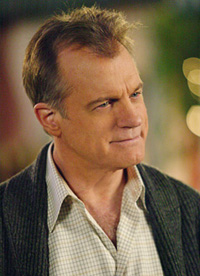
William Baldwin stars in Blowtorch which is currently in post-production.

What led you to become a Casting Director?

I always had a love for the entertainment industry and, as a child, I was very much introduced to the world of film and television just as an avid viewer. For college I went to a program that combined business and theater, there really was no film department. I realized right after college that I should find a job in the entertainment industry. That’s really what happened. I found out about casting directors from working on a film where I dealt with the extras. After that, I landed at the right place for a couple of years that got me immersed in the industry and opened up a lot of doors for me. It also allowed me to quickly comprehend the industry.

Is casting big name actors different than casting unknown actors? What’s the procedure for both?

When casting a feature film and there’s an opportunity for the best actor for the part, the actor doesn’t necessarily have to be somebody that we recognize. We hold auditions and if we like them we call them back for the next level where they will read with another actor. Sometimes the producer/director likes to meet them personally. It’s not uncommon if you’re an actor just starting out to be asked to meet for coffee to discuss the part.

As far as name actors, what happens is we really need the support of an agent/manager looking at a script. In some instances we’re told the only way to get the actor’s attention is to make an offer. Anything could happen. Sometimes you’re working on a ‘hot’ script and you’d be really surprised about how many people would want to sit down and have a conversation with the director. So it really depends on the project and the process and what’s the needs of the production are.

With your office in New York, how does it work when you’re casting outside of the tri-state area?

I’m working on a TV series right now and the client wanted to do casting in LA – I just got back. As a CD, the way it works is it doesn’t matter where the actor comes from, or where you’re casting out of – you’re looking for the best actor for the role. My time is best spent on the internet or on the phone. The nice thing about casting today is that everybody Skypes. I can get the actors and the director on Skype together. We do not always need to have people come in and read so we can physically meet and see them. Skype is an alternative to meeting in person when not possible.

I am a strong advocate for holding auditions ‘Have Auditions!’ Auditions are a must for seeking the talent you’re looking for, including newcomers. Sometimes there’s the actor that walks into the room, has read your script and wants to be a part of it — and sometimes that’s the best actor for the project.

When it’s a feature film, my office makes the script available to the actors through their agent/manager or via email. We post sides [part of the script] and hope that they read the script before coming in so they’re more knowledgeable about the show. When casting a TV series, chances are the script isn’t fully written so we work with the sides and are basing it more on a character.

Is there a difference between West Coast and East Coast actors?

I was just on a TV project and we did casting in NY and LA and I would say the people in NY had more of an Indie feel where the actors in LA are more theatrical. A little more polished looking — they have more time to go to the gym and work out and get sunshine. New York is a hectic lifestyle; everybody’s running around. The cost of living here is more and the responsibilities are greater. In NY, the actor can be very busy doing theater at night and doing auditions during the day.

What’s the difference between casting for film/TV vs. theater?

I don’t do theater anymore. I walked away from doing theater many years ago. I love theater but the film industry pulled me in a direction that I just can’t get enough of. I had to surround myself in the film industry. I’m not saying I wouldn’t do theater in the future, but right now I’m happy doing film. I love the relationship that develops with the producer, director while on a project — it’s a business and my opinion is greatly valuable to them. They really want my input on every level of moving forward. For me, I found a home in film. For me financially film was also a better path.

For commercials that I cast, often I see that sometimes the same actor is used over and over again for a product.. I get paid for the first commercial and hope the client hires me for other commercials. I spin it in other directions and show clients and potential clients what I did and how I helped.

You have to have a very positive attitude in this business. When other people are successful with something you brought in their direction, you cannot be negative. You have to figure out how to spin it so it’s a positive thing for you as well.

What are some of the most interesting questions you’ve ever received during your workshops?

‘There are specific questions that people ask all the time. I think the most important thing that any actor has to know is it’s not about getting THAT part, it’s about getting A part in a CD’s office. They ask, ‘How do I get an audition? How do I get seen?’

You have to make it into a business. You have to self submit, you have to send emails with updates and hope that they call you in for an audition. You hope they call you in, remember you and then call you in for other projects. The actor has to become their own little business and promote themselves.

Young actors who are new to the industry get a manager/agent and think they’re done. It just doesn’t work that way. If that agent or manager isn’t working with a particular CD, there aren’t a lot of slots. Sometimes you’re just not seen for something that you could be right for. You have to self submit until you’re at a point where you’re a working actor where people automatically put you on the list to come in. I don’t think for a moment that you can stop self networking.

The most important thing for any actor is take advantage of the networking. You should be volunteering at film festivals and going to networking events. It doesn’t mean you’ll get work from it but it will put you in a room with like-minded people and you’ll never know who you’re going to meet. I also think that actors help other actors – they might bring you in with them. Groups of actors have started film companies, comedy troops — they give each other roles and there’s nothing wrong with it. While you’re waiting, go do the student films — they are tomorrow’s filmmakers.

Adrienne Stern cast Julia Garner (The Perks of Being a Wallflower) in the recently released film Electrick Children

My film ‘Electrick Children‘ opened March 8 and that was done by two students from Columbia University– Rebecca Thomas and Jessica Caldwell.

You never know when you decide to take a part in a film where that film is going to land.

Does the Director or client always have the final say in who is cast or have there been times when they asked you to hire who you thought was best?

I want a happy director. It’s a combination of the director saying, ‘This is the person I want in this part.’ I think that the directors and/or clients absolutely want to have my input but at the end of the day, they’re the ones who are writing, directing or producing the film and they want to make the decision.

I will speak up if I don’t think someone is right for the role and we will continue to move forward, go the distance, to find the right person rather than give in.

With the industry as busy as it is, do you have time for a break?

I’m a working casting director. I’m never not busy. I have lots of things going on. I have a lot of repeat clients over and over again. There’s always a project to work on; there’s never a day off. I’ll take a vacation, I’ll figure it out. Films go through stages and not every film is ready at the same time so that’s why you take on other projects. You go on vacation, you just do it.

How do you get paid?

I negotiate my fee and sometimes they make me an offer. Sometimes there’s a budget. Sometimes they offer you more and you’re like great! I’ll take it! Each project is different.

Do you get involved with negotiating actor’s contracts?

I do get involved in contracts. When someone is cast, we do a deal memo which lays out the agreement for the actor. We will go back and forth with the actor’s agent/manager or attorney with different points. Once those points are agreed upon, if an actor is a lead or a supporting actor, we use a Long Form Contract which goes to the attorney on the film.

If it’s a small role two-three days of work, we’ll stick with a deal memo. If it’s one day of work, we’ll just use the SAG-AFTRA paperwork.

I just produced and directed a film and one of the actors is receiving his wardrobe. We’re doing reshoots so he may not see that for a while. Other negotiation points could include transportation to and from set, depending on level of actor. Also hotel accommodations. I worked on a movie where the actress is a mom and one of the requests was child care and that she wanted to bring her child on set.

Requests of certain types of food, how many tickets they get to premiere there are a number of factors that come into play.

Is there a charity you’re interested in that you’d like to make people aware of?

I read about a charity called FREE THE GIRLS. It’s an organization looking for women to donate bras. They give these bras to women who have been enslaved in sex trafficking who are now free. The bras are their livelihood and they’re able to sell them and support themselves. I have about 20 bras all packaged and ready to mail.
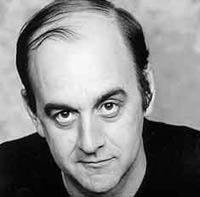
Barry Shapiro is the Vice President and Casting Director at Herman & Lipson. Barry has cast over 7500 commercials.

Website: http://hermanandlipson.com

When you were a child, did you dream of being a Casting Director or was there a trigger that drove you to this profession?

Not at all it happened several years out of college. I knew I wanted to be in the entertainment business but wasn’t sure what I wanted to do. Then randomly I worked a day in a casting office and I knew in 10 minutes I had found my passion.

What was your first job in show business and did it have any impact on what you do now?

It was managing a rehearsal studio for Broadway plays. It certainly had a strong impact because I met a lot of casting directors and it perked my interest.

While you were working toward becoming the high level Casting Director that you are now, did anyone ever give you a break that helped catapult you to the next level?

I met a lovely woman named Linda Godlove who owns a casting office. Although she couldn’t hire me, she listened to what I said I wanted to do. She then told me that absolutely casting was the thing for me and I should do whatever it takes to get there.

We often hear how show business breaks apart family relationships. How has being in the business affected your family and friend relationships?

No real problem as far as that goes, but because I teach and as well as cast, my schedule is very random and that’s sometimes difficult for a 9-5 person to get used to.

Barry’s clients include American Express and Advil.

Do you have a specialty area of casting? Why do you work more in one area?

I would say definitely commercials is a specialty but I have worked on several plays over the years and really enjoy that as well.

When auditioning actors for a part, do you read their resumes before they audition?

For commercials, the only thing relevant to me is special skills. For theatre I will look at the resume but it’s so hard to tell how true it is. It is always about the audition regardless of what the resume says.

How do casting directors get paid?

It is simply a fee negotiated with either the ad agency or production company.

What’s it like working with children under 12 years old vs. teens/early 20’s? What types of differences do you see?

As you might imagine, every situation is different and every kid is different. Sometimes the four year old is better behaved and more talented than some of the teenagers. You have to adjust more with kids.

When working with children up to 16 years old, have you ever had a conversation with their parent/guardian reflecting the fact that their child isn’t ready to be in the business yet?

Not during casting that really isn’t my job. If anything I might make a comment to their agent. If I’m teaching kids then yes, I will tell the parents what I think.

In today’s world, improvisation has become welcomed into more and more commercials and scripted series/shows/films. What’s your advice to actors regarding how far they should or shouldn’t take the improv if they have a script with dedicated lines?

My philosophy is that you perform the script exactly as written unless you hear differently. Often you will be told to ‘play with the words’ or improvise but only then should you do it. However it is okay to ask whether or not you have to stick to the script.

Do you read at auditions or do you have a reader or do you put actors together at auditions?

I never use a reader. Either I read with actor from behind the camera or I put the actors in pairs or groups.

When having two actors read with each other at an audition, has there ever been a situation where one actor was more seasoned than the other actor? How does this affect the audition for both actors?

Happens all the time. Sometimes I will keep the more talented actor to read with someone else. But mostly I feel that a good actor needs to be able to still shine when their partner isn’t as good. They should welcome the challenge.

Who’s the “Herman” in Herman & Lipson Casting?

The company was started by Elaine Herman and Linda Lipson in 1979. I joined them in 1981 as a freelance casting director and full time in 1983.

Anything else you’d like to add?

I teach classes and conduct workshops for all ages both in NYC and around the country. I do both group and private classes. More info about me can be found when you Google ‘BarryShapiro, Casting Director.'”

Cindi Rush cast the very popular Broadway show Urinetown and just finished up on the drama Cantuckee starring Joanne Kelly (Warehouse 13)

Did you always dream of becoming a Casting Director?

I started as a kid actor. I went to Stagedoor Manor and then NYU for drama. I left performing when I was 23 years old and starting working in a corporate firm. I was laid off and decided I missed show business but didn’t want to perform so I thought about casting – the best way to combine creativity with the business. That was 20 years ago. I still love it and I think having a background as an actor helps the actors feel ‘safe’ in the room.

Where were you casting prior to opening up your own casting firm?

I worked in six offices before starting my own. I’m not really sure how it happened. It just sort of evolved into ‘I’ve been doing this for so many people for so long, why not try it on my own?’ I never really thought about it as starting a business per se. It was more about the projects and the work. I love what I do and I just found myself getting accounts and acquiring projects.

Please explain the difference between a lead actor and a character actor.

Traditionally, a lead actor or leading man is straight forward, physically more attractive (tall dark and handsome). The character man is just that – quirky, funny and usually more comic in some way. However, I think there has been a shift in writing and these ‘stock’ characters are now blurred somewhat. In other words, you can have a good looking character man or a quirky leading man. It becomes more interesting from a casting standpoint when you open it up a bit and cast a wide net I think. Now, a lead actor is just someone whose story we want to follow and the character actor is more the ‘supporting role.’

If the character calls for a blonde and the actor is a redhead, should they dye their hair blonde for the audition or come in as they are?

No, don’t. Everything is doable when it comes to change. Be who you are.

What’s the difference when casting Theatre vs. Film/TV?

The process is the same. Usually the creative team is not in the room for film; theatre has just about everyone there. The biggest gear shift for an actor is learning how to adjust to the camera. Your audience is six inches away not 600 feet away. How does that affect your performance? It is a matter of working deeper, not bigger.

What are your thoughts about TV/Film actors who want to cross over to Broadway and vice versa?

I think that it is great but I think it is important to find your ‘niche’ first. Then once you have established yourself, branch out. Do your research, see where you fit in the business and then take classes on what you need to learn. You should always be studying.

Do you have any suggestions where actors should study?

That depends. If you want to do half-hour TV then The Pit, Upright Citizens Brigade Theatre (UCB) and improv. The places like Actors Connection, The Network, etc. are great to meet casting people (even if you have an agent). Do your own legwork when you can. If you don’t have a technique, studios like Esper.
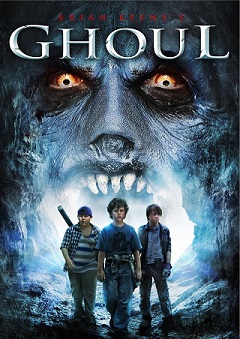
Cindi cast the chiller-thriller Ghoul with young performer Nolan Gould (Friends with Benefits)

When you’re with an actor at a FIRST audition, what do you typically look for?

Memorize for on camera. Sides in hand for theatre is best, I think. I look for responsibility and flexibility. It’s a job interview and I want to know that you treat it as a business. Always read the script and print out sides. Do your homework. Auditioning is a big part of your job.

Certain agents/managers work with certain Casting Directors. Why doesn’t everyone work with everyone?

I can’t answer that. I don’t discriminate.

Anything else you’d like to add?

Always remember that this is a business. It’s fun but, at the end of the day, we all have a job to do. We also want actors to do well. We all want to see new talent. We all want to see you get the role. But the most we can do is get you in the room. The rest is up to you.

helpmehelpyou

Attention all actors seeking representation – When it comes to landing a manager or agent, you must be ready and willing to put in some serious effort!

Managers and agents want to work with talent who fully commit to their work, who treat to acting as a business, and are passionate about building their career. They seek talent who continuously take classes to improve their craft, who pro-actively network and market themselves, and who create their own work in order to stand out from the pack.

Basically, managers and agents want you – to help them help you!

Delving deeper into what it takes to land a manager or agent, NYCastings attended the First Time Fest (FTF), which celebrates first time filmmakers, and spoke with industry gurus: Jae Manion from Collaborative Actors Management, Scott Kaufman from Bohemia Group, and Jon Rubinstein of Authentic Talent and Literary Management.


Q & A about representation

Jae Manion (JM) – Scott Kaufman (SK) – Jon Rubinstein (JR)


Q: What is the difference between a manager and an agent and how do they work together?

JR: Agents and managers work together in that they are both looking to find work for clients. Managers may have a smaller roster and be involved in the creative process versus just submitting their clients for work. It is really a 24/7 job, managing careers for actors.

JM: I have a system where one of the first things I do, after we’ve changed headshots and resumes, is that I have my clients send postcards to agencies. Once I have all of their marketing materials up to date, we try and get them an agent. I have a specific agent I work with, so that helps

SK: I’m going to try and get them into the space that fits what the career plan strategy that we come up with, whether that is TV or an indie film. I help to get them an agent, and create the best team for them.


Q: What does it take to land a manager or agent?

JR: A lot of actors look for representation as if there is a savior out there. They believe that if they have a manager, their life will be complete. And, that isn’t true. I’ve seen extraordinary actors with agents who don’t thrive, and extraordinary actors without agents who do flourish. Simply do what you are wildly passionate aboutand they will come knocking at your door, wildly passionate about representing you.

JM: It’s like dating. It’s that personal. The person you date when you are in rags and the person who you would be able to date when you are well put together – are two different people. It’s the same for agents. You want to wait until you are ready. If you send out a headshot that is you on the beach last summer that your sister snapped, and a resume with two lines on it, that won’t make the best impression. And, we will remember. Wait until you’re more marketable, and really ready for an agent.

SK: Everyone says, I don’t have an agent. How am I supposed to get in the door? Well, you can create your own content for almost not cost. There are so many video and distribution platforms out there. Create your own content, market it, get it on as many social media platforms as possible, get brands to support it. Show it to agents. If you are aggressive smart and business savvy you will be able to get work.

Q: Do actors need a manager or agent?

JR: Do you need a manager and agent? Every single one of my clients has both, and that’s a good thing because an agent does what they do and I do what I do. As a manger, I have responsibilities outside of scouring for roles. If you are a manager who sets themselves up as a secondary agent, then the client isn’t going to need you. The manager really has to add value.

Q: When you do decide to work with a new actor, what are your expectations?

JM: I don’t allow any of my clients to not be in classes. That’s a strict rule. I feel that if you’re not exercising your muscles, those muscles are going to get weak

JR: It’s critical for actors to be proactive and accountable for their results. One of the things we do for new clients is we ask what they want to happen, and then hold them responsible to it. They have to be willing to put in the work. That could mean taking a class. They need to do whatever it is going to take to move them forward. Some people are too skinny and need to put some muscle so they need to go to the gym. Some actors need a haircut. I’ve sent actors to writing classes, or put them into charity work. If you are someone who is continually creating and evolving, you are going to be successful.

Q: Where do managers and agents look to find talent?

JM: At The PIT NYC. Agents hang out there. I spend way too much time there. I believe that comedic actors are stronger. I go to improv sketch shows and standup shows. The best way to get commercial representation is to be in a group that performs regularly.

SK: I go to The PIT, UCB, and comedy clubs. I also watch online content. It’s not a wall that you can’t break through. I’ve had talent that has cold called or emailed, and that works as well.

Q: What are some pros and cons of putting work online / using social media?

JR: Don’t use social media as a sales vehicle. You have to be engaging, and create a two way communication. People try and get their friends to like their pages out of pity and don’t encourage participation by offering actual reasons to follow. Be creative with your strategy. Don’t make it always about you.

SK: You have to put up engaging content that people ate interested on seeing. The issue is that lot of representatives are not going to the theatre as they used to, or comedy clubs, to find talent. So it’s good to get your work out there.

JM: You have to be very careful about the quality of work you put out there. Also, don’t just add every agent and casting director out there as your Facebook friend. I have a girl who posts videos every day, and I wouldn’t sign her. You need to write, edit, and rehearse before putting your work out there. It’s quality not quantity that will get people’s attention.

Q: What does it take to maintain a manager or agent once you are working with one?

JM: All managers and agents will be different, we aren’t computer programs we are people. Pay attention. When we lose interest in you, leave. For me, if I talk to one of my clients and they haven’t been working on anything in a month, that’s going to give me pause. You can’t sign with me and then expect me to do all the work. You have to continue to chase after jobs in the same way you did before me. You have to keep applying online and working hard.

JR: Someone once said to me, I don’t like my agent because they aren’t getting me enough film auditions. And I asked – Well, how are you doing in the film auditions you have gone on? The responsibility does go back to the actor. When you get an audition, do you do the work beforehand? If your agent gets feedback that your work was amazing, they will keep sending you out. If you are putting in an effort and try, sometimes communication can be the problem. Maybe you haven’t spoken with your agent about what you expect.

SK: If you sign with someone and in a month they haven’t gotten you any auditions – don’t run out the door right away. This business is about moving and growing. Don’t worry if your friends are going out all the time, or what they’re doing. Don’t make snap decisions. Also, word gets around and people know about it.


yougetwhatyoupayfor

Starving Artist – is not a term that should be taken literally, or taken advantage of.

In the acting world, starving artists are those who are willing to forgo the stability of corporate paychecks, and certain material luxuries, in order to focus on their craft. The term refers to a hunger for pursuing excellence in the art of acting. It in no way means that an actor should work for free or very little money.

Not paying actors can lead to two, tricky challenges.

Gigs that don’t pay, or offer only a small amount, typically attract green actors versus seasoned artists. This can directly affect the quality of work – both the performances and the overall production.

An actor may decide to work for nothing, or next to nothing, on a gig because the payout is being part of an extraordinary team, or an ingenious script. The entire production can end up costing peanuts but still become a festival darling, winning accolades, launching careers, and all that glitter which dreams are made of.

But putting in a little $$$ and having it = a big payout, isn’t what typically transpires.

More often than not, when a low paying job attracts experienced talent, it means that there may be an even higher price to pay – more at risk than just production quality.

Not paying actors can establish a trend, a viscous cycle, where experienced artists end up not being able to make a living. It means that actors who have sacrificed a great deal for their art may end up getting discouraged and giving up because their passion is, on paper, no more lucrative than a hobby.

This is a complicated and important topic!

To help weigh in on the discussion – we have insight from several directors, a casting director, a producer, and an agent.

First up we have…

CASTING DIRECTOR – TISHA IOLI

STREET CRED: Tisha Ioli enjoys helping actors! She worked successfully as an actor for over 20 years, before bringing her knowledge of the craft and empathy for actors into the world of casting. Since 1999, she has worked with some of New York’s top casting offices. In addition to casting, Tisha also coaches actors – her classes build confidence while offering specific tools that actors can rely on. Check out her Commercial Class starting in April.

Tisha shares how money matters in the commercial casting world!

Every actor, no matter how successful or not, starts at the same point when they audition for a commercial and you could never say that one actor deserves to get more money because he/she is more talented,’ shares Tisha Ioli. “What DOES happens is — as an actor gets more successful, either they or their agent feel as if they deserve more based on their experience, and what they may have to give up (or hold a conflict for) in order to do the job. If an actor is a well-known name, for instance,he/she may require more money going in because they are lending their name/face to the project which usually has a very positive out come on the campaign. If we are casting for a very high paying job, we want to be sure that the talent we are presenting to our client is the cream of the crop and again, by that I mean actors who are experienced, polished,and professional and sometimes those actors do require (or their agent will request) more money. So I guess my answer is that higher paying jobs have a tendency to attract a higher level of experience.’

Sometimes, commercial jobs only offer around $200 or less and not too many actors would work for that kind of money, nor should they, says Tisha. If we were trying to help out a client who only had $200 in their budget for talent, we would probably NOT offer the breakdown to too many actors who have done a ton of work in the past. We certainly wouldn’t want to insult anyone by asking them to audition for a job that was paying so little. What we might do is respond to our client by offering him some options (and again it would be more like a favor to him). We would first ask around to see if we could get anyone who would be willing to come in for that money and we would tap our pool of students/actors who might be eager to audition to gain some experience. It also has a lotto do with your agent. I don’t know too many agents who would allow their talent to work for $200 or less and especially have to audition to get it.

PRODUCER – GENE FISCH, JR.

STREET CRED: With coursework at M.I.T., Harvard, SUNY, and Adelphi, Gene Fisch, Jr. has enjoyed a wonderfully diverse career in both finance and the arts. Subsequent to 8 years as an equity research analyst for top tier investment banks, Mr. Fisch founded what became one of premier model business management firms in the fashion industry fighting for the rights of its workers. Mr. Fisch fulfilled a dream by entering the world of entertainment two years ago and is thrilled to be involved with Broadway projects that include HIGH (with Kathleen Turner) and Chix6 (slated for next Fall). Mr. Fisch also has several movie / TV projects already in or expected to be in production in the near future.


Producer Gene Fisch, Jr. shares that actors require $$$ for gigs because eating has become a habit! And – if a gig doesn’t offer a lot of $$$ – it helps to have material that’s at rockstar level!

‘Paid’ can be defined in several ways, shares Gene. $0 versus something, $500 versus $5,000, $100,000 versus a million. Eating has become a habit for most so if the bartending job will bring in $200 for a shift versus $0 for the role, that’s 30 Domino’s pizzas (at $5.99 ea. / sales tax) versus the slice that one would eat on set. The answer to that choice is easier than deciding between sausage or pepperoni.

However, when looking at a little money versus a lot of money I’m willing to take a contrarian view. Talent is talent; the actors of Rent initially read / workshopped for what could be considered the equivalent of a snow cone yet few would dispute the cast was amazingly talented and went on to successful careers at much higher pay scales. The pay scales in Sling Blade, The Full Monte, and Swingers could be perceived as below what the end performances would indicate that they should be. One could also speculate that the pay scale for Emmanuelle Riva differs from that of Jennifer Lawrence, yet would many contest that both are tremendously talented?

Commitment levels stem from the character of an individual. We all strive to reach specific goals and our successes directly correlate with the quality of people that we surround ourselves with. You remember the rockstars and try to work with them as often as possible.

DIRECTOR – NADIA SZOLD

STREET CRED: Nadia Szold directed Joy de V. which won Slamdance’s GRAND JURY AWARDS- NARRATIVE – Special Mention in 2013. The film takes an expressionistic, gritty look at the intersection of madness and love that follows a young con artist who wakes up to discover his pregnant wife is missing has written and directed 5 short films. Joy de V. is her first feature.

When it comes to offering actors a solid paycheck, Nadia shares…

Of course, it is a huge part of what makes the film. Actors need know it will work for them financially. It is hard for them to go from job to job and dedicate themselves to acting, as opposed to day jobs, if they’re not getting paid well.

I am not a big fan of that system of offering little to no pay for actors, shares Nadia, because of the disillusion that can happen. Many talented actors can get down on the process. So I think that the actors need to know that they will get what they want to. Actors in indie films should always be paid. There is no reason for anyone to be exploited on a picture.

DIRECTOR – CHRIS RUPERT

STREET CRED: Chris Rupert has been working successfully for the last year through a number of production companies in the Midwest and East Coast. His latest piece Driving Force” was chosen as one of 35 finalists to be showcased at the Shot On Red Film Festival.

As a director, Chris Rupert absolutely agrees that $$$ lures in a higher level of talent.

What higher rates most often buys – is experience, shares Chris. More experienced actors tend to be better (not all the time) but because they are better they tend to stay busier and thus don’t need to take low budget projects.

Bigger budgets definitely help tremendously with the production of a film. It helps things go smoother all around; you can buy better crew, equipment, locations, craft service (which keeps crew happy), and better post, all of which does show up in the final piece. But something we have to be careful about is just because a project has more budget – doesn’t make a piece better, says Chris. Creativity and story are supreme, that’s the most important element in a successful project. And sometimes, more money can hamper creativity or make productions lazy, not always, but sometimes. It’sdefinitelya balance, and about having the right producers in place to manage that budget wisely.

And rounding out this discussion with a great deal of wisdom, we have…

AGENT – PETER COE

STREET CRED: Peter Coe has a great deal of experience in this business. He started out as an actor but found sales to be his strong suit so he opened up Peter Coe Talent Agency outside of NYC, and the greater Philly area, over ten years ago. 

When it comes to paying actors, pay rates do affect quality. They do, and they don’t, shares Peter. One of the benefits of having paid actors means you have someone who will pay attention to the finer points like getting off book and getting things done in a timely manner. These actors are usually more dedicated to acting as a career, will give it more focus, and make the producers money more productive / better spent.

For those who want to act for a living, if it is a really low rate, I will most likely not submit them, says Peter. However, as we have more and more non-union work it is a fact that you still have a number of super talented performers who will still submit for a low paying job if they don’t have anything to do that day.

As an example, I heard from a girl the other day who had just gone on an audition for a commercial job that was going to pay $250. She did not think that it mattered because she was going to get $250 to do what she loves. She is highly respected and skilled and still went to audition for a job that was well below value. As long as there are folks out there who will do the job and get it done, producers will not offer more. That is what makes it harder and harder for people like SAG/AFTRA who are trying to fight for a certain rate. Producers will not want to pay more if they don’t have to.

When really good actors will submit to a job that doesn’t pay well – that waters down what is already watered down.

Your average pay for a day on a non-union job used to be $800-$500, and now it is down to $400.

This trend, this cycle, of not paying actors what they’re worth makes it nearly impossible for an actor to make a living. Especially in New York.

I love New York, but our industry is so dominated by Los Angeles, shares Peter. Unless you are doing a string on Broadway, or are lucky enough to get a recurring role on a TV show or film, it is very difficult to make a living, I had an actor tell me that she only worked seven days total so far, out of the year. She has a mortgage to pay, and is a girl who has had major lucrative contracts in the past.

This also affects agents. We have to fight for rates, as do casting directors. When a casting director takes on a session from a producer who only wants to pay $300 and they bring in people who can do it well, than producers aren’t going to offer more.

I have a girl that is very good with voice over work, says Peter. She had a major, national client who wanted to get her to work at a discount. I said, Realistically, no. We already have you at a moderate rate. So, they then asked if they could get a discount if she does multiple spots. I told them that they may be able to get a discount if they do five recordings in one sitting. If it was less than five spots, I told them that it would cost the normal amount because it is time for service.’

As agents, we can’t sell out the actor.

—- WOW —-

This is a complex topic!

childwranglers

The experience of children on set, whether it’s for print, film or TV, can be very overwhelming for the children, parents / guardians and crew.

Child wranglers, also known as baby wranglers, are there to help bring a happy and healthy medium between the children and production.

Before we meet wranglers Joyce Whalen, Meryl Salzinger and Melanie Sawyer, I want to share a quick story about a television series episode my toddler twins did where there was no wrangler.

The production was very high end and classy and the crew was as friendly as could be but there was no wrangler. The scene required a bunch of children in a park playing on a jungle gym. As with most parks, there are different sized jungle gyms for different aged children. The production put all of the kids, ages 4 years through 10 years on the same gym. The older kids were running and climbing at a pace that the toddlers couldn’t keep up with and one of my children was knocked down.

If the production would have hired a wrangler, they would have been informed that the children should be playing on the age-appropriate jungle gyms.

INTRODUCTION BY JOYCE WHALEN, BABY WRANGLER

Wranglers help the director capture the perfect expression! Photo for Simplicity Patterns.

I have been a wrangler for over 25 years. I started in the photo industry as an Assistant Publicity Director and after having children went freelance. I started working on photo shoots as a stylist. Back then, the jobs were not separate and you did the job of a wrangler, stylist and producer. After going digital, you could shoot twice as many shots in a day so it made sense to separate the responsibilities.

It pays to have a wrangler on set because they can direct the children to do what is expected of them in a friendly manor. We keep them happy and feel comfortable in front of a group of strangers. We can keep them focused while the photographer just concentrates on what he has to get done. Sometimes when the kids have to shoot winter in the middle of summer and vise versa, it is our job to keep them comfortable. Since we shoot months before the season, we have to travel to Florida in the middle of winter to shoot spring and summer. The client usually flies you down and pays for your hotel.

Sometimes a child needs to have their parent within eye sight to feel comfortable whatever it takes to get the job done as long as the parents don’t interfere with getting the shot. The wrangler usually knows what the client is trying to achieve and in what direction they want the children to look.

Meryl Salzinger talks about working with differently-abled children.

How did you first hear about baby wrangling?

I heard about baby wrangling during my first photo job at Macmillan/Mcgraw-Hill. I was a photo assistant for 5 years. There I managed the in-house studio and did all the production as well as wrangling the kids on shoots. I was doing the technical stuff because I was the photo assistant and I have a background in developmental psychology from my parents, who are both developmental psychologists. I also took classes in college.

After Macmillan/Mcgraw-Hill, I went on to be a studio manager at Julie Gang’s Studio in New York where I met wrangler extraordinaire, Joyce Whalen.

Is baby wrangling a freelance position or do some companies have full-time wranglers?

As far as I know, it is a freelance position.

What’s the difference when wrangling infants vs. toddlers vs. teens?

You do always have to be aware of what is age-appropriate for each child and some knowledge of developmental psychology is very helpful. But no matter the age, you always have to think about how what you are doing looks like from the perspective of the child. Whatever their age, the child must be made comfortable enough to show you their best selves. When a child is being shy on set, many parents will say, ‘She always talks and smiles at home!’ I always try to assure them that it is to be expected that their child needs to find their bearings in the foreign environment of a photo shoot before they can act as they naturally would. This is true of kids from infancy to teenagers – if you have the patience to wait you will be rewarded by the great energy that only kids of all ages can bring to a shoot.

One difference between wrangling younger and older kids is that a quiet set is required for the younger babies. This allows the wrangler to be quiet and subtle with the baby which means that the baby can more easily follow directions. Also, the fewer people on set the better; everything is new to a baby and so they are easily distracted and also possibly frightened by unfamiliar people staring at them. It is SOMETIMES better to not have the parents in sight – but this is not a hard-and-fast rule because sometimes babies just need to be able to look up, see their mom, and think, ‘Okay, mom is here, she says all this is Okay. Now what did you want me to do?’

With a quiet set the baby can feel comfortable enough to give us her best stuff. Also, it is important to show a baby that their parent/guardian approves of you; small babies will literally look to their mother’s faces sometimes to see if she is laughing before they do. It’s pretty funny to see the look on their face that says ‘Is that funny, Mom? Oh, okay, she’s laughing so I guess I can too!’ :-)))

I think an important thing to remember with older kids is that they might feel self conscious or that they are going to look foolish. The best thing for a wrangler to do in this situation is to be the bigger fool; as a wrangler you’ve got to leave your pride at the door :-)). Also, for older kids there is a place for serious talk if a child is really misbehaving. Sometime you need to tell them that if they cannot listen and behave that they can not be in the shoot and ask them if that is what they want. Any child at a shoot who does not want to be there is not good for the shoot, or most importantly, for the child. Finally, the most important thing that you can show a child on set is, as always with a child, loving care. This not only helps them, but it truly brightens your day to connect in that way with children.

What’s it like working with differently-abled children?

I have worked with differently-abled children and it has been a great experience. One that I learned so much from and hope to do again.

For the autistic children, I treat them like any other kid. You have to go to where they are and where they’re comprehension is. I worked with the Toys R Us ‘differently-abled’ catalog for a number of years. You have to figure out what their abilities are and what it is that helps them follow direction and work at that level. You have to think about their seeing and hearing what you’re doing, which is different than what you perceive.

Visit Meryl Salzinger’s Wrangling website

Is there ever any fear that a child will just not cooperate? How do you handle that?

You have to see if there is any easy answer as to why they are not cooperating – they need a nap, food, to see their mom for a second, a break, someone on set is making them uncomfortable. All of these things are easily solved. Sometimes just taking them somewhere else for a minute and bringing them back into the set with less people around helps. Some babies just really need their moms around so you might have to work around that. I’ve done head and shoulders portraits of babies with the mother lying down on set and the baby sitting on the mother’s belly. Often, if you can just make the environment calm and explain exactly what you need to an older child, you can make it work. If not, then you just have to be prepared to use another child. Children are not just small sized adults and sometimes they cannot be asked to do what they do not want to do. In that case I think it is important to tell them that it is okay and that maybe they will do it another time. They are, after all, kids and maybe they just need to go home and do kids things that day.

What’s the difference between print and tape?

A television job has a village of people on set. There could be 10 times the amount of people vs. print. It’s a more hierarchical setup. There’s a director present but you may

never speak to the director. The person who the wrangler talks to is the Assistant Director (AD). What’s great about a television shoot is that the AD is really responsible for the whole tenor and mood for the set. If they know what they are doing, they will keep that set calm and appropriate for when you bring the baby on set. The AD will say ‘Baby is coming to set. Please do not make eye contact with the baby.’ That way everyone is calm and the baby feels good. It’s more structured but it really works. The AD’s are saints. They handle everything.

Anything else you want to add?

You need somebody whose only job is to be the child’s person. The kid needs to know there is a person there whom they can trust. You’re doing something different as a photographer and a director. You’re being technical and being creative in a different way.

The child feels comfortable knowing they can go to one person if they need a juice box or have to go the bathroom. They want to feel like that’s their person. There are too many strangers and a lot going on. If there’s somebody there that always remembers them, they feel more comfortable.

You need a mixture of child psychology, unbelievable patience, a love of children and a knowledge of photography and photo shoots and how that works. My job as a baby wrangler is one that I love for its constant surprises and moments of wonder. Nevermind that there is not another job in the world that keeps you laughing and loved like this one. The talents required, like being able to do three types of dog barks and two kinds of monkey calls, as well as being able to deftly use a bubble machine (without getting suds on the camera lens), sing a crying baby to sleep or change their tears into belly laughs, or dance like crazy to the newest tween boy band while wearing a princess tiara and a pig nose on my face, help to keep everything else in life in perspective. My father always told me to find a job that I wanted to go to every day and I am so lucky that I have been doing that for many years.

Visit Melanie Sawyer’s Wrangling Website

What brought you to New York?

“Technically I consider myself to be a Brooklyn girl! I have a wonderful community here of Italian Americans which I love for so many reasons — their sense of pride in their community, family, tradition and respect are aspects I want to live around and bring my songs, aged 12 and 9, up in. I haven’t moved more than two miles away from the beautiful Williamsburg Bridge since I got here 14 years ago. New York is a wonderful city. The diversity of cultures and the fact that if you travel four hours in any direction, you are going to find a completely different landscape, climate and experience. It’s pretty awesome! I travel a lot to be with my husband, Todd, to Gloucester, MA, and I adore the people, fishing, woods, food and hospitality that the locals have to especially offer there.”

When wrangling, how do you deal with children who have separation anxiety?

“Children with separation anxiety or who are modeling for the first time are especially important to me when I’m working on a set. It is vital to gain their trust and take away as much of their fear of the unknown as possible. I don’t call this working when I’m with kids; I call it playing. I change it from an unknown environment to words and phrases they are familiar with at school or in a play group, and they are immediately more receptive to gentle direction. If at all possible, I will also bring a parent on the set, too. The child now understands that we are going to play, with a parent close at hand and then I add if they are a good listener then they also get prizes or rewards! This further increases the child’s curiosity about a fun environment and ensures more chances of success. I always speak with the parents before I reward as sometimes C.A.N.D.Y is not eaten in that particular family or the child has allergies. Stickers are also a wonderful alternative as a prize, too. The number of little boys’ faces which have lit up when they get to choose between Thomas or a Monster truck sticker set is a win for me in itself! Being keenly versed in the language of Pokemon, Thomas, Rainbow Brite and Dora the Explorer has also won me a few brownie points on the kids’ appreciation scale in sticky moments, too.

For a child who is on set but is unsure of how to model, I think the MOST fun game to play is the opposites game. I look at them straight in the eyes and say in a mock, stern voice, ‘Definitely DO NOT smile (or it will make me sneeze, make me tickle, make me jump’) … nine times out of 10 they mischievously do. I am of course ‘horrified’ and ask them, beg them, not to do it again (to give them a power of control) and they repeat the action repetitively which increases their smiles, and so on. It’s hilarious and we all have a great time :) THAT above all is the most important thing as it will lessen any fear they have when it comes to their next shoot.”


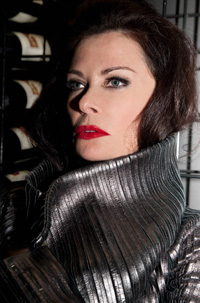
Is there a different technique you use when working with first time models vs. more experienced models?

“Even with more experienced models, it is still important to have fun! If a child is truly enjoying himself there is a very different light in his eyes as compared to a ‘professional’ smile. A simple innocent twirl goes a million miles further in my books as opposed to hands on hips with attitude! If I’m working with children then that’s how they should appear! Older models in their late teens obviously are a little more sophisticated but I believe we all need to laugh now and again. :)

Photographer Shannon Greer for Parents Magazine

Has being versed in languages such as English, French and German helped you on any jobs? How so?

“Absolutely!! On a set you have to think FAST on your feet. I am given some of the most beautiful toddlers and babies who are only used to maybe hearing French, Russian or Chinese in their normal environment. They arrive at the shoot with a family member who, if I’m lucky, can speak both languages — and at that point, quick learning of simple phrases and repetition are completely vital to make a child comfortable on set as fast as possible. Tone and body movements are also very important. For the Parents magazine cover pictured, I wrangled completely in French and I think the results speak for themselves.”

Anything else you want to add?

“For new mums and dads on the scene, I want to offer the advice of taking nail varnish off the night before and if you can remove pierced earrings, please do so. It can be upsetting for your child so it’s best not to do it just before their shot. Sometimes there is a wait for your time on set, so it is always wise to bring favorite toys or books and crayons and a snack. Sugary food or drinks before your child’s shoot are setting them up to NOT have the best experience they could have. Chocolate milk, soda, diet soda or candy treats can make your child hyperactive and less able to take direction.

If I wanted to say anything else to the parents of children who are in this industry, it is to be proud of your child. They are incredible and very precious and as a wrangler, I will make their experience as fun as possible and watch them grow up year by year with pride.”

actorswhosing

Lately there’s been an influx of Broadway actors coming to television and screen actors going to Broadway.  Think NBC’s Smash, FOX’s Glee and Matthew Broderick.

So just what is it about these entertainers that make us want more?  They’re double threats!  They act, they sing, they make us realize that we have the opportunity to expand our talents.

Let’s see what goes on in the minds of these Double Threats: JANE BADLER of V & Mission Impossible, MARIA HOWELL of The Hunger Games: Catching Fire & TV’s Revolution, and MARK HILDRETH who has appeared in TV’s Rizzoli & Isles and Voltron Force.

Jane Badler’s new song & video Stuck On You will be released soon. Catch a sneak peak here!  Follow Jane: @JaneBadler

You started out as a singer before you were a professional actress.  What type of music did you sing at that time?

I have been singing since I was very young.  I always sang as a child in all the school productions and I played guitar and sang in school assemblies.  I started singing professionally at 18 years old in cover bands and did my first professional gig in NYC at the playboy club.

In your early career, did you ever get paid for singing gigs?  How did you find your gigs?

Yes, I was always paid for my singing gigs.  They were amazing.  I did all the popular covers at the time and I played in all kinds of bars and clubs.  Some packed and some with only a few drunks.  It was hard but a time of real growth.

What were the steps you took to book your first commercial?  Tell us about the experience.

When I arrived in NYC at the age of 21, I had just graduated from Northwestern University and didn’t know a soul in NYC.  I took out my little casting book and literally pounded the pavement knocking on doors.  I’ll never forget the first time someone said yes and didn’t slam the door in my face.  Her name was Ilene and I think the agency was Ilene Fields.  She started to send me out and I got my first national commercial a month after I arrived in NYC. It was for American Airlines and I played a stewardess.

Why did you delve into acting?

Who knows why one explores acting.  I always did it just as I always sung.  I went to acting camps and studied acting on weekends as a child.  I did plays in school and was a theatre major at University so it was always what I did.

Your character, Melinda Cramer, on the soap opera One Life to Live, became very popular.  How did you hear about the audition?

My agent sent me on the audition about 6 months after I got to NYC.  It was a huge job to get right out of school.  I was very lucky as I definitely didn’t know what I was doing.  Baptism by fire.

Jane Badler is best known for her role as the evil Diana in television’s V.  Visit her website at http://www.janebadler.com

During these years of acting, did you continue your music career?  How so?

It was hard to continue singing.  I continued to take singing lessons and occasionally did musicals but mostly pursued TV from this point on.

In the past 12 years, you’ve been re-energizing your singing career with a taste of Jazz, Cabaret, Indie and now writing your own lyrics.  How is the current music you’re working on different from the last couple of albums? Example: Are you more creatively involved?  How so?

It has all been a huge learning curve.  I have always been a singer but never a recording artist until I was approached by Jesse Shepherd to front his band and record his songs.  It was a great honor and the beginning of my recording career.  The first two albums were mostly written by Jesse Shepherd but I am a stubborn girl and got in my mind that I needed more control.  So I taught myself to play piano and then spent a year writing lyrics and song ideas and melodies.  I met two wonderful writers who collaborated with me and now I am finishing up my third album.

What are your current plans, musically and theatrically?

I just finished up in Los Angeles to do a role in a very funny feature directed and written by Chad Darnell called ‘The Birthday Cake’ where I play a strange version of myself.  I am now back in  Australia to rehearse for a show I am doing at the Wonderland Spiegeltent on March 21.  Then off to Buenos Aires for a sci-fi convention and hopefully back to Europe to perform in August.

Maria Howell is currently filming The Hunger Games: Catching Fire, NBC’s Revolution and working on Lifetime’s Devious Maids.  Follow Maria: @MariaSingsActs

When did you become interested in acting and singing?  What’s the earliest memories you have that led you to where you are now?

I became interested in acting and singing at about age 6.  I don’t recall what really influenced me, but I do remember looking in the mirror into my own eyes, saying…’I wanna grow up and be a singer and actor.’  I never really questioned it ever.

Have you ever taken acting and singing classes?  If yes, is there anything you learned from class that stuck with you over the years?

Yes, I’ve taken acting classes and had some coaching.  My best singing coaches were in this order, my mom, church choir director, high school teacher and college professor…and life…LOL!

Did you grow up in Georgia?  Is Georgia still your homebase?  If yes, how do you handle auditions outside of GA?  If you fly out, does the production pay for your airfare or is it out of pocket? 

I grew up in North Carolina and I’m bi-coastal, Atlanta and Los Angeles.  I handle auditions two ways, preferably in person wherever that may be, but sometimes I self-tape, with the assistance of my acting coach.  It depends on the production company as to whether or not the actor has to pay their own airfare. In most cases, the expense falls on the actor when they are auditioning.

Which are you more passionate about and why?  Acting or singing?

I get asked that question more times than I can count.  I am passionate about them equally, as well as doing voice overs.  I love being creative and all three afford me that luxury.  I want to one day do Broadway musicals, so the singing and acting come in handy.  I love watching cartoons, so voiceovers have been a passion for me.

Do you also compose music?  If yes, please tell us about that process.

Yes, I do compose music without formally knowing how to play an external instrument (vocals are my internal instrument.)  When I write, my process is singing it, recording it, sketching out a few chords and giving to one of my pianists…quickly.  LOL!  We collaborate on how to arrange it.  I later add other instruments as I see fit.

Maria Howell with co-stars Nelson Ascencio and Brooke Bundy from The Hunger Games.

Please tell us about your auditions for: “The Hunger Games,” the television series “Revolution” and the 1985 movie version of “The Color Purple.”

Every time I audition, I humbly and boldly approach the situation.  I don’t really get too nervous anymore, because being prepared alleviates most of that for me.  When I auditioned for ‘The Color Purple’ 27 years ago, heck yeah, I was new in the game and very nervous, but growing in the craft and growing up in life, gave me more confidence going into things.  So by the time ‘Revolution’ and ‘The Hunger Games: Catching Fire’ happened, I was not as nervous. Auditioning is part of the job, and I like to do my job to the best of my ability.

Do you have different representation for your acting and singing careers?  How did you obtain your representation?

I have representation for the acting side of my career and I am independent on the singing side.  I obtained representation for acting by referral, fortunately based on my integrity, work ethic and great relationships.

Do you sing in the shower? :)

LOL!  Yes, I still sing in the shower occasionally, because there is no better reverberation than bathroom tile.  LOL!  It helps you hear the subtle nuances in your vocals, not to mention the steam to open you up when warming up.

Singing on stage for an audience is totally different than acting on film / TV without an audience.  Explain the different feelings for both.

Singing on stage is exhilarating, provided the audience is feeling what you’re doing.  LOL!  I absolutely love live performances, instant gratification.  And I get to storytell through song…I definitely feed off of the audience.  Now by the same token, I love variety, so with acting I can do it over a few times, if need be to get that ‘money shot.’  Much like in recording studios for singing or voice over work, you can try different things.  Live is live and once it’s done…it’s done.  LOL!

Do you practice any one type of acting? (Method, Meisner, Stanislavsky, etc.)  Or do you just go with the flow?

Honestly, I have used several.  I tend to use whatever will take me there for whatever role I am portraying.  I have also lived enough life now, whereas I have quite a bit to draw from.

Maria Howell and co-star Elizabeth Mitchell take a quick break between scenes on NBC’s Revolution.  Maria’s website is http://www.mariahowell.com

Anything else you’d like to add?

I like where I am in life at this point…very much.  I do what I love and I’m able to create my own works through my production company, along with my business partners. It’s called ‘On The Grind Films.’   I’m also involved with a wonderful charity called ‘Students Without Mothers.’  I’d love for people to visit my website to learn more about some of the things I care about.  Life is so short and I want to live it; waking up every day is another opportunity to do some good in this world…be it a random act of kindness or just a simple smile.

Mark Hildreth’s new CD Signs of Life can be downloaded on iTunes. Follow Mark: @HildrethMark

From a young age, you knew you wanted to be involved in the arts.  Why did you decide to learn the piano on your own as opposed to taking lessons?

I did take a few lessons, when I was about 10 years old.  And I would recommend to anyone who wants to learn that lessons are really important.  I play for love, I played for many years every day just for the love of playing.  I think if you find that through lessons or by ear, it’s the best reason to play!

How did you professionally become involved in television and film?  Describe how you landed your first paying TV/Film job.

When I was five years old I was in the car with my Dad and an ad came over the radio, an open casting call for five to 10-year-old blond haired boys to play the son of Pinkerton and Butterfly in the opera Madame Butterfly at the Queen Elizabeth Theatre in Vancouver.  I told my Dad I wanted to go, and ended up booking the job.  There is a hilarious news clip of my Dad in full handlebar mustache being interviewed by a reporter about what it was like to have a son doing opera.  You can hear me in the background, swinging on the railing of the theatre stairwell, singing ‘I’m rich, I’m rich!  I’ve got a $100 in the bank!’

During your childhood, were you ever a part of a band?

I was never in a band as a kid.  I started my first band when I was 22.  I did sing with people, and did some musicals.  But I was a late band-bloomer.

What is the meaning behind your new CD’s title, “Signs of Life?”

I feel like I’m growing up, and I’m really going through this very uncomfortable transition from being a boy to a man.  And by that I mean, finding the person I really am and stopping trying to be someone I’m not.  ‘Signs Of Life’ is all about how this is happening, through the experience of what’s really important in life – family, love, life and death.  I feel like I’m starting to see myself emerge from the fog of childhood, and there are signs of life in there.

Please describe the process you went through to raise the funds to produce “Signs of Life.”

I self-funded most of ‘Signs Of Life’ – the development and recording phases.  Then I used a wonderful public funding platform called Indiegogo, where fans from all over the world graciously contributed to the finishing of the album, helping me to raise almost $10,000. It was an incredibly moving experience to see all the support from people for what I am trying to do in the world – represent and promote joy and integrity in music.  I feel like those things are tiny flowers struggling to grow through the concrete jungle of hatred, anger and apathy in our current musical landscape.  The fact that so many people were a part of that gives me such a passion to keep working!

Do you have a favorite song on the “Signs of Life” CD?  Which one and why?

The Title track means a lot to me, because it’s all about my Mom and Dad and how I feel about them.

Being in the entertainment field means you might work a lot of hours.  How does this affect your personal life?

What personal life?  Just kidding, it is very tough.  I fill my days with many, many things.  I have music, and then there’s acting which is a full time job.  I also work with a beautiful humanitarian company from New York which I am very passionate about.  And there’s many people I work with and help through that.  Then there are two scripts I’m developing, and a few other things!  So it’s very challenging to maintain my relationships on top of all that, but relationships are really important to me and so I try to work on them as much as possible.

You might recognize Mark’s voice on several children’s Barbie movies!  Mark’s website is http://www.mark-hildreth.com

Which do you prefer: Being on a music tour or doing an acting gig?  Why?

Honestly, I’ve never really done a proper tour, where you play many gigs in a row.  I’ve been so busy with other things, it’s been hard to find that time.   And I LOVE working on a film set. Or in the theatre, which is such a love of mine too.

What’s most important to you in life?

What a great question. Being a good person.

How did you receive your agent / manager representation?

I have been represented in Canada for over 25 years, and that helped me to secure representation in Los Angeles when I chose to start trying to work here.  I would recommend to actors to put together the BEST possible tape of their work as they can, as this will help you get in the door.  Make sure it is SHORT – like 2-3 minutes ideally!  You don’t need to put every little scene you love that shows all your facets and abilities.  Even just one scene (your best one) is better than a ton of mediocre ones.

When you’re in a stage, film or TV role, what preparations do you make to turn into your character?

When I know I’m going to play a character, he is with me from the moment I read the material – even for an audition.  Acting is a full time job, whether you’re getting paid at the time or not. I do like to do as complete as possible a character bio – you have to know exactly where and when your character came from and is going.  But this is a whole mind, body and soul exercise.  I walk, eat and sleep my characters. I once played Richard III and my girlfriend at the time told me in the morning that she woke up in the middle of the night to find me lying on my side, one arm curled underneath me, just staring at her.  When she asked me if I was okay, I just turned my back on her!  Of course I don’t remember this, but you need to get a character in your psyche, not just in your head, so it’s sort of a feel thing too.

If you have a scene partner that’s not particularly good at acting, what do you do as not to jeopardize your own acting?

Help them.  But don’t direct them.  Find the most important thing they need (sometimes this is just a supportive partner!) and help them get it.  The most important thing about working with a scene partner is to work with a human being – if you help them be the best person they can be through the experience of working with you, you will help do what acting is really meant to do – help people learn about themselves.

Anything else you want to add?

Acting is a noble profession.  Actors are, in their highest form, noble conveyors of truth!  Find the truth in you that you’ve never seen, and express it like you never have, and you WILL change the world!  Thank you for the interview.

crazyaboutacting
What’s love got to do with it? When it comes to acting – the answer is EVERYTHING.

An actor must expose their heart; be vulnerable (often uncomfortably so) to the most volatile of elements. They allow themselves to be overtaken by the intoxicating power of raw emotion so that their bodies can react in ways that alarm and surprise even themselves. It’s a maddening, soul rattling level of passion that’s not for the timid of scared. Luckily, for those who cannot live without the thrill of being a part of the acting world, there are ways to survive this torrid love affair.

8 Tips for Surviving your Love Affair with Drama

ADVICE FROM SCOOT MCNAIRY

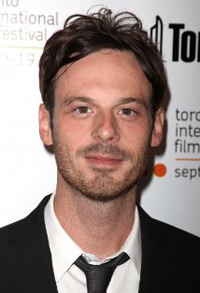
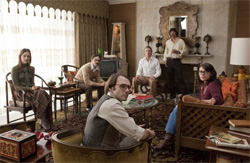
Scoot McNairy recently appeared in the cast of ARGO, and attended The Hampton’s International Film Festival with KILLING THEM SOFTLY.

#1 – Watch Out!

I learned everything in my life by watching. I am incredibly dyslexic and went to a dyslexia school. I am a horrible reader. But you can either read a book about how to take apart a car, or you can take apart a car engine and see how it is taken apart. I grew up watching movies, watching actors, and seeing what their process is.

#2 – Make Sure Your Emotions Are Available to You.

Constantly be aware of human behavior, watching people, and checking in with your own body to see how you feel – what your body is doing. Acting isn’t something you just show up and do. It is something that you are constantly working on, making sure that your emotions are available to you. Whatever happens at the end result of that is what happens, but you focus on the work and I promise you, you are going to enjoy your life so much more. And you will find work.

#3 – Keep going back to your roots!

I continue to stay in the theatre. To me, if you are an actor and you are not doing plays, then you are not going to the gym. You have to be constantly working out, and there is no other format of acting that will prove to make you better than doing a play. So keep doing plays. Even put up a play in your backyard. You can put up a play anywhere. You can get friends together and put up a play.

With plays you don’t have the ability to stop and go back. When you are sinking, you have to pull yourself out of it. On a film set, you have time to get worked up for something. In a play you don’t. You really have to rise to the emotion and trust in yourself enough. That is the hardest thing to do as a human being and an actor – to trust that you are enough. You, as an individual, are interesting. All people are interesting. Human behavior is interesting. The theatre allows you to explore that deeper than a film. In a play, you are constantly working throughout the performance, and the next day’s rehearsal, and the following performance. You are constantly changing, and you realize that there is so much in you that you didn’t have that is coming out naturally and organically. Things that you weren’t aware of. Things that you can’t learn just by studying, or on a movie set.

#4 – Focus on the moment.

The best advice I can give to an actor is to not focus on the end goal. Don’t have expectations. Focus on the work. Stay Studying. Stay constantly learning. Focus on work, on theatre, acting classes, and creating characters. I was incredibly lucky on ARGO to be surrounded by the actors I was working with – Christopher Denham, Kerry Bishé, Tate Donovan, Rory Cochrane, Clea DuVall, Victor Garber, Ben Affleck – and it is so much easier when you get put in a room with a bunch of talented people. What I learned from them was to commit to the work, to see how much work they put in. When uou are working with people that are working just as hard as you, it is redeeming.

ADVICE FROM NADIA SZOLD – DIRECTOR OF JOY DE V.

Nadia Szold directed Joy de V. which won Slamdance’s GRAND JURY AWARDS- NARRATIVE – Special Mention in 2013. The film takes an expressionistic, gritty look at the intersection of madness and love that follows a young con artist who wakes up to discover his pregnant wife is missing.

#5 – Have TRUST.

The actor has to trust the director in order for them to take the risk, and to get the role. Actors have to trust that the director will do their best job. At auditions, that is the most difficult. If an actor clams up, the director doesn’t get a good window into their abilities. The actor has to be able to convey the emotional shifts of the scene. It is such a gift when that does happen, when an actor opens up their emotions and their soul. They show their talent, and we are able to capture that emotion inside of them.

# 6 – Create chemistry!

In the audition process, it is really important for directors to get a wide variety of actors – and more importantly to put actors together and see how they play the scene. It is really important for us to see how actors play with each other and have chemistry.

ADVICE FROM EVAN LOUISON OF JOY DE V.

Evan Louison played the lead in Joy de V. – a film that dives into the mysterious behavior of those stricken by love and who are perhaps more certifiably crazy than they believe themselves to be.

#7 – Realize that it’s never too late to find LOVE.
I have only been acting since 2005, so it was more like a second calling for me. I didn’t rely on it as my main income for eight years. When things came down to it last year, when one movie was coming out and I was about to go make another movie, I decided to fully commit to it.

#8 – Let your passion dominate your fear!

I gave myself an ultimatum that I would stop working other jobs. I told myself that if I starve, I starve. But I was going to commit to acting, and somehow it worked for me. My maddening efforts are patience and languishing. I wake up every day, and everything I do all day has to do with film. I have dedicated myself to it. I am trying to put myself in a place to do good things because I am not giving myself a way out. Those who do give themselves a way out do not let their passionate dominate their fear.

secretstogettinganagent

Solving the mystery as to how to get an agent can often seem like the loftiest of challenges. Is there a secret passageway that you’re missing out on? Some underground recruitment center? Do agents have a form of special intelligence, honing device, or tracing method?

Attempting to land an agent can be incredibly frustrating. After all, we are actors meant to embody Bourne or 007 – not to actually be them.

On the bright side…. actors do not NEED an agent in order to get auditions. Though, in full disclosure, it really does make a difference when it comes to landing those higher-level, career-making gigs.

So how do you accomplish this impossible ultimate mission?

Here are 5 real-life stories from those who have taken on the challenge, and have lived to tell about it.

  1. Kandis Erickson

Kandis Erickson recently appeared in the Sundance film, I AM NOT A HIPSTER, which was released this January and is now available on iTunes, Amazon, and Google Play.She has two more films coming out this year: a horror film called TRAIL OF BLOOD directed by the Guerrieri Brothers, and an indie movie, TRATTORIA, directed by Jason Wolos.Coming up… she will appear in a great role on Masters of Sex’, a new Showtime series coming out in September. Check her out at: www.kandiserickson.net

HOW KANDIS LANDED AN AGENT

Getting an agent can be an elusive thing to some actors; I hope my story demystifies the process a little. Everyone has a different journey, so by no means is this only way to get an agent.

My first agent saw me at a showcase. I was fifteen and had just started acting.Since I was spending money on the class, I made sure that it had a showcase at the end where I’d be seen by agents.

After a few years gaining some experience and adding to my resume, I felt it was time for me to move on to another agency. I did some research, which is important in finding the right agent for you. I created an excel spreadsheet (nerd alert!) and made a list of actor friends (from class or from projects) who had seen my work. I researched who their agents were and wrote down any agency that fit with my age, look, etc. Then I sent personal emails to each friend asking if I could use their name when contacting the agent. In my opinion, this is better than a mass email that says: “Hey Friends, I’m looking for a new agent. Can you refer me to yours?” That puts all the work on them. Let your actor friend know you’ve done your homework and all you need is their okay to use their name; very little effort for them.

I asked about twenty friends and got a series of responses: some said they didn’t like their agents and wouldn’t recommend them, others said “Of course” and even offered to put in a good word. Once I had permission, I would call the assistant at each agency and say, “Hi I’m friends with your client so and so, I’m looking for new representation and they referred me to you. What’s the best way to get you my materials?” Most of them wanted me to email my materials, some want hard copies. Be ready to send either right away. Then in a week, if you don’t hear from them, call them to follow up. I sent sixteen emails and was asked to meet with four agents, one of which I’m currently with.

In the meeting, talk about your experience as an actor but also show them that you have a life and other interests. Ask them questions. You are interviewing them just as much as they are interviewing you.It’s like dating – you both have to be into it.

Things to do before getting an agent:

1. Have pictures

2. Have footage

3. Think about your type and what jobs you want

4. Stop using not having an agent’ as your excuse for not working; Many of my jobs have come from friend Casting Directors, DPs and Filmmakers.

  1. Lindsay Pulsipher

Lindsay Pulsipher attended Sundance 2013 with THE RAMBLER, and 2012 with THE OREGONIAN – both by Calvin Reeder. She also recently appeared in HATFIELDS & MCCOYSas Roseanna McCoy, and TRUE BLOOD as Crystal Norris.

HOW LINDSAY LANDED AN AGENT

I am from Salt Lake City Utah and did some TV roles out here that got me an agent in LA. I did TOUCHED BY AN ANGEL and an independent film called JUMPING FOR JOY – a Disney type film. An agent saw it and wanted to meet me. He said Who in Utah got this part.

The casting director set up the meeting and I went out to LA for pilot season.

I was so lucky. I got to go to LA having representation. I know so many talented actors both in LA and in NY that aren’t represented. They could be huge stars, but they don’t have representation. So I feel like I got very lucky to go to LA already having an agent.

  1. Dave T. Koenig

Dave T. Koenig has worked on DECEPTION, MADE IN JERSEY, DAMAGES, and LOUIE. He also starred in a Norwegian web series, STD: Oddfjord, and wrote and directed the short MAN TIES: The Manti Te’o Story. Check him out at: http://www.davetkoenig.com/

HOW DAVE LANDED AN AGENT

I got a new agent a couple of years ago.

I was working with an agency that didn’t support every area that I wanted to go into so I confided in a friend that I needed a change, I was doing a show with her at Accomplice, and she volunteered to hand-deliver my headshot to Abrams .

When I met Tracey Goldblum I had an immediately positive vibe, and she had really great responses when I explained my goals and needs — wanting to stay active in on-camera, needing to develop my VO career, looking into doing more print, etc. Tracey arranged, in turn, for me to meet with the VO and print departments – – where I happily signed a few weeks later.

Everyone there is incredibly down-to-earth and cool. I immediately felt very much at home there. And the fact that I have so many friends there who are clients, only adds to the confidence I have in them.

Since I’ve been with Abrams I’ve booked several on-cam spots, plus I recently had a nice run of VO bookings (Staples, Dunkin’ Donuts, Bank Midwest). I also did a couple of print ads, the biggest so far being the New York Powerball spot where my face was seen on the tail of an airplane all over NYC.

I suppose the moral of the story is that it is very important to develop positive relationships with anyone and everyone, as you never know where the next helping hand is coming from.

  1. Andrew Casanova

Andrew Casanova is a graduate of The New York Conservatory for Dramtic Arts: School of Film and Television. This past holiday season, Andrew had a principal role in a national Verizon commercial for the Droid Razr. Currently,Andrew is a full-time member of The Actor’s Project NYC, as well as One on One NYC, and Play Club presented by The Unknown Artists, which allows all actors to get together and do cold readings and readings of original work. Recently, Andrew filmed a feature film project entitled, AUDITION, directed by Matt Herron with casting by Todd Thaler. Andrew just wrote and produced a song, “Beautiful Memories,” dedicated to his mother.

HOW ANDREW LANDED AN AGENT

It is all about networking.

In February of 2012, I started with the Actors Project – an all comedy showcase where you get to do a monologue. While doing the actors project, I also did a One on One session with Jenevieve Brewer, from ABOUTFACE, who is a big time supporter of the Actor’s Project. She called me in from there. I am not positive whether or not Jenevieve would have called me in if I wasn’t with the Actors Project. The fact that I knew she was a supporter, was the biggest reason why I took the session with her specifically. It has worked out great. It is important to have an agent who is good at what she does. Everything she sends on – I could see myself as that role.

For the second season of the Actor’s Project, I auditioned to be part of the sketch comedy group. That way, I could do more than the one monologue and get more exposure. After that showcase, I got two agents – David McDermott of JGD and Nicole Astell from Prestige Management.

I also did another agent seminar where I met Erica Moran of Avalon/BMG. There were probably 100 people there. She called in 25 people afterwards. At the meeting, she gave me commercial copy to read for her. About a month later, she began to work with me.

Connections are so important. You would be surprised how we all know each other in New York, and work with each other. So be positive, and keep yourself in a good light – because they are always watching you.

Also, I feel like you do need a great training background. Doing the conservatory, acting my whole life, and all of the classes and seminars I still take (I feel like I have done a millions of them) – that ends up giving you experience and an awesome resume. I have even taken workshops on how to talk to industry people so I know what I am saying.

You are always learning something. As much as I know now, I don’t know anywhere near what I could know. There is an endless amount to learn.

  1. Kelly Calabrese

Actor, Writer, Creative Junkie – Kelly Calabrese – began performing in children’s theatre at the age of seven and won her first award for Broadcast Journalism by age twelve, through ITV’s Eddy Awards. Today, Kelly works as an Actor and an Entertainment Reporter. Recent projects include a lead role in a pilot called Proof, Under-5’s on Discovery ID’s REDRUM and PBS’s ILLUSION OF TIME, national commercials, industrials, and a hilarious web video directed by an Independent Film Award Nominee. In addition to acting, Kelly recently launched her own small business – Canvas Cuffs. Follow her on Twitter at: @KellyCalabrese


HOW KELLY LANDED AN AGENT

I got an agent through NYCastings!

After taking an incredibly helpful on-camera, 5-week program at NYCastings with Karyn Casl of Telsey & Co, I auditioned for 2 agents as part of their final class. Erica Moran of Avalon/BMG called me in a day later to read commercial copy for her. Within a week, we began working together.

Taking classes that culminate in an agent meeting is a HUGE advantage because your scene work has been polished to a performance level. Also, the agent’s know that you are serious about your training.

In addition to working with Avalon, I also work with two other agents. Both agents came through commercial agent nights where you pay to play’ – so to speak. Having to shell out money to meet industry people may seem suspect, but how else will the agents know that you exist. It’s a lot like trying to win the lottery without a ticket. You know… all that in it to win it’ jazz. Getting further in any aspect of life takes consistent effort!

Of course, before I even met one single agent, I took an on-camera commercial class so I knew how to slate, make choices, and be comfortable with various styles of commercial copy. Angela Mickey teaches an amazing commercial class, as does Brooke & Mary, and Tisha Ioli.

Once you do meet an agent, even if they don’t call you, I think it is incredibly important to keep in touch with them through postcards. There could be a million reasons why they didn’t call. It could be that they had too many of your type already. It could be that you fall in an odd age-range at the moment. Maybe they are at max capacity with their clients and are being über selective. By staying in touch, with updates about the work you get on your own, agents will see that you are a hard-working and a capable of booking jobs. They may opt to give you a second look.

– So keep training. Keep networking. Keep smiling!

childrenofhorror

Child performers have long been a part of scary film and television entertainment.

Remember actress Linda Blair from the 1973 movie The Exorcist? How about Haley Joel Osment from 1999’s The Sixth Sense? Or Danny Lloyd, who played Jack Nicholson’s son, Danny, in the classic scary movie The Shining? (Who could forget the line Danny isn’t here, Mrs. Torrance.)

These young actors left a mark in history.

Today, we continue to enjoy entertainment that leaves us, and our families, on the edge of our seats.

Let’s explore the world of young performers in the recently released horror flick Mama and the upcoming, child-friendly Nickelodeon television series Deadtime Stories.

Below, we find out what making a scary film or television series is like from the young performers point of view. Also, Deadtime Stories Executive Producers and Directors, brothers David Hillenbrand and Scott Hillenbrand, offer valuable insight and information pertaining to child performers and what happens behind the scenes.

I had nice chats with Mama actress Megan Charpentier and Deadtime Stories performers Piper Reese and Devin Eash.

Megan Charpentier played ‘Victoria’ in the January 2013 film Mama and ‘The Red Queen’ in 2012’s movie Resident Evil: Retribution.

What was your audition like for “Mama” and “Resident Evil: Retribution?”

When I auditioned for ‘Mama,’ it was a taped audition I did in Vancouver. They had me do the scene where the Uncle meets Victoria for the first time after 5 years – the one where he gives Victoria her glasses. For ‘Resident Evil,’ I also did a taping in Vancouver and they booked me after seeing the tape and flew me to Toronto to film.

What’s it like working on horror movies?

Filming horror movies is similar to filming any other type of movies. It’s not as scary as watching the movies because there are no music or special effects while you are filming.

Did you see any of the other Resident Evil movies?

No I didn’t see any of the other Resident Evil movies. I never even saw the one I was in either. My mom just let me see the parts I was in!

What’s a typical day on set like? How is schooling handled?

Well, every day would start with school if I wasn’t first up. If I was first up, then I would go right to set after taking a quick look at the scenes for the day and seeing if there were any script changes. I would say hello to everyone and then get to work on the scenes for that day. The mood was usually really bright. In between scenes while set ups were being done, I would be with my tutor. I would do at least 2 hours of school a day.

When did you decide to go into acting? Why?

I got into acting when I was about 2-1/2 or 3 years old. I went into the audition barefoot and danced around for the director and I got the part. Acting is so much fun. I get to meet new people and have new experiences and I learn so much every time I get a new part.

Do you take any acting classes in between work?

I always take classes when I’m in between projects. There’s always more you can learn.

Do you notice any special treatment by your friends since you’ve been on TV/film?

No, not really. My true friends just treat me like me! But I do get asked some questions at school sometimes!!

Anything else you’d like to add?

My agent always says to run your own race. You will get there faster if you’re not always looking behind you.

Nickelodeon is planning a summer 2013 launch of the TV series adaptation of Deadtime Stories, created by the Hillenbrand brothers and the Deadtime Stories author sisters Annette and Gina Cascone.

David, who shares the responsibilities of Director and Producer?

Scott and I are Executive Producers, along with several others, and we also produce the show. For the first season, I have directed some of the episodes, and Scott has directed some of the episodes.

Because “Deadtime Stories” is an anthology series, you’re constantly casting young performers. How is this casting process interesting and/or different than independent feature films ?” i.e. Is there a Casting Director who narrows the actors down that get sent to you? Once you have potential actors in mind, what happens next? What’s the audition process like?

For each episode we work closely with our casting director, Iris Hampton, to discuss what we are looking for in the episode’s cast. Iris has lots of experience casting kids shows through the years in including the ‘Power Rangers.’ With the anthology structure, we’ve had a great opportunity to diversify across ethnicity from episode to episode and work with many young performers. The only constant for each episode is the babysitter, played by Jennifer Stone, well-known as ‘Harper’ from the hit Disney series ‘Wizards of Waverly Place.’ We have a recurring series of pairs of brother/sisters that the babysitter visits to read the episode’s Deadtime Story. Iris and her associate, Jenna Johnson, do all the initial rounds of casting. We also work closely with Nickelodeon who makes suggestions and offers ideas on talent to see. Then the episode’s director (myself of Scott) views a narrowed down selection of options for each role. We have been using a casting system called Eco-Cast which is an easy way to view the auditions privately for our team. We then do a final call back session where the actors audition for the Director. We do an intensive session where we mix and match different actors together, putting them in and out, reading with each other so we can choose an overall chemistry for the episode and maintain diversity. It’s a fun session where the kids get to work through the scenes being auditioned with a multitude of actors. Then the Director’s selects are sent to the Nickelodeon team for final approval.

Do you use SAG-AFTRA actors AND non-union actors?

This is a SAG-AFTRA production.

Were any of the young performers involved in green screen shots? If yes, how do you coach them?

Yes, we have done green screen work and the process for the actors varies depending on what is required for the shot. The actors do not see monitors and usually interact with the other performers in the scene in a manner not too different than shots that are not green screen. Depending on the shot, the Director will sometimes be working with a live video switching system that allows the green screen to be composited into the background plate shot so the Director can effectively direct the actors.

What’s it like working with time constraints since young performers can only work a certain amount of hours? How do you plan which scenes are shot first?

Working with young actors is challenging given the time constraints and limited shooting hours. It is the job of the 1st Assistant Director and 2nd Assistant Director, along with their support team of production assistants, to plan ahead and then be efficient on the set to ensure the actors complete their required time in school (on the set) and are available for their camera setups. We have a great Assistant Director team and set teachers who create a very smooth process.

Do the young performers’ parents / guardians stay on set during the shoot?

Yes.

Have there been any frustrating moments working with young performers?

We have been very fortunate to have wonderful young performers with whom we have had the pleasure to work. The ‘Deadtime Stories’ set is a fun atmosphere where each day an exciting, creepy, scary (and often funny) story comes to life on screen.

How does the taping of each episode work?

We shoot each episode on a five day shooting schedule.

Do the actors just receive their portion of the script (the sides) or does each actor receive the full script?

The actors receive the final shooting script once they have been cast.

Is there a table read or do the young performers just arrive on set and you direct them?

We do not typically do a table read. The preparation and rehearsal/work session varies from episode to episode.

Is there a premiere date for the series?

Stay tuned for the launch date of the series coming soon. There was a sneak premiere of the pilot episode a few months ago on Nickelodeon, and you will start to see lots of promotion on Nickelodeon and elsewhere very soon.

Anything else you want to add?

We are very excited to bring this television series to kids across the country (and around the world). It’s a great show based on wonderfully fun, scary, diverse stories for kids written by Annette and Gina Cascone that we are certain will thrill and chill kids and the whole family. There’s magic, witches, ghouls, goblins, tigers, horses, knights in shining armor, fantastical creatures and beasts, and many other exciting things to entertain and spark your imagination.

Devin Eash plays Todd French in Deadtime Stories: Grave Secrets

What was your audition like for “Deadtime Stories”?

The audition process was interesting to say the least. I auditioned for 4 different characters, and ended up with a character that I didn’t even try out for. I found this very funny and yet very odd at the same time.

What was it like working with Directors/Producers David & Scott Hillenbrand?

I found it fantastic! They make it very nice to work. It’s not too stressful, as acting can normally be. Some Directors/Producers can make working tiring and sometimes not fun because they like to push for perfection. David and Scott Hillenbrand made it very nice and easy to continue working. They made it all about the fun in acting, rather than the work and business side of things.

Did you read the books?

I have not read the books as of yet. To be perfectly honest, I don’t do much reading in general.

What’s a typical day on set like? How is schooling handled?

A typical day on set… it’s actually an amazing experience every time. You are always treated very nicely, and the food, well that’s amazing, too. You are always trying to be professional, but it’s still super fun! For the schooling side of things, they hire an on-set teacher. He or she oversees the kids getting their school work done which they first have to get from their teachers.

When did you decide to go into acting? Why?

I started acting when I was 10. I did this because my sister was actually scouted as a model, and the scout was also a scout for acting. When she asked who wanted to be in the industry of acting, I couldn’t help but jump up and shout out! I had wanted to do acting for as long as I can remember and that was my opportunity to make my break!

Do you take any acting classes in between work?

I have taken acting classes since the day I started. You can never get too much practice and it always helps!

Do you notice any special treatment by your friends since you’ve been on TV? Do you get recognized on the street?

I do not get special treatment from friends, nor do I get recognized on the street. And honestly… I like it that way. I am just a normal person who likes what everyone else likes. So not being recognized definitely keeps my head at a decent size.

How did you receive agent representation?

Much like everything else in the acting industry, I auditioned for many agents. You audition much like you do for a role. You go in a small room all by yourself and you just recite a monologue that you have practiced and hope for the best.

Anything else you’d like to add?

The only thing I would like add is that if you really follow your dreams and you don’t give up… anything can happen. And even if you get rejected many times, your time will come. You just need to wait.

Piper Reese has completed several episodes of Deadtime Stories and also has her own web show Piper’s Picks® TV.

What was your audition like for “Deadtime Stories?


Lots of fun. Somehow, I had a special feeling about the audition for ‘Deadtime Stories,’ but I was a little nervous because I messed up on my age at first and I said my character’s name wrong! I think that was supposed to be easiest part. The call-back was even more fun because I got to act out my part with other kids. It was a little strange because I knew both girls going up for one of the other parts and they were both nice.

What’s it like working with Directors/Producers David & Scott Hillenbrand?

Well, David was the director on set. I think Scott was working on another project during the episodes I’ve filmed. David was super nice! He even lit candles on Chanukah with a bunch of the kids. No matter what went wrong or had to be filmed over, he never got upset. He also remembered my name from the start. That meant a lot to me.

Did you read the books?

Yes! I’m actually reading The Witching Game right now (well, not while I’m answering these questions!)

What’s a typical day on set like? How is schooling handled?

The set was a lot of fun with all of the friends I made. I liked everyone – including the people my character was mean to. The set for ‘The Beast of Baskerville’ was really freakadelic because we were filming high up in the mountains in Griffith Park late at night. It was super-kewlio! The food was good, too. School was a different story…zzzzzzzz! Hehe…we did schooling before filming, but it’s much more fun working on set than doing school work. Annette Cascone, one of the authors [of the books,] was on set too! She’s one of the sweetest people I’ve met. I love the characters she wrote, especially Nancy Patanski 😉

When did you decide to go into acting? Why?

Well, we’ve been producing Piper’s Picks® TV, my Internet show, since I was 7 years old. I do acting work on a lot of the episodes. I’ve always loved singing and acting.

Do you take any acting classes in between work?

Yes! I am in a performing arts program, but I also do intensive workshops, private acting lessons, and vocal coaching.

Do you notice any special treatment by your friends since you’ve been on TV?

I haven’t been on TV much yet (just glimpses of me on ‘Modern Family’ and ‘The Neighbors’), but most of my friends are used to my work on Piper’s Picks. If any of them would like to bring me lip gloss or glitter, I probably wouldn’t turn it away. :-)

How did you receive agent representation?

Actually, a very pretty fairy and super-nice girl I interviewed once (she might be reading this) asked if I had a talent agent. I didn’t yet, so she referred me to my agent.

Anything else you’d like to add?

Yup! Definitely check out www.PipersPicks.TV, follow me on Twitter, Facebook and Instagram @PipersPicksTV and make SURE you tune in to ‘Deadtime Stories!’ It’s one of my favorite things I’ve done. It’s going to be ToTaLLy PiPeRiFiC!

a-gameadvicefromsundance

Times have changed – expectations are raised, which means that it takes a lot of work to land roles in film and TV these days. Scripts need to be memorized. Characters need to be fully developed. And, walls need to come down!

In fact, to truly stand out, each audition should be treated as a performance, shares Casting Director Harley Kaplan.

To help NYCastings members reach this polished level, we sought advice from those who recently succeeded at getting accepted into the acclaimed Sundance Film Festival.

First up, Lindsay Pulsipher

Lindsay attended Sundance 2013 with THE RAMBLER, and 2012 with THE OREGONIAN – both by Calvin Reeder. She also recently appeared in HATFIELDS & MCCOYS as Roseanna McCoy, and TRUE BLOOD as Crystal Norris.

For Lindsay, turning auditions into performances means being out of control, and being free to the moment.

For me, that’s what I’ve done for almost every job I’ve ever gotten, shares Lindsay Pulsipher. You have to free your mind. And, I also like to visualize a lot. I look at my characters in third person as if I am observing their movements and behavior. That seems to get me out of my own personal self, and allows me to get into the character.

I did this mini-series the HATFIELDS & MCCOYS about a year ago, and I wanted that job more than any other job. The script was fantastic. The cast was fantastic. I went in wanting it so bad, and sometimes I think actors freak themselves out thinking I have to have this part.’  So, I allowed myself to let go of all that. I allowed myself to be as vulnerable as possible and just play in the moment. I took my walls down and didn’t control the situation. 

You surprise yourself when that happens, says Lindsay. You don’t contemplate what is going to happen. You are like, Whoa. That came out of left field. I didn’t know that would happen.’ And, that is what I love about acting.

When going in for TRUE BLOOD, I had planned out in my head what I was going to do. But when I went in the room, Alan Ball was there and Ryan Kwanten. Ryan threw me a curve ball right out of left field and everything I prepared went out the window. It was like I was brand new to the script, I forgot everything I learned. And, I think that worked for me. I got the part. I allowed myself to cry and laugh a little. I cried in moments I wasn’t expecting to, and that is a nice feeling. You are not creating the character, it is creating you. That is how I like to work. That is when I feel the most creative.

To stand out in auditions, you have to let go of that control, be loose and open, says Lindsay.

Sometimes a director throws something out to you that you didn’t think of, and it opens up a new world of what you can play with. I love when that happens.

Actor Dermot Mulroney…

Dermot Mulroney has appeared in over 80 titles! You have seen him in major projects including POINT OF NO RETURN, COPYCAT, MY BEST FRIEND’S WEDDING, FRIENDS, ABOUT SCHMIDT, THE GREY, NEW GIRL, ZODIAC, and you will see him in the upcoming film STOKER with Nicole Kidman.

At Sundance, Dermot attended with his film THE RAMBLER – in a role unlike any he had ever done before. Dermot Mulroney is constantly upping his game, and he believes that you can too!

I’ve always approached acting as a learning experience, shares Dermot, you try and get better at it, as you go along. And, in the last couple of years, I have tried double hard to be really good in the movies that I’ve done. I don’t take anything for granted. I have always been on time and prepared. Now, it is more that I have shifted closer to being intense, and I think that really helped in acting.

In preparing for his role in THE RAMBLER, Dermot explains it is a really unique film. I have never seen anything like this, nor have I been in a movie like this. I felt like the strongest choice was to leave the character as written, to just deliver. A lot of times I had to deliver without any narrative. It did require a different approach. Half of the characters in this movie don’t really exist. So, it requires a whole different viewpoint to approach this character. 

In approaching auditions, Dylan admits that these days, roles are getting harder and harder to get – even as a veteran.

To prepare, he learns every single word. Instead of holding the page, you have to memorize it, he shares. Now, to me, not learning the lines is unacceptable. Do the work, prepare, and read with someone beforehand. I do that with an actor friend now, and it has made a huge difference. 

To reach an A-Game level of auditioning, Dermot also suggests that you have to be in the moment.

I just did this great role in that famous play AUGUST: OSAGE COUNTY with Meryl Streep, Julia Roberts, and Chris Cooper. Juliet Lewis and I played the couple. I came in with some ideas. The scripts is very clear of who my character is, it is a famous part of Steve Heidebrecht. It was a thrill to win that role. I had to go in and fight for it several times. I thought I had a really good plan, an interpretation of what that character should be, until I was in scenes with extremely good actors – like 16-year-old Abigail Breslin. Then, it just takes on its own life. The scene I had been preparing was very different.  You can prepare for anything, but be ready to be in that moment. You have to be flexible with how you envision the scene. You have to adjust on the fly. Be ready for anything.

Director Drake Doremus – shares his take on auditions!

Drake Doremus – known for directing LIKE CRAZY, DOUCHEBAG, and SPOONER – premiered his movie BREATHE IN at Sundance 2013. NYCastings caught up with this talented filmmaker during his exclusive appearance at an event hosted by Chase Sapphire Preferred® 

I am very involved in casting, Drake shares. That is almost as important as the script itself.

To stand out at auditions, Actors need to just be prepared and be OK with failing, Drake says. It is OK not to succeed every take. It’s OK to fail because eventually, if you fail, something great will happen.

In casting BREATHE IN, Drake shared one specific example of how to create a performance caliber audition.

Mackenzie Davis is a newcomer in this movie, he says, and she came in to the audition dressed like the role of Lauren. She was dressed like her, and acted like her. She embodied the character all the way through. She really went for it. 

For actors hoping to learn how to nail auditions at this master level, Drake lends some solid advice on how to breathe in and make that happen.

Just relax, Drake says. Give it time, and never give up.


10tipw-nateparker

There is no debating – Actor Nate Parker is rising to the top of his game, landing major roles by giving each character a true heart and soul.

The trick to creating a character is work, time, hours. Literally hours, shares Nate Parker who was named one of the Top Ten to Watch in 2012 by Variety.

Nate Parker is known for developing deeply human characters in films including Great Debaters (directed by Denzel Washington), Red Tails (directed by George Lucas), The Secret Life of Bees, Pride, Dirty, Blood Done Sign My Name, and many more.

On stage, Nate appeared opposite Dustin Hoffman, Annette Benning, Rosario Dawson and James Cromwell in American Voices at the Broad Street Theater.

In every aspect of his life, Nate Parker works hard. He commits and inspires.

Here are his top ten tips for rising to the top, which he happily shared with NYCastings at The Hamptons International Film Festival


10 Tips for Rising to the Top – with Nate Parker

1. COMMIT

Commit to the work. As an artist the commitment needs to be to the work and the lifelong journey of it. If you strive to get awards, you will fail every time. The artist just has to find something rewarding in what he does, and do his best to operate within that space.

2. CONTINUE TRAINING

I still take classes. I also teach a really young, fresh off the boat class in Los Angeles, West Hollywood. I deal specifically with kids who are new to acting and ethnic kids who might not have classes that speak to their situations and where they are coming from.

I think it is important to do both. I am constantly learning by what people are teaching me. And, I am constantly being drawn back into that innocence, that deer in the headlights’ kind of thing as I teach. I am able to forget about the business and just think “How do I be honest in the scene? The simpler you can keep it sometimes, the better.

3. BE KIND TO YOURSELF

My biggest technique is to understand that whether I am working or not I have a family that loves me. It helps to keep things in perspective.

After the audition, I walk away and I give myself until the ride home to beat myself up about it. Then I never think about it again. I have the car ride and that’s it. If I did a bad job, I get into the car and I’m like “Stupid. So dumb. What were you thinking?”

When I park my car, it gets left in the car and just evaporates. I am not allowed to bring it up anymore.

My art is what I do to make a living because it speaks to my soul. But if I don’t book a job, my wife and kids are going to still feel the same way about me when I walk through the door. I keep it separate. And I don’t sit around bitter because the industry isn’t giving me anything. I share my art, and then go home. And, every once in a while someone calls and says, “You know what… give me a little more of that.”

4. DON’T REST ON LAURELS

You know when you really like a musician – when the first album was so magical you couldn’t believe it? It was angelic. And then, the next album was not as good and the third was like “what are they doing?” Well, I think there is a little of that in our craft. If you are not careful, you can believe that you are doing something so good that you can’t improve on it. Then, your next project will suffer.

As long as you are constantly reaching to your capacity, you will win. I am happy to be honored by Variety, but it doesn’t change what I have to do – the work that I have to hold myself accountable to.

5. LOVE THE PROCESS

The first thing I do is I obsess over the process of auditioning. I brain wash myself into thinking that it is the best part.

When I first started acting, I would get myself so excited about the idea of auditioning. I couldn’t wait. I would tell myself that it was my favorite part of the process. And now, eight or nine years later, I am so glad that I did that because the only opportunity I have to go in and show all the work that I put in – is at auditions. Of course the director will chop it all up and put it back together, but I think #1 is falling in love with the audition process.

So many actors I talk with say “I hate auditions. Why don’t they just hand it to me?”

I think it is such a detrimental attitude. It really hurts you because then there is a seed of fear every time you walk into a room. But if you love the process, whether they love you or not, that is your audition. It is your stage.

6. BUILD A BACK STORY

I am big on back story, creating the character, getting into the soul, and writing tons of pages. I write 20 to 50 pages, just journaling about the character so I can get into his soul. A lot of times you will fall out of it if the character is you. I tell my actors that no one shows up to see you, they just don’t. You are not that interesting. People show up to see whoever that character is that you are supposed to breathe life into. For me, that comes from journaling. Once I do that, I just show up and let it all go.

7. TRUST YOURSELF

You have to trust in your work, and be able to switch yourself off. I have to switch myself off as Nate Parker and switch on the other character based on the work I did.

The analogy I always give is… someone can say “I want you to be in a movie all about Dave. It’s called Dave. And it starts filming tomorrow.”

I could just follow a person around, studying their mannerisms, and then show up to the audition and physically move as that person does. Or I can say, “I have 24 hours. I need to learn everything about his person. About their father their mother. Are they a middle child? What did they want to be when they grew up? Did they achieve that goal?

All of those things are so important to who a person is. And then, the next day I will hopefully be able to do a good job based on the psychology of who that person is, not just based on hunched shoulders and a plaid shirt.

8. REPETITION

Look at Michael Jordon. When he was a kid he would take a milk carton and take a thousand shots a day. That’s what it takes. It takes repetition so you don’t have to think about it. So you can close our eyes and check out, and the character will show up.

9. USE A COACH

I’ve been using a coach since my very first audition. I need another brain. It’s the way I was trained. You study the script and then you go with your coach before your audition and they tweak it as a director would. They might ask what your choice is. And sometimes they don’t see that choice. They say “I’m not really getting that.” So you go back to the script and realize you didn’t really hit that resentment to your mother. It’s never just about the lines. It’s always the subtext, something behind it that you miss. I go in and figure out what that is, adjust, and do it again for my coach. When he thinks it is right, then I let it go.
10. ENGAGE IN A MOCK AUDITION

I encourage every actor, before you go into an audition you should run it at least once, exactly how you plan on doing it. Somewhere in the ballpark. A lot of people just read the lines and then they get up and put the work on its feet for the first time in the audition room. What I do is – an hour before the audition I pretend I am in the audition room. I do the scene on its feet and get it all out. Every time I have a tongue twist I think “oh, good, got that out.” Then I audition, and let myself feel the way I feel until I get home. Once I’m home, I let it evaporate.

THANKS NATE! We look forward to seeing more of your work!


actorsnfx2

As actors, we rarely say to ourselves, Oh boy! I want to be an actor so I can sit in a make-up chair for endless hours and be turned into a monster!

We instead think about getting proper representation, taking classes and learning lines. We dream about our big break and what it’s like to be on set.

Yet make-up is part of the job. Whether we play a burn victim, someone with lots of scars and tattoos or a creature from another planet, we must keep in mind that there’s a good chance we’re going to be asked to have extreme special effects (SPFX) make-up applied to our body.

Below, actress NAOMI GROSSMAN (Pepper on American Horror Story: Asylum) and Special Effects Make-up Artist RACHEL GRIFFIN (Fringe, Once Upon a Time) give us insight to the pleasures and pains of being turned into unrecognizable characters.


NAOMI GROSSMAN agreed to shave her head for her role in American Horror Story: Asylum

NAOMI GROSSMAN’s character, Pepper, is a light-hearted murderous who has quickly become a fan-favorite.

1. Did you know in advance there was going to be extensive make-up for your character of “Pepper” when you accepted the role?

Yes, my callback was essentially a meeting with the make-up department. They took a bunch of photos of me, which they then manipulated to see what I’d look like with the prosthetics. I guess I must have looked the freakiest! After I was cast, they showed me the photos, and boy, was that a surprise.

2. Is there extra pay involved?

Yes and no. Not specifically for wearing prosthetics, but I’m in the makeup chair hours and hours, and they of course pay for that. I obviously was compensated for the head-shave. You can watch here.

3. In the beginning, you were in the make-up chair for about five hours. Now it’s perfected down to approximately two hours. Do you get to SLEEP while your make-up is being applied?

Oh, and how! I’ve even been accused of snoring! I can sleep through anything — root canal, ‘Django Unchained.’ It’s often 5:00 AM, they lay my head back, tell me to close my eyes… What else is there to do?

Exclusive pic to @NYCastings – Naomi pulls the prosthetic off her face.

4. Do you have help taking your make-up off after work or is it something you can do on your own?

They take it off for me. It only takes about 20 minutes. Sometimes their edges are so seamless, even they who put the prosthetics on, have to poke around my face to find where to lift off! Requires lots of pulling and scrubbing, but in the end, I get nice, hot, jasmine towels! Where else do you get a facial after work?


5. When is the the make-up applied — before or after wardrobe?

Before. It can be a little messy. Though I usually need help getting my sweater over my man-hands!

6. Anything else you want to add.

Mike Mekash, Eryn Krueger Mekash, Christopher Nelson, Jason Hamer and everyone at Tinsley Studio (who does the SPFX makeup) are AMAZING. Big shout-out to them!

Naomi Grossman is a theatre graduate of Northwestern University. She’s an artist/sketch comedian who loves improvisation and is a former member of the esteemed Groundlings Sunday Company. She’s currently working on several projects that will keep you coming back for more. You can follow Naomi on Twitter: @naomiwgrossman

RACHEL GRIFFIN just finished an overnight shoot of Supernatural. You can see more of her current work on Fringe and Once Upon a Time. For a retro rewind, check out Rachel’s SPFX on The X-Files, V 2009 and the Stargate series.

1. What’s the most difficult part of being a special make-up effects artist?

When I first read the question, I thought about all those 1:00 or 2:00 AM call times to do three or four hours of make-up before most of the crew has even shown up. Or the long, sometimes 20 or more hours a day of work, only to go home. Then I’d be lucky to get a few hours sleep only to come back to work and do it all over again and again. But I think one of the hardest things is when I’m not working. It’s like going through withdrawal. I really get such a huge kick out of doing it; I miss it when not.


2. Please share any challenges you’ve had when applying special effects make-up to actors.

Well, with Lou Gosset Jr. on a ‘Stargate’ episode, it was a very hot day in the studio working with gelatin prosthetics. I tried ice packs, fans…everything–but there was nothing I could do but watch the make-up melt in front of the camera until we had to stop shooting.


Just a few months ago on ‘Fringe,’ we had make-up that covered the actors’ eyes and mouths. We had to guide them around all day as they were totally blind and couldn’t speak or eat for hours.

A few times on ‘The X-Files’ we would have actors with big alien heads that we glued all together. We had to feed the actors lunch through the tiny little mouths. I feel totally responsible when I glue an actor into any kind of make-up. I am the ‘skitter chic’ on ‘Falling Skies’ – I help put the actor into the suit and while he’s in it, I take care of cosmetic touches to the body and head.

I also have an actor care kit. I have lots of items needed such as tools, make-up, a fan to blow cool air into the servo-head, lots of liquid refreshments and anything else he might need throughout the day. I even made up ‘skitter tongs’ for use with three fingers for snacking in-between shots.

3. For overnight shoots, do you get paid extra?

A long long time ago in a galaxy far, far away, yes OUR union did give us what were called ‘night premiums,’ but I have been in the business over 25 years and have never received any.

4. Have you ever travelled (outside your homebase) on location with a production? If yes, describe the experience vs. being local and in your comfort zone.

Yes, I got to go to Lisbon, Portugal, to do a zombie movie called ‘I’ll see you in my Dreams.’ We were hired by a young, upcoming film director that had come across our work on the Internet. He had people from all over Europe and the world came to work on his film. It was so much fun to be somewhere that I knew nothing about, nor the languages spoken all around me AND to be in a place from the 1700s to film this movie. The little town was about three hours outside Lisbon and the people there probably had never seen a movie let alone a zombie flick. The first night we showed up with 40 zombie actors made up from crew, friends and townspeople that had no idea what they were in for and could not speak a word of English. It was one of my best memories in film.

[Alien sitting at Mulder’s desk in The X-Files]

5. Who gives you direction on how the actor is to be portrayed? i.e. Is there a drawing? Do you get a copy of the script? Does someone just describe what they’re looking for and you come up with the concept yourself?

Yes, all of the above; the director has a lot to say in the final look. I’ve been asked to design things from scripts, other people’s designs or just sometimes from a vague director’s vision that he/she tries to convey to you. If you’re lucky, there are definite designs so you can get to work right away. With some projects, you can have six weeks to build something and waste four or more of them trying to get a design approved. Most times there are a number of people that all need to agree on the design and each person may have their own changes that need to be done. It can be the hardest part in the whole process.

6. How did you become so successful in the entertainment business?

I get asked this a lot and have to say I have just been very lucky. I started here in Vancouver at the right time as the film industry was just breaking out. We were fast becoming Hollywood North and Vancouver became a sort of ‘Mecca’ for make-up F/X. ‘The X-Files’ was being filmed here and we got to do all kinds of crazy stuff. Looking back, it was a lot of different kinds of work and my ability to adapt to whatever was needed from prosthetics, suits, props and puppets. I also do straight make-up and spent a lot of years just powdering noses to keep busy. It all helped. The business has changed a lot over the years going from film to mostly HD video nowadays. You need to keep up on the newest stuff.

7. Why / how / when did you become interested in doing special effects makeup? Tell us about your very first job in the field.

I have to blame it on my dad. I grew up on a steady diet of any cheesy SCI-FI movie or TV shows he could find to watch. I, like many other kids, saw ‘Star Wars’ and knew I wanted to do film SPFX. I started in film school and when making my final project, I needed an alien. I had some books on make-up F/X and made my first mask. I ended up out of film school and into make-up school. The very first make-up I did for film was a fish face on an actor for a student film. My first paying job was not make-up but a prop that was never even used for an old cable show called the ‘Hitch Hiker.’ One of my first make-up jobs was on a toy commercial. I made three different length noses for three actors. It was long before the days of ‘Bondo’ which is something made from glue that can be used to hide edges to blend make-up flawlessly. It was one of my hardest jobs to do because of the close-ups the director wanted. In the end, it all worked out and I learned that valuable lesson to never let them see you sweat.

Exclusive pic to @NYCastings – Rachel tells us I did this Bark Boy make-up with two other artists for ‘Fringe’ but they didn’t like it so they didn’t use the stuff we shot. Here it for the first time – the unseen Bark Boy that was replaced by a more human actor.
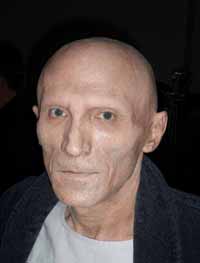

8. What’s it like working with prosthetics?

Well, I love working with prosthetics; being able to transform someone into any kind of character/creature you can imagine is a truly awesome thing for me. I have to say I’m so jealous of the actors that get to have all the fun becoming people’s worst nightmares. I come to set and people ask me what new creation I might have to horrify or amaze them. Some days I spend my day in a space ship surrounded by aliens or in a creepy old house full of zombies. I think I have the best job in the world doing prosthetics for film. :)

9. Now that you’re a seasoned makeup artist, is there anything you recall in your earlier career that you would have done differently?

I might have gotten more into digital F/X. I work in Photoshop on the computer to create lots of my make-ups. If I could have done something differently, maybe more schooling in computer graphics. And I would have tried to get more into making CG monsters and doing digital make-up F/Xs.

[Reptile under the skin in ‘V’ 2009]

10. Did you ever make up an actor only to have someone tell you they want to completely change the look of the character and to start over again? If yes, can you give an example of a character in a show?

Yes, that’s happened many times. If you’re lucky, it happens on a test make-up day and not when the crew has to sit and wait until the powers that be are happy and ready to shoot. I once sweated my way through four extra hours of make-up changes on top of the two-hour make-up. The latest one was (luckily it was not my character) the beast from the newly canceled ‘Beauty and the Beast’ show. The director spent almost all of the daylight they had to shoot the first day in the trailer doing the make-up over and over to please the producers. The crew lost almost the whole first day waiting. I was glad to not be doing the main actor on that show.

Those days are not fun and happen for various reasons. It can be any number of people involved: the director, producer — and sometimes the Director of Photograph (DP) will say he can’t shoot it because it looks like rubber. I have to use every trick in my bag to pull off all the make-ups I have done over the years.

[A dead Observer from Fringe.]

11. Do you work in front of a mirror so the actors can see what’s happening or is it a big surprise for them?

Yes, you mostly work in front of a mirror but not always. Some actors like to watch the process and some don’t. I do get those early morning ones that almost fall or do fall sleep only to be woken up looking very different. It’s my job to help them transform into whatever character is scripted and if they can feel like the character because of my make-up, then I did my job well.

12. Have any of the actors ever had an allergic reaction to the makeup or prosthetics? If yes, how is that handled on set?

Once, one of the actors that played a demon from a ‘Millennium’ episode had a bit of a problem. Due to technical difficulties, one of the foam neck pieces was delivered right to set still warm from the oven and in the mold. The actor had an allergic reaction to the sulfur in the foam and broke out in a rash with hives and pustules. It was kind of gross. I felt horrible that the actor had an allergy and we still had four more days to shoot. After the doctor fixed him up with some cream, I had to carefully glue kitchen wrap to his neck before putting the prosthetic on to seal off his skin from the latex. It was better in a few days. Actors can even get a rash or other skin problems from just wearing the make-up multiple days in a row. I’m also an aesthetician, so I try to be has gentle to the skin as possible and recommend good after make-up care.

13. Please share any fun and/or scary stories that come to mind regarding your job.

Working on the 200th episode of ‘Stargate SG-1′ after making up about 20 zombies. I snuck into the trailer during lunch and started gluing some zombie prosthetics on my face. I got caught by a colleague who ended up helping paint me up. I just wandered on set with the rest of the background [actors] and hoped no one would notice. Well, as it turns out, I was noticed by Martin Wood, the director, and thought I was fired when he asked me to come see him. He asked if he could use me as the hero zombie in three scenes. I was grinning from ear to ear. It was a crazy day and we didn’t get to shoot the last two scenes that were to star me. It was all only budgeted for one day but Martin wanted those scenes. So myself and another crew member were paid to go home in our make-up and come back the next day to film the two scenes. I would have done it for free. I was so excited I couldn’t even sleep when I got home. I drove in the next day like normal except I didn’t stop at the make-up trailer; I went straight to set. The rest is TV history. I’m the zombie that eats Walter in the Stargate control room and if you look closely, I get killed two more times coming in two different doors.

14. Anything else you want to add.

I feel I’ve been very lucky to have been able to work on as many shows as I have and meet so many great people. One of the neatest things is there is almost nowhere I can go here at home and sometimes other places in the world where someone doesn’t come over and say, ‘Hey, Rachel, remember me?’ And it’s a crew member or an actor that I made up for a show during my career.

If you want to find out more about or connect with Naomi Grossman, you can do so using the following links:

http://www.naomigrossman.net

http://www.imdb.me/naomigrossman

http://www.facebook.com/NaomiWGrossman

https://twitter.com/naomiwgrossman

http://www.youtube.com/user/naomigrossman?feature=mhee

Also, here are some more cool videos about Naomi Grossman’s makeup:

http://www.youtube.com/watch?v=4GqUgqx62v8

http://www.youtube.com/watch?v=sazWUIKr7Xg

http://www.youtube.com/watch?v=_bsmFX1amrA

Rachel Griffin teaches make-up class at a local Vancouver school. To see more of Rachel’s work, please visit her website at http://www.rachelgriffinmakeupfx.com


topbooker-2012-kimberlymagness

Take witness of a career on fire…

With over 120 total bookings, and a total income of nearly $20,000, NYCastings member Kimberly Magness is one HOT star – shining and rising!

By self-submitting through NYCastings, Kimberly landed major roles in film, TV, print, and voice-over. She worked as a model, brand ambassador, and even scored a gig as a super hero. WHOOT. WHOOT. Way to go Kimberly Magness!!!

Clearly Kimberly knows how to use NYCastings as a tool to help ignite a blazing career path, so we chatted with this Top Booker to get the inside scoop on her super success story.

Kimberly Magness…

Q: You set fierce goals for yourself each year – can you walk us through your plans and mindset?

Documenting your bookings throughout the year has helped me a lot! This is my 3rd year applying for NYCastings Top Booker. It’s taken me 3 years to rise to the top, but I’ve learned some valuable information from it over the years. By writing down your bookings, you see what kinds of jobs you book the most, if you frequently have repeat clients, and where/how you book them. By researching your booking history, you are able to see what’s working for you and what you might have to improve upon. I try to increase my bookings every year. I try this through new pictures, emailing newsletters, and network-network-network!!

Q: How often do you submit through NYCastings / update your photos and resumes?

I’m on NYCastings practically every day! If not, I make sure to get on it the very next day. I have a theory that the earlier you are able to submit, the better chances you have of being called in. If you are applying to a post that’s a week old, more than likely they’ve already filled all the audition slots by then. I try and update pictures as soon as I get them (around every 3 months or so). I update my resume probably every 3-6 months or whenever I have significant updates to make.

Q: How do you find time to book over 100 projects a year? Any time juggling tips?

Acting/Modeling is currently all I have for a job so being on NYCastings and booking is my full time job. Very rarely can I fit two gigs in one day, but sometimes you do get lucky to film something out early in the am and get to another one by night! There are lots of successful actors that do have “real” jobs so to speak. I think the most important is having a day job that is flexible and understands the time you might need off. Even though I’m not on set filming everyday, it is a full time job with looking for the next gig, submitting, auditioning, pounding the pavement, and keeping your pics and resume current.

Q: You are so versatile – acting, modeling, dancing, fitness, scream queen extraordinaire – how do you stay top of your game in all areas?

Haha! Well, it’s not easy, that’s for sure! I just try to be as versatile as possible and incorporate my hobbies into my “special skills”. I enjoy working out, snowboarding, and I have a background in dancing so I am able to incorporate that in a lot of fitness-type work. I also try and hang with like-minded people. I work for the NYC Horror Film Festival and spend a lot of time with the other judges, which helps me stay in the loop of what’s new in horror. People ask me all the time if I’m a model or an actress. You can be both! It does tend to come in flows though. Some months I feel like all I’m booking is modeling gigs and others just acting!

Q: How much does networking play a part in scoring so many jobs?

I think networking plays a huge part if it’s genuine. I don’t attend as many networking events as I’d like, but building good and strong relationships when on set is key. I frequently work with the same people over and over by being easy to work with as well as staying in touch.

Q: Do you work with an agent, as well? (I didn’t see one on your resume)

I freelance with several different agencies. I have commitment issues! Lol. I feel freelancing is the best option for me. That way you can get work from several different directions. My agents do send me on a good amount of auditions and get me some awesome gigs throughout the year. However, you are your best agent. Agencies have several clients to think about. You are your own #1 priority in this business. No one will look out for you more than yourself. That’s what makes NYCastings great. You get to choose what pictures to send and write your own cover letter. You finally have a chance to explain straight to the casting directors why you’re their best choice!

Q: When submitting a cover letter on NYCastings – do you mention past bookings / experience? How do you word your cover letters?

Yes! I always talk about the few latest projects I’ve been doing. It’s good to let them know that you’re not just “aspiring” but you are in fact working! I also always try to personalize each one. If they ask for your measurements, type it in there. If they want to know your availability, you better let them know you’re available. Also, if I’m applying for a casting that’s similar to something I’ve already done, I mention it. For example: casting for a prank show – I’d write, “I filmed xyz prank show over the summer.” You get my drift!

Q: What acting or industry lesson did you learn this year that stands out the most?

You will book most your jobs when you are away vacationing and/or double book for the same day. Hate when that happens! On a serious note, I’ve learned to try and respond to people quickly. Check your phone and email often. I booked a great paying modeling gig last summer. When I returned their call 15 minutes later, they had moved on to the next person. That one hurt!

Q: What is your mission for 2013?

To keep advancing, keep working hard, keep moving forward, and remain healthy and happy! I feel anything’s possible if you put your whole heart in it. Stay positive. It will take time, patience, and tenacity, but as long as you persevere through the tough times, you’ll come out on top!

THANK YOU KIMBERLY! You are an inspiration to all NYCastings members.

ABOUT KIMBERLY MAGNESS

Kimberly Magness is a Kentuckiana native who has been working in the industry since childhood. She is bi-coastal and resides in New York City. Kimberly starred as the leads in Discovery’s Fit & Health’s Shocking Family Secrets, the Travel Channel’s Mysteries at the Museum, and Discovery ID’s hit shows Stalked, Scorned, and I Married a Mobster. She can also be seen in a principal role on a national commercial for Larry the Cable Guy. Kimberly represents the renowned New York City Horror Film Festival as the programmer and judge. Kimberly is very proud of her lead role in the brutal horror film Devil’s Grove which opened nationwide selling out on Amazon twice in the first two weeks! She has been honored with the Scream Queen award and listed on IMBd as one of the hottest actresses in horror movies. Kimberly is honored to have modeled on the Rachael Ray Show, Nate Berkus, FOX, CBS, NBC, and E! News. She most recently can be seen as the lead on MTV’s new prank show, Totally Clueless. Kimberly is also very excited to be filming one of the leads in the paranormal feature film thriller, The Manor!


actors networking

How can Social Networking benefit you as an actor?

With the explosion of Facebook and Twitter over the past few years, it’s no wonder celebrities have opted to use these platforms as a way to communicate directly with the public. Whether it’s just sharing their thoughts or actually interacting with their followers, actors have taken to Social Networking in a way that was unheard of 10 years ago.

Want to talk to the Captain of the Starship Enterprise? How about a dead CIA counterterrorist director? Would you like to chat online to a guy who has no computer? Let’s see how three established actors and one musician have used Social Networking to enhance their careers.

STEPHEN COLLINS aka Reverend Eric Camden in 7th Heaven and Captain Decker in Star Trek: The Motion Picture

Twitter: @StephenCollins

1. Has being on Twitter helped you secure work or has it just been a tool where you can keep in touch with those you’ve worked with / are working with?

I can’t say for sure that I’ve gotten work directly from Twitter, but it has introduced me to several people in the business, and has resulted in a few offers.

2. Do you feel closer to your fans by having direct interaction with them?

Yes.

3. How is your interaction with fans different than before you were on Twitter?

Before Twitter, I had to rely on fan snail-mail, or a website, and my GuestBook page kept getting overloaded with Spam. I enjoy the direct, easy contact that’s available with Twitter.

4. Why do you do Grammar Patrol?

I decided to do something totally un-Twitter-like. So many people Tweet to gossip, tell jokes, spread news, or talk to their fans. Bad grammar has always irritated me, so I decided I’d use this platform, where misspellings are rampant and grammar is often terrible, to exercise my inner 9th grade English teacher. To my surprise, people love it. I finally had to back way off because I answered every entry personally (with either an A+ if they were correct, or a short explanation of why their entry was mistaken). I enjoyed it, but it started taking two hours a day to do it right. I like that Tweeters still send me their grammar questions or pet peeves.

5. Your Twitter posts usually contain information or info about your passions (i.e. the Mets). How come you don’t whine and moan like other Twitter users?

I want to use my own ‘voice’ on Twitter and not try to sound like everyone else.

6. Anything else you want to say.

I love Twitter and I sense that it’s here to stay, but, like Facebook, I’m still not convinced that many people use it productively. Some do, but most, I have a feeling, don’t.

DAVID HAREWOOD aka David Estes in Homeland and Joshua Naismith in Doctor Who

Twitter: @DavidHarewood


1. Has being on Twitter helped you secure work or has it just been a tool where you can keep in touch with fans and those you’ve worked with / are working with?

It hasn’t got me acting work but I’ve made some strong contacts from being on Twitter, especially during ‘HOMELAND.’ In particular, a certain individual who seemed to know a LOT about the C.I.A. He gave me some interesting books to read and I’d say he allowed me to fill in some character blanks that I had.

2. Do you feel closer to your fans by having direct interaction with them? How is your interaction with fans different than before you were on Twitter?

I don’t really see them as fans; maybe I should. I just see them as people who might be interested in what I have to say. I enjoy the interaction. Sometimes they have very interesting things to say. It’s like getting the train home after being on stage and sitting next to someone who watched the show! I enjoy talking to them about their thoughts and listening to their ideas. I follow people who hardly tweet at all – maybe they just want the numbers – but i enjoy the banter most of the time.

3. Do you choose the causes, such as #bethecure / @AnthonyNolan, that you tweet about for any specific reasons?

I choose the causes that I feel strongly about or that I have a connection with. Often people ask me to retweet things but if i don’t have a connection or I don’t feel it, I tend not to. I actually donated my bone marrow to a stranger a couple of years ago so I do a lot of work with Anthony Nolan. Blood cancer is a big killer, particularly in the black and mixed race community.

4. What was your reaction when your character in “Homeland,” David Estes, turned evil and the hashtag #badestes started floating around Twitter?

Loved #badestes! It was a hell of a lot more interesting than #estes-squarepants! I thought the character was a little dry and straight most of the show but I enjoyed it when he began to get nasty. It was a lot of fun.

5. Anything else you want to say, including a plug for upcoming work.

Watch out for ‘Third Person’ directed by Paul Haggis. I’m also still working with the script writers on this Paul Robeson movie. The Robeson movie would be an enormous challenge and would be very exciting to shoot.

TIM GUINEE aka Ben Matheson in Revolution and Major Allen in Iron Man 2
Twitter: @TimGuinee

1. Has being on Twitter helped you secure work or has it just been a tool where you can keep in touch with those you’ve worked with / are working with?


I don’t think it’s ever helped me secure work. But it does help me stay in touch with folks I’ve worked with, which I very much appreciate.

2. Do you feel closer to your fans by having direct interaction with them? How so?

The interaction with people can be very interesting. I have at times (not to encourage this) received some very interesting criticism from folks on twitter. Criticism which has occasionally proved instructive. For the most part people have been very kind and sometimes have shared very heartening stories with me about how projects I’ve been involved with (‘Sweet Land’ comes to mind) have affected them in some way or other.

3. What exactly do you get out of social networking? (i.e. is it a release for you, like how some people meditate? Do you get your frustrations out by tweeting?)

I would say this about social networking: I have lived on the road for most of my life. In fact, it is rare for me to spend more than three or four months at home in any given year. Social media helps me feel connected in a job which can at times feel rather isolating.

ELIAS CAMERON musician and audio-video specialist
Twitter: @EliMuso

1. What was your initial purpose to use Social Networks such as Facebook and Twitter?

I initially joined Facebook as I was a principal performer in a show with a cast of 60 and for the sake of ease, the musical director set up a Facebook group with everyone’s directions/music all in one place. The social aspect (upon realizing that 75% of my friends were already on Facebook) came afterward! Joining Twitter then seemed like a natural progression and although it does work quite differently than Facebook, I have found some of these differences to be beneficial.

2. Have you ever secured work from being on FB and Twitter? If yes, what type of work?

I have indeed! In one of my many musical roles, that of a record producer, through social networking I was fortunate enough to work with a prominent international singer who very graciously allowed me to remix one of her songs, to great response. Subsequently she has agreed for me to remix more of her work!

3. Describe your job outside of Social Networking.

I have been a professional musician for 20 years and also a trained vocalist. I teach voice, perform on stage and I also produce music. I am currently working on the soundtrack for a forthcoming documentary. An all-round musician!

4. Have you met anyone in person in your industry due to Social Networking? Who and in what capacity?

I recently had the pleasure of being invited to play piano at the birthday party of an actress friend (who I became connected with via social networking) and subsequently met many high-profile actors, producers, musicians…most notably Grace Jones!


shouldmykidjoinsag

Many parents have asked me on numerous occasions if their child should join the unions: Screen Actors Guild and American Federation of Television and Radio Artists, now merged as one and respectively called SAG-AFTRA.

There are many factors that determine the correct choice for your child as this decision is not something that should be taken lightly.

Adele’s Kids and Adults has been managing young performers in the New York area for over 30 years. Adele and her team work with reputable agents and have booked thousands of performers in movies, soap operas, commercials, print advertisements and Broadway.

Below, Adele provides answers point by point to the burning question: Should my child join SAG-AFTRA?

1. DID YOU SEE A DIFFERENCE IN YOUNG PERFORMERS JOINING OR NOT JOINING THE UNION WHEN SOAP OPERAS WERE STILL SHOT IN NEW YORK? HOW SO?

When soap operas were shot in NY, and small children had to join AFTRA after 30 days, it was practical for the children who had regular extended roles. Since kids NEVER worked on more than one soap at a time, it was not practical in the long run to continue the union membership. There weren’t too many other child options for AFTRA productions in New York. Most of my clients opted not to renew after their soap role ended.

SAG was a much better option, since kids didn’t need to join under the age of 4, and commercial and film options were much greater than for AFTRA work.

Now that the unions have merged, and the price of membership has almost doubled, joining is a serious financial consideration for many parents.


2. WHY DO SOME PRODUCTIONS PUT OUT NOTICES FOR THE SAME ROLES ASKING FOR UNION AND NON-UNION ACTORS?

Productions put out notices for the same roles asking for union and non-union performers because they want to explore all possibilities in hiring the best actor for the job. But most productions give preferential treatment to union performers because they have obviously worked before, and understand professional behavior. And because they pay membership dues, they want to work as much as possible and are willing to do whatever it takes to justify their membership dues.

Productions will get a union waiver easily if the role is a specific one, one that isn’t easily cast.

3. IS IT PREFERRED THAT A YOUNG PERFORMER STAY NON-UNION AS LONG AS POSSIBLE? WHY?

Deciding to stay non-union is a personal decision for each parent. I have found that it really isn’t critical for kids under 6 years. Before the union merger I encouraged every eligible client on file to join AFTRA (if they were eligible of course) because it would allow them to be grandfathered into the new merged union at a much lower price than the new rate would be after the merger.

Children 8 years old and older are strongly recommended to join, I found that there are many union kids that age who are competing for bookings, and a non-union child is easily overlooked in favor of a union one.

4. IS THERE A DIFFERENCE IN NEW YORK VS. CALIFORNIA IF A YOUNG PERFORMER SHOULD JOIN THE UNION? EXAMPLE: IS THERE MORE UNION WORK IN CALIFORNIA THAN IN NEW YORK?

California is still busier than New York for films and TV series, but I think that New York is inching up. For commercials I believe that New York is busier for both union and non-union productions. We even get foreign films and commercials done here.

Because it is not often that you will see a child under 5 years of age on many commercials, I would not encourage a parent to join before the child became a “must join” which is at the second booking after booking a principal role.

**********

BENEFITS TO JOINING SAG-AFTRA

Young performers are under strict guidelines regarding working hours, education and financial trust accounts, which we’ll talk about in a minute.

There is one exciting unwritten perk to being in the union: If your child is a background performer, he gets to eat the catered food on set as opposed to having to bring a bagged lunch.

More recently in New York I’ve found that most productions will share their food with non-union actors. You should always be prepared, however, by bringing food along with you.

More union benefits include having a pension and health plan (if eligible) and the financial institution the Actors Federal Credit Union, which is also open to families of union actors.

According to the Young Performers Handbook, here’s the current breakdown of working hours for young performers:

School Age Minors

On a school day, school age minors may work as follows:

Ages 6 to 8  four hours (maximum of eight and one half hours on the set).

Ages 9 to 15 five hours (maximum of nine and one half hours on the set).

Ages 16 and 17 six hours (maximum of ten and one half hours on the set).

On days when school is not in session, school age minors may work an additional two hours a day.

On all days, the minor must have at least one hour of rest and recreation and one half-hour meal break.

By prior arrangement with the studio teacher, up to two hours of school may be banked (stored) to offset additional work hours on other days; there must be at least one hour of school on each day the minor’s regular school is in session.

Pre-School Age Minors

Minors who are 6 months through 5 years do not attend school on the set, even though they may attend pre-school or kindergarten on a regular basis.

Work hours are as follows:

Ages 6 months to 2 years — two hours (maximum of four hours on the set).

Ages 2 years through 5 years — three hours (maximum of four and one half hours on the set).

Minors 6 months through 5 years must have at least one hour of rest and recreation.

Minors 2 to 5 years may also have a half hour meal break.

Infants

In California, infants 15 days to 6 months of age may only be on the set between the hours of 9:30 a.m. To 11:30 a.m. or 1:30 p.m. to 3:30 p.m. No infant born prematurely may work until he/she would be at least 15 days old if born at full-term. SAG producers have agreed to observe these restrictions in other jurisdictions.

Ages 15 days to 6 months — twenty minutes (maximum two hours on the set).

Education

In New York, a Set Teacher is usually required after the second day of employment. Set teachers are hired and paid for by the production. If your child has a one-day shoot and misses school, it’s your responsibility to make sure he receives and completes the lessons and homework for that day.

Auditions for school-aged children generally take place after school hours, however, this is not the case every time.

New York Work Permits and New York Trust Accounts

If you live outside of New York but your child is going to work in New York, you must have a New York work permit (issued by the New York State Department of Labor) and a Trust Account (commonly known as a Coogan account in California).

The work permit application is free and it generally takes 1-2 weeks for your permit to arrive in the mail. You can print a temporary work permit online which is valid for only 15 days, so I suggest you apply for the permit via mail as soon as you and your child made the decision to go into show business. Apply here: https://www.labor.state.ny.us/secure/welcome.asp

Recently, the Child Performer Permit became effective for one year as opposed to six months as still stated in the Young Performers Handbook.

The trust account in New York can easily be established via mail at the Actors Federal Credit Union (AFCU) located here: http://actorsfcu.com/

The SAG Foundation

Yet another benefit of belonging to SAG-AFTRA is The SAG Foundation. The foundation is a non-profit organization that offers services and learning experiences to SAG-AFTRA members, free of charge!

Events are usually in New York and Los Angeles, however, sometimes the events are streamed online. Popular events include movie screenings followed by a Q&A session with the actors / director, advice seminars such as Commercials 101 and if you become a member of CAP (Casting Access Project,) you’re invited to informative workshops given by casting directors.

Adele’s Kids & Adults http://www.adeleskids.com

Young Performers Handbook & Other Resources – http://youngperformers.sagaftra.org/home

SAG-AFTRA – http://www.sagaftra.org/

The SAG Foundation – http://sagfoundation.org/

earnmorecallbacks

Are you ready to rock?

Of course you are! And NYCastings wants to help you achieve great success – that’s why we’re sharing behind the scenes tips on how to earn more commercial callbacks. These insights from freelance casting director Tisha Ioli will certainly get your new year’s ball rolling.

Tisha enjoys helping actors! She worked successfully as an actor for over 20 years, before bringing her knowledge of the craft and empathy for actors into the world of casting. Since 1999, she has worked with some of New York’s top casting offices. In addition to casting, Tisha also coaches actors – her classes build confidence while offering specific tools that actors can rely on.

Here is how to – Earn More Commercial Callbacks – with TISHA IOLI

Q: What does the client look for when deciding who to call back – can you describe the mindset?

That’s a difficult question to answer because each client is different. It is almost like saying – How do you choose your mate? One client might be looking for some pre-conceived notion of who they want to cast, and they have a picture in their head of this person. Another client might feel the total opposite, and have no set image in their head. They may be very open to finding the person who makes the copy come alive and also adds the element of surprise to their audition.

Q: How many actors are typically called in? And do the clients watch every take?

There are about 40 on average, sometimes more or less. I think what they do is look first at the type of person and if they are interested they will watch more. I am not sure if they look at every single take of every single person, I would hope they do, but I think that in order to go even further than the first take they have to have a sense that this is the right type of person for them.

Q: What does it take to stand out at an audition?

Standing out has a lot to do with your personality. Clients or casting directors don’t want to hear the read that you think they want to hear. They want to hear the read that sounds most like you, and that brings out your personality, because that is what is going to get you the job. You have to be your best self – be confident, calm, cool, and collected. Those are certainly characteristics that help in an interview setting. And, being able to recover from a mistake is something that helps to let us know that you won’t be devastated if something goes wrong, and that you are good on your feet.

Q: Should an actor add their own words to copy?

Making the copy your own can be a little tricky because you don’t want to insult the writer by changing his/her words. I would first ask permission to loosen it up. If you get permission, adding something tiny – either at the beginning or end – is a perfect way to show them that you can think on your feet, and that you understand the copy and what is going on.

Sometimes, there is also a word or two that you can add that doesn’t take away from the content of the commercial. If there is a sound that you are making, or if you are required to say a word that doesn’t feel comfortable to you, just change it slightly or add to it so that it does feel comfortable. That would make it feel as if it works better for you.

Q: Are there small choices that make a big difference when it comes to getting a callback?

Using your whole body is a good thing, and by that I mean taking your hands out of your pocket. Don’t keep them frozen by your side. Let your hands move if they want to because a relaxed body reads really well on camera. Also, if you are given the opportunity to see the copy beforehand, one of the things you shouldn’t do is try to memorize it. Even if a person is good at memorizing, what sometimes happens is we can feel the actor reaching for the memorized words, which can take away from their personality. People think that memorizing is going to elevate them to the top of the heap and it doesn’t always work that way. Memorizing the copy is usually a bad thing because it takes a lot of the personality out of it.

Also, if you do memorize it is a harder to make a change for the casting director. And then, if you get a callback, it is harder to make a change for the client. The cue card is there for a reason. It is there so that you use it as a guide and a tool, and it really works or we wouldn’t have it there.

Q: Are there clear actions, or inactions, that hurt an actor’s chances of getting a callback?

There are some things that can trip you up like looking nervous or not looking like the right type. I think that those people get passed over quickly.

Sometimes it really does come down to a physical type. I always talk about the things that you can change in an audition, and things you can’t. You can’t change the color of your skin or the age that someone thinks you are. If we are looking for family members and you don’t have the same look as the mother, they are not going to hire you no matter how good you are.

When they are casting a mom and child, they might first be looking for the child because the child is more important in the commercial. Sometimes the mom is more important and has more to say. In that case, they might cast the mom first and then look for a child that resembles her. There are certain things that you just can’t change, and that is one of them. I have seen happen a lot.

Also, it is good to know the room, to feel the mood of the room. If you go in and they are not very chatty, a very chatty person will annoy them. If it is a quiet room, and people are not really looking at you, it is hard to go in there and ask them about their weekend. Go in and feel your way around. If they are very chatty, then chat away. But you have to feel the mood and tone of the room and go with that.

Another thing that could hurt you at an audition is commenting negatively on the product. I know it sounds like no one in the world would do it but I have seen it happen. The client would say Could you take a bite of that? and the actor would say I would, but it is so disgusting. It is shocking to me that someone would say that, but it does happen.

Q: When there are two takes, does making the 2nd take very different – help to earn a callback?

I think you have to take the cue from the casting director, but I think generally when we do two takes it is just to get you closer to where we want to you to be. It is not like a legit audition where you choose a monologue to show as much range as possible. That is a different animal.

Sometimes in a commercial callback they might ask you to take it in a different direction, that is where you would play with that sort of thing.

For casting directors, if we get one really good, clear take we might ask the actor to do something different on the second take because there is nowhere else for them to go except in the opposite direction. If someone isn’t so fabulous on the first take we will try to direct them in such a way that they will be closer on the second take to what the client is looking for.

As casting directors, what we are trying to do is give our client a good, solid, clear take that has an understanding of what they wanted. It doesn’t have too much to do with doing things different, unless they clients says to have them do the first take one way and then have them do something completely different. But it doesn’t normally happen that way.

Q: What do most actors not realize about the callback process?

That it really isn’t all about their talent necessarily. It isn’t the best person wins. It has to do with type. If they are looking for a nurse – does she look like a nurse?

I think that actors feel like it is their fault if they don’t get a callback, but there are so many other factors that come into the process of choosing someone.

You have to go in, do your best, and forget about it. You have to leave the audition room without any regrets. You have to know in your heart that you did your best. And if you didn’t feel like you did your best job, you have to know there will be another time to do better. Ask yourself why you didn’t feel like you did your best. Did you feel like you didn’t take direction? Did you freeze in the middle of it? Then, next time maybe you can just take a breath before someone gives you direction, and really try and give them what they want.

A good, directable actor is really a gem. As long as you can take direction and give the casting director, or director, what they want – you are half way there.

Q: Do you have any inspiring advice about callbacks?

I do think it is important to play and be able to feel free enough with the copy to change it up a little, if that is allowed.

Also, you can’t underestimate the power of a smile or the power of being professional. So you go in, you listen, you take direction, and you do what’s asked of you. If there is an opportunity to ask a question, certainly that is allowed. You don’t want to ask too many questions, and make it and seem like you need a lot of help. There should be a nice give and take at the callback, which helps the client feel confident that you have a good understanding of what is going on.

–Thanks Tisha!

If you have more questions about what it takes to earn commercial callbacks – take Tisha Ioli’s next class! Click Here for more info.


kidsaudition

You receive a call for your four-year-old son to be at an audition in two hours. You haven’t showered, haven’t fed your son yet and there’s no time to find a sitter for your three-month-old baby. You accept the audition because you know if you pass, you may receive fewer calls in the future. You’re a hot mess!

There’s so much to keep track of that it’s easy to forget things. It’s also important to make sure you have full details about the audition.

Joan Lynn, a NYC powerhouse casting director, has been casting television commercials for almost 30 years for major National Advertisers and Award Winning Directors. Her clients include Disney, McDonald’s, Home Depot and many more.

When your agent or manager calls, advises Joan, ask the following questions:

1. What should my child wear?

2. Is there copy? (script)

3. When is the callback?

4. When does the commercial shoot?

If there is copy, arrive a half-hour early and do NOT sign in, says Joan. Take the copy and then come back five minutes before the audition time and sign in. You will probably have to fill out a ‘size’ card. Always know your children’s sizes and every time the sizes change, let your agent or manager know.

There will be times when your child is not available for auditions. Examples are sports practice, doctor’s appointment, vacation dates and important celebrations and religious holidays. Agents and managers work hard to market your child and the last thing they want to hear is that your child is not available.

Joan advises that you should always tell your agent or manager in advance when your child is booked out.

Here are some other tips to help you through frenzied times:

ITEMS TO KEEP IN THE CAR OR IN A BAG BY THE FRONT DOOR AT ALL TIMES

I highly suggest using a backpack instead of a hand-carried bag. Keep reading to find out why!

1. Baby wipes. These are not just for wiping bottoms! It’s good to wipe your child’s face, hands and nose right before an audition. Kids drool and food is always getting stuck in those creases on the sides of their mouths.

2. Snack choices. The less messy the better! Always keep snacks that your child loves ready. But also put in a NEW type of snack that he’s never seen before! Example: If your child loves M&M’s, pack M&M’s and another chocolate treat such as Sno-Caps. If your child is used to Cheerios, change it up a bit by adding Fruit Loops so he sees different colors. Some miniature boxes of raisins keep for a long time, as well. Stay away from things that squirt juice such as oranges. For infants, the powdered formula is a blessing in disguise because it doesn’t have to be refrigerated. You can buy small pouches or cans that you can re-seal. Always have two or three water bottles packed so you can mix the formula. If you use breast milk, always have some spare bottles in the fridge and keep a small cooler bag in your backpack by the door or in car. When you return home from the audition, always add a NEW type of snack in the backpack because you may not have time to do so when the next call comes in.

3. Spare clothes. It’s important to remember what your child wears to each audition. If he gets a callback, you’ll want him to wear the same clothes. You should always write down what he wears. Carry the same exact clothes he wears in your backpack as spare clothes. He may spit up or spill a drink or another child may spill something on him. Don’t forget to pack spare diapers, underwear and socks! I’ve found it easiest to have “audition” clothes. Find a few outfits your child loves to wear and every time it’s time for an audition, let your child pick out the outfit for that day, but only out of those clothes. That way you have the matching spare clothes already in your backpack. Stay away from clothes with logos, crazy patterns and that are the color black.

4. Hairbrush, comb, hair gel, hair spray, clips, headbands and hair bands. Even children can have bad hair days. There’s always a piece of hair that won’t stay in place or hair that covers your child’s eyes. Keep hair out of the eyes!

5. Small toys. Little items such as a Matchbox car or a coloring device (the kind that don’t DOESN’T use markers or crayons!) are nice choices. Always put a NEW toy in the backpack when you return home. Keep a small stash hidden in a drawer that you can pull from. A casting director prefers to see children who are outgoing and bubbly. If you give your child a new toy while you’re in the waiting room, the toy will not only keep him entertained, but also keep him happy. Mention to him that he can show the casting director (“our new friend”) the toy.

6. Nail clippers! If you get an audition call during the day, you may run out of the house not remembering to check your child’s nails. Now you won’t have to worry.

MORE TIPS:

Often when you arrive at an audition, there are steps leading into the building or the elevator is small. You may even see a sign that says no strollers.” But all of your stuff is in the belly of the stroller! This is where a backpack, as opposed to a hand-carried bag, is suggested. Yes, it may be heavy with everything you load into it, but it’s just until you get upstairs to the audition room. Plus you may need your hands FREE to carry your child.

It’s a lot of fun to have strollers with every gadget, but for the audition process, it’s not practical. If you have an expensive stroller you don’t want to lose or have damaged, it’s best to have a “junk” stroller. First, if you have to leave it downstairs, you won’t be worried that strangers are looking at it or touching it. Second, if there are a lot of strollers being stored in the same area, you wouldn’t want your prize stroller getting dinged up. If you drive, keep your junk stroller in the car at all times. It’s easy to forget to pack it if you’re in a rush!

For auditions and castings, there’s an unwritten rule that states “One adult per child.” This means do not bring grandma and grandpa to the audition unless you have more than one child auditioning at the same time. The more hot and crowded a room gets, the more chance of your child getting cranky.

I’d love to hear more tips from YOU! Please feel free to email me at: ilanarapp@gmail.com.

Joan Lynn teaches Workshops for Kids. After the kids’ session is over, Joan will speak directly to the parents to let them know how their child is perceived and if there are any items to work on. Joan’s workshops are highly recommended by agents and managers. If interested, please contact Joan at 212-535-5305.

Happy auditioning!!

acting greatful

Actors spend a whole lot of time stuffing their minds with questions. We question how our characters think. We question our own ability. And, we question our choice to embark on a career path that has no pre-paved trail or a definite destination.

In fact, sometimes… “It is freaky,” shares actress Jess Weixler, “especially when it is what you do for a living.”

Jess Weixler understands the upsides and the challenges of acting. Best known to date as the lead in the comedy-horror film TEETH and the comedy THE BIG BAD SWIM, she recently appeared in LUMPY alongside Justin Long, which recently played at The Hamptons International Film Festival.

In LUMPY, Scott (played by Justin Long) and Kristin (Jess Weixler) travel to an Arizona destination wedding. Lumpy (Labine) is the life of the party, until a long, indulgent night leads to his untimely death. Forced to cancel their honeymoon and fly back to Minneapolis to arrange for his funeral, Scott and Kristin meet Ramsey (Timlin) and learn that Lumpy isn’t quite who they thought he was.

Learning that life isn’t what you think, is a constant truth for actors. But there are undeniable blessings. Without question, actors get the chance to turn dreams into reality – and for that fact alone, we can all be grateful.

Here are 5 more aspects of the acting world, that we can all say ‘thanks’ for…

1. Belonging to a community

“We are a community,” Jess shares. “It’s really just a constantly rotating community. You always end up running into the same people at auditions, and it’s nice to see the people who are still around because it is such a long haul.”

“You stick around long enough, you will eventually get to know your fellow actors. You just have to keep doing it.”

2. Learning to be raw and honest

“Auditioning is so awkward,” Jess admits. “It is an awkward, awkward experience because acting is being in the scene with the people you are working with, and being a part of that world in a really honest way. And, in an audition you are walking into a white room, and the nerves are high.”

To help actors appreciate auditions…

“The advice I would give is to just go easy on yourself for a while in the beginning. Don’t beat yourself up too much. It can be a waste of your time and energy. Just keep doing it, and it will sink in more and more. I have a “time heals all wounds” philosophy.”

3. Endless opportunities to improve!

“I still train. I have a coach that I work with. I think it is good to always be checking and balancing what you are doing and not just start resting on your habits, the things you are known for.”

“Learn something that helps you play other parts. Put the work in. A lot of people think you should be able to just snap your fingers and do it. But I think really putting the work in, and doing lots of research on the world that you are supposed to be a part of – what your characters passions and desires are, where you are coming form, what your moments before are for each scene are so you are not just walking into it – creates a real life that is happening. You think about it. You read books pertaining to the work.”

“For this movie I just did, LUMPY,” says Jess, my character “is an eager bride to be. It was kind of a fun job to research in that I watched a bunch of SAY YES TO THE DRESS and read bride magazines to see what the energy is of these girls who are bride fanatics.”

“I usually don’t have as much time to do this for auditions, so I do a crash course on getting a feel for who the person is before I walk in. I rehearse with a coach or get together with a friend to feel it.”

“I am also a big advocate of being off book. I think you should be off book, if you can. It makes it a lot easier. You hold the sides so you know they are there in case you have a panic brain fart, which happens all the time.”

4. Truly living in the moment

“Even at this part of my career, I have a very hard time figuring out what is going to happen,” Jess shares. “I don’t think you can predict your career path. You have to really be in the moment about it. Find something that you are attracted to, and then be as honest with yourself and the material as you can.”

“Love what you are doing in the moment, and it will start moving things forward. Any sort of imagining the future is so completely impossible. Just being involved in the moment, is the only advice that I have.”

Even once you start to book roles…

“It is the same feeling where you have no idea what is next. It is freaky, especially when it is what you do for a living. For me, the only sane way to approach it is to say ‘I am just going to love this right now, and appreciate this right now. And hopefully whatever this is – is good enough that someone will want to work with me again.'”

5. The chance to learn new tricks!

If you get antsy in between gigs, learn to appreciate the time.

“The in between time is super tricky. I suggest picking up accents,” says Jess. “You never know when you are going to have an audition with accents. I also write and surf. There are chunks of work and chunks of not work. You need to have stuff that still makes you feel like you are part of the artistic process.”

“I am about to do that with a British accent. I want to get a good British accent so it is possible for me to do a play one day in London.”

– THANKS JESS – for your helpful views of the acting world.

And, Happy Thanksgiving to all actors and NYCastings members!

filmsethorrorstories

Imagine the horror… An actor finally grabs hold of a role that’s to die for, only to watch it torn away because of a mistake that could have been avoided. Did the actor mean what they said? Where they sorry afterwards? Doesn’t matter. Lights out. Game over.

Scary but true. Could it happen to you?

To help NYCastings members… here are three examples of film set horror stories from Directors who recently had films at The Golden Door International Film Festival in Jersey City.

Alert. Warning. These should be avoided!

Film Set Horror Stories with… Director – Scott Storm

Actors should avoid trying to direct a fellow actor on another director’s set.

Actors should never do this. Ever. When you get caught, bad things happen. It’s impolite. It’s rude. It’s completely unprofessional.

I caught the person because the other actor came to me and said “Should I be listening to him? Is he a director on this movie to?” and I was like – NO.

I learned that the other actor was telling him how to play a scene. I took that actor in another room and told him that if he did it again I would fire him. You just don’t do that. You may think you know more than the director but it doesn’t matter. It’s not your movie. If you want to make movies yourself, go and do that. But don’t direct on someone else’s set.


I am a director who accepts feedback from everyone. I am not so sure I believe in the whole auteur thing. Film is a collaborative art. If an actor feels as if another actor isn’t doing something right or should try something else, he should talk to me first. If I agree, I will implement the Suggestion. But you don’t do it behind the director’s back

***Scott Storm’s second film, TEN ‘TIL NOON, was the recipient of nine festival awards in 2006, including three for Best Picture, one for Best Director, two for Best Screenplay and one for Best Editing. He recently finished a documentary, We Run Sh*t, which played at The Golden Door International Film Festival and was the winner of the Best Documentary Award at the 2012 Phoenix Film Festival.

Film Set Horror Stories with… Director – William Dautrick Jr.

I had actors who didn’t show up to set!

We would have a Sunday shoot and the actor would call on Friday saying they couldn’t make it. That isn’t a good thing for actors to do because I’m not going to work with them again.

Even though there wasn’t pay for this film, this year alone I’ve been at five festivals and last year I was at two. We intend to continue to make films, and we intend to make films that pay actors. When the time comes again to do the next film, those actors who didn’t show up aren’t going to be considered. If you didn’t show up when we needed you, when it was free and we were all working together – if you couldn’t be a team player than why should we include you once money is involved? If it wasn’t about the craft for you, why would we want to work with you?

***William Dautrick Jr. directed RED SCARE about a Soviet plot that brings the living dead to the shores of America! Only the brave patriotic hero Rex Steel can stop the evil Soviet menace alongside a teen rebel, a Top Reporter, and a frightened teenage girl. RED SCARE played at The Golden Door International Film Festival 2012.


Film Set Horror Stories with… Director Sam Borowski

We had one actor who required 19 takes to give us just one usable take.

Honestly, being prepared is your homework. If you have your script and know your lines, there is no reason why it should take 19 or 23 takes to get one. The scene was a little monologue, written very well. It wasn’t complicated, but the actor couldn’t remember it. Whether they were nervous, just lied to us, didn’t understand the script – is unimportant. What matters is they showed up on set unprepared. And we were in a location where we couldn’t film all day. We had a finite amount of time. Luckily, on the 19th take I knew we got something we could use. It doesn’t matter how nervous the actor was, if they were prepared it wouldn’t have come to that.

Also, I had an actor who had the script for months but didn’t bring up a problem until last minute. If the actor wasn’t going to do what the script said, we wouldn’t have hired them.

I haven’t had many problems on set, but I have had some and it is never from the leads. Some people on the set just don’t subscribe to the same theories that I subscribe to, which is not questioning the director and producer. Actors shouldn’t give them a hard time.

Actors should always try and ingratiate themselves to the director and producer. Basically, I always tell them to be the actor that both a director and producer want to work with. Be the actor who doesn’t complain about food. Be the actor that others want to work with. An actor that comes with their A-game, and doesn’t question everything you tell them to do.

I also don’t care for actors who take it as a part-time thing, who say that their sister is visiting and they can’t make it. They act as if it is a high school project.

We want up-and-comers that make the director’s life easier.

*** Sam Borowski produced six films – including two shorts – with another feature on the way. He directed and produced the much-anticipated feature film, “Night Club (2011),” in post-production. Before that, Borowski wrote, produced and directed, “The Mandala Maker”, a short for Academy-Award consideration in 2010 that got considerable Oscar buzz. His short film, Pollination * won Best Short at The Golden Door International Film Festival 2012.


minorstomajors

…And The Winner Of Majors and Minors Season One Is…

MICHAEL WOODARD

These words catapulted NYCastings member Michael Woodward from a 14-year old church singer to an internationally known talent with an RCA Records deal. His “spark” won the hearts of fans on the popular reality singing show Majors & Minors. But first, Michael won the heart of Lindsay Spaulding – Casting Director.

“As soon as I saw his submission and watched his videos, I knew that this kid was a star,” Lindsay Spaulding shares with NYCastings. “It was so exciting when he won, taking home the top prize of a music publishing deal and a record deal with RCA Records.”

Here is how NYCastings member Michael Woodward got his voice heard cross country…

Q & A w/Lindsay Spaulding

Q: What did you see in Michael Woodward, specifically?

His smile. He has a spark. From the moment I first saw his video, which was very low quality of him singing in a church, I could tell he would light up a room. Then, I got him and his mom on the phone and walked them through making the video that we would pass onto our executives.

Q: You are a Los Angeles based casting director. Why do you use NYCastings?


Lindsay Spaulding is a Los Angeles based freelance casting director who casts. When I am casting nationwide, I want to make sure I reach out to every casting site to make sure that my information gets to as many people as possible. In order to find the best of the best, I have to make sure that as many people as possible know about the opportunities.

Q: For Majors & Minors, how many people submitted?

Around 40,00 submitted including the open call, nationwide videos, and executive referrals. We also reached out to agents for them to send us their top clients.

Step one was to get the word out. Step two was for the talent to make a video. We watched every video. Anyone who caught our eye, or we saw potential in, we reached out to. Then, with our executives, we narrowed it down to around 70 or 80 people.

Q: You reached out to agents – yet the winner came from NYCastings?!

Yes. Casting sites are perfect because it gives the talent an opportunity to submit directly, especially if these people don’t have an agent. It is something you can do on your own without feeling left out. A way for people who don’t have an agent to still get the inside scoop. And, casting sites are an easy way for casting directors to see the spectrum of who applied because we can see the video and contact information in one view.

Q: So, casting sites are good for kids to use?

If you are a young adult interested in getting into the industry, my suggestion is to get yourself out there as much as possible. There is nothing negative about getting yourself out there. The only negative thing that can happen is that you miss out on an opportunity by not getting out there. I would hate to find out the day after that there was an opportunity that I missed because I was not on the casting site. Knowledge is power!

Q: For child actors, are reels important?

If your kid is interested in acting, singing, hosting, or moderating, and has any experience, I would say to figure out a way to get something visual to represent this. Especially in this day with iPhones and videos being so readily available. You must have video of your kid walking a runway, or singing at a talent show, or putting on a stand-up comedy show in your garage. Let the casting director decide if the video piques their curiosity. No one is going to watch a video of a kid showcasing talent and say “I wish I didn’t have that video. “They are only going to say “I wish there were more videos.”

Q: Would you have chosen Michael if he didn’t have a reel on NYCastings?

I definitely like to reach out to everyone. If you don’t include a video, you don’t get passed over. But we can’t go further until you do have a video. So I recommend that you do have one. If there is a submission with 1000 people, we don’t have time to sit through all of them. We are going to go to the ones with video first because we can investigate immediately.

My advice is to always read the casting notice and provide the casting director with as much of your experience as possible. The more you can showcase your talent initially, the greater chance you have from the start.

Q: How important are headshots to you?

I do a lot of reality so we are looking for real people, with real talent. So for me, If you don’t have a headshot I recommend you find a great photo where I can see you. That being said, for a scripted non-reality casting I think that would be different.

Q: What should parents expect when submitting their child to a reality show?

As a parent, if you agree to go along this path with your child of being a part of the industry, then you need to keep an open mind. You need to present yourself in the best light, and your child in the best light. Negative energy is a turn off. At the end of the day, the parent is submitting information over the internet about their child, and I do respect parents who are cautious. But I assure parents that my casting is legit. My job is to do whatever it takes to get a talented individual on a show. I am here to respect your time and you mine. We are working together.

Q: How can parents make sure they don’t get scammed?

Google is a wonderful tool. If you Google the casting director’s name and nothing comes up about past shows or the current show they are representing, then maybe stop while you are ahead. But if someone has cast one or two shows, they will have something that comes up in a Google search. People can take my name and Google it and see 20 shows that I worked on.

Q: Do you Google people who submit themselves?

Yes, but mainly to see if they have been on another show, or if they are serious, or if they have any additional videos. And, of course, we don’t want negative press on our talent. We would not want to have the public Googling a cast member and have them finding anything negative.

Q: What do you look for on resumes?

I honestly don’t pay much attention to resumes. If we are looking for singers, I want to hear you sing. If we are looking for dancers, I want to see you dance. For me to read 75 things that you have done doesn’t tell me if you can sing or dance. You would be amazed at how many people have been the leads in plays who can’t sing or dance.

Q: Any inspirational advice for actors?

The reason I do my job is because I get so inspired by the talent that I encounter. I love to watch someone who was sitting in their home, who decided to apply for a show, and 6 months later they have a record deal.

I just worked on casting The Glee Project Seasons 1 and 2. I was in the screening room and they would have the kids come in five at a time. One kid forgot the words, but I could tell that she could sing. I told her to take a breath and then I came back to her. She passed through that audition and went on to be one of the twelve. She came up to me and said “I can’t thank you enough. If you didn’t believe in me, I would never have had that chance.” But that is my job. My job is to get you as far as possible, and your job is to show me your talent.

Everyone has their opinion about reality but they don’t know the success stories like I do. I will continue to provide people with opportunities they wouldn’t have without my being involved , or without your site.

…Thanks Lindsay!…

Here’s an article about Michael WINNING!!!
http://music.yahoo.com/blogs/reality-rocks/exclusive-watch-michael-woodard-majors-minors-winning-moment-193633715.html

Produced by Boardwalk Entertainment Group, in partnership with BMI and Sony Music Entertainment’s RCA/JIVE Label Group, Majors and Minors was the brainchild of BMI hit songwriter and Boardwalk principal Evan Bogart. The show debuted in April on the Hub TV Network and quickly became a fan favorite. The series followed 12 young performers as they developed their unique skills with top stars and industry pros, who mentored them to stardom. The reality show distinguished itself by eliminating no one, offering incredible mentoring opportunities to all cast members throughout the season.

unlikleygirl

Actors often wonder what it takes to land a role. Do directors always have a single type in mind? Or can someone a little different catch their eye by surprise? The answer depends on the film, of course. And on an actor’s commitment to every moment and choice.

To help NYCastings actors learn more about the decision making process, we spoke with Wei Ling Chang – Director, Writer, and Producer of THE UNLIKELY GIRL, which recently played at The Woodstock Film Festival.

THE UNLIKELY GIRL, staring Hande Kodja, Shane Lynch and Pierre Boulanger, explores the lines between truth and reality. It tells the story of Jamie, a young American exchange student in rural France who finds herself tangled in a web of sexual intrigue and family drama like she never could have imagined. In this tensely stimulating thriller, first time feature filmmaker Wei Ling Chang creates a taut world where suspense and deceit lurk at every turn.

Much like in the film, actors can often feel suspense and confusion lurking in their world! But there is a clear truth behind every decision. To share one specific example, here is the reality behind the casting of THE UNLIKELY GIRL.

Q & A with Wei Ling Chang

Q: How did you find your actors for THE UNLIKELY GIRL?

I saw close to 100 girls in New York City. I had a casting director, Eve Battaglia. We saw all the up-and-comers and we weren’t able to find our girl. So, my producer and I flew to Paris and began the production. Just two weeks before the start, Eve was still looking for an actress for us.

I ended up auditioning Shane Lynch by Skype, and the connection kept breaking off, but I saw right away that she was great. She was the all American girl I was looking for.

Q: You saw over 100 actors for the 1 role. Why weren’t any of those actors right for the part?

When I wrote the character, I had in mind exactly what I was looking for and it’s not just the look – it’s also the spirit of the actor. I needed someone who could be sexy but also the regular girl; who could be both. I needed someone who could fill that stereotype of the all American girl. And at the same time, for when it turns into a thriller, I needed her to become sexy in the turn of a dime. To be someone you discover to have more depth and layers. She needed to be able to play both, and that is what I saw in Shane.

Q: Why did she stand out?

She read a couple of scenes for me and I knew she had emotional depth. She had range. That was important. To me, when an actor goes into an audition I think that if they give one interpretation of a character, they should also show another so the director can see range. Sometimes an actor comes in and just reads the script one way. Even if an actor doesn’t give me exactly what I want, if I see that they can do the scene differently I will know that they have range.

Normally, I see what the actor’s interpretation is and then give notes. Shane was able to take those notes and go even further. That is how I knew she was the one.

Q: Where there any other factors that affected the decision?

By then I had already cast the French actors and I needed someone who could contrast Hande, the other lead. It came down to Shane and another girl. When I put all their photos together next to each other, I knew it had to be Shane.

Because I had all the other French actors lined up already, it was very important to me to have enough contrast in the cast and make sure the dynamics worked. Putting all the photos together helped me see the overall picture.

Q: Do you ever choose an actor who seems unlikely to get the role at first?

With the French actors, Hande Kodja who plays Cécile (the other lead), was not on my call back list. The French casting director showed me actors on tape. When I made my list for call backs, the casting director said “What about Kodja?” I thought she was too tough.

The casting director told me that maybe he directed her to be too tough at the audition. I didn’t think so, but he called her back anyway and I was really glad that he did. When I saw her, and gave her direction, she had so much range. She blew me away. She almost didn’t make the cut. But when I saw her she had the exact combination of vulnerability and toughness, which was what I needed for Cécile.

This is why you hire people who don’t listen to you all the time, who have different opinions. He gave me the chance to see that Kodja was the one.

Q: How can you tell when an actor has the right emotional depth?

After an actor comes into audition, when you watch the tape after they leave, you can just tell if someone is breaking through that tape and speaking to you. I’m not an actor, so I’m not sure how it happens, but some actors just have real screen presence and can communicate to you through that screen.

There is also a thing I call “surface acting” where you are just going through the emotions but the audience doesn’t really feel it. When I’m watching you, I have to feel as if the moment is true. I have to feel as if this person isn’t just acting as if they are happy. The emotion has to be genuine.

Q: What truth did you learn while making your debut film?

I learned when making this film, and my short film, that it is really important to adapt to the style of the actor. Every actor is different and you have to speak in their own language. With some actors you can have a discussion about the scene and then they can go and do it. Other actors need specific instructions. I think it is great if you can go to the actor, adapt to their style, understand what makes them tick, and how to work with them. That is what I learned on the set. All four main actors have different personalities. One of them needed warming up a little more. So, I would shoot his scenes later. I would do the shots with the person he is speaking with first because he takes a little longer to warm up. You have to find the best way to communicate with them, to optimize their performance. I feel as if it is really important for a director to adapt their style to the actor, not the other way around.

Q: Did you learn that technique in film school?

I didn’t go to film school. I learned it from doing a film with kids. Talking to kids is very different than talking to adults. It sounds simple, but sometimes when it gets too complicated they just don’t get it. Sometimes, you just have to say ‘speak louder’. I realized that I just had to adapt my style, and I have no problem doing that. Whatever makes it work.

Q: What are you working on next?

I’m working on a project called THE FIX POINT. It is a time travel paradox. I will be shooting that next year in Louisiana.


Q: Do you have any inspiring words for first time filmmakers?

I can tell you how I made it through this movie. I told myself that the only way this movie wasn’t going to get made was if I die. If you have a really firm goal in mind, you can make anything happen. You have to be pretty stubborn in this film making world.