submit like an agent

Actors always want to know – How do I get an acting agent? They believe that they NEED an agent in order to be successful. That they can’t get ahead without someone to represent them.

Indeed, agents do a ton for actors. Agents accelerate careers because they have established relationships with casting directors and key contacts in the industry. Actors should continue their quest for an agent. Absolutely! Yet they shouldn’t wait until that magic moment happens. Actors can do a lot to represent themselves, to get auditions and start building networks!

To help NYCastings members submit like professionals, we snagged inside tips from a agent who knows a great deal about the industry and really cares about helping people – Peter Coe of Peter Coe Talent.

Here it goes!

Submission tips with Peter Coe…

Q: How important is timing when it comes to submitting?

Timing is very important when it comes down to commercials. Casting directors like to prep commercials faster than anything else, and will jump on the early submissions. It gets cut off pretty quickly. So jump in. For legit work, it depends. If they are only going to see three or four people per role, they might go off the first few submissions. Or they might just call the people they know.

For the most part, you still want to get things in as fast as possible.

Q: Can you explain what you mean by “prep the role”?

It is the way casting directors coordinate the timing for all the roles – what they want for the role, the style of acting they will need. They have to prep this on a sheet, mixing and matching with the various roles that interact with each other. They like to get that done as fast as possible so they can work on other projects as they come in. They have already put up the role, designated a time block fort the auditions, and have written exactly what they are looking for. Then, they wait until the actors submit and look it over. If a casting director doesn’t know an actor too well, they may not choose them even if they submit early. If the casting director knows them well, they may jump on it faster can than Mark Sanchez can throw an interception


Q: Are there benefits to getting a certain audition time slot?

There are. You certainly don’t want to be the guinea pig; the first one out. While a casting director knows what they want in their head, they may not know what they really want. The first person who auditions generally sets the barometer. And, the first person to audition generally doesn’t book the role, it is rare. Not that they never book. They do book if it is someone they know, and like, and have seen before. But it is rare.

If you get the first time slot, you can’t say that you don’t want that time. Sometimes the casting directors will purposefully place their favorites sprinkled in the center. They are not first or last, so the casting director can present their best in the middle of the tape.

Q: What should actors write in their cover letters?

You leave a note to give an extra push. If it is a commercial, you can say if you recently booked work. If you just booked a national spot for Toyota – say that. As long as it is NOT in the realm of what they are looking for. You give them an update that you have booking ability. This morning we had a breakdown from Liz Lewis for a national commercial, and in my submissions I wrote a note for one person who just booked a recurring role on a TV show. All these notes can make a difference in getting the audition.

Q: Is there anything that should NOT go into a cover letter?

If you list things that are in the same arena as the commercial you are trying to submit for, you are done. You just want to be nice. I wouldn’t even call them cover letters I would call them notes.

Q: How long should a ‘note’ be?

It can generally be about a paragraph.

Q: Does it help to have different picture options on your online submission profile?

Yes it helps. Based on the type of role, the schematics of the role, and the product or the project, you want to have different looks to submit. Casting directors tend to be fickle.

Q: Do reels help? Do they get watched?

I think clips get watched. Full blown reels probably don’t anymore unless there is something that grabs their attention right away. If you are going to put up a reel, it has to be 2 to 3 minutes and grab attention right away. Some people start it out with music and no casting director alive wants to hear that. They want to hear you speak. You have to hit things right away. That is why clips are better.

Q: Will a casting director click on a link to a clip?

Yeah. They will visit a link. Especially YouTube.

Q: If you know the casting director, should you refer to them by name?

Even if you know the person, I would just say hello and start the note.

Q: Should an actor ever reach out directly to a casting director when they see a post?

An actor should never call a casting director. That is taboo. They should make a point to know who the casting director is working on the project, and if they have the person’s email they can email them. If a casting director doesn’t want to read the email, they won’t. The email provides a push. We are working on a submission for HUSBANDS AND WIVES. They want a specific girl for the role and I got my people in for breakdowns, and then also sent an email to the casting director about it.

Q: What mistakes should an actor avoid when submitting themselves?

Pushing too hard. Once you make a submission with a note, if you are just an actor you should not call a casting director. Agents can call and follow up, but individual talent should not. If you want to send a generic email to follow up, fine that is something a casting director can get to at their leisure. But sending a second email is a NO.

Also, don’t have an attitude. Sending a note that you are “the finest actor alive”, and “if you want to make money, you have to bring me in for this audition” is not going to get you work.

Q: Can actors submit for a role if they are not exactly the type?

A lot of times the post has generic stuff, something like lunch break lady, one liner, 40-45, Caucasian. Who is not right for that? If it said “Break lady, very blue collar, maybe a little heavy” – Then a 5’9″ model better not submit because it is not what they are looking for.

Q: What is your best advice for actors when it comes to submitting for roles?

Try and get an agent or a manager!!!

The reason why they come to us is that they expect us to know you better than they do, and it cuts down on the amount of calls and emails. As long as you go with a reputable agent or manager.

You can do it on your own, but you are going to get a small percentage of the bigger stuff. And you are not going to be in line for the really big stuff.

Q: How can an actor get an agent?

VIDEO – I have not brought someone to my office in four months because I don’t have to. They send a resume and picture and video. Of course, have a proper presentation of a headshot and resume. Headshots has to look like you and be professional.

And showcases are unfortunately part of our scene. The pay to play. They are all over New York.

THANK YOU PETER COE – As always, you rock :)

strokesofguiness

Can you imagine a work of art with no creator? Of course not! Colors do not randomly leap on to canvas paper – just as actors do not randomly show up on film sets. Yet when it comes to the art of filmmaking, casting directors have long gone uncelebrated for their strokes of genius – for their role in assembling the colorful casts of our most beloved moving pictures.

Legends, such as Clint Eastwood, Glenn Close, and Robert Duvall, all got their big break because a casting director discovered and believed in them.

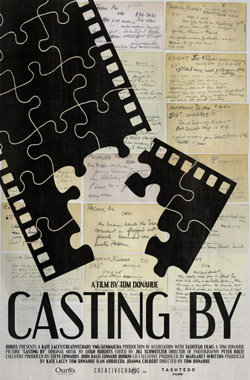
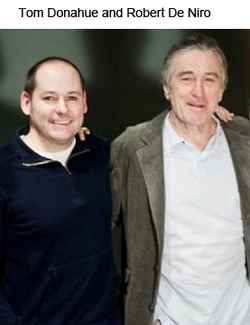
That’s why CASTING BY, A Feature Documentary by Tom Donahue with Martin Scorsese, Woody Allen, Clint Eastwood, Glenn Close, Robert Duvall, Jeff Bridges, Al Pacino, Robert De Niro, Diane Lane, Jon Voight, Bette Midler and John Travolta, puts the spotlight on the casting directors – on filmmaking’s unsung heroes.

CASTING BY takes audiences on a fast-paced journey through the last half century of Hollywood history from an entirely new perspective. The film showcases pioneers like Marion Dougherty and Lynn Stalmaster whose exquisite taste and gut instincts helped to put the final nail in the coffin of the old studio system and usher in the New Hollywood.

“Casting directors are very important,” shares filmmaker Tom Donahue. “The one thing that surprised me incredibly was, ‘How has this story not been told yet?”

Well… the story will now be on display for the world!

You can catch CASTING BY on HBO within the year, as well as at the upcoming New York Film Festival (October 12th) and Woodstock Film Festival (October 14th).

And for NYCastings members, here is a special sneak peek from Tom Donahue on…

10 FACTS EVERY ACTOR SHOULD KNOW ABOUT CASTING DIRECTORS:

1. When you walk into an audition, the casting director is with you.

Casting directors want you to be right for the part because they want to be done. They want to find the right person for the part. They are not against you. Actors need to see the casting director as a friend, as someone who supports them.

2. If they like you, they will keep bringing you in for other parts.

In CASTING BY, the people interviewed were shocked by the level of support they got.

Al Pacino shares that “Marion brought me in for everything.”

John Travolta talked about how much support Lynn Stalmaster gave him, how he never stopped bringing him in until he made him a star.

3. Casting Directors succeed when you succeed.

In a sense, there is a certain pride that casting directors get. When Lynn Stalmaster finally cast Travolta in WELCOME BACK, KOTTER it was the fulfillment of a dream for him to see this young actor he saw promise in, fulfill his potential.

4. You cannot guess what the Casting Director thinks about you!

Marion Dougherty took a chance on Jon Voight, and he failed. Jon thought he would never work again. He wrote 6 letters to Marion trying to apologize and never had the guts to send them.

Jon might have disappointed her, but the genius of Marion is that even if someone failed an audition she could still tell they had potential.

5. It is up to YOU to build a relationship with the Casting Director – by doing a great job.

Jeff Bridges says, “I go into the audition and treat it like a performance.”

Have fun with it. Don’t just think about whether or not you are going to get the part. Don’t think it is the end all and be all. It is about continuing to build a relationship with the casting director.

6. There is a lot of risk involved in casting a film.

Casting the film is one of the most important parts of the film, and it is all about having really great instincts. The level of knowledge and passion that these people have for their craft is very important to filmmaking. No one thinks about it, and as a result casting directors are thought of as people pushers or list makers, and there is so much more to it than that. There is not a director alive who would know the entire talent pool around the world, and that is what a casting director provides. There is this creative art to reading a screen play, having all these characters in your head, and understanding who is right for that part.

7. Casting is not all about YOU!

Casting is an alchemy. It is character interpretation, but also how that character matches you as well as what it would do to the ensemble if you were that part.

Actors think they can play any part, that if they walked into the audition there isn’t any reason they shouldn’t get the part. You can’t know if you are right for every part because you don’t know who you are playing against. There is an alchemy that happens between the actor and all the other actors in the film. Part of being a casting director is the art of putting together an ensemble.

Glenn Close calls it a “living organism,” ensemble work.

It is mostly instinct and intuition. A lot of times a film doesn’t work because it is not cast correctly. There are so many aspects of a film that if done wrong can derail a film.

Margery Simkin’s did the casting for AVATAR, and she also did the casting for BEVERLY HILLS COP. At first, she cast Sly Stallone and then he dropped out and Eddie Murphy got the role. It went from an action movie to a comedy and they had to convince the studio that all the people that were cast with Sly didn’t work with Murphy. They had to cast all the other parts around Murphy. A great majority were replaced.

Actors have to see that it is not about you, it is about the company of the people who make the movie. Each of those actors in that Sly movie were right for the part. And then, as soon as Sly left they were no longer right. So it was not just about them

8. Casting isn’t entirely glamorous.

Beyond the artistic side, there is also the organizational side to casting. The casting director has to figure out not only “Is the actor right for the part?” but “Are they available for the time we are shooting?”

You can have your ideal cast, but what if none of them are actually available to shoot? So, there is always compromise. That is part of the art and the balance.

What happens is that the leads are cast first. And a lot of times they are attached by the producers, before casting directors even get involved. So they are casting top down around those central characters.

9. Casting Directors may seem guarded for a reason.

Never touch a casting director. This became such a prevalent thing in the interviews of CASTING BY – times when there was physical violence or inappropriate touching. That is not the way to be remembered.

There are true crazy people out there. Once you invade the casting director’s physical space, they are not going to remember whether you are right for the part.

10. Casting Directors have incredible memories.

That is why it is important for actors to do something that makes them remember you. Be memorable. Don’t just come in and do your reading and leave. Be loquacious.

With Travolta, he said that he came to LA and didn’t know anyone. But he had a meeting with Lynn Stalmaster and when he walked in to the room Lynn immediately got a sense of him. They had a short discussion, and after a while Lynn was casting a lead in THE LAST DETAIL and John Travolta popped into his head. Lynn didn’t recall John because he had a great reading. There was a certain essence that he communicated to Lynn. All great actors have an essence that the casting directors pick up in their brain. There is a data bank in their brain of that essence, and that becomes the short list of who is right for that character.

Lynn has this genius memory. He not only remembered the actor, he recalled the day and time he called the actor back.

You are in their head, you are always in consideration. Janet Hirshenson and Jane Jenkins tried Meg Ryan for PRINCESS BRIDE, and it didn’t work. They tried her for other films, and it didn’t work. They had yet to find the material that was right for her. And then, finally, they got WHEN HARRY MET SALLY. They knew she was perfect for it. It probably took three or four years.

Julia Roberts came in to read for MYSTIC PIZZA, for the part of a working class brunette. On the way to the audition her car broke down and she was an hour late, so she already had a strike against her. And then she was blonde and elegant, totally wrong for the character. Julia starts to read the script, seemingly not right for the part, and Janet and Jane said “I like you. I want you to dye your hair brown and wear something trashy.” They gave her the entire script, which was not something they normally do, and they had her come back. She got the part that made her a star

— WOW —- That is a lot to learn about the art of casting. Thanks to Tom Donahue for these 10 tips and for the eye opening documentary.

Actors, please LIKE – CASTING BY – on Facebook, and check out this important film! TRAILER HERE.

ABOUT TOM DONAHUE – DIRECTOR, CASTING BY

Tom Donahue was born in Rhinebeck, NY and is the co-founder of CreativeChaos vmg. Donahue made his directorial debut in 2005 with the narrative short Thanksgiving, starring James Urbaniak and Seymour Cassel & written by Sean Gullette. He made his feature directing debut with the documentary Guest of Cindy Sherman (5 stars – Time Out NY), which premiered at the 2008 Tribeca Film Festival to rave reviews. Donahue has also produced and edited numerous features and documentaries, which have won over twenty-five awards combined at such prestigious festivals as Sundance, Cannes, Berlin, Toronto, SxSW, Venice, San Sebastian and Tribeca.


masteryourauditions

When it comes to auditions, we’ve all heard the skipping record telling us that “we have to calm our nerves,” “be natural,” and “not be appear as if we NEED to book the role.”

But these sound bites of advice can often confuse instead of helping us focus on how to consistently make the most of every audition.

That’s why, NYCastings sought insight from acting coach Bob McAndrew who has been praised by many celebrity students including Christopher Walken, Chris Cooper, Sela Ward, and John Stamos.

Here’s how to master the art of auditioning…

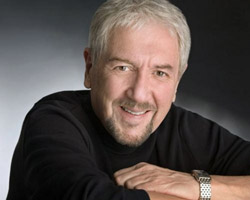
Q & A with Director, Writer, Teacher – Bob McAndrew

Q: How do you help actors to master auditions?

I do a lot of exercises that help people realize what comes up for them when they face casting directors. What needs do they have, emotionally. Sometimes, there is so much pressure – “I should be this. I should do that. I should. I should.” It pounds them on the head.

People want you to succeed. They want you to come in and look at them and say hello and appear like someone who would be nice to be on the set with, who doesn’t look like a wacko who would cause a lot of trouble. And then, before you begin, you need to take a moment. That is a sign that you are a professional. You are taking your time; you are not trying to please us. You are doing your job. The needier you are, the less you will get. You come in with NEED written all over your t-shirt and its like forget it. No one wants to be around that.

Q: How can an actor drop that feeling of NEED?

It is not a quick fix thing that you can learn overnight.

You’ve got to know what your relationship is to the third world, to the people who are watching you. Can you be free to do what you want to do in front of these people? Or do you need their love and approval?

I believe that it is possible to be free – to a great extent. Maybe not all the time, but to a large extent. And when you are free, you can have a lot of fun. Little kids are out there just playing in the playground and having fun. The more fun you are having, the more people will want to watch you. Even if you are playing a tragic scene, you can still make fun choices. Even if you are playing the bad guy, a fun choice is still something that you want to do over and over again.

If you are not so desperate about it, you will have more fun and go out again. And sometimes you go out a lot. If the agent gets good feedback, they will continue to call you out.

Q: How did you get started with coaching?

I was an assistant to Wynn Handman, a famous acting teacher. He is 90 years old at this point and still teaching. He has probably trained more successful actors than anyone in the business: Denzel Washington, Alec Baldwin, Mia Farrow. I learned how to teach with a master, and it was like serving an apprenticeship. So I am not just an actor who became a teacher. I served a long period with him and then started my own business here in NY. Then I moved out to California where I met Lucille ball, and then I became head of talent program at Paramount. After Paramount, I became the head of talent development at 20th Century FOX. My background is interesting because I know what it takes to make it in this business – what film acting is all about. It is a different domain than theatre.

Q: What key advice did Wynn Handman give you?

It’s really all about the way you deal with people. He taught me to believe in people. To be gentle with people. And, to really create an atmosphere in which they can grow.

Q: What are some of the key causes of auditions going wrong?

Tension. Tension. Tension.

You are freaked out about appearing in front of a casting director, you don’t know what to do. You have to realize that you have to go in and make contact with whoever the auditors are – the casting director, the director, the producers. You are making contact with them. “Hello, I’m Bob McAndrew.” And then, before you actually read or do your monologue, sometimes you have to take a moment and get into character. A lot of actors will not allow themselves to do this. They feel like they don’t have the right. That they are imposing. Sometimes you have to turn your back for a second, take a breath, and then go into the scene.

The tension is tangible. It is physical tension. You have to go in relaxed, and don’t have big expectations. The expectation does not allow you to really enjoy the process. Expectations lead to upset, always. There is a trick you can play on yourself. You can change your expectation to a preference. “Of course I would prefer to get this part and make this money, of course I would.” But, if you have an expectation it is going to wreak havoc in your system. It will not allow you to do what you can do, to work moment to moment, in a relaxed and confident way.

Know what you are doing, be confident.

Q: What do you wish actors would realize about auditions?

That you have to give a performance. They have to get a feeling that you can reach the highest levels. You have to create a character they can visibly see, that stands out, so that at the end of the day they want you and not the others. You have done something so extraordinary that the competition can’t touch you. There is something you have done that no one else has. You have done a performance and created something unique. You have given them more than what was expected. You gave them something new.

Most actors go in and read for the role. They do something, but not nearly enough to win the part. If they never really learn the art of auditioning, the agents get tired of sending them out and the individual actor loses confidence.

Even if you don’t get the part, if you make a good impression, there is always another day. You won’t get every part you go out for. But you can leave an impression, and they will remember you.

Q: How do you make a strong impression?

You have to be willing to be bad in order to be good. That means you have to be willing to take a risk, and that means you make strong choices rather than the middle kind of choices a lot of people make. The 70% choice. The safe choice. You have to risk failure in order to win.

In every given scene you have an objective. There is something that you have to accomplish. If you don’t accomplish it, it will affect your life. So sometimes you have to say to yourself “what am I fighting for in this scene? And what will happen to me if I don’t get this raise? This promotion? What will happen if she rejects me? I have the engagement ring in my pocket, and what will happen to my life if she rejects me?”

When you realize what will happen to you if you don’t get what you want – that raises the stakes up very high.

Based on these choices, when you come in to the room your motor has to be running. You have to already be in that highly charged emotional state. You have to think of yourself as being in the emotional delivery business. Unless people are moved by what you do, unless they feel something – whether its sadness, or happiness, or laughter, or anger – whatever it is. Unless they feel something, the audition is not going to amount to much. It might be OK, but OK is not good enough.

Q: How do you help actors make strong choices at auditions?

Generally, when you ask people what their objective is in the scene, they can’t tell you. There is some kind of a block. It takes a lot of understanding. You have to understand that acting is wanting and doing. Sometimes there will be a boy and a girl scene and you will ask the actor “what do you want from her?” and he will say “I want to get to know her.” No. Your audition will be over in a few seconds. People will lose interest. It only takes casting directors 30 seconds to know if the actor has something, if the actor is alive. So you explain to the actor that the choice of “I want to get to know her” isn’t active.

The way you language your choice is by choosing an active verb. What are you doing? Are you seducing her? Is that doable? Yes it is. OK then, you are on the right track. Seduction doesn’t mean sex. It means, “You look beautiful today. I love the color of your dress.” There is something you are actually doing. That will take you through the entire scene. Maybe at the end of the scene she reaches over and touches your hand, and so you have accomplished your goal.

Make sure you are using an action or an active verb. Some people get it right away and others don’t. Acting is wanting. It is also doing. There is something you have to do. What is my active verb? To console, entertain, to intimidate? There are millions of them. It is a technical habit that you have to get into.

I tell actors that if you make a choice and it doesn’t make your heart beat then go to another. Unfortunately, a lot of people make a choice and it is not working for them. When you make a strong choice, you can feel it in your body. And often, it is not comfortable. Strong choices will get you out of that comfort zone. Comfort zone is not where you to be. You want to be uncomfortable.

It is making your heartbeat because there is uncertainty.

Q: What inspirational advice do you have for actors?

Here is what I tell people.

Every day, in every way, we are better and better. You have to just realize that the old cliché ‘with practice you become perfect’ is true. You work on your body, your body becomes more elastic. You work on your voice, it sounds better. You get up in front of people more and more, and you get more comfortable to the point that you can’t wait to get in front of people. It is about being patient, believing in yourself, and realizing that you get better and better as you practice.

It is like fine wine. I am a wine connoisseur. I can tell you that when you open a bottle of wine, a fantastic bottle of wine that has been in there a long time, it is really something. And, when you watch an actor who has been around, like John Gielgud in Arthur who plays the butler, he is just fantastic. You have more life. More experiences. As you get older, you get better and better.

– WOW! Thanks Bob McAndrew.

www.bobmcandrew.com

webisodetopaid

You’ve heard of “being in it to win it” + having “a dollar and a dream.”

Well… if you want to become a successful web video creator – all it takes is a camera and a compelling idea! So get ready to put your creative talents to work with helpful advice from these successful storytellers.

First up, web video battle tactics from…

Matthew Semel – of Cowboy Bear Ninja

Cowboy Bear Ninja – is a collective of cool storytellers comprised of Matthew Semel, Miguel Drake-McLaughlin, Rufus Lusk, Hilary McHone, Adrian Selkowitz, and Corey Tatarczuk.


Recently Matthew Semel created this bit of web hilarity – Tracy Morgan in 140 Characters or Less.

So Matthew…

Q: How did you launch into creating web videos?

I got started with a company called 10 Ton. We thought web video was going to get where it is now, very quickly. We didn’t realize it was going to take a while. We began trying to make it an advertising company. We did carded.tv (video ecards!), which we viewed as a slightly different way to do a web video. And then, the next thing I did was the Nickelodeon show, which was a work for hire. Now it seems like most video work is just for the web. So many companies are doing it. They have these great distribution options.

Q: Why did you get into creating web videos?

When it was coming out it just seemed like a smart place to be. The web had already proven itself as a place to make money. It just seemed like the next step; a place you could grow without much competition. Now that has changed.

Q: Can someone who is just starting out now – still make a living at creating web videos?

I really think it is just like any industry. You can make a living out of it. And, it comes down to your contacts – who knows you and who will hire you, and that is just a matter of effort and time. The more time you spend networking, the more you will get out of it.

Q: Did you make money right away with this company / projects?

For most of the time, I was sticking with my regular commercial work and animation. But over the years I have met with a lot of studios and network.

Q: Did meeting all these people help your work grow?

Between doing those first web videos and starting a meetup group called – BigScreen LittleScreen – and being in the space for a long time, it has been helpful. I got to see what people do and learn more about what works, and what doesn’t work. And that seems to change a lot. People will say that videos have to be short, and then they will say it can be long. I think the only rule that always applies is that it has to be interesting right away. A good example is the blog kottke.org – a very good blog that has been around for a long time. Everything he posts is interesting. One problem that a lot of people have is they waste 90 seconds and then get to what is interesting. In web video, you have to make the first 15 seconds touch people.

It’s just like when you visit a website and the page takes a second or two to load – you give up on it. And for web videos, it is the same thing.

Q: What made you begin the bi-coastal meetup group – BigScreen LittleScreen?

I co-founded it over five years ago. It is a place to come and show your work. A lot of times, when you make a video and put it on the web the only feedback you get are comments. And you know how comments go. The meetup is a way to show your work to a group of people and get real time feedback. See where people laugh. See what works. It is completely different to show your work to an audience.

Q: What are some good ways to network and build contacts?

In terms of networking in NY and LA it is easy. Go to meetups and tech events. Just be around to find out about more events. On top of that, it is nice to network outside of the space in other industries because those are people who might hire you.

Q: How do you make money off creating web videos?

If you can find the right target for a client, it is not that hard to make money. Everyone wants video right now. A lot of people still don’t realize that video actually costs money. But others are aware and very into it. A growing market is web videos for startups that demonstrate their product. I am actually teaching a class on this in two weeks at General Assembly called Show & Tell: Make a Video for Your Startup.

Q: Which are most successful web videos?

The most successful web videos are not the kind of thing I am doing. I went to film school and come from the background of making movies with people behind them. The budgets of web videos do not support that. The people who are most successful are the individuals. The people on the YouTube partner programs who do everything – actor, director, and editor. The one man or woman band makes the most money.

There is a real formula for success: To make something, to make it frequently, to have audience interaction, to be authentic, and essentially to just do it yourself.

For one person, $100,000 is a great income for being creative and loving what you do. But $100,000, when you have a crew of eight people involved, is not enough money to make it full time. That is why the smaller people have been so successful. And they are sought after by advertisers.

Q: Advertisers actively seek out web video creators?

Yeah. There are platforms that read the channels and connect them to the advertisers. Brands are looking for those people. The Collective is the biggest agency for it. They connect people just like any other agency would do.

Q: How do you create authentic, unique content?

Whenever we get a project we make sure we spend time on it, even if it is a crazy rush. Thinking about the creative side of things, and how to do it in a good way is very important. We try to standardize our production. Every time something comes up we have a list of questions. So even if we are shooting in two hours, we have the list to look at – Have we thought about visual style? How to tell the story? Even if is an interview, we go through the list. It forces us to not go forward unless we address the issues.

Q: Can regular videos – webisodes, or a one-off video, make someone money?

Yes. People get discovered doing that kind of stuff. Isn’t that how Justin Bieber got started?!

Q: Who? What! Never mind. Moving on ; ) — WHAT is your advice to actors who want to create their own material for the web?

Just do it. You can do it any way you want. You can shoot it on your iPhone, if you want to.

It does pay to learn a little of the craft. Learning filmmaking and storytelling is going to make your stuff better. And there are great books. Also, getting on other people’s sets is a great way to learn. That is what you do in film school. People will always want you to work for free. Even if you have zero experience, they will let you work for free.

Thanks Mr. Matthew. – To learn more from Matt – take this class on August 27th in NYC Show & Tell: Make a Video for Your Startup.

And now I proudly present Story Developing guru’s…

Ryan Lynch and Matthew Walker – Creators of StoryDeveloping.com

Story Developing LLC is a short film making, strategy driven, bi-coastal living, cost cutting, behavior changing team of marketing minded, video producing professionals. They make short films for companies and brands that want to use the power of storytelling to connect with their target.

Q: What kind of webisodes / online content have you created?

As partners of Story Developing, we (Matt Walker and Ryan Lynch) bring a huge variety of experience with online content. Matt produced a series of web videos for Mitchum Deodorant and Dockers and most recently directed a series titled “A New York Story” that appeared on the Huffington Post. Ryan’s background is in strategy at traditional advertising agencies helping brands like Campbell’s, Dannon and Esurance. Together, the duo most recently produced an online video for a new camera company called Lytro, titled: “Love Love Love.”

(This, FYI, held casting through NYCastings!)

Q: What got you started in creating online content?

Matt was producing a huge variety of online content — some for brands, others for entertainment. Ryan realized that if we could merge his understanding of branding with Matt’s ability to produce beautiful and interesting stories, we’d be in a position to help brands connect to people.

Q: Can you make money off webisodes / online content?

Absolutely you can make money. There’s tons of data showing huge increases in online video, it’s just a matter of figuring out your niche. You need to either produce content that consistently draws an audience — like Revision3’s “Epic Meal Time” — or you need to help brands produce content w/ a brand message.

For us, it’s about working with brands. Specifically, we realized that every interesting brand has an interesting story. If we can help brands tell that story (via online video) in a way that connects to people, we’ll earn a decent living. Make no mistake, brands realize the importance of connecting to their target online. AND, brands are like everyone else, they’re tightening their budgets and looking for more efficient ways to create content — we provide a much more efficient model than an ad agency could ever achieve.

Q: What does it take to succeed, what level of quality?

Quality is obviously important – but in the end it’s the story that really matters. If you can consistently tell compelling stories, you’ll do great. Stories conjure emotion, they’re remembered and most importantly, stories get passed along. Consistency is also a huge factor no matter which route you take. You need to prove to the person writing the check that your work is worth their money.

Q: Are there certain types of online content that is most marketable?

The obvious answer is to tap into pop culture. But, I think the better answer / challenge is about bringing your content to the world faster than anyone else.

Q: What is your advice to actors who want to create their own material for the web?

Keep It Simple. The simplest story told in the least amount of time is usually the one that is remembered and passed along the most.

Q: AND, of course, tell us about Story Developing and how you got your company up and running!!!

Ryan recently broke his back in a ski accident and when Matt came to visit we started talking about the importance of doing something you really cared about. We decided at that moment to do something. What we realized was that we both brought a unique skill set to the table that met three important trends happening in the advertising market place:

1. People connect to stories.

2. Video is increasingly how people consume information.

3. Efficiency is mandatory — people, brands and marketers.

Together, we’d provide strategically sound, beautiful brand stories.

SUPER COOL. I Love Love Love it 😉 Thanks guys!

And finally – insight from a gal who is just getting her webisode sea legs wet…

Veronica Dang – Creator of Subway: The Series

Veronica Dang was born in Pennsylvania to a family that barely escaped Saigon alongside the last U.S. troops in Vietnam. Settling in Virginia just outside Washington DC, Veronica was following a traditional Asian-American path – classical pianist starting at the age of 5 then receiving a B.S. degree in Biochemistry on her way to medical school – when she was unexpectedly blindsided by the magic of film, music, television and theater. She studied acting at the American Academy of Dramatic Arts, improv with the Upright Citizens Brigade and training with acting legends including John Barton and F. Murray Abraham.

Q: What kind of webisodes / online content have you created?

A scripted comedic webseries called Subway: The Series. It follows a Pennsylvania Dutch IT girl who got shunned by her adoptive parents and is struggling to survive in NYC with the help of an aspiring sandwich “artiste”. Each episode is inspired by real subway characters/events and features local NYC indie musicians.

Q: What got you started in creating online content?

As an actress I am always told to create my own work. But it wasn’t until a trip to LA for this past pilot season that everyone there (teachers, coaches, casting directors, other actors) was either recommending or creating their own online content. For a few years I had been sitting on an idea to create a series that reflects the real diversity and craziness of NYC that I and many others witness on the subway.

Q: Can you make money off webisodes? I hear and read it is possible but highly unlikely for first time webisodes.

Successful series tend to have good production value, clear niche (sci-fi/gaming very popular) with built in audience and lots of funding. Very helpful if there is a good publicity angle – major product branding, celebrities, popular TV show, etc associated with it

Q: What is your advice to actors who want to create their own material for the web?

Just do it. But definitely be clear about why you are creating your own work, what you hope to get out of it and feel passionate about what you are doing. Especially since producing is stressful and if you want people to see it then marketing is even more work.

Q: AND, tell us about what you have going on in your acting world!

My whole life now is revolving around getting Subway: The Series made. But I performed my dream role of Helena in Midsummer Night’s Dream in England, and got cast in the lead role of an indie feature about high stakes gambling.

Congrats Veronica! Keep up the momentum.

Now readers – what are you waiting for? Pick up your camera, form an idea, and create web video magic!

howtogetyourshowoffbroadway

It’s not AS complicated as you’d think, and totally worth it!

All the world’s a stage… yet what does it take to get your act Off-Broadway?


The answer can be as simple as “writing your own stuff” +  finding “a way of workshopping” + being  “confident about the story” – according to Cory Terry, co-writer of the Off-Broadway hit Channeling Kevin Spacey.

Office Space meets Scarface in Channeling Kevin Spacey (CKS)the brainchild of Cory Terry and Elan Wolf Farbiarz, which opened off-Broadway at St. Luke’s Theatre and is now at the Roy Arias Theatre Center @ the Times Square Art Center (300 West 43rd St, 5th Fl).

“The premise is a guy who is unhappy in his life but seeks solace in his Netflix queue,” according to Cory Terry. “One night, while watching movies, the guy decides he is going to make a change in his life and become someone more like Al Pacino. On the first day he is embodying weaker movie characters. Then, he becomes more of a manly Pacino character with gold chains, and that makes his life even worst.”

This hilarious comic romp made its debut at the 2008 Winnipeg Fringe Festival, where it promptly sold out each show and garnered the prestigious “Best of Fest” award. Following its success in Winnipeg, CKS was accepted into the largest theatre festival in North America, The Edmonton Fringe where it won another “Best of Fest” award. The show went on to win the same honor at the 2009 Toronto Fringe Festival. 

Reviews poured in for CKS calling it: “A Creative Madcap Imagining!” —Theatremania,  “Satisfyingly Bright!” —NYTheatre.com, and “Good chemistry, tight direction and soul-blackening humour make Channeling Kevin Spacey a must-see!” — Toronto Star.

With their fringe success loaded in their back pocket as rocket fuel, Cory Terry and Elan Farbiarz launched their show into the big leagues of New York City!

Here is a plotted chart of their path to Off-Broadway…


Q & A with Cory Terry

Q: How did you got started with the Channeling Kevin Spacey project?

I co-wrote the show with a friend and he took it through Canada, through the fringe circuit, where it won the Best of Fest award at Edmonton, Toronto, and Winnipeg. We got good buzz there. 

The show was only 45 minutes at that point, and we knew we had something interesting. So we lengthened it . The show is two characters. One plays the lead, Charlie, (JUSTIN R.G. HOLCOMB) and the other plays all the other characters (JAMIL CHOKACHI). It is minimal characters and set pieces. In the 45 minutes you got the broad strokes, and we lengthened it to 80 minutes. There were places to play within the script. How would a weak Spacey type of a character handle a situation? How can we flush out the love story? 


Then, went to Broward Center in Florida, to their 600 seat Amaturo Theatre. We did a weekend run there just to see how it would work on a bigger stage. And it went well. But we added a third actor to play the female roles and it lost something. Adding the extra actress lost some of the humor of guys playing girls. Also, we found that we lost something in the bigger space. In the fringe were doing this show in a 100-seat theatre, where it was intimate. After Fort Lauderdale, we made edits. Went back to the two characters and thought it would work well in a small Off-Broadway theatre. 

We went to New World Stages, and a couple of other theatres, but it was so expensive. The learning experience is – you really don’t have to do a full eight shows a week, because it is so expensive. You are paying rent for the whole week: Equity, marketing, flyering teams. There is a lot off costs for the full run. 


Finally, we found St Luke’s Theatre. I would definitely recommend it to anyone trying to launch something Off-Broadway. St Luke’s Theatre knows that the model has changed, that not everyone has 300k to launch an Off-Broadway show. So, they have week slots and sell rental packages. We started with two shows a week and that cut our costs dramatically. It wasn’t nearly as expensive as a full week. We got reviews here in New York. We got word of mouth and buzz. We went to three days a week and played from April 17th, 2011 through July 2012 – 16 months at St. Luke’s Theatre.


Q: What gave you the confidence that you could bring the show Off-Broadway?


The fact that it was well received in other places helped. It was tried and true. The fringe festival was our way of workshopping. We had been in the audience enough to know what worked. 

I think it is a lot scarier to take something you just wrote and try to throw it up Off-Broadway. Here, we had that kind of workshopping between fringe and Fort Lauderdale. And when we changed something, we saw what didn’t work as well. 

The show has just been something we have always been confident about. And the investment wasn’t huge. I was not going to go into debt if it failed.

Q: How much does it cost to put a show up Off-Broadway?

With a two show slot system like we did, plus marketing and the upfront costs – you could launch something from 40 to 50 grand. That includes actors, rehearsals, Equity, marketing, paying a press agent, a general manager, a director, and a stage manager. That’s all in. 

We did a couple of things that saved us money. We wrote it ourselves, so there were no royalties on that end. We directed it ourselves. Those two things alone saved us a lot of money. If someone is doing someone else’s work, that is going to increase costs. And, maybe for those on a shoestring, a show can be done for 30 grand or 25 grand; just to get off the ground with the right setting. 

Again, we had two actors. If you have a cast of 20, it is going to cost more. If you are a musical, and have to pay a band, you start adding that up and it could be around two grand a show before you even pay the rent for your facilities. Plus, you give 5% of all tickets sales to the theatre.  The numbers can get up pretty high, pretty quick.

Q: You majored in accounting! How in the world did you get into writing, directing and producing Off-Broadway?

The person I worked with, Elan Farbiarz, was really the one who said, “let’s write a show together.” 

He was performing on the fringe festival in Canada, with other people’s work and thought, “Why are we paying people to perform their work? Why don’t we write our own stuff?” 

I was working 80 hours a week at my accounting job and was like, “Yeah! Anything else but taxes.” 

He was in Florida, and London, and Canada. We were never really in the same place, so we just wrote back and forth. We wrote Channeling Kevin Spacey and another play, The Movies (abridged)

It started as something fun, and then I went to Canada to watch the play on stage for the first time. Seeing what you wrote on the stage, seeing how people respond to it, is a really good feeling. When the Broward opportunity came up, we worked on it there. And after watching that run, and having a stable day job and a couple bucks to invest, we decided to put it up in New York. Day jobs serve their purposes. 

I’ve always loved theatre, movies and writing and it was really just an opportunity that presented itself, that allowed me to do this.


Q: What kind of help did you need to get the show up and running – producers, agents, crew, etc?

We produced it ourselves, there were no investors. 

We each had savings, and it is amazing what you can do when you borrow from your 401k at low interest rates. 

We are going to be doing a bigger show next, we are writing a musical tentatively titled Ponzi Scheme the Musical. It is going to be a sort of on its head Bernie Madoff type story, and we are working with a talented musician. On that one, we will try to go to a bigger theatre with an eight show a week run. Maybe at World Stages.  From there we will have to get investors because that is just the nature of the beast, unless you are independently wealthy. 

Of course, once you do a show yourself and it is positive and profitable, it is amazing how willing people are to invest in you versus just saying “we did a couple of fringe shows and it was fun.” 

That should help in raising funds for the next one.

Q: How did you figure out the production costs for CKS?

We had an idea of how much it would cost because we did budgeting and took into account what everyone was quoting us. We figured that if they said “this amount,” it probably meant “that amount.” 

We knew that we had enough money to cover the costs and run for a month and a half, even if no one bought tickets. We knew we would run for at least that month and a half, maybe two months. We hoped we would sell tickets, and that would get us more shows. We went in as an open-ended run, with no plans of closing. But who knows. If word of mouth dried up, or tickets sales – it was always up to the ticket buyers. We were not going to take a long term loss. That was a little scary, but we lucked out and it was well received.

Q: How did you get press?

We had a press agent who sent out some press releases and stuff.  But we were only two shows a week, and it’s hard to get reviewers to your show when other people have eight shows a week and are paying their press agent a lot more money. So we parted ways with the press agent a few months into the run and did a lot of our own press. 

I found that with press, the important thing was a professional looking website. Having a presentable web presence is so important. We spent money on designing rack cards for passing out, and posters that we didn’t use as much. 

Having that professional looking material, along with the quotes from all of our fringe shows, was very valuable. People see the quotes and see that the show is a known entity. And of course, having Kevin Spacey in the title of the show doesn’t hurt either. It helped in getting press.

Q: What advice would you give to others who have written their own show? 

I think that a lot of people don’t  know that you can do an Off-Broadway show. You have to deal with Equity, which can be difficult. There are all sorts of fees being an Equity production. But once you get past all that stuff, it is a really great opportunity.

WOW! Inspiring. Congrats to Cory Terry, Elan Wolf Farbiarz, and the cast of Challenging Kevin Spacey (Bios below).

Now  – Zip over to your e-ticket booth now and get seats to this show!

Cory Terry (Writer)

Cory has spent the last three years writing in New York City. Before co-penning Channeling Kevin Spacey he contributed material to the fringe hit The Movies (abridged). Cory has received writing accolades and awards from both foreign and national press and organizations. His work has been covered throughout the blogosphere and praised in print by dailies like The Toronto Star and The Star Phoenix.

Elan Wolf Farbiarz (Writer/Director)

Elan Wolf Farbiarz has spent the last five years producing and directing shows across the United States and Canada, receiving top honors in Toronto, Edmonton, Winnipeg, and Orlando. In addition to producing, he has written several comedic shows. Farbiarz has appeared in and produced international tours of The Bible (abridged),The Movies (abridged) and Channeling Kevin Spacey. Drawing critical success and sold out audiences in every city he has produced in, Farbiarz has also garnered several Best of Fest awards throughout the fringe festival theatre circuit. Farbiarz was born in Toronto and currently resides in Fort Lauderdale, Florida, after spending the past few years in rainy, grey England.

JUSTIN R.G. HOLCOMB (Charlie)

Justin R.G. Holcomb was most recently seen as Wray in Monster with Pan Asian Repertory.
REGIONAL THEATRE: A Christmas Story (Actors Theatre of Louisville); Unnecessary Farce (Gulfshore Playhouse); Katsaros & Wilson’s Great Expectations (Mill Mountain Theatre); Jekyll & Hyde and West Side Story (Gateway Playhouse). OTHER THEATRE: Katsaros, McCullough, & Greer’s Orphan Train (Pat Birch- dir.); Henry VI part iii (Wide Eyed Productions); 365 Days/365 Plays (The Public); Richard Foreman’s Georges Bataille’s Bathrobe (The Brick); The Delphinium Mansion by Libby Leonard (American Globe, 2econd Stage), As You Like It (Reduxion Theatre Co.),Young Zombies in Love (Jackson Gay, dir). ADDITIONAL CREDITS: Teen Party Massacre! (written and composed by Col. Holcomb and John D. Ivy). Col. Holcomb is a proud alum of the University of Oklahoma; a member of Actors’ Equity, The Screen Actors’ Guild, and The Dramatists Guild; and a member of the Honorable Order of Kentucky Colonels.   www.JustinRGHolcomb.com

JAMIL CHOKACHI (Multiple Characters)

Jamil Chokachi just returned from a national tour of the musical Cabaret where he was the Emcee understudy. Credits from LA and beyond include Tobias in Sweeney Todd, Arturo Ui in Brecht’s The Resistible Rise of Arturo Ui, Freddie the American in Chess, Dromio of Syracuse in Comedy of Errors, and Puck in A Midsummer Night’s Dream in Frankfurt, Germany. As a director, Jamil has mounted such challenging productions as A Piece of My Heart, In the Heart of America and Marat/Sade.  www.jamilchokachi.com

prettyfunny copy

Gal power packs a one-two punch of honesty and hilarity whirled into an artistic performance that you can’t take your eyes off of in a show called “Entrance with charge – two girls smoke a cigarette in only 30 seconds!” – part of the Zoofest Comedy Events in Montreal.

After seeing this show, I hereby declare to all femme fatales who aspire to be comedians… pretty, funny is the new, old way of landing sought-after laugh lines. Just like Lucille Ball and Bebe Neuwirth blazed trails with their raw charm and razor sharp minds, the duo of Margherita Bergamo and Tuixén Benet exude funny by owning their feminine wiles.

So NYCastings ladies – get ready to grab your beautiful bulls by the horns – to learn about becoming a powerhouse in comedy, with this inspiring insight from the women of LES FILLES FÖLLEN.

Introducing: Margherita Bergamo and Tuixén Benet (speaking collectively)


Q: Tell us about your show – Two girls smoke a cigarette in only 30 seconds such a unique blend of dance and comedy.


The story originally came from dance. We used performance ideas for the development, started from a construction that was open dramatically. One of the main things we wanted to do was to make sure that in every piece the audience feels a part of it. We didn’t want it to feel like most times in dance where it can be separating, especially in ballet, which is the most unattainable thing to do. We wanted to be close to the audience and make them feel that we are the same thing. To make them be able to come into what we are doing.

We weren’t supposed to do a comedy, but the first part is a presentation of us and it became a comedy thing. We knew we weren’t being very serious, but we didn’t think we would be becoming to a comedy festival. We arrived to what we have from a previous idea. We began with cabaret, using cabaret conventions, and then it got more comedic so we used comedic conventions.

Q: In your opinion, what is the difference between male and female comedic performers?

The first night here in Montreal we saw The Nasty Show and it was different because most males use the sexual differences in their comedy in a way that puts us women as bad. Although, I think it used to be easier for men to get laughs because there were more male comedians. But in Spain, there are women comedians who are beginning to do their own work.

Q: Your show has great girl power as a two person team, what is your approach for blending your natural female charms with bold, humorous choices?

We started working on appearances. How do appearances affect people? The audience? And each other? So we started playing with asking for things and then not using them. Because we are two females, the charms come out. And that is in the appearance. It is what you transmit to a person in front of you. Then we worked on the look in the eyes, which can be really long if we have a lot of time. We experiment in that type of situation, with the idea that if I ask for something new from someone that just for being pretty and a good person I can have it. We’ve performed this in a lot of places. We’ve performed it in the street and play with the reactions.

Q: How do people react?

Someone in the street told us “You’re not that pretty.” Another said, “I am pretty too” and took a cigarette. Anything is fine. If someone doesn’t like it, that is fine also. It is normal. It is good to have reactions. Of course, it is good to entertain also.

Q: Your show layers a very unique style of humor above intense moments of emotional truth, what comes first as you write your work – the kernel of truth or the humorous thought?

The show is very truthful. We started doing the second part as a dance show and we came up with the cigarettes because we had to do a show at a place where they were selling cigarettes. We actually came up with the idea to do something against them. To show them. To take the cigarettes and break them. The construction is based on a choreographic way of constructing. Like writing, you can write something and then construct it – and then write something else based on the previous scene. But then change your meaning, playing with the words. In the same way, we played with movements, and then with cigarettes, and then we played with the whole thing to move parts of the first half into the second. It is a chorographical constriction. We start with a movement and can do it slow, fast, or twice. I can let it evolve to the direction of one way, or the other. The same thing with the action of smoking. I can smoke sitting, standing, running, or with two cigarettes one next to the other. And then, it is a matter of rhythm. To get the rhythm fine so it is entertaining.

Q: Tell us more about using rhythm in comedy.

There is a rhythm in comedy in course. When you enjoy it, there is rhythm in everything. Sometimes when you talk with people in the field most of the discussions are about rhythm. Yes the idea is nice, but maybe in this moment it goes down or in this moment it is too fast. It is a matter of timing. When you cut fast and change it, if you don’t do it fast it is not surprising. I don’t know if we do it the best way, but it is good to know how to analyze it and apply the idea of rhythm. We also play with rhythm when we do the performances. For each performance, we decide how long something lasts. If there is a lot of audience, and we are having a good time passing out cigarettes, we take a longer time to give the cue to the technician. If we feel the audience is not playing with us, we give the cue faster.

Q: Many people believe that pretty girls aren’t funny, yet you are not only funny – you use your looks as part of the punch line. How can other funny femme fatales make their looks work for them?

First of all, I think to be pretty isn’t beautiful or top model. It is just very nice, good looking, but right. We are not like oh we’re beautiful. We are just nice and smiling. And when we first started, we both had very dyed hair, red and super blonde, so it was a very strong image. You can use it, or not make any attention of it. Both ways can work. In the first part of our show, where it might be the most funny, we are not well dressed or anything. We are in street clothes. In general, the truth to me is that if a girl is nice in life, in any context, she can do whatever. Make love. Be very strong. Tough. Intelligent. And funny. You really forget that she is pretty. But it is good to not to try and hide it either, to pretend I am not very beautiful if you are.

I really like this Patricia Conde in Spain. She is amazingly gorgeous, tall and thin and beautiful and she has always done comedy. It is not that she is saying she is beautiful, but she knows it in a way and doesn’t hide it. Most of the time she is dressed in shorts and plays it full of herself just as much as a guy; just by being normal. She goes through being stupid to very smart and knowing the situation. But you could see how smart she was while playing silly.

Just be yourself but real. And if you are pretty – good for you! We are born like this. You have it, and have to take care of yourself if you want to stay that way, but you are who you are. If you are dreaming of being actress, it is a matter of fitting your mind, and educating your mind, so you get stronger and can do whatever you want,

If you have it, good for you. Don’t hide it. Use it all.

THANK YOU Margherita Bergamo and Tuixén Benet!!!

It was my pleasure to watch their show and learn more about their process. Here is the 411 on these talented girls…

TUIXÉN BENET – (Barcelona) is a dancer who has studied classical dance at the Studio Isadora since the Barcelona Olympics. She combined her dance studies with Computer Engineering and Mathematics, finally abandoning her scientific studies to concentrate on Choreography at the Conservatori Superior de Dansa del Institut del Teatre, where she is now in her fourth year. She has worked under the instruction of choreographer Vanessa Walters, from New York, as a dancer in the Fisherspooner rock group. She has been choreographer of the music videos for Oh Land, Two Door Cinema Club and El Guincho amongst others and co-director of the video clip ‘Anoche (El Puñal y la Memoria) by Christina Rosenvinge. She also specializes in audiovisual editing.

MARGHERITA BERGAMO MENEGHINI – (Padua, Italia) is a dancer and cultural manager. She lives and works in Barcelona since 2001. She has finished her degree in Choreography at the Conservatory of Dance Theatre Institute of Barcelona and combines his work as a choreographer with management tasks and teaching activities. Her training in dance came from the rhythmic gymnastics, ballet and modern. He has been working on stage in Italy (Nin Scolari, Roberto Castello) and Spain (Sol Picó, Erre Que Erre, La Veronal, Ribermúsica) are self-created assemblies ‘In a parallel world’, ‘part number one’ and work in progress ‘You are the one’. She is assistant director of the interactive show “Avatar * ‘Mariangeles G. Angulo and Roman Tower (Barcelona), assistant director of the show ‘Nuda Vita’ Catalina Company et Carlotta Sagna (Paris), assistant choreographer of the theater director Fernando Utzet and movement teacher at the theater workshop of the design school Elisava Barcelona.

‘Les filles Föllen’s project was born in early 2008 as a working compromise between Tuixén Benet and Margherita Bergamo, final year students of Choreography and performance techniques at the Conservatory of Dance of Barcelona’s Theatre Institute.

The first axis of work of ‘Les filles Föllen’ revolves around the appearances in society, and dance as a trascendent technical event, so it uses the tools of dance, which are the body and physicality. The common goal of ‘Les flles Föllen’s work is to convey physicality and emotion to the viewer, and beyond the stage show, seeks to approach various audiences, especially those not used to seeing dance.

The starting point of all work by ‘Les filles Föllen’ is the movement within an ideal and narrative framework, and the development of their work arises from the particular, the detail, the inconsequential, the occasionally… to the universal, which everyone can understand and share.

For these reasons, they have a live blog http://lesfillesfollen.blogspot.com that wants to be a virtual space to share the process of creation. Linked to the blog, there is a youtube account, http://youtube.com/arepretty.


filmandtv101 copy

Launching a career takes a steady burst of momentum, and the best way to get to the top – is to learn how the acting biz is built from the ground up.

To help NYCastings members learn what it takes to get a career in Film & TV rolling, we spoke with acting coach Dani Super – who teaches Intro to the Art of Film & TV Acting.. a 6 week beginners acting class.

Dani Super is a private acting coach, on-set coach, acting teacher and casting director in NYC who has worked on numerous film, television, and theatre projects. Dani holds degrees in Theater and Business from Emerson College in Boston. Having worked as both a talent agent and a casting director, Dani brings years of valuable industry experience and a well-balanced perspective to her teaching.

Q & A with Dani Super

Q: Why is it essential for an actor to learn the basics of on-camera acting for Film & TV?

Film and TV is a medium that is a big portion of the job opportunities that are available to actors. Acting is a craft and learning the medium of Film and TV is part of that craft. I like to think of it like watercolor vs. oil painting. You need the basics of knowing how to paint to do both, but one requires a lighter touch.


That’s why in week 1 of Dani’s classes she goes over… Under 5/day player scenes/sides from a current feature film – building in all the given circumstances, line memorization, interpretive choices and character development. The class works the sides/scenes until they are right for the camera.


Q: Actors often hear that on-camera acting is much ‘smaller’ than theatre – what does this actually mean?

For me that means proximity. That is the not only the physical distance between you and the other actor in the scene, but also you and the camera.

Q: What are the most common, “green” mistakes that actors make when auditioning forFilm & TV?


Over shooting the camera. Not knowing what genre they are in. Not understanding what the conflict in the scene is and what makes the scene work.

That’s why in week 3 of Dani’s classes… Students are led through what a general audition is and what is expected of them in regards to on camera auditions. They are interviewed and watch the playback in class.


Q: As an on-camera coach, how do you help actors sharpen their skills?

There is always the need for an objective outside eye in preparing for a role. Scenes read, feel and land in different ways. It is important for each actor to take that into account when breaking down a scene. That is what I help them do.


That’s why Dani’s course… Teaches students the different requirements necessary for giving a fully realized performance for camera. Dani covers the many current styles of film and television such as: episodic, sitcoms, one hour drama, feature film and under 5’s. The class teaches the students the basic process of rehearsing and shooting on set from the actor’s perspective. A strong emphasis is placed on the essential process of preparation before the audition.


Q: How long does it take for an actor to get good at acting for the camera? Is one class enough?

That all depends on how quick a study an actor is. Generally speaking one class is usually not enough.

Q: Once an actor begins to learn on-camera acting for Film & TV – what are the best next steps for them to take to move their career forward?


Trying to put it into practice. The practical implementation of the genre is the best way to cement the learning of it.

Q: Do you have any inspirational advice for actors just starting out with Film & TV?


Comprehension, context and tenacity are all vital to having a prosperous outcome.

For more information check out:

Intro to the Art of Film & TV Acting with Dani Super a 6 week On-Camera Class

http://danisuper.com/


bettie davis copy

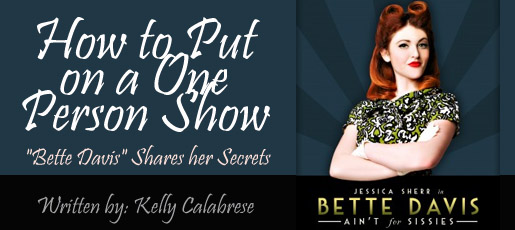
One thing is for certain, putting on a one person show takes a triple layer of tough skin and enough hootspa to outlast the Energizer bunny. It ain’t the right road for a vapor thin spirit and neither is the relentless path taken by NYC actor JESSICA SHERR who stars in her own one person show – BETTE DAVIS AIN’T FOR SISSIES.

Jessica Sherr, Sweet, Petite, Kooky and Upbeat, grew up in El Cajon, California and has long been called a creative. At age 3, she found herself tap dancing to Frosty the Snowman and by age 5 she was choreographing dance pieces to Mickey Mouse’s Splash Dance and mounting shows in her pool.

BETTE DAVIS AIN’T FOR SISSIES, which Jessica has also written, was selected for the prestigious FringeNYC in 2011. Today, she continues to drive forward and dazzle audiences with ongoing performances at local New York theatres.

What makes Jessica’s one woman show so successful? She stops nothing! Except, of course, to answer a couple questions from NYCastings about how-to launch a one person production…

Q: How do you take an idea from conception to stage and fringe festivals?

With my show, it was originally a project in a class I was taking called SLICES OF LIVES at the Susan Batson Studio. I got the idea because a friend said I look like Bette Davis. That turned into a mini show that was eight minutes long and from there I decided to turn it into a feature show. actually, when I turned it into the fringe festival I had no choice but to turn it into a feature show, an hour long.

Q: When is your next show?


My next show is:
JUNE 15 @ 7pm and
JUNE 22 @ 7pm


Tickets are $12.00 with a 2 drink minimum:

http://www.brownpapertickets.com/e/228132


Q: Is there a learning curve? DO you test the show to see what works and doesn’t?

Within the class that I took, everyone was given exercises to do and then you take that information to inform your character. If the exercise is a phone call to your mom and it is 1940, that is different phone call then you would have in 1989. We use the research to create a world. In my case, instead of talking to my mother I was talking to Jack Warner the head of Warner Brothers. At the end of the show I let that idea go. It became me on the stage talking with Jack Warner about my issues with the studio. So, the ideas evolved.

Q: How do you raise money to pull a one woman show off?

I have a day job as a personal trainer and that is where my bread and butter has come from for nine years. I also did Kickstarter, which helped. I raised finds that went solely to the Fringe Festival. Right now I’m doing the show at The Triad, and I am financing it myself. I chose a venue that only requires a certain amount of people so I don’t have to worry about paying director fees or lighting fees. I rehearse in my bedroom and save so much money. You can also barter with friends. I barter a ton. In my mind, I also try to make it good for the other person who I am bartering with or else they won’t work with me again.

One other way I make funds for my show is with my Always Actor Business Coaching.

Q: How much does a one woman cost to put on?

The show has cost quite a bit because not only did I produce at the Triad in January and May I also did the Fringe Festival. These aren’t accurate but this is a guess:

The Fringe Festival was quite a lot because you have to pay to be in the Fringe. I spent around $8,500 for Fringe which was director, lighting designer, sound designer, advertising, costumes, set rentals, venue manager, etc.

Triad Theater: Cost about: $800. (For director, house manager, lighting person, taping the show, props, tech rehearsals)

Q: Can a one woman show make money?

Yes, absolutely. My show in January for Bette Davis at the Triad made money. I had 116 people come, which was shocking. They paid their $12 at the door, only a small stipend goes to Triad, and then I get to keep the rest.

To help build an audience, sometimes I give out free tickets because that means they will bring a paying friend. And they will tell their friends about the show. I have people who came last week and are coming again because they had so much fun.

Q: How did you get the press shots taken?

My mom is really good at taking pictures. No, I am teasing. But when I was a kid my mom used to take a million pictures of me so they are important to me. I like to have pictures for my events. For this show, I asked a friend to take pictures for me who has an interest in the 1940s. His name is John DeAmara. We have a good time together and I think the pictures reflect that. I always try and pick photographers who have an interest in the world that I am living in.

Q: How do you promote the show to sell tickets?

There are two parts to this.

One is that I stand on the street corner in front of Fairway and hand out postcards. I’ve decided that location is the epicenter of NYC. And The Triad is across the street so I get a lot of tickets sold off the street.

The other way is Facebook, obviously. I have a monthly mailer that I have for Jessica the actress. I use a ton of pictures because people like pictures. And I am good at emailing people individually. You have to take the time to reach out to people personally so they will come.

Also, the show tickets are $12 so they are not terribly expensive. The Triad lets me set my ticket price.

Q: How do you juggle the immense amount of time required to pull off a one woman show AND still keep up with other auditions/projects?

I am super structured about my time. From 10:01am to 11:01am, I know what I am doing. My one woman show is me rehearsing with me and my director, Susan Campanaro, who really brought out the comedy in the show.  She is excellent and won’t let me get away with anything! So, if I say I am going to do something, I do it. I don’t have to worry about three other people coming over for me to start rehearsing.

And, as a personal trainer, my clients are really supportive and understanding. If I need to go to an audition, I can move things around.

I also stay up way too late.

Q: What is the most essential thing you’ve learned about how-to put on a successful one woman show?

I’ve learned that I have a niche and I can sell that niche. I love the 1940s, and dress like that anyway.

Also, this show has gotten me so many auditions. I went into one audition yesterday and the Casting Director knew about my show.

It is so much work. So, it is important to love what you do and connect it to everything else in your world. I absolutely love putting on my 1940s hats, I wear them anyway. So when I am on the street and someone says they love my hat, I can tell them about my show. I am living it.

Q: I see you have representation – Ann Wright and Eileen Haves – did that come from doing the show?

I had those guys before, but it certainly helped them because they use it to pitch me constantly.

Eileen once told me, “You are going to go on a 100 auditions and not get 100 auditions – but you will get one and I believe you.”

This show gave her a leverage, a power that I had. It is good because they now have something to say to the client about how reliable I am. It lets producers know they can trust you because you have done something on your own.

The biggest success that came from the show so far is that I got the role of TEAM TOON, a regular on a cartoon show. My name is Ms. Faltine. That is not Bette Davis, but it helps.

Q: What advice can you share for those looking to follow in Bette Davis’ – I mean YOUR footsteps?

Do what you can. Don’t try and do a show that is currently bigger than what you have in your life. If you don’t have money for wardrobe, go into your own closet and be creative. Use what you have. Use Ebay, go to garage sales. Try and keep your costs as low as possible in the beginning.

The Fringe Festival was really helpful because it gave me press. I could not stop people from coming.

Marketing is really important. Postcards are huge. And find something that represents your show that you can wear everyday so you can feel confident about what you are doing. Don’t forget about it. Live it every day. Own it. Own it with your heart , instead of your head. 

-WHOOT! Thanks Jessica. Great How-to advice.

For those of you looking to now put on your own one person show…

Break a leg! And Fasten your seat belts. It’s going to be a bumpy night! Bette Davis


kidsinthebiz copy

For young actors, Hollywood can seem downright enchanting! But is it really all red carpets, skipping school, and movie magic?

To get the real scoop on what it’s like to be a kid in the biz, NYCastings spoke with actors and directors about their current experiences and career flashbacks…

Alex Ferris – 15 years old

Alex Ferris began his acting career with a film that premiered in 2004, The Five People You Meet in Heaven with John Voigt. Since then he appeared in a ton of film and TV including X-Men: The Last Stand, The L Word, Harper’s Island, Diary of a Wimpy Kid and Martha Speaks. Alex just appeared in Replicas at The Tribeca Film Festival.

Q: When you first started out, what did you expect a TV / Film set to be like?

I can’t remember exactly what I thought a film set would be like as my first acting job was when I had just turned seven. I can remember expecting to see excitement, big time Hollywood and huge trailers. I thought I was creating for myself an extremely glamorous part-time hobby. I was really too young to understand that I wouldn’t be starring in blockbuster films all the time. I also remember thinking how fun it was to have a hobby that allowed you to miss school. Because I am one of three children and my family is busy, I really had to beg my parents to let me act. I think that this made me want it even more.

Q: What was the TV/Film set actually like?

The first project I ever worked on was a TV movie with John Voigt and Jeff Daniels called theThe Five People You Meet in Heaven. The film shot in an amusement park which was very magical. We had great weather and delicious catering. I remember how cool it was that I got to sit in the director’s chair. When the shoot was over the props people sent me home with a gigantic bunch of balloons that they were finished with. The crew and cast, especially John Voigt, couldn’t have been nicer. I was lucky to start my career off with such a nice experience because not all movie sets are quite so enjoyable.

Q: What surprised you the most about the business?

From the perspective of an outsider, the movie industry looks infinitely more glamorous than it is. Most actors never see a red carpet or attend a premiere. I was certainly taken aback by just how difficult it is to succeed in the industry. While you do get to miss your own school while you are working, you actually have to do more school work while you are on set. Each work day you are expected to do a minimum of three hours school work with a tutor in a trailer turned classroom. My teachers make sure that I make up everything I miss. Cramming a full day of school into three hours while putting in a full day on set requires a lot of focus. Many child actors are homeschooled, but a bargain that I struck with my parents is that I stay in a traditional school and maintain great grades or no acting!

Q: What did you learn on the set of Replicas?

Replicas was my first movie shoot as a teenager. Now that I am older, I am able to grasp a much better understanding of what is going on around me, and all the skill sets that the crew brings to the film, and all the talented people that it takes to make a movie. Working on Replicas was an amazing experience because the director Jeremy Regimbal and the screenwriter (and star) Josh Close are very young and extremely creative. Not only are they making movies but they founded and produce a really cool magazine called The Lab. I found their talent and dedication truly motivating to me as an actor.

Q: Any other advice for young actors?

You really have to love acting and the whole movie industry to be able to take all the criticism and rejection that each actor will inevitably face. You have to enjoy the audition process which involves hours of preparation for each audition with very little notice. You have to have a parent willing to drive you all over town on a day’s notice to go to an audition that will often run far behind schedule. For me I think I continue to act because I can’t imagine anything that makes me happier than nailing an audition, leaving it all on the table, and knowing that whether I get cast for the role or not I had a great time trying.

Quinn Lord – 13 years old

Quinn Lord is on the fastrack to stardom, having already appeared in many acclaimed TV shows and films including ToddWorld (TV series), Hardy the Hippo, Supernatural, Smallville, Trick ‘r Treat, Fringe, and The Imaginarium of Doctor Parnassus. Quinn just appeared in Replicas at The Tribeca Film Festival.

Q: When you first started out, what did you expect a TV / Film set to be like?

I was 5 when I first started, my first booking was for a Hasbro Play-Doh commercial. When I was auditioning I was supposed to push a hollow head onto a small lump of Play-Doh to make it ooze out of the holes cut out in the shape that would make an afro, but it only oozed out of the eyes and the mouth, along with two small holes on the fro the first time. I was mesmerized and determined to make a full fro. Once booked I didn’t expect the set to be anything more than the audition room!

Q: What was the TV/Film set actually like?

When I got to the shoot my eyes popped out of my head and my jaw dropped to the floor, it was a huge studio with multiple sets for different Hasbro commercials in the middle, everything was so colourful and brightly lit, I loved it! I got to play with Play-Doh and push the gooey substance through the eyes and mouth all day! I remember them filming me, and the director showing me where to sit, but I was having so much fun I forgot they were there!

After working on commercials until I was 6, I got tired of constantly smiling and wanted to do TV and film, when I booked my first TV role and my character poked his thumb into another characters eye, I knew it was for me!

Q: What surprised you the most about the business?

When I was 5 I didn’t even think there would be traveling involved! I’ve traveled all over the place, including Cape Town South Africa! I love visiting other places /cultures and meeting TONS of nice people!

I was a little surprised the first time they said, Okay Quinn, let’s get some schooling in I was thinking, How did they find me here? Just kidding! I love the onset tutors, we have tons of fun and get a lot accomplished..

Q: What did you learn on the set of Replicas?

Well, I really want to direct someday and have written a bunch of scripts (I love writing) so I try and take everything in and get tips from other actors. I think from this cast I learned what I call a psychological simmer, by keeping the films tension going in a realistic way, I want to use it in a film I direct one day. I also learned that I can easily scare people by just standing faced into a corner of the room, like the ending of Blair Witch. Did I mention I like to have fun on set?

Q: Any other advice for young actors?

Yes, live in the moment! Feel the feelings of the character for real, remember times you felt that way and use it. Most of all HAVE FUN!

Rachel Miner

Rachel Miner wanted to be an actress from age two. She began working with an acting coach at eight, got an agent at nine and, by ten, had not only worked for Woody Allen, but was cast as “Michelle Bauer” on Guiding Light (a part that started as recurring and evolved into a contract role lasting nearly five years (1990-1995) and earning her three Young Artist Awards and an Emmy nomination). Rachel just appeared in Replicas at The Tribeca Film Festival.

Q: What was your childhood acting experience like?

I officially started acting when I was eight but was on camera for the first time as a baby and I think it is a wonderful thing for kids to be able to do, if it is what they want.

One of the things that my parents did, which was smart, is they said, “If you really want to act, you need to go to acting classes.”

It was actually through the acting classes that I got an agent. But it was something I had to work for and really want. It wasn’t just a vacation or to skip school which some kids may think. On the other hand, I feel as if I didn’t get into trouble because I was so busy working. A lot of kids get bored and act out, and I didn’t have the time to do that. It can be a wonderful thing to get to do.

Q: What was the effect on your parents / family?

My mom had to devote a lot of her life to schlepping me around to auditions and jobs. It is a commitment by the parents.

You see some parents try to micro manage and I think that is a big mistake. Rather than support, they almost want to say the lines for the kids. I was lucky enough to have parents who didn’t do that. I was able to make my own choices.

Q: How did the reality of acting differ from your expectations?

One of the reasons why my parents didn’t let me act at age 2 is I had gotten a callback, they put me on video, and I didn’t understand the process enough. I thought I had shot the movie. They were recording me so I kept asking, “When is my movie coming out?” My parents were so heartbroken that I kept asking, that I couldn’t understand that there wasn’t a movie coming out. They made me wait until I was old enough to really understand what I was doing.

Q: Do you have any advice for young actors?

I worked with Lloyd Bridges when I was very young and one of the things he taught me was to be aware, in the moment, and relax a bit. I remember, as a kid, everything was about trying to prepare and trying to micromanage. I took it so seriously. I really, really, really wanted to do a good job. As actors we tend to feel that way. And Lloyd said that he would help me with my acting if I would help him with his lines because I had memorized everyone else’s lines in addition to my own lines. He taught me to have a sense of humor, relax, and just pay attention to the people around me.

Jeremy Power Regimbal – Director of Replicas

Q: You directed young actors in Replicas, where there any obstacles?

This film is a dark subject matter so we had to creatively solve things. We were all trying to protect them from seeing what they shouldn’t. At the same time, you want to make it believable. The parents are there in case they think that anything is going too far, but I felt it was my responsibility to make sure everyone felt comfortable.

The actors were also only allowed to be there until a certain hour and most of the film was shot at night. So you have to creatively work around that too.

Q: Any auditioning advice for young actors?

In auditioning, it is hard at a young age to realize that you don’t have to act. To realize that acting isn’t acting. A lot of the younger actors were so theatrical. But both Alex and Quinn were so confident and comfortable. And they already have huge resumes.

It is an interesting thing to be involved. I admire kids that are into it.

Julia Dyer – Director of THE PLAYROOM

Q: You film centers around four children in their attic hideaway who make up a fantastic story, while downstairs their parents weave a drunken intrigue of their own. Where there any specific challenges working with a young cast?

Ian Veteto was 6 when he played Sam. I had worked with kids before but never where they are working eight hours a day, over a month. That is a hard job for a young child. There is a lot of persistence and a lot of disciple to ask for a child that age. What I learned is that the parent is a huge part of that. They are working just as hard as the kid and have to make that sacrifices to be on the set, and be taking care of the child. It is a tough road for parents with kids working in the business, and for the other siblings.

The parent needs to believe in the project. We had a lot of conversations about this leading up to the film. My biggest concern wasn’t that Ian couldn’t do it. He was so right for it, was mature, had self control, and was smart. I was worried that he wouldn’t be able to stick it out, and that his mom wouldn’t be able to stick it out.

I said, “There are going to be times when your child will want o go home, and be tired. It will come down to you. As a parent, you are going to have to make that choice to say to him ‘he has to stay.'”

Q: Did anything unexpected happen?

We have one scene where there is a storytelling sequence and all the kids are in a circle. They all had to be there. It is a pivotal scene. We did it on the last day and Ian was very ill. He was throwing up. The mother called me from the car and I thought she was going to cancel, which would have been devastating. We didn’t have any other days left to shoot it. And God bless her. She said, “I am going to bring him. I don’t know how this is going to work but we will do the best we can.”

They were such heroes. Ian would come in and sit as long as he could and do the most that he could until he had to go get sick and take a nap for two hours. Then, when he woke up, he would work again.

I am sure it was really painful for the parents. But they found a way to make it work.

To see a child work that hard and be that committed, that’s why I am so glad to have the film here (at Tribeca). It means that Ian can be at the premier. He can have fun and enjoy it.


charactertrans copy

All kinds of people — scary, grieving, naive, curious people — have once again invaded New York City for The Tribeca Film Festival. Which means it is the ideal time to chat about characters; the art of building real and complex layers as an actor.

Joining in this conversation are the talented teams from two Tribeca films, Replicas and The Playroom.

Replicas brings us on a wild journey as The Hughes cottage vacation is violently interrupted by a family on a murderous and identity stealing journey, in search of the “perfect” life.

In The Playroom, four children in their attic hideaway make up a fantastic story, while downstairs their parents weave a drunken intrigue of their own.

Here are their character transformation tips…

From Replicas:

Rachel Miner – Actor

Begins to create the character immediately…

One of the advantages of having acted for years is I make calculations quickly. It is a muscle that I have worked on. I naturally begin to create the character as soon as I start to read. As I am reading, I start to think as that person. With good writing, like with Joshua’s script, it is very natural and very apparent. With clunky writing, it is harder because the viewpoint shifts. The writer doesn’t assume the person’s viewpoint consistently and so you have to work harder. But in the case of this film, I read it and instantly started to see the script as her. To think “What would justify these actions?”

The more life you have lived, the more you have experienced, you begin to instantly feel an empathy. You begin to bring forth all the people you have empathized with. You begin to bring this human being together. What are the emotional and intellectual aspects of this person? What is the thought process of this person? And then, hopefully, you are not thinking about it. You can just be that other human being.

You can’t really be that character when you are thinking about being them. It gets in the way because you are you trying to do something, instead of being.

With this character (Jane), it was really fun because so much of this character, to me, was reacting to the people around her. She was so curious. She spent so much of her formative years being told what to do that she really waited for someone to tell her how to behave and what to say. It was a great acting exercise because I didn’t come into any moment with a preconception. I was reacting and letting whatever was going on bounce off me. The character was desperate to please and had a curiosity. She was looking for clues on what to do.

Rachel also draws on life experiences…

One of the wonderful things about growing up in this business is I get to travel to a lot of different countries, and hang out with people from almost every walk of life, upbringing, and social class. I think that is one of the most important things you can do as an actor, to just be open to the research you are doing in your everyday life.

The wonderful thing about being an actor is every experience you have is something you will potentially use, and every person you meet is a wealth of information. I am a geek and a curious person anyway, so every cab ride, every subway ride, I meet people. And I am constantly asking them, “Where did you grow up?” and “What do you think of the government there?” It is something you can draw on, and it makes life more interesting.

Joshua Close – Actor & Writer

Transformed into his own character…

I didn’t write the character for myself. I didn’t decide to play the character until three weeks before shooting. I had envisioned someone else for the role. So, from the starting point, I was trying to make the character as real as possible. In writing, I drew from films like With a friend like Harry … who needs enemies? Films that I think add a more humane element to this genre. And I have been getting nice comments from people who have seen the film that it was even scarier because these were real human beings. They were not just people you could write off as crazy or a monster type. They are human beings with a history, who have gotten to this point. In writing, I wanted to make them as honest and real as I could. And when I took on the role, I wanted to be as real and honest too.


Joshua researches emotions…

When I took on the role (of Mark), I started looking at grieving parents. Everyone takes on their grief differently. I looked at where the division comes in between couples, and played that as honestly as I could up until the point where they are kicked into survival mode. I didn’t want to cover it with action or smart, clever transitions. I wanted it to just unfold and escalate as naturally as it could.

When escalating a character…

I think you have to just ‘swing for the fences.’

If you can be OK with looking like a fool, you can take chances and open up.

We were in a place, all of us, where we came together and were close enough to have this trust. We would play a scene over the top and then measure it to see if it felt accurate and realistic. And then we came under it, to see how that affected everything. We measured the tones.

With this group it was easy to gauge what felt honest and real. For the more emotional climax beats, it was just like “let’s all swing for the fences and then see what is realistic to all of us.” That is what we wanted to get across — does this feel real? Because that is when it feels the scariest.

I think it just opens you up to say, “Let’s take it as big as we can.” It frees you to just go for it.

And, the best takes are the ones where the Director says “OK. We’ve got it. Let’s just play.” On those takes you get these spontaneous moments. You are always looking for that sort of spontaneity.

On revealing both the good and bad layers of a character…

I think it is interesting to find the bad in good people, and the good in bad people. I think when you play those things it is much more unsettling. If you find the ugly within these lead characters that you are supposed to follow and care for, it becomes complex. It becomes as close to humanity as you can get.

Finding the opposite of the way it seems helps the character feel more two sided. It’s not just playing what is on the page, but figuring out what is underneath it.

Jeremy Power Regimbal – Director

To help transform characters from a Director’s perspective…

I did a workshop with Joan Scheckel, an acting coach. I had to play every role out. I had to act out the synopsis and the characters, to get into their shoes.

Josh joined me in some of the labs, to help me go through it. We focused on their (Mark and Mary’s) relationship in the film, which was very disconnected. We workshopped the relationship. We took ten things we wanted to work on. We asked lots of questions.

As the Director, I ask questions like “What do you feel about doing this?” I let the person discover the character rather than pushing an idea on them.

From The Playroom:

Julia Dyer – Director

To help actors transform into character…

Every actor is different, so I look at the actor and what they already bring. I think that every actor has their own process. The best way to direct an actor is to come to where they are and work within their own language and process. It is complicated because sometimes you have actors who are coming from different places, and like to work in different ways. It is also very fun.

In preparing for the film, Julia discovered a unique character transformation technique…

The film is a coming of age story. In the less than 24 hours in which the film takes place, Maggie has to make that transition from childhood to adulthood and it is not an easy one. It is a rough, nail scratching one.

Olivia Harris who plays Maggie has the biggest arc, the furthest journey, and she had never done a film before. She had done theatre acting and was extremely talented. And, she was a highly trained vocalist. She was a really gifted and sophisticated vocalist.

We had an idea that we wanted to record a song from the 70’s with Olivia singing it to possibly use in the film, or to promote the film. We had selected the song Up on the Roof by Carole King. We had had Olivia come over the studio and we invited her to sing the song in Maggie’s voice. The composer and sound designer also spoke with her about what that meant in the musical language she knew really well. Olivia sat down on a stool in the home studio, and sang the song. It was perfect. It was one of those amazing moments where we couldn’t believe what we heard.

For Olivia, singing as Maggie had opened a doorway into the character that made sense to her. She was able to take her training as a singer and help open the character emotionally. From that day she know who Maggie was in side of her. And she used music on set to help her get ready for the scenes. She used the music to help her hold on to the character. 

— Thanks to the Replicas and The Playroom for lending their insight. Go check out their films and support The Tribeca Film Festival!


doyouneedamanager copy

Do you know the difference between an Agent and a Manager? Do you need both? And how do they work together?

To help clear up any confusion, NYCastings sought advice from Eric Faber of Faber Talent. We also scored insight from a working actor, Summer Crockett Moore, who has both Agents and a Manager who help her rock it.

Q&A WITH ERIC FABER

About Eric Faber… The son of an Obie and Drama Desk award-winning actor, Mr. Faber has a well-rounded entertainment background beginning as a child actor making his Broadway debut at age five and performing off-Broadway, in commercials and television and film.

After receiving his college degree in Theater, Mr. Faber found his calling working on behalf of talent while assisting in the theatrical department at Agency for the Performing Arts in Los Angeles. Mr. Faber moved back to New York City and worked as a Manager at JMM and Sullivan Talent Group and then as a union-franchised agent in the on-camera commercial and hosting divisions of Atlas Talent Agency and at Independent Artists Agency in both their theatrical and commercial divisions before opening his own company in January 2011.

Q: From your POV as a former Agent, what is the primary difference between a Manager and an Agent?

You need a Manager when you are starting out in the business to help you get into doors with Casting Directors and with Agents, for both commercial and legit. You can’t just get jobs, if you don’t know anyone. It is the Manager who puts things in place.

With Agents, their sole purpose is to book jobs, to bring in money for the company and keep their clients as busy as possible.

A Manager is more open to developing a client. I work on many different things from making the resume look professional, to choosing headshot photographers, to how to have meetings with Casting Directors and Agents.

When a Manager is working with an actor who doesn’t have an Agent, the Manager will do the job of an Agent as well.

In the beginning of a career, the Manager is the one who opens the doors with Casting Directors, with Commercial Agents, and with Legit Agents in the hopes of partnering up and creating more opportunity for the actors.

Then, if the actor is doing very well, the Manager’s job changes with the actor. Say the actor books a TV series or a film. At that point an actor may have a Manager, a Commercial Agent, a Legit Agent, a Publicist, an Attorney, and also deal with production. A Manager helps to bring all those things together in one place so the actor doesn’t get hit in six different places at once.

The Manager’s job changes with the actor’s career, where as an Agent is just focused on getting the career.

Q: Does a Manager consider taking on actors from a different perspective versus how Agents consider taking on new actors?

Every Manager works in a different way. I like to work with a small client list, with a more boutique style. My job is to find great actors and hopefully there aren’t too many conflicts in terms of other actors in the same age range within my list. Then, I push hard for the actor.

If a Casting Director pulls in your folks, you hope they will call them in again and again. So you can’t throw something at them and see if it sticks. There are some Managers who freelance with everyone and are accountable to no one. It is like a warehouse for actors. I only sign with actors. I am responsible to you, you are responsible to me, and it is all laid out in the contracts. There are different ways to work, as there are different Managers. The good ones have a good reputations and the bad ones don’t.

Q: How can an actor find out if a Manager is good or not?

We have so many tools on the Internet. Every legit Manager has a website. I have a website. You can join IMDb PRO and see their client list. Other periodicals also exist including The Hollywood Creative Directory, The Agents and Manager’s Guide, and Backstage has a bi-monthly magazine of New York representatives.

Also, it is standard practice that a Manager can’t take any more than 15% commission. If a Manager asks for more than 15%, then you need to run, not walk, the other way.

I just heard from an actor about a Manager who wanted 20% commission with a 3 year option, that was the Manager’s option. I think that goes against how to work with an artist. An artist needs to feel free. I only have one-year contracts. I think that is a fair amount of time to get an idea of how we work together. If we are happy, we continue to work together for another year. If not, we say goodbye.

Q: How can an actor find a Manager?

You can go to IMDb PRO and look under Managers. You can click on their list and see if they are legit. It used to be that you had to spend hundreds on postage and send hard copies of headshots and resumes. In this modern age, there are tools that exist.

I am personally open to getting unsolicited submissions. If I don’t like it, I delete it.

Word of mouth is also good. If you are a creative person working with other creative people on a show and you are looking for a Manager, you need to ask around. Ask the people you admire who their reps are.

I am always open to meeting people who are referred by clients of mine because I trust their tastes and talents.

Q: When an actor submits to you, what should they send?

A headshot and resume. And, it is getting to the point that it is hard for me to even consider a prospective new client unless I see some kind of reel.

People wonder how they get a reel without an Agent or a Manager. The fact is that as a creative person it is your mandate to be around other creative people who will help you move forward. We are in a digital age where you can take advantage of cameras, and make webisodes and short films. At the same time, you will get more well-rounded and creative by making your own work. That is the power that an actor can have on their own, to create their own stuff.

Managers get excited when someone is so creative that they are making their own work. Before you know it, you are being chased by Agents and Managers, instead of those looking for crumbs from Agents and Managers, because we can see how creative you really are.

Q: Do Managers review every contract, even if an actor submitted for a job online? 

That wouldn’t happen because part of having a contract means that anything entertainment business related is referred to me. If an actor has their own online account, and this has happened a few times, I strongly tell them that it is not how I personally work. You can go through the sites, send me what you are interested in, and I will look at it. But if I am trying to develop a career, we go over the projects together. I can tell you why it is good, or not good, to submit to projects for various reasons.

Q: Do Managers collect commissions even if they didn’t get the actor the audition?

Anything they book, whether it be a job I submitted them for or a project where I signed them up with say Don Buchwald commercially, or for legit with Stewart or Abrams, then I commission on those because I set the actor up with those Agents. At the same time, I am also getting them appointments. So between all of us we are hopefully keeping an actor very busy.

Q: Is it always 15% Commission?

Some of my clients I have known for years, and I only commission 10%. Or some clients came in with an Agent who I can partner with, and I commission 10%. But if you are new, just starting out, the most you should ever be charged is 15% commission.

Q: When an actor has a Manager and an Agent, do they both review each contract?

With commercial contracts they are pretty standard, so I don’t look over the shoulder of the Commercial Agent. If it is a legit contract, I will ask for a copy of the deal memo. The information that I need to know is the rate, the credit, the dates of the shoot, and what we are calling the size of the role. I also send a check authorization to allow me to receive checks on behalf of the clients. Most contracts fall under SAG/AFTRA rules. Obviously when you are dealing with something more complicated, say a Schedule F Contract which is a contract that runs the length of the film, I go through it. I also have an Entertainment Attorney. If there is a clause that I have a question on, I can go and ask him.

Q: Do actors need an Entertainment Attorney as well as a Manager?

If an actor is doing well, it is a standard these days that the Agent and the Manager may negotiate the deal but the fine print gets hammered out by an Entertainment Attorney. A pilot agreement is very complicated and can detail an actor’s services for the next six years. In addition to the Agent and Manager going over the big picture points like how much per episode and how many guaranteed episodes per season, there are a lot of smaller clauses like personal conduct and nudity that needs to be gone through with a fine tooth comb. For that, you want to have an Entertainment Lawyer to go through the contracts because the network has their lawyers going through it and you want to make sure you are fighting fire with fire, that you are on the same footing.

I just booked a client on Person of Interest as a Guest Star, but we knew what the deal was. We knew… This is her credit. This is what she will get paid. This is where her credit will be. For that, it doesn’t need an attorney.

Q: Once an actor signs with you, must they find an Agent through you?

Yes. You can certainly say “I have a wish list of agencies,” and then it would be my job to try and make that happen. But it also depends on your level of ability. If your wish list is CAA and you haven’t booked one episodic, then it is better to sign with a smaller Agent who can help develop you. With the giant agencies, most of their job is not necessarily finding young talent. It is taking talent that already exists and convincing them to sign with a bigger agency that has a list of directors they may want to work with.

Agents rely on good Managers to bring them good people. A lot of agencies are focused on booking jobs, so they will lean on Managers when they are looking for new talent and say “Who do you have that I should meet?”

Q: Do Managers build specific relationships with certain Casting Directors?

That is what helps separate a good Manager and a not good Manager. Over the years, having been a Commercial Agent as well as a Manager at other companies, you build relationships. You build fans in casting who like the choices you make and trust you when you make a submission. This is great because if I really think someone is right for a role, I will get that appointment. If people don’t have great relationships, the best they can do is throw what they have out there and they will be lucky if they get one appointment. You need to respect what the Casting Directors do and give them your best.

Q: You mentioned that you work with specific Casting Directors and Agents. Should an actor ask about those relationships when they meet with you?

You have to play that by ear depending on where you are in your career. If an Agent or a Manager has laid out that they definitely want to work with you, by all means you can put anything on the table. You can ask… Who are the agencies you work with? Who are the Casting Directors you have good relationships with? But if you are just starting out, then it is probably not wise to go there because the Manager feels as if they are in the power seat and you, as the newbie, should just be glad they want to work with you.

You don’t want to be annoying. I have dealt with a couple of clients who didn’t have a lot of credits but I wanted to work with them and they took forever to finalize the contract. I would advise against that. I would say to trust your gut and either say yes or no. You shouldn’t leave people hanging.

Q: Do you submit actors for non-union work?

I submit non-union actors to non-union jobs. I take on mainly union actors.

Q: In becoming a Manager, what did you learn that is essential for actors to realize as well?

I have a full-on background as a child actor and being the son of an Obie and Drama Desk award-winning actor. So my background is a lot different than a lot of Managers who used to be Agents.

A lot of Agents have majored in business and law. What I bring to the table is that I have seen it from your side, and have seen good acting. It is a special gift that I am lucky to have that I can filter what is creative and what is BS. If a prospective actor hands me a performance that is BS, I can call them on it.

I come from a family in the arts, and that is a plus for me.

Q: Do you have any specific advice for actors who are looking to get their career started?

Be on time!

And when you do decide to work with a Manager or Agent, you have to trust their decision making. Especially for young actors starting out, you don’t know what you don’t know. There are so many things that I am already three steps ahead of you in regards to information on a project.

If I say something and you don’t understand, ask questions. Agents and Managers are the folks who can help you understand and learn how to make your way through this business without getting into trouble. We want to help you succeed, so you have to ask questions. When you are starting out, there are no dumb questions. The only dumb thing is not asking and doing something that you weren’t aware was not the right thing to do.

Once you sign those papers, rely on us to provide the answers to the questions you have. And even if you think you know, double check.

—- Thank you Eric Faber!

For more information on Eric, please check out www.fabertalent.com


INSIGHT FROM ACTOR SUMMER CROCKETT MOORE

Summer Crockett Moore is (SAG-AFTRA/AEA) is an award-winning actress, voice-over artist & producer living in New York City. Originally from Paris, Tennessee, Summer is a graduate of Circle in the Square Theatre School (New York), and also studied at New York University (Tisch Drama). She is a Managing Partner of Choice Films & Choice Theatricals which has produced various theatre and film projects both in New York and regionally, she serves as the President of the Board at T. Schreiber Studio, and is a Managing Member of the Board of Directors for The Private Theatre, NY.

Summer is represented by Judy Boals Talent Agency – Theatre, Film & Television, Ann Wright Representatives – Commercials, Hosting & Voice-Overs, and Wright Talent ManagementCharlie Wright, Manager


Q: How does the Manager and Agent relationships differ specifically?

With my agents, they focus mainly the majority of the submissions for me on projects — as well as handling the booking/job details when I am cast. However, my manager is also submitting me on various projects, and coordinating certain submissions with my agencies– so there is a bit of a tag-team effort going on that I have found to be helpful along the way as my agents and manager have different relationships with certain casting offices and Producers. My agents mainly work on getting me immediate jobs. My manager helps me plan my long-term goals, all while coordinating those efforts with my agents.

Q: Why should an actor have both? (Or when?!)

A: This is a tough question, and I don’t think there is a black and white answer here. I think it is something that everyone must address — and then readdress again — as a career develops. When I first got out of college, and signed with my agents, there was no need for a manager, as I didn’t really have a career to manage yet. Now, 15 years down the line, I have several avenues in which I work, and having a manager help to focus them — and refocus them at times — has been important. My agents are beating the bushes for work for me on a daily basis, and they negotiate my contracts when I book a job. My manager is helping me make better decisions on how to grow my career, both as a producer and an an actress, and he helps with an overall game plan — that is coordinated with my agents — for what our immediate and our long-term goals are.

—- Thanks Summer!

For more information on Summer Crockett Moore check out:

www.summercrockettmoore.com

www.choicefilms.com

directorspet copy

Give an apple to a teacher and they may favor you, but when it comes to buttering up directors, they just want to see the attentive, reliable, and polished fruits of your labor.

Here are 10 ways to get on a director’s good side…

1. SHOW YOUR DIVERSITY

CraIg Zobel, Director of Compliance

Q: Why do you work with the same actors?

I work with talent multiple times partly because I work with amazing people who I want to work with again. We made a film (Compliance) that is very dark and somber, but all the people on this film are very funny. So I’m like “wow, we need to make another film where Dreama can be funny and Ann can be funny.”

2. LEARN THE DIRECTOR’S SHORTHAND

When you work with someone, you begin to have a short hand. Pat (Healy) and I knew how to talk to each other. He didn’t think I was weird when I would stutter very vague things.

3. BE LIKEABLE, LONG-TERM LIKABLE!


Pat Healy, Actor in Compliance

Q: You worked with Craig Zobel before, why did you think you were chosen again?

First of all, I like Craig an awful lot as a person. It is hard not to love him. And so part of the movie is making the movie, and the other part is that you have to hang out with these people for three weeks to a couple of months. The director has to know that you are going to be fine to be around for that long of a time. Also he knew that this part was going to be hard to explain to an actor. So he brought me in because we already spoke the same language. I did another film with him and he knew it was just going to make it so much easier on him and I was happy to do that. Craig and I understood each other from the beginning. As an actor, it is good to know that someone has your back.


4. BUILD A SOLID LEVEL OF TRUST

Daniel Martinico, Director of OK, GOOD.

Q: Why do you work with the same people?

I could probably talk for an hour or more as to why I continue to work with Hugo (Armstrong). A lot has to do with trust. Because we operate so well together, it allowed Hugo a space to build a really developed performance. It allowed him to get where he needed to go quicker.


5. BE EASY TO WORK WITH

Kris Elgstrand, Co-Director of Doppelgänger Paul.

Q: What does it take for you to want to work with an actor again?

You want to be easy to work with and fun to be around. That is the base thing. Brad was my best man so I trust him implicitly as an actor and in life. And It is good to expand the circle as well, every time we work with bring in new people. Of course, we try and get recommendations for those people from those we know. I didn’t work with Tygh before but the other guys did.


6. CHECK YOUR EGO

Dylan Akio Smith, Co-Director of Doppelgänger Paul.

Q: What does it take for you to want to work with an actor again?

I think it’s important to just check your ego before you come into a collaborative process. You can tell right away when someone comes in and they are fronting, they are trying to prove who they are. And those are generally the people we don’t work with again. But the people who are really open and give and take, are responsive in the moment. That is the stuff that I really respond to.


7. BE REAL

Brad Dryboroug, Actor in Doppelgänger Paul


Q: These directors worked with you before, why do you think they continue to work with you?

The first time I auditioned for Kris, and this is probably the best compliment I have ever gotten as an actor, he said “you got halfway through the read and you were the closest thing to the voice in my head as I wrote it.” So an organic understanding of the material is important, to know that they are real people. Don’t take it over the top. Ultimately, if you get out of your own way, realism is the best way to act. And the more comfortable you are, the more confident you can be. The more you can get out of your own way.


8. RELAX

Tygh Runyan, Actor in Doppelgänger Paul

Q: What can an actor do to make a director want to work with them again?

It is sometimes hard as an actor to trust and surrender, especially during that feeling out period at the start of the film. And if you don’t feel as if the director trusts what you are bringing as an artist, as a collaborator, it starts to get difficult. Being able to trust is a great gift, because you can relax.


9. DON’T BE NEEDY!

Jordon Horowitz, Award-Winning Filmmaker

Q: What can an actor do to make you want to work with them again?
If you want to work with directors again, actors shouldn’t allow themselves to be perceived as needy or difficult to work with.

I recently had an actor, who I’d invited to an audition, ask for the exact shooting dates. I supplied them, making it clear they were just placeholders at this time. Because they were during the week and he only commutes in on weekends, he declined the audition. But then, later on in the day of the audition, he changed his mind and asked if he could still read. First, it was clearly stated that the shooting dates were tentative and could, of course, be moved if needed to accommodate the right actor. And second, it clearly demonstrated to me an actor who has no understanding of or passion for the business. Of course I declined his request.

10. HAVE A TEAM SPIRIT!


Tony Glazer, Director and Writer – currently working on a new play he wrote, American Stare, which will have its worldwide premiere this summer at NJ Rep.

Q: What can an actor do to make you want to work with them again?

There’s a few things that always enter into consideration for me. Being the best actor for the part is always the first consideration but work ethic and team sensibilities come into play as well. If I rehire someone it’s because not only do I consider them great for the part but great for the team, as well. They have to be talented and right for the part but also professional, hard working and dependable. You can never have too many of those types of actors.


acting bliss copy

My definition of bliss? Watching Michael C. Hall perform in, well… anything! As an actor, he has a way of conveying many layers with a subtle yet dynamic energy. And in his latest film, The Trouble with Bliss, Michael once again delivers acting perfection.

The Trouble with Bliss, Written and Directed by Michael Knowles, tells the story of a guy in his mid-thirties, Morris Bliss (Michael C. Hall), who watches as his life comically unravels after he enters into a relationship with the daughter of a former high school classmate.

The film, also staring Brie Larson, Brad William Henke, Peter Fonda, Chris Messina and Lucy Liu, shot in New York and opens in theatres March 23rd. So go see it!

Until then, NYCastings has a treat for you. An inside glimpse into the mind of Michael C. Hall’s award-winning acting choices.


I am thrilled to present, my conversation with Michael C. Hall…


Q: You have the ability to make seemingly unlikeable characters very likeable – how do you approach these roles to make them so relatable?

I don’t have in front of my mind some desire to make a character likable. My focus is more on why they do the things they do, or why they don’t in Morris’s case. With a character like Morris, I spent some time thinking about what has kept him in a place of suspended animation, has kept him from moving forward with his life. I think the script, how the story exists, has a great deal to do with letting the audience in.

I certainly cherish the opportunity to play a part that maybe I wouldn’t be the first person on a list for. Someone who is notable just because of how unspectacular he is. I think he has potential, and I think we are lead to believe that as well. But he is, on paper, not notable in any way. Not easily capable or afflicted. After spending so much time playing this hero- esque serial killer, it is nice to step into his sort of humdrum shoes.

Q: How did the casting come about for this project? I didn’t see any credits.

I was initially sent the script by a woman named Carolyn Corbett who I went to grad school with at NYU. She is, among other things, a documentary filmmaker. She had made a film that Michael Knowles edited and she had seen the script. She spoke to him about my reading it and got in touch with me. That is how I came to see the script and I read it without any sense of who might be in it and was just really taken with the character and the story.

Q: You have a very calm presence on camera, yet still conveying a lot of energy. How can actors bring out that type of subtly engaging dynamic?

The more you know, the less you have to show – either in your head, or in your heart, or in your gut. There is a Michael Caine book, Acting in Film, that is a great book to read for anyone who will be in front of the camera. He says to just fall back and the camera will catch you. And it’s amazing what it will capture. Sometimes the more you put out there, the less you communicate. It is a tricky thing – allowing whatever is happening inside you, just tolerating that percolation without suppressing it or overtly releasing it. Allowing that humming bird to flutter.

Q: The film shot in New York, how does the location of a film affect your character or choices?

Well, I lived in the East village. I lived on East 5th street and Avenue B, just a couple of blocks from where Morris lives. And that felt kind of serendipitous and exciting. And I was in New York at a time when I had very little money and didn’t know what the future held. I had a focus that Morris didn’t in terms of my desire to make things happen for myself as an actor, but I knew what it was like to wander the streets of the East village and feel invisible. To feel as if I were a part of the organism that is New York but also lost in the greater sense of it. I could certainly draw on that. And it is so wonderful to shoot on location in New York. So much of your work is done for you. It is the best set.

Q: This movie is a coming of age story about a man who should have come of age a long time ago. Is there anything that you’ve learned recently as an actor that you wish you learned a long time ago?

I wouldn’t say there is anything I wish I learned a long time ago, as so much as there are things that I am grateful to continue to discover. And I’m hopeful that this career and work is one that facilitates a sense of continuous discovery. That is what I love about it. And usually, if I learn something, I am just happy to have learned it. I am not kicking myself for not having learned it before.

Q: In the film, Morris, puts up defensive walls in response to tragedies that have happened to him. How do you channel your own tough times in life to breathe real life and dimension into a character?

Oh gosh. I tend to believe that roles and characters and projects come along at a time when they should. There is something that the script, or material, is encouraging you to investigate in your own unconscious or conscious world. I always try and look for that. Morris is in a way very un-active, yet as an actor you want to find something that is there. I think he is activated in the sense of waiting and being open to the possibility of something. And we meet him at a time in the movie where things, as dicey and nuts as they are, start happening in his world and he is there for it.

Q: Did you bring yourself into the role of Morris?

I work from the inside out and the outside in. I don’t have any hard and fast rules as to how to approach playing a character. I think some things work for some characters and some things work for others. Morris was someone I certainly considered in terms of his backstory and parallels that I could draw between his life and my own. But I will also admit that when I put on that blue jacket in the costume fitting that gave me as much sense as any as to who the guy was. Sometimes, it can be something that simple.

Q: Unlikely relationships play a huge part in your character’s growth, have you had any unlikely encounters in your own life that helped you grow as an actor?

It can be a very competitive environment, or proposition, to try and make things happen for yourself as an actor. But the things that I’ve learned are from the people I’ve worked with, who have shared that sacred space that exists between actors. I’ve certainly learned from John Lithgow, from people who I went to grad school with and I learned from the audience when I did Caberet. I learned how to think of them and let them think of me in an open and loving way, a way that I maybe never was forced to do. That certainly was a learning experience for me. Up until that point I had never been forced or invited to consider my relationship with the audience. They had all been behind that fourth wall and it was a great lesson for me to have to make that wall go away and cultivate a more open and loving relationship with them.

Q: Any advice to pass on to actors?

You’ve got to be wearing a suit of armor but have a liquid heart and soul. If you can manage to cultivate both, then maybe you can survive.

Q: As an actor, what aspects of the craft give you the most trouble and which the most bliss?

There are unique challenges with each role and each task or assignment and sometimes it’s the relationship, or scene, or line, or moment that is the most daunting and struggling initially that turns out to be the place where the real bliss is made. Sometimes, the trouble and the bliss are one and the same.

www.facebook.com/thetroublewithbliss


showyourcharacters copy

Hey NYCastings members! Yes, I’m talking to you.

If there is one thing that actors still struggle with… it’s headshots!

Actors carry around headshots that are outdated, that don’t actually look like them, or that convey only one emotional level instead of having dimension. It’s kinda turned into a mistake 101 epidemic.

So what can you do about it?

Make sure that your pictures stand out and make the right impression! To help, here is some advice from the President of NYCastings, a Director who recently used NYCastings, and a successful NYCastings member.

Advice from… Aaron Seals

Aaron Seals is the creator and President of NYCastings and has played many roles in the entertainment business including agent, photographer, producer, director and creator of the ‘6 Steps to a Successful Acting Career‘ video. 


Q: What is the most attention grabbing part of a headshot?

I’ve heard many people say ‘The Eyes!’ and that’s a pretty good start, but many times I’ve seen awesome shots where the person isn’t even looking at the camera. So you can’t count on just one thing.

It’s really more about, ‘What you decided to show me.’ So there is good attention and bad attention… Good is when it’s a great shot of you, showing personality with great production because you found the right photographer. Bad is when all quality was ignored and you look like a person who doesn’t want to be in a photograph, or you’re telling some kind of lie by using massive amounts of make-up, or you’ve been photoshopped by your brother so you look like cartoon mannequin.

Q: How many headshots should an actor have on hand?

Several of your best shots is a good starting point. I’ve often seen actors handing Casting Directors, or Agents, a couple options and the person usually looks at them all. They decide which shot they like best or take them all. People seem to like choices, so give them what they want.

Q: How do you know if your headshot is to blame for a lack of response?

If nobody is calling, that’s a good sign that your picture is not inspiring them. However, you can’t know 100% if that’s the case because you’re dealing with many different people, in different positions in the industry. It could be a great shot, and you get continually passed over because you don’t have a resume going yet, or you haven’t introduced yourself properly, or you have a phone number from Pennsylvania.

So, the best way to approach this is to not be married to one idea… Keep changing things on your resume and submissions and keep track of things that worked and what didn’t get a reaction. Time after time after time I have heard from actors that have gotten great new headshots that they have gotten more auditions after they changed their pictures – and the good news is it happens immediately.

A person can really shoot themselves in the foot by not paying attention to the reality of not getting calls. I’ve heard many people blame a website, or an agent, or classes as ‘not working.’ Don’t play the blame game. Going months without being called in means YOU need to change what you’re putting out there.

Q: Can a headshot look too much like a character / not enough like the actor in everyday life?

Sure, but today where most people are doing on-line submissions you can have a large variety of shots to see and THIS IS REALLY GOOD for the person viewing. I think every actor should have their ‘Professional headshots’ to show them in their ideal natural state, BUT having other kinds of shots can tell me so much more about the personality of the actor. For instance, if I only see 1 headshot of a person that can be a little one dimensional. But, if I see many shots of them, I’ll start seeing more angles of their face, their expressions, their teeth, maybe their body type. All of this helps create a clearer picture of what they really look like. Also, if I see lots of expressions that tells me they’re more animated in their personality. There is nothing worse than shooting a person who is really stiff.

Also, I may see them dressed as different characters so it lets my mind explore the possibilities of them in a role. More is better in this situation. And in many cases I may be looking for a specific type to play a role in my film – let’s use a Cop for example – If the person happens to have a shot of them in a uniform, looking like I think a cop looks, they have a much, much better chance of getting the audition.

Another hidden benefit of having lots of character shots, is that the client is spending more time looking at you, and will then remember you better.

Q: What are some common mistakes with headshots that actors should try and avoid?

Rocking a Black & White headshot – This makes you look at least 10 years out of date and I still see several every day. Most people won’t go near that with a 10 foot pole!

Don’t go with the first photographer recommended to you, or the first one you find. You need to see the work of many different professional headshot photographers so you can educate yourself on what looks awesome and what looks terrible. Don’t go with photographers who are not involved in the acting business (like family portrait photographers), the person that just got a camera last week, or your mom.

There are industry standards as for the quality, so you want to communicate to the Casting Directors and Agents that you understand this business, and that you’re marketing yourself as a professional that people can count on.

In the end, you want things to happen fast so you can have an awesome life as an actor. Bad shots can set you back years, or indefinitely if you don’t change.

Q: How do you know which photographers will best capture your personality?

In the end, you don’t know which photographers will best capture your personality because chemistry between the two of you matters. Also, any events that happened that day can affect your shots. But what you have to make your decision on, is their past work. So you start by going to their website and viewing their portfolios. Then, you go and meet them in person and see if the vibe feels great.

Every photographer has their own shooting style as well – such as, some shoot very portrait style, some shoot outdoors, some use strobe lights, some use only natural light, some have fancy backgrounds, some keep it very simple.

So you can decide what settings you would like to see yourself in (indoor, outdoor, glam, simple), and let that help you narrow down the possible choices.

From there, make sure to visit their studios, I’d say 5 or more, and chat with them about what you want.


Q: Should an actor try and convey a number of character traits in one shot or a single aspect of themselves in each shot? (ie: Serious, funny, seductive, quirky)

Again, I’d say – The more pictures you have in general, the better off you’ll be. This is a visual business and the people creating projects are the MOST visual people of all. Give ’em what they want!

Advice from… Jordan Horowitz (Who casts through NYCastings!)


Jordan Horowitz is an award-winning filmmaker based in NYC. He has directed and produced content for MTV, including Rob & Big, Viva La Bam, and Jackass. He recently directed a feature documentary in China called Angel of Nanjing (currently in post) and has several narrative features in development.


Q: When you look at submissions on NYCastings, what attracts you to a particular photo?


I’d say I’m usually drawn to one of two things. Most commonly is a physicality that seems to fit with the vision I have in mind for the character. I’m also excited by seeing someone with an interesting look, that may be different from what I had in mind, who could potentially add something unique and different to the project.

Q: NYCastings gives actors the ability to post many pictures. Does this help you decide who to call in for a part?

Yes. Often a single photo can be very misleading. Videos are also helpful for that same reason. However, I think the talent needs to be selective about which images they are sending. Seeing a bunch of photos of an actress in a bikini is not going to make me want to consider her for a serious role.

Q: Do you look for character / personality in headshots?

Absolutely. I’ll only call actors who I feel can breathe life into the role.

Q: What are some common mistakes that you wish actors would avoid?

To be honest, I rarely base anything off of headshots because too often they are misleading and don’t really tell you anything about the person. Also, it tells you nothing about the person’s acting abilities. That’s why it’s very helpful to have a variety of photos/videos so we can get a better sense of the person.

Thanks Jordon! Jordan’s work can be seen on his website- www.Jordansfilms.com.

Advice from… Michael Lepre

Michael Lepre is a NYC actor and a NYCastings frequent booker. Recent projects include a film titled Long Road Home, a role in Hunted on Discovery Channel, and the lead in the play called Death Bed.

Q: What is the most attention grabbing part of a headshot?

Over all, the whole presentation for your headshot is important. The headshot is our calling card, it represents who we are. In a headshot we are trying to tell a story. The expression has to shine through so when an agent or director looks at our picture, it excites them. I think outdoor shots are the best because it gives a sense of realism. However, if I had to pick one thing, it would have to be the eyes because that is the first thing everyone looks at and that’s where all the emotion lies. My ten year old son has big brown eyes and I can tell just by looking at his eyes what mood he’s in.

Q: How many headshots do you try and have on hand?

I always carry 5 headshots with my resume attached, so I never run out. Once I went on an audition and ended up crashing two other auditions in the same building. I also carry a portfolio of pictures to show different character looks. When you meet an agent who has available time after the audition or interview I like to show it to them. I always get a great response.

Q: How do you know if your headshot is to blame for a lack of response?

In this business you never know why you don’t get a call back. All actors second guess themselves by saying, “Was I too much in the reading? Or too little?” I personally think a picture should look like you. It should be printed at a professional shop and most importantly no glamour shots. You can use those shots in your portfolio. Don’t get me wrong, it’s ok to wear some makeup and retouch a blemish or an unruly hair. You just don’t want your main headshot to be different because you’ll upset some very important people. They want to see the same person that’s in the picture walk through the door.

Q: Can a headshot look too much like a character / not enough like the actor in everyday life?

There is no doubt when you are shooting character shots you must put the time and effort into it or the picture will look foolish. You have to be honest with the shot. The character has to be real, not a comic strip. You don’t want the picture to look like an actor with a costume on. When I submit through the internet with a great site like NYCastings, casting directors can see different character looks of myself.

Q: How do you know which photographers will best capture your personality?

This is easy but so important. You must meet with the photographer first and see his work. Talk to your fellow actors about their photographers. I found word of mouth is the best way to find a good photographer. You are spending a lot of money on these pictures so make sure you’re happy with who you pick. The best photographer is the one you feel most comfortable with. One who will listen to all your ideas and not rush you through the shoot. A photographer’s studio is fine to shoot in but, again, I like outdoor shots. I think you get a more interesting shot and you can relax much better outside. If you have a friend with a pro’s eye and a professional camera it could be fun to practice. You might be surprise and get some keepers. A cloudy day is the best to shoot in but with the way computers work these day, you can adjust the lighting a little in retouching.

Q: Do you try and convey a number of character traits in one shot or a single aspect of yourself in each shot? (ie: Serious, funny, seductive, quirky)

I always start with the emotion when I’m setting up a shot. What am I trying to show? How do I feel? Where did I come from? How would that person sit or stand? It’s like studying for a role. You want the picture to be as real as possible. The same as you would do for a movie or TV role. You need a back story to spark that emotion so the truth comes out in the picture. I always put a little of myself in everything I do. You can’t help it. I’ve been strong, weak, angry, sad, desperate, excited and happy, just to mention a few. I could go on but then I’ll have no secrets.

Q: Why do you think that multiple / character based headshots works for you?

The multiple character headshots work well for me on the internet. However, I don’t suggest mailing character headshots out. Of course it won’t get me the part but it has helped me get through the front door. Casting agents work hard and have great imaginations, but I think these pictures help their process. Let’s face it we all judge people the first time we meet them. I think we judge headshots too. I’m Italian American and bald. I love playing a mobster, but I can play a homeless guy, detective, hiker, dad, business owner, best friend, criminal and so on. I believe the more you can do to get notice the better.


growing like wildfire copy

It starts with a spark… a single acting gig that packs enough heat to ignite an entire career. In one instant, a child actor can go from unknown to exploding on the scene in commercials, films and print.

Indeed, it’s a thrill to witness such success. It can also be quite unpredictable and challenging. To help, NYCastings sought advice on what it takes to grow like wildfire.

If you are wondering how to keep your cool as your career heats up – or how to get that spark started in the first place – check out this illuminating insight from industry guru Angela Mickey of Liz Lewis Casting, as well two, young NYCastings members who have amazing success stories.

Angela Mickey – Casting Director at Liz Lewis Casting Partners

Q: What can young actors do to get ahead in this biz?

With young actors, it’s all about training, training, training. A lot of young actors initially get into the business because they have a good accessible look, and they start working before they really begin to understand the techniques of acting. Being able to come in and break down scripts, learn how to dissect what really is happening in a scene, how to perform it, and how to improv and bring something of themselves to a role is a crucial part of the skill set as they move forward. Developing those skills early on can really be helpful in setting you apart.

Q: How important are the headshots/resume and what are you looking for?

Headshots and resumes are becoming more and more important for the younger set. So much of the submission process is done online these days, that to stay competitive, you have to have a picture that looks like you. Unfortunately, with young actors, that means getting them somewhat often, as looks and sizes change rapidly as they grow. It doesn’t need to be the most expensive headshot out there, but they do need to change as the performer’s look changes. As for resumes, those too need to be kept current. Especially for the performer who is looking to get into film and television: the more current your credits are, the more likely I am to believe you can handle what is required of the role. Also, SAG can be tough on young actors trying to get into the union. It used to be that there was a certain amount of leeway given a young actor, as it was believable that a performer could be 13 and not have done anything before. But these days, they want to know that the performer is at least taking classes or in school or community productions, if not in professional projects.

Q: Does having a reel matter for younger actors?

Reels don’t matter as much to me personally with younger actors. If someone has a collection of things they have been in, then great, I want to see them. But I am not a fan of “fake” reels. So if a performer does not have footage of something they have booked, then I’d rather not see anything.

Q: Any tips for young actors, on what to know about the audition room?

Each audition room, Casting Director, and client is going to be different. I prefer performers who are polite and good natured – they don’t need to shake everyone’s hand when they walk in (in fact, most Casting Directors and clients prefer that they don’t in this day of germs), but a warm genial “hi!” is nice. Then it is about focus and imagination: focusing on what they are being told to do or how the director wants to change what they are doing, really listening, and then taking all of that and having fun with it. I think many young performers fall into two categories: those who are wildly imaginative, but difficult to control or to focus enough to do a take and reproduce it, and those who can take direction to the nth degree, but don’t bring anything of themselves to it. Ultimately, what we want is something in between those two extremes. And lastly, remember, we are all on the performers’ side. It’s a nerve wracking and scary thing, even to veterans in their 40’s and 50’s. But we want the performers to do well, so taking a deep breath, calming down, and letting us help guide you are the best courses of action.

Q: Is there a type of young actor most sought after right now?

Not really. I have seen everything across the age, ethnic and gender spectrum during the past year. It is all determined but what I’m working on at the moment. In the end, good, natural actors will be most common thing we are all looking for.

Thank you Angela Mickey!

For more info about Liz Lewis Casting check out: http://www.sourceecreative.com/news.php?ID=5714

and LIKE Liz Lewis Casting on Facebook!


Leila Jean Davis – Age Range: 8 – 10

Q: How do you use NYCastings?

My mom goes on for me. I really like all the roles that NYCastings has because there are a lot that fit me, and probably a lot of other kids too.


Q: You book a lot of roles. Any tips for success?

This is advice for any actor or actress… you have to be professional, poised, pleasant, punctual, and you’ve got to keep your hair out of your face because if there is hair in your face they can’t see it. And unless the role calls for it, you shouldn’t wear hats or dark colors or black or red or pink.

Also, you have to be nice to everyone when you are auditioning because you don’t know who is who. And, you should have business cards made to give to people who produce and think you might be a good fit for a role.

Q: Do you go into the auditions with your mom?

Sometimes I go in with my mom, but most of the time I go in by myself. If it is something where I have to cry, like let’s say celebrity ghosts stories, she would go in with me for support.

Q: How do you keep yourself from getting nervous?

I just smile and keep a positive attitude and even if I don’t get the role, I don’t freak out. You just have to take deep breaths and go with the flow. Sometimes you need a little moral support.

Thanks Leila Jean Davis!

Marti Davis – Leila’s mother… adds how she helps her daughter land roles…

It is really important, as far as staying in this business, to have up-to-date excellent headshots and size information. In addition to the headshots, we do a comp card. It is important to keep the website updated as to what size clothing she can wear and shoes. Having a reel is also important. We have a Leila Jean Davis commercial reel.

To help Leila Jena find the right roles…

We use the NYCastings profile and set up the age ranges. When a role comes in that is appropriate, I get an email into my phone. So NYCastings is perfect because I get alerts. And with NYCastings, I can’t think of another site that does this, if there is a role that calls for a little girl in a swimsuit in the winter, I can go into my system and find a snapshot from last summer, crop it, go to the site and instantly pop the picture in to use as the submission picture. That is a big deal because you want to be the first person responding to these postings, the first person that they see. In this industry, where we are so electronic, we need to what NYCastings offers – they enable us to use a specific photo and respond immediately.

ABOUT LEILA JEAN DAVIS:

Leila just landed the lead role in Horror Short-Film, ‘The Jersey Devil’! 2012 is off to a great start. Leila booked eight commercials and four short films last year. She’s a core cast member on award winning show Zombie Etiquette (TV). She was the Ghost in Sugar Ray Leonard’s encounter on the A&E Celebrity Ghost Stories (TV). She’s successfully worked many commercials, and had key roles in many short films. Leila has also done some fun modeling assignments too.

Her NYCastings resume is now TWO pages long! Check out: www.NYCastings.com/LeilaJeanDavis


Ismaelpeter Casillas, III – Age Range: 12 – 17

Q: You’ve booked a number of jobs through NYCastings, what do you think is the secret to your success?

Talk, have a conversation with the casting directors. Ask them how you did, and ask them if they want you to change how you did a script. Criticism is good!

Q: How do you keep yourself from getting nervous?

Don’t think about it, pretend the casting director is your friend, and just do your best.

Q: How do you use NYCastings? Do you go online on your own or with your mom?

I go on with my mom. She is like my manager, plus it’s good to have a second opinion on what parts you’re good for.

Q: How often do you update your NYCastings pictures and your headshot?

I update it every time I book a job, so the casting directors can see what I have done recently.


ABOUT ISMAELPETER CASILLAS, III

Ismaelpeter Casillas, III aka “Ish” or “Ismaelpeter” was born in Brooklyn, New York. He began his career at the ripe age of 2. His first break came when he was at the Puerto Rican Day Parade in 2000. He was photographed by the New York Post, they loved his look so much that he was in their paper 3 times in a row. That’s what started him off. Ever since then HE has been making a name for himself by simply being his funny self. He is a very open and honest boy. He loves to make people laugh. He is very comfortable with his ideas and always wants more. Recent roles include a TV pilot called Da Brick, Onion Sports Network (Episode #1.2), Law & Order: CI (Depths), feature film Disconnect as well as print modeling for Replay & Sons.

Check out: http://www.ismaelpeter.weebly.com

Thanks “Ish” – Ismaelpeter Casillas, III!


For more NYCastings success stories check out: RECENT BOOKINGS


audition blunders copy

Palms clammy. Heart teetering between full throttle and panic stopping. Brain cells firing off conflicting thought patterns of “Will I be good enough?” and “I’ve totally got this!”

In other words – auditions. They can be terrifying and exhilarating!

As actors, we’ve all waited in that long hallway that seems crowded yet vacant at the same time. And we’ve all gotten through auditions with varying degrees of triumph. Of course, it still helps to know that we are not alone. That others have been there before.

So here are some fun blunders from 5 successful actors who have also felt audition tremors – and lived to tell about it…

JOSH PAIS

Q: You’ve been in over 80 movies and TV shows – including recent films Price Check and Arbitrage and 2 Broke Girls on CBS! Have you ever said something at an audition that you wish you didn’t?

Yeah. One time I felt like I really nailed it at an audition. On the way out of the room I said. “Well, I guess I got this job.” I never heard from them again.

Q: Any advice for actors on how to handle fear at auditions?

The moment you go in your head and listen to thoughts about how you are screwing up, take a breath, see what is around you, have awareness of your body and have fun.

Learn more about Josh Pais’s acting techniques at http://committedimpulse.com/

Ann Dowd

Q: Your Sundance film Compliance recently got picked up by Magnolia Pictures. Congrats! During your acting journey, has an audition ever gone totally wrong for you?

Probably the first fifteen years. I am not even exaggerating. The first several years I could not put two words together. I remember my first big film audition with a big director. I was doing Joan of Arc in New York and so had a shaved head at the time and I showed up and thought I was going to just do an interview. But then the casting director asked me if I was ready to read the sides and I thought, “I am reading sides today?


Then, I walked in and the director asked “so you are playing Joan now?” And I just said, “Yes.” And then I began to feel ill because I knew that more talk was required. I saw the casting director panic and then I just said “yeah, the hair.” It was so bad. It was clearly going south. I think I even asked about his mom. It was just bizarre.

And once, my manager said to me – “on pain of death you must be funny in this audition.” And I thought, “I can’t do this.” But I did. I went into the audition in my pajamas and they laughed. It was right for the role.

But the point is this. No one gives you permission to be an actor and you don’t have to ask for it. Actors are always thinking that the person giving you the job is the person in control and it is not so. This is your time in the room, your time in the film – let the rest go. It is your decision, your choice. And if you commit, then everything else will follow through. I truly believe this and it has worked for me.

For more work by Ann Dowd check out www.imdb.com/name/nm0235652/

Adrian Bustamante

Q: Have you ever said something at an audition that you wish you didn’t?

Not a specific thing but I know that I have done things that when I left I knew I should not have. Especially when it was going in with a lack of confidence. When you go in as an actor, you have to go in as comfortable and confident as possible. I’ve helped casting directors. In the auditions I learned that when an actor comes in and is not comfortable, it is an immediate turn off. Confidence is key.

Adrian Bustamante recently appeared in a film called Dark Harvest, shot an episode of Don’t Trust the B—- in Apartment 23 and a new show on Oprah’s Own Network.

MARZ LOVEJOY

Q: How do you handle audition blunders?

I’ve been auditioning since I was five and I can tell by my energy, and how I am feeling, if I got it or not. Disappointing auditions suck but I just try to keep it moving and keep it positive. I try to not dwell on the negativity. There are going to be bad times that disappoint you and things won’t go your way, but you’ve got to keep it positive because you don’t want to be a bitter person. Well, I don’t want to be a bitter person.

Marz Lovejoy recently appeared in Sundance’s LUV.

KANDIS ERICKSON

Q: Did you have an audition where you said or did something that you regretted afterward?

There was this one audition a while ago where I kept starting over and finally the casting director stopped me and said, “Just keep going.” I plowed through it and she rolled her eyes as I left. I guess the lesson is – if you’re going to start over, do it once and make it worth it. And always be prepared.

Kandis Erickson recently appeared in Sundance’s I Am Not a Hipster.

rockitcopy

Beyond the Main Street of Sundance booms countless lounges with food, drink and swag for celebrities. Every day festival attendees loom outside hoping to snap a pic as they gawk at the likes of Liv Tyler, Kate Bosworth and William H. Macy. Industry players sometimes luck out and get their foot through a guarded entrance. Yet the finest parties and swag only go to those on the A-list. Until now…

NYCastings has broken down barriers!!!

While socializing at the PUMA lounge, taking in the Miami Oasis, checking out online music compliments of Vevo, snacking on Bertolli Soup and sipping on STELLA!!! & Snake Oil Cocktails, we managed to score a sneak peek at A-lister style secrets. AND, we also scored FREE SWAG – a pair of Solstice’s Carrera Sunglasses compliments of Solstice Sunglass Boutique – which YOU now have a chance to win!!! To find out how, watch the video below and then continue reading.

Here is how to rock it like an A-lister with insider tips from brands Rudsak, Commonwealth Proper, Flying Lizard and Fresh (with a shout out to seen but not heard – Sorel boots)…


NOW… for your chance to win FREE SWAG…

Go ahead and SHARE this article on Facebook bu 2/17/2012. Winner will be chosen at random. Good luck getting this A-list, $180 retail price, Carrera Sunglases!

Yay Sundance! Smiles, Kelly

pinehill copy

About to win the hearts of all actors reading this story, NY’s Writer/Director/Editor Keith Miller just won Slamdance’s Grand Jury Prize for Narrative Feature for his latest film – WELCOME TO PINE HILL.

WELCOME TO PINE HILL began as a short film after filmmaker Keith Miller and star Shannon Harper found themselves arguing over a lost dog one night in Brooklyn. Now a feature, the story delves deeper into the complexity of a reformed man who chooses to not argue with himself over the harsh reality of his own life about to be lost.

Sounds dark! And no doubt this film does yank minds into a vulnerably raw place. Yet in speaking with Keith Miller, I found the opposite.. I found so many illuminating thoughts.

A true actor’s director, Keith Miller nurtures and embraces both truth and talent. Here is the story on his award winning journey…

Q&A with Keith Miller – Writer/Sirector/Editor of WELCOME TO PINE HILL.

Q: Writer/Director/Editor – seriously? How does one juggle that?

Be stupid and poor.


– insert both Keith and Kelly laughing. Then a pause for the full answer –


I’ve always directed and edited my films. I essentially cast as well because I see each as organically related but also autonomous. For every script… I write the script, cast it, shoot the movie and edit.

Q: Do you use casting sites?

Yes, I use casting sites. Some people came to audition for this film through casting sites.

Q: And what are your thoughts about casting sites?

I have very strong feelings about headshots.

For one film I did, I was trying to cast a woman and she sent a photo that was magic. I thought, “That is the face I am looking for.” Then she came in and was beautiful, and 150 pounds heavier. If she had given me the photo of her 150 pounds heavier, I might of still thought to use her because she had a nice presence. But getting a headshot that reflects who you are when you walk in the door, that’s crucial. And if you have a weird look in any way, admit it to yourself. Quirky is good. People send in headshots and they all look like a beautiful young actress, but then they walk in and are plain looking.

Your presentation should not be who you wish you were, but who you are. If you do ‘stoner slacker’ well because you like to smoke weed and hang out – come in as that. If you admit who you are and are true to that, when we see you we will think, “Yes! They are even more of the type we wanted than we thought.”

You can’t fool people into your being something else.

Q: What do you hope actors will realize about the casting process?

For the casting process, I hope all actors realize that the casting process happens long before I do the sides. If I meet someone and get a good feeling about them, I will keep them in mind. And a good feel for an actor can make a part change. I could think, “Oh, I was thinking of this character as a really mean person, but she has a bit of sweetness to her. Yes, sweet and mean. That’s better.”

Letting the actor kind of inform the part is a very big part of it for me. I let the actor inform the part and then when I am shooting I let the situations that are happening inform the idea for the scene. And then when I am editing, I look at what is actually in front of me. I’ll see that I thought the film was going to go one way, but it was meant to go another.

In Pine Hill, the scene with the mother, that was meant to be a little more angry. But the immense amount of distrust she had experienced and the heartbreak that was etched into her nature pushed the scene a certain way. In the moment, their interactions were informing the scene in a much deeper way than I thought of originally.

For me, being informed by the realities on the ground is how I do it. So to have someone else edit would be weird because a lot of it is decided by my reactions. Another editor would be able to edit the movie, but they wouldn’t edit this movie.

Q: You teach at NYU Gallatin School of Individualized Study. What do you teach?

At Gallatin, we create our own classes so I teach theory heavy courses like ‘First Person Present Tense’ that is inspired by this type of experience (the way he filmed Pine Hill). I take real experiences and put it into video, whether it is narrative, documentary or webisodes, where people are engaged in the real world.

Some professors have a specific style and students come out with modified versions of that. My style is based on the students. A lot of times I see a student doing something I would never do and I’m like, “All right, let’s push this further.” I make sure it is what they want to do, not what they think they should do. Just because you can do it, doesn’t mean it is your voice. Make sure you are thinking clearly and honestly.

Q: You sound a lot like an actor’s director, very aware of the individual. Is that true?

I find the process of acting challenging and I am very protective of my actors on set. Shannon said that he felt totally safe on set. He felt as if he could go anywhere. I try to set up the situation where it feels so real, where you can take risks.

And when it comes to editing, I get upset with editors who make a person look stupid. Everyone says “uh,” but if you leave it in at the wrong time that is just mean. I work hard to make sure that you really go with the characters. Like with the mother (in Pine Hill), I didn’t want anyone to laugh at her. I wanted to make sure that they were with her the whole way. It was important for me to edit and maintain the deep sense of humanity for each character that the entire movie is supposed to have.

I care a lot about the people that I work with. I think as a viewer it is weird if you don’t like someone. Even the complexity of a bad person is interesting, so to limit that complexity, the layers of it, I don’t see why you would do that.

WELL…. I see why WELCOME TO PINE HILL received such a strong response at Slamdance! A huge thank you to Keith Miller for sharing his unique way of thinking about actors and filmmaking.

To learn more about WELCOME TO PINE HILL check out www.welcometopinehill.com  


sunnydays copy

Neither rain, nor sleet, and certainly not snow..

Nothing can stop a dream from happening for those who are truly passionate – according to these 10 creative peeps that NYCastings met up with at the Sundance Film Festival where a ton of snowflakes ‘Sundanced’ along with us.

Here are 10 reasons to keep going… or as one actor says… to, “be like a buffalo in the snowstorm.”

RASHIDA JONES – On realizing that hard times bring new gifts

Q: Why do you continue through the harder points in this business?

You learn how much you love something by the amount of adversity you face in trying to make it happen. We faced a lot of that with this film (Celeste and Jesse Forever). Every time something went wrong, we got another gift. We got a wonderful group of people who came together just because they wanted to make a movie.

Rashida attended Sundance as a co-writer and star of Celeste and Jesse Forever.

Synopsis: A divorcing couple tries to maintain their friendship while they both pursue other people. Check it out: Celeste and Jesse Forever.

JOSH PAIS – On re-engaging

Q: Can you share a time that you wanted to give up – but didn’t – and the reason / what pulled you through?

I have been doing this for a couple decades. And I certainly have had times where I have said to myself “Done. Not doing this anymore.” The beauty in those moments is that when I did re-engage, I had less ego attachment and was more focused on the creativity of the art form, and less attached to reaching a certain level.

Being overly focused on getting somewhere other than where I was never serves me.

It’s important to ‘quit’ thinking that if you reach a certain level that everything will be better.

Start by playing that you’ve already arrived and the universe will align around that vibe, and you will book great jobs.

Josh attended Sundance with Price Check and Arbitrage.

Check out Price Check: Pete Cozy is having trouble resolving a happy marriage and family life with rising debt and a job he hates.

AND Arbitrage: A troubled hedge fund magnate desperate to complete the sale of his trading empire makes an error that forces him to turn to an unlikely person for help.

DREAMA WALKER – On trusting instincts

Q: How do you keep up your positive energy without getting sidetracked?

I am still very much in the mindset that I like to work on things that I am passionate about and care about. I carefully select projects and trust my instincts on who I can work with and jive with. And I find that if you are passionate about your work… it is magic.

Q: Ever second guess yourself?

Absolutely. For a long time my focus was to break into comedy and I kind of forgot that as a kid I would sing ‘Le Mis’ into a mirror and cry. I forgot that I am innately very aware of my emotions and I love dramatic acting. I was excited to do this film (Compliance). To prepare, I went back to Stanislavski, revisited and tried to think a lot about humans and the way we adapt when we are put in traumatic situations and the stages of grief we go through.

Dreama attended Sundance with Compliance.

Synopsis: When a prank caller convinces a fast food restaurant manager to interrogate an innocent young employee, no-one is left unharmed. Based on true events. See what the controversy is all about: Compliance.

HUGO ARMSTRONG – Creates his own work

Q: Your film (OK, Good) is set against the backdrop of being an actor in Los Angeles and the toll it can take on your soul. What is your advice for actors? How/why should they keep going?

Acting is really hard on your soul. It can completely stomp you down into someone that you never thought you would be, and not in a good way. This film (Ok, Good) is an examination of that. Dan and I have known each other for a long time and I would come back after a de-humanizing auditions. For example, at one audition everyone was asked to put dirty wastebaskets on their head and tromp around. It was people just hoping and begging for one place, in one job, that I wouldn’t imagine they would be proud of anyway. You have to decide right then if it is that important to literally turn yourself into garbage for a national corporation, to be a part of their campaign. If there is something else you would rather do – then you do not have to feel like a jerk for not wanting to feel like a jerk all the time. You should feel good that you went through the experience. For people who are inclined to continue with it, if you have any desire to write your own stuff – that is the way to go.

Hugo Armstrong came to Slamdance with OK, Good.

Synopsis: A series of demoralizing auditions and a cultish movement workshop push a struggling actor towards the edge. Check out: OK, Good.


BRAD DRYBOROUGHOn having nothing else to fall back on

Q: Your film, Doppelgänger Paul, has a lot of melancholy moments in it… what advice keeps you going through the harder times in this business?

Mine comes from the David Mamet quote, “Those who have something to fall back on, invariably fall back on it.” I have nothing to fall back on. I do other things, I write and direct but it is all within the thing that I want to do, which is film. And the part I am most passionate about is acting. There is nothing that is going to fulfill me in the same way. It is about commitment. And I never set out to be a star. I set out to make my living having fun. It’s important to know that anything that you do will have ups and downs. You will want to quit anything you do.

Also, find good people to surround yourself with because you are auditioning for a lot of odd stuff and feel like a meat puppet. It can suck your soul. So find that group, those people that can help you feel good as you are fulfilling yourself.

Brad attended Slamdance with Doppelgänger Paul.

Synopsis: The unlikely relationship of two lonely men whose connection sets off a chain of events resulting in the loss of a thumb, the theft of a manuscript, and two appearances on a popular morning talk show. Check out: Doppelgänger Paul

TYGH RUNYAN – On being like a buffalo in a snowstorm

Q: What keeps you going as an actor?

There is a lot of commerce involved in film and television and that complicates things because there are a lot of people who aren’t passionate about the craft, who just want to be famous. For me, it is about self examination… “Do I need to do this?” and I am like “YES, I love it.”

Unless you do love it and have a passion for the craft, for telling stories, collaborating, and surrendering – then there are a lot of easier ways to make money and easier ways to be famous.

If you do feel passionate and have a love of acting but feel stuck – just never, never, never give up. Be like a buffalo in the snowstorm. They lower their head and they keep walking. If you feel like acting is your purpose in life, you have no choice so enjoy!

Tygh attended Slamdance with Doppelgänger Paul


Synopsis: The unlikely relationship of two lonely men whose connection sets off a chain of events resulting in the loss of a thumb, the theft of a manuscript, and two appearances on a popular morning talk show. See double at: Doppelgänger Paul.

ADRIAN BUSTAMANTE – Finds the positive!

Q: Can you share a time when you wanted to give up – but didn’t – and the reason / what pulled you through the harder times of this biz?

Any actor is going to go through the trials and tribulations of this business. For myself, I have heard “No” way more times than “Yes.” And I have been on hold for big films and television shows that I didn’t get. The biggest one was last year with the film “J. Edgar.” I was one of three or four people that were going to be cast as William Monohn (billed as Gangster) and they dragged it out for a month, not letting me know what was going on. That situation was disheartening because I was really close to working opposite Clint Eastwood and Leonardo DiCaprio. But then I took it as a positive – that this big director chose me as one of the top three or four people. So, I kept my head high and kept auditioning. Things like that can really hurt someone because they take it personal. But as actors it isn’t personal, it is just the way it works in the business.

Adrian attended Sundance promoting his upcoming projects including ABC’s “Don’t Trust the B—- in Apartment 23″ and Dark Harvest.


M SHAWN CRAHAN OF SLIPKNOT – Would die for his art!

Q: Can you share a time that you wanted to give up – but didn’t – and the reason / what pulled you through the harder times of this biz?

I am an only child and grew up in my own imagination. I loved my dad very much but he suffered from alcoholism, and in a way that helped me become who I am. They isolated me and built me an apartment in the basement at age 4. I ended up teaching myself how to live. I get through it by trying to love more than hate. It is easy to hate and do wrong. Every day, art has been trying to kill me.

No matter where the industry is, no matter what is going on, the bottom line is… You should try everything. A band shouldn’t just sit down and worry what everyone else wants. If you are doing it just because you love it, you will get everything you want. Forget about the labels and the requirements. If you are good and love what you are doing, you will get to call the shots. And love means that if practice is at five, be there at four. Die for your art

Shawn of Slipknot (an American heavy metal band from Des Moines, Iowa) was at Sundance promoting the launch of their new company Living Breathing Films.


MARZ LOVEJOY – Uses hard times as fuel.

Q: You started so early on in this biz, how did you find the strength to keep going?

My mother has been a very big supporter so that has kept me going and also just a love of the arts. I started early modeling and with commercials, exposed to music. My father is a DJ and my mom an artist so just the drive and passion for the arts kept me up. And writing, even when I feel down. That is the best way to feel up again. Sometimes when I am feeling my worst, that is when I can get the best work done. I embrace the challenges and use them as fuel.

Marz began her journey at two, when she and her mother relocated to California. The repetitive phase, “Don’t tell me no, tell me yes,” demandingly flew from her lips. She came to Sundance with LUV.

LUV Synopsis: Over the course of one day, a shy 13-year-old forms a bond with his troubled uncle. Check out: LUV and www.marzlovejoy.com

MIMI JEFFRIES, PRODUCER – On team work!

Q: Tell us about the challenges of making I am John Wayne and how you kept pushing through it.

We had a young minor, non actor, riding on a horse through some of the most dangerous sections of Coney Island and it became a logistical nightmare of dealing with the animal and with insurance. We went through rounds and rounds of insurance applications with our school and ended up having to do a 50 page security document including the routes that the horse would take, how it would stop, and all the child labor laws – every detail possible. We had a lot of people against us but collectively, as a team, we felt as if the story had to be told so we fought for it.

Mimi attended Slamdance as co-producer of I am John Wayne.

Synopsis: A lyrical portrait of ‘Taco’, a young urban cowboy struggling with the death of his best friend. Check out: I am John Wayne

shortcuttofilmsuccess copy

Go directly to Sundance!

Boy, does that statement sound exciting. And, although it is NOT that simple to get into the acclaimed festival – in fact some have called getting in “a minor miracle” – creating a short film is one way to cut through the seemingly ‘A-list required’ feature line-up.

To learn more about what it takes to get a short into Sundance, NYCastings reached out to 3 amazing directors. Here is the truth about their filmmaking road to glory…

Q&A with Director Kyle Henry


FILM: Fourplay: Tampa

Film length: 17 min

Q: What is the Inspiration / reason why you made this film?

FOURPLAY is a series of shorts regarding sexual intimacy that are designed to get adults talking about sexuality. FOURPLAY: TAMPA will certainly do that! My screenwriter Carlos Treviño got the idea for TAMPA from a conversation with gay friends about penis size and cruising. He also used a Tom of Finland cartoon as inspiration for the film’s setup and structure.

Q: How do you view the competition of getting a short into Sundance versus a feature?

I think it’s A LOT more difficult getting a short into Sundance. The odds are so much lower than features! I’ve been entering shorts for over 20 years and this is the first time one of mine is playing. Getting in is basically a minor miracle, so shorts directors should definitely feel like winners!

Q: Do you believe that comedic shorts have an advantage?

There’s not necessarily an advantage in terms of winning the competition. As a filmmaker, it’s more fun to bring a comedy because there’s immediate and audible audience feedback. With dramatic shorts, audience reaction is harder to judge. If you’re doing your job well, you might get a few sniffles.

Q: How did you get such a big name, Michael Stipe, attached to your short?

I was fortunate enough to meet Michael’s C-Hundred Film Corp business partner, filmmaker Jim McKay, when he sat on the Austin Film Society’s Texas Filmmaker’s Production Fund jury back in 1997 and awarded my doc AMERICAN COWBOY a big grant. I sent him the final film (Pointer: always do this when you finish your work!) and he liked it, so we’ve stayed in touch ever since. I got to know Michael through my feature ROOM, which C-Hundred executive produced. I’ve never met the man in person, but I gratefully count him as my mysterious benefactor. We’ve swapped email a few times. Thank you, Michael, wherever you are!

Q: You are attending Sundance with your short as a hopeful gateway to a future, accepted feature. How will you go about trying to make that next leap?

FOURPLAY is an anthology of shorts, and TAMPA is but one part. The feature is now complete and awaiting festival acceptance. In the meantime, we’re running a Kickstarter campaign to raise $10K for final sound mix/color correction and publicity for our launch. Please check out this link (http://www.kickstarter.com/projects/kylehenry/fourplay?ref=live) for more info about the feature. For a measly $10 donation you’ll be able to see our outrageous little film online shortly after Sundance.

Q: One of your actresses in a previous Sundance film, ROOM, in 2005 – went on to receive an Indie Spirit Award Nomination. As a director, how do you help to promote your talent?

Actors are everything! Without them, there would be no narrative film. I love putting them in the publicity spotlight when I can and giving them all the credit they are due. For example, Jose Villarreal, our lead in FOURPLAY: TAMPA, is insanely funny and totally heartbreaking in this role. We hope he’ll get some great character work out of this. He’s the kind of comedian/actor that inspires both love and laughter in his audience, which is really a rare gift. He’s a cuddly, Latino Charlie Chaplin/Charlie Brown. We were thrilled to discover him!

Q: Any advice for short filmmakers on how to get into Sundance?

Make a film you’re passionate about, one that challenges you and your audience to their limits and something you know needs to exist in the world because you’ve never seen it and you know it to be true. If you are going to do something as risky, as time consuming, as exhausting and all-encompassing as a film, you’d better care deeply about the message, themes, characters and situations you’re putting forward. That way, Sundance or no Sundance, you really can be happy with your limited time on this planet.

Q: You mention having a “Whole lot of fun” at Sundance. How can other filmmakers / actors make the most fun of HUGE experiences?

First, try to relax. The first time I went to Sundance with my feature ROOM I and lead actress Cyndi Williams were a bit of a mess. It didn’t help, but we got our act together but the middle of the fest and hit our stride when Cannes rolled around. Second, talk to everyone and really engage. Listen and really respond, just don’t wait for your turn to speak. Third, remember to have a sense of what you’ll say regarding your experiences making the film, especially exceptionally challenging and/or funny anecdotes. Clear all this with your directors/producers first, just to make sure no one is accidentally insulted or you’re not supporting the party line. Oh, dance, party and have fun! Just take it easy and stick to a one-drink max limit per party. Sometimes too much fun can get you into trouble.

Q&A with Director Andrew Ahn

FILM: Dol (First Birthday)

Film length: 11 minutes 11 seconds

Q: What is the Inspiration / reason why you made this film?

I made this film to come out to my parents. I knew I wouldn’t be able to tell them, to say the words “I’m gay.” So I cast my family in the film, but never told them that it was about a gay Korean- American man. The filmmaking process both distracted from and prepared me for the inevitable—that I would eventually have to show my parents the finished film.

Q: Why do you believe that your short made it into the festival?

I believe my short made it into Sundance because it has a very specific point of view. I presented a unique personal story and told it in a way that felt honest to me. The best way to stand out is to be yourself! Don’t imitate others.

Q: Does the Sundance team give you insight into why they chose your film?

They tell you a little bit about why they liked the film, but overall the Sundance programming team remains pretty tight lipped.

Q: Do you hope to make a feature of your film?

I would love to! Obviously, I can’t come out to my parents again! But the story still resonates with me; it feels rich, layered, and complex. There’s so much I could only hint at in the short film. With a feature, I could really explore the themes more thoroughly.

Q: What did you learn while making this short – that could help aspiring short filmmakers?

I learned that filmmaking is hard. If it’s easy, you’re not pushing yourself. If it’s easy, you can do better. There were so many opportunities for me to say, OK, this is good enough! But I kept going and I think it really helped the film.

Q: How do you plan to promote your film at Sundance – beyond the actual screening?

Press, parties, and the internet! I’m really fortunate — my film is one of eleven Sundance shorts being screened on Yahoo! Screen. People can watch the short from the comfort of their own home. No need to brave the Utah cold.

Q: What advice do you have for short filmmakers?

Make something personal, something you’re passionate about. If you’re bored making the film, the audience will be bored watching it. And definitely surround yourself with good people. People you trust. People who can give you honest feedback.

Q: What do you most look for when casting actors for a short? And do you keep in mind their potential to support a feature version of the film, in the future?

I’m looking for actors who have similar life experiences to the characters in the film; they don’t need to have a lot of acting experience. They just have to be comfortable with who they are. I definitely keep in mind their potential to support a feature. But in some ways, the short is the more difficult challenge for the actor. You have less time to portray a fully realized character. You can’t afford a misstep.

Q&A with Director Rhys Ernst

FILM: The Thing

Film length: 15 minutes

Q: What is the Inspiration / reason why you made this film?

My goal was to tell a story about a transgendered person in a narrative larger than their identity, and to fold gender into universal themes that any audience member can relate to. Inspiration for the film includes the work of Pedro Almodovar, Todd Haines, and Gus Van Sant, who invoke queer themes while transgressing a strictly LGBT genre, putting forth humanistic, emotionally complex stories that are universally engrossing.

Q: You used kickstarter to get this film up and running – any advice or lessons learned from that?

Kickstarter is great, I’ve used it twice. Not only can you raise a lot of money, but because it’s so public it generates a lot of awareness and interest in your project early on in the process. In my first campaign I went a little incentive crazy. I offered rewards that came from all over the place that became available at wildly different times. It was really difficult to track everything, manage and distribute everything efficiently. It created a lot work in the back end. For my second Kickstarter I kept the incentives really simple. Another mistake I made during my first Kickstarter was that I didn’t build in enough buffer money in my fundraising goal to offset the fees that Kickstarter and Amazon collect (up to 9% total). One other tip: always donate to of your friends’ crowd funding efforts in between your own campaigns– what goes around comes around.

Q: You’ve used Social Media to raise awareness as well – any insight into how important Social Media is for filmmakers and how to best use it?

An example of how I used social media was to target LGBT and especially transgendered communities for casting purposes. One of the lead roles in my film is a transgendered man, and I was committed to casting an actual transman. I held an extensive nationwide search to find the right person and social media was a huge part of it. If you’re dealing with niche groups, the most important thing is to educate yourself as much as possible about the community you’re targeting. Niche groups are rightfully wary of being exploited or misrepresented by outsiders. It is fundamental that someone reaching out to niche communities educate themselves and be able to demonstrate their understanding in a compelling way. It’s more than just email blasts and reposts; you have to gain their trust.

Q: You called Sundance “The Olympics of indie film” – how do you pre-prepare for the events you will encounter out there?

I’ve been getting as much sleep as possible ahead of the festival, taking vitamins, that sort of thing. I even went to the gym a few times! The other side of it is to prepare and practice your press notes, elevator pitches, sound bites, anecdotes, and so on. Public speaking and being “on” all the time is hard to switch into if you’ve been staring at a computer screen finishing your film for months. It gets easier with practice so having a few warm up sessions is helpful.

Q: Do you have a feature of your short, The Thing, already in mind or written?

A feature hasn’t been written out yet, but there’s a great deal more I would like to do with these characters. I feel like I’ve only scratched the surface. There’s a lot more to mine.

Q: What doors have already opened for you by getting into Sundance?

There’s suddenly a lot of interest. There’s a lot of perks that come with premiering at Sundance– filmmaker support, discounted services and so on. That said, no one outside of the festival team has even seen the film yet! My hope is that the bulk of opportunities are still to come.

Q: What is the thing – that you most look for in actors, while casting?

I respond to a naturalistic approach to acting. I hate it when actors are too showy, self conscious, or performative. If someone comes to me with that kind of showboating, I try to break it down and get them to authentically connect with the material and drop their facade. For us to get there together, the actor has to really be willing to work and go there with me and be willing to build trust.

Q: What did you learn about short filmmaking specifically – that could help other filmmakers?

I’m really happy with The Thing and the kind of film it is, but it took up an incredible amount of time and money. It was shot on super 16 with a whole crew on location. It’s a very specific way of working. That said, I’m in the middle of a new short that has a completely different process. It’s being shot very casually on a 5D. The shoots have been spread out over several months until it’s convenient to pick it back up. The script is really lose and there’s a lot of room for spontaneity. I don’t plan on working in this way on every project, but it’s been really liberating for the time being. It’s kind of like getting out of a super serious relationship and having a fling with someone totally different from your ex. I would recommend short filmmakers to work in ways that are foreign to them and try totally new methods. You never know what will stick.